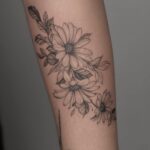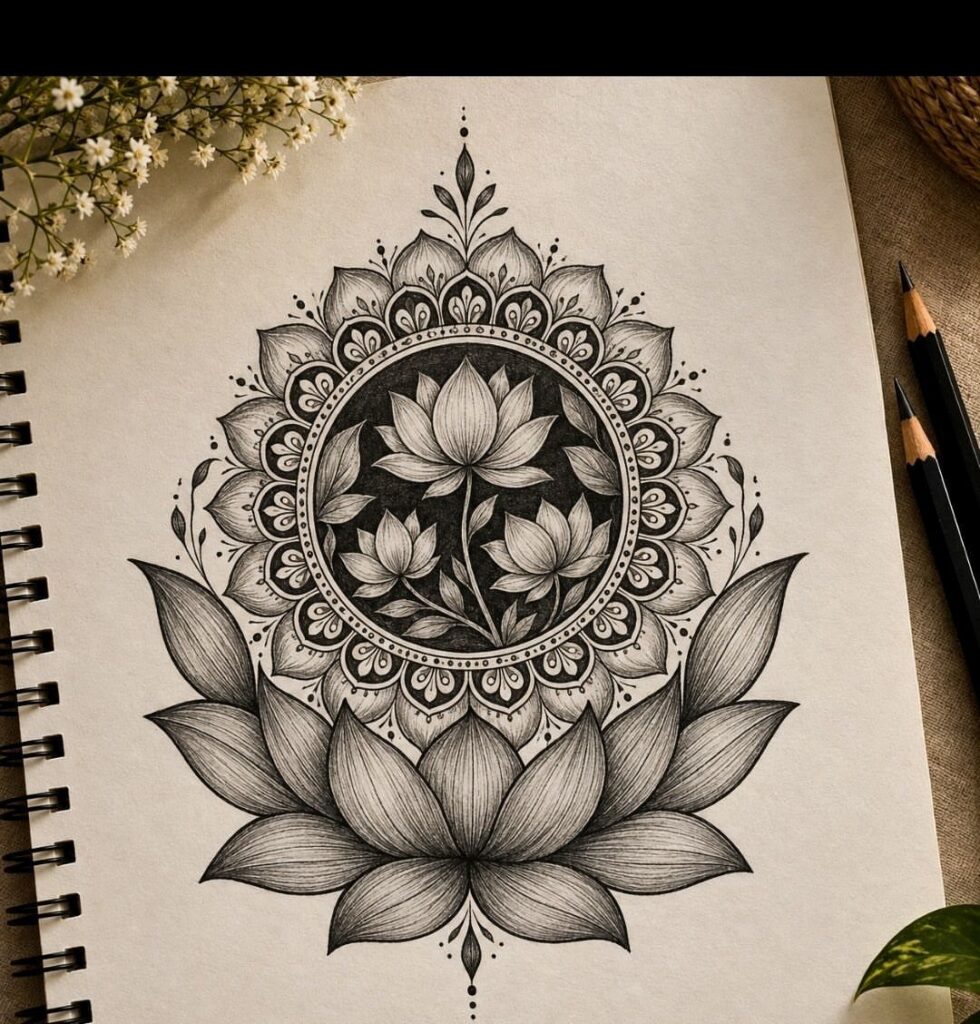
Flower tattoos range from fine line daisies that fit the wrist to blackwork bouquets that need a full forearm, and the style you pick changes how the piece reads once it heals.
What decides the choice is whether you want botanical detail that captures petal structure, symbolic geometry like a lotus mandala, or loose watercolor washes that blur the line between color and skin.
1. Lotus Flower
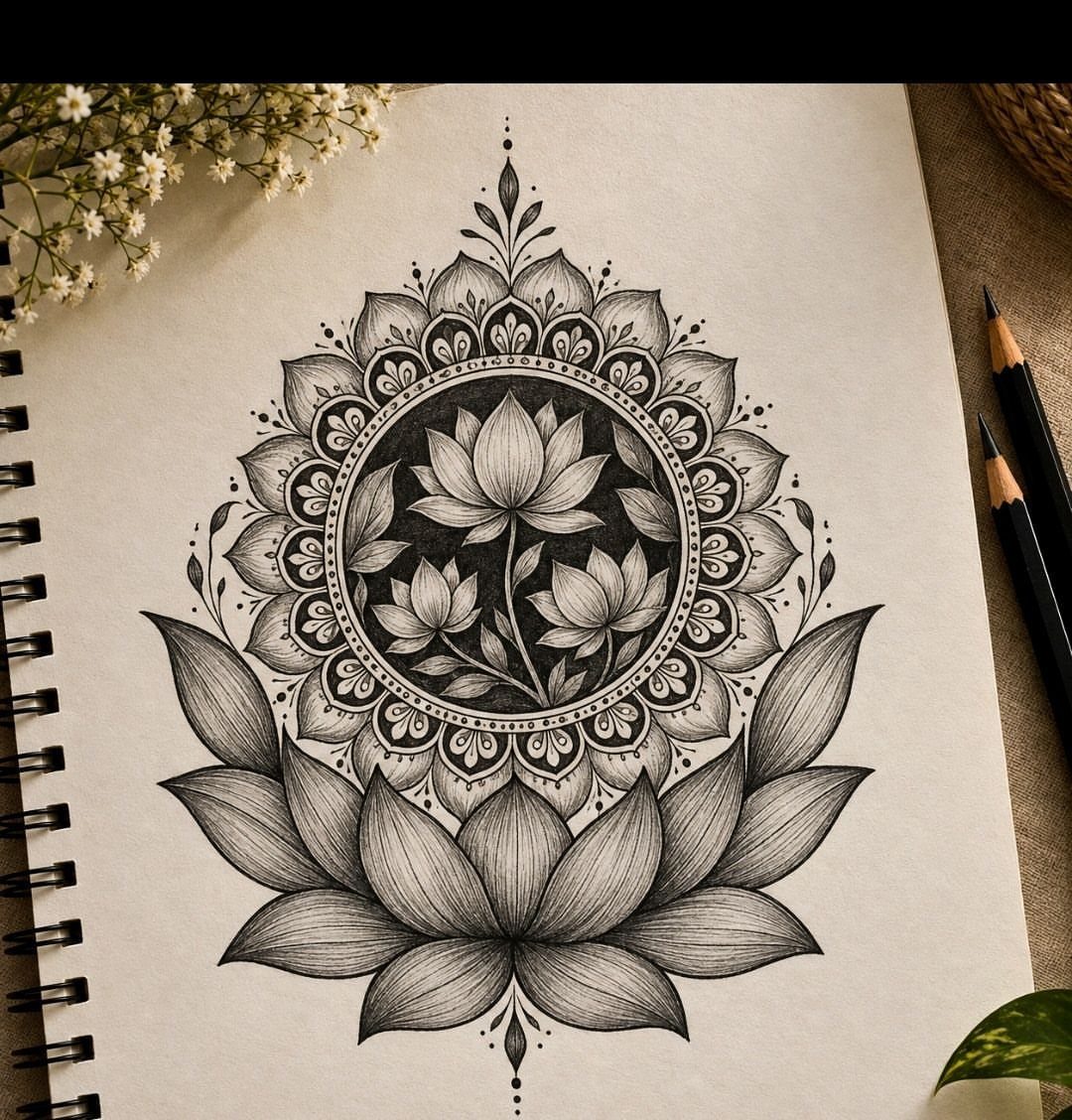
A lotus starts as a seed in the mud and rises through murky water before it opens above the surface, which is why people choose it to mark a difficult period they’ve come through or a shift they’re still working toward.
The mandala around it in this version adds symmetry and gives the design weight without needing color.
I like this on the upper back or forearm, where the circular shape has room to read cleanly. A design this detailed needs enough room to hold up over time.
2. Cherry Blossom
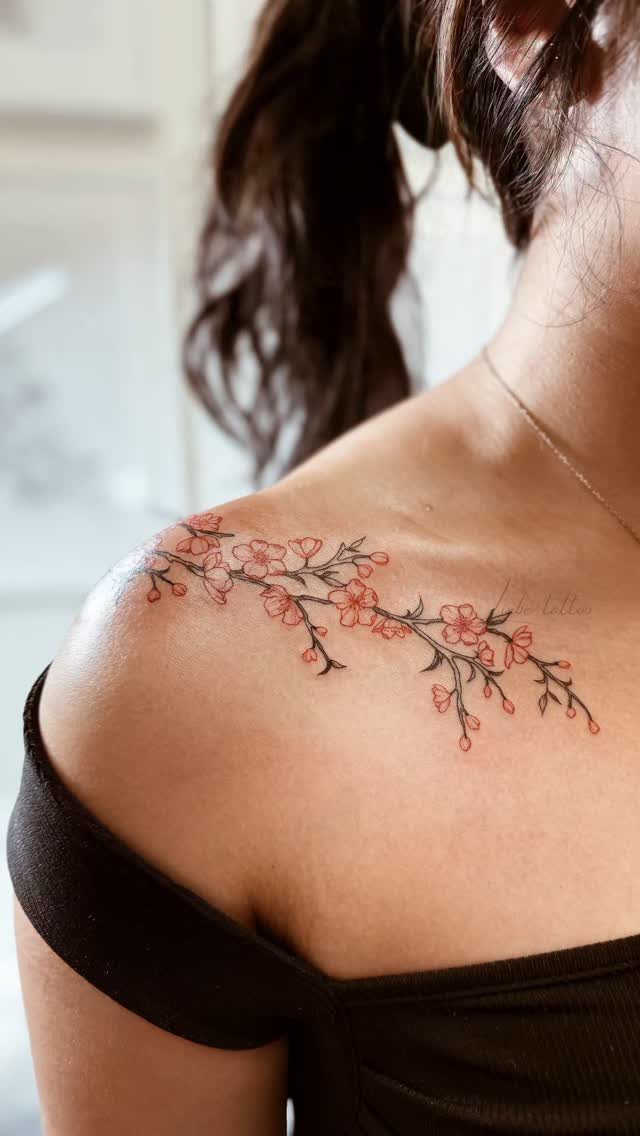
Cherry blossoms bloom briefly each spring, then they’re gone.
That short window makes them a reminder to notice what’s here right now, which is part of why they show up so often in memorial tattoos and pieces marking a specific season in someone’s life.
This branch sits well along the shoulder or collarbone, following the bone’s curve. The red flowers in this version give it more contrast than the pale pink you usually see, so it reads clearly even from a distance.
3. Rose Tattoo
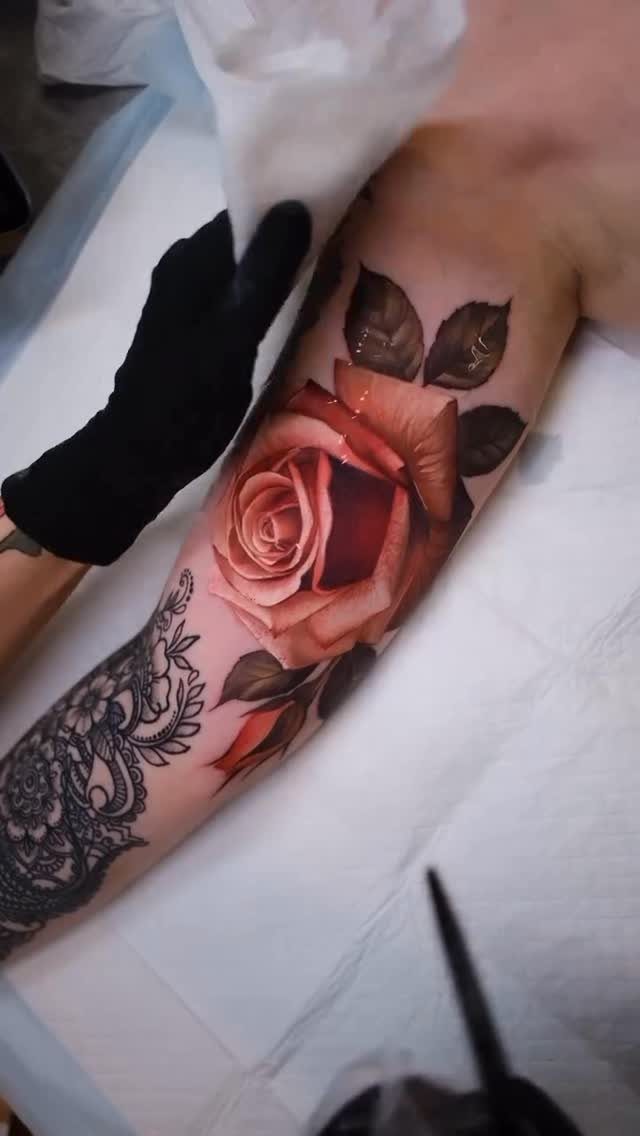
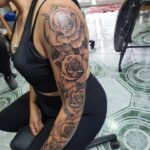
A rose covers a lot of ground depending on how you ink it: full color or black and gray, open bloom or tight bud, with thorns or without.
I see it most often as a standalone piece on the forearm or shoulder, where the shape fits naturally and you can catch the shading.
Realistic roses like this one need solid blacks and clean highlights to look right once they heal, so you want an artist who’s comfortable with depth. You want enough space for the petals to hold their detail years out.
4. Daisy Flower Tattoo
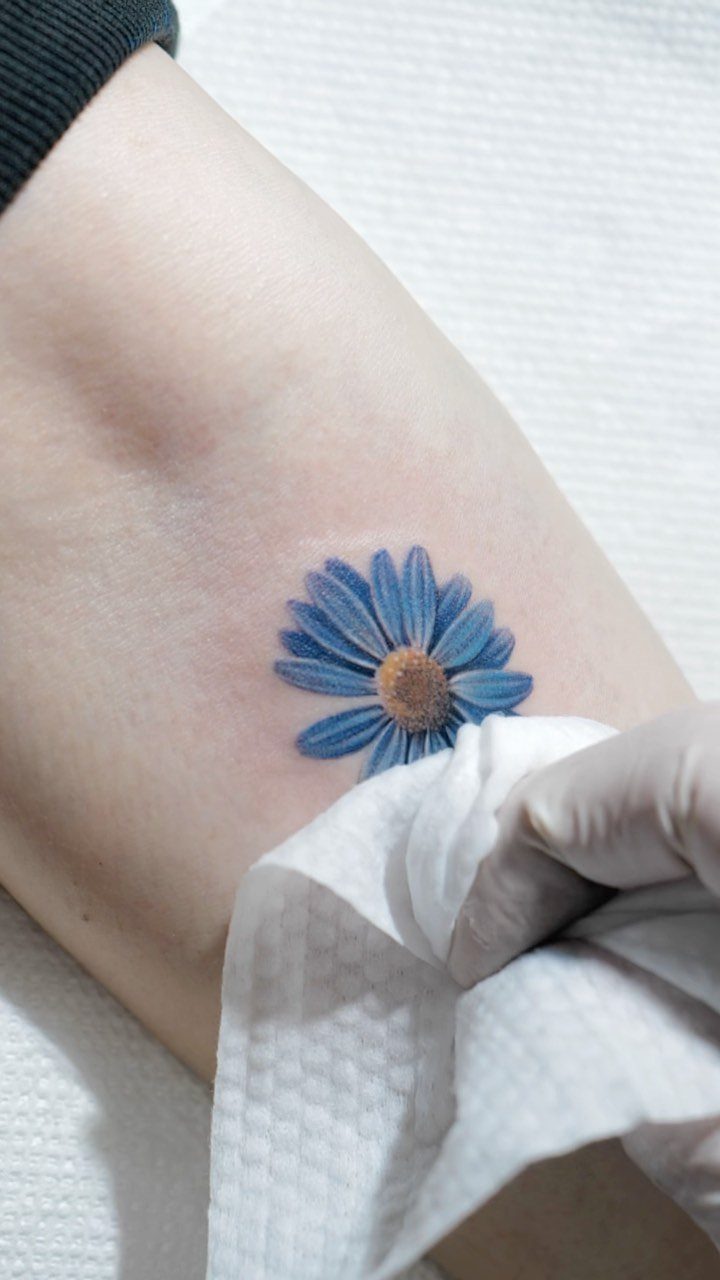
Daisies stay simple: round center, even petals.
That clean shape makes them easy to scale down for placement on the wrist or ankle, and they still read at a glance. The blue color here gives it a stylized look instead of trying to match what grows outside.
I’d keep a daisy small if you want it fine line, or go larger if you’re adding color saturation like this.
It’s a good first tattoo because the shape is forgiving and you don’t need heavy shading to make it work.
5. Sunflower Tattoo
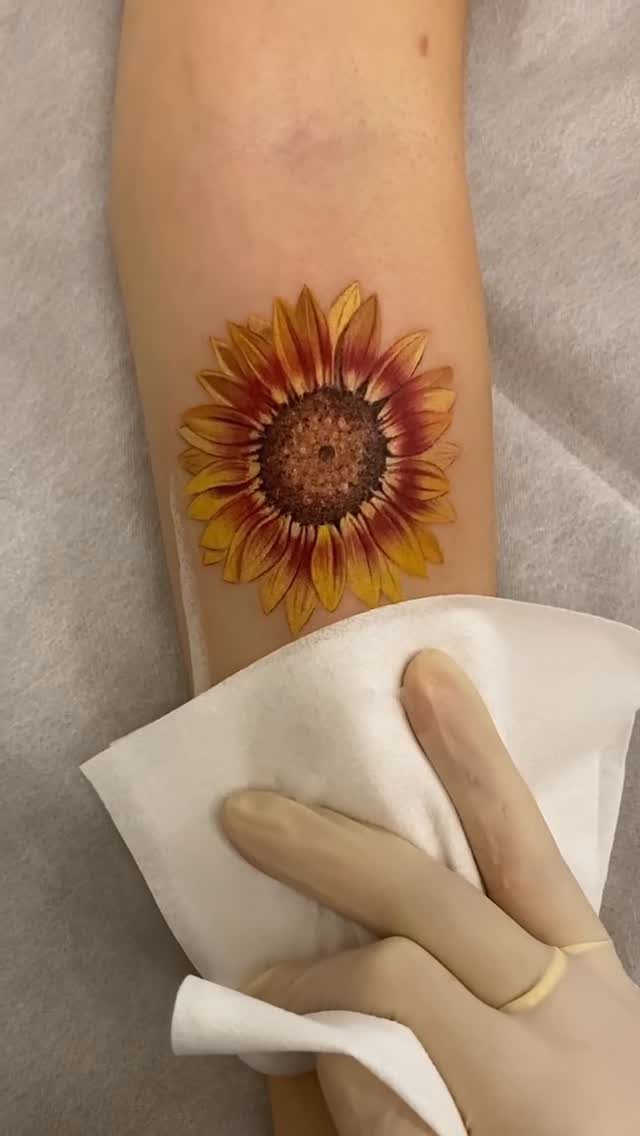
Sunflowers face the sun and track it across the sky, which is where the loyalty meaning comes from.
The bold yellow and dark center give the design strong contrast, so it holds up well in color and doesn’t need much line weight to stay readable.
This sits well on the forearm or outer thigh, anywhere you have a flat stretch of skin. I’d go at least 4 inches to let the petals breathe and keep the center from blurring together as it heals.
6. Watercolor Flower Tattoos
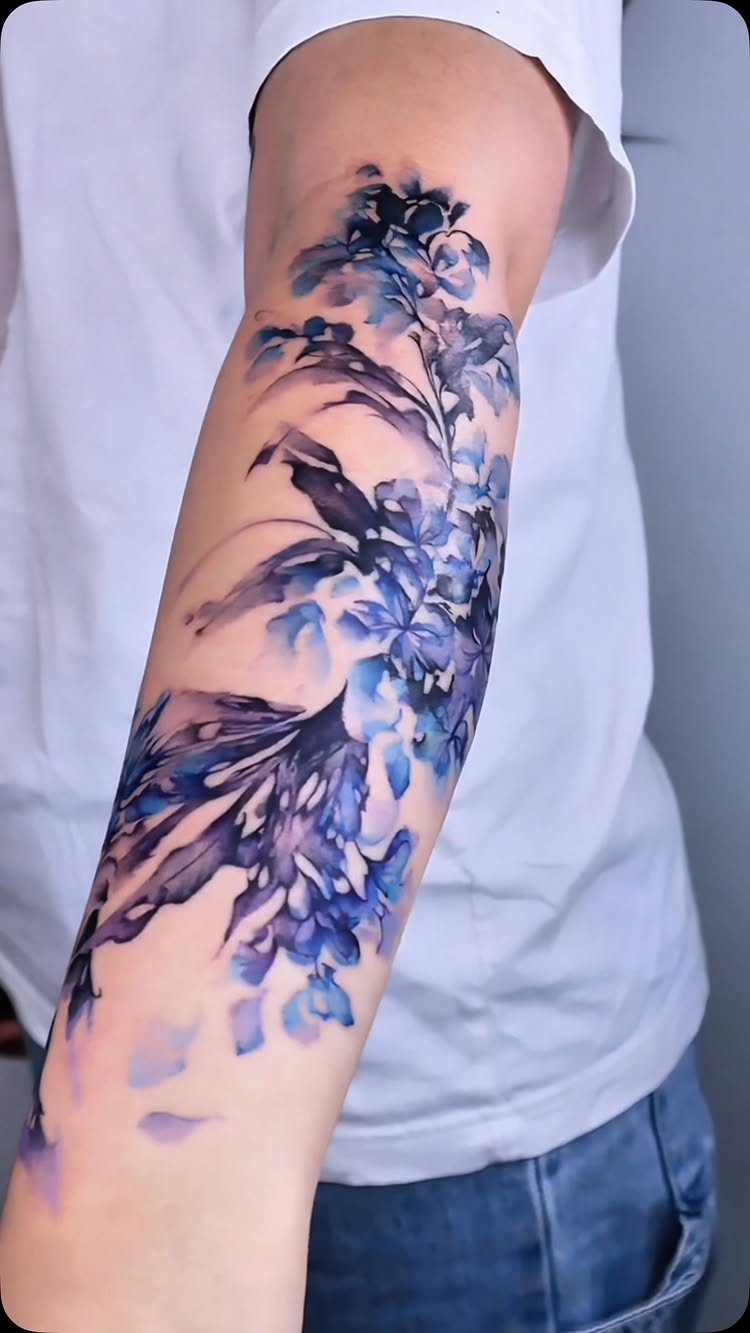
Watercolor tattoos skip the heavy black outline and rely on soft color washes that bleed into each other the way paint does on paper.
The blue and purple tones in this version give it a cooler palette than the warm florals you usually see, and the style leans abstract enough that the exact species of flower matters less than the shape and movement.
Placement needs flat skin with minimal stretch: inner forearm, outer shoulder, or upper thigh. The style fades faster than traditional linework, so expect touchups down the line if you want to keep the color bright.
7. Peony Flower Tattoo
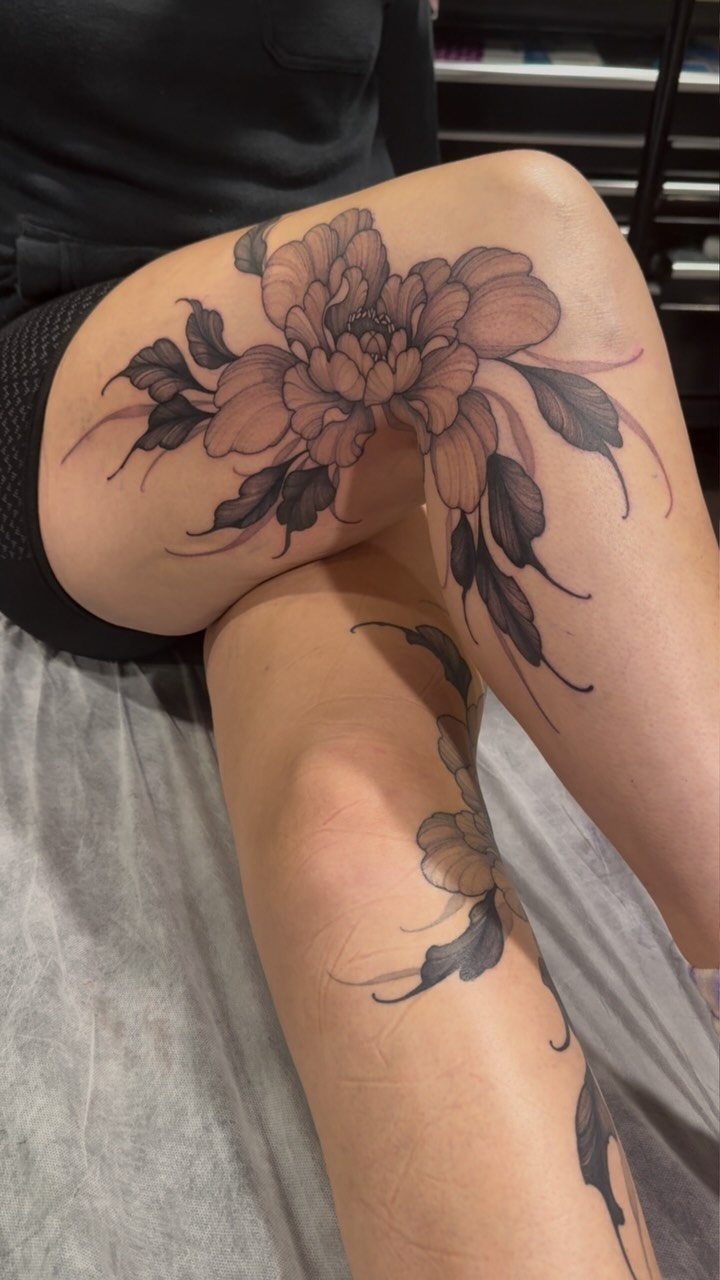
Peonies carry a lot of volume in their petals, which gives them a soft, layered look that fills space without needing a heavy outline.
The pink and darker leaves in this version create contrast that helps the flower stand out on the thigh, where there’s enough flat skin to let the shading settle.
I’d place this on the outer thigh, upper arm, or ribcage. The petal layers need enough size to stay readable as the tattoo ages, since tight detail in soft shading can blur over time.
8. Poppy Flower Tattoo
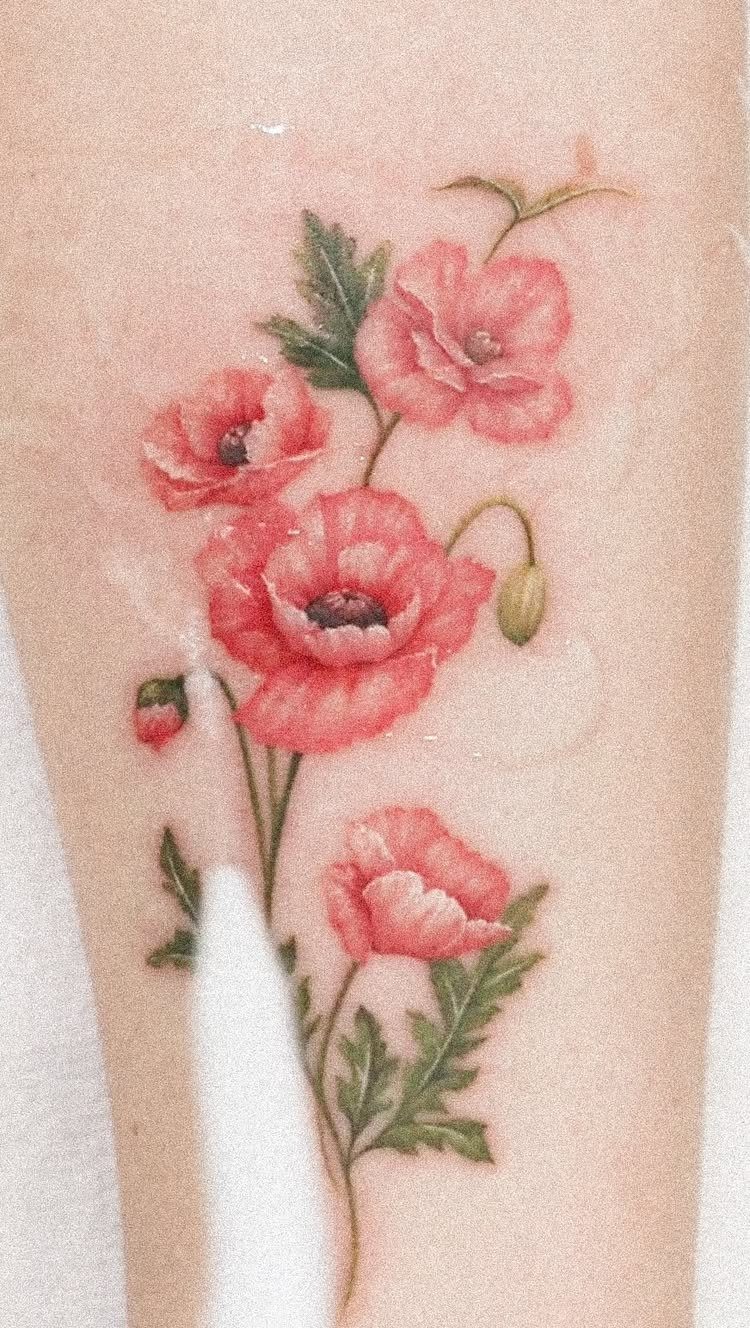
Poppies hold meaning in memorial contexts because of their link to wartime remembrance, but the bright red color and loose petal shape make them work just as well as a standalone floral piece.
Green leaves balance a red poppy and keep it from looking too flat.
This sits well on the forearm or upper arm, where the stem can follow the natural line of muscle. I’d keep the red saturated and avoid too much shading inside the petals so the color stays bright through healing.
9. Orchid Flower Tattoo
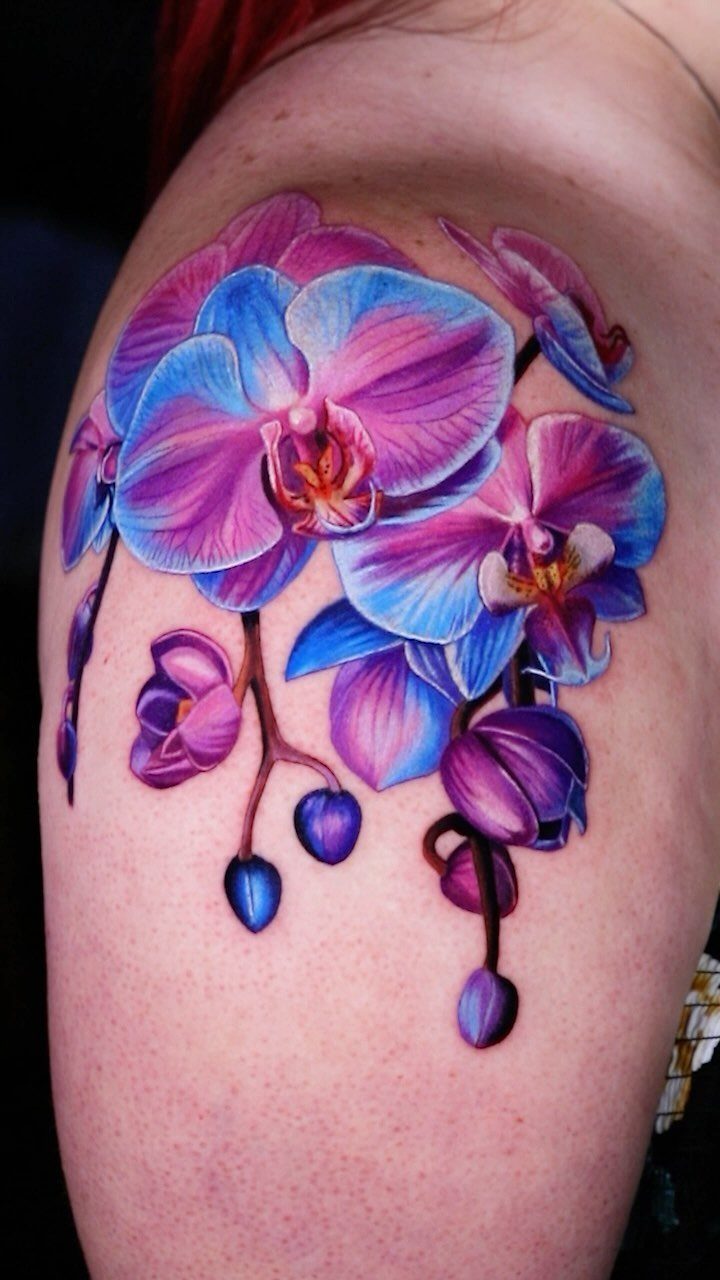
Orchids have a distinct shape with a central lip and symmetrical petals that make them easy to recognize even in stylized color like the purple and blue here.
The gradient between colors gives it depth without relying on heavy black shading, which keeps the piece feeling light.
Size it large enough so the individual petals stay defined and don’t collapse into one mass.
10. Hibiscus Flower Tattoo
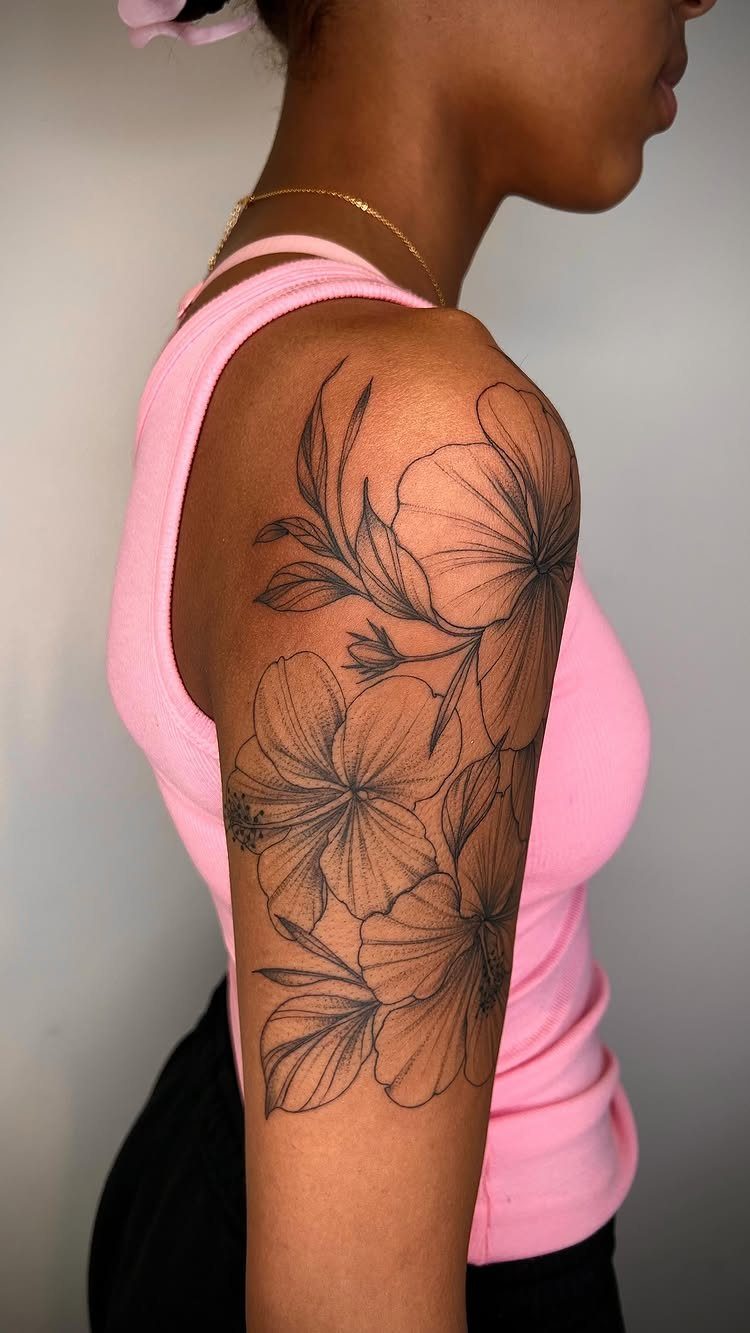
A hibiscus has broad petals that radiate from a long stamen, which gives it a bold silhouette even in black ink like this version.
The clean outline and minimal fill make it a strong choice if you want something that reads quickly and doesn’t need color to hold its shape.
The hibiscus flower tattoo scales down well, which makes it a good option if you’re working with a smaller spot or want to leave room for other pieces later.
11. Magnolia Flower Tattoo
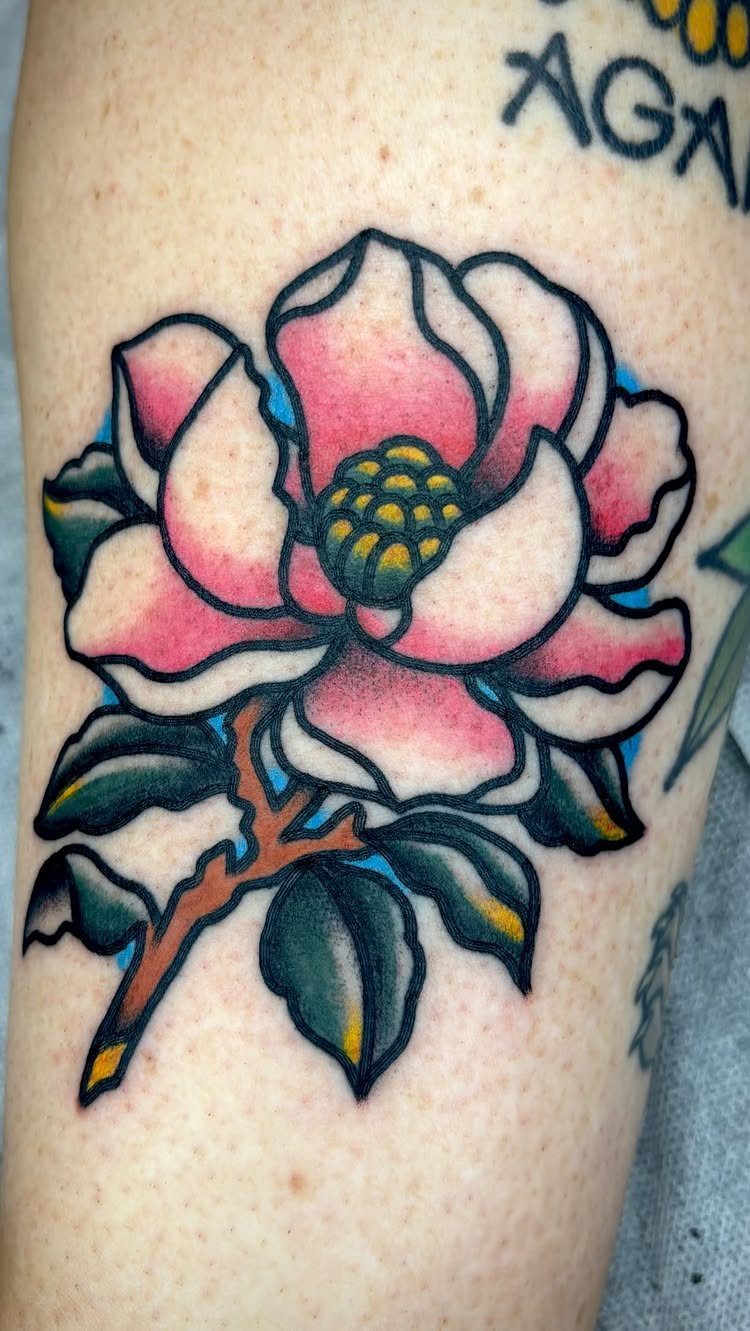
Magnolias open wide with thick, overlapping petals that create depth naturally, so you get that flower-within-a-flower effect without needing intricate linework.
This fits the forearm, outer bicep, or upper thigh. The layered petals need enough size to stay legible, and I’d keep the shading subtle so the pink doesn’t fade too fast.
12. Camellias
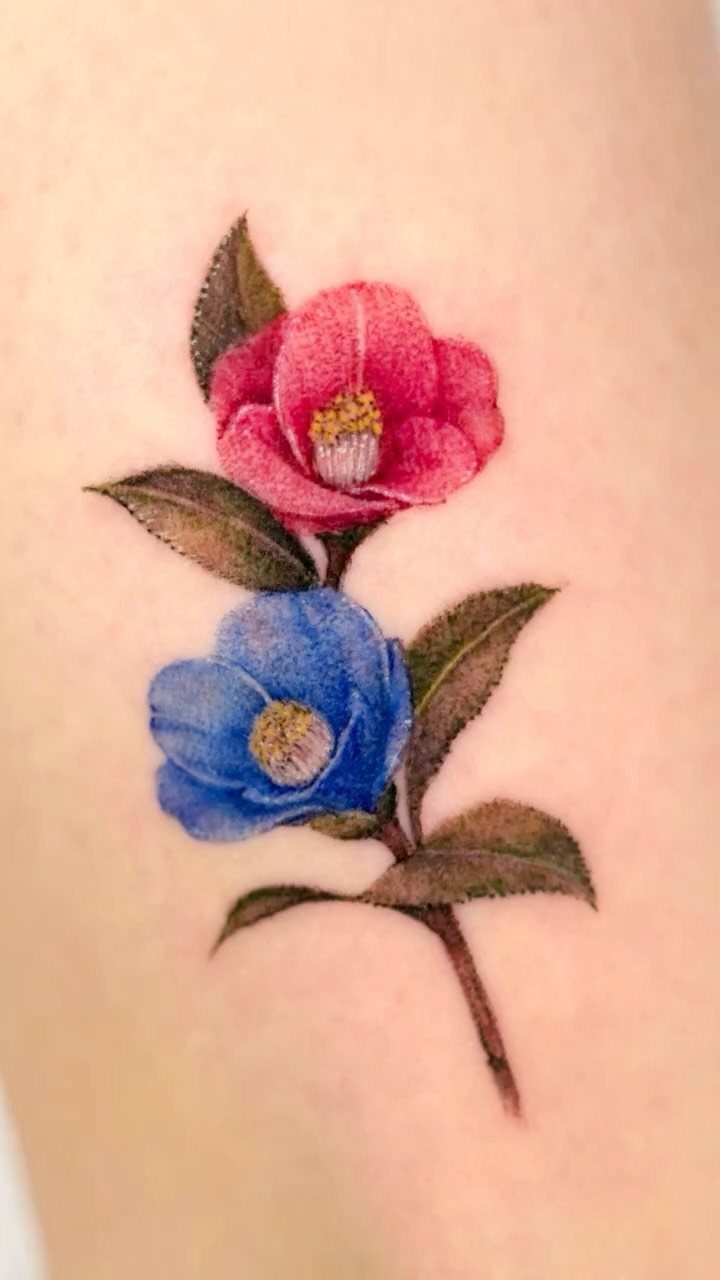
Camellias have a formal, symmetrical petal arrangement that gives them a structured look, and the red and blue pairing here adds a color contrast you don’t usually see in floral tattoos.
Each bloom reads as its own shape, which works well if you want a design that feels balanced without being overly literal.
I like this on the forearm or shoulder blade. The color choice makes it more stylized than botanical, so you’re free to pick hues that fit your palette instead of sticking to what blooms naturally.
13. Family Birth Flower Tattoos
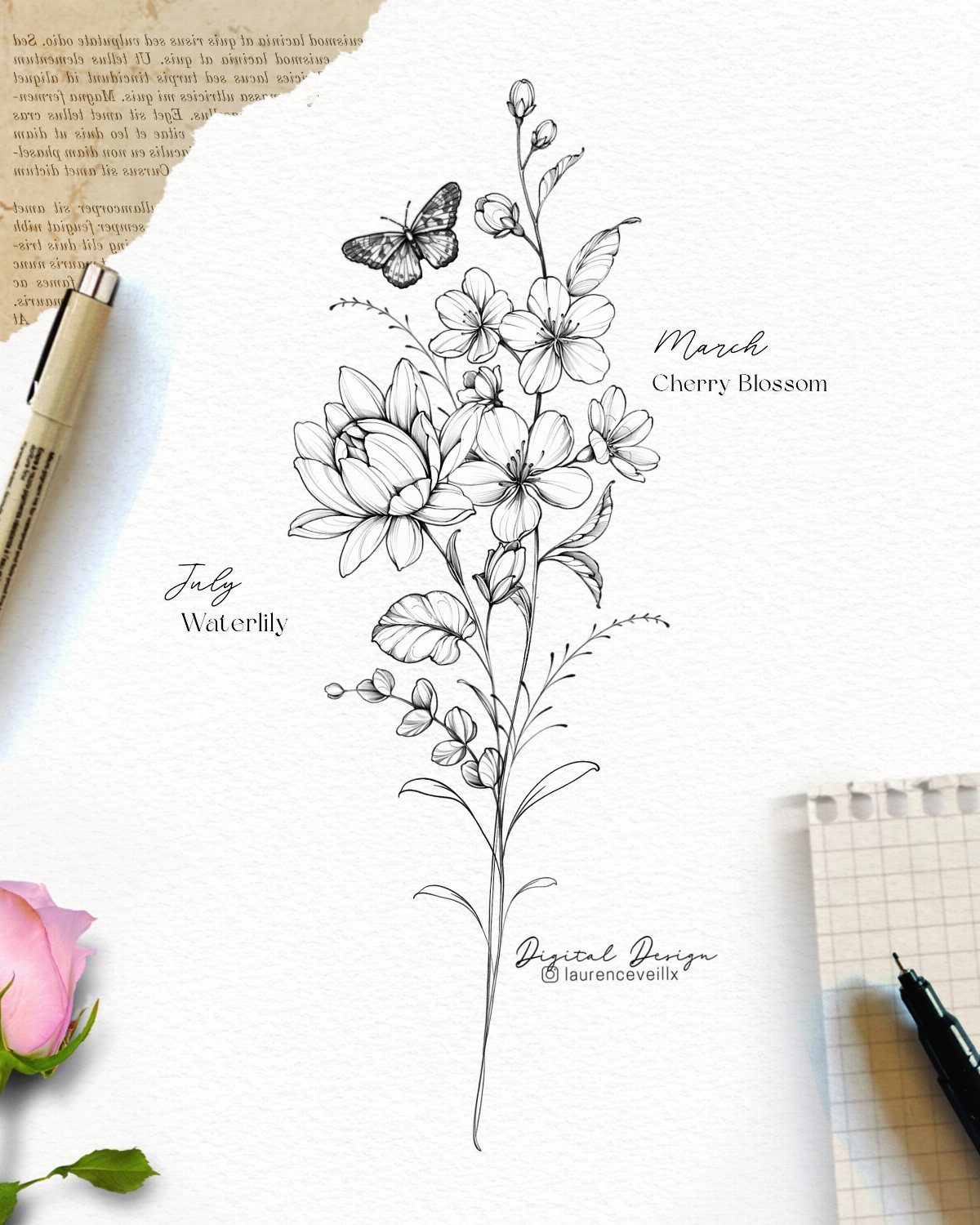
Each flower represents one person’s birth month, so the whole piece becomes a family portrait in botanical form. March cherry blossoms, July water lilies, and any other month you need can sit together in one arrangement without looking random.
The sketch format here gives you time to adjust the layout before committing to ink.
The forearm or upper arm gives you room for each flower to hold its own shape without crowding. Black line keeps it clean and lets you add more flowers later if the family grows.
14. Fine Line Flower Tattoos
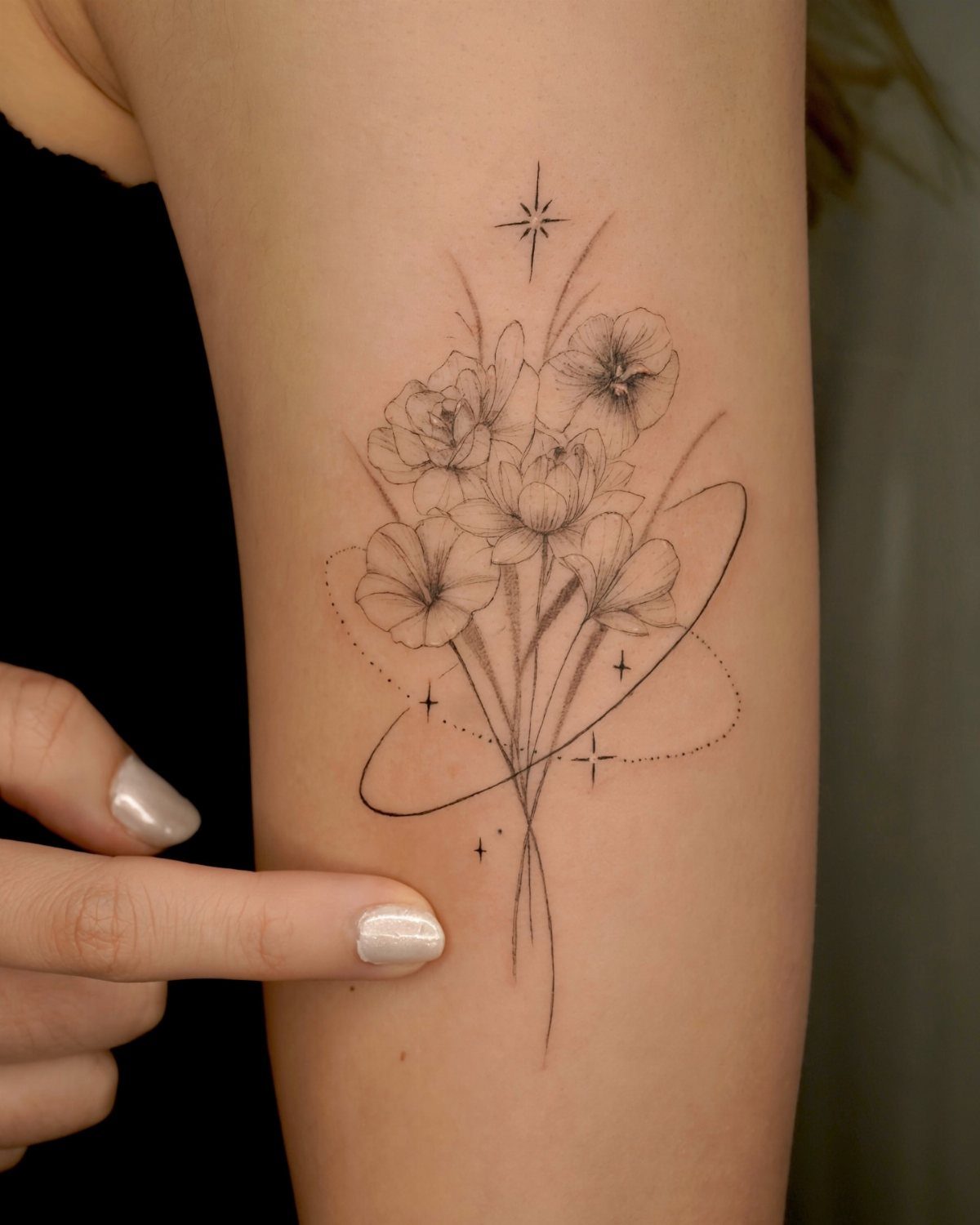
Single-needle work and tight spacing give these flowers a pencil-sketch quality that sits lighter on the skin than traditional floral tattoos.
The stars scattered through this bouquet add filler without crowding the main shapes, and the whole piece stays delicate enough for an inner arm or wrist.
Scale matters here. Go too small and the lines can blur as the tattoo settles; I’d keep this at least 3 inches so the details hold.
Fine line work shows every wobble, so find an artist whose portfolio proves they can hold a steady hand through the whole session.
15. Blackwork Floral Tattoos
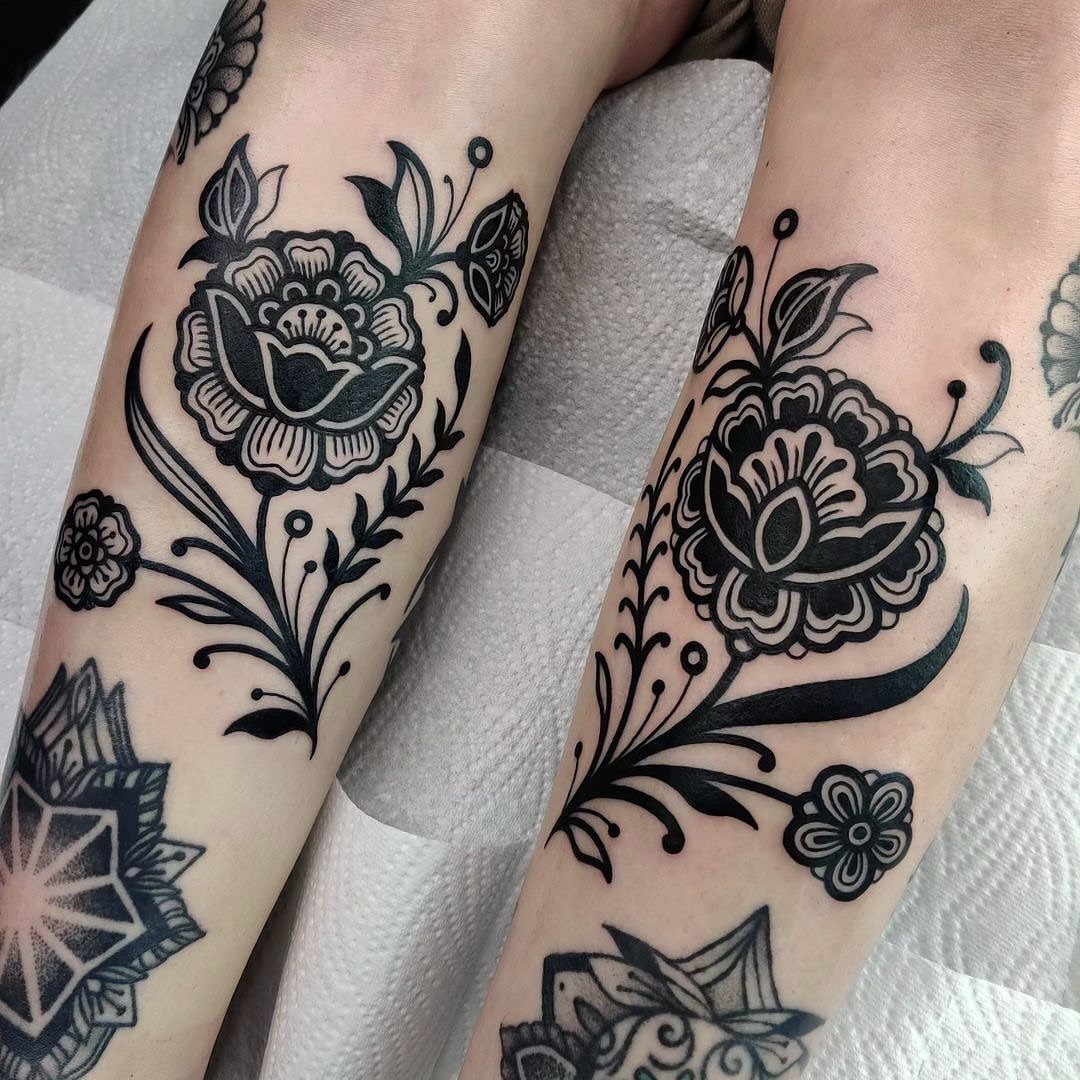
Solid black fill and no color give these florals a graphic weight that reads more like printmaking than soft petal shading.
The matching placement on both legs makes them feel intentional, like a pair of bookends, and the stylized shapes mean you’re not locked into botanical accuracy.
Blackwork heals bold and stays bold, which makes it a good choice if you want something that won’t fade into pastel over time.
The fill takes longer to apply than line alone, so expect a session that runs closer to 2 hours for a piece this size.
Flower Tattoo Placement Guide
The forearm gives you visibility without commitment to a spot that’s always on display. Inner forearm suits a single bloom in fine line; outer forearm handles a longer stem or a small bouquet that follows the length of your arm.
Shoulder and upper arm wrap around muscle in a way that adds depth to rounded flowers like peonies and roses. The curve does some of the work for you.
Ribs and side hurt more than most other spots, but the vertical stretch fits botanical compositions that need length. If you’re planning something large and want it to follow your body’s natural lines, this is where it goes.
Ankle and lower calf work for small pieces: a single lotus, a birth flower, anything you want to be able to cover easily.
Behind the ear or along the collarbone keeps a small floral design intimate and easy to conceal when you need to.
Choosing Flower Tattoo Styles
Style changes everything about how a flower reads once it’s inked.
Fine line captures intricate petal structure and suits flowers with layered detail.
Your choice should match what you want the piece to say and how much maintenance you’re willing to do long term.
And if you’re into your tattoos carrying symbolism and hidden meanings, you’ll be happy to hear that flower-tattoo designs fit the bill: They often hold connotations of positive things like love, new beginnings, and happiness, and much more.
— Glamour
Care for Flower Tattoos
Fine line and watercolor tattoos need consistent moisture during healing or the quality drops. If your skin dries out, delicate lines can blur and soft color washes can heal patchy.
Keep the tattoo clean and apply a thin layer of unscented lotion several times a day during healing. Avoid soaking it in water: quick showers are fine, but skip the bath, pool, and ocean until the skin has fully closed.
Sun exposure fades color faster than anything else, so use sunscreen on healed tattoos if they’re going to see daylight. Watercolor pieces especially lose brightness over time, and touchups bring the vibrancy back when it starts to dull.
Fine line work with proper aftercare and high-quality ink holds detail well as it ages.
Frequently Asked Questions
What is the prettiest flower to get tattooed?
The prettiest flower depends on what resonates with you personally, since beauty in tattoos is subjective.
Roses remain the most universally recognized for their layered petals and emotional depth, while lotus flowers carry spiritual weight and peonies offer soft, voluminous shapes that fill space gracefully.
Cherry blossoms work well for memorial pieces, and sunflowers give you bold contrast that holds up in color.
What does a flower tattoo symbolize?
Flower tattoos symbolize growth, transformation, and the passage of time, though each bloom carries its own meaning. A lotus represents rising through difficulty, a rose covers love and complexity, and cherry blossoms mark the brief nature of life.
The symbolism is rich enough that you can choose a flower for what it means to you or simply because the shape works well on your skin.