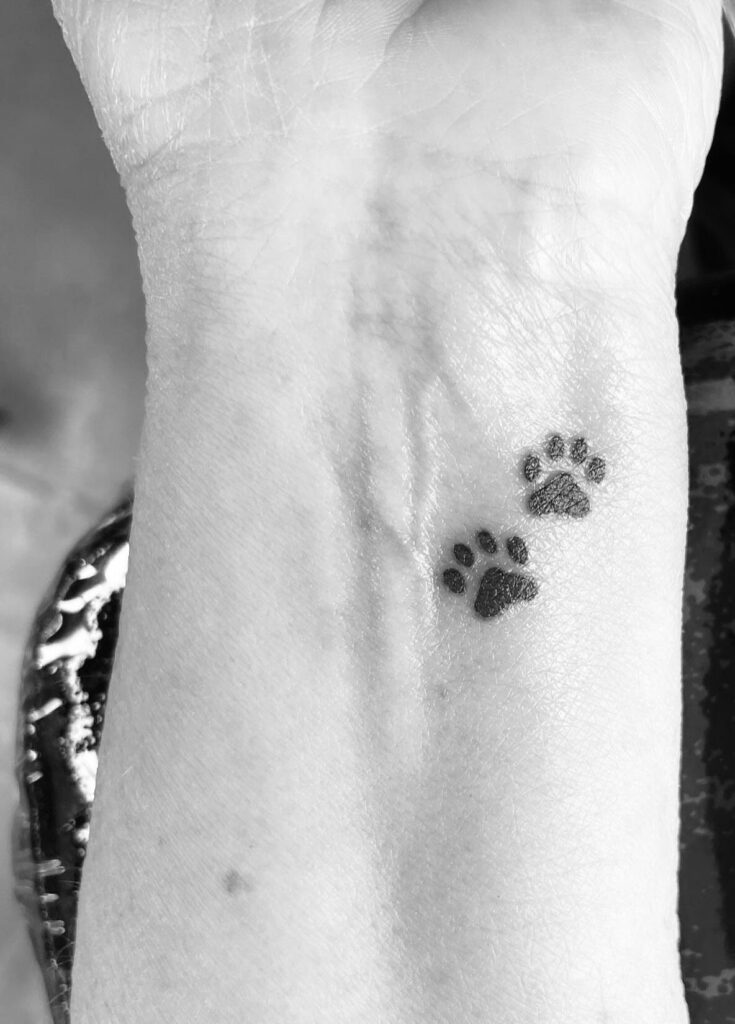
A paw print tattoo runs from a minimal outline at 2 cm to a portrait framed by a trail of prints.
The choice turns on what you want the piece to say: memorial work pulls toward text and florals, living tribute leans into movement and color.
1. Memorial Dog Paw Tattoo
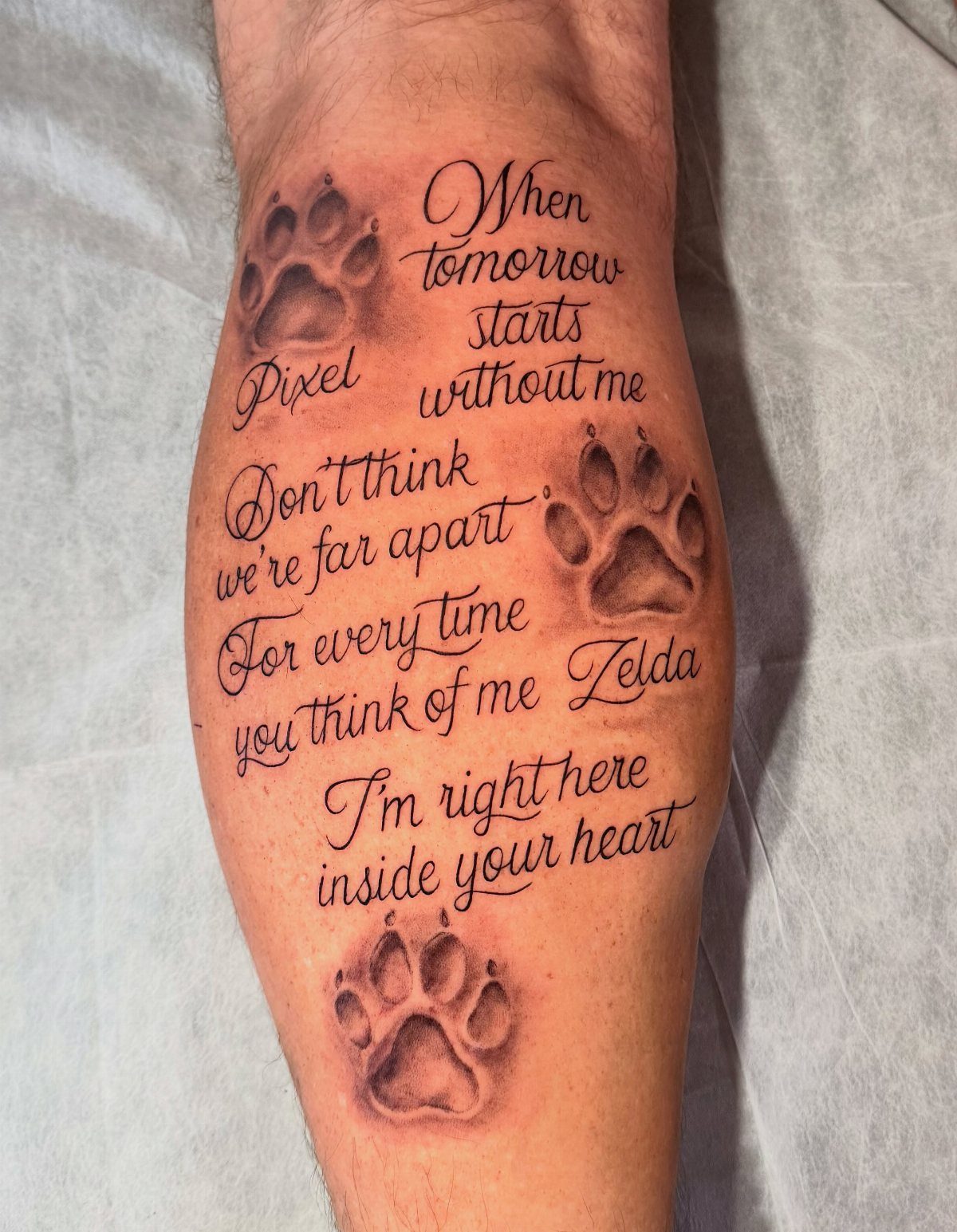
Paw prints paired with text hold everything that mattered: the name, a date, a few words that say it plainly. I place memorial tattoos where I can see them, forearm or calf, because that reminder matters when you need it.
Black ink reads cleanest over time, and names in simple serif or script stay legible at small sizes.
If you’re adding verse, keep it short. 3 lines fit better than a full stanza, and the piece stays readable years out.
2. Connected Imprints
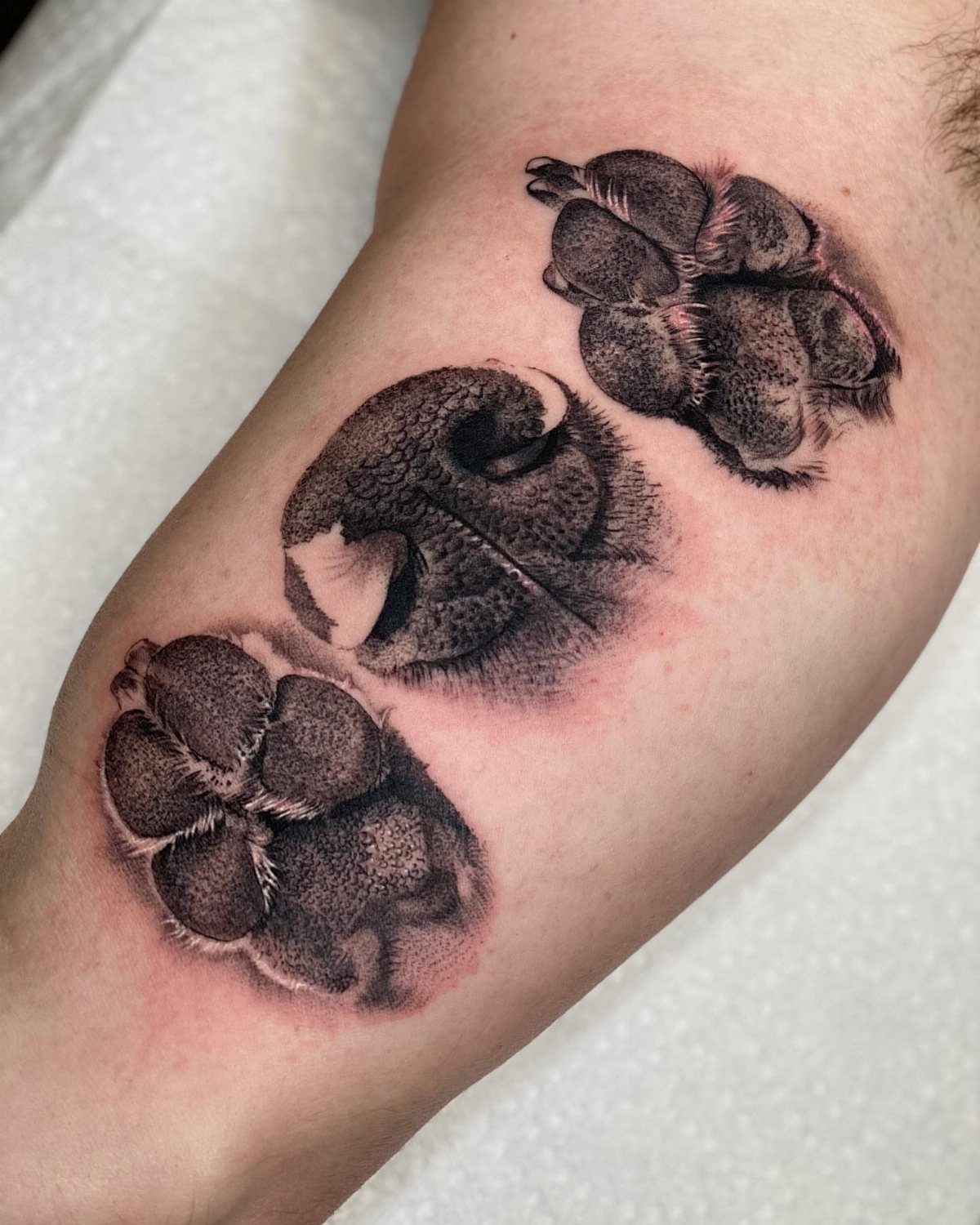
A string of prints moving down the forearm or along the ribs gives the sense of walking alongside you. I like this version when the pet is still here, because it feels present rather than past tense.
Spacing matters: prints too close together read as a cluster, too far apart and the connection breaks.
Spacing between each pad keeps the movement visible and lets each print register on its own. Fine line shading inside the pads adds dimension without heavy fills.
3. Footprint with Heart Integration
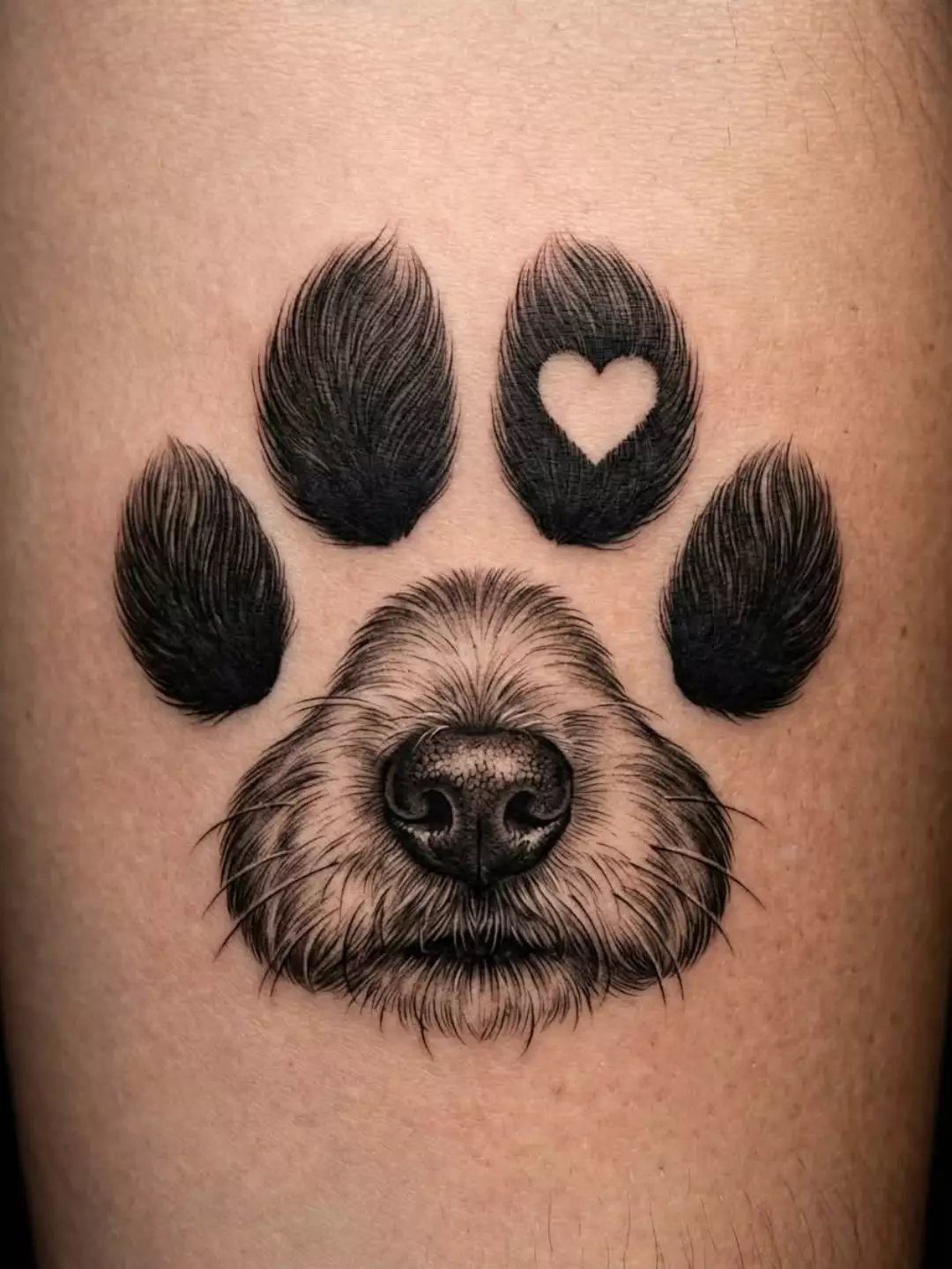
A paw print where one toe becomes a heart shifts the design from literal to symbolic without losing the footprint shape. I recommend this when you’re after a piece that’s recognizable but softer than a straight memorial.
The heart sits cleanest as an outline or negative space cutout rather than a filled shape, so the print structure stays intact.
Placement on the wrist or inner forearm keeps it small and personal. Around 2–3 cm works for this level of detail.
4. Watercolor Feet
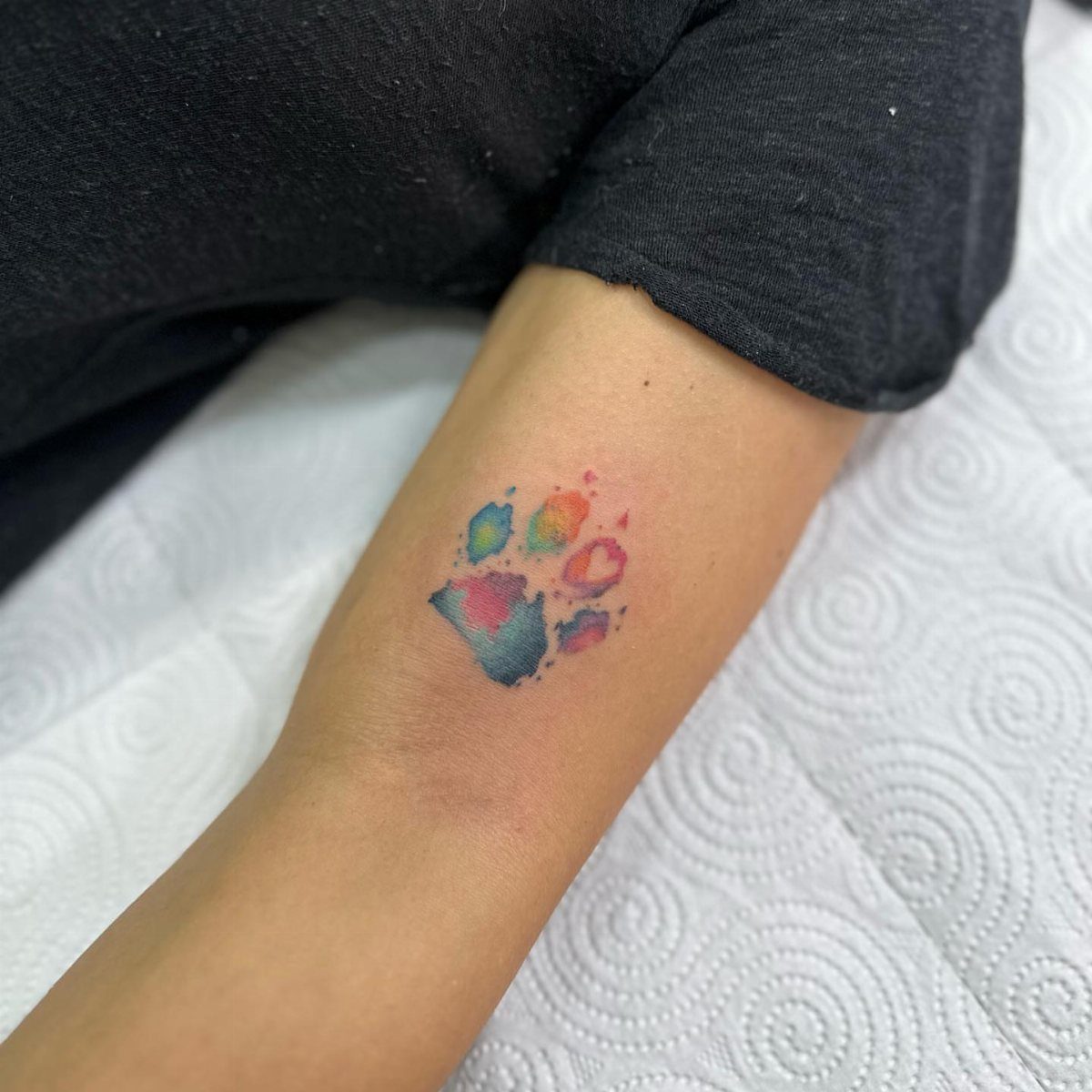
Watercolor gives a paw print the look of brushstrokes on paper, with color bleeding past the black outline. I like this style when someone wants brightness and energy instead of the solemnity most paw tattoos carry.
The color fades faster than black linework, so plan for a touchup around the five-year mark if you want the vibrancy to hold. Forearm placement shows the gradient best, where light hits the color shifts.
5. Floral Embroidery Dog Paw Tattoo
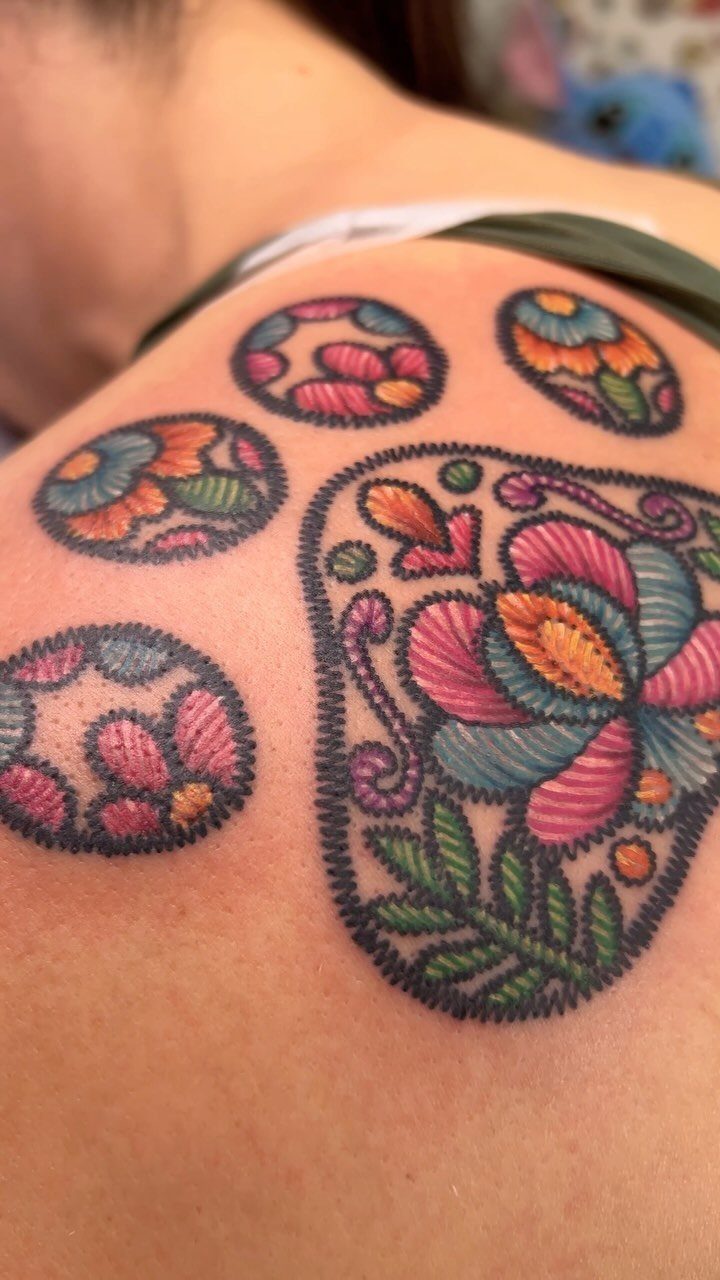
Stitching lines and floral fills turn a paw print into something that looks sewn onto the skin. I choose this version when someone wants folk art warmth instead of realism.
The embroidery effect depends on those short dashed lines around the perimeter, mimicking thread. Inside the pads, small flowers or leaves replace solid black.
This style reads best at a size where the stitching detail stays crisp. Shoulder or upper arm gives enough flat space for the pattern to sit cleanly.
6. Dog Portrait with Paw Trail
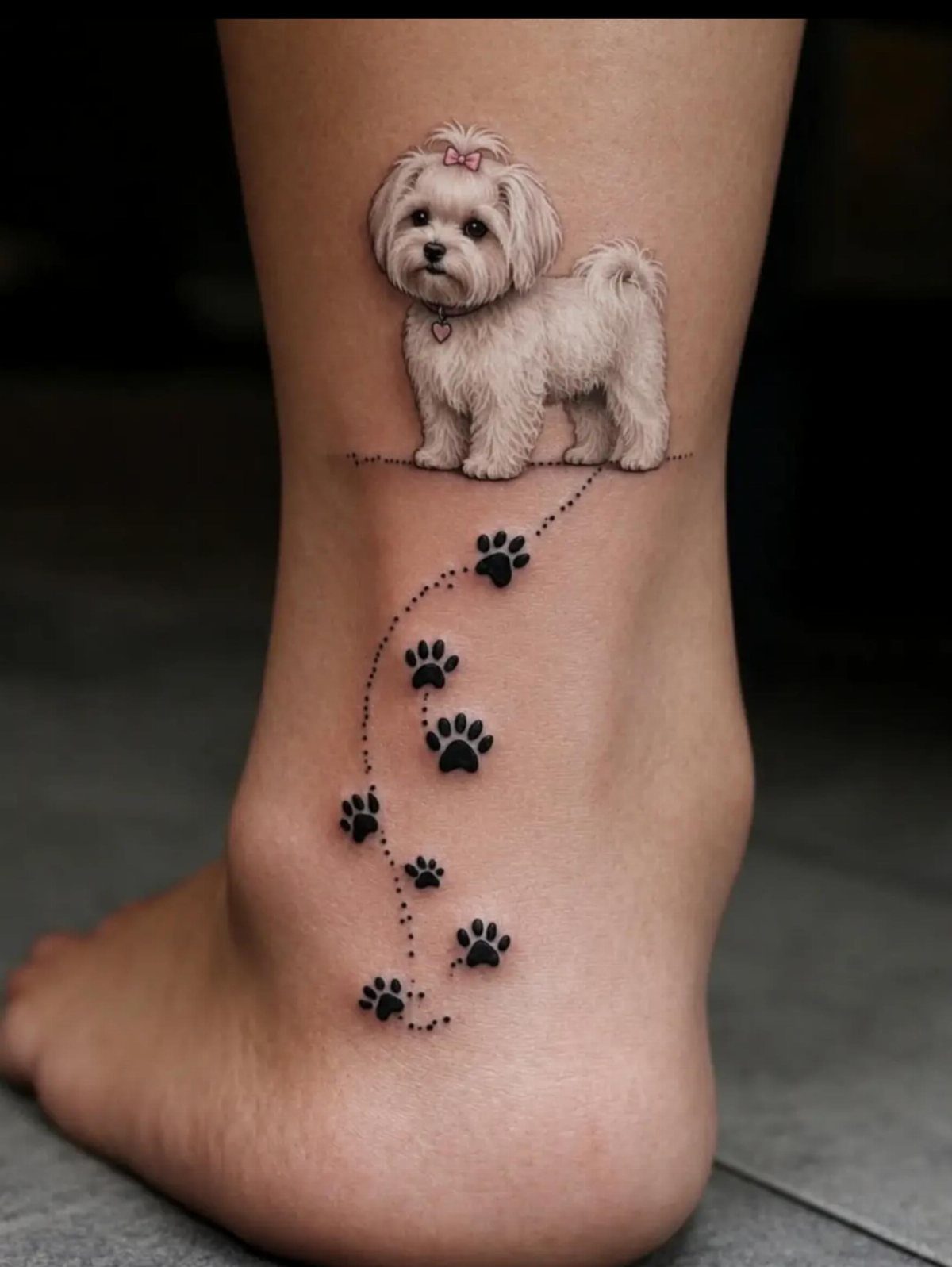
A portrait of your dog with prints trailing down toward your foot creates a path between the 2 images. I place the portrait at the ankle or calf, with prints curving along the natural line of the leg.
Realism takes time: a detailed face will hold you in the chair for a couple of hours at minimum.
The prints stay simple black fills so they don’t compete with the portrait shading. This layout works best on longer placements like the shin or outer calf, where the trail has room to move.
Community and Social Media Influence
Instagram and Pinterest pull most of the paw tattoo traffic I see requests from.
Someone finds a memorial piece with script and a date, saves it, and arrives with that screenshot plus 3 others that share a layout or a line weight.
The pattern I notice: posts that show the full placement and give context for the design get saved more than cropped studio shots.
A forearm piece photographed in daylight with the name visible draws more interest than a close-up under white LED.
Stories attached to the images matter less than the design itself when someone is deciding.
They scroll past the caption and study the line thickness, the spacing between prints, whether the text is serif or script. That visual scan happens first, and the personal story confirms the choice after.
If you’re pulling references, save images that match the body part you’re considering. A rib piece scales differently than a wrist piece, and the proportions don’t translate directly.
Frequently Asked Questions
What does a dog paw represent?
A dog paw tattoo marks the loyalty and connection you share with your dog.
Most people choose it as a memorial after a pet passes, though some get it while the dog is still alive to mark that companionship. It feels personal to you and clear to anyone who sees it.
How do I get my dog’s paw inked?
Press your dog’s paw onto an ink pad, then onto clean paper to capture the print. Bring that print to your tattoo artist, who will trace and size it for placement.
Non-toxic ink works best if you’re doing this at home, and you’ll likely need a few tries to get a clean impression with all the pads showing.