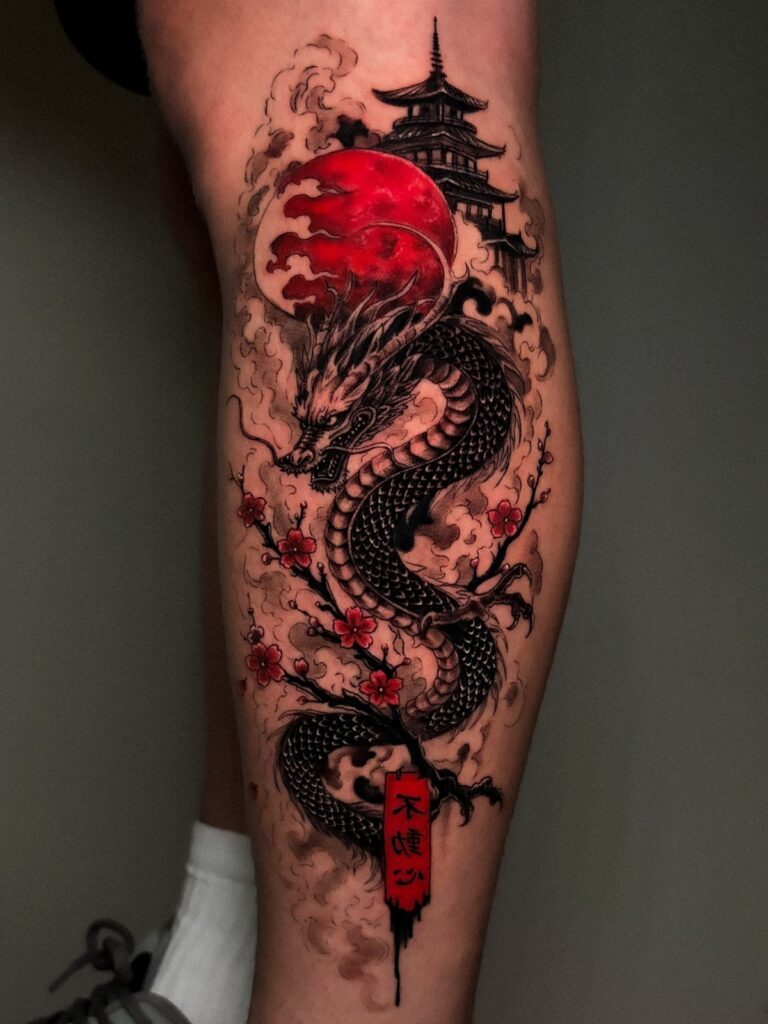
Asian dragons carry serpentine bodies without wings and move through water as easily as air, which sets them apart from the fire-breathing Western versions built like armored lizards.
The koi dragon pulls from the story of a fish swimming upstream and changing form at the waterfall’s peak, and the yin yang design splits the image into opposing forces that hold each other in place.
1. Full Back Dragon Tattoo
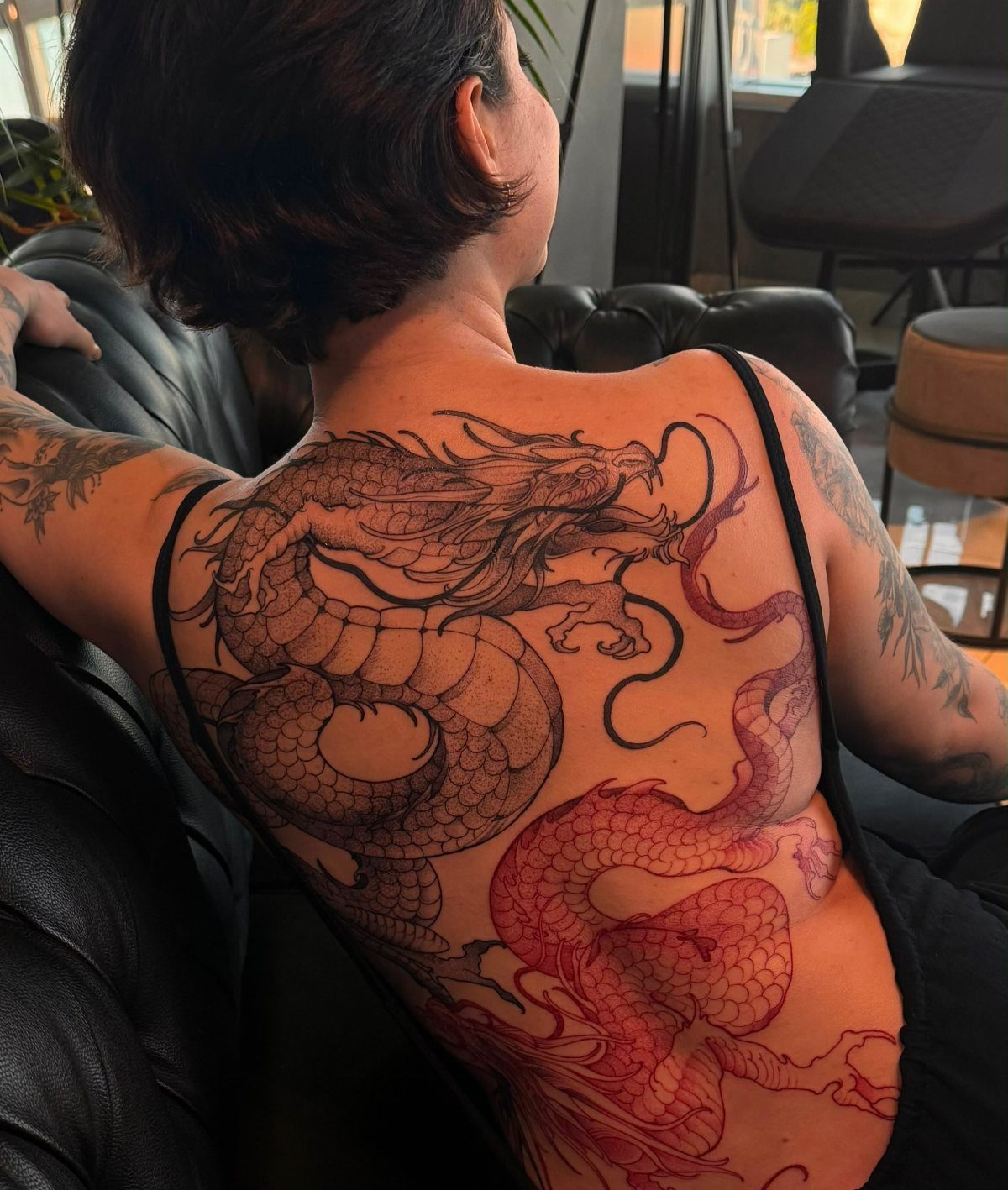
A dragon across the entire back lets you show every scale, claw and curve without compromising detail. The piece needs more than one sitting with an experienced artist.
This placement suits someone ready to commit to a large, bold statement. Healing takes patience since clothing rubs the area constantly for the first few weeks.
If you want a dragon but prefer something smaller to start, the shoulder blade or thigh offers a middle ground with enough space for detail.
2. Japanese Dragon Tattoo
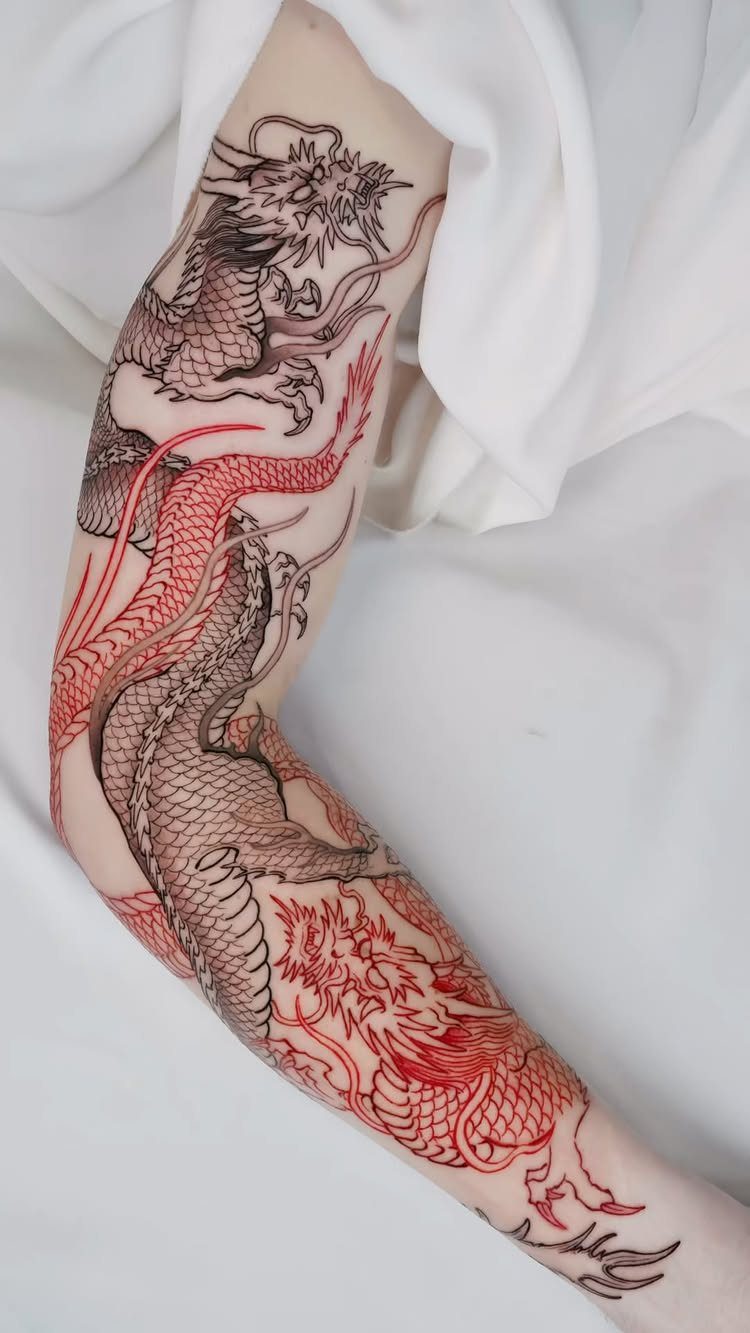
Japanese dragons tend to have longer, serpentine bodies with fewer claws per foot, and they often appear alongside clouds, water or cherry blossoms.
The style uses thick black outlines with selective red or gray shading to create depth without filling every inch of skin.
The arm works well for this design because the dragon can wrap around the natural curve of your muscle, following the movement of your body.
I prefer this version when someone wants a dragon that feels traditional but still reads clearly from a distance.
3. Chinese Dragon Tattoo
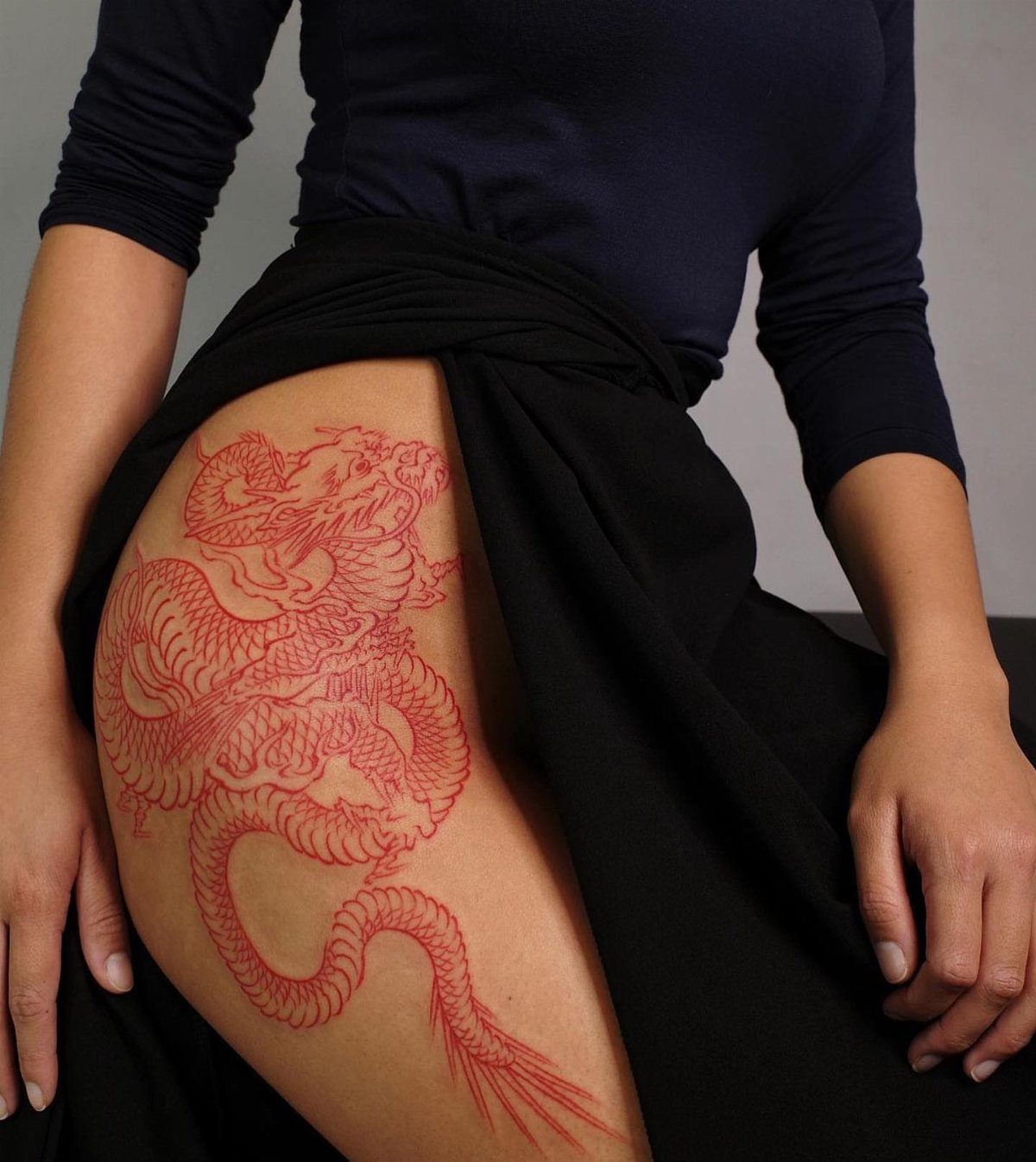
Chinese dragons usually have more claws and a heavier, more muscular build compared to their Japanese counterparts. Red ink stands out on its own and maintains simplicity while still looking striking on skin.
The thigh gives you a vertical canvas that lets the dragon’s body coil naturally without forcing awkward bends.
Single-color work heals faster than heavily shaded pieces, and touch-ups are less frequent since there’s no gradation to fade unevenly over time.
4. Dragon Pearl Tattoo
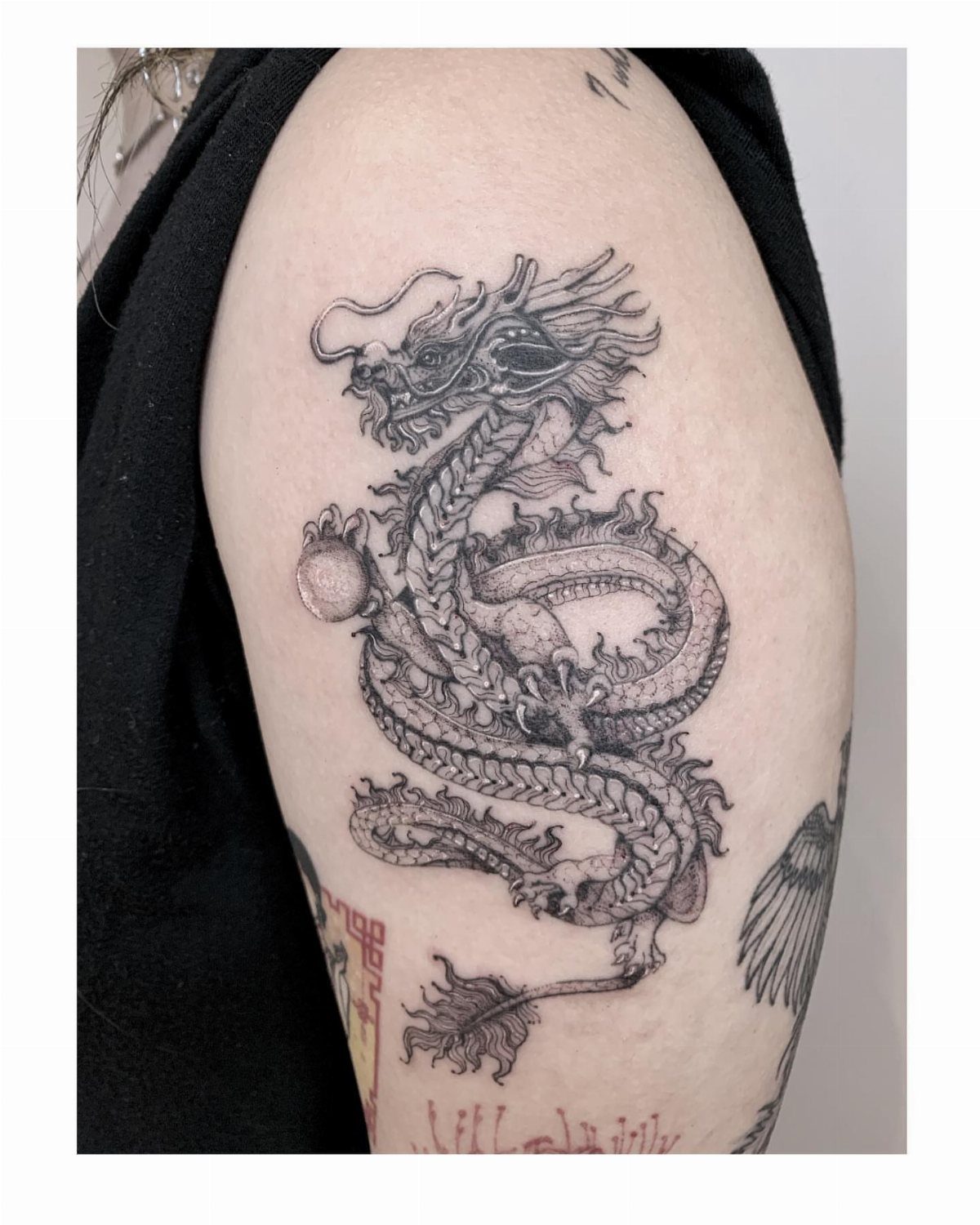
The dragon clutching a pearl brings in a layer of meaning tied to wisdom and spiritual energy, and the pearl itself becomes a focal point that draws your eye to the center of the design.
The black and gray palette keeps the piece clean without competing colors.
Placing this on the upper arm means you can see it easily yourself, and it sits high enough that it won’t stretch or distort as much if your weight fluctuates.
I like this option for someone who wants a dragon with a specific symbol attached, not just a decorative animal.
5. Koi Dragon Tattoo
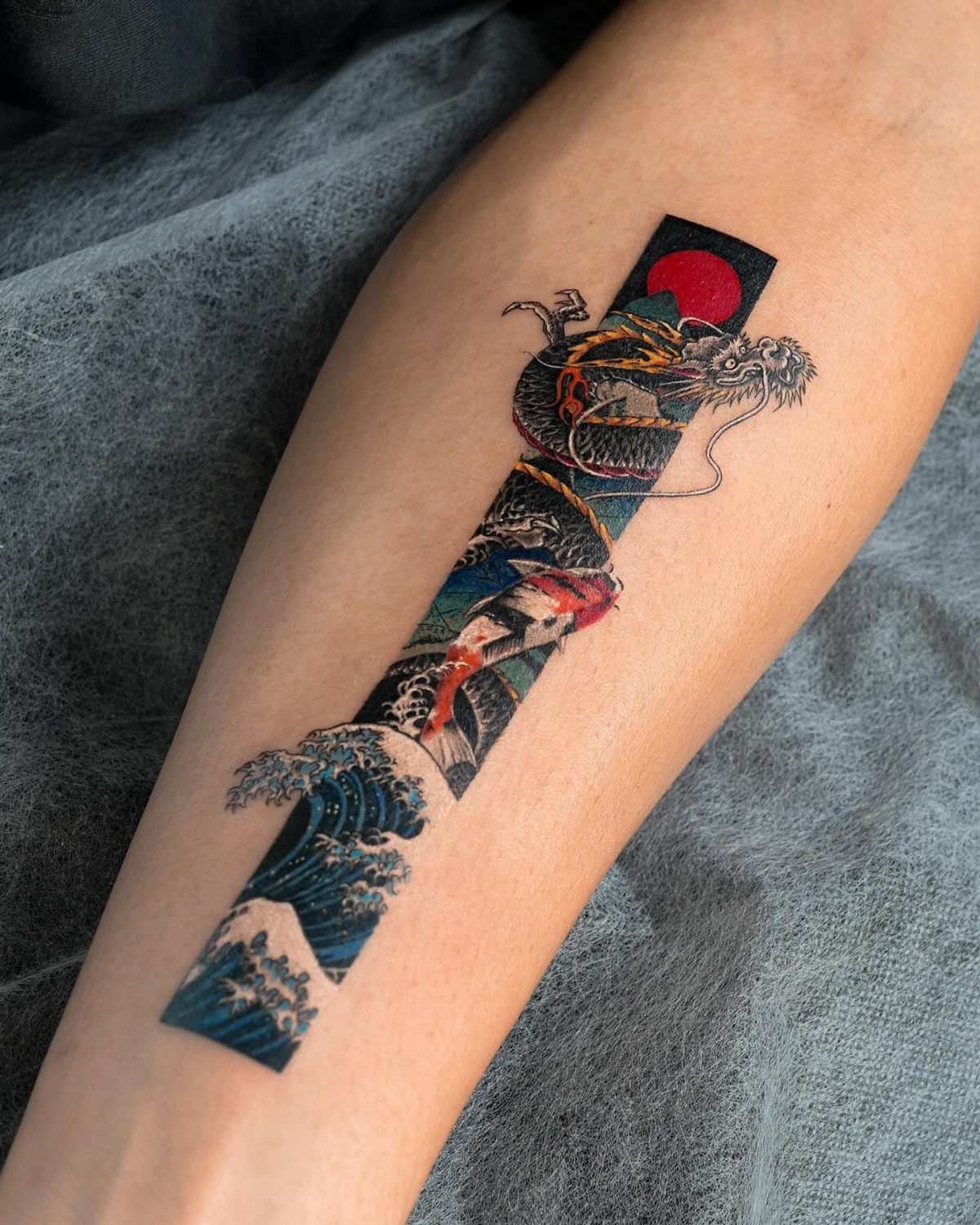
The koi transforming into a dragon represents perseverance and strength, rooted in the legend of a koi swimming upstream and becoming a dragon after reaching the top of a waterfall.
The rectangular frame keeps the design contained and gives it a structured, almost print-like quality.
Adding waves and a sun creates a full scene instead of an isolated animal, which works well if you want something that tells a story.
This design fits best on the forearm or outer bicep where the frame sits flat and the details stay readable.
6. Yin Yang Dragon Tattoo
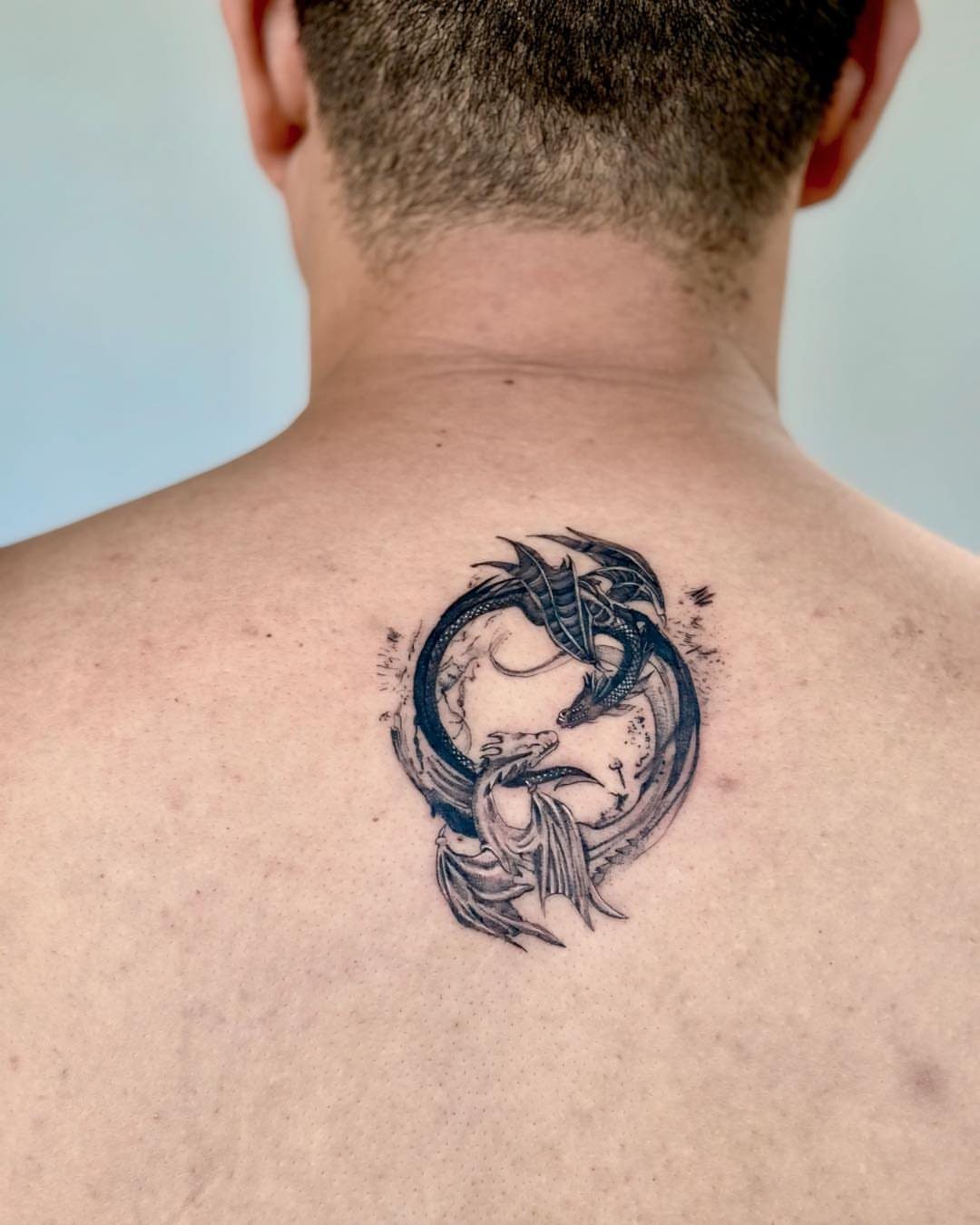
Two dragons forming a yin yang symbol captures balance and duality, with one dragon representing light and the other shadow.
The upper back between the shoulder blades centers the design and keeps it symmetrical, which matters when the concept itself is about equilibrium.
Black ink alone keeps the focus on the shape and movement of the dragons rather than color.
This suits someone who wants a dragon tattoo that carries philosophical weight, not just visual impact.
7. Flaming Dragon Tattoo
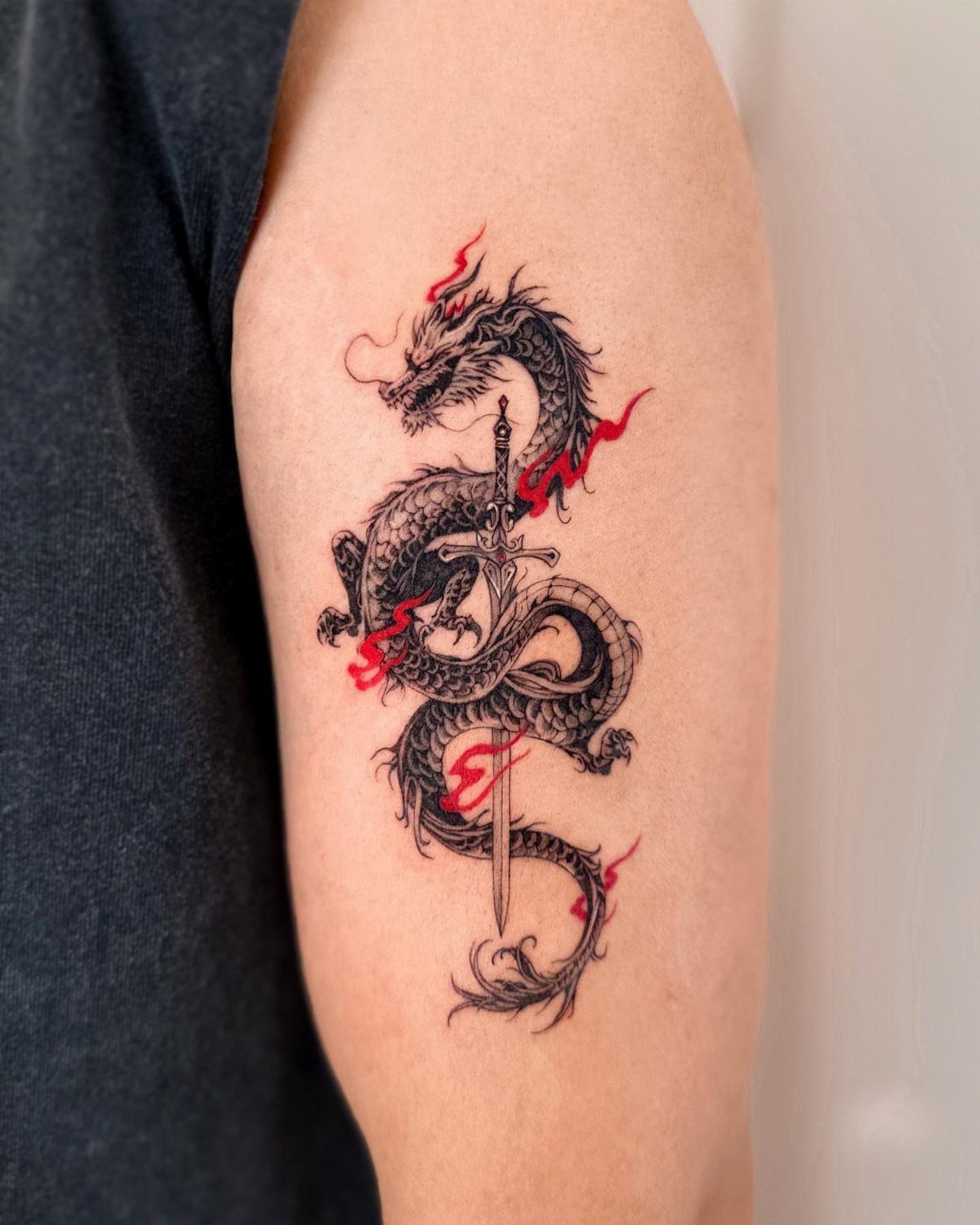
Flames rising around a dragon shift the tone toward intensity and raw energy, and when the fire runs red against black scales, the contrast pulls focus without needing a large canvas.
Wrapping the dragon around a sword or blade adds a vertical anchor that keeps the composition tight on the upper arm, where muscle movement makes the flames look like they’re actually flickering.
I reach for this version when someone wants a dragon that leans into passion rather than wisdom, and the red stays vivid longer than most people expect if the artist uses a saturated ink from the start.
Dragon Tattoo Styles
Tribal versions strip the dragon down to geometric curves and negative space, which reads clearly at a distance but loses the fine detail you get with scales or claws.
Realistic dragons need an artist comfortable with anatomy and shadow gradients, since a poorly shaded wing or claw can flatten the whole piece.
Minimalist line work keeps only the silhouette, which works well in smaller sizes but won’t hold the same impact as a fully rendered dragon.
The risk with fusion is losing the clarity of either style, so the composition needs deliberate balance rather than adding details for their own sake.
Differences in Dragon Mythology
Eastern dragons live in water and bring rain, which made them central to agricultural societies that relied on seasonal floods. Western dragons guard treasure in mountain caves and breathe fire, casting them as obstacles rather than protectors in most stories.
That shift in role changes what the tattoo signals.
An Asian dragon reads as benevolent power, tied to prosperity and good fortune. A Western dragon leans toward fearlessness and conquest, often chosen by someone marking a personal victory or survival.
The physical difference is just as stark.
Eastern dragons have serpentine bodies without wings, moving through air and water with equal ease. Western dragons are built like armored lizards with bat wings, grounded in the physical world even when airborne.
If you want a dragon that feels mythic without aggression, the Eastern version fits. If you want one that looks like a fight, the Western dragon delivers.
Cultural Significance
In ancient China, dragons controlled rain and water, which made them essential to survival in farming communities.
People burned incense and offered food during floods to calm them, and celebrated them during the wet seasons when crops depended on their favor.
Buddhism, Confucianism, and Taoism all treated dragons as beings capable of transformation, able to shrink, grow, disappear, or take human form. That flexibility tied them to change and renewal, not just raw power.
Dragons also represent yang energy and masculinity in traditional Chinese cosmology, balancing the yin forces in nature.
Strength, longevity, and prosperity all attach to the image, which is why you still see dragons in festivals, architecture, and ceremonial robes across Asia.
Frequently Asked Questions
What is the meaning behind an Asian dragon tattoo?
Asian dragon tattoos symbolize wisdom, strength, and good fortune, rooted in their role as water deities who controlled rain and prosperity in agricultural societies.
In Chinese cosmology, they carry yang energy and embody the cycles of renewal that govern natural order. The meaning shifts depending on style and personal intent, but the core associations remain tied to benevolent power rather than aggression.
What are the rules for a traditional Japanese dragon tattoo?
3 claws mark the Japanese form, and the body flows in a longer serpentine curve than its Chinese counterpart.
Bold black outlines anchor the composition, with selective red or gray fill that respects the limb’s contour. They’re viewed as benevolent guardians tied to wisdom and balance, not monsters, which sets them apart from Western versions.