A koi fish tattoo stretches best across surfaces that give it room to swim: the arm, leg, thigh, or a full sleeve that flows from chest to shoulder.
Placement decides how much detail survives, because a design that reads cleanly on a 6-inch forearm will look cramped on a 2-inch wrist.
Red ink brings traditional Japanese symbolism of strength and courage, but it fades faster than black and needs touch-ups every few years to stay sharp.
Direction matters if the meaning matters to you, and swimming upstream carries its own weight in Japanese tradition.
1. Arm Koi Fish Tattoo
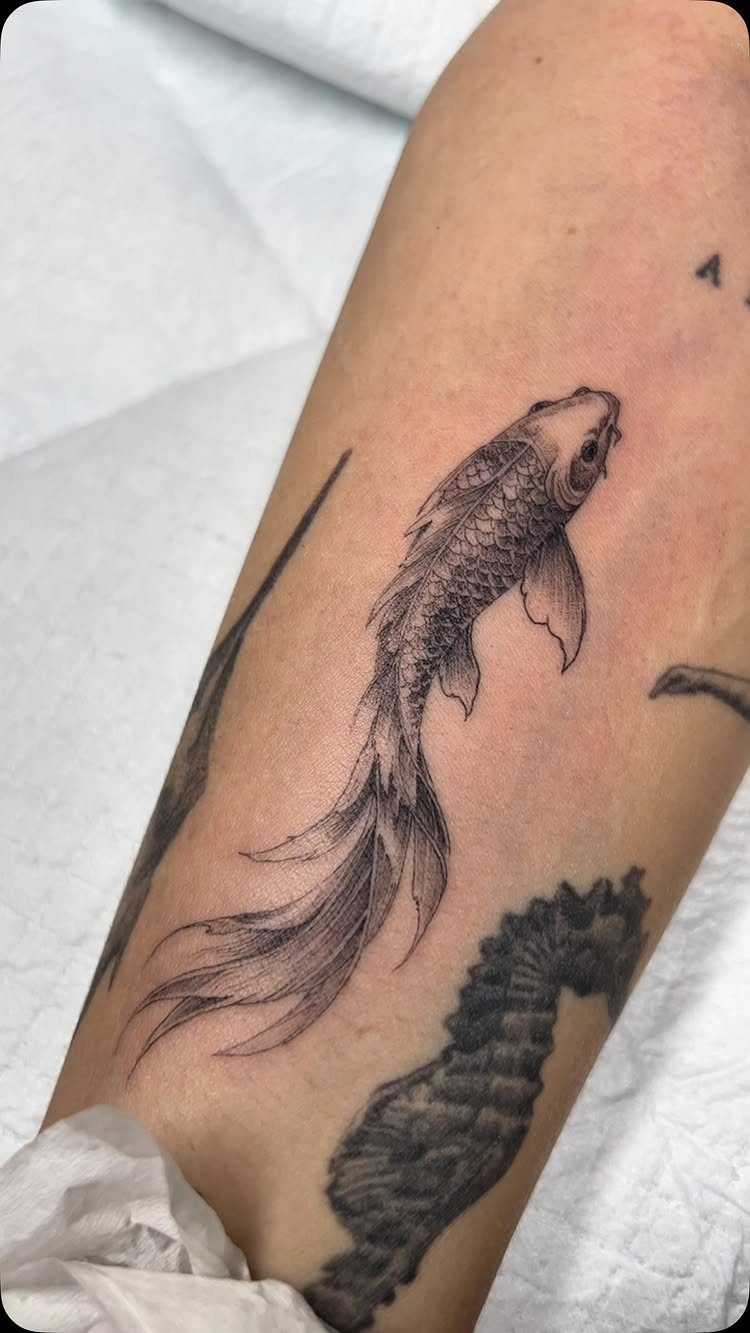
The arm gives you a canvas long enough to let a koi fish swim naturally, fin to tail, without cramping the proportions.
Black and grey keeps the focus on the scales, the flow of water, and the movement of the body.
I like the forearm for this because you can see it anytime, and the shape fits the muscle.
The outer bicep or the full sleeve offers more room when the forearm feels too narrow. Give the fish enough space to read clearly from across the room.
Pain is moderate. Healing takes about 2 weeks if you keep it clean and out of the sun.
2. Red Koi Fish Tattoo
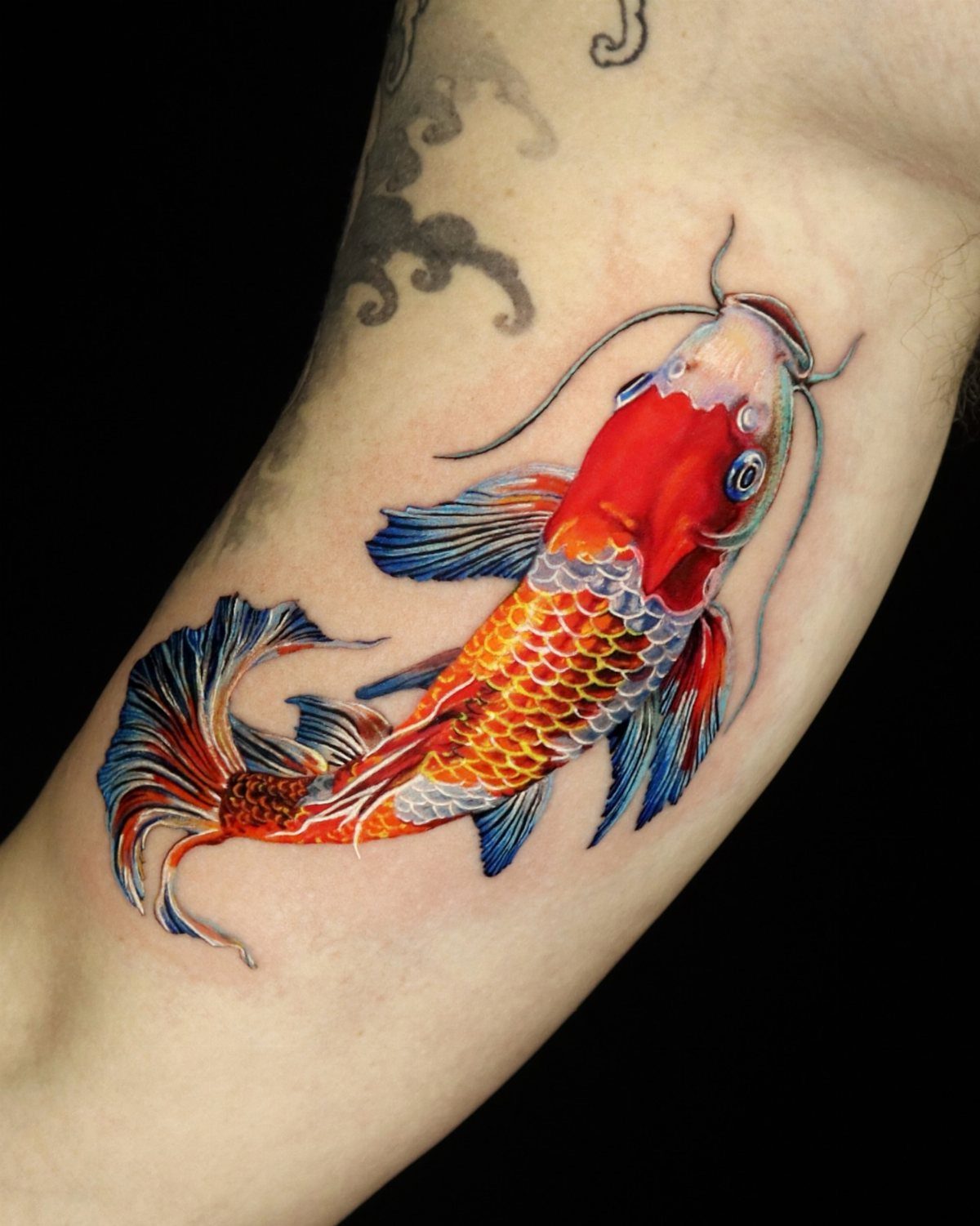
Red ink makes a koi fish feel alive.
The color carries meaning in Japanese tradition: strength, courage, and success after struggle. Orange tones and blue fins add contrast without fighting the red.
Bright colors need touch-ups over time because red and orange fade faster under sun exposure. Sunscreen helps, but expect to revisit the piece every few years to keep it sharp.
Size matters with color. Smaller pieces start to blur as the ink settles.
Go bigger to let the color hold its detail long-term. The forearm handles this size range well without stretching the design across a joint.
3. Traditional Koi Fish Tattoo
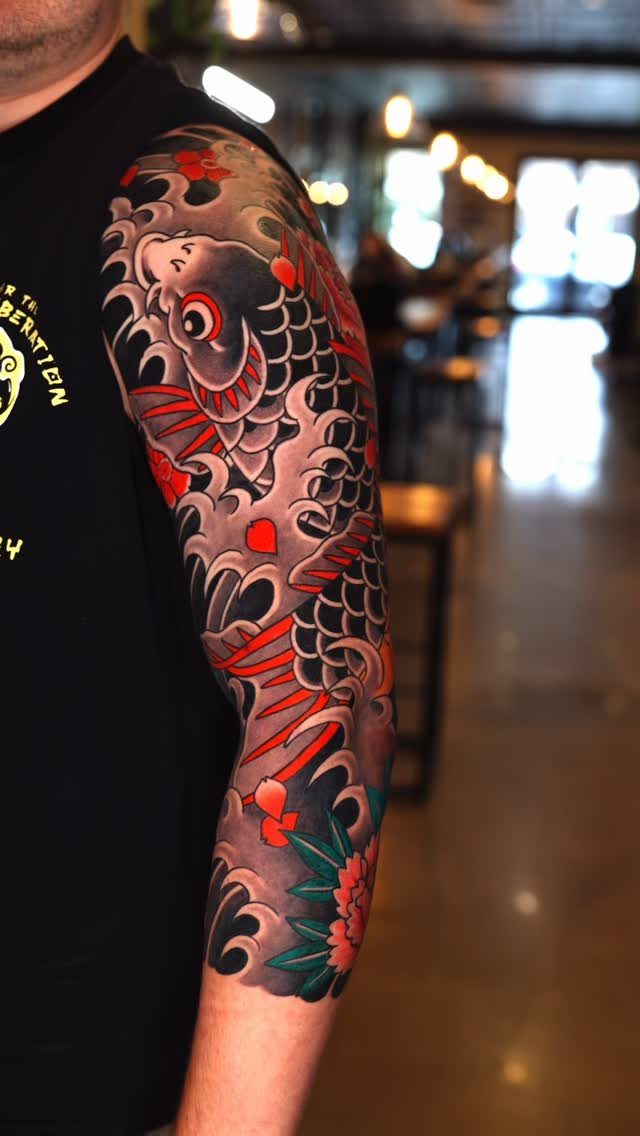
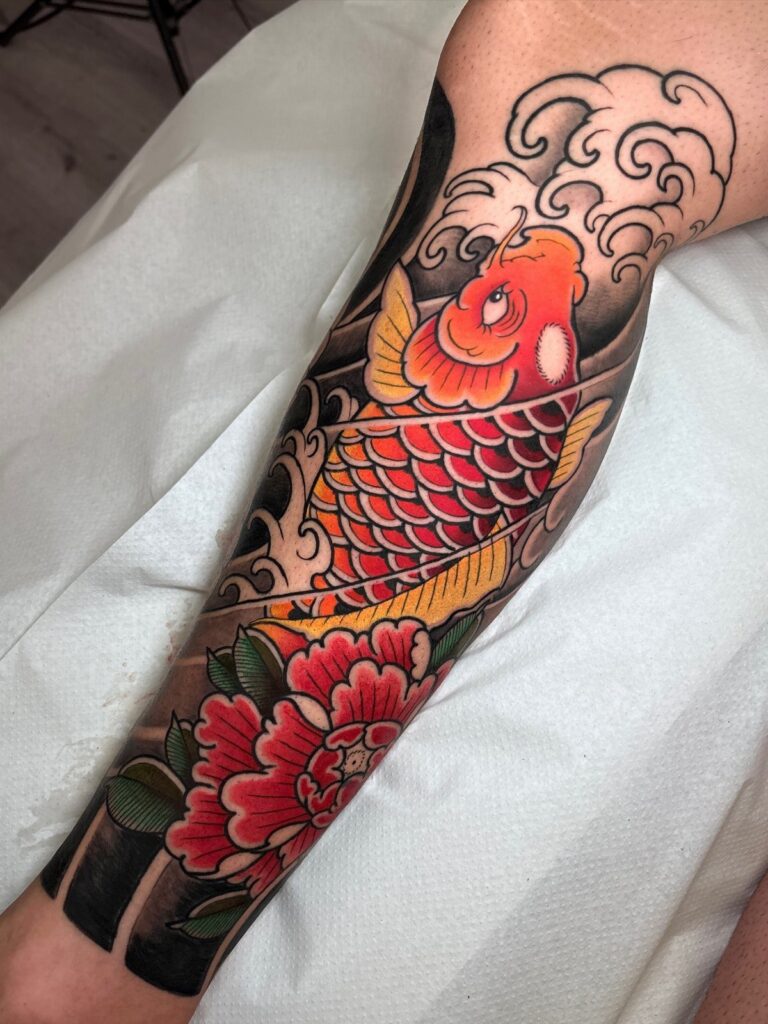
Traditional Japanese koi tattoos use bold outlines, limited shading, and solid blocks of red or black. The style comes from irezumi, where the fish sits among waves, clouds, or peonies, and every element has its place.
This reads across a crowded space.
The thick black line holds up over decades, and the red stays bright longer than you’d expect when it’s done right. Upper arm placement lets the design wrap slightly, giving the fish depth without needing a full sleeve.
4. Two Koi Fish Tattoo
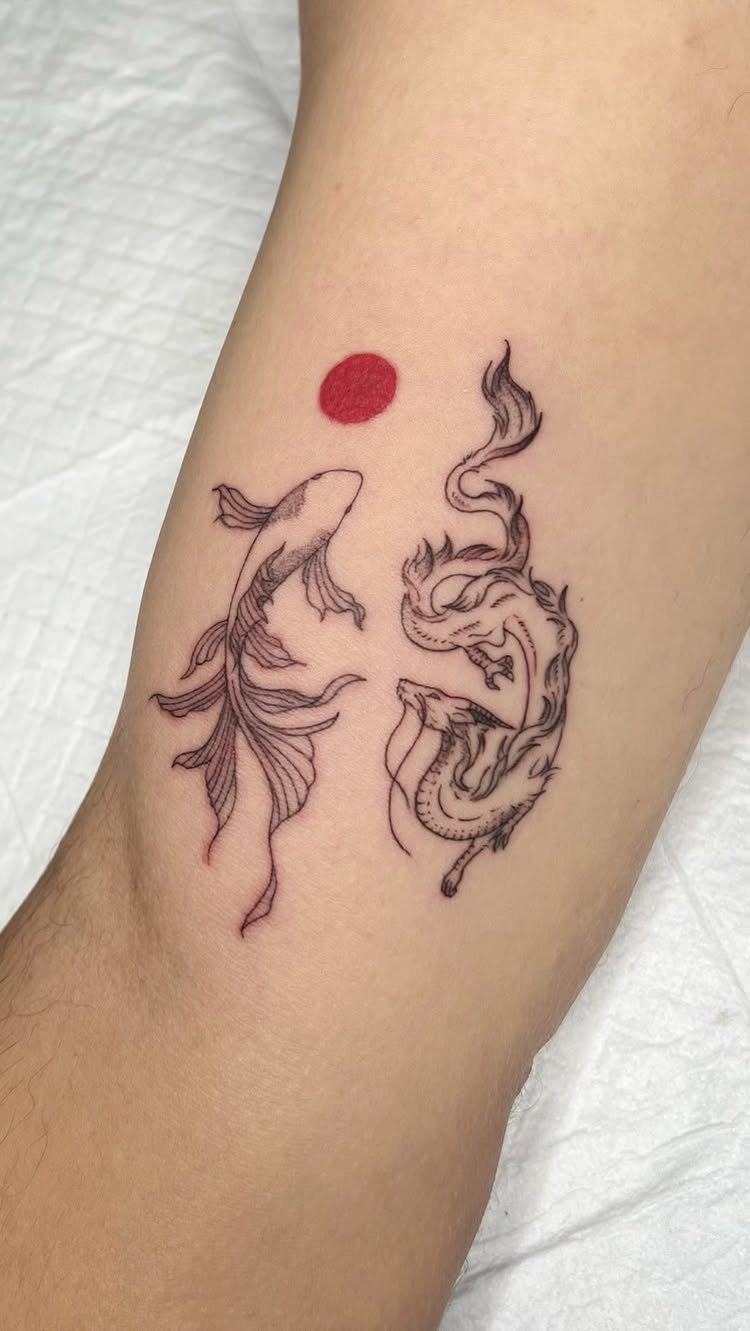
Two koi swimming in a circle represent balance: yin and yang, opposing forces that complete each other. One fish heads up, the other down, and the tension between them creates the whole.
A red sun or circle above ties the design to Japanese imagery and leaves the fish intact. Black ink keeps it simple, and the forearm offers just enough space to show both fish at full scale.
This design sits flat on the skin.
If you want movement, angle the fish slightly or add a few ripples. Otherwise, the symmetry does the work.
5. Koi Fish Tattoo Swimming Upstream
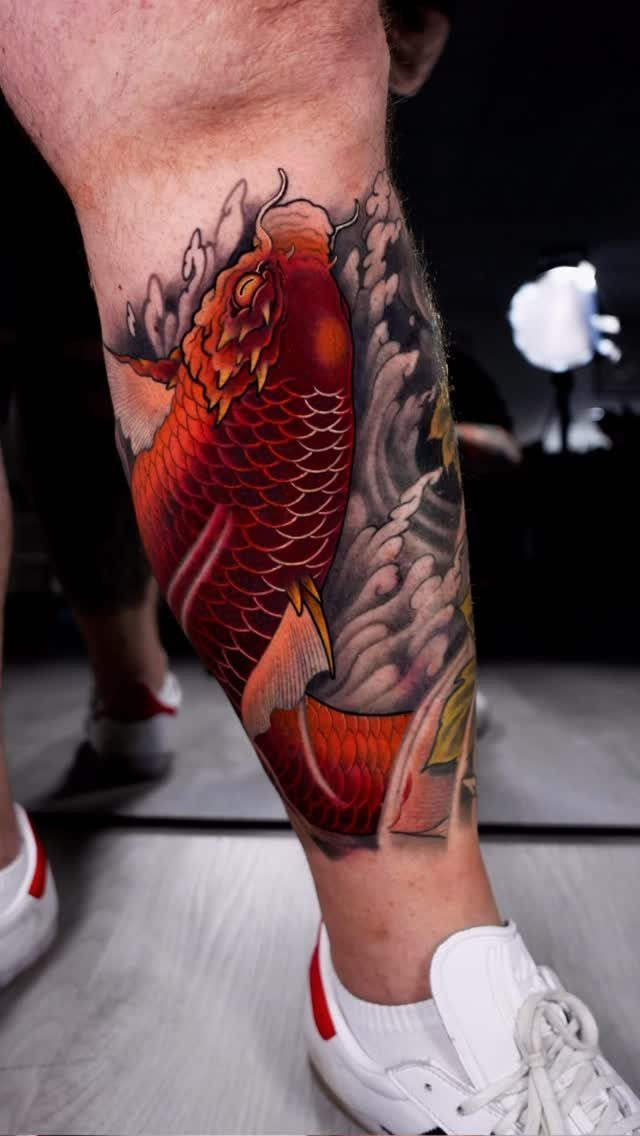
A koi swimming upstream tells a specific story: perseverance, fighting through difficulty, moving against the current. The fish angles upward, often through waves or clouds, and the direction matters.
Red works well here because it’s tied to strength.
Grey water or mist gives the fish something to push through without overpowering it. The lower leg handles vertical designs cleanly, and the natural curve of the calf follows the fish’s motion.
Pain is sharp along the shin but manageable on the calf. Loose pants help while the scab sets.
6. Leg Koi Fish Tattoo
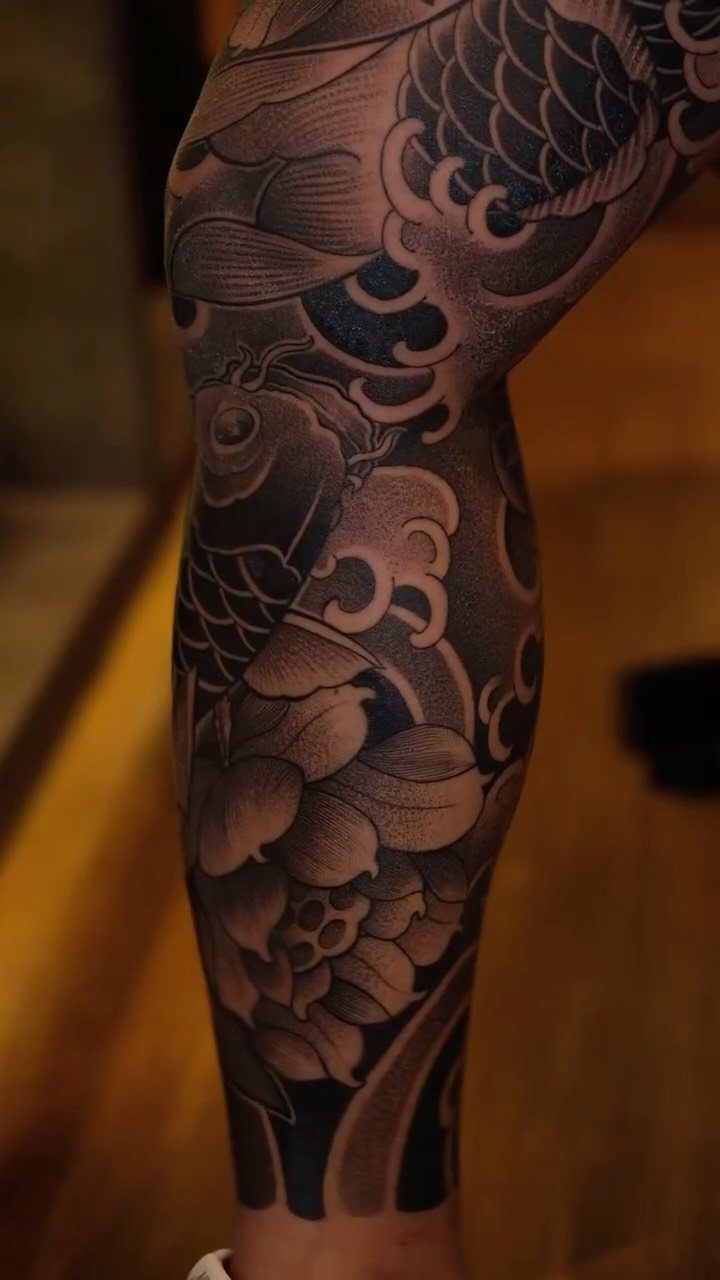
The lower leg gives you room to run a full koi fish vertically, with waves at the ankle and flowers near the knee. Black and grey keeps the design cohesive when you layer in lotus, peony, or cherry blossom.
This placement works for larger pieces without committing to a full sleeve.
The calf is easier to hide when needed, and the natural taper of the leg follows the shape of the fish. Leave enough space for the koi plus surrounding elements.
Pain is moderate on the outer calf, sharper along the shin.
7. Chest and Sleeve Koi Tattoo
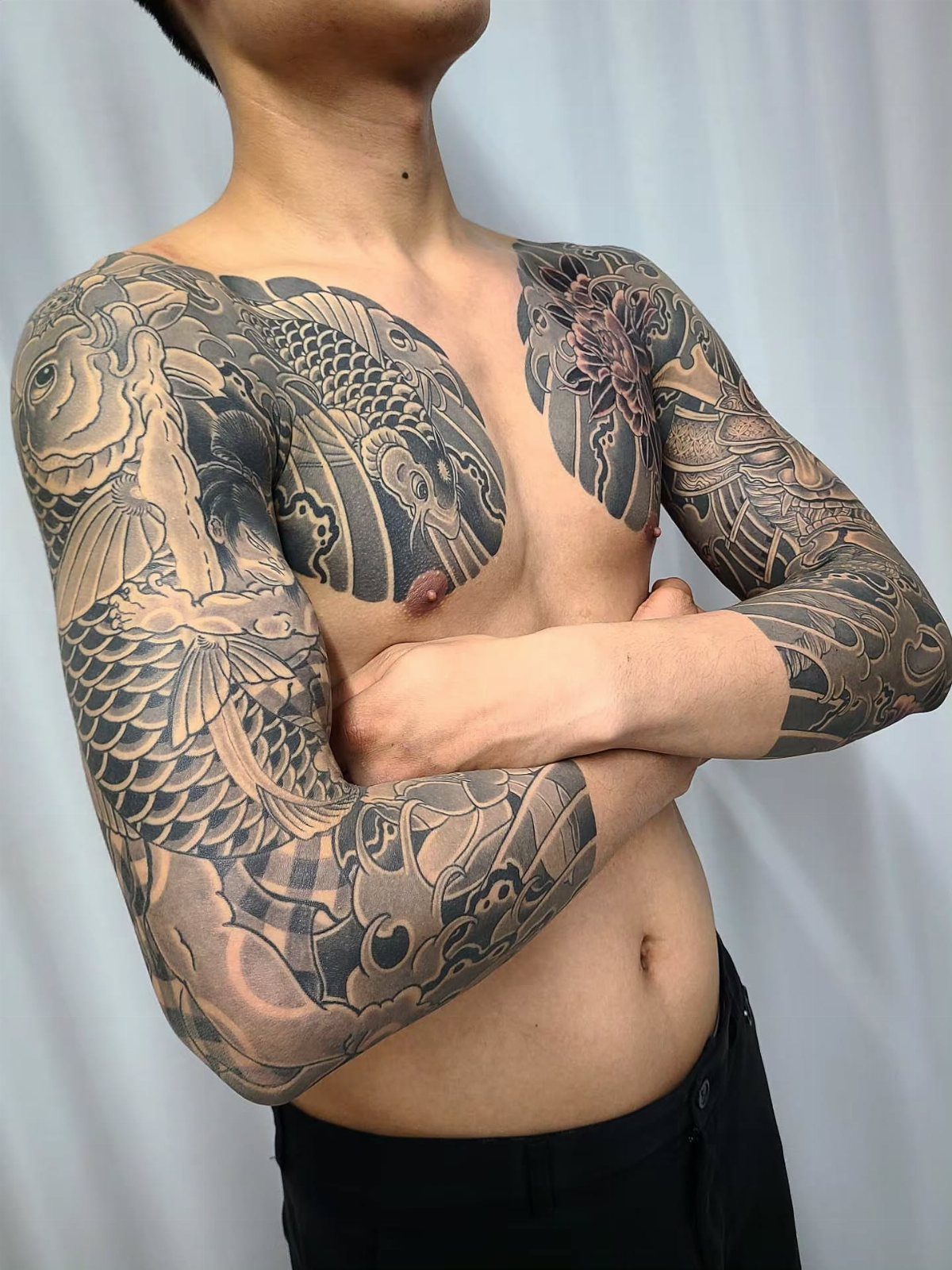
Chest and sleeve placement connects two large surfaces, letting the design flow from one side to the other without a hard stop. The koi can start at the collarbone, move across the chest, and continue down the arm.
Black and grey keeps the piece unified when it covers this much skin. Adding water, waves, or clouds fills the negative space without competing with the fish.
This takes multiple sessions.
The chest sits closer to bone, so pain is sharper there than on the arm. Layered sessions take time to heal fully, so space them out and follow aftercare carefully.
8. Thigh Koi Fish Tattoo
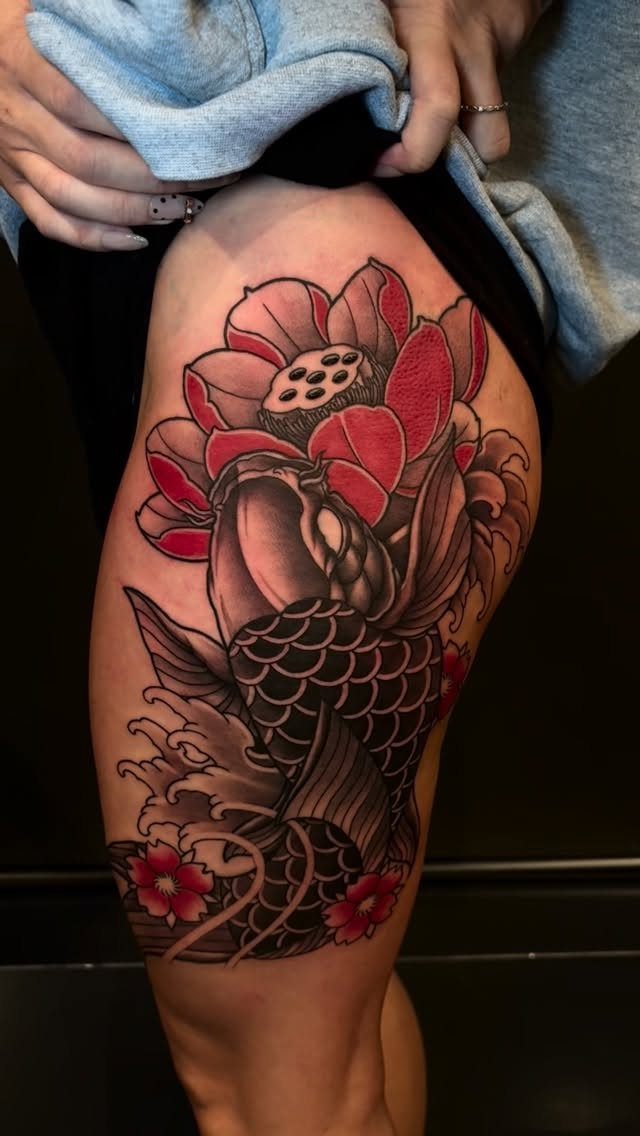
The thigh offers one of the largest flat surfaces on the body, so a koi this size holds all its detail without wrapping around a curve.
Pairing it with a red lotus and cherry blossoms adds traditional Japanese imagery without crowding the fish.
Red stands out against black ink, and the lotus ties the piece to water without needing full waves. The outer thigh keeps the tattoo easy to cover when needed.
Pain is mild compared to the ribs or chest. Loose clothing helps during the initial healing phase.
Choosing the Right Koi Tattoo
Placement decides how much detail survives.
A koi fish needs length to read right, so a design that fits cleanly on the forearm or calf will look cramped on a wrist or ankle. Match the body part to the proportions of the fish.
Size affects how color ages.
Smaller pieces lose sharpness as the ink spreads under the skin, and red fades faster than black. At any size, black and grey holds detail longer.
Design style splits between traditional irezumi and simpler modern work. Traditional pieces use bold outlines, solid color blocks, and surrounding elements like waves or flowers.
Modern versions strip that back to line work and light shading. Both read well if the scale is right.
If the koi carries personal meaning, pick symbols that match: direction for perseverance, paired fish for balance, red for strength. If it doesn’t, the design can still work on shape and movement alone.
Koi Tattoo Aesthetics
Color changes how the design reads over time.
Orange and black are the standard, but plenty of artists now work in blue, green, and purple for contrast. Black ink stays consistent.
Minimalist versions use line work and skip the fill entirely.
This keeps the piece light and lets the shape do the work. Add shading if you want depth, but the fish still reads without it.
Scale matters more with intricate designs.
Fine details blur as the tattoo ages, so smaller pieces benefit from simpler designs. Larger pieces can hold tight scales, layered fins, and water effects without losing clarity.
Cultural Significance of Koi Tattoos
Koi fish come from Japanese folklore, where they swim upstream through waterfalls and transform into dragons. Koi fish tattoos carry traditional symbolism of perseverance and transformation, but wearing one doesn’t require you to embrace that meaning.
In Japanese tradition, the fish also represents wealth, success, and good fortune. The layered cultural meanings behind koi fish tattoos—strength, luck, ambition—stack together, but they don’t define the tattoo unless you want them to.
The swimming direction tells part of the story. One swimming downstream suggests the hard part is over.
The koi rarely appears alone in that context; it’s surrounded by water, waves, lotus, peony, or cherry blossom. Each element adds meaning, but the fish holds the center.
Frequently Asked Questions
What is the symbol of koi?
Koi fish symbolize perseverance, transformation, and good fortune. In Japanese folklore the fish swims upstream through waterfalls and becomes a dragon, so it stands for perseverance and transformation.
That cultural layer stacks with wealth and success, but the tattoo works on movement and shape alone if the symbolism doesn’t fit.
What goes with a koi fish tattoo?
Koi pair well with lotus, peony, cherry blossom, waves, clouds, or a red sun.