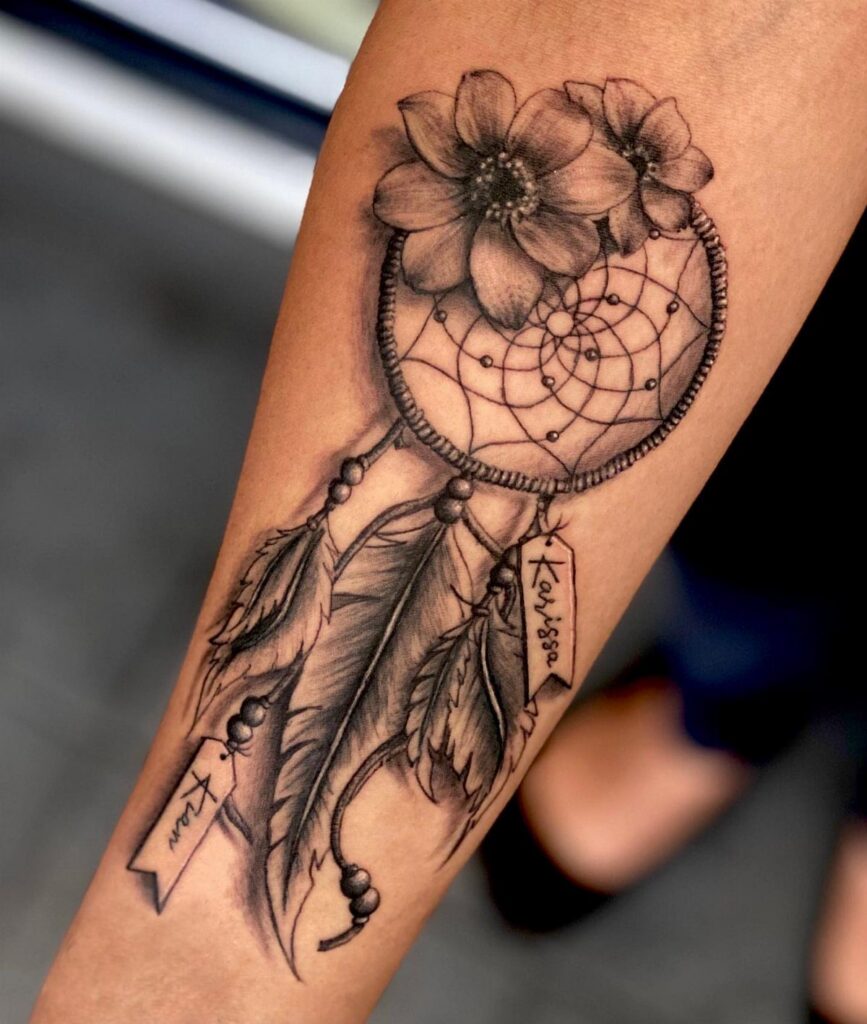
Dreamcatcher tattoos pull together wolf heads, butterflies, peace signs, compass points, Celtic knots, roses, moons, and colored feathers, sized anywhere from a 3-inch web on the forearm to a full back piece that needs multiple sessions.
The spot you pick depends on whether you want it visible daily or kept mostly private: forearm and collarbone stay in view year-round, while thigh hides under most clothing.
1. Dreamcatcher with Butterfly Tattoo
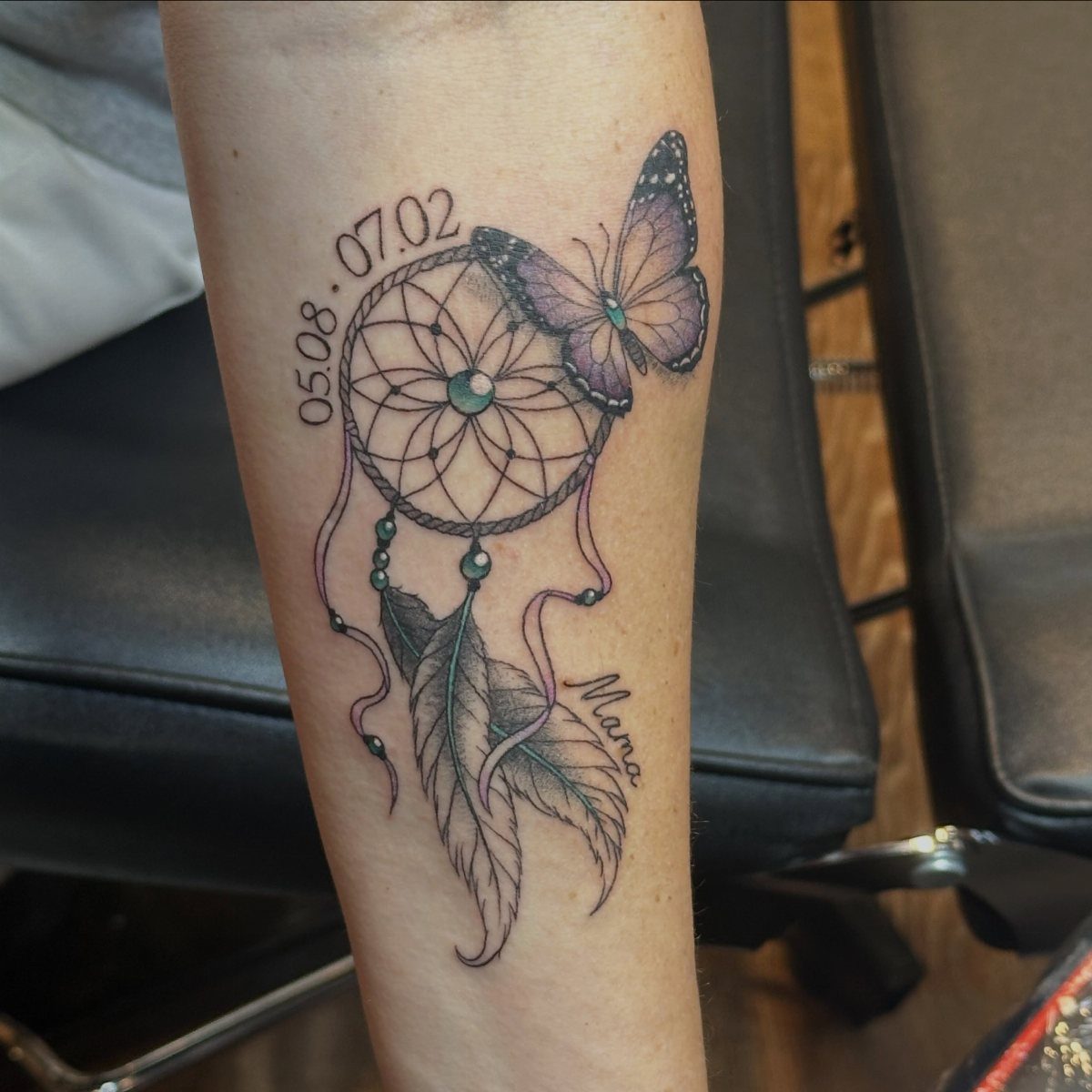
Butterflies layered into a dreamcatcher add transformation to protection. The circle holds bad dreams back, the butterfly marks change, and together they say you’re guarding the new version of yourself.
Feathers trail down, the butterfly lands anywhere in or around the web, and dates or names can sit below if this marks a specific moment.
I like the butterfly in color when the rest stays black; it lifts the design without making it busy.
Forearm or upper arm both work, tall enough to keep the web detail clear.
2. Peace Sign Dreamcatcher Tattoo
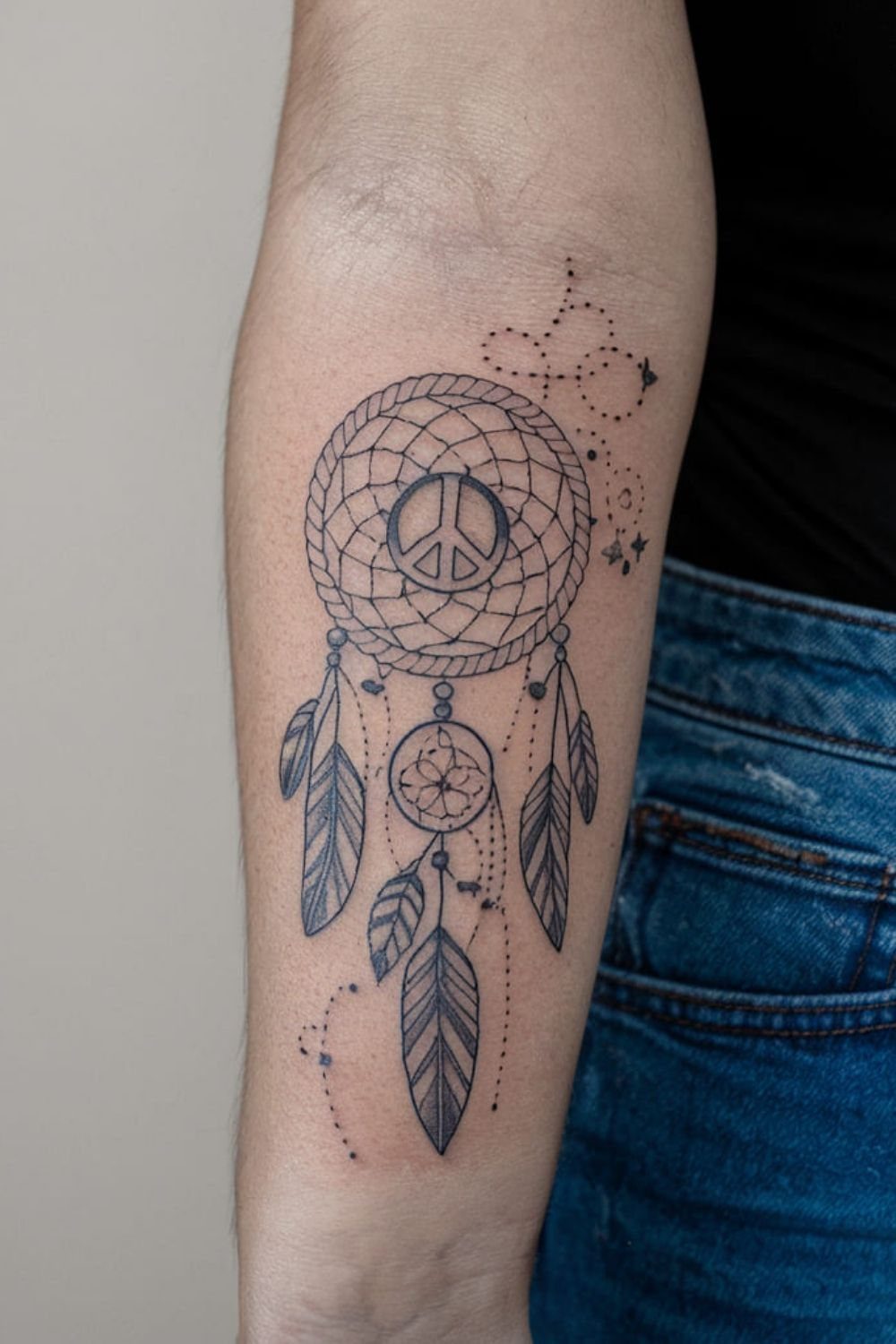
A peace sign woven into the center of the dreamcatcher flips the idea from spiritual filter to a statement about how you move through the world.
The web radiates out from the symbol, feathers hang below, and the whole thing reads clearly at a glance.
This suits someone who wants both protection and a visible value.
The sign itself needs clean lines to stay readable, so fine line or light shading keeps it sharp. Forearm or shoulder, 3–5 inches, and it sits flat enough that it won’t distort much over time.
A dream catcher tattoo symbolizes protection and positive energy. These artworks originated in the Native American cultures and are believed to filter out bad dreams.
3. Compass Dreamcatcher Tattoo
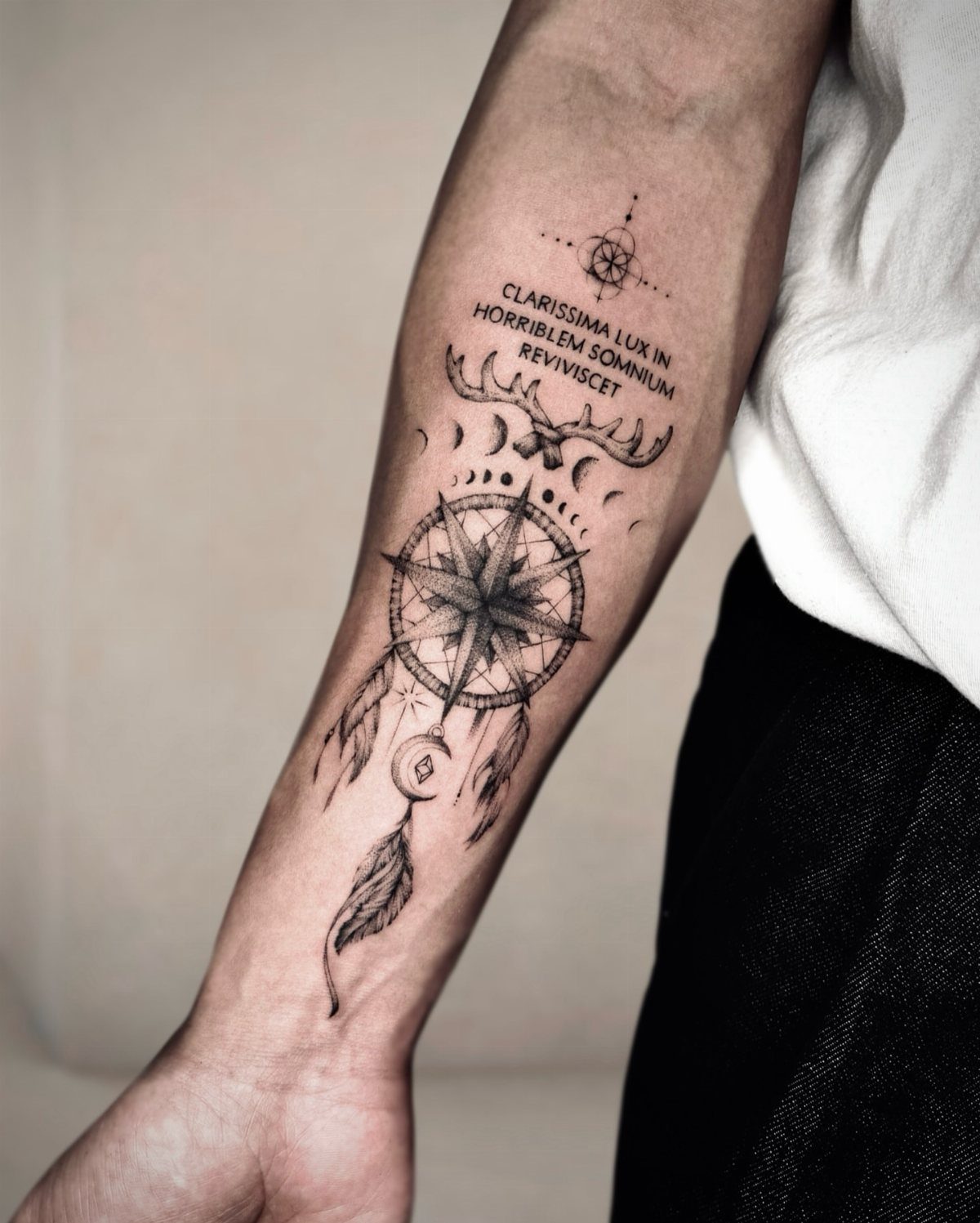
A compass rose replacing or sitting inside the dreamcatcher web adds direction to the idea of protection. You’re not just filtering what comes in, you’re oriented toward where you want to go.
Antlers, text, or celestial marks can frame it, but the compass itself needs enough detail to read as one. Latin phrases work if they mean something to you, but keep the font simple so it doesn’t compete with the linework.
4. Wolf Dreamcatcher Tattoo
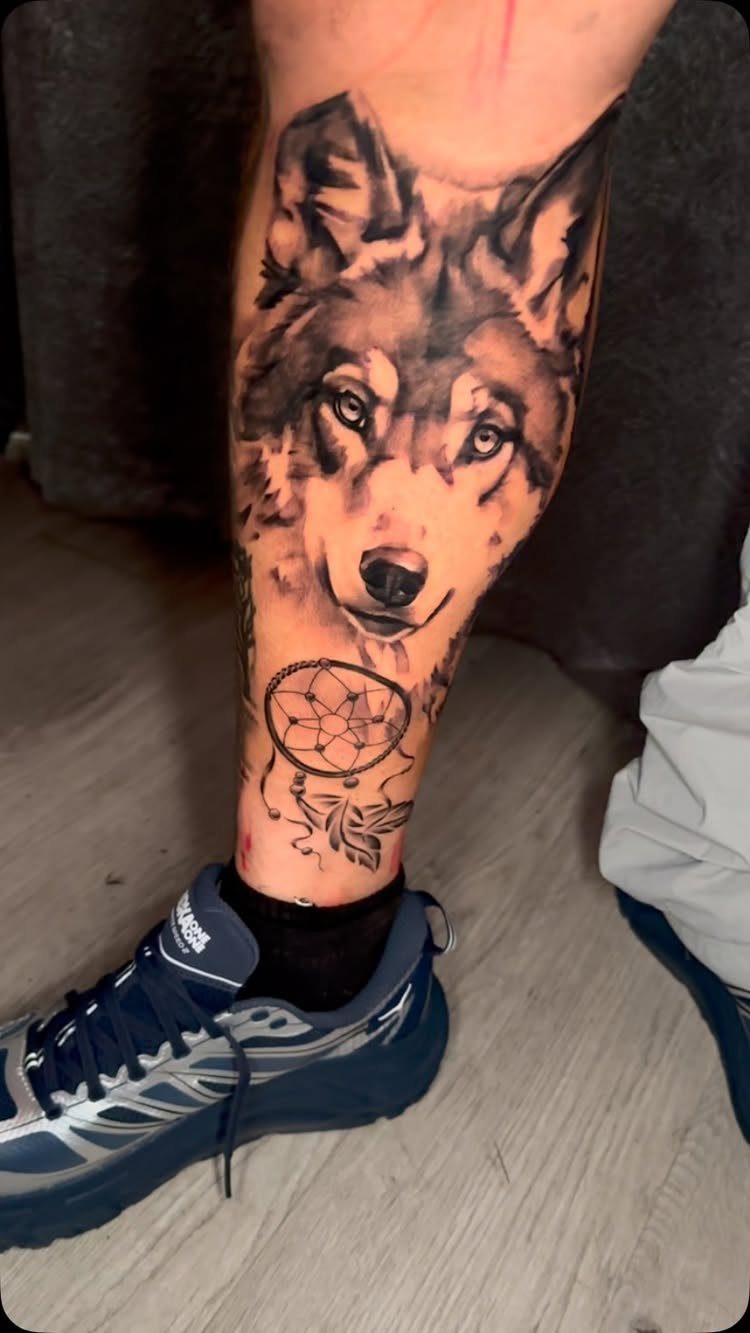
A wolf portrait anchored above or inside the dreamcatcher brings loyalty and instinct into the design. The animal becomes the protector, the dreamcatcher holds the symbolism, and the two read together without one overwhelming the other.
This needs space. A wolf face with any shading detail needs room on its own, so plan for extra length if the dreamcatcher sits below with feathers.
Lower leg or thigh both give you that height, and the piece can wrap slightly to follow the muscle.
5. Heart Dreamcatcher Tattoo
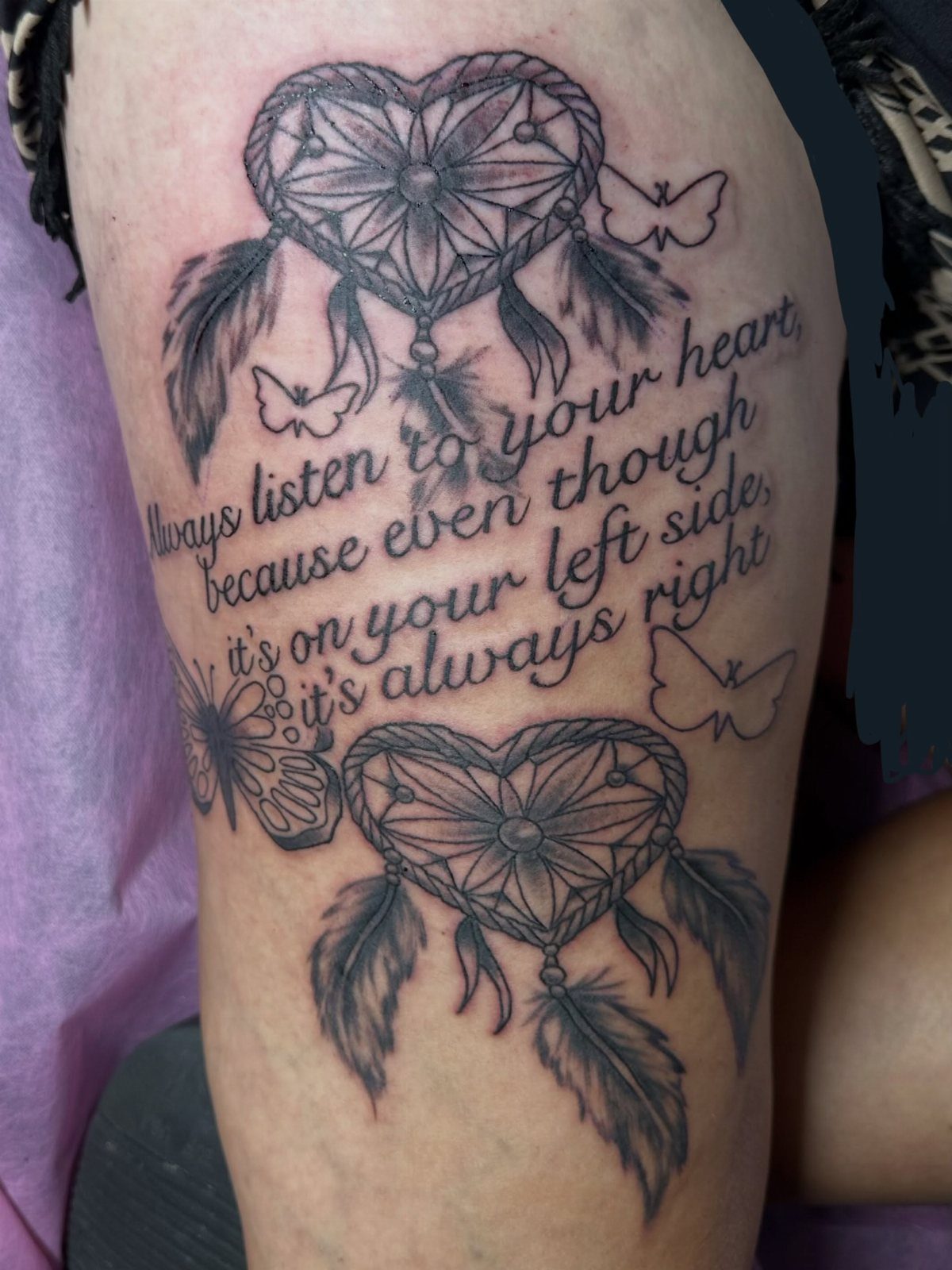
Shaping the dreamcatcher into a heart pulls the whole design toward love and emotional protection instead of just filtering bad dreams.
The web follows the heart outline, feathers drop from the bottom point, and butterflies or script can fill the space around it.
2 hearts side by side, like the example here, work for honoring a bond or a person.
I’d keep the line weight consistent so the hearts don’t look like separate ideas. This reads best on the thigh or ribs, where the curve of your body won’t pinch the shape.
6. Sun and Moon Dreamcatcher Tattoo
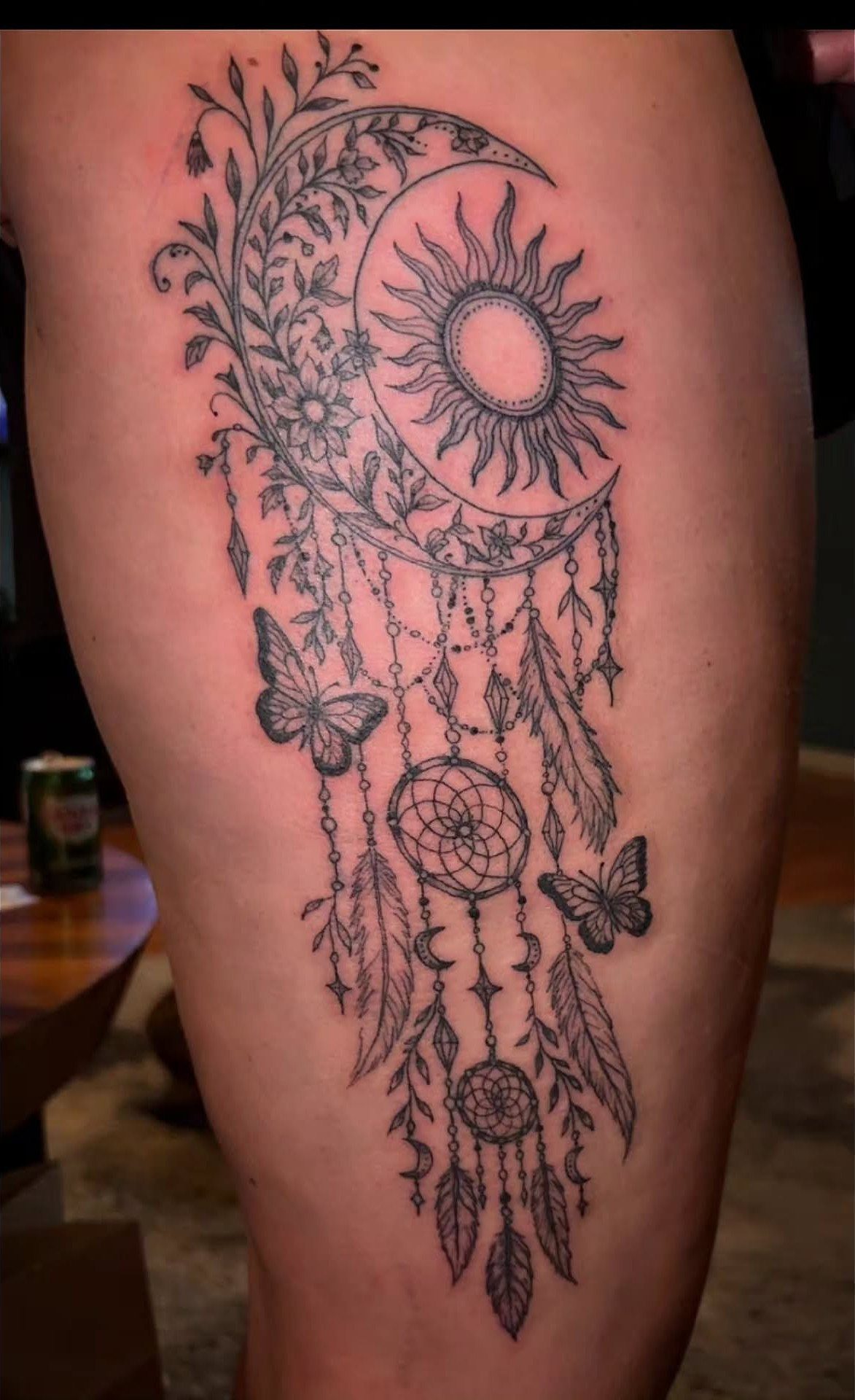
Sun and moon together inside or around the dreamcatcher balance day and night, waking intention and subconscious protection. The crescent and the rays frame the web, feathers hang through the middle, and butterflies or stars can fill the negative space.
This one benefits from a vertical layout so the elements stack without crowding. Thigh or outer arm, and I’d keep the moon shaded darker than the sun so the contrast does the work instead of adding too much detail.
7. Celtic Dreamcatcher Tattoo
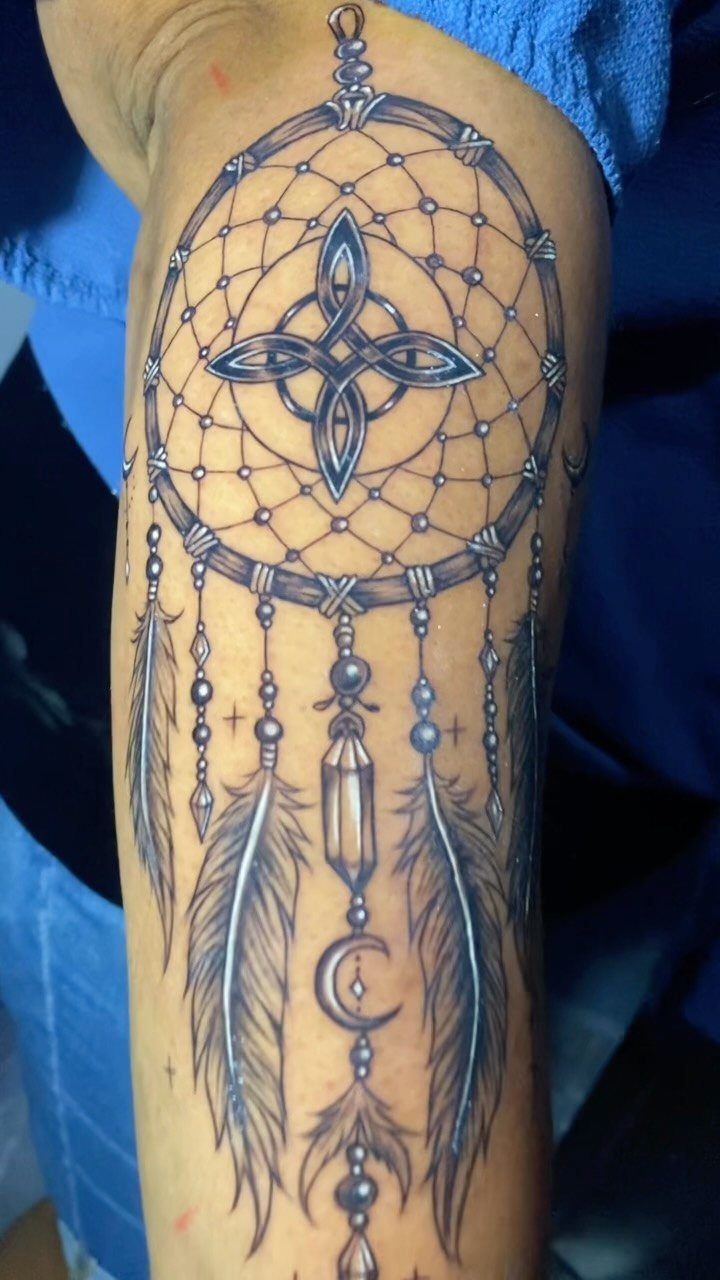
Celtic knots woven into the dreamcatcher web tie the design to eternity and unbroken cycles. The knot replaces or sits inside the center circle, feathers drop below, and the interlace pattern needs clean lines to stay readable.
This suits someone drawn to both Native and Celtic symbolism. Forearm or shoulder, and keep the knot detail tight so it doesn’t blur over time.
8. Colored Dreamcatcher Tattoo
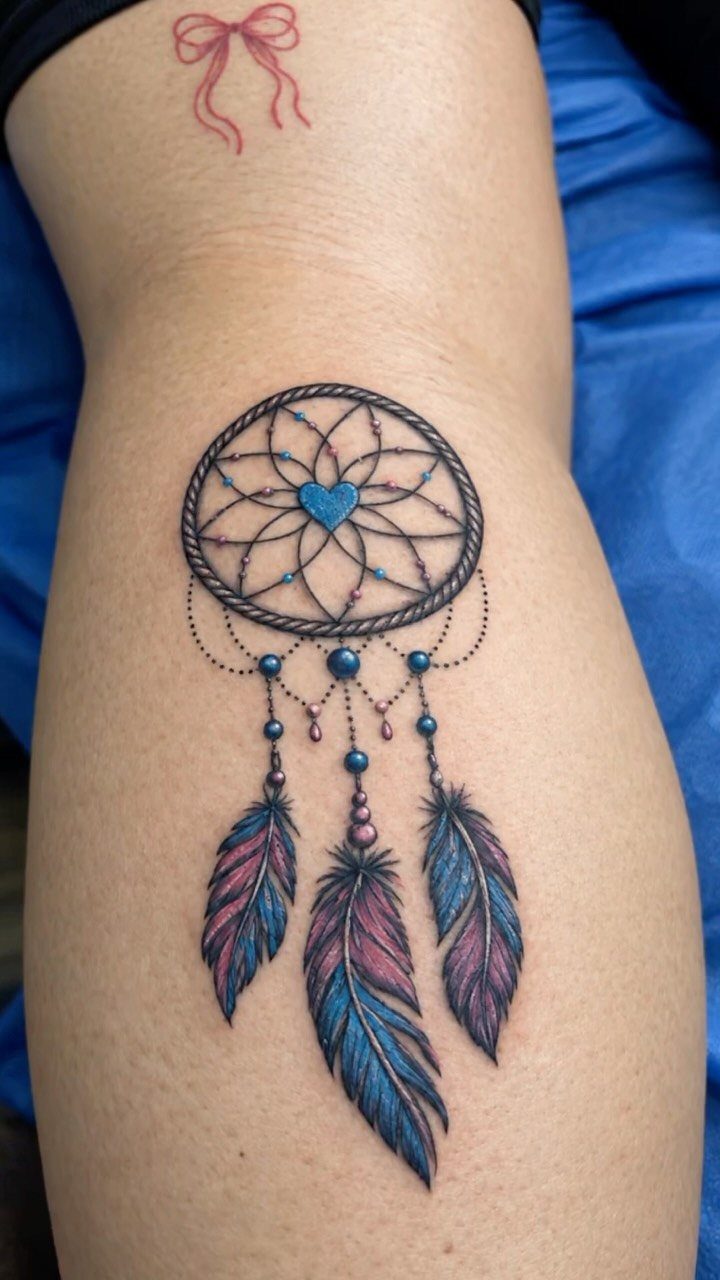
Color lifts a dreamcatcher from symbolic to eye-catching. Blues, pinks, purples in the feathers or beads, the web stays black, and the contrast makes it pop without losing the form.
I like color in the feathers where it mirrors the barring you’d see on real ones.
This needs a lighter hand with shading so the color doesn’t fade into murky, and touch-ups every few years keep it bright. Thigh or calf, where the skin stays covered most of the year, holds color longer.
9. Large Dreamcatcher Tattoo with Feathers
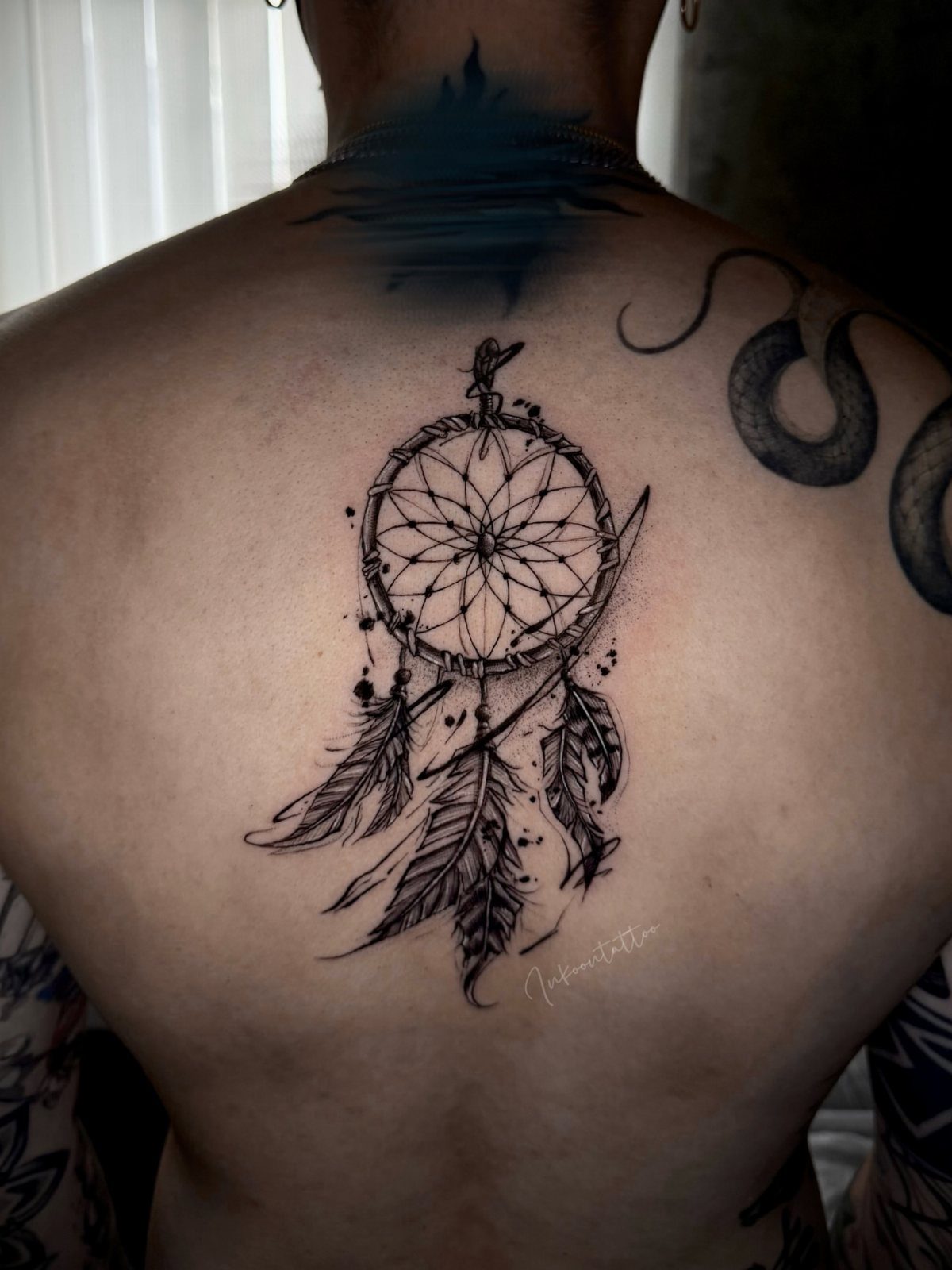
Scale changes how a dreamcatcher reads. A large piece across the upper back or down the spine gives room for deep web detail, long feathers with individual barbs, and shading that makes the whole thing sit three-dimensional.
This takes multiple sessions and a higher total cost, but you end up with something that fills the space intentionally instead of looking stretched. Upper back between the shoulder blades, and the width can follow your frame.
10. Moon Dreamcatcher Tattoo
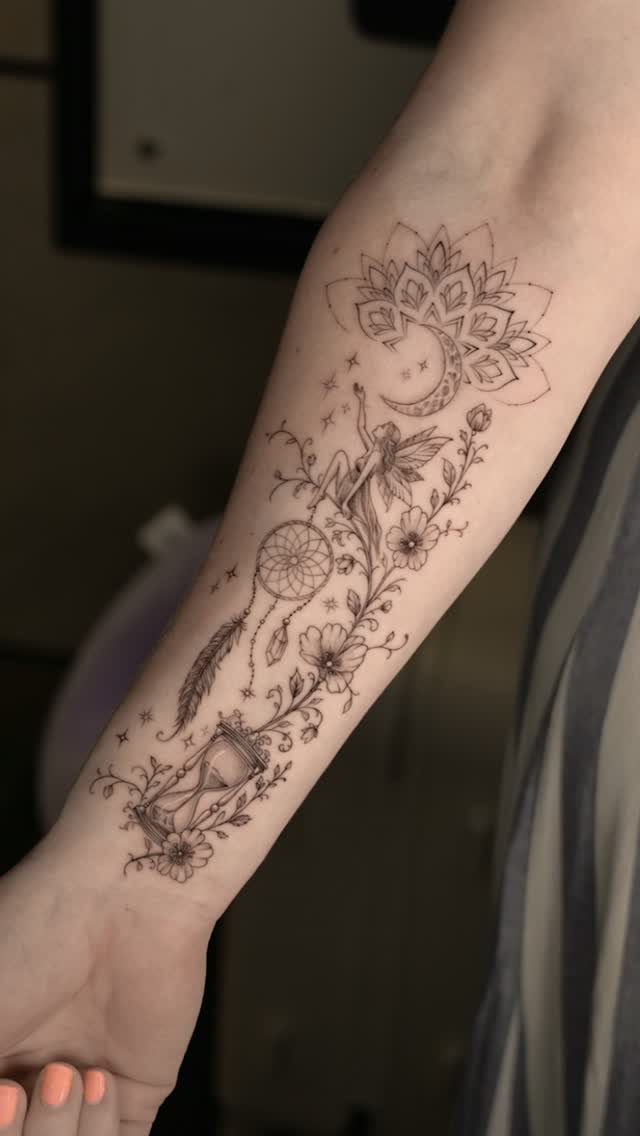
A crescent moon folded into the dreamcatcher ties nighttime protection to lunar cycles and feminine energy. The moon can arc above the web, replace the circle entirely, or sit inside with the horns framing feathers.
On the arm or outer thigh, I’d shade the moon darker than the web so it reads first.
11. Dreamcatcher Tattoo with Name
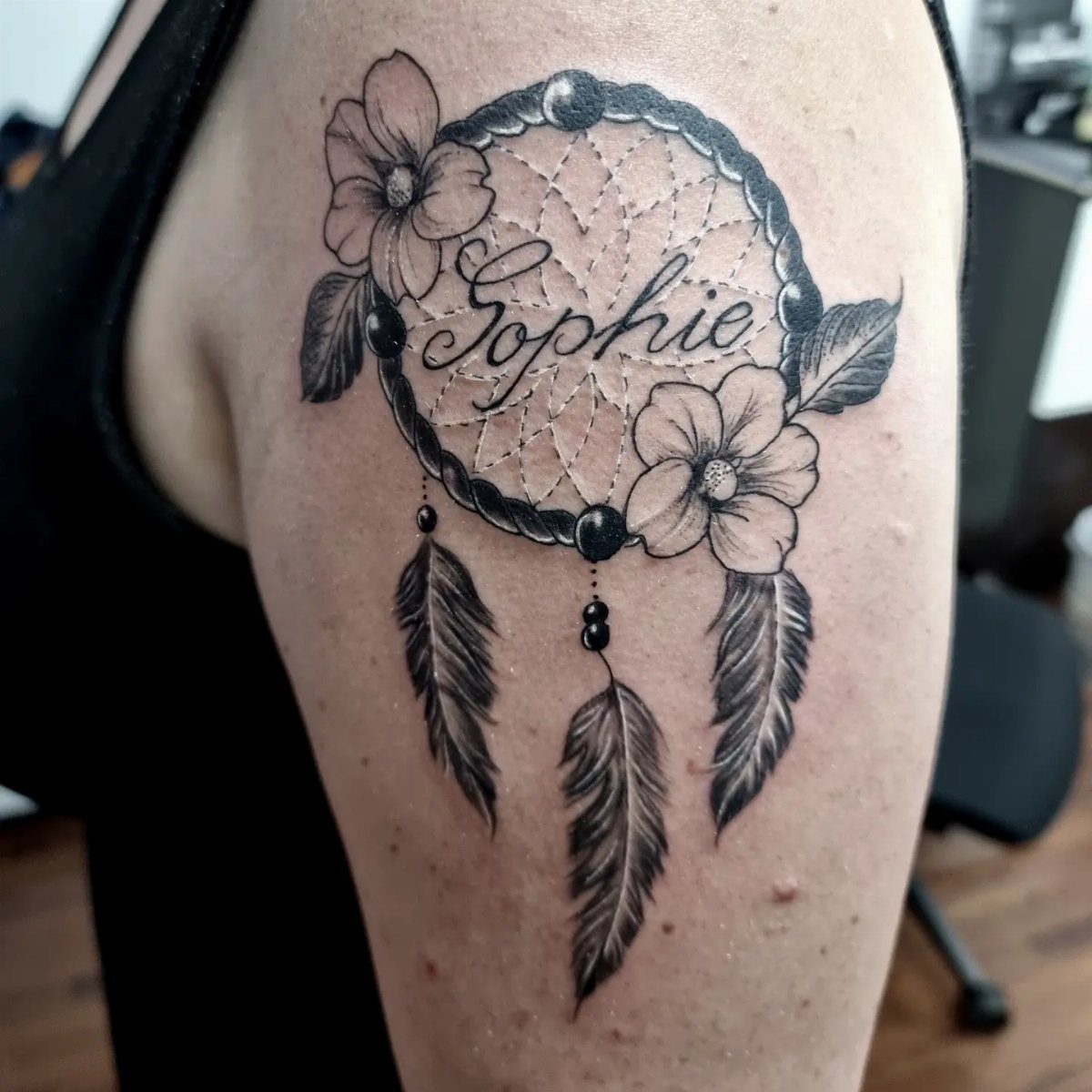
A name inked into the feathers or below the web makes the protection personal. This marks who the dreamcatcher is for or who you’re honoring, and the script needs to match the linework so it doesn’t look added on later.
Flowers or beads can frame the name, but keep the font simple and the size large enough to age well. Upper arm or thigh, where the curve won’t warp the letters.
12. Dreamcatcher Tattoo on Thigh
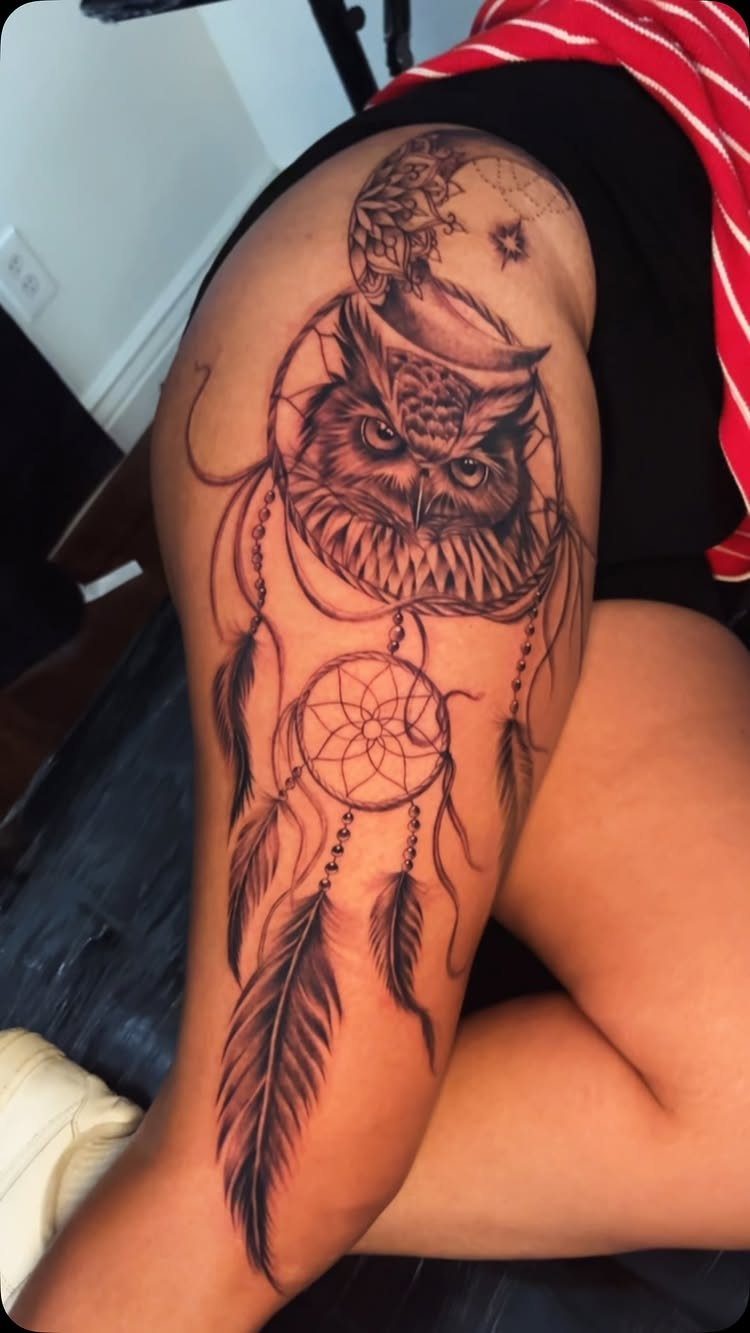
The thigh gives you vertical room and a flat canvas that won’t distort much with movement.
A dreamcatcher here can run tall with long feathers, layer in animals like an owl or wolf, and hold detail that would crowd a smaller spot.
This suits someone who wants the symbolism without it being visible all the time. Outer thigh, and the piece can wrap slightly toward the front or back to follow your leg.
13. Rose Dreamcatcher Tattoo
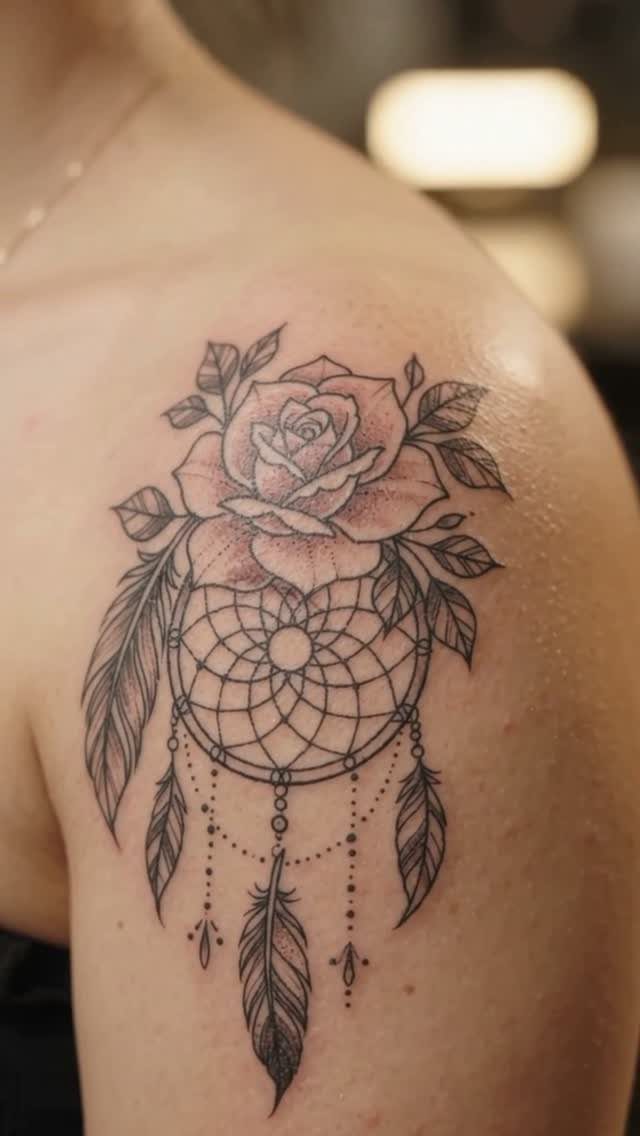
A rose woven into the dreamcatcher adds beauty and personal meaning to protection.
I like this best when the rose stays in proportion to the web so neither one disappears.
Black ink with layered shading in the petals gives depth without needing color. Shoulder or upper arm, and the piece can curve slightly to follow your body.
Placement Considerations
Visibility matters if your work requires conservative dress or covering the piece is sometimes necessary. Upper arm, shoulder blade, and thigh all hide under most clothing, while forearm, wrist, and collarbone stay visible year-round.
Pain tolerance varies by spot. Ribs, spine, and inner arm hurt more than outer arm or thigh because the skin sits closer to bone with less fat underneath.
If this is your first tattoo, starting on the outer arm or thigh gives you a read on how you handle it before committing to a more sensitive area.
Personal significance can guide the choice. A dreamcatcher meant to honor someone might go where you see it daily, like the forearm.
One tied to private meaning or a moment you’re still processing might feel better on the ribs or upper thigh, where it stays mostly yours.
Design Customization
A dreamcatcher holds its core symbolism, but the elements you add make it yours.
Feathers can mirror birds that mean something to you: eagle for strength, owl for wisdom, or hummingbird for joy. Beads can mark dates, initials, or birthstones without spelling anything out.
Flowers shift the tone.
A rose tied into the web brings love and passion, a lotus adds spiritual growth, and wildflowers lighten the whole design. If the flower already carries meaning in your life, it belongs there.
A wolf adds loyalty and instinct, an owl brings night vision and intuition, and a butterfly marks transformation.
The animal can sit inside the web, above it, or woven into the feathers, but it needs enough detail to read clearly on its own.
Script works when it’s short and personal: a name, a date, a few words in a language that matters to you.