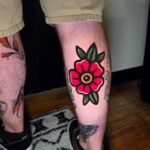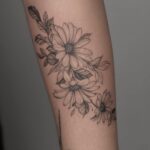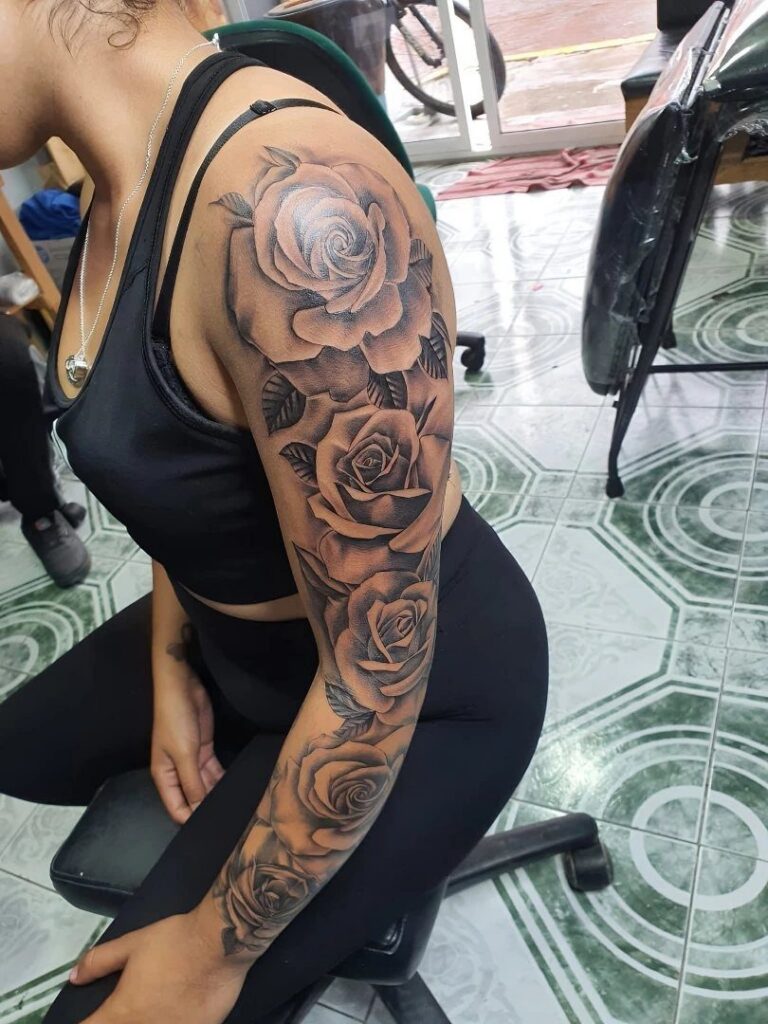
Flower tattoos for women range from a 2 cm fine line daisy on the upper arm to a full sleeve of layered roses and chrysanthemums that takes multiple sessions, and the right one depends on how much skin you want to cover and whether you need the piece to stay hidden under work clothes.
A sunflower on the forearm sits where you see it daily, while a magnolia on the upper shoulder wraps around the curve of the muscle and stays covered in most professional clothing.
Poppies fade faster than black linework orchids, and a single-line rose ages more predictably than a color-blended hibiscus, so the style you pick changes how often you’ll need a touch-up.
1. Sunflower Tattoos
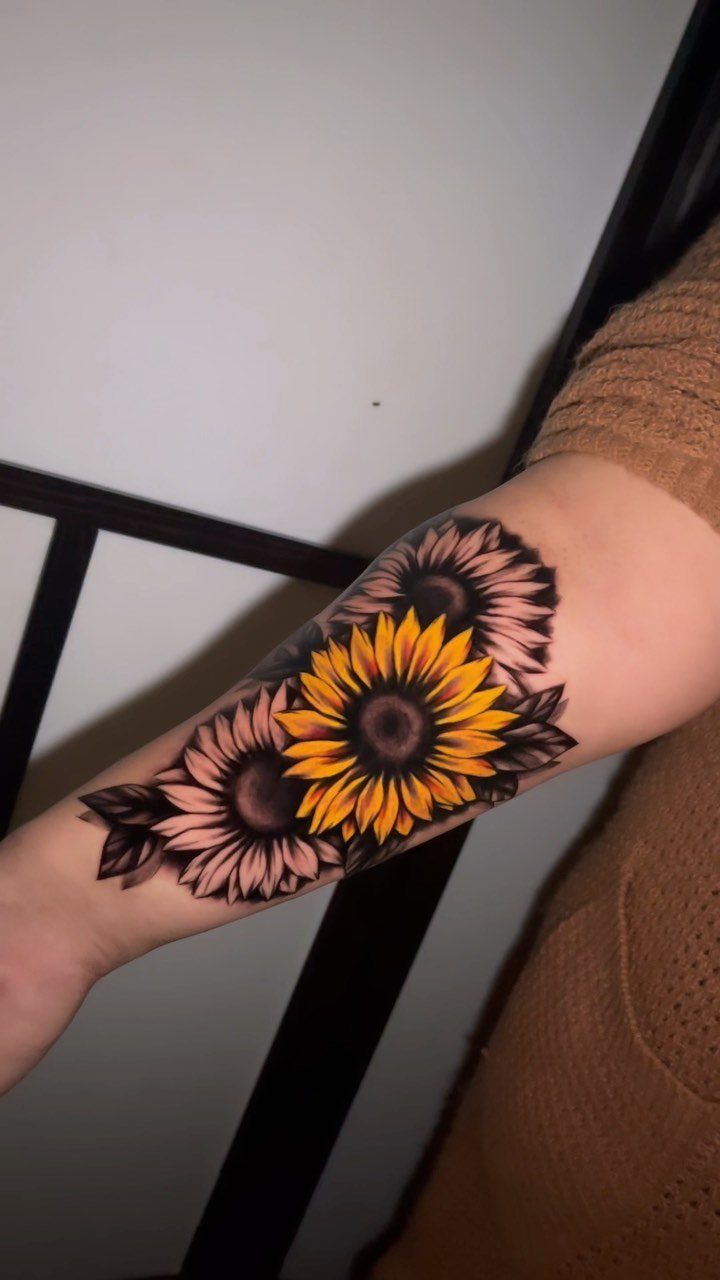
Sunflowers read as loyalty and happiness, and on the forearm they sit where you see them daily. 2 filled blooms in black and grey ink beside outlined petals add depth without weight.
Forearms handle sunflower tattoos well because the petals radiate outward and fill the width of the arm naturally. A cluster of 2 to 3 flowers fills the space without crowding out the stems and leaves that balance the composition.
Touch-ups every few years bring the yellow saturation back.
2. Cherry Blossom Tattoos
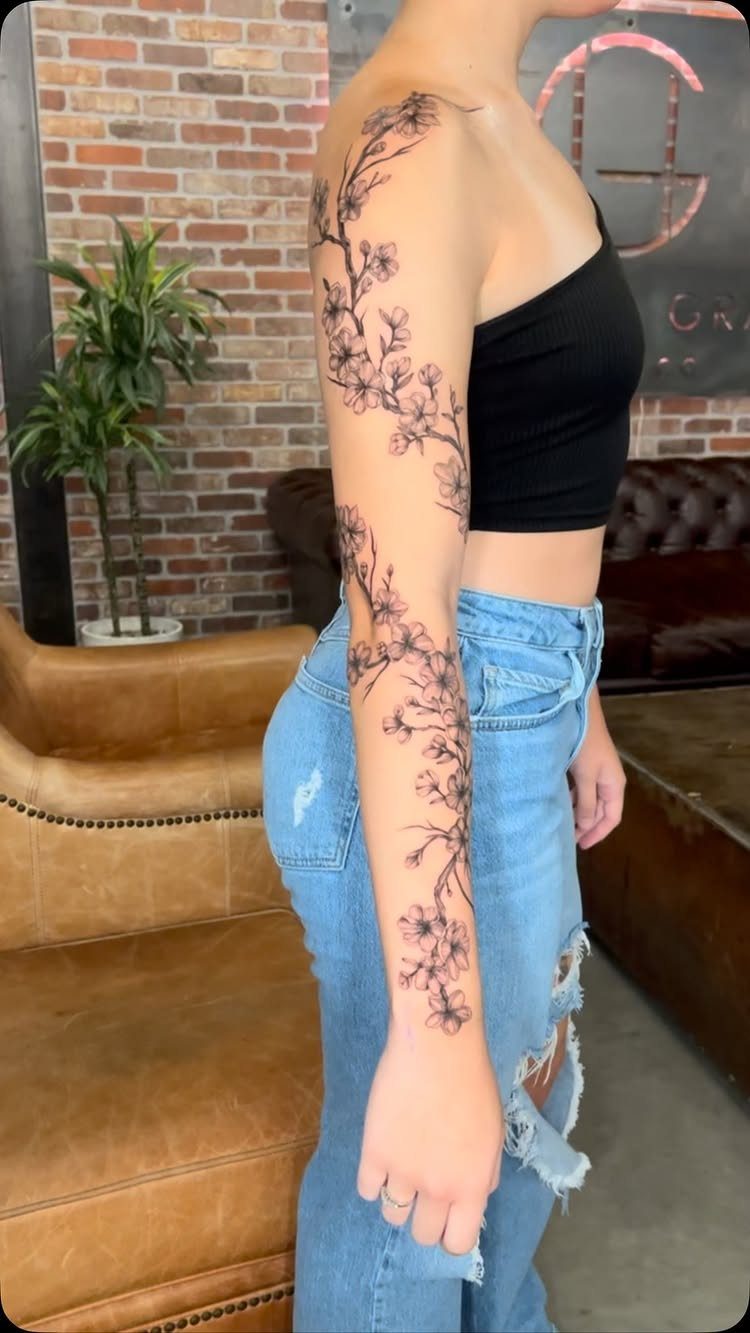
Cherry blossoms stretch well along the arm because the branch follows the natural line from shoulder to wrist.
The flowers cluster at intervals, so the design never looks like a solid mass of ink, and the negative space keeps it readable.
Placement on the outer arm means the tattoo stays visible in short sleeves.
I prefer this to an inner-arm cherry blossom because the branch reads more naturally when it flows down the side of the limb rather than wrapping around it.
Plan for the shoulder and inner elbow to feel sharper than the rest.
3. Lily Tattoos
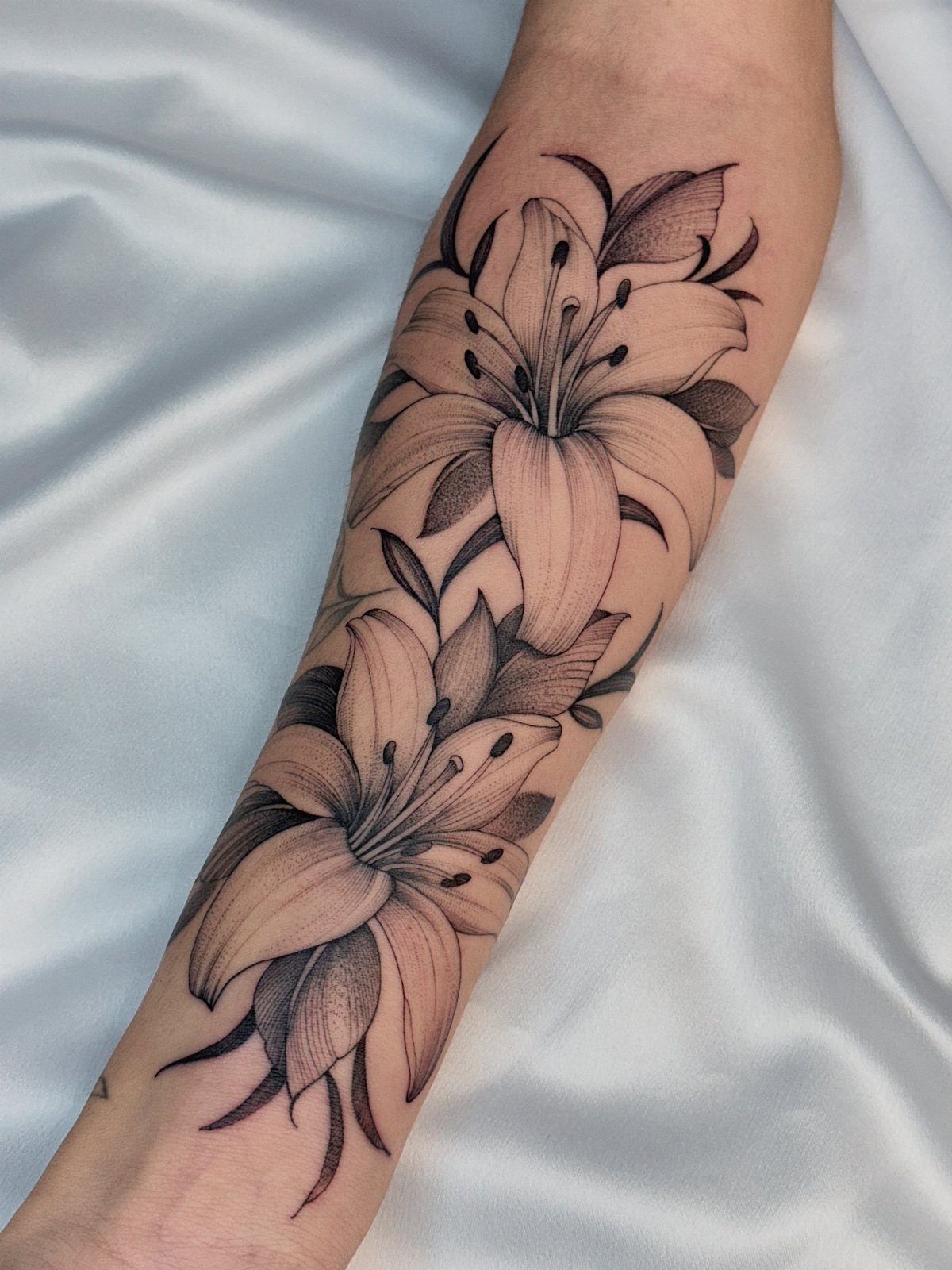
Lilies carry clean lines and a symmetry that makes them easier to tattoo than roses, which have layered petals that can blur together if the artist isn’t careful.
Purity and renewal are the usual meanings, and the lily’s shape makes it easy to place vertically on an arm or leg. The stamen in the center acts as a focal point, so the eye knows where to land first.
A forearm lily in this size takes about 2 hours and reads clearly even from across a room.
4. Rose Tattoos
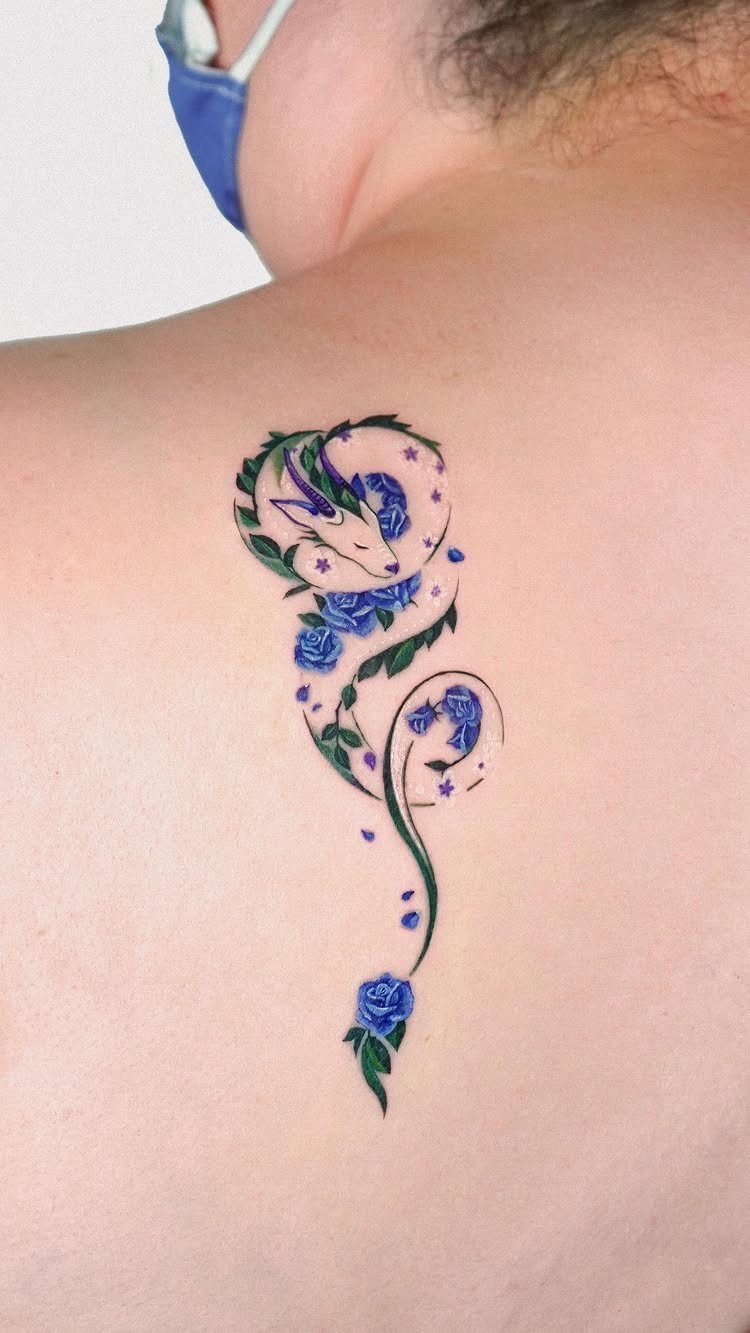
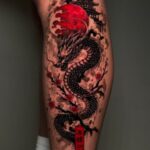
Roses carry meaning through color: red reads as romantic love, blue as mystery, white as new beginnings. Pairing a rose with another element, like the dragon here, turns the piece into something more narrative than a standalone flower.
I like blue roses because they don’t exist in nature, so they automatically signal something imagined or aspirational. The green leaves ground the design and keep the blue from looking too detached from the rest of the piece.
A back placement like this leaves room to add more later. Upper back ink heals cleanly as long as you avoid tight bra straps while it’s fresh.
5. Lotus Flower Tattoos
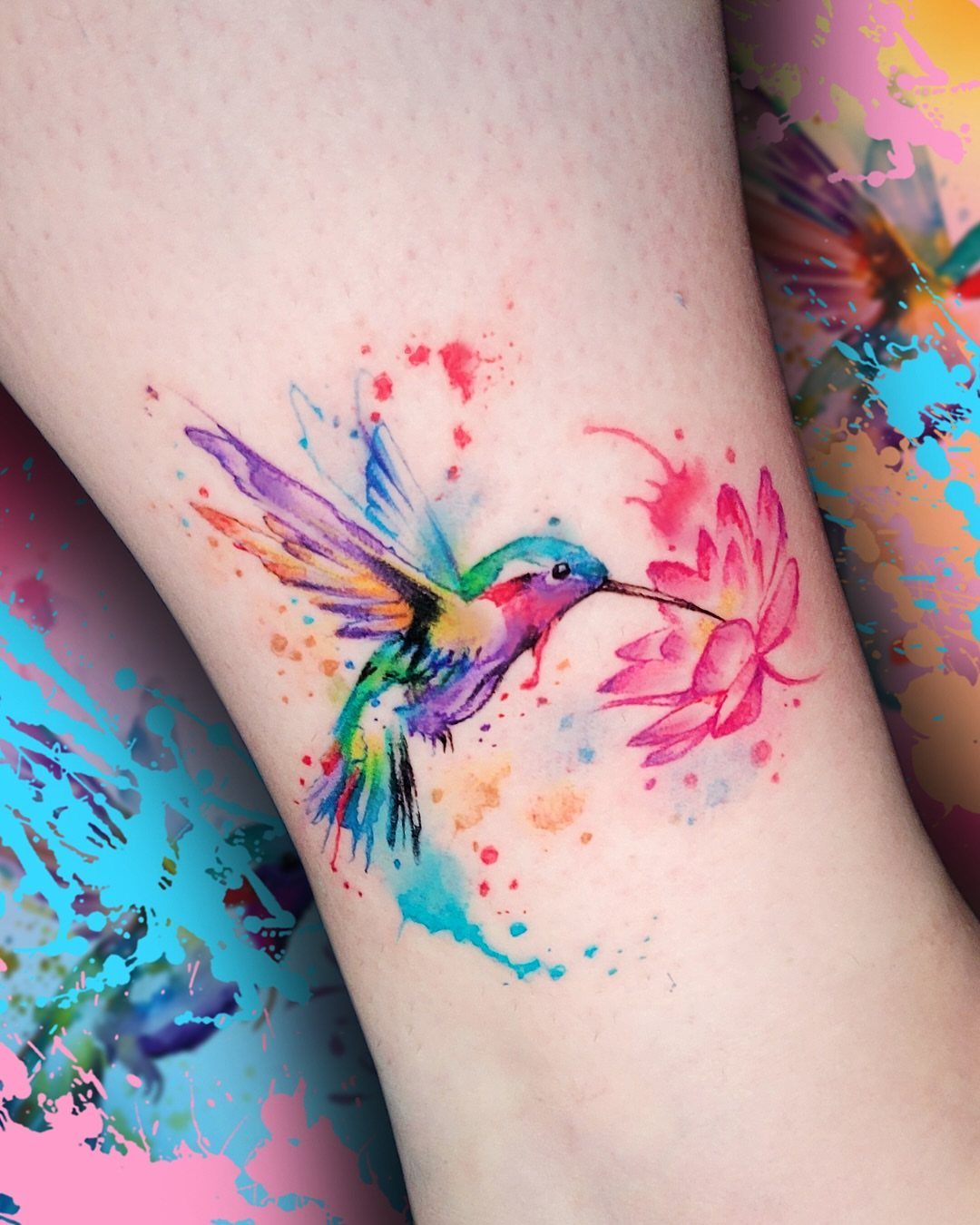
Lotus flowers grow out of mud and still bloom clean, which is why they symbolize overcoming struggle.
Adding a hummingbird shifts the piece toward movement and lightness, and the watercolor style softens the edges so the tattoo reads more like a painting than a drawing.
Watercolor fades more quickly than solid black linework, so the pink and green will need a touch-up to stay saturated. The forearm is a good spot for this because you can protect it with sunscreen easily, which slows the fading.
I recommend an artist who specializes in watercolor tattoos for this style, since the technique is different from traditional tattooing.
6. Fine Line Flower Tattoos
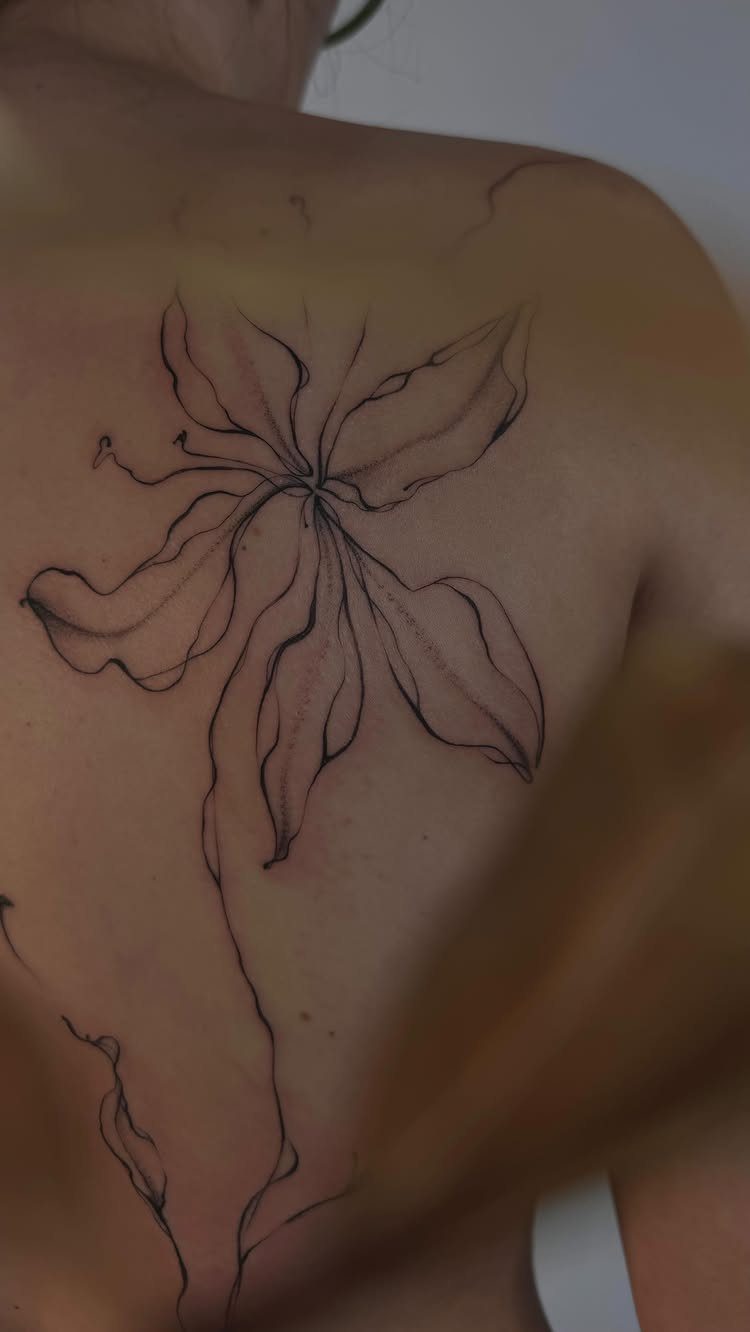
Fine line tattoos use a single needle or a very tight grouping, which creates thinner lines than standard tattooing. The result is a design that feels delicate and sits lightly on the skin, almost like a pencil sketch.
This style ages differently than bold traditional work.
The lines can soften over time, so some crispness may fade. Placing it on the upper back helps because that area doesn’t stretch much and gets less sun exposure than an arm or shoulder.
If you have darker skin, talk to your artist about line weight. Fine line tattoos show up best on lighter skin tones, and going slightly thicker can help the design stay visible longer.
7. Daisy Tattoos
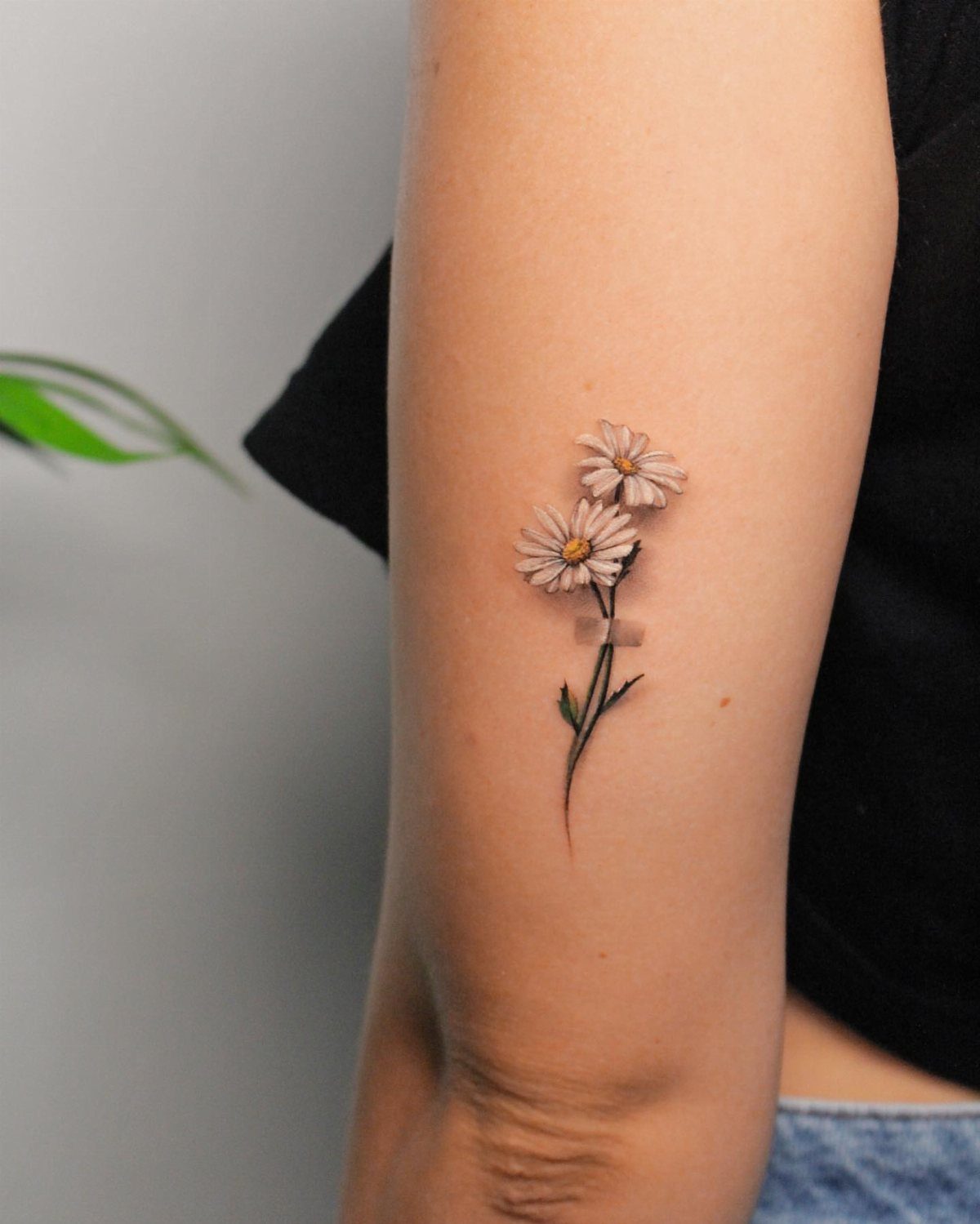
Daisies sit cleanly on the upper arm because the circular heads stack without overlapping, and the petals hold their shape over time better than flowers with thin, layered edges.
Yellow centers against white petal outlines give the tattoo contrast, which keeps the piece simple and makes future touch-ups easier. The green stem ties the flowers together without adding much ink.
Upper arm placement means the tattoo stays covered or visible depending on what you wear, and the skin there stretches less than the inner forearm.
8. Orchid Tattoos
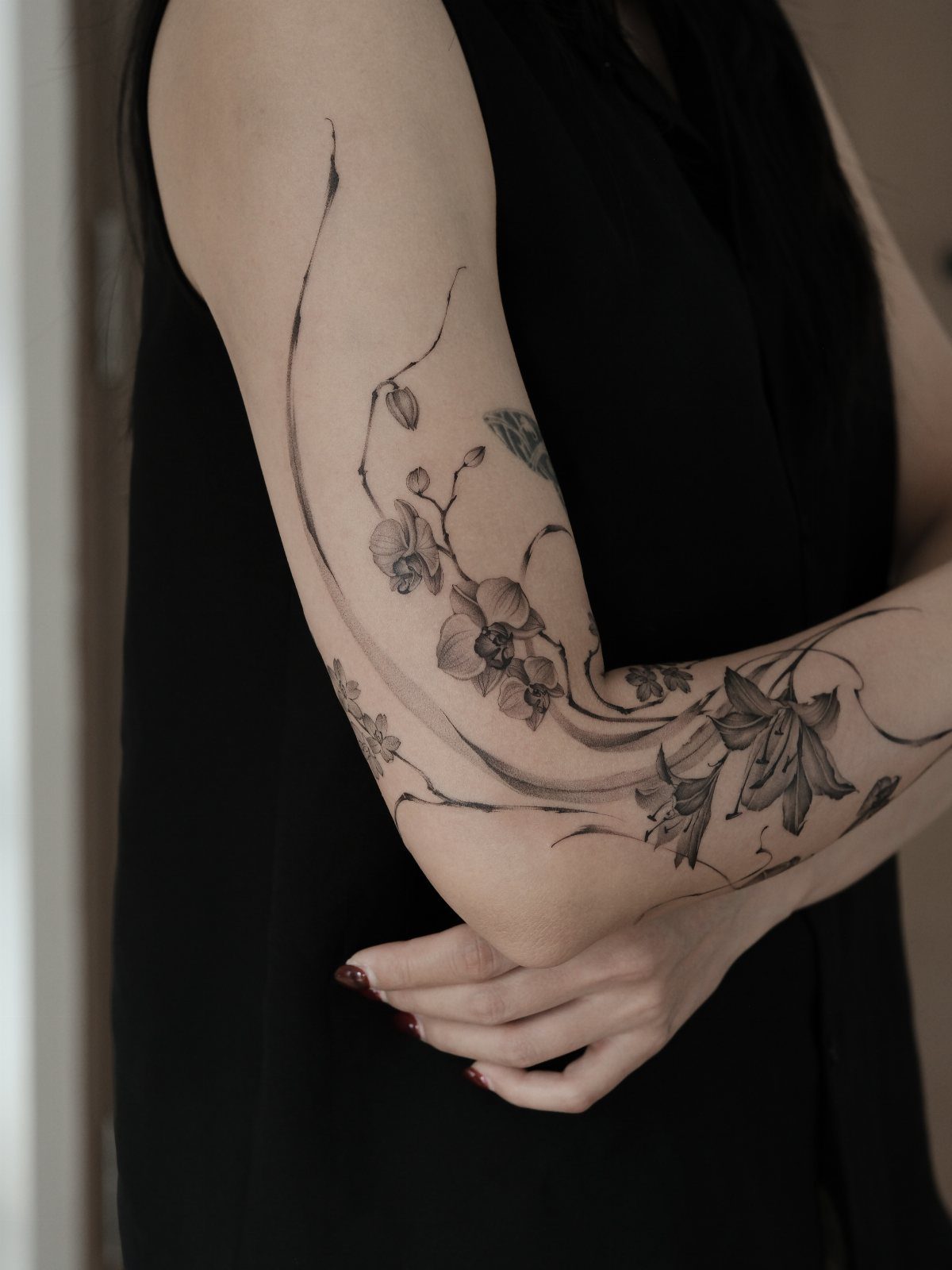
Orchids have long, curving stems that follow the natural line of the forearm, so the tattoo reads as one continuous piece rather than a cluster of separate elements.
The petals have a distinct shape that stays recognizable even in black ink.
Flowing vines work well here because they fill the space between flowers without making the design feel crowded. The forearm gives you enough length to show the full stem without cutting it off at the wrist or elbow.
Black ink holds up longer than color, and the shading on the petals adds depth without needing a fill.
9. Poppy Tattoos
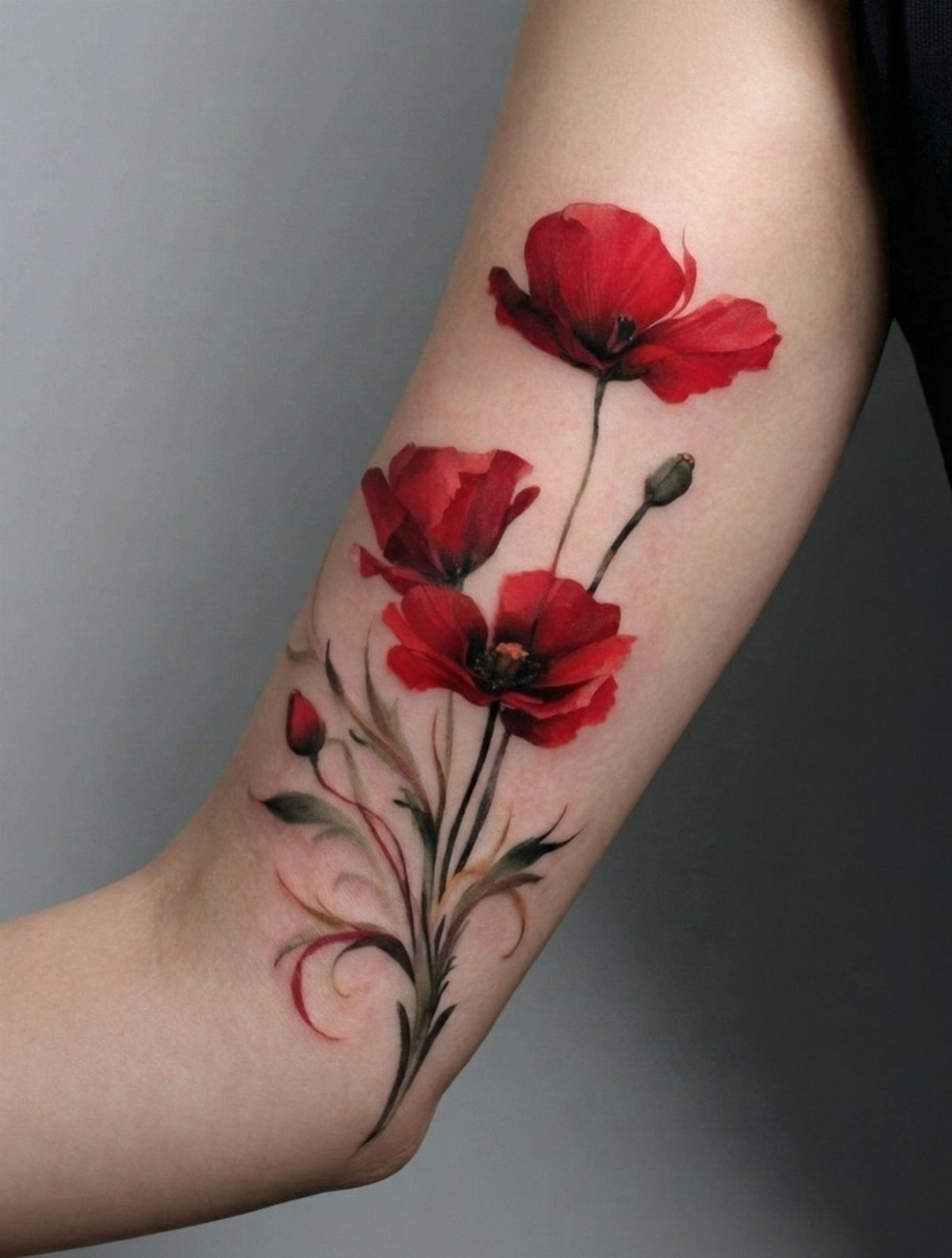
Poppies have thin, papery petals that artists usually render with light shading and a soft edge, which keeps the flower from looking heavy on the skin.
Red ink on the petals gives the tattoo a focal point, and the green stems balance the composition without adding too much color.
Inner forearm placement means the tattoo stays visible to you more than to others, which works if the symbolism is personal. The skin there is thinner, so expect the needle to feel sharper than it would on the outer arm.
Red ink fades slower than lighter colors, but it still needs sunscreen to stay saturated.
10. Abstract Floral Tattoos
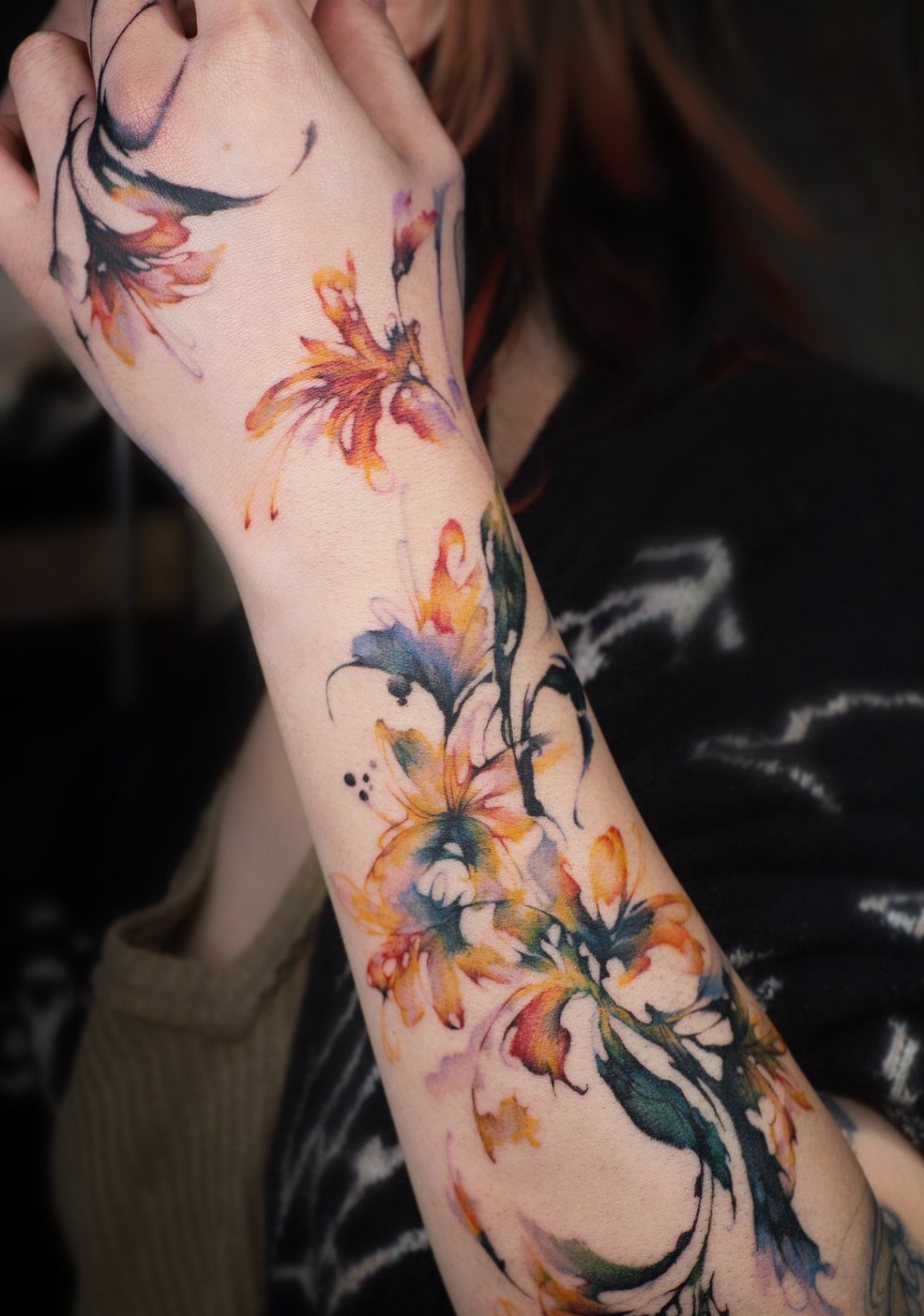
Watercolor floral tattoos skip the black outline, so the petals blend into the skin with soft edges and color washes.
Orange and blue sit opposite each other on the color wheel, which gives the design contrast without needing a third color.
This style fades faster than linework because the ink sits lighter in the skin, and the colors lose saturation over time. Forearm placement helps because you can apply sunscreen easily, but plan for a touch-up down the line.
Find an artist who works in watercolor regularly, since the technique requires different hand speed and needle depth.
11. Wildflower Tattoos
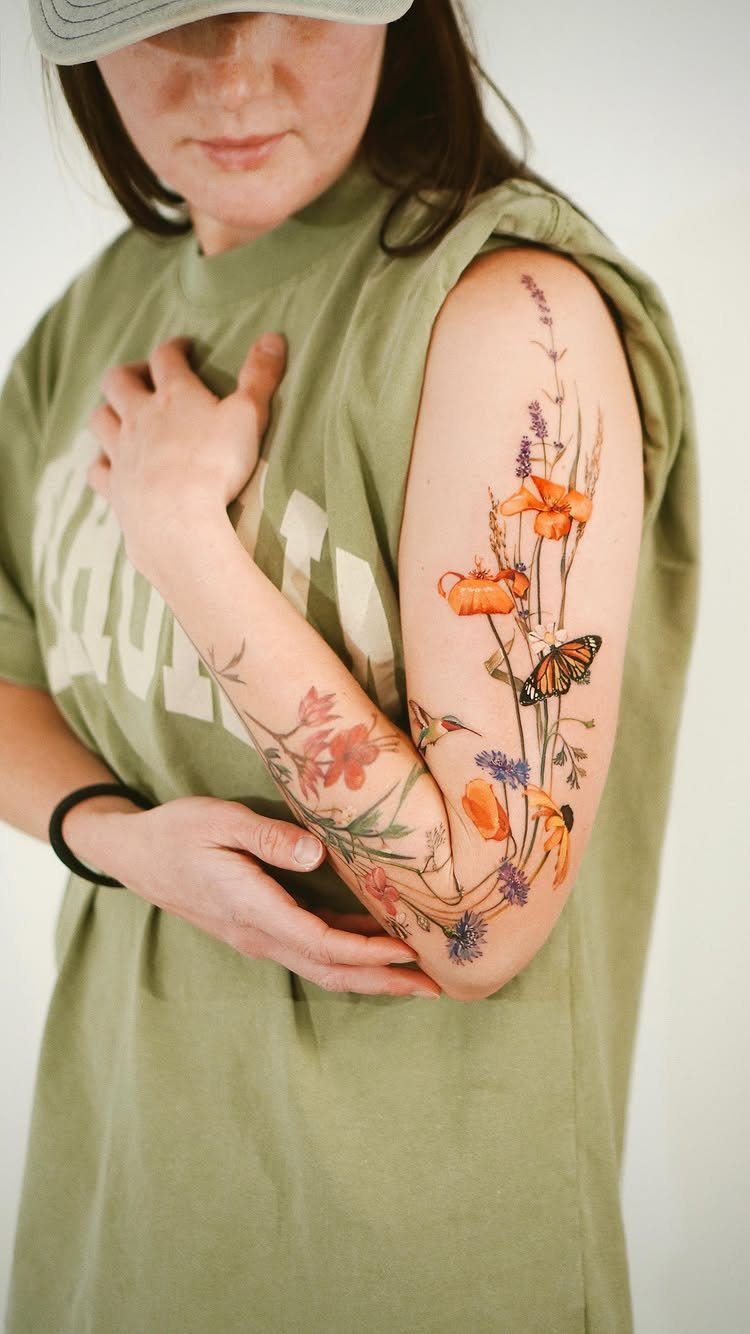
Wildflowers give you room to mix species without worrying about symmetry, so the design feels less formal than a single rose or lotus.
Adding a butterfly and a hummingbird turns the piece into a scene rather than a standalone flower, and the colors on the wings tie back to the petals.
Upper arm and forearm placement leaves space for the elements to spread out without crowding each other. The colors here need more touch-ups than black ink, so budget for that every few years.
This works best if you want a piece that tells a story rather than a single symbol.
12. Chrysanthemum Tattoos
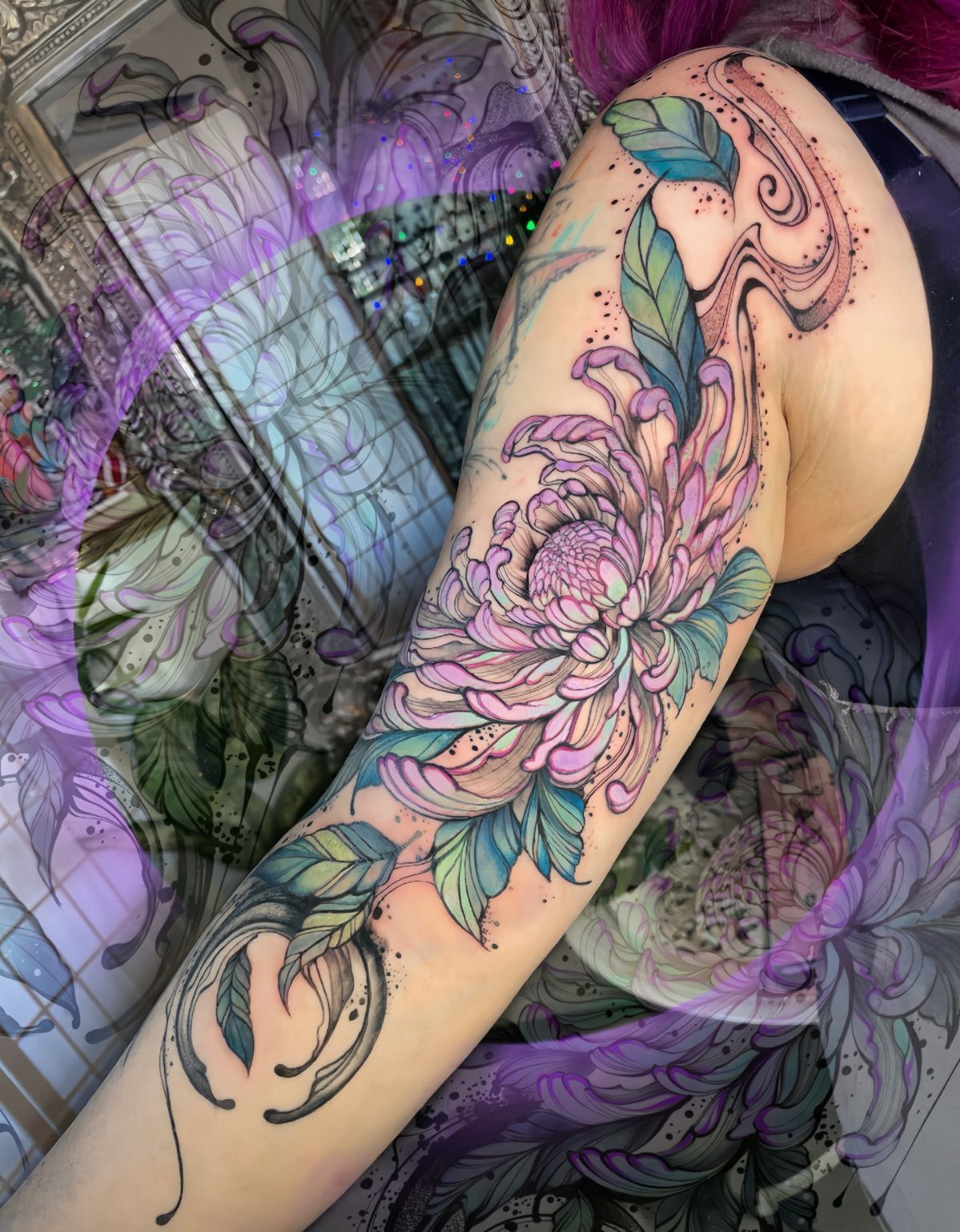
Chrysanthemums have layered petals that spiral outward, which gives the tattoo dimension without needing heavy shading. Pink petals with teal leaves create contrast, and the color combination reads as softer than red and green.
Shoulder placement means the tattoo wraps slightly around the curve of the arm, so the petals can follow the natural shape of the muscle. The skin there heals well and doesn’t stretch much over time.
Color saturation depends on your skin tone, so lighter skin will hold pink and teal more vividly than deeper tones.
13. Floral Sleeve Tattoos
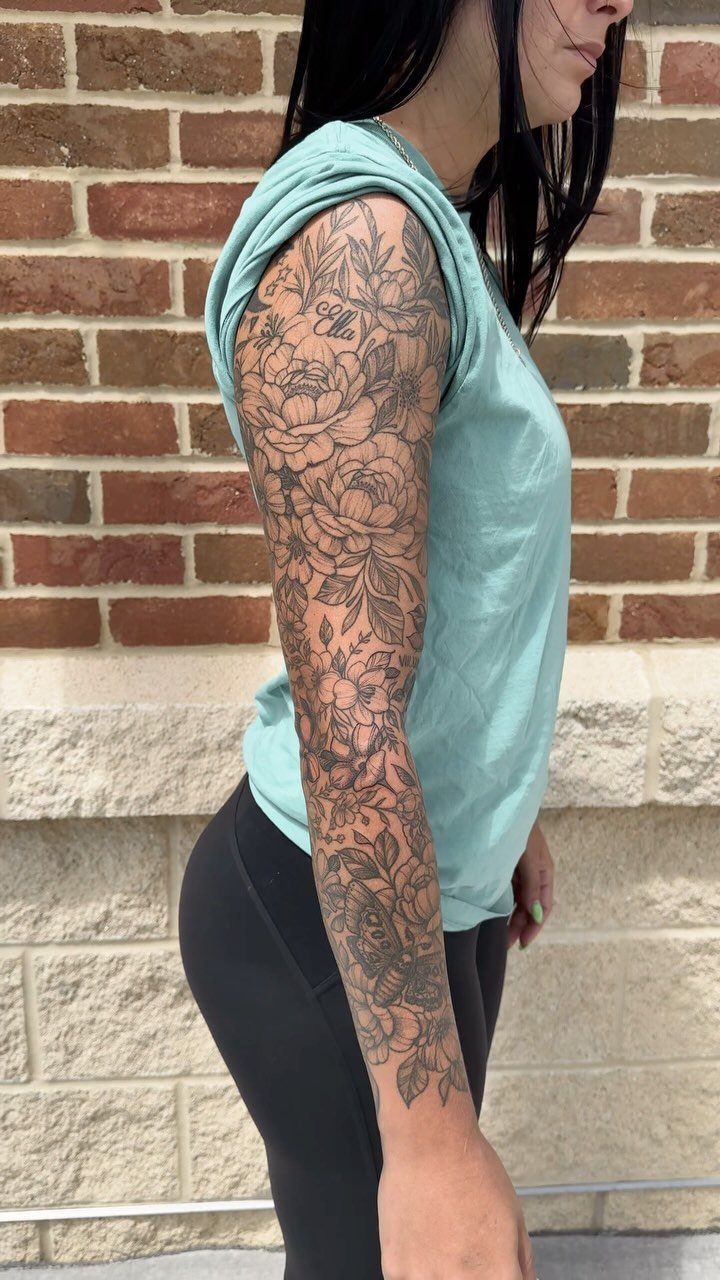
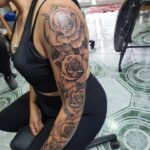
A full sleeve covers the arm from shoulder to wrist in one continuous design, and roses work well here because their layered petals fill space without leaving awkward gaps.
Sleeves take multiple sessions spread across several appointments. The inner elbow and armpit feel sharper than the outer arm, so plan for those spots to test your tolerance.
Adding a name ties the piece to someone specific, which is a choice to think through before committing.
14. Hibiscus Tattoos
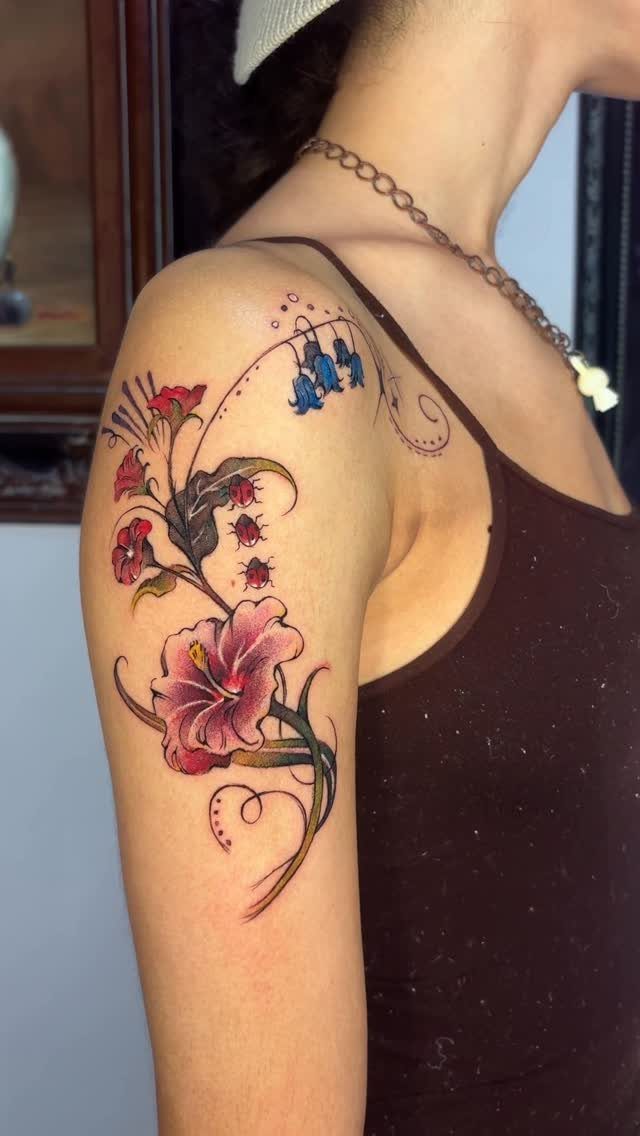
Hibiscus petals fan out from a central point, and the shape reads clearly even with color blending. Pink and red gradient petals give the tattoo dimension, and ladybugs add a second element without overloading the composition.
Upper arm and shoulder placement means the design sits where muscle curves naturally, so the petals follow the shape of your body. Color fades faster on the shoulder than on the forearm because clothing rubs against it more.
15. Magnolia Tattoos
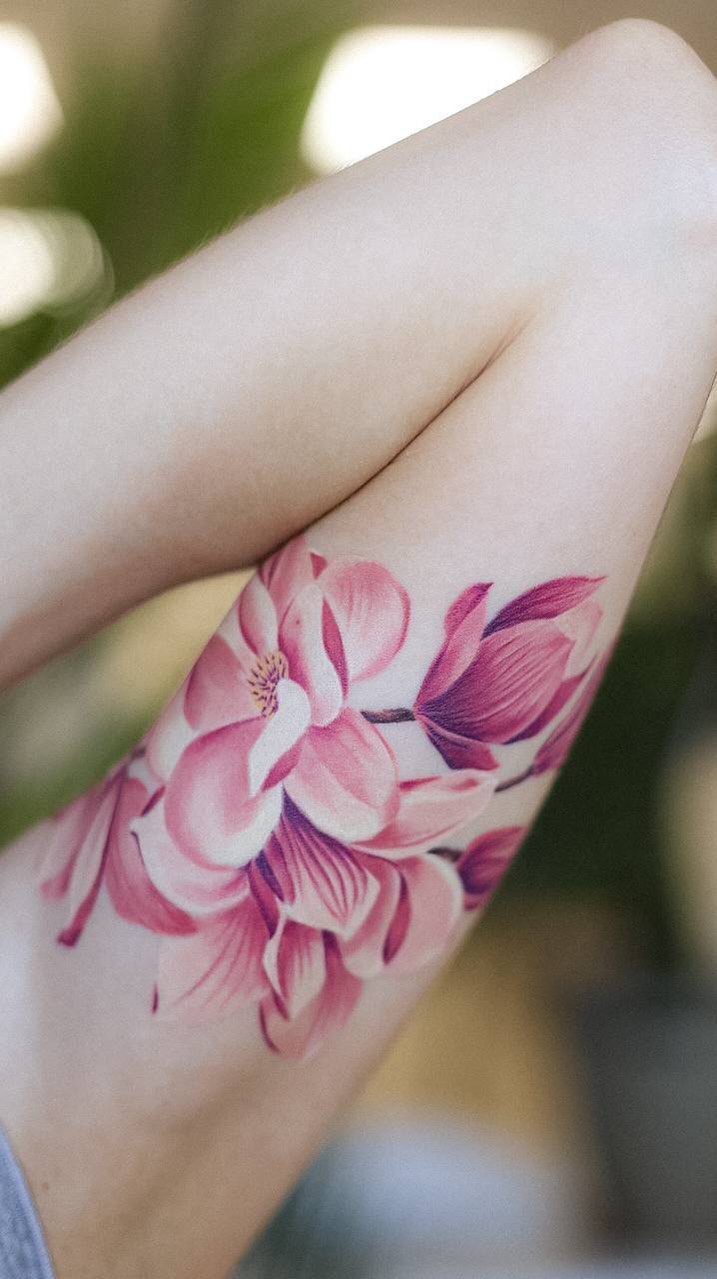
Magnolias have wide, open petals that sit cleanly on the upper arm without needing much negative space. The pink and white gradient keeps the flower from looking flat, and the green leaves balance the design without adding weight.
16. Carnation Tattoos
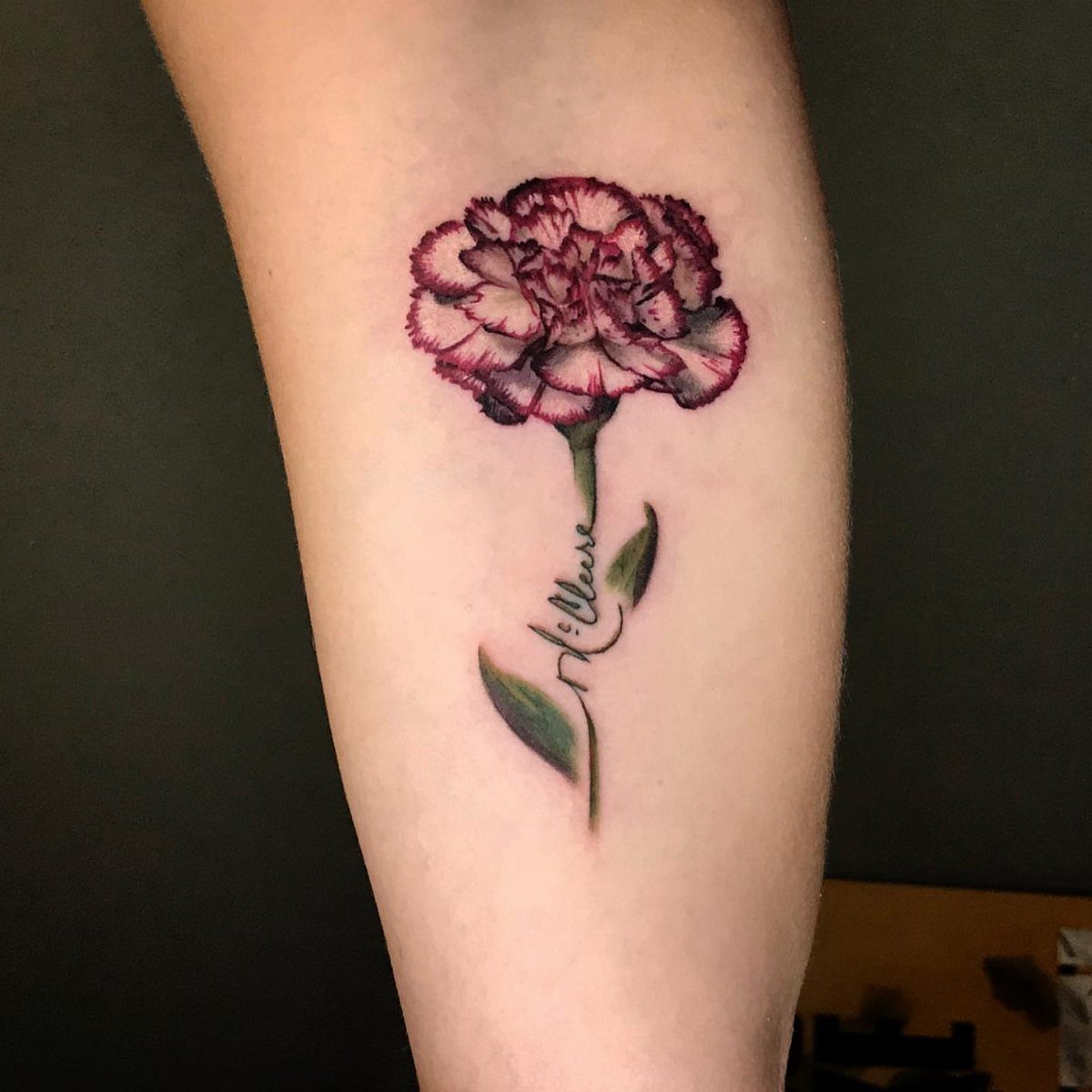
Carnations have ruffled edges that hold detail well in tattoo form, and the layered petals give the flower texture without needing heavy shading.
Adding a name in script turns the piece into a dedication, which locks the tattoo to one person.
Forearm placement keeps the tattoo visible, and the vertical stem follows the natural line of the arm. Pink and red blend well together, but the red will hold its color longer than the pink.
Think through the name before you commit, since covering or removing it later costs more than the original tattoo.
17. Forget-Me-Not Tattoos
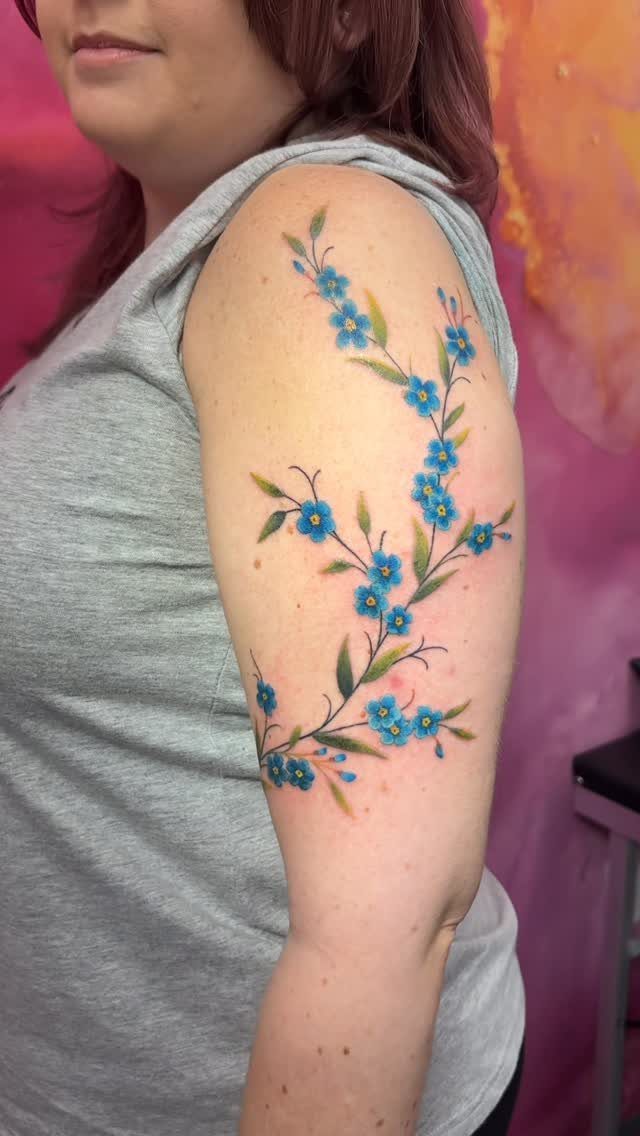
Forget-me-nots grow in clusters, and the small blue petals stack neatly without crowding each other. The yellow centers give the flowers a focal point, and the green leaves tie the design together.
Blue ink holds up well over time, and the size of each flower means the design reads clearly even from a distance.
The flowers sit lighter on the skin than a rose or peony would, so the piece feels delicate without losing readability.
18. Lavender Flower Tattoos
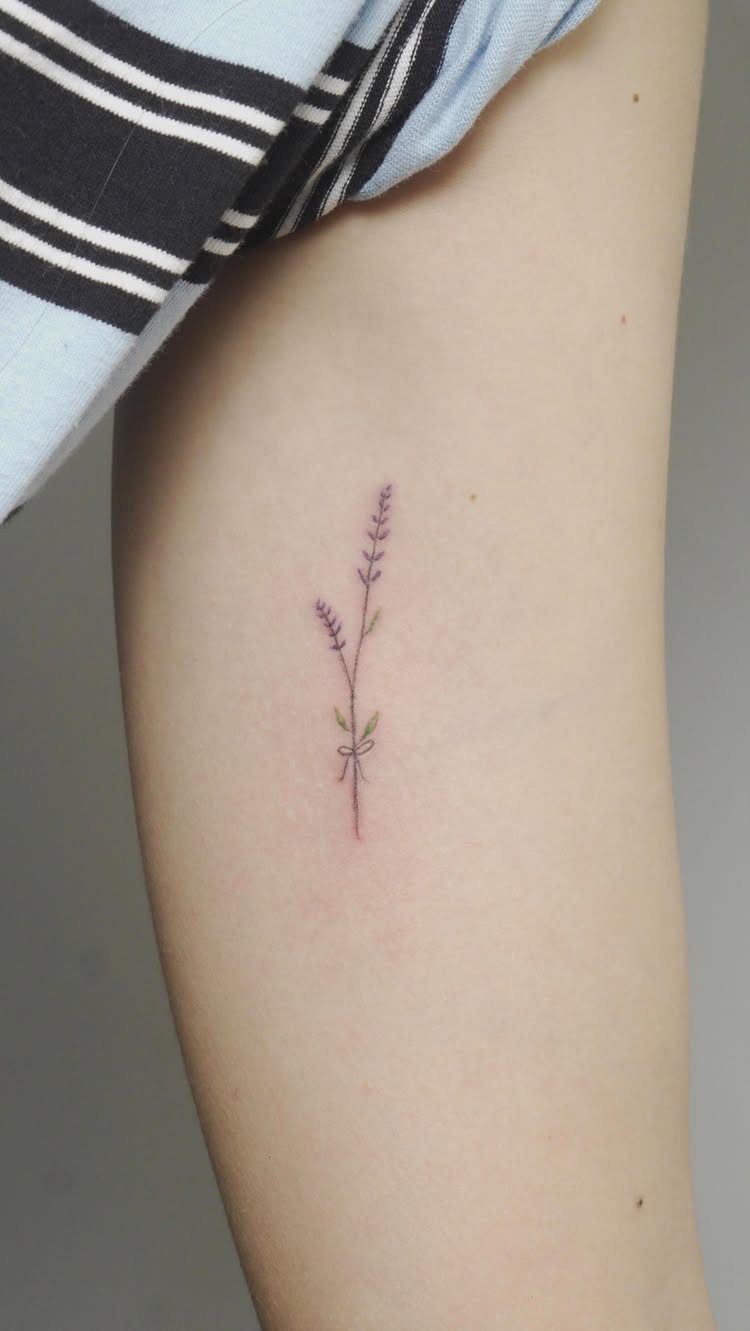
Lavender grows in long, narrow spikes, and the purple blooms read clearly even when the tattoo is small. A ribbon bow can tie a lavender piece together without needing much extra ink.
Small tattoos on the leg heal quickly, and the placement means you can cover it easily if needed. Purple ink fades slower than pink but faster than black, so expect the color to soften over time.
This works best if you want something small and simple that still carries meaning.
19. Linework Rose Arm Tattoo
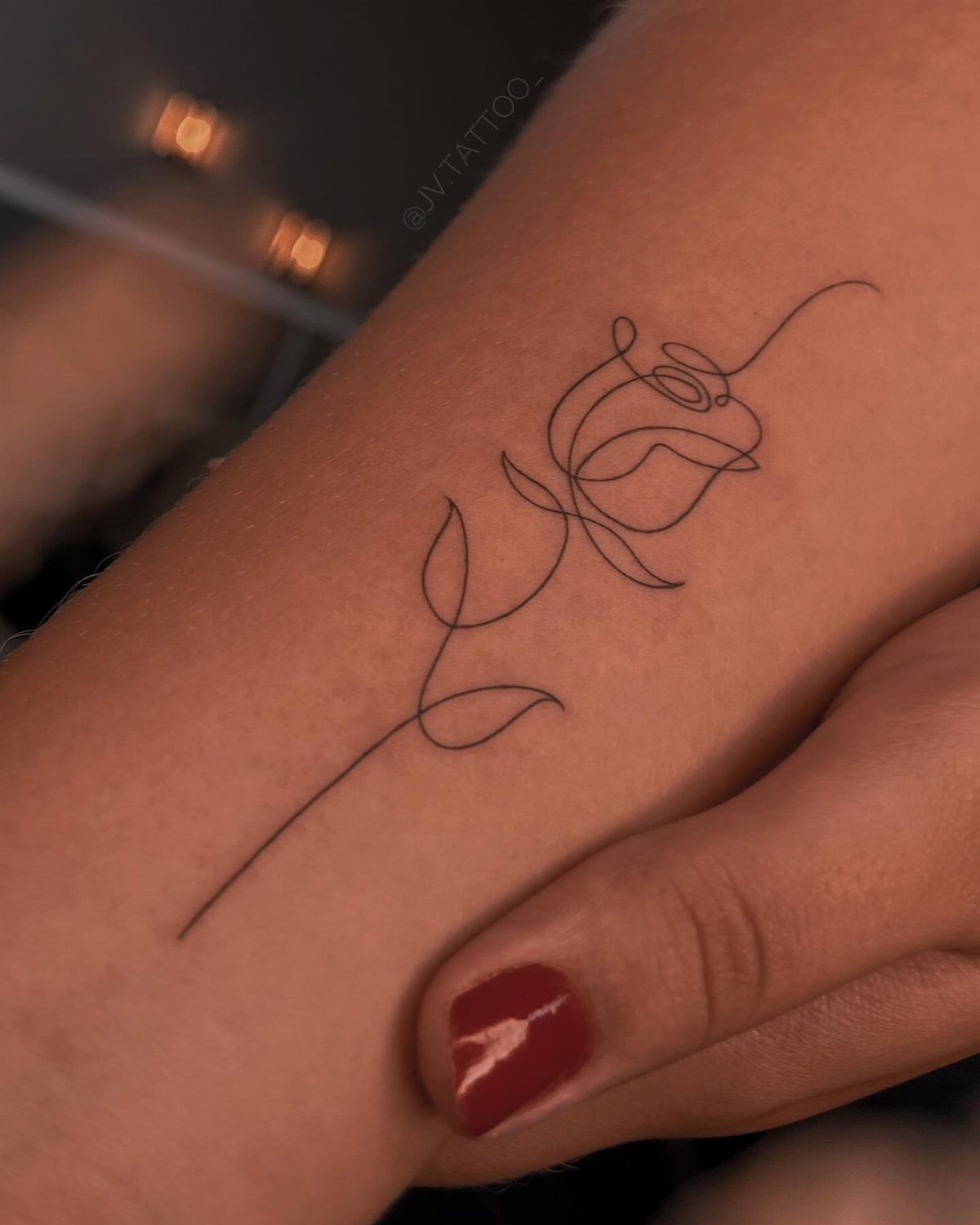
A single-line rose reduces the design to one continuous stroke, which gives the tattoo a handwritten feel rather than a filled illustration.
The line traces the outline of the petals, stem and leaf without lifting the needle, so the flower reads as one gesture.
This style skips shading completely, which makes the tattoo age predictably. The line may soften slightly over time, but there’s no color to fade or fill to blur.
The forearm’s long, narrow shape naturally suits a vertical stem and lets you check the design any time you glance down.
20. Geometric Floral Tattoos
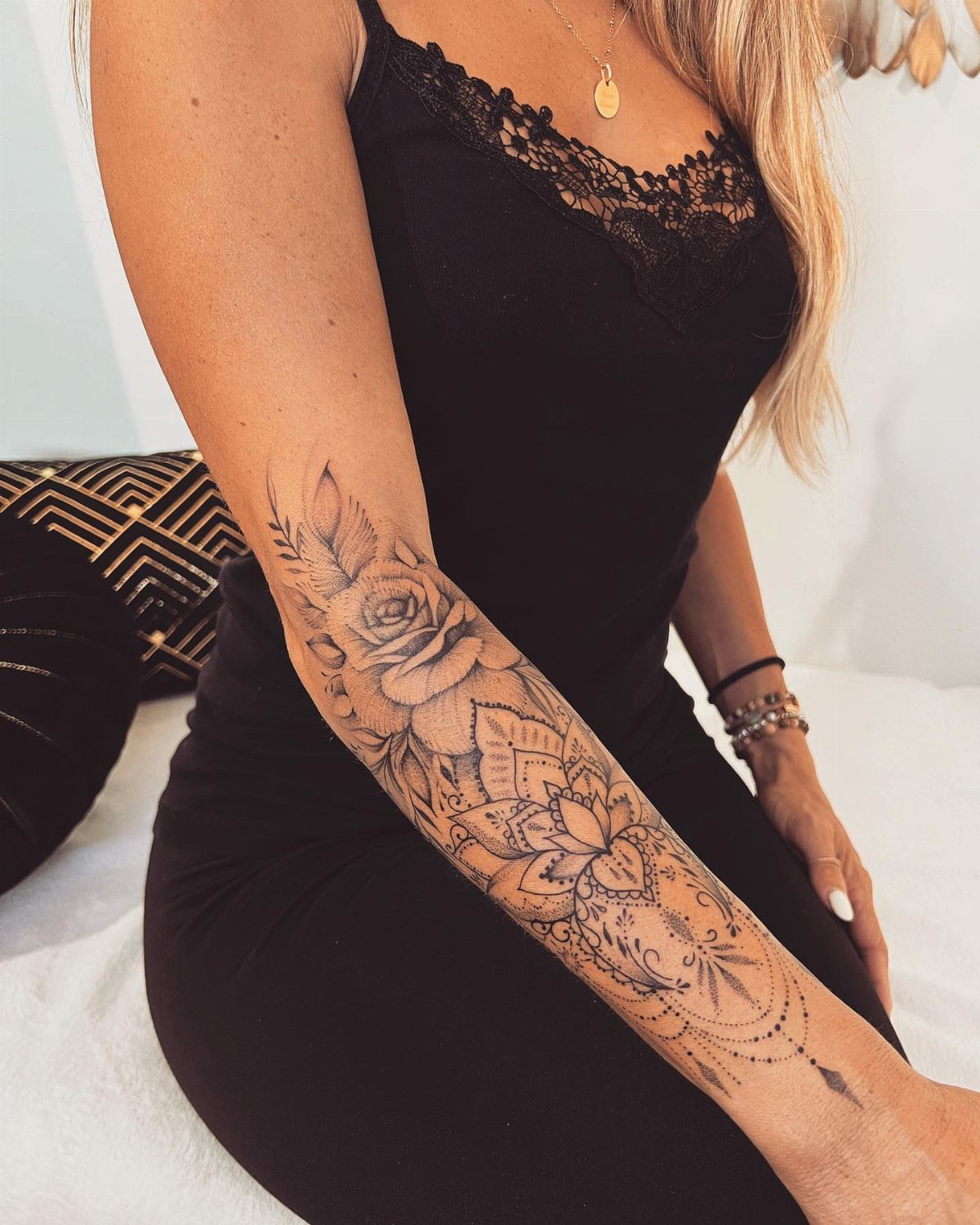
Pairing a rose with mandala geometry turns the flower into part of a larger pattern, and the symmetry of the mandala balances the organic shape of the petals.
Black ink on both elements keeps the design cohesive, and the geometric shapes frame the rose without competing for attention.
Forearm placement gives the mandala enough space to read clearly, and the flat surface keeps the lines from distorting as your arm moves. Geometric lines need precision, so choose an artist who works in this style regularly.
The combination reads as intentional structure meeting natural form, which works if you want something more architectural than a standalone flower.
Choosing the Right Tattoo Artist
Finding an artist starts with their portfolio. If you want watercolor petals, make sure they’ve tattooed watercolor work before, not just traditional bold lines.
The technique for soft color washes sits in a different skill set than black linework, and an artist who specializes in one may not deliver on the other.
Ask questions before you book. Some artists will help you match a flower to a birth month or a feeling you want the piece to carry.
Others work best when you arrive with a clear reference image. Knowing which type of artist you’re working with saves time and keeps expectations aligned.
Check their recent work, not just the highlights from years ago. An artist’s style shifts over time, and you want to see what they’re producing now.
Your tattoo artist might also be able to help and provide suggestions, particularly if they specialize in floral designs.
— Allure
Tattoo Placement Considerations
Wrapping placements work when the design has movement, like a vine or a branch. A static, symmetrical flower can look distorted if it bends around the arm in a spot where the skin shifts frequently.
Visibility matters if you work in a field with dress codes.
Inner forearm tattoos stay hidden under long sleeves but show in short sleeves. Upper back or shoulder pieces stay covered in most professional clothing.
Tattoo Aftercare Tips
Watercolor tattoos need sunscreen every time the skin sees direct sun.
UV exposure breaks down light pigments faster than black ink, so pink, lavender and orange tones fade first. SPF 50 or higher slows that down.
Fine line tattoos soften over time, so expect to book a refresh when the details start to blur.
The thinner the line, the more likely it is to blur slightly over time, especially on areas that move frequently like the inner elbow or wrist.
Bold color requires layered sessions to build saturation, and aftercare means keeping the tattoo moisturized without overdoing the washing. Listen to your artist’s specific instructions, since their technique affects how the skin heals.
Frequently Asked Questions
What are pretty flowers to get tattooed?
Roses, lilies, sunflowers and peonies rank among the most requested designs. Roses carry meaning through color and pair well with other elements, while lilies offer clean lines and symmetry that make them easier to tattoo than layered flowers.
Their bold yellow petals make sunflowers one of the easiest flowers to recognize at a distance, even years after the ink settles.
What are the top most common tattoos?
Floral tattoos sit among the most frequently requested designs at tattoo studios.
Roses lead in popularity because they carry romantic or symbolic meaning through color, and their layered petals fill space well in both standalone pieces and full sleeves. Sunflowers, cherry blossoms and lotus flowers follow closely.
How much does a tattoo of a flower cost?
Cost depends on size, detail level and the artist’s experience. Artists typically charge by the hour, so knowing that a mid-sized floral piece runs 90 to 150 minutes helps you budget both time and cost.
Watercolor styles and full sleeves require multiple sessions, which increases the total cost beyond a simple linework piece.