Traditional floral tattoos range from single roses on the forearm to full wildflower bouquets that need the vertical space of a thigh.
The flower’s natural shape decides how much room it needs: peonies and sunflowers require enough space for layered petals to stay distinct, while daisies, poppies and cherry blossoms work at smaller sizes because their petals are simpler.
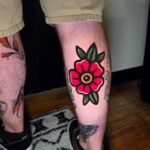
1. Rose Tattoo
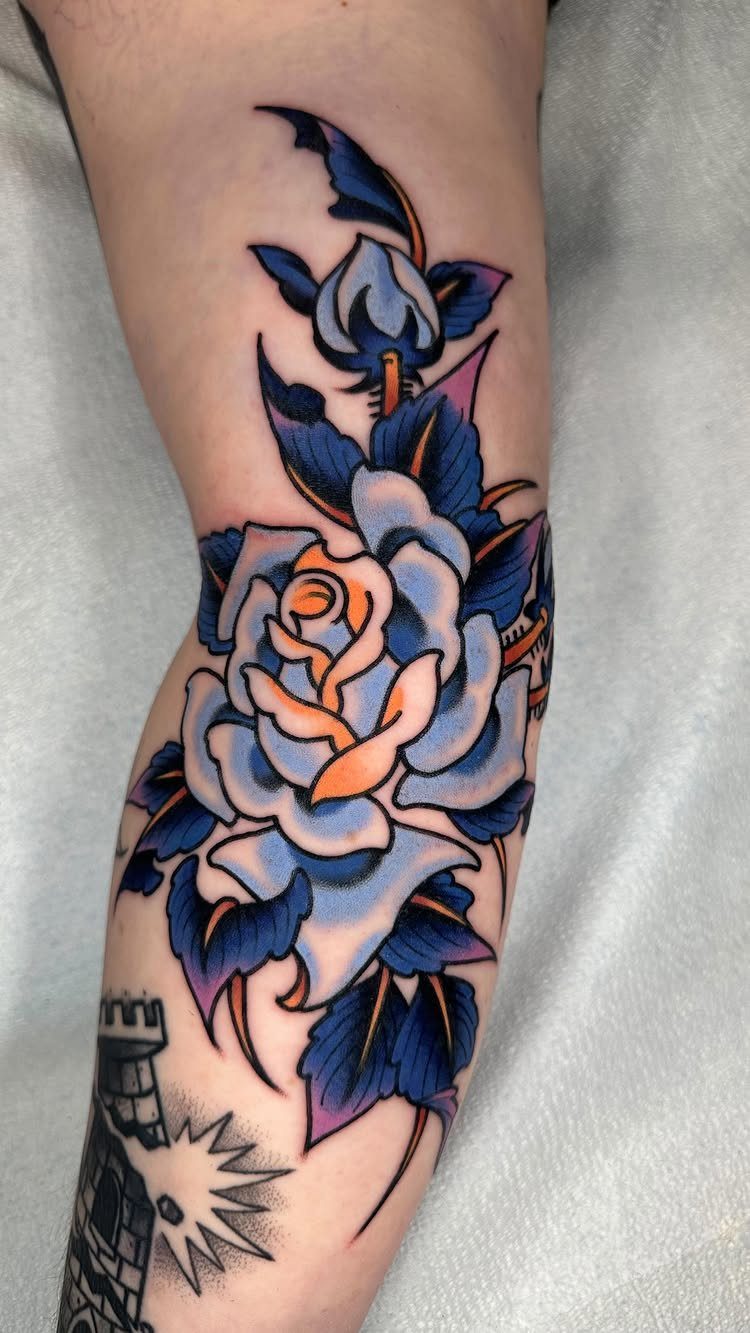
The rose carries bold outlines and saturated color blocks, exactly the way American traditional tattoos have always been done. What makes it work years later is that thick black outline: it holds the shape even as the colors soften.
Traditional roses read best when they’re sized to show that outline clearly.
A forearm piece like this one needs enough room for each petal to hold its line. Anything smaller and the petals start to blur together once the tattoo heals.
Red is classic, but blue roses like this one stand out without losing that vintage flash feel.
2. Peony Flower Tattoo
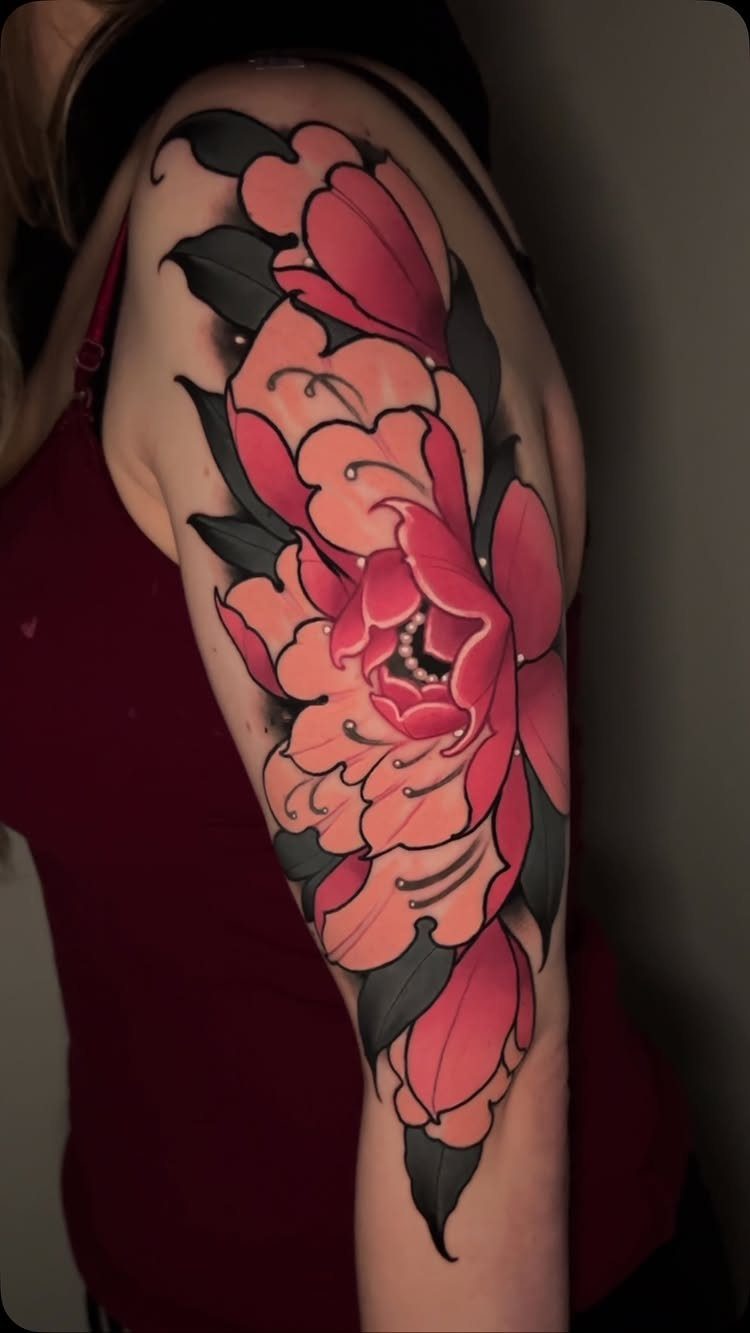
Peonies have more petals than roses, which gives the artist room to layer color in a way that feels lush without getting muddy.
The traditional style keeps each petal separated with black outlines, so even when you pack in pink, red and green, the flower still reads as one clear shape.
The upper arm is the right call for a peony this size. The curve of the bicep or shoulder follows the natural round shape of the bloom and gives all those petals room to breathe.
A peony in traditional style feels romantic but still tough.
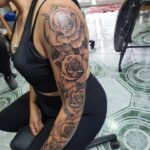
3. Sunflower Tattoo
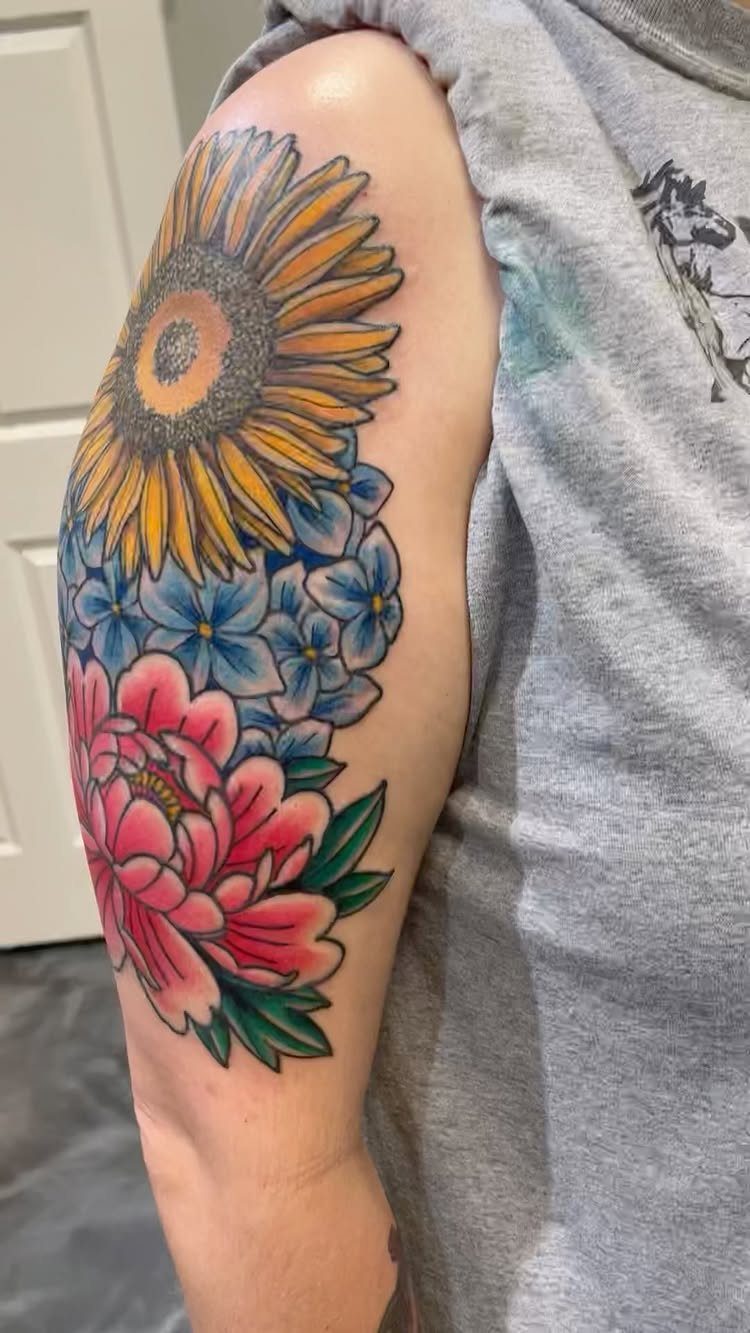
A sunflower anchors a sleeve because it gives you a big, round focal point that the eye lands on first. In traditional work, those radiating petals create a natural hub for smaller flowers and leaves to build around.
Traditional palettes let you pack multiple blooms into one piece without them fighting each other. Each flower keeps its own silhouette.
Sunflowers work best when they have enough space to let the center pattern and outer petals stay distinct. Any smaller and you lose the petal count that makes them recognizable.
4. Daisy Tattoo
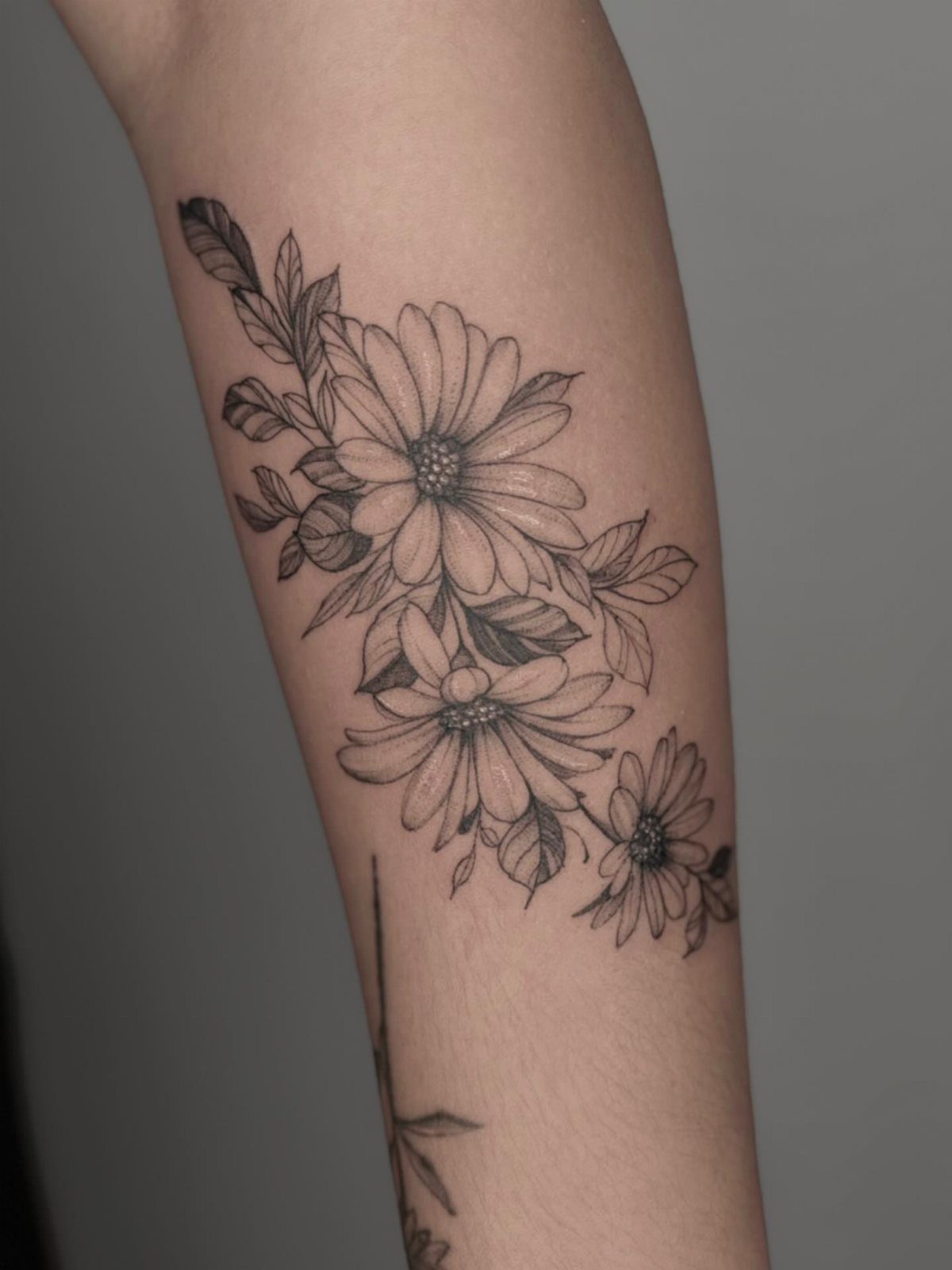
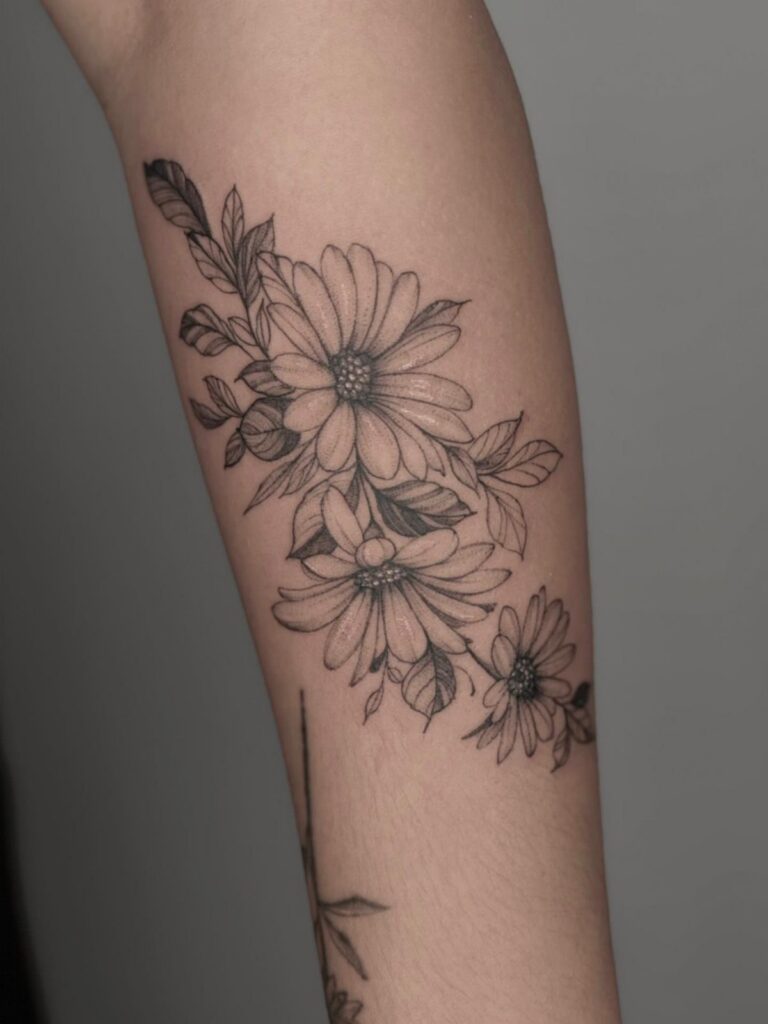
Daisies in grayscale traditional style trade the color for contrast, and that contrast makes them pop. The black center against white petals gives you a clean, high-impact design that doesn’t need shading to read from across the room.
3 blooms at different stages, some open and some in profile, keep the composition from feeling flat. I’d place this on the forearm where you can see all 3 flowers at once without turning your arm.
A traditional daisy feels lighter and less committal than a rose but keeps the bold outline that makes traditional work last.
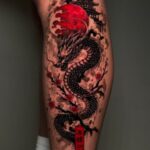
5. Cherry Blossom Tattoo
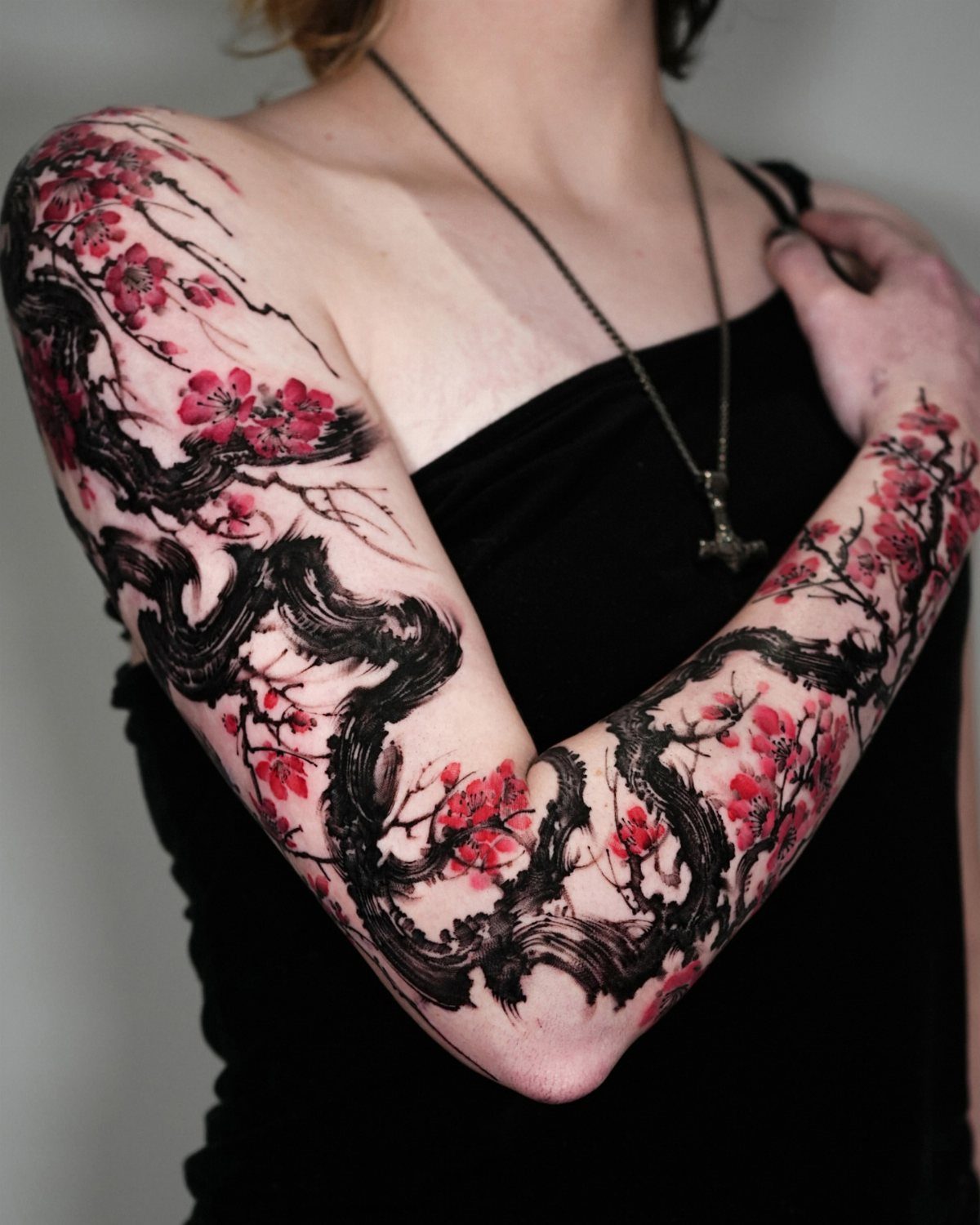
Cherry blossoms soften the edge of bolder traditional elements like dragons, clouds or waves. The petals are small and clustered, which gives the artist a way to fill negative space without adding another heavy subject.
In traditional Japanese work, cherry blossoms signal impermanence: something beautiful that doesn’t last. That idea pairs well with larger figures that move or change form.
The red and pink tones here stay warm against black clouds, and because the blossoms are scattered rather than bunched, they let the background shapes breathe.
The blossoms should stay small enough to feel delicate against whatever larger piece they’re supporting.
6. Hibiscus Flower Tattoo
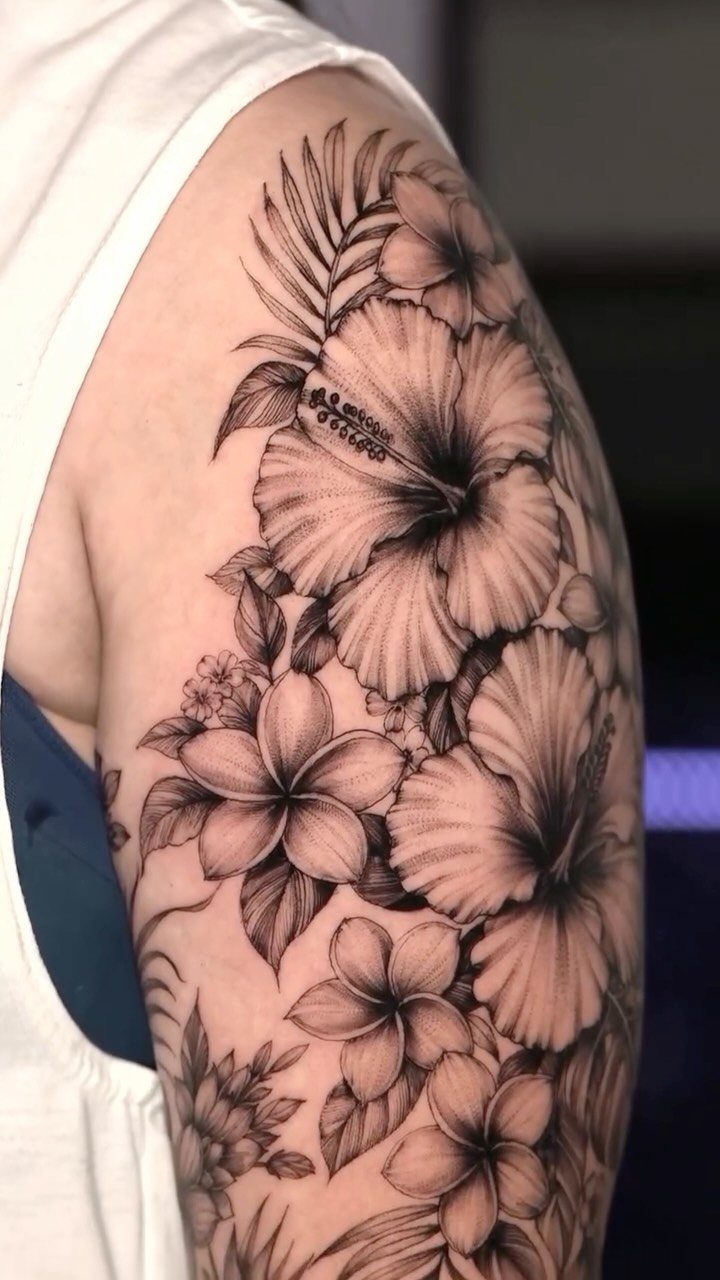
Hibiscus flowers open wide, which gives you a single bloom that covers as much space as a rose but with thinner, more delicate petals.
In grayscale, the hibiscus loses some of that tropical punch but gains a softer, more versatile look that pairs well with other florals like plumeria.
The upper arm gives you enough flat space to let a hibiscus spread without distorting. Size it so the petals stay distinct and the stamen in the center reads clearly.
A hibiscus in traditional style feels warm and organic but not as heavy as a peony.
7. Lotus Flower Tattoo
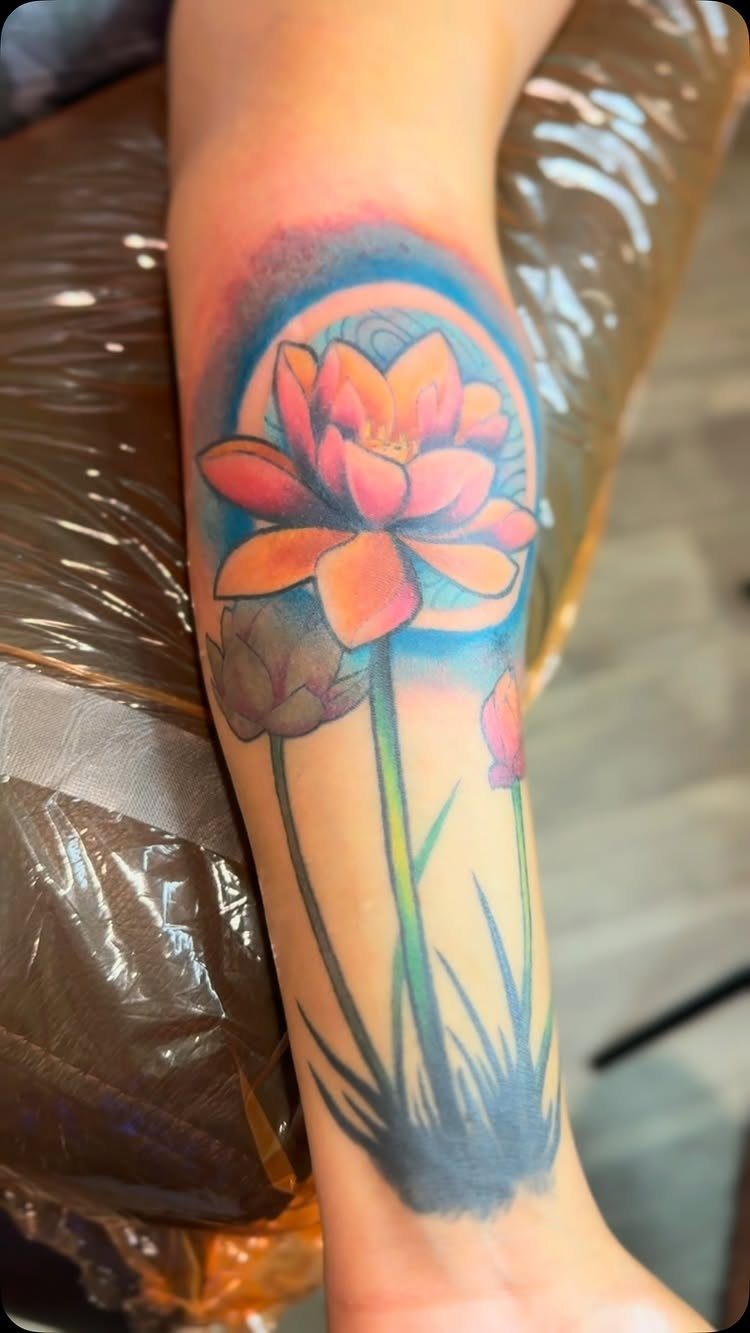
The lotus builds from the bottom up, with layered petals that give the flower a three-dimensional feel even in two dimensions. A blue halo behind the lotus adds depth and makes the orange petals lift off the skin.
Traditional lotus tattoos carry the idea of rising through difficult conditions, but the design works just as well without assigning it a meaning. The symmetry and bold color make it a strong standalone piece.
Size this large enough that the inner petals stay separate from the outer ring. Keep the width generous or the layers start to merge.
8. Poppy Flower Tattoo
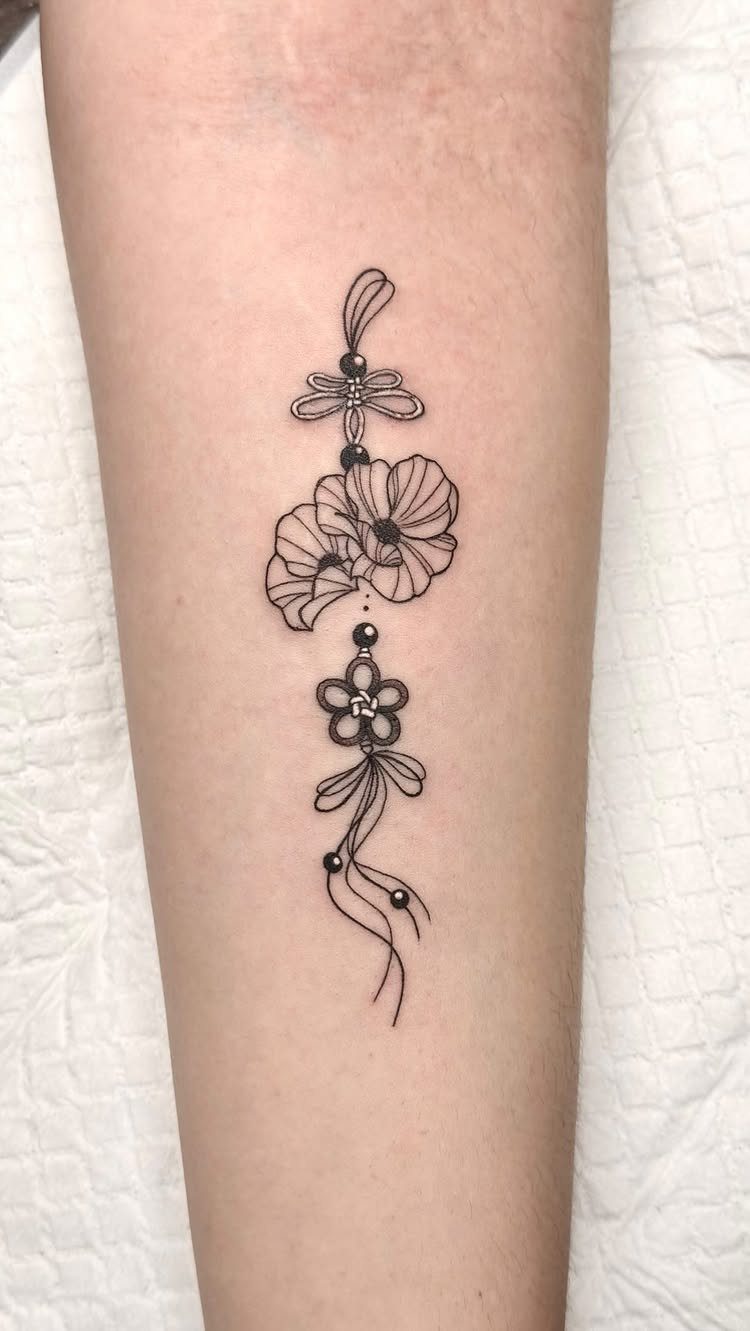
Poppies have thin, papery petals that lend themselves to linework without heavy shading. This one stays entirely black, which gives it a delicate look while keeping the bold outline that makes traditional tattoos hold up.
A traditional poppy flower tattoo works well for a memorial piece or something tied to remembrance when you prefer not to add text.
Forearm placement keeps the vertical stem intact and lets you see the full stem-to-bloom structure without bending your arm.
9. Wildflower Bouquet Tattoo
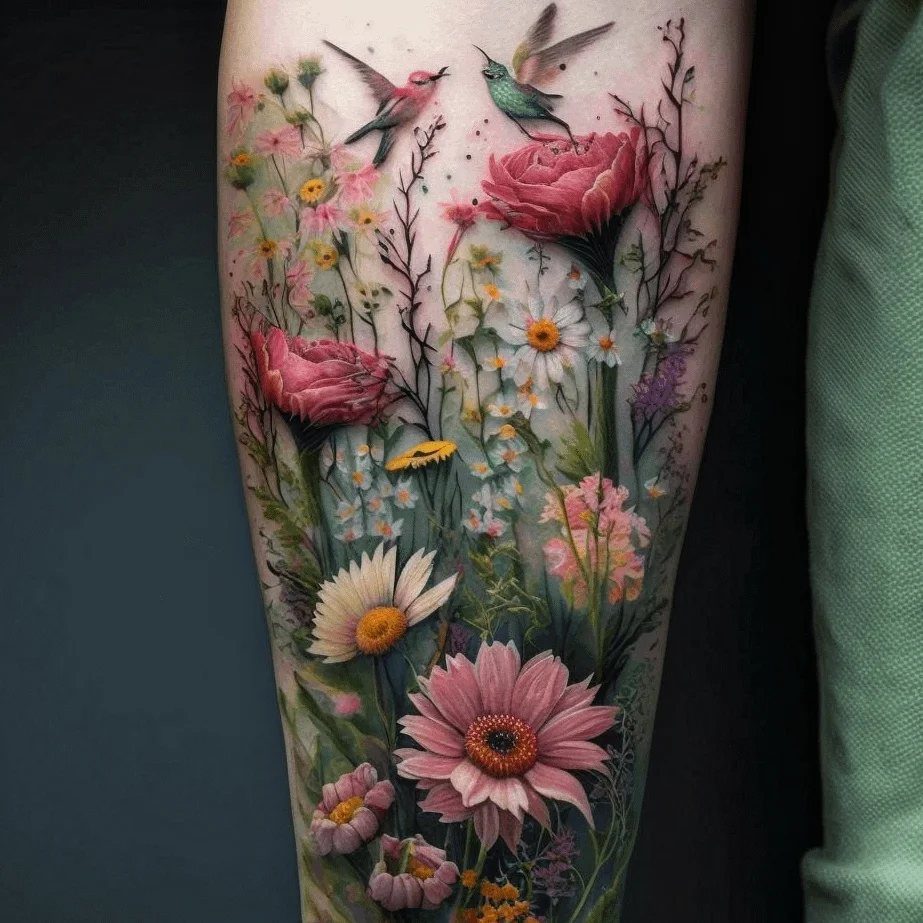
A wildflower bouquet lets you combine flowers that wouldn’t normally share a vase or a season. The hummingbirds here add movement and fill the space around the stems while leaving the blooms open.
Traditional color palettes keep each flower distinct even when you pack in several different species. The thigh gives you vertical space for a tall bouquet and enough width that each bloom can hold its own shape.
This works best when you size it so the smallest flower is still large enough to show petal detail.
Choosing a Flower Tattoo
Start with the flower’s meaning if you want the tattoo to carry one. Roses signal love or loss, lotus points to rebirth, poppies tie to remembrance.
If you just want something that looks right on your skin, that works too. Not every tattoo needs a story behind it.
Placement depends on how much space the design needs.
Traditional florals hold their shape best when the outline stays thick and the petals stay separated, which means you need room. Forearms, upper arms, thighs and the chest all give you flat space where a flower can spread without distorting.
Find an artist whose portfolio shows traditional work specifically.
The bold outline and limited color palette are technical choices, and not every artist works that way. Look at healed photos if the artist has them: traditional tattoos should still read clearly years later.
Traditional Tattoo Characteristics
The outline does most of the work in a traditional floral tattoo.
That thick black line holds the shape as the ink spreads slightly under the skin over time, which is why traditional pieces age better than styles that rely on fine detail or light shading.
The palette stays limited: red, blue, yellow, green, sometimes orange or pink, all saturated and blocked in flat.
Black shading adds depth, but the color itself stays bold rather than blended. That contrast is what makes the design readable from across the room.
Traditional tattoos are built to be understood at a glance. The flower should be recognizable without needing to study it up close, which is why the style favors flowers with strong shapes: roses, peonies, sunflowers, lotus.
Aftercare for Traditional Tattoos
Traditional tattoos heal well, but aftercare still matters if you want the colors to stay saturated.
Keep the tattoo clean and moisturized while it heals.
Wash it gently with unscented soap, pat it dry, and apply a thin layer of unscented lotion or a product your artist recommends. Don’t soak it in water, and keep it out of direct sunlight while it’s healing.
Once it’s healed, sunscreen is the only thing that keeps the colors from fading.
Traditional tattoos hold their shape longer than other styles, but UV exposure still breaks down the pigment. If the tattoo is somewhere that sees sun regularly, use SPF 30 or higher every time you’re outside.
Frequently Asked Questions
What are traditional tattoo flowers?
Traditional tattoo flowers are floral designs done in American traditional style, featuring thick black outlines, saturated color blocks in a limited palette, and bold, recognizable shapes.
Roses, peonies, lotus, sunflowers, cherry blossoms and daisies are the most common choices because their forms stay clear even after years of healing.
The style originated in early 20th century American tattooing and is built to be readable from across the room.
How to choose the right design for you?
If symbolism matters to you, let the flower’s history guide you: roses carry romance or grief, lotus speaks to renewal, poppies honor the fallen.
Size and placement need to match the design’s demands, because traditional florals lose clarity when bold outlines compress or petals crowd together.
Look for an artist who posts traditional pieces regularly and ask to see work that’s a year or two old.