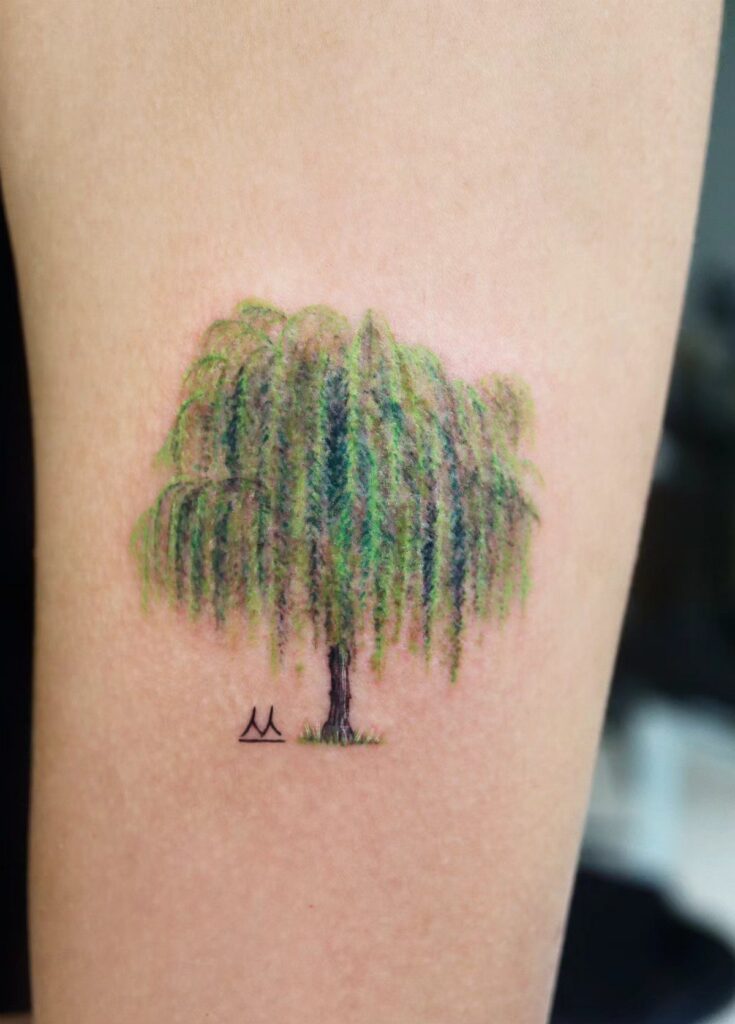
The list ahead covers traditional, fine line, Celtic, watercolor and sleeve designs, plus the meaning behind willows and where each style fits best on the body.
A discreet willow branch on the forearm takes an hour or two, while a full weeping tree down the thigh or across the back can stretch across multiple sessions.
The weeping variety’s drooping limbs carry grief and loss more clearly than other willows, so pairing it with script or a date turns it into a memorial piece, while Celtic knotwork or a feminine silhouette shifts the meaning toward ancestry or resilience.
1. Traditional Willow Tree Tattoo
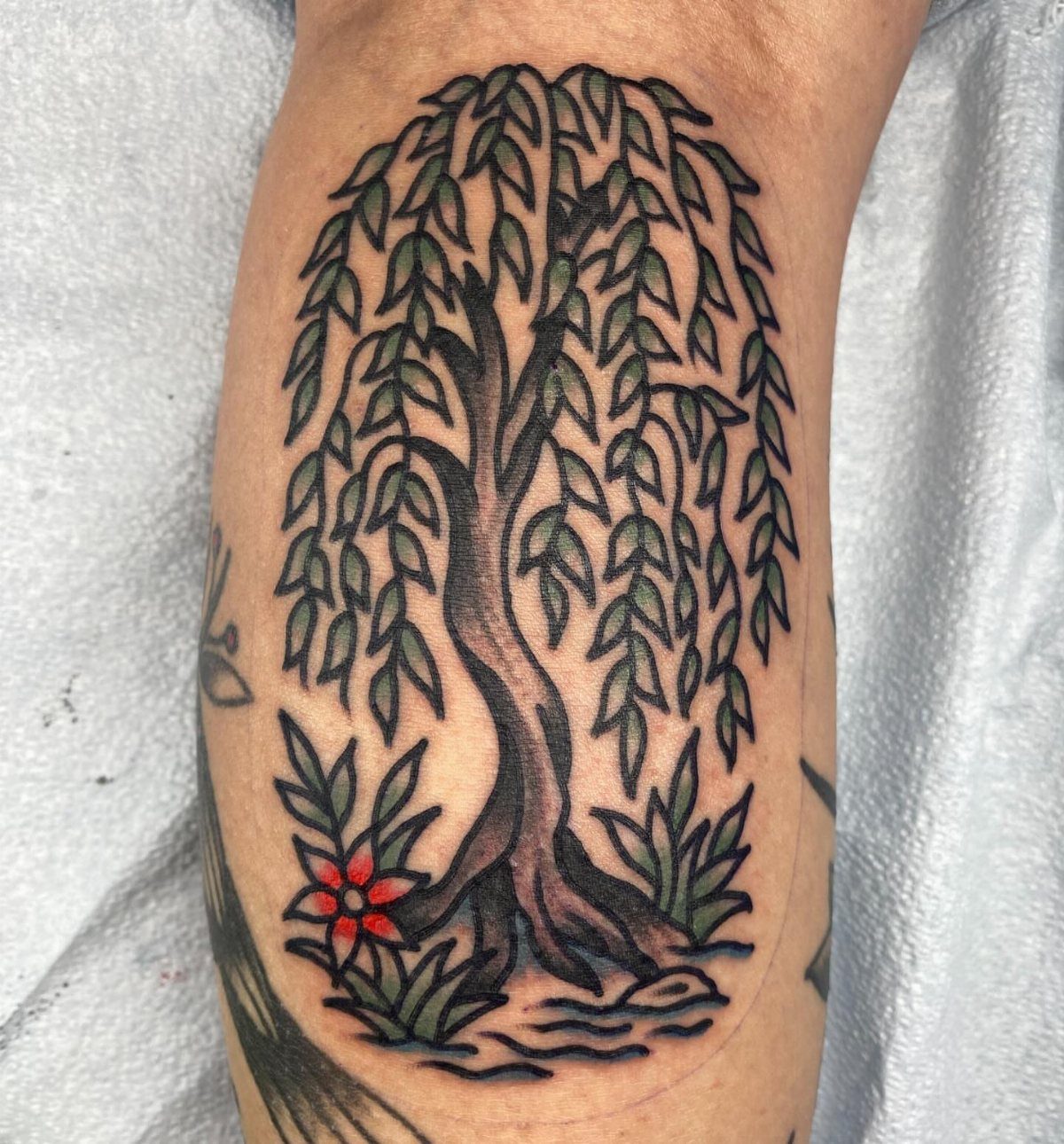
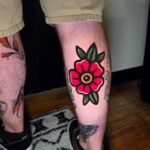
Bold outlines, saturated greens and a pop of red give this style the same graphic clarity that made sailor and biker ink last across decades.
The solid color and strong black lines stay crisp under sun and time better than most other approaches.
Traditional work reads from a distance and ages well when you need something with presence.
The leaves stay recognizable even after years of fading. Just know that green ink on some skin tones can shift blue over time, so talk through color choices with your artist before committing.
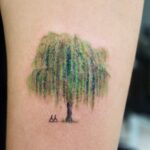
2. Weeping Willow Tree Tattoo
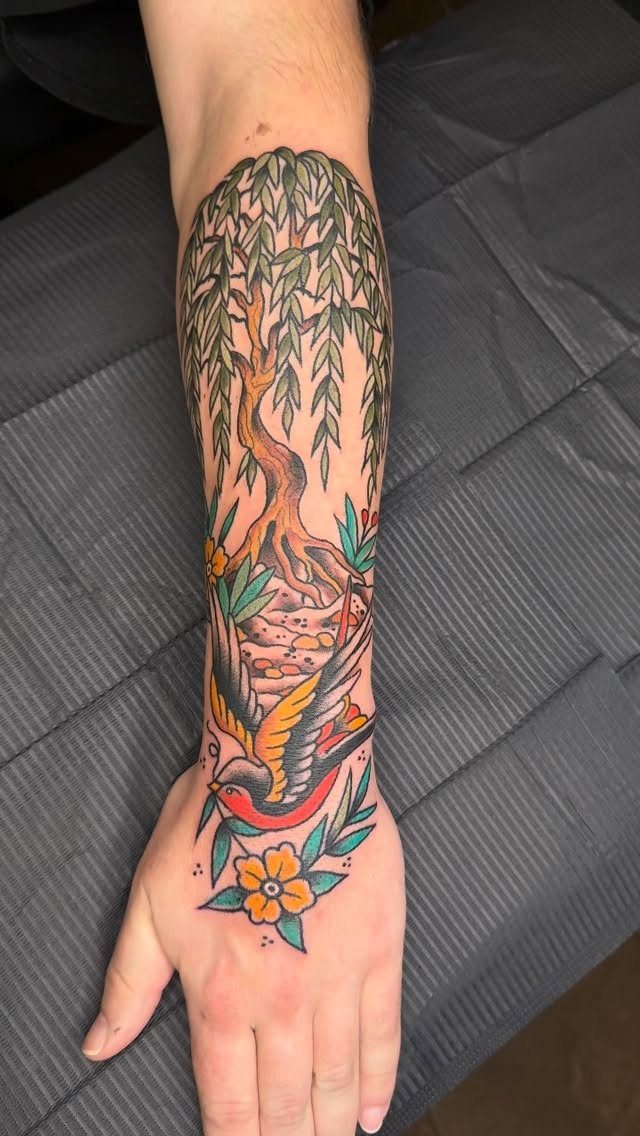
The weeping willow’s long, drooping branches make it one of the clearest symbols of grief, loss and the ability to bend without breaking.
I often see this chosen by people marking the end of something difficult or honoring someone they’ve lost.
Pairing it with a bird or flowers softens the heavier meaning and can represent hope or new growth after hardship.
Placement on the forearm or hand gives you a design you’ll see daily, which matters when the tattoo is meant to remind you of your own strength.
3. Celtic Willow Tree Tattoo
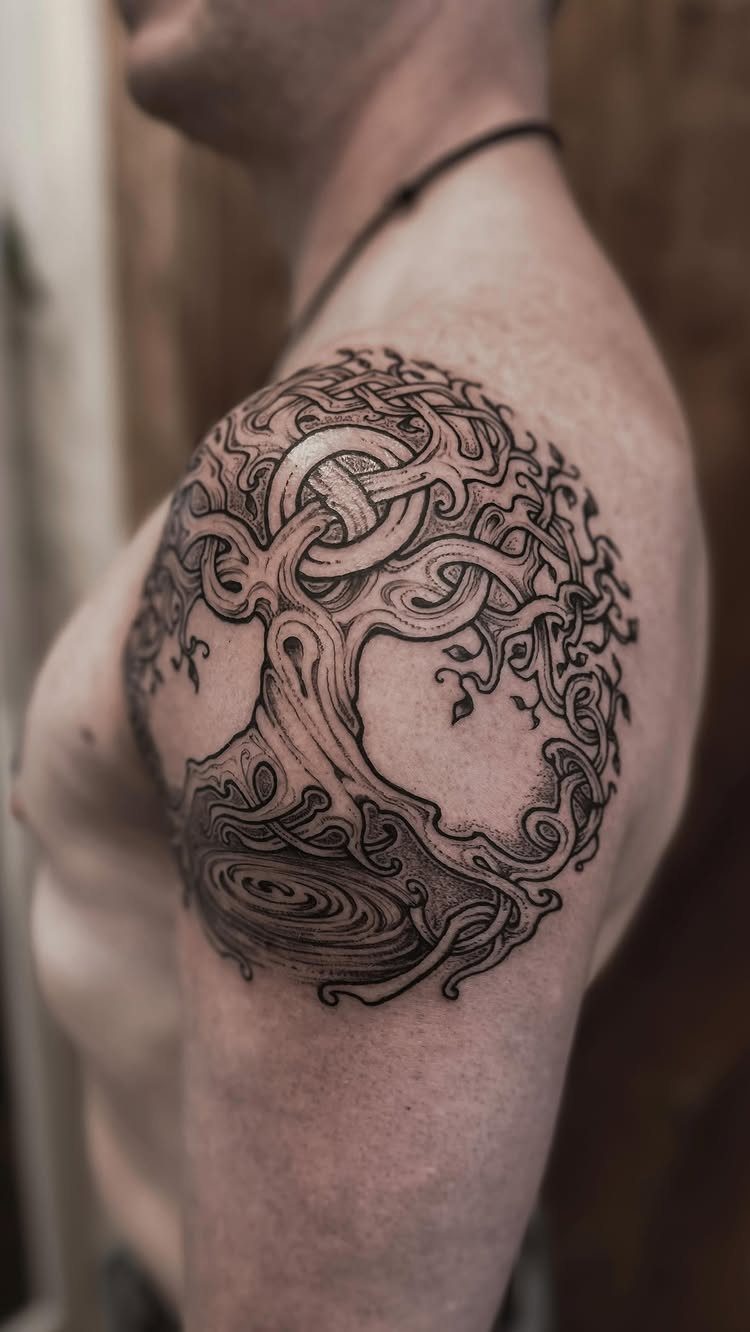
Celtic knotwork woven into the trunk or roots turns a willow into something more symbolic, tying the tree’s natural resilience to ideas of ancestry, cycles and connection.
The endless loops have no beginning or end, so they’re often chosen to represent eternity or family bonds.
This style works best in black ink with clean linework. Small versions lose detail fast, so keep it large enough that the weaving stays legible as it ages.
4. Watercolor Willow Tree Tattoo
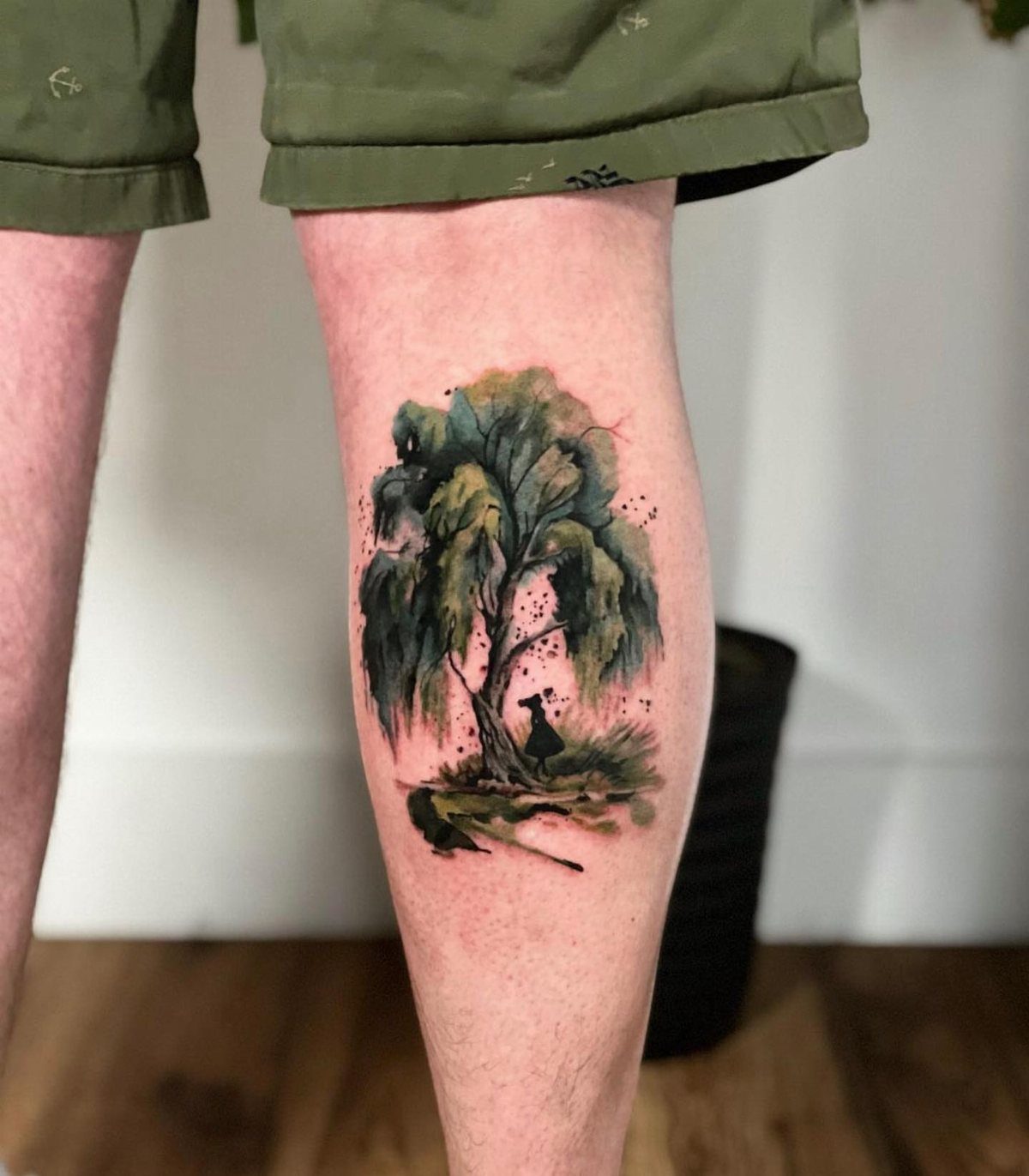
Watercolor technique uses soft washes of color instead of solid fills, giving the tree a painted, almost dreamlike look. The splashes of purple, blue or pink around the edges mimic brushstrokes and make the design feel less literal.
This style fades faster than traditional or blackwork because the colors sit closer to the surface and have less black outline to anchor them.
Plan on regular touch-ups to keep the brightness. The calf works well here since it’s less exposed to sun than the forearm or shoulder, which helps slow fading.
5. Fine Line Willow Tree Tattoo
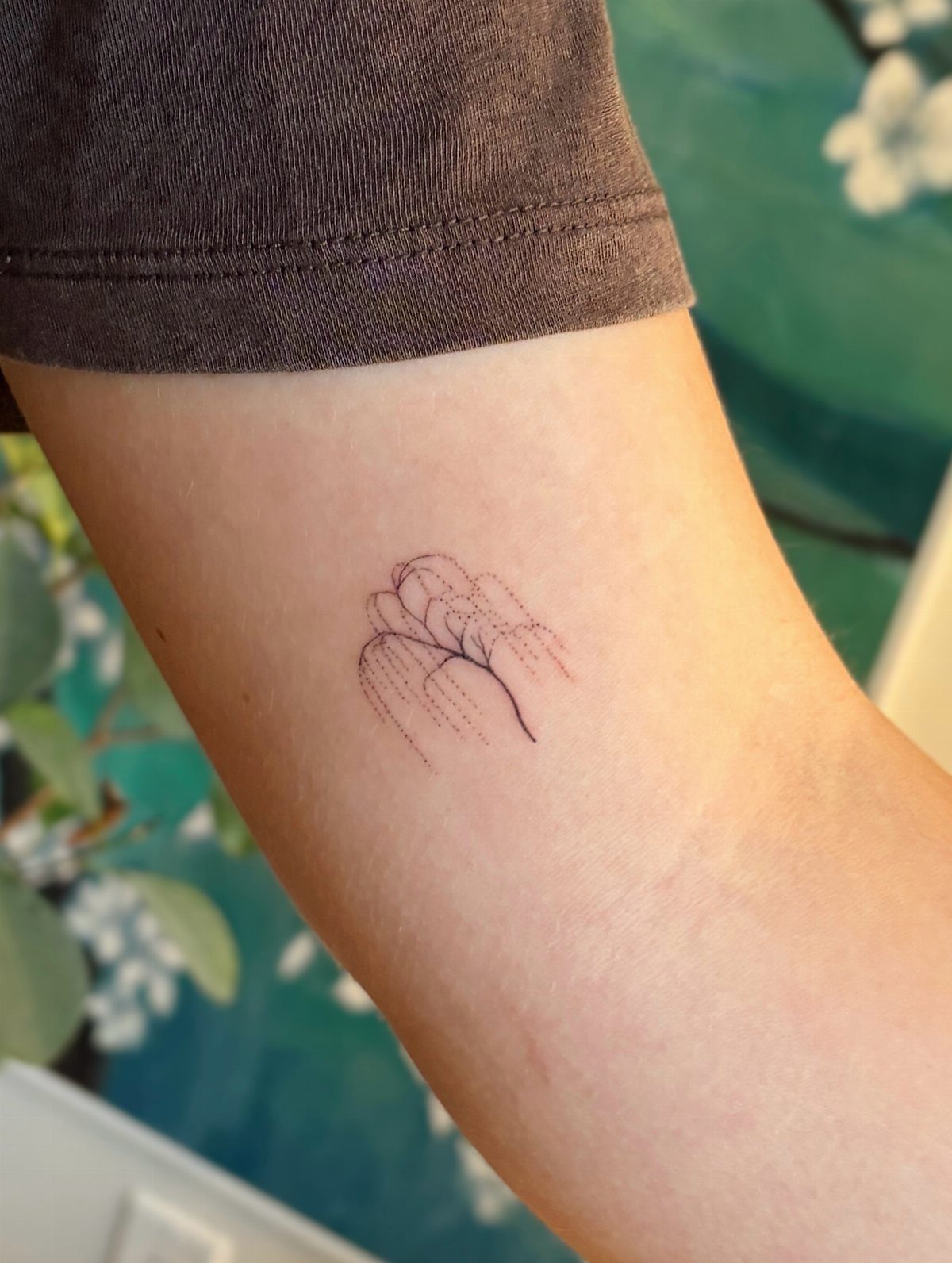
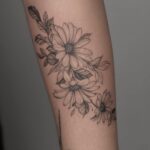
This approach keeps the willow minimal, using thin, single-needle lines to sketch the trunk and branches without heavy shading or color. The result feels light and modern, almost like a pencil drawing on skin.
This approach suits someone who wants the symbolism without the commitment of a large, bold piece. The forearm, wrist or side of the neck are common placements.
Just know that fine lines can blur together over time, especially in high-friction areas like fingers or feet, so placement matters. Plan for a piece tall enough to keep the branches distinct.
6. Discreet Willow Tree Tattoo
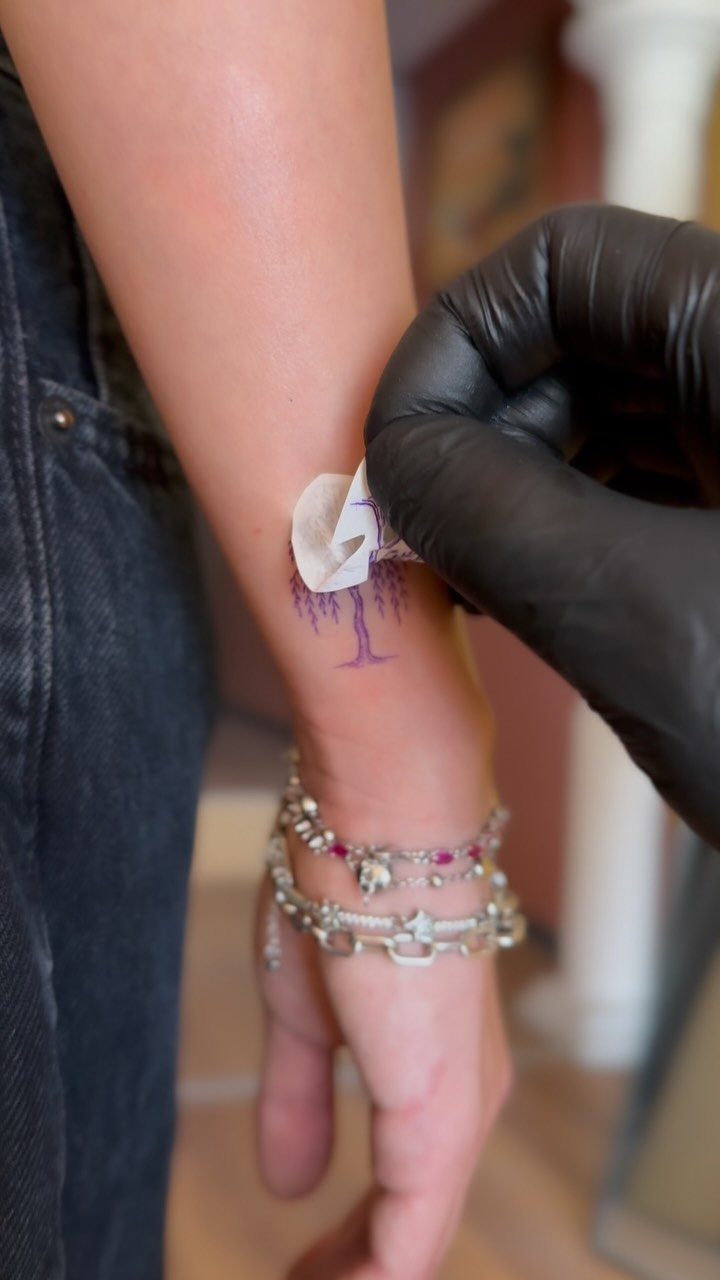
Small enough to tuck under a bracelet or watch, a discreet willow still carries the same meaning of resilience and growth but stays private unless you choose to show it.
Purple ink instead of black gives it a softer look and reads as less overtly a tattoo from a distance. Just know that lighter colors fade faster and may need a touch-up down the line.
7. Willow Tree Tattoo Paired with Skulls
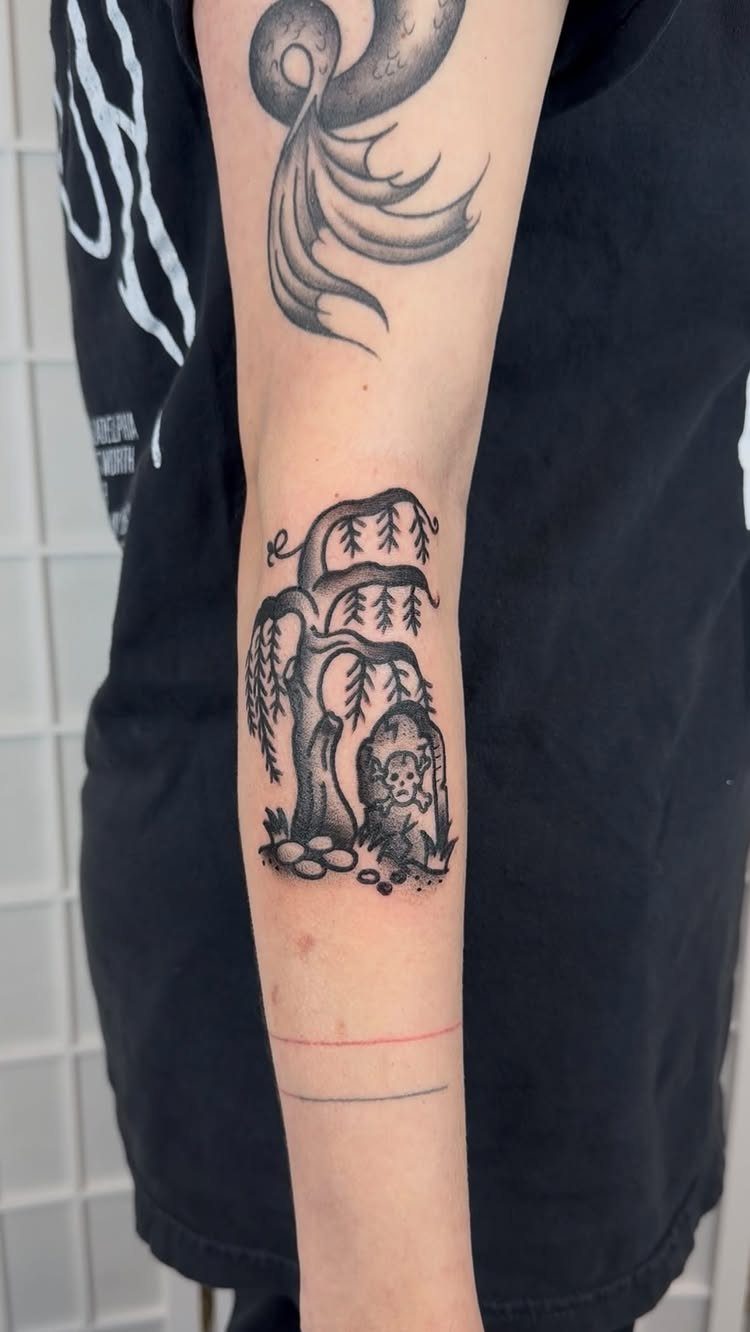
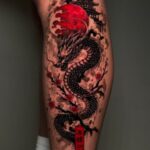
The skull adds memento mori weight to an already melancholy tree, doubling down on themes of death, memory and the passing of time.
This pairing suits someone marking a loss or honoring a person rather than softening the symbolism with birds or flowers.
Black ink keeps the contrast sharp and the skull legible.
Shading on the skull’s eye sockets and around the roots can tie the 2 elements together visually, but too much gray wash will blur the branches over time. Keep it bold or keep it simple.
8. Willow Tree Tattoo Sleeve
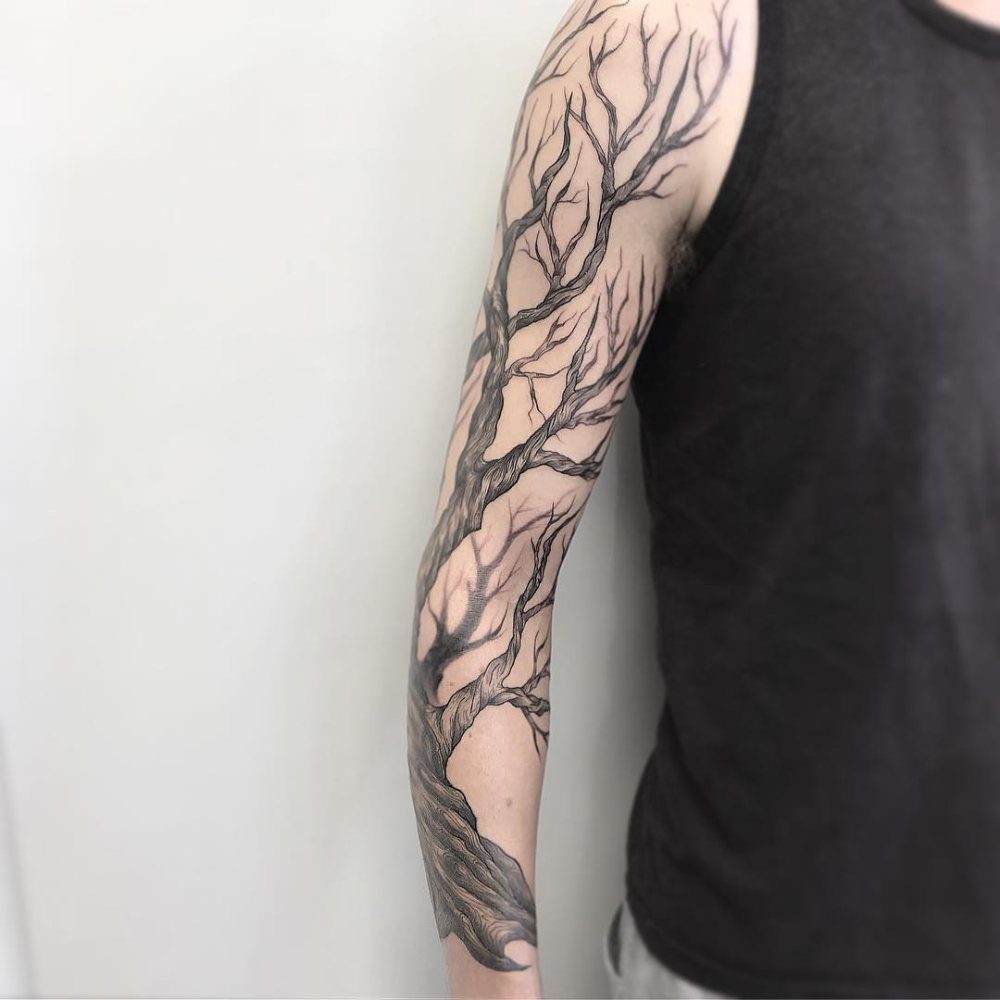
A full sleeve gives the willow room to stretch its roots down the forearm and let the branches drape over the shoulder or wrap around the bicep.
The coverage turns a single tree into a landscape piece with space for detail that smaller placements can’t hold.
Sleeves take multiple sessions, and the number climbs with shading and background detail.
Cost runs higher because of the time involved. The forearm will be more visible in daily life than the upper arm, so think about how much you want to see it yourself versus keeping it easier to cover.
9. Willow Tree Mother Child Silhouette Tattoo
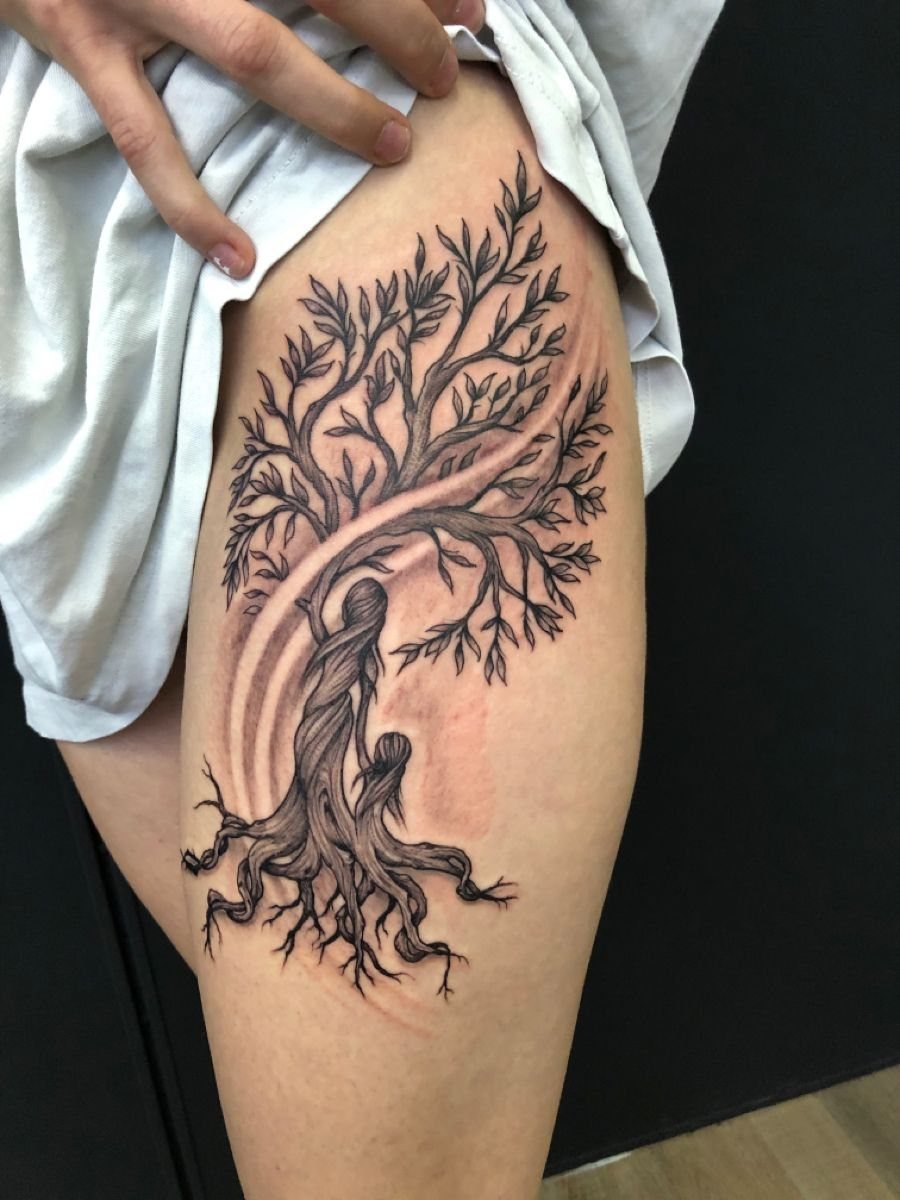
Turning the trunk into a mother and child silhouette makes the tree personal in a way few other willow designs manage. The branches above them become shelter, and the roots below suggest family, grounding and legacy.
This works best when the figures stay simple and the tree stays recognizable.
Too much detail in the silhouette can make the trunk look cluttered, and the whole piece loses its clarity. Thigh placement gives you enough vertical space to let the roots spread and the branches drape without cramping the composition.
10. Willow Branch Forearm Tattoo
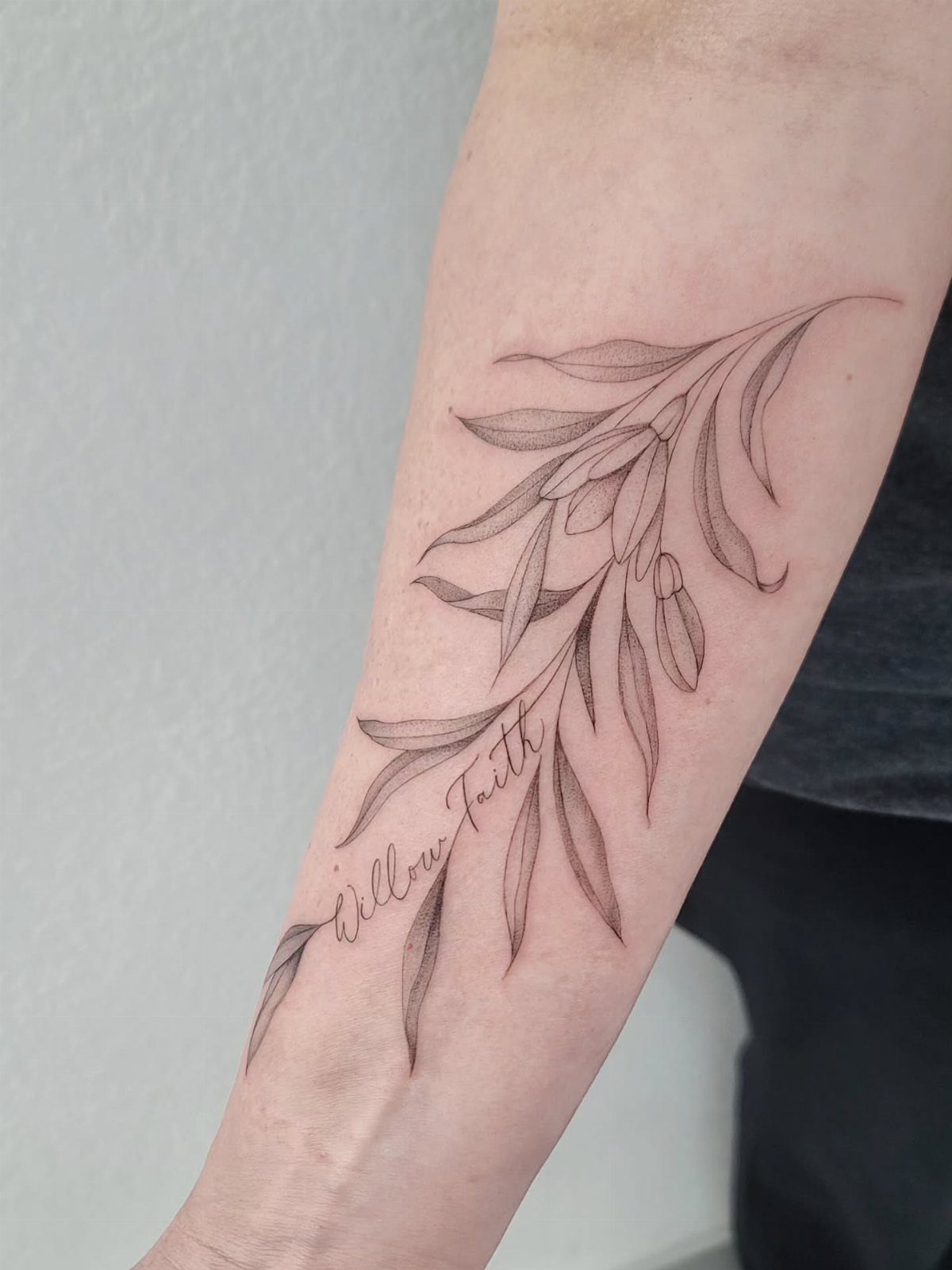
A single branch instead of the full tree keeps the design narrow enough to follow the forearm’s natural lines without wrapping around or taking up more skin than you want to commit.
Adding script or a date personalizes it without needing a second design element like a bird or skull.
The branch can run vertically from wrist to elbow or horizontally across the inner forearm.
Vertical reads better as the arm moves. Black ink stays sharp longer than gray, and fine line work will keep the leaves delicate without looking heavy as it ages.
11. Feminine Figure Willow Tree Tattoo
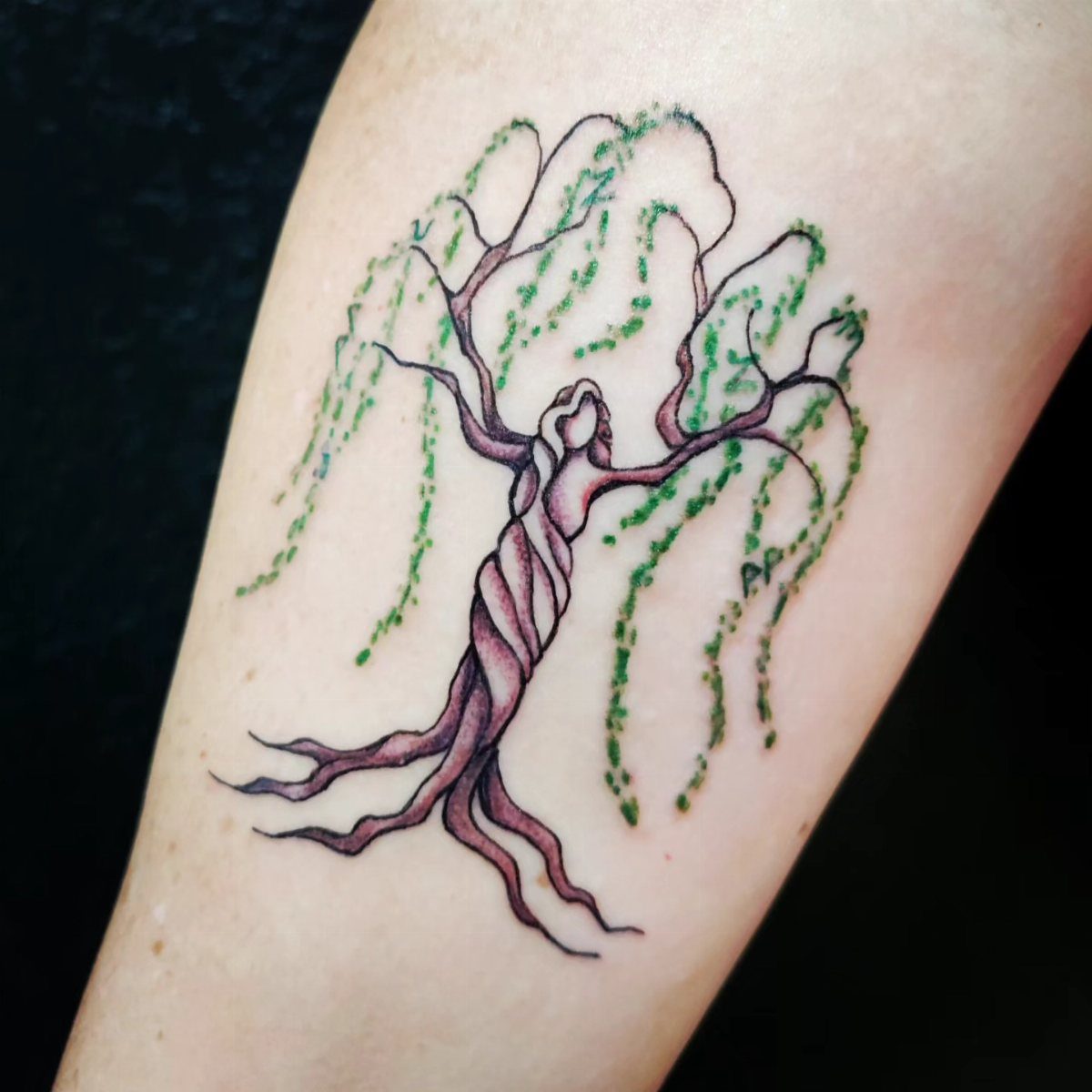
Shaping the trunk as a feminine figure turns the willow into something allegorical, less about a literal tree and more about grace, strength and the idea of bending without breaking.
Green leaves soften the contrast and add a touch of color without committing to a full watercolor palette.
This style leans ornamental, so it suits someone who wants art that reads as symbolic rather than realistic. The figure should stay simple enough that the silhouette holds from a distance.
Meaning of Willow Tree Tattoos
The willow’s root system spreads wide and shallow, letting the tree survive floods and poor soil where most others fail. That physical trait translates cleanly into ink as a mark of survival, bending under pressure instead of breaking outright.
The weeping variety’s drooping branches carry a heavier association with mourning and loss, which is why you’ll often see it paired with dates, initials or imagery tied to someone who’s passed.
Other willow species read as more neutral, leaning into growth and adaptability without the grief weight.
Willows also grow fast and regenerate from cuttings, so they show up in designs about recovery or starting over after something difficult.
The tree heals quickly when damaged, and that biological fact makes it an easy visual stand-in for emotional resilience.
Placement Considerations
Vertical space matters more than width.
The willow’s natural shape is tall with branches that hang, so a placement like the thigh, outer forearm or spine lets the design follow that proportion without cramping the composition or forcing the branches to curve awkwardly.
The upper back between the shoulder blades gives you room for both roots and canopy, but the skin there is harder to see yourself, which changes how often you’ll notice the piece day to day.
Arms stay visible and heal faster than ribs or feet, where movement and friction slow things down.
Shoulder placement works when the branches can drape over the curve, but avoid spots where clothing seams will rub constantly. Friction fades ink faster, especially on fine line work.
Design Styles
Blackwork holds detail longer than color and suits the willow’s structure, since strong contrast keeps the branches distinct as the tattoo ages.
Single-needle fine line gives a lighter, more modern look but blurs faster in high-movement areas, so choose your placement carefully if you go that route.
Watercolor adds a softer, painted feel but fades quicker than solid ink, especially without a black outline to anchor it.
Traditional style uses bold lines and flat color that read clearly from a distance and age better than most other approaches, though green ink can shift blue on some skin tones over time.
Realism requires shading and detail that look sharp fresh but soften as the skin changes, so plan for touch-ups if you want to keep the depth.