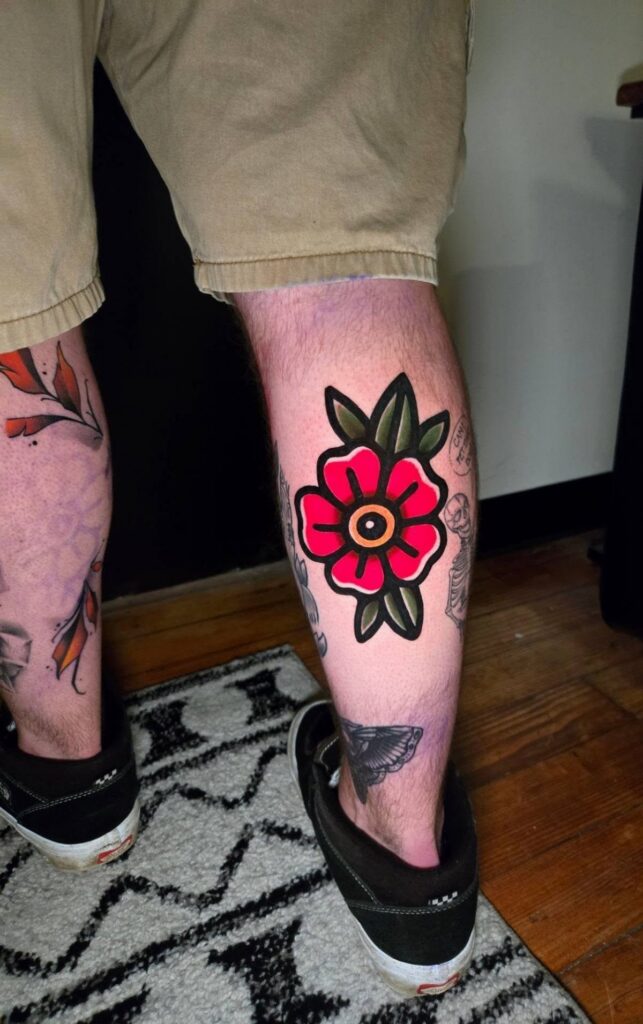
Flowers in traditional tattoo work range from a 2 cm collarbone rose that hides under most shirts to a full back piece that takes multiple sessions and reads across a room.
1. Rose Flower Tattoo
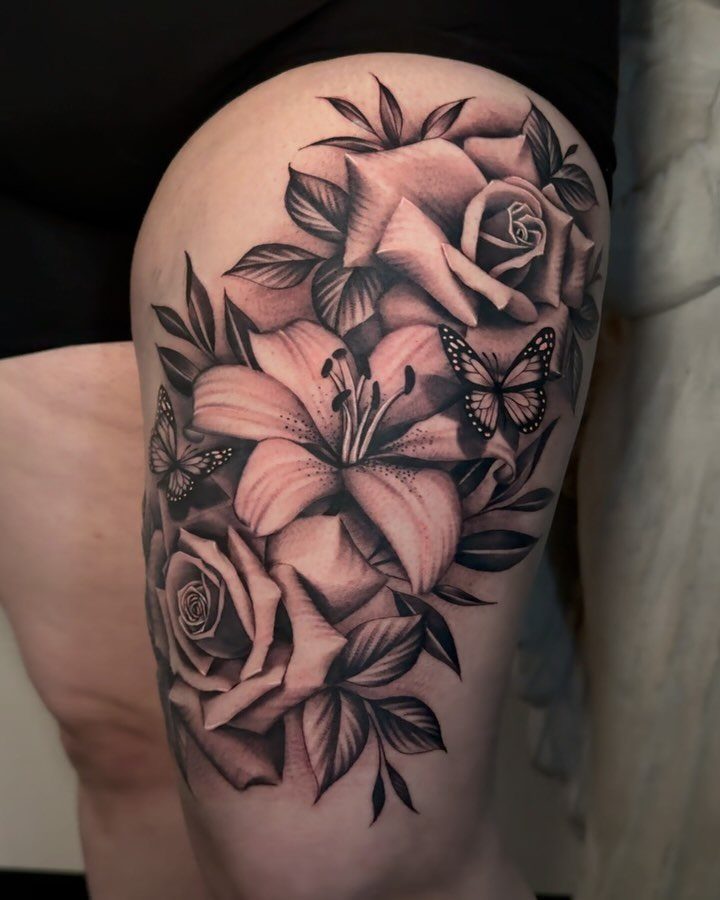
Roses carry weight in traditional work because they balance elegance with boldness. The thick black outline holds the shape, and shading or solid fill keeps it legible across the room.
Love and passion sit at the center of this one, but I’ve seen roses mark everything from a relationship to the memory of someone lost. The meaning bends to fit what you bring to it.
On a thigh, you get room to let the bloom open fully. Build a scene around it with banners or daggers, or let the rose carry the piece solo.
2. Traditional Sunflower Tattoo
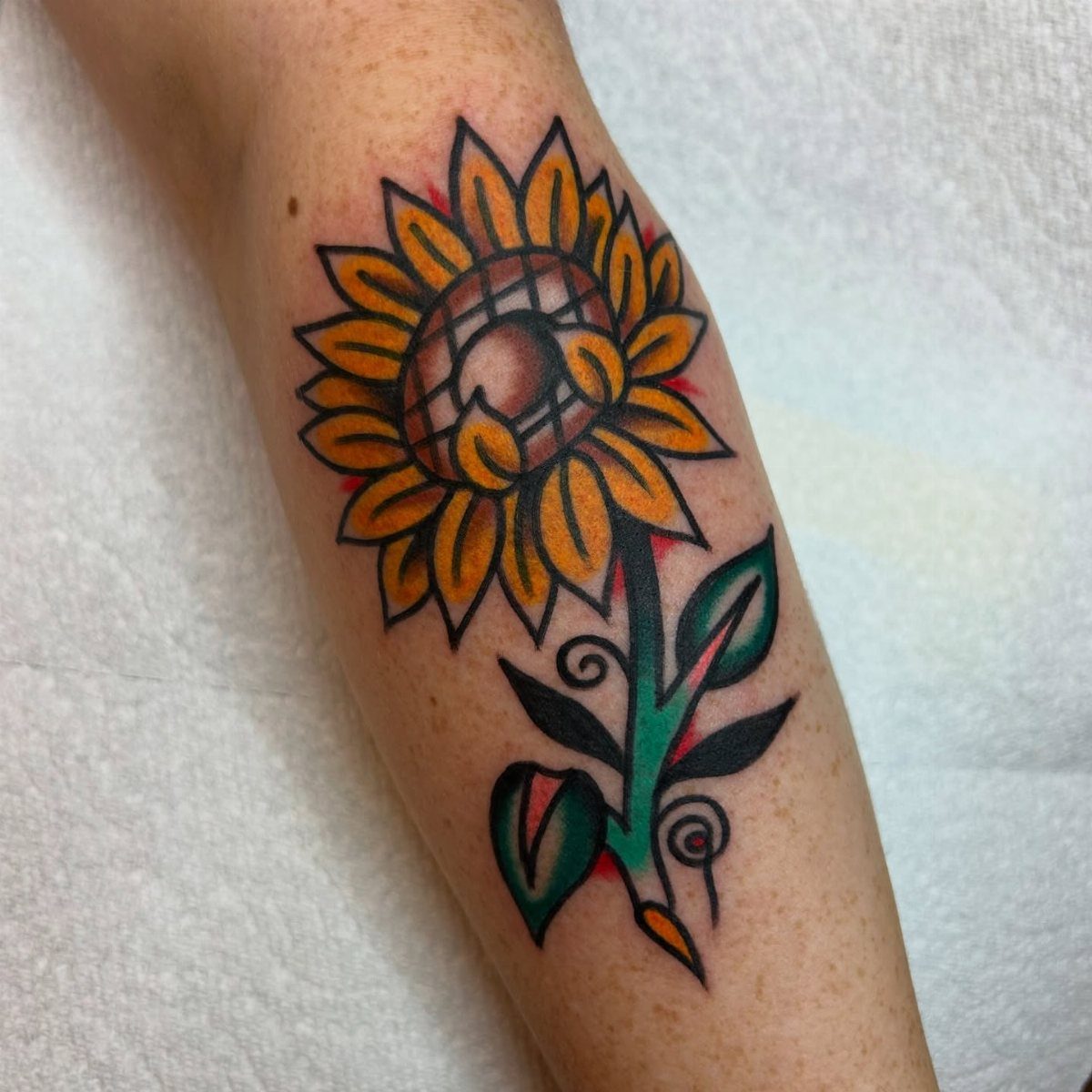
A sunflower in traditional style leans into bright yellow petals and a strong center, framed by those signature bold outlines.
The color stays vivid longer than you might expect, especially when the black outline is thick enough to keep the yellow from bleeding into surrounding skin over time.
Forearm placement works well here because the round shape fills the space naturally, and you can rotate your arm to show it or tuck it away. The green leaves anchor the design and balance the weight of the bloom.
For cheerful subject matter that still looks like serious ink, this is the move.
3. Traditional Daisy Tattoo
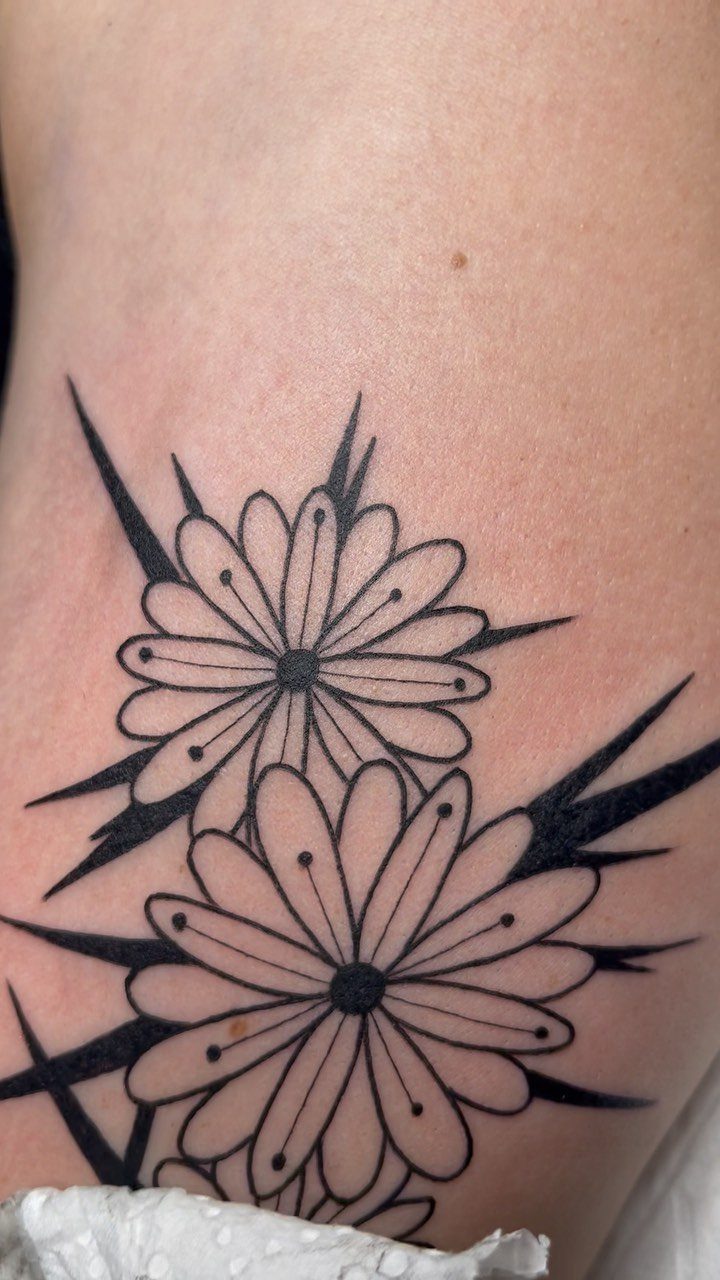
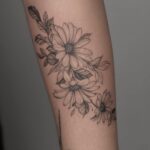
Daisies rendered in black rely entirely on the outline and the geometry of the petals.
The pointed accents around the flowers add a touch of aggression to something that might otherwise feel soft, which is exactly why the design works in traditional style.
2 blooms let you fill a space without committing to a large piece, and the repetition keeps the composition tight. I like how these read from across a room: clean, confident, and impossible to mistake for anything delicate.
Black ink ages predictably, and you won’t lose detail the way shaded work sometimes does.
4. Traditional Hibiscus Tattoo
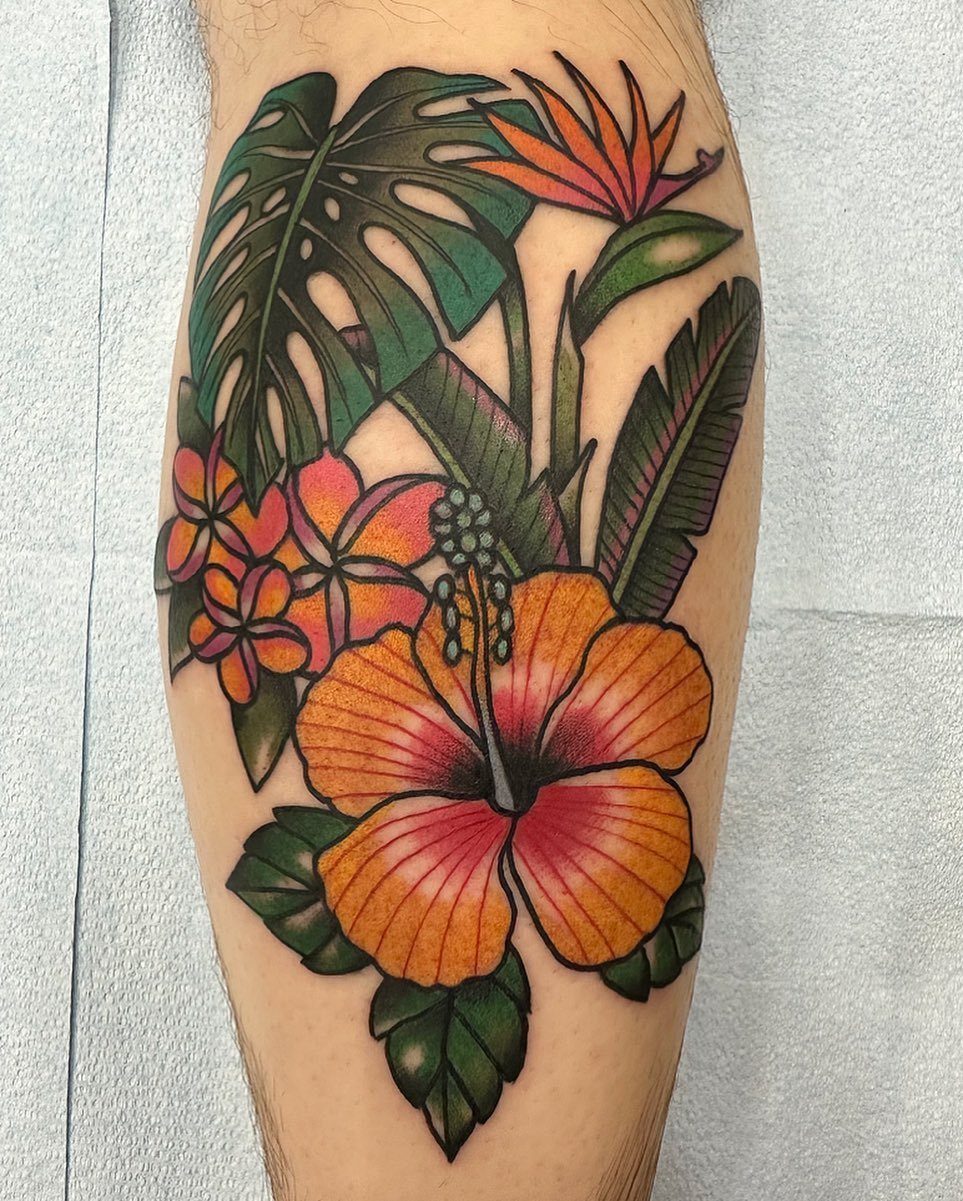
Hibiscus brings tropical energy to traditional work, and the broad petals give you room for color. Orange, red, and pink are common, and when you add monstera leaves or plumeria, the composition feels full without needing a background.
The lower leg is a solid spot for this because the vertical space lets the stems and leaves flow naturally.
Pain sits in the medium range here, and the piece heals straightforward if you keep it clean and out of tight socks for the first week.
For warm-weather subject matter that still fits the bold traditional aesthetic, this nails it.
5. Peony Blossom Tattoo
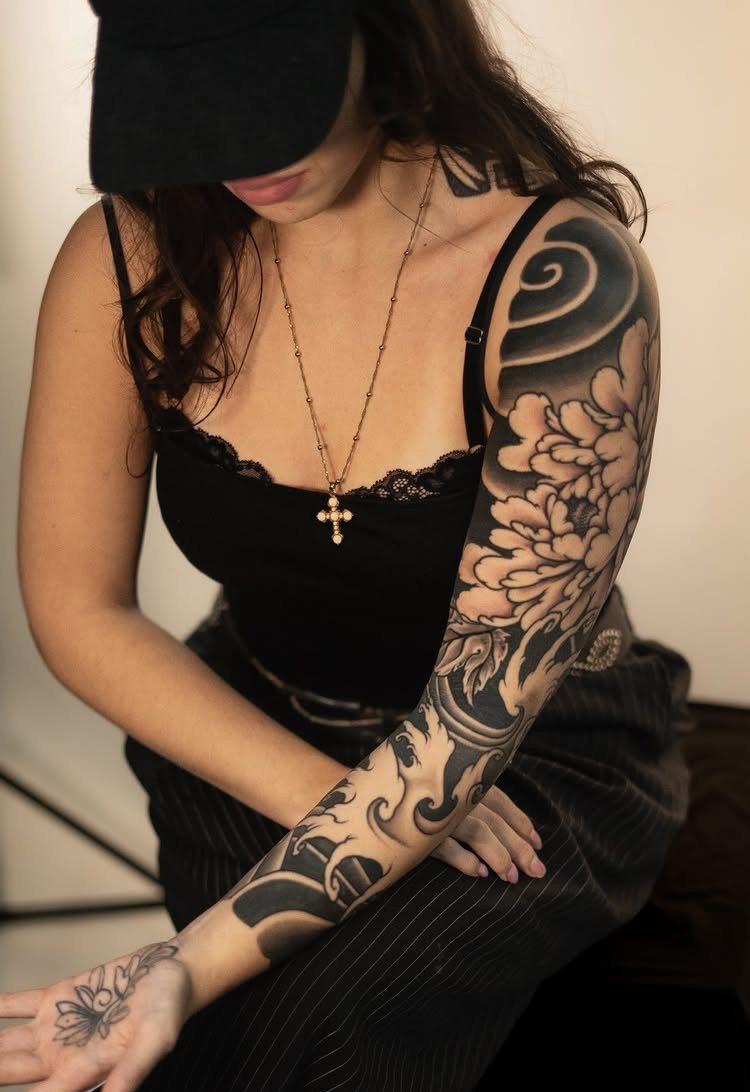
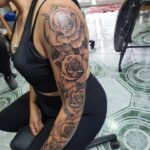
Peonies done in black with grey shading bring softness to traditional work through layered petals and controlled contrast.
The bloom sits large and open, and when you add waves or other elements, the design becomes a full composition rather than a single flower.
Prosperity and romance are the usual reads, but I think the real appeal is how a peony fills an arm without feeling cluttered. The shading gives depth, and the black outline keeps everything anchored even as the petals overlap.
A full sleeve or half sleeve suits this flower best. The size lets the petals unfold properly, and you get a piece that feels complete.
6. Lotus Bloom Tattoo
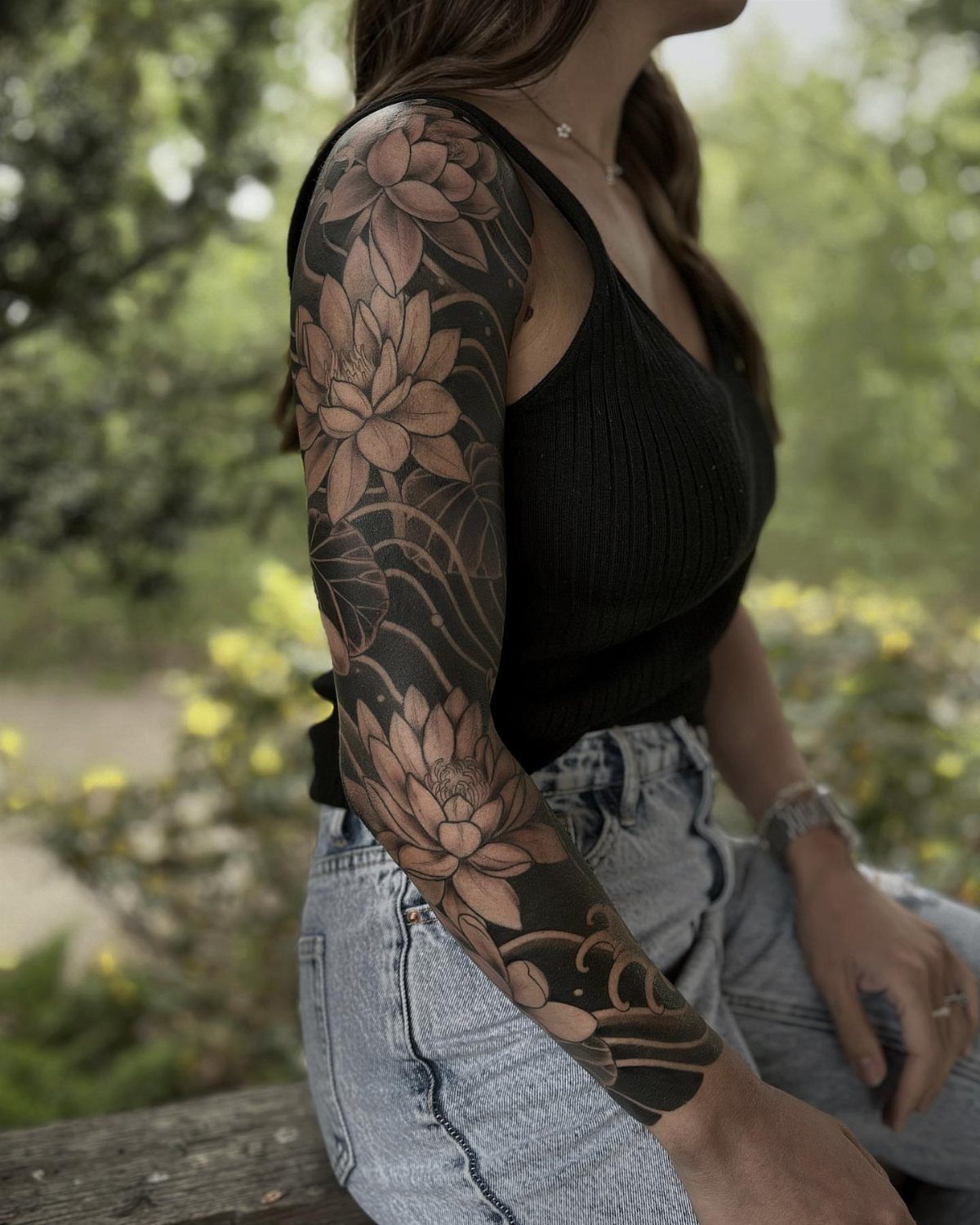
Lotus flowers in a full sleeve build around layers: the bloom at the center, smaller buds along the arm, and waves to tie it all together.
The design flows with the shape of your arm, and the symmetry of the petals makes the whole piece feel balanced.
Spiritual growth and resilience come with this one, tied to the way a lotus rises out of mud and opens clean.
If that story fits where you are, the tattoo carries it. If not, the flower still holds up on its own.
A full sleeve takes multiple sessions and costs more than a single piece, but the coverage and the finished look are worth it if you want something that commands attention.
7. Cherry Blossom Tattoo
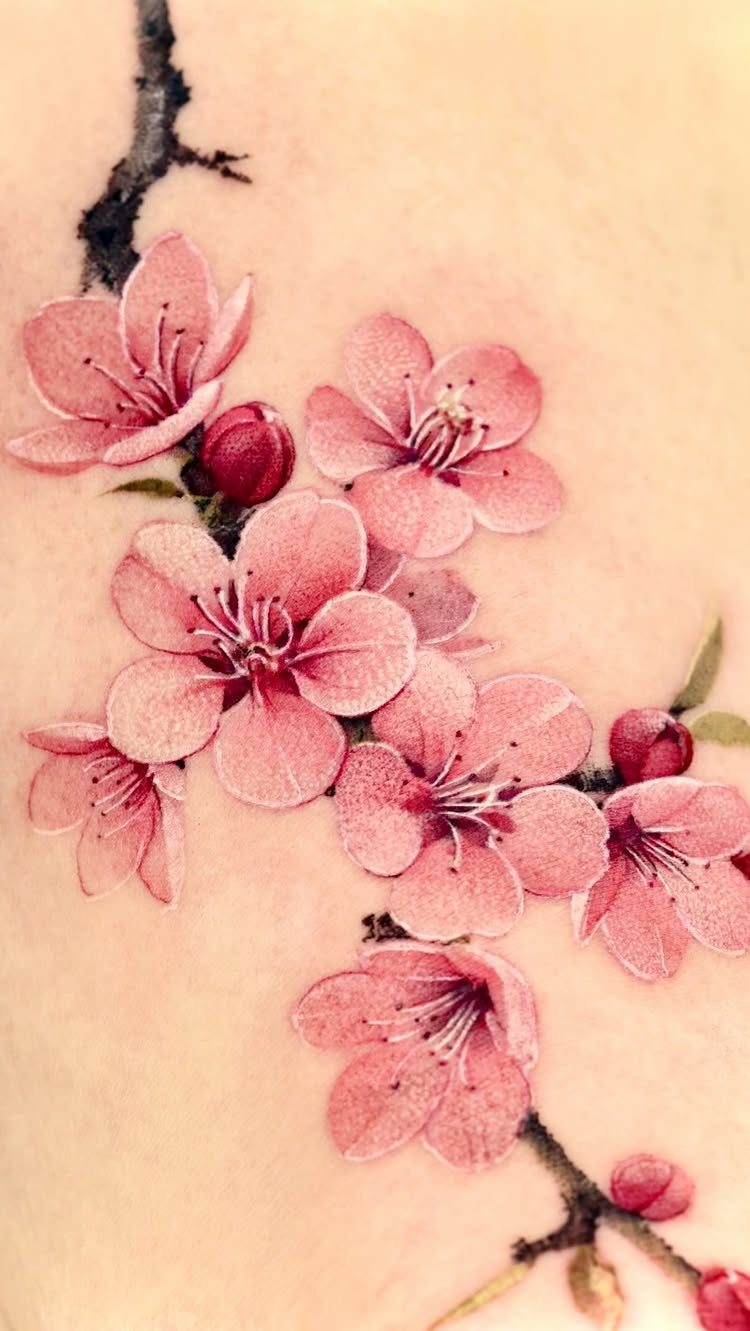
Pink petals against dark branches read as spring and renewal, and the contrast between soft color and bold linework gives the piece visual weight without filling too much skin.
The blossoms represent beauty that doesn’t last, tied to the brief window when cherry trees bloom each year.
Placement along a limb or across the shoulder lets the branch extend and the blooms cluster where they fall best. The pink stays bright if the black outline is thick enough to frame it.
8. Red Poppy Tattoo
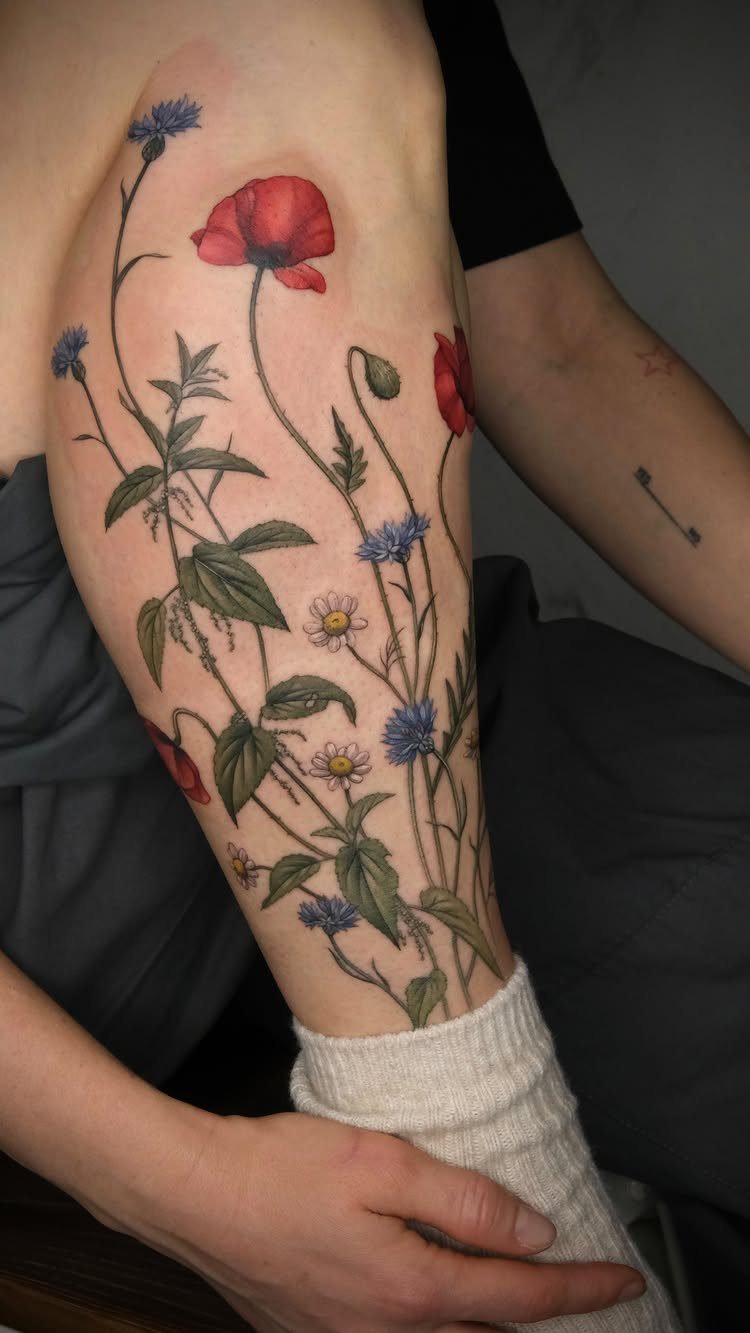
Red poppies mixed with blue cornflowers and white daisies build a field flower composition that fills the upper arm without needing a background.
The colors stay distinct because each bloom gets its own space, and the green stems tie the piece together.
Poppies carry remembrance, tied to the way they grew across battlefields, but the visual reads just as well as wildflowers gathered in one spot.
The arm wraps the design naturally, and you get coverage that feels complete without committing to a full sleeve.
9. Wildflower Bouquet Tattoo
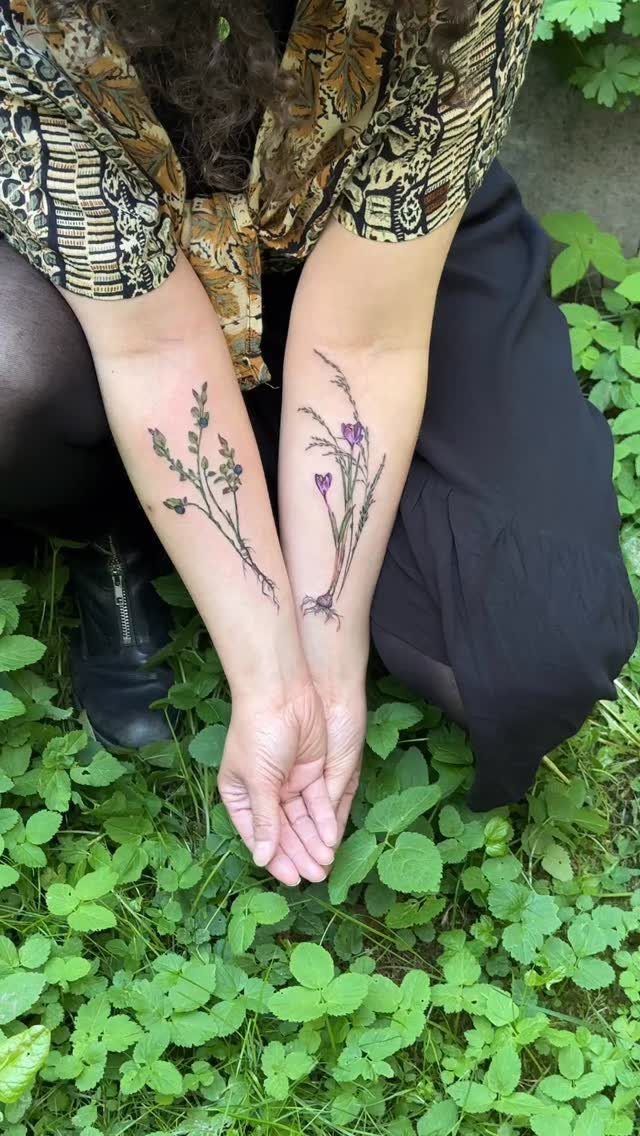
Mixing small purple blooms with thin green stems gives you a personal arrangement that doesn’t lock you into one flower’s symbolism. Each bloom can mean something different, or the whole piece can simply be about the look.
Inner forearms show the design when your hands are visible and hide it when your arms hang at your sides. The symmetry of matching bouquets feels intentional, and the simplicity keeps the design from looking cluttered as it ages.
Small flowers age cleanly if the linework is fine but not too fine.
10. Magnolia Bloom Tattoo
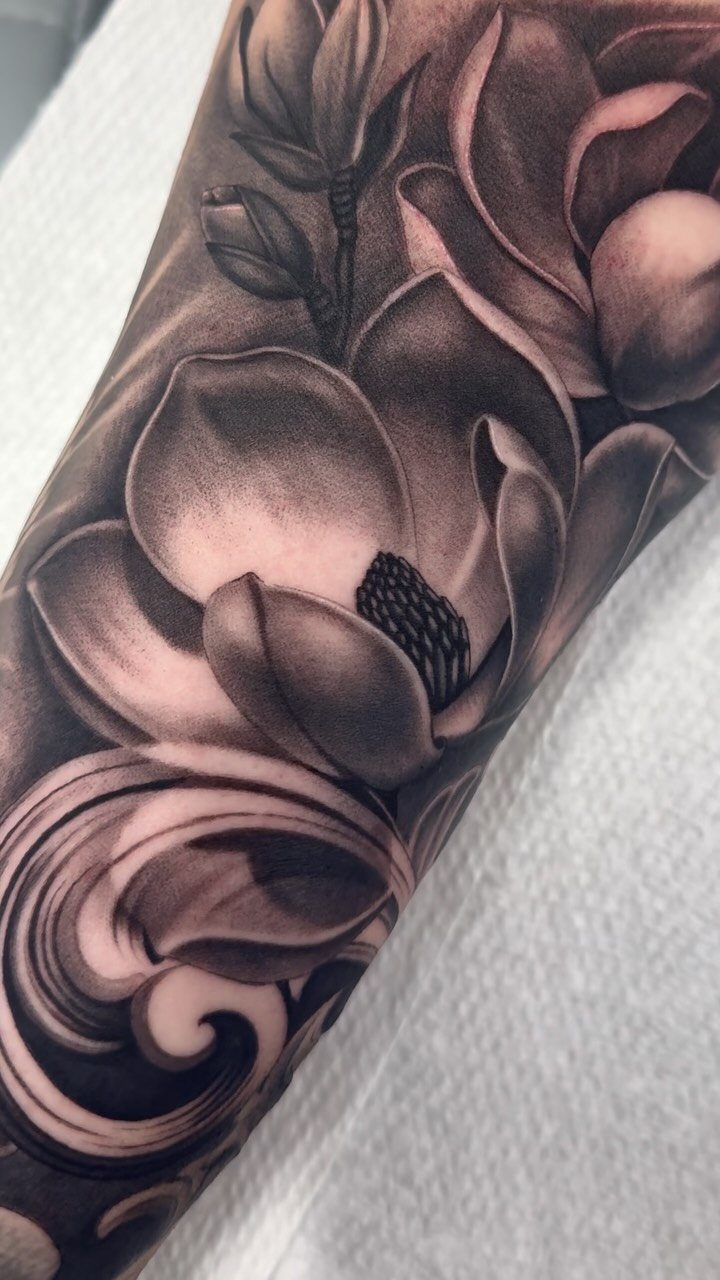
Black and grey shading on magnolia petals brings softness through gradients rather than color. The bloom opens wide, and the buds add balance without crowding the composition.
Dignity and feminine beauty sit behind this one, but the real draw is how the shading creates depth. The petals layer naturally, and the grey tones age predictably if the artist doesn’t go too light on the fill.
An arm or shoulder gives the bloom room to sit at full size. Smaller versions lose the petal detail that makes the flower recognizable.
11. Red Carnation Tattoo
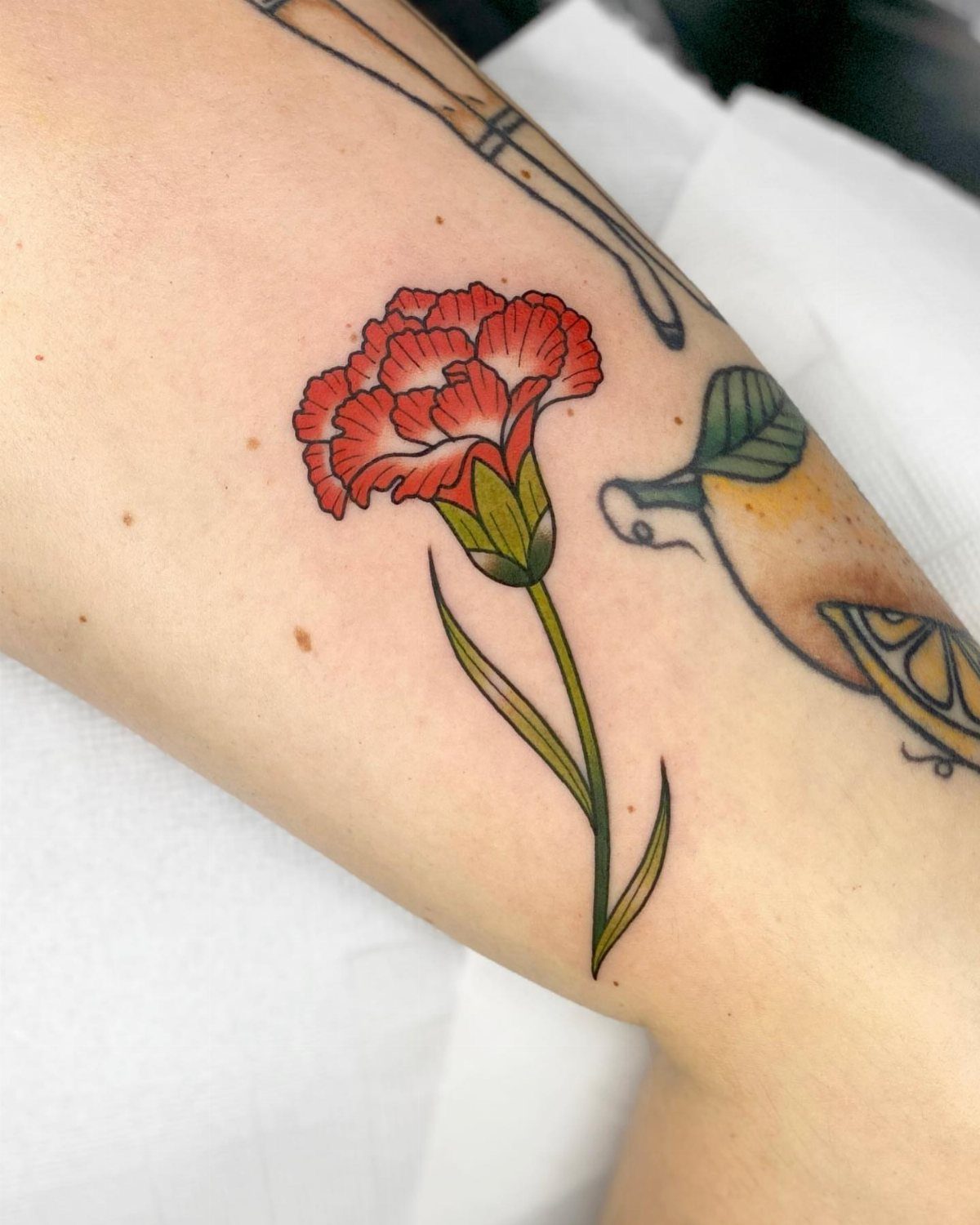
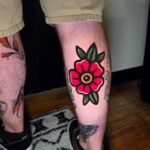
A red carnation done in traditional style keeps the ruffled edges of the petals while holding a strong outline. The green stem and leaves ground the design, and the red stays bold without needing additional elements around it.
Admiration and love are tied to red carnations, but the flower works just as well as a standalone piece that doesn’t need explanation. The simplicity keeps the focus on the bloom itself.
This fits anywhere you want a medium-sized piece that reads clearly from a distance.
12. Hydrangea Cluster Tattoo
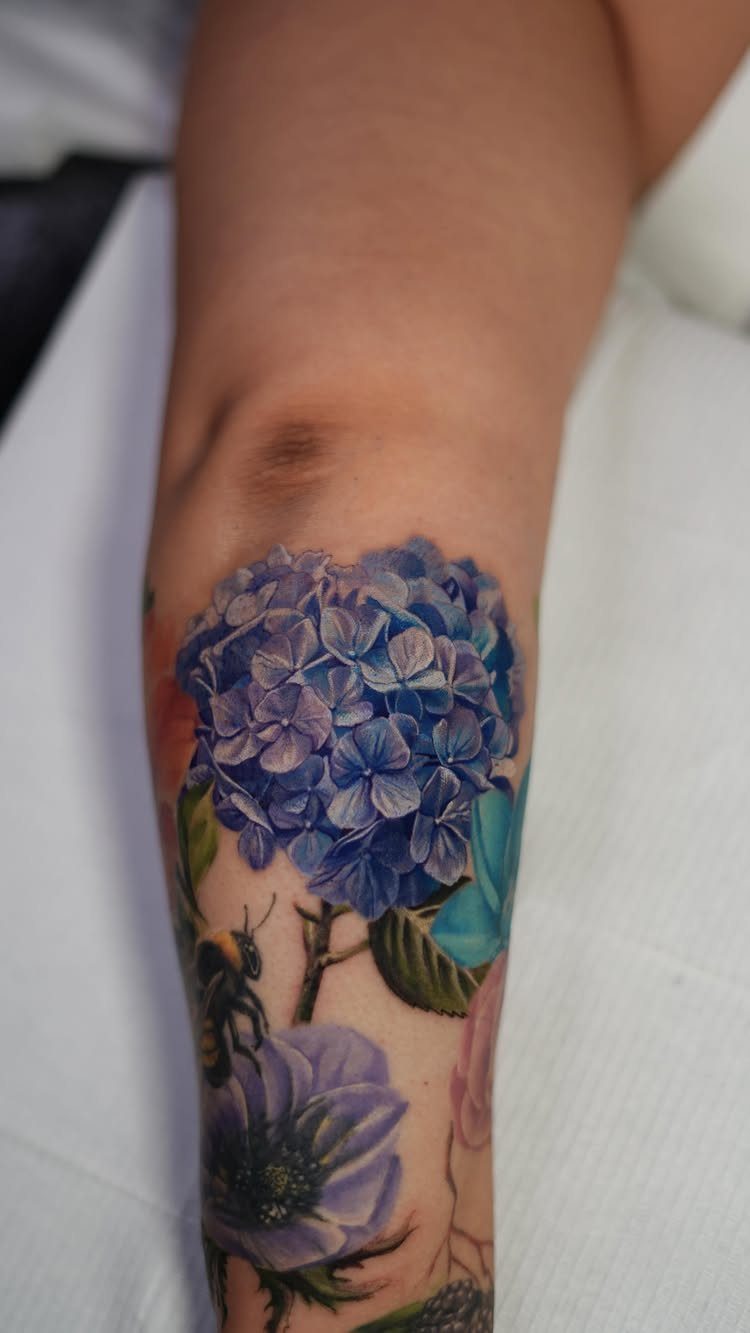
Blue hydrangeas cluster tightly, and when you add a bumblebee and smaller blooms, the piece becomes a garden scene rather than a single flower. The color fills space without needing a background, and the bee adds movement.
Gratitude and understanding are the usual meanings, tied to the way hydrangeas bloom in large, generous clusters. The lower leg gives you room to spread the cluster naturally, and the colors stay separated by the black outlines.
Multiple colors in one piece need touch-ups sooner than black and grey work, but the vibrancy makes it worth the maintenance.
13. Chrysanthemum Bloom Tattoo
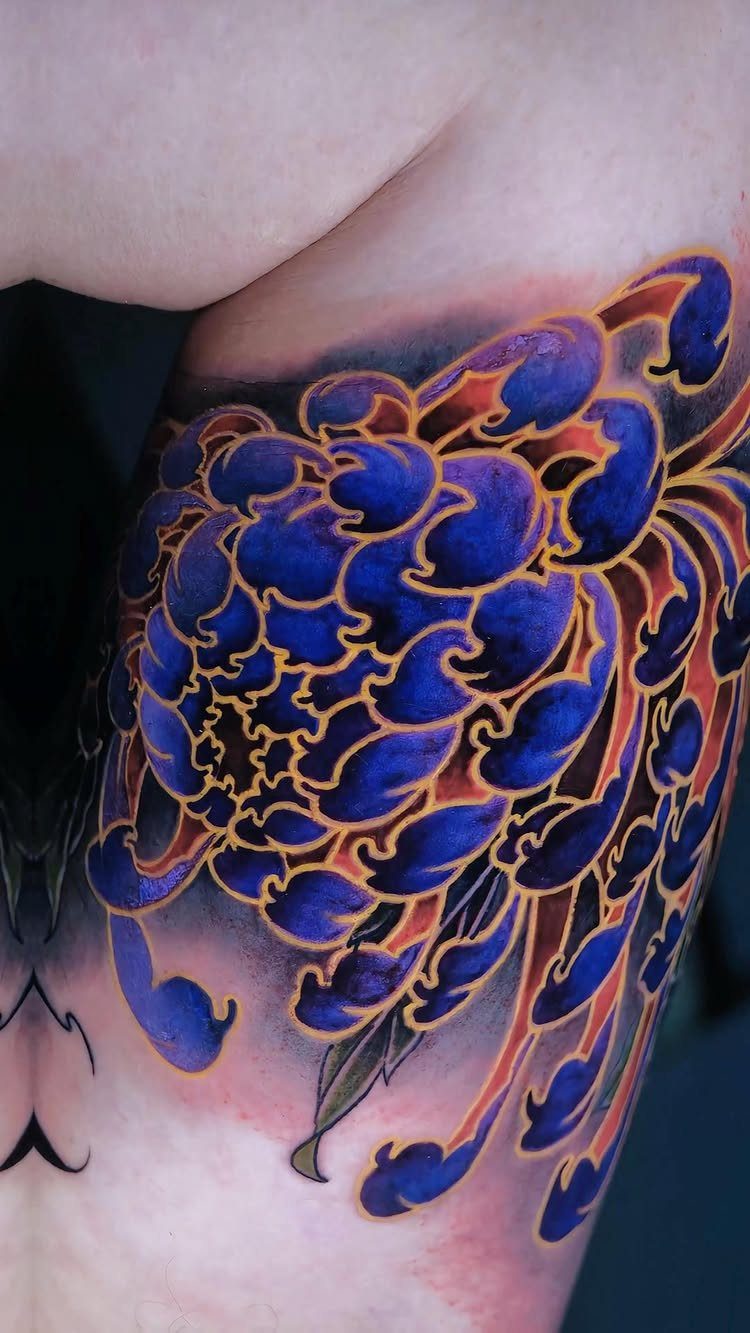
Blue petals ringed with orange detailing give this flower a stylized look that holds up in traditional work. The contrast between the 2 colors keeps the bloom readable, and the layered petals create depth without needing heavy shading.
Longevity and joy are tied to chrysanthemums, but the real appeal is how the flower fills a round space like the thigh naturally. The shape stays balanced, and the colors age well when the black outline frames them properly.
This works best where you want a single bloom that commands attention without needing surrounding elements.
14. Yellow Daffodil Tattoo
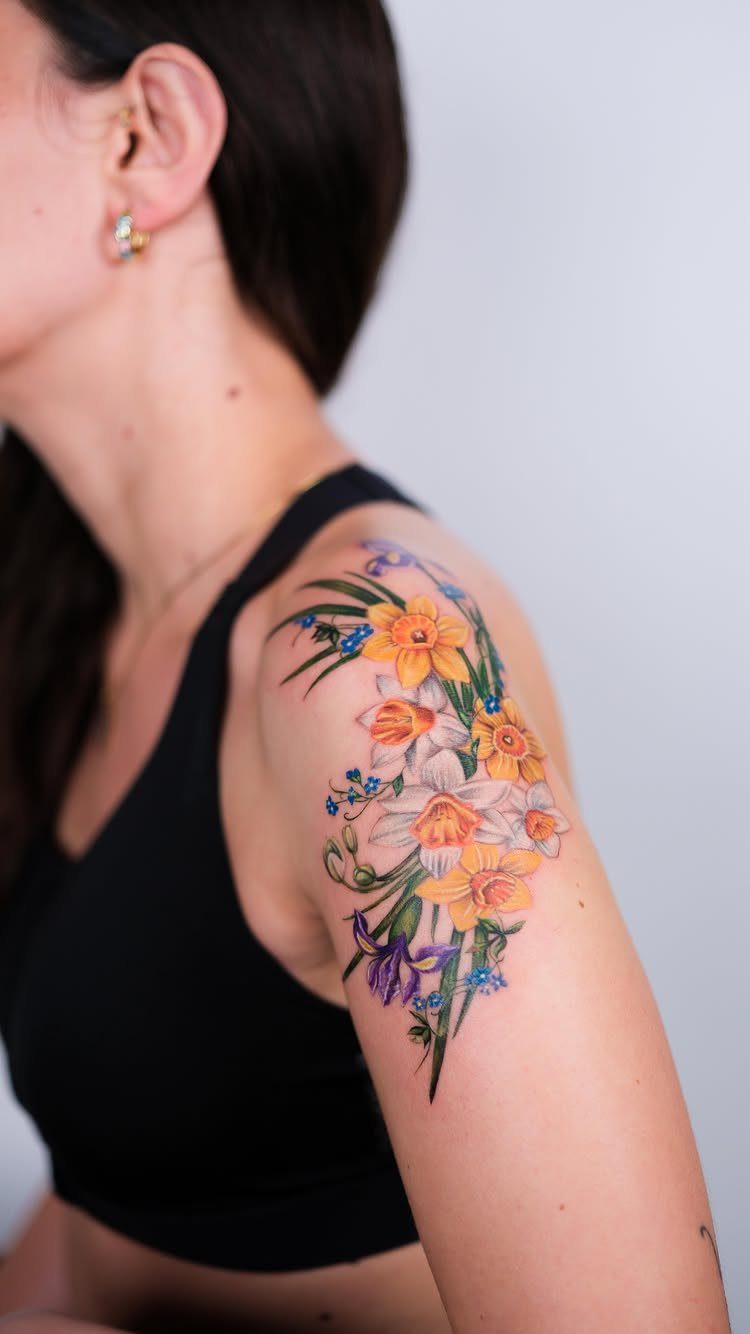
Yellow daffodils mixed with purple blooms create a spring composition that fills the shoulder and upper arm. The trumpet shape of the daffodil is distinct, and pairing it with another flower adds variety without cluttering the design.
The shoulder curves let the stems flow naturally, and the color combination stays bright because each bloom gets its own space.
Pain on the shoulder cap is moderate, and healing is straightforward if you avoid tight bra straps for the first week.
15. Small Collarbone Rose
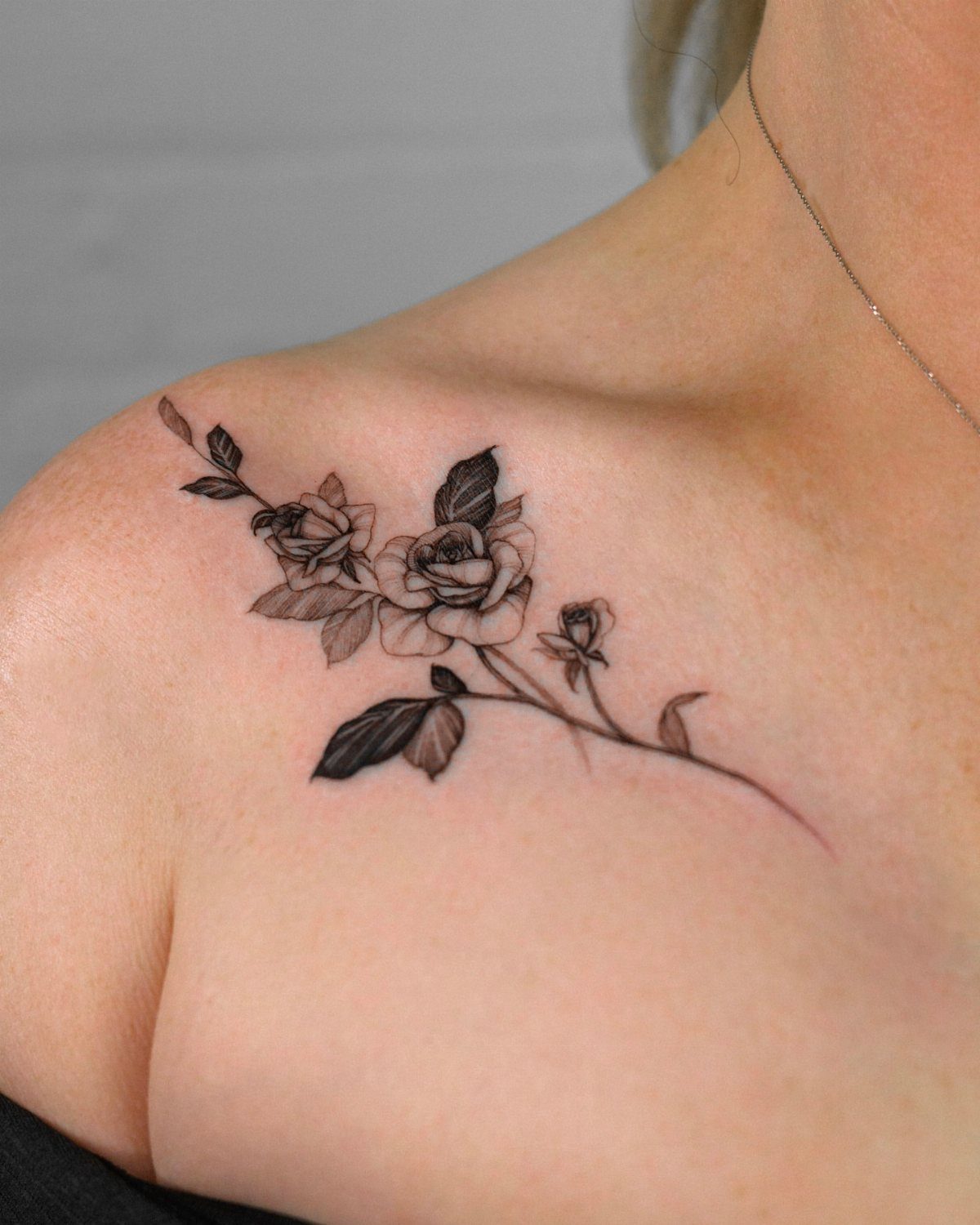
A rose scaled down to fit the collarbone trades coverage for subtlety. The black linework keeps the petals and leaves readable even at a smaller size, and the placement shows when you wear something open and hides under most shirts.
Pain along the collarbone is sharp because the bone sits close to the surface, but the piece is small enough to finish in one session. The design ages cleanly if the lines aren’t too thin.
For a classic flower in a spot that feels intentional rather than bold, this hits the mark.
16. Traditional Flower Back Piece
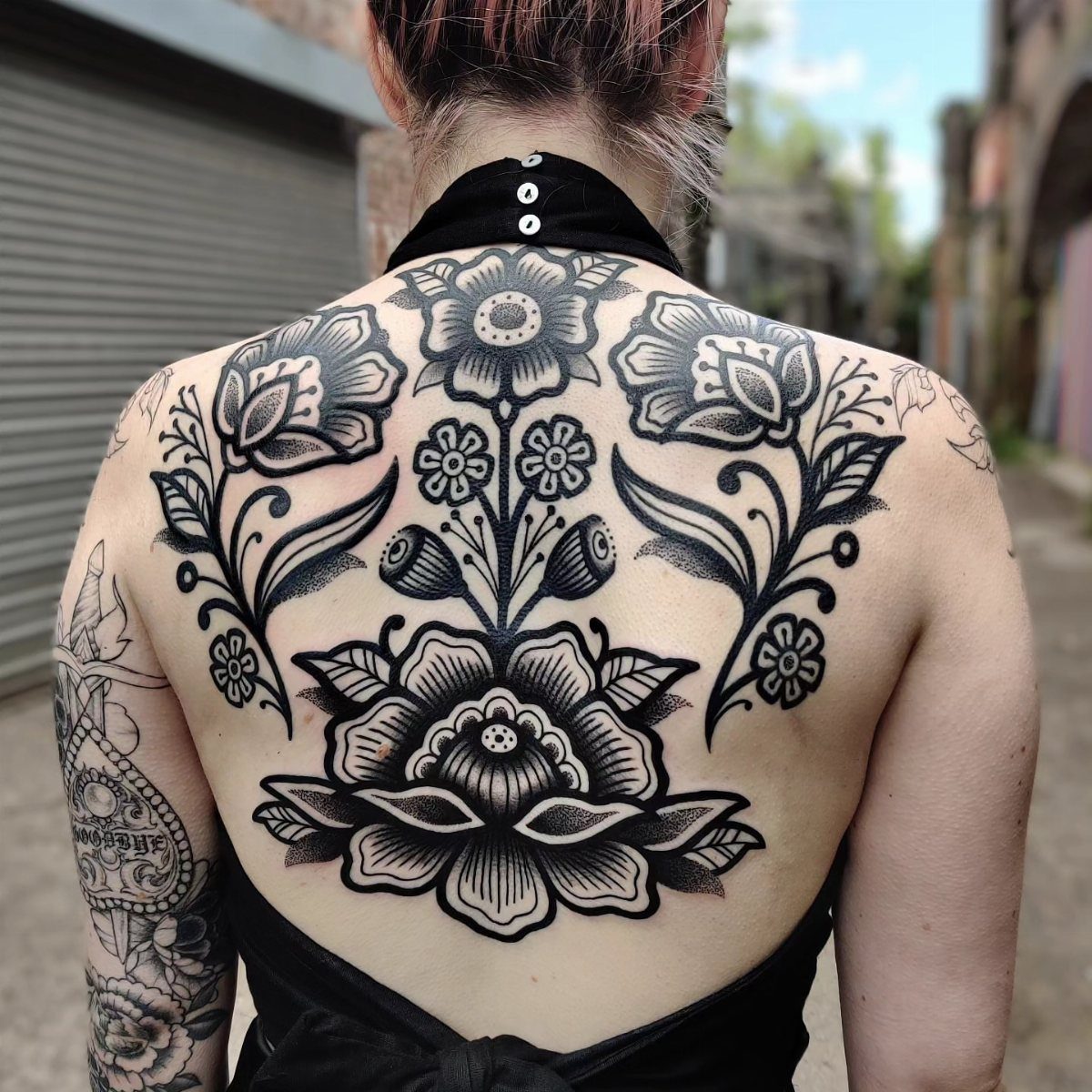
Symmetrical roses and foliage spreading across the upper back create a centerpiece that fills the space between the shoulders. The black ink keeps the design strong, and the mirror image on each side balances the composition.
Coverage like this takes multiple sessions, and the cost reflects the size and detail. Pain varies across the back, with the spine and shoulder blades sharper than the surrounding muscle.
This is the move when you want a piece that anchors your ink and reads as a finished statement rather than a single flower.
Choosing the Right Design
Meaning comes first.
If you want something tied to love, resilience, or renewal, find the flower that carries it. If you just want a bloom that looks right on your skin, that works too.
Placement dictates how the design fits.
Forearms, chest, and back give you room for bold lines and full color. Smaller spots like the collarbone or wrist still work, but the design needs to scale down without losing the clean edges that make traditional ink read clearly.
Artist expertise matters more than most people think. Not everyone working in traditional style has the same eye for balance and line weight.
Look at healed work, not fresh photos. A portfolio with solid outlines and color that hasn’t bled after a few years tells you what you need to know.
Size affects both the look and the longevity.
Bigger pieces hold detail better as they age. Smaller ones need simpler compositions to stay readable.
Common Mistakes to Avoid
Overcomplicating the design weakens it.
Traditional work relies on clean shapes and strong outlines, so adding too many flowers, too much detail, or too many colors in one piece turns it into something that doesn’t age as well. Simplicity keeps the design legible.
Skipping research on your artist costs you later. Traditional tattoos thrive on simplicity, so the style has its own approach to how bold the lines run, how saturated the color sits, and how the design fills the space.
An artist who works primarily in realism or fine line won’t always know how to build a piece that holds up the way traditional ink should. Check portfolios for experience in this exact style.
Ignoring aftercare ruins even the best tattoo.
Traditional pieces heal well when you follow the basics: keep it clean, avoid tight clothing over fresh ink, and don’t pick at scabs. Proper care keeps the black outlines sharp and the color bright.
Frequently Asked Questions
What are pretty flowers to get tattooed?
Roses, peonies, lotus blooms, and cherry blossoms work well in traditional style because they carry clear meanings and hold up visually as the ink ages.
Roses balance elegance with bold outlines, peonies bring layered softness through shading, lotus flowers offer symmetry that flows with your arm, and cherry blossoms mix delicate petals with strong black linework.
Each one fills space differently, so pick based on where you want the piece and how much coverage you’re after.
What is a traditional tattoo?
Traditional tattoos use thick black outlines, limited color palettes, and bold shapes that stay legible as the ink ages and when viewed from across a room.
The style relies on simplicity rather than heavy detail, so flowers like roses and peonies get rendered with strong lines and solid fills or controlled shading.
That clarity keeps the design readable over time, which is why traditional work ages better than styles that depend on fine detail.
Are flowers considered realism tattoos?
Flowers can be done in realism style, but traditional flower tattoos are a different approach entirely.
Realism aims for photographic detail and soft shading, while traditional work uses bold black outlines, limited color, and simplified shapes designed to stay clear over decades.
A rose in traditional style holds its shape through thick linework and solid fill, not the gradient shading you’d see in a realistic piece.