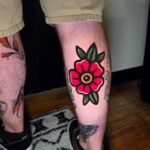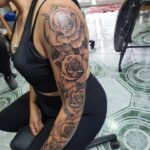
Floral tattoos range from fine line stems that sit delicate on a wrist to full realism blooms that need multiple sessions and cover the forearm or thigh.
The flower itself matters less than the style you want: roses hold shading and depth, daisies and cherry blossoms suit minimal line work, and geometric florals need room for both the bloom and the structure around it.
1. Flower Tattoo
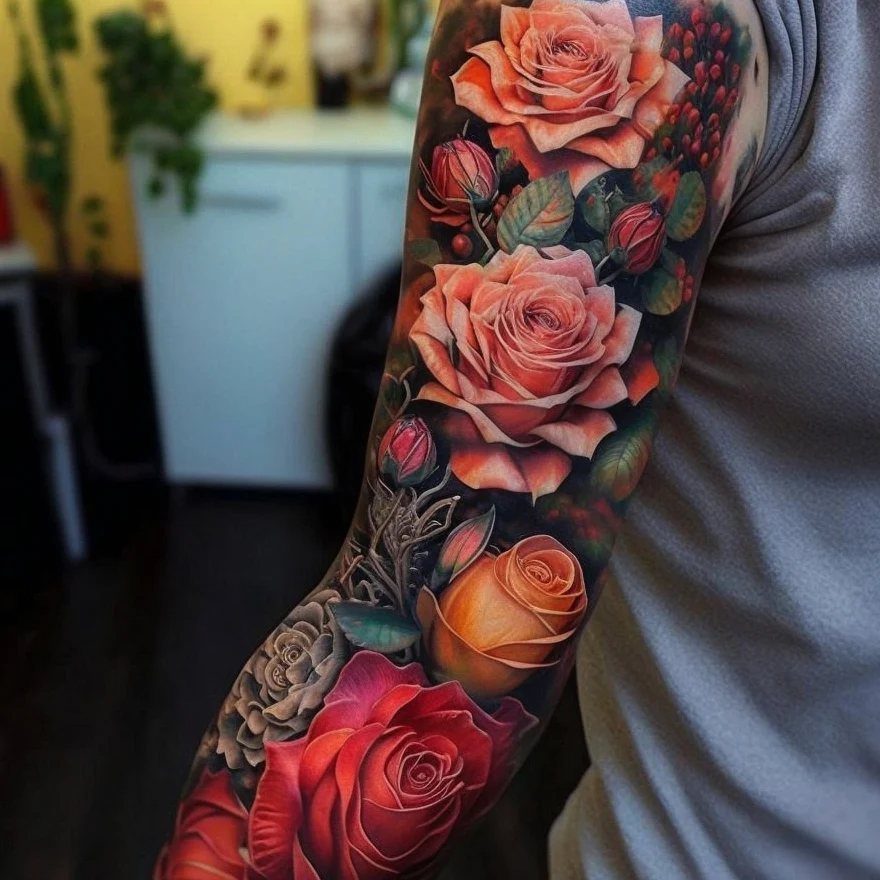
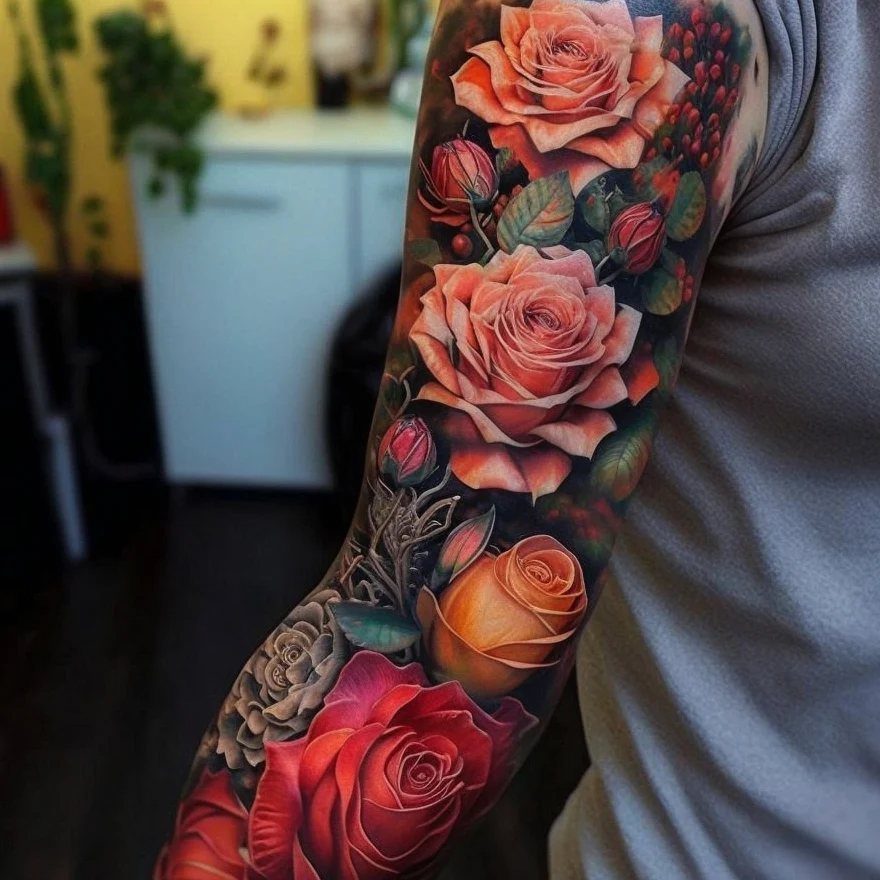
Flower tattoos carry love, care and affection in every petal. Roses carry that meaning most clearly, and realistic shading and color make the piece read like something alive on skin.
Size matters here. A single bloom can fit a wrist or behind an ear, but depth and detail that makes roses look this real need more room and will cost more than a simple outline.
The forearm, upper arm and thigh all give enough flat space for the shading to sit clean and age well.
2. Watercolor Flower Tattoo
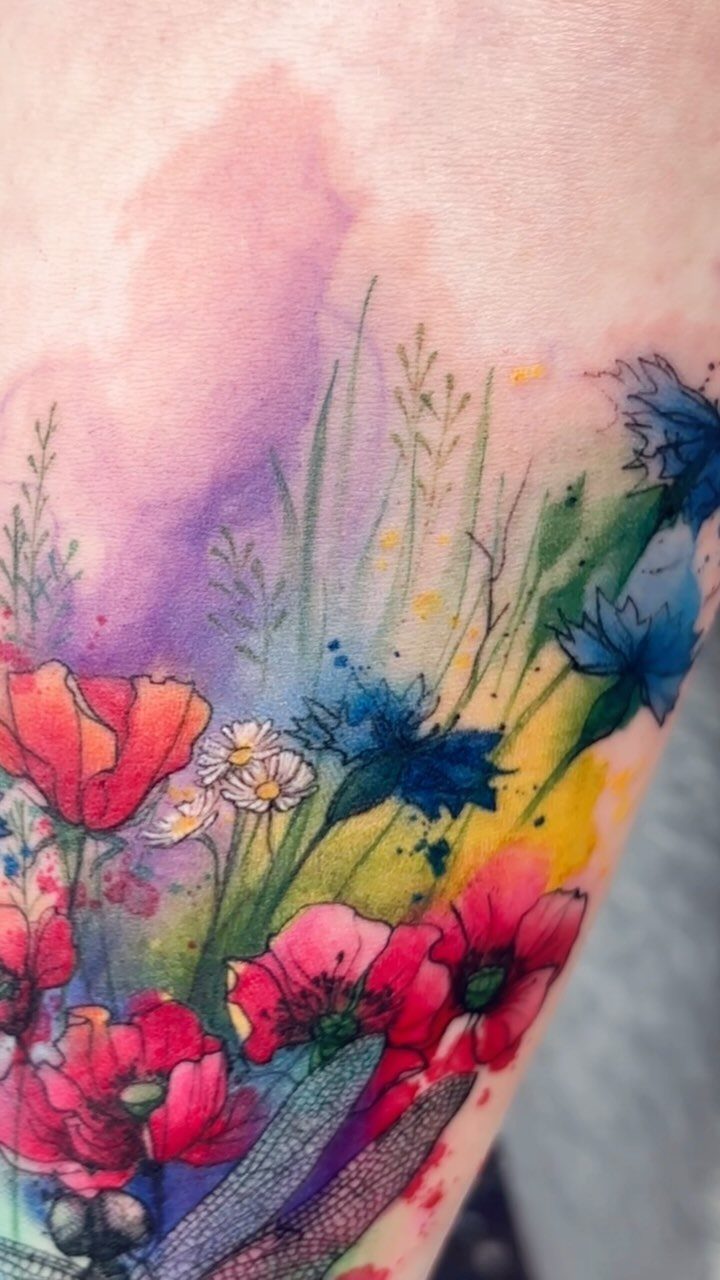
Watercolor flower tattoos borrow from painting: soft edges, blended color and no hard black outline holding the shape together. The effect is lighter and more spontaneous than traditional work, and it suits people who lean toward artistic rather than precise.
That softness comes with a trade. Without a dark outline to anchor it, watercolor needs regular touch-ups to keep the color reading clearly.
Placement on areas with less sun exposure helps, so the inner arm, ribs or upper thigh all buy you more time before the next session.
I like watercolor best when it mixes a few blooms rather than one flower alone, because the blending between colors is where the style really shows.
3. Fine Line Flower Tattoo
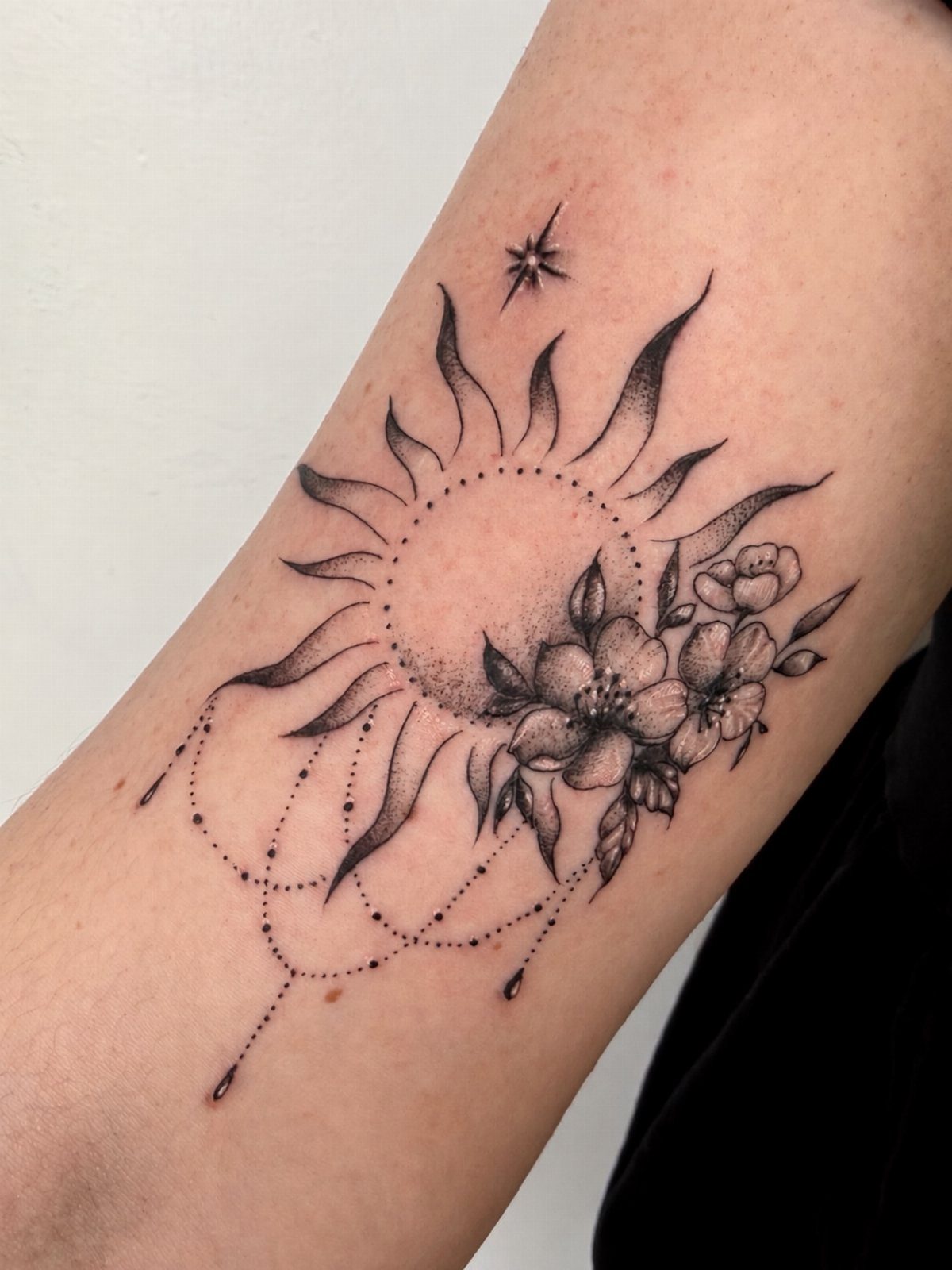
Fine line flower tattoos use single-needle or clustered needles to keep every line thin and precise. The result is delicate and minimal, and it suits people who want a tattoo that feels understated rather than bold.
This style ages differently than heavier work. Fine lines can blur slightly over time, especially on hands, feet or anywhere skin moves a lot, so the forearm, upper arm and collarbone are safer bets for holding detail over the years.
The sun and dotted lines in this piece give it structure beyond the flowers alone, and that mix of organic and geometric keeps fine line work from feeling too soft.
"Fine-line tattoos and stippling are also at the forefront right now when approaching floral designs." Stippling involves using tiny dots instead of more traditional shading in a tattoo, creating a uniquely textured effect.
— Bustle
4. Lotus Flower Tattoo
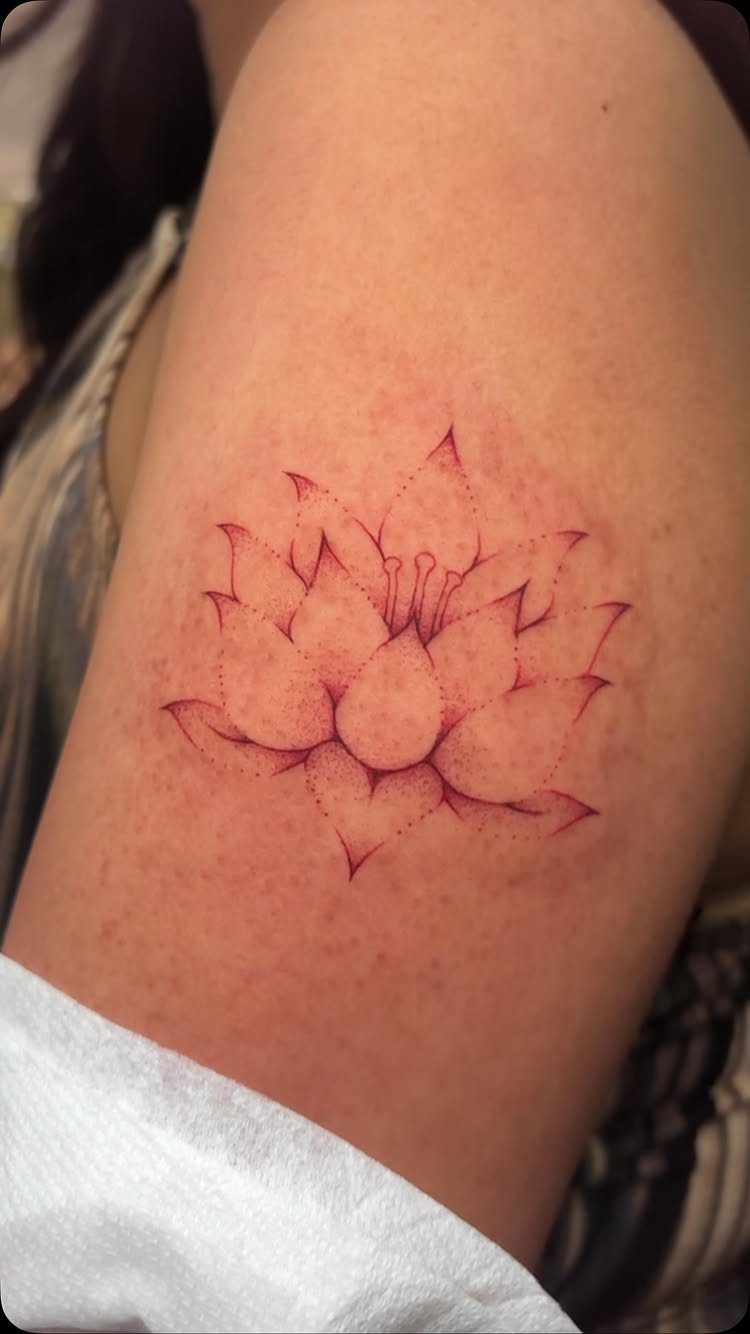
Lotus flowers root in mud and bloom above water, so they carry harmony, purity and the idea that something beautiful can come from difficulty.
That meaning makes them popular for people marking a shift or a win, but a story is optional.
Red ink on its own, the way this arm shows, is less common than black or color mixes, and it reads warm and bold without the weight of a full black piece.
Red does need more frequent touch-ups than black to stay this bright.
The lotus works across most placements. A single bloom fits the upper arm, forearm, or back of the shoulder, and smaller versions can sit on the wrist or ankle once you simplify the petals.
5. Geometric Shapes with Floral Designs
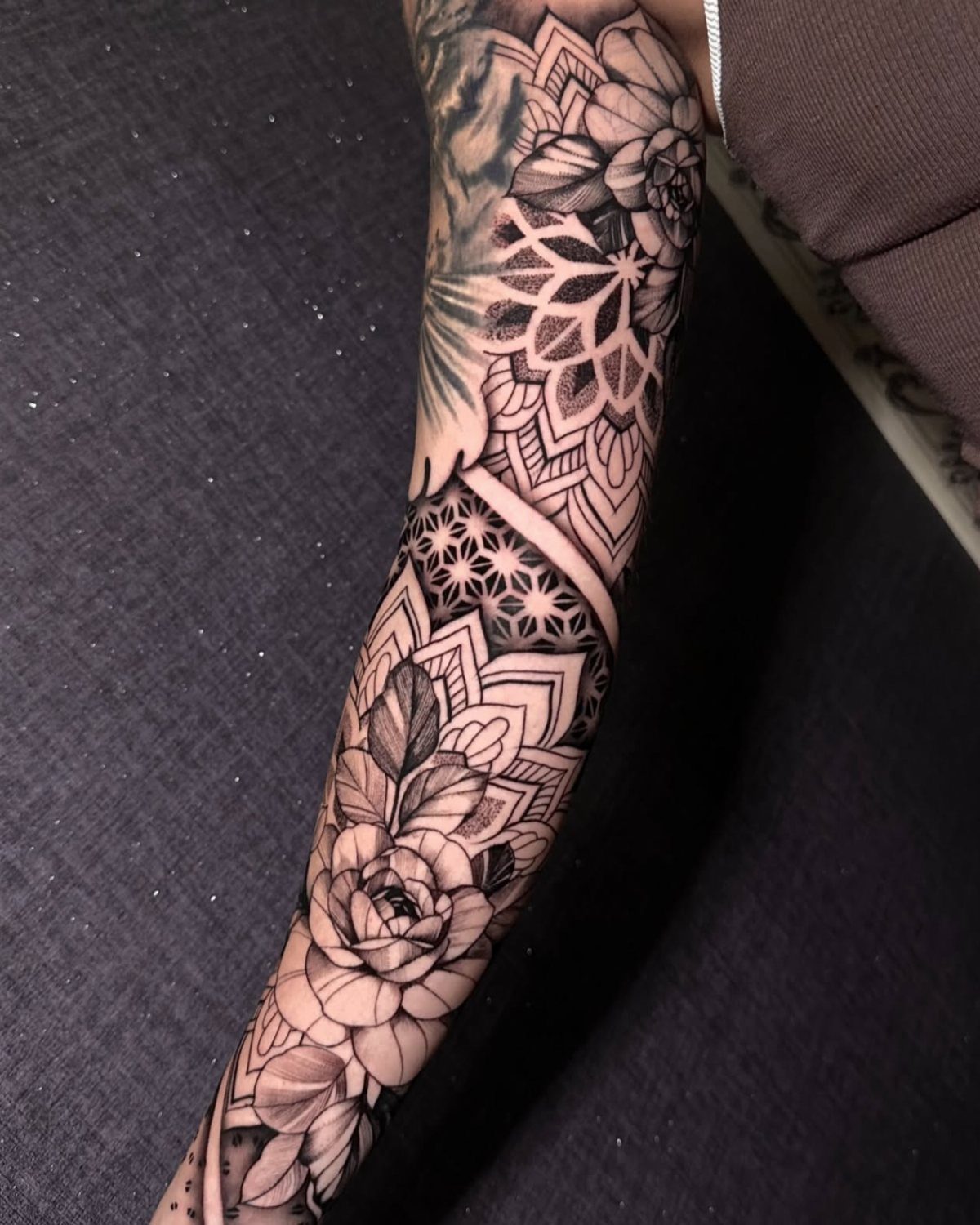
Geometric shapes paired with flowers give structure to something organic. The contrast is the whole point: mandalas, triangles and dotted grids hold the soft curves of petals and leaves in place, and the result reads balanced rather than purely decorative.
This style covers more skin than a simple flower alone, so plan for the forearm, upper arm or thigh where you have room to let both the geometry and the florals breathe.
Black ink holds longer than color in geometric work because the lines need to stay crisp, and any blurring shows more when the design relies on symmetry. Florals with an architectural edge land here.
6. Abstract Floral
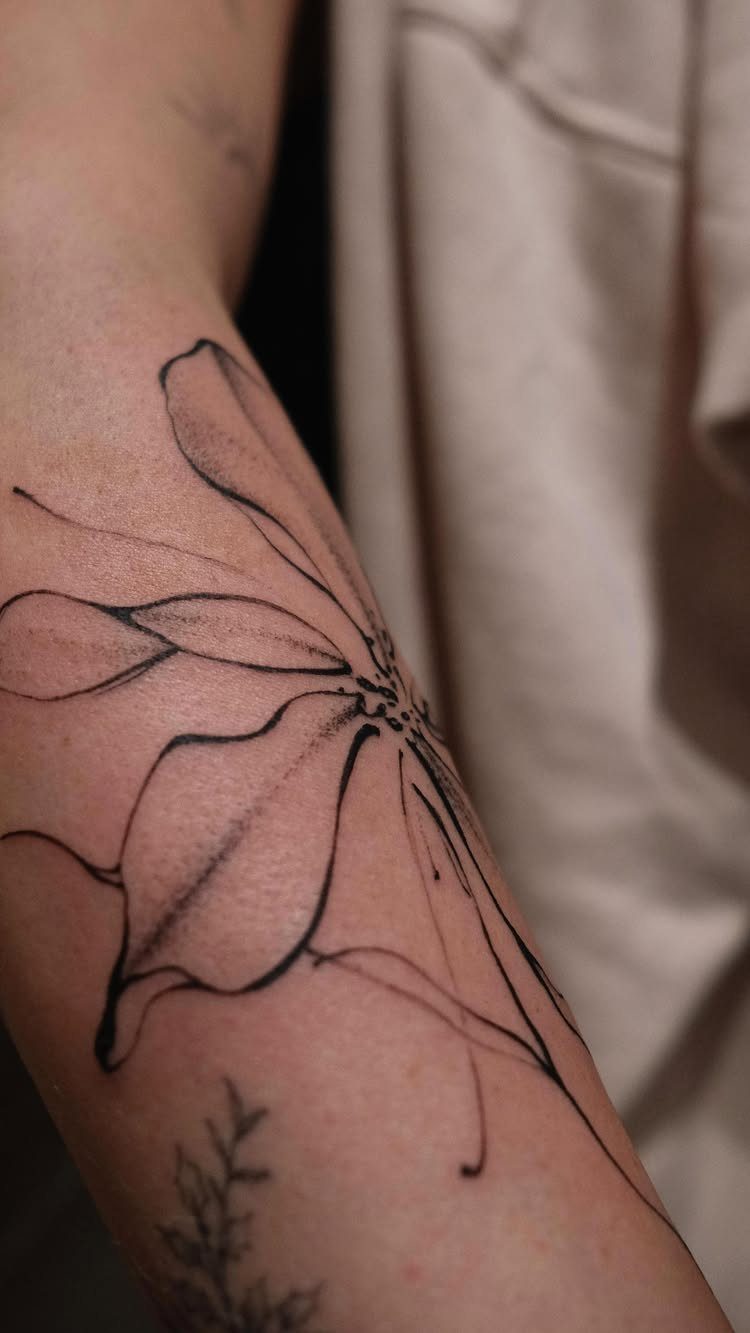
Abstract floral tattoos skip realism and let the flower become a shape: flowing lines, exaggerated curves, and sometimes just the idea of a bloom rather than a copy of one.
The style suits people who want something recognizable but not literal.
This approach gives the artist more room to fit the piece to your body.
The lines follow muscle, bone or movement instead of trying to make a flower sit flat, and that makes abstract florals feel more custom than traced designs.
Placement is flexible.
The forearm, ribs, collarbone and ankle all work because the tattoo adapts to the curve instead of fighting it. Size can stay small or stretch longer to let the lines move across more skin.
7. Realism Flower Tattoos
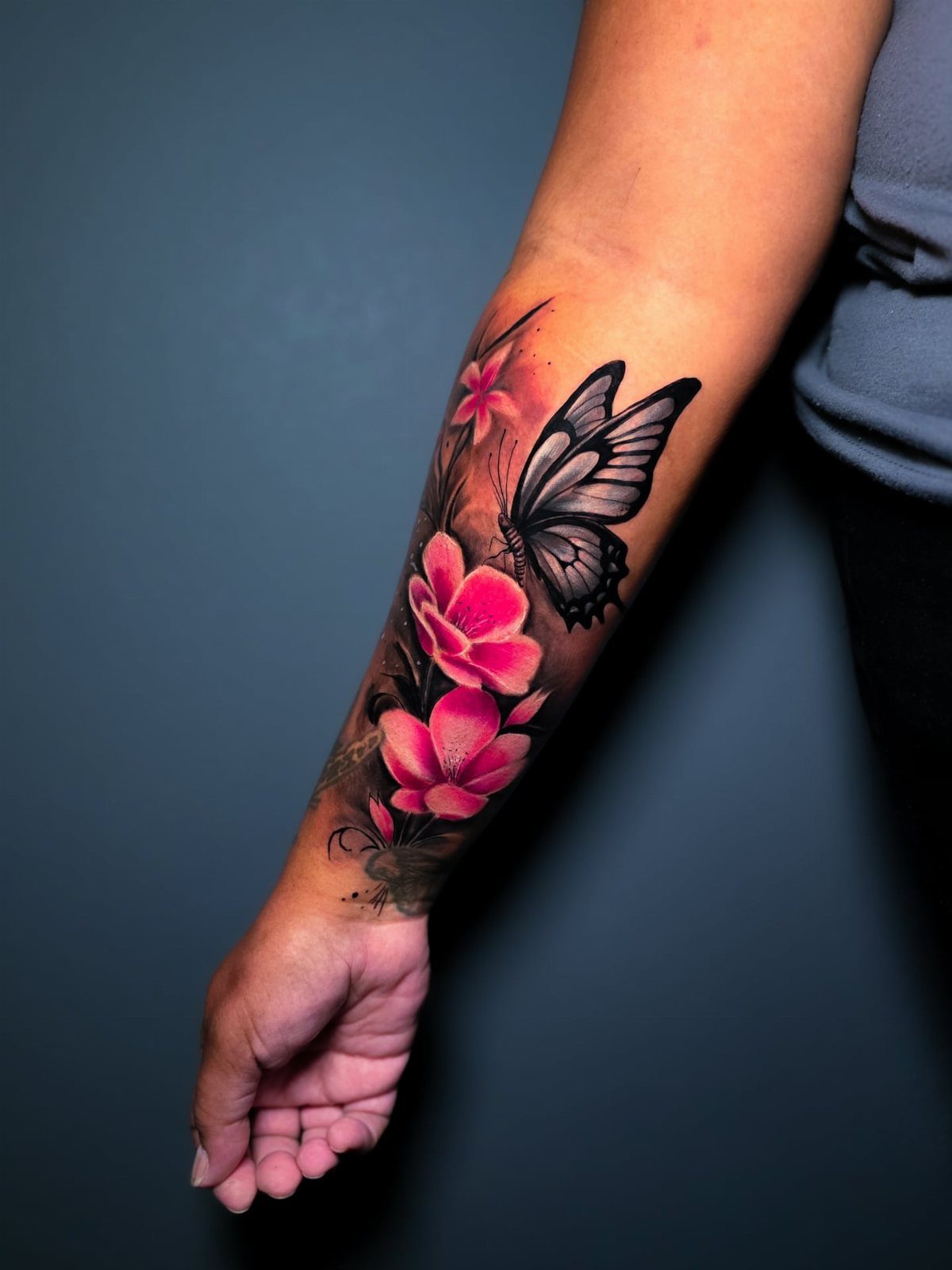
Realism flower tattoos recreate blooms the way they actually grow: petals fold and overlap, light catches one edge, and shadow sits beneath. The shading does the work, and that takes time and a skilled hand.
This style needs more sessions than simpler work, especially if you add color, and cost rises with the hours. Black and grey realism ages better than full color because ink holds longer without needing a refresh.
The butterfly here adds movement, but the flowers alone would carry the same weight. Placement follows the same rules as any realistic piece: flat areas like the forearm or upper arm let the detail sit clean without distortion.
8. Stems and Leaves Tattoo Design
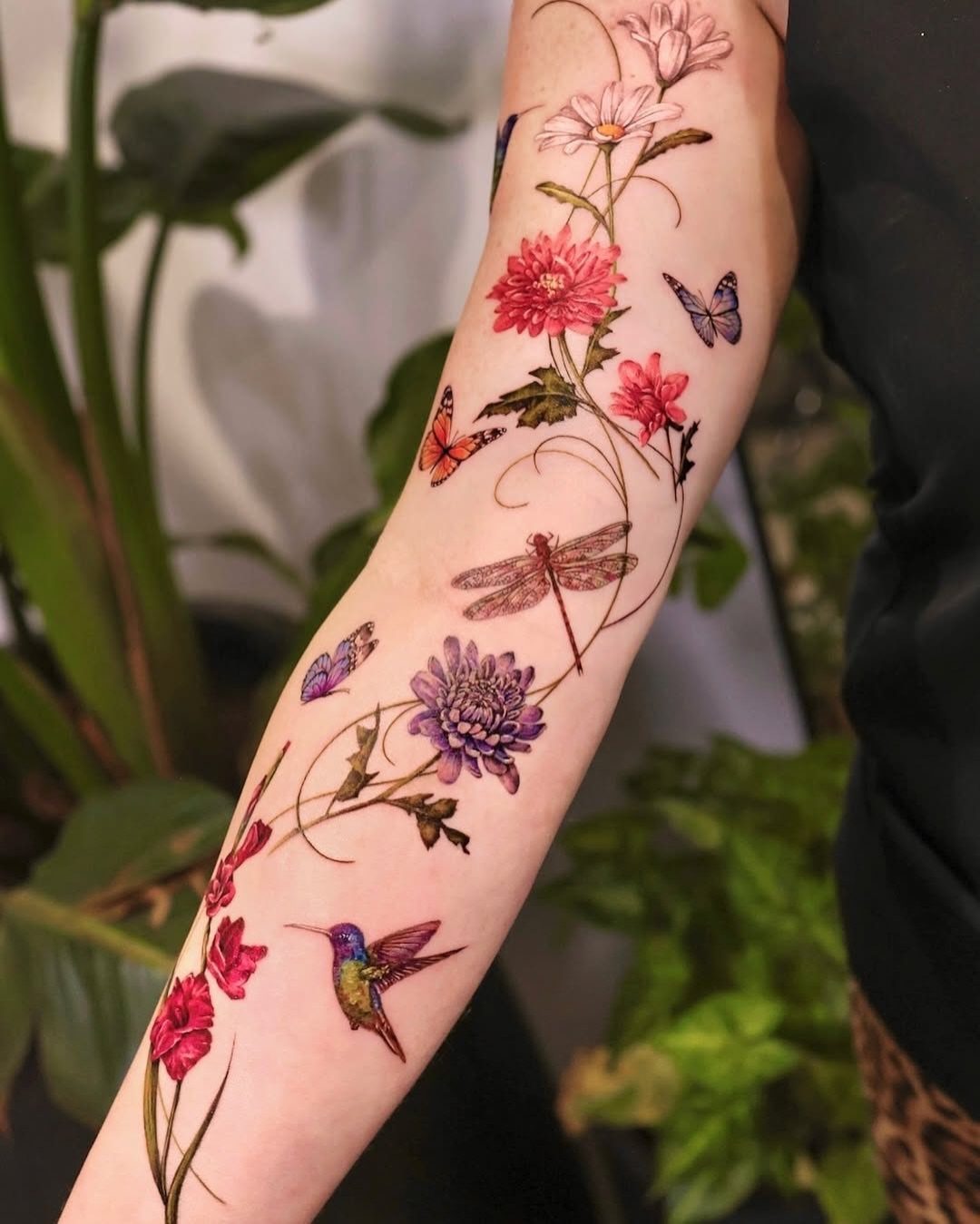
Stems and leaves give flowers context. Instead of a single bloom floating on skin, the tattoo becomes a branch or a vine, and that makes the piece feel more complete.
Adding stems lets the design move across muscle and bone rather than sitting in one spot, so the forearm, upper arm or calf all work well when you want the tattoo to follow your body.
This approach takes more skin than a single flower, and color across multiple blooms and insects costs more than black alone. The result is a tattoo that reads as a full scene rather than one element.
9. Delicate Lilac Design
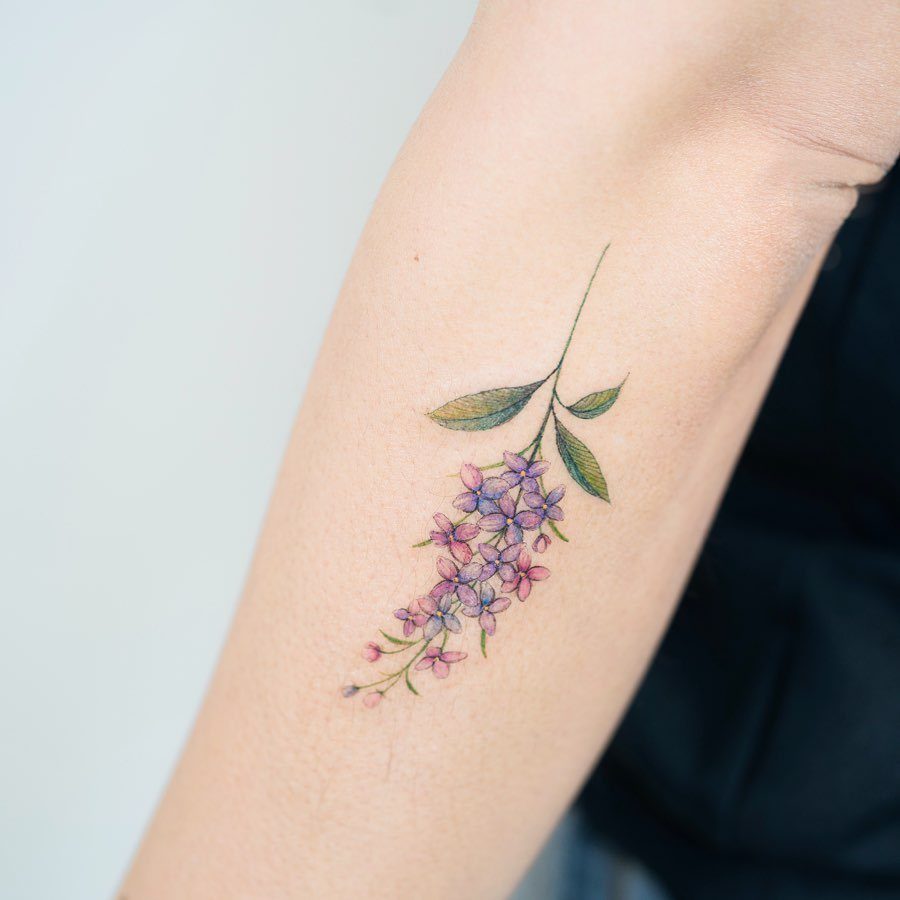
Lilac blooms are small and clustered, so they translate well into compact tattoos. The inner forearm, wrist or behind the ear all hide a piece this size when you need to keep it covered.
Color keeps lilacs recognizable, because without the purple the shape alone is less distinct than a rose or a lotus. That means planning for a touch-up every few years to keep the hue reading clearly.
Small florals like this suit people who want a tattoo that feels personal without taking up much space or committing to a larger design right away.
10. A Flower in a Vase
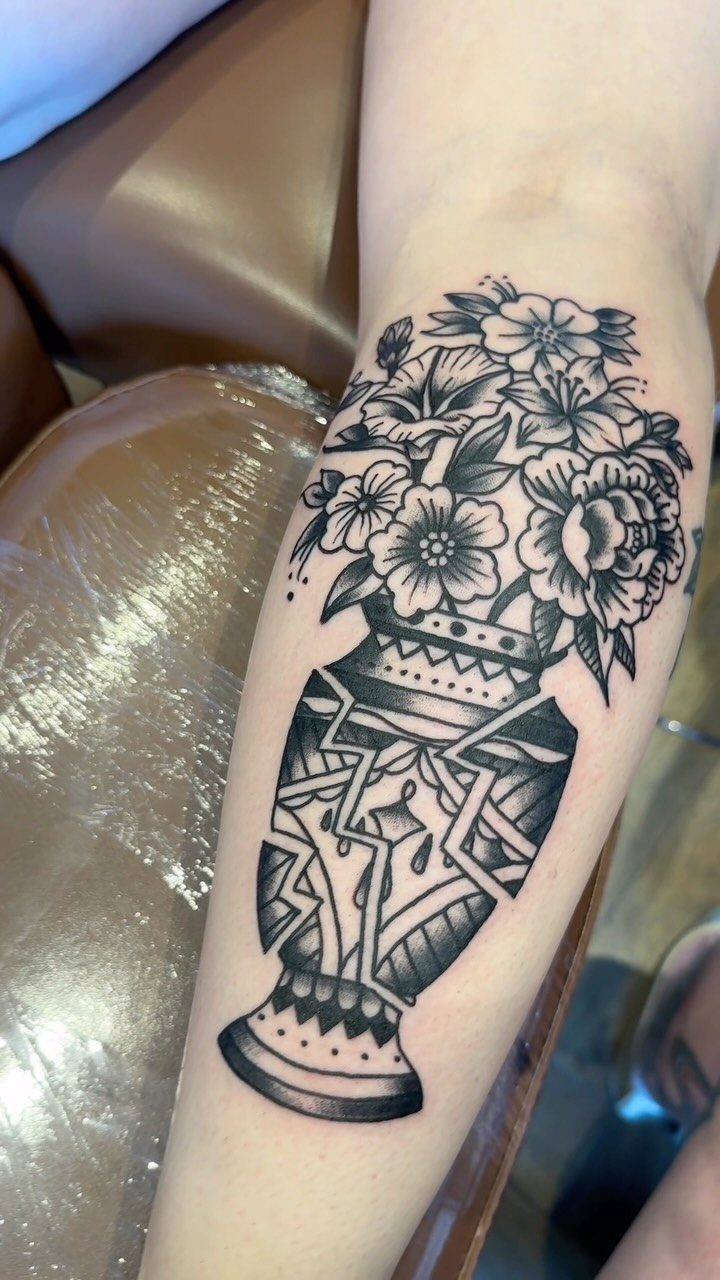
A vase grounds the flowers and gives the tattoo an anchor point. Instead of blooms floating on skin, the piece reads as something still and composed, and that makes it feel more deliberate.
The vase adds detail, so this idea takes more time and costs more than flowers alone. Decorative patterns on the vase itself push the piece toward traditional or ornamental styles, and that suits people who lean toward heavier line work.
This design works best on the forearm or thigh where you have room for both the vase and the flowers without crowding either one.
11. Cherry Blossom Tattoo
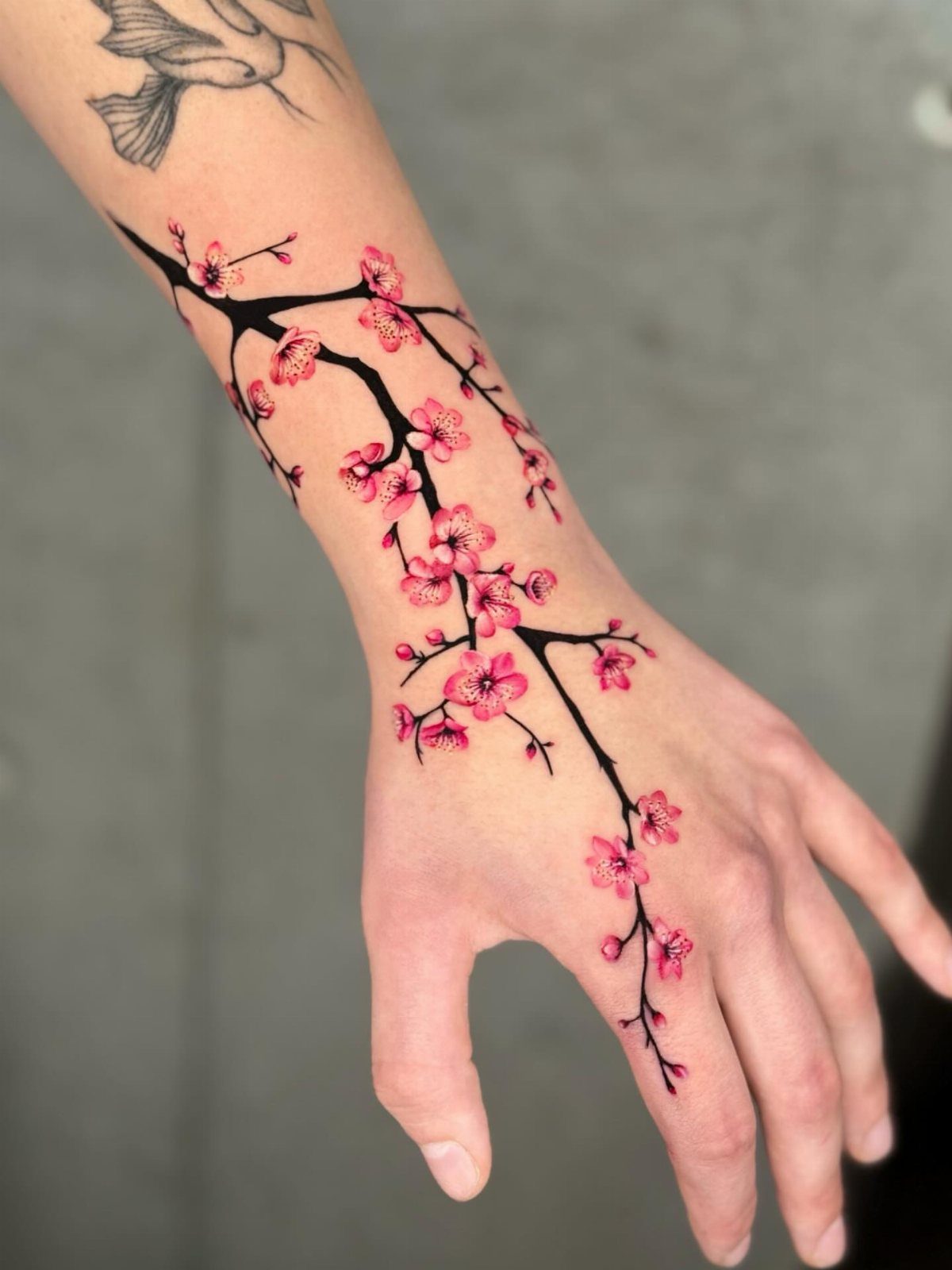
Cherry blossoms represent beauty and the shortness of life in Japanese culture, because the flowers bloom for only a week or two each spring.
The branch format lets the tattoo stretch across the wrist, forearm or shoulder blade rather than sitting in one spot. Pink and black is the most common pairing, and the contrast keeps the piece readable even as the color fades.
Small blooms age better than large ones in this style because fine details in the petals hold longer when the flower itself stays under an inch.
12. Peony Flower Tattoo
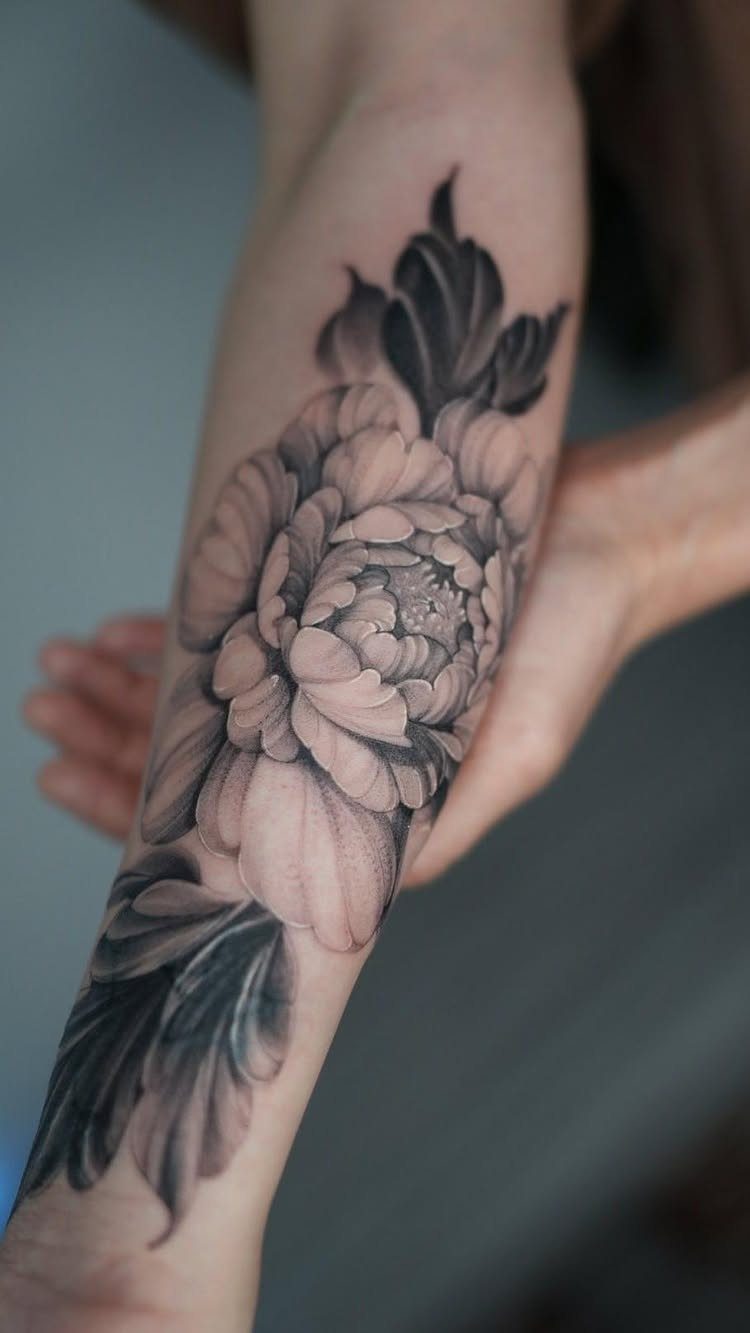
Peonies carry full, layered petals that give the tattoo a lot of texture, and that makes them a good choice for people who want a flower that reads bold rather than delicate.
Black and grey suits peonies because the shading between petals is where the depth comes from.
This flower takes up more space than a rose or a lotus, so size it generously if you want the layers to read clearly.
Peonies age well because the shape stays recognizable even if fine lines blur slightly over time.
13. Daisy Flower Tattoo
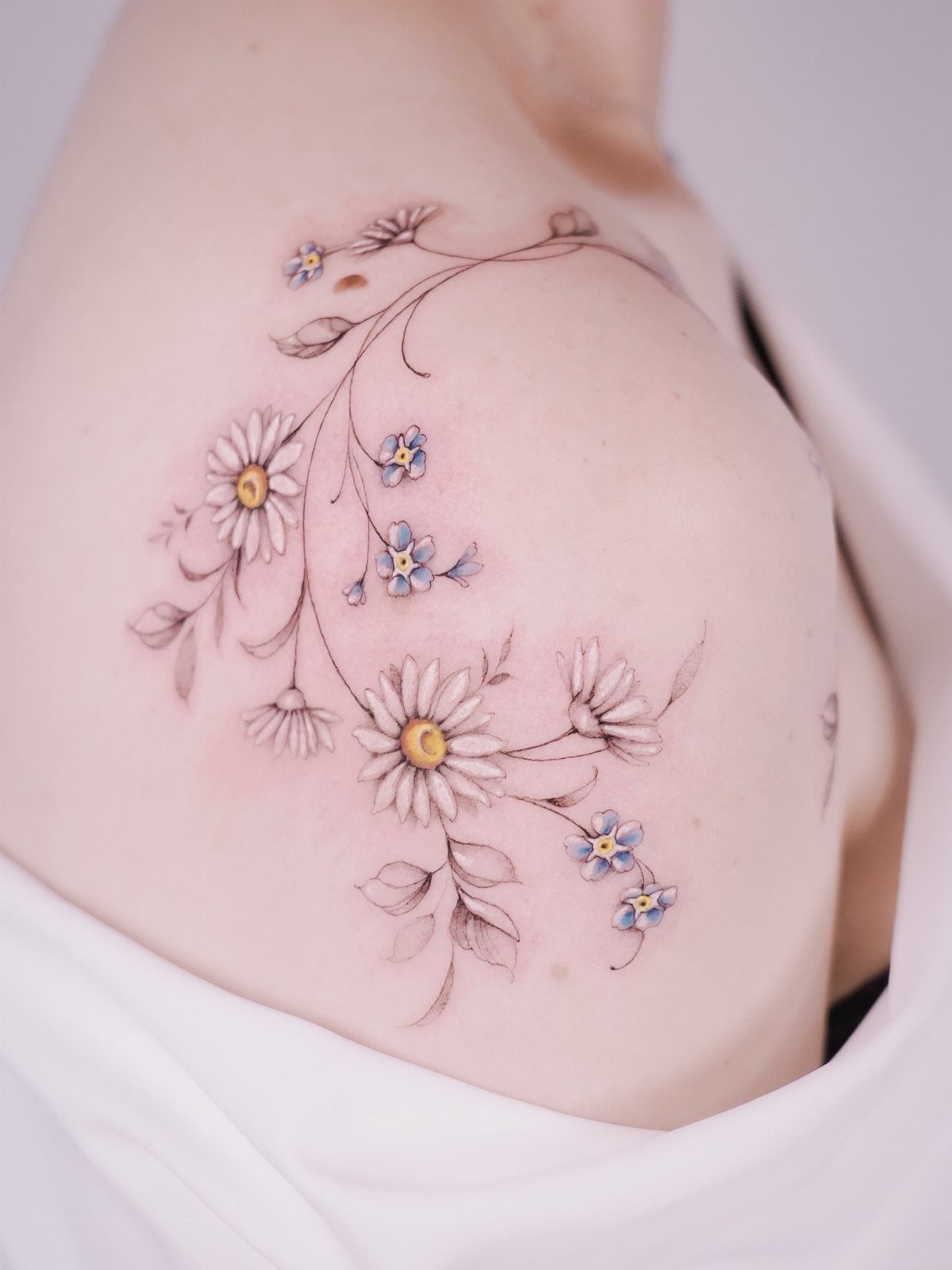
Daisies read simple and clean, and white petals against a dark outline keep the design recognizable without needing shading or color fills.
The small blue flowers here add contrast, and mixing blooms like this lets the tattoo stretch across the shoulder or upper arm instead of sitting as one round shape.
This style works well for people who want something light without committing to a large or heavily detailed piece. The shoulder placement is practical because it hides under most clothing but shows in summer or sleeveless tops.
14. Orchid Flower Tattoo
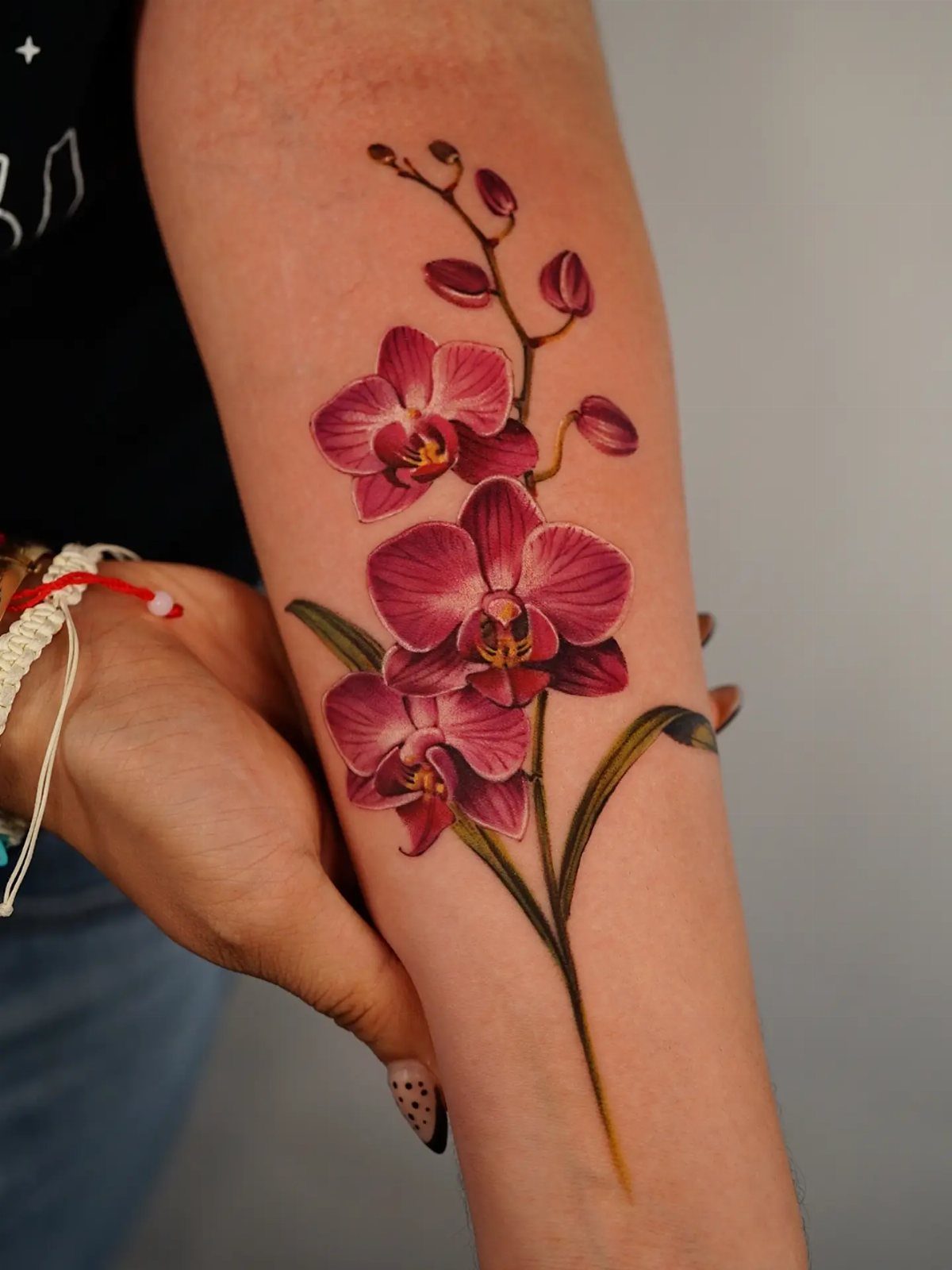
Orchids have a structure that separates them from other flowers: the petals are symmetrical but the center is distinct, and that shape makes them instantly recognizable even in color.
Pink with green stems, the way this forearm shows it, is a common pairing, and it reads softer than bold reds or purples.
Color on orchids needs touch-ups every few years to stay this bright, especially on areas that get sun exposure.
The forearm is a solid choice because it gives enough flat space for the bloom and stem to sit without curving around muscle.
Orchids fit people who want a flower that carries elegance without being overly delicate.
15. Hibiscus Flower Tattoo
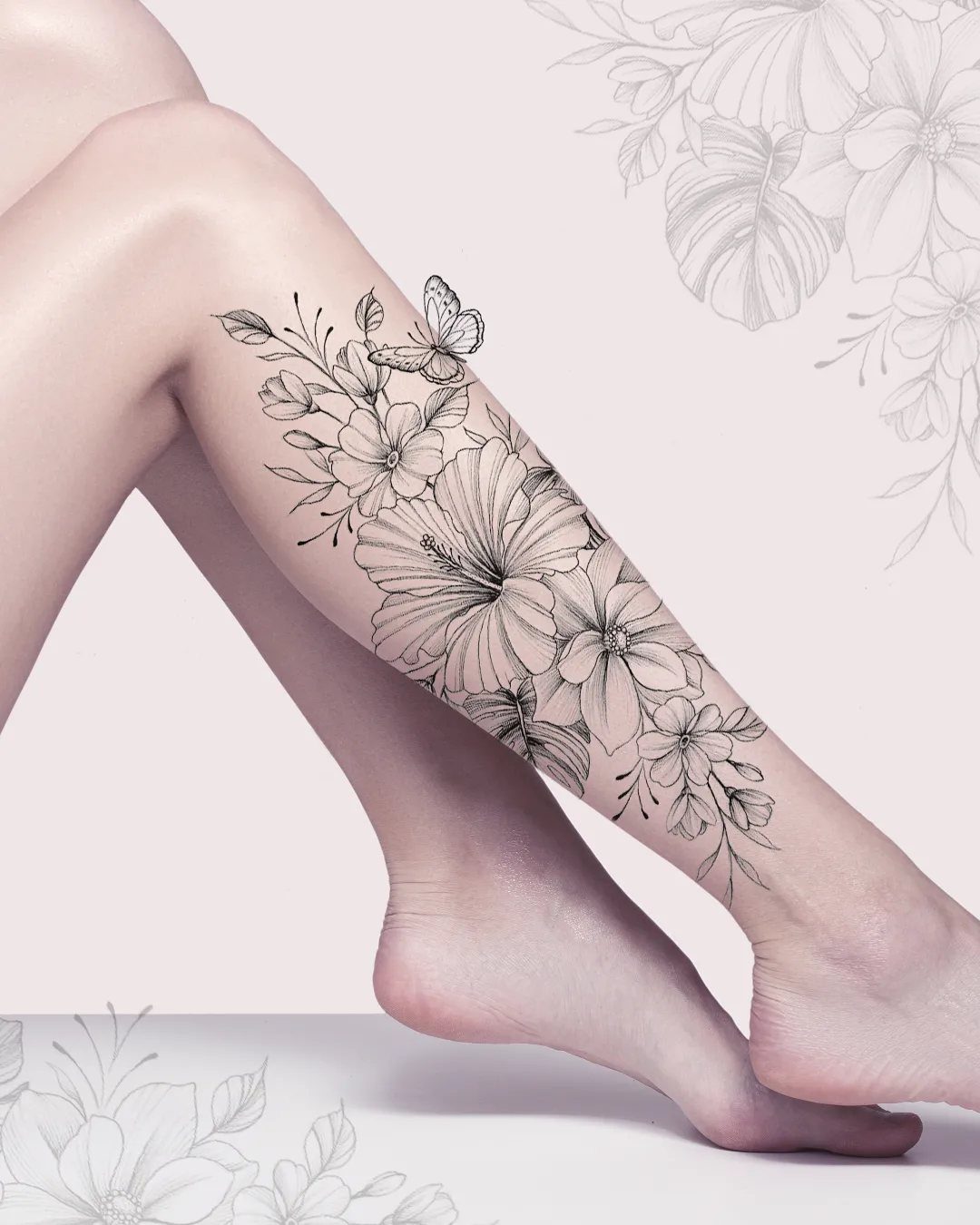
Hibiscus flowers have a bold center stamen and wide petals, and that shape reads strong even in black ink.
Black ink on the lower leg ages well because the area gets less sun than the forearm or shoulder, and that means fewer touch-ups over time. The placement also keeps the tattoo hidden under pants when needed.
Hibiscus works for people who want a tropical flower without going full color, and black keeps the design grounded rather than overly bright.
16. Sunflower Tattoo
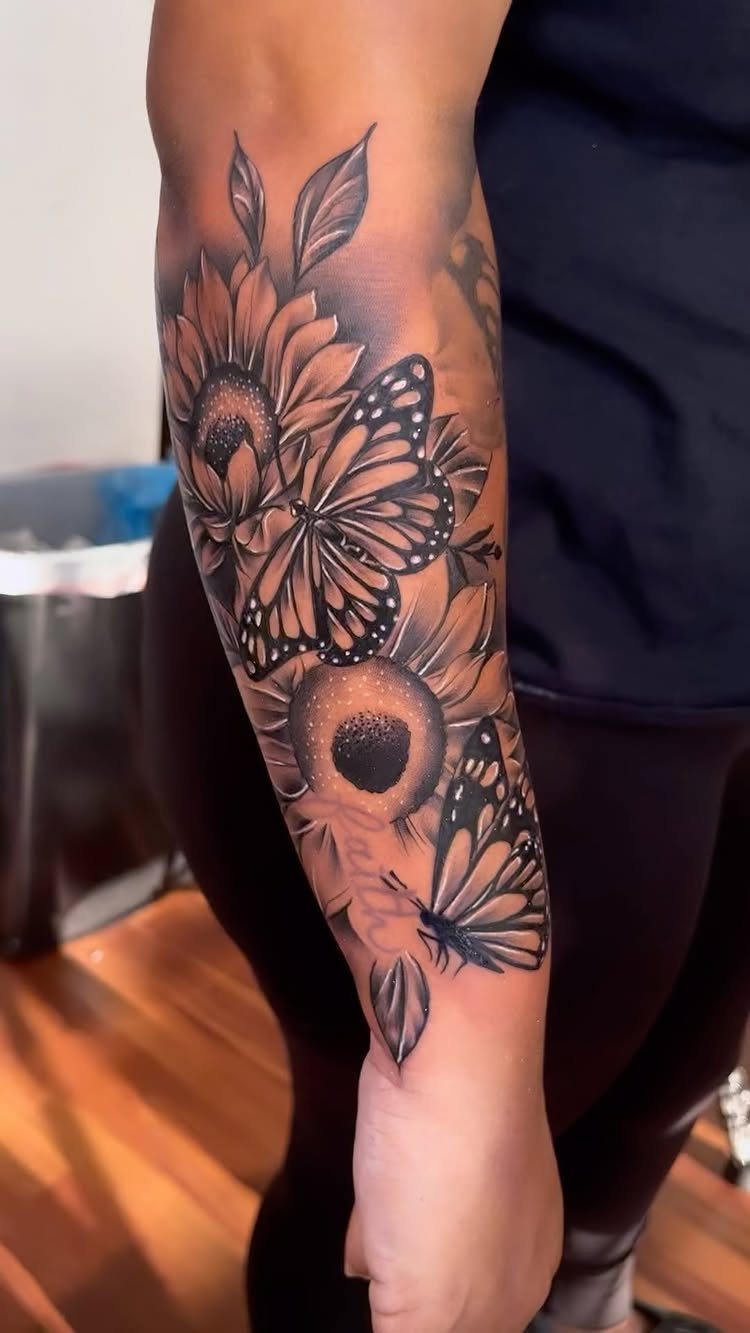
Sunflowers carry a circular center and broad petals that make them easy to recognize even without color.
Black and grey keeps the piece from reading too cheerful, and that suits people who want a sunflower without the yellow that usually comes with it.
Sunflowers fit the forearm because the round shape needs room to sit without crowding, and the flat surface keeps the detail from distorting as skin moves.
17. Magnolia Flower Tattoo
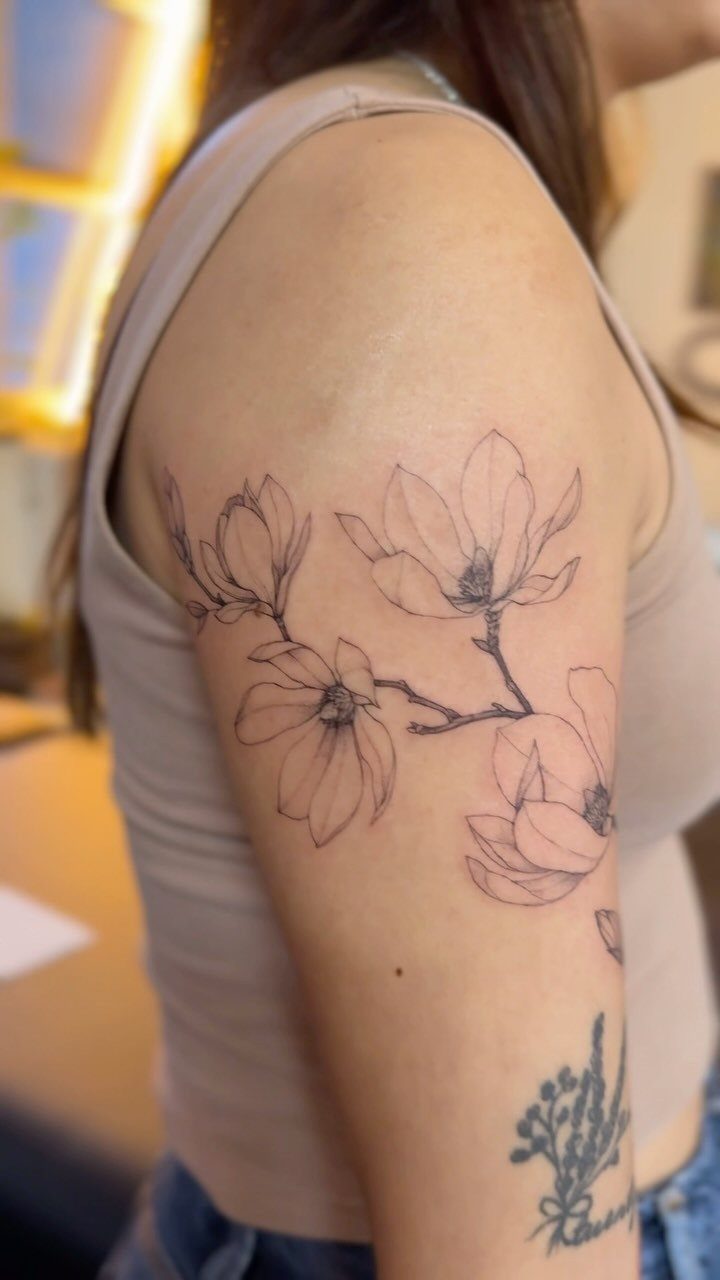
Magnolia blooms open wide with fewer petals than roses or peonies, and that makes them read cleaner on skin.
Fine line work suits magnolias because the flowers themselves are simple, and thin lines keep the piece feeling light rather than heavy.
The branch format lets the tattoo follow the curve of the upper arm, and that makes it feel more natural than a single bloom sitting flat. Small florals scattered along the branch add detail without crowding the main flower.
18. Black Rose Flower Tattoo
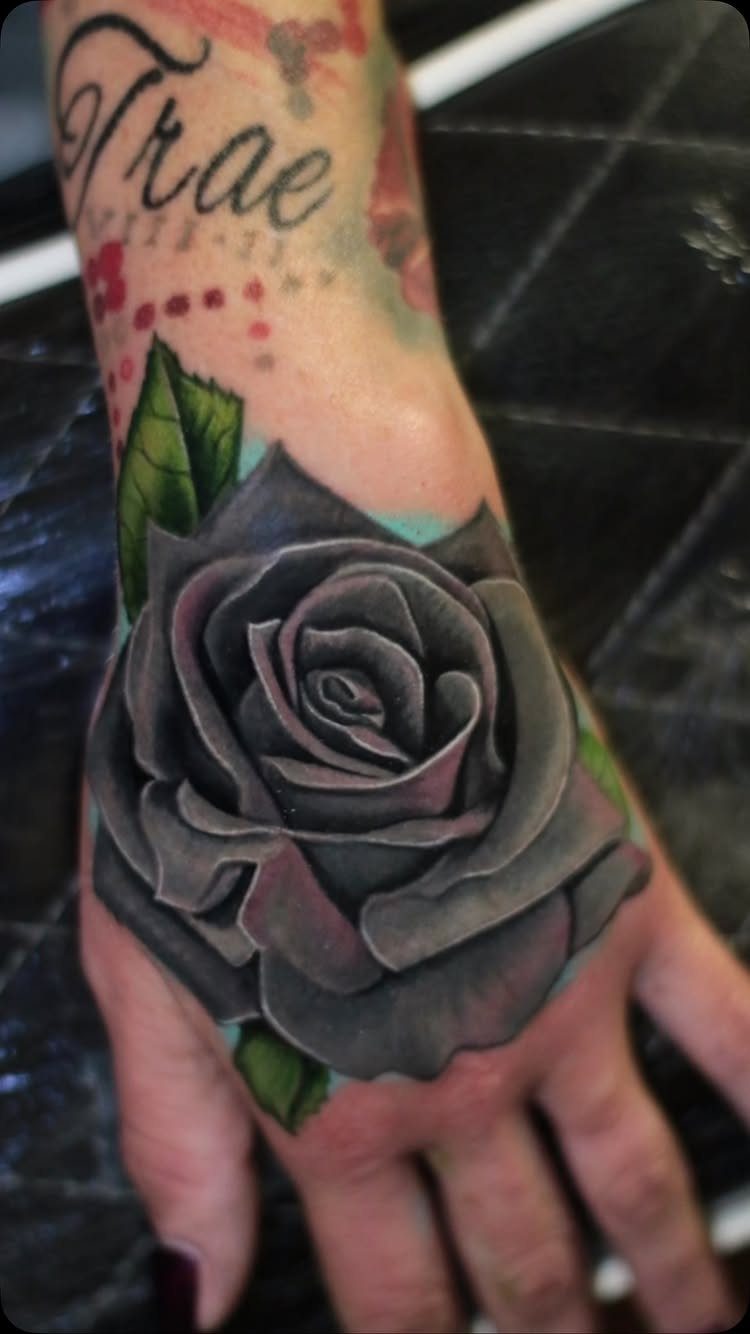
Black roses carry a different weight than red or pink ones. The color alone shifts the meaning from romance to something darker, and that suits people who want a rose without the softness that usually comes with it.
Green leaves add contrast here, and mixing color into a black piece is less common than going full black or full color.
The hand is a bold placement because it stays visible most of the time, and that makes it a choice for people who want their tattoos seen.
Hands fade faster than other areas because the skin moves more and gets washed often, so plan for touch-ups every few years to keep the black this solid.
19. Lily Flower Tattoo
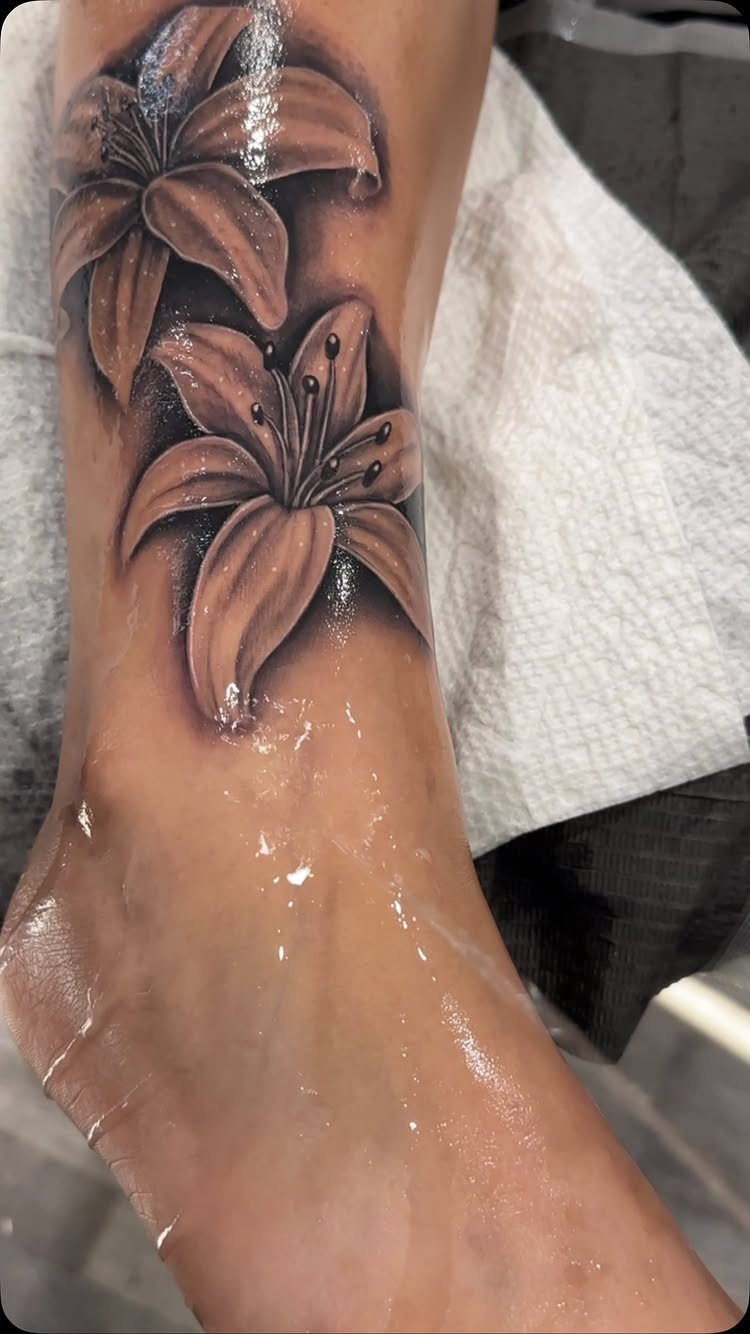
Lilies carry clean, symmetrical petals that make them readable without heavy shading. The monochrome palette gives the lily a quiet strength rather than the sweetness florals sometimes carry.
The ankle placement works because the curve of the leg gives the bloom somewhere to sit without distortion, and the area stays hidden under pants or socks when needed.
That bold outline holds up across years, so the flower stays readable long after the piece is healed. If you want a flower that reads both elegant and grounded, lilies land in that range.
Choosing a Color
Blue and purple shift the mood toward calm or mystery, and black removes softness entirely, leaving structure and weight in its place.
Yellow and orange bring warmth without the intensity of red, and they suit people who want a tattoo that feels bright without reading romantic.
Bright hues fade faster under sun exposure, and touch-ups every few years keep the piece reading the way it did fresh. Depth comes from shading when you go black and grey, and the upkeep disappears.
Match the color to how you want the tattoo to feel, not just what the flower usually carries.
How to Choose the Best Flower Tattoo Design
Start with what the tattoo should say, if anything.
Some flowers carry specific meanings, but a design does not need a story to work. A bloom that looks right on your skin is reason enough.
Browse real tattoos rather than only drawings.
Photos show how a design sits on an actual body, how the lines move with muscle, and how much space the idea really takes. That helps you size it before you sit for it.
Different flowers suit different styles. Roses hold shading and realism well, while daisies and cherry blossoms fit fine line work.
If you already know you want something delicate or bold, that narrows the list faster than starting with a flower and then trying to match a style to it.
Size and Placement Considerations
Placement changes how a tattoo reads.
Visibility matters if you need to cover the tattoo for work or other settings. The upper arm, ribs and thigh all hide under most clothing, while the forearm and hand stay visible year-round.
Larger pieces cost more because they take more time, and areas with more movement or sun exposure fade faster and need touch-ups sooner.
Frequently Asked Questions
What are pretty flowers to get tattooed?
Roses, lotus flowers, cherry blossoms and peonies all translate well to skin. Roses hold realistic shading, lotus blooms carry clean symmetry, cherry blossoms stretch naturally along branches, and peonies give you layered texture that reads bold without needing color.
How to get a design for a tattoo?
Look at photos of real tattoos rather than only drawings, because actual placements show how the design moves with muscle and how much space it really takes.
Once you find a style or flower that fits, bring reference images to a consultation and let the artist adapt the idea to your body and the spot you want it.
How much does a tattoo of a flower cost?
Cost rises with time spent, so a simple outline on a wrist costs less than a full realistic bloom with shading across the forearm.
Multiple flowers, color fills, and added elements like stems, insects or vases all add hours to the session and push the price higher.
How long does it take to do a flower tattoo?
A single small bloom in fine line or simple black can take an hour, while realistic flowers with shading or multiple blooms with color need several hours or more than one session.
The more detail and the larger the piece, the more time the artist needs to keep the work clean.