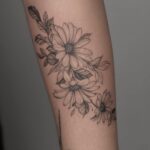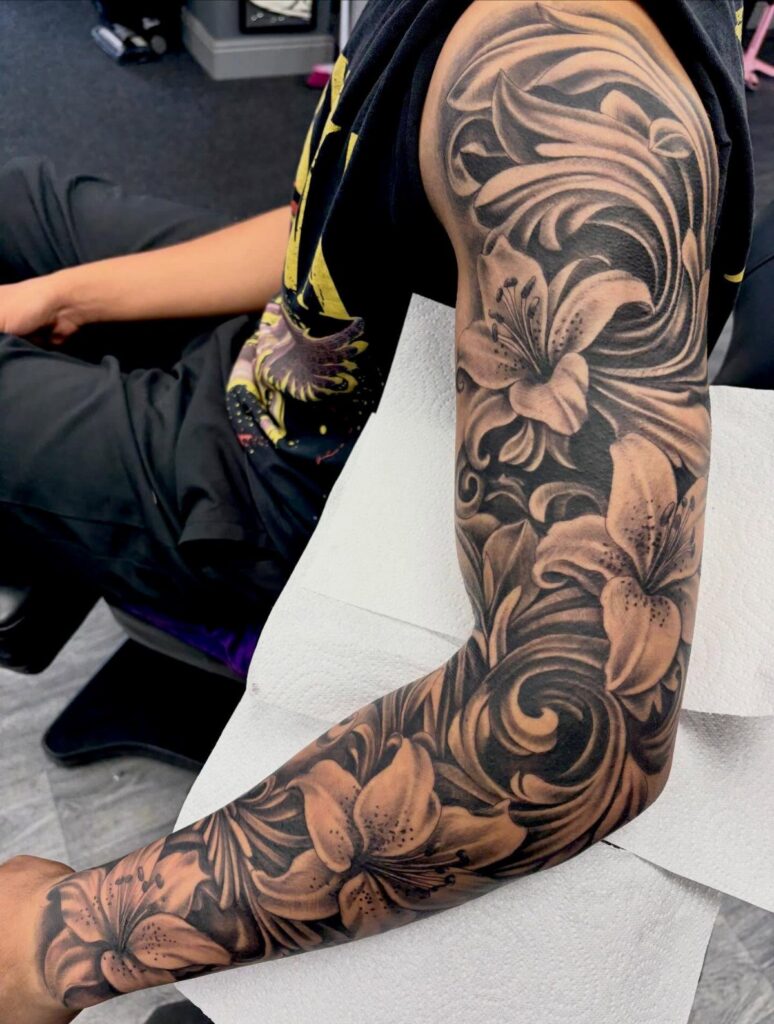
The style you pick changes both the price and how long it holds up.
If you want work that ages well without frequent touch-ups, traditional or dark floral sleeves with bold outlines and heavy black hold their shape longer than fine-line styles, which blur more over time.
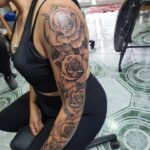
Peonies fill space fast with their layered petals, making them a strong anchor piece if you’re building a sleeve across multiple sessions.
1. Black Ink Floral Sleeve with Geometric Lines
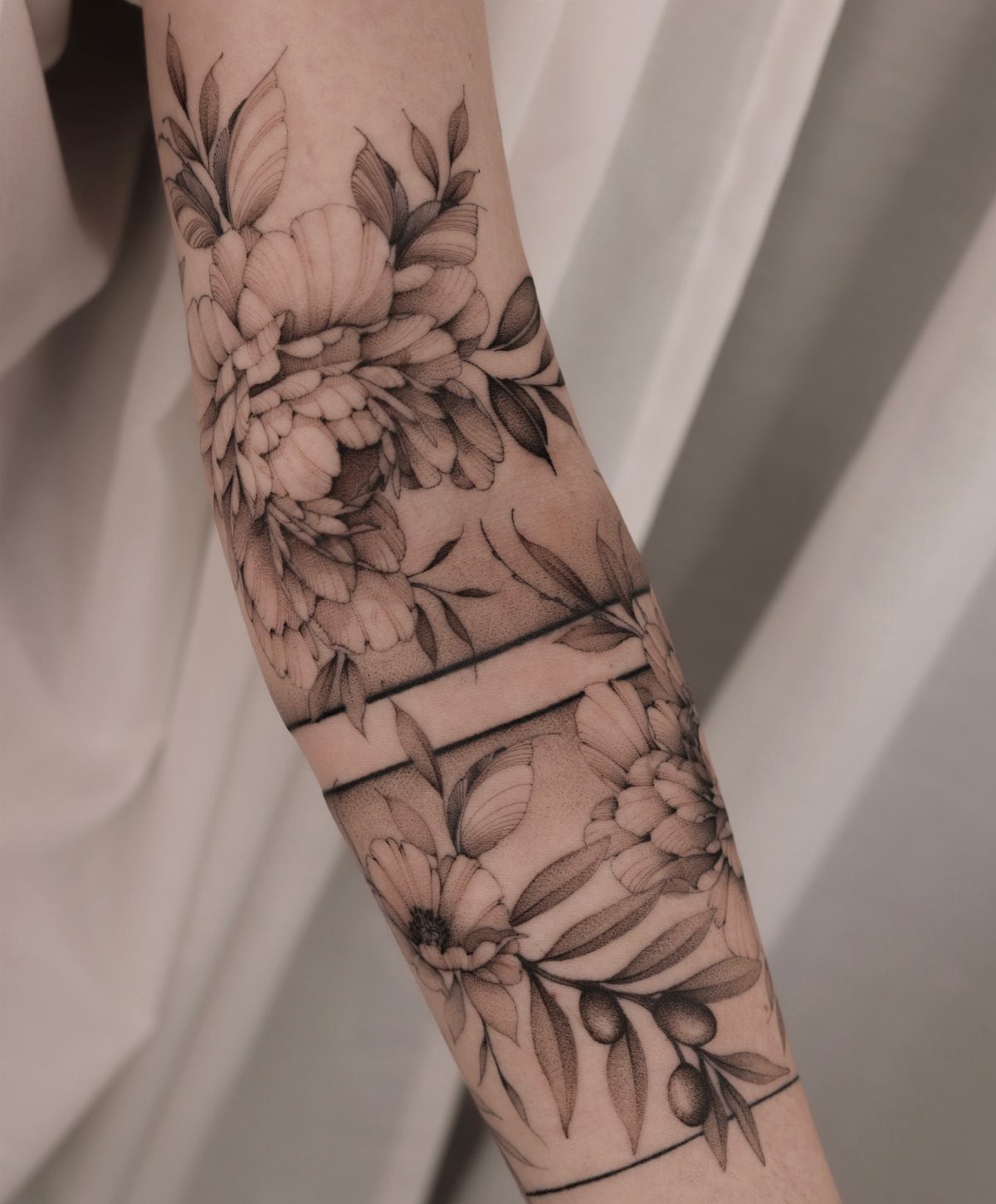
Flowers paired with straight geometric lines give a sleeve structure without filling every inch. The lines break up the organic shapes and make the composition feel intentional, not busy.
This works well for a half-sleeve or quarter-sleeve that feels finished but leaves breathing room. The lines can run horizontally around the arm or vertically down the length, depending on where your eye is drawn.
Placement matters: if the lines cross a joint, they may appear to bend when your arm moves, so plan them on the forearm or upper arm where the surface stays consistent.
2. Large Peonies and Leaves
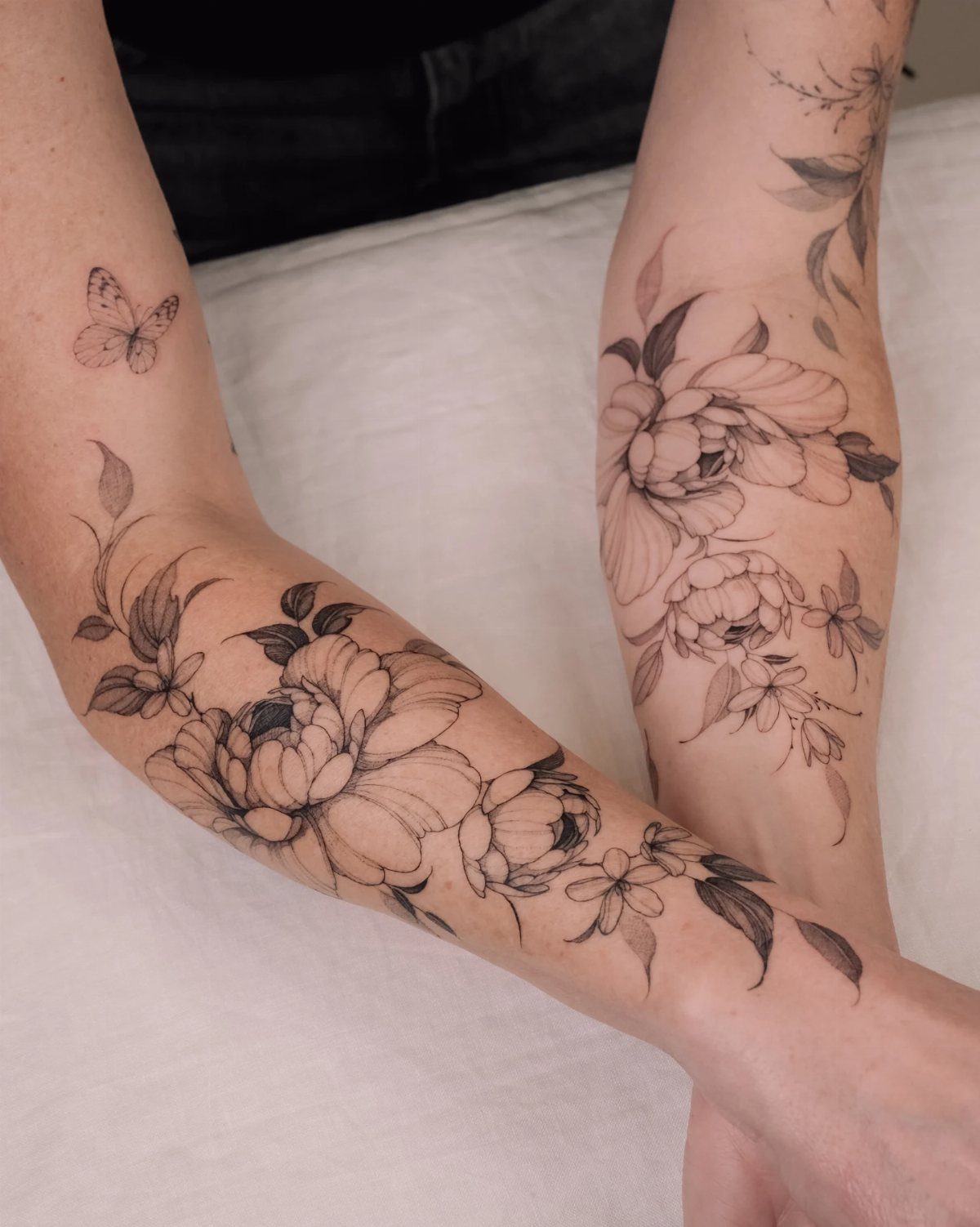
Peonies fill space fast.
Their layered petals and full shape make them ideal for covering large sections of the arm, and when paired with leaves and smaller elements like a butterfly, they create a balanced sleeve that breathes on its own.
This approach delivers high impact while leaving the skin open. The negative space between flowers keeps the tattoo from feeling heavy, and it holds up well at a distance.
If you’re building a sleeve over multiple sessions, peonies are a strong anchor piece. Add them first, then fill around them later for more coverage.
3. Fine-line Floral Tattoo Sleeve
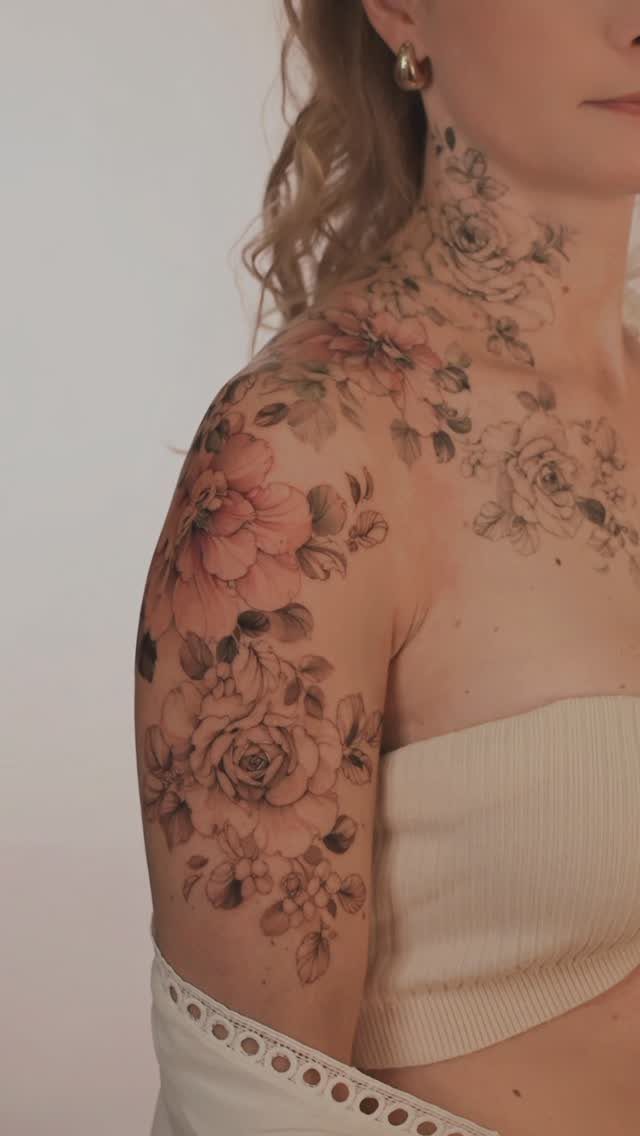
Fine-line floral sleeves rely on thin, precise linework to create detail without bold fills or heavy shading. Roses and leaves are common choices here because their natural structure translates well to delicate outlines.
This style ages differently than bold work.
Fine lines can blur slightly over time, especially on areas that get a lot of sun or movement, so placement on the upper arm or shoulder tends to hold better than the wrist or elbow.
If you want color, soft pinks or muted tones blend well with fine-line work. High-contrast shading can overpower the delicate lines, so keep fills light if you add them.
4. Colorful Watercolor Floral Tattoo Sleeve
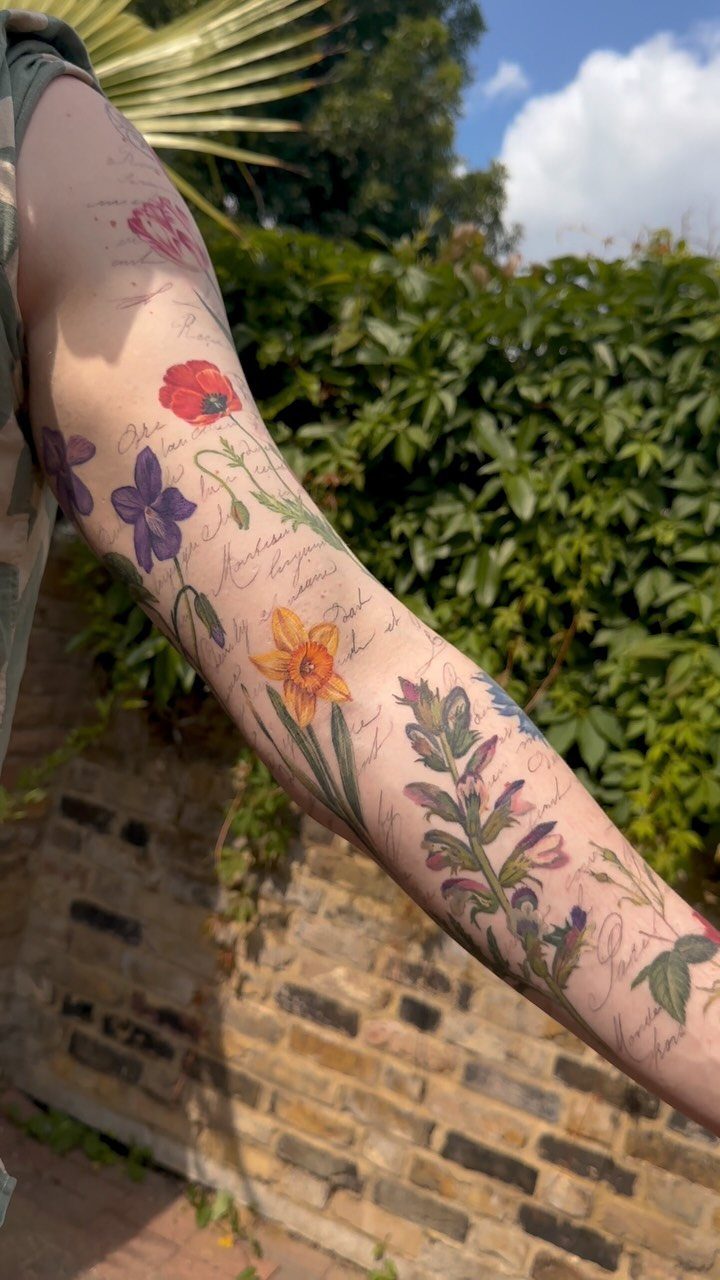
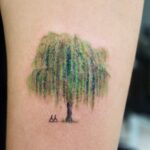
Watercolor floral sleeves mimic the look of paint washes and brush strokes, with soft color gradients and minimal outlines. The effect is loose and artistic, not photo-realistic.
This style looks best when it covers a large area. Small watercolor pieces can blur into vague shapes over time, but a sleeve this large gives the colors space to layer and blend while holding definition.
Expect fading.
Watercolor tattoos rely on lighter pigments and soft edges, so touch-ups every few years keep the colors bright. Placement on the upper arm tends to hold better than the forearm, where sun exposure is higher.
5. Traditional Floral Tattoo Sleeve
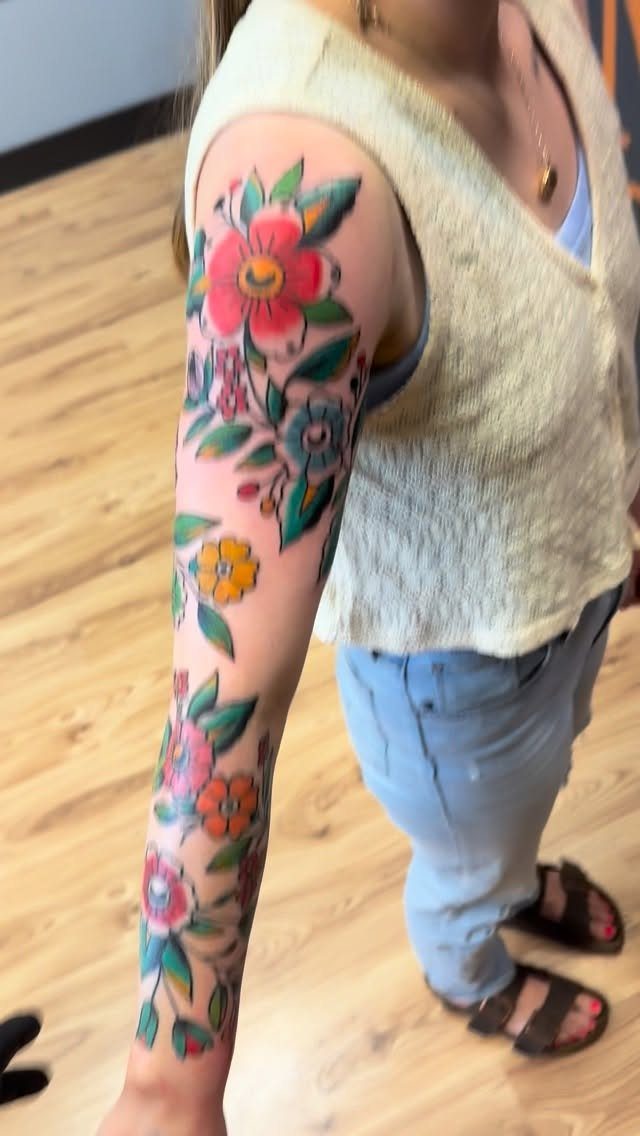
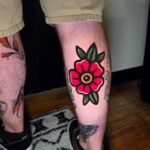
Traditional floral sleeves use bold black outlines, flat color fills, and high contrast. The style comes from American traditional tattooing, so expect roses, peonies, and chrysanthemums with thick stems and solid petals.
This approach ages well.
The heavy lines hold their shape over decades, and the flat colors don’t rely on subtle gradients that can blur. Traditional work also reads clearly from a distance, which matters on a sleeve.
If you want a full sleeve, traditional flowers pack tightly without losing clarity. The bold shapes fill negative space fast, so you can complete a sleeve in fewer sessions than fine-line or watercolor styles.
6. Dark Floral Tattoos
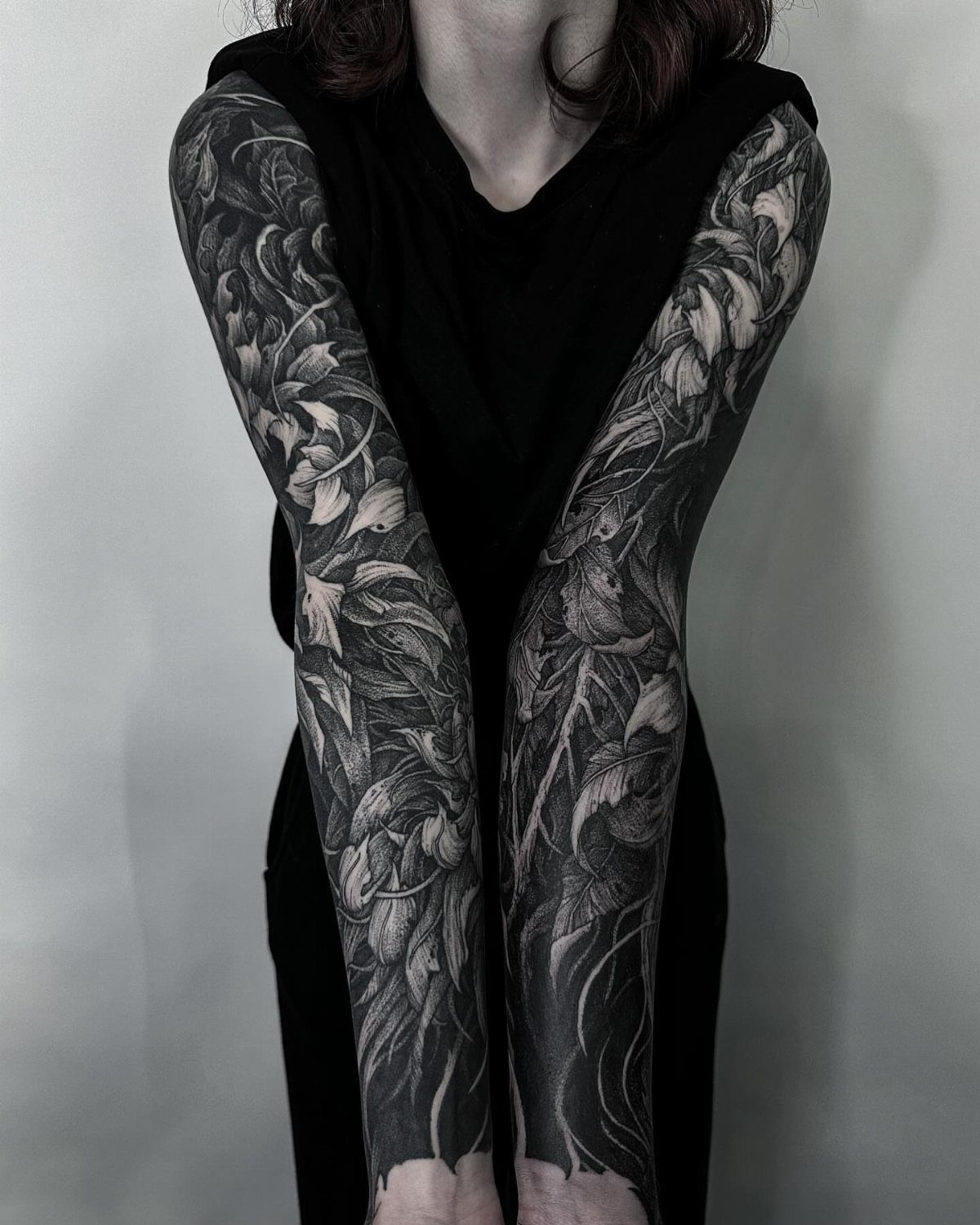
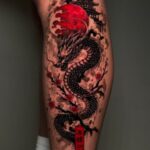
Dark floral sleeves use heavy black backgrounds or dense shading to create high contrast between the flowers and the surrounding space. The result feels moody and dramatic, not soft or romantic.
This style commits to full coverage. Once you add a dark background, you can’t easily lighten it later, so plan the placement and flow carefully before starting.
Dark backgrounds can also heat up under the needle more than lighter work, so sessions may need to be shorter.
What that gets you is a sleeve that holds its impact over time, since heavy black doesn’t fade the way lighter shading does.
Choosing a Sleeve Tattoo Design
Start by deciding whether you want a full sleeve, half-sleeve, or quarter-sleeve.
A full sleeve covers shoulder to wrist and takes multiple sessions to complete. A half-sleeve stops at the elbow and gives you flexibility to keep the lower arm clear.
Pick flowers that hold meaning for you or that you simply like looking at. Roses, peonies, and sunflowers are common choices because they fill space well and read clearly from a distance.
If you’re drawn to a specific bloom, look at how it translates to ink: some flowers have complicated petal structures that need fine detail, while others work with bold outlines and flat color.
Consider how the design flows around your arm.
Vertical compositions that follow the length of your arm tend to feel more cohesive than scattered placements. Research artists whose work matches the style you want, and bring reference images to your consultation.
Cost of Full Sleeve Tattoos
A full sleeve typically costs several hundred to several thousand dollars, depending on the artist’s rate, the amount of detail, and whether you add color. Prices can vary widely based on the artist, complexity, and whether you’re adding color.
Fine-line work with minimal shading usually sits at the lower end of that range, while dense color fills or dark backgrounds take longer.
Some artists offer a flat rate for a full sleeve if you commit to finishing the piece with them.
Ask about pricing structure during your consultation, and expect to pay a deposit to book your first session. Touch-ups are sometimes included in the original price, but confirm that up front.
Common Flowers in Traditional Tattoos
Roses, with their layered petals and bold shape, make them easy to read at a distance, and they fill space quickly with thick black outlines and solid color.
Peonies show up frequently in traditional floral designs. Their full, rounded petals create strong focal points, and they pair well with leaves and smaller filler flowers.