Placement runs from the full back down to the spine and thigh, and size stretches from a simple red line up the vertebrae to a detailed sleeve that wraps shoulder to wrist.
The dragon’s body decides where it goes: a coiling form needs vertical length, so the spine, back, thigh or arm gives it room to move without cramping into a corner.
1. Chinese Dragon Back Tattoo
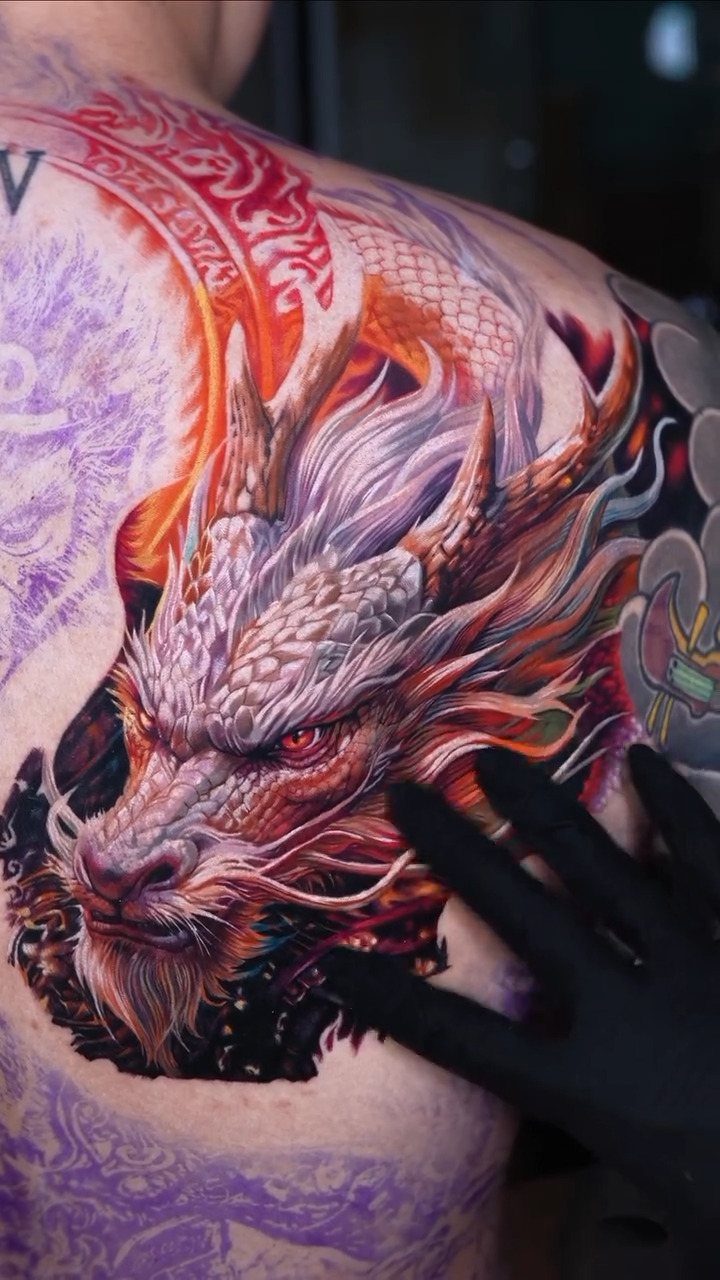
The back gives you room to work big, and that matters with a dragon this detailed.
Every scale, every curl of smoke, every shift in the body’s twist can land exactly where it needs to go without cramping into a corner or running off the edge.
Smaller than that and the fine details start to blur together once the tattoo settles. Placement stays centered on the spine or off to one side, depending on how much asymmetry you want in the composition.
Expect multiple sessions for something this size. The color saturation alone takes time, and good shading on a dragon this intricate can’t be rushed.
2. Red Chinese Dragon Tattoo
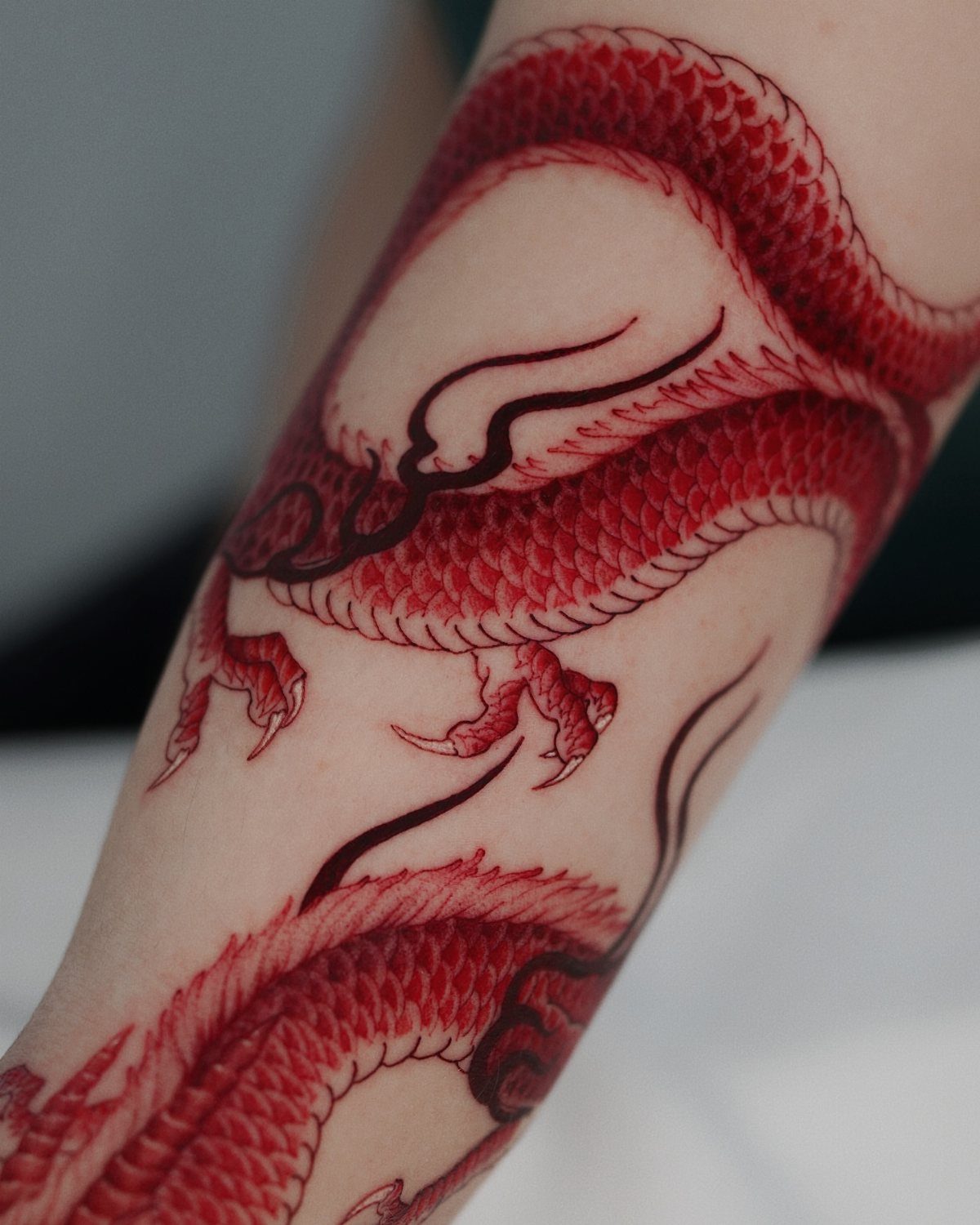
Red carries weight in Chinese symbolism: prosperity, good fortune, the kind of luck that sticks around. A red dragon leans into all of that without needing extra explanation.
The color also reads strong on most skin tones, especially when paired with black outlines that keep the design sharp as it heals.
I prefer wrapping placements like this one because the dragon’s body moves with the curve of the arm or leg, and the movement feels built into the anatomy rather than stuck on top of it.
Keep the red bright during healing by staying out of direct sun and moisturizing consistently. Red ink can fade sooner than darker pigments when you skip aftercare.
3. Chinese Dragon Thigh Tattoo
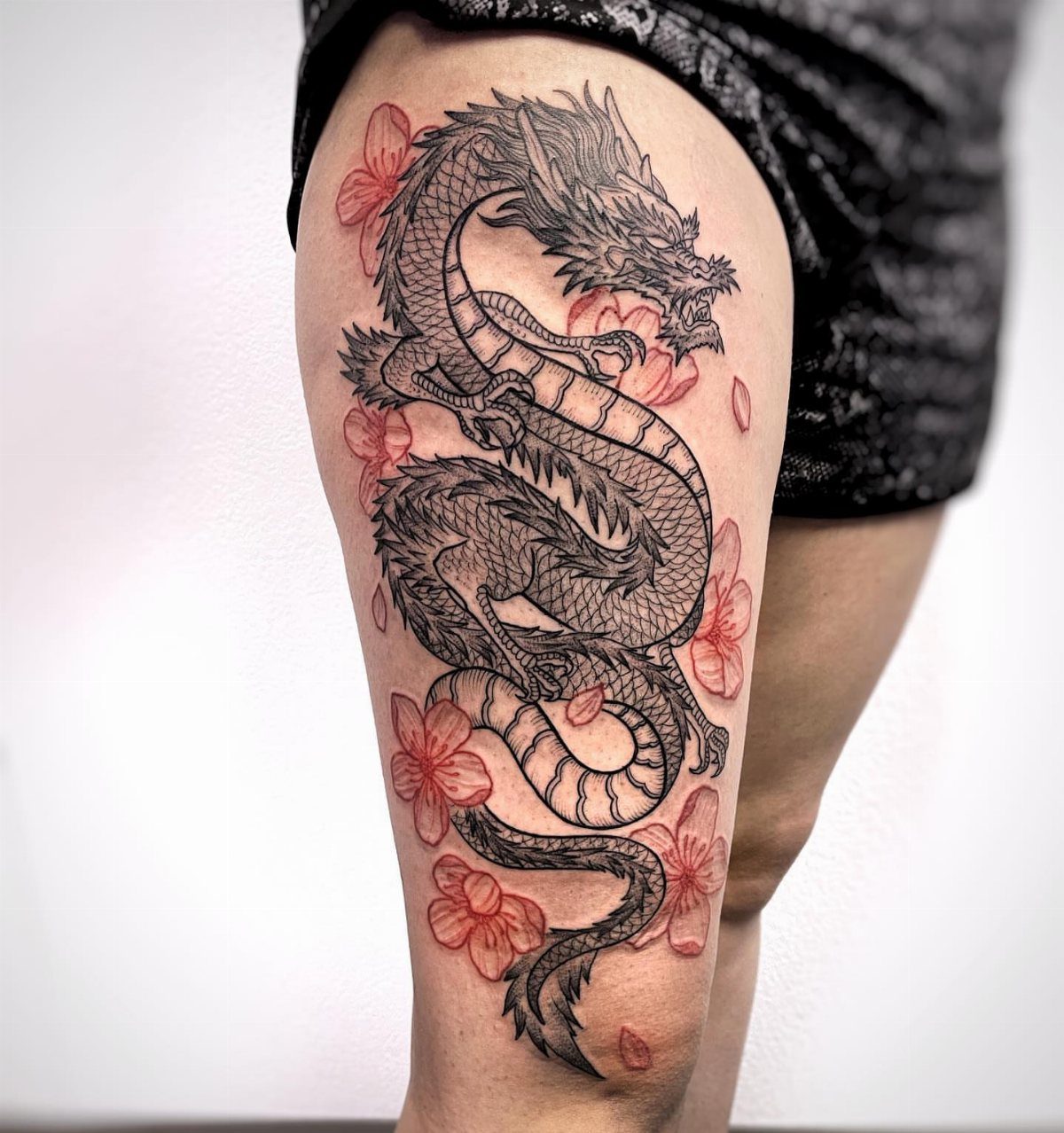
Placement on the thigh lets you go big without committing to full visibility. You control when the design shows, and the muscle underneath gives the tattoo a natural curve that works with the dragon’s body instead of flattening it out.
Adding florals like the cherry blossoms visible here softens the composition without losing the dragon’s strength.
The contrast between the black linework and the red petals keeps the design balanced, and the thigh gives you enough space to let both elements breathe.
Anything smaller and the dragon starts to feel squeezed, especially if you’re layering in secondary imagery like flowers or clouds.
4. Tiger & Chinese Dragon Tattoo
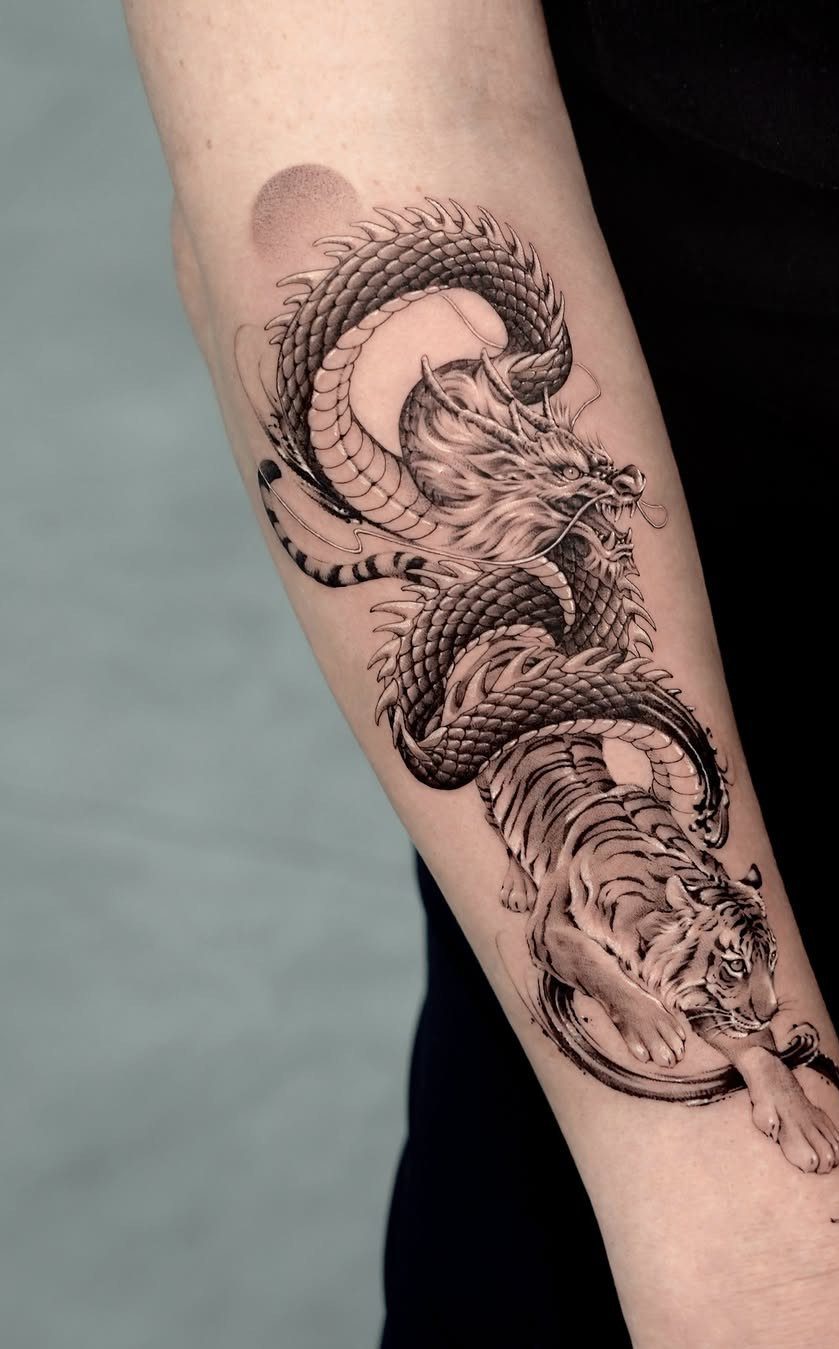
Pairing a dragon with a tiger pulls from the traditional symbolism of balance: heaven and earth, yin and yang, 2 forces that oppose and complete each other at the same time.
Black and grey ink lets the forms stay front and center instead of splitting attention between color and composition. The forearm offers a clean vertical canvas, and the design wraps around the muscle without distorting when your arm bends.
Anything smaller and the interplay between the 2 starts to feel crowded.
5. Simple Red Chinese Dragon Spine Tattoo
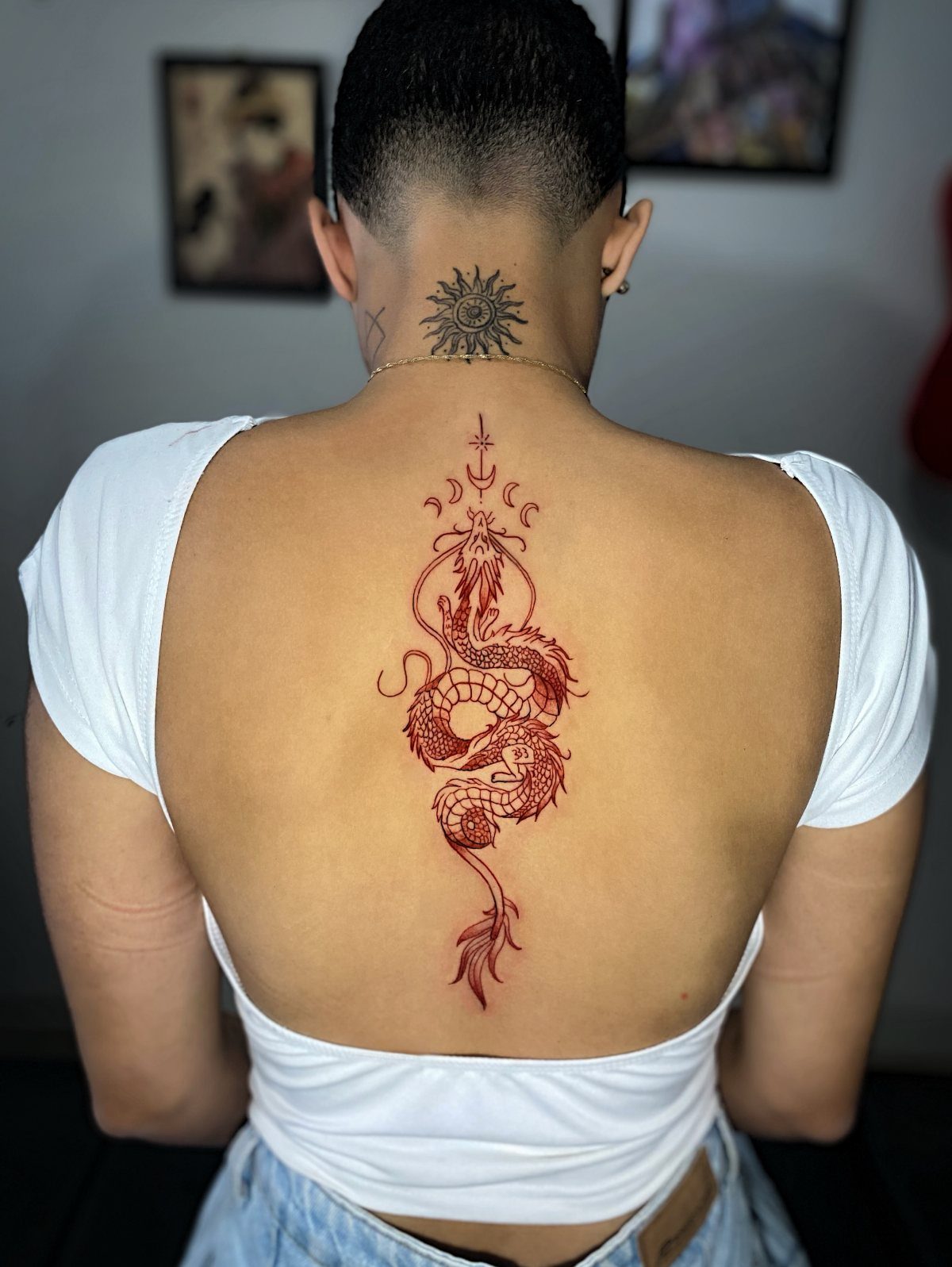
Running a dragon down the spine uses the longest vertical line your body offers, and the simplicity of red line art holds the design together without overloading the narrow space.
I like this approach for someone who wants the symbolism without the commitment to a full back piece.
The dragon reads clearly from across a room, and the single-color linework heals faster and requires fewer touch-ups over time than heavy shading or color fills.
Spine tattoos hurt more than most placements because the needle sits directly over bone with very little padding. Plan accordingly, and consider breaking it into two sessions if the pain becomes too much to sit through in one go.
6. Realistic Chinese Dragon Tattoo
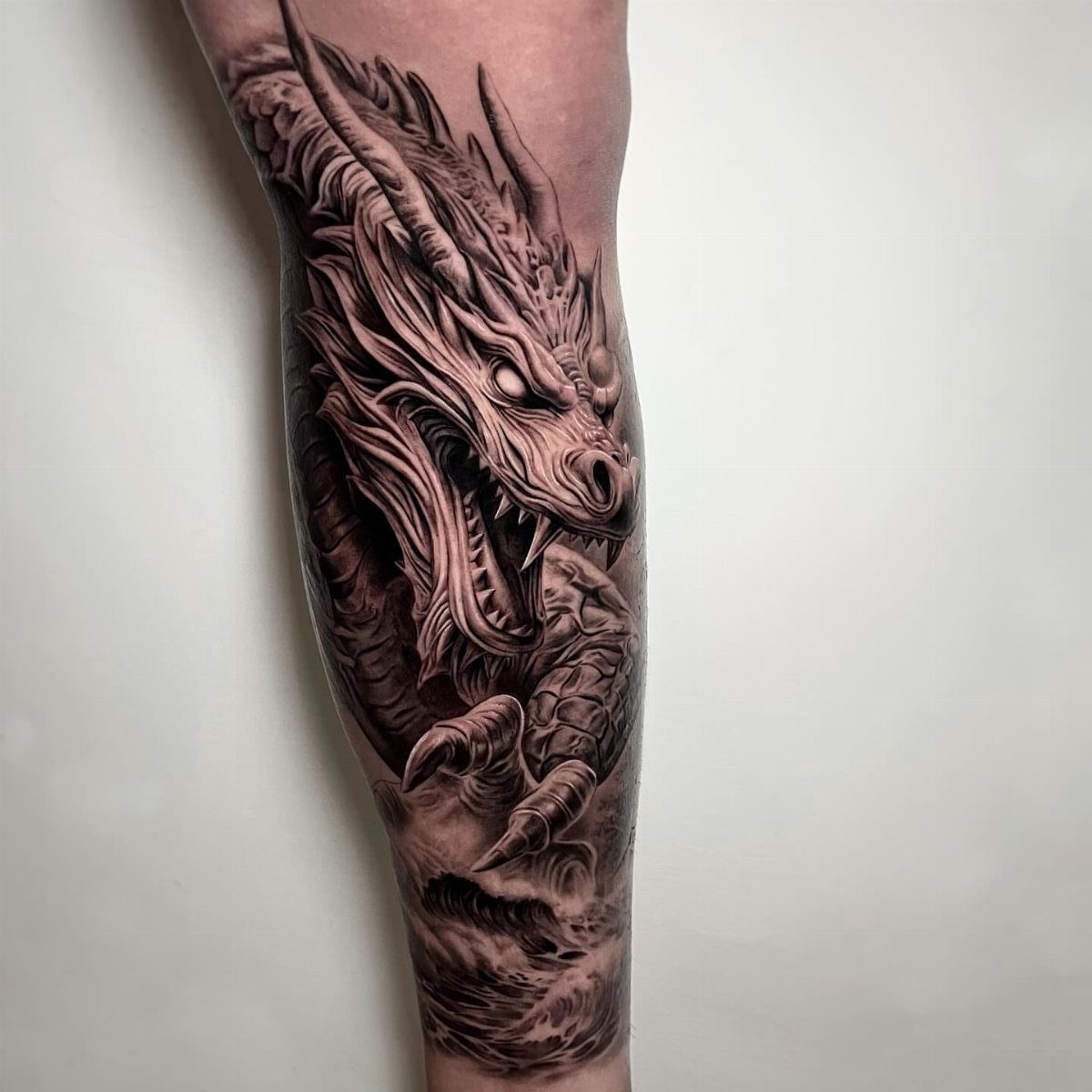
Realism asks for detail, and detail asks for size.
Black and grey works better than color for realism on a dragon because the shading does the heavy lifting.
You want smooth gradients, clean highlights and enough contrast to make the scales and muscle definition stand out. Color can flatten that depth if the artist doesn’t nail the saturation levels.
Placement on the lower leg or forearm gives the artist a relatively flat working surface, which helps keep proportions accurate. Curved areas like the shoulder or ribs can distort the design depending on how you move.
7. Chinese Dragon Arm Tattoo
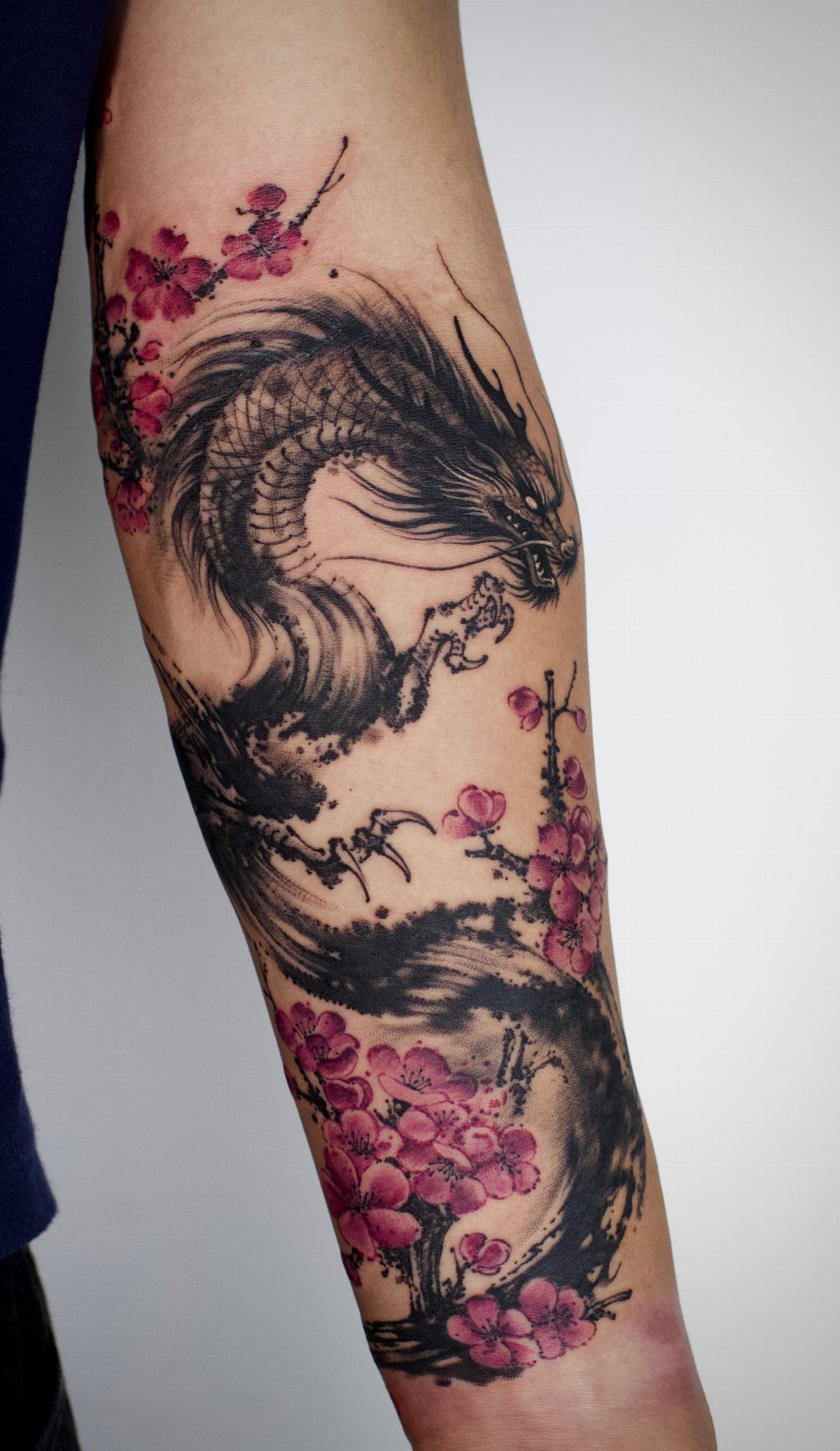
Color lifts a dragon design in ways black and grey can’t match, and pink florals against black scales hold that contrast without fighting for space.
The arm wraps the design around muscle, so the dragon moves when you do.
That natural curve keeps the composition from sitting flat, and placement from wrist to shoulder gives you enough length to let the body coil without bunching up.
Healing takes longer when you’re layering saturated color over detailed linework. Keep the area moisturized and avoid tight sleeves while the ink settles.
8. Chinese Dragon Sleeve Tattoo
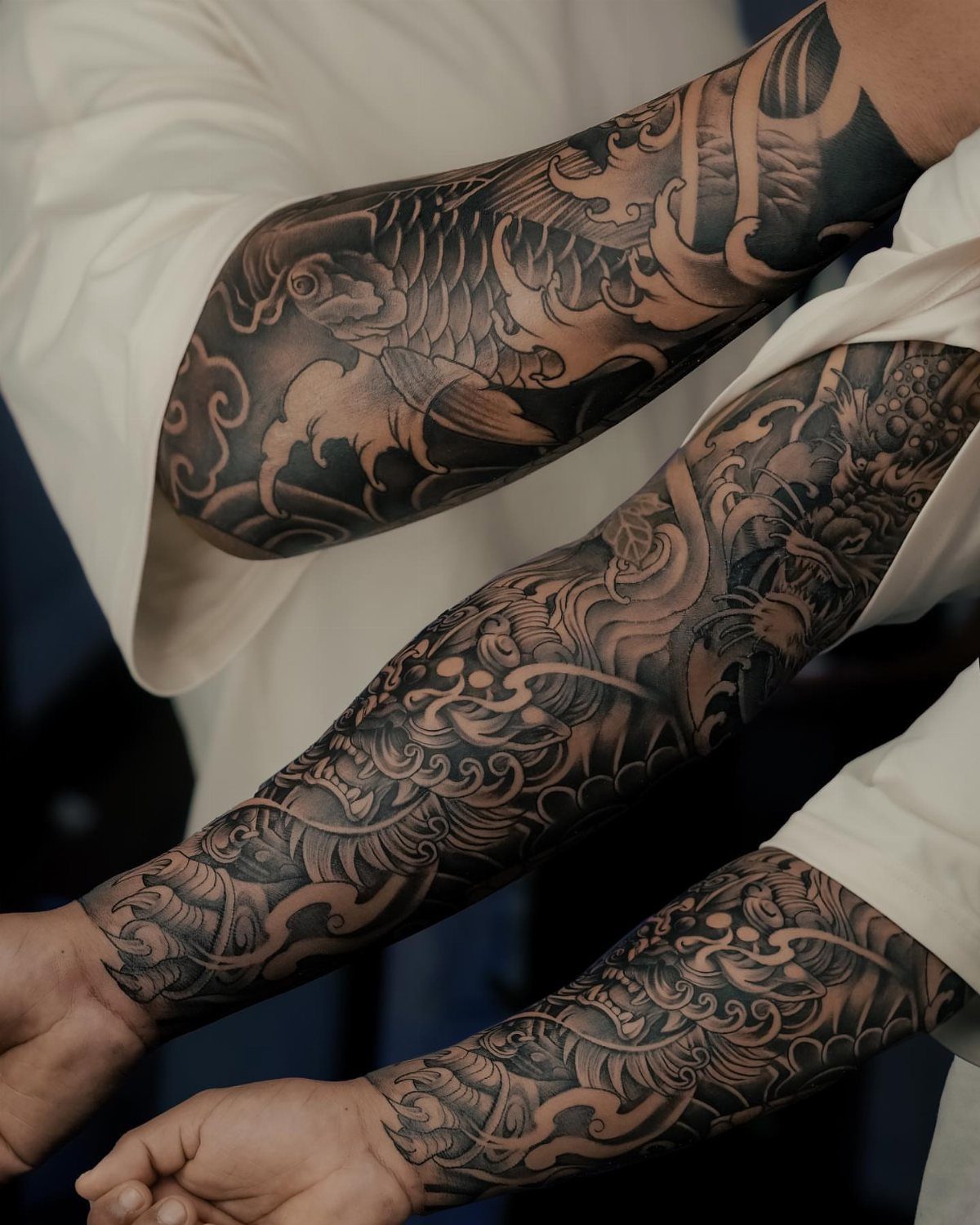
A sleeve gives the dragon room to coil vertically and horizontally at once, following the contours of your forearm without running out of canvas.
Black and grey reads sharp on most skin tones and ages better than color when you’re covering this much surface area. The waves anchor the bottom of the composition and keep the dragon from floating in empty space.
Full sleeves take multiple sessions. Something this detailed takes real time, and you’ll need to break it across multiple appointments depending on how much you can sit through at once.
9. Chinese Golden Dragon Tattoo
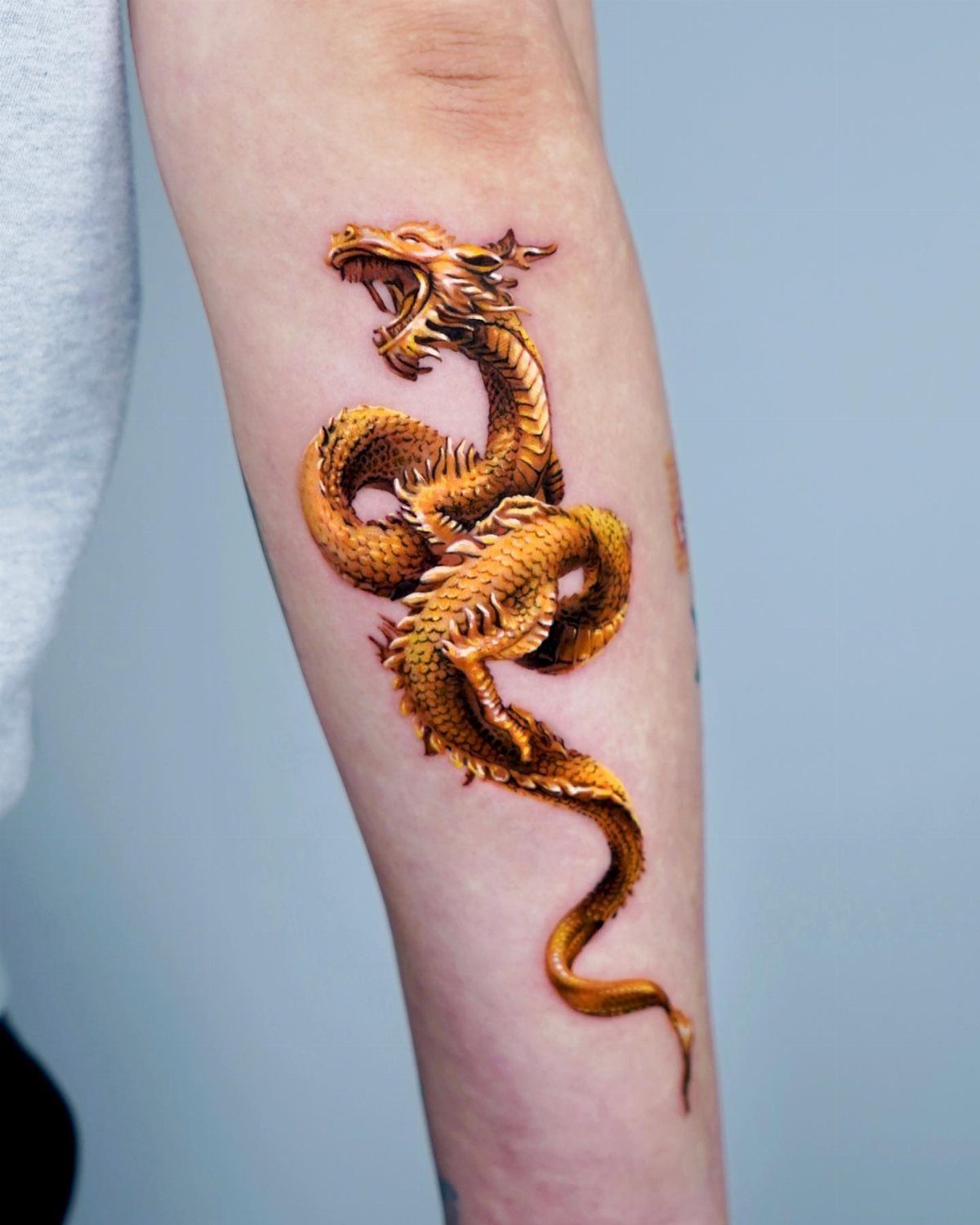
Gold ink gives the dragon a metallic finish that catches light differently than flat color, and the effect works best when the dragon sits on a single plane like the forearm rather than wrapping around curves.
The 3D shading makes the design pop off the skin, but that depth only holds if the artist nails the highlights and shadows. Poor execution flattens the whole thing out.
Gold fades faster than black or traditional colors, so plan for touch-ups every few years if you want the brightness to last.
10. Chinese Dragon Ink Drawing
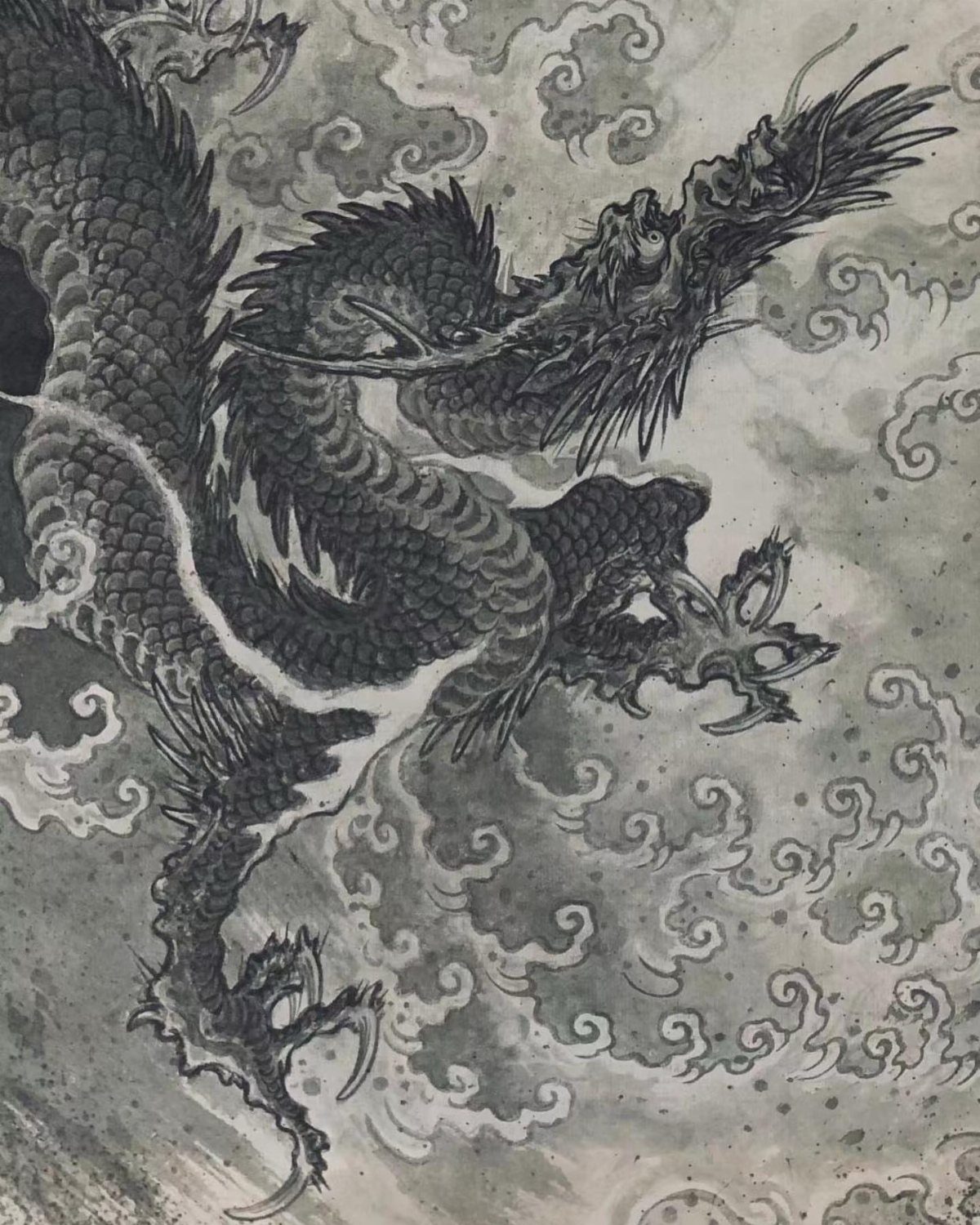
An ink drawing style strips the dragon back to brushwork and negative space, the way traditional scroll paintings handle the form. The clouds and mist fill the background without crowding the dragon itself.
The linework in this style stays crisp, and the minimal shading translates beautifully to skin.
Placement stays flexible because the design reads clearly at almost any size, from a small forearm piece to a full back.
Cultural Significance of Dragons
Chinese dragons carry symbolism that runs opposite to the destructive creatures of Western myth.
Instead of fire and ruin, they represent wisdom, power and good fortune. These are water deities tied to rainfall, weather control and the rhythms of agriculture that kept early civilizations alive.
They were treated as divine beings, worshiped in temples and honored in ritual.
During wet seasons they celebrated. Offerings of incense and food were laid out during storms, meant to soothe the water spirits and stop the flooding.
Buddhism, Confucianism and Taoism all describe dragons as rainmakers with the power to move seasons, breathe clouds and shift their size at will.
The flaming pearl you see in traditional imagery represents spiritual energy and enlightenment. The dragon chasing it embodies imperial authority and the balance of yin and yang: a creature of water, fearsome yet benevolent, powerful yet wise.
Differences Between Eastern and Western Dragons
Eastern and Western dragons split at the core.
Where Western dragons play the villain in mythology, breathing fire and hoarding treasure in mountain caves, Chinese dragons bring prosperity and good luck. One destroys, the other protects.
The difference shows in appearance too. Western dragons are heavy, reptilian creatures with leathery wings and legs made for walking the earth.
Chinese dragons move like serpents, graceful and long, with bodies made for water. Chinese dragons belong to water, coiling through rivers and lakes rather than hoarding treasure in mountain caves.
Western tattoos lean aggressive.
Eastern designs carry elegance and reverence. If you want a dragon that reads as a guardian rather than a threat, the Chinese form delivers that without explanation.
Frequently Asked Questions
What does a dragon tattoo symbolize?
A Chinese dragon tattoo symbolizes power, wisdom, prosperity and good fortune.
These creatures were worshiped as water deities who controlled rainfall and weather, so they represent balance and protection rather than destruction. The pearl they clutch or chase represents wisdom, good fortune and the pursuit of immortal knowledge.
Are Japanese dragons the same as Chinese dragons?
Japanese dragons have three claws, shorter bodies and a more serpentine look, while Chinese dragons carry five claws, longer whiskers and a meaning rooted in imperial power and water control rather than the storm and ocean themes common in Japan.
Japanese dragons typically have three toes per claw and are depicted as sea serpents tied to island mythology, while Chinese dragons have four or five toes and connect to rivers and rainfall.
Japanese dragon stories lean more toward monstrous creatures, though still generally forces of good, while Chinese dragons carry stronger associations with imperial authority and divine wisdom.