A forearm piece typically runs 2–4 sessions depending on detail, while a full sleeve can take 6–10 or more.
If you want the symbol without committing to a large piece, a forearm dragon gives you clean visibility and skips the commitment of wrapping your entire arm.
Eastern dragons with whiskers carry different weight than Western winged versions, and that difference shows once it’s on you.
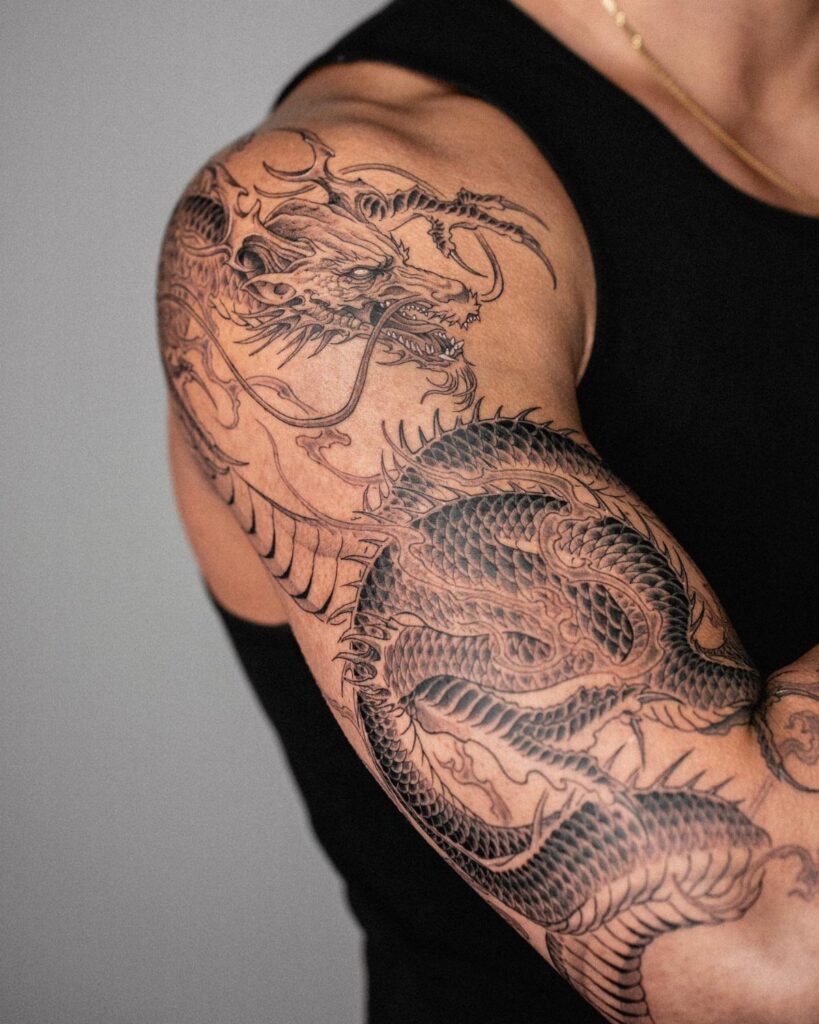
1. Black Ink Dragon Tattoo Arm
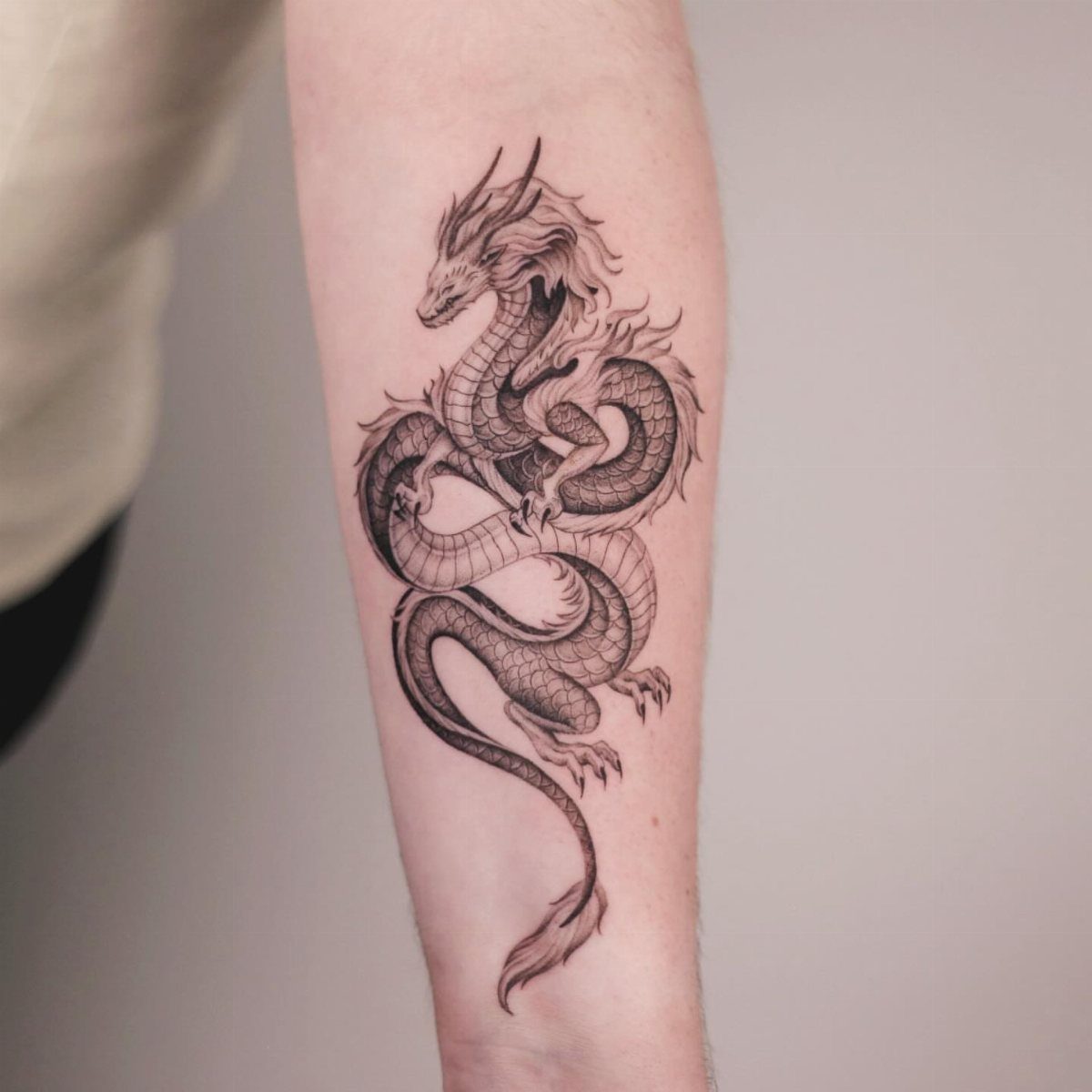
Solid black ink gives you the cleanest read and ages better than any other choice. The scales stay sharp, the curves hold their weight, and you skip the question of whether color will fade unevenly over time.
A forearm piece like this varies in price depending on size and detail.
Sessions for a half-sleeve length dragon take time to complete properly. Black ink photographs well in any light and still looks intentional decades later.
2. Japanese Dragon Tattoo
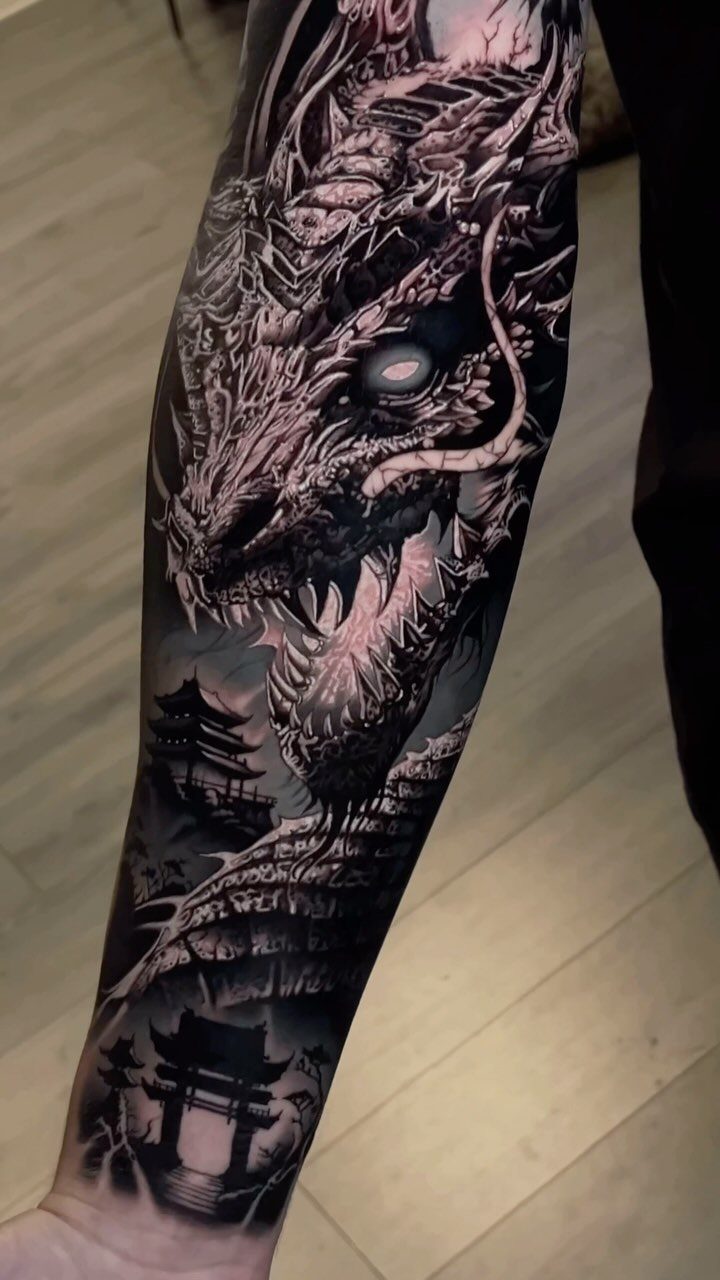
Japanese dragons are drawn with longer, serpentine bodies and whiskers, and they sit inside a larger composition rather than floating alone. The pagoda grounds the design and signals the style immediately.
This version works best as a half or full sleeve because the dragon needs room to wind.
A forearm piece with architectural detail requires a dedicated session. Black and grey keeps the focus on form, though traditional Japanese work allows for color if you want bolder contrast.
3. Red Dragon Tattoo
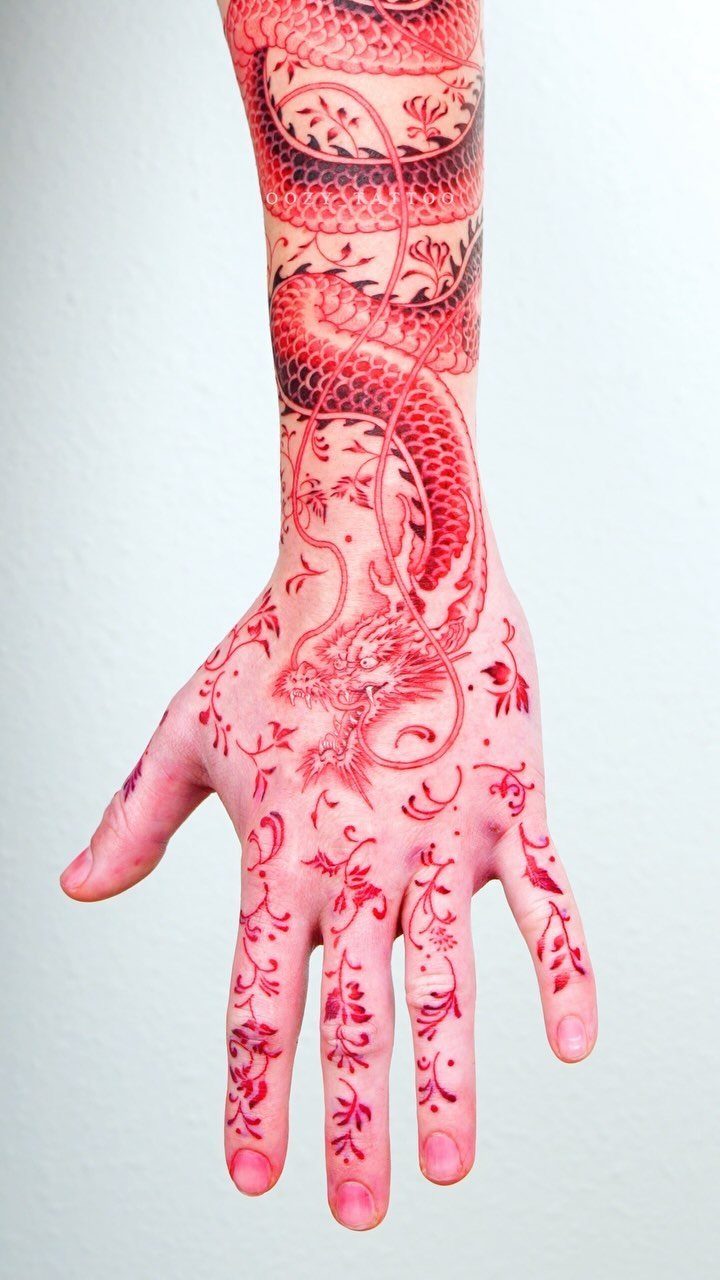
Red ink alone, no black outline, reads softer and more decorative than the traditional blackwork dragon. The color sits closer to the skin tone and feels less aggressive, which suits someone who wants the symbol without the heavy visual weight.
Red fades faster than black, so you’ll need a touch-up to keep the saturation.
It also shows up differently depending on your skin tone: vivid on lighter skin, more muted on deeper tones. If you like how it looks now, plan for maintenance.
4. Dragon with Flowers
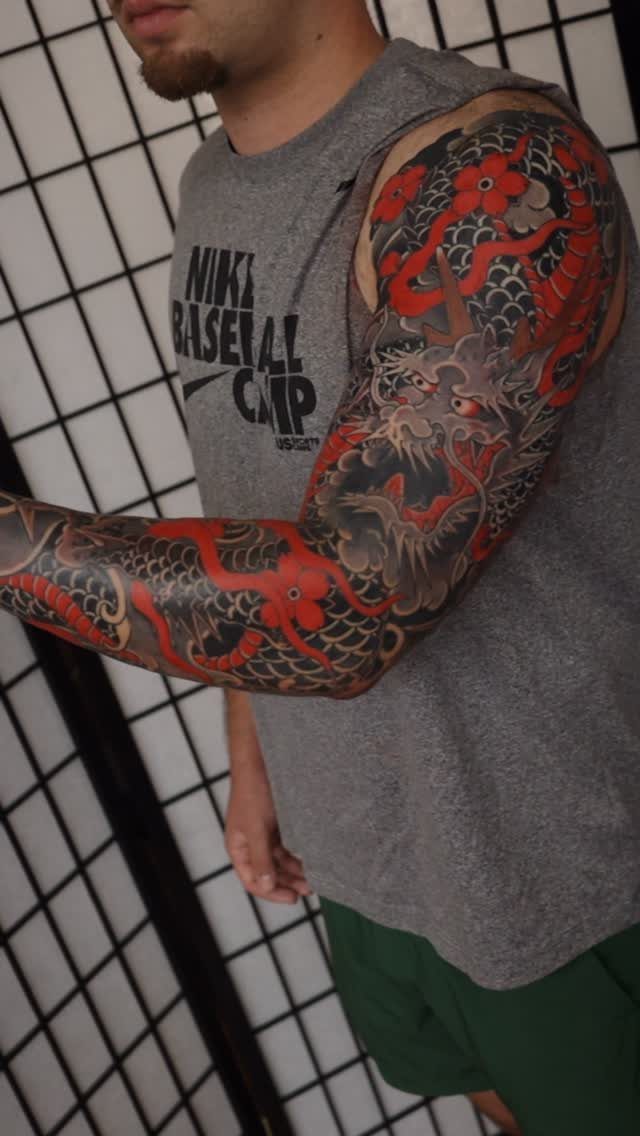
Flowers soften the aggression of a dragon and let you bring in personal meaning through the bloom itself. Peonies, chrysanthemums, and cherry blossoms are traditional pairings, but roses work too for something more familiar.
The floral elements fill negative space and give the tattoo better balance across the arm.
A sleeve like this takes time depending on how much of the arm you’re covering. A dragon can feel intense on its own, and flowers are the easiest way to adjust the tone.
5. Fine-line Dragon Tattoo
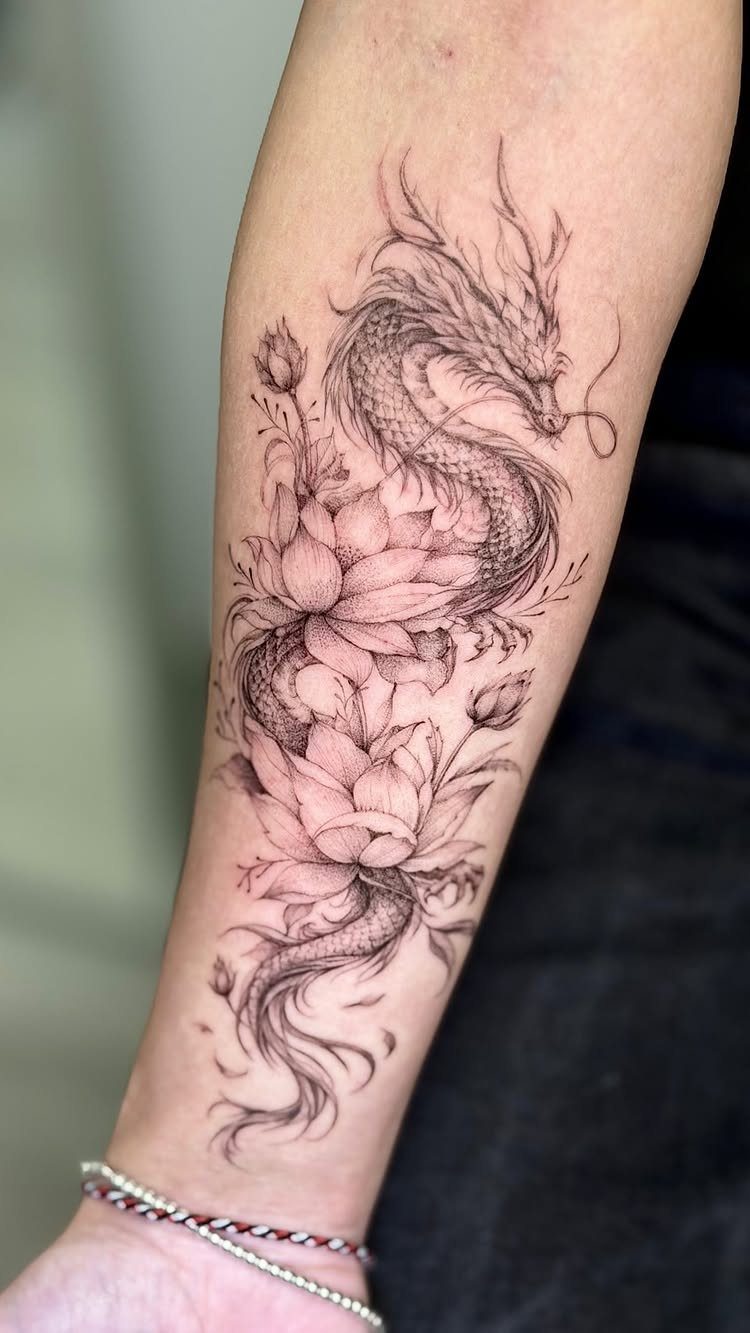
Fine-line work strips the dragon down to its skeleton: no heavy shading, no thick outlines, just the essential shape and a few details like the lotus to anchor it. The result is more elegant than intimidating.
This style fades faster than bold traditional work, so placement matters. A forearm or upper arm protects it better than a hand or wrist.
Fine-line also demands a steady artist; if the lines aren’t clean from the start, there’s nothing to hide behind. A forearm piece typically costs less than larger work and goes faster.
6. Water Dragon Tattoo
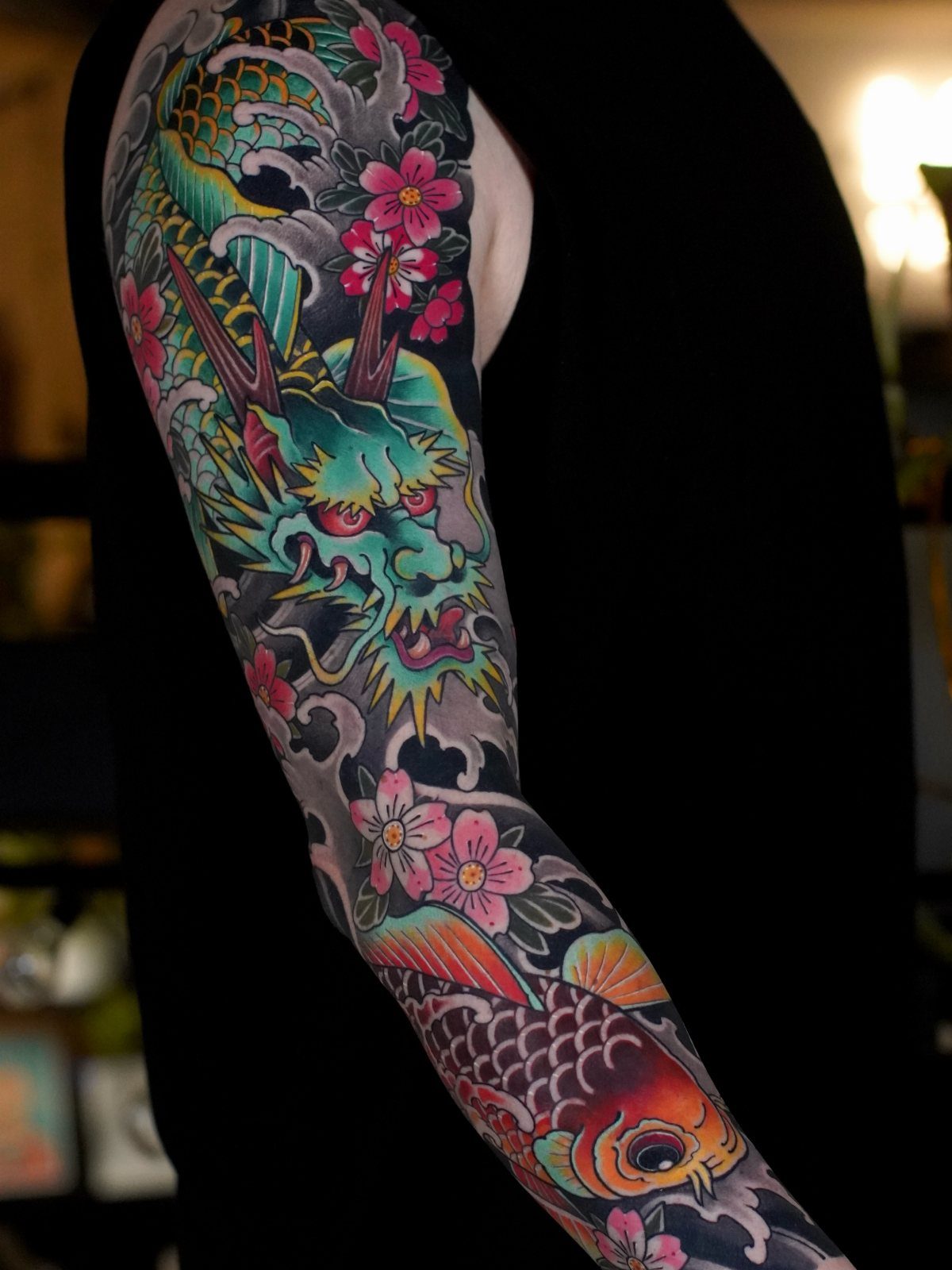
Pairing a dragon with ocean waves and koi ties the design to Japanese tradition, where dragons are water deities. The waves add movement and fill the arm more completely, which keeps the composition balanced from shoulder to wrist.
A full sleeve like this takes multiple sessions to complete. Color adds cost but also depth: the green dragon and pink flowers create contrast that black and grey can’t match.
If you’re committing to a full arm, adding water and koi gives you a finished piece instead of a floating dragon.
7. Serpentine Dragon Tattoo Arm
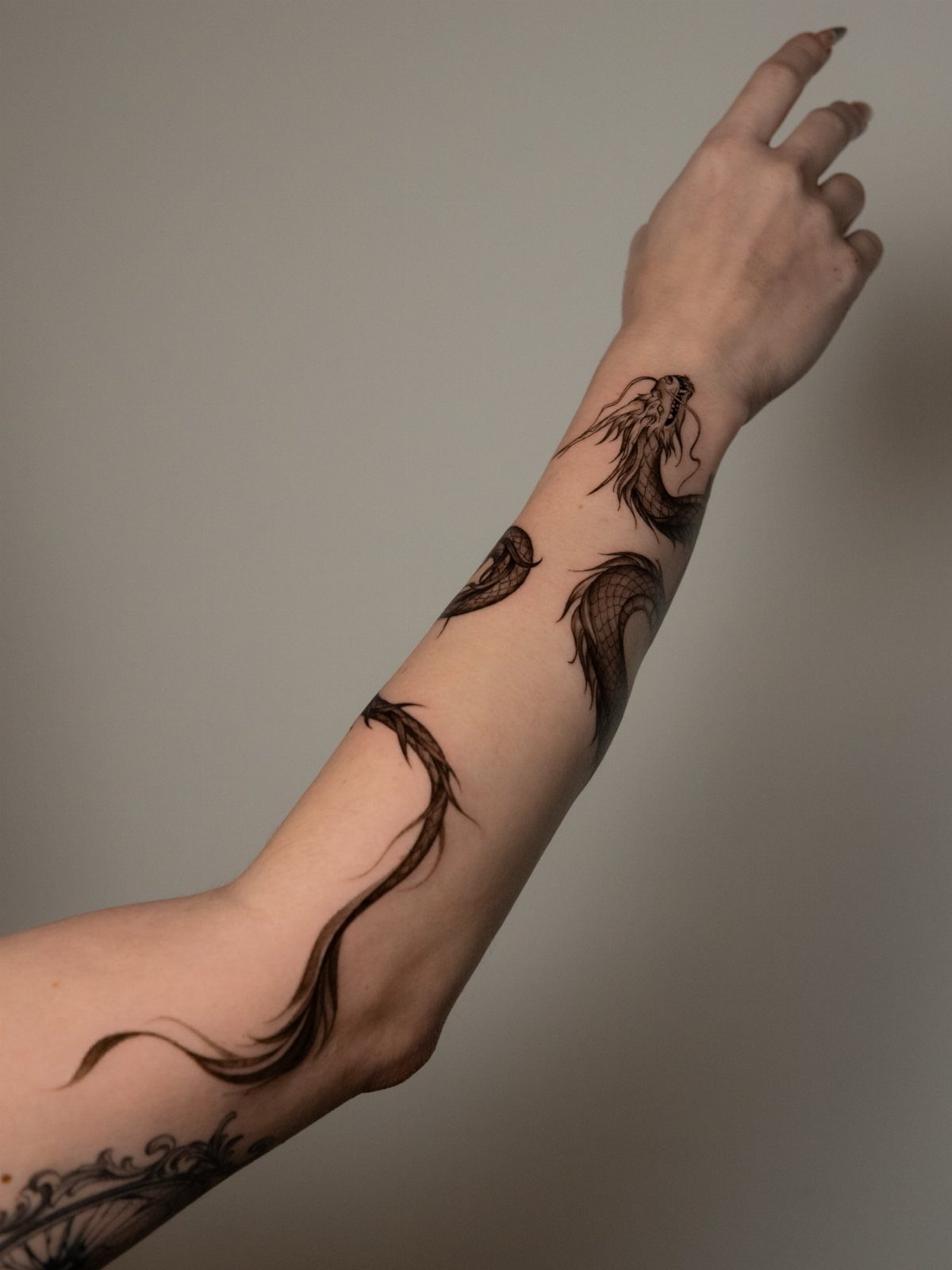
A serpentine dragon wraps the arm like a sleeve in far less real estate. The tail starts at the wrist and the body coils upward, which gives you continuous coverage with a narrower footprint than a traditional side-facing dragon.
This works well on a thinner arm because the dragon follows the natural curve instead of fighting it.
The body winds around so you catch it clearly from any angle. Black ink lets the coil carry the weight, and a single session handles most forearm lengths.
8. Dragon Breathing Fire Tattoo Arm
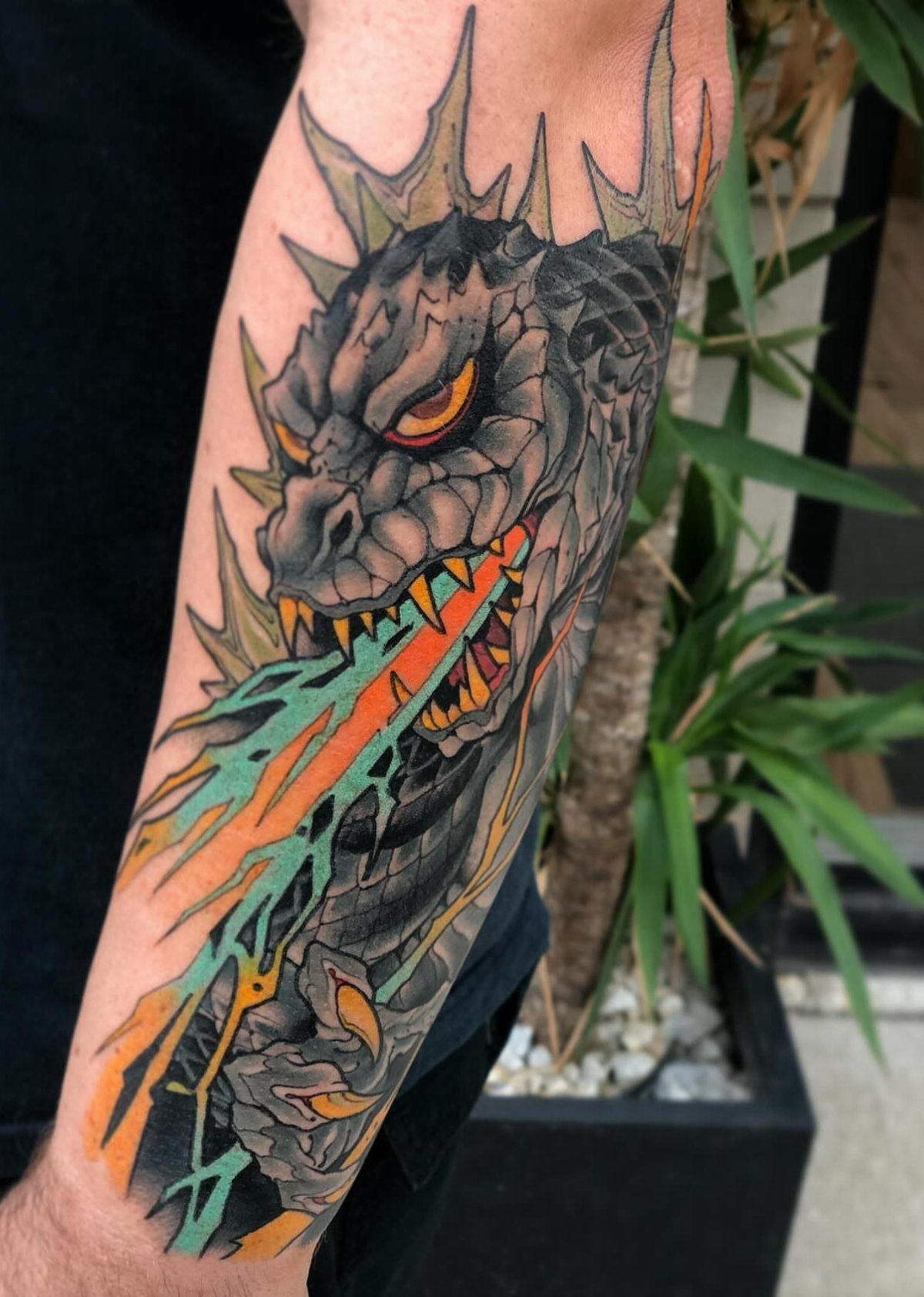
Fire gives the dragon action instead of just posture. The flames become the second visual anchor, and they let you bring in color without committing to a full-color dragon body.
Orange and teal create contrast that photographs well and keeps the piece from reading flat.
The fire also fills awkward negative space around the head, which is harder to balance on its own. A forearm piece finishes faster than a full dragon body, and the flames age better than fine detail in the scales.
Symbolism of Dragon Tattoos
Dragons carry different weight depending on where the design comes from.
Eastern dragons, the serpentine ones with whiskers and claws, represent protection and wisdom in Japanese and Chinese tradition. They guard against bad fortune and signal strength that doesn’t need to prove itself.
Western dragons, the winged kind, lean more aggressive: raw power, dominance, something you fight or claim. The difference matters if the symbolism is part of why you’re getting it.
A dragon also works as pure visual without needing to justify the meaning. The form itself reads clearly, and it fills an arm well.
If someone asks what it means, you can point to power and protection or just say you liked the way it looked. Both answers hold up.
Cost Considerations
Size drives cost more than anything else. A forearm dragon that runs wrist to elbow takes fewer hours than a full sleeve that wraps shoulder to wrist, and most artists charge by the hour or by the session.
Detail adds time. A dragon with individually drawn scales, architectural elements like pagodas, or added flowers and waves requires more sessions than a simpler silhouette.
Fine-line work often costs less per session because it covers less area, but it also demands precision that not every shop offers at the same rate.
Artist experience changes the floor price. Someone booking months out will charge more than someone with open availability, and that gap can be significant for a piece this large.
Placement Options
The forearm gives you the most visible real estate without committing to a full sleeve.
A dragon can run vertically from wrist to elbow or wrap around the arm, and you see it clearly without turning your body. It also heals faster than the inner bicep or shoulder.
Shoulder placement lets the dragon sit across the cap and down onto the upper arm, which works well for a side-facing design that needs width. The shoulder also hurts less than the inner arm or elbow ditch.
Frequently Asked Questions
What does a dragon arm tattoo symbolize?
Eastern dragons with serpentine bodies represent protection and wisdom, guarding against bad fortune with quiet strength.
Western dragons with wings lean toward raw power and dominance. You can get one simply because the form itself looks striking on skin.
Is a dragon tattoo good or bad?
Dragons carry positive weight in most traditions.
Eastern dragons signal protection and wisdom, while Western dragons represent strength and courage. The symbol reads as powerful rather than negative, regardless of style.