Manta ray tattoos range from small ankle outlines that stay under 3 inches to full back pieces that span both shoulder blades, and the size you pick depends on whether you want a quiet personal mark or a design meant to be seen across a room.
Placement changes how the ray reads: a biceps design shifts with muscle movement, while a rib piece compresses slightly with every breath.
1. Moana Manta Ray Tattoo
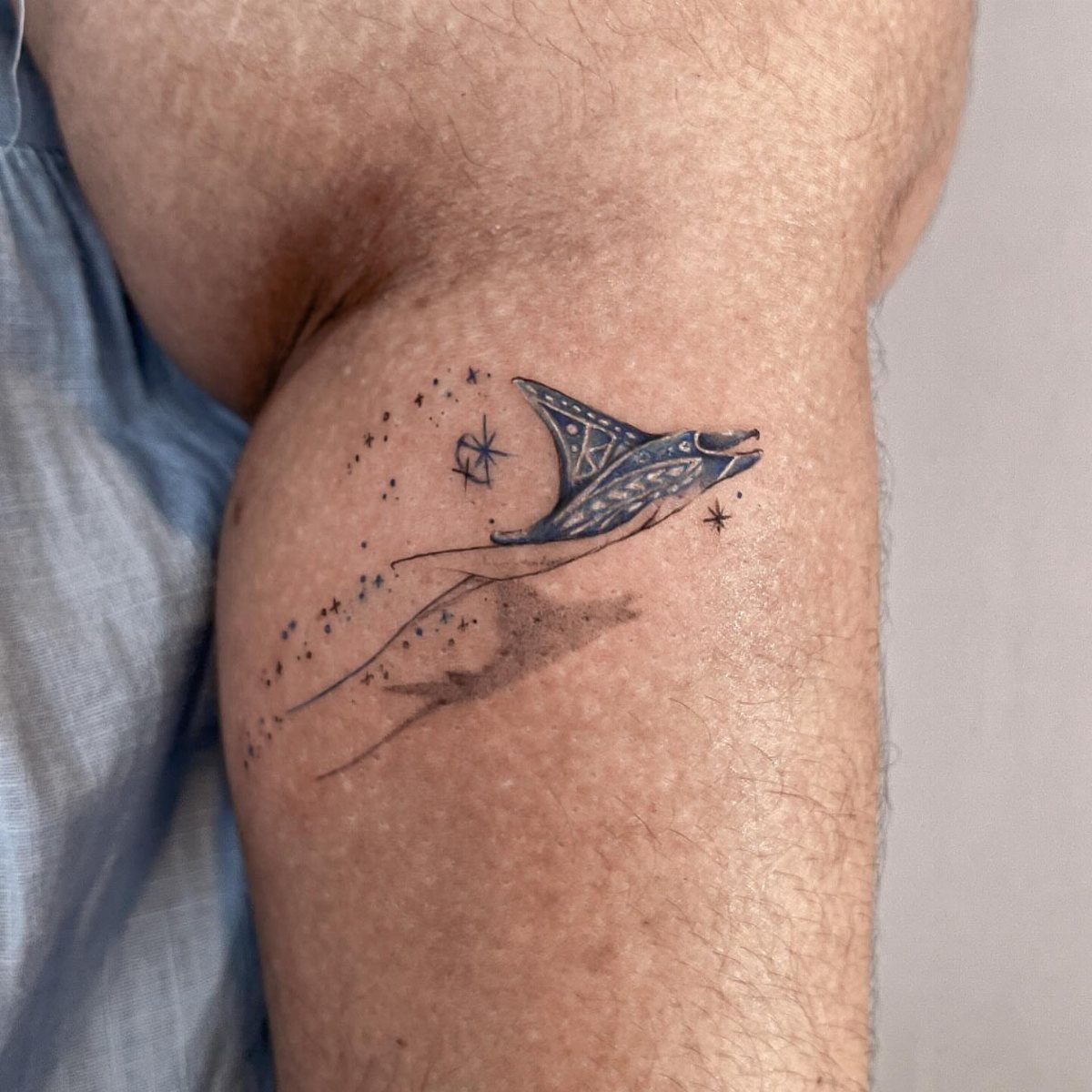
The tribal patterns paired with stars give this one a storytelling feel that ties back to Polynesian navigation and the ocean’s guidance.
Manta rays in Pacific Island culture represent wisdom and protection, and when you bring those swirling motifs into the design, you’re layering meaning that goes deeper than the creature alone.
The blue ink softens the look compared to solid black tribal work, making it a good middle ground for cultural weight without the heavy contrast.
Biceps and shoulders handle this style well because the curves of the ray can follow the muscle.
2. Manta Ray Tattoo on the Biceps
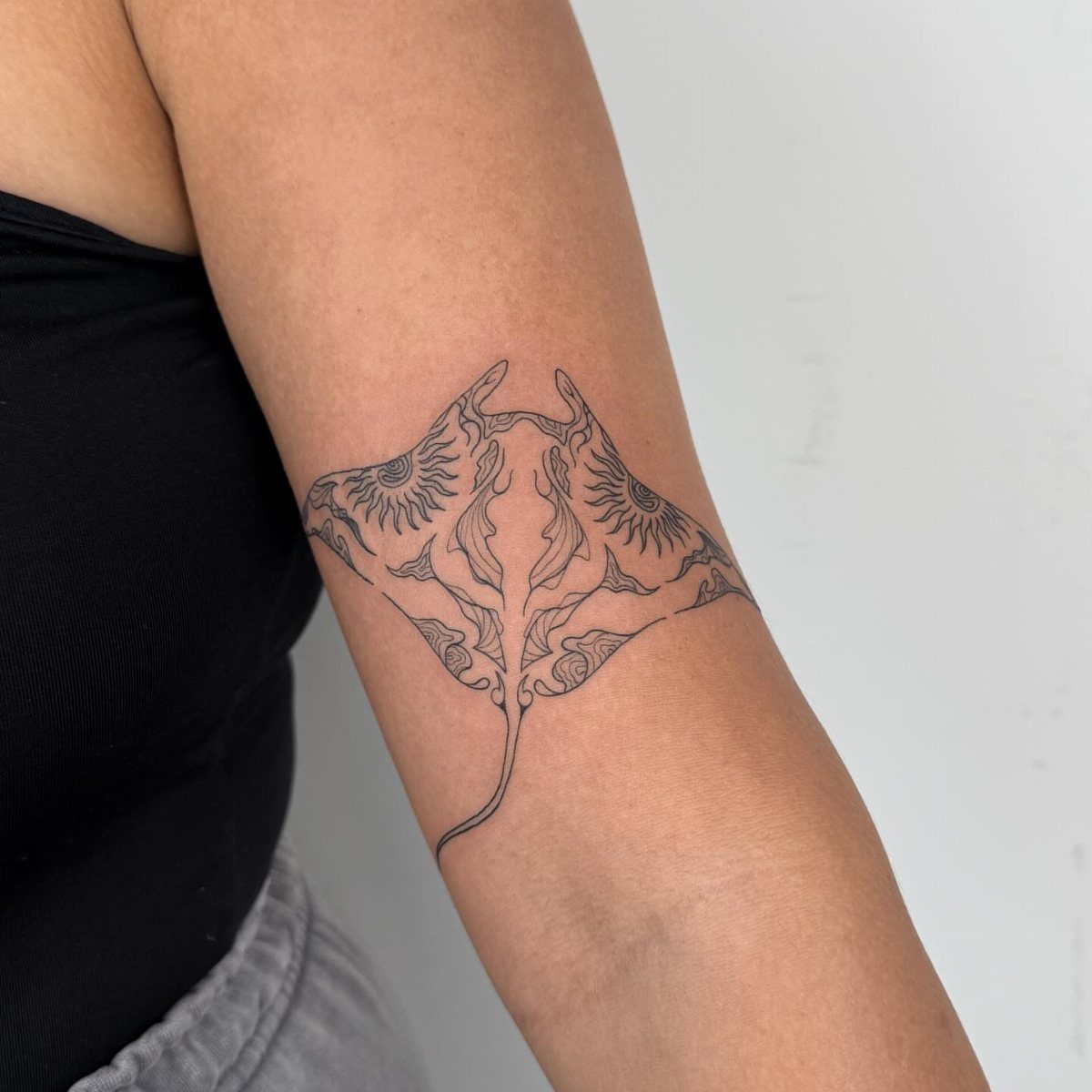
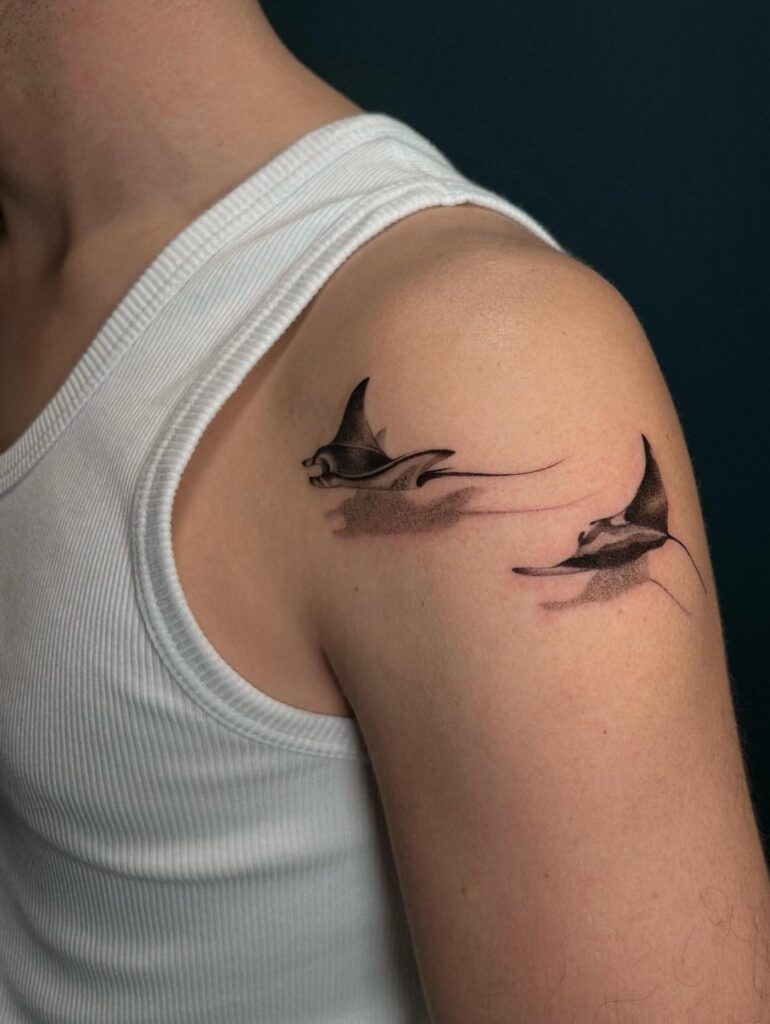
The biceps gives you a natural curve that mirrors how a manta ray moves through water.
When your arm is relaxed, the design sits flat and readable. Flex, and the ray shifts slightly, which adds a subtle sense of motion without needing shading or color to sell it.
Line-art like this reads cleanly at a distance and ages better than dense fills because there’s less risk of blurring over time. If you’re planning other ocean pieces, this placement leaves your forearm and shoulder open for complementary work later.
3. Bright Blue Manta Ray Shoulder Tattoo
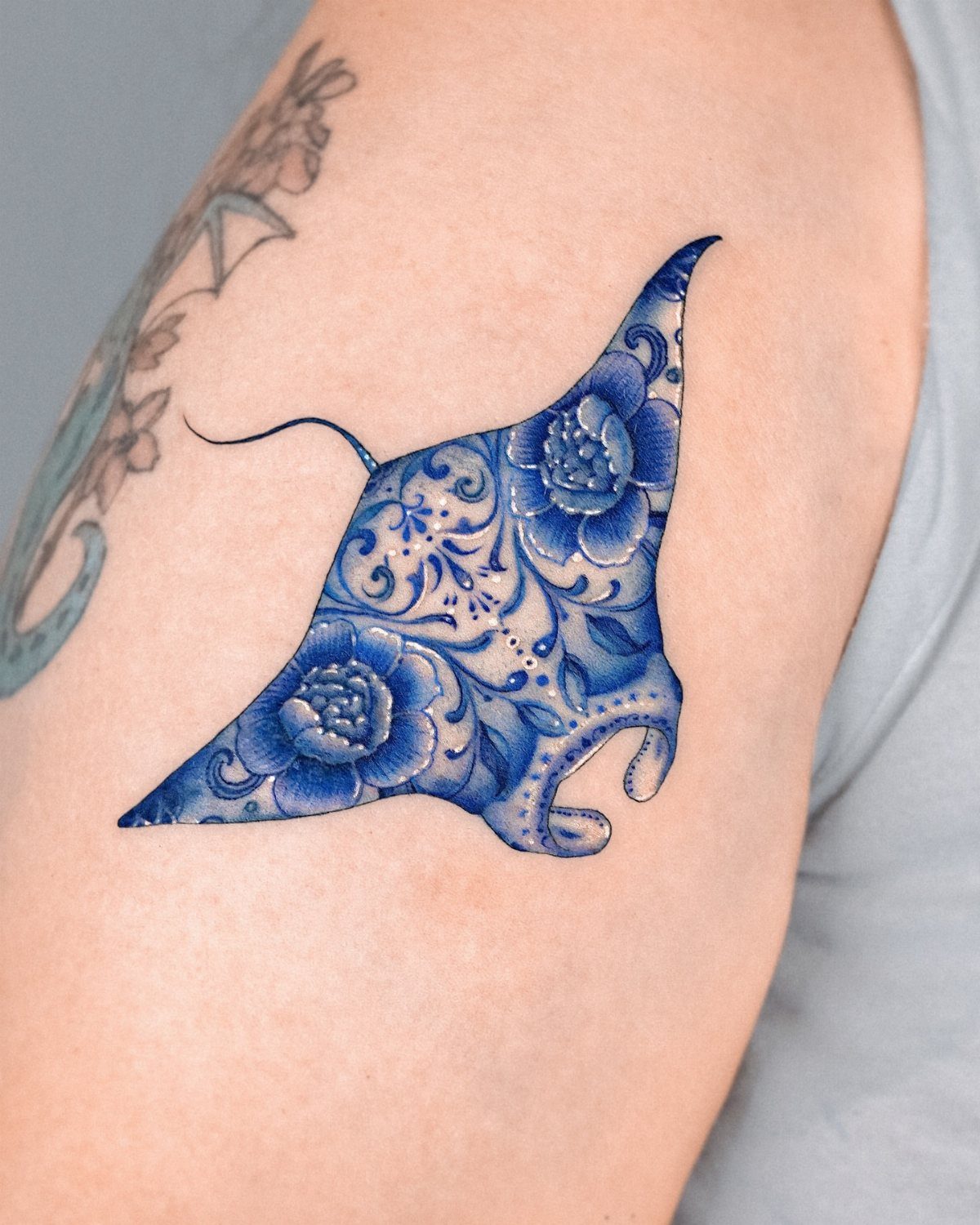
Blue and white floral patterns give the ray a porcelain or hand-painted look, almost like tilework.
It’s softer than a solid blue fill and adds dimension without relying on heavy shading. The shoulder blade is one of the flatter, broader spots on the body, so detailed patterning like this has space to show.
Colored ink on the shoulder holds up well because the skin there moves less than joints like elbows or wrists. If you tan, blue can shift slightly over time, so sunscreen is your friend once it heals.
4. Bright Blue Manta Ray Tattoo
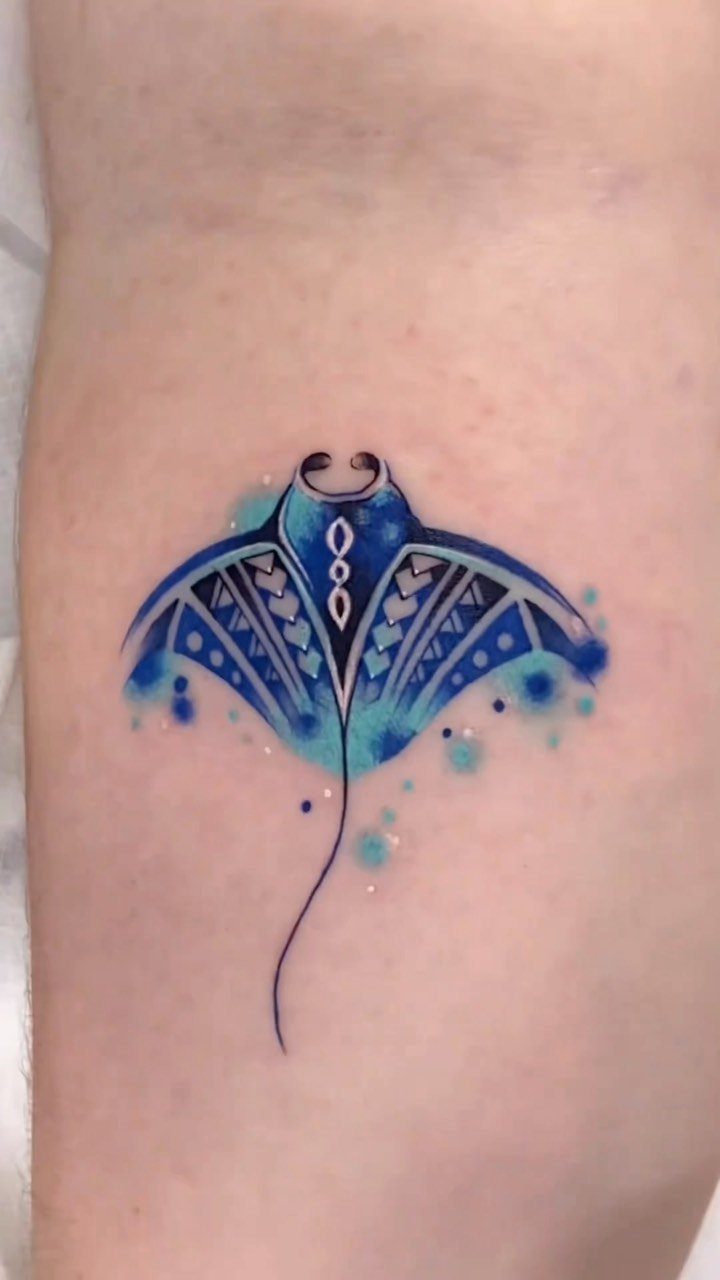
This one leans into saturation.
The blue is bold enough to stand on its own, and the geometric patterns inside the ray keep it from feeling flat. Something that catches the eye across a room needs vivid color more than black line work delivers.
Bright blue fades faster than black, so expect a touch-up every few years to keep the intensity.
Placement matters here: areas with more sun exposure will lighten quicker, so inner arm or upper thigh will hold the color longer than your forearm or calf.
5. Manta Ray Back Tattoo
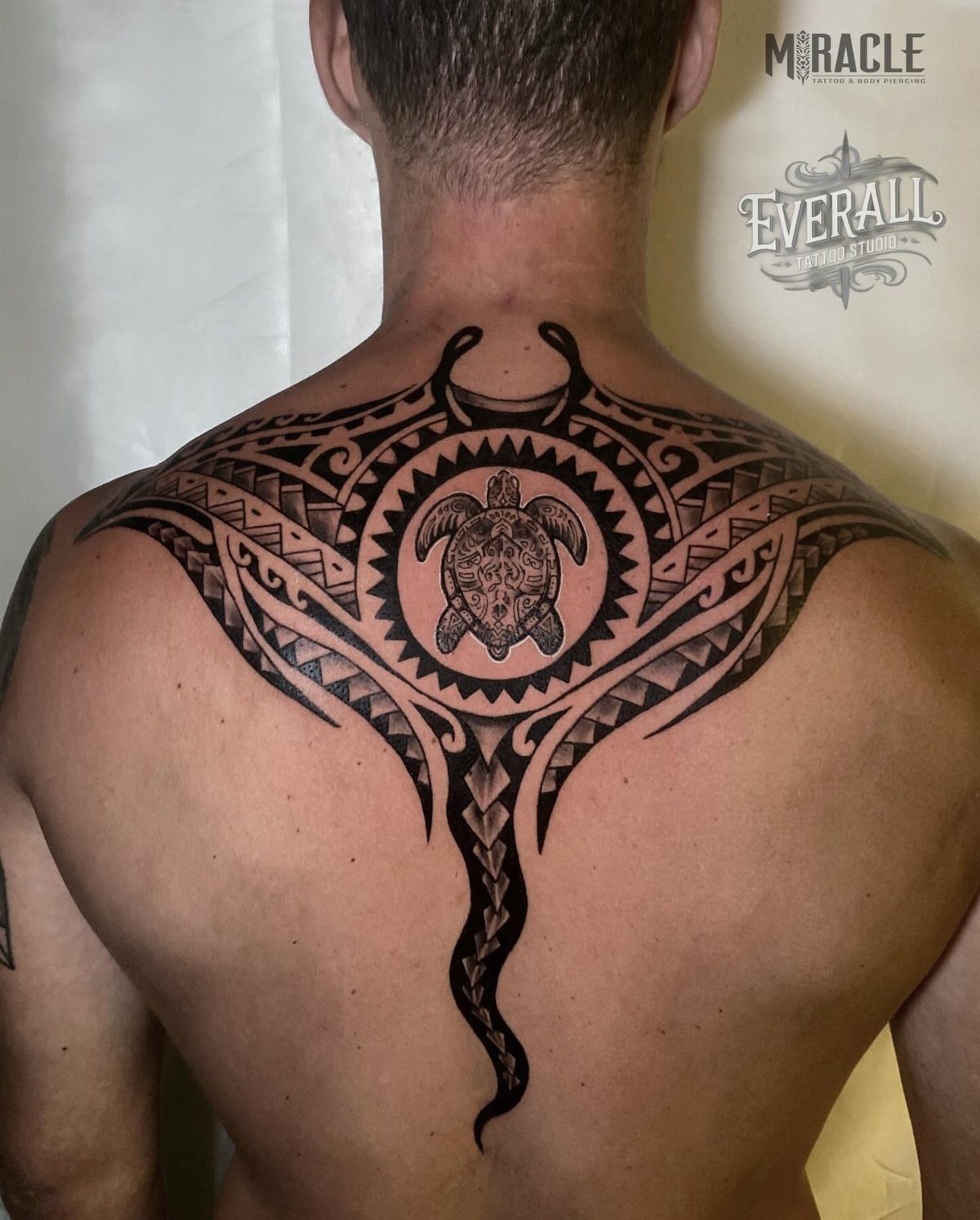
A back piece gives you the kind of real estate a manta ray deserves. The wings can stretch across your shoulder blades, and there’s room to add other ocean life, like the turtle here, without crowding the composition.
Black tribal work sits bold and high-contrast, and it reads clearly even when seen from far off.
The upper back is one of the less painful spots for larger tattoos because there’s more muscle and less bone close to the surface.
Healing is straightforward since clothing doesn’t rub against it constantly the way a waistband or bra strap might on a lower back piece.
6. Minimalist Manta Ray Forearm Tattoo
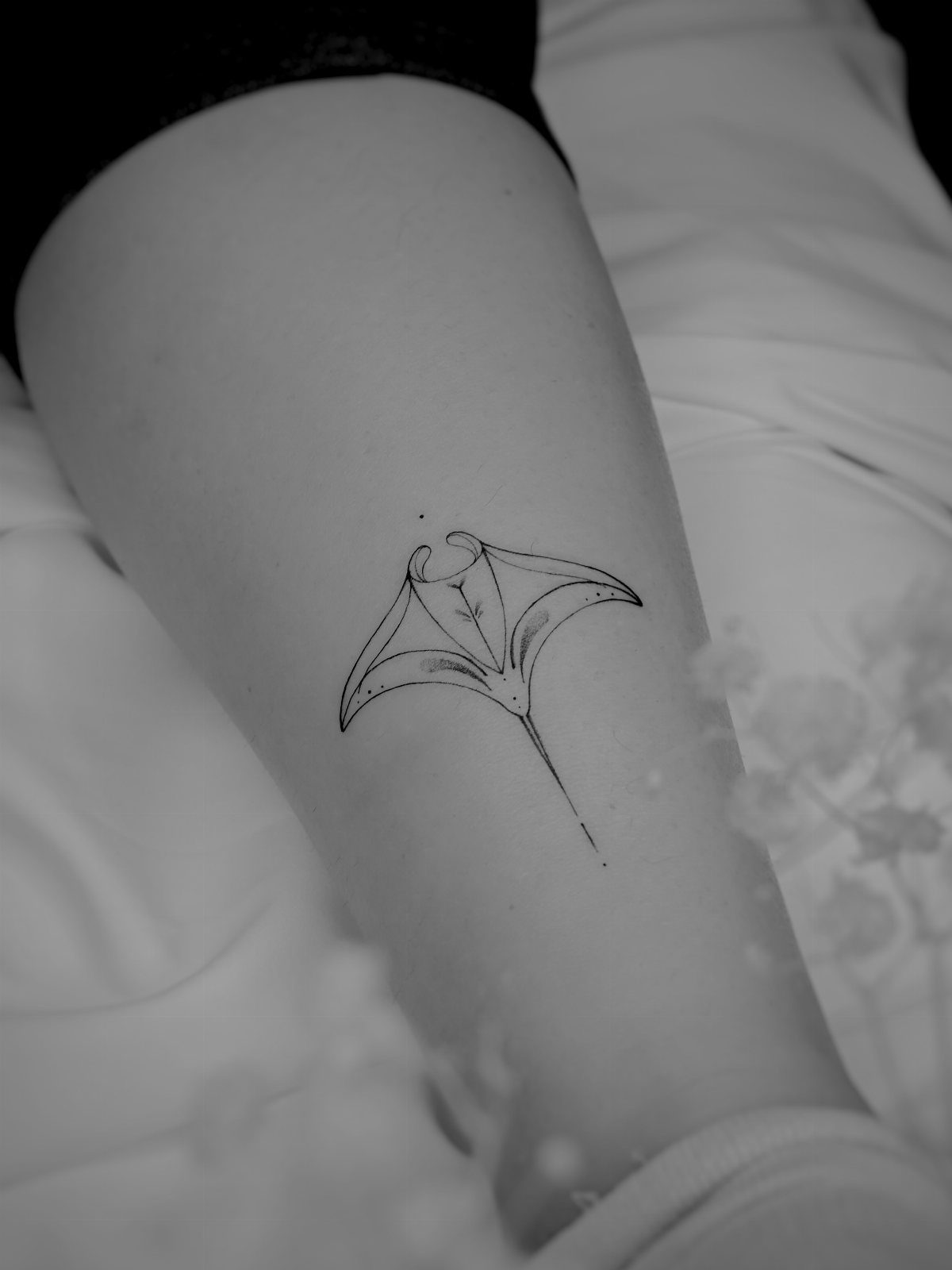
A minimalist line-art ray on the inner forearm keeps things understated.
No shading, no fill, just the outline. This works for a tattoo that feels more like a quiet personal mark than a bold statement piece.
Inner forearm is low on the pain scale and heals quickly because the skin there is relatively smooth and protected.
The design stays small, so it fits neatly without wrapping around your arm. If you’re building a collection of small tattoos, this placement leaves room for more work above or below it.
7. Swirling Manta Rays Forearm Tattoo
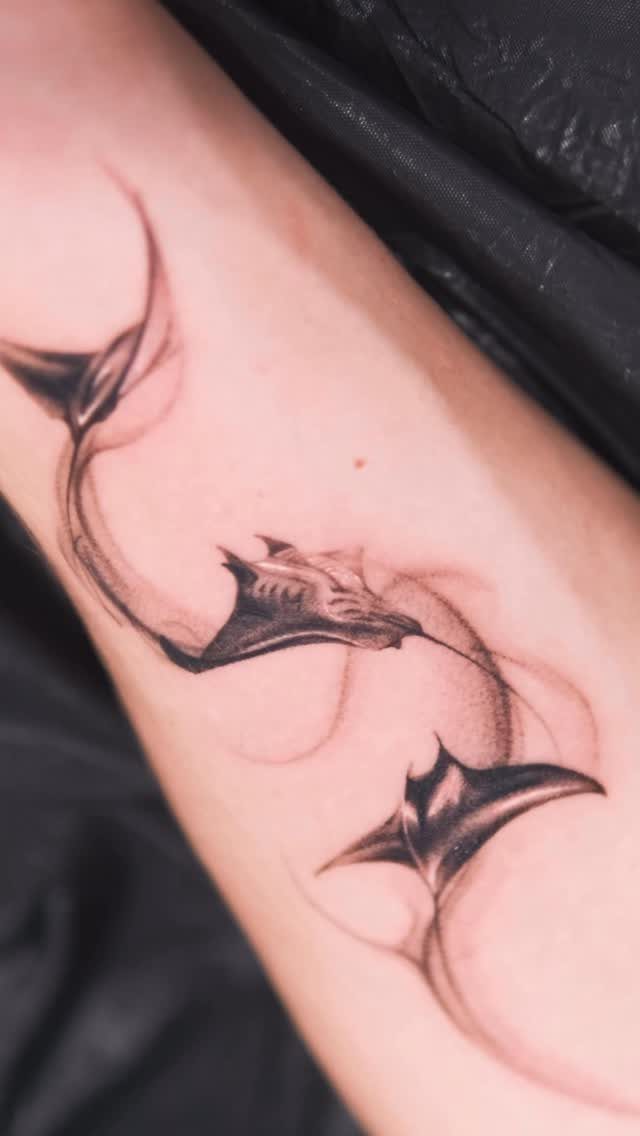
Multiple rays moving in the same direction give you a sense of flow that a single static ray doesn’t.
The water currents add context without cluttering the design, and layering 3 rays at different depths makes the composition feel less flat.
The outer forearm handles this better than the inner because the design can wrap slightly around the curve of your arm.
Black and grey reads cleanly here and won’t fight with other work if you add to your collection later. Size depends on how much forearm real estate you want to commit, giving the rays room to stack without crowding.
8. Tribal Manta Ray Hand Tattoo
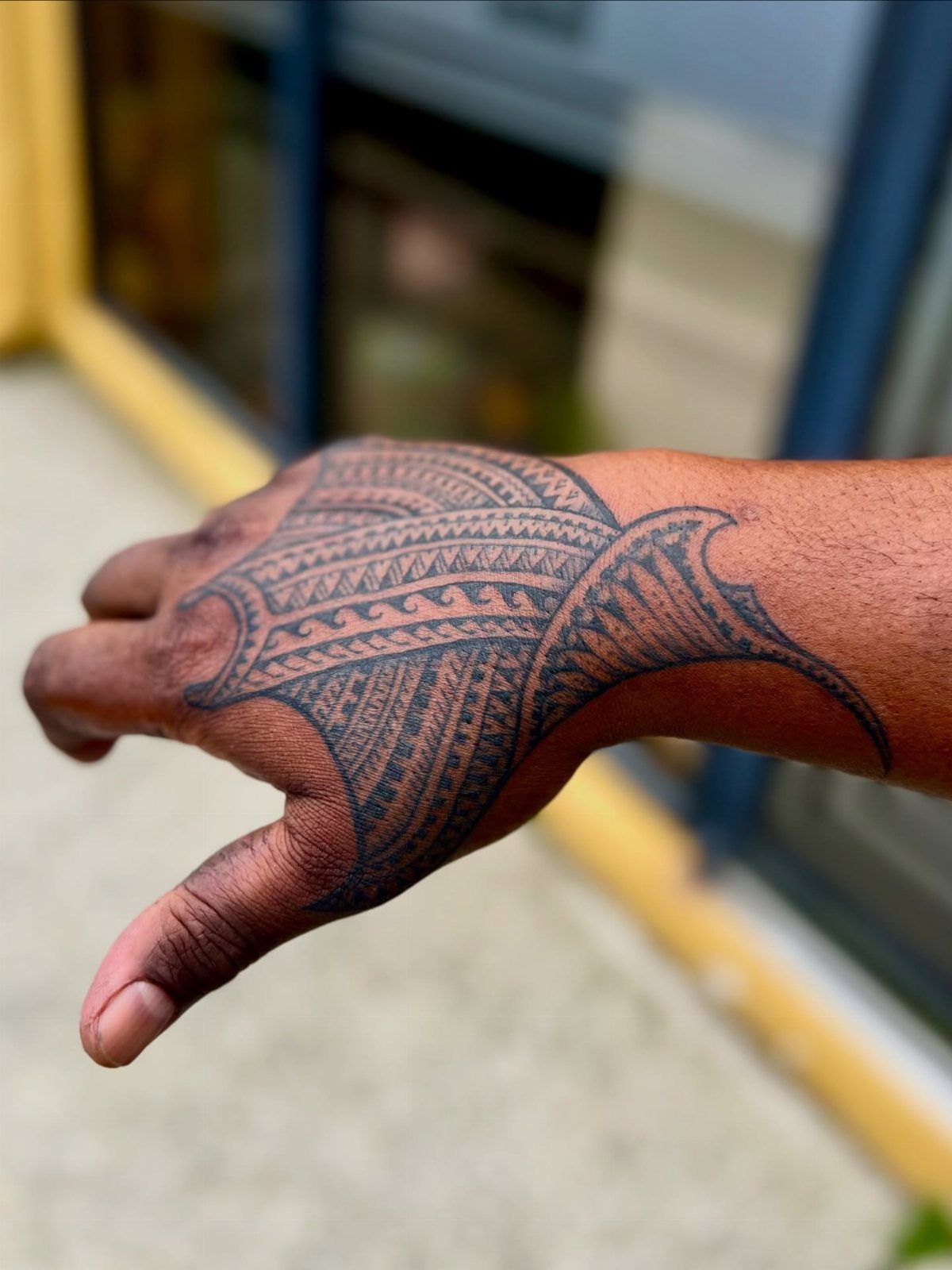
Hand tattoos are visible all the time, which makes them a bigger decision than most placements.
Tribal patterns on the hand carry weight in Pacific Island cultures, and if you’re not connected to that background, it’s worth thinking through before committing.
Healing takes longer since your hands are constantly in use, and you’ll need to be careful about sun exposure afterward. Jobs that require a professional appearance may not allow visible hand tattoos, so consider that before booking.
9. Manta Ray Rib Tattoo
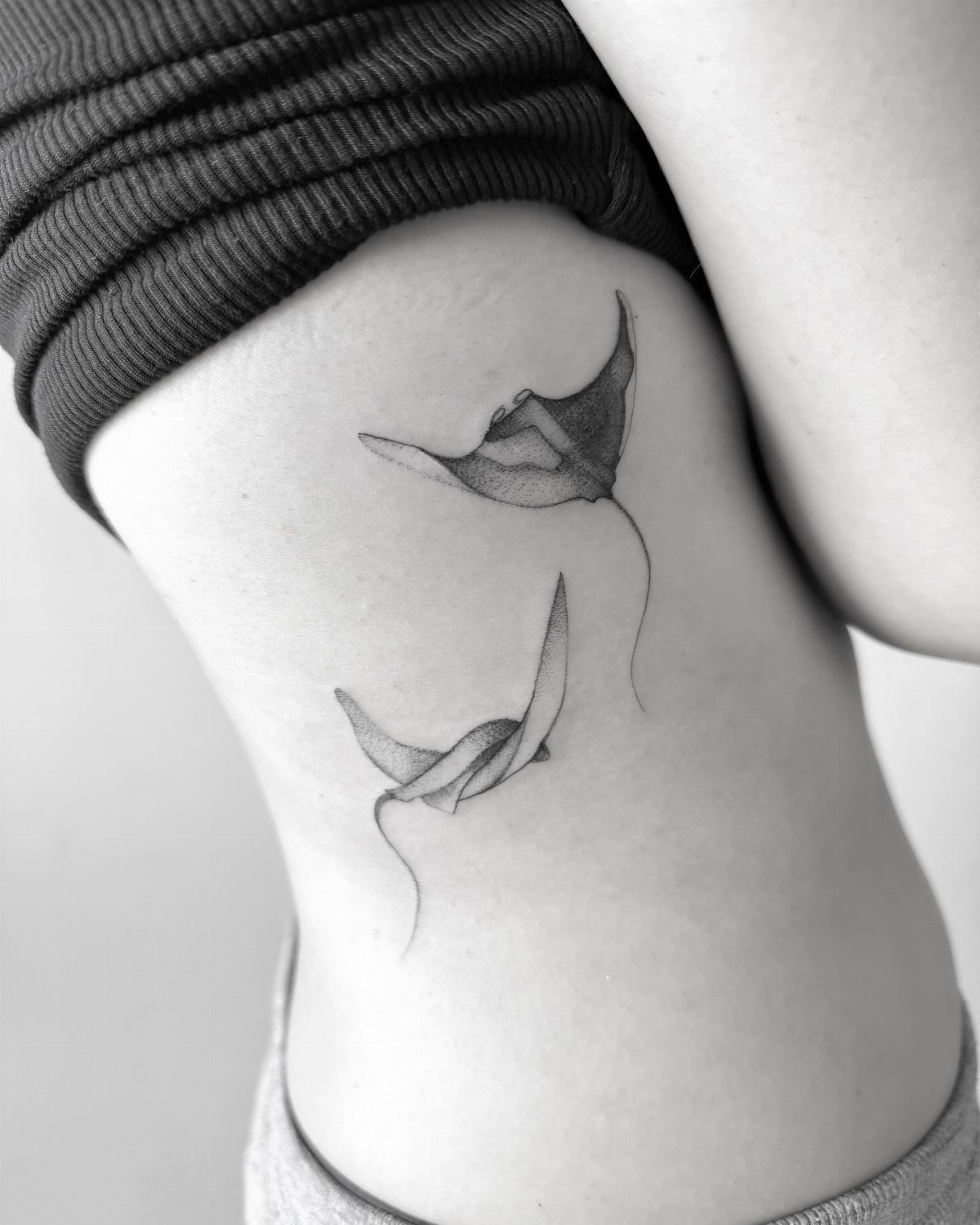
Ribs give you vertical space that follows the natural lines of your body. A manta ray placed here can stretch or compress slightly when you move, which adds a subtle sense of life to the design.
The side of the torso is one of the more painful placements because there’s less muscle padding between the needle and your ribcage.
Healing is slower than flatter areas because the skin moves with every breath.
Clothing will rub against it during the first few weeks, so plan around that. If you sleep on your side, expect some discomfort while it heals.
10. Manta Ray Ankle Tattoo
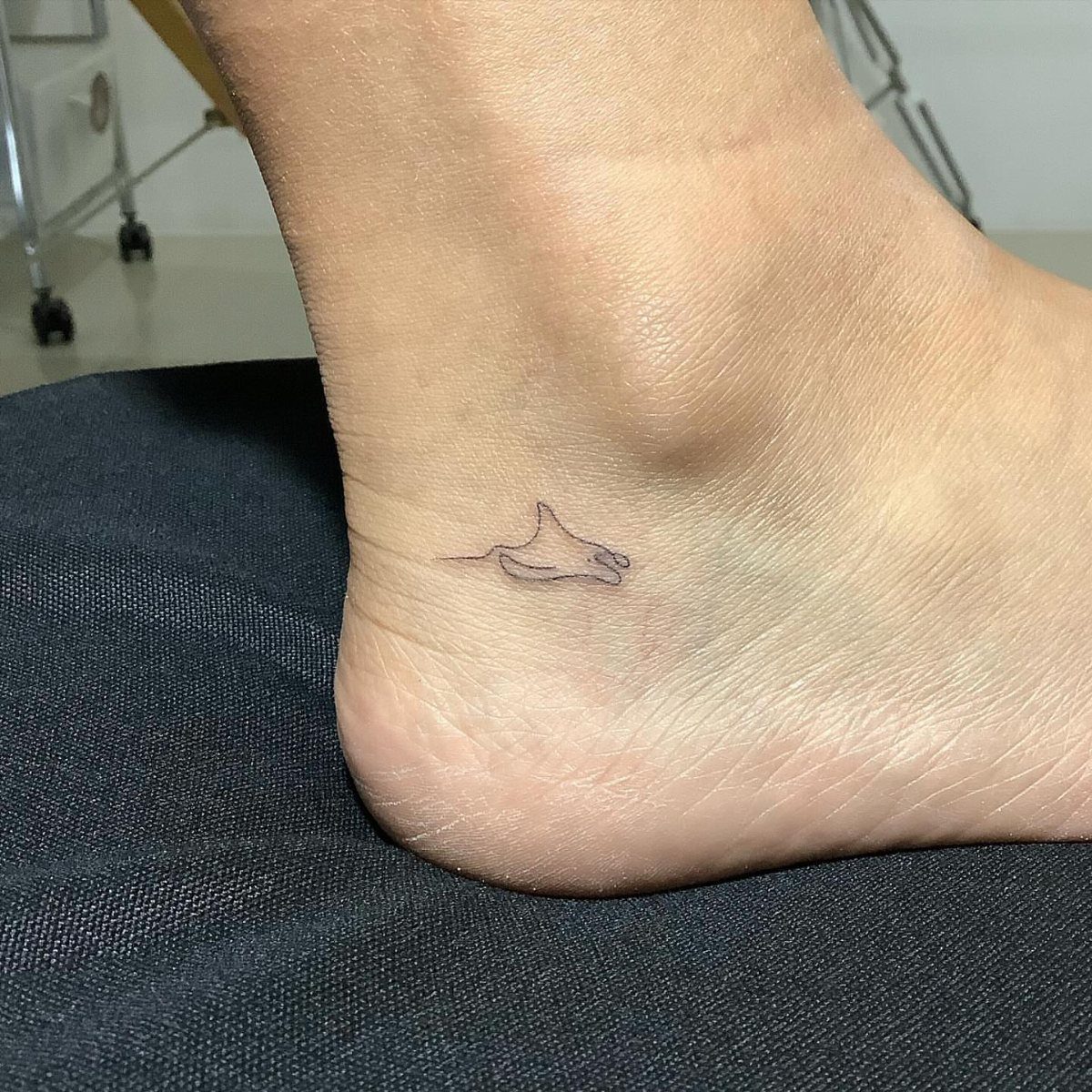
A small ray on the ankle keeps things discreet. The design stays simple because there isn’t much space to work with, so fine details won’t hold up as well as a clean outline.
Ankles are bonier than most placements, which makes the process more uncomfortable than spots with more muscle.
The skin on your ankle moves constantly when you walk, and shoes can rub against a fresh tattoo during healing. If you’re on your feet all day, plan for a few weeks of being mindful about footwear and movement.
Considerations Before Choosing
Pick the meaning that matters to you first, because a manta inked for freedom wants a different shape and spot than one meant to guard or guide.
Polynesian motifs come with their own language, not just pattern, so if that style speaks to you, spend time learning what the symbols say and find an artist who knows the tradition.
A manta’s fins want room to breathe, so measure the spot you have in mind against the wingspan the design needs.
Heavy black ink ages reliably, but delicate shading and color will ask for touch-ups down the line. If you’re planning a piece with shading or bright color, factor in the likelihood of a touch-up down the line.