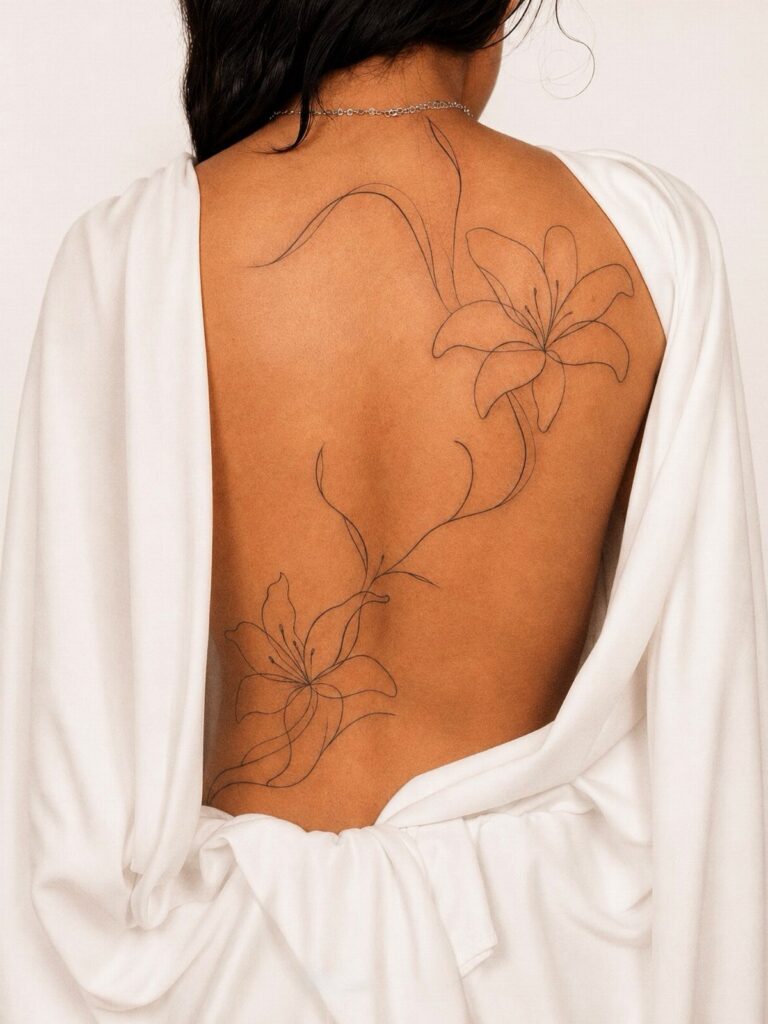
A shoulder blade piece typically runs 2–3 hours in one sitting, while a full cascade from nape to lower back breaks into multiple sessions with healing time between each.
The choice comes down to how much of your back you’re willing to commit: a shoulder blade bouquet stays compact and easy to cover, mirrored blooms across the spine read formal and balanced, and a cascading peony arrangement fills the canvas without requiring you to sit through one marathon session.
1. Full Back Peony Cascade
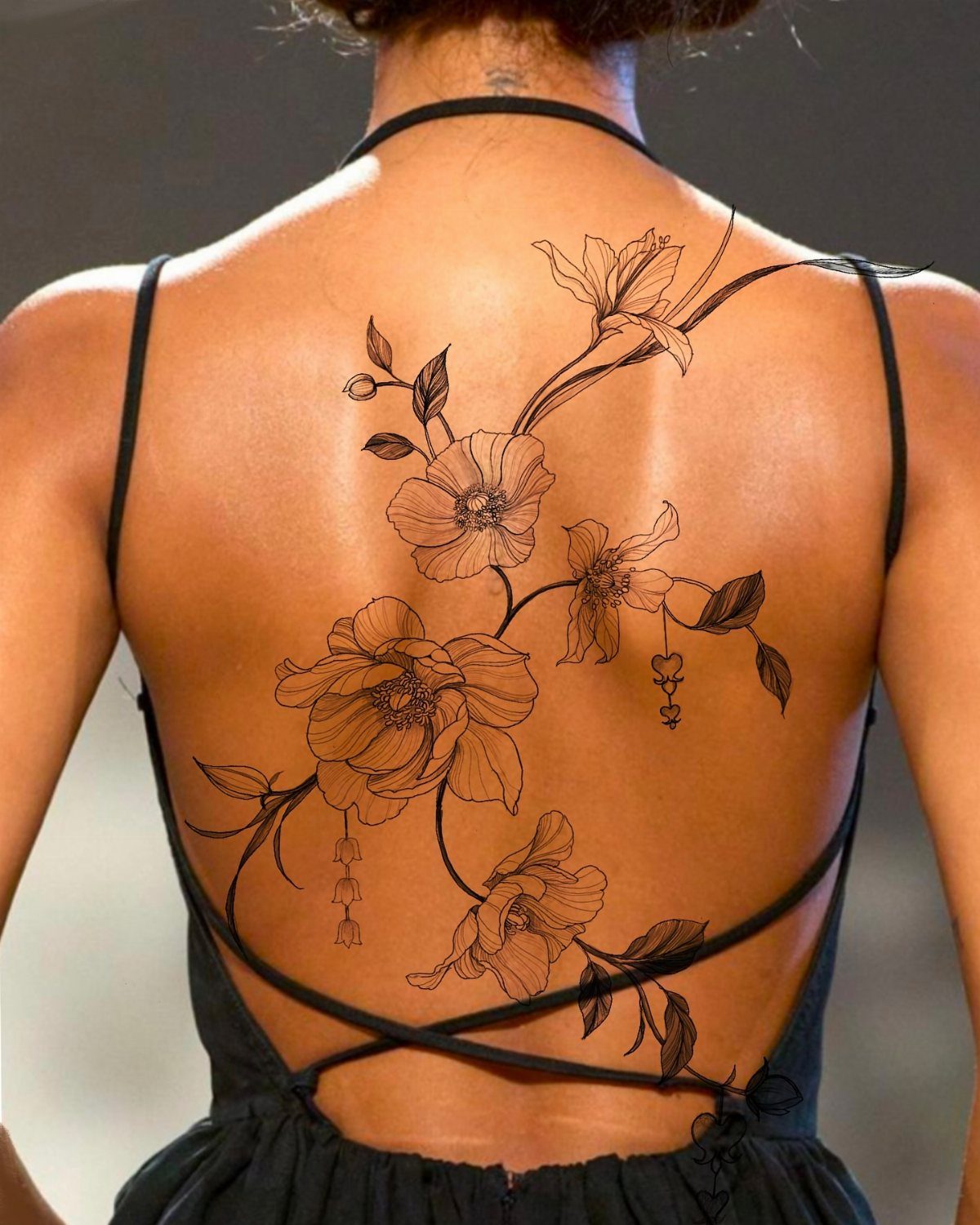
Peonies stacked on top of each other, some fully open and others still tight, pull the eye from shoulder to lower back in one long diagonal.
The arrangement feels intentional but never stiff: leaves fill the gaps and give the whole piece a sense of weight without making it feel too dense.
This kind of coverage suits someone who wants their back to carry the design rather than frame it.
The black ink keeps the focus on shape and layering instead of color, and the cascade works because it follows the natural line your body makes when you stand or move.
Plan for multiple sessions.
2. Delicate Spine Blossom Trail
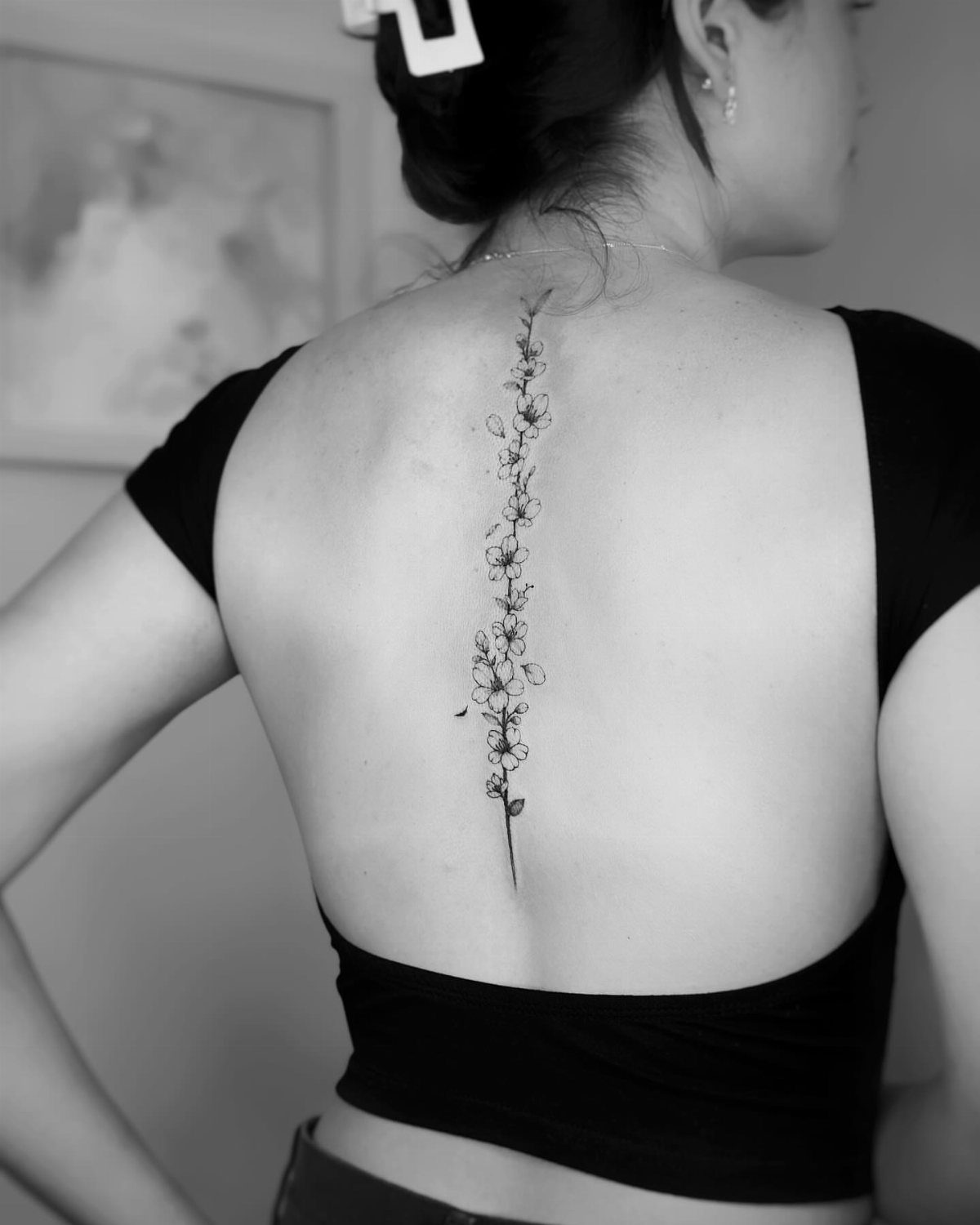
A single line of small flowers runs from the base of the neck down to the mid or lower back, following the spine exactly.
Each bloom stays small, and the spacing between them leaves the design light and easy to read.
I like this one for someone who wants ink on their back but doesn’t want it to dominate the space.
The vertical placement elongates your torso, and because the tattoo sits right on the spine, it stays centered no matter what you’re wearing.
Pain here is higher than most other back placements.
The spine has less padding, and you’ll feel every pass of the needle. Most people manage fine, but if you’re low on tattoo experience, this is one to mentally prepare for.
3. Shoulder Rose Drape
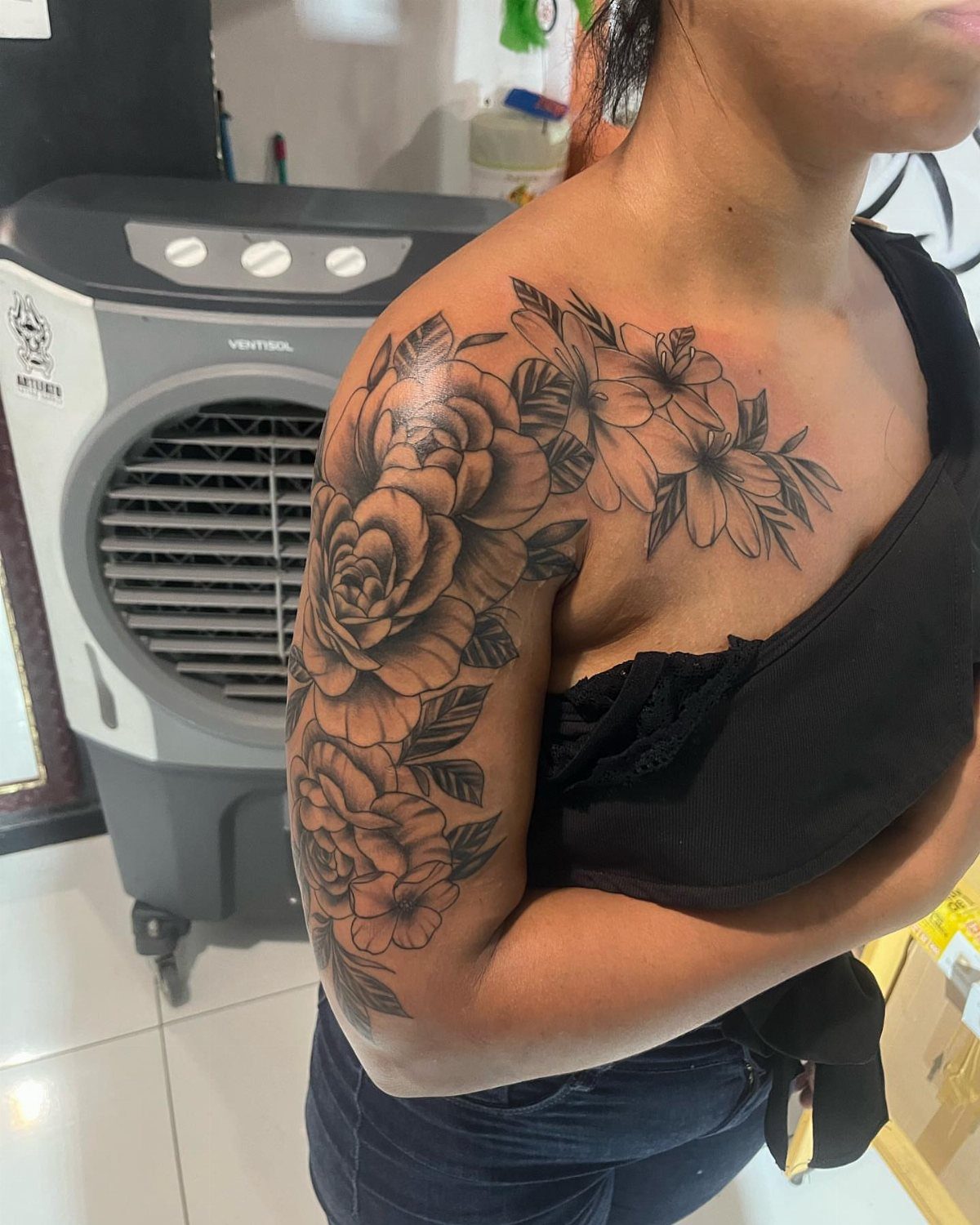
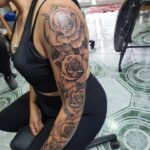
Roses cluster at the shoulder, then spill down over the upper arm in a way that feels loose and organic. The blooms sit heaviest at the top, with smaller flowers and leaves trailing off as the design moves down.
It reads as one continuous piece, but the weight stays at the shoulder, so it never commits to coverage all the way down the arm.
This placement works when you’d rather not crane your neck to catch it in a mirror.
The shoulder and upper arm are visible to you in a way the upper back isn’t, and the design still shows when you wear a tank or anything off the shoulder.
The shoulder has good padding, so pain is moderate and most people sit through it in one session.
4. Mirrored Bloom Spread
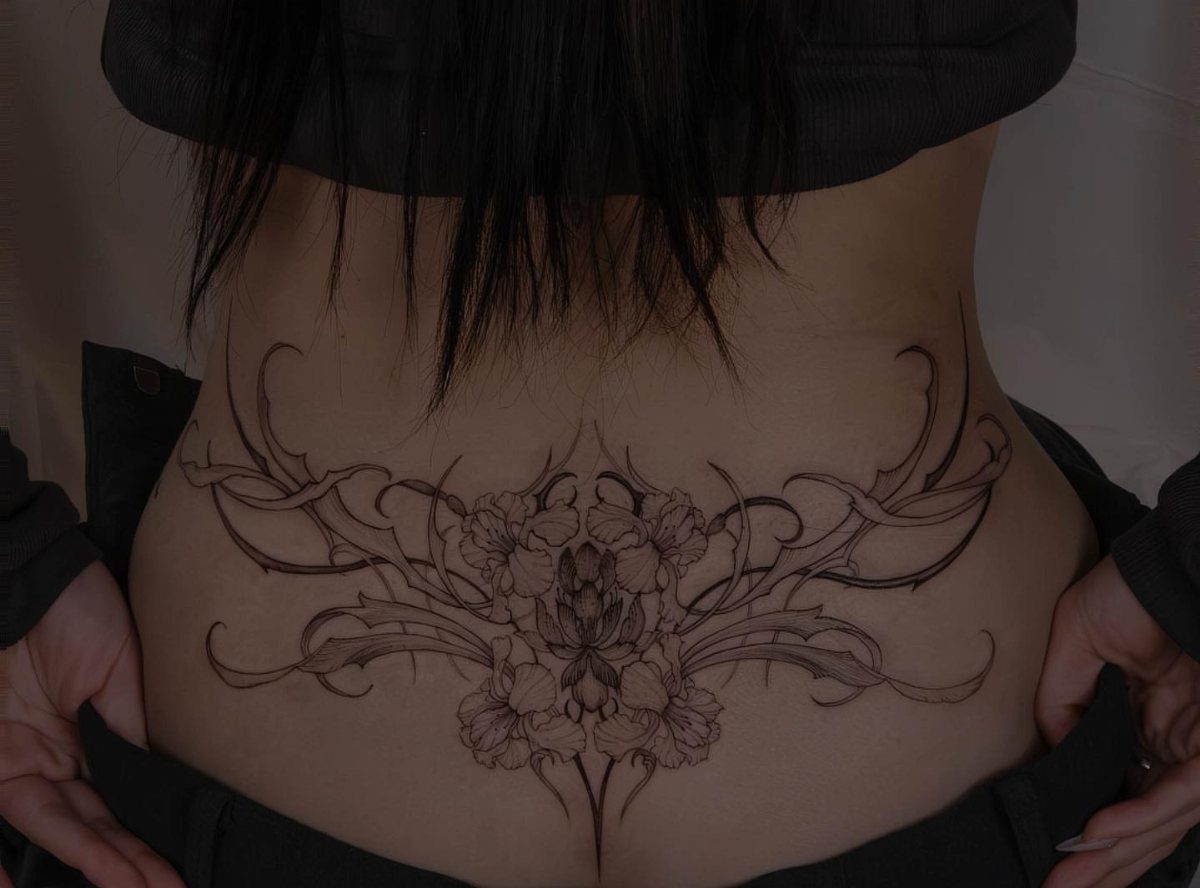
2 large blooms sit on either side of the spine, mirrored perfectly, with curving vines that spiral out to fill the space.
The symmetry makes it feel balanced and formal, and the lower back placement keeps it easy to cover or show depending on what you’re wearing.
This one suits someone who likes clean, graphic compositions. The mirrored layout gives it a deliberate look, and the swirling vines add movement without breaking the symmetry.
Lower back placement is less painful than spine or ribs, so if you’re newer to tattoos, this is a good spot to start with something this size.
Smaller than that and the symmetry starts to feel cramped.
5. Dotwork Garden Panel
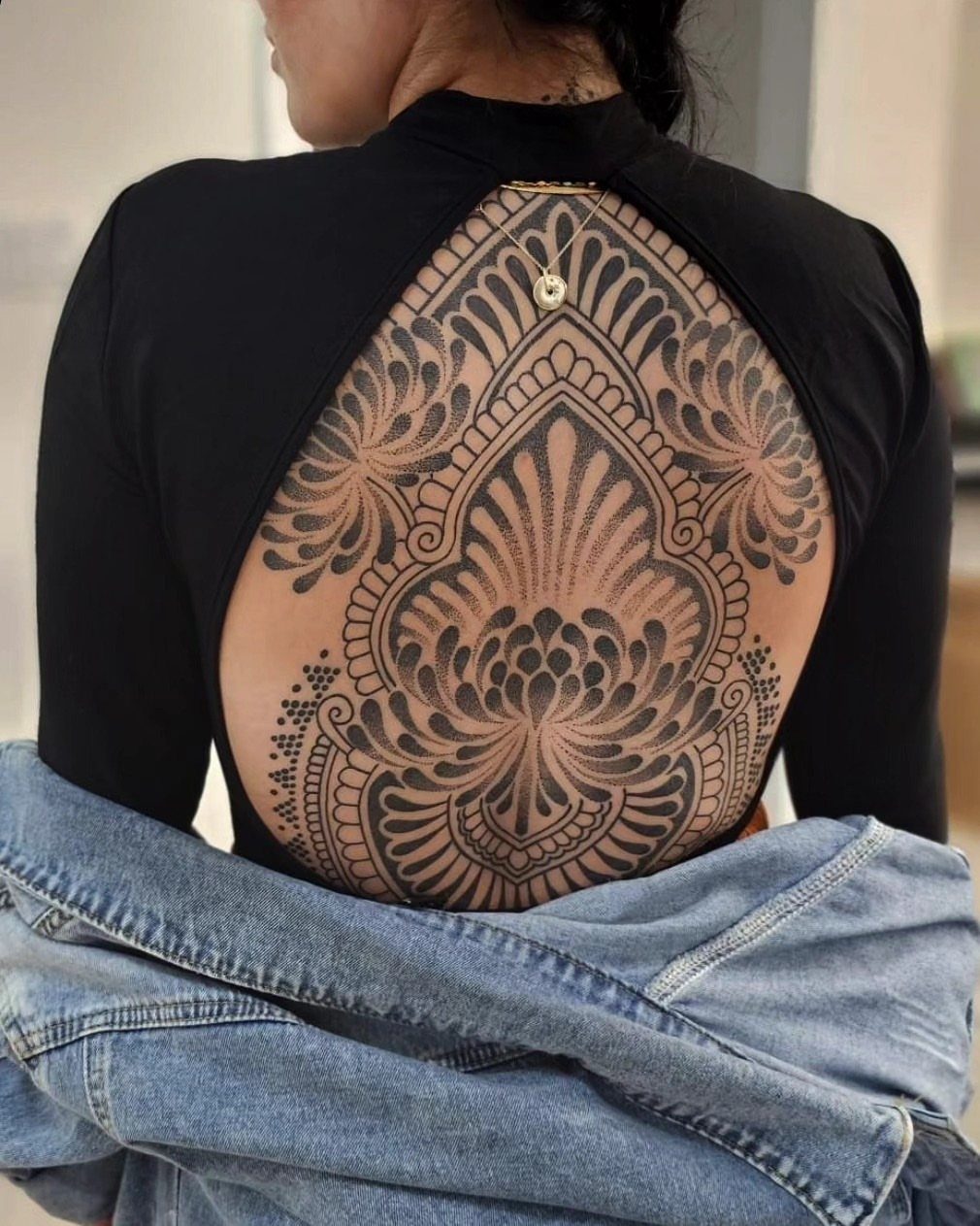
Flowers built entirely from dots rather than solid lines cover the upper back in a symmetrical pattern.
The dotwork gives the design texture and depth without heavy shading, and the way the flowers mirror across the spine makes the whole piece feel structured and intentional.
Dotwork takes longer than solid linework because the artist is building every shape one dot at a time.
The upper back is one of the better places for longer sessions since the pain level is lower than ribs or spine, and you can sit for hours without too much discomfort.
The style holds up well over time. Dotwork doesn’t rely on crisp lines, so even as the ink settles, the design keeps its texture.
6. Deep Shadow Rose Panel
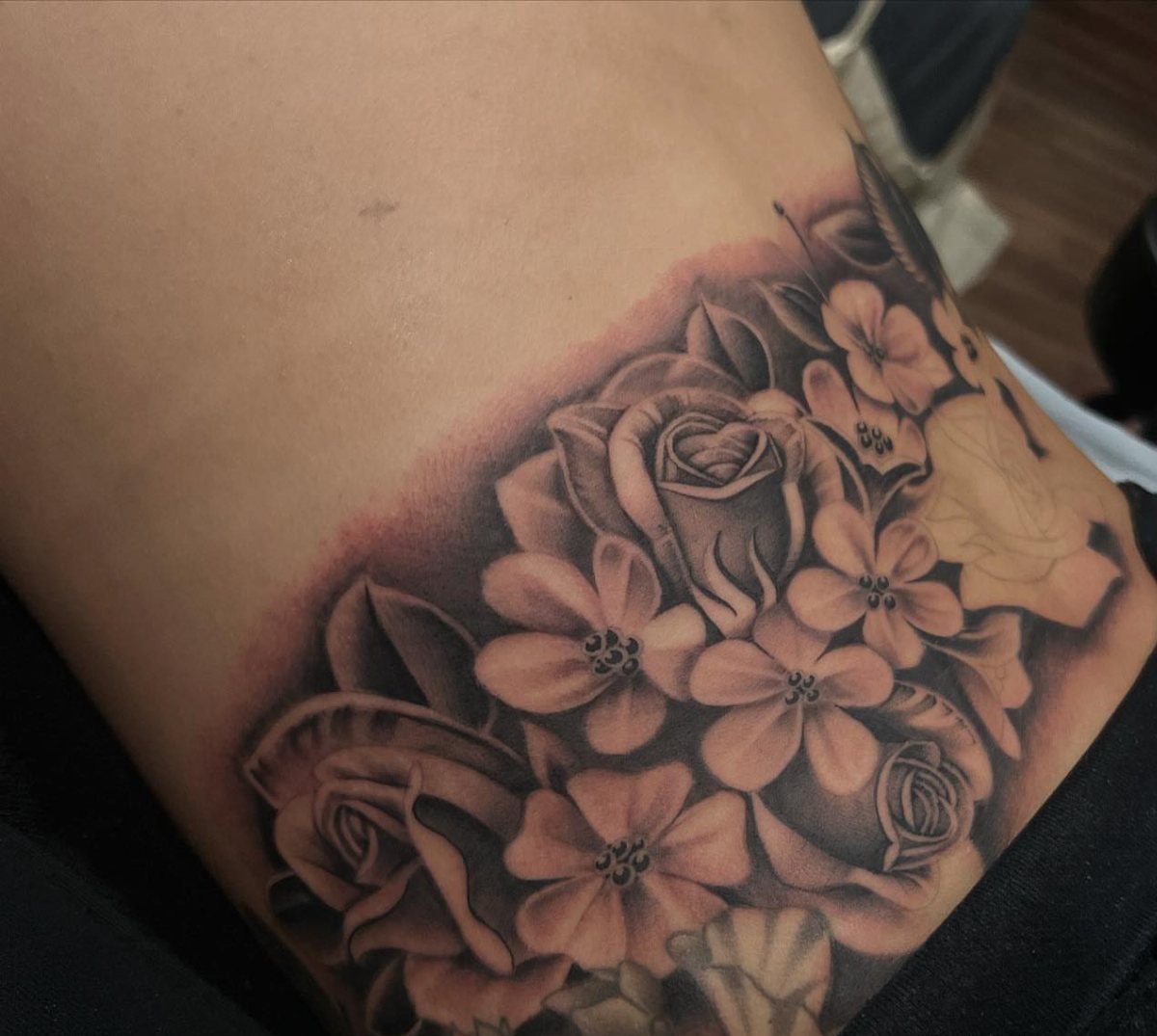
Full roses with petals built from heavy black shading sit on the lower back, surrounded by smaller flowers that fill the negative space.
The shading is what makes this one: deep blacks give the roses dimension and make them stand out from the skin, and the interplay of dark petals against lighter background stops the design from flattening out.
This style takes skill. Heavy shading can look muddy if the artist doesn’t control the gradient, so you want someone who knows how to push black ink without losing detail.
The lower back has good padding, which helps during the session, but expect soreness afterward since the area takes a lot of ink.
Healing takes a few weeks, and you’ll want to avoid anything that rubs the area while it’s fresh.
7. Shoulder Blade Bouquet
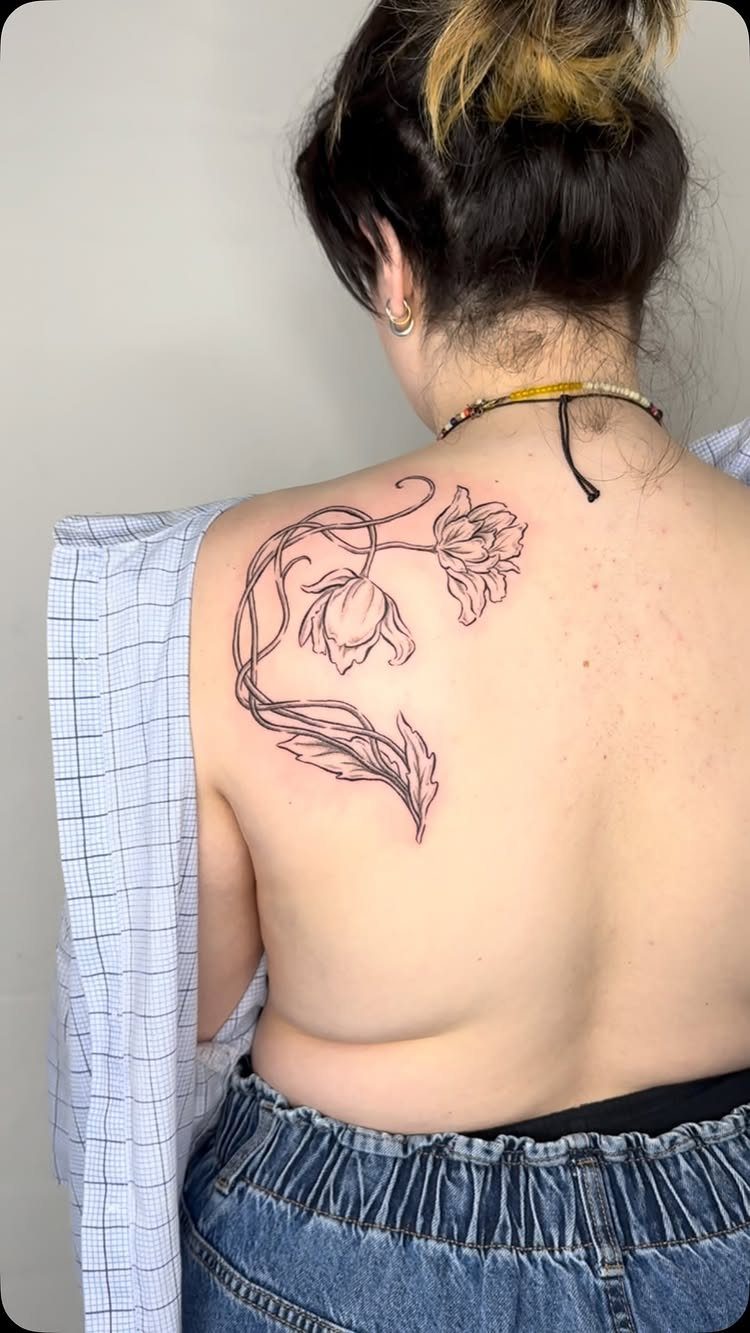
A small group of flowers sits on one shoulder blade, tight enough that it looks like a single bouquet rather than scattered blooms. The placement keeps it compact and easy to show or hide depending on your shirt cut.
Shoulder blade placement is one of the more comfortable spots on the back.
The bone underneath gives the needle something to work against, but the muscle padding keeps the pain manageable. Most pieces this size finish in one session, usually 2–3 hours depending on detail level.
You won’t see this without a mirror. The shoulder blade is hard to see on yourself, so this one is for other people more than you.
8. Vintage Mirror and Peony Backpiece
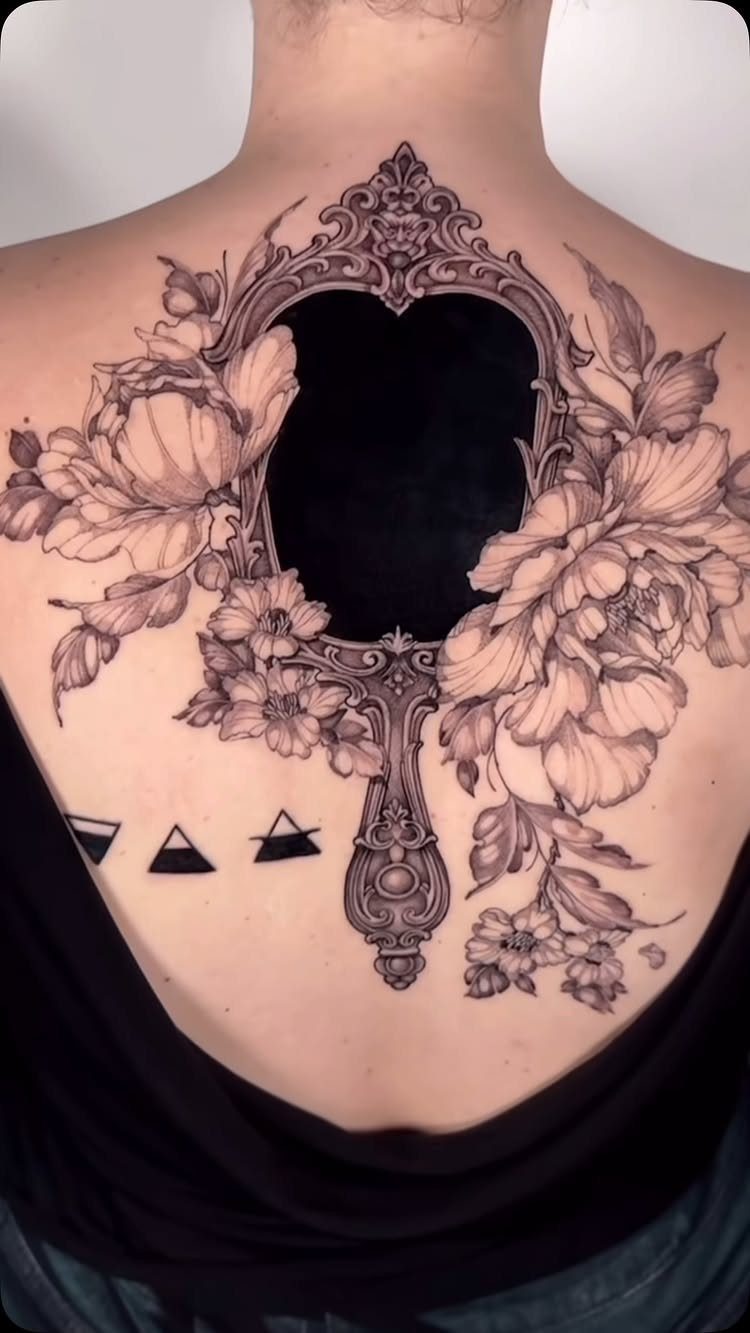
An ornate mirror frame sits at the center of the upper back, surrounded by shaded peonies that fill the space around it.
The frame itself is the anchor: all the detail and line weight goes there first, and the flowers work as decoration rather than the main subject.
Black and grey shading gives the whole piece depth, and the upper back placement means it sits flat and symmetrical across your shoulder blades.
This one can cover old ink if the placement lines up.
9. Flowing Lily Back Tattoo
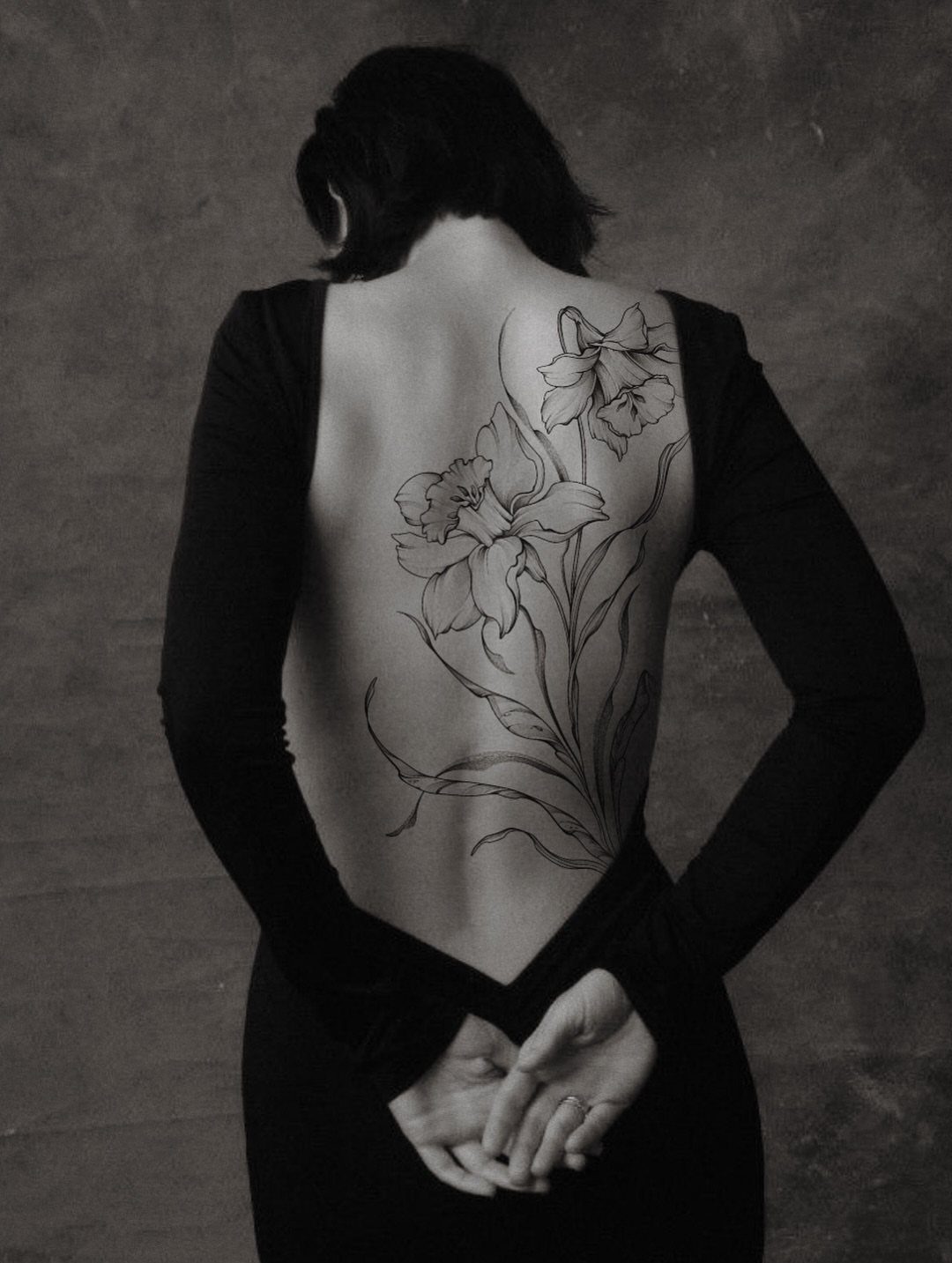
Lilies with long stems run down the center of the back, starting near the shoulder and extending toward the waist.
The vertical layout follows your spine without sitting directly on it, so you get the elongating effect without the sharper pain that comes with placement right over bone.
Lilies have a different silhouette than roses or peonies: the petals are wider and the stems stay visible, which gives the design a cleaner, more open look.
This one works best at a larger scale so the individual flowers stay legible and the stems don’t feel cramped.
What Makes a Back Floral Work
Size sets the real estate: whether the flowers claim a shoulder blade, run the spine, or take the whole canvas.
A single stem down the spine reads differently than a bouquet sprawling from shoulder to hip, and both work, but they ask for different amounts of commitment and sitting time.
A good floral maps to the body’s structure instead of ignoring it. The best ones curve with the scapula and follow the dip of the spine.
Leaves and petals need space around them to stay legible years later.
The arrangement matters as much as the bloom itself.
Fine Line or Heavy Shading
Start with the flower, not the layout. A peony reads different from a dahlia, and technique won’t close that gap.
Then think about how much you want to show. A strip down the spine or a cluster on one shoulder shows with a tank top but disappears under anything with a higher back.
Finally, pick an artist whose work already looks like the result you’re after. Someone known for delicate line rarely builds heavy black the way a traditional artist does.
Check their portfolio for back pieces a year or two out, not fresh off the table, then book a consult with your actual design in hand.
Bring 3 or 4 examples when you sit down, and include one that’s wrong for you.
From simple line etchings in black ink to small flowers, 3d tattoo style and symbolic blooms. They’re also a symbol of fragility, beauty, and growth.
Frequently Asked Questions
What does a flower tattoo symbolize?
Flowers carry meanings like love, purity, and freedom, though the specifics shift depending on the bloom you pick. A peony reads differently than a lily, and placement can change how personal or public the message feels.
The meaning matters most when it matters to you: a design that looks right on your back will hold up better than one you picked for symbolism alone.
What are some creative back tattoo ideas?
A full cascade of peonies down one side of the back, a mirrored pair of blooms flanking the spine, or a single trail of small flowers running from neck to lower back all work when you want florals that use the space well.
Vines and petals give you room to fill gaps without crowding the design, and heavier shading or dotwork can add depth when the piece needs more dimension.
The back gives you enough canvas to go detailed or stay minimal, so the creative part is deciding how much of it you want to claim.