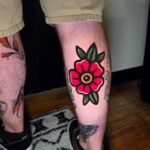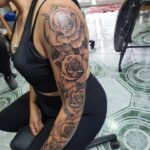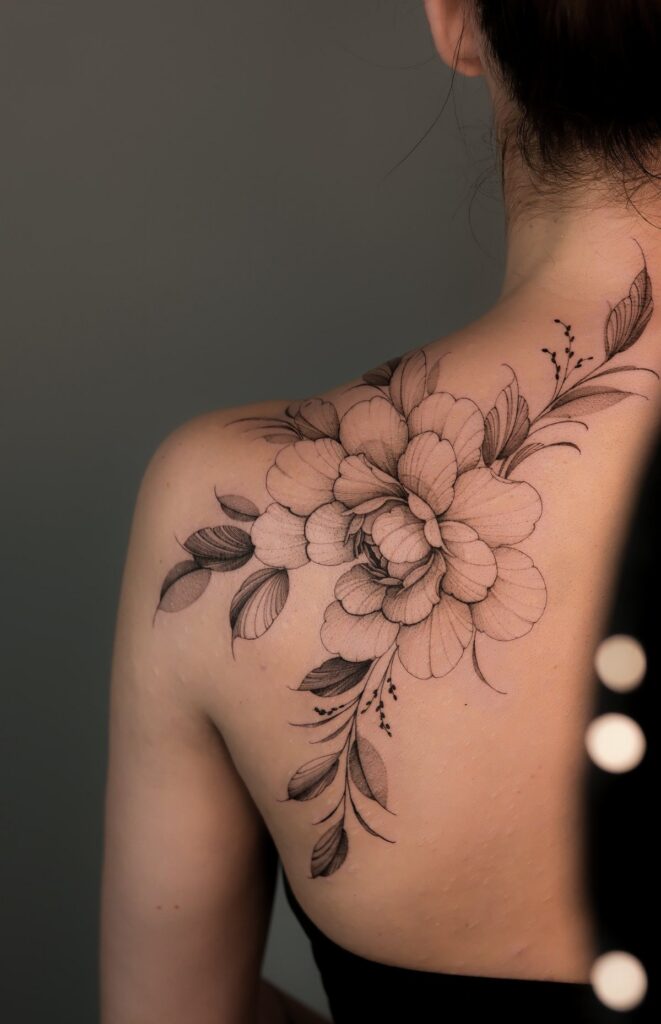
A floral back tattoo can run from a narrow spine trail a few inches long to a full shoulder blade piece, mirrored blooms across both sides, or a cascading arrangement that flows from shoulder to lower back.
1. Delicate Spine Blossom Trail Back Tattoo
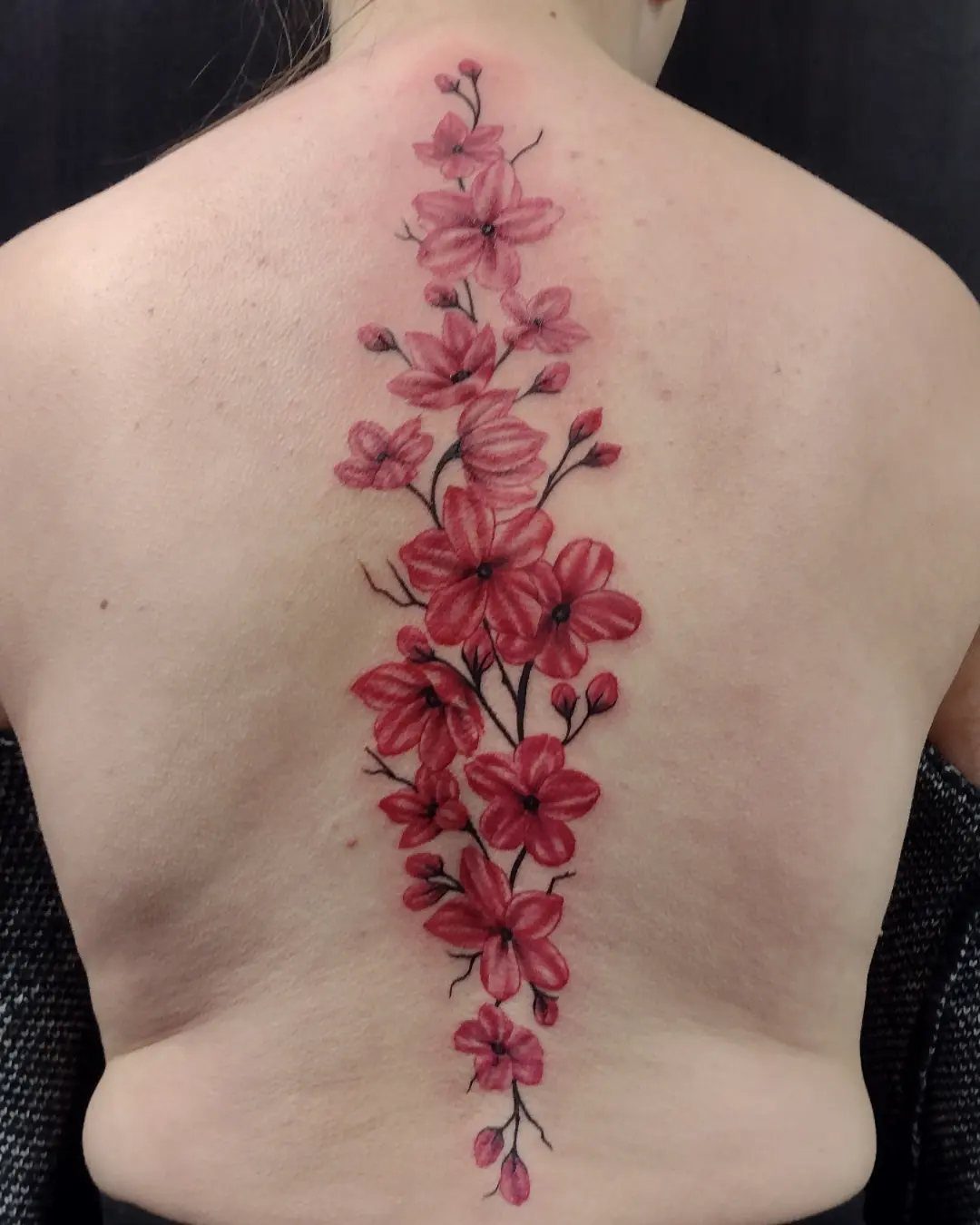
Small blossoms follow the vertical line of the spine, creating a narrow trail that emphasizes the body’s natural structure. The placement flatters anyone who wants a design that stays centered and visible from behind.
A spine tattoo hurts more than most back placements because the needle works directly over bone with minimal cushioning. The narrow width means you can keep it hidden or visible depending on what you wear.
To let the design flow off the spine slightly, ask your artist to angle a few blooms outward at the shoulder blades or lower back.
2. Full Back Peony Cascade Back Tattoo
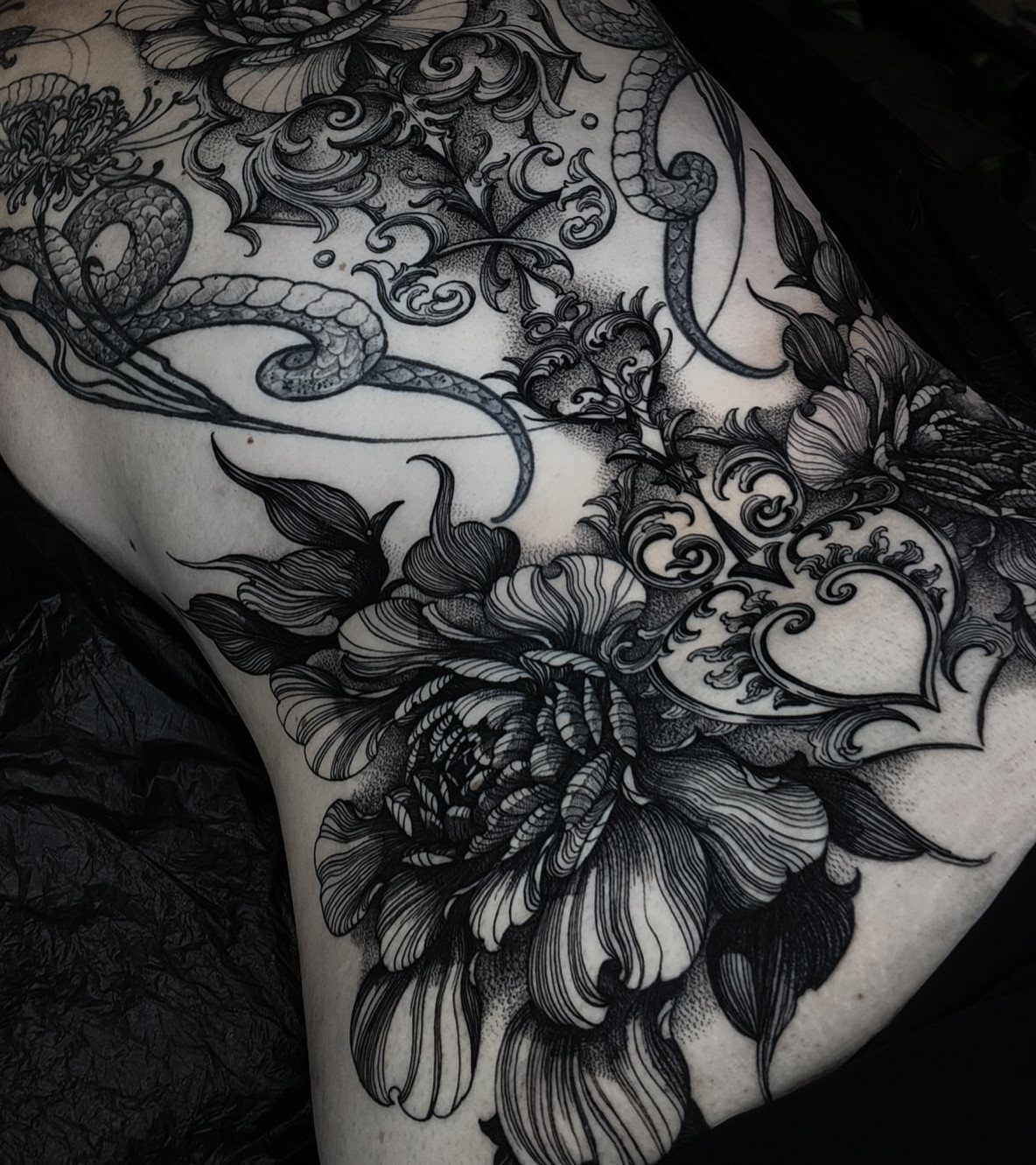
Layered peonies fill the back from shoulder to hip, creating a soft composition that follows the body’s curves. The shading and overlap give the design depth, so it reads as a single piece rather than separate flowers.
Full back tattoos take multiple sessions spread across several months to allow healing between appointments. Cost varies by artist and location, but expect this to be a significant investment in both time and money.
Peonies work well in black and grey or color. If you choose color, reds and pinks hold up best over time, while lighter shades may fade faster and require touch-ups.
3. Shoulder Rose Drape Floral Back Tattoo
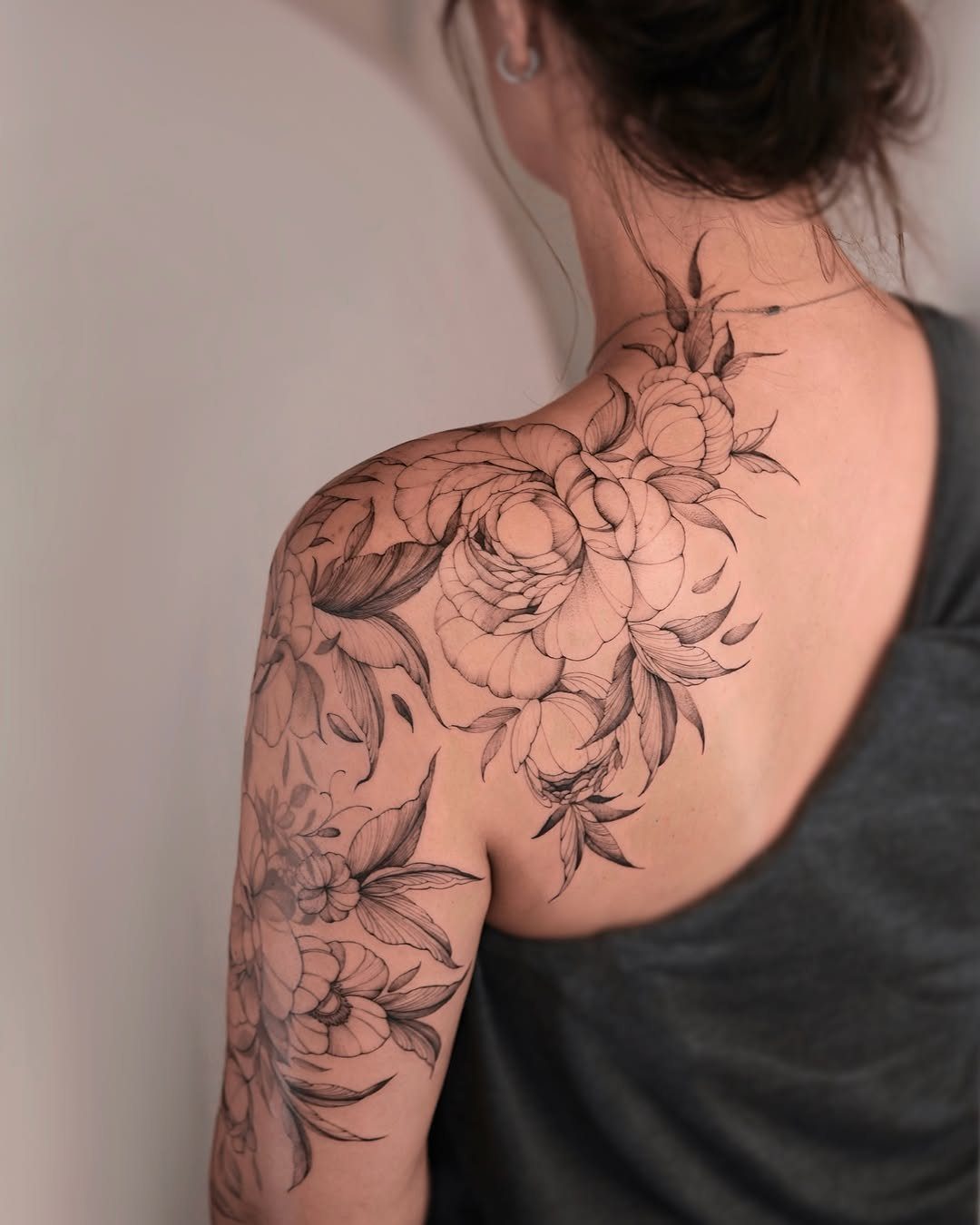
Roses drape from one shoulder blade and extend across the upper back, following the natural line of the shoulder. The asymmetry stops it from feeling static, and the placement lets you show or cover it easily depending on your clothing.
Upper back tattoos hurt less than spine or rib work because there’s more muscle and tissue between the needle and bone.
For more coverage, the design can wrap slightly onto the upper arm or extend toward the opposite shoulder blade without losing its drape.
4. Mirrored Bloom Spread Back Tattoo
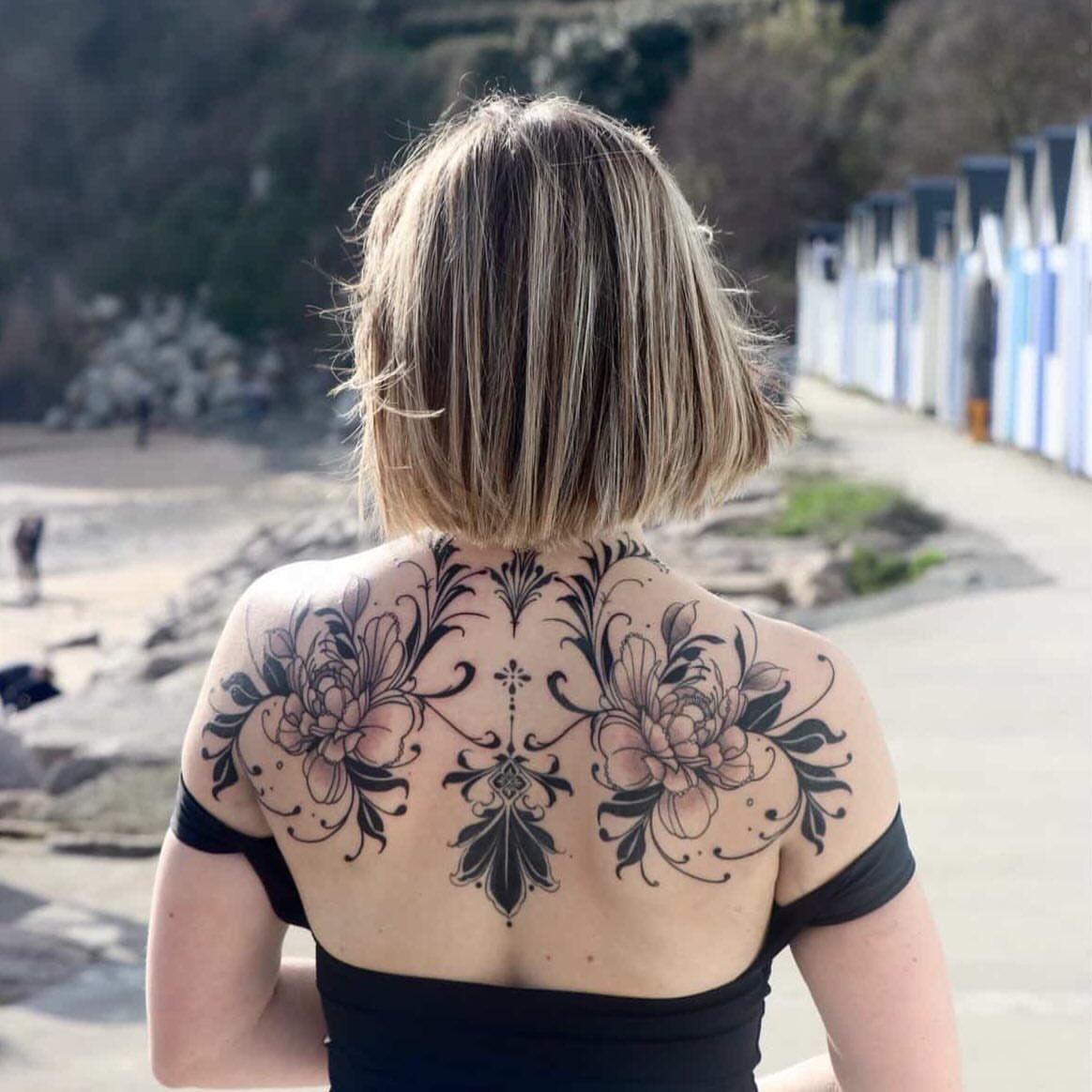
Large blooms sit symmetrically on either side of the spine, creating a balanced design that mirrors across the back. The symmetry gives the tattoo a formal, deliberate look that suits anyone who wants their design to feel anchored and intentional.
Placement across the shoulder blades allows the tattoo to frame the upper back without interfering with bra straps or lower back movement. Keeping the area moisturized helps prevent scabbing that can pull ink out of the design.
Symmetrical designs require precise stencil placement. Your artist will likely have you sit upright to check alignment before starting, so the design sits evenly on both sides.
5. Dotwork Garden Cluster Floral Back Tattoo
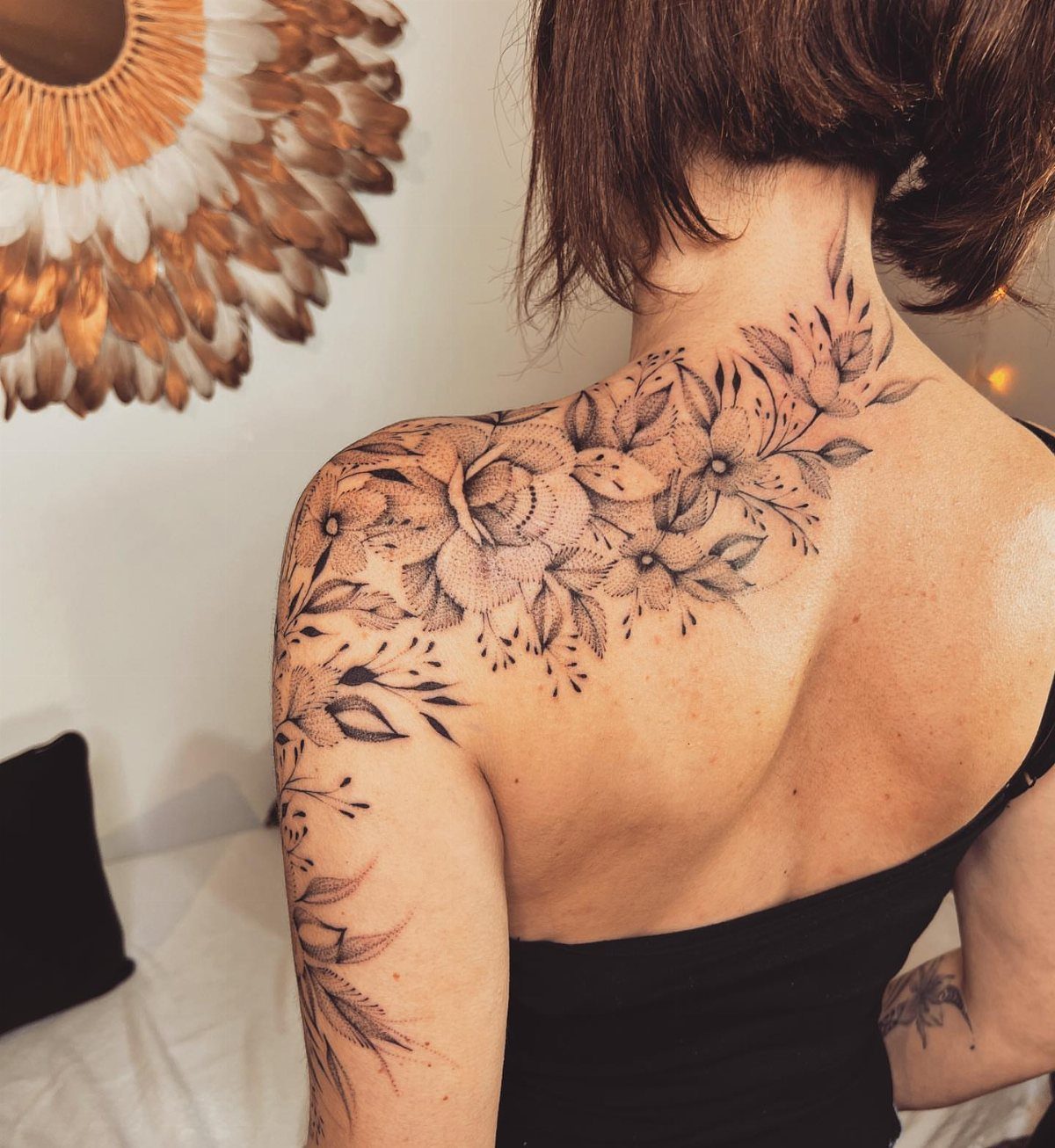
Flowers built with stippled shading gain texture through thousands of individual dots instead of solid lines or washes. The technique produces a softer, more organic look that ages well because there are no bold outlines to blur over time.
Dotwork takes longer than linework since each dot is placed individually. The stippling process can feel more tedious than traditional shading, though pain levels are similar.
To extend the design further, dotwork blends easily into surrounding skin, so you can add more flowers later without a harsh transition.
6. Winged Floral Spread Back Tattoo
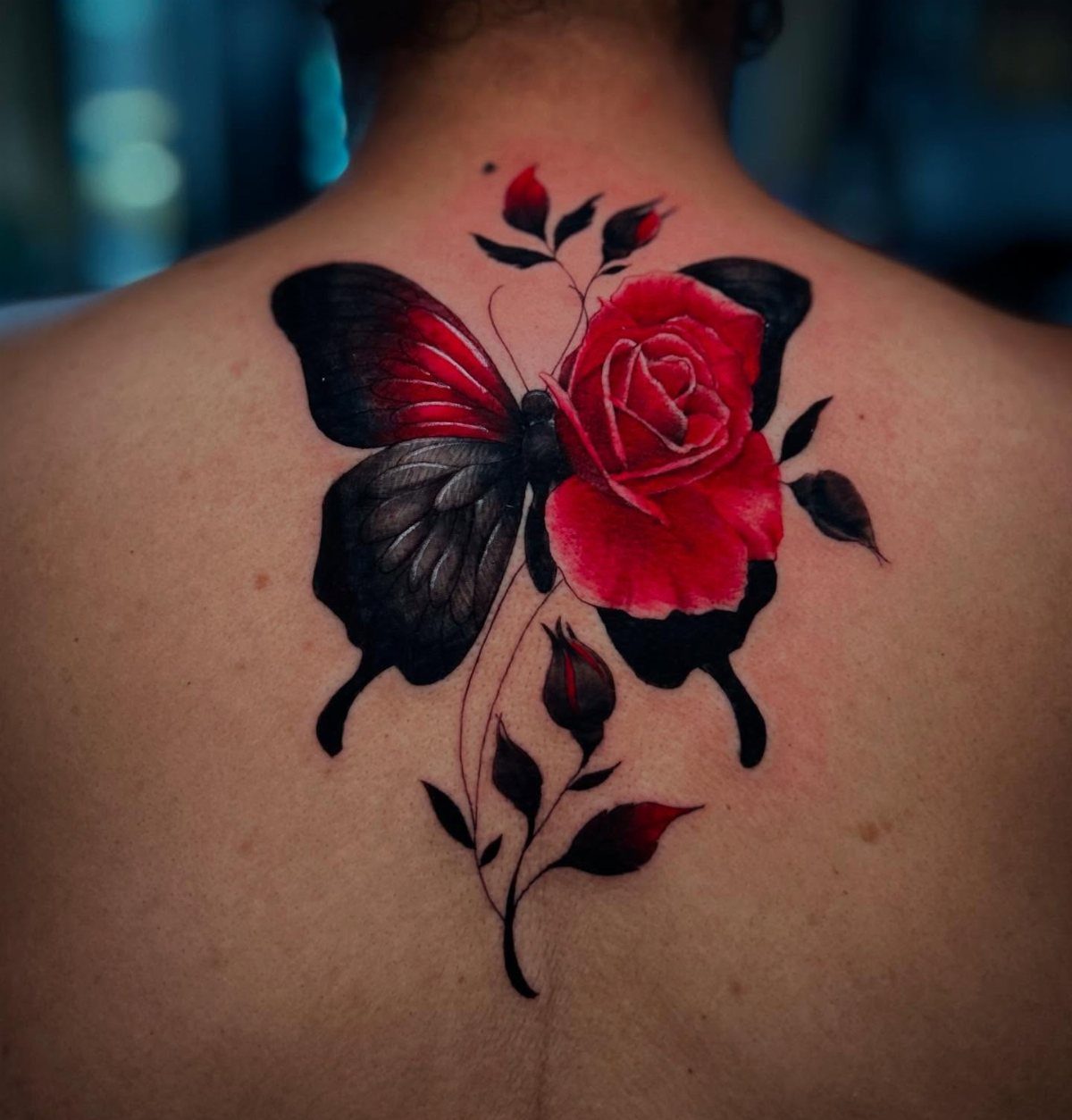
Flowers fan out from the spine in a wing-like shape, with stems and petals spreading symmetrically across the upper back. The composition uses floral elements arranged in a symmetrical spread that frames the upper back and shoulders.
The upper back offers enough space for the design to spread without crowding, and the placement heals relatively easily since it’s not a high-friction area.
For a lighter feel, ask your artist to leave more negative space between the blooms. A denser arrangement reads as more dramatic, while spacing lets the individual flowers stand out.
7. Heavy Black Shading Rose Back Tattoo
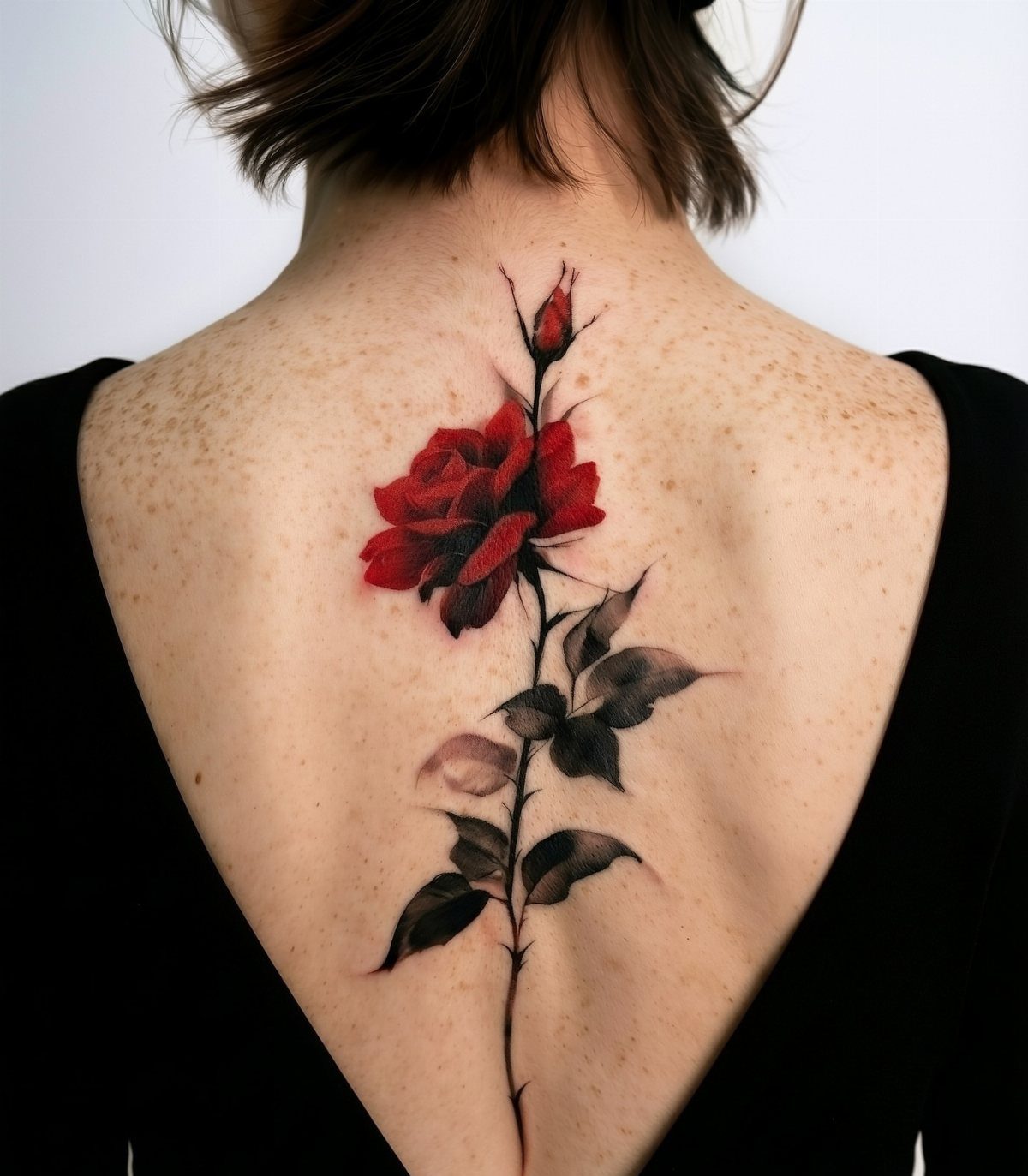
A single rose runs down the spine with deep black shading that pools in the petals and leaves, creating bold contrast. That fill anchors the rose and keeps it legible even from across a room.
Black shading ages differently than fine line work. Over time, the edges may soften slightly, but the overall design stays legible because the heavy shading provides enough density to hold its shape.
Spine placement keeps the rose centered and narrow. If you want more coverage, the stem and leaves can extend slightly to one side rather than staying strictly vertical.
8. Shoulder Blade Bouquet Back Tattoo
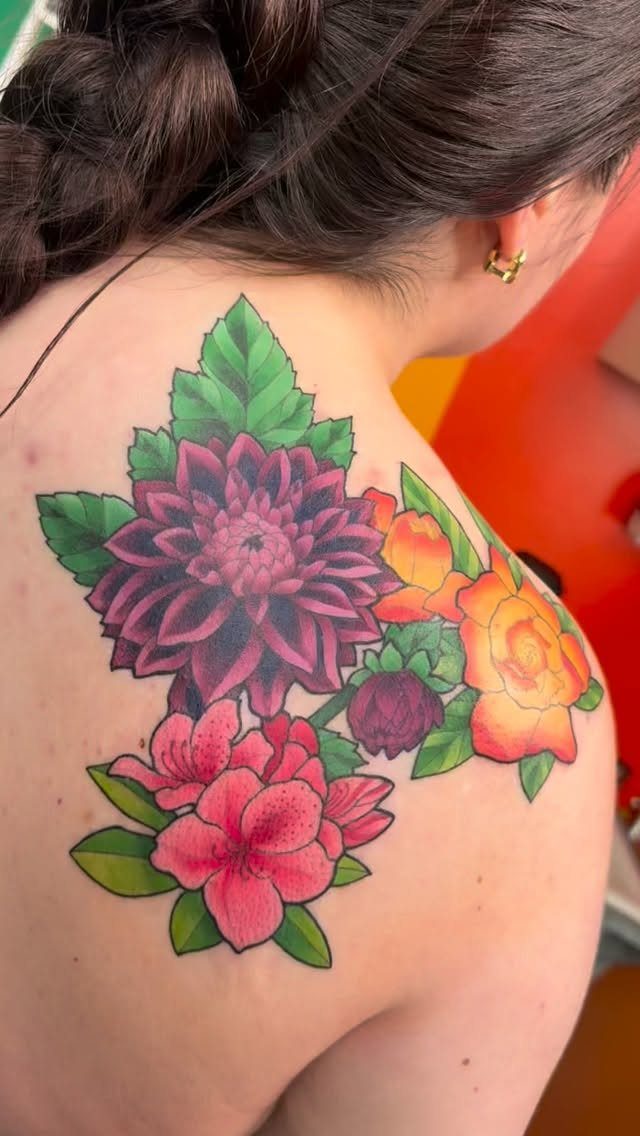
A tight grouping of blooms sits on one shoulder blade, creating a contained design that doesn’t extend across the full back.
The cluster format works well if you want a floral tattoo without committing to a large piece that spans multiple areas.
Shoulder blade placement sits over more muscle than spine or rib work, so the pain level tends to be moderate. The area heals cleanly since it doesn’t flex much during daily movement.
For a fuller look, the bouquet can wrap slightly over the top of the shoulder. Keeping it anchored to one side makes it easier to expand later if you decide to add more flowers.
Choosing the Right Style
Start with the flower, not the layout. A rose reads differently than a handful of wildflowers, and clean execution won’t bridge that gap.
Then think about how much you want to show. A design placed between the shoulder blades or down the spine disappears under a shirt.
Finally, pick the artist for the style you’re after. Someone who works in delicate linework usually isn’t the same person doing heavy blackwork florals.
Showing an artist what doesn’t work for you cuts the guessing in half and gets them closer to the mark faster.
Symbolism of Flowers
Flowers work as tattoo subjects because they hold meaning without announcing it. Growth, resilience, beauty, fragility: all of it sits in a rose or a lily without needing a caption underneath.
That flexibility is part of why they work so well. A peony can mark a turning point or simply look good on your back.
The flower itself changes the tone. Roses lean romantic or memorial.
Wildflowers feel looser and less formal. Lotus flowers carry spiritual weight in some contexts, while tulips stay lighter and more decorative.
Pick the one that matches what you’re actually saying, or pick the one you like looking at. Both are valid.
Web popular floral tattoo designs include the whimsical wildflower bouquet, radiant sunflowers, delicate cherry blossoms, exotic orchids, vibrant watercolor lilies, elegant lotus outlines, and bold roses. From simple line etchings in black ink to small flowers, 3d tattoo style and symbolic blooms.
Placement Considerations
Floral back tattoos land so well on the back because the broad canvas allows intricate petals, vines, and blooms to unfold at their natural scale. A single stem can run the length of your spine.
A flowering branch can span from one shoulder blade to the other. You don’t have to compress the design or crop petals to make it fit.
3 things decide whether a back floral works: scale, flow, and skin left bare. How much skin you leave open determines how the piece reads years later, because tight linework blurs and closes as it settles.
Frequently Asked Questions
What is the prettiest flower to get tattooed?
Roses, peonies, and cherry blossoms top the list for back tattoos because they all carry shape that reads well at scale.
Roses lean romantic, peonies give you soft layered petals that fill space without crowding, and cherry blossoms stay light and decorative. The prettiest one is the one that matches the tone you’re after.
What does a back tattoo mean on a woman?
A floral back tattoo usually marks personal expression, beauty, or a turning point, though it doesn’t require a deep reason to work.
The back offers a broad canvas that lets flowers unfold at their natural scale, so the design can be as visible or private as you want depending on what you wear.
Placement tells you scale and commitment, but the bloom itself carries the symbolism.