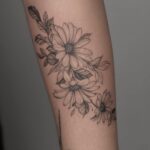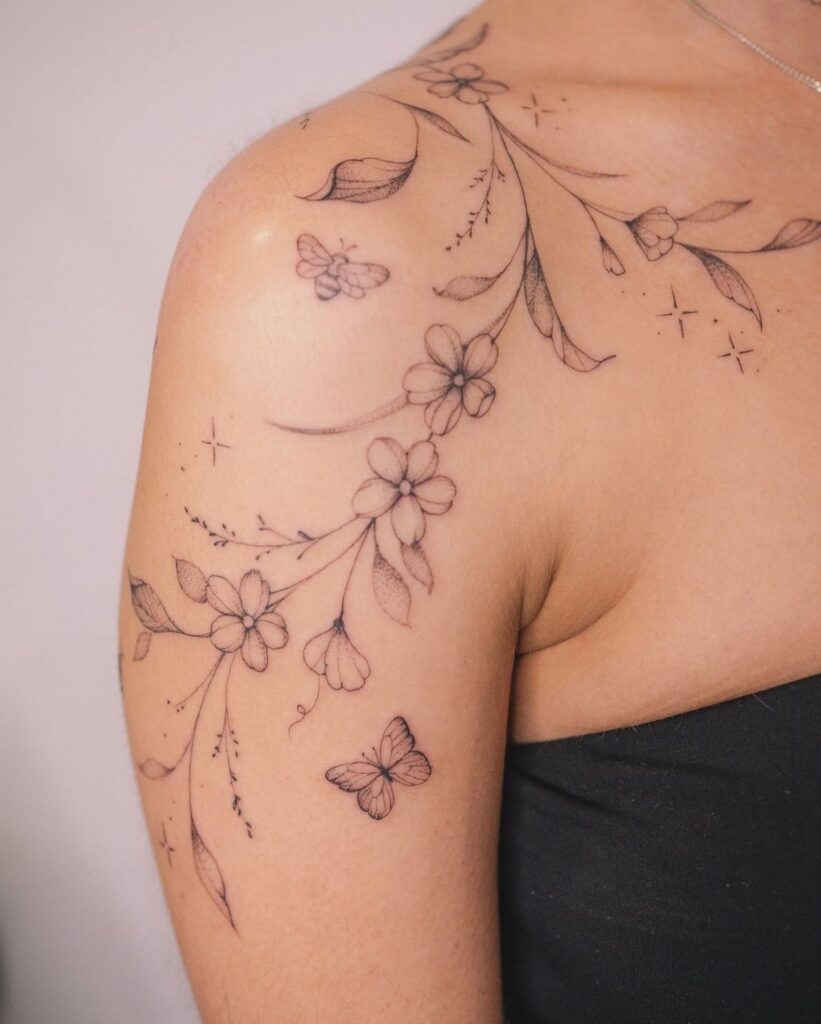
A floral tattoo on the shoulder can run from a 2 cm fine-line spray that finishes in one hour to a full-bloom wraparound design that takes 2 sessions minimum.
The choice comes down to how much coverage you want and how the piece will age: fine-line botanical sprays photograph like lace but can blur over time, while bold traditional and neo-traditional roses with thick black outlines stay readable across a room in 20 years.
1. Fine-Line Botanical Sprays
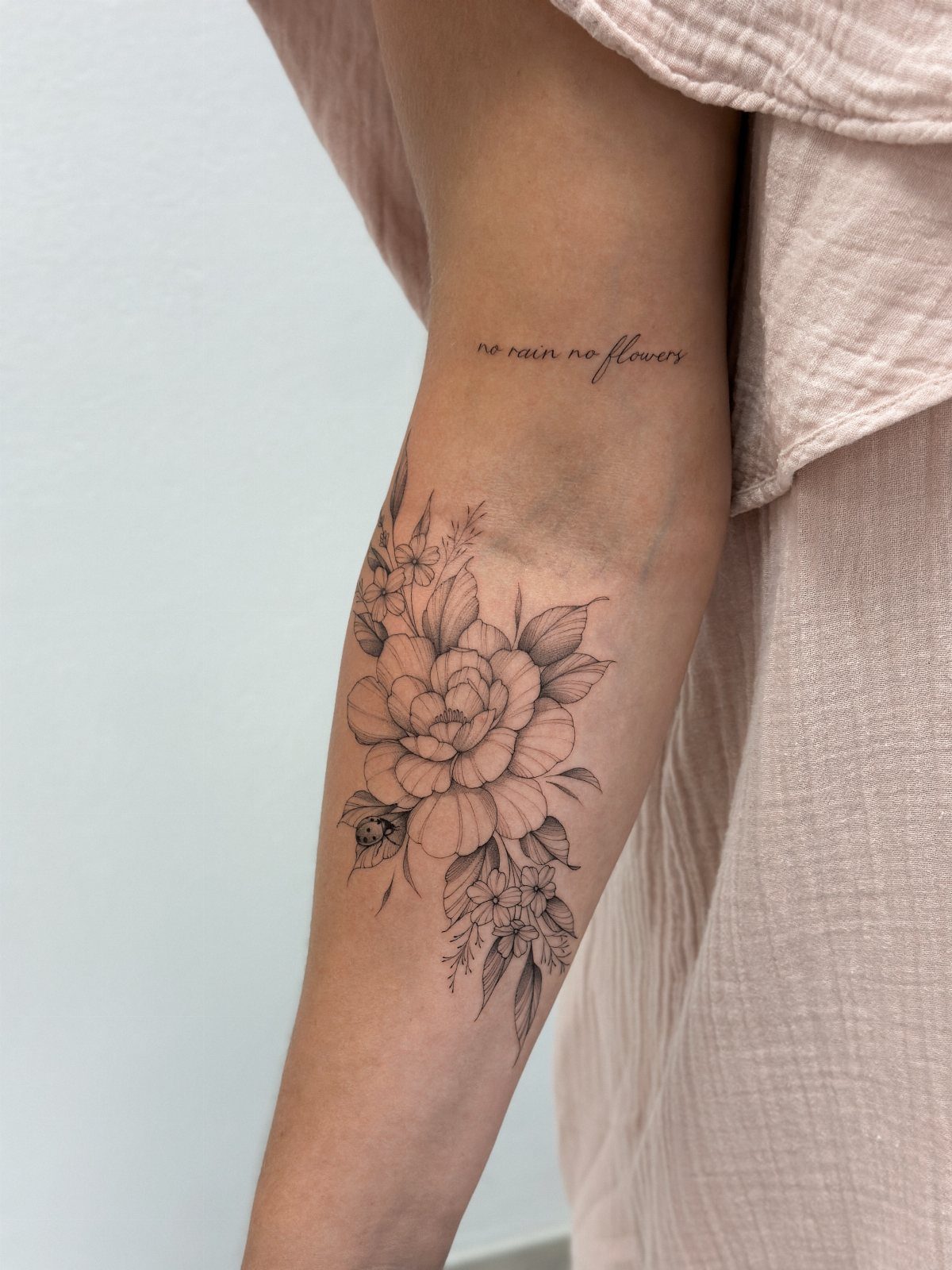
Fine-line botanical sprays sit on the shoulder like jewelry, light enough to catch without announcing themselves. The appeal is restraint: stems, petals and leaves drawn in single strokes, no shading to soften the line or fill the gaps.
They photograph beautifully but ask for precision. A shaky line shows, and aging can blur the thinnest stems into faint smudges over time.
For something you can read clearly at 50, go thicker. For something that feels like lace now, this is it.
2. Bold Traditional and Neo-Traditional Roses
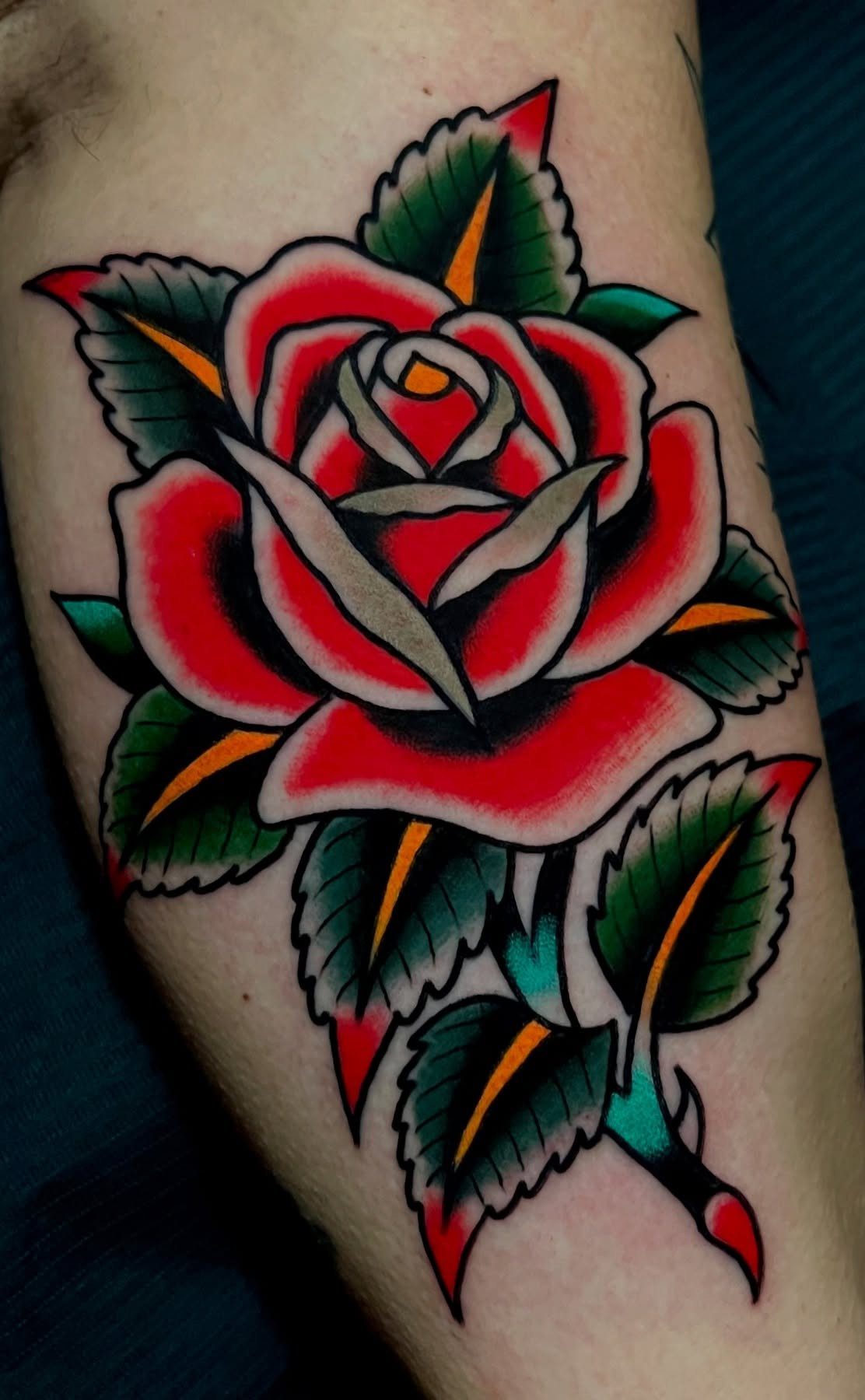
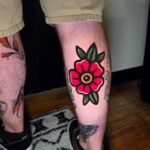
Traditional and neo-traditional roses give you color that lasts.
Thick black outlines hold the shape, and saturated reds, greens and yellows stay readable even as skin changes. The style was built for longevity, not subtlety.
The trade is size. A rose this bold needs room to breathe, so count on a piece that covers most of the shoulder cap or spills onto the upper arm.
Smaller versions lose the punch. If you want a tattoo that still reads across a room in 20 years, this is the one to choose.
3. Peonies and Full-Bloom Statement Pieces
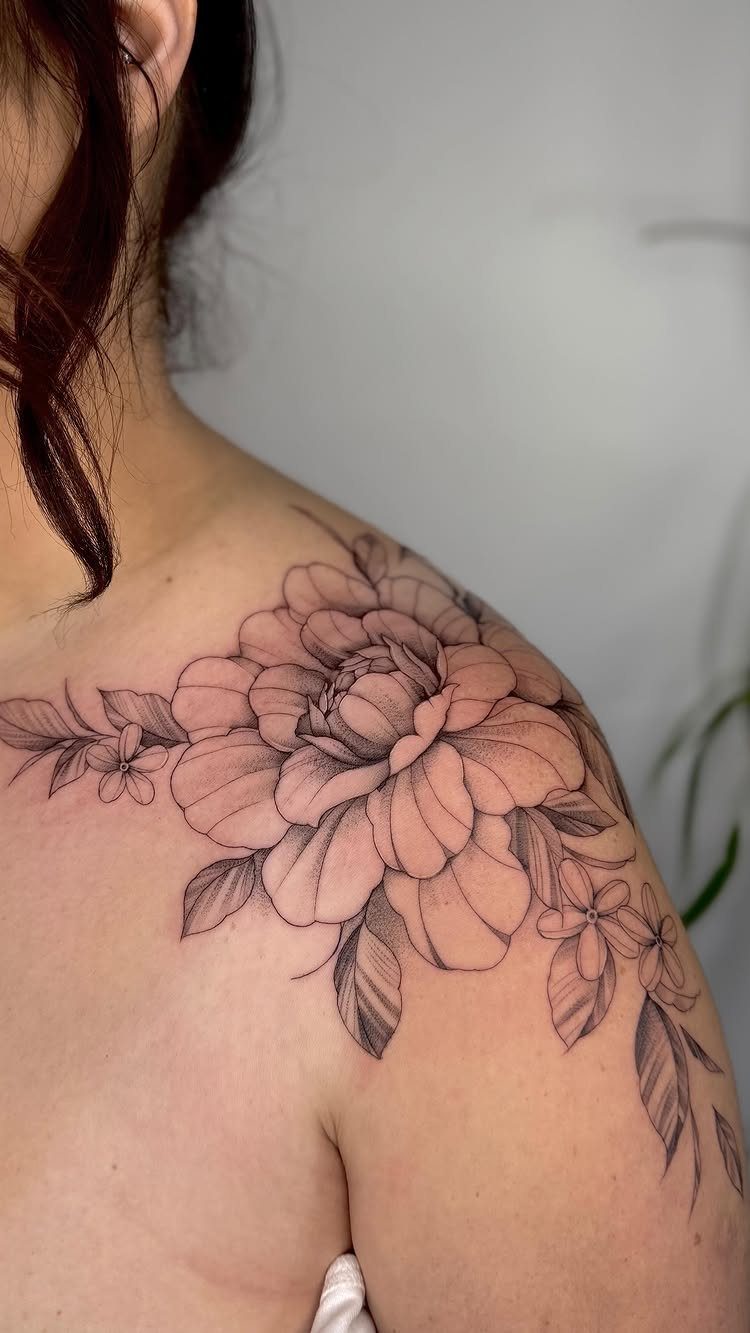
Peonies fill the shoulder cap in a way few other flowers can. The bloom is round and dense, which mirrors the curve of the joint, and the layered petals give an artist room to build depth with shading.
Black and grey keeps the focus on form.
Placement on the shoulder cap means less pain than ribs or spine. The result is a piece large enough to stand alone without needing anything else around it.
4. Wildflower and Birth-Flower Clusters
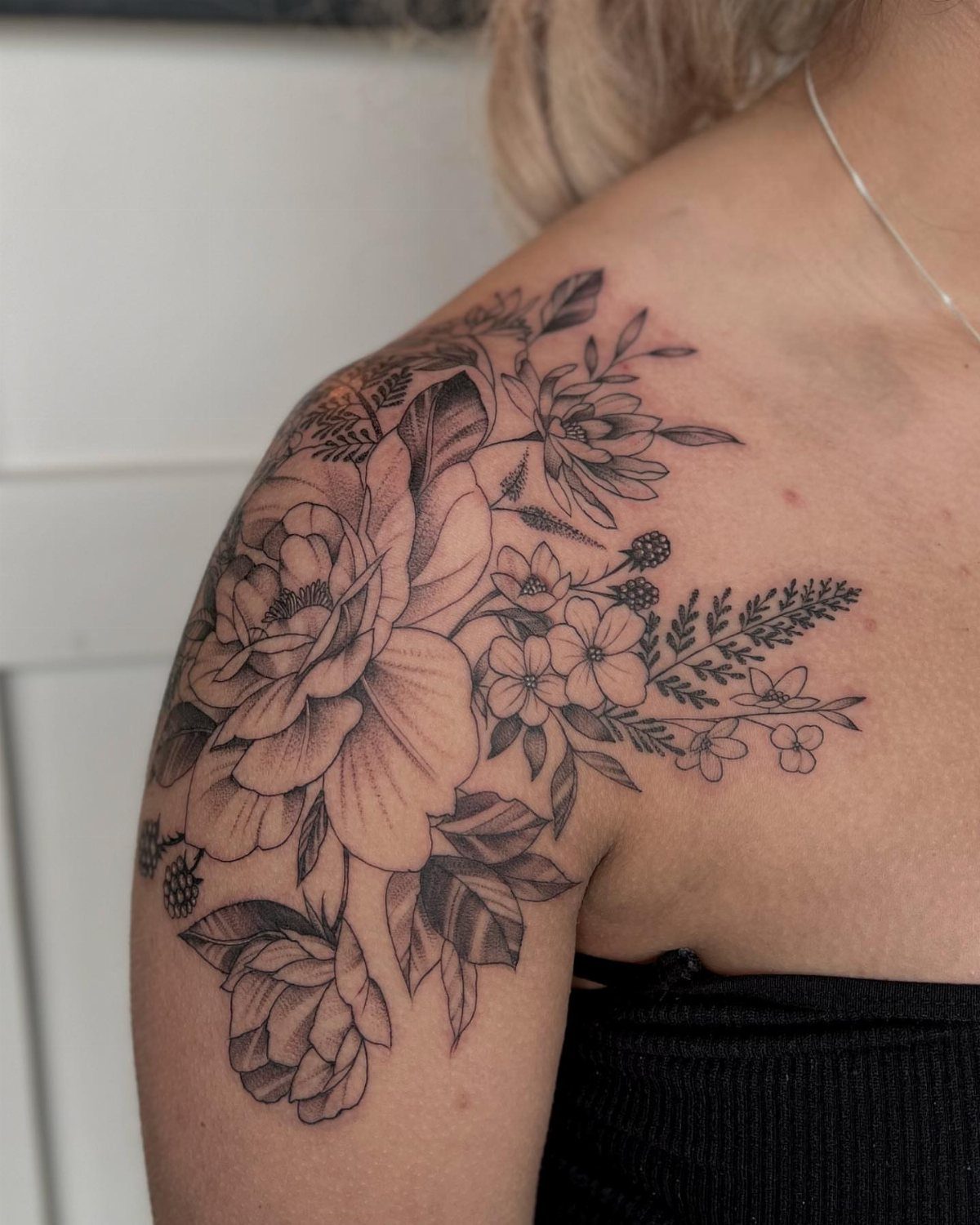
Wildflower clusters let you start small and add later. The loose arrangement means you can tuck in a new bloom next to the original without redoing the whole piece, and mixing species keeps it from feeling too planned.
Birth flowers are a common reason to go this route.
Each one carries its own month, so adding family members or milestones over time makes sense. The style works best if you keep the scale consistent and leave breathing room between stems from the start.
5. Black and Grey Realism Floral Tattoo Shoulder
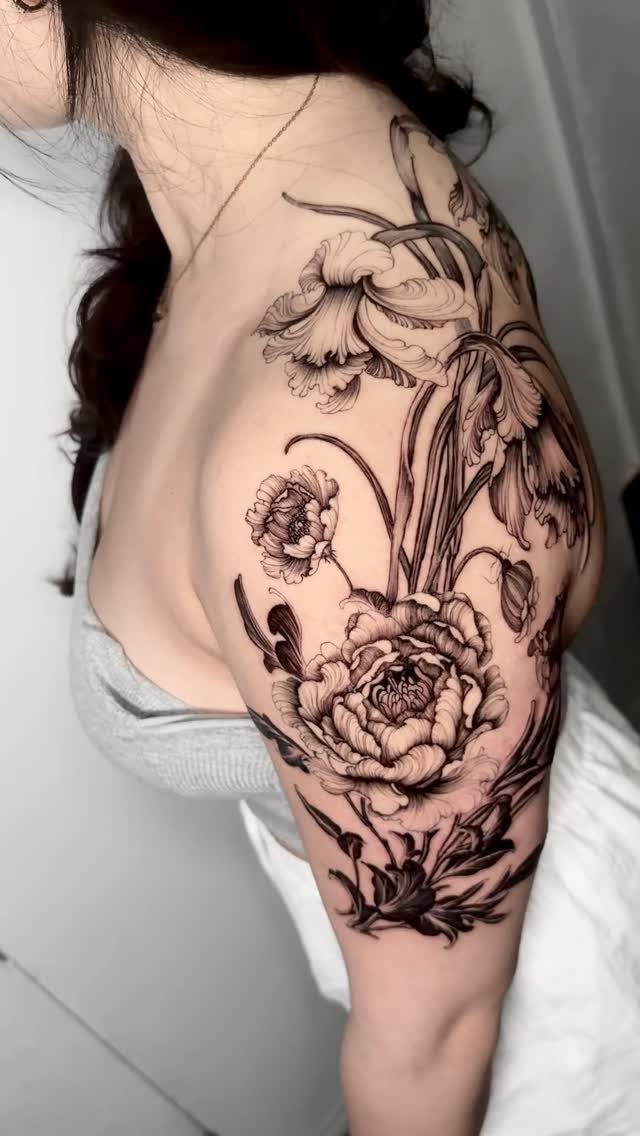
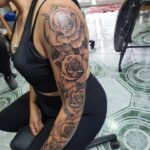
Black and grey realism takes full advantage of the shoulder’s flat surface. An artist can pack in soft shading, fine petal edges and subtle gradients without fighting the contour of bone or muscle underneath.
Touch-ups after healing are common at this level of detail. Realism fades more gently than bold color, but it also demands more upfront precision.
6. Watercolor and Soft-Colour Florals
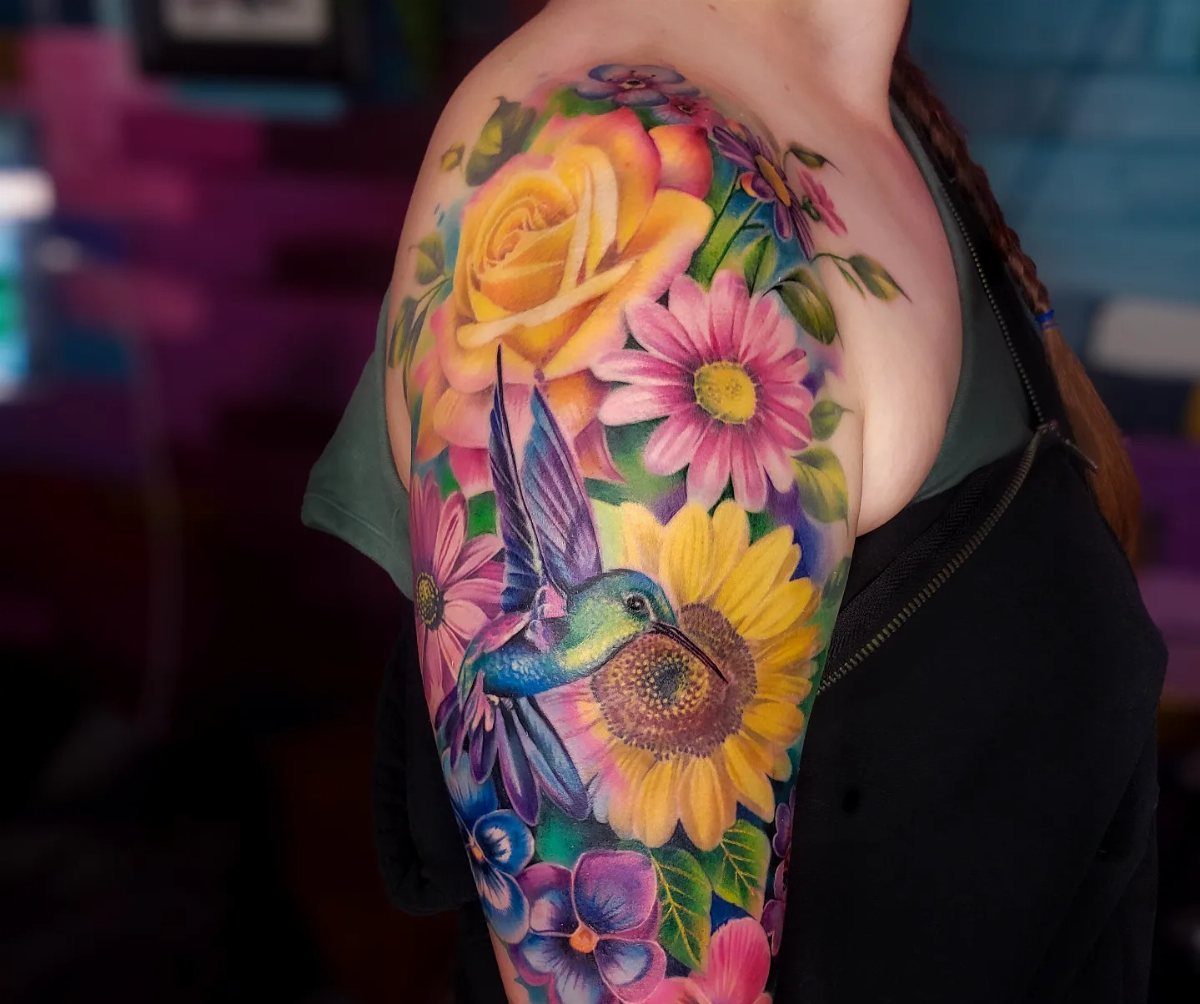
Watercolor florals trade sharp edges for soft washes of color that bleed into the skin like paint on paper. The style mimics brushwork, with petals that fade at the tips and hues that overlap without hard borders.
The hummingbird and florals here show the approach: color carries the design, not the outline.
That makes aging a real consideration. Without a strong black border to hold the shape, watercolor fades faster and can look muddy over time.
If you love the look now and plan to touch it up later, it holds up. For something permanent and low-maintenance, go with a heavier outline.
7. Florals That Wrap Into a Half Sleeve
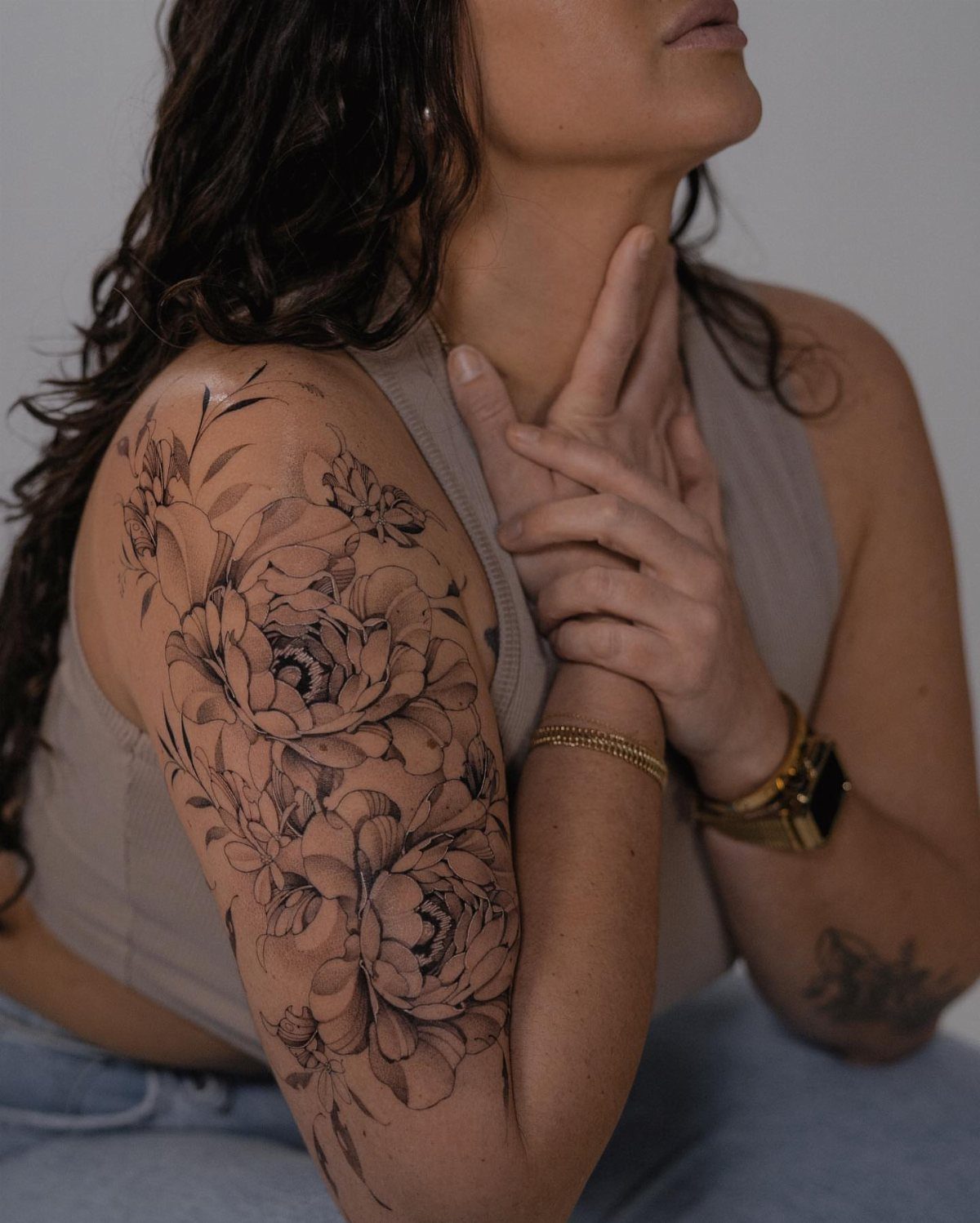
A shoulder piece that continues down the arm gives you coverage without committing to a full sleeve from the start.
The shoulder cap and upper arm flow naturally into one shape, and the continuous design reads as one piece rather than separate sections.
Florals suit this approach because petals and leaves can taper as they move down the arm, following the muscle without forcing symmetry.
Black and grey ages more predictably here than color, since the upper arm sees less sun than the forearm.
Plan for 2 sessions minimum. The shoulder heals faster than the inner arm, and splitting the work lets you test how you carry a larger piece before finishing it.
8. Shoulder Cap Floral Tattoo
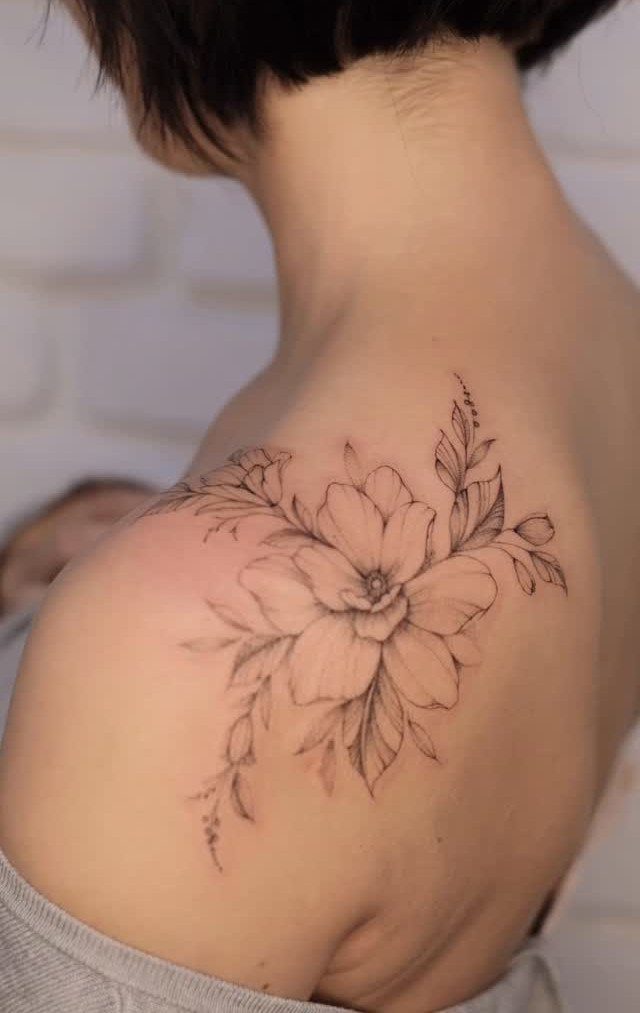
The shoulder cap is the flat oval where the arm meets the torso, and it takes a floral better than almost any other spot.
The surface is smooth, the skin stretches less than the ribs or elbow, and a single bloom sized to fit the cap reads clearly without wrapping or extending into awkward gaps.
Pain is moderate.
The bone underneath is shallow, but most people tolerate it better than the spine or collarbone. A piece this size usually finishes in one sitting, which keeps the shading consistent and the healing simple.
Caring for a Fresh Floral Shoulder Tattoo
Your tattoo artist is the best source for aftercare advice, because they’re the ones who know which ink, needle setup and bandage went on your skin.
Shoulders have one healing headache that other spots don’t: bra straps, backpack straps and purse straps all land right where fresh ink sits.
Line up a week or two of strap-free outfits before the appointment, not the morning after when it’s already irritated.
Infection is a medical problem, not a tattoo problem, and waiting it out can make things worse.
Frequently Asked Questions
What is a shoulder tattoo?
A shoulder tattoo sits on the shoulder area, most often on the cap where the arm meets the torso.
The flat surface takes a design cleanly, and florals fit the curve without wrapping into awkward gaps. Pain is moderate, and most shoulder pieces heal faster than ribs or spine.
What are the prettiest flowers to tattoo?
Roses, peonies and wildflowers rank high for good reason. Traditional roses hold color and shape over decades, peonies fill the shoulder cap in a way that mirrors the joint, and wildflowers let you start small and add more later.
Each one suits a different goal, so the prettiest option depends on whether you want bold longevity or soft detail.
How much is a floral shoulder tattoo?
Price turns on the design’s size, how much detail it carries, and what your artist charges per hour in your part of the country.
A palm-sized fine-line rose might finish in 90 minutes, while a full shoulder in black and grey shading can run 4 to 8 hours split across 2 appointments.
Send reference images to 2 or 3 studios and ask what they’d charge, and treat any quote that sits well below the others as a red flag.