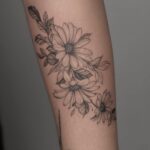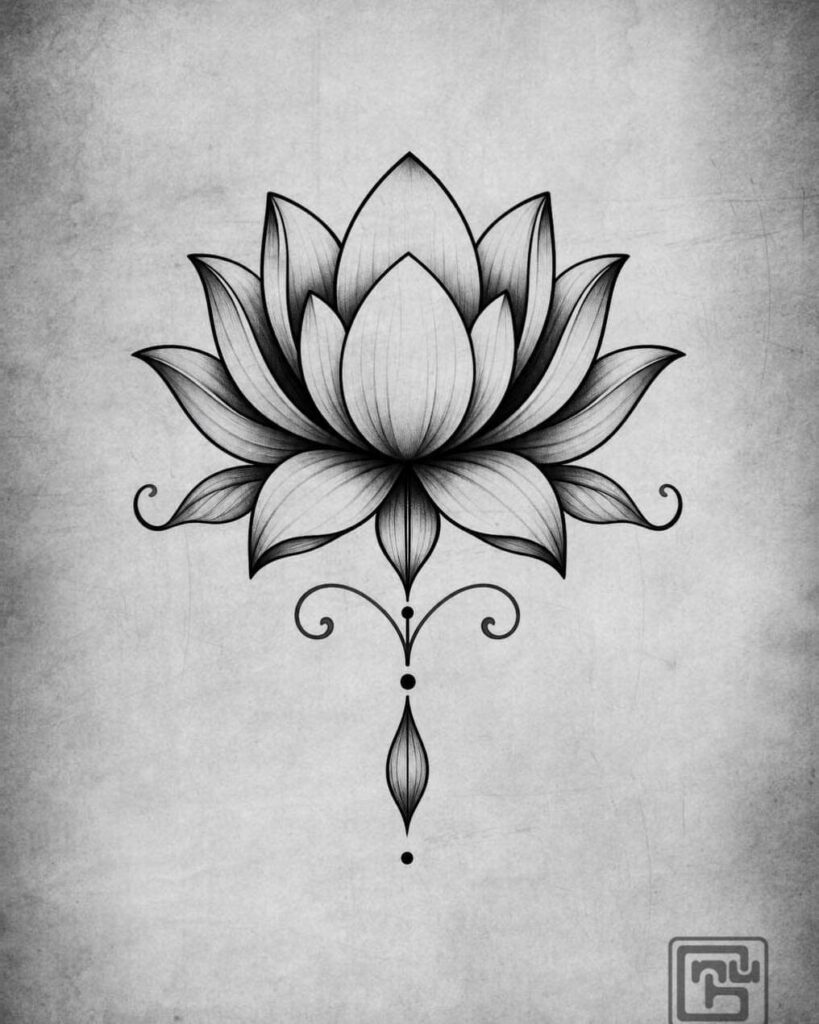
The list below covers small single-needle lotus flowers that sit on your wrist, geometric ornamental builds for your back, watercolor pieces that bleed at the edges, mandala frames, koi and moon pairings, full sleeves, and script combinations, plus what each color and symbol actually means.
Blue ink fades slower than red or yellow, so if longevity matters more than color tradition, that shifts which palette makes sense for your piece.
1. Mandala Lotus Tattoo
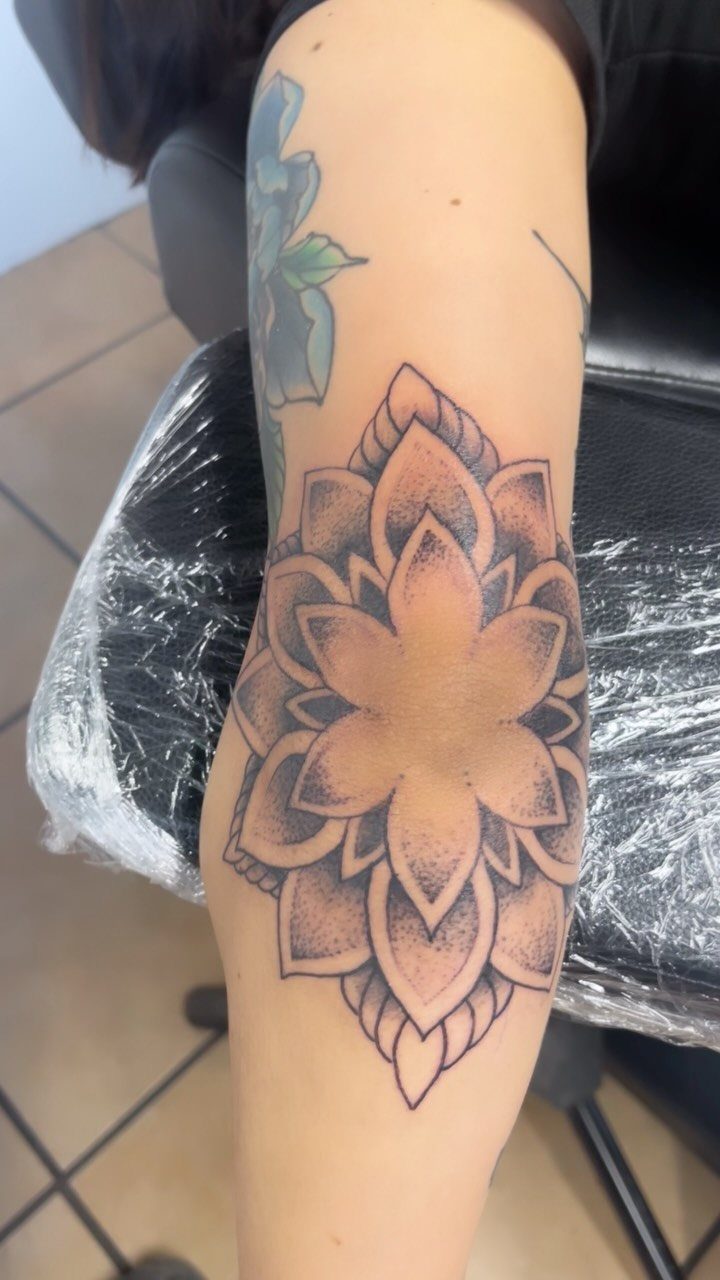
The lotus sits at the center of a geometric mandala, its organic petals framed by repeating patterns that radiate outward.
Mandalas represent balance and wholeness, so pairing one with a lotus gives you both nature and structure in a single piece.
The elbow is one of the more painful spots because of how close the bone sits to the skin.
Healing takes longer here since the joint flexes constantly, which can disrupt scab formation. If you sit still through the session, expect sorter sessions for touch-ups down the line.
Color can fade unevenly on joints.
2. Blue Lotus Flower Tattoo Design
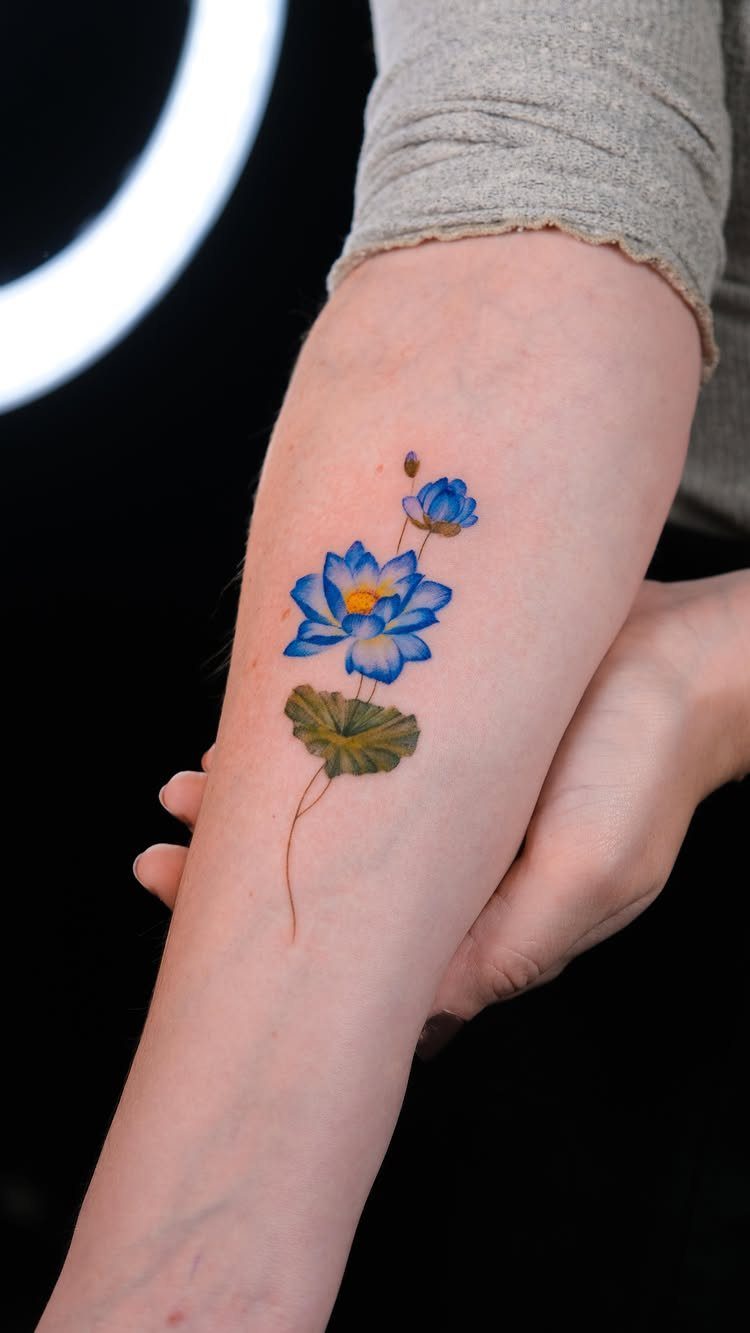
Blue lotus petals read as calm and spiritual. Historically, blue lotus was used in ancient Egypt for its psychoactive properties, and today the color keeps that association with meditation and altered states.
The green leaf grounds the design and adds contrast.
Without it, a single blue flower can look flat or washed out, especially on lighter skin tones. Your forearm has room for both elements without cramming them together.
Blue and green hold their color longer than red or yellow. They fade slower and hold their saturation longer.
3. Pink Lotus Flower Tattoo Design
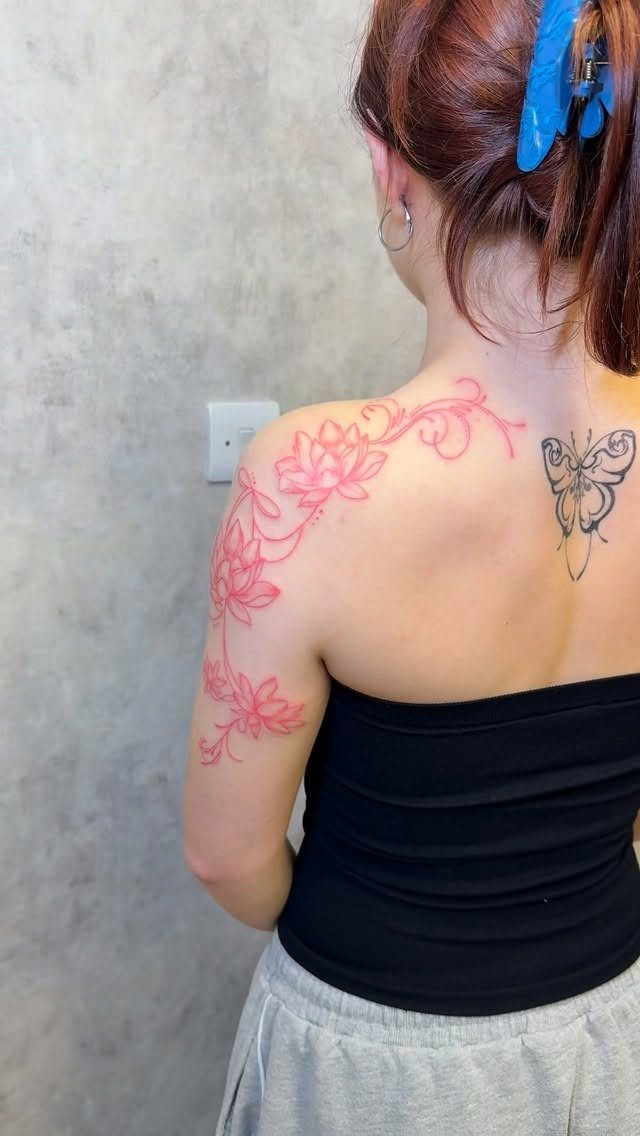
Pink lotus petals feel softer and more feminine than red or black. The vines trailing down from the flower tie it to the rest of your back and give the design movement instead of sitting as a static image.
The shoulder blade is a manageable pain level compared to the spine or ribs. Healing is straightforward because clothing rarely rubs against it directly.
If you already have one tattoo on your back, a second one nearby should match in style or color palette. Mixing fine line with bold traditional, for example, rarely looks intentional.
4. Watercolor Lotus Flower Tattoo
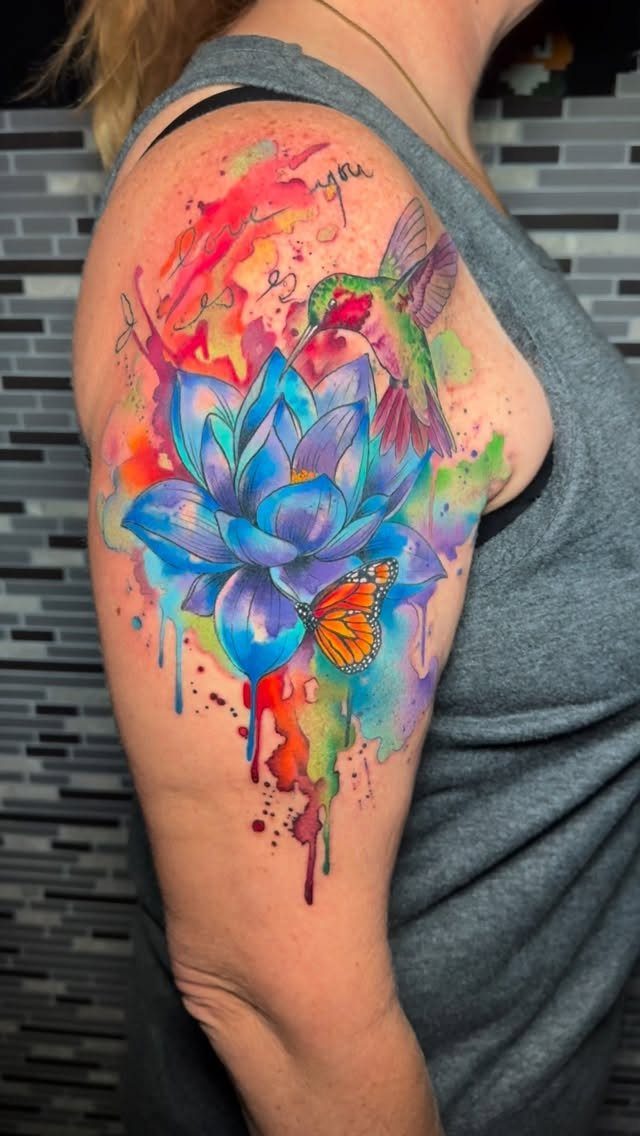
Watercolor blurs the edges and layers bright colors like paint on paper. The blue lotus, hummingbird and butterfly sit together without hard outlines, which gives the whole piece a softer, more organic look.
This style takes time.
The artist who made the visible example reported about 9 hours total, and that matches what I see with multi-element watercolor work. Expect at least 2 sessions for something this detailed.
Watercolor loses intensity more quickly than traditional linework because there are no black borders to hold the shape. Plan for touch-ups every few years to keep the colors vivid.
5. Fine Line Lotus Flower Tattoo
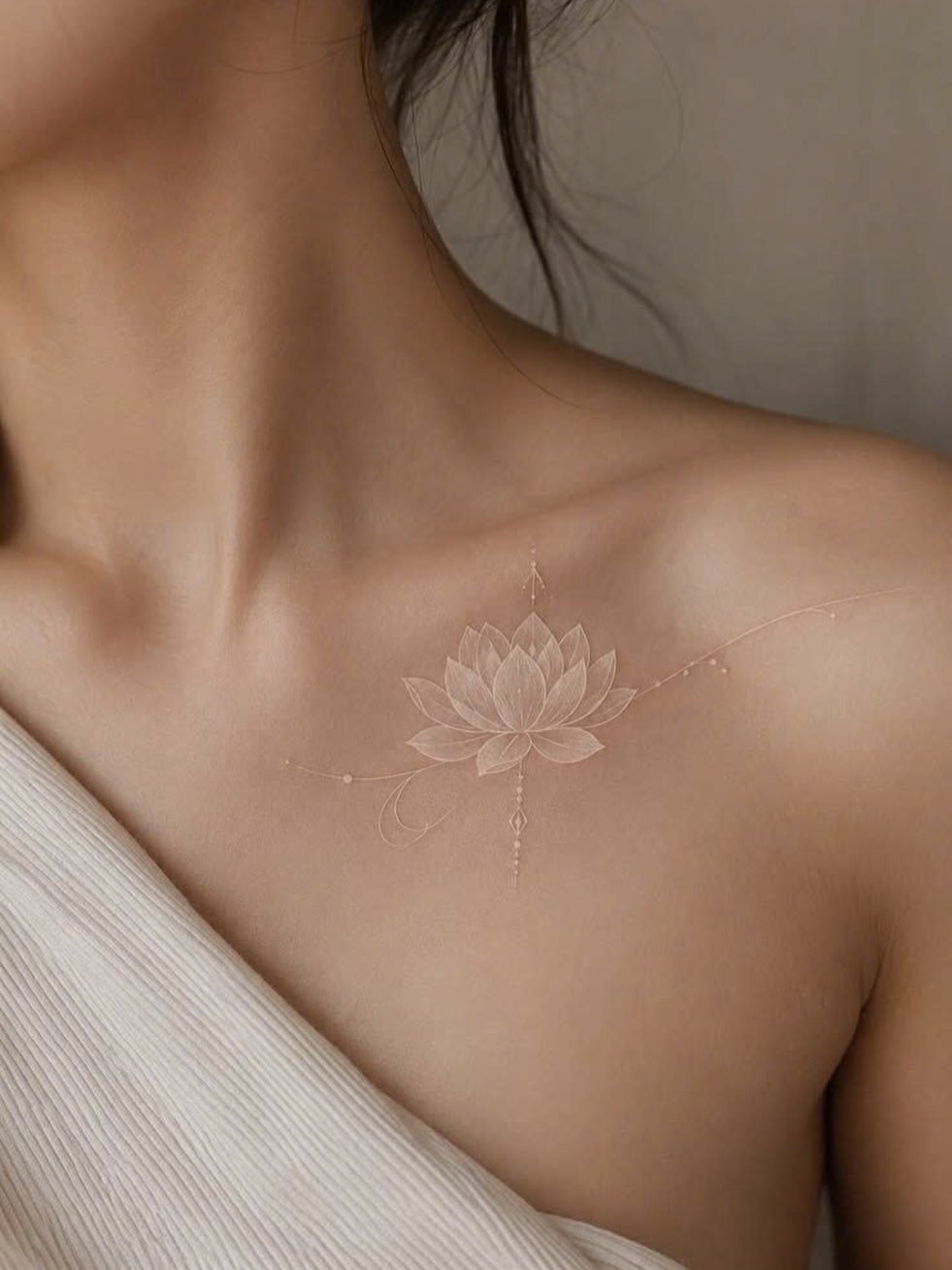
Fine line gives you a delicate lotus with thin petals and minimal shading.
White ink on lighter skin tones reads as a scar or raised texture rather than a bright white, so the design feels subtle even when placed somewhere visible like the collarbone.
White ink loses intensity more quickly than black and can yellow over time, especially with sun exposure.
It also hurts more to apply because the artist has to go over the same line multiple times to get the pigment to stay.
This works when you need something private or easy to cover. If you want a tattoo that stands out from across a room, go with black ink instead.
6. Realistic Lotus Flower Tattoo
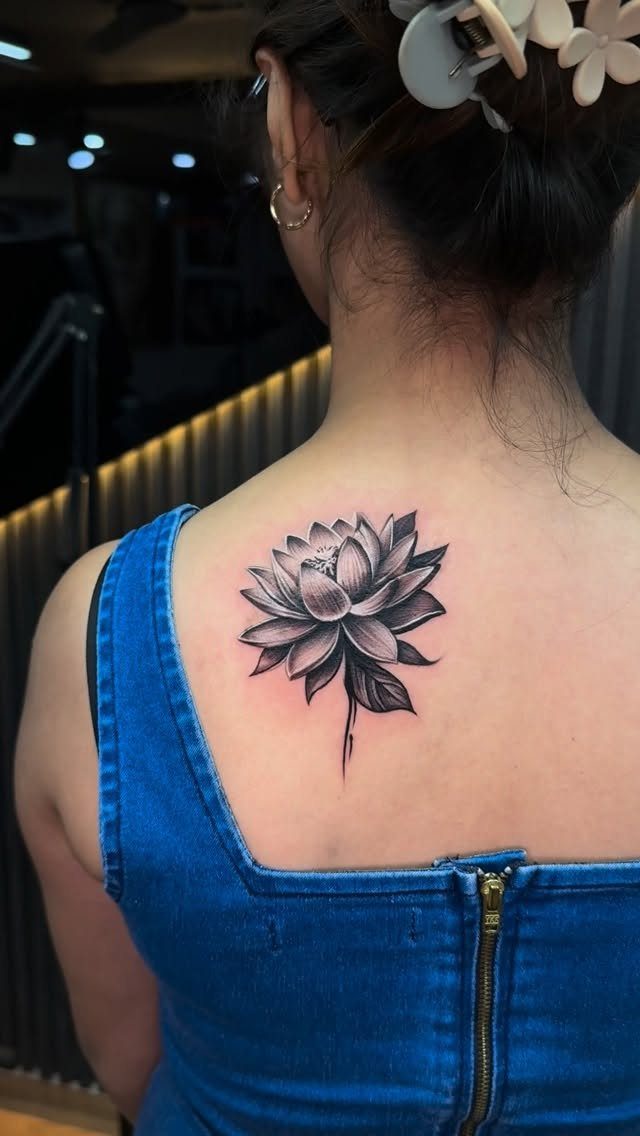
Realistic shading creates depth and makes the lotus look three-dimensional, like it could peel off your skin. Black and grey work relies on smooth gradients, so the artist needs a steady hand and experience with portrait or realism techniques.
The upper back is one of the easier spots to sit through because there’s more muscle and fat between the needle and bone. Healing is straightforward as long as you avoid backpacks or tight bra straps early on.
Realism holds up best when the tattoo is large enough to include fine detail. Small pieces start to blur together as they age.
7. Ornamental Lotus Flower Tattoo
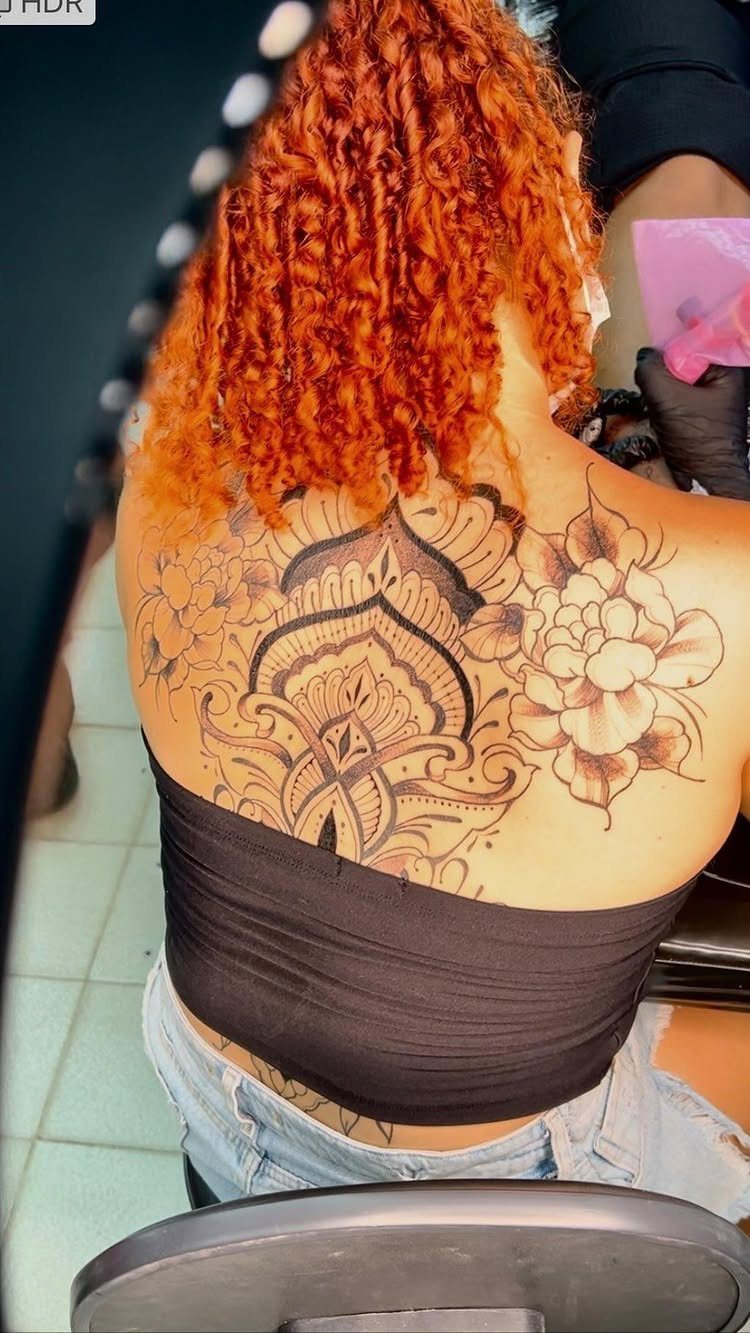
The petals are built from geometric shapes and dotwork, with chains and beadwork details that make the flower look like carved jewelry. The design sits symmetrical on the upper back, wide enough to follow the shoulder blades.
This placement shows the full width of the design but sits high enough that most clothing covers it.
The upper back has enough muscle to make the session manageable, though the spine edges hurt more if the design reaches that far.
Ornamental work takes longer than simple linework because every dot and pattern needs to align perfectly.
8. Lotus and Moon Tattoo
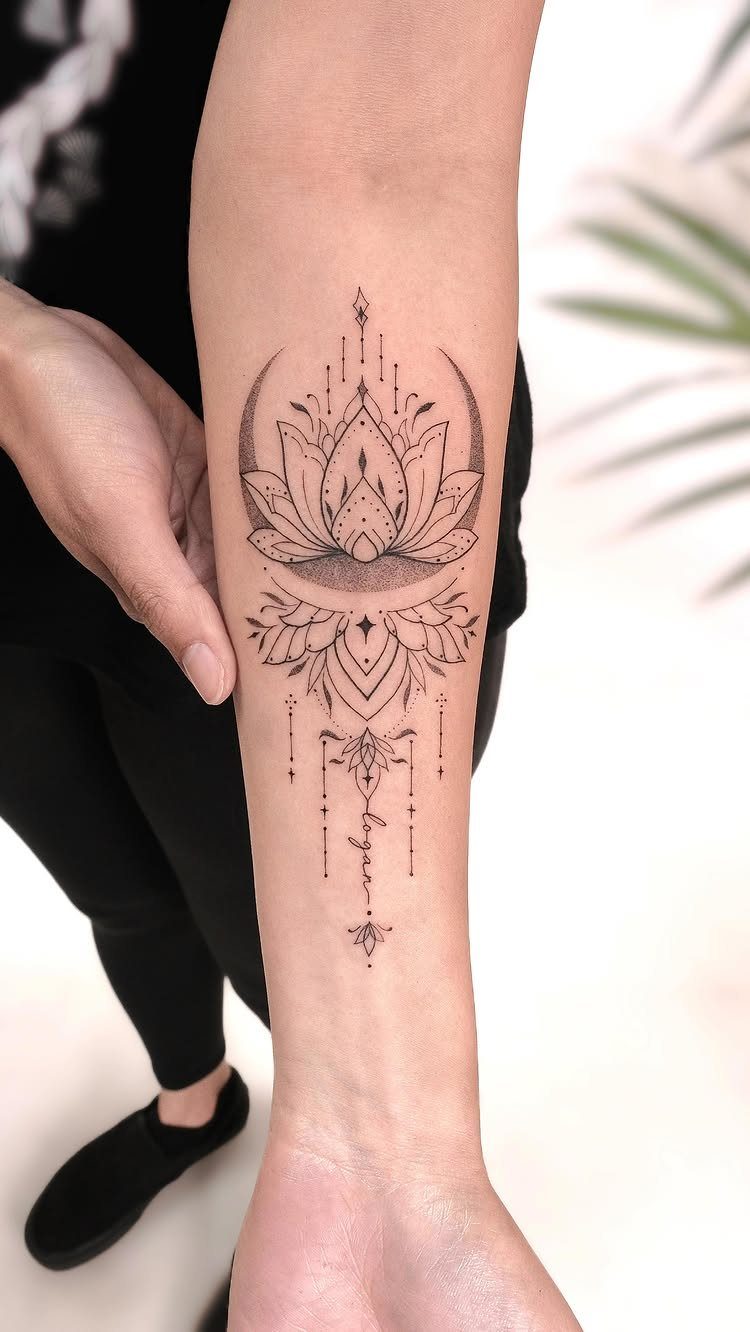
A crescent moon frames the lotus, with the flower sitting inside the curve. Moons represent cycles and change, so the pairing works when you want both growth and impermanence in one piece.
The forearm is one of the easier placements to sit through and heals quickly since clothing rarely rubs against it. The flat surface also keeps the lines crisp over time.
Adding script below the design, like a name or date, grounds the image and gives it personal context. Just keep the font simple so it ages well.
9. Unalome Lotus Tattoo
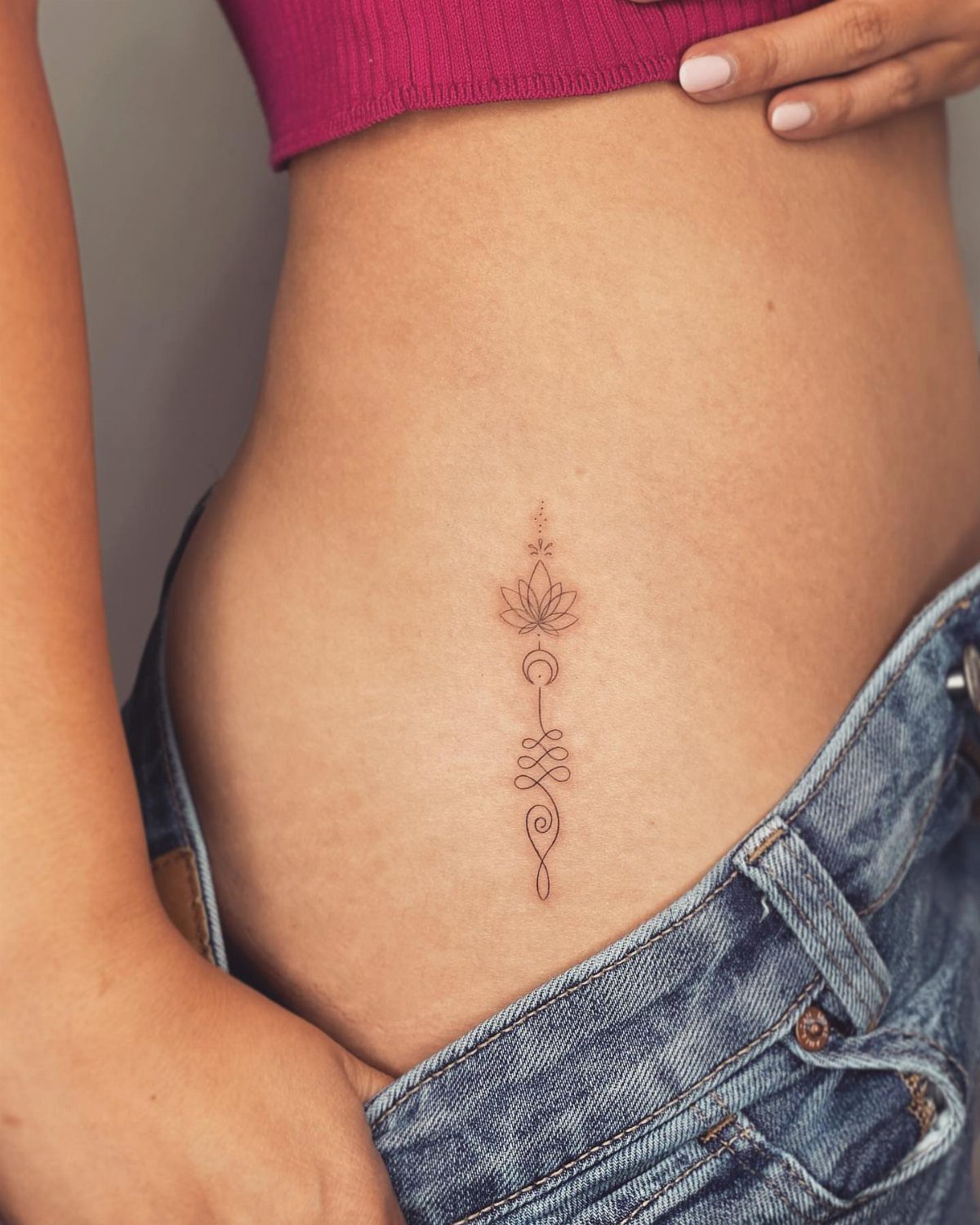
The unalome spiral sits above the lotus, with the path straightening as it reaches the petals. The spiral represents the twists of life before reaching enlightenment, so it pairs naturally with the lotus as a symbol of spiritual growth.
This works best as a small, vertical design on the hip, ribs or forearm. The hip placement is more private and easier to cover, but it sits right on the bone, so expect sharp pain during the session.
10. Small Lotus Flower Tattoo
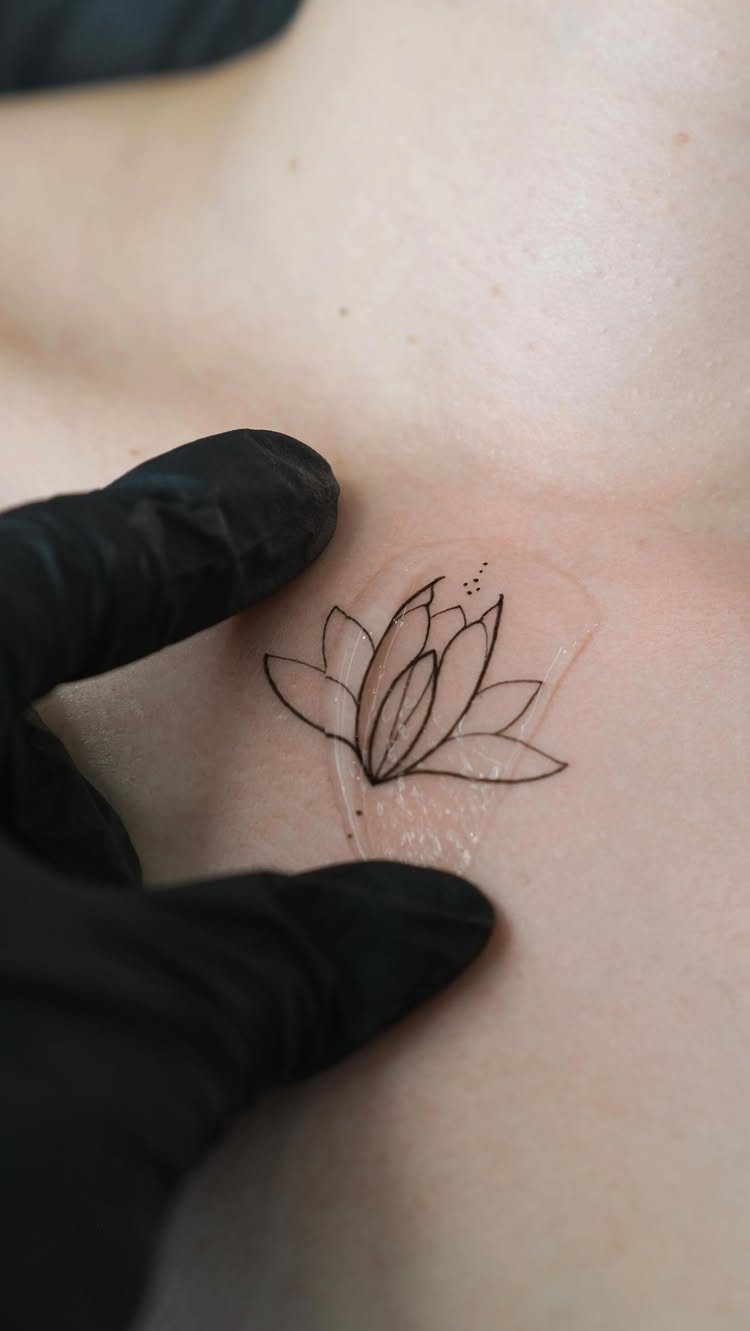
A small lotus with clean petals and minimal detail fits nearly anywhere on your body. At this size, the design reads best in black ink with no shading, since too much detail blurs together once it heals.
The wrist, ankle, behind the ear or along the collarbone all work for something this compact.
Smaller pieces fade more noticeably because there’s less ink to hold the shape.
11. Lotus and Koi Fish Tattoo
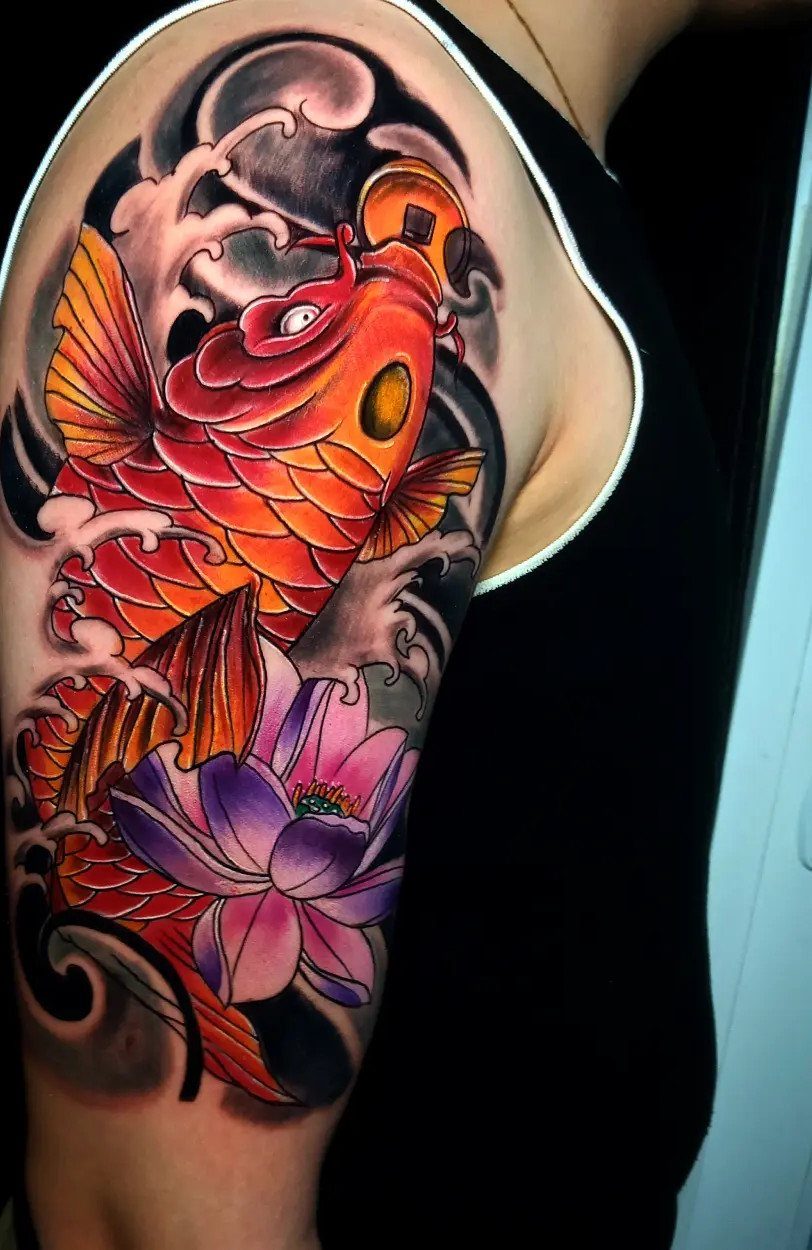
The orange koi and purple lotus create strong color contrast, with grey waves tying the composition together.
The upper arm has enough space for both elements without feeling crowded. Color saturation holds well on the upper arm because the skin is thick and relatively stable.
Color work requires more passes than black and grey, and the shading on the waves adds time.
12. Lotus Flower Back Tattoo
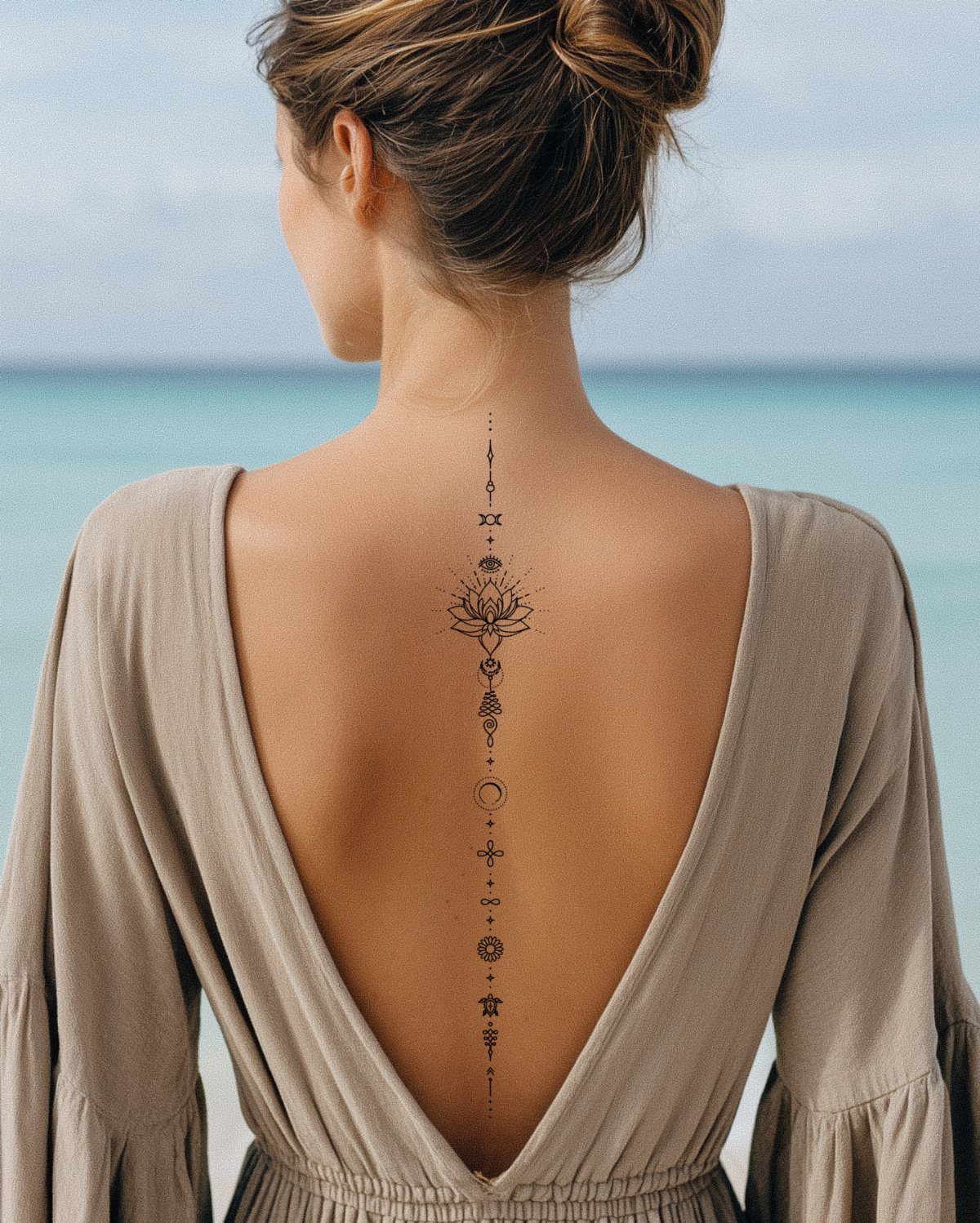
A vertical lotus running down the spine reads as elegant and feminine without taking up much horizontal space. The narrow shape follows the natural line of your back and makes you look taller when your shoulders are bare.
Sessions are shorter here because most people can’t sit through more than an hour at a time.
13. Shaded Lotus Flower Tattoo
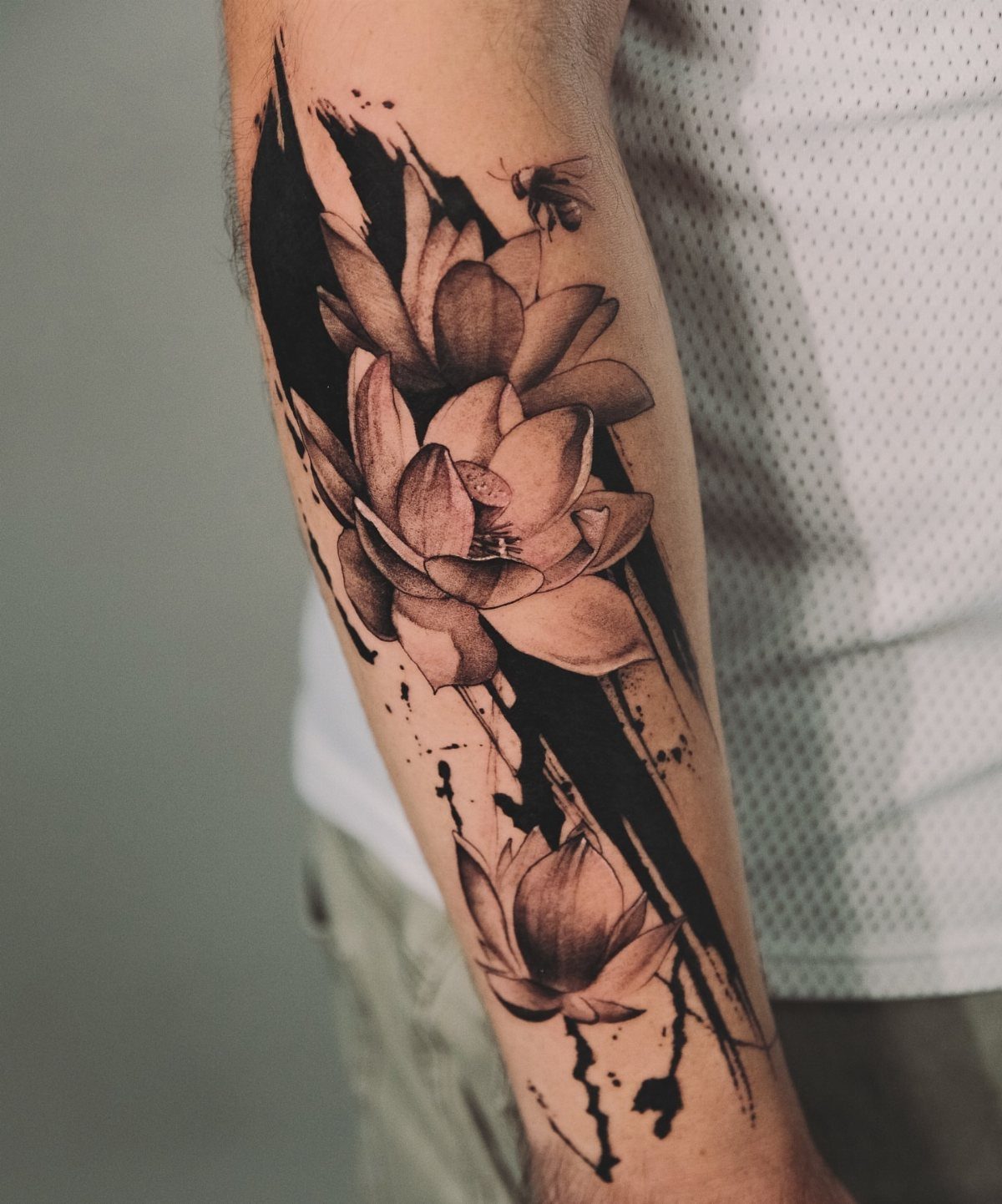
Black ink splashes sit behind the lotus, creating depth and movement where a flat design would read as static. The shading on the petals uses smooth gradients to separate each layer, while the bee adds asymmetry.
The forearm handles shaded work well because the skin is thick and relatively flat. Healing takes about 2 weeks, and shaded areas hold their contrast longer than pure linework because there’s more ink holding the shape.
If the ink splashes extend too far, they can overpower the flower and make the whole piece feel chaotic.
14. Cherry Blossom and Lotus Flower Tattoo
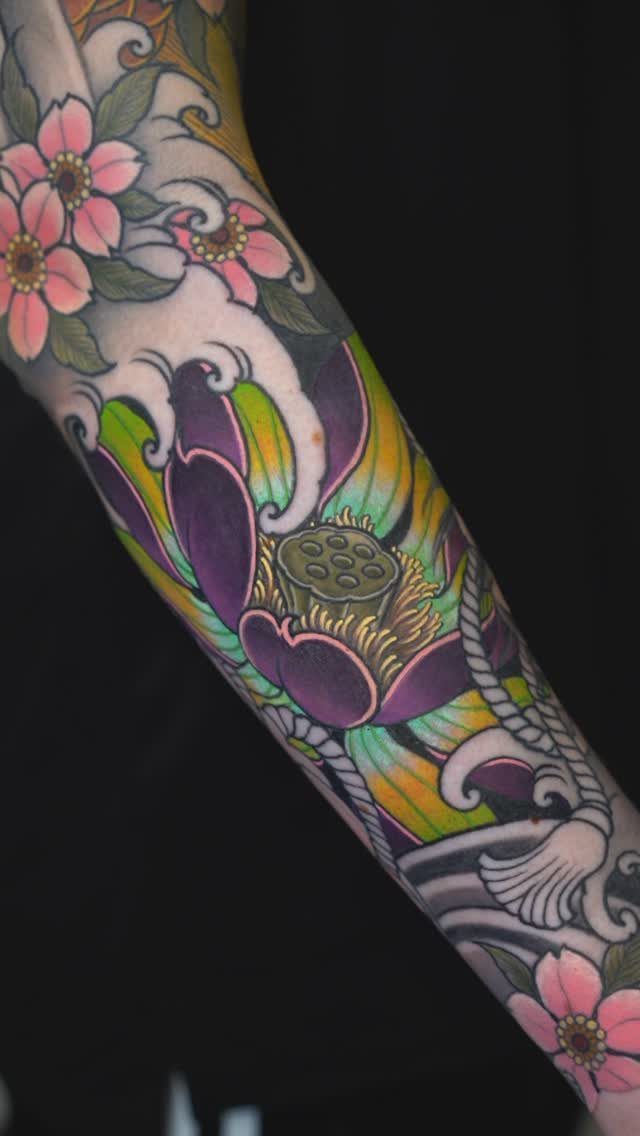
Purple lotus petals next to pink cherry blossoms create a color shift that keeps the design from feeling one-note. The grey waves at the bottom separate the 2 flowers and add structure without taking up too much space.
Cherry blossoms represent impermanence, while the lotus stands for spiritual growth. Pairing them gives you both the fleeting and the enduring in one piece.
The upper arm works well here because you have room for multiple elements without forcing them into a narrow vertical layout. Color fades slower on the arm than on the hands or feet.
15. Lotus Tattoo with Script
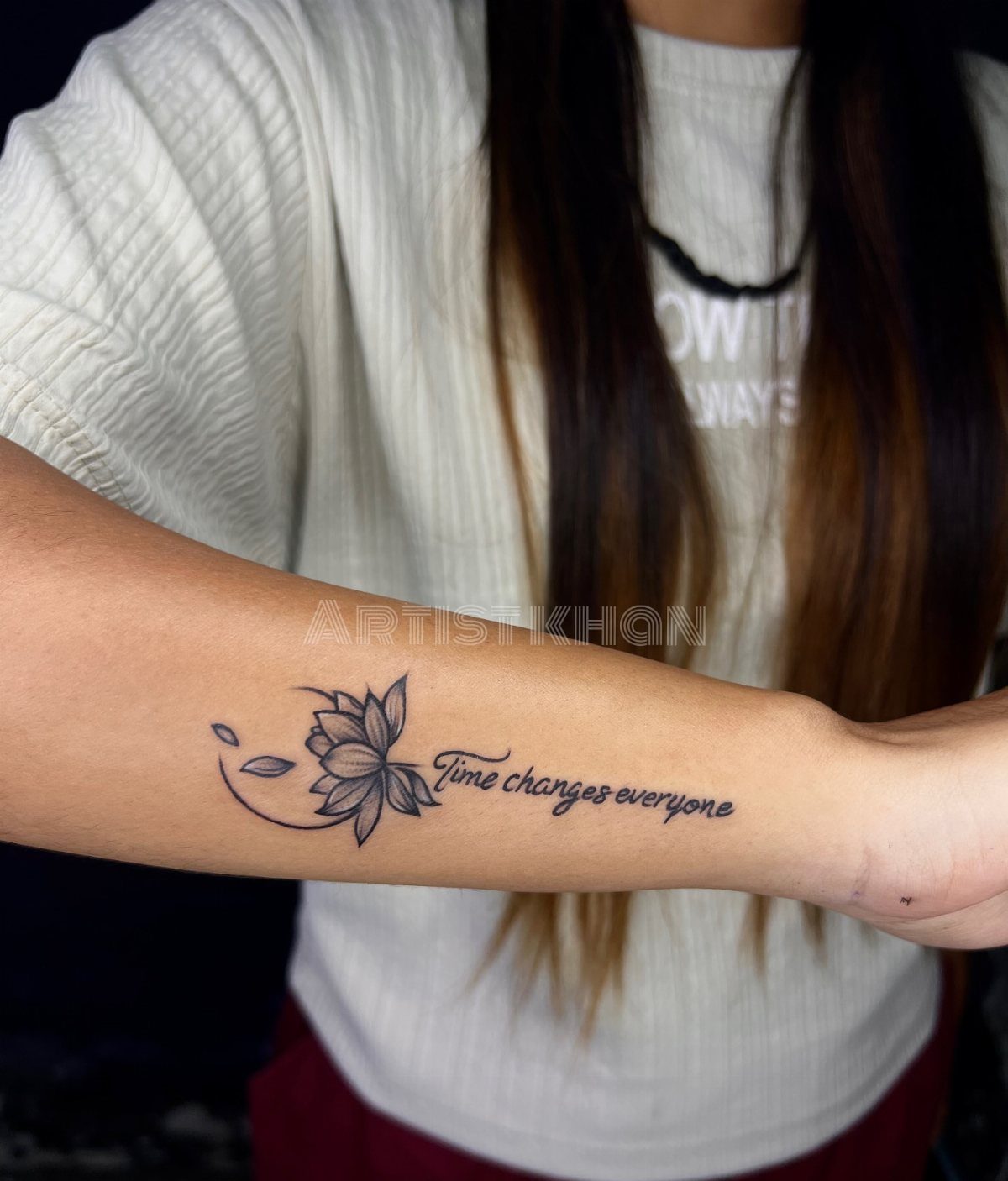
Script grounds the lotus and makes the tattoo feel personal instead of purely decorative. The text sits below the flower on the inner forearm, where you can read it yourself without twisting your arm.
Cursive ages better than elaborate calligraphy because the letters stay legible even as the ink spreads slightly over time. Keep the font size large enough that individual letters don’t blur together over time.
If the phrase is long, break it across 2 lines so it doesn’t stretch too far horizontally. A single cramped line reads poorly once healed.
16. Ink Wash Style Lotus Tattoo
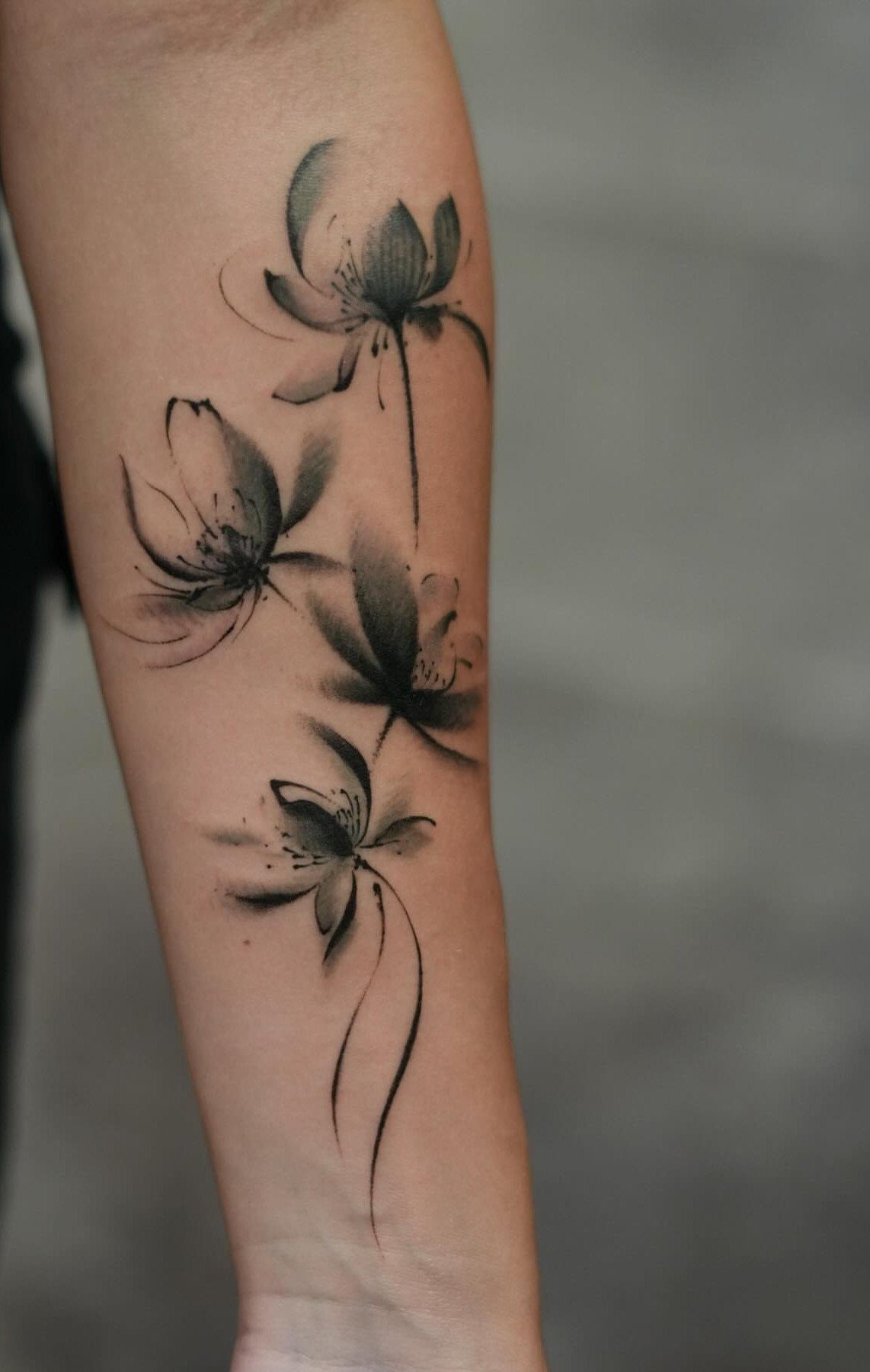
Ink wash mimics traditional East Asian brush painting, with soft edges and varying levels of saturation across the petals. The four flowers sit stacked vertically on the forearm, each one slightly different in size and tone.
This style skips hard outlines entirely, so the design reads as organic and painterly rather than precise. The technique takes longer because the artist has to build up the shading gradually to avoid harsh lines.
Ink wash fades more evenly than solid black because there’s less contrast to lose. Touch-ups are easier since you’re adding soft shading rather than redrawing sharp edges.
17. Lotus Sleeve Tattoo
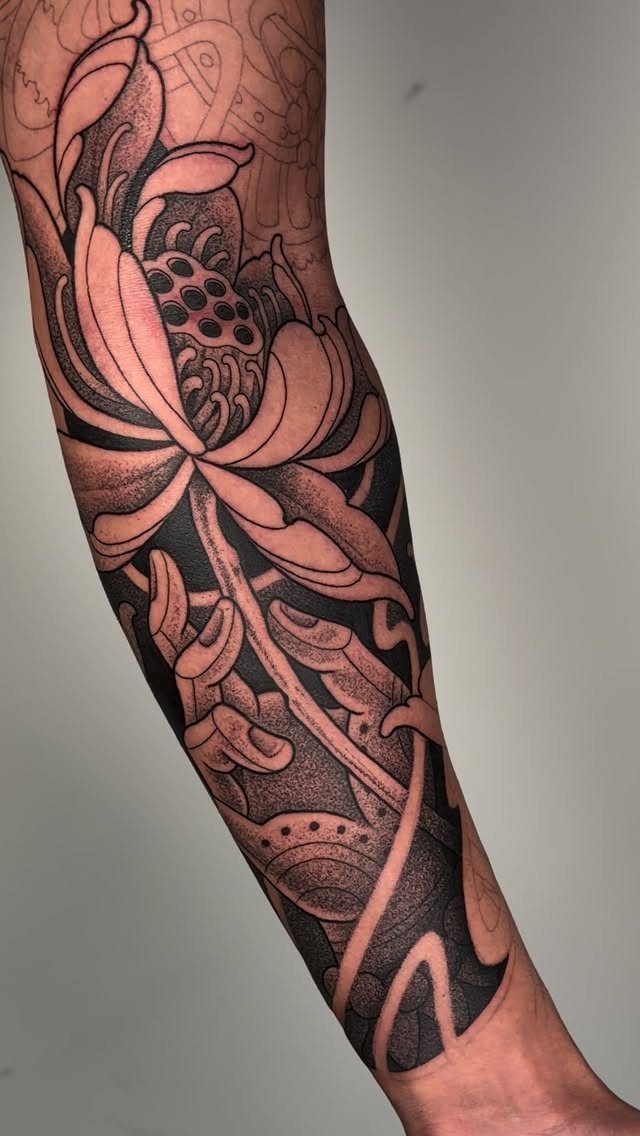
A sleeve wraps the lotus around the entire forearm, with dotwork shading filling the background and petals extending from wrist to elbow. The full coverage creates a cohesive piece instead of isolated elements scattered across your arm.
Sleeves take multiple sessions because sitting through extended periods gets difficult.
The forearm is one of the easier placements for a sleeve because there’s minimal bone exposure compared to the shin or ribs.
18. Lotus and Semicolon Tattoo
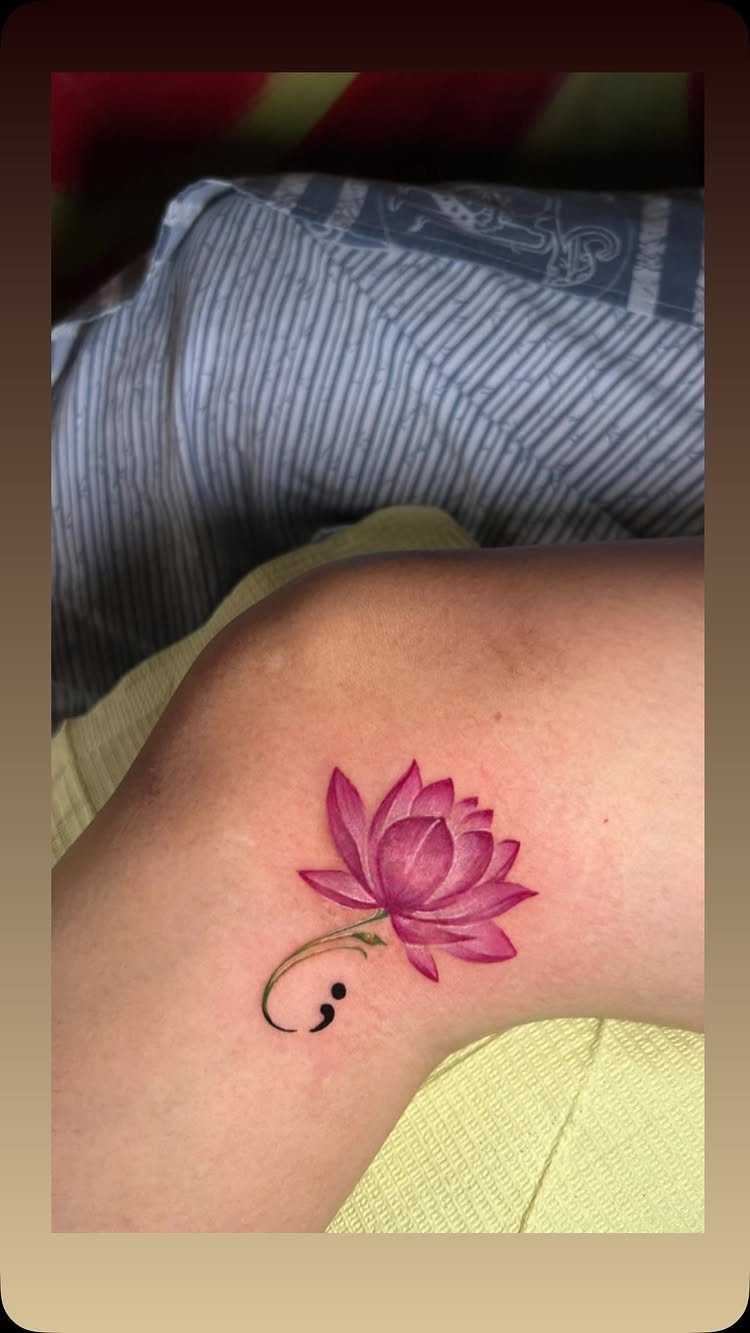
The semicolon sits inside the stem, small enough that it doesn’t dominate the design but clear enough to read its meaning.
Semicolons represent mental health awareness and the choice to continue your story, so pairing one with a lotus adds both resilience and growth to the symbolism.
The knee hurts more than most placements because the skin sits directly over bone with little padding. Sessions stay short, usually under an hour, and healing takes longer because the joint flexes constantly.
Symbolism of Lotus Tattoos
The lotus grows in muddy water and blooms clean above the surface, which is why it shows up so often in Buddhist and Hindu imagery.
That journey from murk to light makes it a natural fit for anyone marking a shift in their life, whether that’s recovery, sobriety, a career change, or just closing a difficult chapter.
Purity comes up often, but the flower earns it.
Despite sitting in stagnant water, the petals stay untouched by the grime below. Rebirth follows the same logic: the flower closes at night and opens again at dawn, a visible cycle of renewal.
If you practice yoga or meditation, the lotus already carries weight for you.
If you don’t, the symbolism still holds. The flower itself reads as calm and grounded, which is enough reason to wear it.
Lotus flowers have long been a popular tattoo design, as they’re both beautiful and symbolic. They strike a perfect balance between trendy and timeless, making them a favorite go-to tattoo style for many.
— PopSugar
Placement Recommendations
Symmetry matters here, since even a slight tilt shows up immediately when your back is bare.
You can see the tattoo yourself without a mirror, and most clothing leaves it visible if you want that.
The sternum sits directly over bone, so expect sharp pain and shorter sessions. The placement looks striking when centered between your collarbones, but healing takes longer because bra straps and tight shirts rub against it constantly.
Ankles and wrists suit small, simple designs with minimal shading. Anything more detailed blurs together as the tattoo ages.
Color Symbolism
Red carries the weight of the heart: passion, devotion, the kind of love that pushes through. The contrast makes the petals easy to read even from a distance.
Blue ink fades slower than red or yellow, so you’ll get more years before needing a touch-up.
In Buddhist iconography, pink holds the highest rank and appears only with the Buddha. It represents divine history and sits at the top of the symbolic hierarchy.
Frequently Asked Questions
Where should I place a lotus flower tattoo?
The spine, inner forearm and sternum are strong choices for a lotus. The spine works best for vertical designs that follow your natural line, while the forearm offers flat skin that heals quickly and keeps lines crisp.
Do fine line lotus tattoos fade quickly?
The thinner lines hold less pigment, so they lose definition sooner than thick, saturated designs. Most delicate lotus work benefits from a refresh around the 3- to 5-year mark, and white detail drops in contrast faster than black.