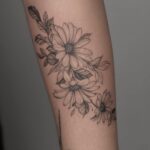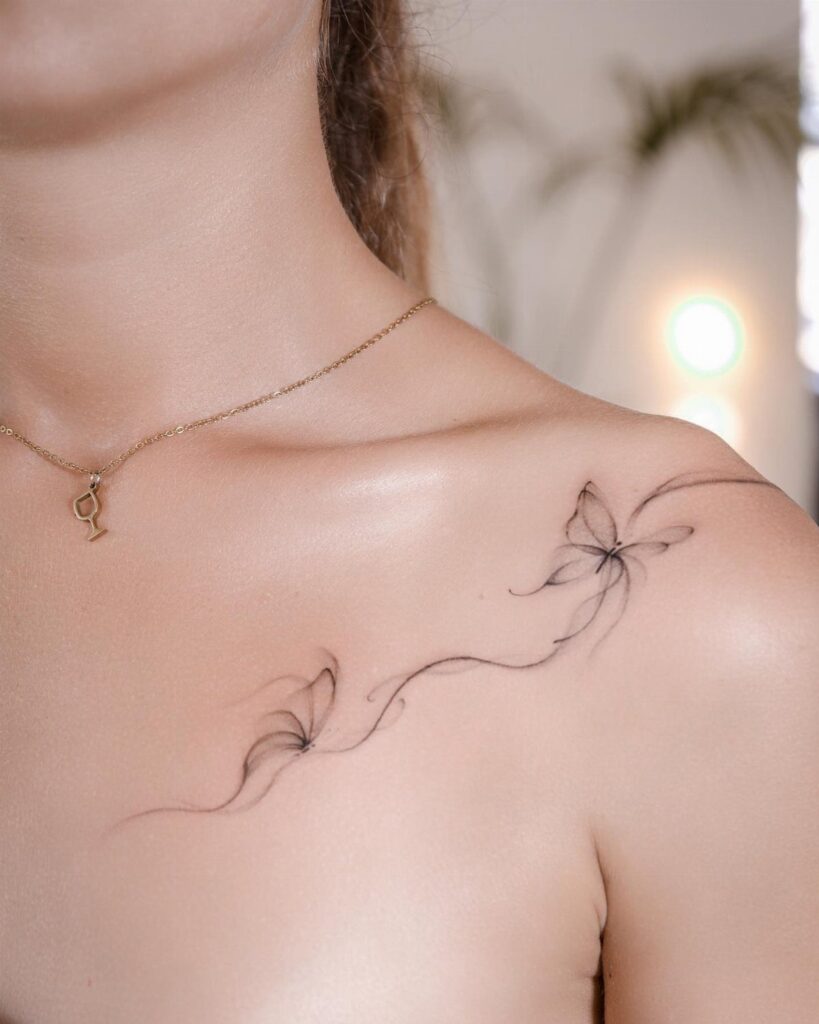
A butterfly tattoo can cost anywhere from a shop minimum to over $500 depending on size and detail, and I cover what to expect for pain, healing time, and how well different placements hold ink further down.
If you want color, expect faster fading than black ink, and pastels need touch-ups more often than saturated shades because they contain less pigment.
1. Minimalist Butterflies in Line Art Style
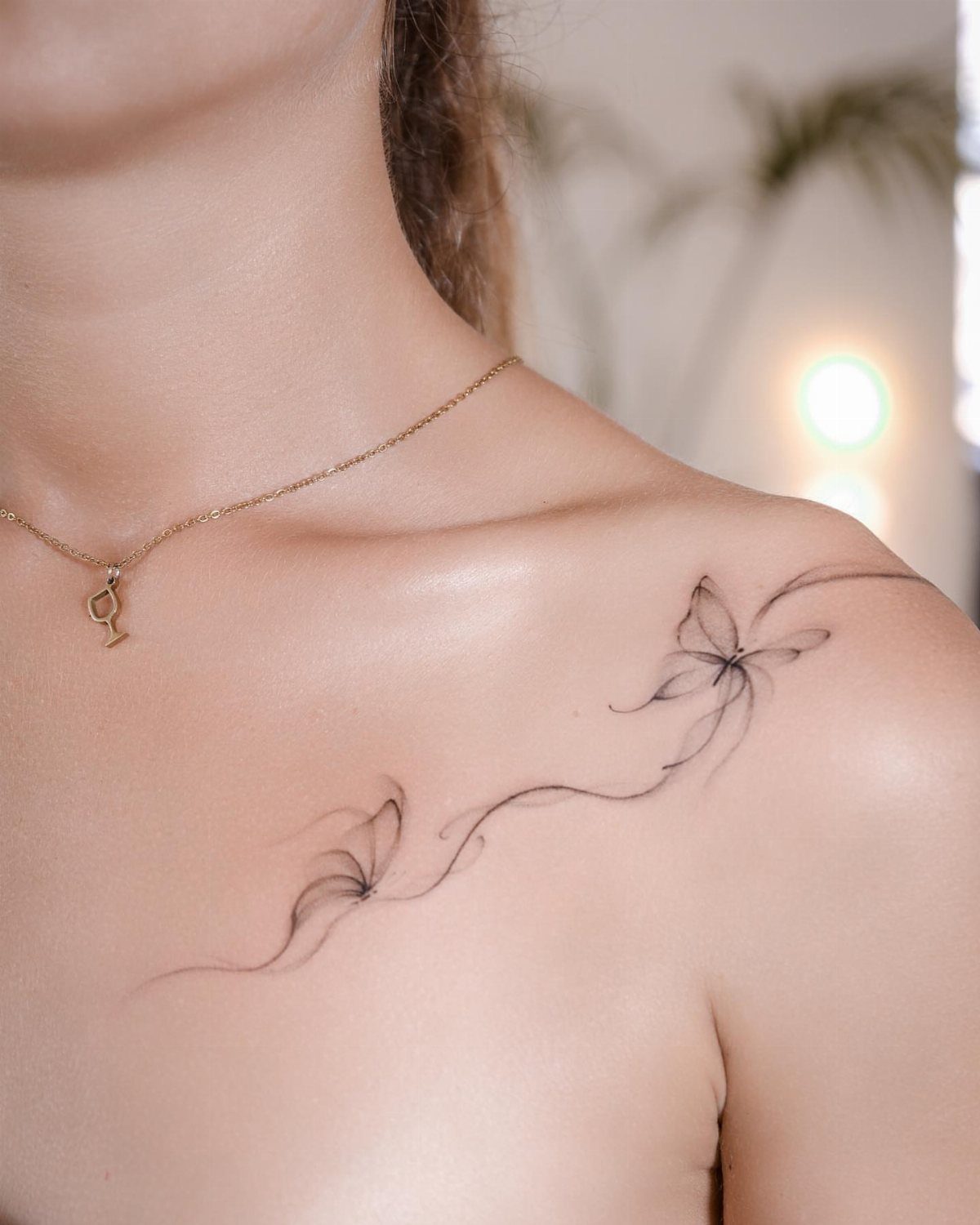
A single continuous line traces each butterfly, no fill, no shading, just the outline. The wings stay open and symmetrical, and when two butterflies sit together like this, a thin connecting line turns them into one flowing piece.
This style reads clean from any distance and ages well because there’s no dense ink to spread. It suits a first tattoo or someone who wants the symbol without visual weight.
For a delicate look, ask your artist for thin, consistent line weight. The collarbone and shoulder are good spots because the bone sits close to the surface and the design can follow that natural curve.
2. Vibrant Butterfly Tattoos
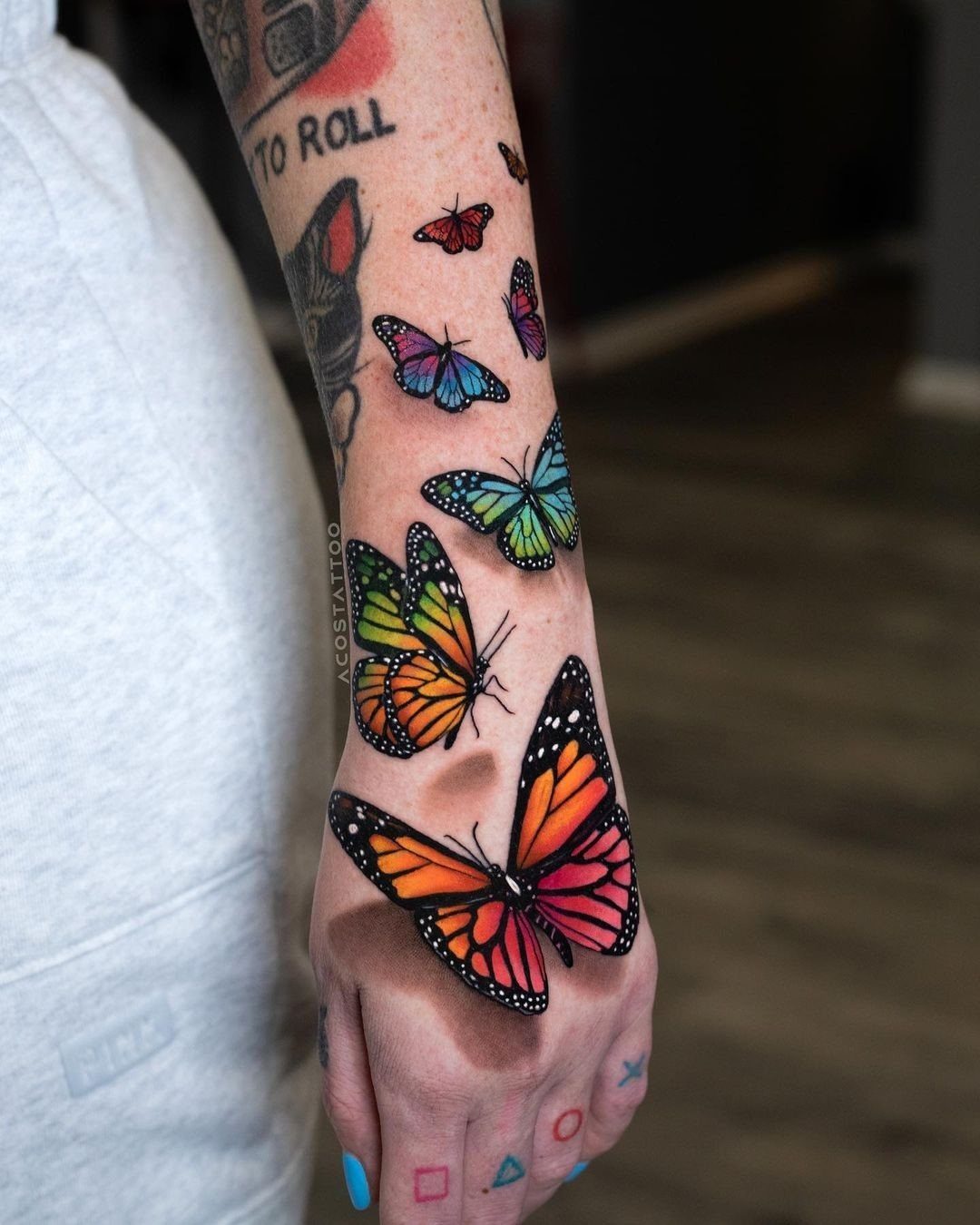
Color makes a butterfly tattoo feel alive.
Full saturation needs a touch-up every few years as the pigment fades, but the visual impact is immediate. Darker shades like deep reds and blues last longer than pastels or yellows.
The forearm offers space to layer several butterflies at different sizes. You can start with one and add more over time.
3. Butterfly Wings on Your Back
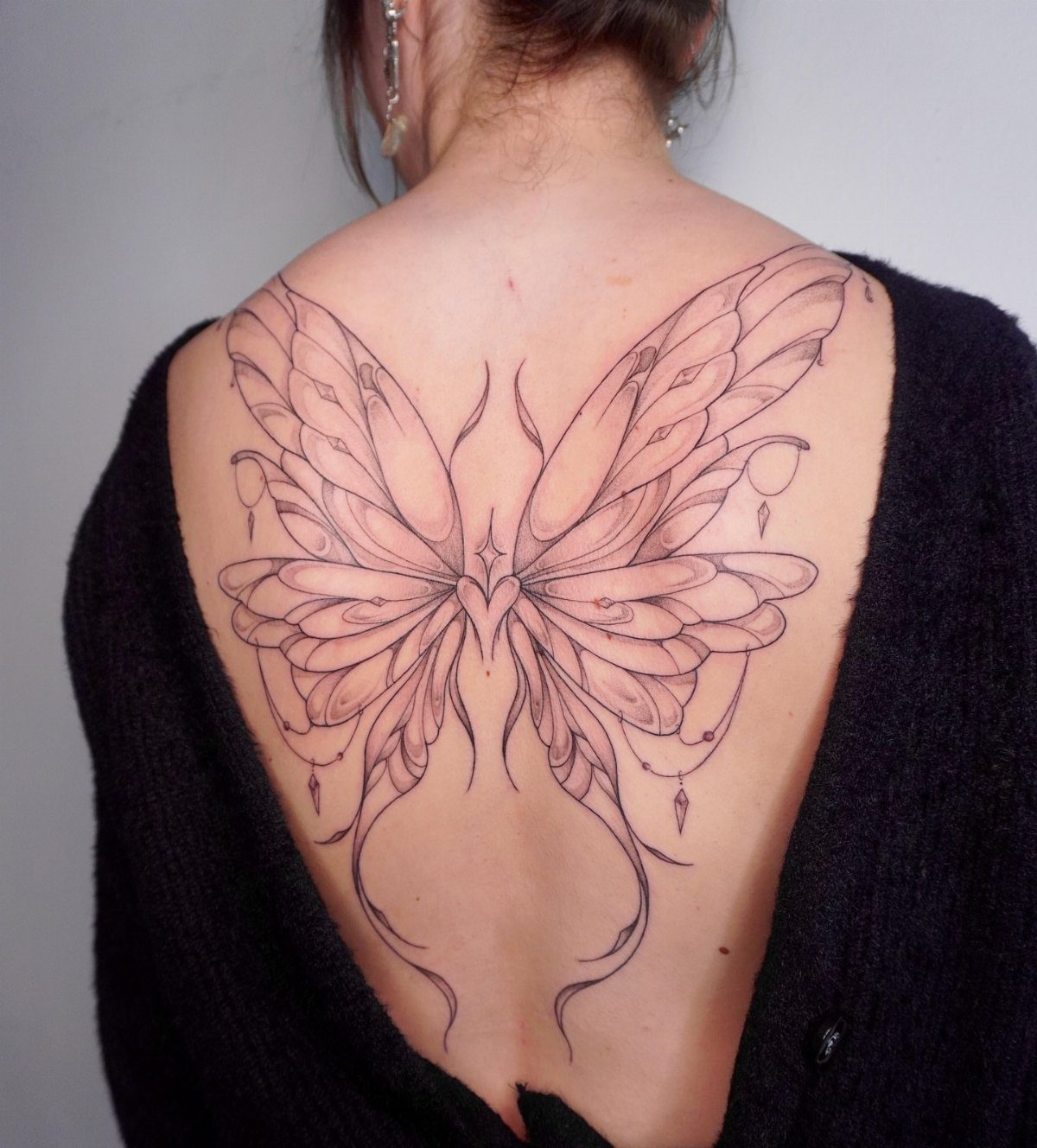
The wings span across your shoulder blades, one on each side, so your spine becomes the body.
This is a large piece that spans several sessions. The upper back ranks low on the pain scale, so it handles a piece this size well.
You won’t see it yourself without a mirror, but it photographs well and reads clearly when you’re wearing anything backless.
4. Celestial Butterflies
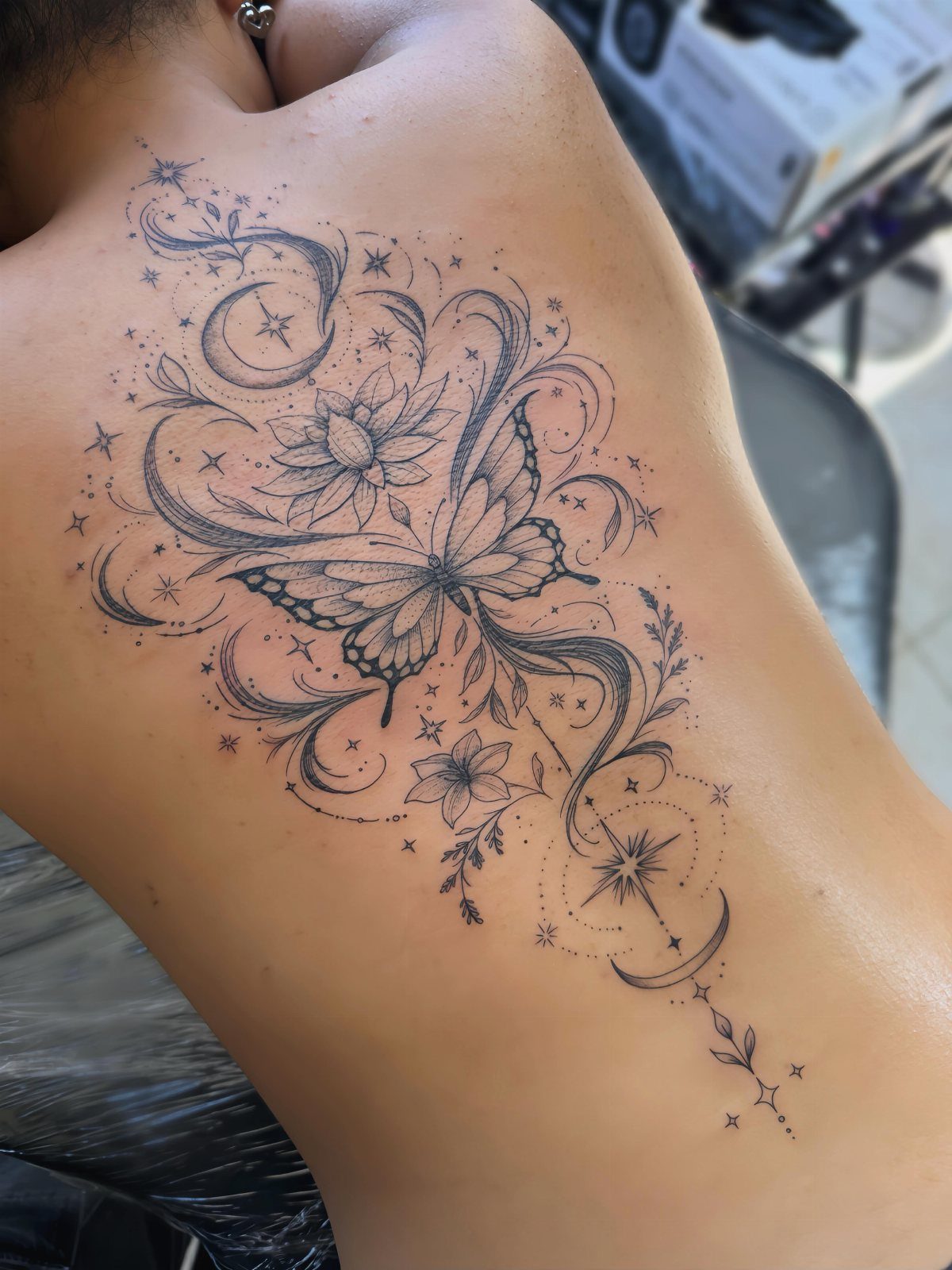
A butterfly paired with moons, stars and sometimes a lotus or mandala turns the design into something cosmic.
This combination works when transformation meets cycles, intuition or night. The lotus here adds a second layer of spiritual symbolism, but you can leave it out and keep just the celestial elements.
The back and shoulder blade give you the room to arrange all the pieces without crowding them. Black ink keeps it readable, and the line work can stay fine or go bolder depending on your preference.
5. Floral Butterfly
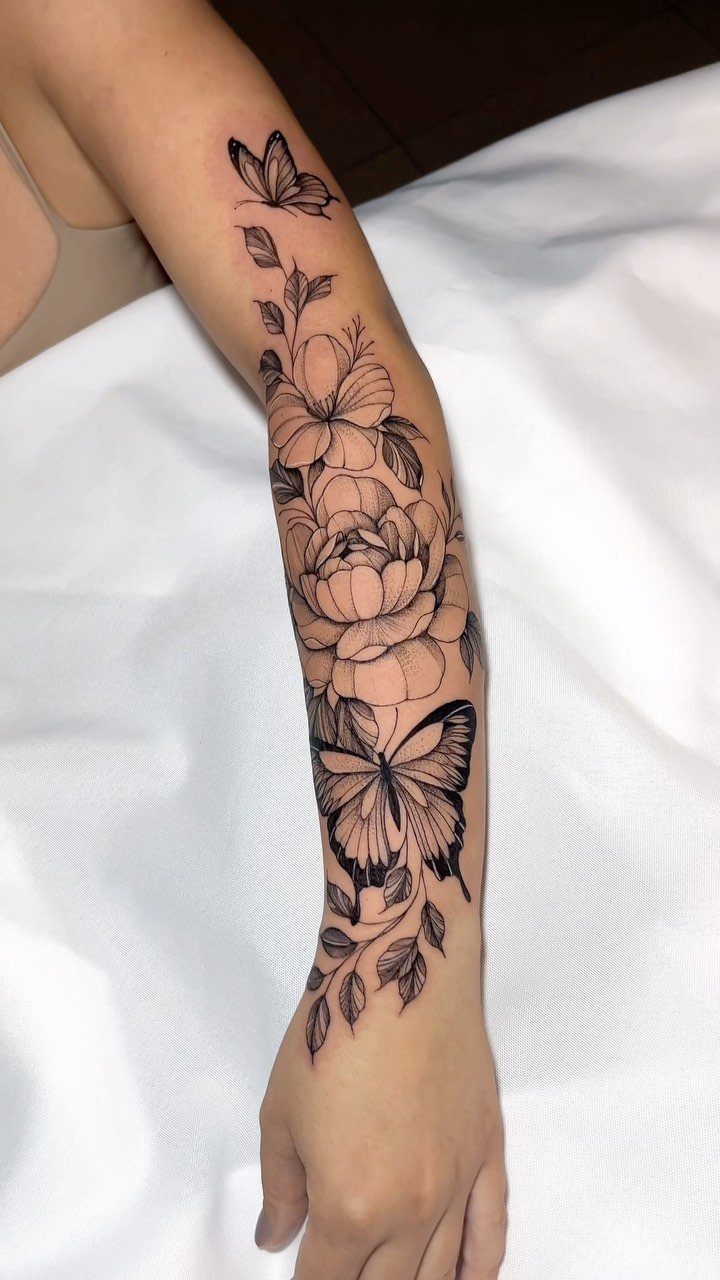
2 butterflies hover near or land on a cluster of blooms, usually roses, peonies or daisies. The flowers anchor the design, and the butterflies add movement without taking over.
This pairing suits the forearm, thigh or shoulder because you need space for both elements to breathe.
For flowers as the main subject, keep the butterflies small and place them off to one side. For balance, size them so the wings match the width of the largest bloom.
Black ink keeps the piece cohesive, but color on just the flowers or just the wings lets one element stand out.
6. 3D Butterfly
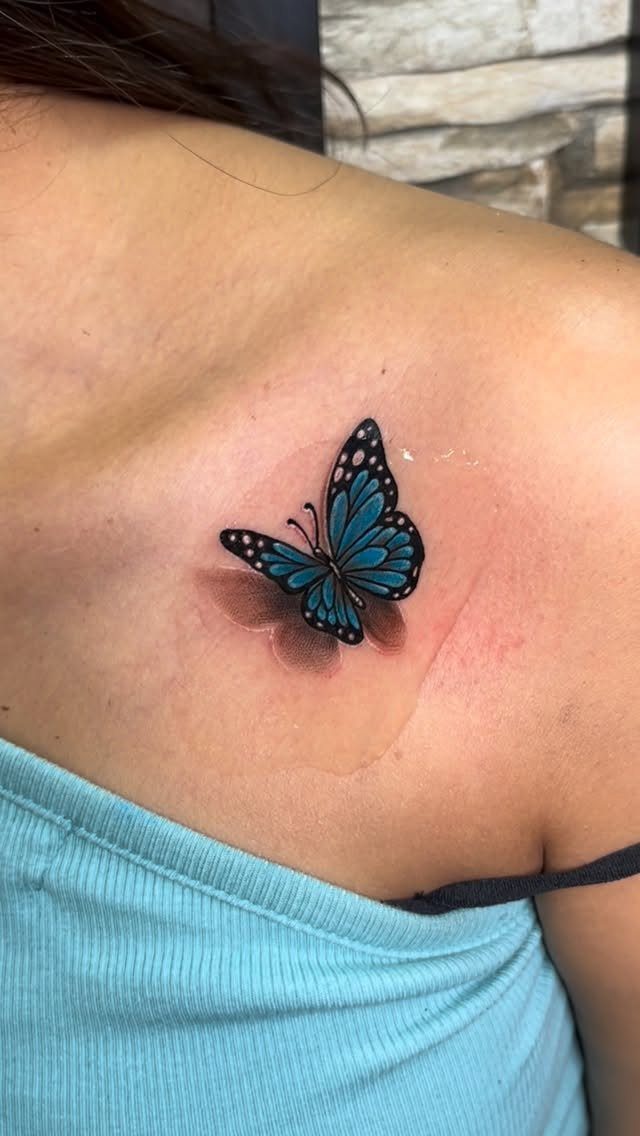
Shading and highlight placement make the wings look like they’re lifting off your skin.
Over time, the white ink fades and the contrast softens, so the 3D effect becomes less pronounced.
The shoulder and upper back are good spots because the muscle curve adds to the illusion. Keep the butterfly large enough so the shading has room to work.
7. Geometric Butterfly Tattoos
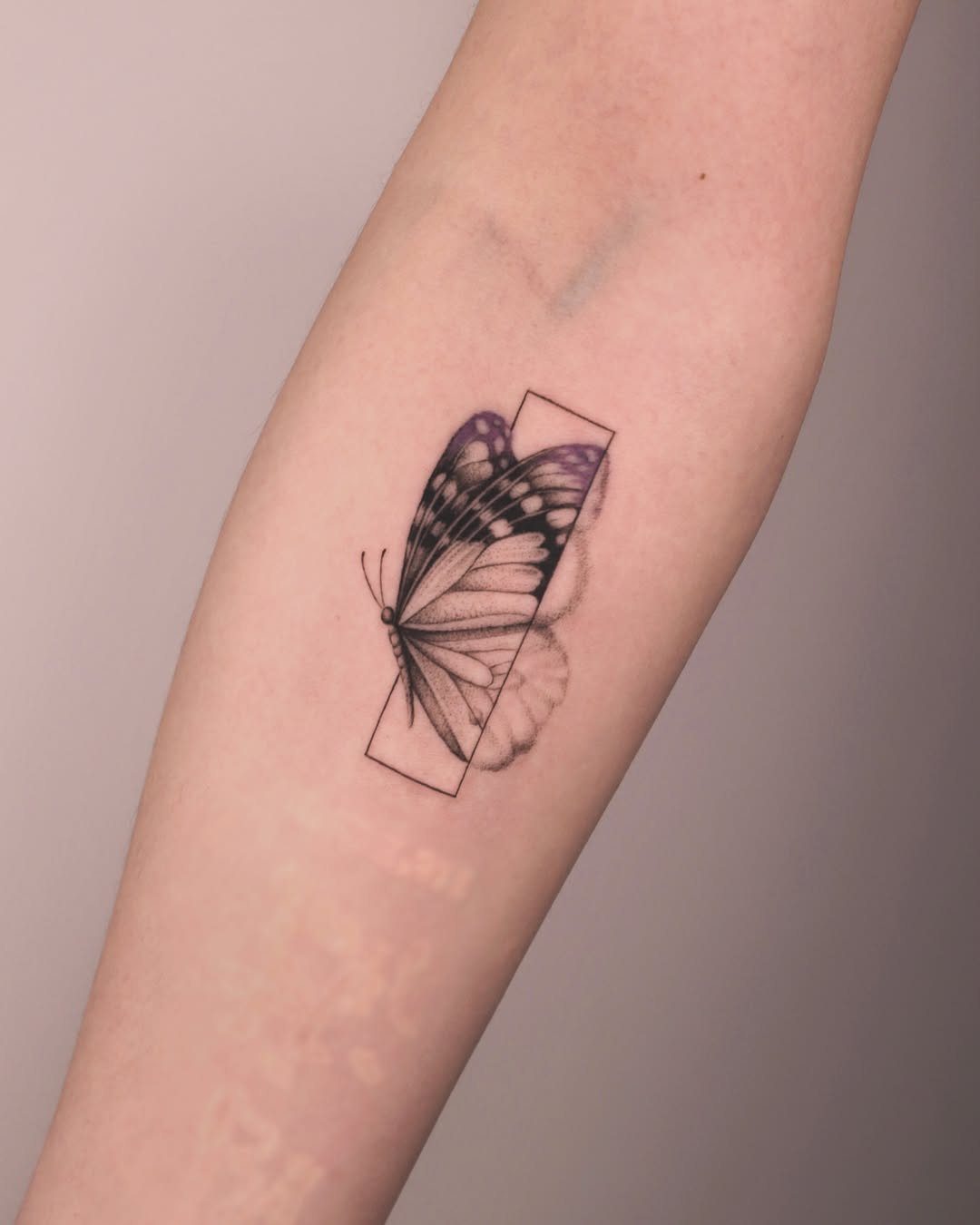
The butterfly sits inside a geometric frame, usually a triangle, rectangle or diamond made of clean, thin lines.
One wing stays organic with soft curves while the other mirrors it in straight angles, or the whole butterfly keeps its natural shape and the frame just holds it.
The contrast between rigid geometry and the butterfly’s natural form gives the piece structure without feeling stiff. Black ink keeps the lines sharp, and the forearm or upper arm provides a flat surface where both elements stay readable.
This style suits someone who likes balance between order and nature.
8. Watercolor Butterfly Tattoos
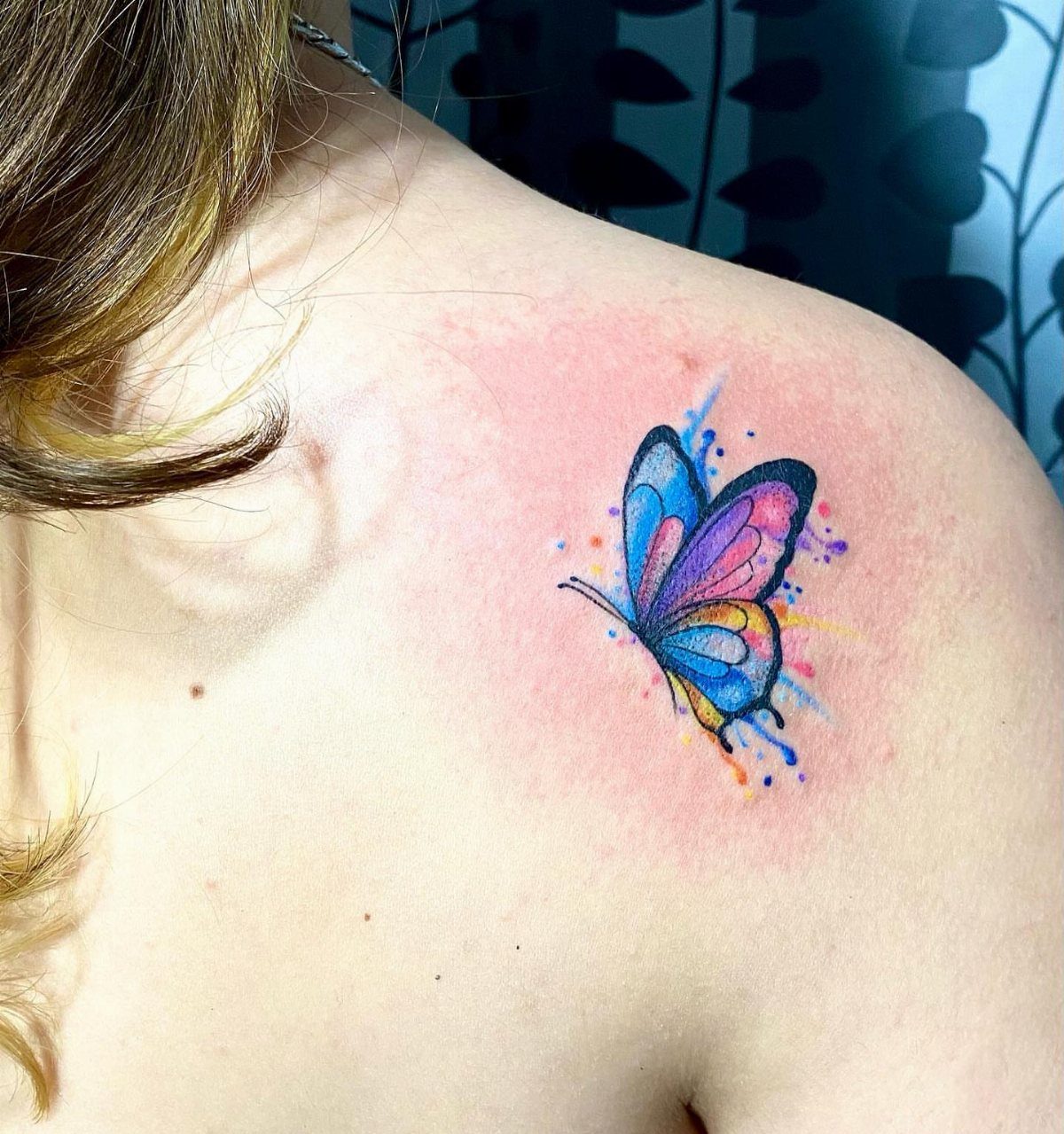
The colors bleed past the butterfly’s outline like wet paint on paper. Blues, purples and pinks blur together without hard edges, and the wings often fade into soft splatters.
This look is bold when fresh, but watercolor tattoos fade faster than solid ink because the pigment sits lighter in the skin. Watercolor ink fades faster than solid black, so expect to sit for a refresh at some point.
The shoulder and upper arm handle this style well because the skin stays relatively stable there. Give the butterfly enough width for the colors to actually blend instead of turning into a blurry smudge.
9. Tiny Butterflies on Wrists
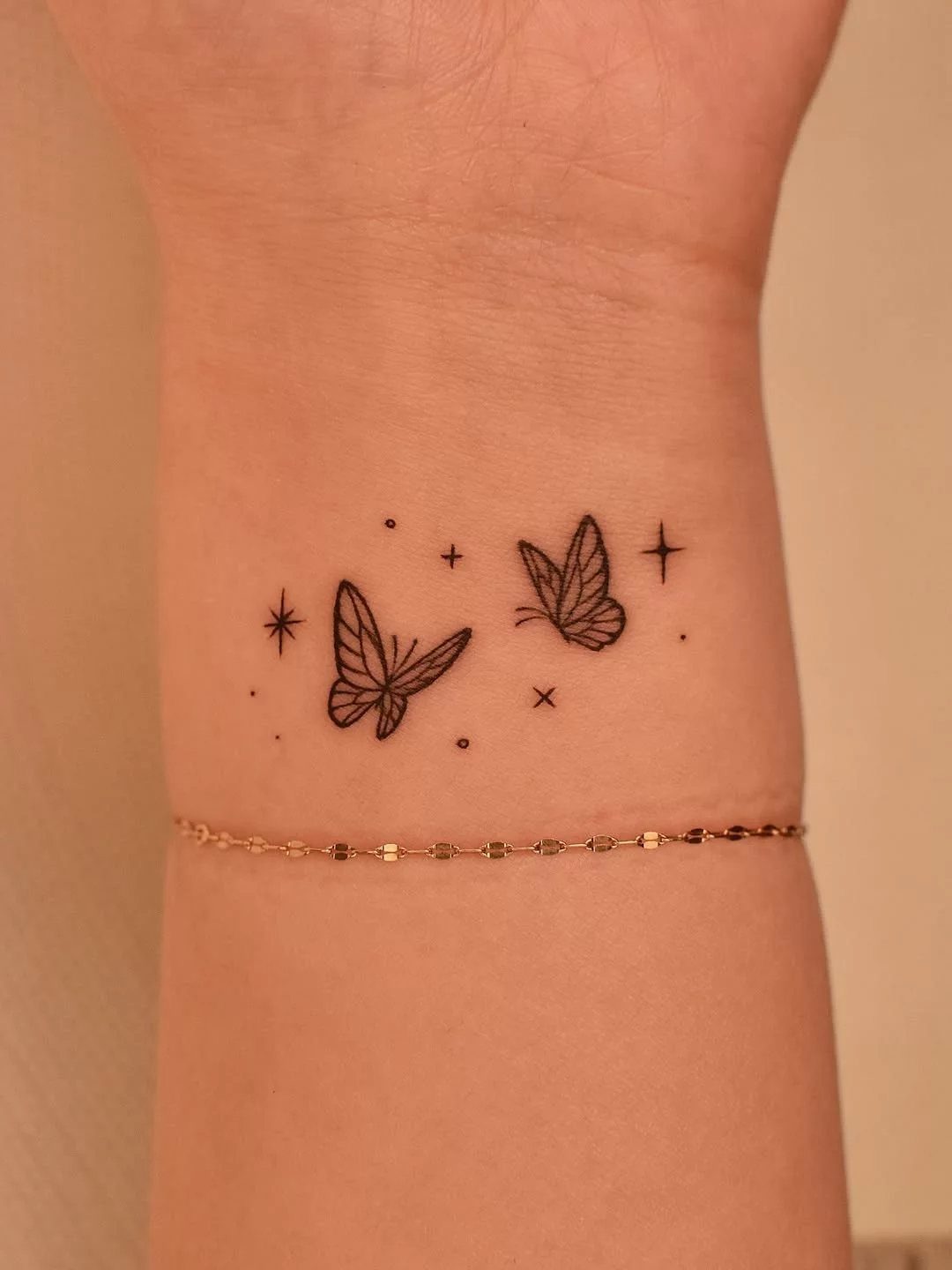
2 butterflies smaller than a coin rest on the inner wrist. A few tiny stars scattered around them fill the negative space without crowding the design.
The wrist is a high-visibility spot, and small tattoos here fade faster because the skin moves constantly. Black ink holds better than color at this size, and fine line work needs an artist who specializes in micro tattoos.
This placement ranks mid-level for pain because the skin sits thin over bone, but the session is short. Fine lines and small size mean you’ll likely need a refresh down the line.
10. Pastel-Colored Butterfly Tattoos
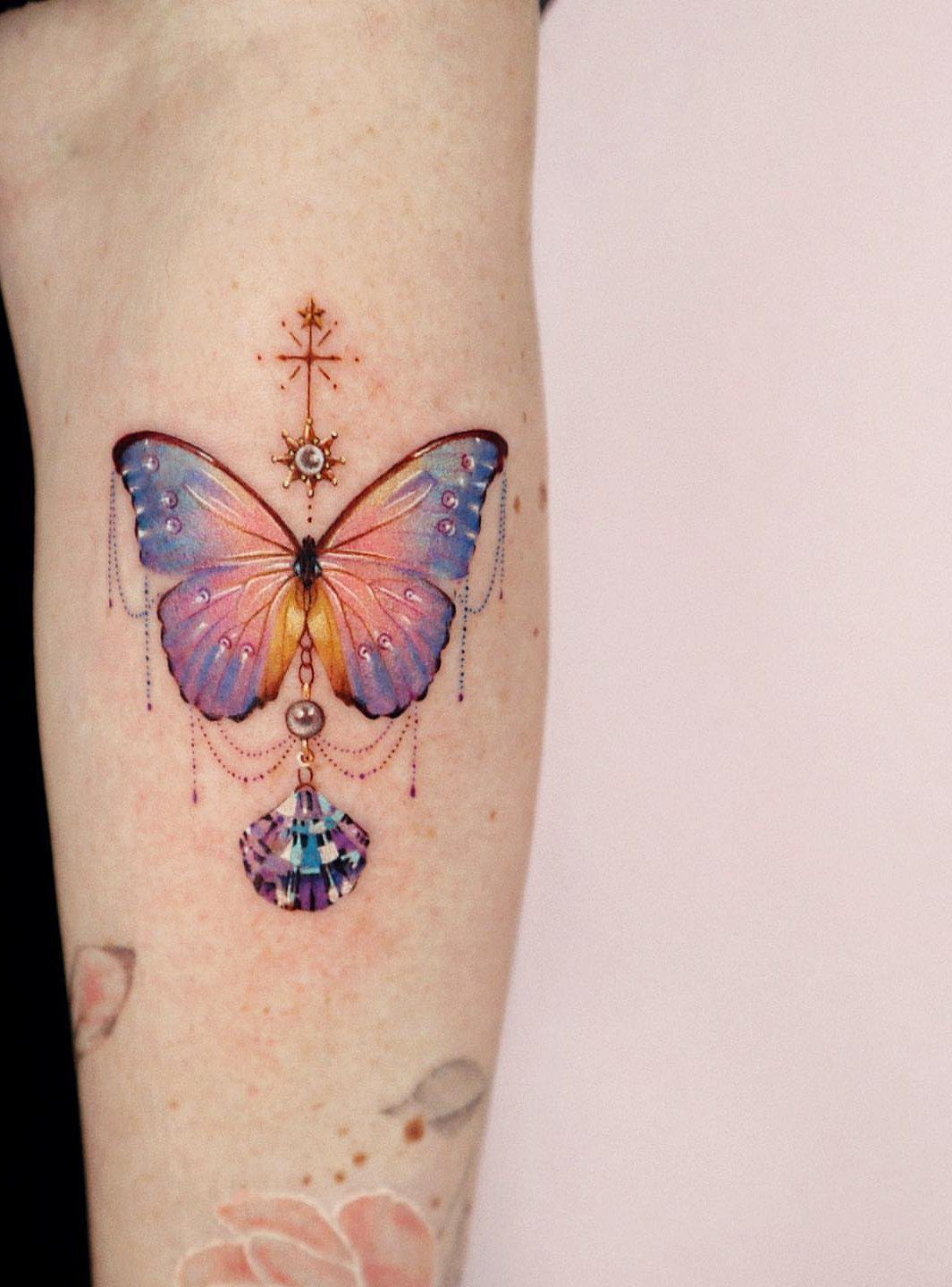
Soft lavender, baby blue and pale pink fill the wings, sometimes with a metallic gold accent or a small gemstone drawn near the body. The colors stay light, and the shading is minimal.
Pastels fade faster than saturated colors because they contain less pigment. The upper arm, shoulder or thigh work best because the skin there handles lighter ink well.
This style suits someone who wants a feminine, dreamy look but doesn’t mind maintaining it. If you want pastel wings to last longer, add a thin black outline to anchor the design.
11. Half-Sleeve Butterfly Tattoos
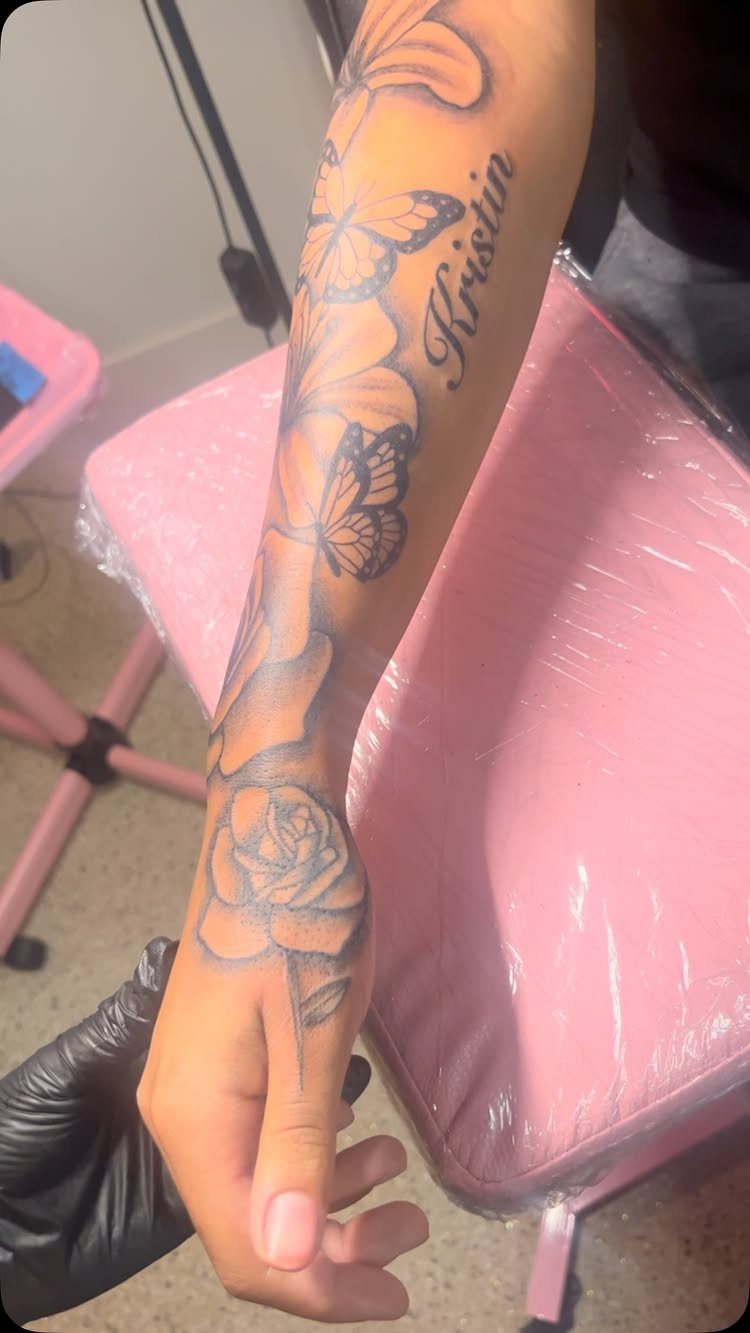
Multiple butterflies cluster together with flowers, leaves and sometimes script to cover the forearm in a composition that flows from wrist toward elbow.
The piece wraps around the forearm, and each element connects to the next through vines, stems or negative space.
A half-sleeve means multiple sessions, so plan for the commitment before you book. The forearm ranks low to moderate for pain, and you can build the design over time by adding butterflies or flowers as you go.
Black and grey keeps the piece cohesive, or you can add color to just the flowers while leaving the butterflies in line work. This style suits someone ready to commit to a large, visible piece.
12. Large Upper Back Butterfly Tattoos
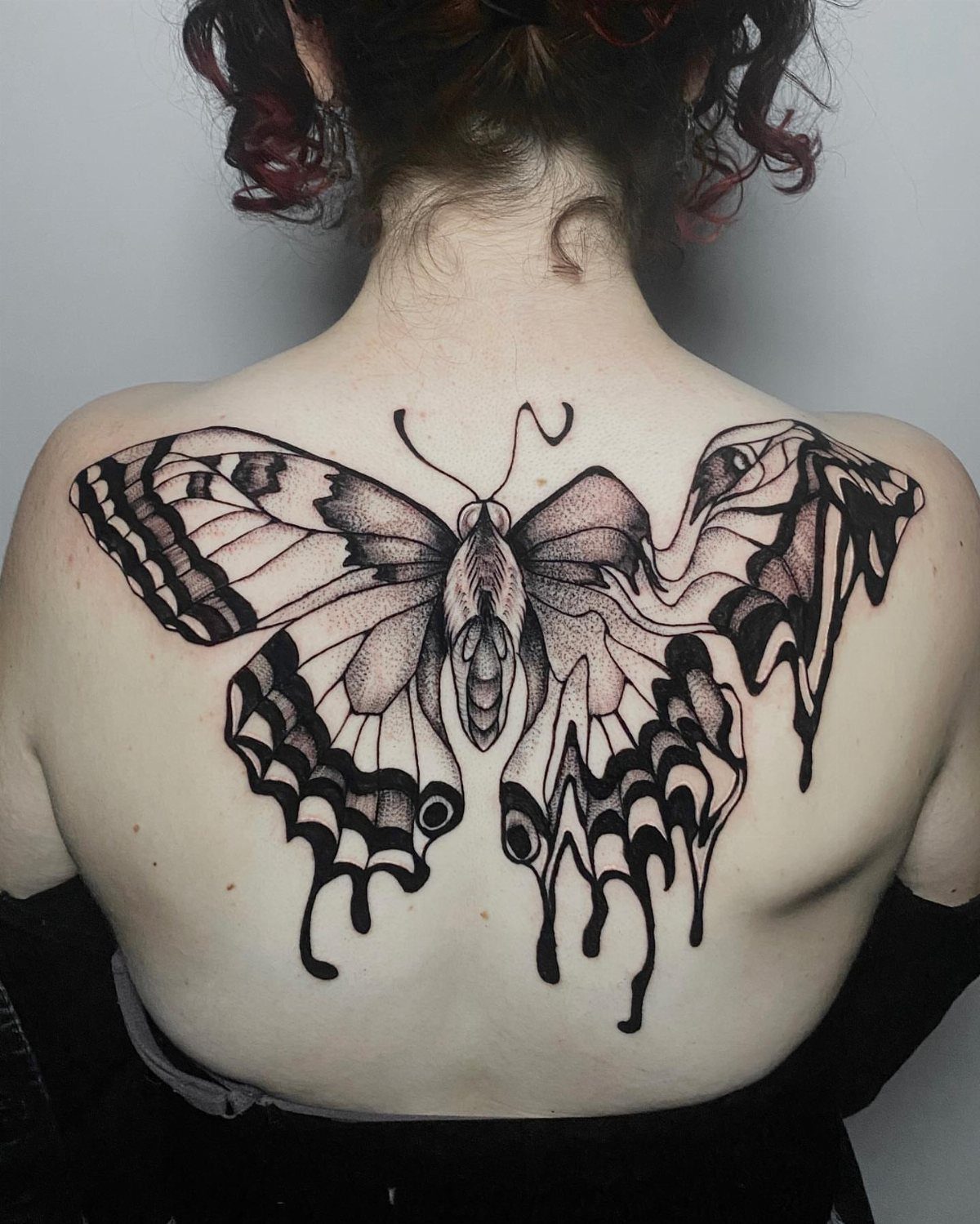
One large butterfly spans the upper back, centered between the shoulder blades. The wings stretch wide, and the design is bold enough to stand alone without extra elements.
A butterfly at this scale is a single-session piece.
For a dripping ink effect like this one, ask your artist to add fine trails running down from the wing tips.
13. Ankle Butterfly Tattoos
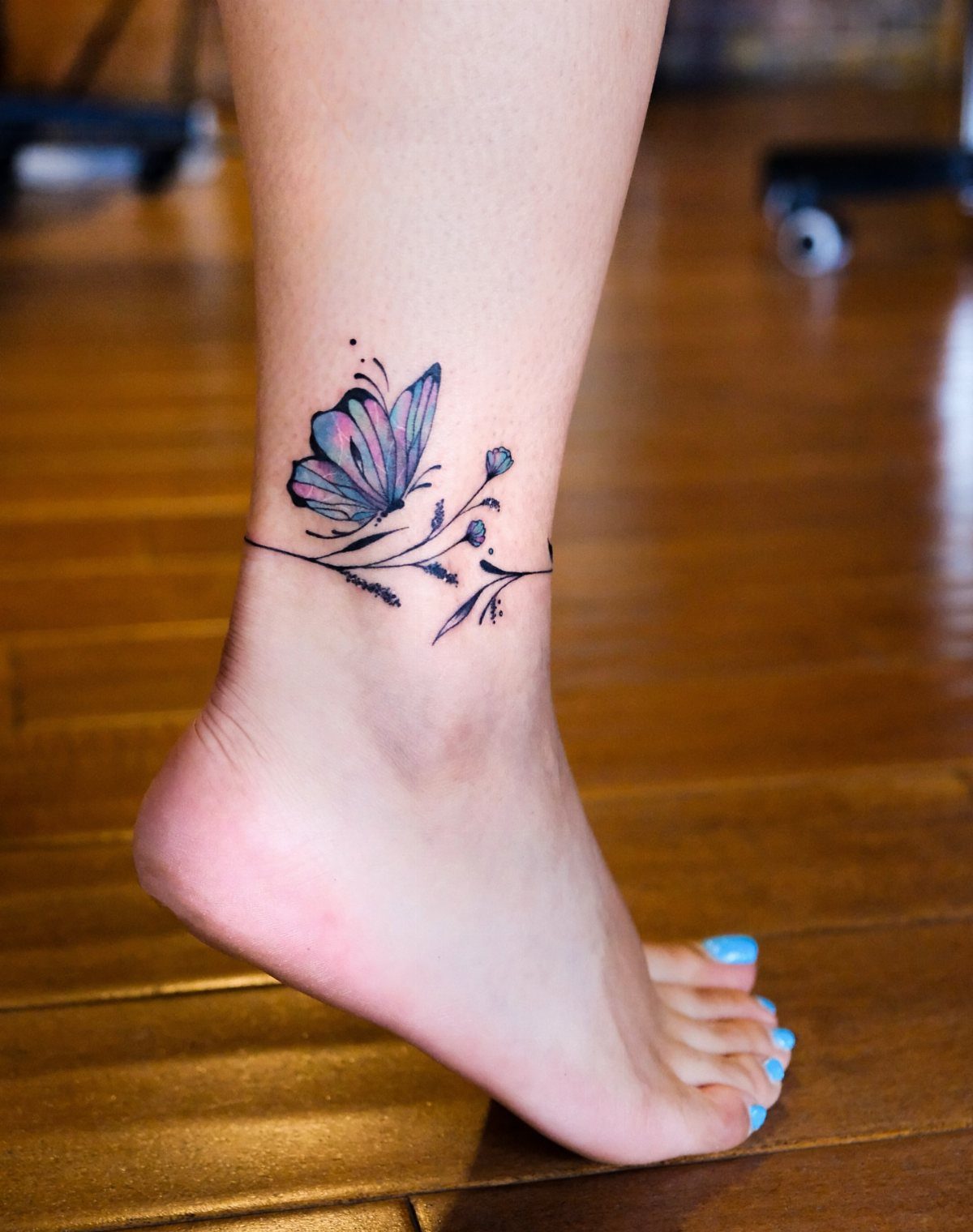
A butterfly on the ankle sits low and shows when you want it to, covered easily by socks or pants when you don’t.
The skin here moves constantly, and the bone sits close to the surface, so expect moderate pain and faster fading than spots with more cushion. Color holds better if you keep the design small and saturated.
This placement works best for a single butterfly or a small cluster with a few flowers. The narrow space doesn’t suit large, sprawling designs.
14. Butterfly Spine Tattoos
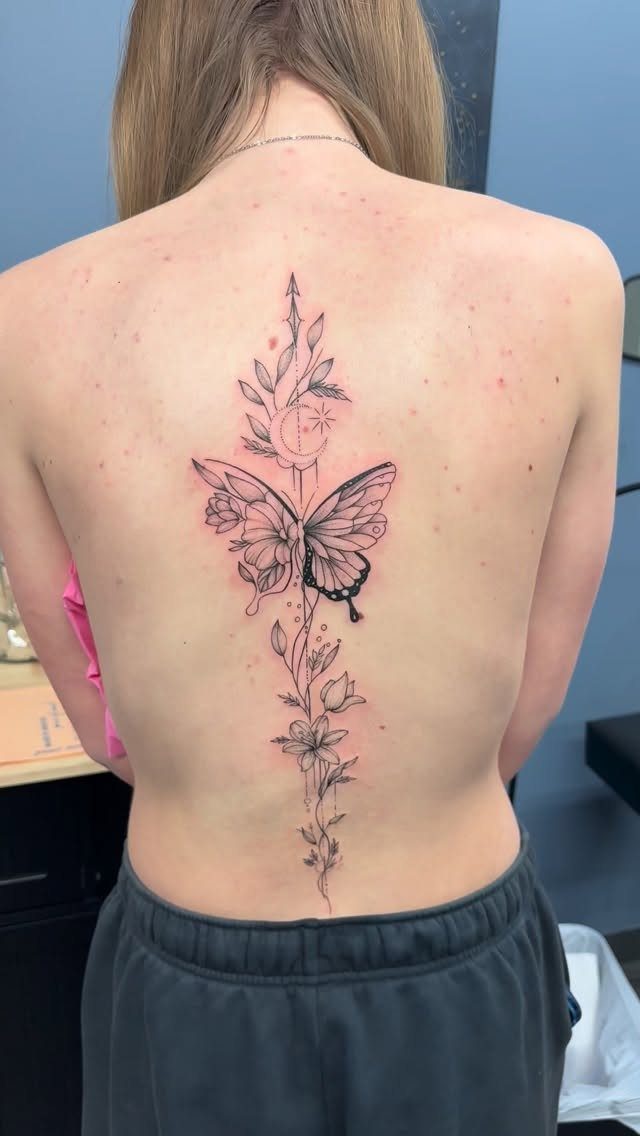
A vertical line of butterflies runs down your spine, sometimes mixed with flowers, moons or leaves. The spine becomes the path they follow, and the piece reads as one continuous climb or descent.
The needle hits bone with every pass, so expect real discomfort, but plenty of clients tell me the finished piece makes the sitting worthwhile.
A mirror is your only view day to day, yet it reads beautifully in photos and turns heads the moment you wear anything open-backed.
Start with one butterfly and add more over time, or commit to the full spine in one session.
15. Collarbone Butterfly Tattoos
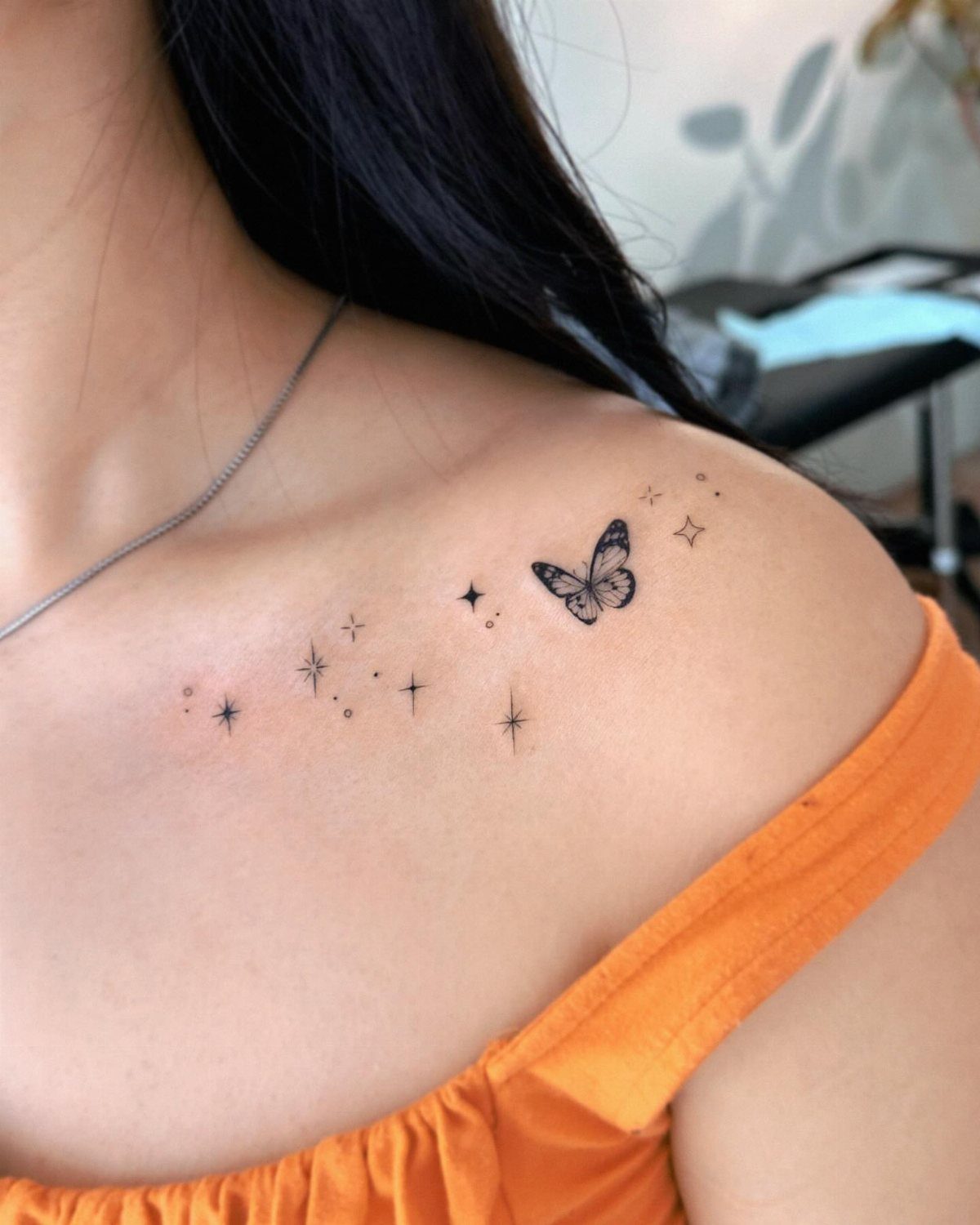
A small butterfly lands on the collarbone, often paired with a few stars or dots. The bone’s natural line frames the design, and the placement is visible without being bold.
The collarbone ranks moderate to high for pain because the skin is thin and the bone sits right underneath. Fine line work holds well here, but expect some fading over time as clothing rubs against it.
Keep the butterfly small so it fits the narrow space without wrapping awkwardly onto the shoulder or chest.
16. Fairycore Butterflies
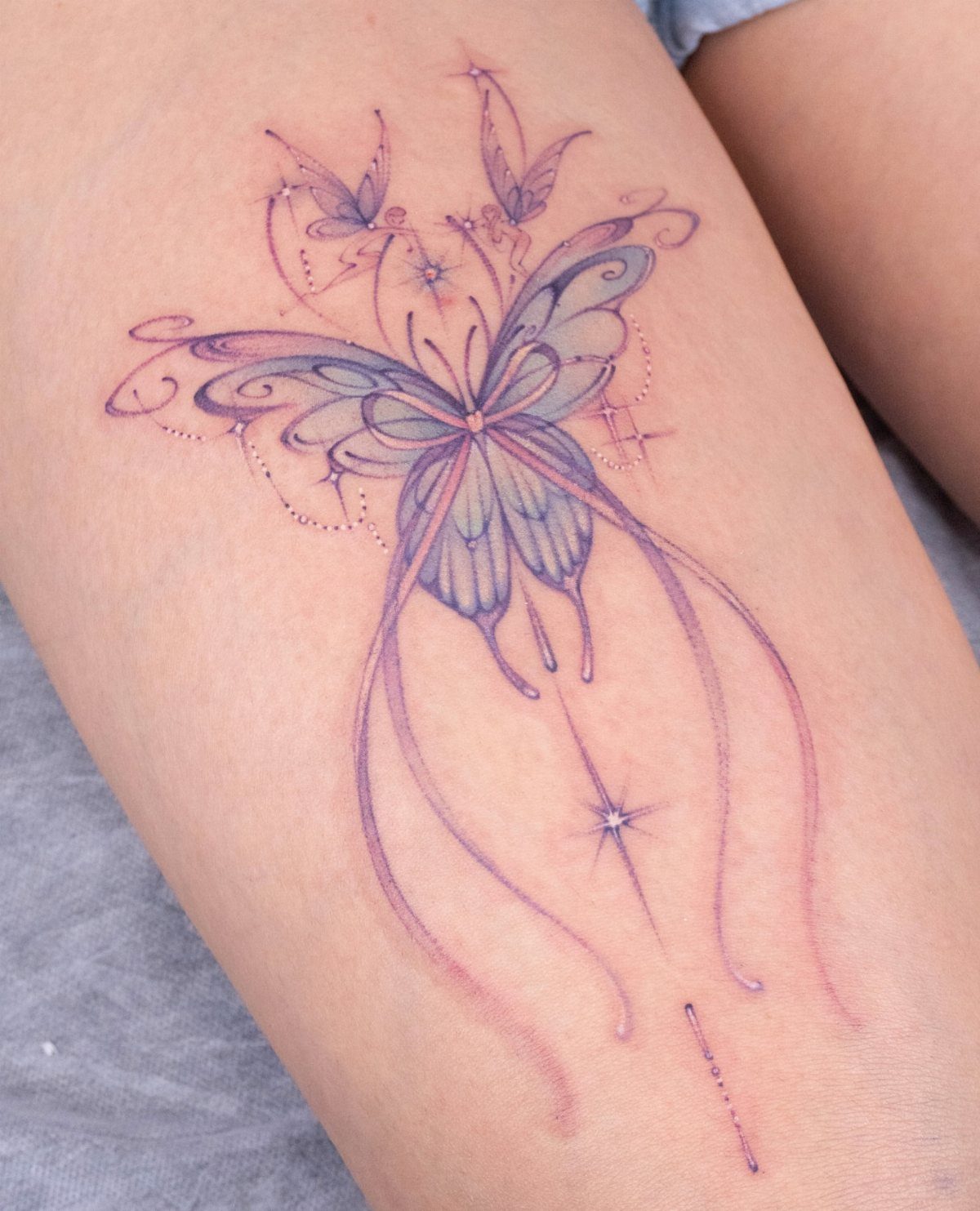
The butterfly’s wings take on an iridescent, almost translucent quality, and sparkles or small stars scatter around it like fairy dust. This style leans into fantasy rather than realism.
Color is key here.
Purples, blues and pinks with a soft gradient give the wings that otherworldly glow. The leg or forearm offers enough space to add the sparkle details without crowding the butterfly.
This style suits someone who wants a design that feels more magical than natural. Pastel ink fades faster, so plan for touch-ups if you want the colors to stay bright.
17. Butterfly ‘Tramp Stamp’
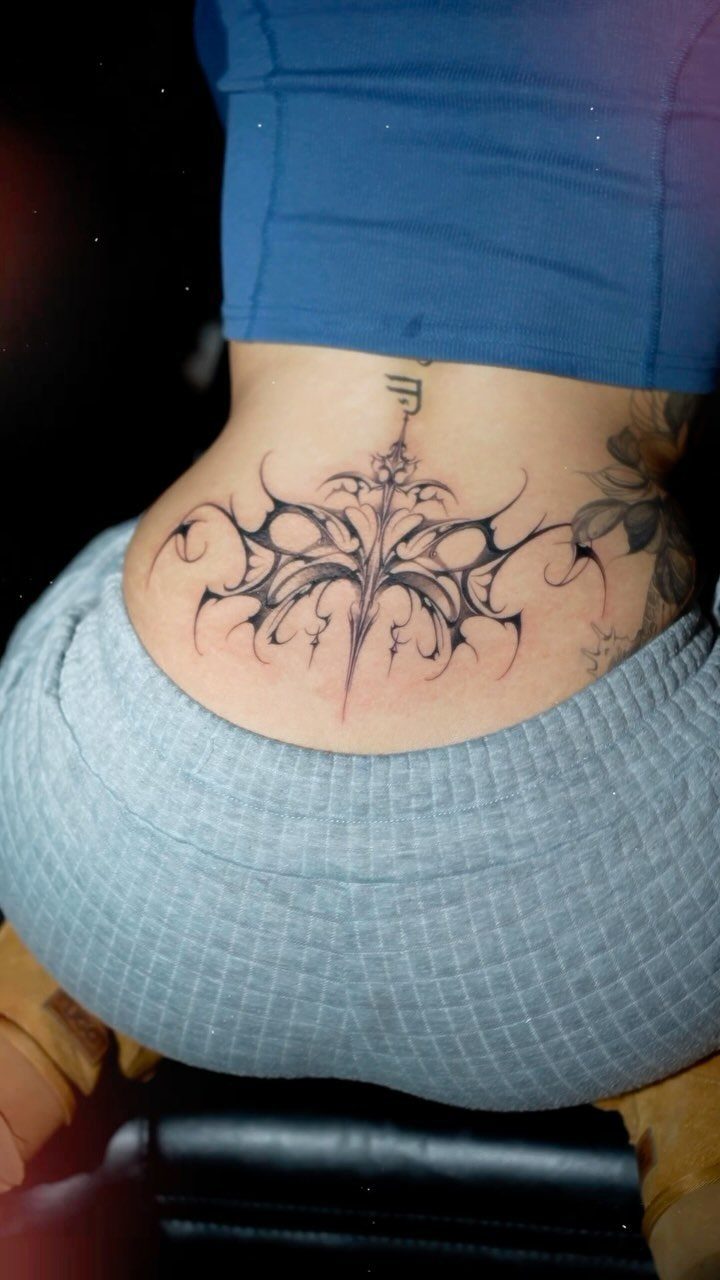
The lower back butterfly came back. Symmetrical wings span the lumbar curve, centered just above the waistband.
This spot ranks low to moderate for pain, and the flat surface lets the wings spread wide without distortion. The tattoo shows when you want it to and stays hidden otherwise.
If you’re drawn to this placement, choose a bold design with strong line work. Thin, delicate butterflies don’t hold up as well here because clothing friction fades them faster.
18. Butterfly Made of Lace
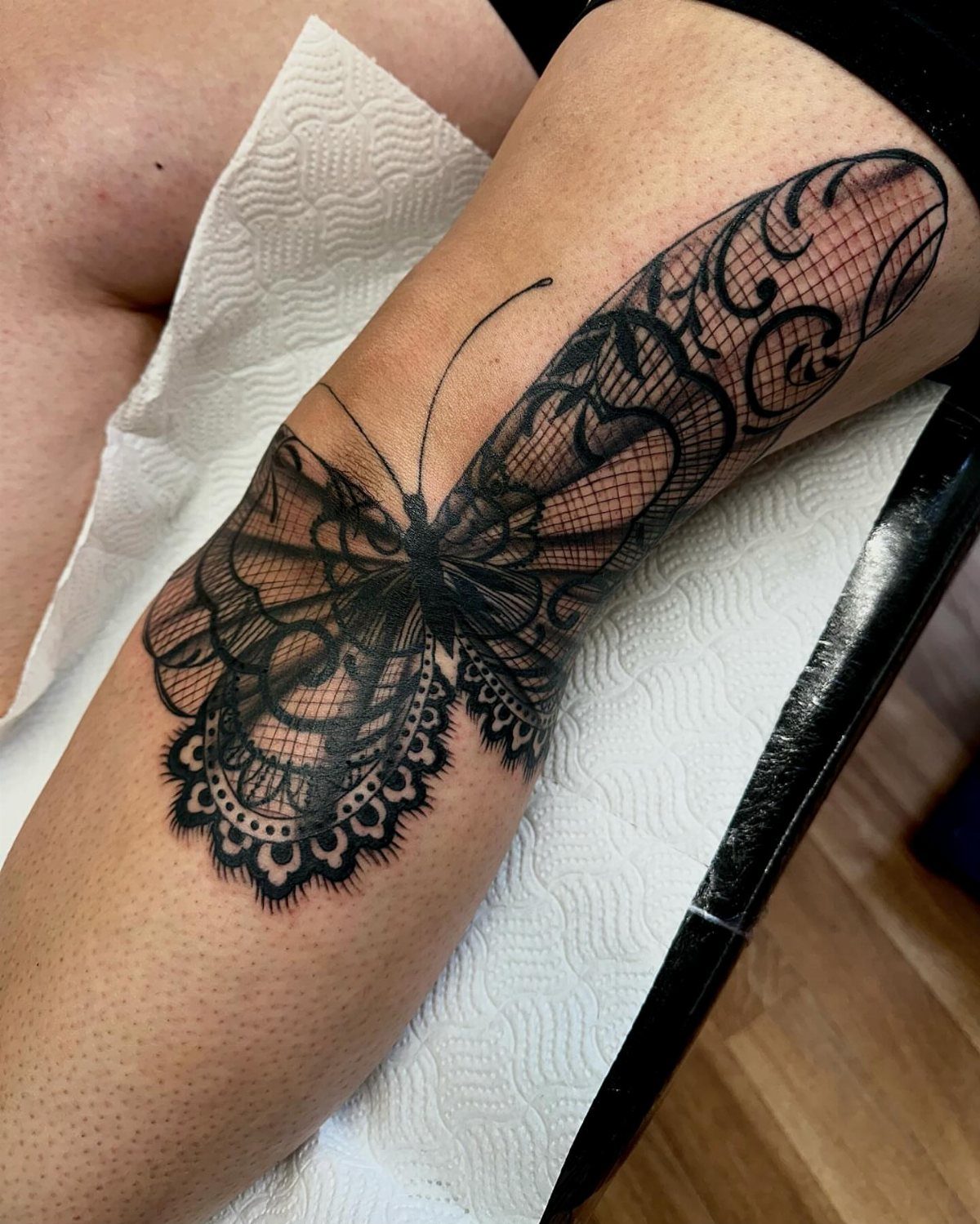
The wings are filled with lace patterns instead of solid color or shading. Loops, scallops and floral motifs replace the natural texture, and the whole piece looks like embroidered fabric stretched into butterfly form.
This style requires an artist skilled in fine line work because the lace detail needs precision to read clearly. Black ink keeps the pattern sharp, and larger butterflies give the lace room to show.
The forearm, thigh or shoulder blade are good placements because the skin stays flat and the design won’t warp with movement. Over time, the finest lines may blur slightly, so size matters.
19. Gothic Butterfly
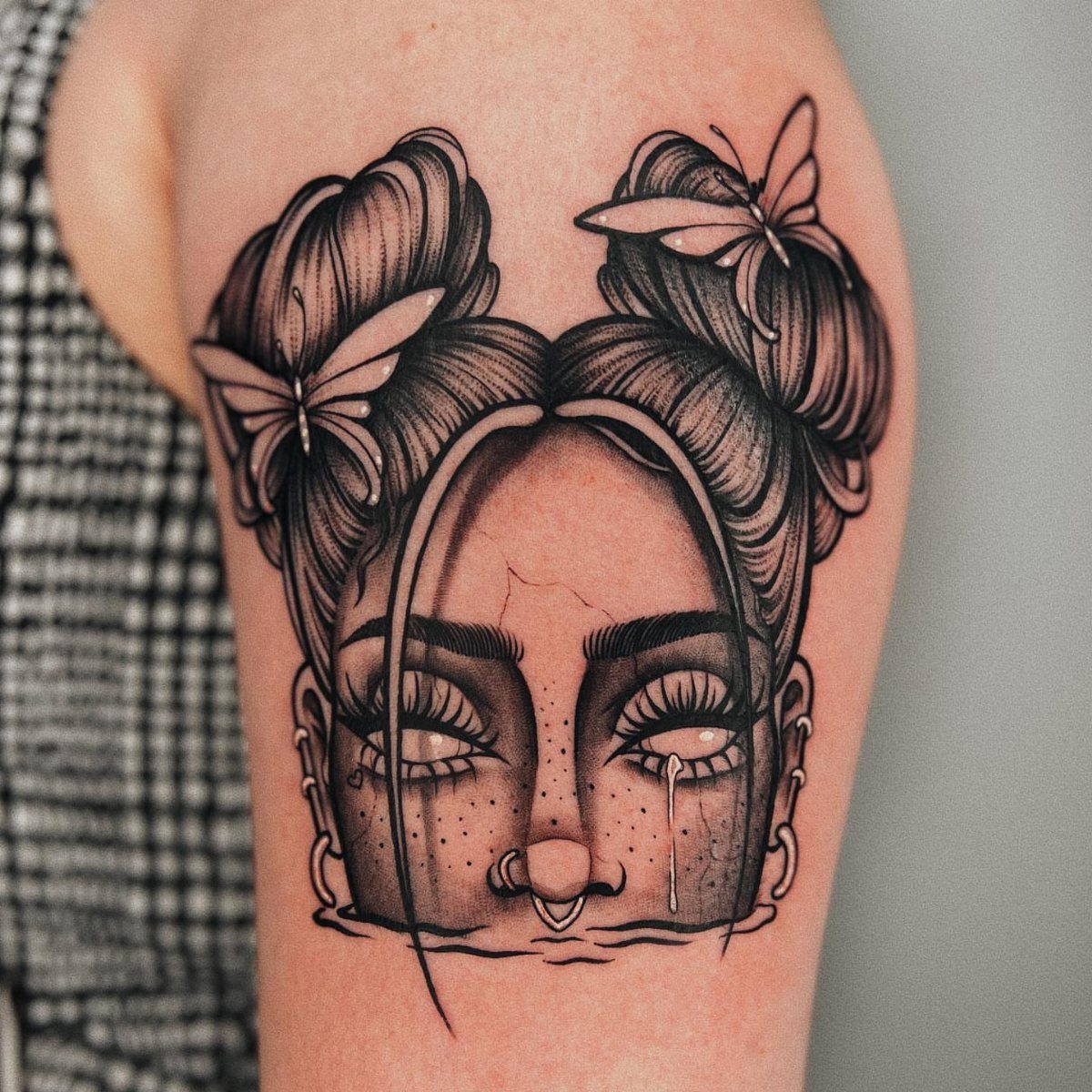
A butterfly paired with a woman’s face, tears or skull imagery turns the piece darker while keeping the butterfly’s symbolism intact.
This style suits someone who wants transformation without the lightness that usually comes with it. Black and grey keeps the mood consistent, and the upper arm or forearm gives you room for both elements to sit together without crowding.
The contrast works because the butterfly stays recognizable even when the surrounding imagery leans gothic.
20. Broken Butterfly Tattoo
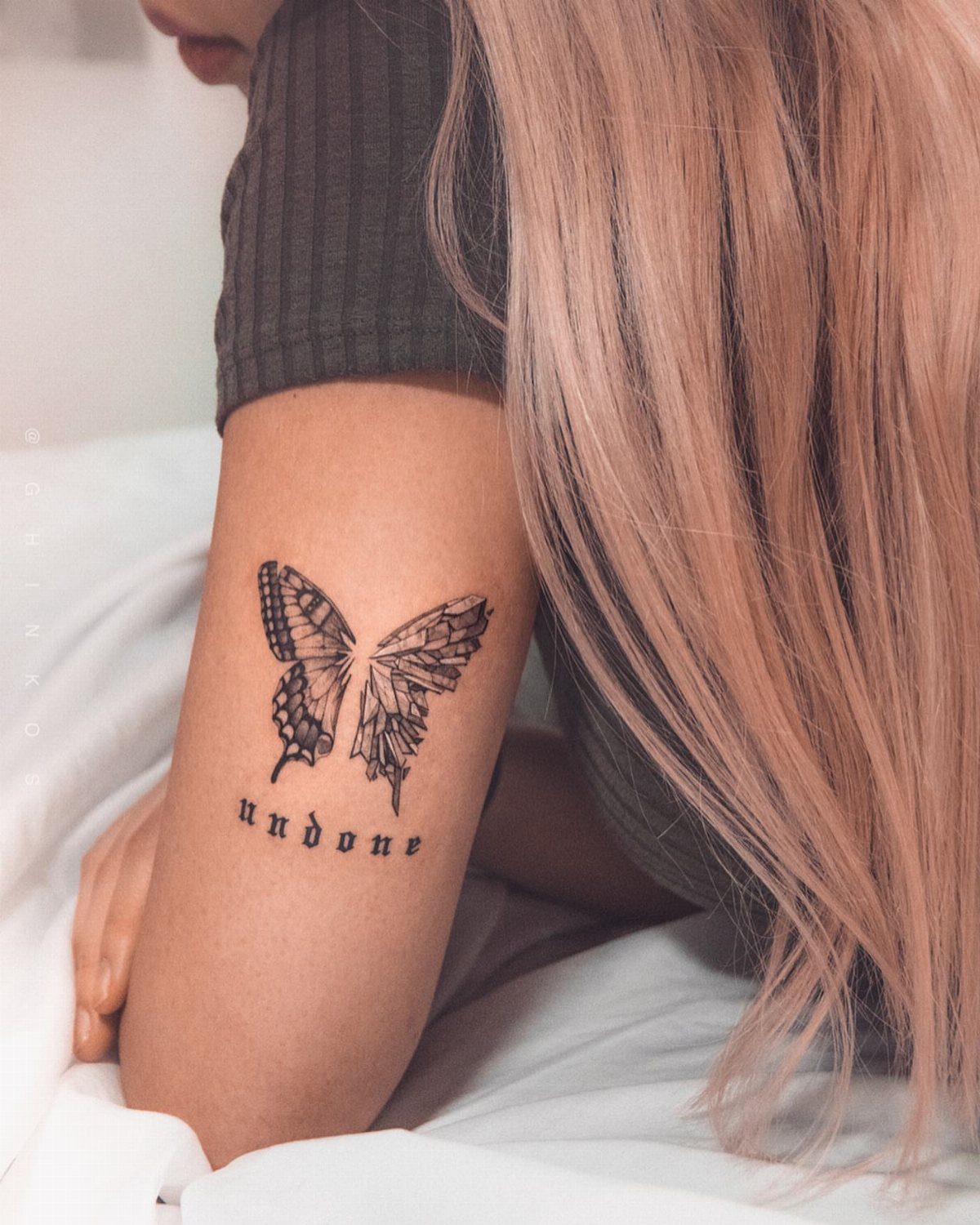
A butterfly with torn or fragmented wings, sometimes paired with script like "undone" or "broken," makes the transformation literal.
This design reads as strength through damage rather than perfection. The upper arm handles it well because the muscle gives the butterfly space to sit without wrapping awkwardly.
Black ink keeps the piece sharp, and fine line work on the torn edges prevents the design from blurring over time. This suits someone marking a chapter that didn’t go smoothly but still counts.
21. Butterfly with Rose Accents
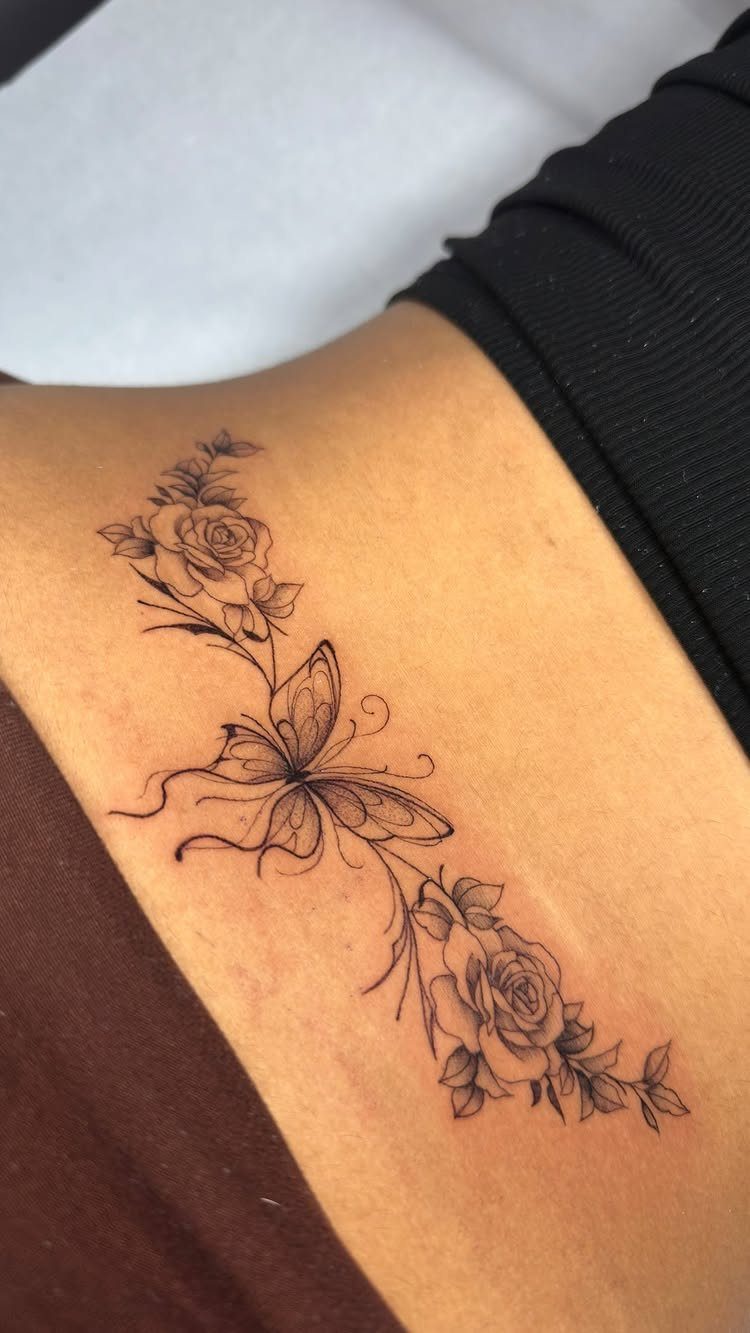
A butterfly centered between 2 roses brings together change and love, beauty and growth.
The hip or lower back suits this placement because the butterfly sits as the focal point with the roses framing it symmetrically. Black ink keeps all 3 elements cohesive, and the design reads clearly without needing color.
This pairing works when you want both symbols to carry equal weight. The butterfly’s wingspan should span roughly the same width as the rose heads beneath it.
22. Butterfly and Cherry Blossom Tattoos
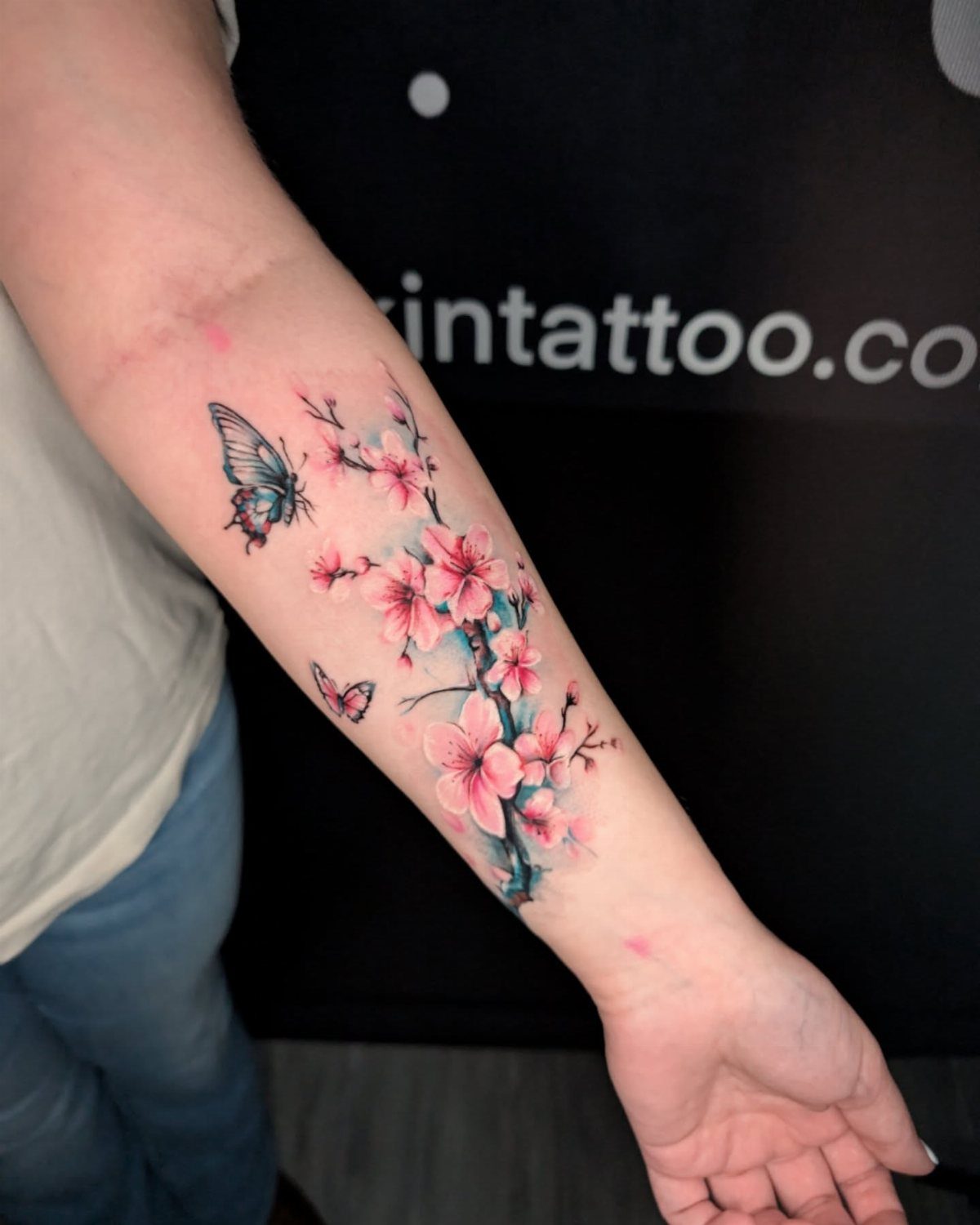
The pairing speaks to beauty that passes quickly and the arrival of a new season.
The forearm gives you room for a branch with blooms and 2 butterflies without crowding the design.
Color suits this style because cherry blossoms read best in soft pinks, and a touch of color on the butterfly wings ties the piece together.
This combination works for someone drawn to lighter, seasonal imagery. Black and grey is an option, but the spring theme benefits from at least one pastel element.
23. Tiny Finger Butterfly Tattoos
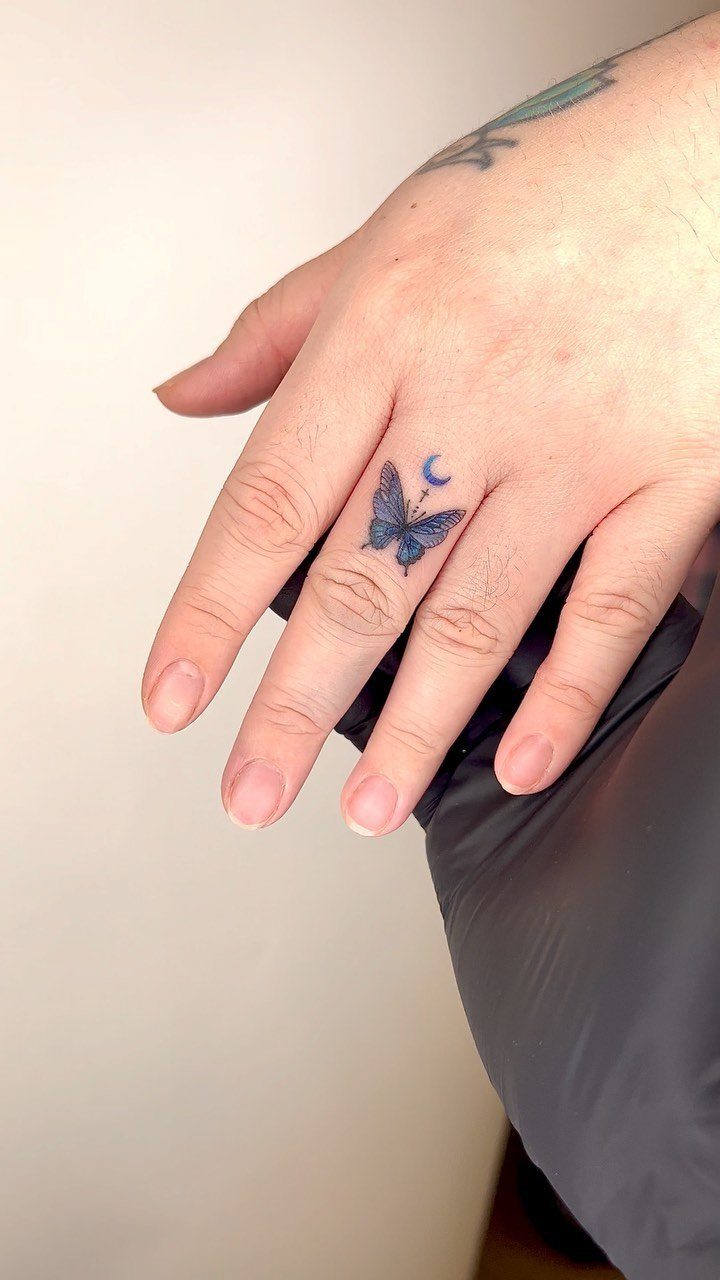
A single butterfly smaller than a fingernail sits on the side or top of a finger, sometimes paired with a crescent moon or star.
Finger tattoos fade faster than any other placement because the skin regenerates quickly and clothing rubs against it constantly. Expect a touch-up within a year, and keep the design simple because fine detail blurs here faster than anywhere else.
Color can fade faster on fingers, but delicate shades like soft blue or lavender still read beautifully when the design is kept simple.
24. Butterfly Wrist Chain Designs
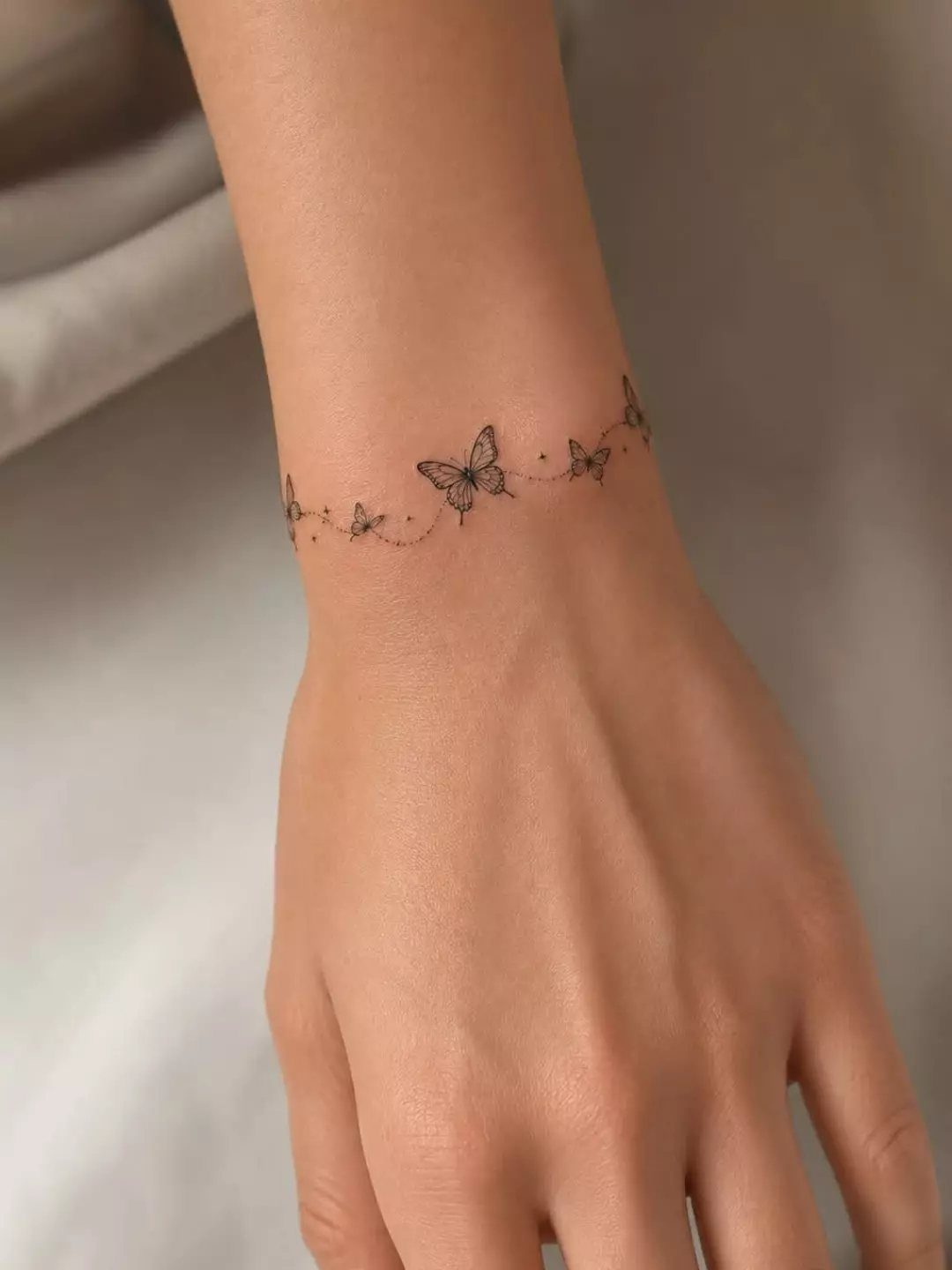
Tiny butterflies connected by dots or thin lines wrap around the wrist like a bracelet.
The design mimics jewelry, and the wrist’s visibility makes it a bold choice for a first or next tattoo. Keep the butterflies small and the connecting line minimal so the piece stays delicate.
Work this small requires someone used to holding a steady hand at micro scale.
Meaning of Butterfly Tattoos
The butterfly’s life cycle is what makes it stick as a symbol.
The transformation from caterpillar to winged adult mirrors personal change in a way that reads immediately, and that’s why the design shows up so often for someone marking a milestone or a chapter they’ve closed.
The Greeks used the same word, psyche, for both butterfly and soul.
That link between butterflies and the spirit carried through centuries, and you still see it today in how people frame the tattoo as something tied to growth or freedom.
In Japan, butterflies carry associations with young women and marital joy.
The species matters too. A monarch carries associations with endurance and strength, while a blue morpho leans more toward beauty and rarity.
Color adds another layer. Bright, saturated wings often signal joy or optimism, while muted tones or black ink keep the focus on form and structure.
Best Placements for Butterfly Tattoos
The wrist and forearm give you a visible spot that’s easy to show or cover depending on the day. Small designs fit well here, and the flat surface keeps line work sharp.
Behind the ear and the nape stay hidden under hair but show when you pull it up.
The thigh and hip offer room to work and the option to keep the tattoo covered. Pain here is low to moderate, and the design won’t show unless you choose to.
The ankle and foot look delicate, but the skin is thin and moves constantly, so expect faster fading and sharper pain during the session.
Cost and Healing of Tattoos
Most US shops charge a minimum that covers small butterflies, with prices climbing to around $150 depending on detail. A palm-sized design with color typically falls between $200 and $400, while a large back or thigh piece often crosses $500.
Healing takes 2 to 4 weeks.
Keep the tattoo clean, moisturized and out of direct sun during that time. Once it’s healed, sunscreen protects the ink from fading, especially if you chose color.