A paw print tattoo scales from small single prints through to larger pieces when you add portraits, trails, or multiple elements.
The choice comes down to whether you want a symbol that stands alone or one that carries additional context like a name, date, or your dog’s face.
Watercolor versions need touch-ups as light pigment fades quickly, while solid black linework holds longer on high-friction spots like the wrist or ankle.
Infinity loops, heart integrations, and floral accents change the tone without doubling the size, and memorial layouts turn a single icon into a full forearm piece.
1. Colorful Paw Print Tattoo
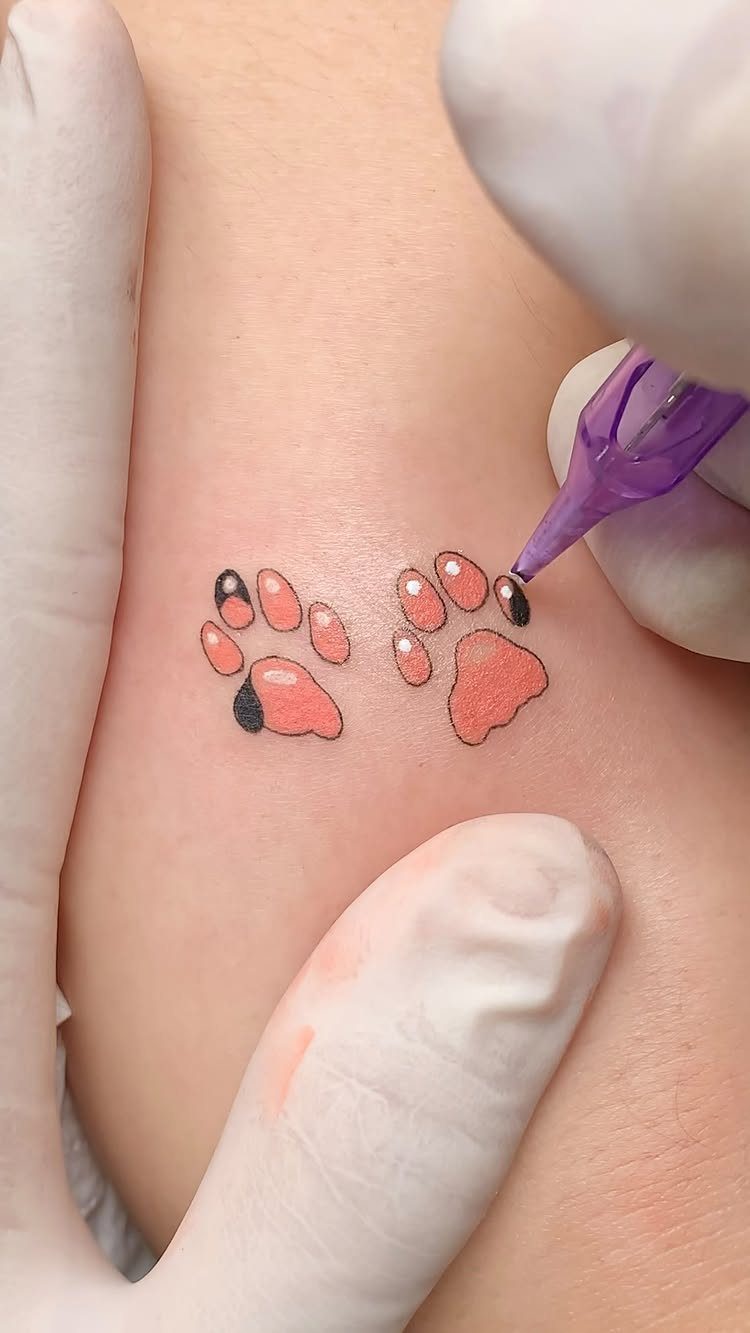
A paw print filled with solid color instead of black or grayscale adds energy and lets you match it to your dog’s personality or coat.
Orange and black work well for breeds like German Shepherds or Rottweilers, while blue or purple tones give the print a more abstract feel.
The color holds best when the print stays small. Larger prints need more saturated pigment to avoid fading over time, especially on hands or feet where ink lightens faster.
If this is your first tattoo, a single bright color over a black outline will age more predictably than multiple shades blended together.
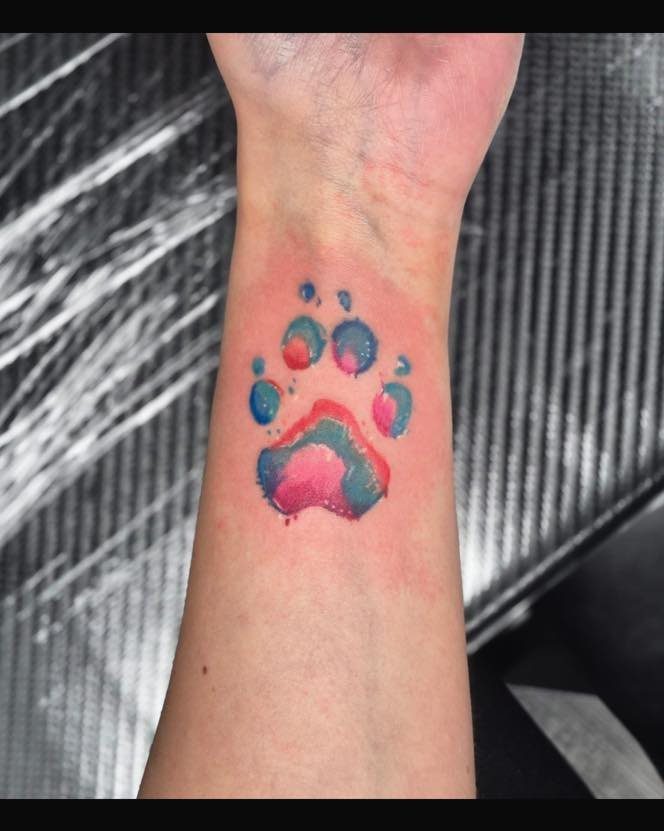
2. Watercolor Paw Print Tattoo
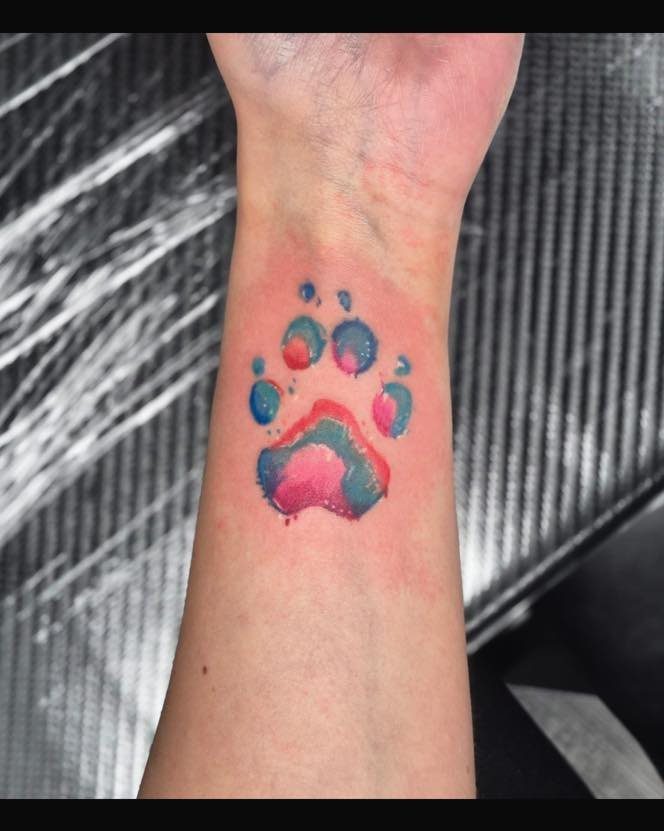
Watercolor technique skips the hard outline and uses soft washes of color that bleed slightly beyond the paw print’s edges, like paint on wet paper.
The result reads more artistic than literal, with blues, pinks, and purples blending where the pads meet.
I like this style for people who want something recognizable but not overly sentimental.
The loose color keeps it from looking too heavy, and the faded edges suit placements like the wrist or inner forearm where the skin is thinner and detail softens naturally.
Plan on a touch-up every few years. Light colors fade quickly, and watercolor relies on those light tones to hold the effect.
3. Paw Print with Heart Integration
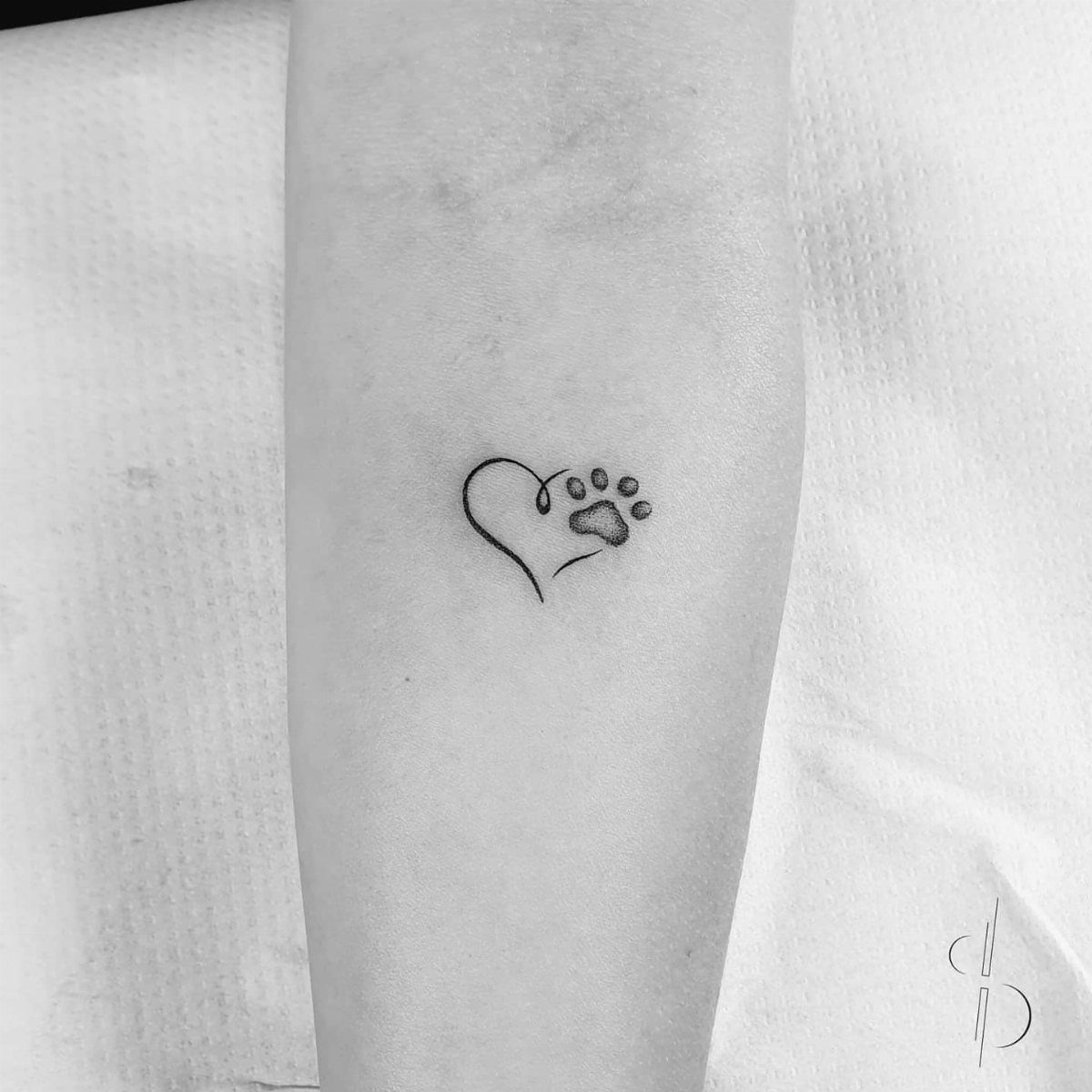
Replacing one of the paw pads with a heart outline shifts the design from pet portrait to love symbol without adding much size.
The heart usually takes the center pad, keeping the toe prints intact so the shape still reads as a paw at a glance.
This version works well at small scale because the heart creates a focal point even when the whole thing is barely larger than a dime.
I recommend it for someone who wants a discreet placement like the ankle or behind the ear but still needs the tattoo to feel complete on its own.
Black ink keeps it sharp. Color on a design this small tends to blur after a few years.
4. Infinity Paw Print Tattoo
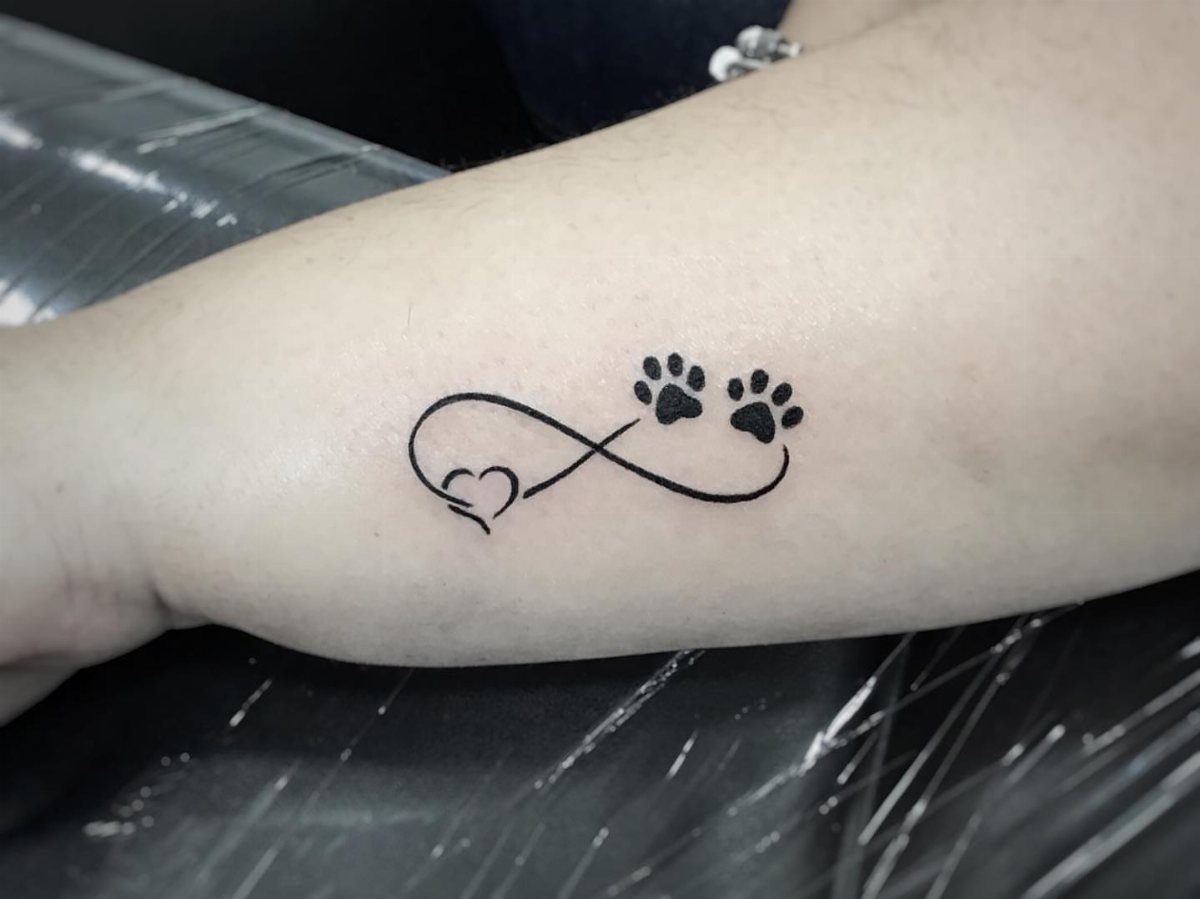
The infinity loop threads through or around 2 paw prints, tying them into a single design that reads as permanent devotion. Some versions place the prints inside each loop, others trail them along one side of the symbol.
This design suits people memorializing 2 dogs or marking the ongoing bond with a living pet. The infinity symbol adds structure, so the tattoo feels balanced rather than scattered.
Forearm placement makes the symbol readable from any angle. The symbol lies horizontal, following the natural line of the arm, and the prints stay proportional.
Cost will run higher than a simple paw print because the linework needs to stay consistent across a longer path.
5. Dog Face Integrated Into Paw Print Tattoo
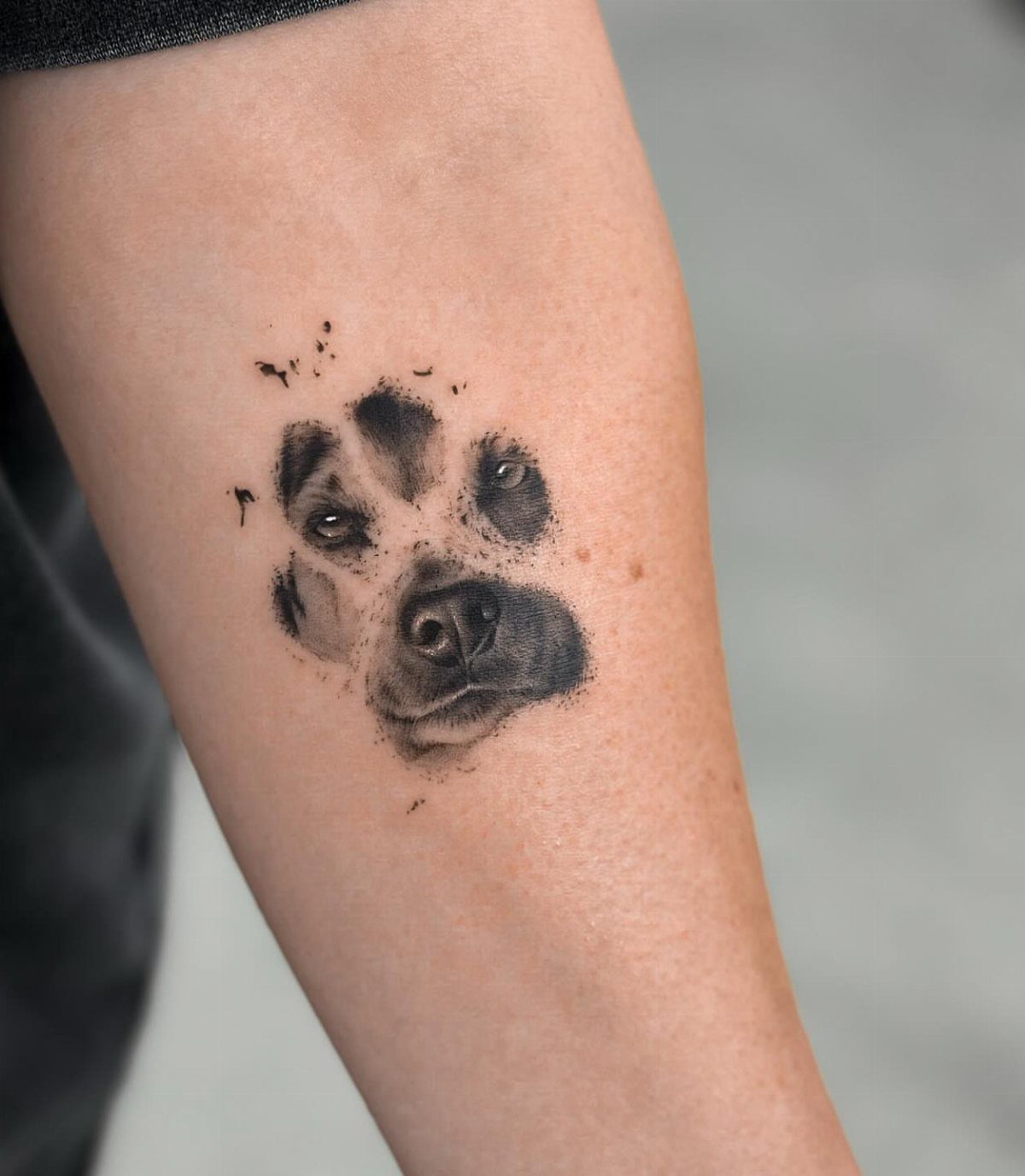
The dog’s face replaces the center pad, with the toe prints framing it like a halo. This version reads best when the face is simplified, just enough shading to suggest the breed without rendering every hair.
I prefer this design for someone who wants both portrait and symbol in one piece but doesn’t have room for a full portrait and separate paw print.
It reads well when small enough for the forearm or shoulder but large enough that the face stays recognizable.
Bring a clear photo of your dog to the artist. The face needs to capture the shape of the ears and muzzle in just a few lines, and that only happens when the reference is sharp.
6. Memorial Paw Print Forearm Tattoo
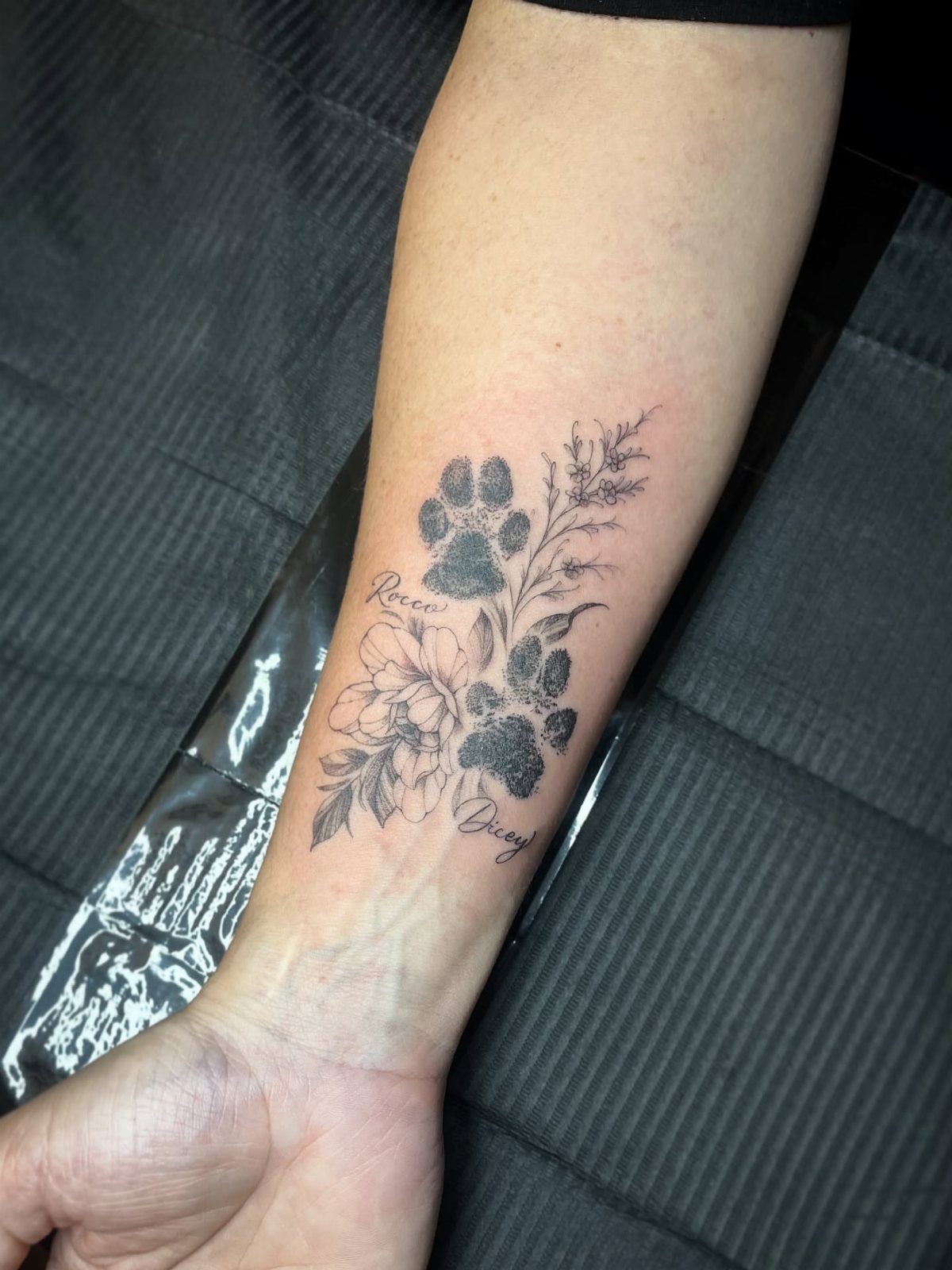
Two paw prints stacked vertically with a name under each one and a small floral sprig between them turns a simple print into a full memorial.
The layout reads like a marker without leaning too far into cemetery imagery, and the botanicals soften the otherwise stark black ink.
This placement, along the forearm where the names stay readable, suits someone who wants the tattoo visible but not loud. The flower, here a single bloom with a few leaves, softens the edges.
Names add cost because lettering takes time to set at the right scale, but they also lock the memorial in place. A paw print on its own might represent any dog; the name makes it unmistakably theirs.
7. Floral Paw Print Tattoo
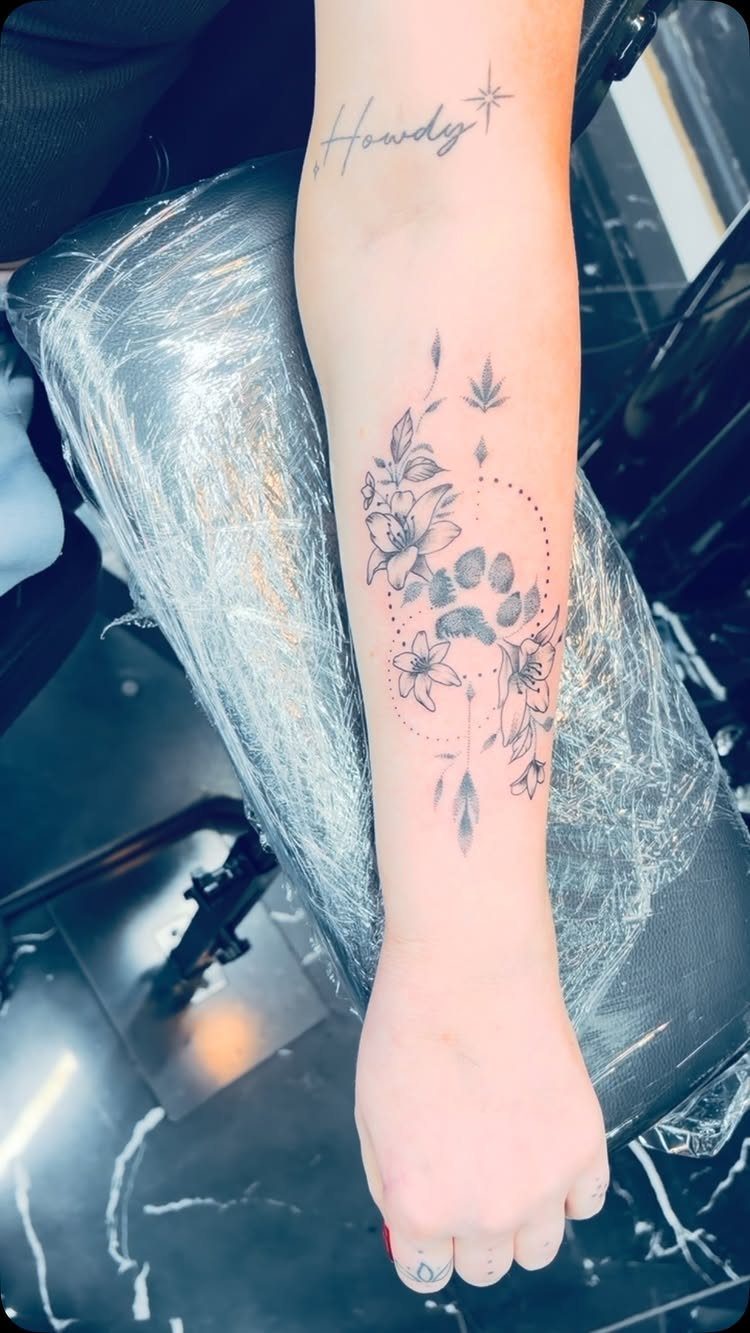
Flowers woven through the paw print soften the graphic weight of the pads and add detail without changing the scale.
Petals typically sit around the outer toe prints or trail from one side, keeping the center pad open so the shape still reads clearly.
This version suits someone who wants a memorial that feels more garden than monument. The flowers shift the tone from loss to growth, and the circular dotted border, when included, frames everything without adding much time to the session.
Forearm placement keeps the flowers visible and lets the design sit flat against the skin.
8. Paw Print Trail Tattoo
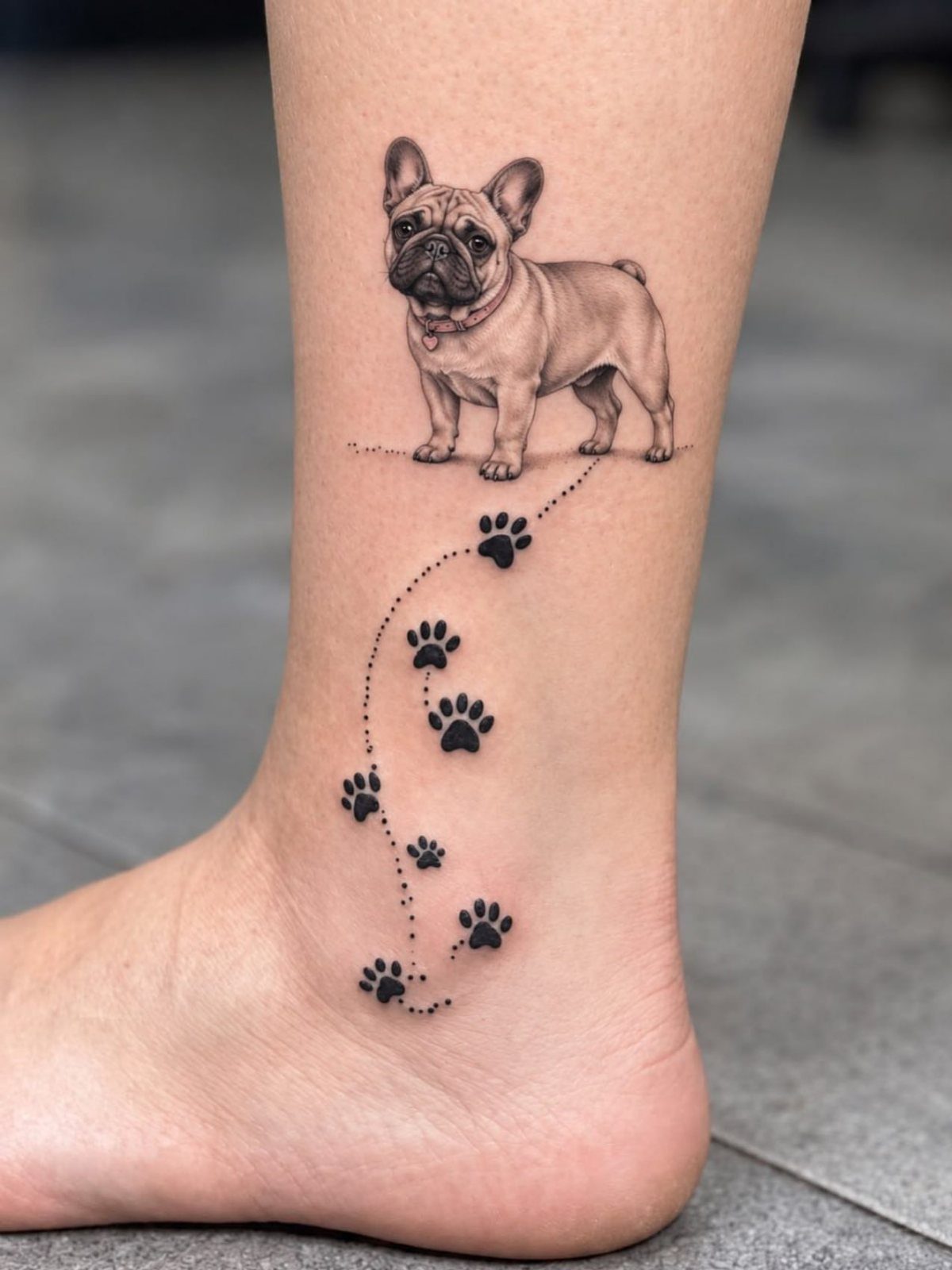
Prints trailing down the leg or curving around the ankle turn a single symbol into a path, showing movement rather than a fixed moment.
The prints usually decrease in size as they move away from the main figure, which here is a portrait of the dog itself.
I like this layout for someone who wants both portrait and symbol but needs the design to feel cohesive instead of stacked. The trail connects the 2 pieces visually and follows the natural curve of the ankle or calf.
Placement matters more here than with a single print. The trail needs room to taper, so it works best on the lower leg or outer forearm where the line can follow the limb’s shape.
9. Silhouette Scene Paw Print Tattoo
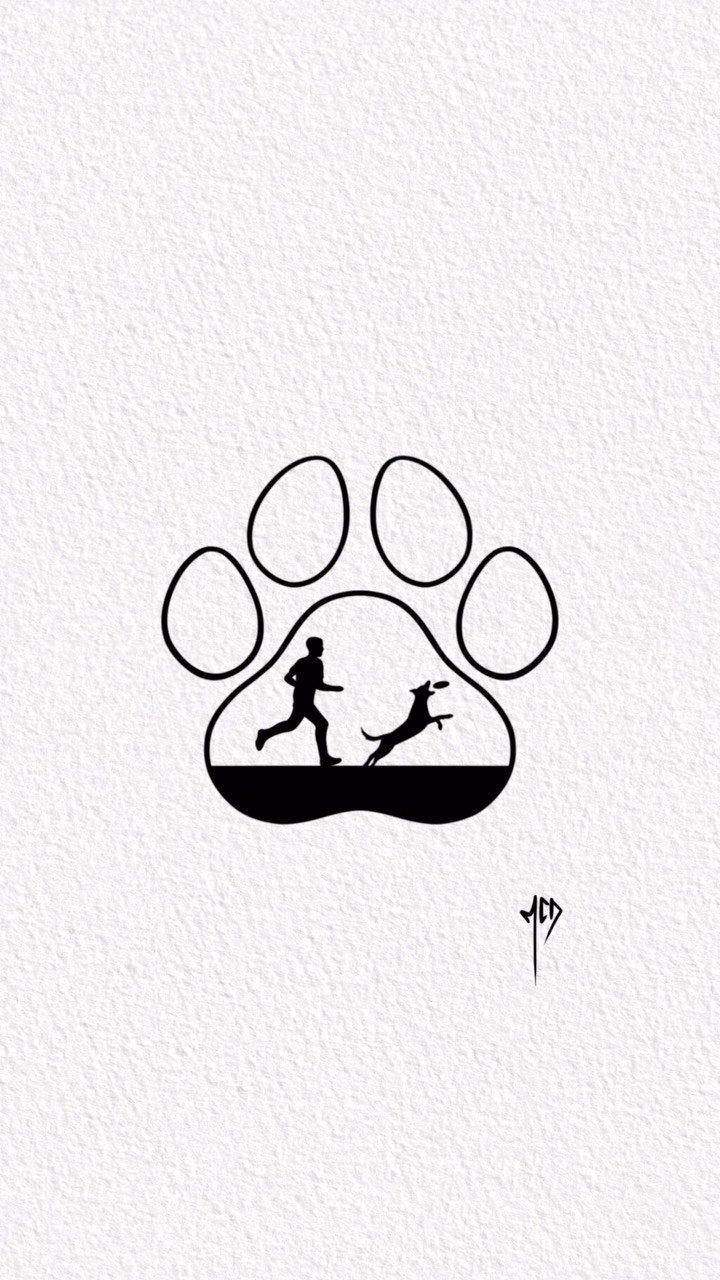
The silhouettes sit inside the main pad, framing a scene instead of leaving the center empty. This version reads more like a snapshot than a symbol, capturing the bond in motion rather than marking it with text or dates.
The design works well at medium scale, around 3–4 inches, where the figures stay recognizable without needing heavy shading. Smaller than that and the silhouettes blur together; larger and the paw print loses its role as the frame.
The scene relies on negative space to separate the 2 figures, and color would soften that edge.
10. Dog Profile and Paw Print
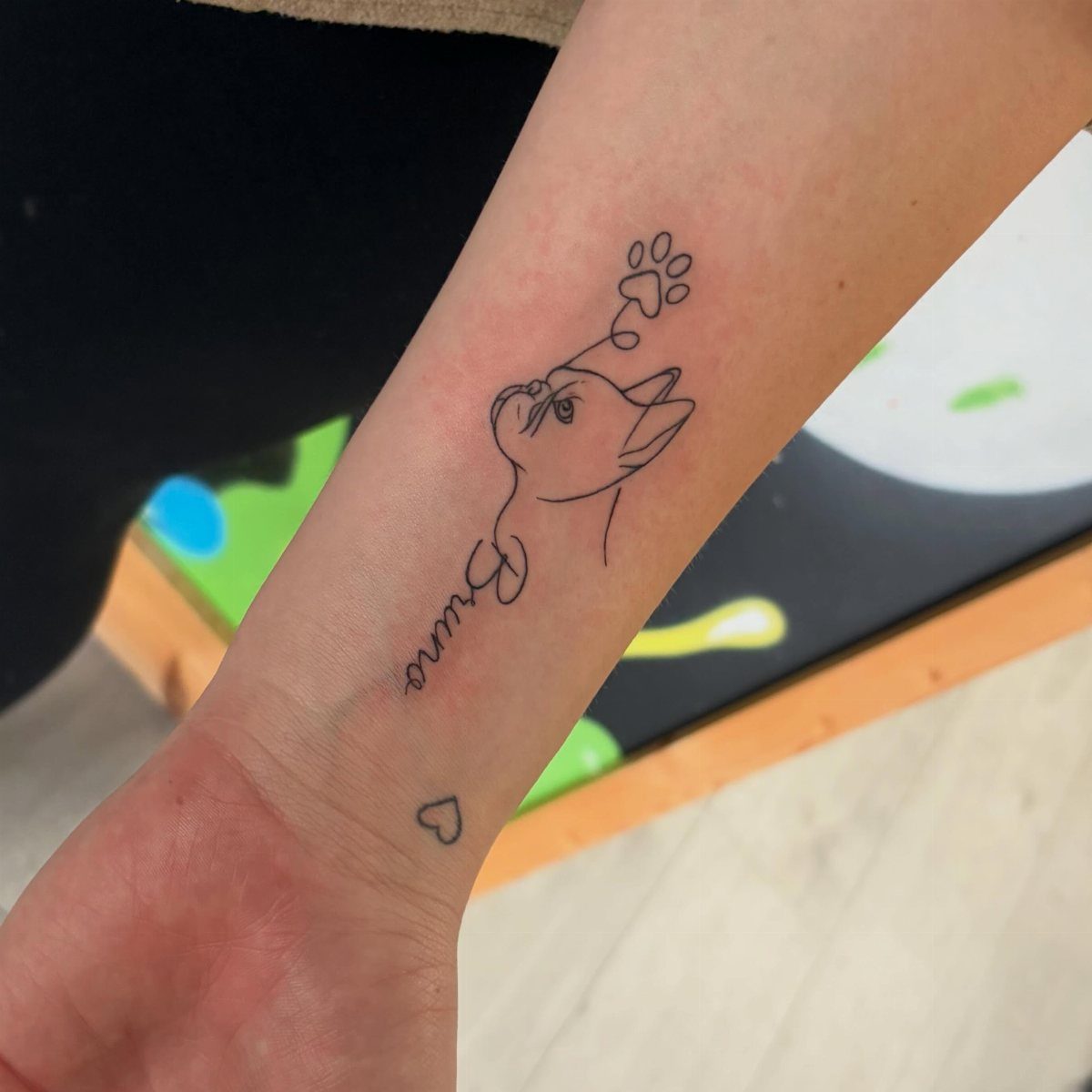
Pairing the dog’s profile with a small paw print and name creates a three-part composition that fits comfortably on the forearm without crowding.
The line profile stays minimal, just the curve of the skull and ear, so the tattoo reads quickly even from a distance.
This layout suits someone who wants a memorial that feels personal but not heavy. The name anchors the design, and the heart adds warmth without taking up additional space.
The profile needs to capture the breed in a single unbroken line, and that only works when the reference shows the full shape of the head.
Emotional Significance of Tattoos
The bond a dog leaves doesn’t vanish when they do. A paw print tattoo puts that connection somewhere permanent, which matters when the rest of the reminders, collar and leash and bowl, eventually go.
The tattoo functions as a memorial, but it skips the sadness of cemetery symbolism and lands on something warmer. The print itself is neutral enough to read as tribute without feeling like grief on display.
Some choose a print while the dog is still alive, treating it as a marker of companionship rather than loss. That shifts the tone from remembrance to gratitude, and the design reads the same either way.
Different animals carry different weight. A cat print suggests independence, a bear print strength, but a dog print almost always points back to loyalty and the kind of love that doesn’t ask for anything in return.
Placement Considerations
The downside is hand washing and sun exposure, both of which fade ink faster than most other spots.
Ankle placement works well for prints trailing upward or wrapping around the bone. The curve follows the natural line of the leg, and the tattoo stays covered or visible depending on what you wear.
Shoulder and chest placements offer more room for larger compositions, like a portrait paired with prints or florals woven through the design. These spots also age better because the skin moves less and sees less direct sun.
Pain tolerance varies by placement.
The wrist and ankle sit close to bone, which makes the session sharper. The shoulder has more muscle underneath, so it typically hurts less.
Community and Social Media Influence
Social media turned paw print tattoos into something people share openly, often with the story behind the design. Instagram and Pinterest collect thousands of examples, and scrolling through them shows how many variations exist within one simple idea.
That visibility creates a feedback loop.
Someone posts their memorial tattoo, another person sees it and books their own session, and the design evolves as artists add their take. The result is a community built around a shared experience rather than a single aesthetic.
The comments under these posts often read like support groups. People who have lost pets find others in the same position, and the tattoo becomes a way to mark something that otherwise goes unacknowledged outside close circles.
Frequently Asked Questions
What does a paw print tattoo mean?
A paw print tattoo marks the bond with a pet, living or lost, and reads as loyalty and companionship without needing explanation.
The print works as both memorial and tribute, skipping heavy symbolism while still carrying weight. A cat print can read as independence, a wolf as wild loyalty, but the dog version stays tethered to devotion that asks nothing back.
Where should I place my paw print tattoo?
The wrist and ankle work well for small prints or trails, though both spots fade faster from sun and friction.
Shoulder and chest offer more canvas for a print alongside a portrait, and the thicker tissue there holds ink better over decades.
Wrist and ankle land right over bone, so the needle bites harder; shoulder sits on muscle and feels duller.
How can I personalize my paw print tattoo?
Adding your dog’s name locks the memorial to one specific animal instead of leaving it open-ended, and florals or hearts woven into the print soften the tone without adding much size.
Replacing a center pad with your dog’s face or a heart turns a simple symbol into something more complete. Color choices can match your dog’s coat, though black ink stays sharp longer at small scale.