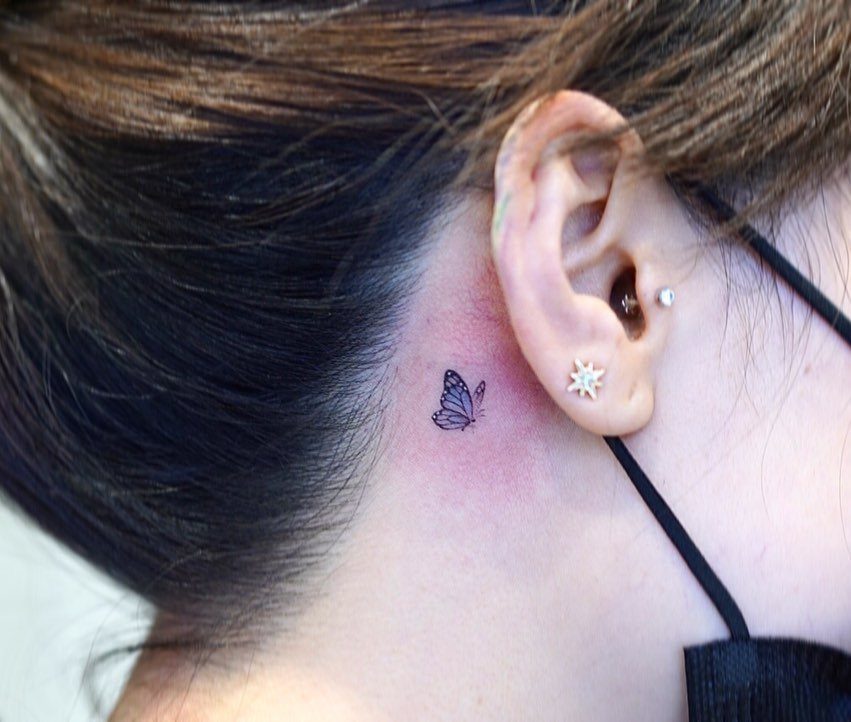
A butterfly small enough to fit behind your ear can be placed and finished quickly, while a watercolor piece with flowers takes longer once you add the color saturation and bleed work.
Pain on the wrist and neck sits higher than the shoulder because the skin is thinner and sits closer to bone, but the wrist heals faster since fabric does not rub against it the way it does on the shoulder during the first week.
1. Micro Realistic Butterfly Behind the Ear
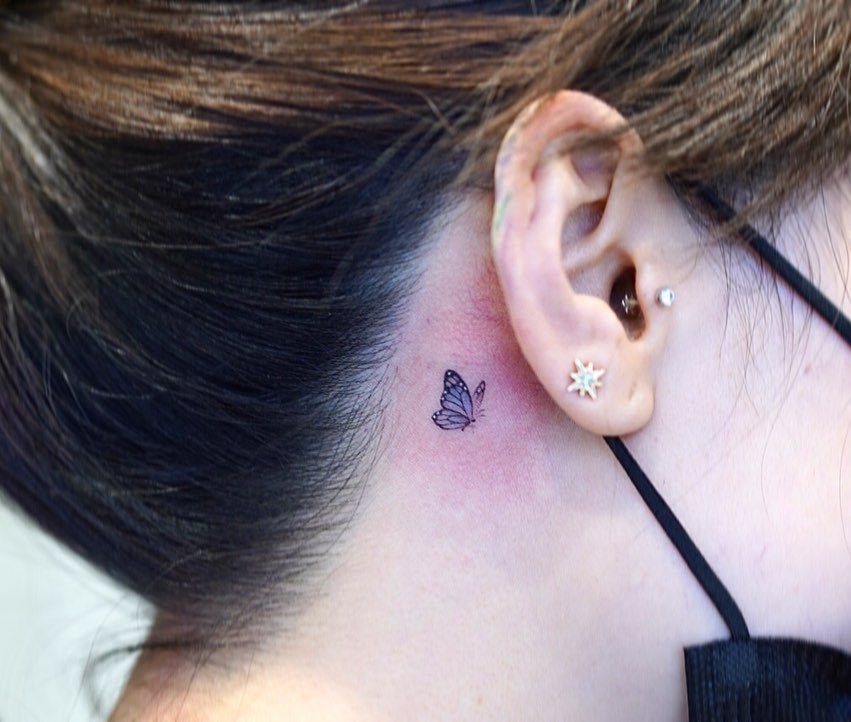
A butterfly no bigger than a thumbnail sits tucked where the ear meets the hairline, easy to hide or show depending on how you wear your hair.
The placement keeps it personal; most people won’t see it unless you want them to.
Pain here sits in the middle range. You’ll want to sleep on the opposite side for the first few nights while it heals.
If you’re after something you can keep to yourself most of the time, this is it.
2. Ornamental Butterfly with Vine Accents
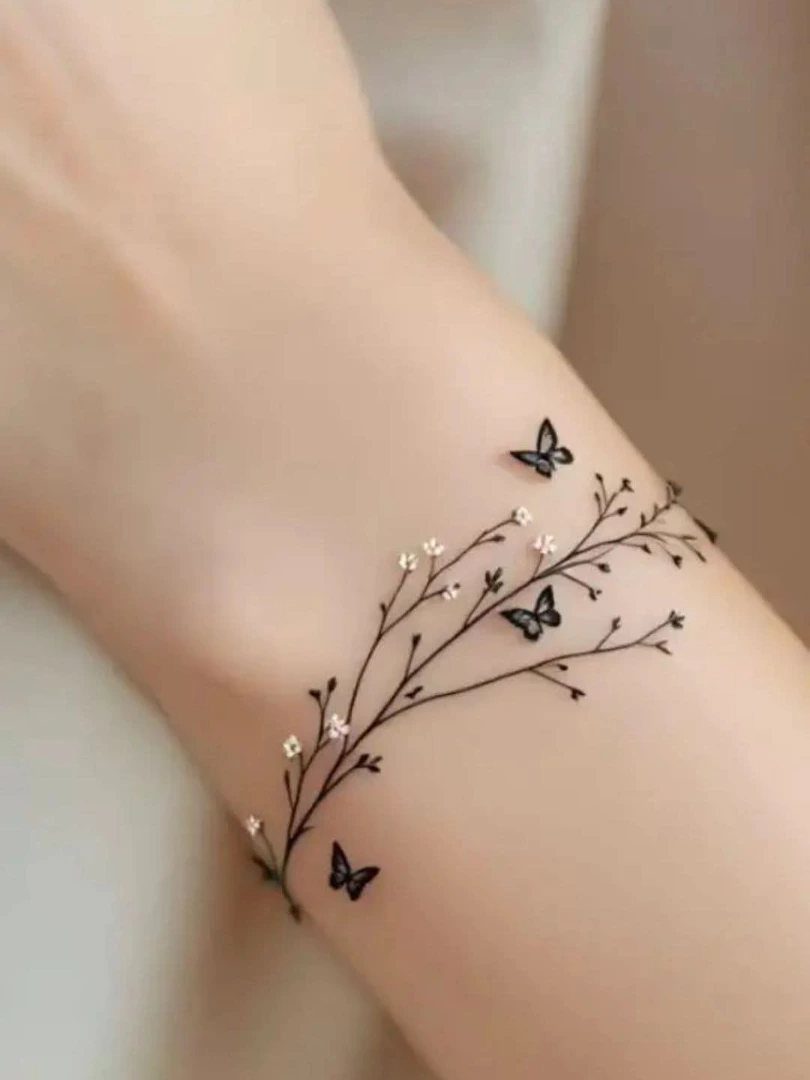
Vines turn a butterfly into something that feels like it grew there.
The stems curl around the wings, sometimes with a few small flowers or leaves breaking off in different directions, so the design feels less like a single stamp and more like a composition.
I like this approach when someone wants a butterfly but doesn’t want it to float alone on the skin.
The vines give you something to extend if you ever want to add to it later, and they soften the edges of the piece without adding much time to the session.
3. Butterfly Cluster on Shoulder
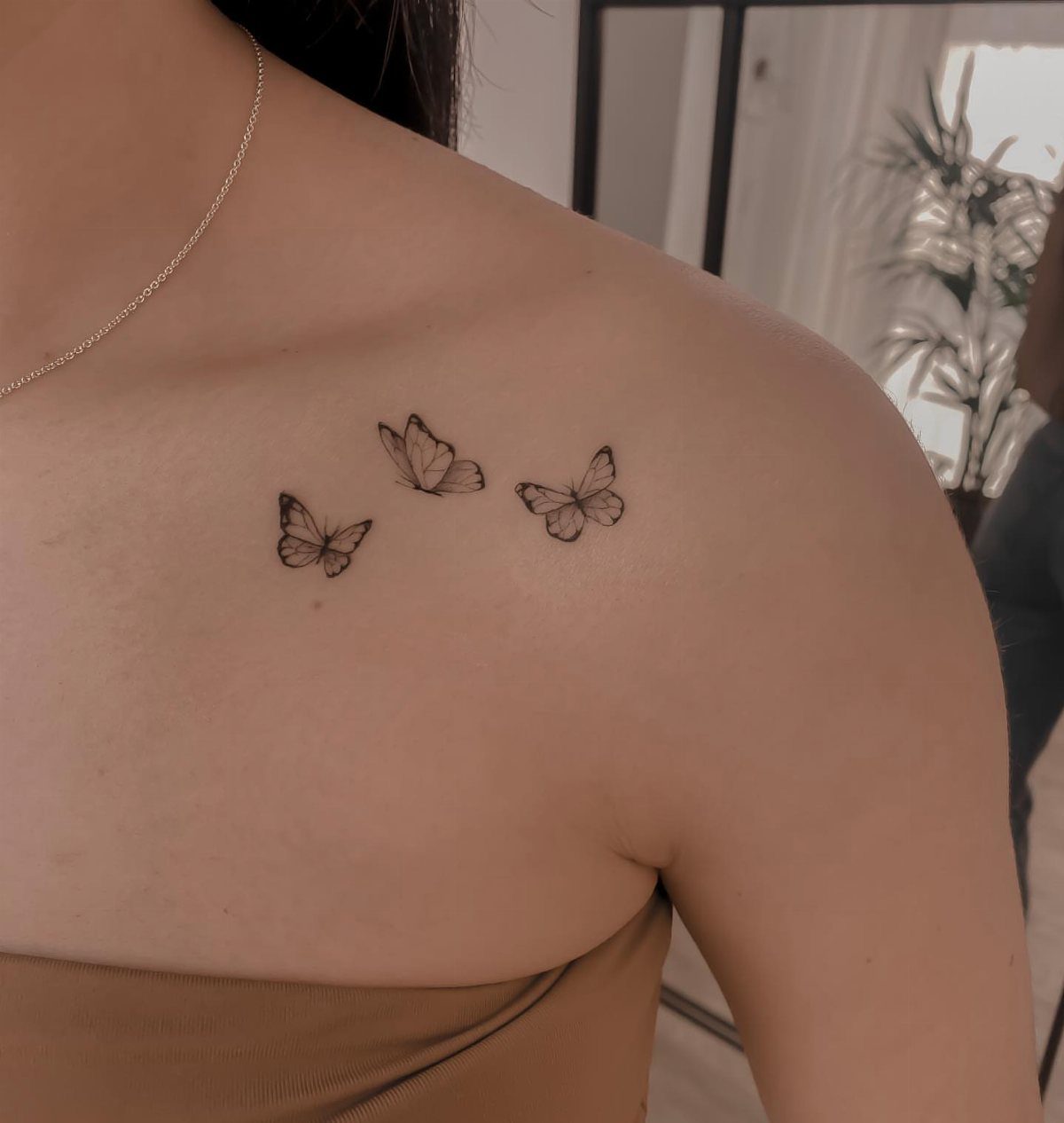
Three or four butterflies scattered across the shoulder and collarbone read as movement, like they just landed and might lift off again in a second.
The spacing between them matters more than the butterflies themselves; too close and they clump, too far and they lose the sense of a group.
I place them so they follow the natural lines of the shoulder, with one near the collarbone, one higher up, and one in between. The result feels casual but still looks intentional.
This placement heals easily and hurts less than most other spots. The shoulder has good padding, and you can keep clothing off it without much trouble for the first week.
4. Sunflower and Butterfly Fusion Tattoo
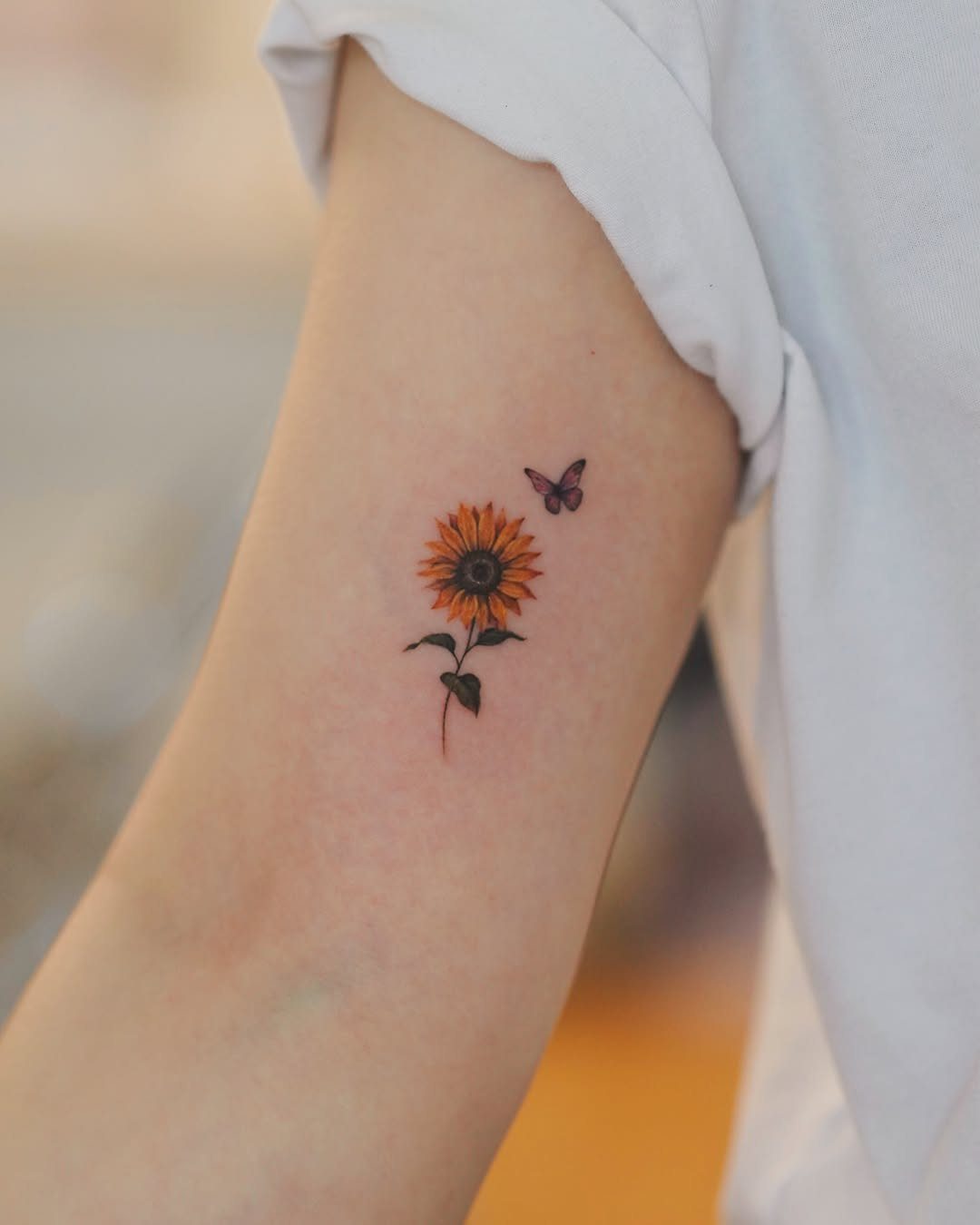
A butterfly perched on a sunflower brings two symbols together in one piece. The sunflower anchors the design with its petals and center, and the butterfly adds the movement.
Color makes this one stand out; the yellow petals and the purple or blue wings give you contrast that holds up even as the tattoo ages.
If you’re set on color, plan for a touch-up every few years to maintain the saturation.
The inner arm is a good spot for this because the skin stays protected most of the time, so the ink fades slower than it would on the hand or forearm.
5. Neo Tribal Butterfly Tattoo
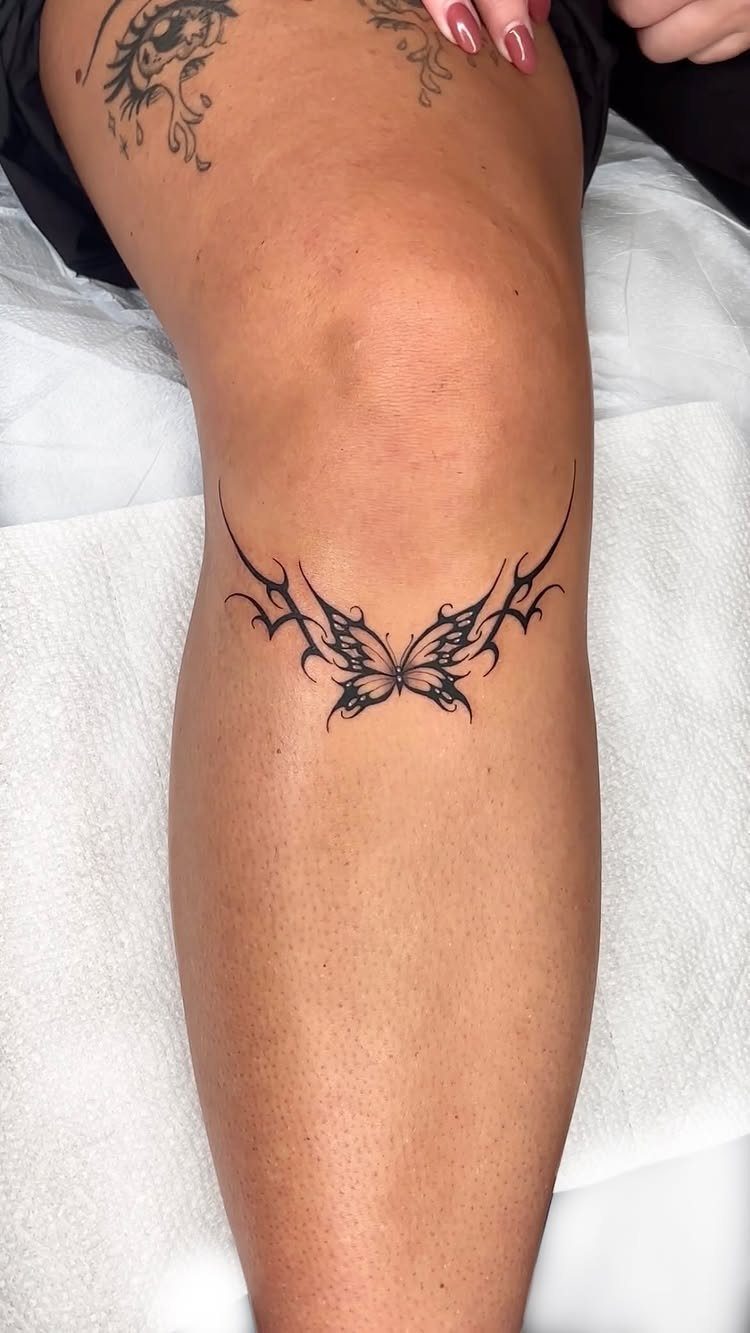
Bold black lines replace the soft edges of a realistic butterfly with shapes that feel sharper and more graphic.
The wings simplify into symmetrical curves and points, and the body thickens into a solid black mark. The result sits somewhere between traditional tribal work and something more current.
This style reads well at a distance and ages better than fine line because the thicker lines stay crisp longer.
Pain on the lower leg is manageable; the calf has decent cushioning, though the closer you get to the ankle or shin, the more you’ll feel it.
Something that looks strong rather than delicate calls for this direction.
6. Fine-Line Butterfly Duo with Stars
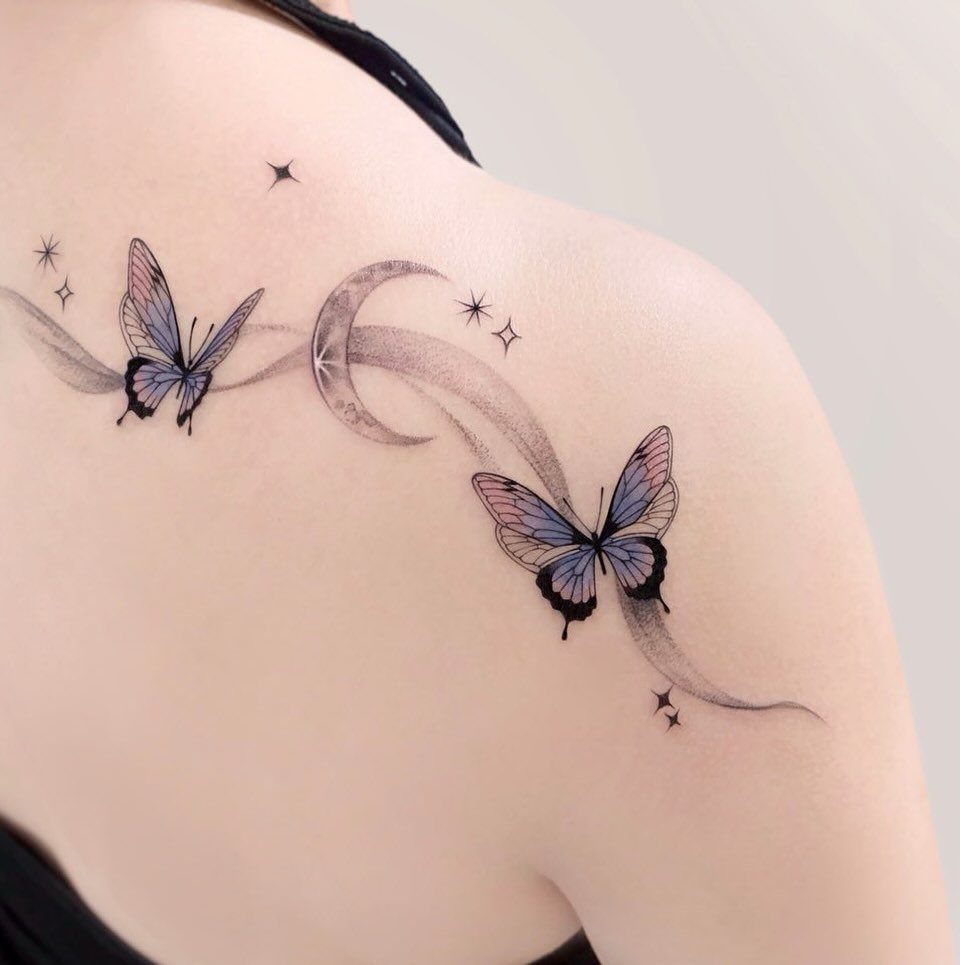
2 butterflies with a crescent moon and a handful of stars turn the piece into something that feels like a night sky moment.
The butterflies get the color, usually blue or purple, and the moon and stars stay in black line work so they don’t compete for attention.
I like this layout on the shoulder because the curve of the body gives you room to arrange the elements without cramming them together.
The stars fill the negative space without making the design feel busy, and you can add or skip them depending on how much coverage you want.
Plan for about an hour if you’re adding color to both butterflies.
7. Minimalist Inner Wrist Butterfly
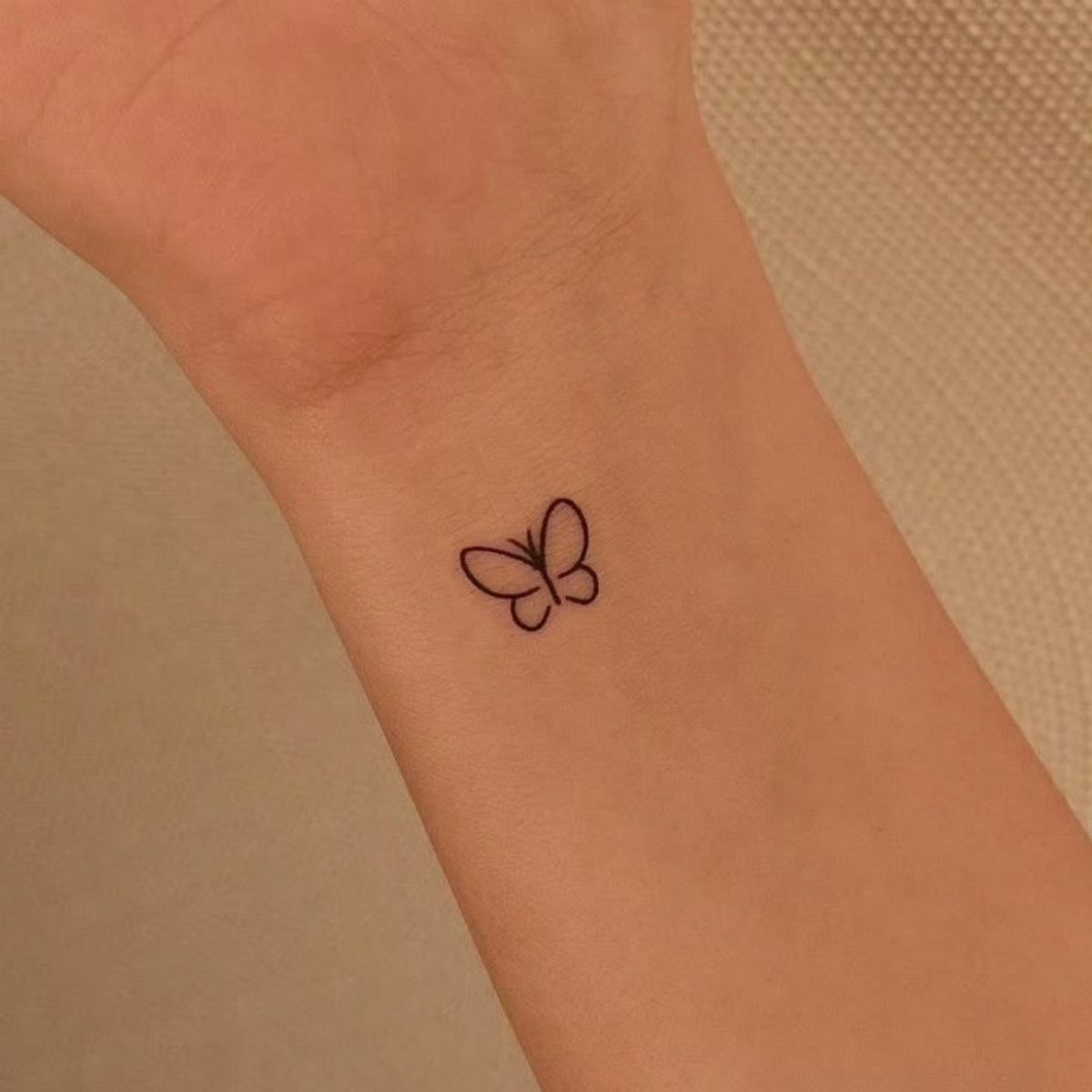
A single butterfly drawn in thin black line work, small enough to fit the width of the inner wrist. The wings stay open and symmetrical, and the body is just a few strokes.
This spot shows every time you reach for something, so it’s one you’ll see constantly throughout the day. Pain here is sharp but short; the session goes quickly.
The wrist heals quickly if you keep it dry and avoid tight watch bands while it closes.
8. 3D Shadow Butterfly on Shoulder
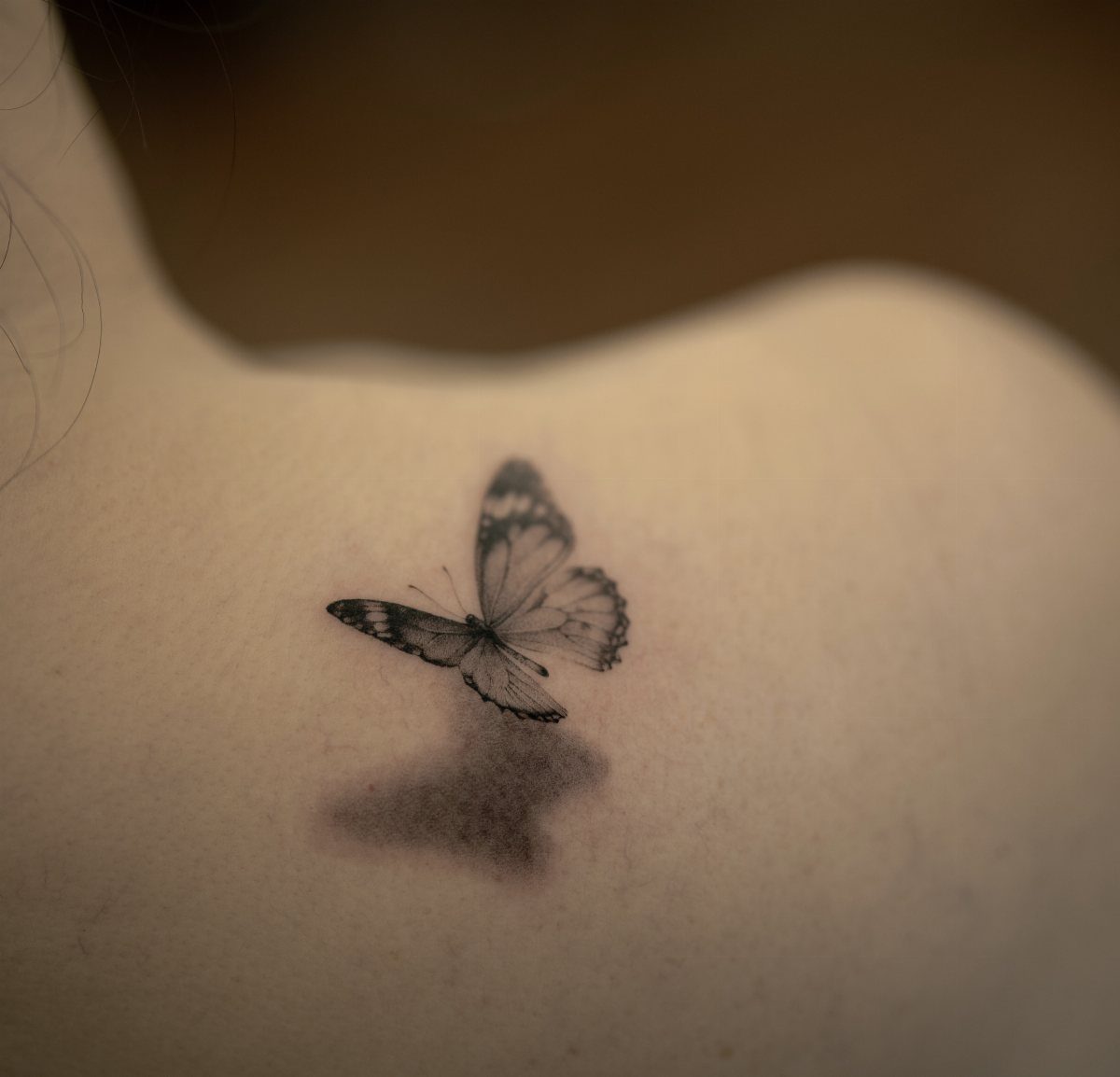
The shadow sits directly beneath the butterfly, offset slightly to one side, so the insect looks like it’s hovering an inch above the skin instead of resting flat.
The shading in the wings gives it dimension, and the shadow grounds it.
This effect depends on the butterfly itself having enough detail to support the realism. Too simple and the shadow feels disconnected.
The shoulder is one of the easier spots to heal. You can sleep on the opposite side and keep fabric off it during the day without much adjustment.
9. Small Monarch Butterfly Tattoo
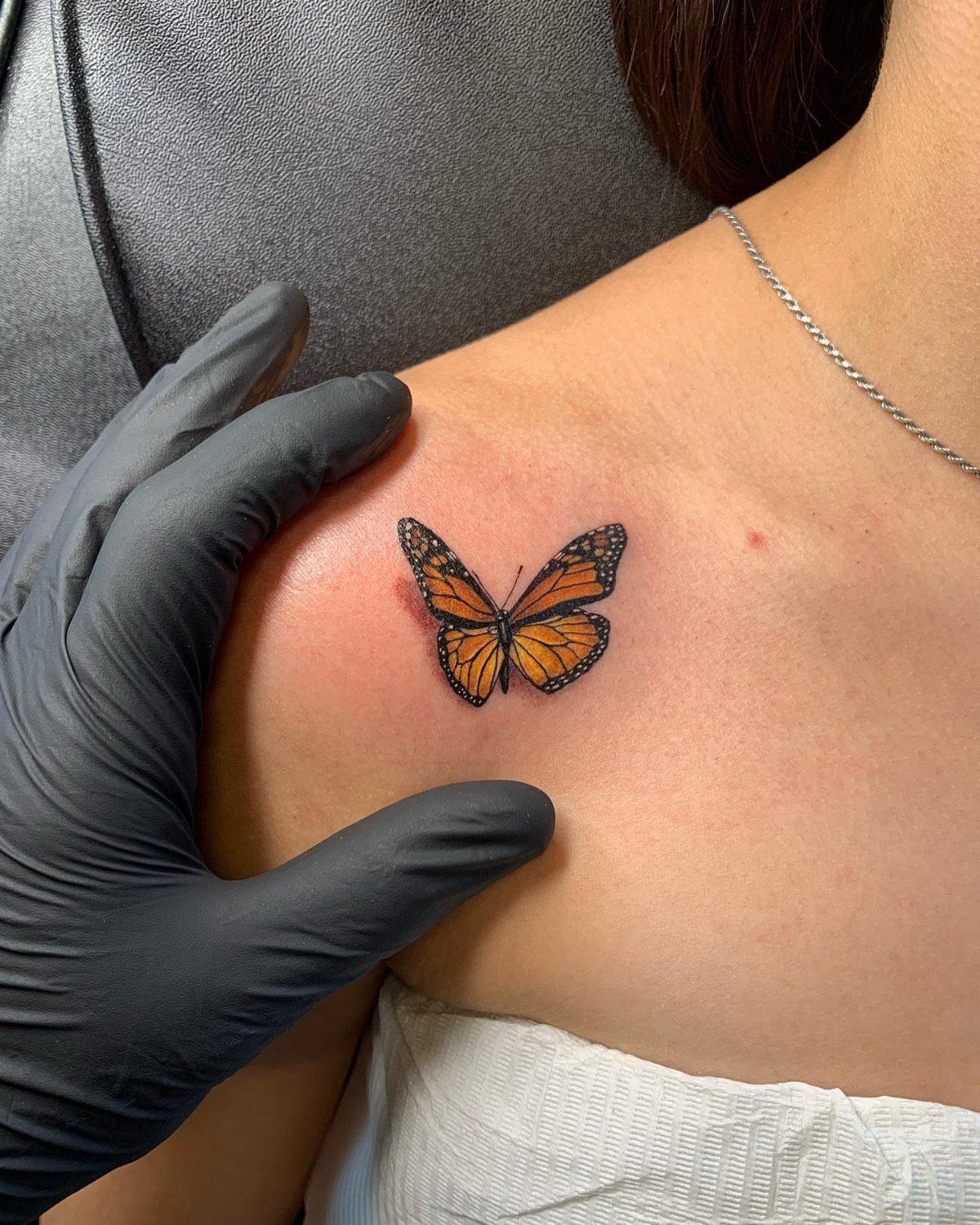
Orange and black make a monarch unmistakable.
The wings get the bright color, and the black veining and border keep the design from bleeding together as it ages. Small means you can fit this on a shoulder, forearm, or ankle without taking up much real estate.
Color requires more care during healing.
This is the butterfly everyone knows; you never have to explain what it is.
10. Minimalist Back of Neck Butterflies
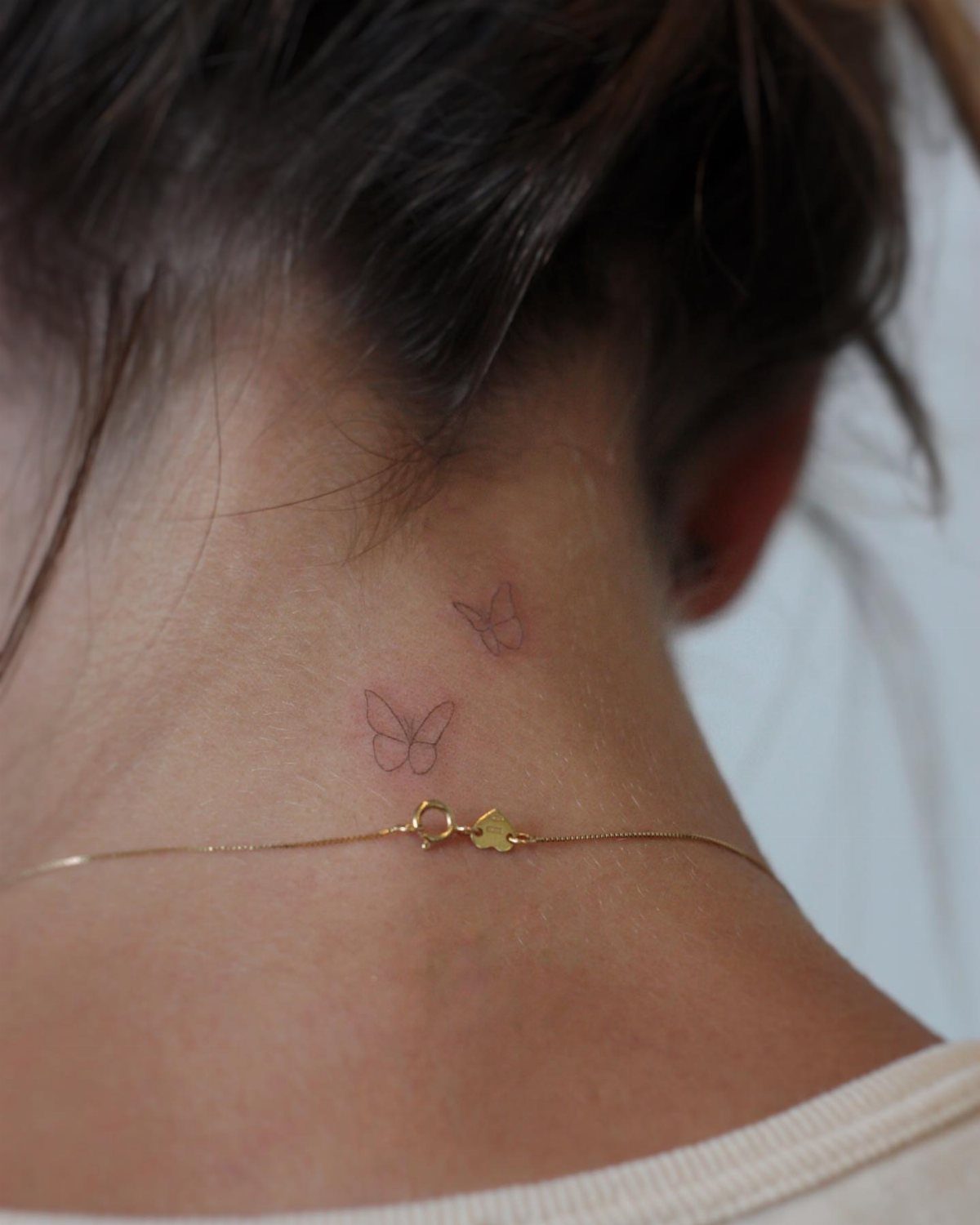
Two butterflies in thin black line work sit at the base of the neck, one slightly higher than the other. The spacing between them lets each one read as a separate insect rather than a matched pair.
Pain here is higher than most other spots.
The skin is thin, and the needle sits close to the spine. Sessions are quick, though, usually under half an hour for both.
Hair covers this completely when worn down, which makes it easy to keep hidden for work or formal situations.
11. Trio of Torso Butterflies
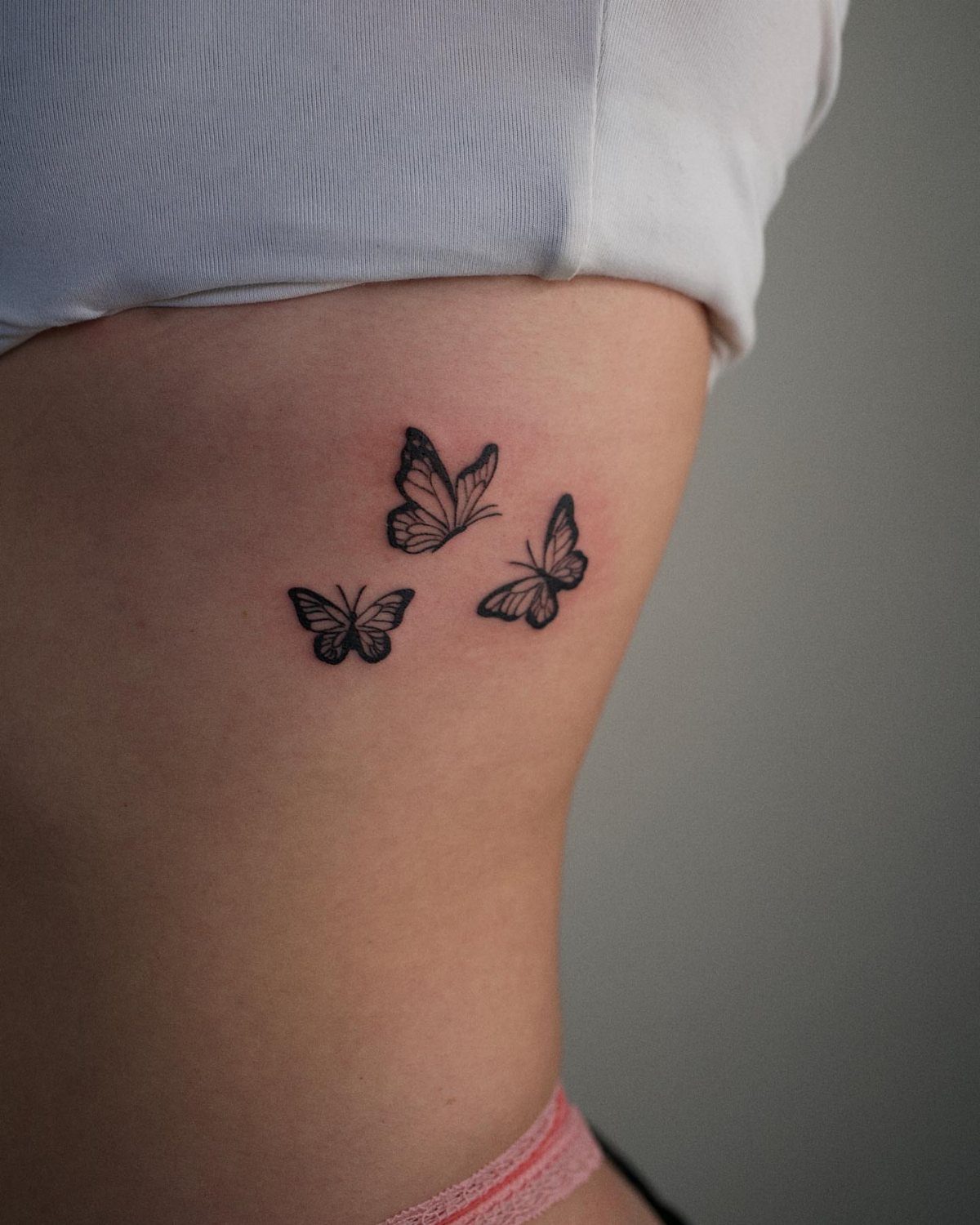
Three small black butterflies arranged vertically along the side of the torso, just above the waistline. Each one is a simple silhouette with no shading or detail, so they read as a pattern rather than individual insects.
This placement stretches when you move, which can make the tattoo feel different depending on how you’re standing or sitting.
The ribs hurt more than the softer tissue closer to your waist, so the lower butterfly will be the easiest part of the session.
Clothing sits right over this spot, so plan to wear something loose for the first week.
12. Watercolor Splash Butterfly Tattoo
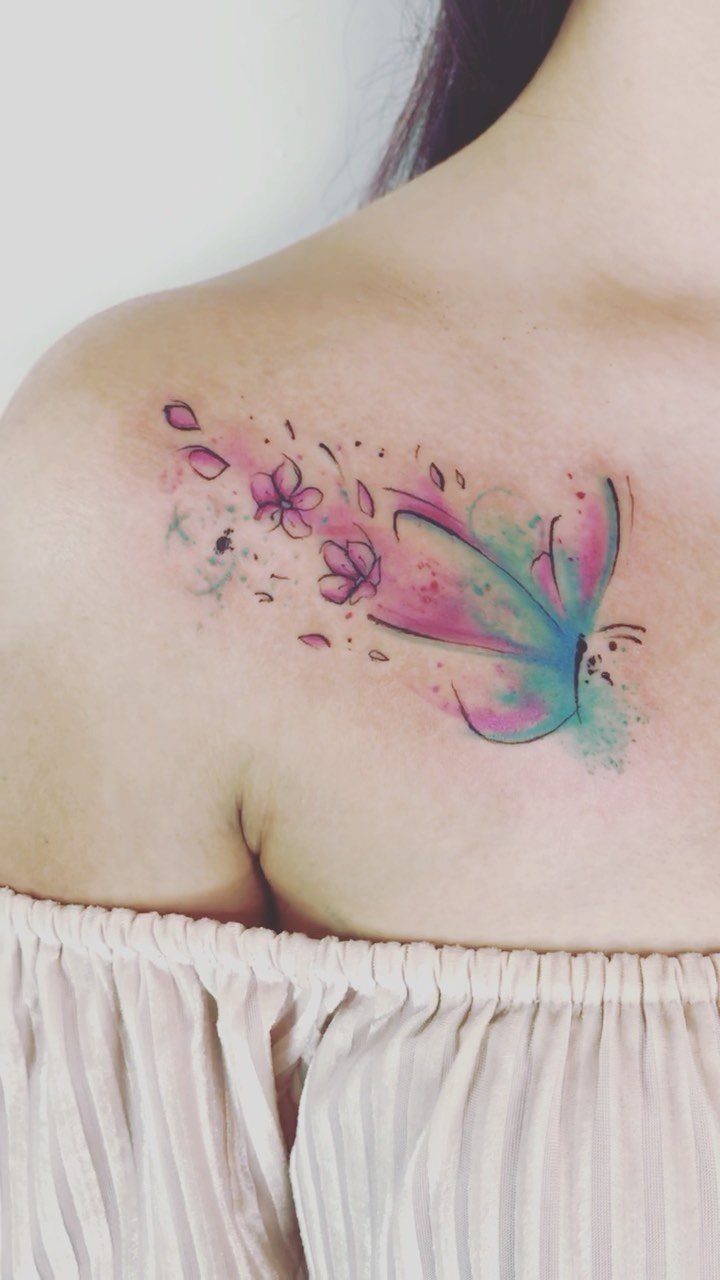
Color bleeds beyond the butterfly’s outline in soft washes of pink, purple, and blue, so the piece feels less contained and more painterly.
A few flowers in the same pink as the splashes tie the whole thing together without making it too busy.
Watercolor loses its brightness sooner than solid ink because the color sits in the skin without black lines to anchor it. You’ll need a touch-up eventually to bring the brightness back.
This style suits someone who wants something softer and less structured than a traditional butterfly tattoo.
13. Realistic Blue Fluttering Butterflies
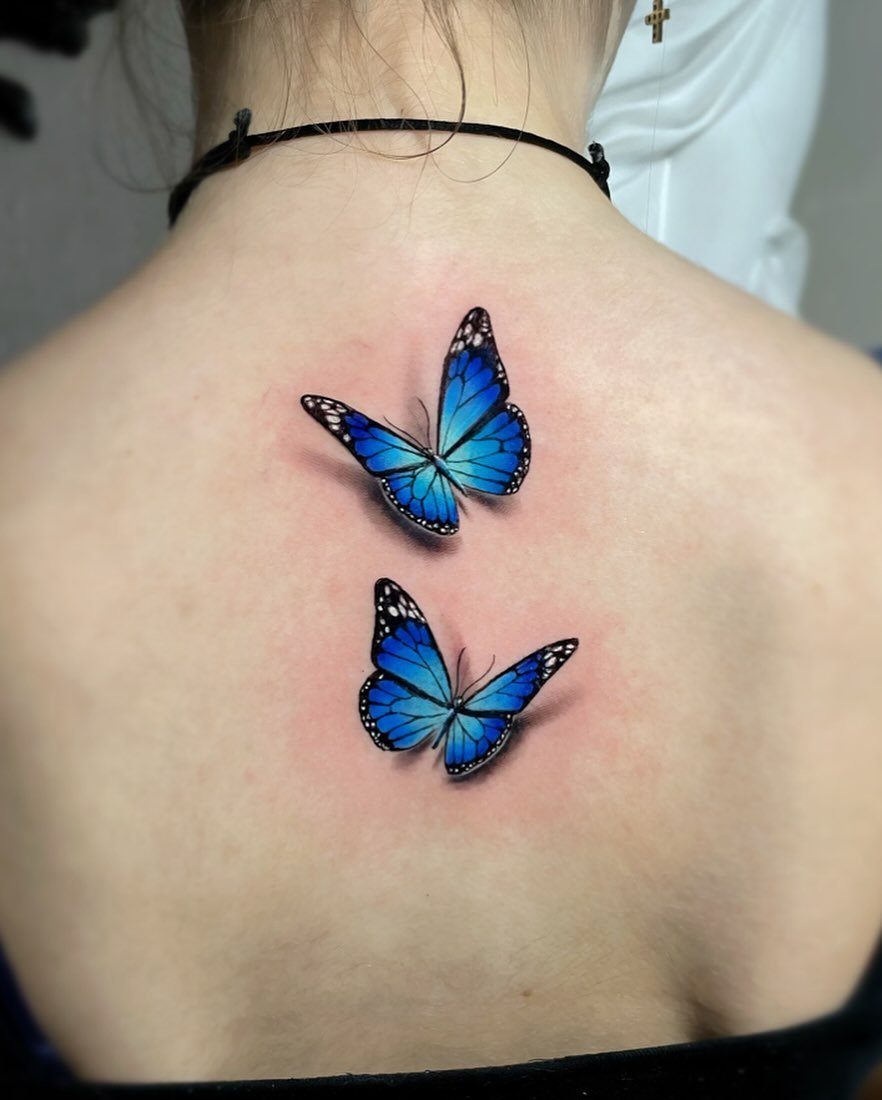
Blue wings with black-edged tips and a soft shadow beneath each butterfly give the impression that both insects are caught mid-flight, one just ahead of the other. Shadow work anchors the wings in space instead of leaving them floating.
Placing two instead of one lets you show movement across the upper back without committing to a larger piece. The space between the shoulder blades heals easily and stays covered most of the time, which helps color hold longer.
Pain here is low to moderate. Adding shadow to both butterflies lengthens the session, but the lift in dimension usually makes it worth the extra time.
14. Matching Wrist Butterfly Tattoos
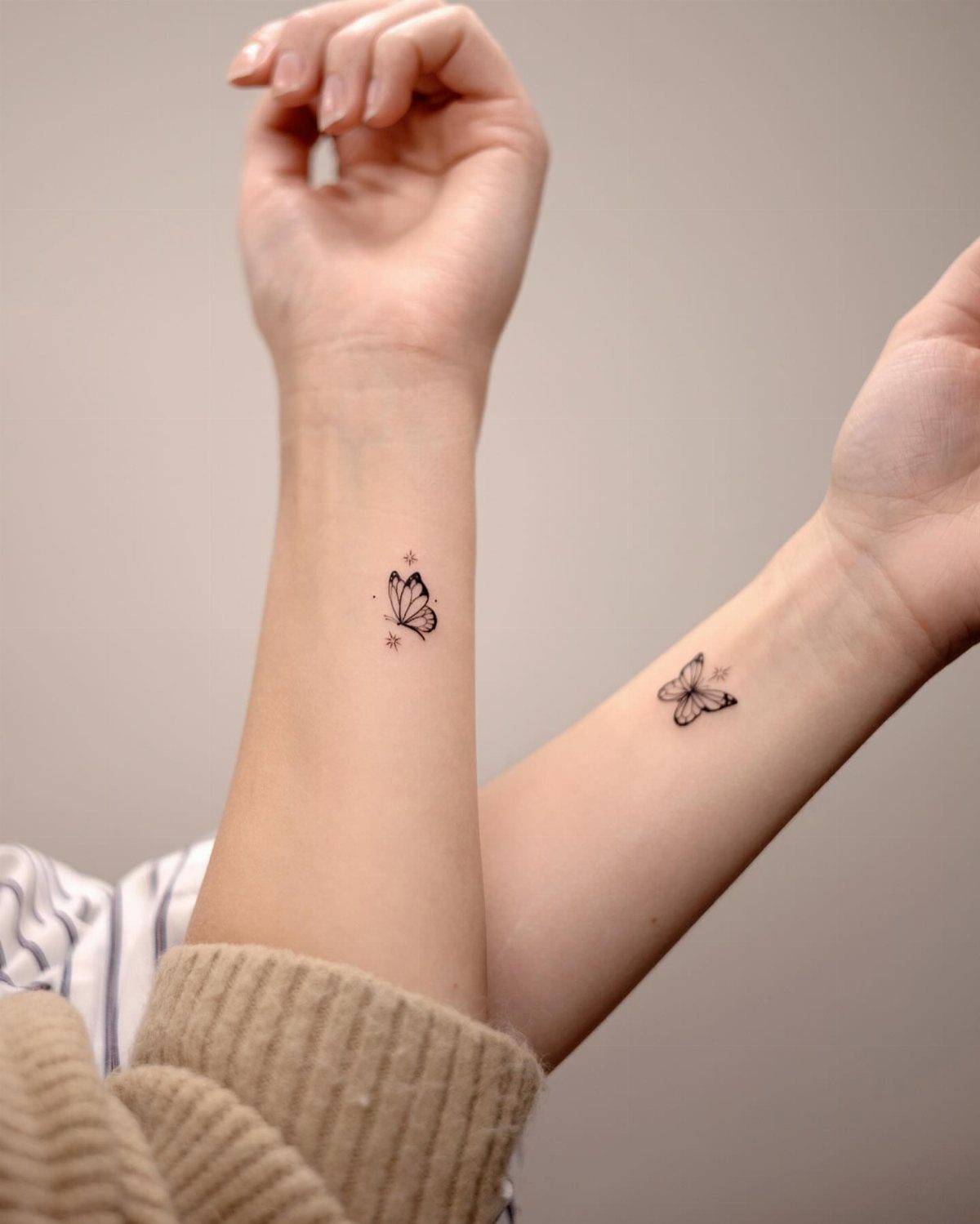
One butterfly on each person’s inner wrist, identical or close enough that they match when held side by side. The small stars scattered around the wings keep the design from looking too plain without adding much to the session time.
Pain is sharp but the piece finishes quickly.
Healing moves fast on the wrist if you keep it clean. Keep watch bands off until the skin closes completely, and plan to avoid soaking your wrists in water for the first week.
15. Butterfly and Lily Fine-Line Tattoo
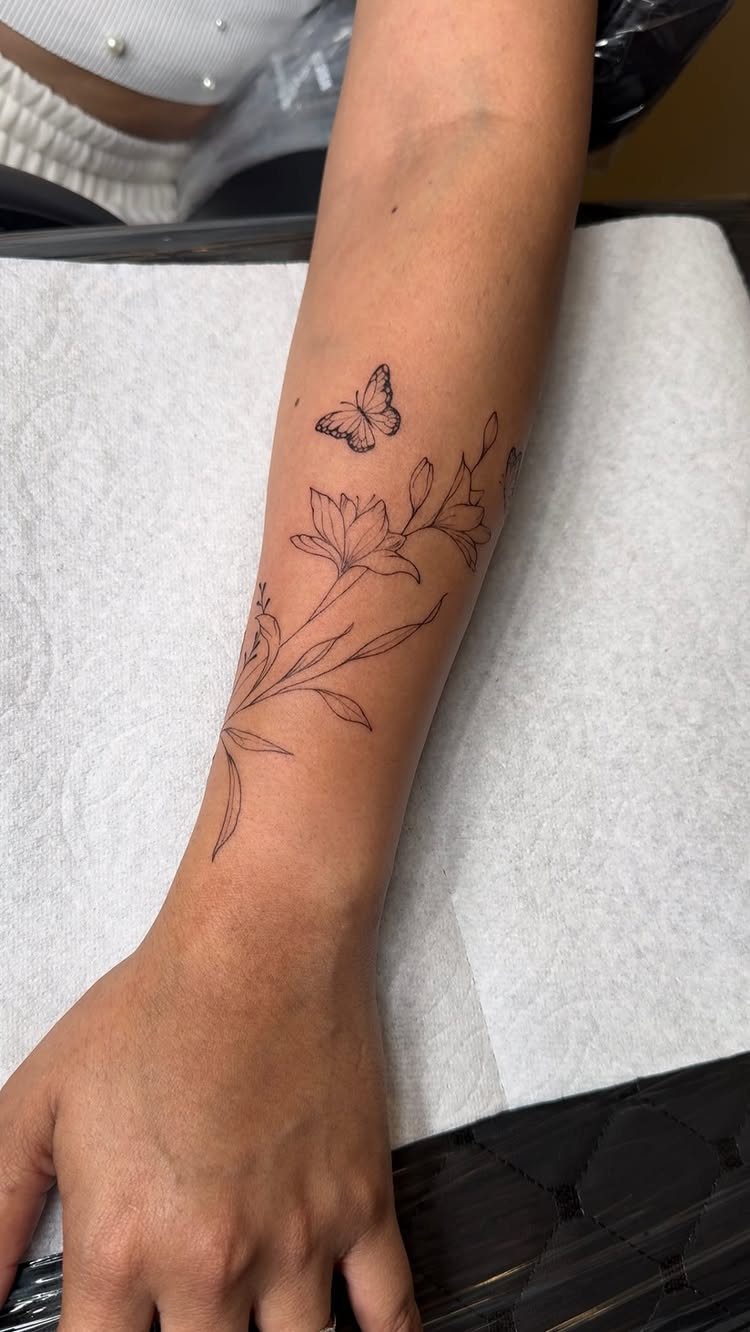
The butterfly hovers above a lily stem, positioned so the wings sit close to one of the flowers without overlapping it.
Fine line work keeps both elements readable without crowding the forearm, and the black ink holds up well over time because the lines stay crisp.
Lilies carry their own weight symbolically, often tied to renewal or remembrance, so pairing them with a butterfly doubles down on transformation without feeling redundant.
Choosing the Right Tattoo Artist
Start with their portfolio, and look specifically at healed work if they post it.
Fresh tattoos always look sharp; healed pieces show you how the lines settle once the skin has fully recovered, which tells you more about what you’ll actually be living with.
An artist who works in fine line won’t necessarily have the hand for bold neo tribal, and someone known for watercolor might not be the right fit if you want a clean realistic monarch.
Specialization matters more than a general ability to tattoo well.
Ask to see multiple examples of the style you’re after, not just one. If they can’t show you several finished pieces in that direction, keep looking.
Book a consultation before you commit to the appointment. Most artists will talk through placement and sizing with you first, and that conversation usually makes it clear whether they understand what you’re after.
Understanding the Meaning
Butterflies carry transformation and personal growth across most interpretations, tied to the shift from caterpillar to winged insect.
That metamorphosis reads as change that’s already finished, which is why people often get them after a hard chapter closes rather than while they’re still in it.
Freedom shows up just as often, linked to the way butterflies move without a fixed path.
In Greek mythology, the word for butterfly and soul was the same, and that connection between the insect and the spirit still shows up in how people talk about the design today.
In Japan, butterflies can represent young women or happiness in marriage, and the reading changes with the culture you pull from.
Some cultures see them as messengers between the living and the dead, which is why you’ll occasionally hear someone describe a butterfly tattoo as a way to keep a person’s memory close.
Placement Considerations
Visibility matters first. The inner wrist shows constantly unless you cover it on purpose, while the shoulder blade, ribs, upper back, and back of the neck stay hidden under most clothing or hair.
Pain and healing change with placement. The wrist, collarbone, and back of the neck sit close to bone with little padding, so sessions feel sharper.
The shoulder, forearm, and calf have more cushioning and tend to hurt less. Ribs stretch when you move, which can pull on a fresh tattoo during the first few days.
Healing goes faster on areas that stay dry and don’t rub against tight fabric.
The wrist and collarbone are easy to keep exposed; the ribs and torso sit under waistbands and bra straps, so you’ll need to plan around that for the first week.
Skin that sees more sun fades faster, so forearms and hands will need touch-ups sooner than covered spots like the upper back or ribs.
Frequently Asked Questions
What do two butterflies symbolize on a tattoo?
2 butterflies usually represent connection between people, like sisters, close friends, or partners.
The pairing turns the transformation meaning into something shared rather than individual. Some cultures also see butterflies as messengers between worlds, so two can mark a bond that continues even when someone is gone.
What is a fine line butterfly tattoo?
A fine line butterfly uses thin, delicate lines instead of bold outlines or heavy shading, which gives it a minimalist look. The style feels lighter and more subtle than traditional tattoo work.
Lines this thin will spread slightly over time as the skin ages, so the detail softens but the overall shape stays readable if the artist spaces the lines well from the start.
How much should a butterfly tattoo cost?
A small butterfly on the wrist or behind the ear costs less than a larger piece with color or multiple butterflies, and the final price depends on the session length and the artist’s rate.
Artist experience and shop location affect the rate. Expect to pay more for someone with a strong portfolio in the style you’re after, since quality holds up better over time.