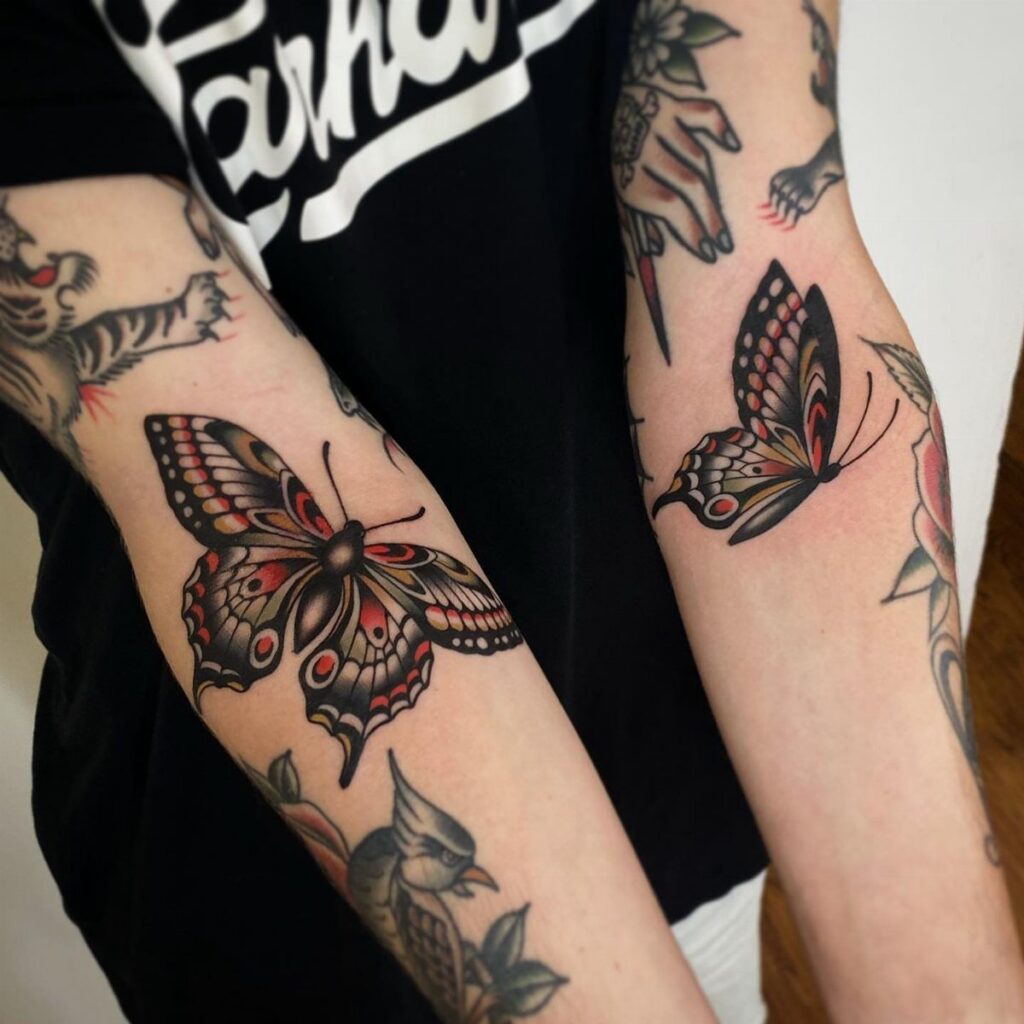
Traditional butterfly tattoos range from single-subject pieces to ones paired with skulls, daggers, anchors, flowers, or even female faces in the wings, and the right one depends on whether you want the butterfly to stand alone or carry additional meaning through pairing.
Placement changes how the design reads: the shoulder follows the deltoid’s curve, the elbow bends the wings with your arm, the back and chest give you room to scale up, and the forearm keeps everything visible and flat.
1. Butterfly and Stars
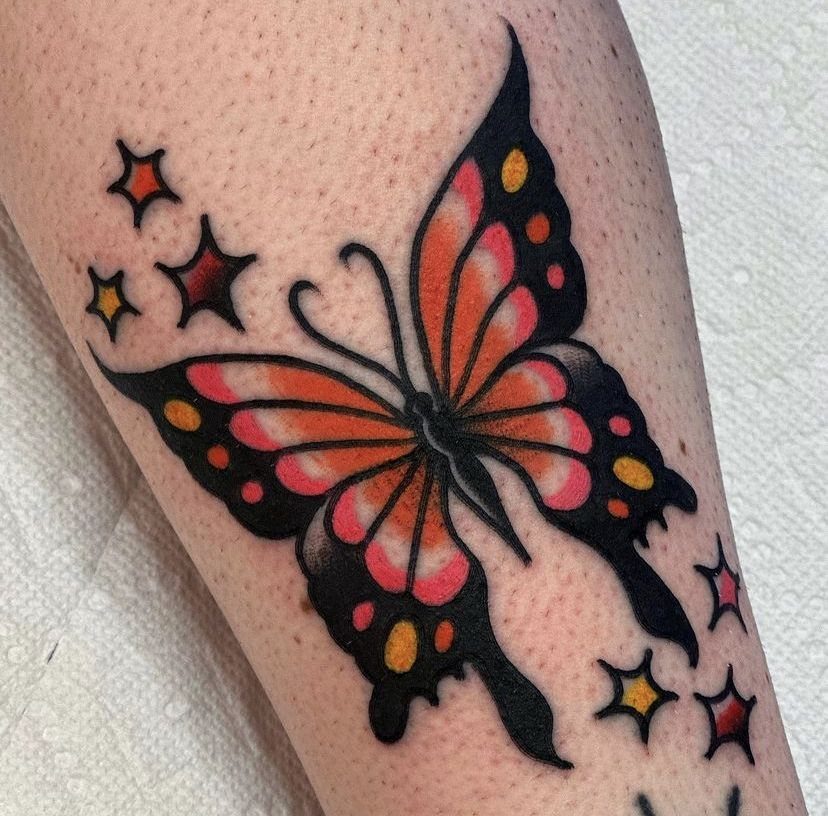
Stars around a butterfly create a feeling like night magic settling onto skin. The design keeps the traditional butterfly bold and recognizable, then scatters the stars across the background to fill negative space and leave the main subject clear.
This approach gives you flexibility with placement.
A single butterfly needs enough room to read clearly, and stars let you extend the piece up an arm or across a shoulder blade without adding another heavy element. The stars balance the composition while keeping the butterfly center stage.
2. Butterfly and Ribbon
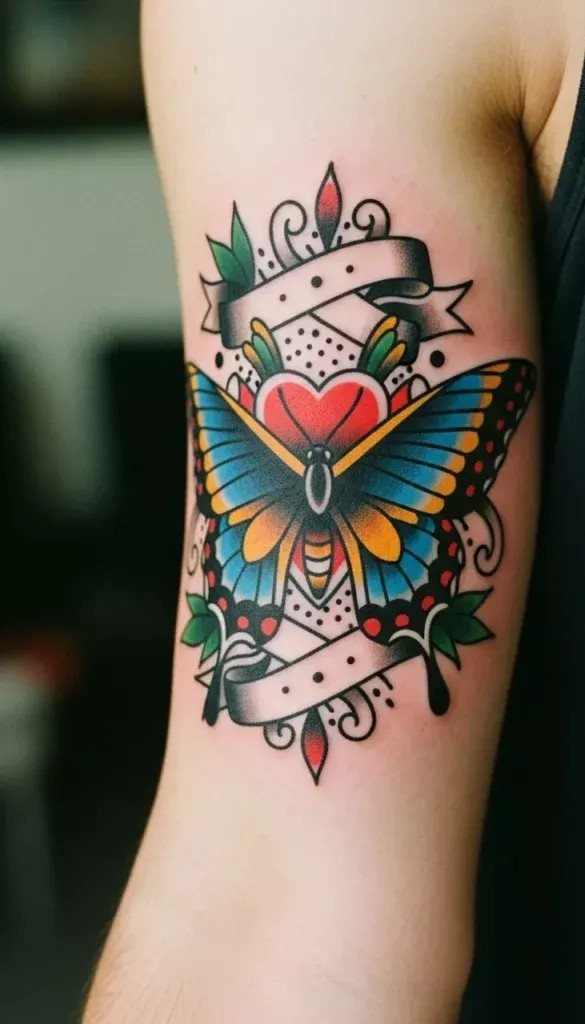
A ribbon curls through the design and gives you a place to add text later.
Traditional tattoos often use banners for names, dates, or short phrases, and the ribbon serves that function while adding flow to a shape that otherwise sits static.
The ribbon also connects a butterfly to other elements. If you pair the butterfly with a heart or an anchor, the ribbon can wrap around both and tie the composition together.
That flexibility makes this combination popular for memorial pieces and dedications where the butterfly represents transformation and the ribbon holds the name.
3. Butterfly and Anchor
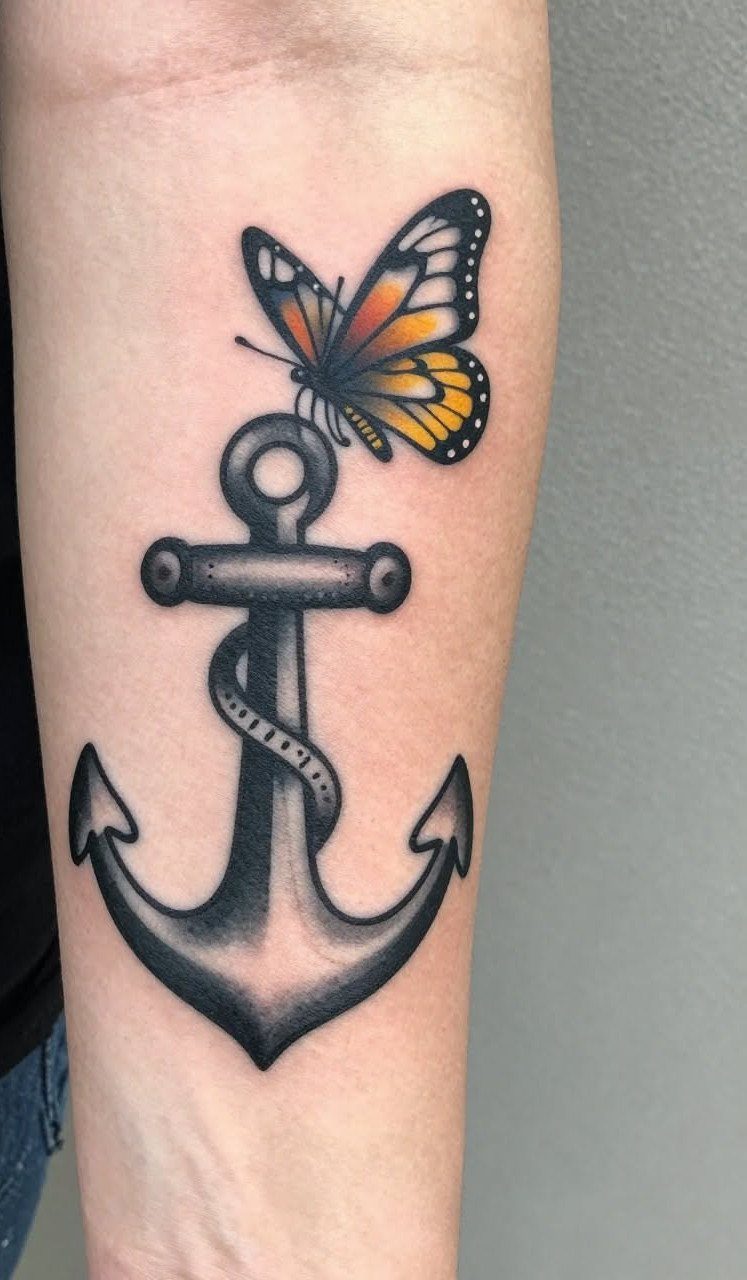
An anchor grounds the butterfly and creates a visual contradiction that reads clearly once inked.
Butterflies mean change, anchors mean staying put, and placing one on top of the other suggests you’ve found stability after a period of movement or transformation.
This pairing works well when you want a tattoo that carries weight without being dark.
The anchor gives the design a nautical reference and adds mass at the bottom, which helps balance the butterfly’s wings. I’d recommend placing this on the forearm or calf where both elements have room to read at their own scale.
4. Butterfly and Skull
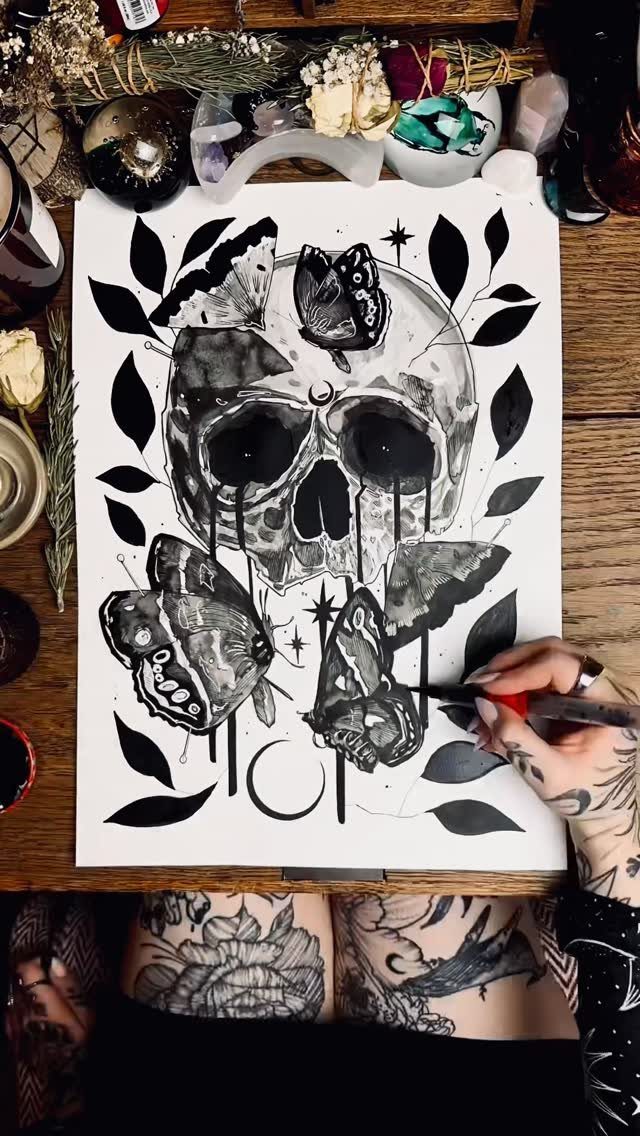
The butterflies land on the skull or hover near it, and the contrast between the 2 makes both more striking than either would be alone.
This combination is common in memorial tattoos, where the skull represents loss and the butterfly represents the person’s transformation or spirit moving forward.
The traditional style suits this subject because it can handle heavy black shading on the skull without losing the delicate detail in the butterfly’s wings. Size matters here: you need enough room to give both elements space to read clearly.
5. Colorful Traditional Butterfly Tattoo
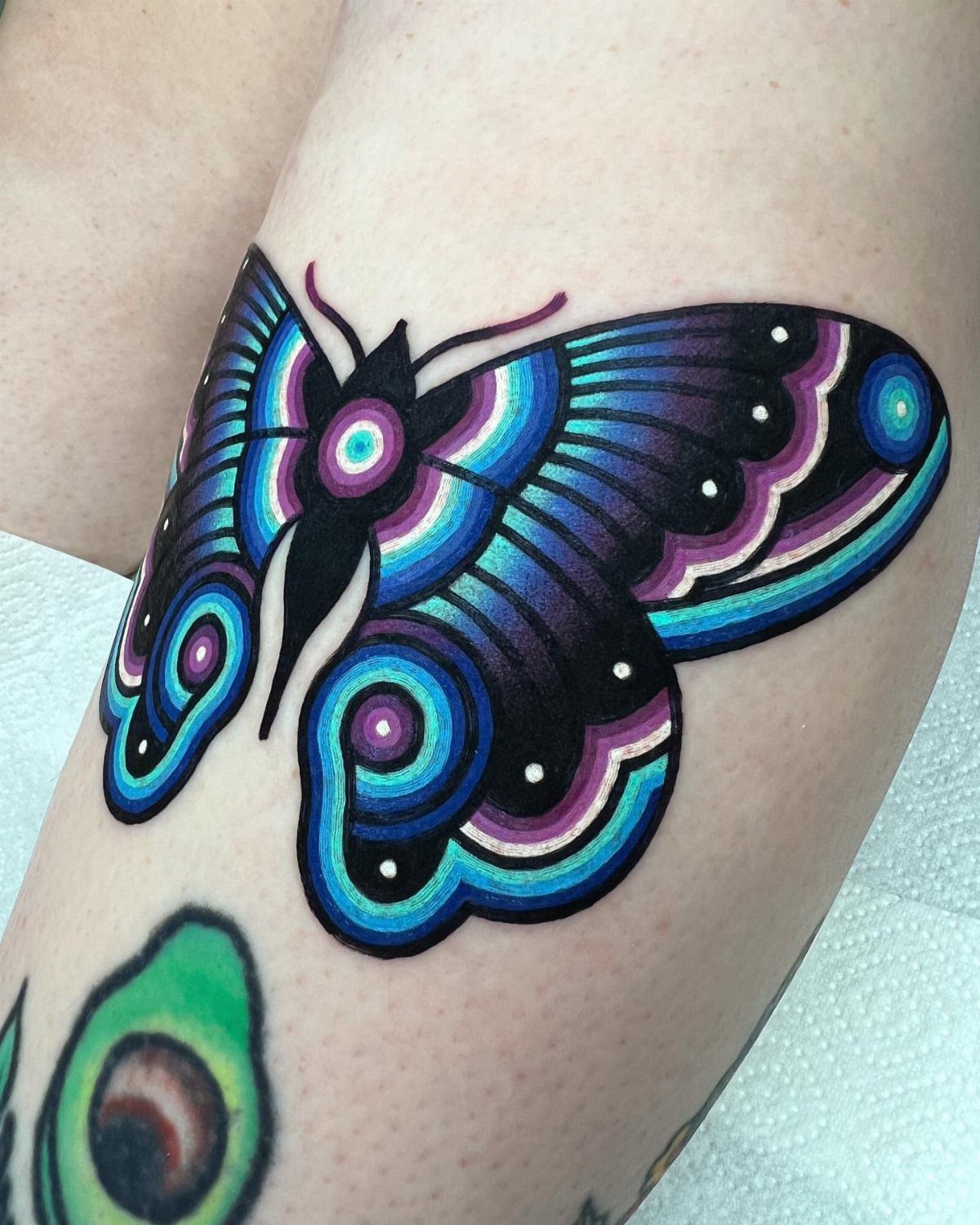
Bold color brings a traditional butterfly to life and makes the design unmistakably yours. Traditional tattooing relies on saturated primaries, and layering blue, purple, pink, or red across the wings creates depth without soft shading or blending.
The color choice changes how the piece reads over time. Blues and purples tend to hold longer before fading, while reds and pinks may need a touch-up after several years.
I’d pick colors that suit your skin tone and the placement: cooler tones on fair skin, warmer tones on deeper complexions.
Concentric patterns in the wings, like the ones visible here, give the artist a structure to fill with color and hold everything in balance.
6. Butterfly with Flowers
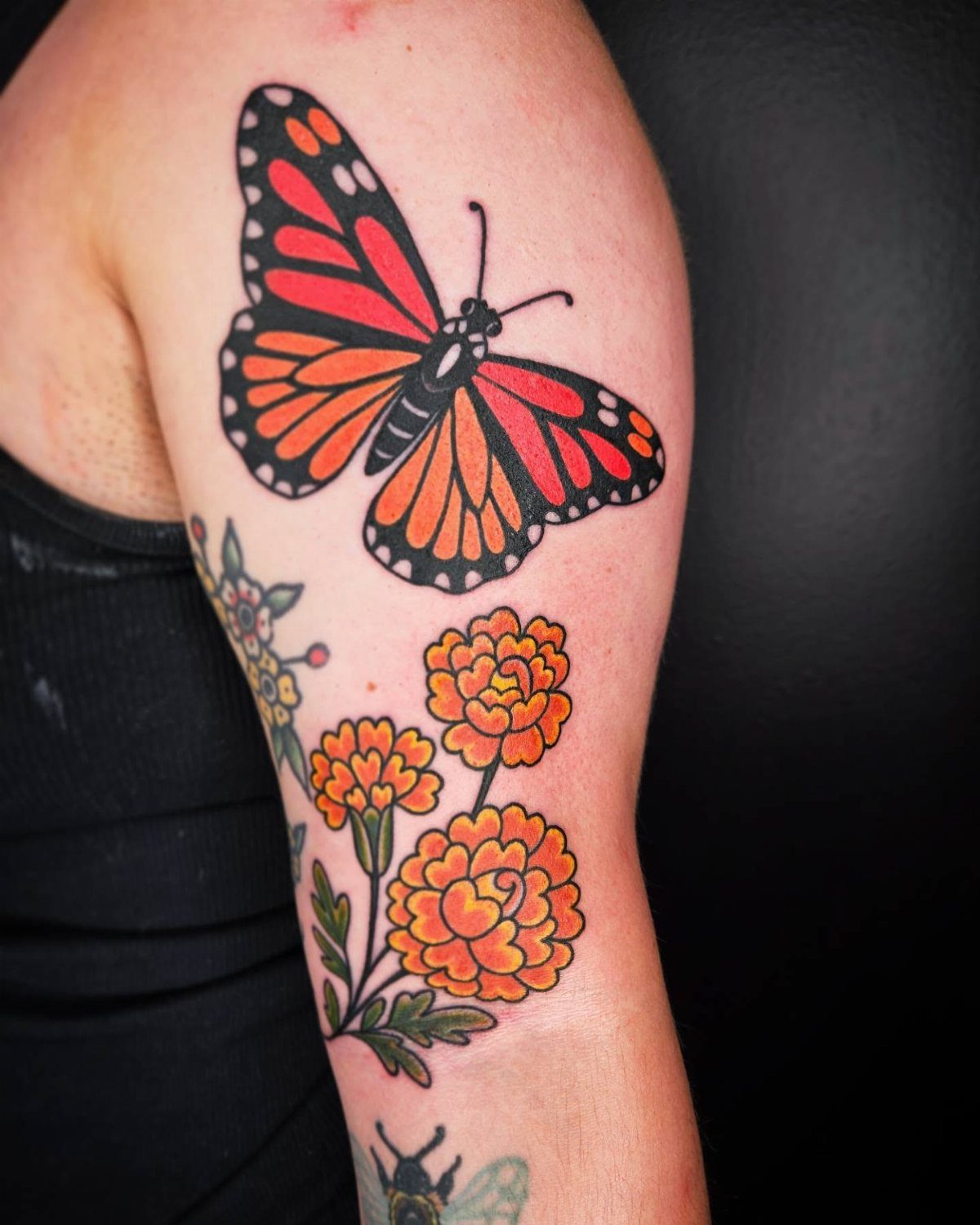
Flowers and butterflies belong together, and pairing them in a tattoo feels natural rather than forced.
The flowers anchor the butterfly to a setting and give you a second layer of meaning: roses for love, daisies for innocence, or marigolds for remembrance.
Orange flowers and a monarch butterfly create a warm palette that works well on most skin tones.
For more contrast, swap the orange for red or purple blooms. Placement depends on how much room you give the flowers: a single stem fits the upper arm, while a fuller garden scene needs the thigh or shoulder blade.
7. Butterfly and Heart
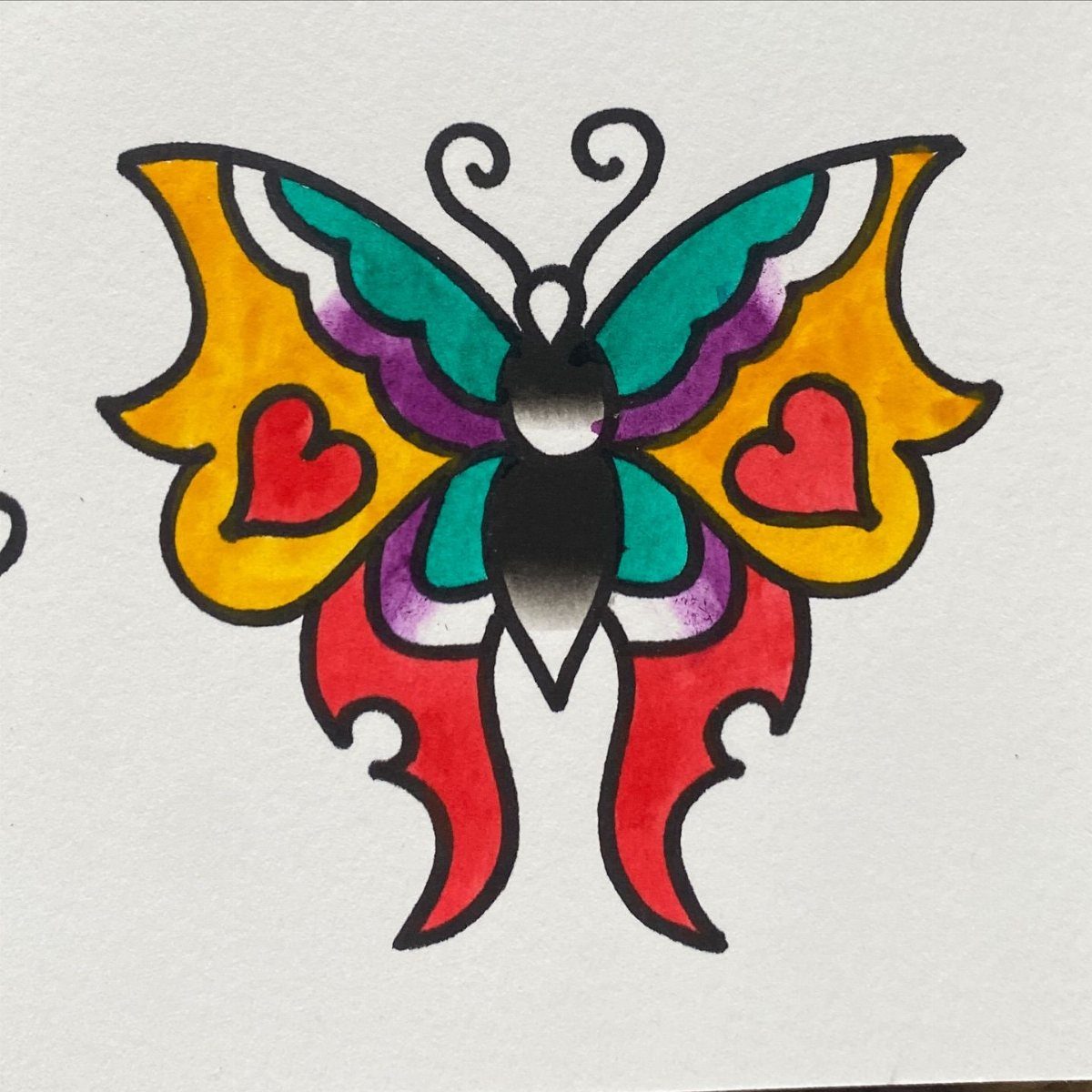
Hearts on the wings turn a butterfly into a declaration rather than just a symbol. This combination reads clearly and makes your intention obvious: the tattoo is about love, whether romantic, familial, or self-directed.
The hearts replace the usual wing patterns, so the design loses some of the natural detail but gains a stronger message.
Red hearts on yellow or orange wings create high contrast and keep the piece bright. This works best at a medium size, where both the butterfly shape and the hearts inside it stay readable.
8. Traditional Monarch Butterfly Tattoo
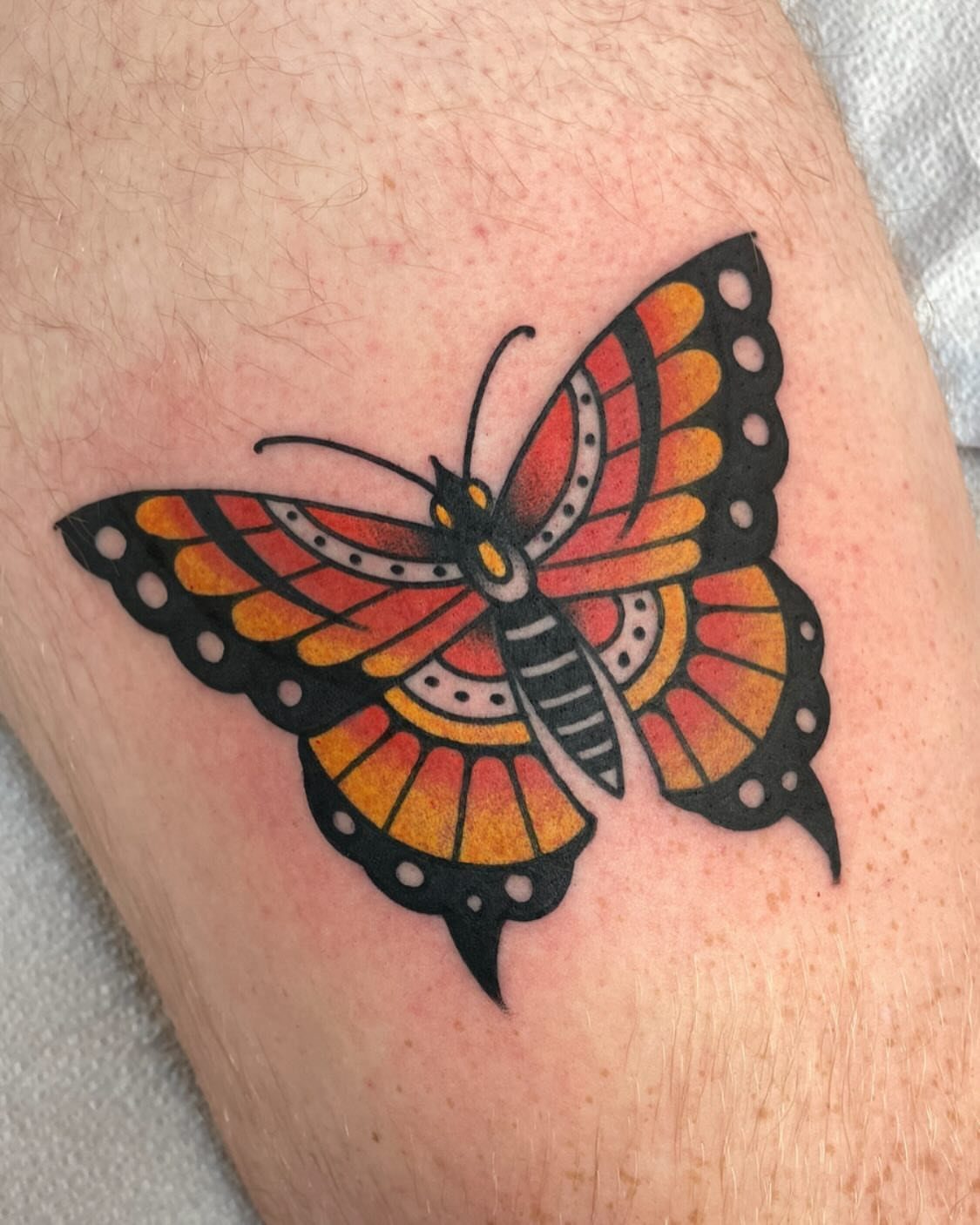
The monarch is the most recognized butterfly species, and its orange and black pattern translates directly into traditional tattooing. The color scheme is already bold, so the design needs no adjustment to fit the style.
Monarchs carry migration symbolism: they travel thousands of miles to return home.
That makes this option popular for people marking a journey or a return to something important. The wings need enough space to show the black veining that makes a monarch identifiable.
9. Twin Butterfly Tattoo
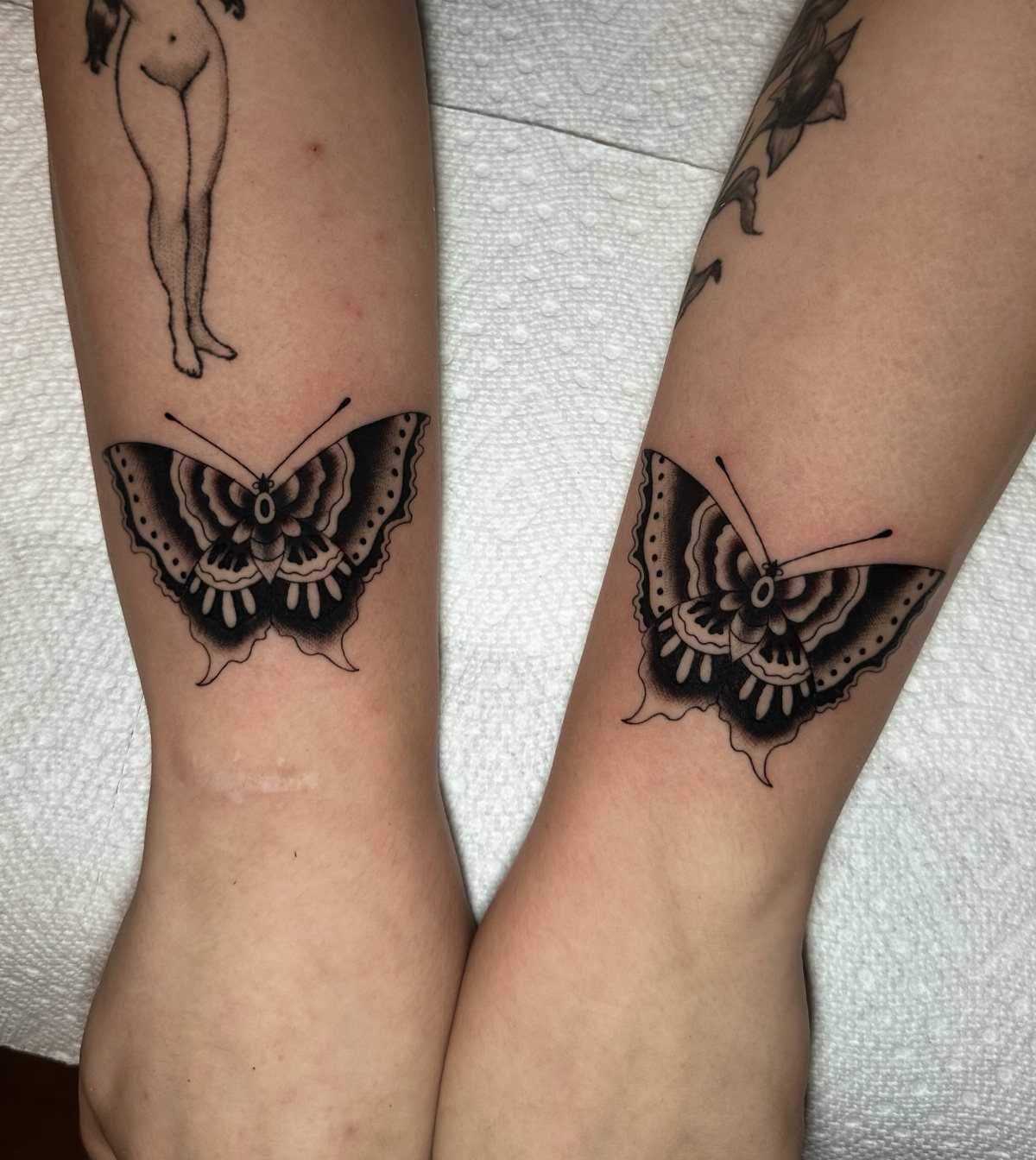
Matching butterflies connect two people without requiring identical tattoos. You can mirror the design or keep both facing the same direction, and small variations in color or detail let each person’s version stay individual.
Black and grey removes the color decision entirely and keeps the focus on the matching element itself. This approach works for siblings, partners, or close friends who want a visible link.
Inner forearms place the tattoos where you can hold them side by side, which is part of the appeal. Each butterfly needs enough space to read clearly on the arm.
10. Butterfly and Dagger
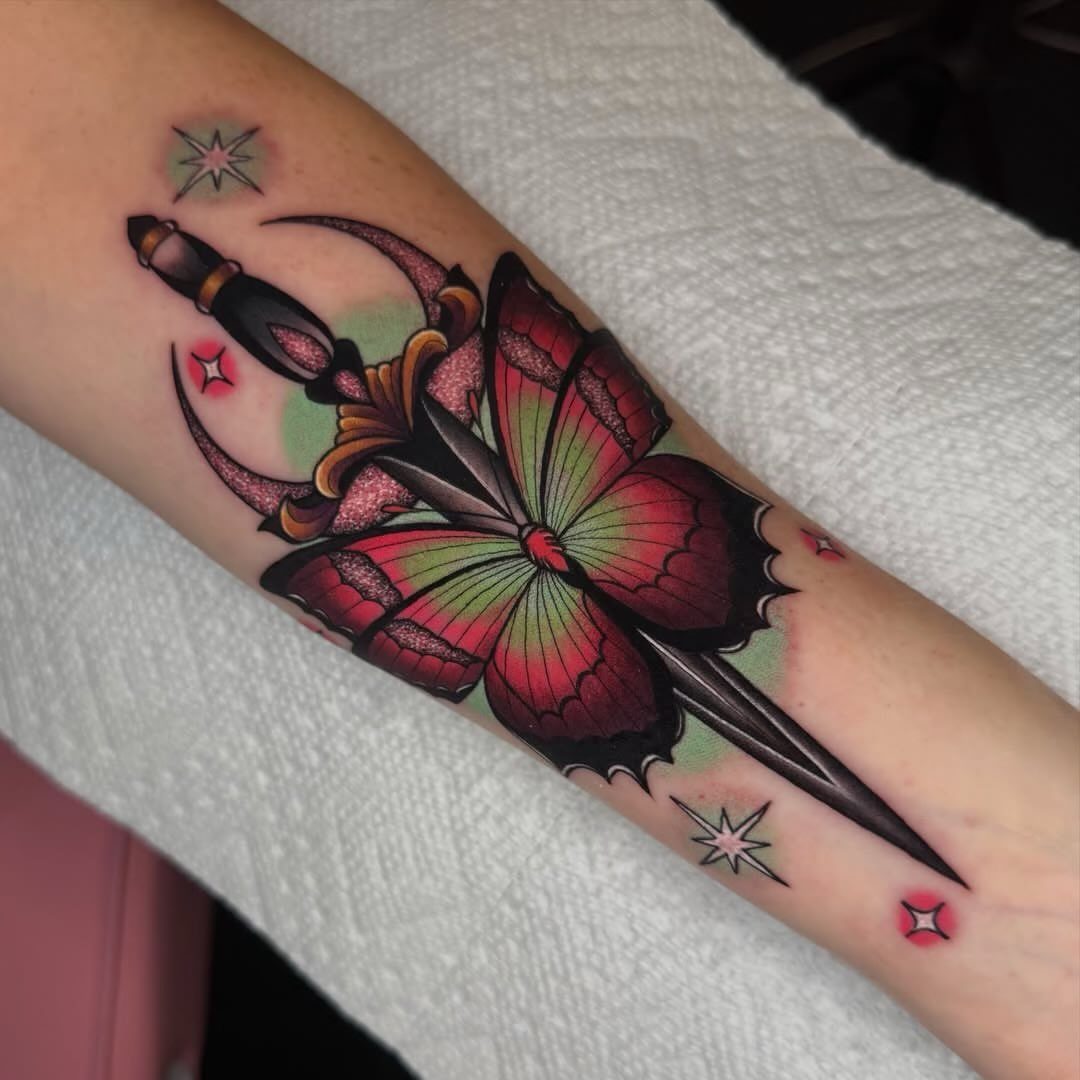
A dagger through a butterfly creates tension in the design and suggests transformation that came at a cost. The butterfly still represents change, but the blade implies that change was forced, painful, or violent.
This combination appeals to people whose growth didn’t feel gentle. The dagger adds weight and keeps the tattoo from reading too soft or decorative.
Stars fill the background and balance the composition without adding another symbolic element. Size should give both the butterfly and the dagger enough room to register as separate objects, so I’d recommend at least 4 inches tall.
11. Traditional Shoulder Butterfly Tattoo
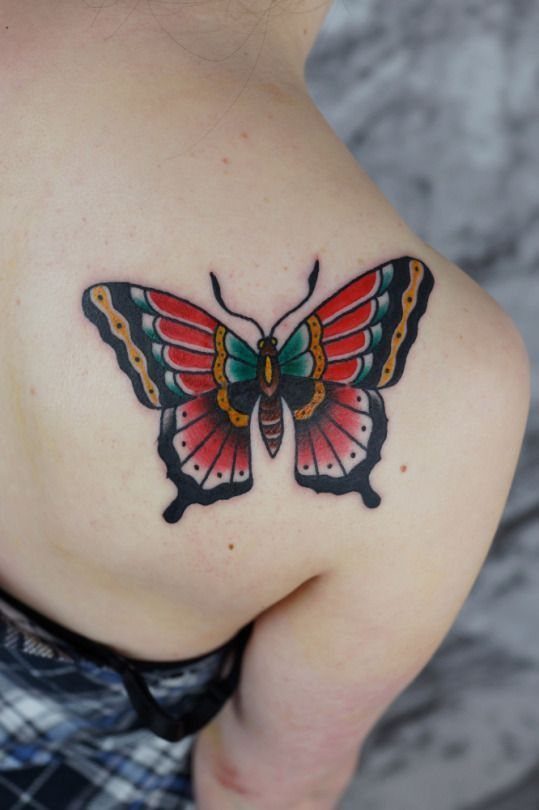
The shoulder gives you a rounded surface that mirrors the butterfly’s natural wing shape. The tattoo sits where the deltoid curves, so the wings follow that contour and the design looks like it belongs there.
This placement stays easy to cover for work and easy to show when you want it visible.
Traditional butterfly tattoos on the shoulder use the full width of the muscle. Red and yellow wings create warmth and visibility, and the bold outlines hold up well as the skin moves.
12. Traditional Back Butterfly Tattoo
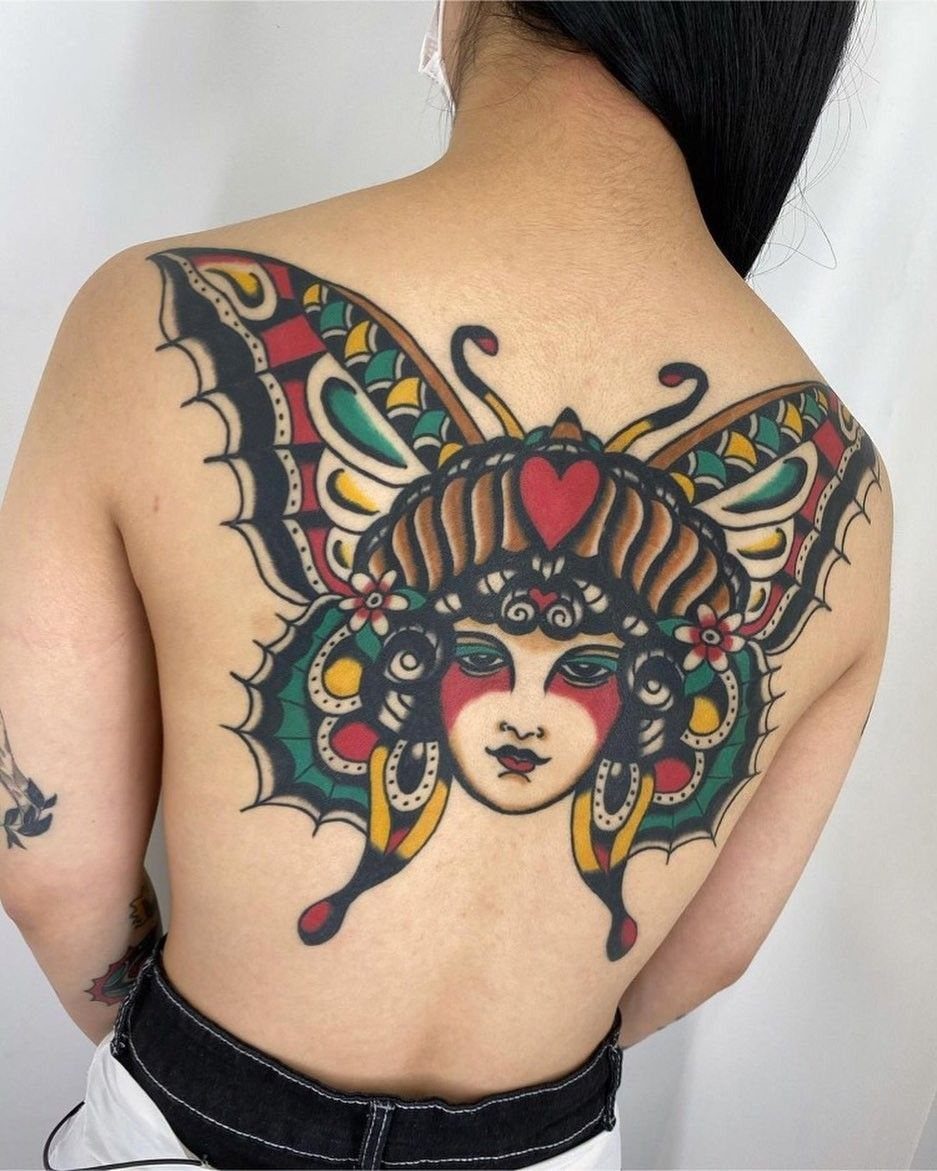
A butterfly on the back gives you the most space to work with, and adding a woman’s face to the body turns the tattoo into a portrait hybrid.
The wings spread wide across the shoulder blades, and the face sits where the butterfly’s head would be, creating a single unified figure.
This design works best when the face has personal meaning: a partner, a family member, or a representation of yourself.
The size needs to be substantial, at least 8 inches across, so the face reads clearly and the wings have enough room to show their full pattern.
Back pieces take multiple sessions and hurt more along the spine, but the result is a large, dramatic tattoo that can’t be replicated on a smaller surface.
13. Traditional Chest Butterfly Tattoo
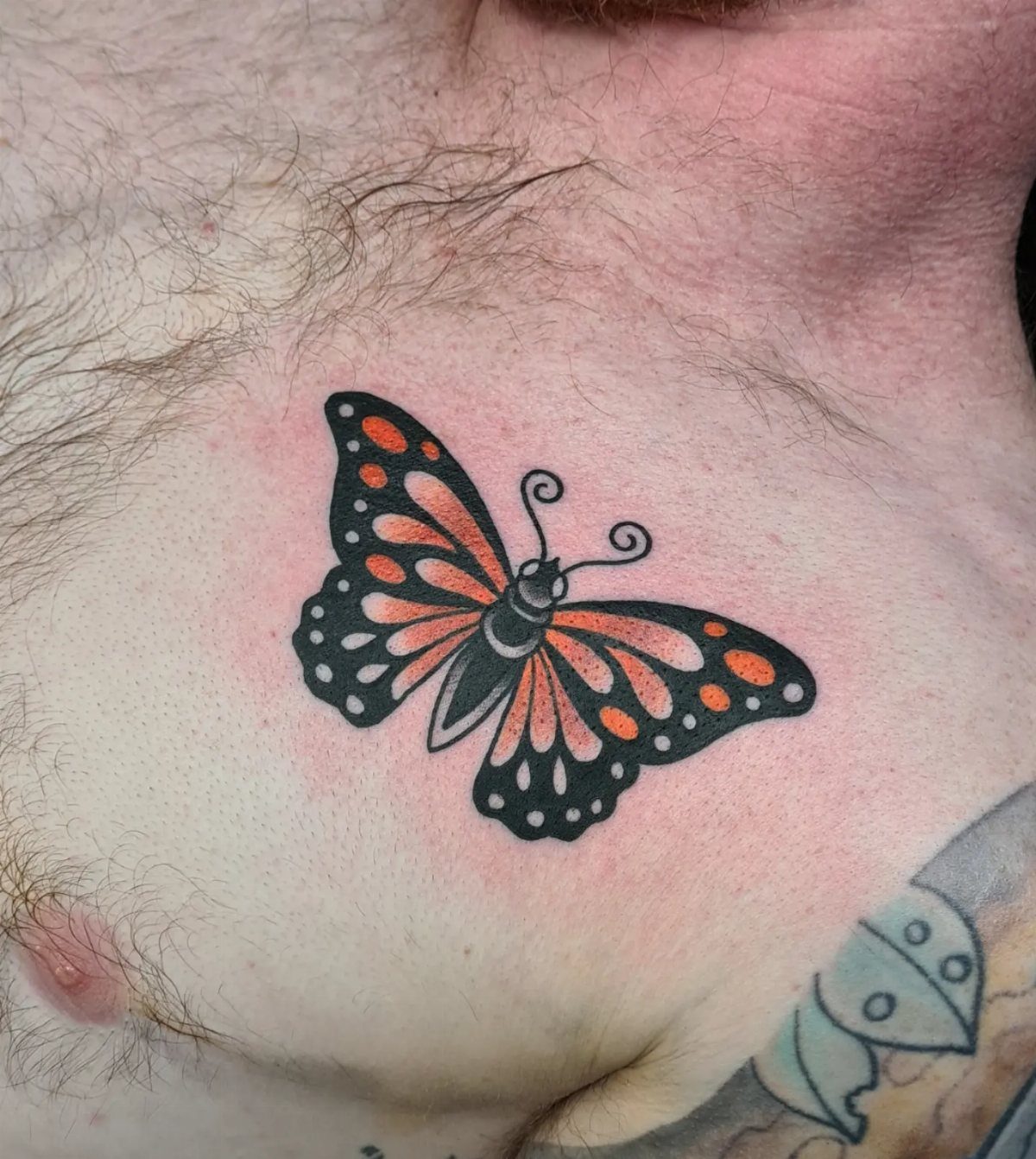
The chest places the butterfly where the muscle gives it structure and the tattoo stays visible in open shirts or at the beach.
Orange and black hold contrast well on skin, and the traditional style makes the butterfly bold enough to read across the pectoral without fading into soft detail.
This spot hurts more than the arm or leg due to how close bone sits to the surface, but the session stays short for a single butterfly.
Size should match the width of the chest: too small and it looks lost, too large and the wings wrap awkwardly around the curve.
14. Traditional Forearm Butterfly Tattoo
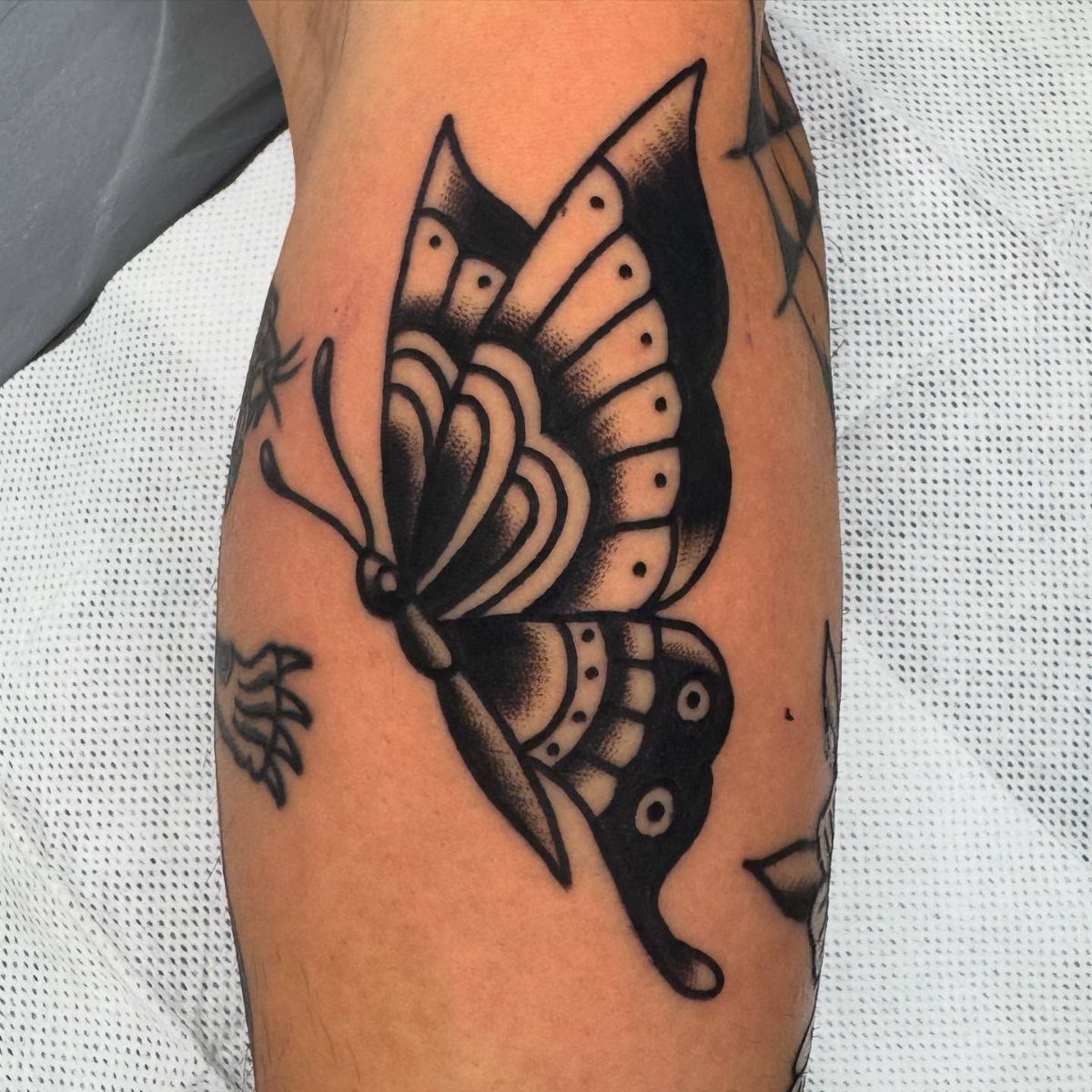
Black ink alone keeps a traditional butterfly simple and lets the thick outlines define the shape. The forearm gives you a flat surface where the wings spread without following a curve, and the tattoo stays visible most of the day.
This placement works well for a first tattoo because the pain stays manageable and you can watch the artist work.
The forearm also heals faster than areas that rub against clothing. A single butterfly in black needs less time in the chair than a colored piece, usually under 2 hours depending on size.
15. Traditional Butterfly Elbow Tattoo
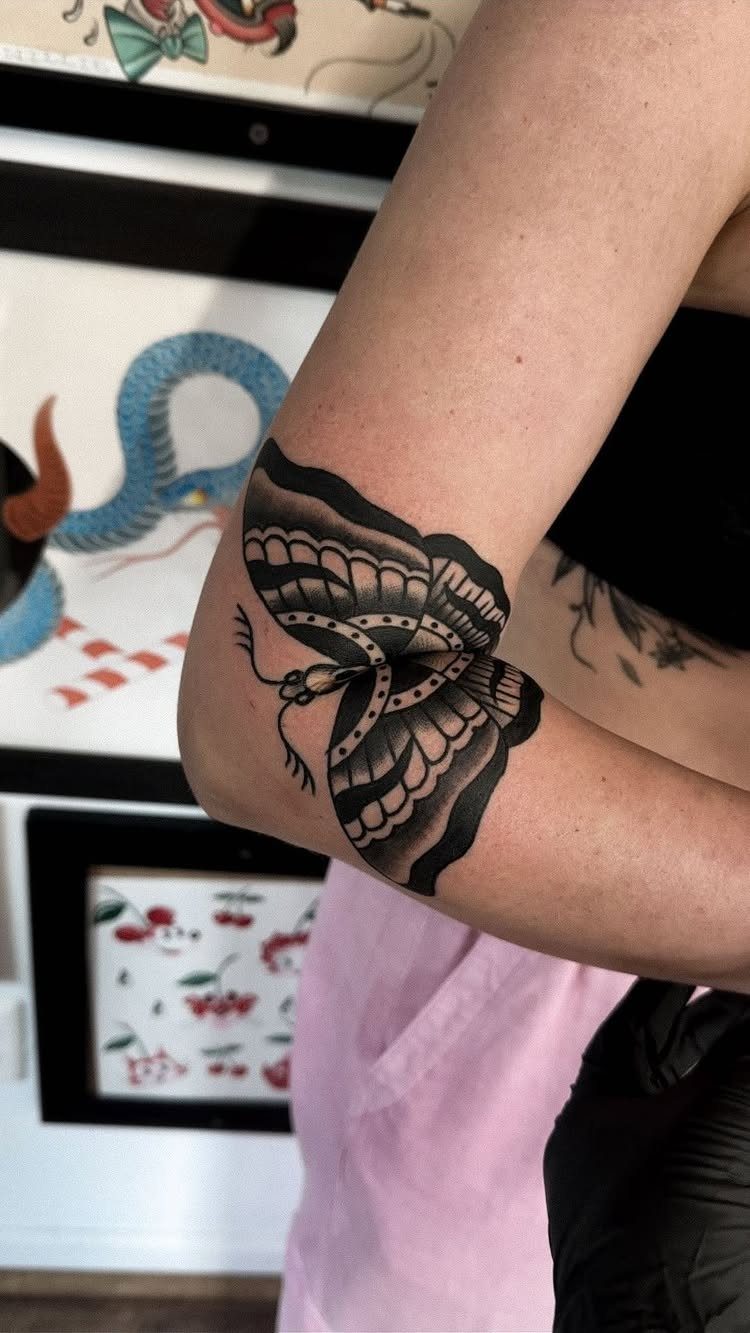
Placing a butterfly on the elbow puts it on one of the most painful spots to tattoo, but the result sits exactly where the arm bends and the design moves with you.
Black and grey softens the look while keeping the traditional boldness intact.
The elbow’s shape means the wings curve around the joint, so the butterfly appears slightly distorted when your arm is straight and reads fully only when bent.
This spot also fades faster because the skin stretches constantly, so expect a touch-up within a few years.
16. Butterfly Wings with Female Faces
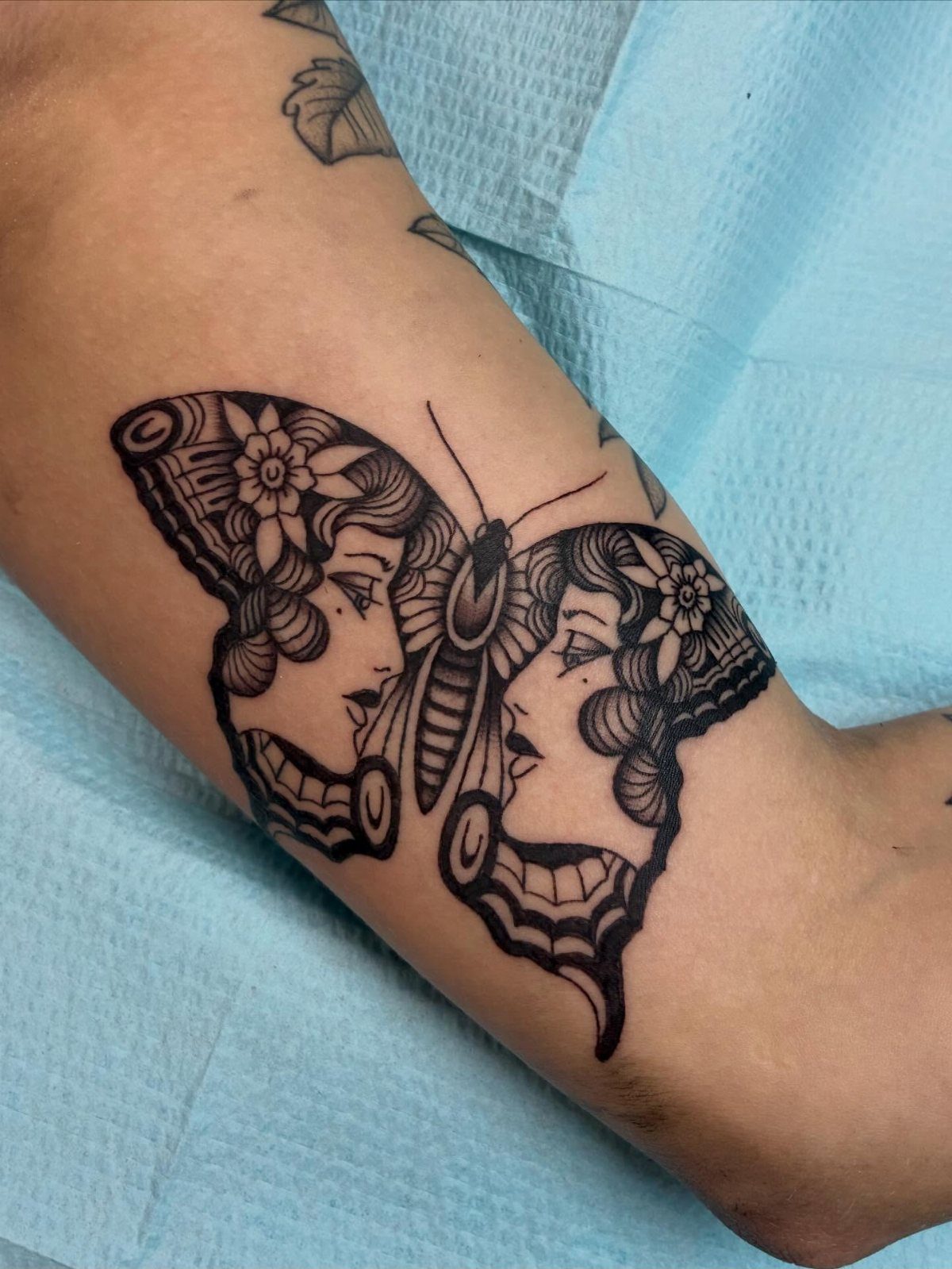
2 female faces form the wings and turn the butterfly into a portrait piece that reads as both insect and figure.
The profiles mirror each other, so the symmetry holds even though the subject is human rather than natural wing patterns.
This design suits memorial tattoos or pieces representing duality: 2 sides of yourself, people who shaped you, or the before and after of a transformation.
The lower leg gives enough length for the faces to show detail, and black ink keeps the features clear without color competing for attention.
Frequently Asked Questions
What is a butterfly tattoo?
A butterfly tattoo represents transformation, beauty, and freedom, marking a shift from one stage of life to another.
Traditional butterfly tattoos use bold black outlines, saturated color fills, and symmetrical wing patterns that make the design immediately recognizable. The style holds up well over time and reads clearly on skin.
What is the difference in meaning between a moth tattoo and a butterfly tattoo?
Butterflies symbolize transformation and beauty, while moths represent mystery and attraction to light.
Both insects go through metamorphosis, but moths carry a darker, more nocturnal meaning that suits people who identify with the night or hidden change. Traditional style handles both subjects well with bold outlines and symmetrical patterning.
What does a monarch butterfly tattoo symbolize?
Monarchs travel thousands of miles to reach the same forest their ancestors left, and that cycle of return connects the insect to anyone who has moved through distance or difficulty to come back to themselves.
The palette needs no translation: orange, black and white are already bold traditional colors, and the symmetry of the wings gives a tattoo artist clean lines to anchor in the style.
If you moved across the country and back, left something behind and finally reclaimed it, or spent years becoming the version of yourself you were supposed to be all along, the monarch reads as your own long flight home.