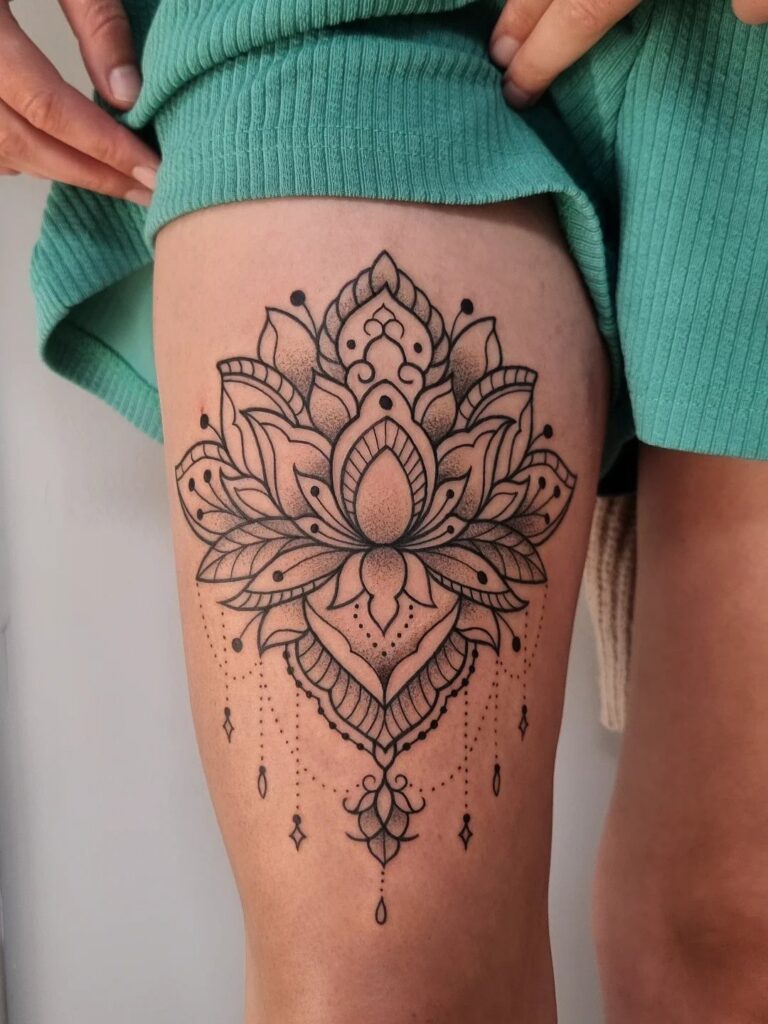
Lotus mandala tattoos range from a 2-centimeter piece tucked behind the ear to a full back layout that centers the design on your spine.
The decision comes down to whether you want the design visible in daily life or reserved for yourself: the elbow and back put geometry on display, while behind-the-ear placements stay tucked until you choose to show them.
1. Lotus Mandala with Vines Tattoo
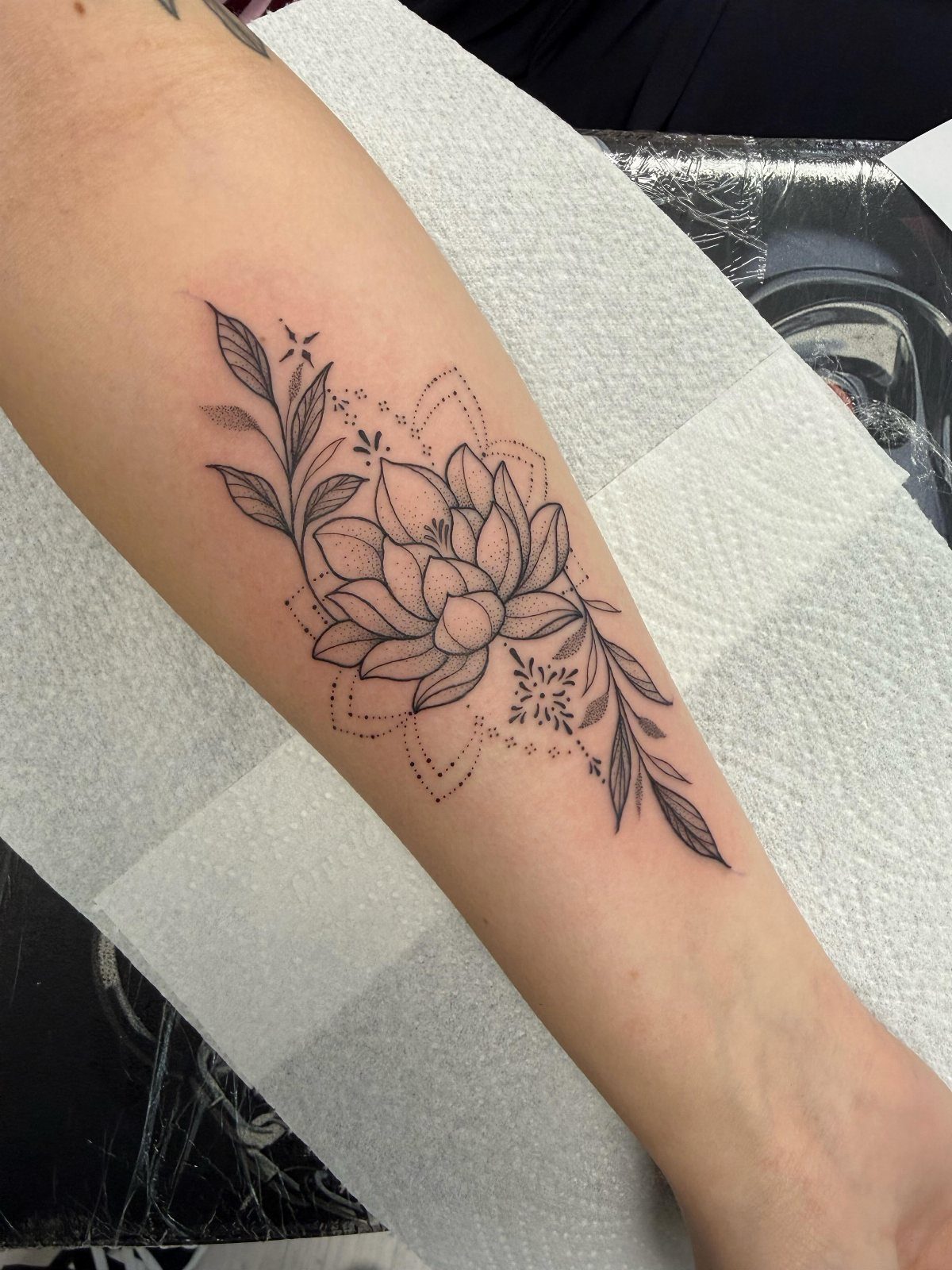
The vines soften the geometry of the mandala and give the lotus some breathing room. Instead of a design that stops at the flower, the vines let it trail upward or downward along the forearm, following your arm’s length.
I like this version when someone wants a lotus mandala but finds pure geometry a little cold. The leafy vines bring in an organic feel without turning the whole thing into a garden scene.
Expect to sit for a session that depends on how far the vines travel. Black ink holds the sharpest contrast, and the dotwork around the mandala keeps the detail readable even as the lines age.
2. Elbow Lotus Mandala Tattoo
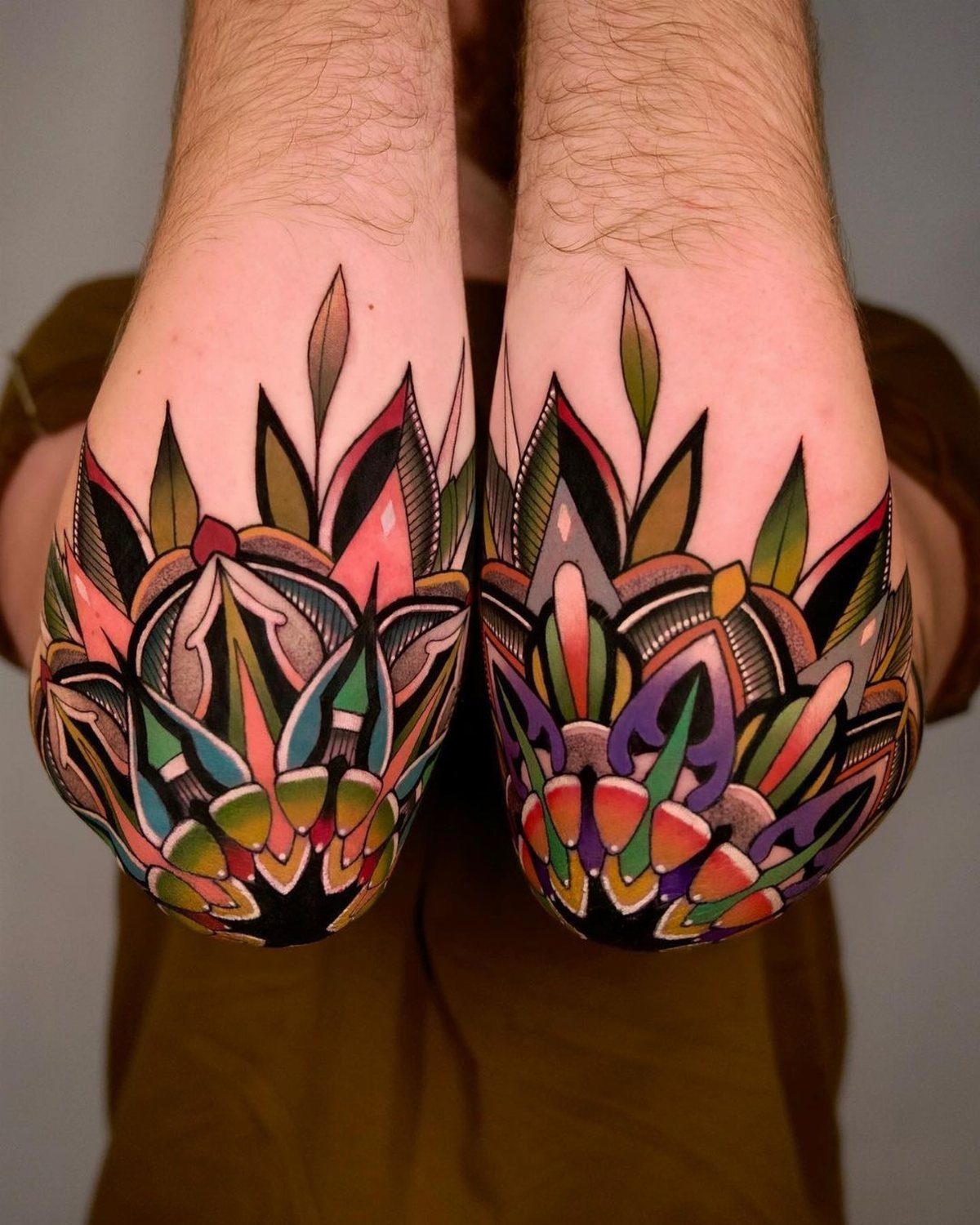
Placing a lotus mandala on the elbow means the design wraps around the joint and moves every time you bend your arm.
The geometry radiates outward from the center, so when your elbow is bent, the petals fold in on themselves, and when your arm is straight, the full pattern opens up.
The elbow ranks high on the pain scale.
Skin sits thin over bone there, and the needle drags more than it glides. Plan for a full session per elbow if you’re doing both.
Color adds dimension, but it also fades faster on a joint that flexes constantly. Touch-ups keep it looking sharp.
3. Unalome Lotus Mandala Tattoo
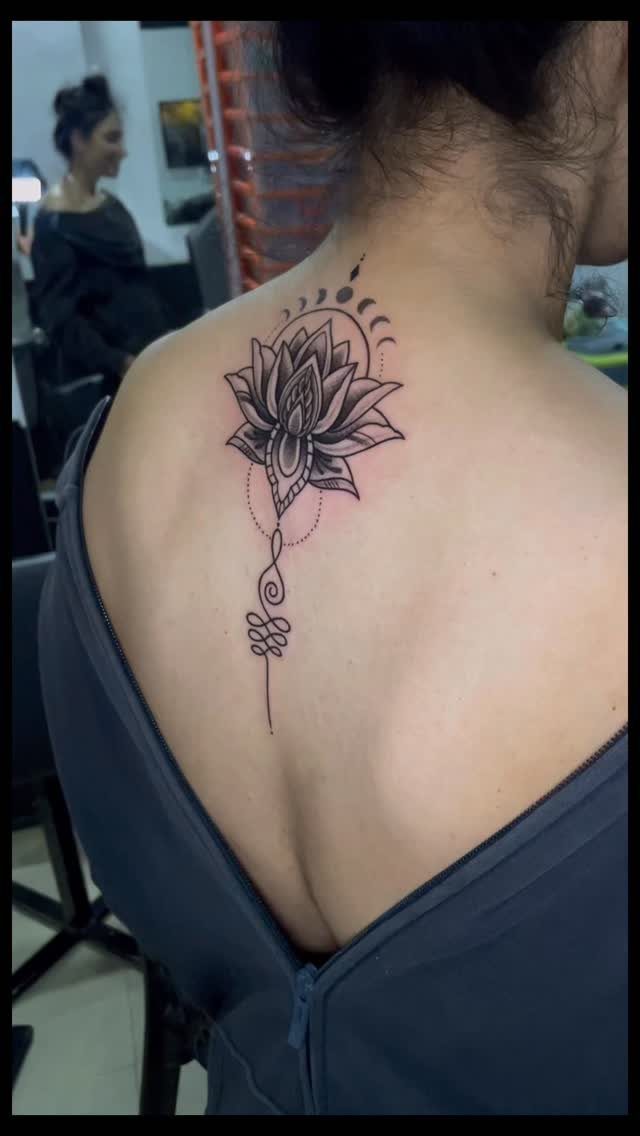
The unalome symbol sits above the lotus and traces the path to enlightenment: spirals for the confusion and missteps, then a straight line once clarity arrives.
Paired with a lotus, which grows out of mud and blooms clean, the whole design speaks to progress through difficulty.
I see this one most often on the upper back, where the unalome can stretch vertically and hold its own space. It reads clearly from a distance and doesn’t need much width.
Black ink and minimal shading keep it legible. To make the unalome stand out, ask your artist to use slightly thicker lines for it than for the lotus petals.
4. Dual-Toned Lotus Mandala Tattoo
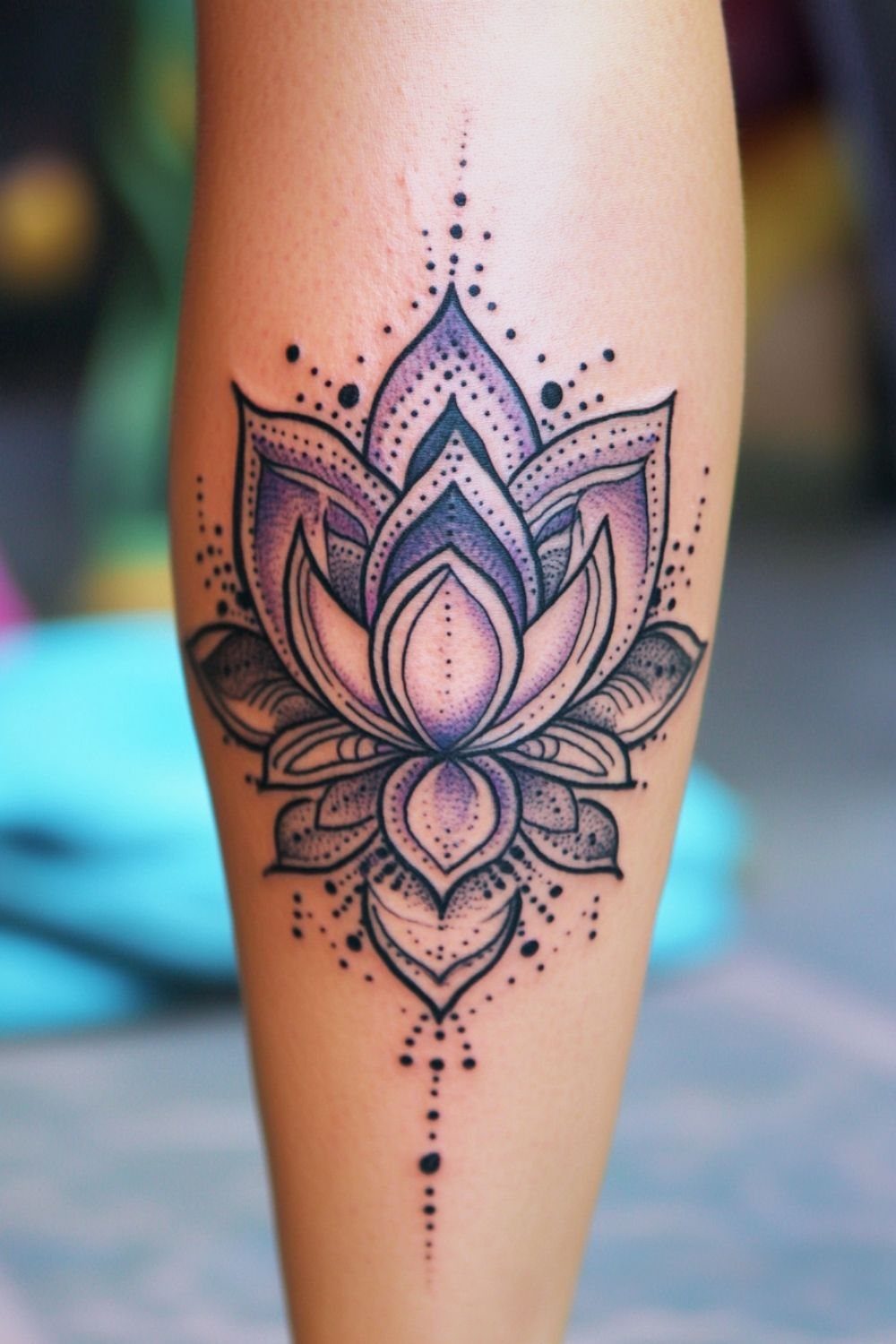
Adding a second color breaks up the symmetry in a way that still feels balanced. Purple brings a cooler tone to the warmth of black, and the dotwork in between gives the eye a place to rest.
Dual-toned designs ask more from your artist because they’re balancing two ink colors in one composition, keeping each section crisp. Keep the purple out of direct sun while the scabbing settles or it will fade unevenly.
I’d go with this version if you already have other color work nearby and want the lotus to sit inside that palette rather than compete with it.
5. Fine-Line Lotus Flower Mandala Tattoo
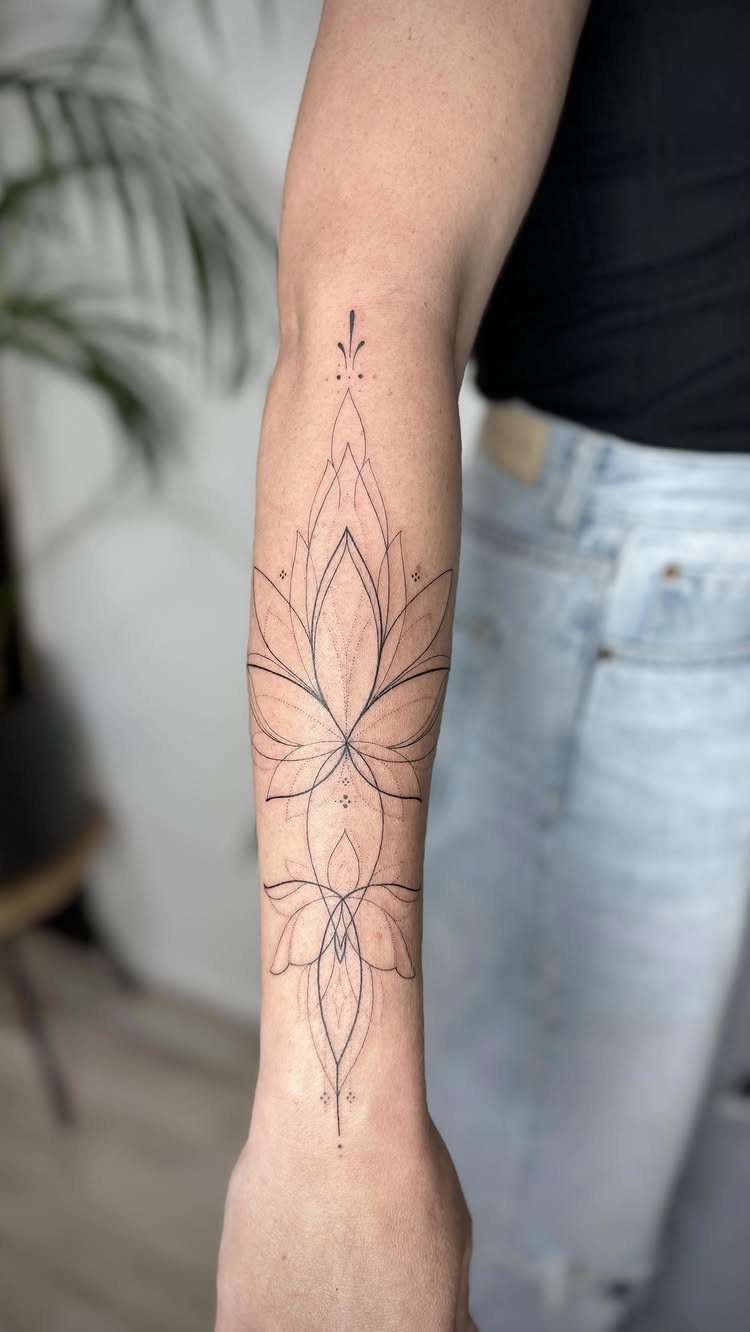
Fine-line mandalas give you maximum detail in a compact footprint. The petals stay thin, the mandala geometry stays tight, and the whole thing fits on a forearm without wrapping all the way around.
This style suits someone who wants a lotus mandala but doesn’t want it to dominate the arm. The symmetry still reads from a distance, but up close, the intricacy surprises.
Fine lines blur faster than bold ones, so placement matters.
The forearm holds up better than the hand or inner wrist, where friction and sun exposure wear ink down quicker. Plan for a touch-up down the line to keep the detail crisp.
6. Half-Lotus Mandala Tattoo
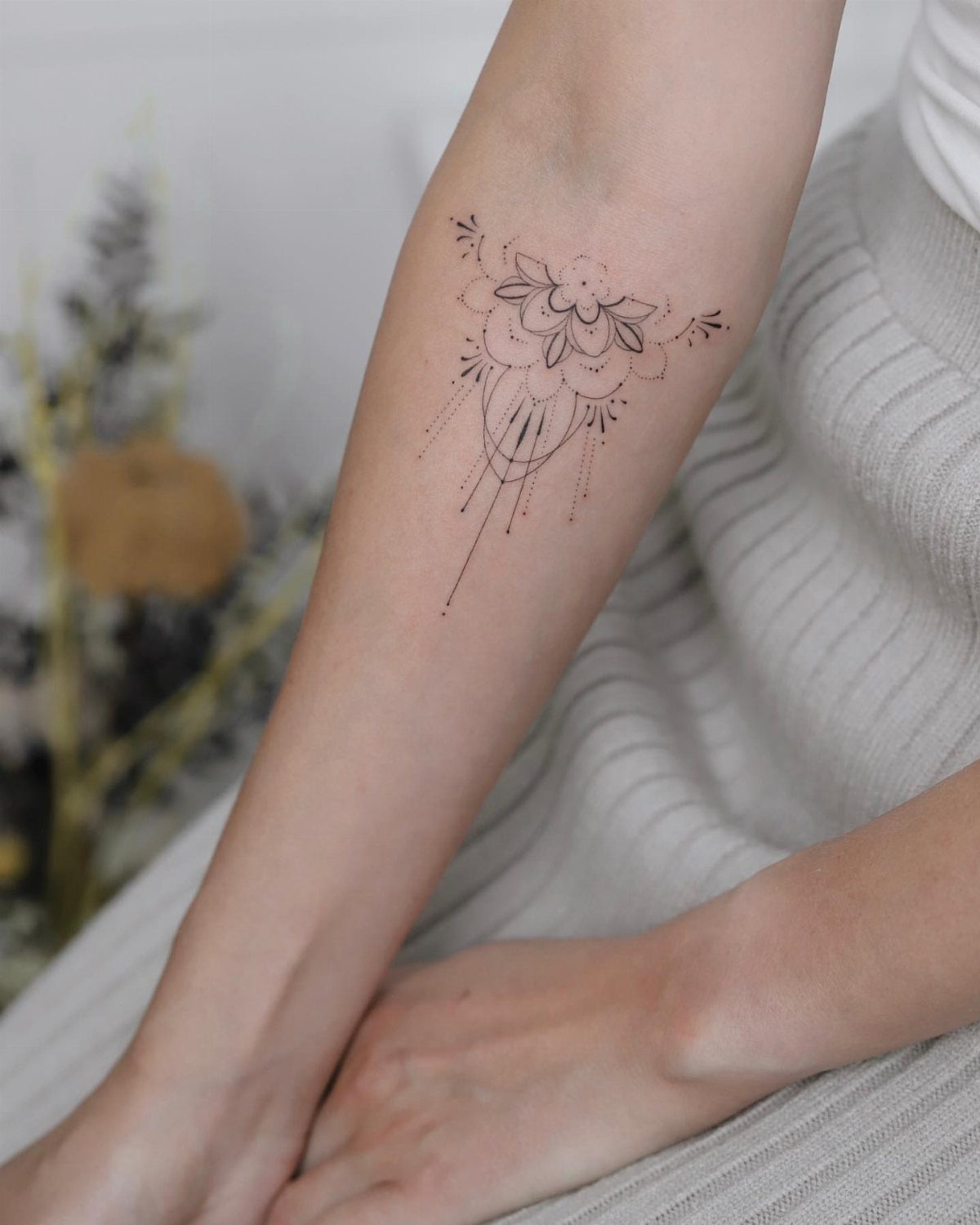
The half-lotus cuts the design at the midline and lets the mandala geometry fill the empty side. You get the symbol without covering as much skin, and the asymmetry feels deliberate rather than unfinished.
I like this version for a first tattoo or for someone who wants a lotus but already has other work on that limb. It leaves room to add something later without the designs crashing into each other.
The forearm is the easiest spot for this because its shape keeps the half-lotus from distorting when you move. Black ink with dotwork holds the longest.
7. Buddha Face Lotus Mandala Tattoo
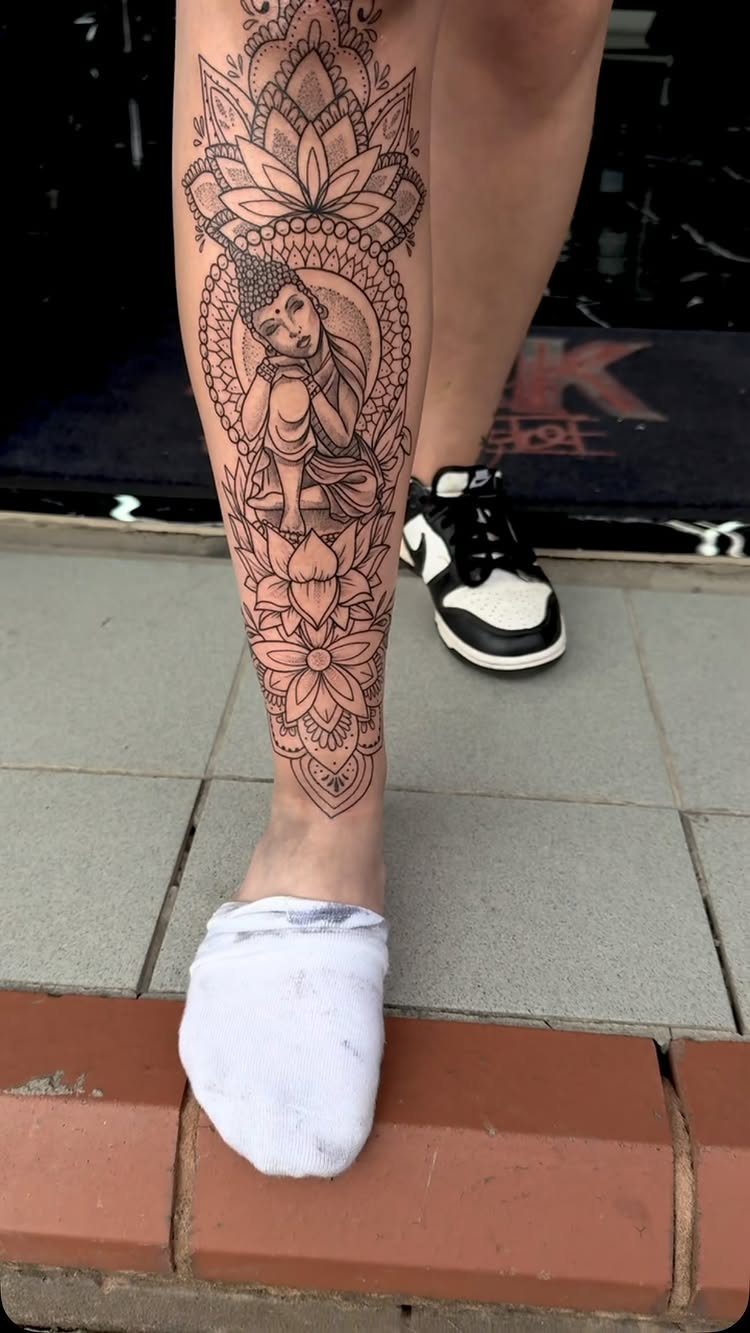
The Buddha face sits at the center, and the lotus petals and mandala geometry radiate outward from it. The combination layers spiritual symbols in a way that feels intentional rather than crowded.
Placement on the lower leg gives you a vertical canvas where the face stays upright and the surrounding detail can stretch without distortion. The calf holds ink well and heals cleaner than joints or areas with constant friction.
Black ink keeps the Buddha’s features readable. If the face gets too small or too detailed, it risks looking muddy once the skin settles.
8. Lotus Mandala with Aum Tattoo
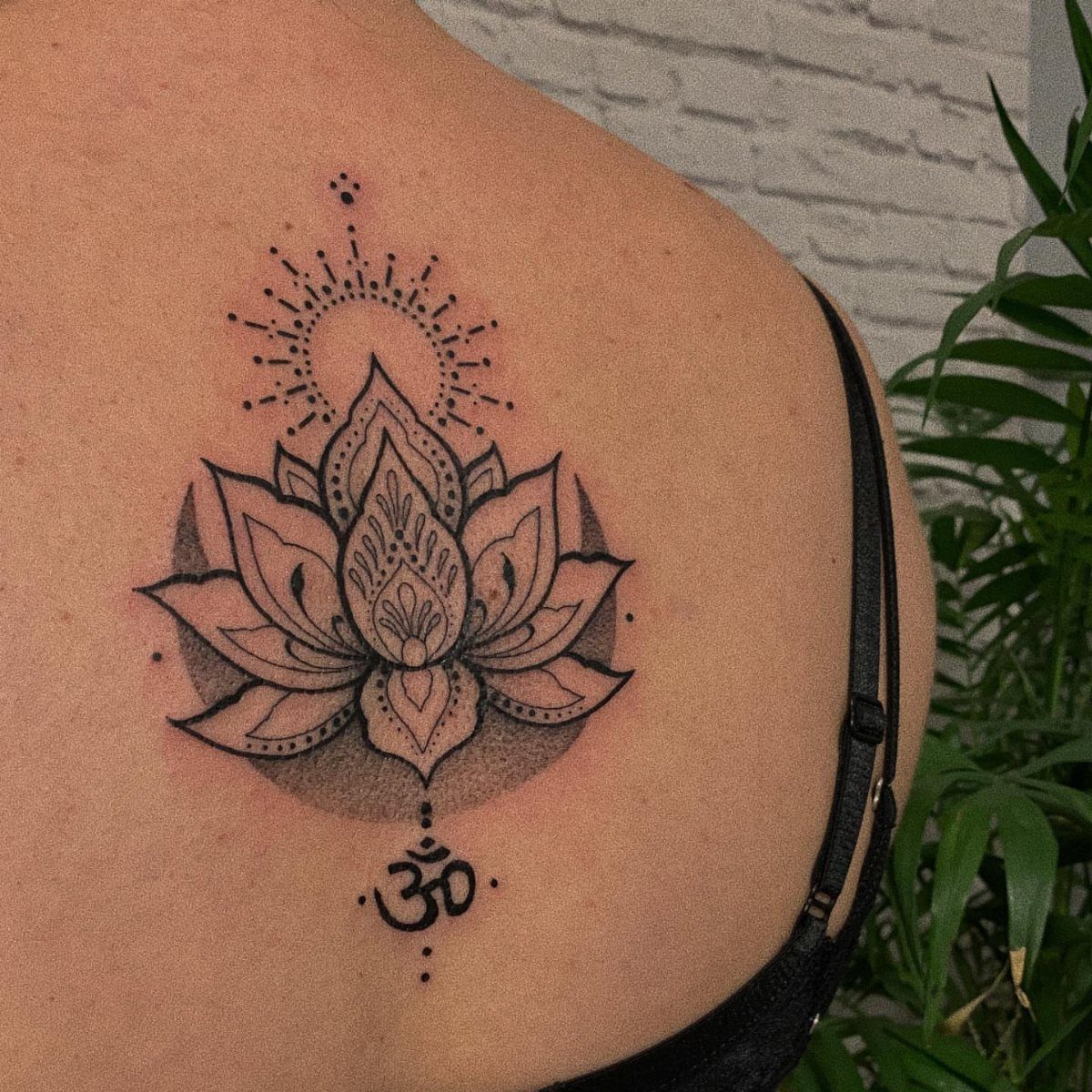
The Aum symbol anchors the bottom of the design and ties the lotus to a specific tradition. You get the floral geometry at the top and the sacred syllable below, separated by enough space that neither one competes for attention.
Placement on the hip or shoulder gives you room to stack the elements vertically without wrapping around a joint.
The Aum can sit small or match the width of the lotus depending on how much emphasis you want on each part.
I’d go with this version if you already know the Aum holds meaning for you and want it visible without dedicating a full piece to the symbol alone.
9. Ear Lotus Mandala Tattoo
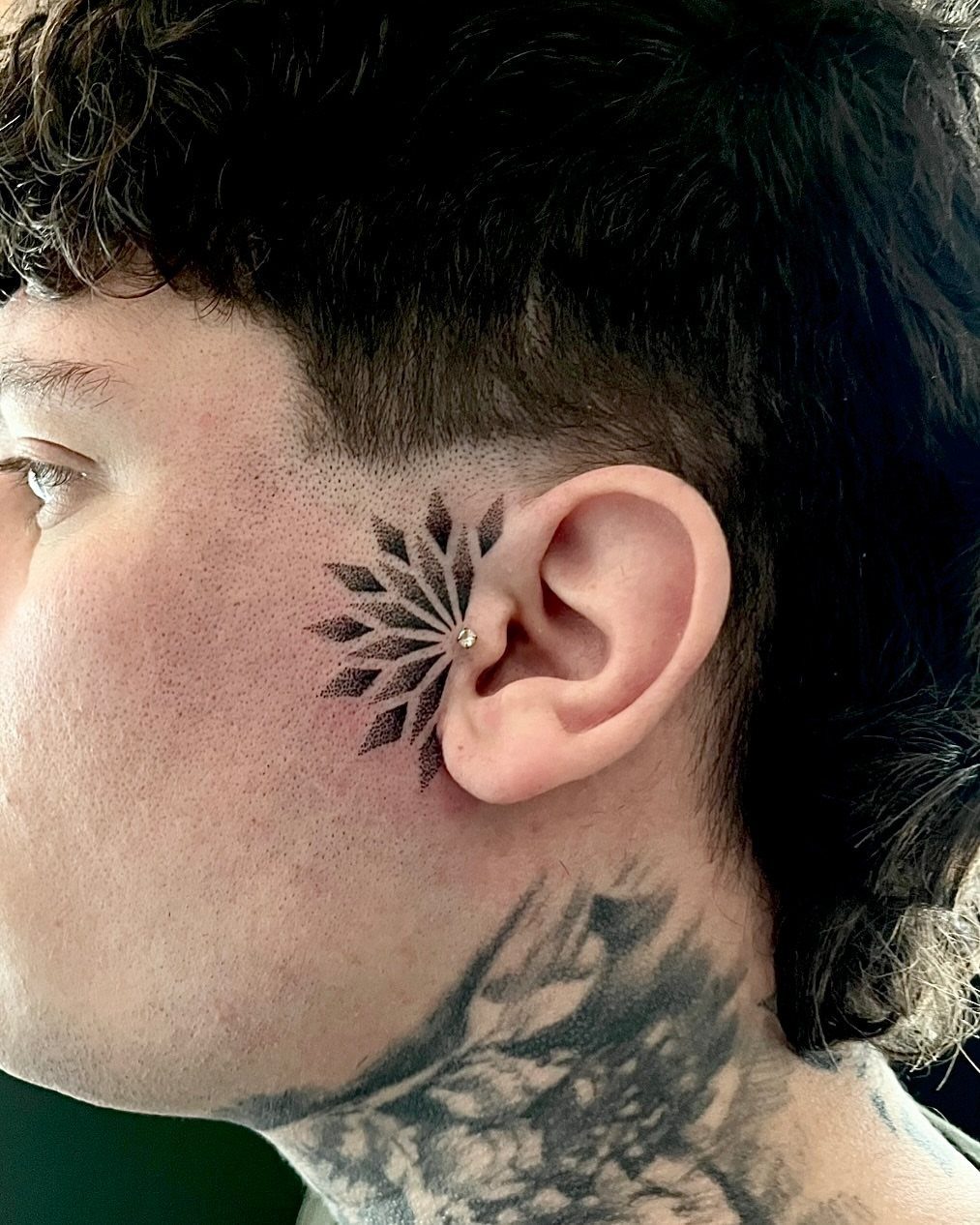
Behind the ear, a lotus mandala stays small and tucked into a spot that only shows when you pull your hair back.
The curve of the ear gives the mandala a natural arc to follow, and the size constraint keeps the design simple.
Pain here sits high because the skin is thin and the needle runs close to bone. Sessions are short, but expect sharp, focused discomfort rather than the duller ache of a fleshy area.
Anything too intricate will blur together as the lines age.
10. Back Lotus Mandala Tattoo
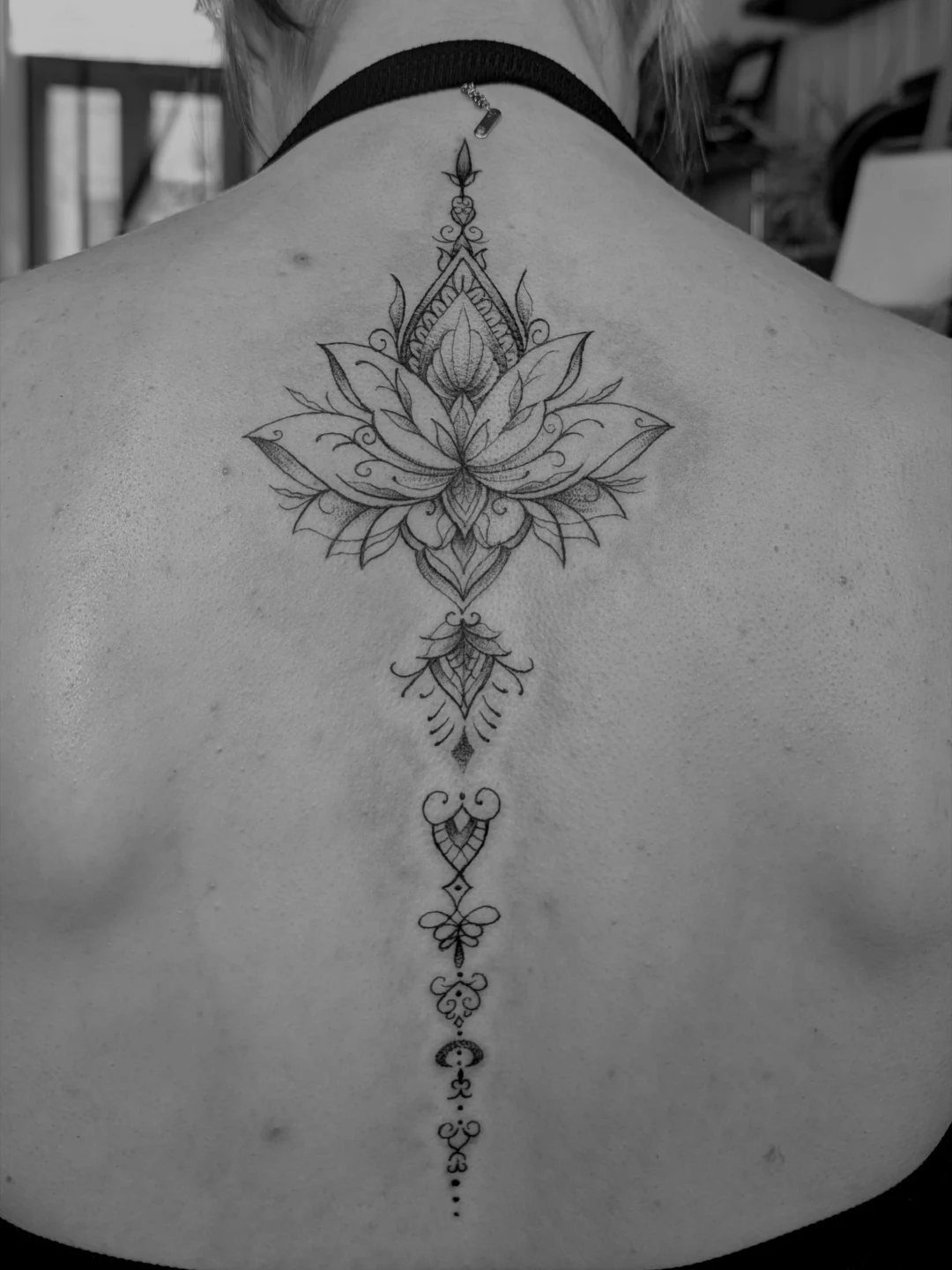
Centering a lotus mandala on the spine gives you perfect symmetry and a vertical design that follows the body’s natural line.
The geometry radiates outward from the center, and the lotus sits at the top or middle depending on how much length you want to cover.
Plan for a full session or split it into two if the design runs long.
This placement suits someone who wants the tattoo for themselves more than for display. It reads clearly in photos but stays hidden in daily life.
11. Lotus Mandala with Crescent Moon
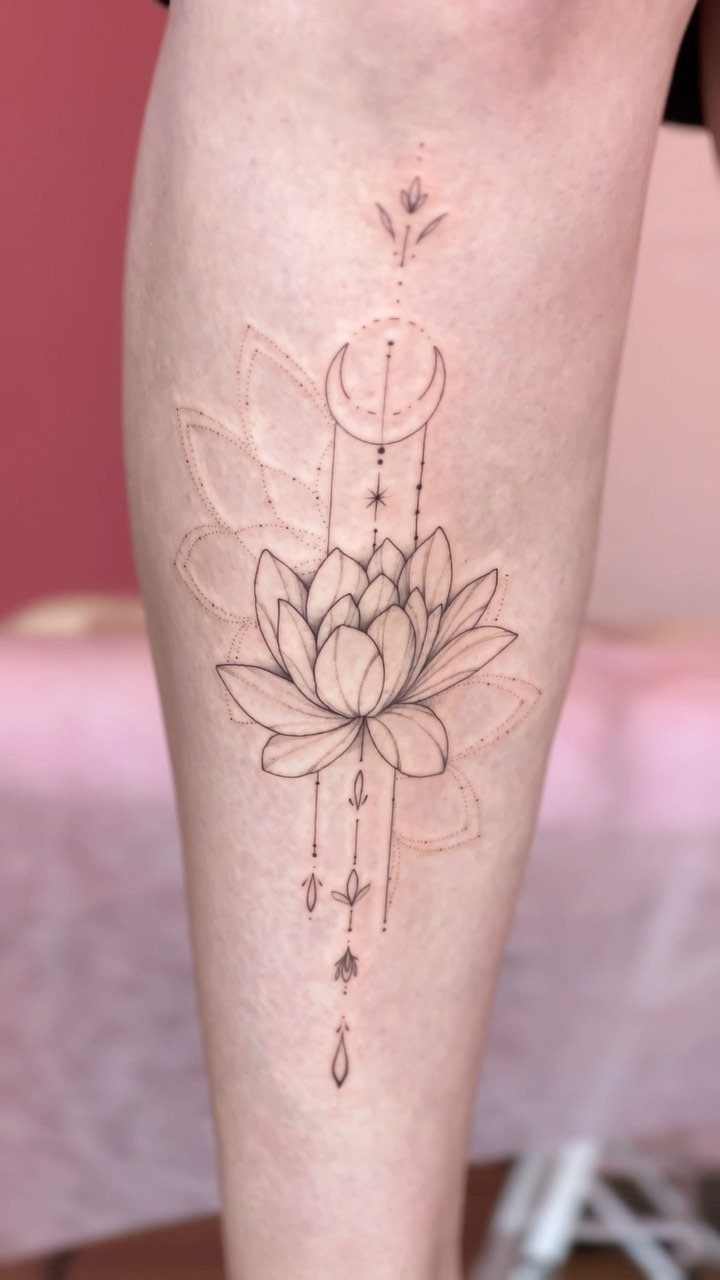
The crescent moon tucks into the top or side of the lotus and adds a celestial layer to the floral geometry. You get two symbols in one piece without the mandala losing its center of gravity.
Forearm placement keeps the design visible and readable. The moon can sit above the lotus or nest inside the petals depending on how much space you want it to take up.
Black ink holds the cleanest contrast between the moon and the dotwork. If you want the moon to feel softer, ask for lighter shading on the crescent while keeping the lotus bold.
12. Colorful Lotus with Geometric Mandala
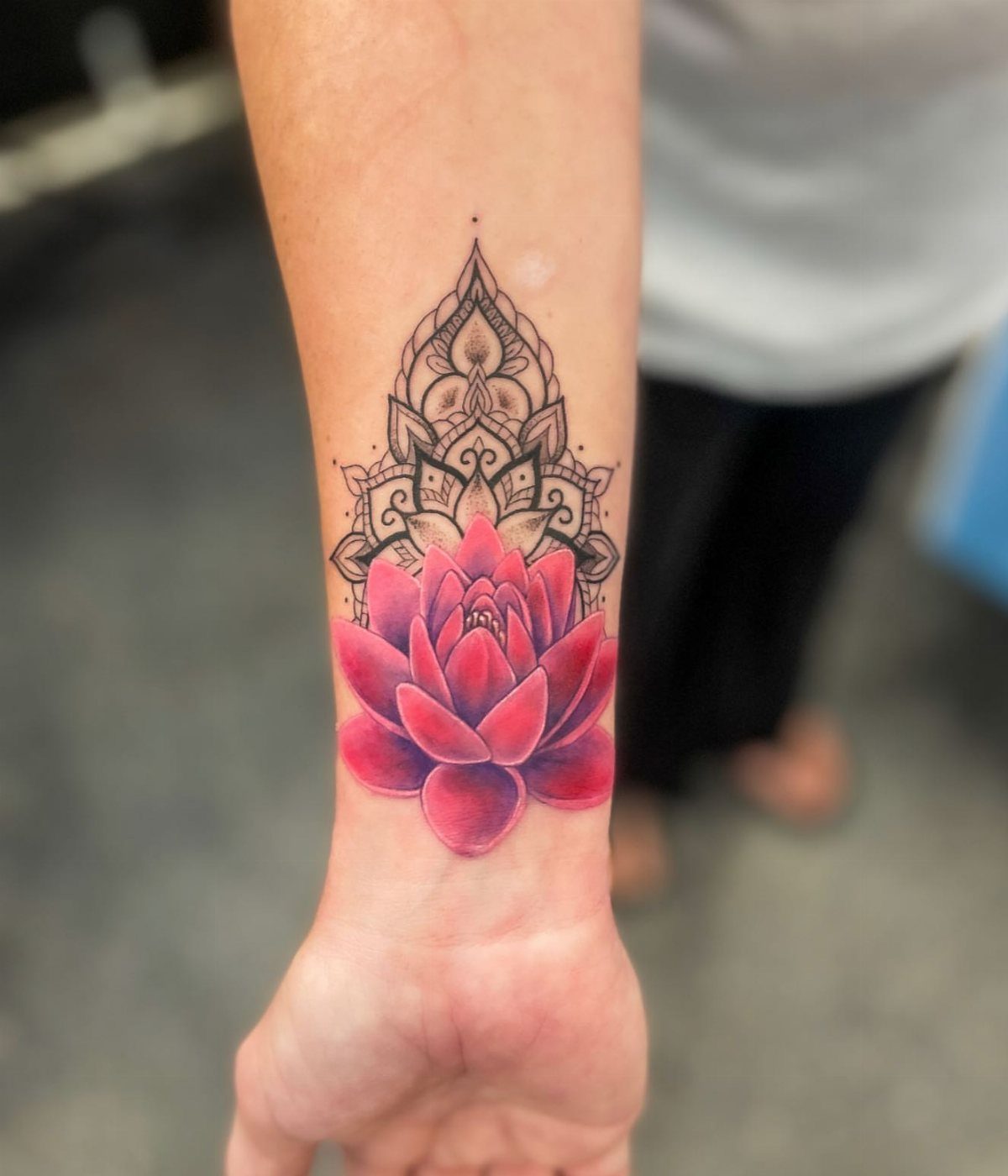
A saturated pink or coral lotus layered over black and grey geometry gives you separation without needing a heavy outline. The color draws the eye to the flower first, then the geometry fills in the background.
Color adds session time and requires more aftercare. Direct sun while healing will pull pigment unevenly from the pink and leave you booking a touch-up months early.
This split works best when you already have color elsewhere on that limb and need the lotus to tie into it.
If the rest of your ink runs black and grey, a single burst of color here can feel out of place.
Meaning of Lotus Mandala Tattoos
The mandala maps the universe and the journey through it, while the lotus blooms clean after growing through mud. Together, they mark personal growth and the reality that clarity comes after struggle.
In Hinduism, the flower connects to creation, spiritual awakening, and the enduring nature of the divine. Western tattoo culture reads it as beauty, rebirth, and a line back to older traditions.
The 1000-petal lotus carries extra weight spiritually, but artists rarely draw it out fully because the detail becomes impossible to hold at tattoo scale.
People often get this design to mark survival through hardship or a commitment to finding peace. The design also works as pure expression, a way to carry geometry and nature on your skin without needing to explain it.
Placement Suggestions
The forearm gives you a visible surface where symmetry reads clearly when your arm is relaxed. A lotus mandala reads clearly there, and the area heals predictably because friction stays low.
You get perfect symmetry and room to let the geometry stretch, but placement like that stays private unless you plan for it to show.
Behind the ear keeps the design small and tucked.
The elbow shifts the pattern every time you move your arm. Expect higher pain and plan for touch-ups as the ink settles into a high-flex area.
Cultural Significance
Buddhism sees the lotus as a step toward enlightenment and a sign of how all life connects.
The flower grows through murky water and blooms above the surface, clean and open. That process mirrors spiritual progress.
The flower shows up in temples and rituals, standing for cycles that repeat and forces that endure.
In the West, tattoo artists still use those older meanings but add their own: beauty after struggle, a fresh start, respect for something older than us.
Mandala is Sanskrit for circle. Hindu and Buddhist rites treated it as sacred geometry, and that religious weight still shapes how the tattoo lands.