A lotus tattoo can sit small on the wrist or fill the whole forearm as a mandala, and the placement you pick decides how much pain you’ll sit through and how fast the ink fades.
Wrist and ankle hurt more than outer forearm because the skin sits thinner over bone, and hands need a retouch sooner because the skin there regenerates faster than anywhere else.
Blue petals tie the lotus to wisdom in Buddhist symbolism, red shifts it toward love and compassion, and purple points to spiritual seeking and the crown chakra.
1. Blue Lotus
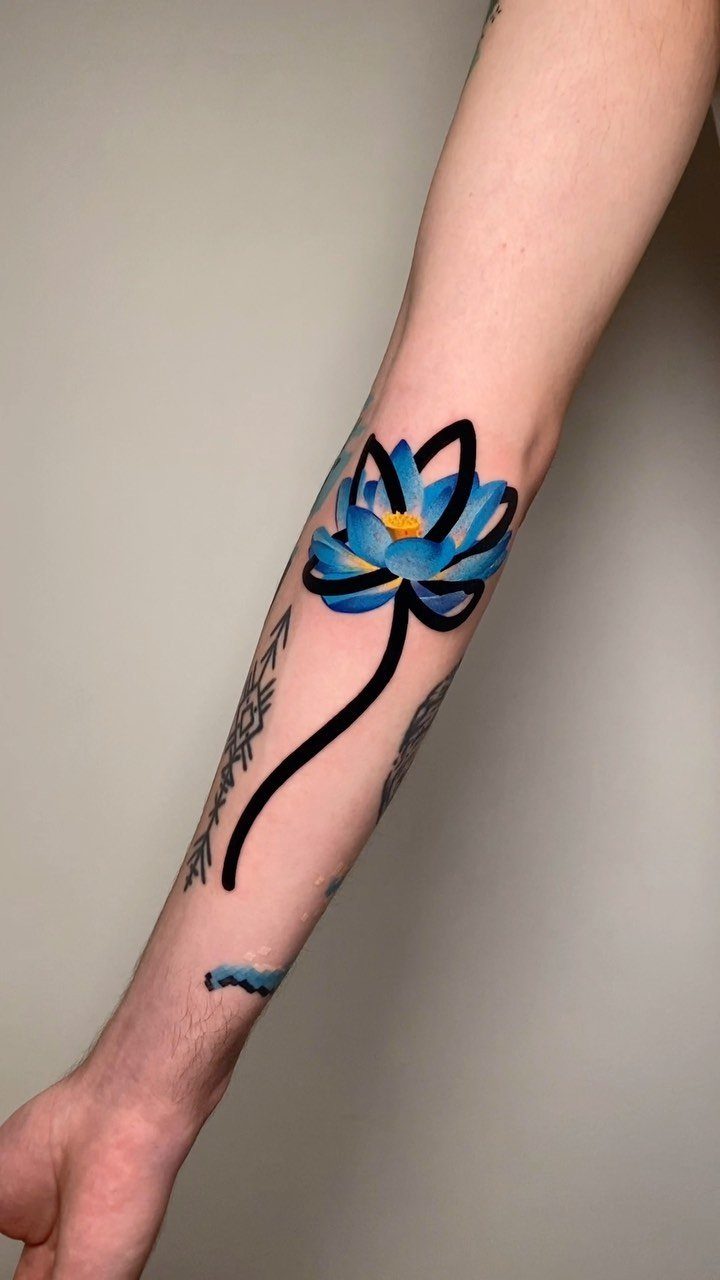
Blue lotus petals shaded in cool tones sit apart from the familiar pink or white. In Buddhist and Egyptian symbolism, the blue lotus connects to wisdom, knowledge, and clarity of thought.
The color reads best when the ink stays saturated.
A single blue can look flat, so most artists layer two or three shades to build depth without losing the clean edges. Forearm placement gives you room to show the full bloom and stem without cramping the petals.
Blue is the most direct route to making a lotus mean something specific rather than sitting there just looking pretty.
2. Lotus Tattoo Forearm
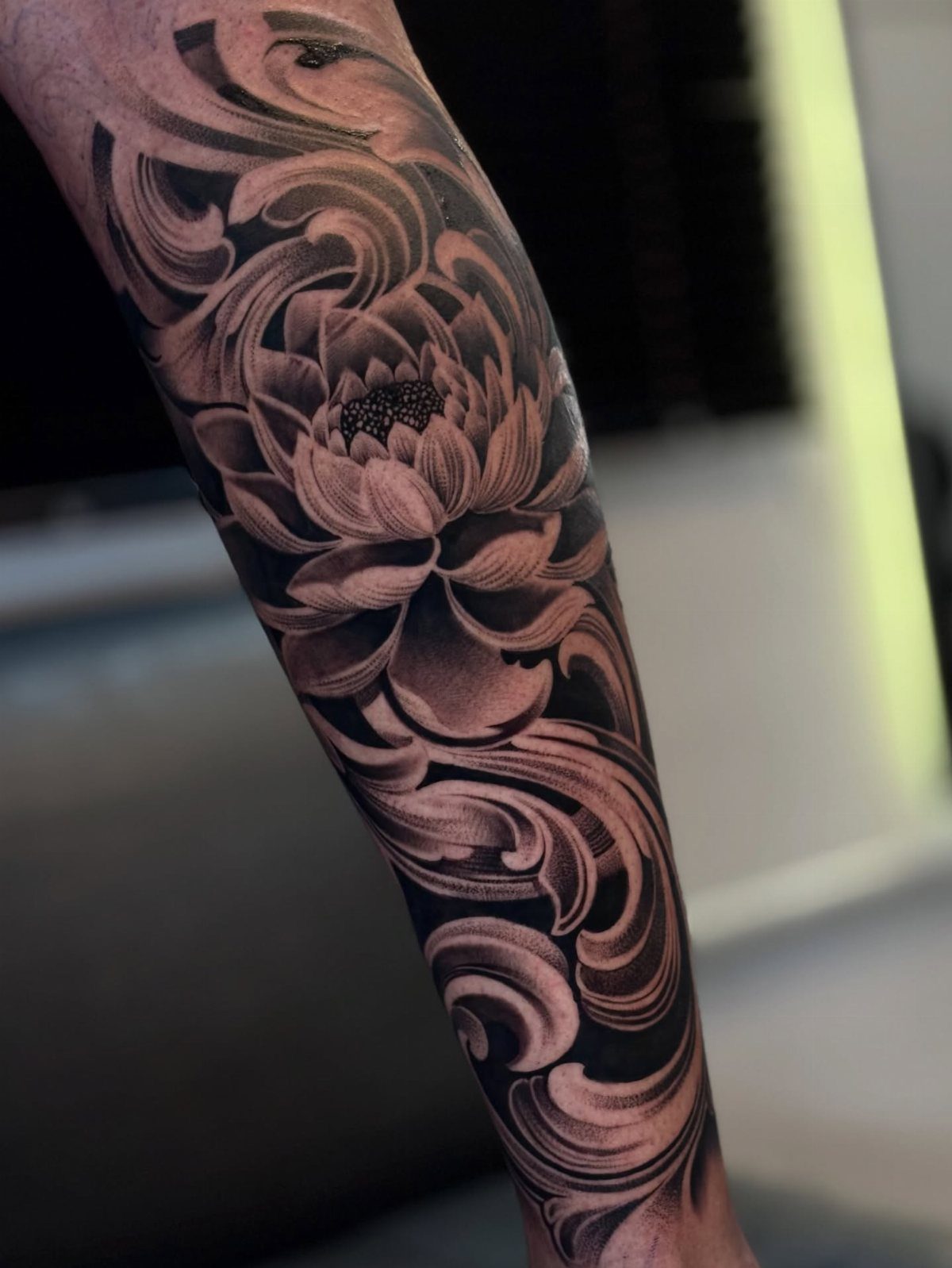
Forearm placement puts the lotus where you can see it daily and where it has enough length to show the full flower and stem without distortion.
The shape fits the natural taper of the arm, petals spreading at the wider end near the elbow or sitting upright closer to the wrist.
Black ink stays legible as it ages, and ornamental details like these swirls fill space without demanding color that might fade unevenly. Pain is moderate here, no bone directly underneath for most of the piece.
3. Lotus Mandala
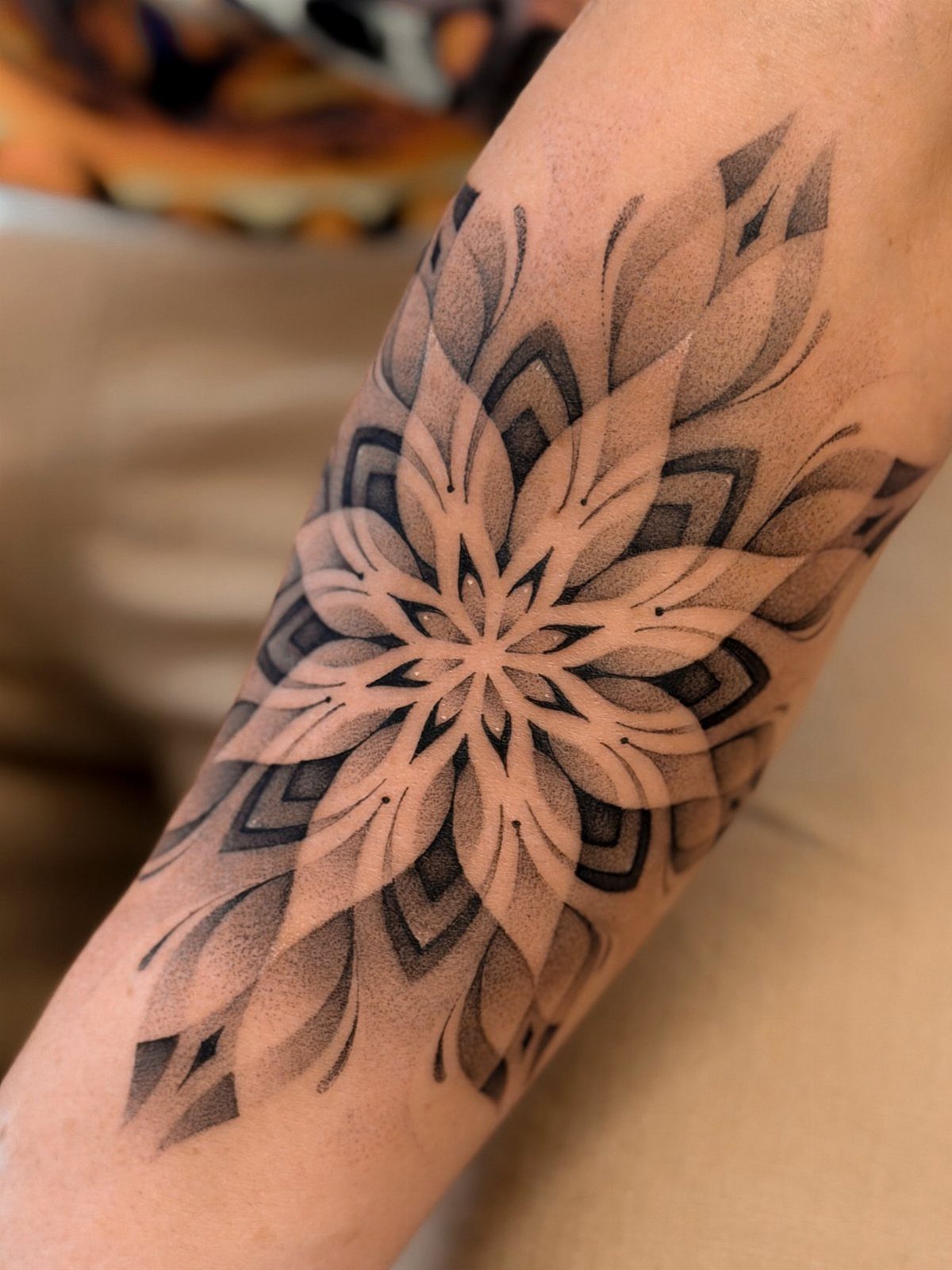
A mandala adds geometry to the organic shape of the lotus, grounding it in pattern rather than leaving it to float alone.
The circular repetition around the petals carries spiritual weight in both Hindu and Buddhist traditions, representing the universe, balance, and the path inward.
The 2 elements fit naturally because the lotus already opens in symmetrical layers.
Adding the mandala just extends that radial logic outward. Black and grey shading keeps the detail readable without competing colors, and the forearm gives you the flat surface mandalas need to stay crisp.
This combination carries meaning but still reads as a cohesive image rather than separate symbols stacked together.
4. Matching Lotus Tattoo Designs
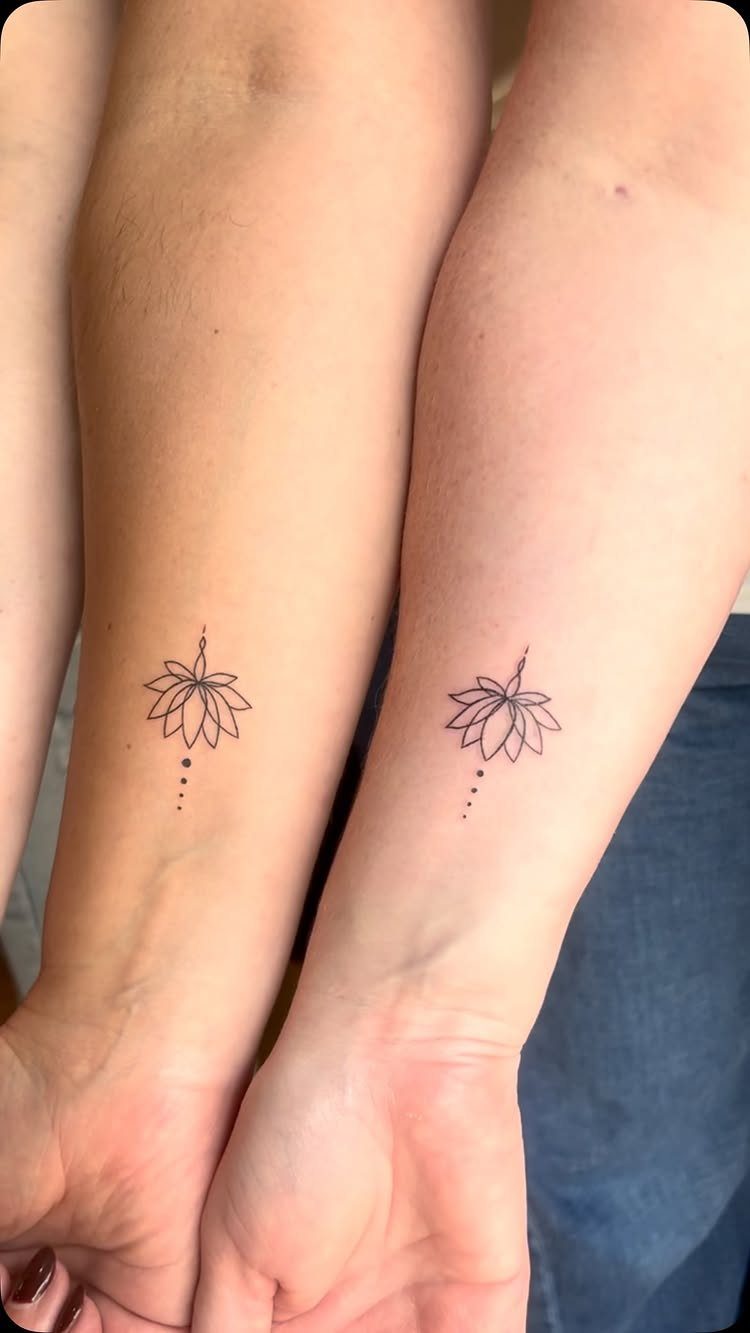
Matching tattoos work when both people want the same thing and can commit to keeping it small and simple. A lotus this size, maybe an inch tall, fits the inner wrist without wrapping or distorting when your hand moves.
The dots around the bloom add just enough detail to keep it from reading as generic clip art, but not so much that 2 artists in different cities would ink it differently. That matters if you’re getting them done apart.
Pain on the wrist is sharp but short. Just make sure the decision is mutual, not one person pushing harder than the other.
5. Ankle Lotus Flower Tattoo
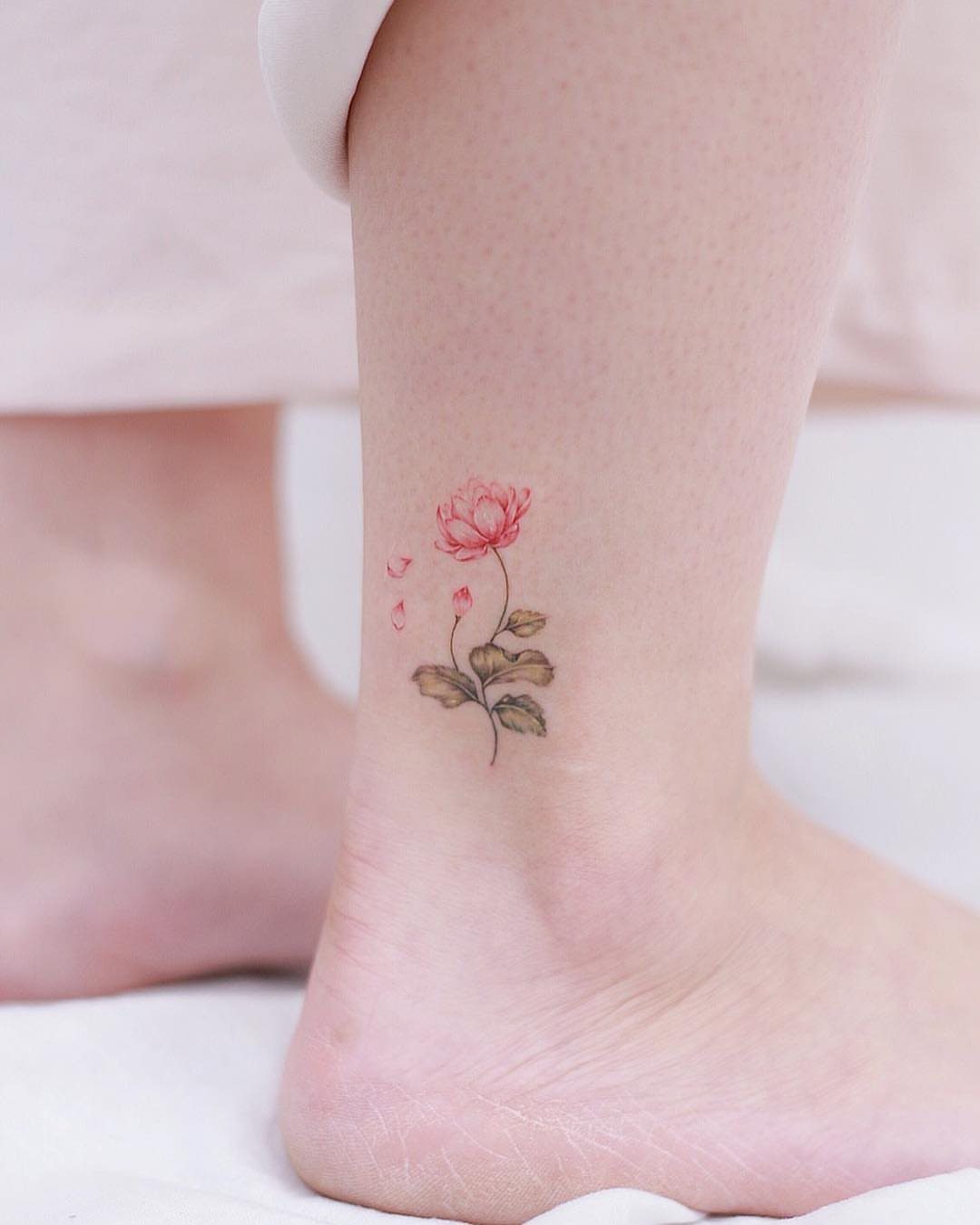
An ankle tattoo sits low enough to hide under socks or show with sandals, depending on the day.
The pink petals and green leaves bring color that black ink alone can’t deliver, but color also means more touch-ups over time as the pigment loses intensity sooner.
The ankle bone makes this spot more painful than fleshier areas, and swelling during healing is common because the area stays moving.
For the feminine look but less pain, the outer forearm or shoulder give you similar visibility with easier healing.
6. Red Lotus
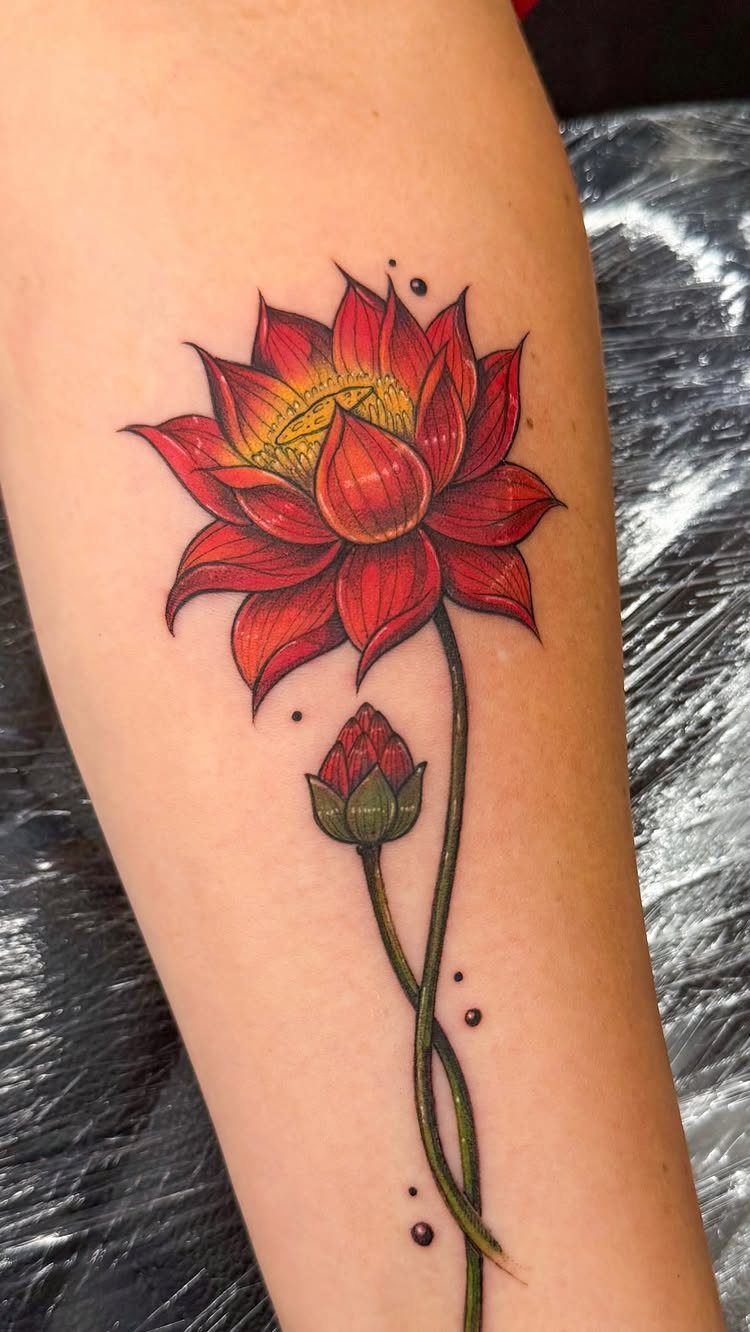
Red petals shift the lotus from spiritual detachment into something warmer. In Buddhism, the red lotus ties to love, compassion, and the heart, making it a better fit if the tattoo is about connection to people rather than personal enlightenment.
The smaller bud next to the bloom suggests growth still happening, a stage before full opening. That pairing works when the design needs to say something about a relationship or a process rather than a finished state.
Red ink holds well on most skin tones, but it can fade to pink or orange after a few years, especially with sun exposure. A single touch-up around year 3 or 4 usually brings it back.
7. Purple Lotus
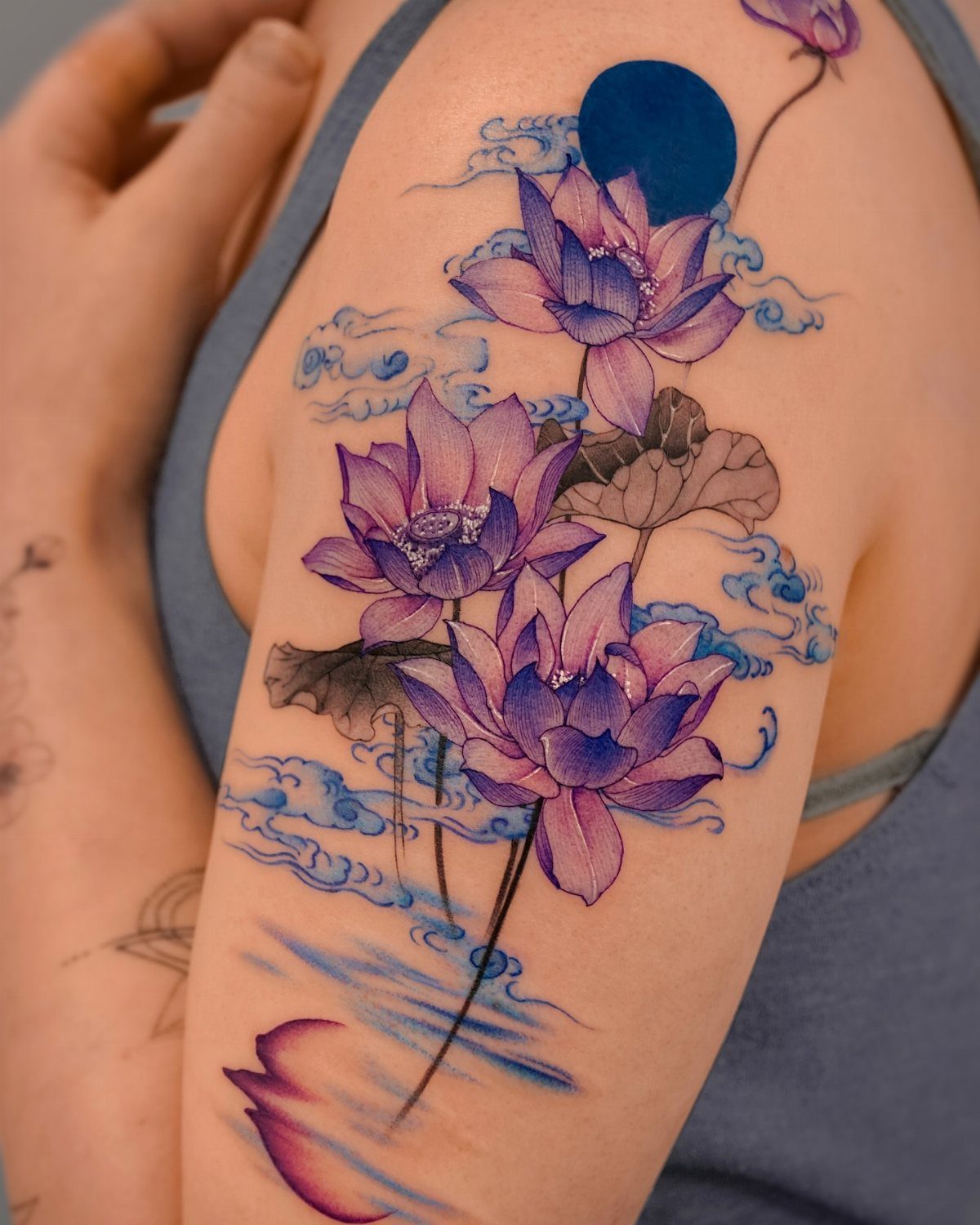
Purple petals push the lotus into mysticism and spiritual seeking. In both Hindu and Buddhist practice, purple links to higher consciousness and the crown chakra, the point where personal awareness opens outward.
The moon and clouds around it broaden the composition and let the piece settle comfortably on a curved surface like the upper arm. 3 blooms at different angles keep it from reading as flat or symmetrical.
Color this saturated needs a retouch as purple fades faster than black or blue.
8. Tribal Lotus Design
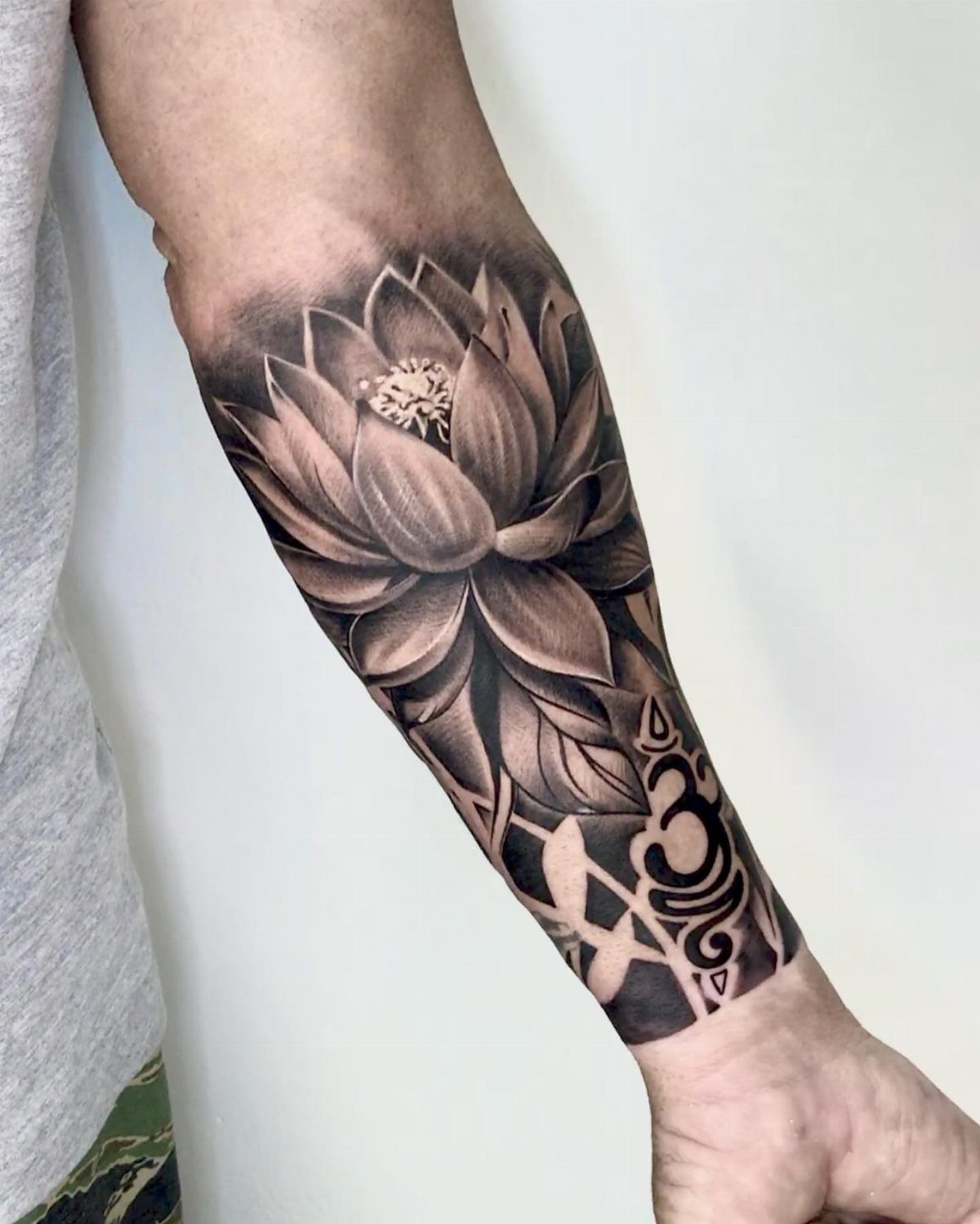
Tribal patterns carved in solid black anchor the lotus to Polynesian, Maori, or Samoan lineage, depending on which motifs the artist draws from.
The contrast between organic petals and geometric shapes at the base gives the design structure without making it feel stiff.
Forearm placement lets the bold black read clearly from a distance, and tribal holds up better over time than fine line because the ink sits thicker in the skin.
Pain is manageable here, no bone contact except near the wrist where the bands wrap.
This style works best when the tribal elements tie to actual heritage rather than sitting there for decoration.
9. Neck Lotus Tattoo
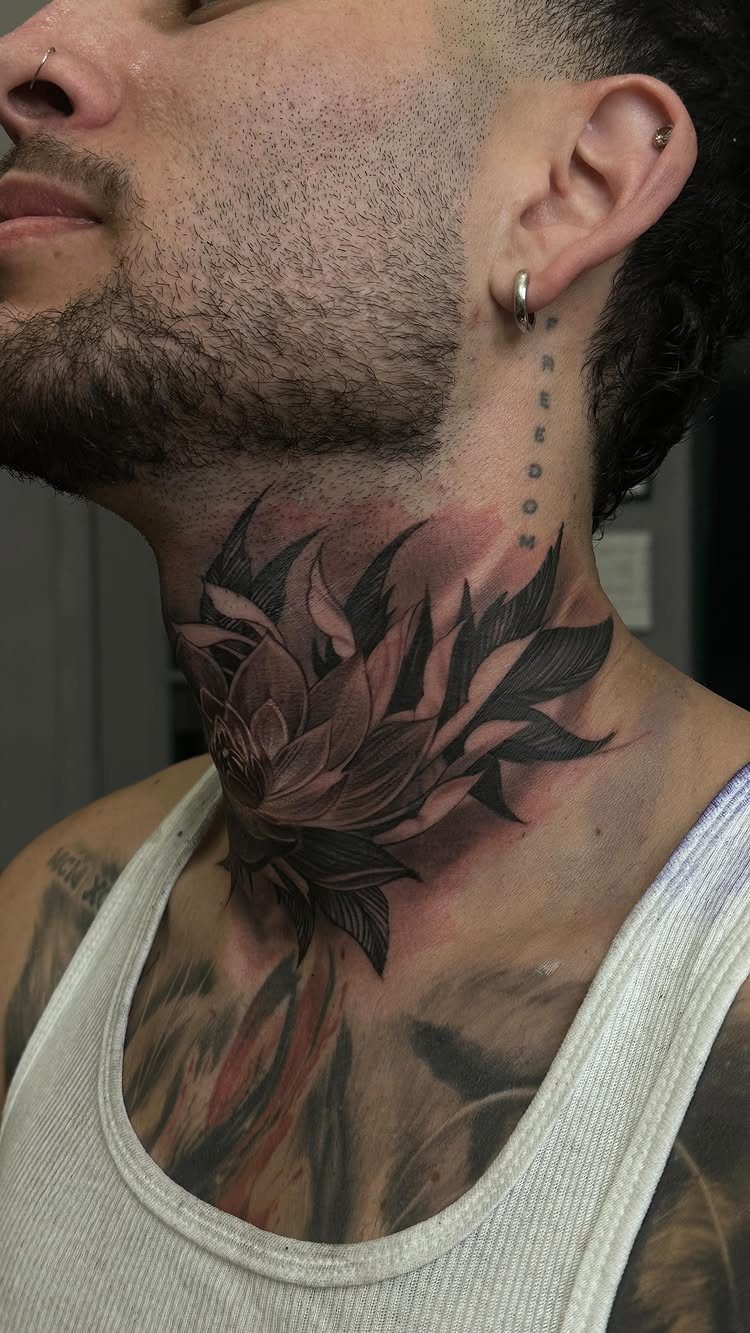
Neck placement makes the lotus visible in most situations unless you wear high collars daily.
The side of the neck offers enough flat surface for detail, but the skin is thin and the pain is sharp, especially close to the jawline where bone sits just underneath.
Black and grey shading this dense takes longer to heal because the area stays moving every time you turn your head or look down. Swelling is common for the first few days.
A neck tattoo limits job options in some fields, so get this one only if your work allows it or you’re ready for the consequences.
10. Wrist Lotus Tattoo
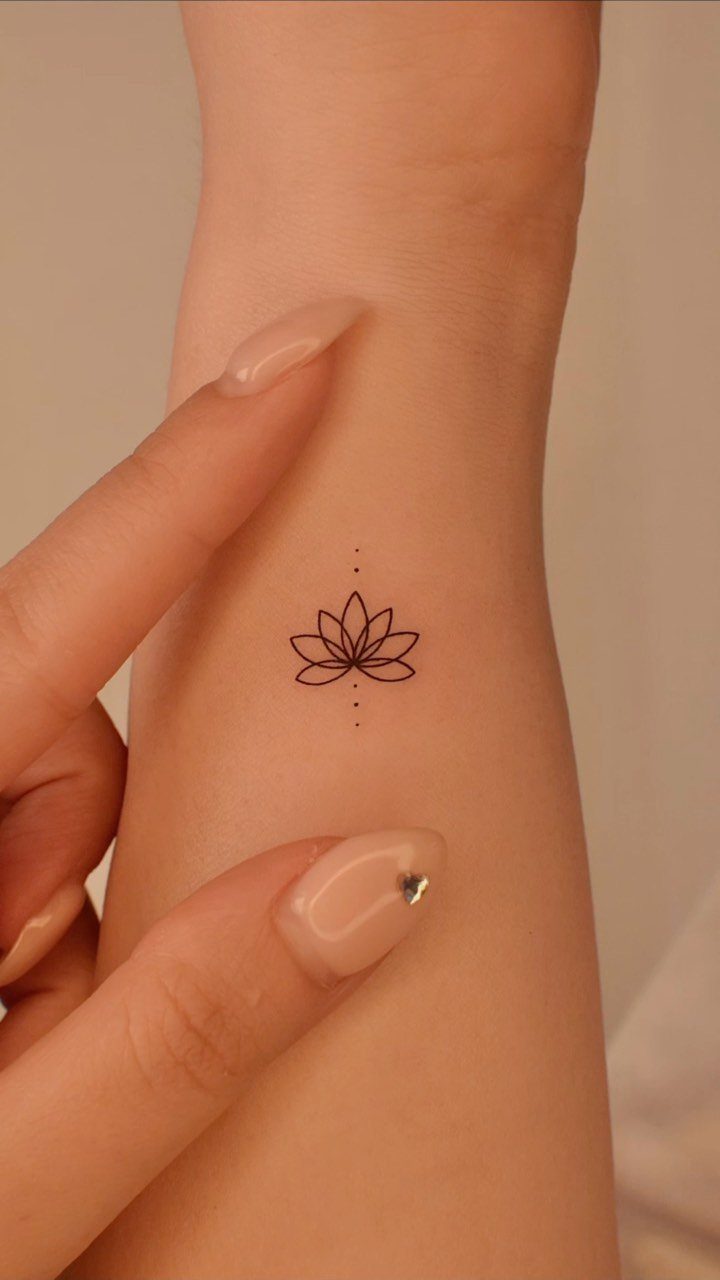
Inner wrist hurts more than outer because the skin is thinner and nerves run closer to the surface.
This spot shows unless you wear long sleeves, so it works best if you want the lotus visible most of the time.
11. Hand Lotus Flower Tattoo
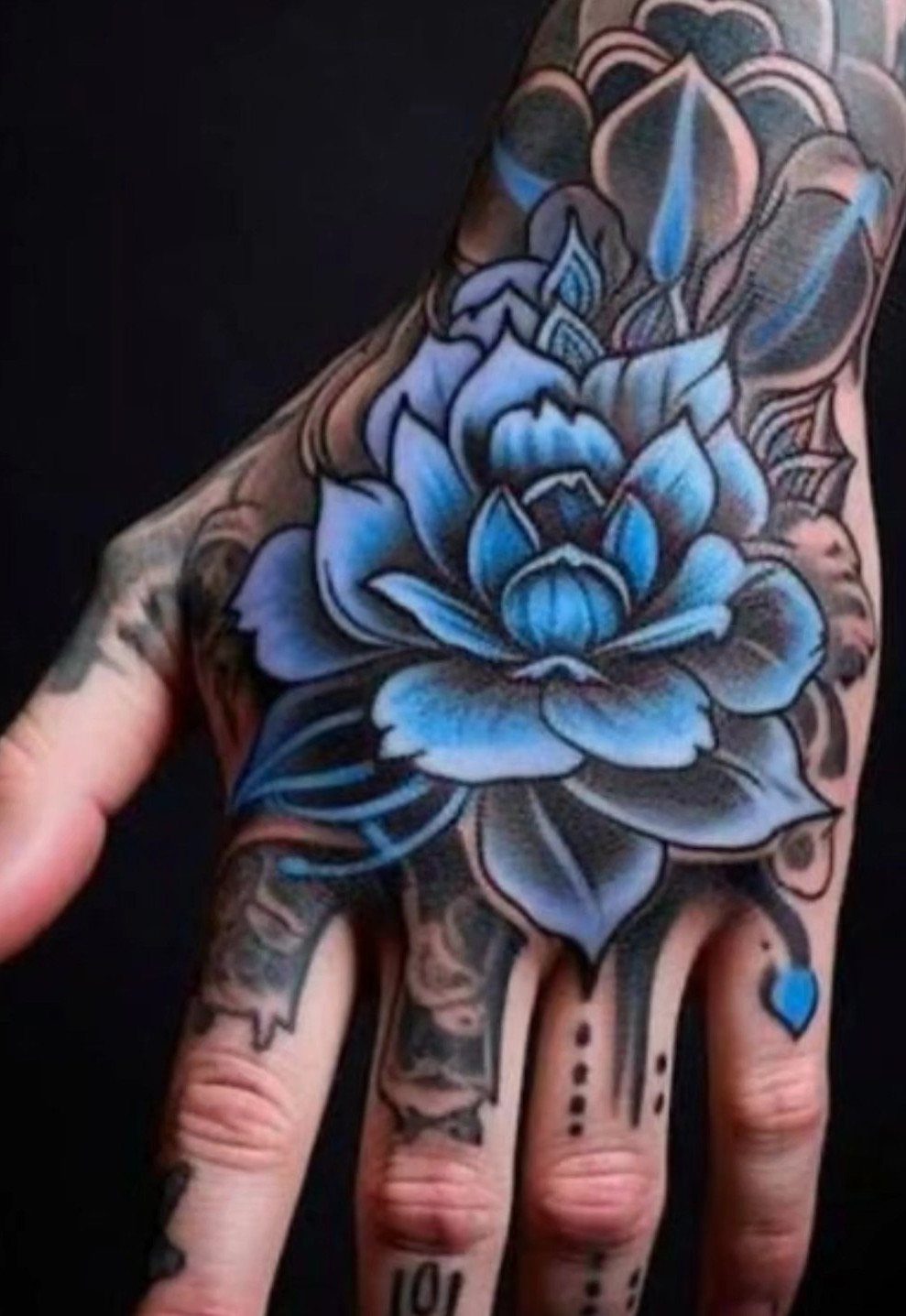
Hand tattoos fade faster than almost any other placement because the skin regenerates quickly and takes constant friction from washing, sun, and contact. The blue petals and ornamental linework here will need a retouch within 2 years, sometimes sooner.
Pain on the back of the hand ranks high because the needle works directly over bone and tendons, and swelling after the session can make it hard to close your fist for a day or two.
Hands are hard to hide. If your job requires client-facing work in a conservative field, this placement might cost you opportunities.
Lotus Tattoo Cultural Meanings
That daily reset makes it a natural fit for marking recovery, a second chance, or the fact that you made it through something difficult.
Buddhism counts it among the 8 Auspicious Symbols, and you’ll see it paired with Buddha or other figures as a stand-in for purity of mind, body, and spirit.
The symbolism shifts slightly depending on the culture, but the core idea holds: something beautiful rising from difficulty.