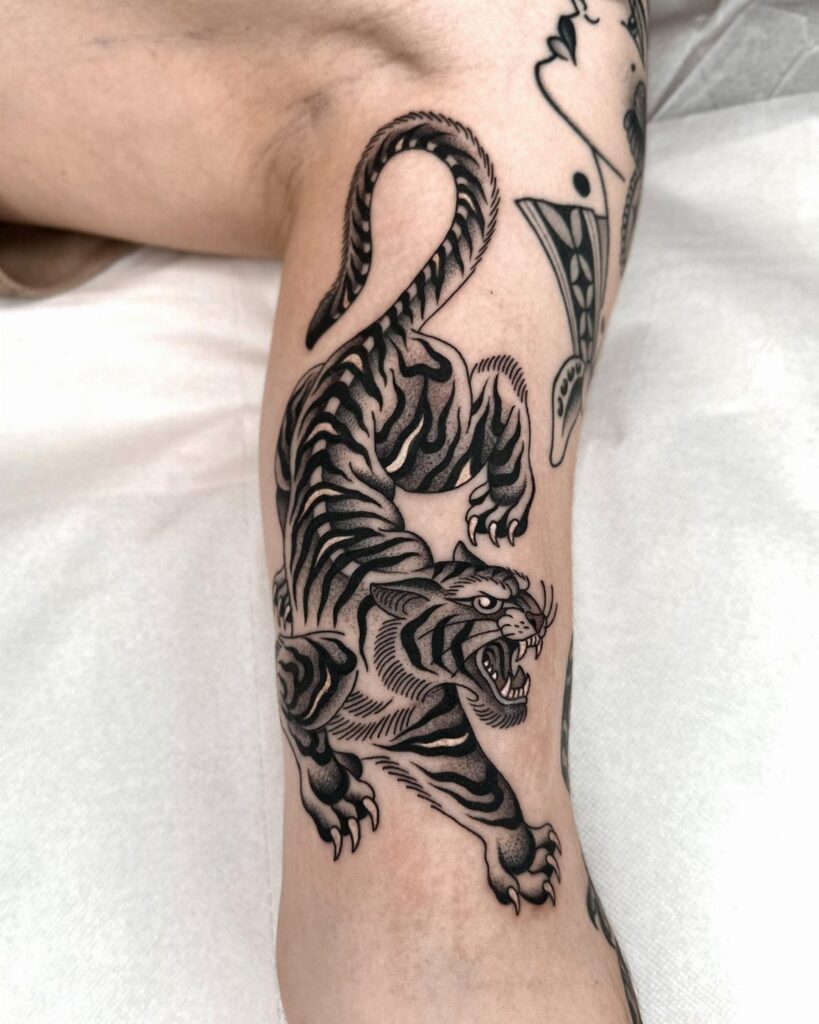
Japanese tigers arrive with wind bars and bright orange panels that demand a full thigh or upper arm, while American traditional versions lock into a forearm with thick black outlines and a flat, graphic look that holds for decades.
The choice comes down to how much space you’re willing to commit and which cultural tradition speaks to you.
Black and grey versions age the cleanest because there’s no color to fade, and the snarling expression stays sharp with controlled shading that holds its detail over time.
1. Japanese Tiger Tattoo
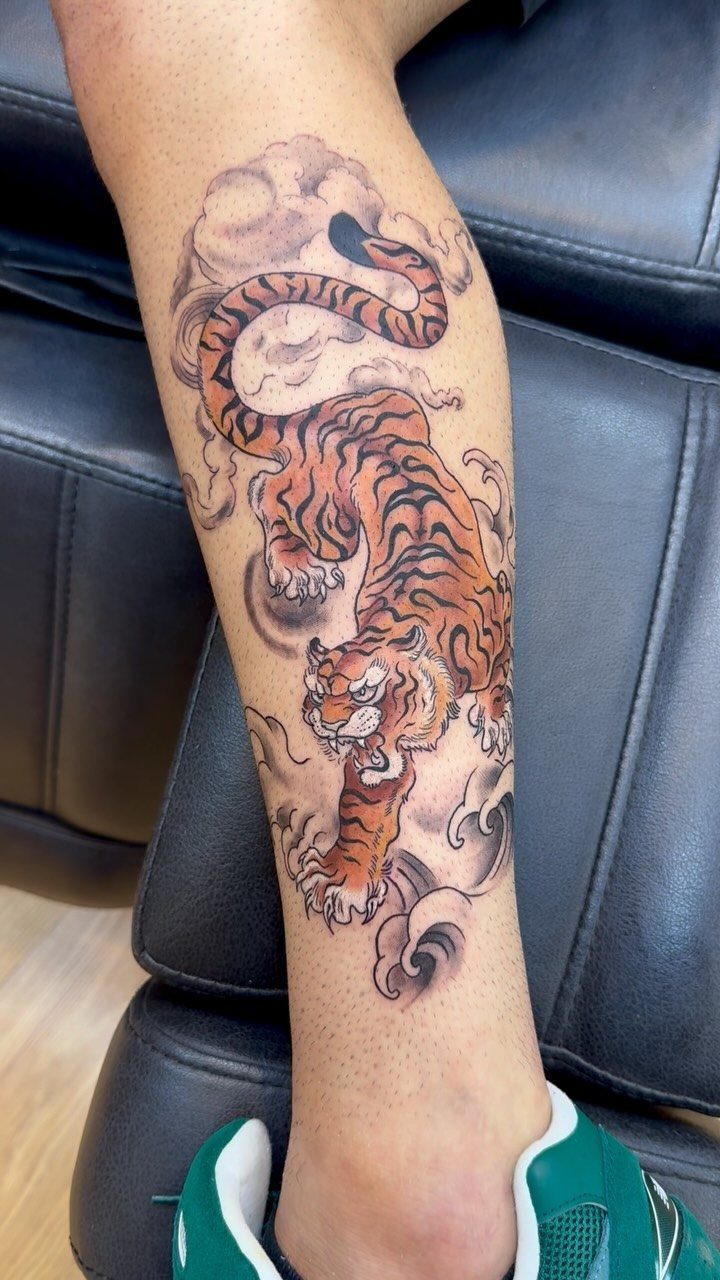
This is a tiger inked with the bold line weight and wind-blown movement of Japanese tattooing, often paired with clouds, waves or wind bars that add drama and fill the space around the animal.
The color palette runs bright: orange, yellow, red and green against black outlines, with the tiger’s stripes rendered in thick, confident curves.
I like how much personality a Japanese tiger holds. The snarl feels earned, not cartoony, and the surrounding elements give you room to expand the piece later into a sleeve or a larger panel.
Best placement is the thigh, calf or upper arm, where the design has enough canvas to breathe.
2. Chinese Tiger Tattoo
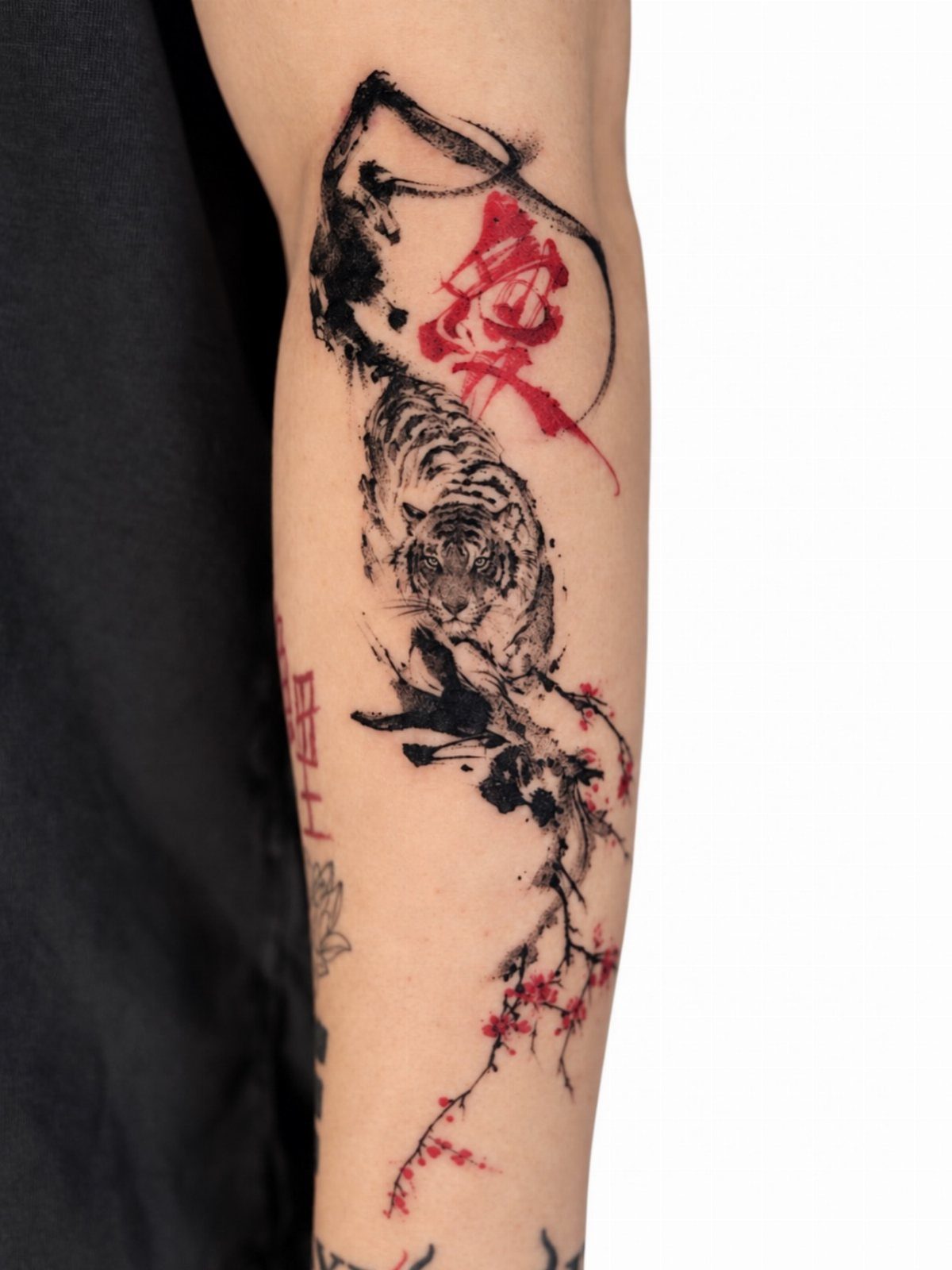
This style borrows from Chinese ink wash painting, where the tiger is drawn with loose, flowing brushstrokes instead of hard outlines.
The body often fades into the skin, and the piece might include calligraphy, bamboo or cherry blossoms to anchor the composition.
What I appreciate here is the softness. The tiger reads as powerful without needing heavy black or dense shading, which makes it age well on skin that moves.
The red calligraphy adds contrast and gives you a place to tuck a date, a phrase or a name. This works beautifully on the forearm, upper arm or shoulder blade.
3. American Traditional Tiger Tattoo
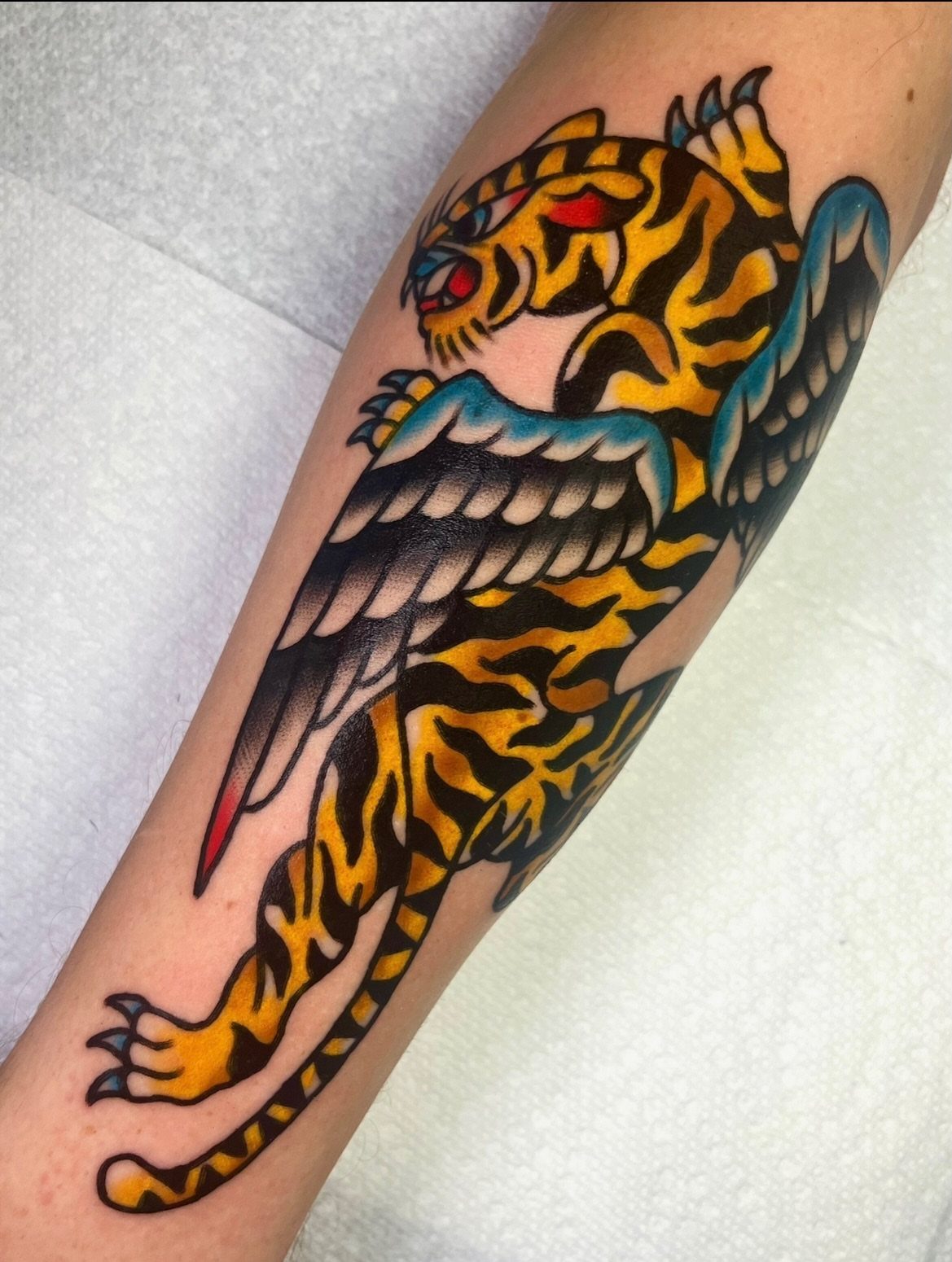
American traditional tigers are defined by thick black outlines, a limited color palette (usually yellow, orange, blue and red), and a graphic, almost flat look that holds up over decades. The design is symmetrical, bold and unapologetic.
This style was built for visibility.
The lines stay readable even as the tattoo settles, and the color stays punchy because there’s no soft shading to blur. I’d put this on the forearm, bicep or calf.
4. Traditional Tiger Tattoo with Roses
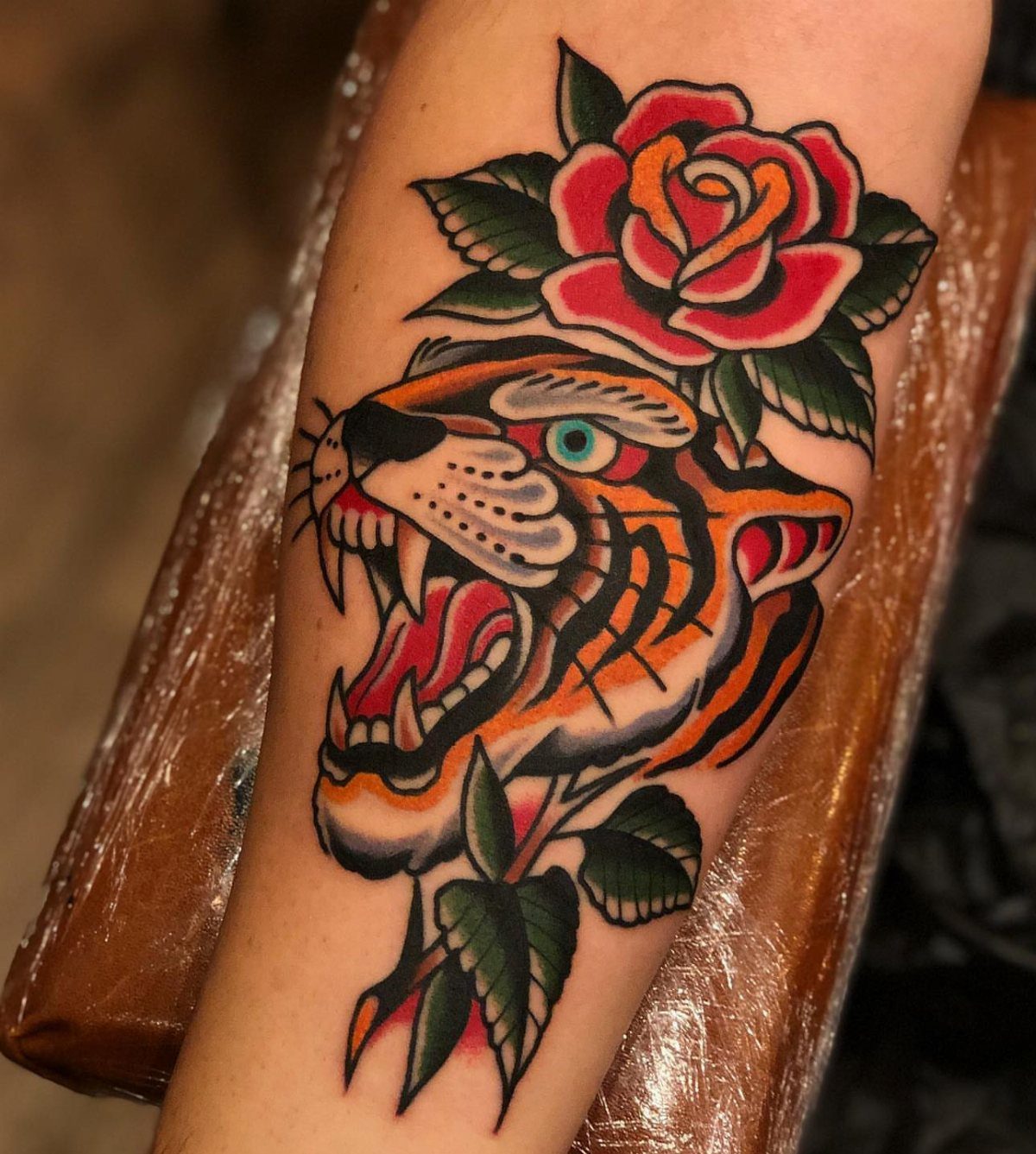
A tiger head paired with roses is one of the most requested combinations I see, and it works because the flowers soften the aggression of the animal without neutralizing it.
The roses also give you color flexibility.
An all-red piece delivers that. If you’d rather keep the tiger natural and let the flowers carry the color, that works too.
5. Black and Grey Traditional Tiger Tattoo
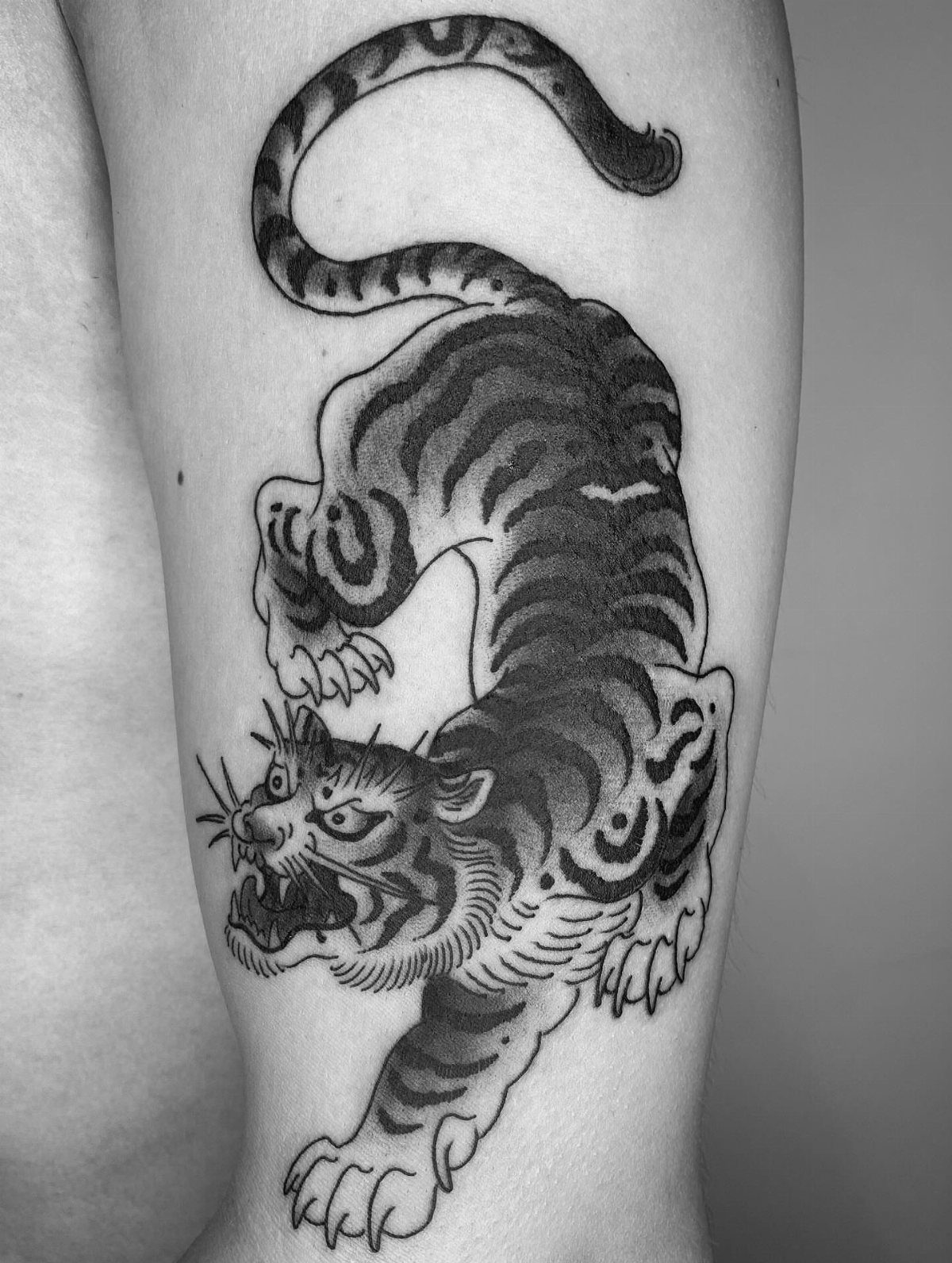
A black and grey tiger drops the color but keeps the bold line weight and snarl of traditional tattooing. The shading is tight and controlled, with enough contrast to make the stripes and facial details read clearly.
I find this version ages the best. Without color to fade or shift, the piece stays sharp, and the black and grey palette suits nearly any skin tone.
The snarling expression gives you a strong focal point, which matters when the design doesn’t have color to lean on.
Cultural Significance of Tigers
Tigers carry weight across Asia as guardians and symbols of raw courage. You’ll often see it paired with a dragon to represent the balance of opposing forces: heaven and earth, male and female.
Japanese culture positions the tiger as a creature that wards off bad luck and demons.
Samurai wore tiger imagery as a mark of fearlessness in battle. That protective quality is part of why the animal still anchors so many large-scale Japanese bodysuits and back pieces today.
Western tattooing adopted the tiger later, but the meaning held.
Sailors and soldiers wore them as markers of dominance and survival. The animal’s reputation translated cleanly across continents.
Tattoo Design Elements
The outlines are dense and deliberate, defining the face, claws and stripes before any shading goes in. That bold framework is what keeps the piece readable as it ages.
Shading inside those lines is softer than you’d expect.
Artists use negative space and gradual tonal shifts to give the tiger dimension without overcrowding the skin. Bamboo, clouds or wind bars often frame the animal, and the background stays light to push the tiger forward visually.
The result is a piece that reads from across the room but rewards a closer look. The balance between bold and subtle is what makes the style hold up over time.
Tattoo Placement
The forearm is one of my favorite spots for a tiger.
The design follows the natural contour of the muscle, and you see it every day. Neo traditional compositions fill the space cleanly and leave room to expand into a half or full sleeve later.
The thigh offers more canvas for Japanese-style tigers with surrounding elements like waves or clouds. The area stretches evenly when the skin moves, and clothing coverage is easy to control.
Chest placements work when the tiger is centered and symmetrical, especially in American traditional. The width of the chest supports bold, graphic compositions that stay balanced as the body moves.
Frequently Asked Questions
What does a baby tiger tattoo symbolize?
A baby tiger tattoo represents innocence and the potential for growth. It carries the same protective strength as an adult tiger but emphasizes the promise of what’s still developing rather than the power that’s already arrived.
What to pair with a tiger tattoo?
Roses soften the tiger’s ferocity while keeping the composition strong, which is why they show up together so often.
Dragons work well in Japanese compositions to represent balance between opposing forces, while clouds, waves and bamboo fill the surrounding space and give the piece room to expand later.
What does tiger stripe tattoo mean?
Tiger stripes represent strength, agility and a connection to the wild.
What does the tiger represent in Sak Yant?
In Sak Yant tradition, the tiger represents protection and strength, often depicted as a guardian that wards off bad luck.
It functions as a guardian against negative forces and misfortune, similar to the protective role tigers hold in Japanese and Chinese folklore.