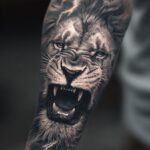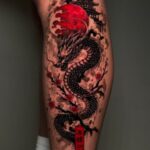
A tiger face on the forearm takes roughly the same session time as a full thigh piece with florals, but the thigh hits 6 out of 10 for pain over muscle while the outer forearm stays closer to 3.
Your placement decides how much room the design needs and how much discomfort you’re signing up for.
The scratch effect with claw marks relies entirely on shadow contrast to sell the three-dimensional illusion, so black and grey works better here than color.
1. Tiger Flower Tattoo
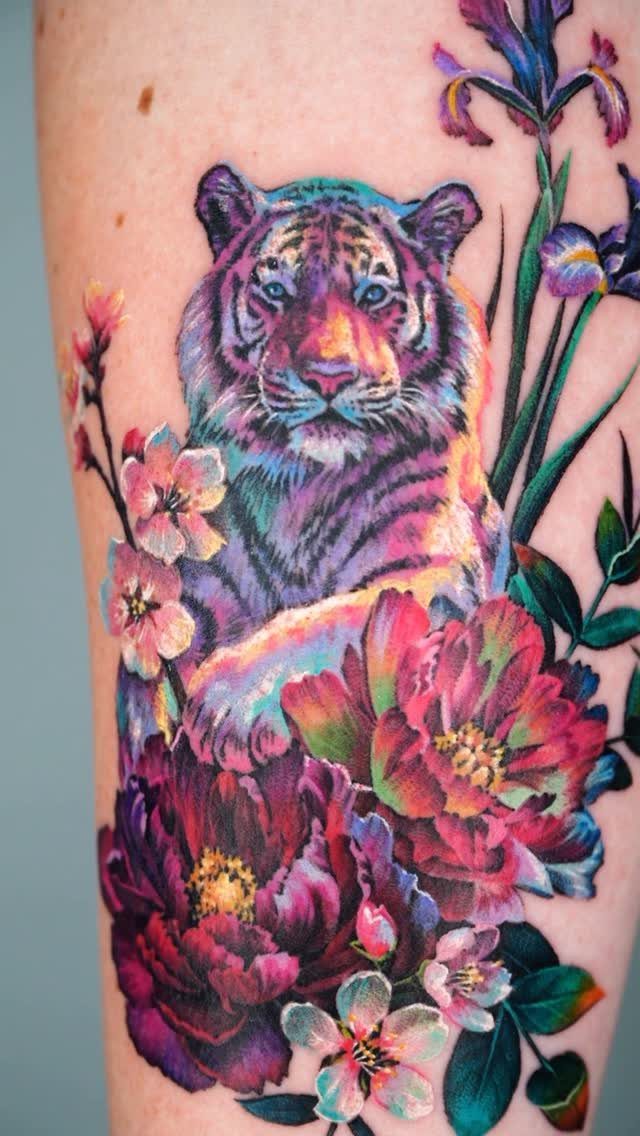
Wrapping a tiger’s head in blooms softens its intensity without losing the power. The contrast works because you’re giving equal space to both elements, so neither one drowns the other out.
Peonies, roses, and lotus flowers show up most often here.
Each one shifts the tone slightly: peonies lean traditional, roses add romance, lotus ties in spirituality. Pick flowers that mean something to you or just ones whose shape balances the tiger’s face well.
This design needs room.
The thigh, upper arm, or shoulder blade gives both the animal and the florals room to read clearly. Smaller versions lose detail fast.
2. Tiger Hand Tattoo
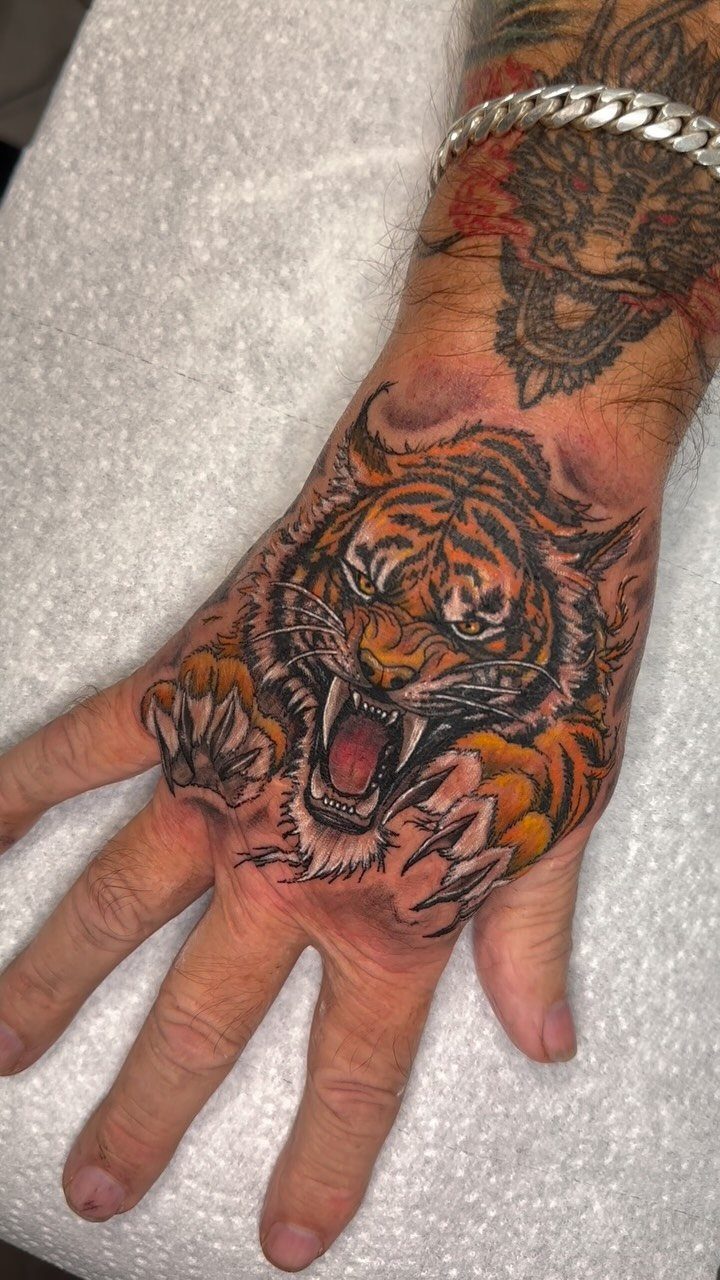
A hand placement puts your tattoo in constant view, yours and everyone else’s. A piece you’ll see dozens of times a day lives here.
The back of the hand offers a flat canvas that follows the natural line from your knuckles to your wrist.
A roaring tiger fits well here because the elongated shape mirrors the hand’s proportions. Color or black and grey both hold, though color will fade faster on hands due to frequent washing and sun exposure.
Pain is sharper here than fleshier areas. The skin is thin and bone sits close underneath.
Most people rate hand pain in the upper half of the scale. Healing takes extra care since hands are always in use.
3. Tiger Thigh Tattoo
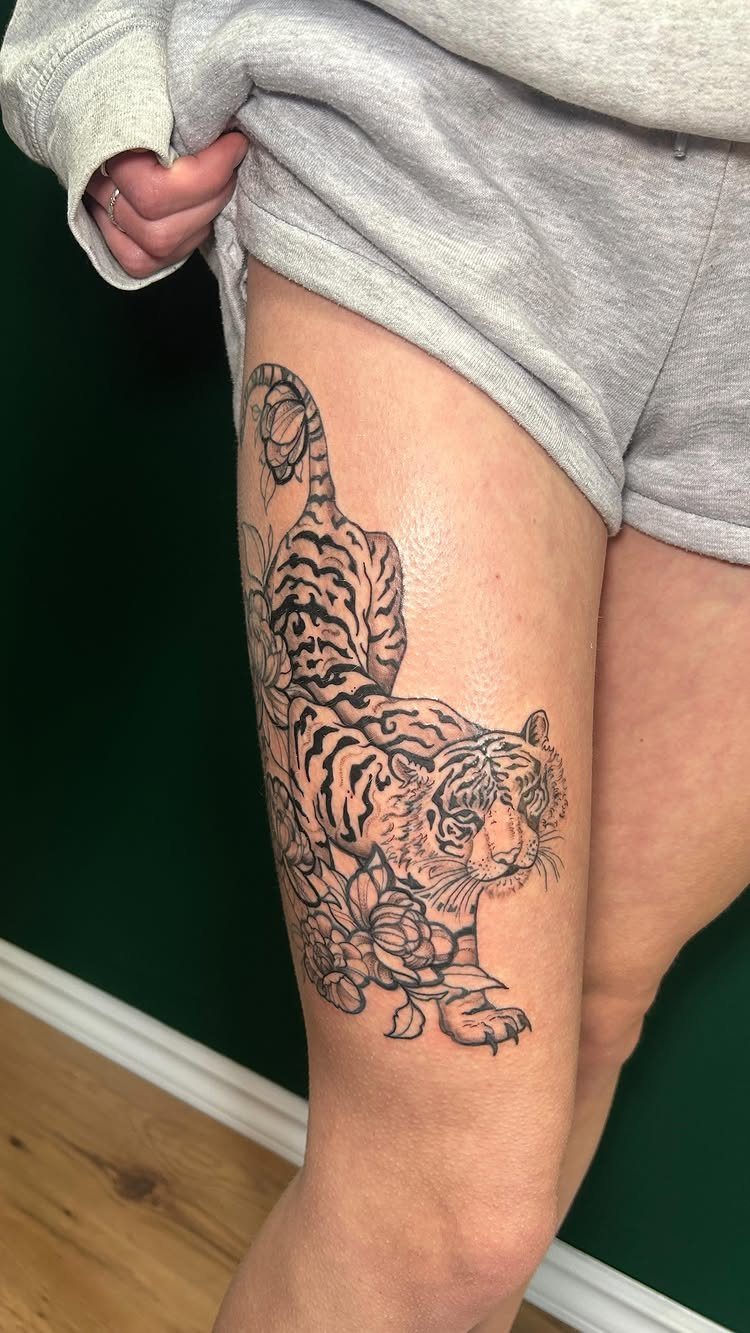
The thigh offers one of the largest flat canvases on the body, and pain is moderate compared to ribs or spine. That combination makes it a go-to for bigger, more detailed work.
You can run the design vertically along the outer thigh or center it on the front. The outer thigh hurts less and heals easier since clothing rubs it less often.
This placement stays private unless you choose to show it. That makes it a good choice when your job has tattoo restrictions or when you prefer control over when the piece shows.
4. Tiger and Dragon Tattoo
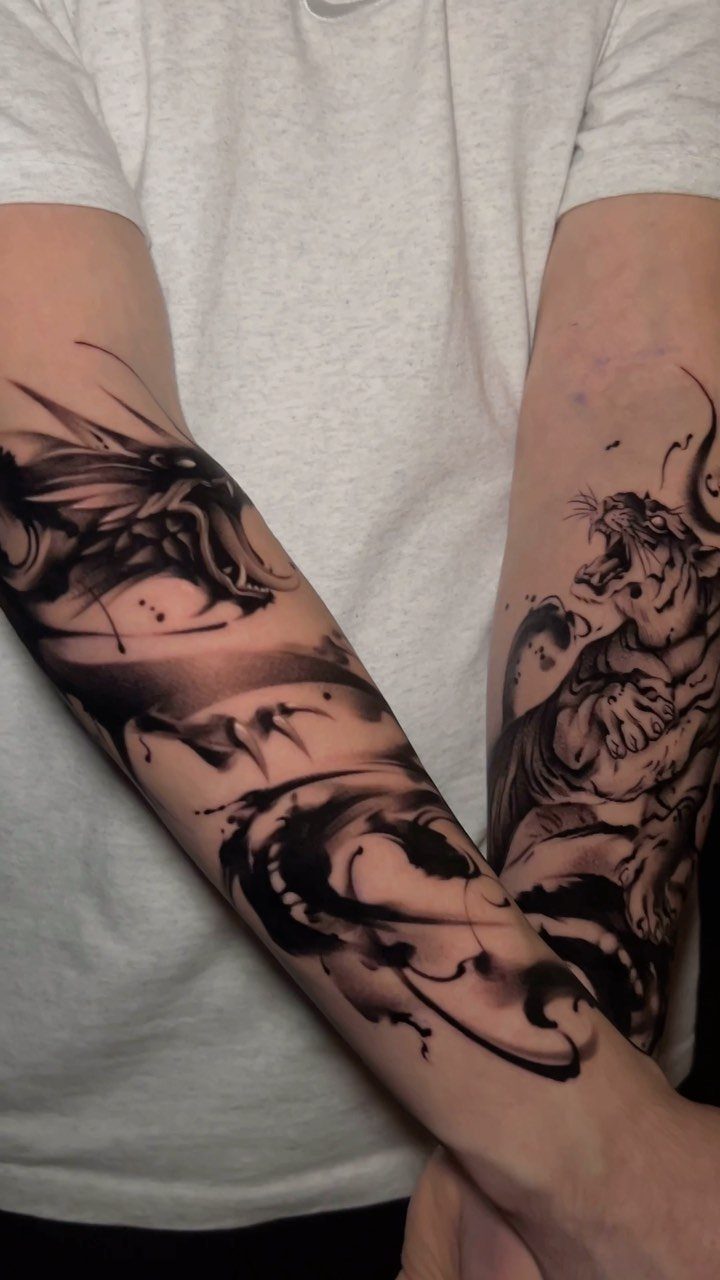
The tiger and dragon have represented opposing forces in Asian art for centuries: earth versus sky, strength versus wisdom, physical power versus spiritual energy. Putting both on your body is a way of saying you hold both sides.
Most people split them across matching placements, one on each forearm or calf, which keeps the symmetry strong.
Black ink draws attention to form and movement rather than color. If you go this route, size them equally so neither dominates.
Each arm takes multiple hours depending on detail. Tiger and dragon tattoos work best for medium-sized forearm coverage, not full sleeves.
5. Tiger Face Tattoo
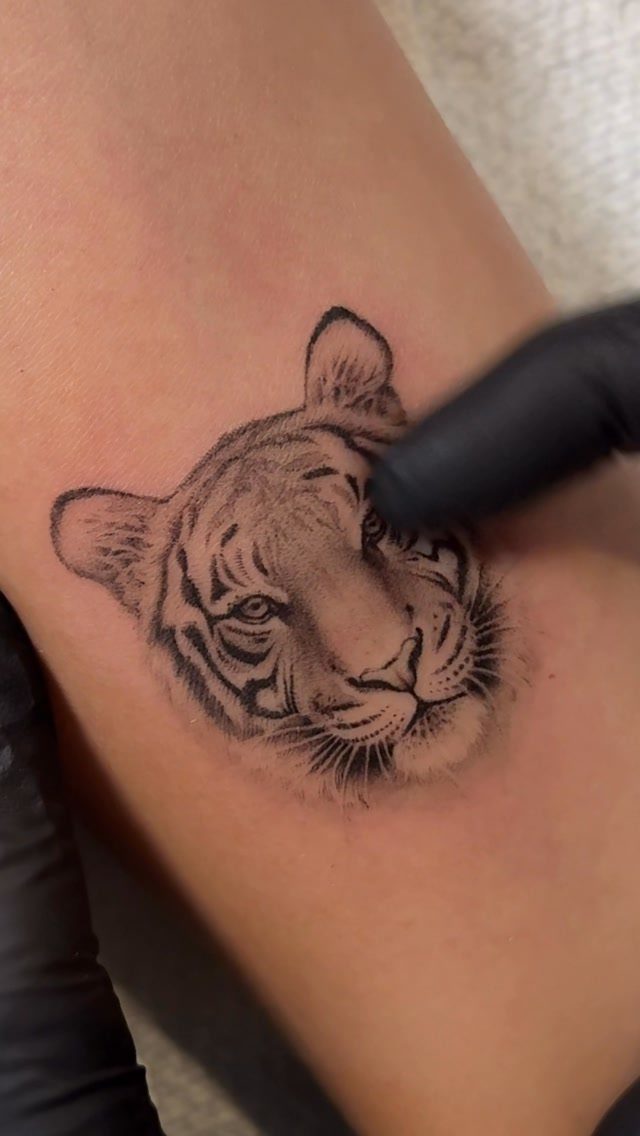
A tiger face isolates the most recognizable part of the animal: the eyes, the stripes, the snarl. You lose the body but gain intensity, and the piece reads clearly even across a room.
Black and grey is the most common approach here.
It lets the artist build depth through contrast rather than relying on color to define the features. The eyes should be the focal point, so a good artist will spend extra time there to make sure they look alive.
This design scales well. A medium version works on the forearm, shoulder, or calf.
Go smaller and the eyes lose definition. Larger versions fit the back or chest and allow for finer detail in the fur and whiskers.
6. Traditional Tiger Tattoo
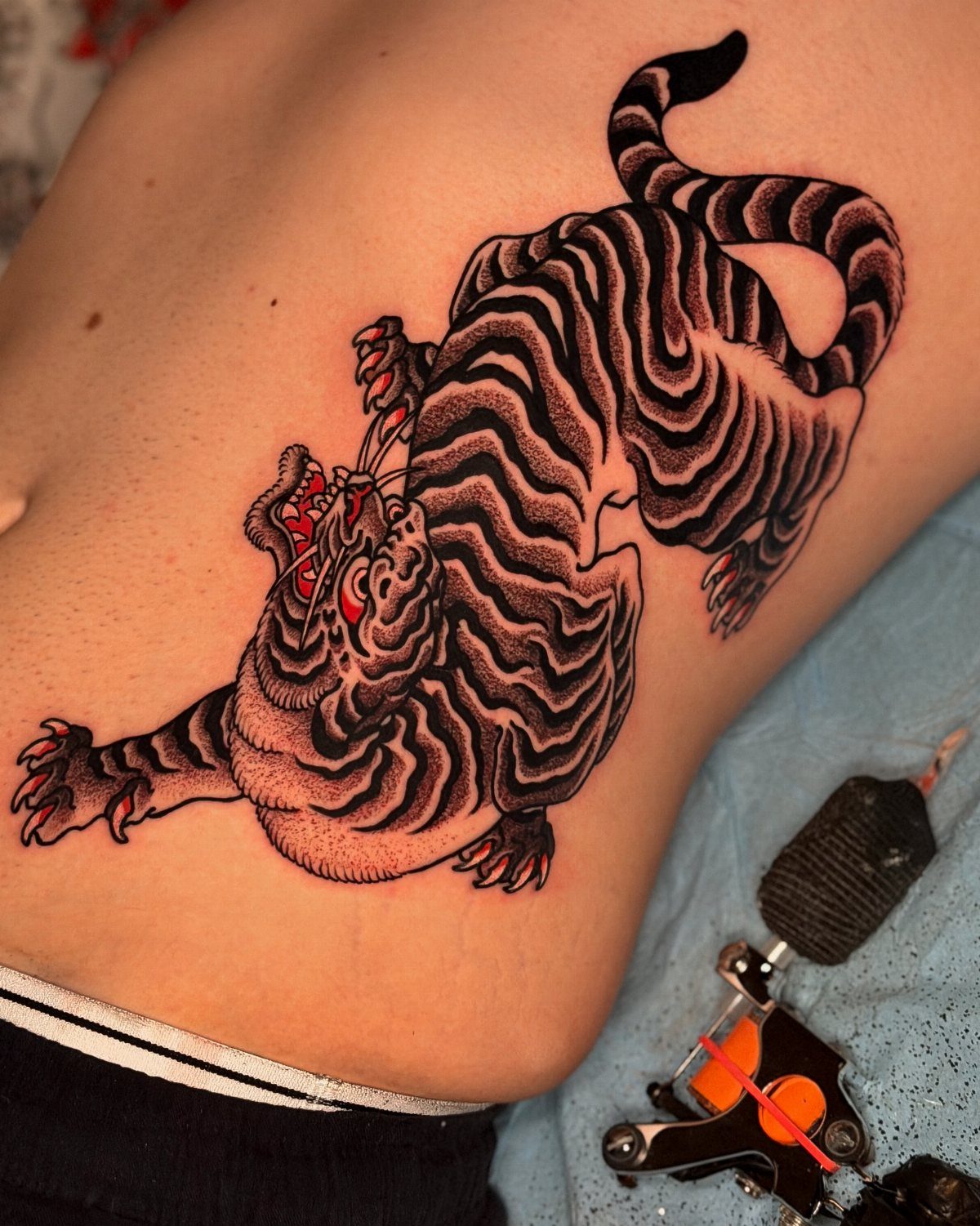
Traditional tattoos use bold black outlines, limited color palettes, and high contrast.
A traditional tiger usually features bright orange or yellow, red accents, and heavy shading. The style comes from American tattoo history, particularly sailor and military designs from the early twentieth century.
The look is intentionally flat. No soft gradients or photorealism here.
The tiger is stylized, often shown mid-roar with exaggerated teeth and claws. That simplification is part of the appeal: the design holds up over decades because it doesn’t rely on fine detail that can blur.
This style ages well.
The thick lines and solid color blocks stay readable even as the ink spreads slightly over time. Cost varies by size and artist experience.
7. Small Tiger Tattoo
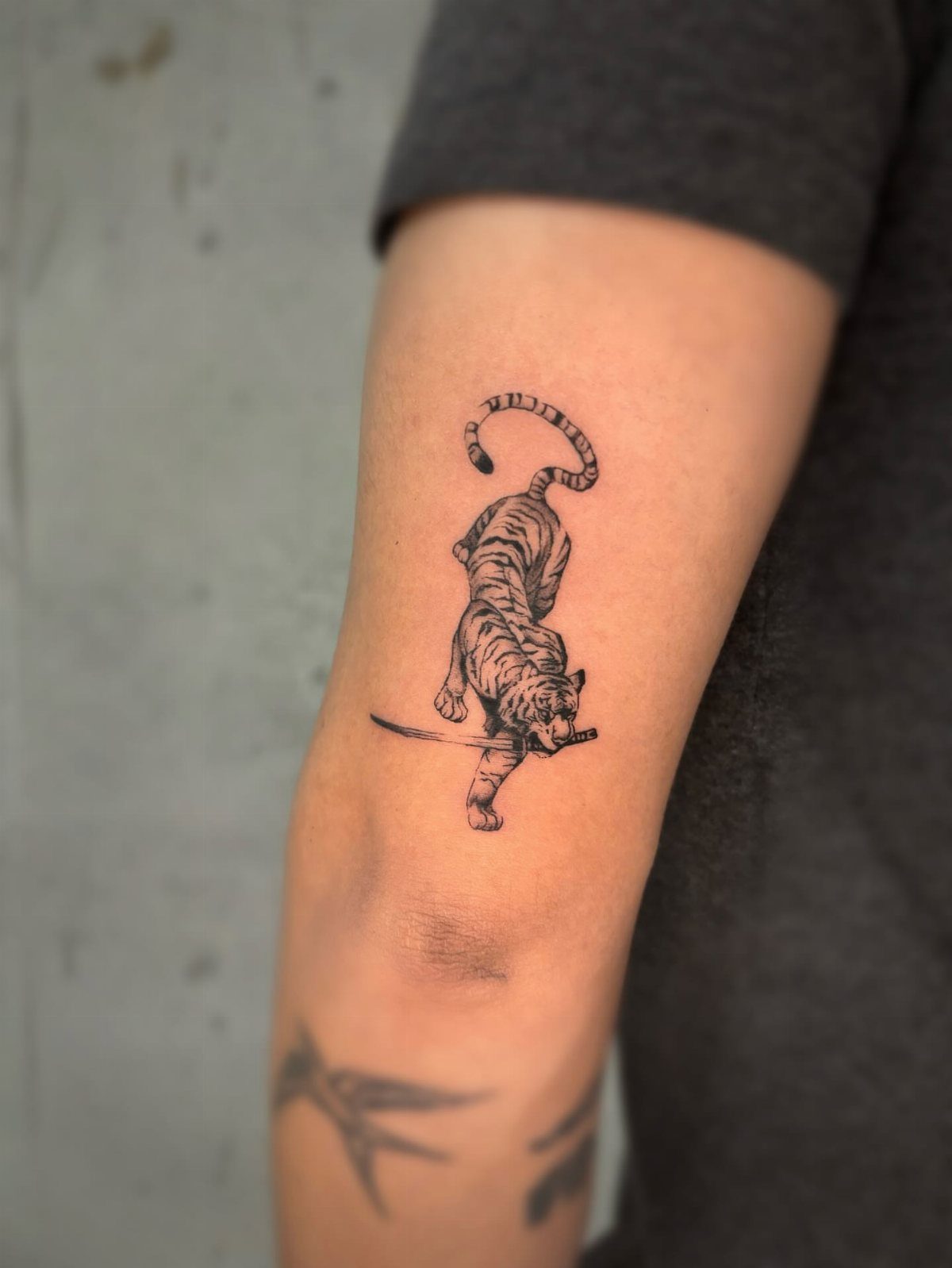
Small doesn’t mean weak. A simplified tiger shape still reads clearly if the stripes and posture stay intact.
Fine line work suits this scale better than heavy shading.
Too much black in a small area turns muddy as it heals. A clean outline with minimal fill reads well over time.
The upper arm, wrist, ankle, or behind the ear all work.
Pain depends on placement: inner wrist stings more than outer arm. Healing moves quickly on smaller pieces.
Cost runs lower than large work, but hourly rates stay the same. Price depends on your artist’s minimum and how much detail you add.
8. Korean Tiger Tattoo
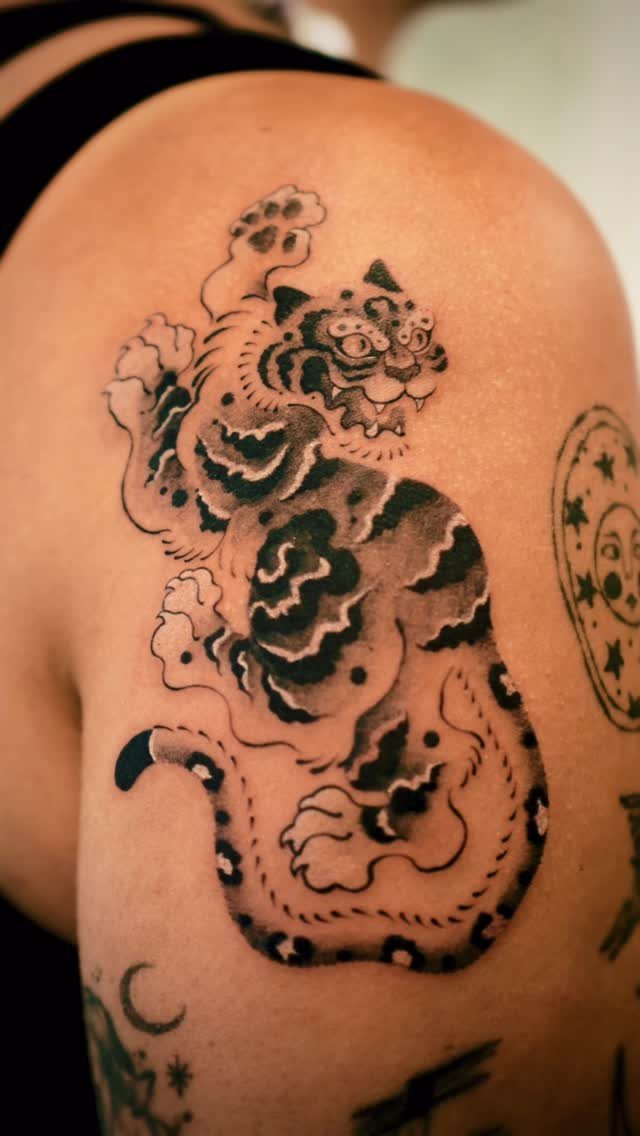
Korean folk art shows tigers with rounder faces, softer eyes, and a less aggressive stance than the snarling versions common in Japanese or Chinese styles. The look is stylized rather than realistic, almost cartoon-like, but still clearly a tiger.
The style comes from traditional Korean painting, where tigers were seen as protectors of villages and symbols of courage. The gentler expression reflects that guardian role instead of pure aggression.
Black and grey lets the shape and linework carry the design.
The rounded features and bold stripes hold up well without color. This style scales down better than hyper-detailed realism, so a medium piece on the shoulder or upper arm works without losing clarity.
9. Tiger Snake Tattoo
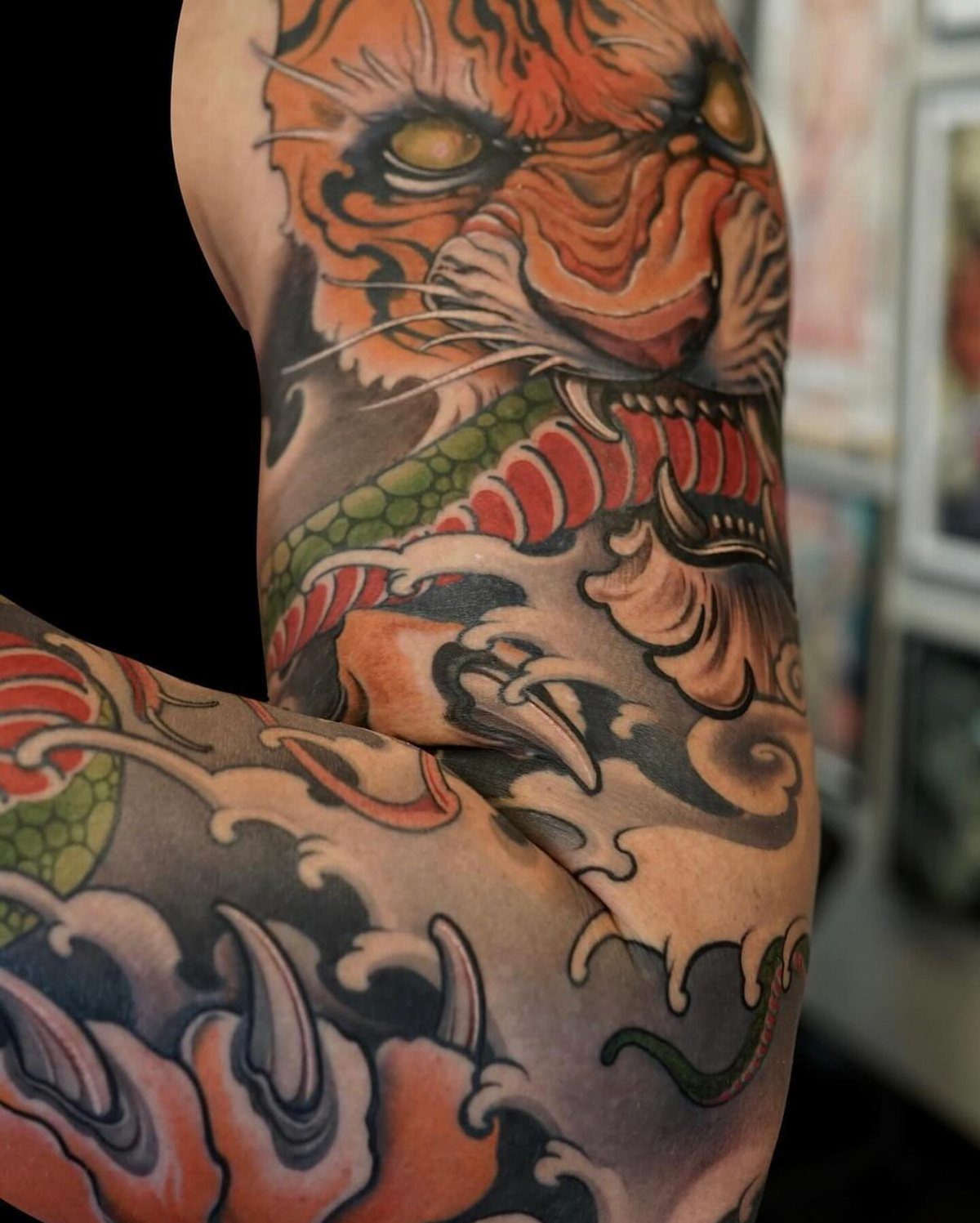
Putting a tiger and a snake together creates tension. The 2 animals represent opposing forces: ground versus ground, power versus cunning, raw strength versus strategy.
The snake usually wraps around the tiger or faces it directly.
Either arrangement keeps both creatures visible and balanced. The waves in this design add movement and tie the composition together without overcrowding it.
Color makes each animal stand out.
The tiger takes warm tones, the snake takes cool ones, and the contrast keeps them from blending. Black and grey works too, but you lose some of that immediate visual split.
This design needs space to let both animals read clearly. The forearm, upper arm, or calf provides the space you need.
10. Tiger and Lion Tattoo
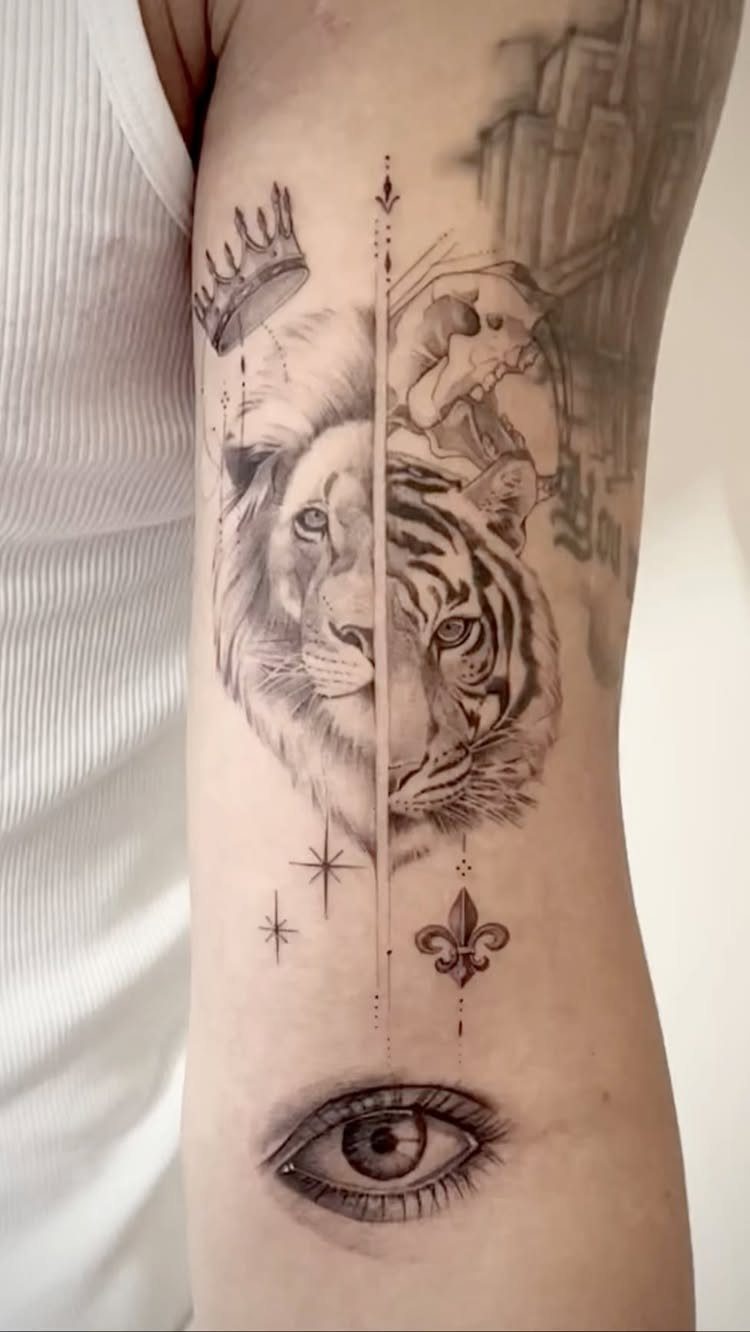
The symmetry holds the composition together and makes the contrast between the 2 obvious at a glance.
Each animal brings its own meaning: the lion for courage and leadership, the tiger for power and independence. Together, they represent balance between different strengths.
Black and gray put the focus on the split itself rather than color contrast. The stripes on the tiger side contrast with the mane texture on the lion side, and that’s usually enough to make the division clear.
This design fits best on the upper arm, forearm, or chest where you have vertical space and a relatively flat surface. The face needs symmetry to work, so curved placements like the shoulder can distort the features.
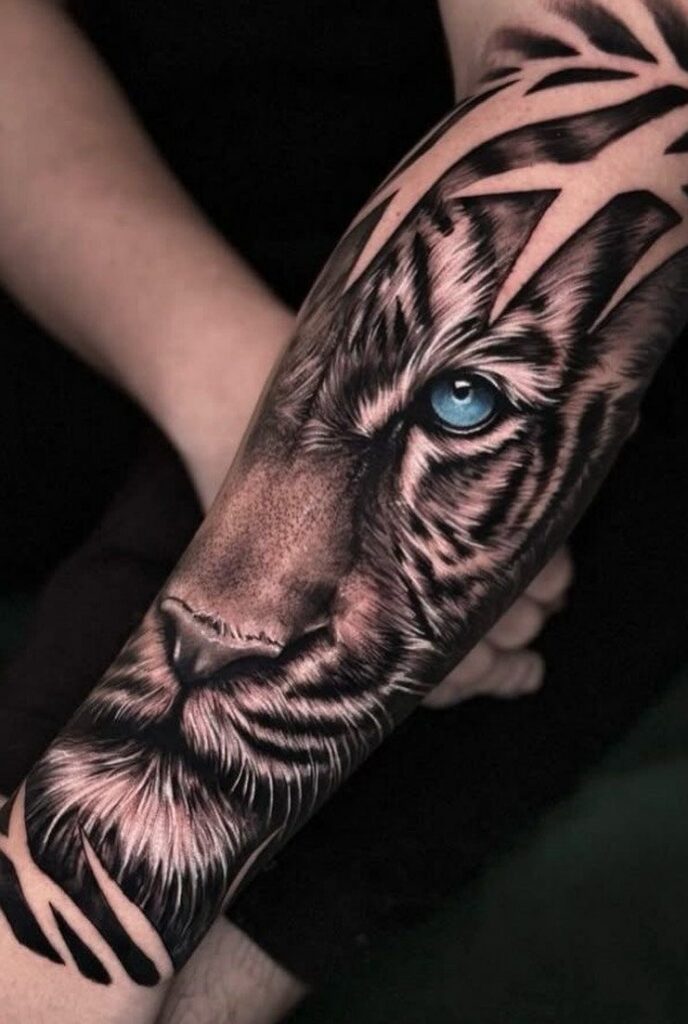
11. White Tiger Tattoo
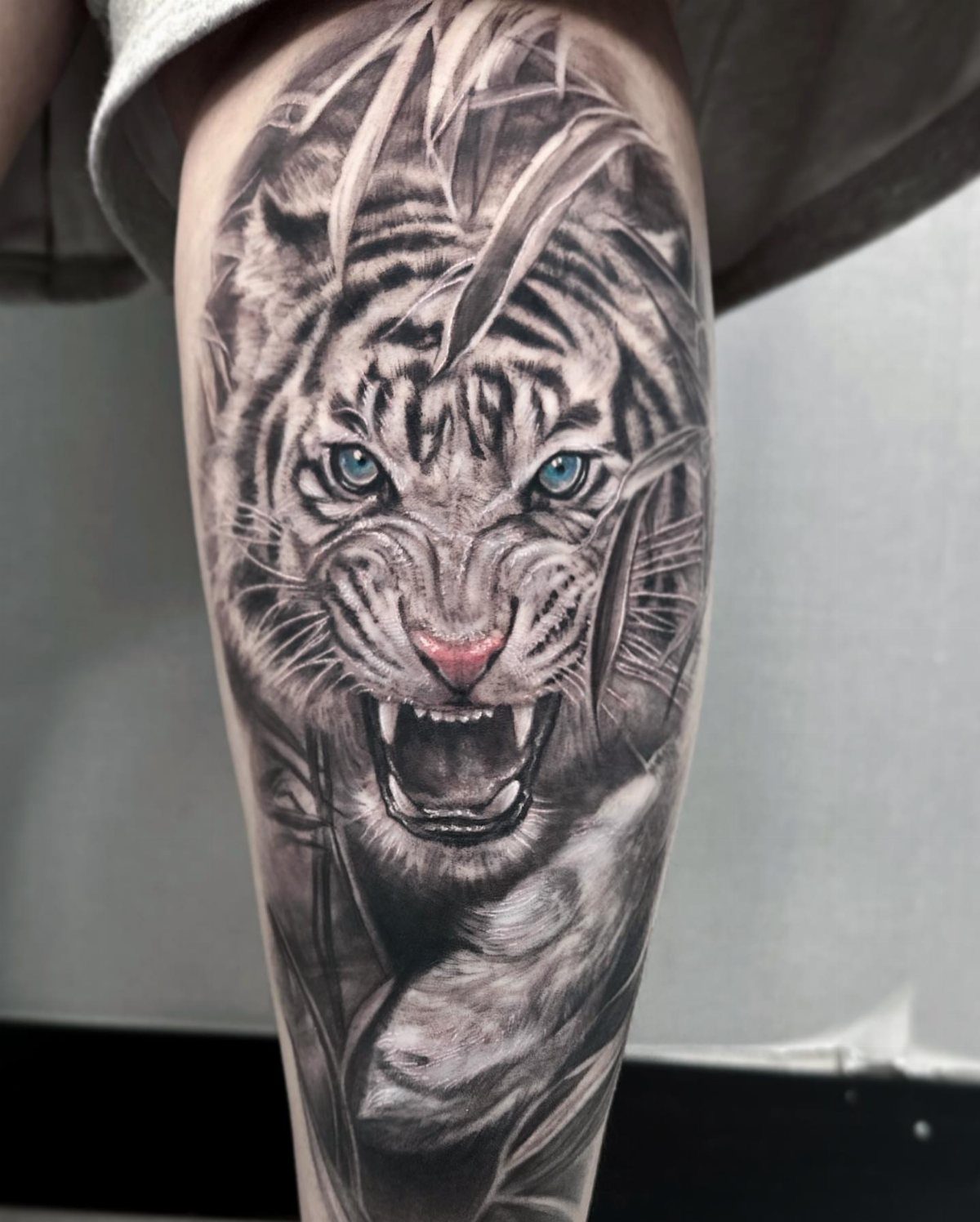
White tigers are rare in the wild, and that rarity carries over into tattoo symbolism. The white coat adds mystery and sets the design apart from the more common orange and black versions.
The blue eyes make the piece. They’re the first thing people notice, and they give the tiger an almost supernatural look.
Most artists use light grey and white ink for the fur, with darker shading around the edges to create depth. Pure white ink fades fast, so the contrast between light and dark grey does most of the work.
Realism suits this design because the white coat and blue eyes are already so striking. The detail in the fur and the intensity in the eyes need space to come through, so the thigh, upper arm, or back works best.
12. Chinese Tiger Tattoo
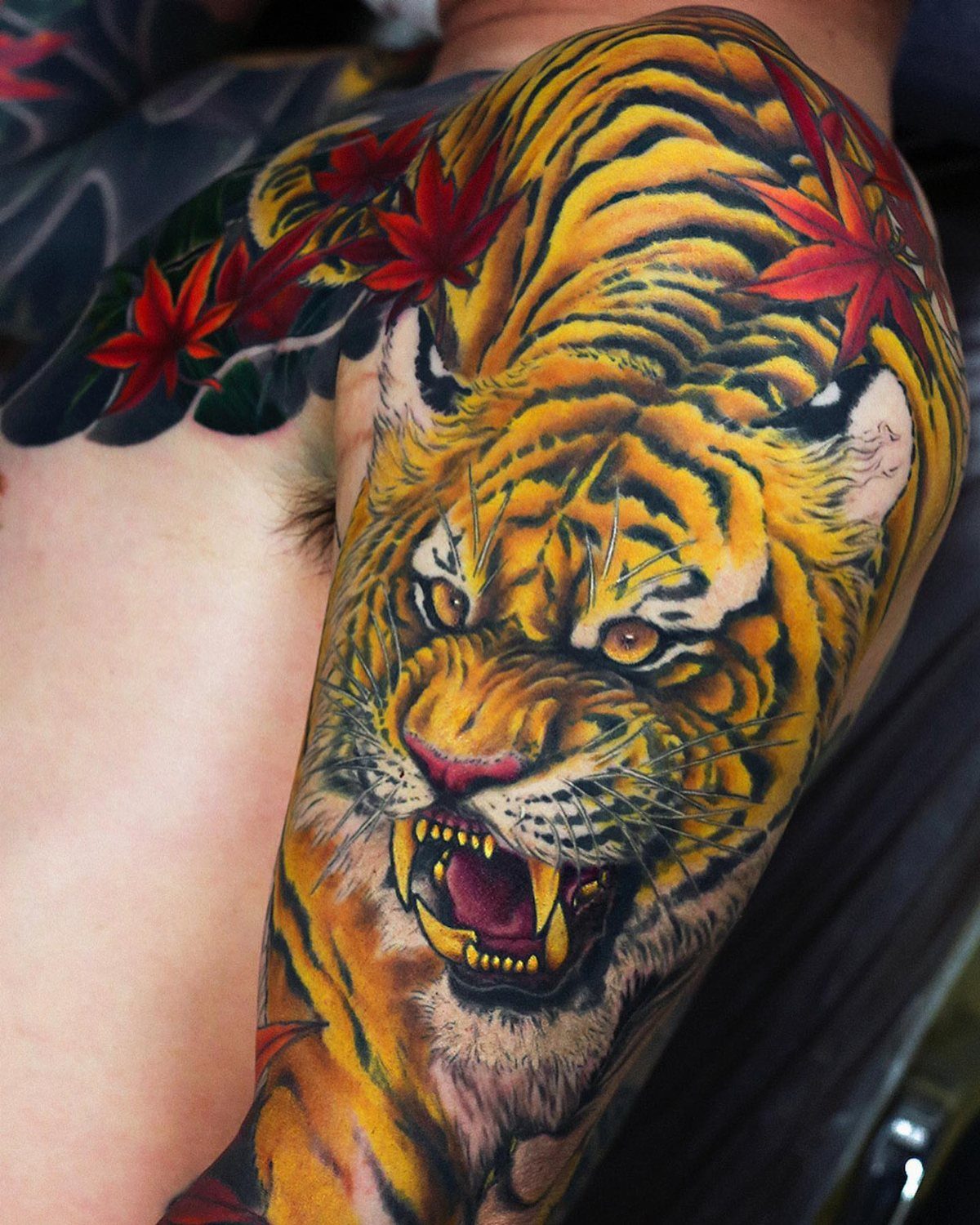
Chinese tiger designs carry specific cultural weight.
The tiger represents autumn and the west in Chinese mythology. It’s a protector, a symbol of military strength, and a guardian against evil spirits.
Red is a powerful color in Chinese culture, standing for luck, vitality, and celebration. Paired with the tiger, it amplifies the protective symbolism.
The composition balances the tiger’s face with the surrounding elements. A Chinese tiger tattoo with detailed traditional elements works best on the upper arm, shoulder, or thigh where you have room to let each element breathe.
Color is part of the meaning here, so black and grey would strip away some of the cultural significance. If you’re choosing this style, plan for full color and find an artist experienced with bold reds and smooth gradients.
13. Tiger Butterfly Tattoo
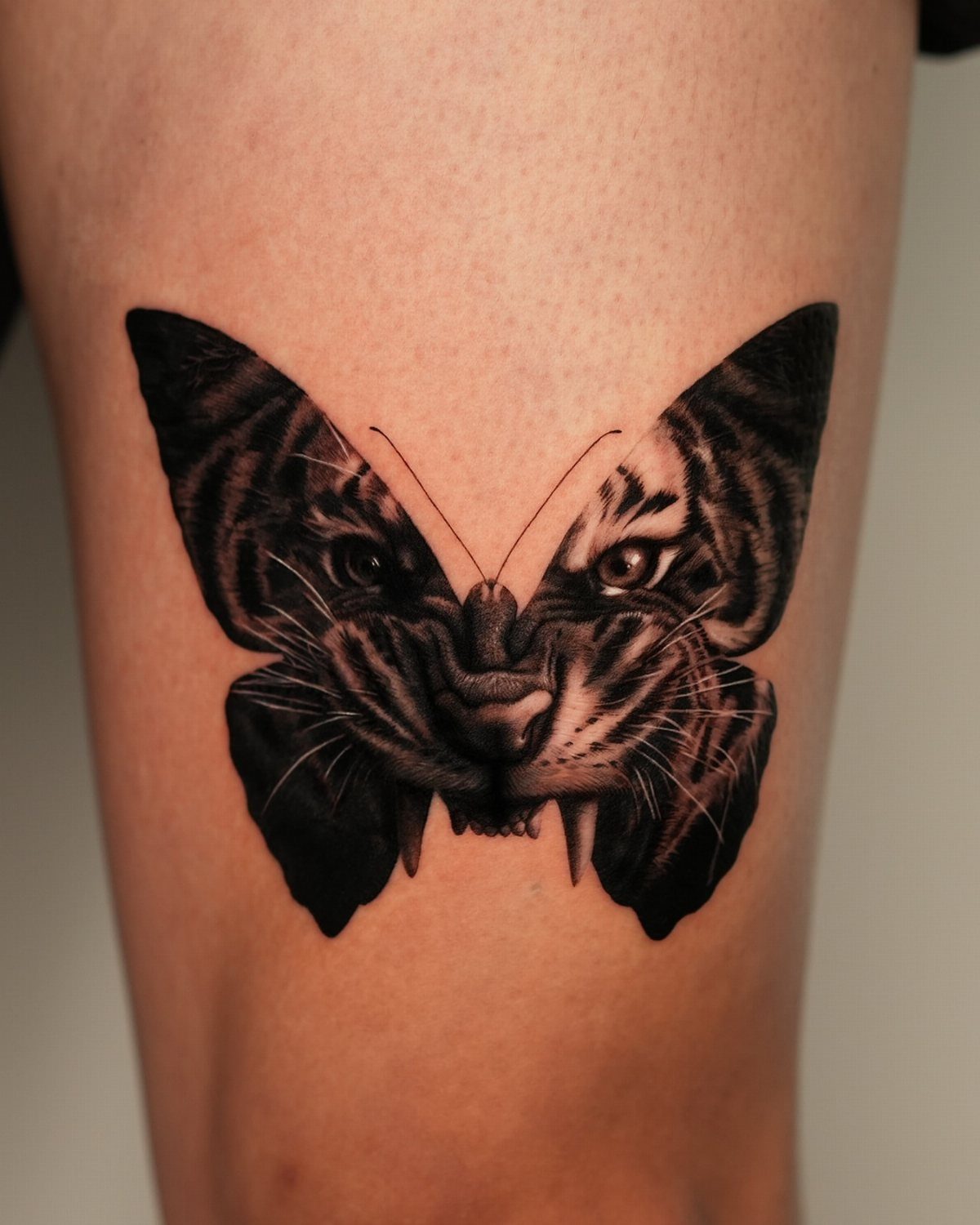
The tiger’s face melts into butterfly wings, turning raw power into something lighter. The shape still reads as a tiger, but the edges shift into symmetry and flight.
This design leans feminine without losing the animal’s intensity. Transformation sits at the center: the butterfly already carries that meaning, and pairing it with a tiger adds strength to the change.
Ink alone lets the shapes hold attention.
The stripes double as wing patterns, and the contrast between the 2 animals holds without color. The leg offers good vertical space for this shape, and pain stays moderate compared to bonier placements.
14. Blue Tiger Tattoo
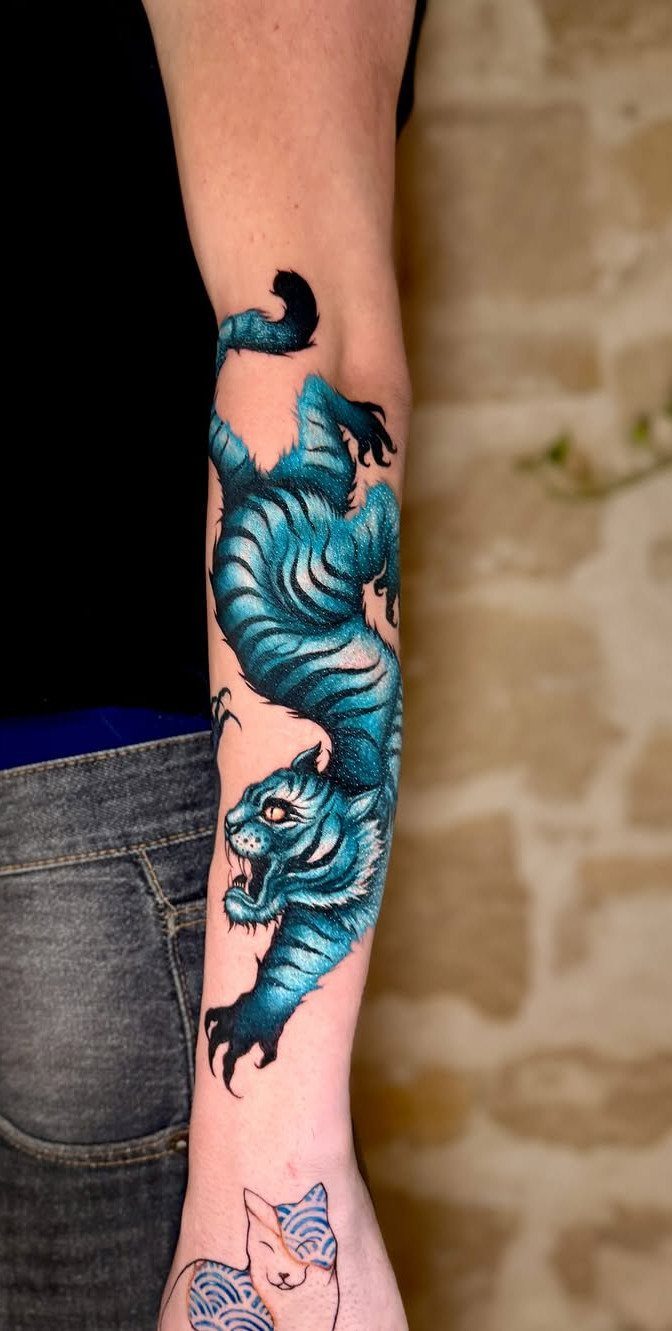
Blue removes the tiger from reality and pushes it into myth. No wild tiger looks like this, and that’s the point.
The color choice shifts the meaning toward the spiritual or celestial.
Blue reads as water, sky, or something beyond the physical world. It separates this piece from the orange-and-black versions most people expect.
Line work in blue holds well over time if the ink saturation is strong at the start.
Light blue fades faster than darker shades, so plan for touch-ups if you go pale. The forearm gives this design good visibility and a flat surface for the dynamic pose.
15. Tiger and Skull Tattoo
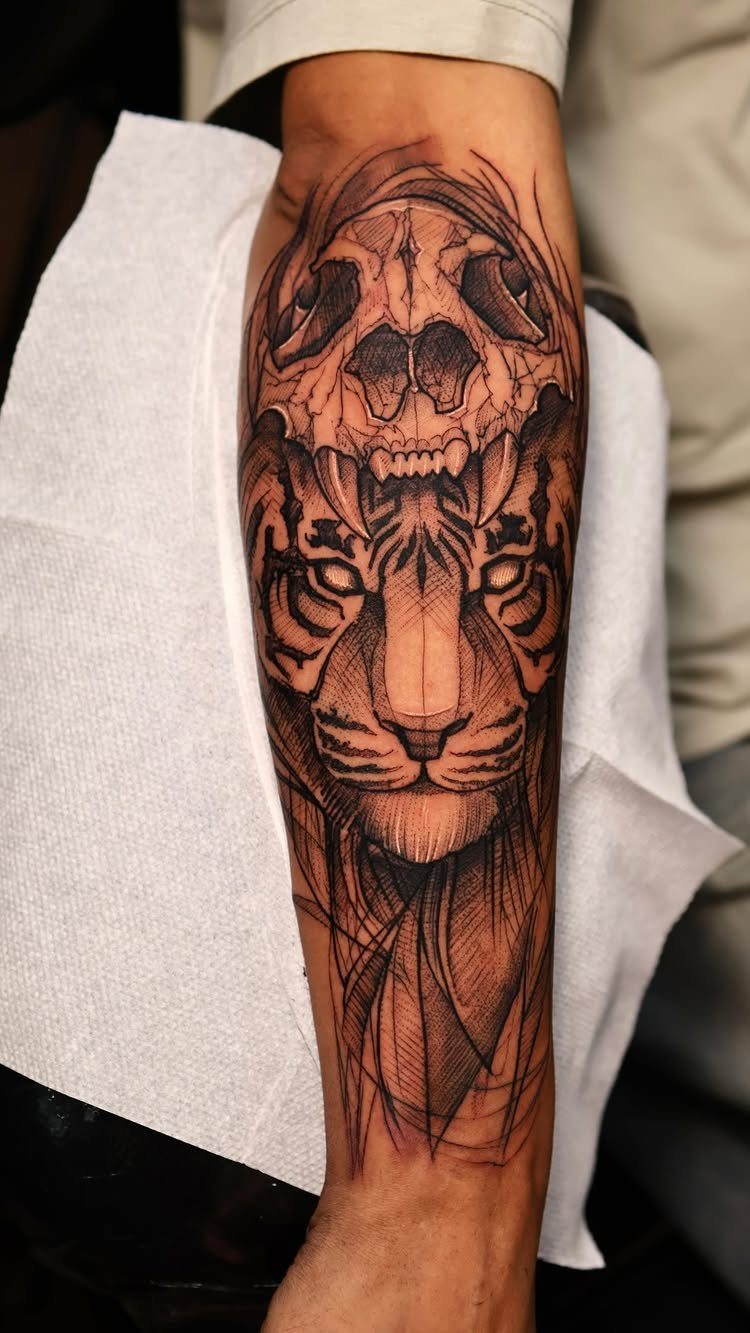
Stacking a skull on top of the tiger brings mortality into the frame. The tiger alone is about power and survival; the skull reminds you that nothing lasts forever.
The combination works because both images carry weight on their own. Together, they balance strength against the awareness that everything ends.
The forearm keeps this piece visible and offers enough space for both elements to read clearly.
Pain is moderate, and the flat surface makes shading easier for the artist. This design takes multiple sessions if you add heavy detail in the fur and bone structure.
16. Japanese Tiger Tattoo
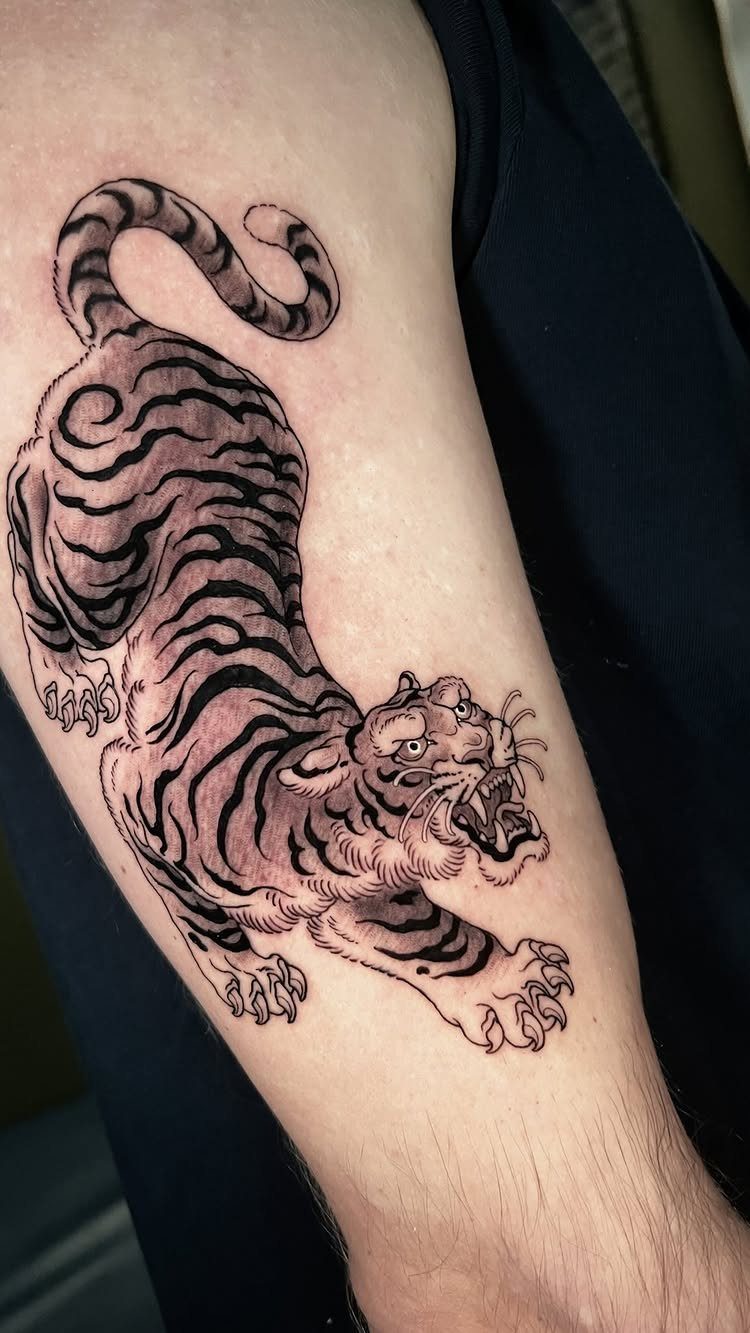
Japanese tattoo tradition treats the tiger as a protector and a warrior symbol.
The style uses bold lines, flowing shapes, and high contrast. The tiger’s body curves to fit the muscle underneath, often surrounded by wind, waves, or bamboo.
Black and grey is common here, though traditional Japanese work also uses orange, gold, and red. The design emphasizes movement rather than stillness.
The upper arm fits this style well because the muscle gives the tiger’s body a natural shape to follow.
17. Roaring Tiger Tattoo
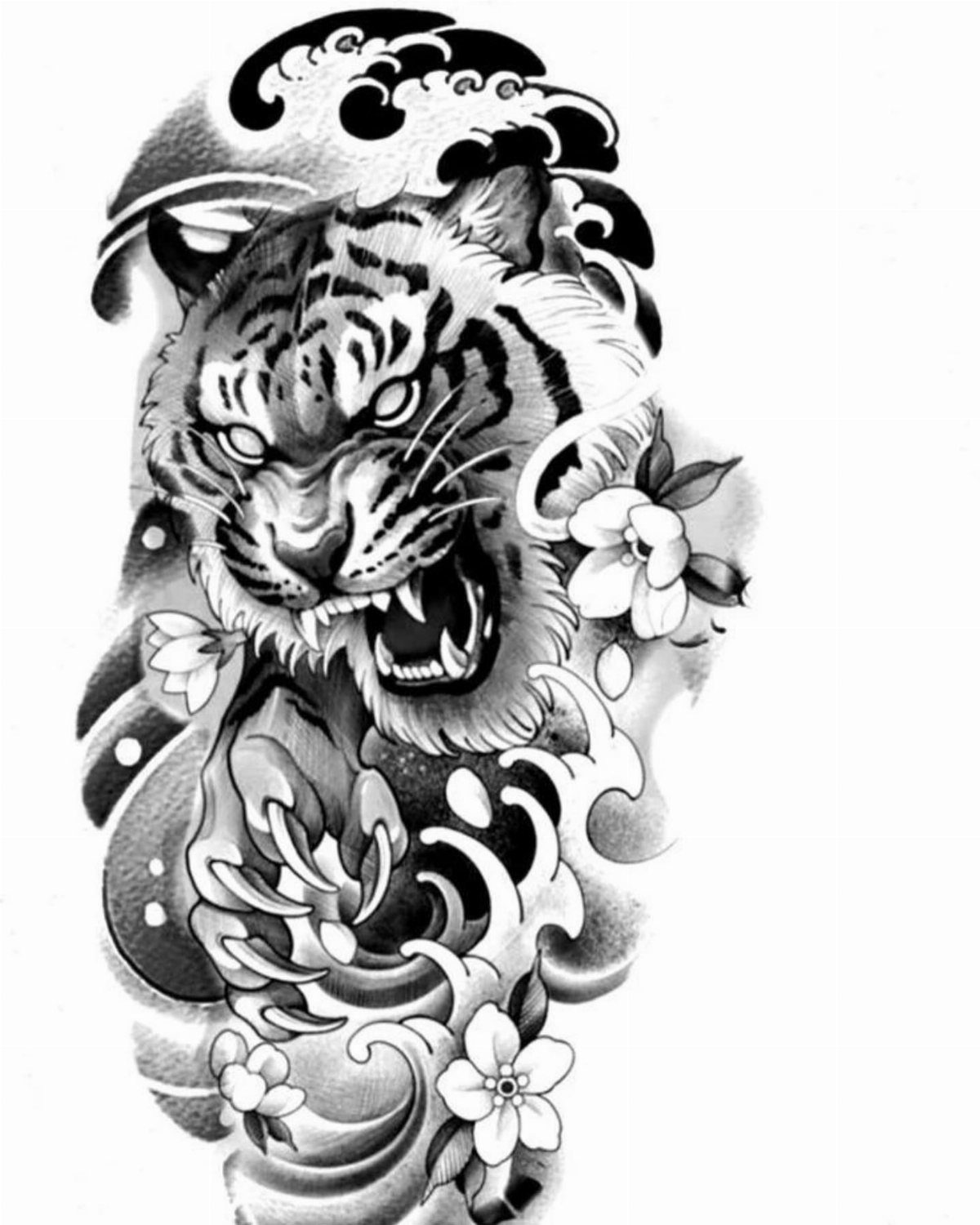
A roar freezes the moment of maximum aggression. Teeth, tongue, and open jaws dominate the composition, and everything else supports that central image.
The waves and flowers around the tiger’s head soften the design without weakening it.
The florals give your eye somewhere to rest after the intensity of the face. This approach works when you want the tiger to feel powerful but not overwhelming.
Monochrome centers the aggression instead of splitting focus.
Adding color to the flowers would pull attention away from the face. This design scales well from medium to large, and it fits the upper arm, thigh, or shoulder blade.
18. Tiger Eyes Tattoo
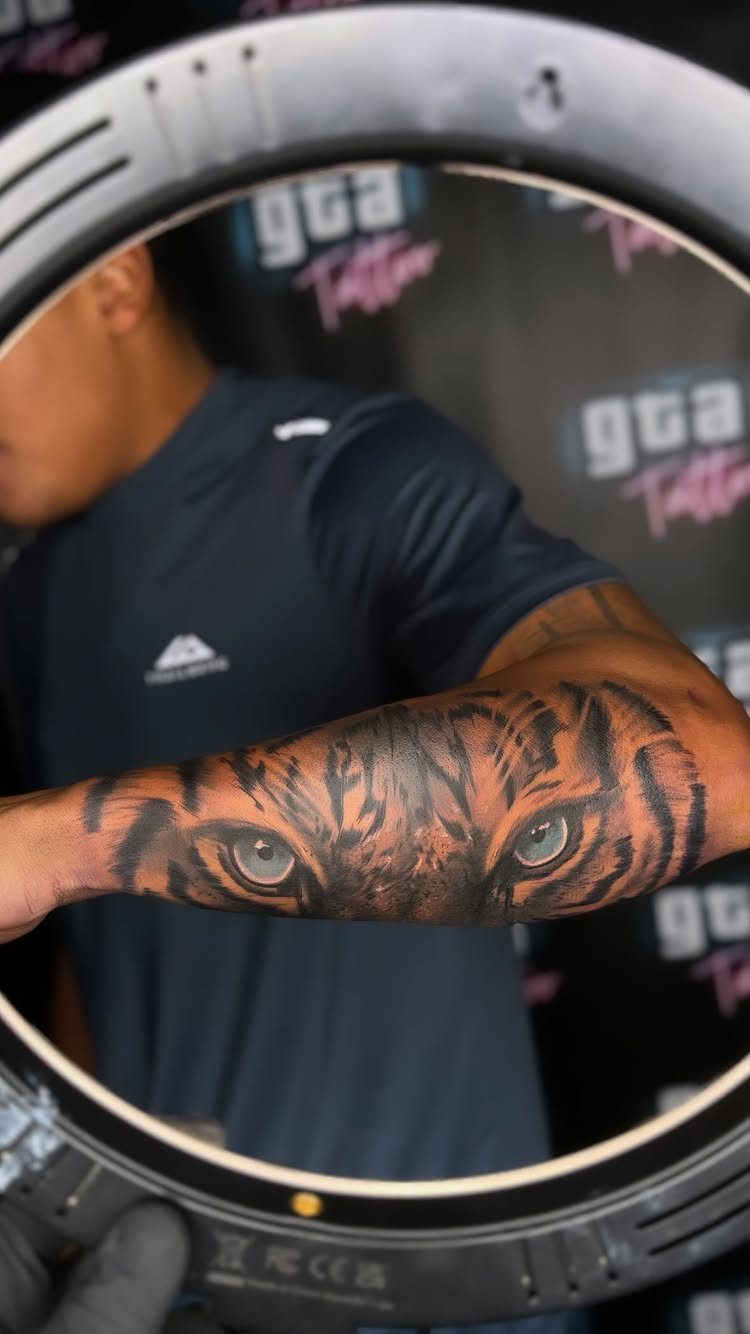
Isolating the eyes strips everything else away and leaves the stare. No body, no roar, just the gaze.
The forearm is a natural fit for this shape.
The eyes sit horizontally, and the arm gives you a flat, visible surface that others will notice. Pain is moderate here, and healing moves quickly since the area isn’t rubbed by clothing as much as other placements.
Realism matters more with eyes than with almost any other element.
The catch light in each pupil needs to sit in the right spot, or the eyes look dead. Find an artist who can handle fine detail and smooth gradients.
19. Tiger Scratch Tattoo
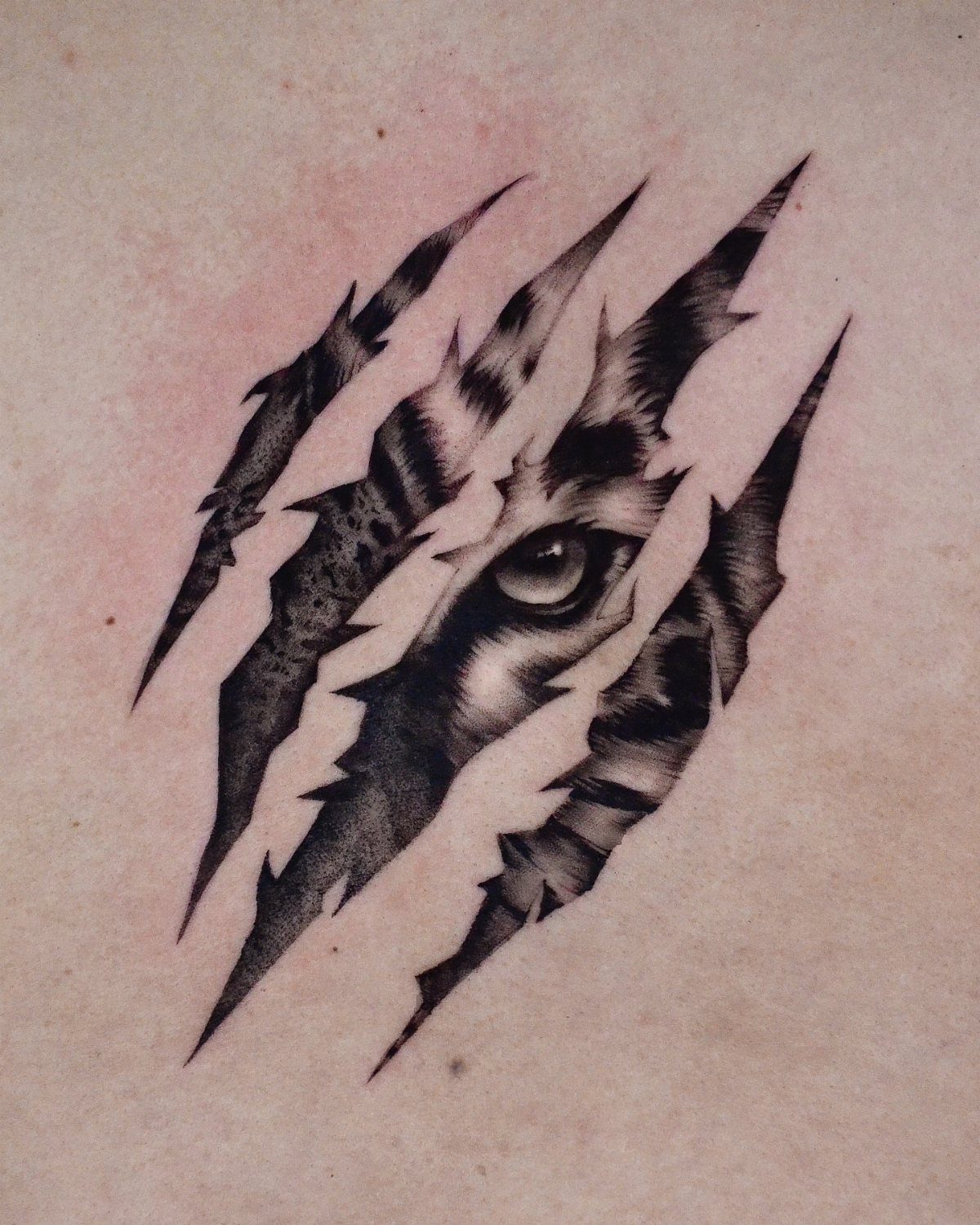
3 claw marks tear across the skin, and a tiger’s eye stares out from the center. The ripped-skin effect creates depth: the eye sits beneath the surface, and the scratches appear to cut through.
This design relies on shading to sell the illusion.
The shadows inside each scratch make them look recessed, and the highlights on the torn edges bring them forward. Without strong contrast, the effect flattens.
Black and grey suits this style better than color.
The focus stays on the three-dimensional illusion rather than competing details. The forearm, shoulder, or calf all provide flat surfaces where the scratches read clearly.
20. Tiger with Lotus Tattoo
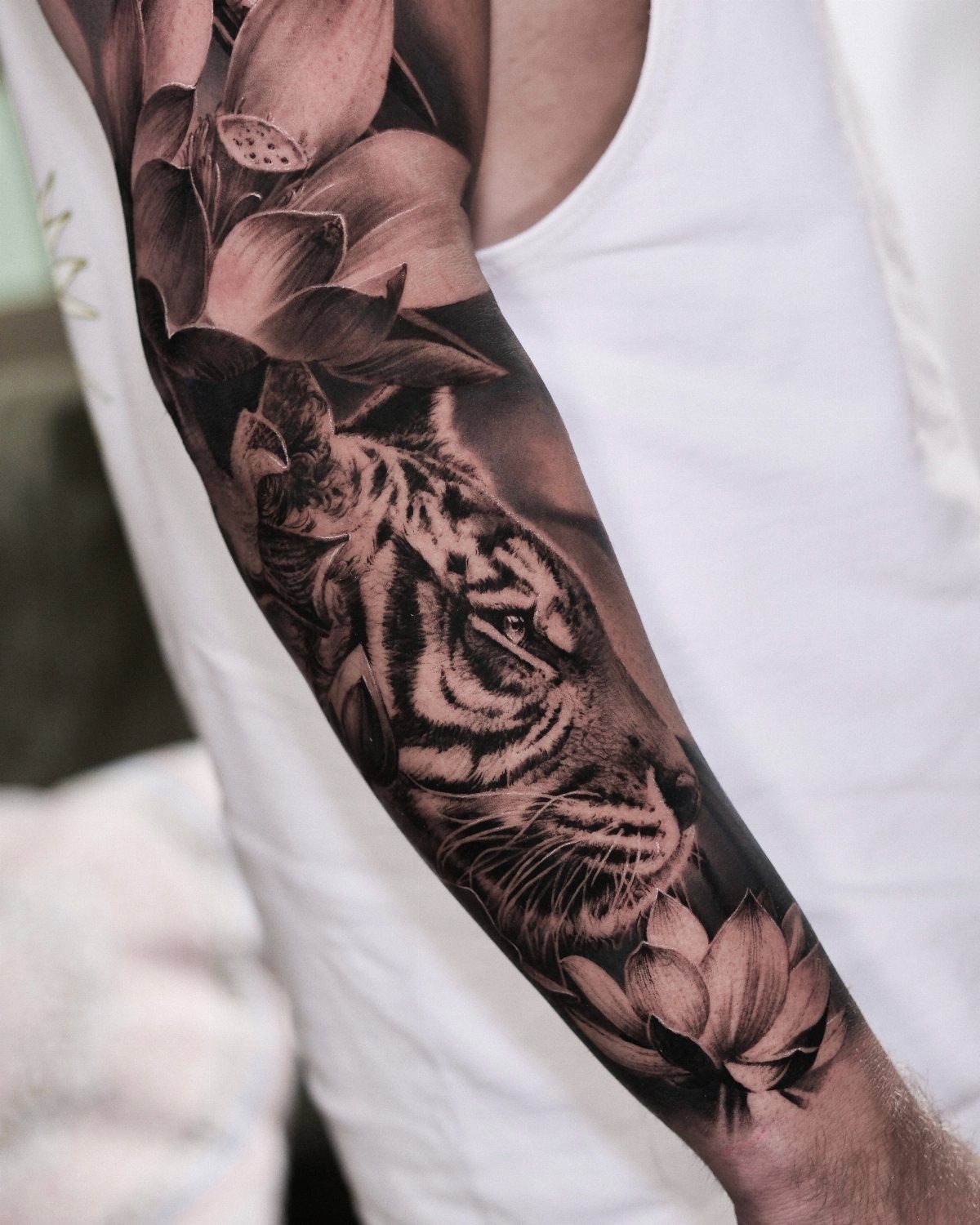
The lotus grows in mud and surfaces clean. Paired with a tiger, the contrast is direct: one represents raw power, the other purity and resilience through hardship.
The flowers frame the tiger’s face without crowding it.
Black and grey keeps both elements balanced. Monochrome ink keeps both elements balanced without one overpowering the other.
The upper arm or thigh gives you the surface area the full composition needs. The tiger’s expression stays intense, but the lotus softens the overall feel without weakening the image.
21. Fierce Tiger Tattoo
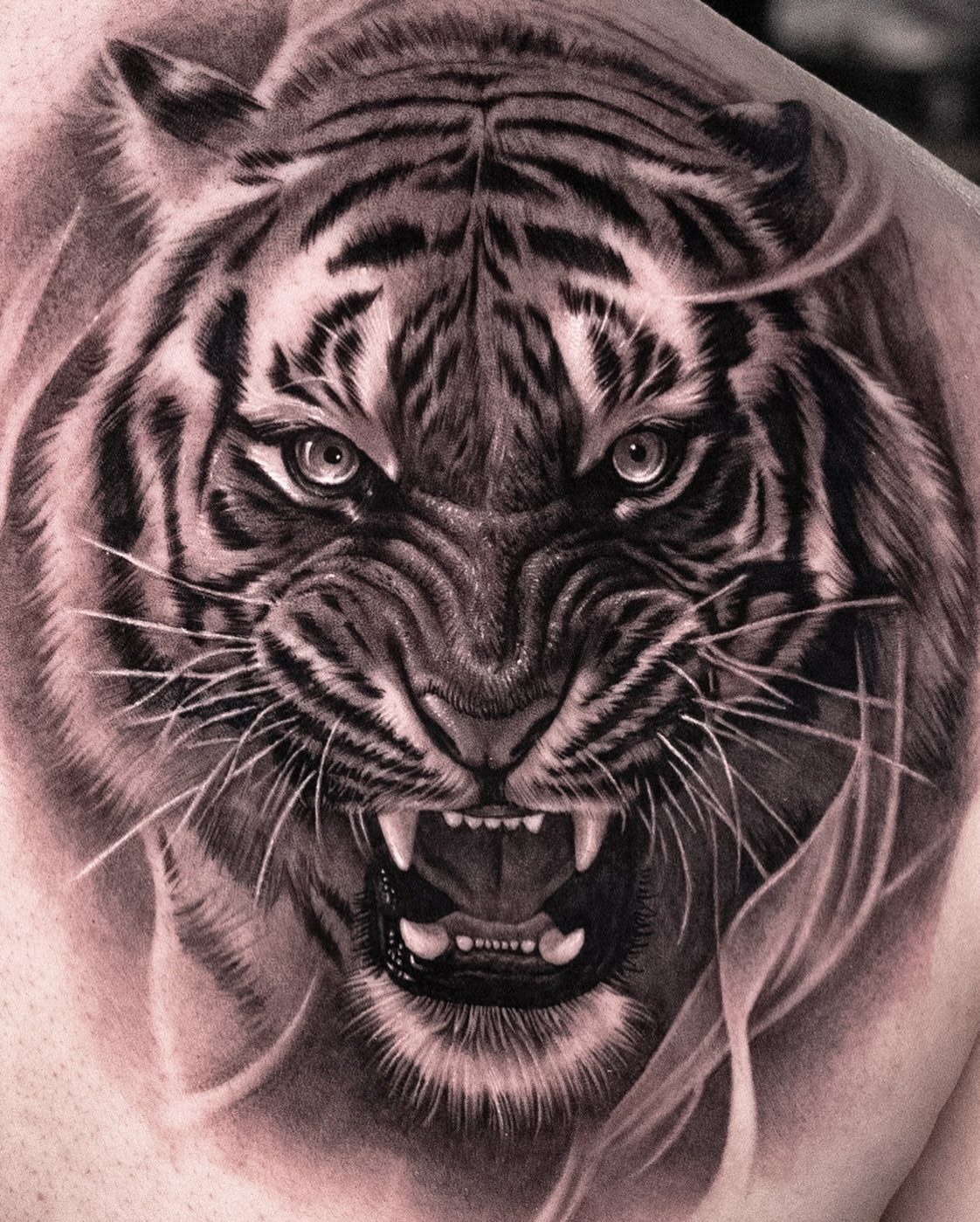
Open mouth, bared fangs, and a snarl frozen mid-roar.
No flowers, no waves, no distraction. The face fills the frame.
Realism matters here. The teeth need sharp edges, the fur needs texture, and the eyes need intensity.
If any one of those softens, the aggression drops with it. Black and grey centers the expression without splitting attention across color.
The shoulder or upper arm gives you the space this design needs.
Pain is moderate on the shoulder, higher if the piece extends toward the collarbone. This design takes at least one session for shading and detail work.
22. Tiger in Water Tattoo
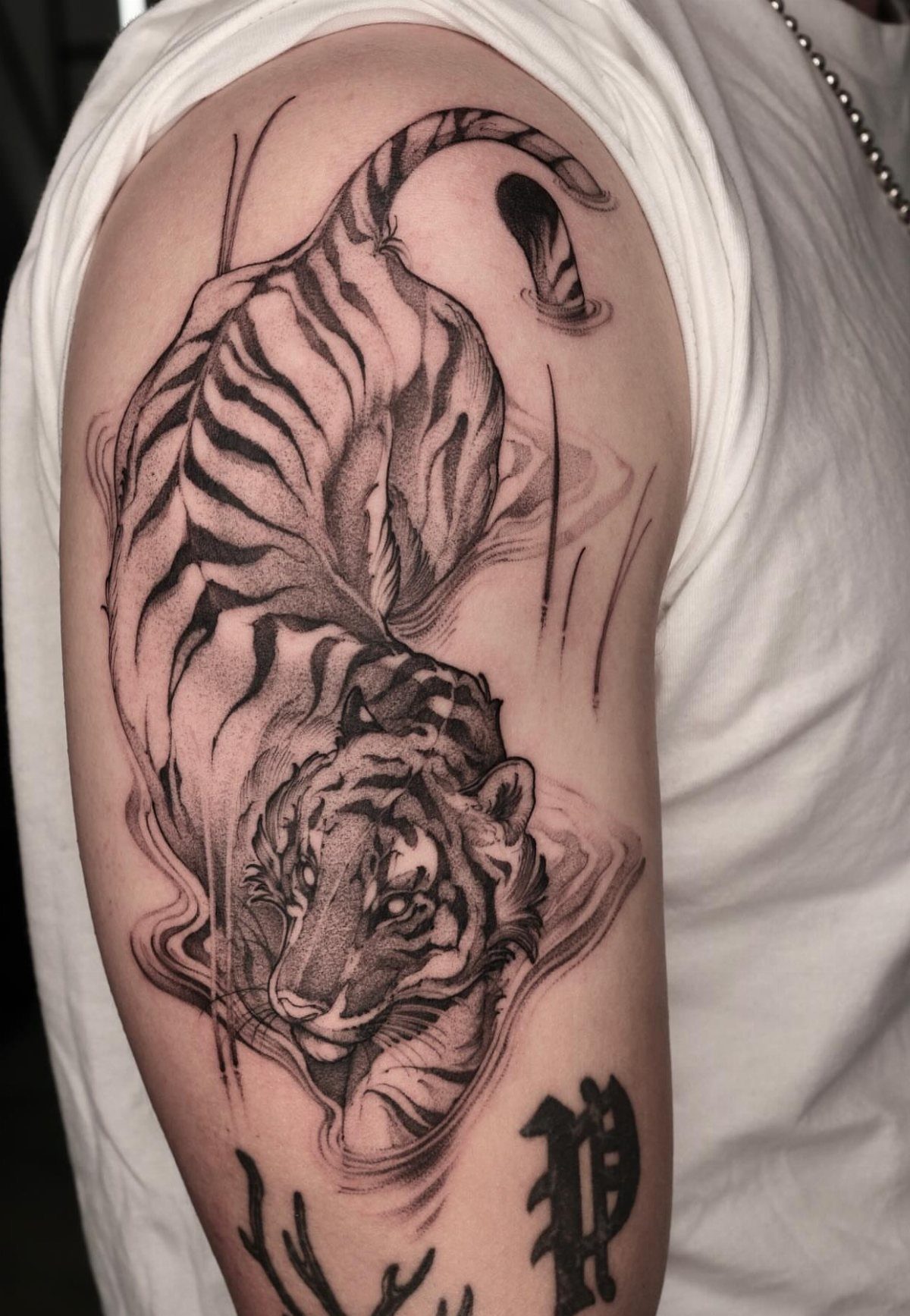
Tigers swim better than most big cats, and the image of one moving through water carries a different energy than the usual roar or crouch. The body curves, the stripes break up across ripples, and the whole composition feels fluid.
Water adds movement without adding other animals or symbols. The swirling lines around the tiger keep the eye moving through the piece, and the flow works well on curved placements like the upper arm or calf.
Grayscale keeps the focus distributed evenly across the scene. The ripples need smooth gradients to read as water rather than random lines, so this design suits artists experienced with soft shading.
Symbolism of Tiger Tattoos
You’re choosing an animal that sits at the top of its food chain, and that positioning carries over into the symbolism: power, survival, the ability to face threats head-on.
In China and India, tigers hold spiritual weight.
Western interpretations lean different.
That same energy translates into passion, raw power, and movement. It represents a nature that refuses to be tamed, a spirit that moves through life with intensity rather than restraint.
Which meaning you assign to your piece is up to you.
The animal carries enough range that you can pull from tradition or make it personal. Either way, the image itself communicates before you explain it.
Best Placements for Tiger Tattoos
The forearm and calf both offer that vertical space, and a crouching or stalking pose follows the natural line of muscle. Pain sits around 3–5 out of 10 on the outer forearm, slightly higher on the inner side.
The upper arm is the traditional choice for a roaring head. The shape wraps the shoulder, and pain stays low at 2–4 out of 10 on the outer side, 5–6 inside.
The back is where large compositions breathe.
Scenes with bamboo, mist, or a coiling dragon demand the width and height only a back or full sleeve can give. Most of the back sits around 4–6 out of 10 for pain, jumping closer to 7 or 8 once you hit the spine.
The thigh handles large work and stays covered when you need it to. On the front and outer thigh, pain stays moderate at around 6 out of 10, and you can fit something 8–12 inches tall without running out of canvas.
Cost of Tiger Tattoos
Stripes lock you into a certain minimum size if you want them to read clearly years later, so most tigers end up medium to large.
A small tiger face, 2–3 inches, runs $150–$350. A single tiger head or a crouching pose on the forearm, sitting around 5–8 inches, runs $400–$1,200 and fills 3–6 hours.
Big color work on the thigh or back starts closer to $1,500 and climbs past $5,000 when you move into full Japanese back territory. Most US artists charge $120–$250 per hour, with variation by city and experience level.
Intricate work takes longer. A small piece might finish in an hour.
A full back piece can reach 30 hours spread across multiple sessions, depending on detail, shading, and color fill. Cost scales with time, so more detail means a higher total.