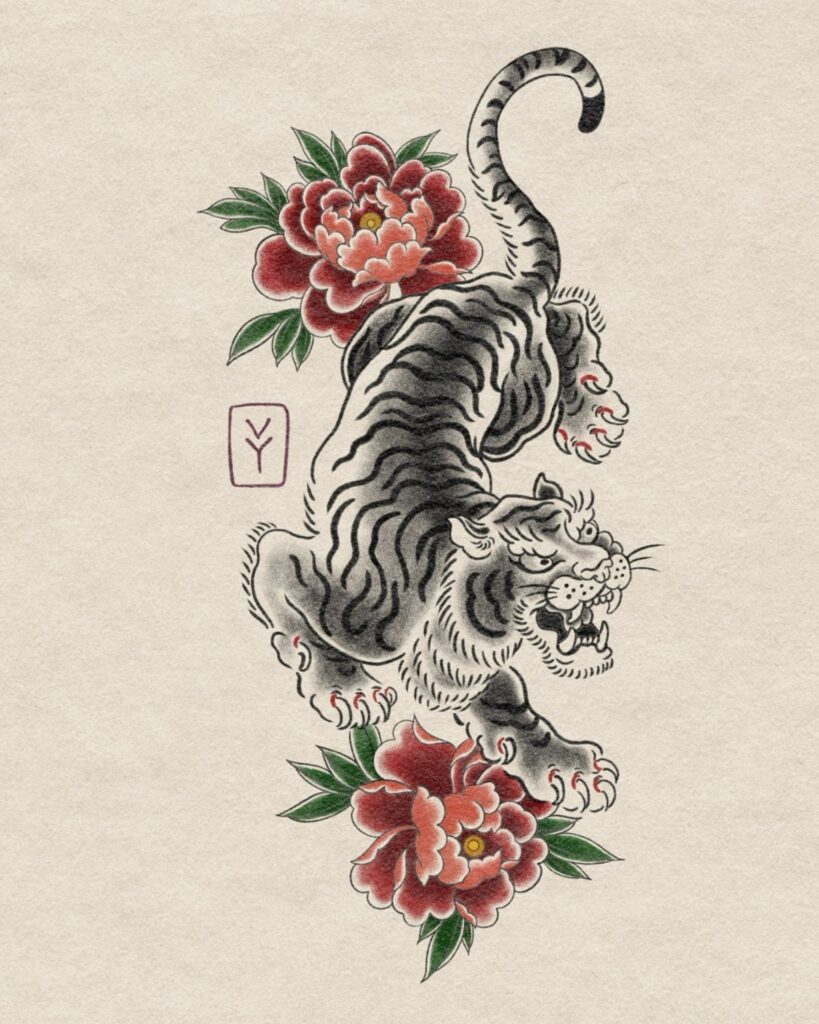
A Japanese tiger tattoo can sit on the sleeve, fill the back or chest, or pair with a dragon or snake, depending on how much canvas the design needs to show the animal in motion.
1. Japanese Tiger Sleeve Tattoo
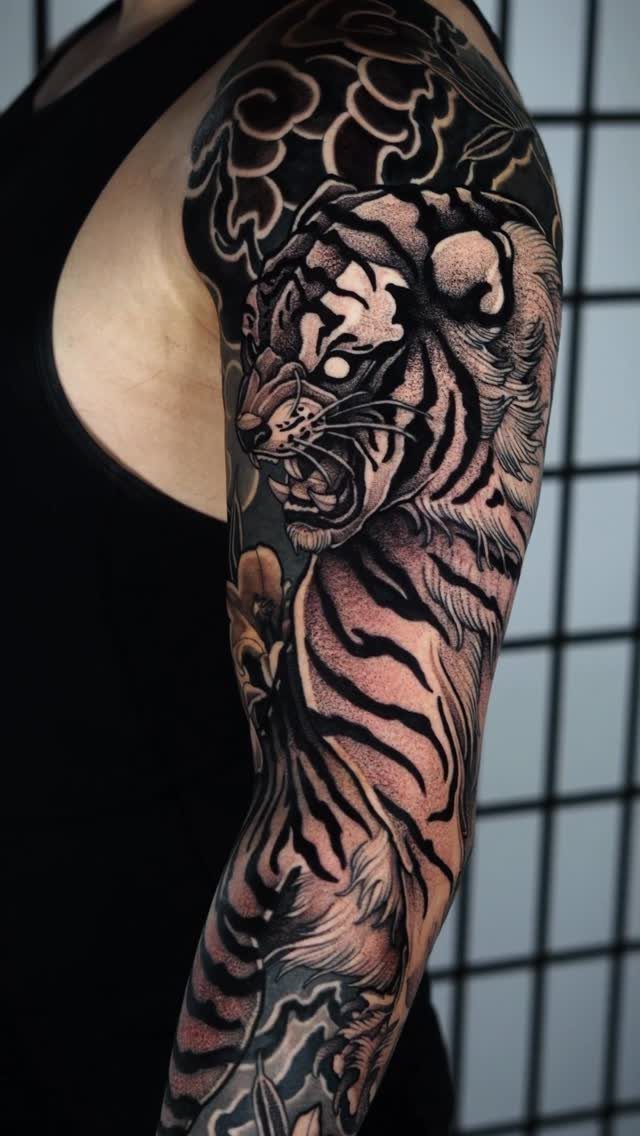
A sleeve gives the artist enough room to capture the tiger’s face, body and limbs in full motion, wrapped around the arm from shoulder to wrist or stopping mid-forearm.
The upper arm works best if you want the tiger’s head front and center, where it reads clearly even when your arm is at your side. Expect 3 to 5 sessions depending on how far down the sleeve extends.
2. Japanese Tiger Back Tattoo
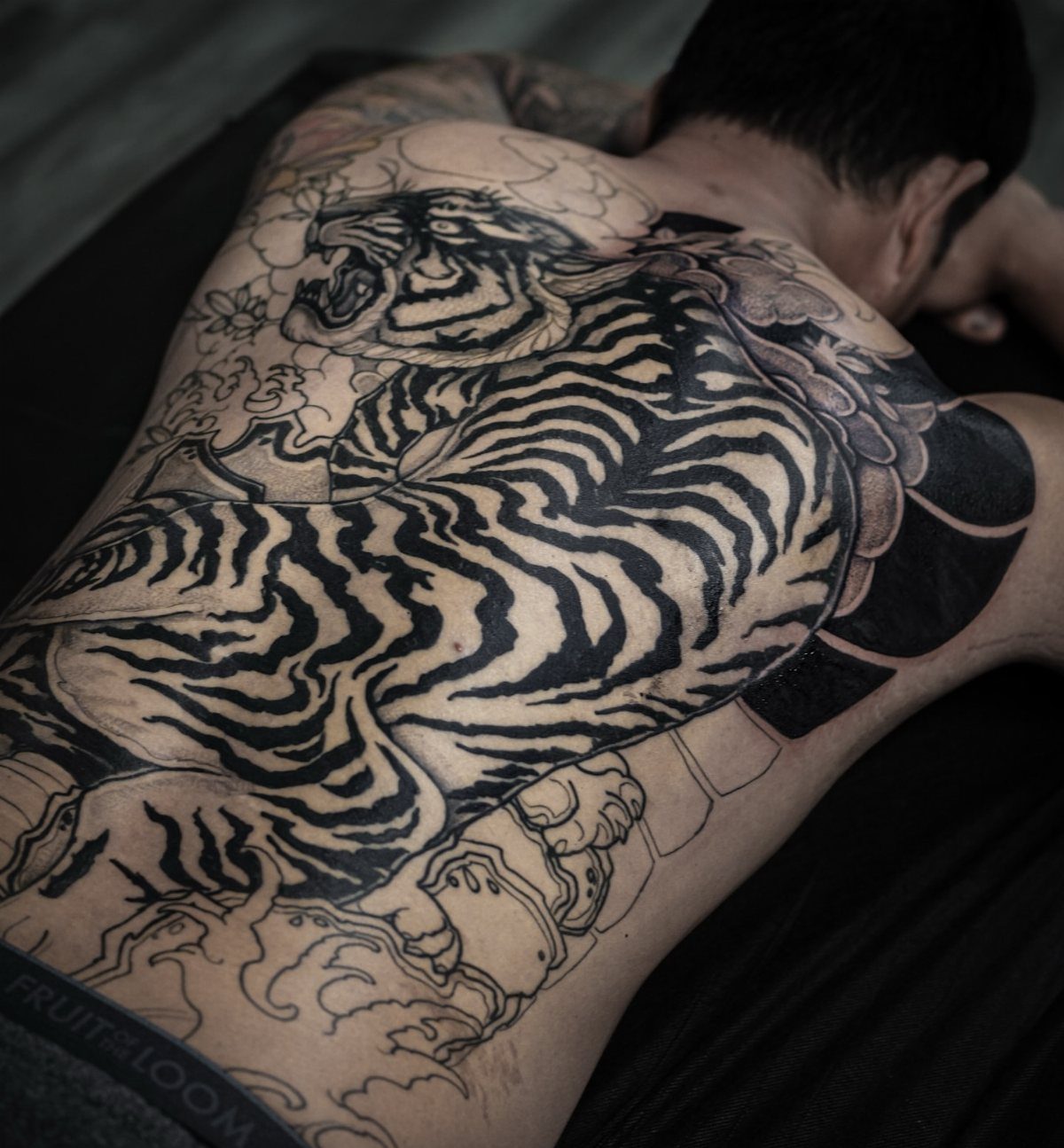
A back piece gives the tiger the vertical canvas it needs to fill the space from shoulders to lower back, crouched or mid-leap with claws extended.
Black and grey work keeps the musculature sharp and lets the shading breathe without heavy color fills that can blur over time on such a wide surface.
This placement reads best when the design sits centered along the spine, with the tiger’s body angled to follow the natural taper from shoulders to waist.
Plan for 4 to 6 sessions to complete the shading and detail work across the full back.
3. Japanese Tiger Chest Tattoo
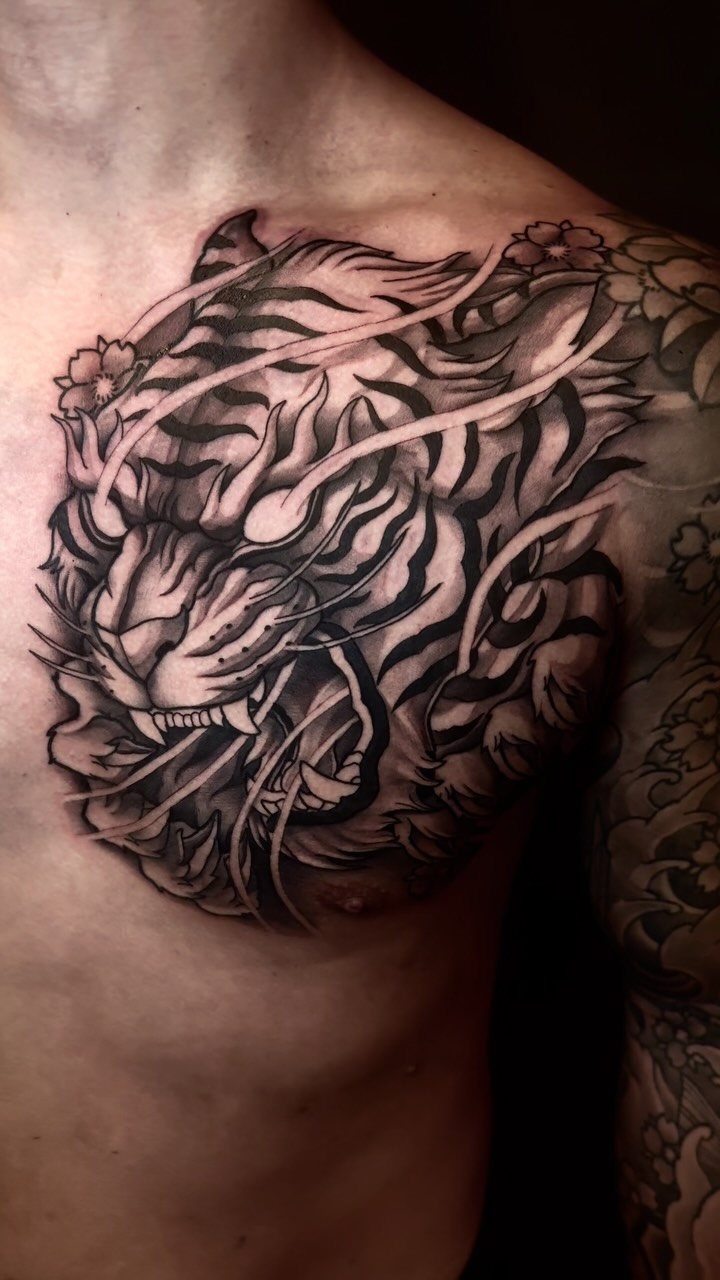
A chest piece lets the tiger sit high and wide, anchored at the collarbone with one paw reaching down across the ribs or shoulder.
Cherry blossoms soften the composition and add contrast without pulling attention from the tiger’s face, which stays centered where the eye lands first.
Black and grey shading keeps the tiger’s features clean and readable, and the blossoms can stay minimal so the piece doesn’t feel too busy. Chest work hurts more than most placements because of how close the needle sits to bone.
4. Traditional Japanese Tiger Tattoo
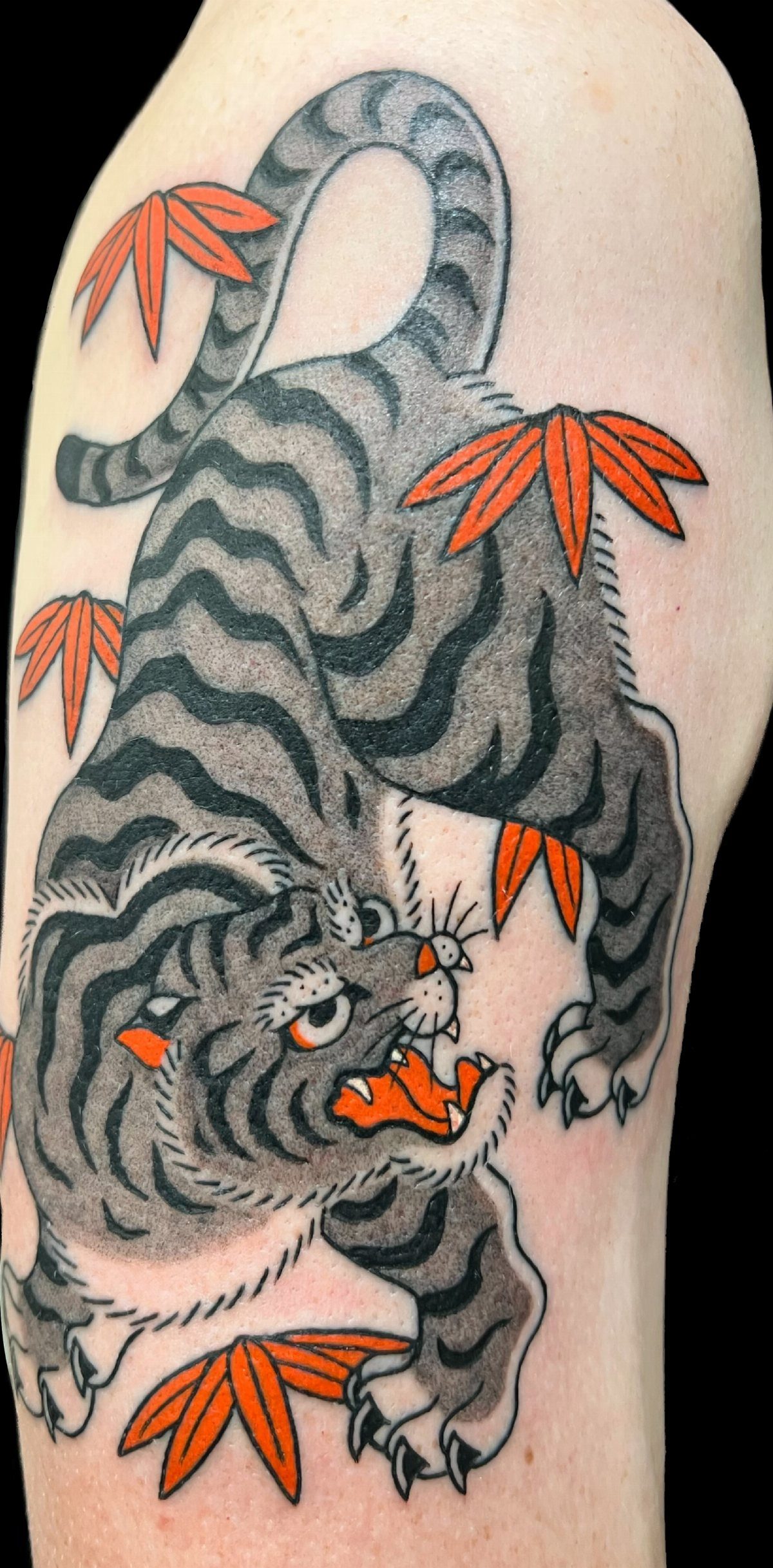
A traditional piece leans on bold black outlines, limited color and elements pulled from Irezumi conventions: bamboo, peonies, wind bars or waves.
The tiger’s stripes stay thick and graphic rather than soft-blended, and the orange or red accents sit inside those outlines the way ukiyo-e prints layer color.
Bamboo in the background anchors the composition and fills negative space without crowding the tiger.
This style reads best on larger placements like the upper arm or thigh, where the bold lines stay clear and won’t blur as the tattoo ages.
5. Japanese Tiger and Dragon Tattoos
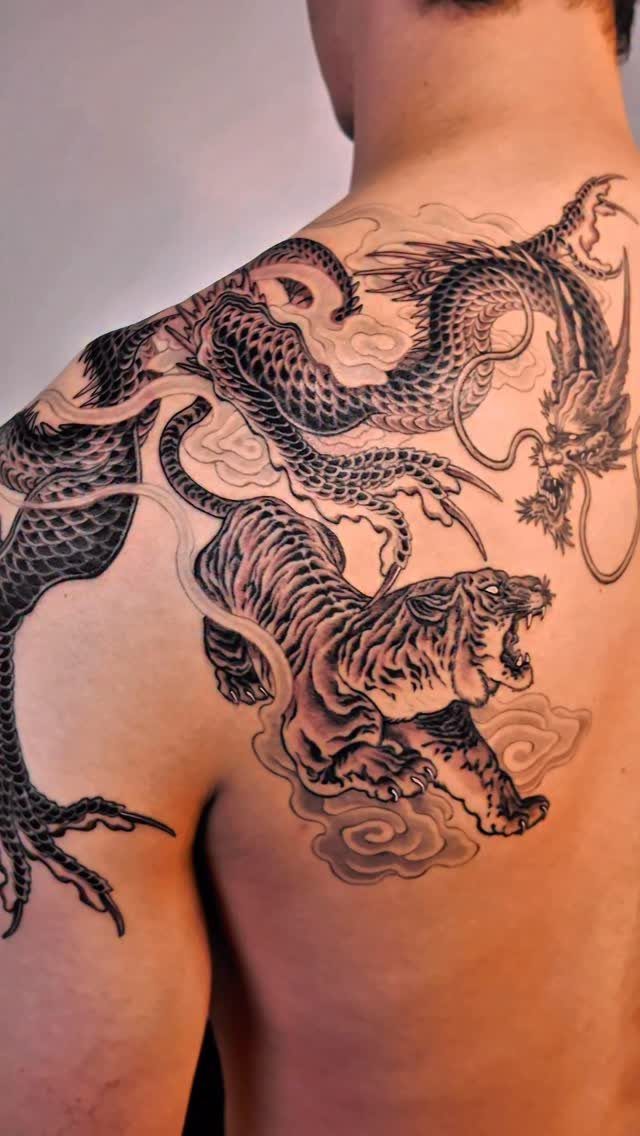
Pairing a tiger with a dragon sets up the oldest symbolic balance in Japanese art: earth and sky, strength and wisdom, body and spirit.
The two figures either face each other in opposition or wrap around the same placement in a chase, and black and grey shading keeps both creatures readable without one overpowering the other.
This composition needs room to let both animals breathe, so the upper back, shoulder or a full sleeve works best. Expect 4 to 6 sessions depending on how much detail goes into each figure’s scales and fur.
6. Japanese Tiger and Snake Tattoos
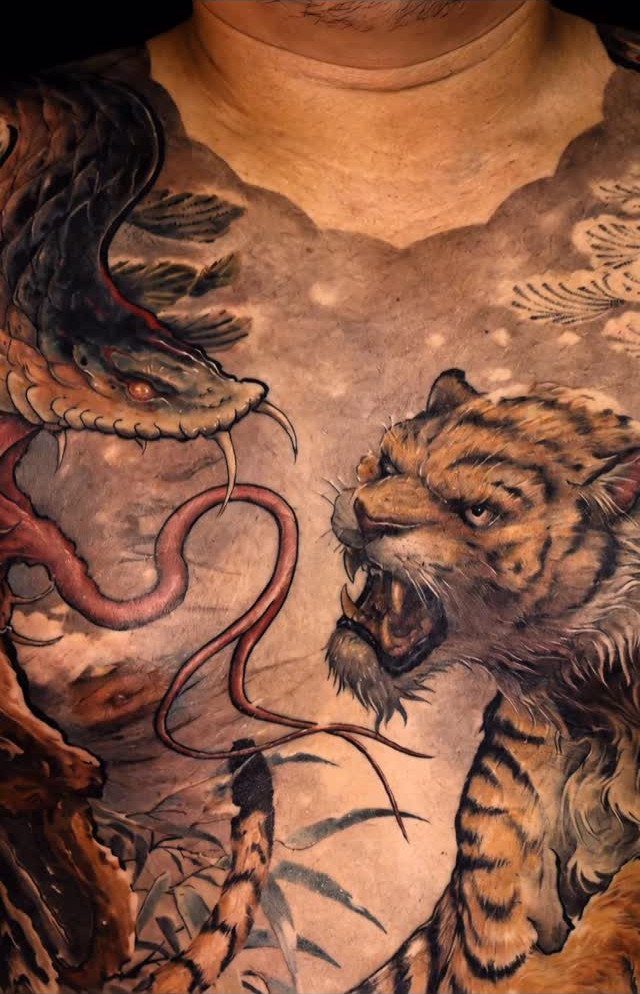
A tiger and snake pairing plays with transformation and raw power, the tiger grounded and muscular while the snake coils and strikes with fluid motion.
Color brings both creatures to life: orange or red for the tiger, green or white for the snake, and the contrast between fur and scales keeps the design from feeling flat.
The chest works well for this pairing because it gives both figures vertical space to interact without forcing them into a cramped layout. Plan for 4 to 5 sessions to finish the color fills and shading on both animals.
Historical Significance of Tiger Tattoos
Tigers never lived wild in Japan, but their image arrived through Chinese art and mythology and took hold in Irezumi as a symbol of protection and raw strength.
Japanese folklore casts the tiger as a protector against demons and misfortune, linked to the north and wind, with the power to command storms and ward off calamity.
Samurai associated themselves with the tiger’s ferocity and independence, qualities that made the animal a natural fit for warriors who needed to project both physical power and disciplined leadership.
That connection still shows up in traditional designs today, where the tiger appears in motion, claws out, often paired with bamboo or clouds to balance the aggression with natural grace.
The symbolism goes deeper than the visual: a tiger tattoo signals resilience, the refusal to back down, and the kind of strength that protects rather than just destroys.