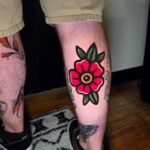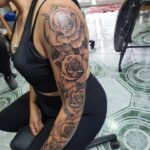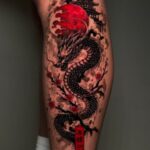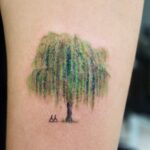
Flower tattoos can be as straightforward as a single stem on your wrist or as involved as a full sleeve, and the path you take depends on whether you want a piece you can finish in one sitting or something built across multiple appointments.
1. Rose Tattoo
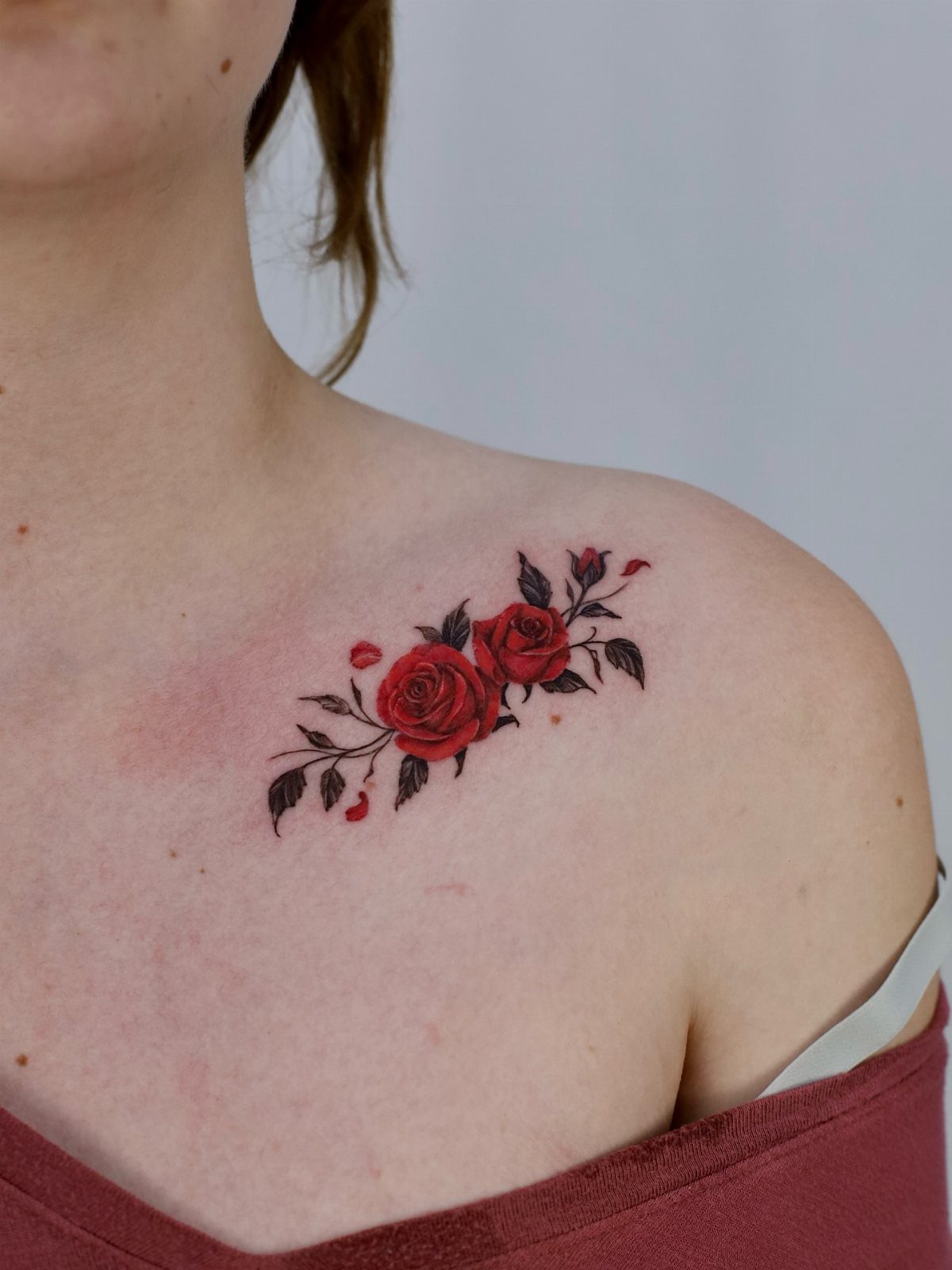
A rose tattoo carries weight because it holds contradictions: soft petals, sharp thorns, beauty that doesn’t last but means something permanent when inked.
Red and black together pull attention to shape and contrast rather than realism, and that choice ages well.
I like roses for a first shoulder piece because the natural curve of the petals follows the body without forcing it. The tattoo is clear from across a room but rewards a closer look.
For instant recognition, this is the one.
2. Lotus Flower Tattoo
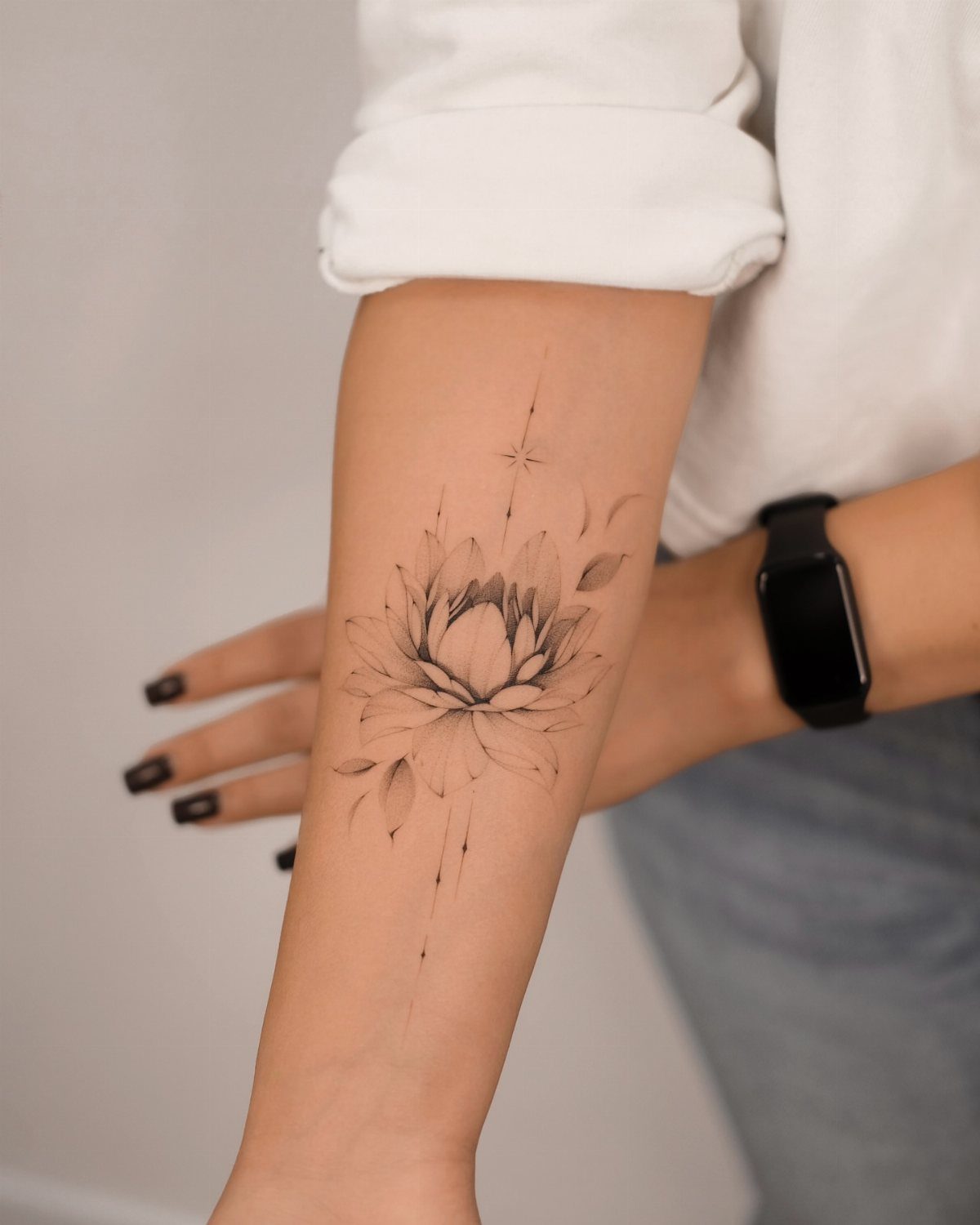
Lotus flowers grow in mud and bloom above water, which is why they show up so often in tattoos about starting over or finding clarity after a rough stretch.
The vertical lines in this piece anchor it to geometry, turning a traditional symbol into something that sits halfway between spiritual and minimal.
Fine-line work like this holds detail without heavy shading, so it stays crisp over time. The star adds a personal layer that keeps it from reading like a stock design.
Forearm placement works here because you can see it daily, which matters if the tattoo is meant to remind you of something.
3. Poppy Flower Tattoo
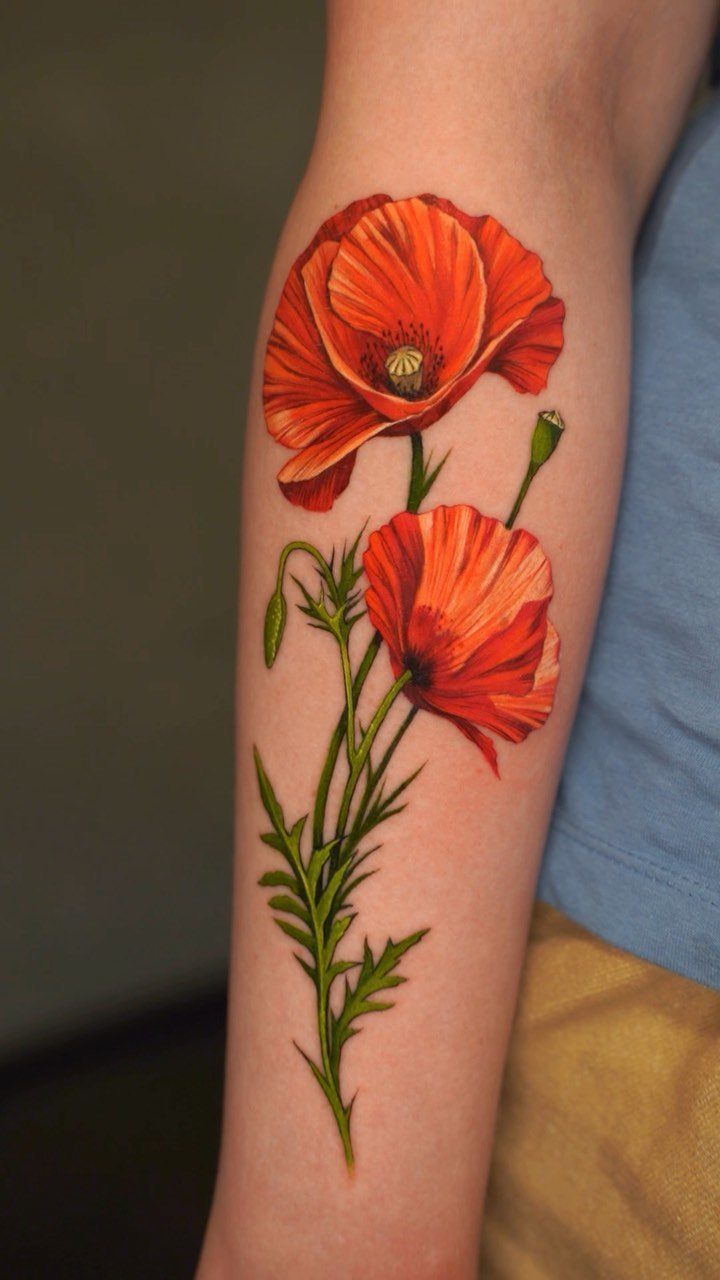
Poppies are fragile in real life, which makes them a good match for remembrance tattoos.
The petals are thin and the color fades fast once they’re cut, so the tattoo captures something that doesn’t last long in nature. The red here is saturated, and that intensity suits the symbolism.
Color adds life to a poppy design, but it also means you’ll need touch-ups down the line as the pigment fades.
The forearm gives you space to let the petals open without crowding them, and the green stem grounds the composition.
If the tattoo marks a specific person or moment, poppies make that connection without spelling it out.
4. Daisy Tattoo
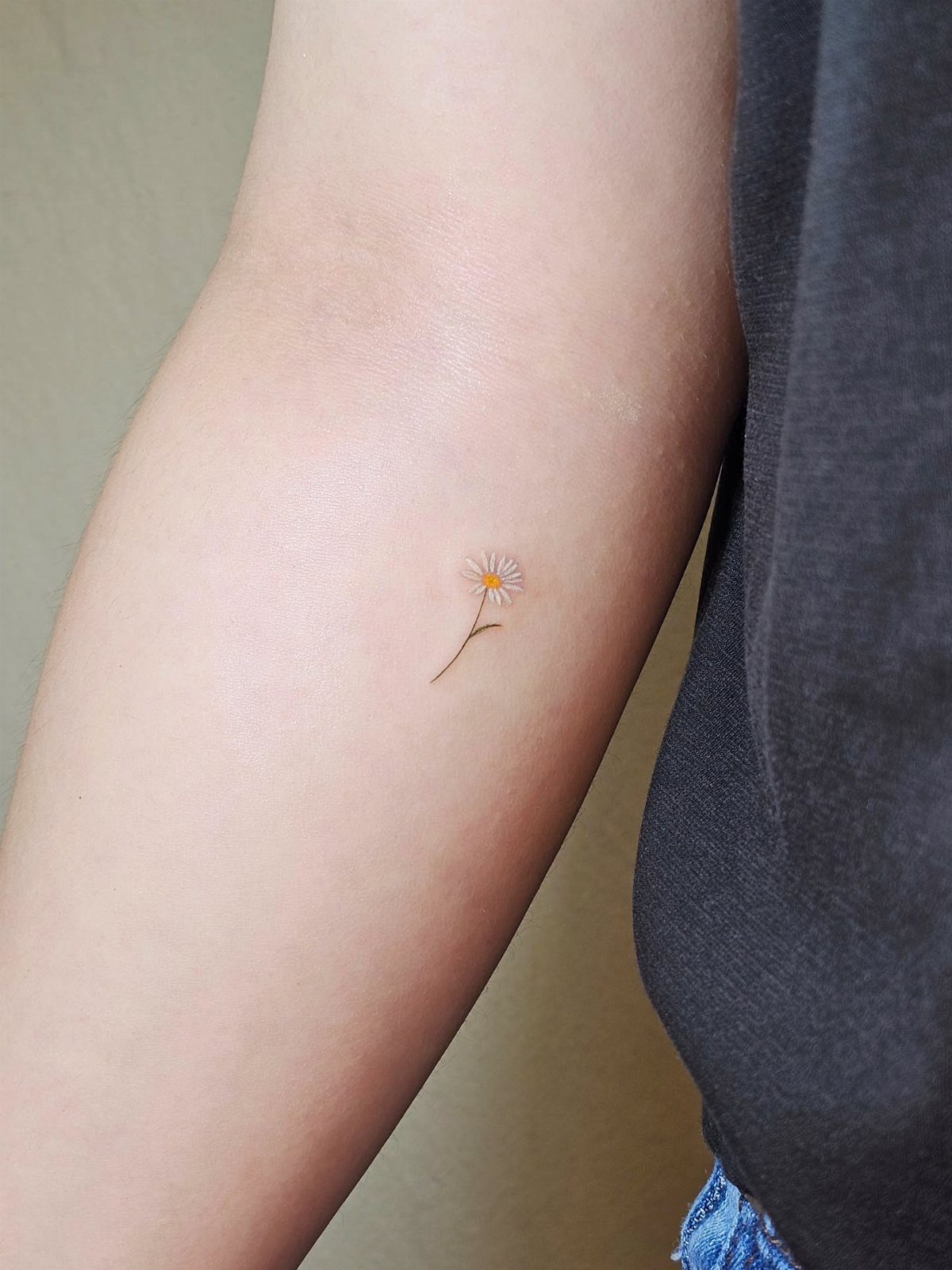
Daisies are small, simple, and hard to mess up, which is part of why they work so well as a first tattoo.
The white petals and yellow center are instantly recognizable, and the design doesn’t need much size to read clearly.
The inner forearm is a low-pain spot with flat skin, so it’s easier to sit through if you’re new to tattooing. The simplicity also means faster session time, usually under an hour for a piece this size.
I prefer daisies when someone wants something cheerful without going overly decorative. They don’t demand a story, and that’s fine.
5. Lavender
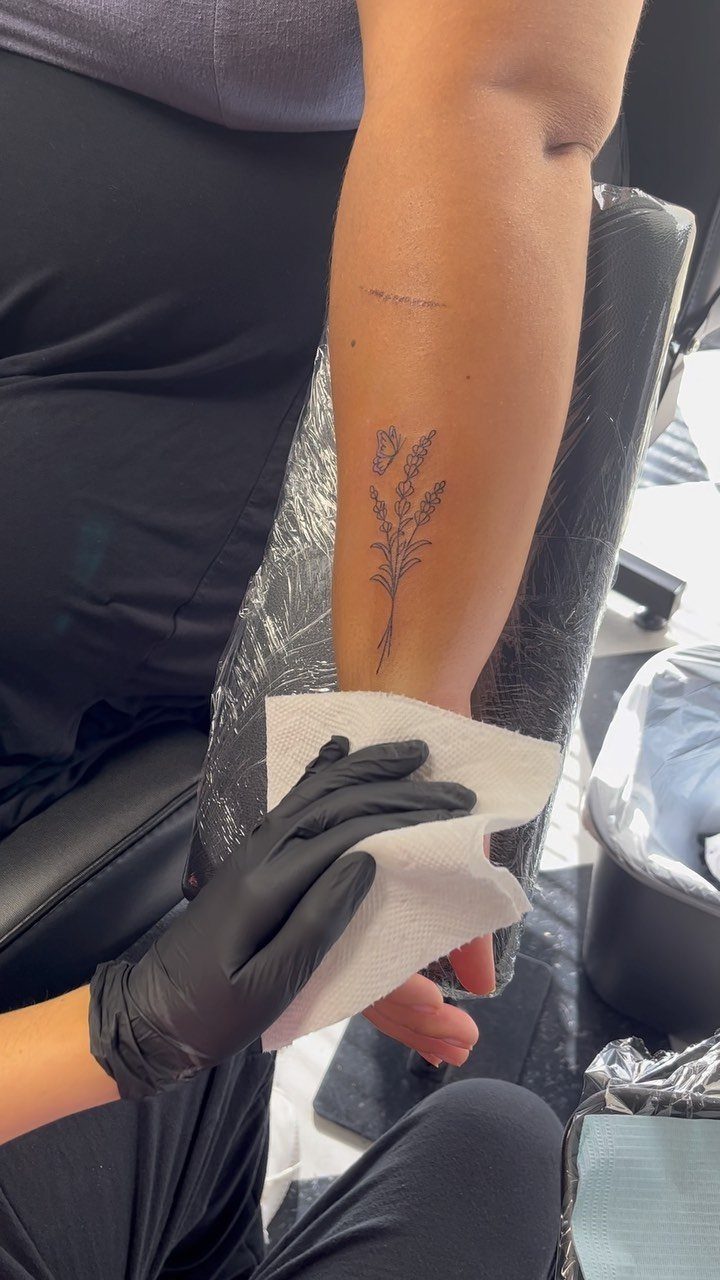
Lavender has become one of the most requested botanicals in the past few years, and it’s not just because of the haircolor trend.
The narrow sprig shape fits well along a forearm or collarbone, and the clustered buds give the design texture without needing color.
Black ink keeps lavender looking clean and legible as it heals. The natural taper of the stem works with the body’s lines instead of fighting them, which is something I look for in any botanical tattoo.
For something recognizable but not as common as a rose, lavender gives you that middle ground.
6. Sunflower Tattoo
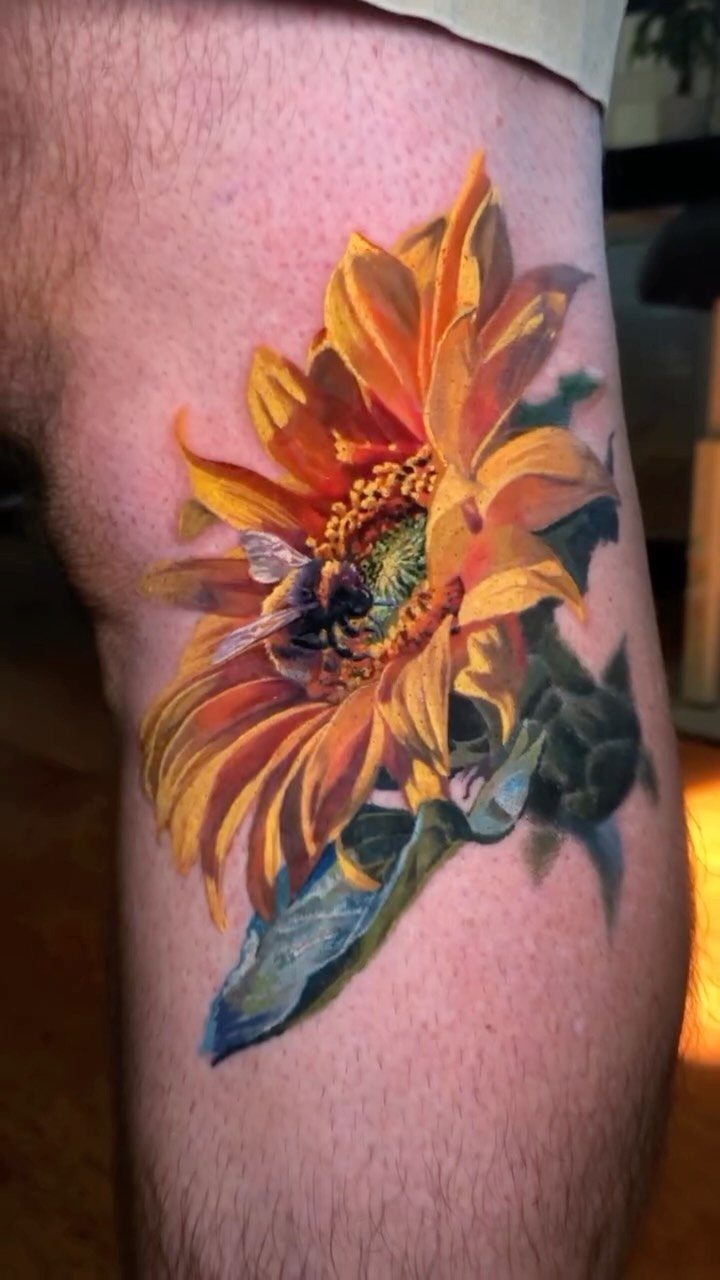
Sunflowers are big, bold, and unapologetically happy, which is exactly why people choose them. A sunflower tattoo this size takes up real estate on the leg, so it’s not a subtle choice.
Color work like this requires more session time and costs more than black ink, but it delivers impact. The petals need space to open fully, so smaller placements lose the effect.
A sunflower lifts your mood every time you see it, no overthinking required.
7. Tulip Tattoo
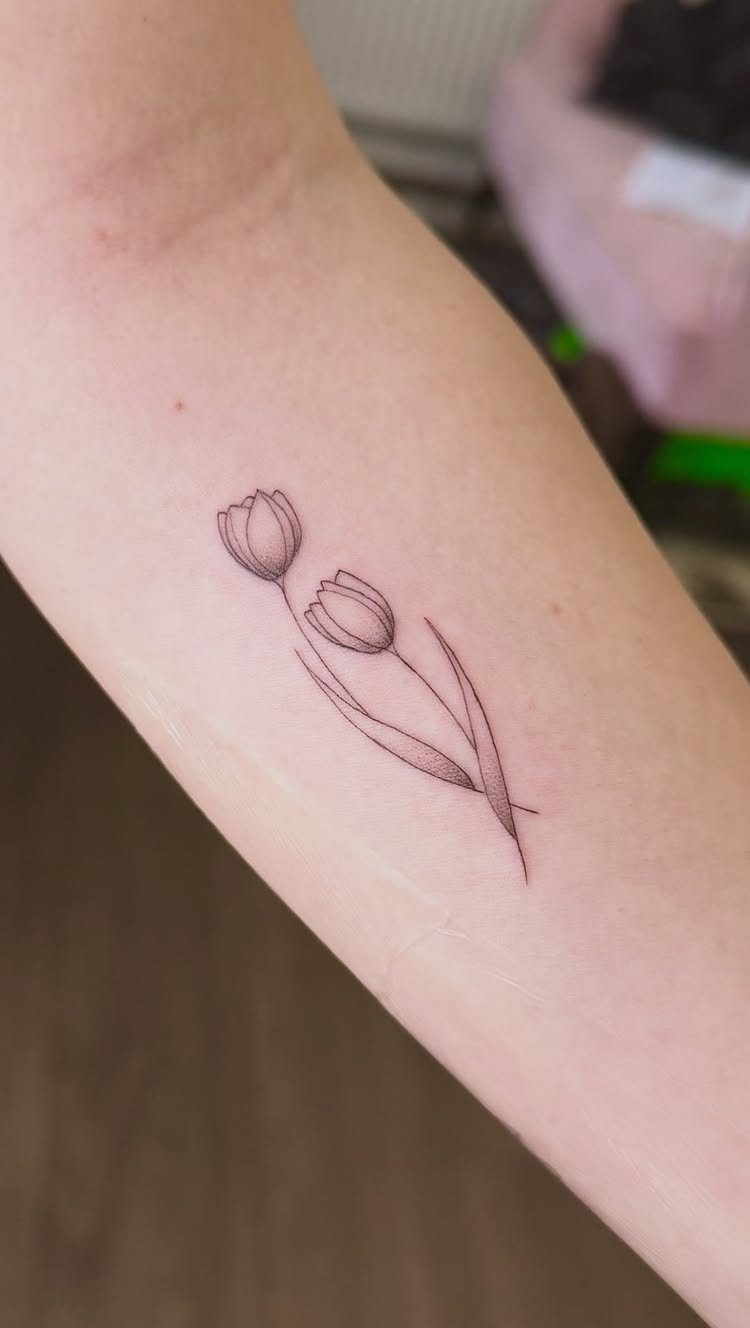
Tulips carry meanings tied to love and friendship, and the simple silhouette makes them easy to recognize without heavy detail.
2 small tulips can sit side by side on the forearm without competing for space, and fine lines hold them light.
A pair like this works well when you want matching tattoos with a friend or sibling. The size means a short session, usually under an hour, and the forearm heals fast with minimal pain.
Tulips give you a floral tattoo that feels personal without needing to be elaborate.
8. Fine-Line Flower Tattoo
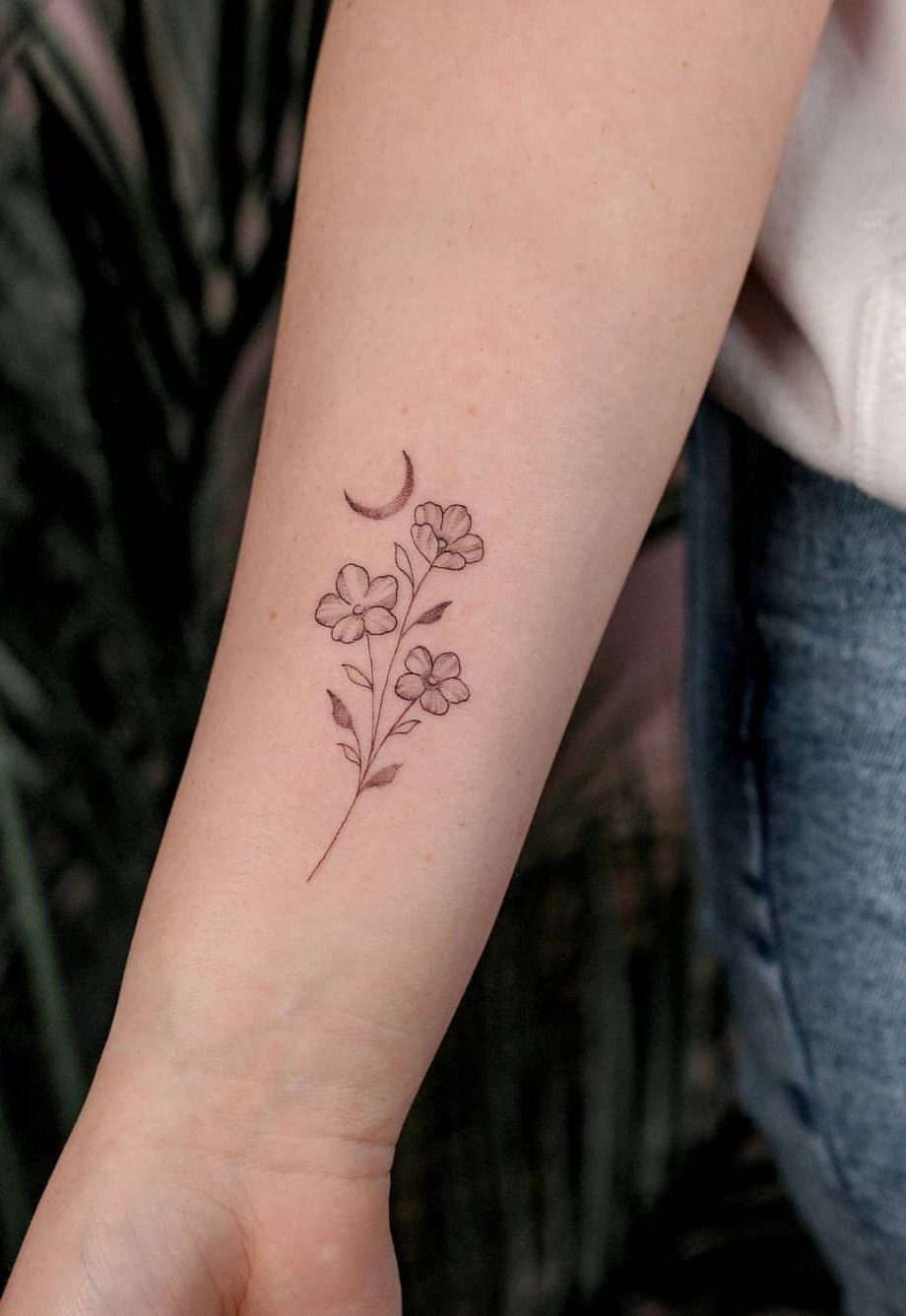
Fine-line work relies on thin needles and precise execution, which is why it looks delicate but requires a skilled hand.
This style ages differently than bold traditional work. Thinner lines may soften over time, but you get a lighter, more refined look that sits close to the skin.
Placement on the forearm means you can watch it heal and catch it in mirrors, which matters if the design is something you want to see often.
9. Simple Flower Tattoo
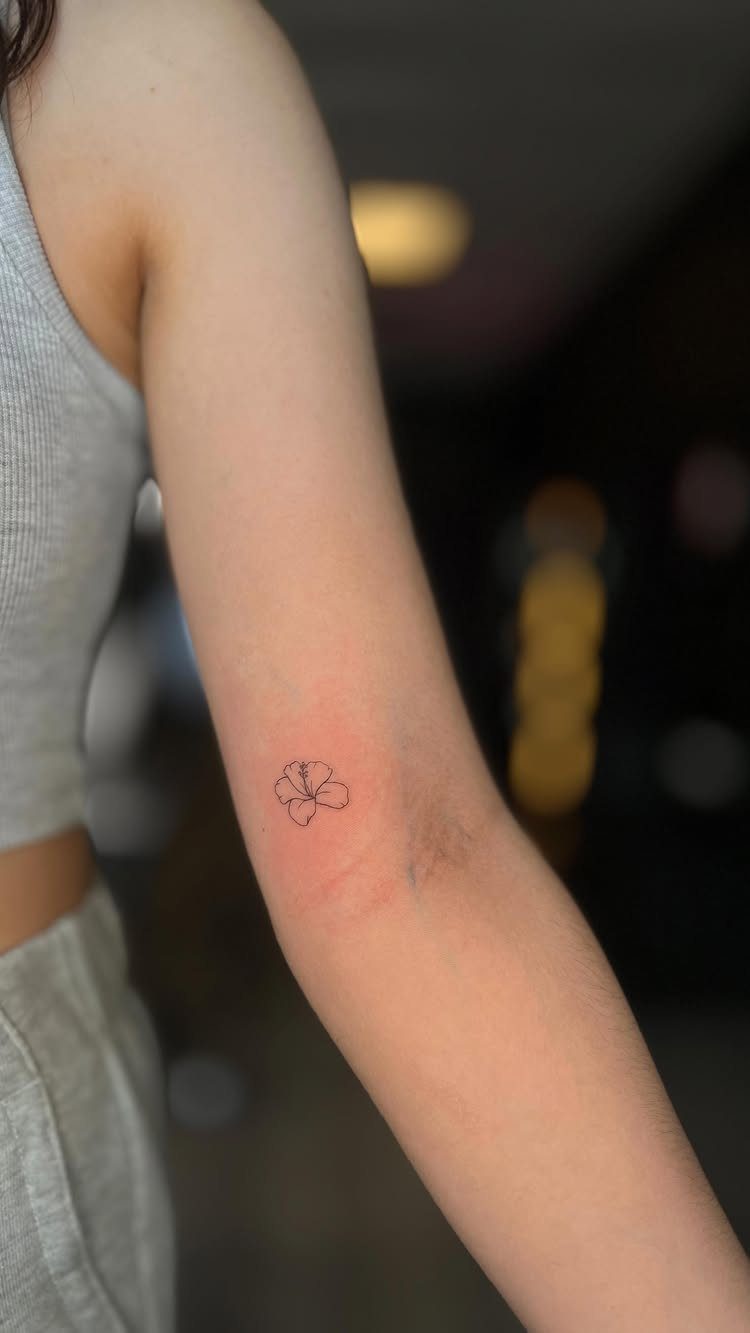
A simple flower tattoo like this hibiscus uses line work alone, no shading or fill, which holds it minimal and fast to apply.
The inner forearm is one of the easiest spots to tattoo, with less pain than the ribs or ankle, and the flat surface makes for clean lines.
Small size means it’s easy to hide under a sleeve or bracelet, which is useful if you work somewhere with tattoo policies. Session time is short and cost stays low.
This is the option when you want a tattoo that doesn’t demand attention.
10. Blackwork Floral Tattoos
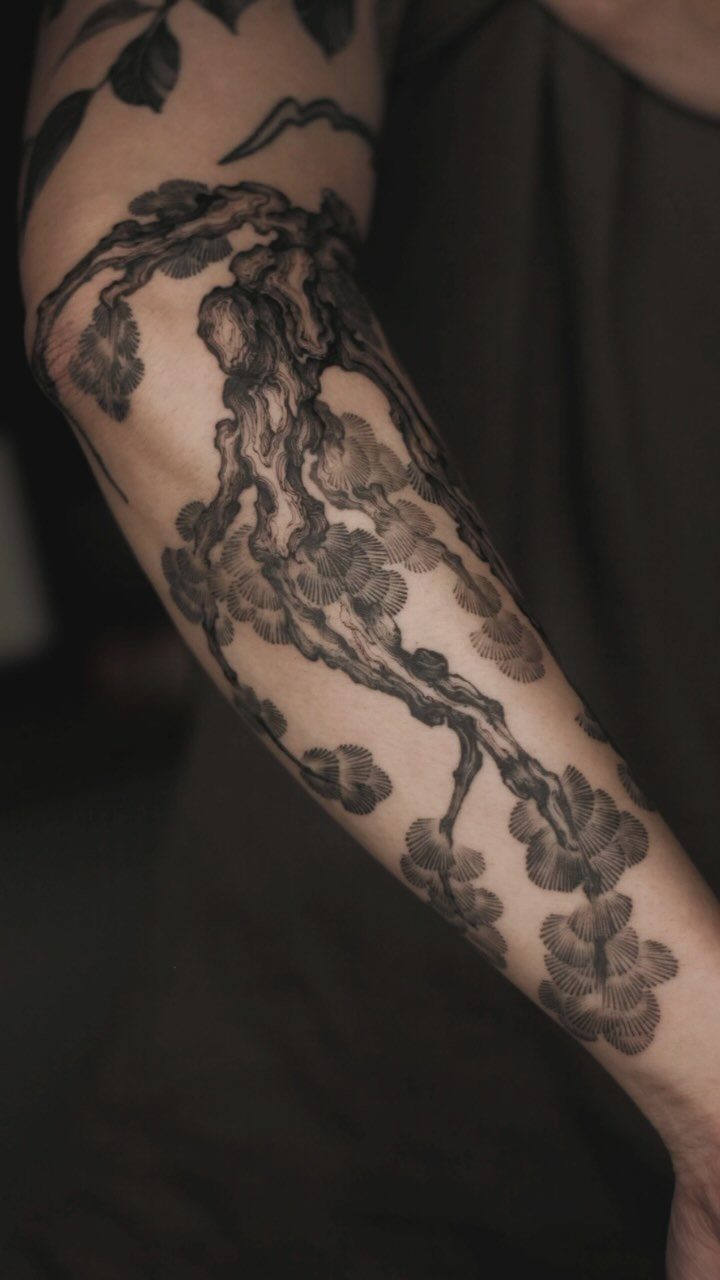
Blackwork uses solid black ink and high contrast to create bold designs that hold up over time.
Black ink heals predictably and doesn’t fade the way color does, so you won’t need touch-ups as often. The vertical placement along the arm follows the natural line of the limb, which gives the tattoo flow without forcing it.
For durability and readability, blackwork delivers.
11. Colorful Flower Wrist Tattoo
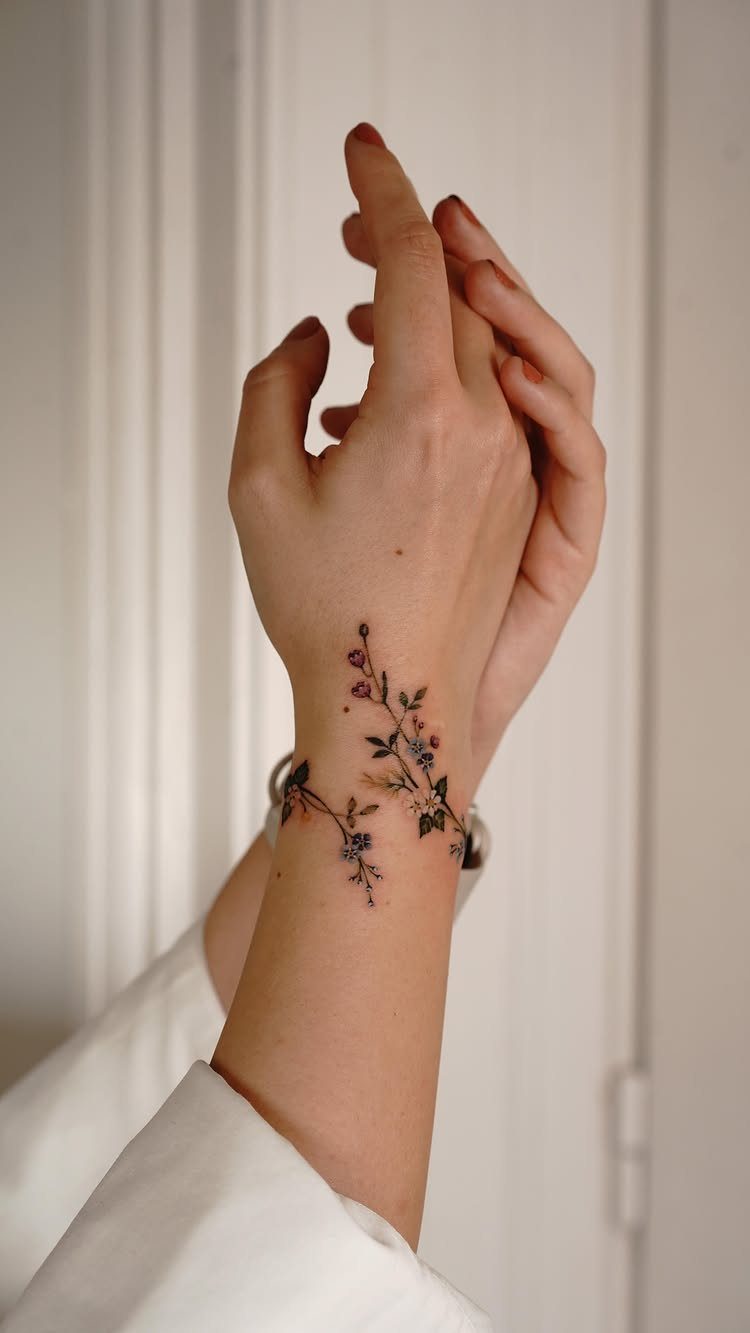
Color on the wrist catches light and draws the eye, which is exactly what this placement is for. The pink and blue here are soft but saturated enough to stay visible as the tattoo heals.
Wrist tattoos are quick to complete because the area is small, but the skin there is thin, so expect more sensitivity during the session.
Color fades faster than black ink, especially in spots that get a lot of sun exposure, so you’ll likely need a touch-up within a few years.
If you want something bright and visible, the wrist puts it where you’ll see it every day.
12. Watercolor Flower Tattoo
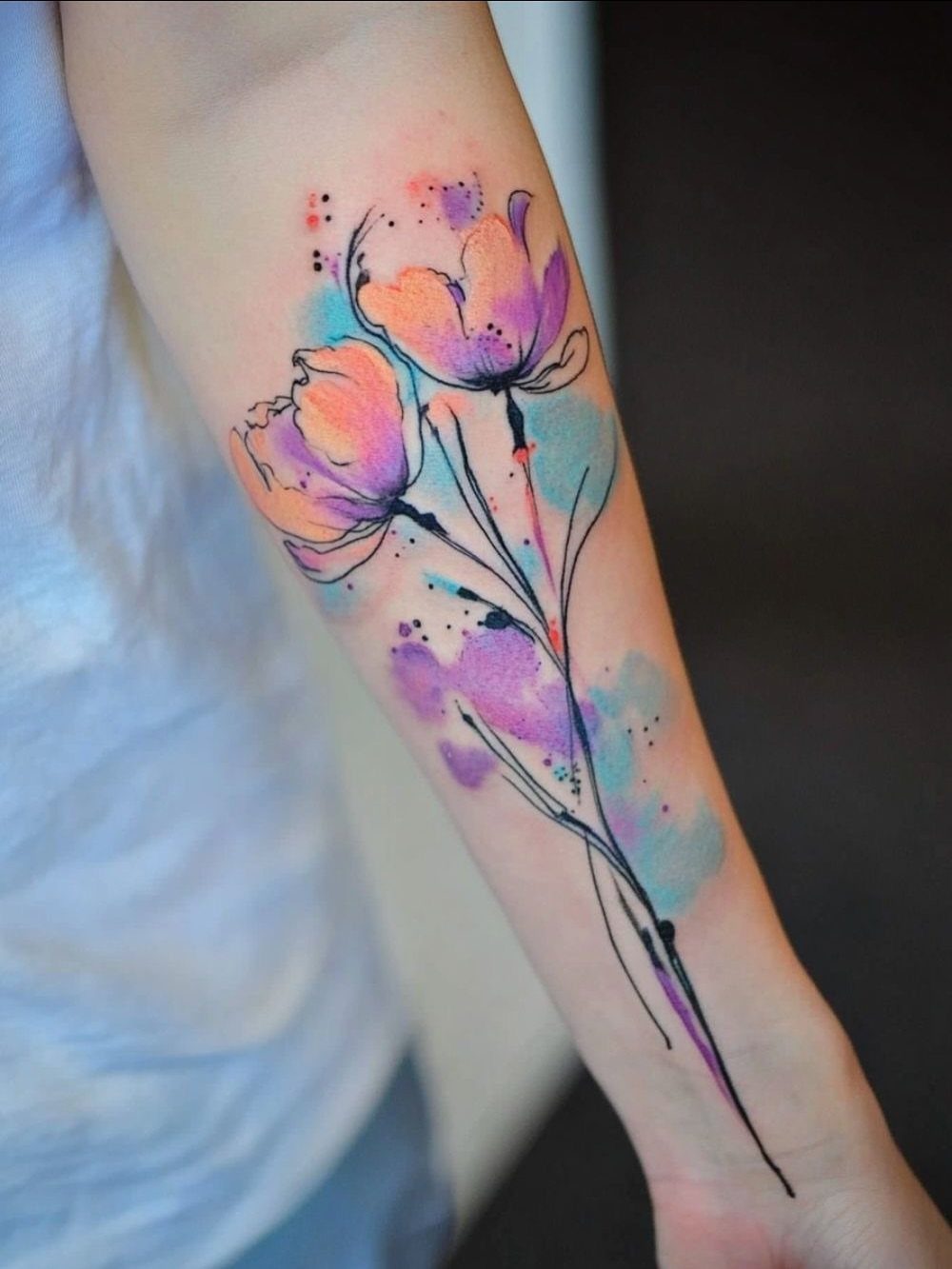
Watercolor tattoos mimic the look of paint on paper, with soft edges and splashes of color that bleed outside the lines. Watercolor flowers blend color into loose splatters, which gives the design an artistic, brushstroke feel.
This style requires an artist who can control color gradients without relying on black outlines, and not every tattoo shop does it well.
The lack of hard lines means the design may blur more over time than traditional color work, so placement on a low-movement area like the forearm helps it last longer.
For something that looks like art instead of a conventional tattoo, this is the direction.
13. Family Birth Flower Tattoos
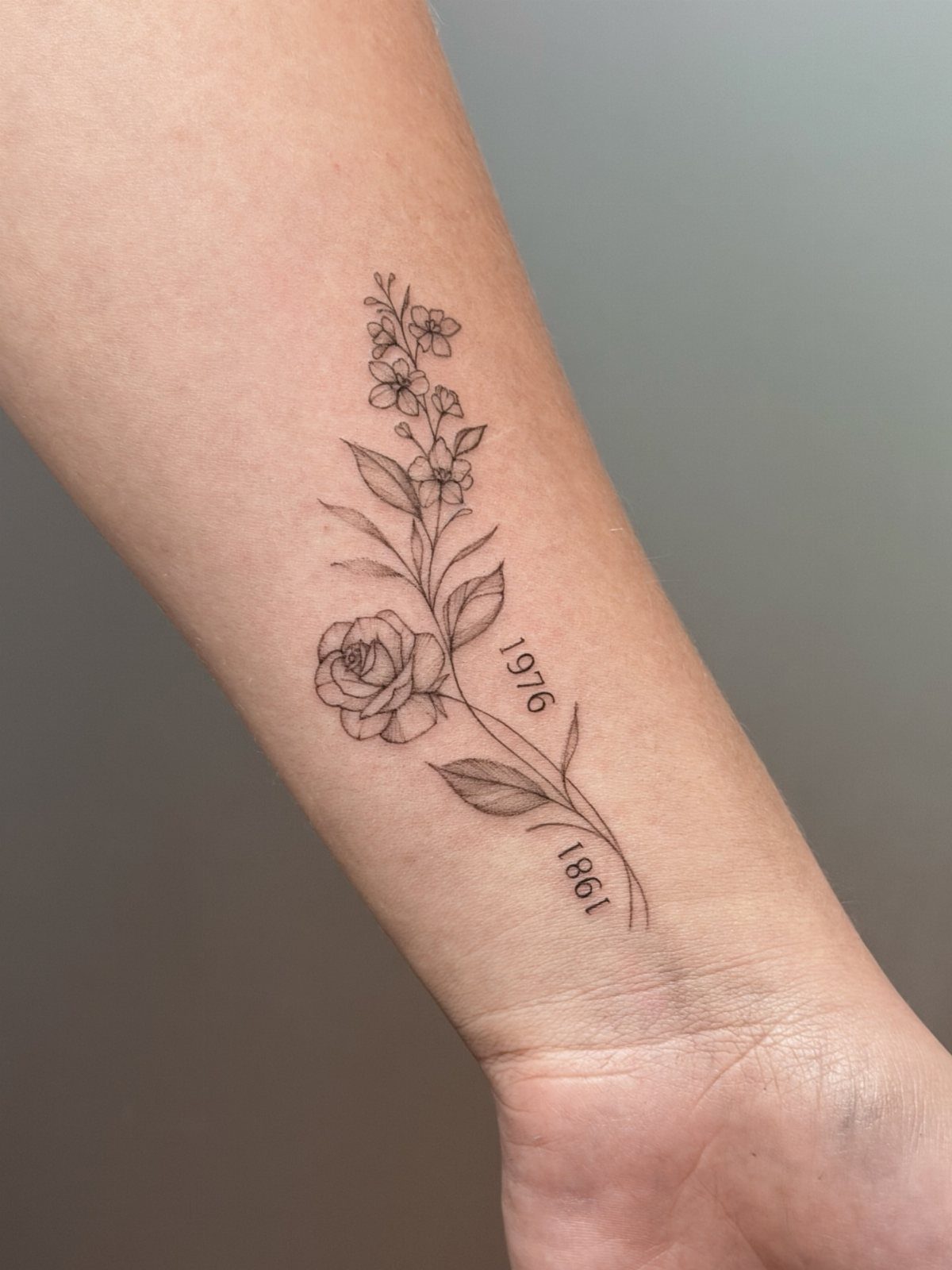
Each birth month has a flower attached to it, so inking your family’s flowers together turns personal dates into a single composition. The years here tie each bloom to a specific person, which makes the meaning clear without needing explanation.
Black ink holds fine lines longer than color, so you skip the early touch-up most colored pieces need. The rose carries more weight than the smaller blooms, which gives the design a focal point.
If you want a family piece that feels complete on its own, this is a compact way to do it.
14. Flower Tattoo Sleeve
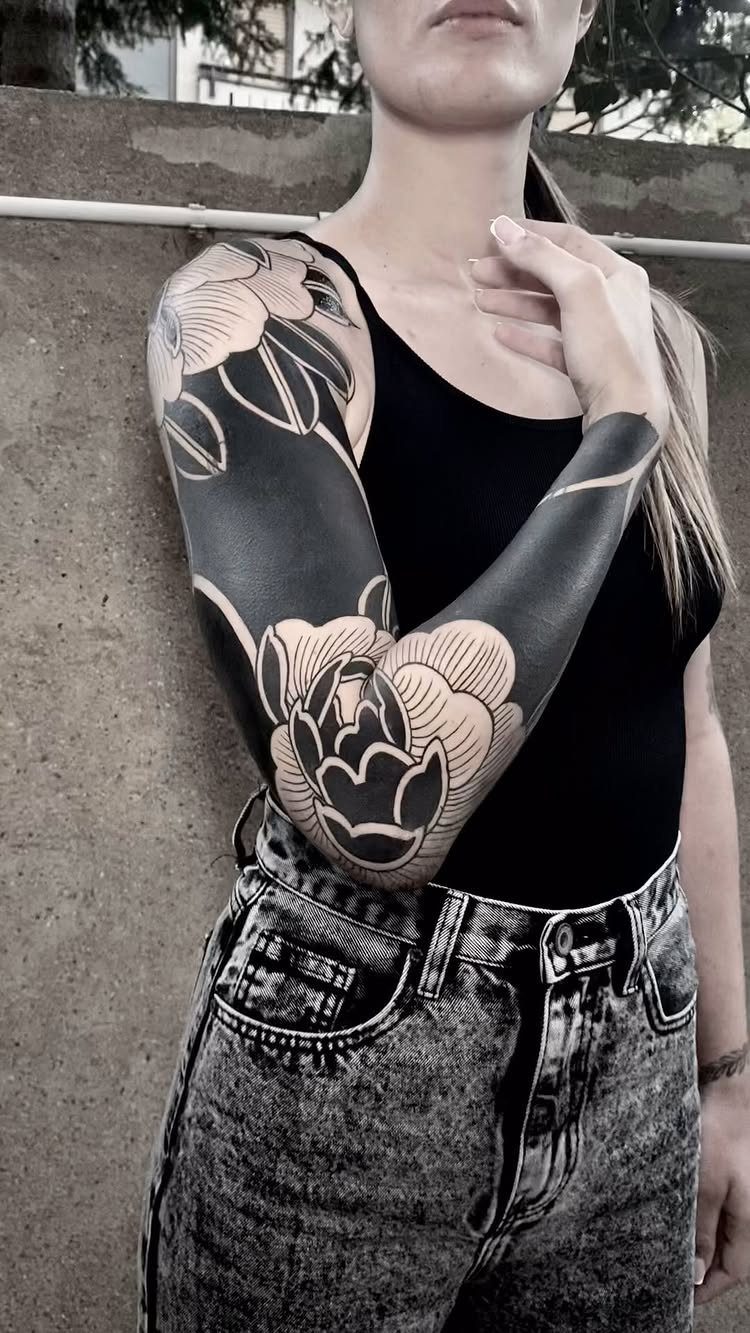
A full sleeve takes multiple sessions, and the cost runs higher than smaller pieces. Solid fills and bold contrast age well because there’s no color to fade or soften over time.
Sleeves require commitment because they cover the entire arm and are hard to hide in most work environments. Pain varies by placement, with the inner bicep and elbow ditch being the most uncomfortable spots.
For maximum impact and coverage, this is the one.
15. Flower Tattoos with Names
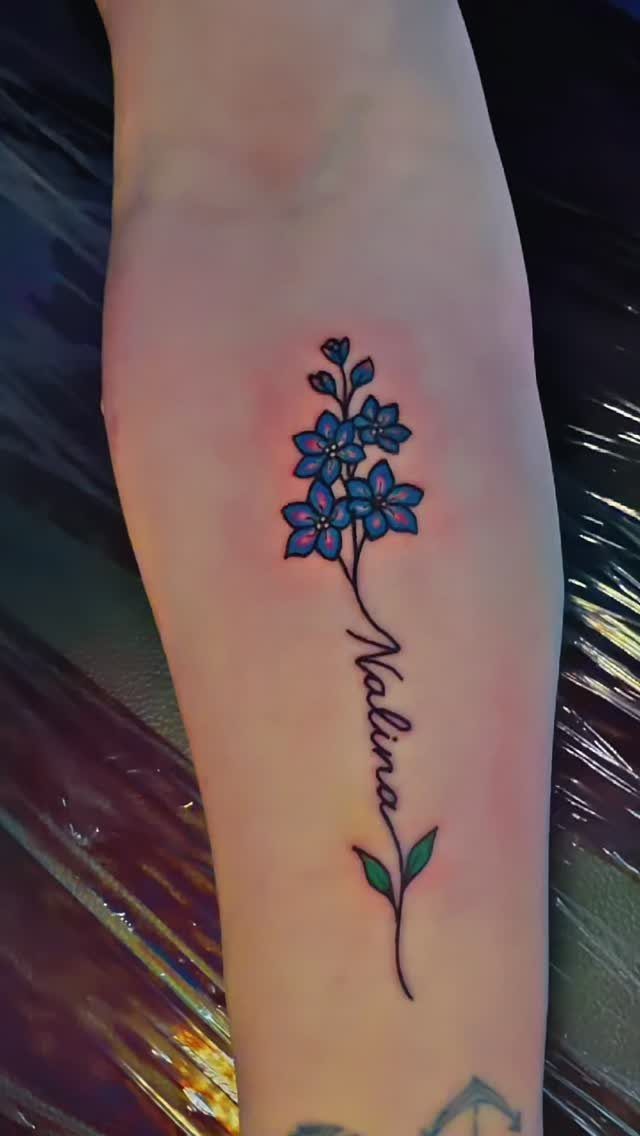
Adding a name to a floral tattoo personalizes it in a way that anyone looking at it will understand immediately. Cursive that follows the forearm’s curve feels natural, and a single color accent lifts the design without cluttering it.
The forearm is low-pain and heals quickly, which helps if you’re sitting for both the flowers and the lettering in one session.
If the tattoo is for someone specific, the name makes that connection permanent.
16. Flower Tattoo with Butterflies
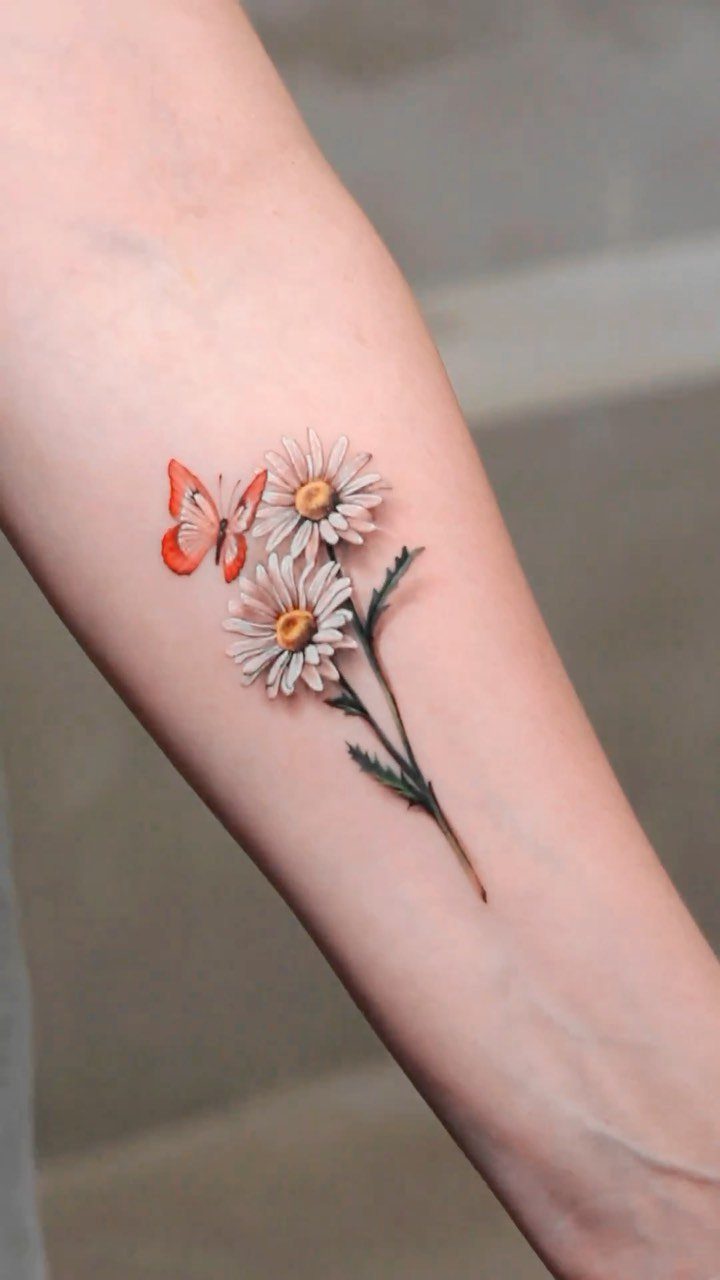
Butterflies and flowers together create a nature scene that feels alive without needing a background. The pairing works because both symbols carry movement and transformation, and the contrast between the orange butterfly and white daisies gives the design balance.
Realistic shading like this takes longer to complete than simple line work, so plan for a session that’s at least 2 hours.
For a tattoo that feels like a moment captured in ink, this combination delivers.
There are many different kinds of tattoos that are beautiful in their own right, but a floral tattoo design is practically guaranteed to get all of the likes.
Choosing the Right Flower
Start with the flower you actually like looking at, not the one that fits a meaning you found on a list.
A rose carries the broad idea of love, but the version that lands on your skin answers to what love has meant in your own life.
If you prefer a recognizable bloom, roses, sunflowers, tulips, and daisies all read clearly at a glance. For something more distinctive, poppies and lavender offer narrower silhouettes that fit tight placements like the collarbone or inner forearm.
Peonies give you mass and texture through stacked petals, so they fill space well if you’re after a design with real presence.
Cherry blossoms let you work with negative space and movement, branches arcing across skin or petals drifting down, while wildflowers give you variety without needing one bloom to carry the whole piece.
Ask yourself: Would I still choose this flower if it didn’t carry a specific meaning?
How much detail do I want? Does the shape fit the spot I have in mind?
Placement Considerations
Placement changes how a flower tattoo reads on your body and how much of it stays visible day to day.
The forearm shows the design constantly and heals quickly, while the ribs or collarbone hide it under most clothing but hurt more during the session.
The amount of detail you can fit depends directly on how much skin you’re giving it.
A peony with layered petals requires more room than a single tulip or sprig of lavender, and fine-line work holds better on flat skin like the forearm than on areas that move constantly or fold.
Placements that run with the body’s existing lines, forearm or ribcage, read as intentional rather than dropped onto a flat surface.
If you already have tattoos, consider how a new floral piece will sit next to them, whether it completes a larger scene or stands alone.
Combining Elements
Flowers pair well with other elements when the addition serves a purpose.
Leaves, stems, or geometric shapes can frame the composition without crowding it, especially if you want the tattoo to feel complete on its own rather than part of a larger sleeve.
Keep the focus clear.
If the flower is the main subject, any added element should support it rather than compete for attention. A single accent holds better than multiple small details that blur together as the tattoo ages.
Frequently Asked Questions
What are pretty flowers to get tattooed?
Roses, lotus flowers, sunflowers, and poppies are all solid choices because they read clearly and hold their shape as they age. A rose reads immediately and holds its contrast over time, a lotus gives you clean edges and quiet symbolism.
Sunflowers deliver bold, saturated color, and poppies work well for remembrance pieces. Choose the one that will still feel right when you see it in the mirror every morning, not just the meaning that sounded good on a blog.
What are the top most common tattoos?
Flower tattoos rank among the most requested designs, with roses leading the way for their recognition and versatility. Fine-line florals, blackwork pieces, and colorful sleeves all show up regularly because flowers fit nearly any placement and style.
Where to place a small flower tattoo?
The wrist, ankle, and behind the ear all work well for small floral pieces because the skin is visible and the area heals quickly.
The inner forearm is another low-pain option with flat skin that holds fine lines cleanly. Small tattoos stay easy to hide under clothing or a bracelet if that matters for your work environment.