Japanese flower tattoos range from the lotus that reads clearly at any size to the wisteria clusters that need a full thigh to hang naturally, and the choice comes down to the specific bloom and what it says once it’s on skin.
1. Lotus Flower
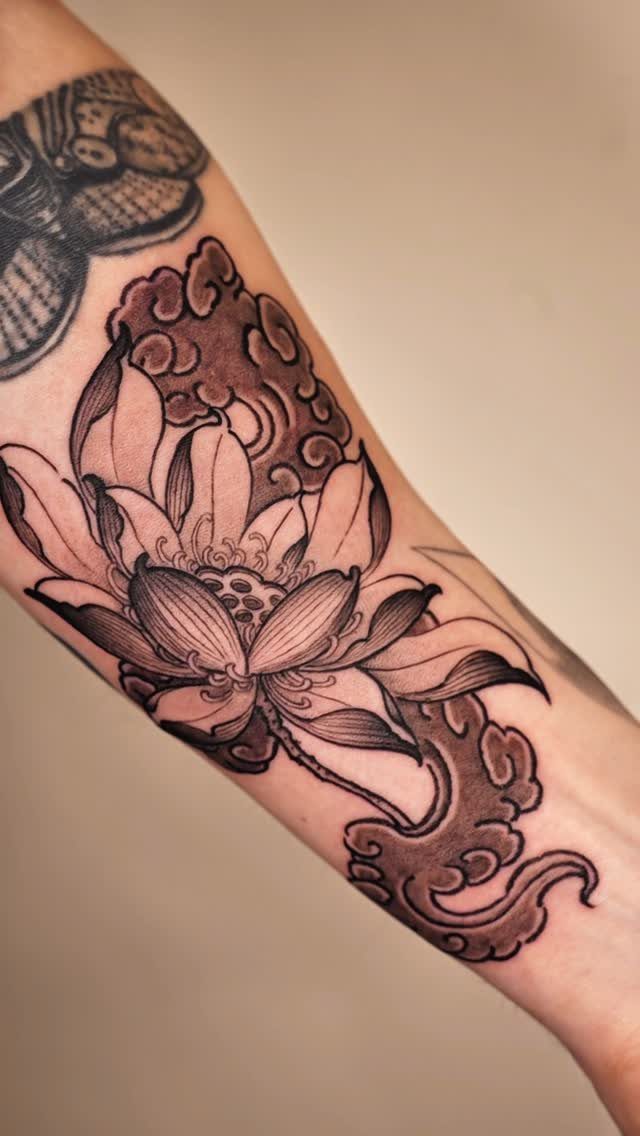
The lotus rises from muddy water but blooms clean, which is why it carries that meaning in Japanese tattooing: something beautiful can come from difficulty.
The design pairs well with clouds, waves or koi, and reads clearly at almost any size because the petals hold their shape even when small.
Forearm or shoulder placement keeps the flower visible without needing a large canvas.
Black and grey keeps the focus on form rather than color, and the shading can be as soft or as bold as you want depending on how much contrast you’re after.
2. Red Spider Lily
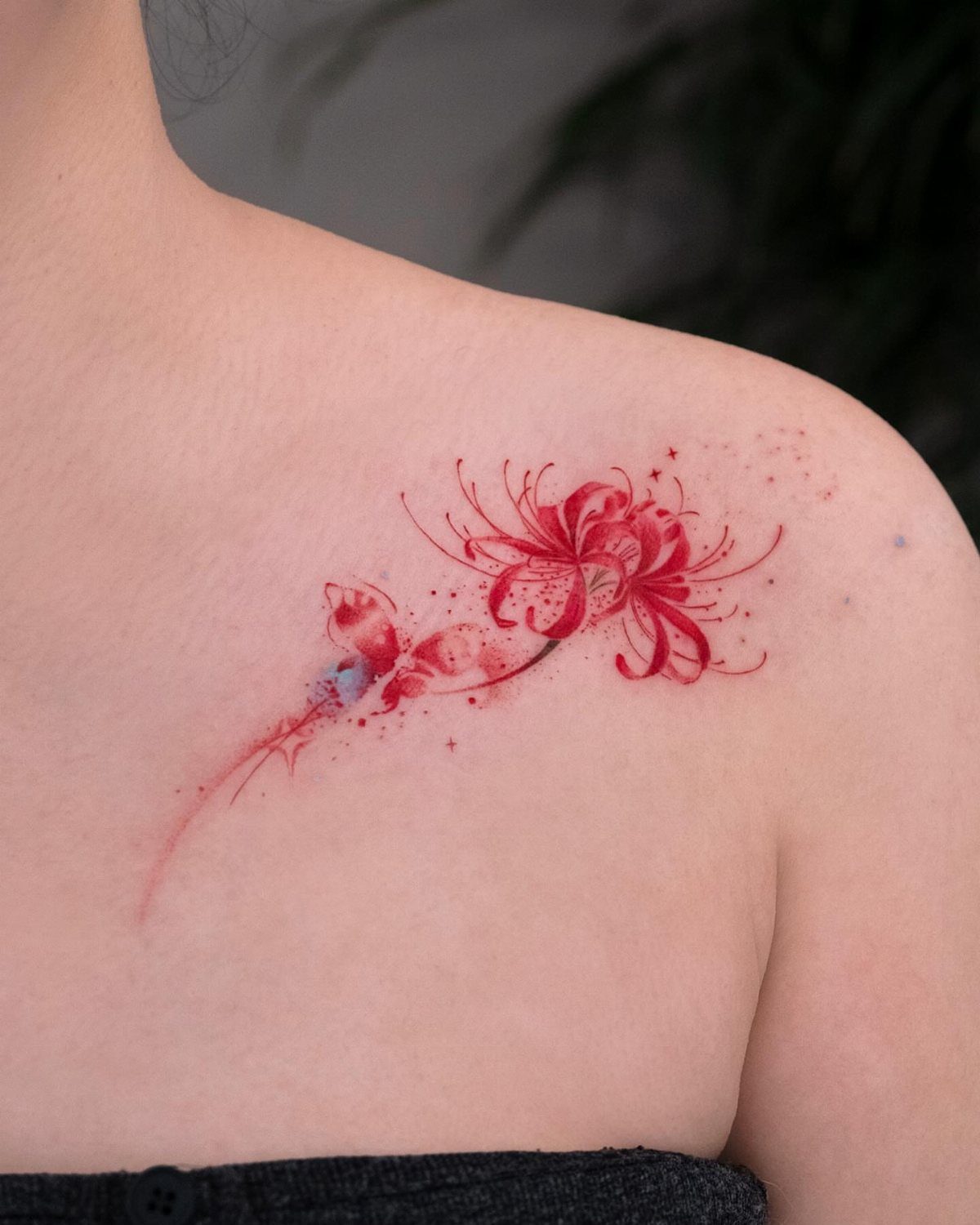
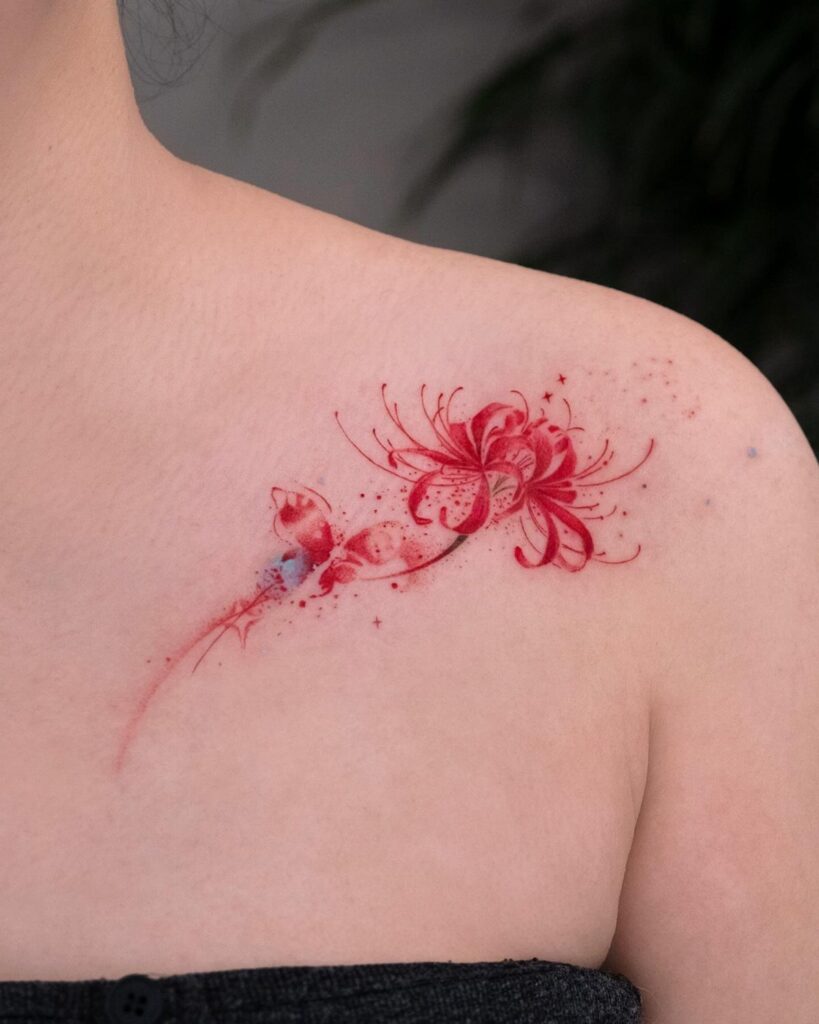
This flower appears along riverbanks in autumn and in Japanese culture marks separation, often final ones.
The red works because it’s the natural color, and watercolor techniques let the petals bleed slightly at the edges the way the actual bloom does.
If you want something tied to memory or loss, this reads more specific than a rose or a lily, and most people won’t recognize it unless they know the reference.
3. Cherry Blossom
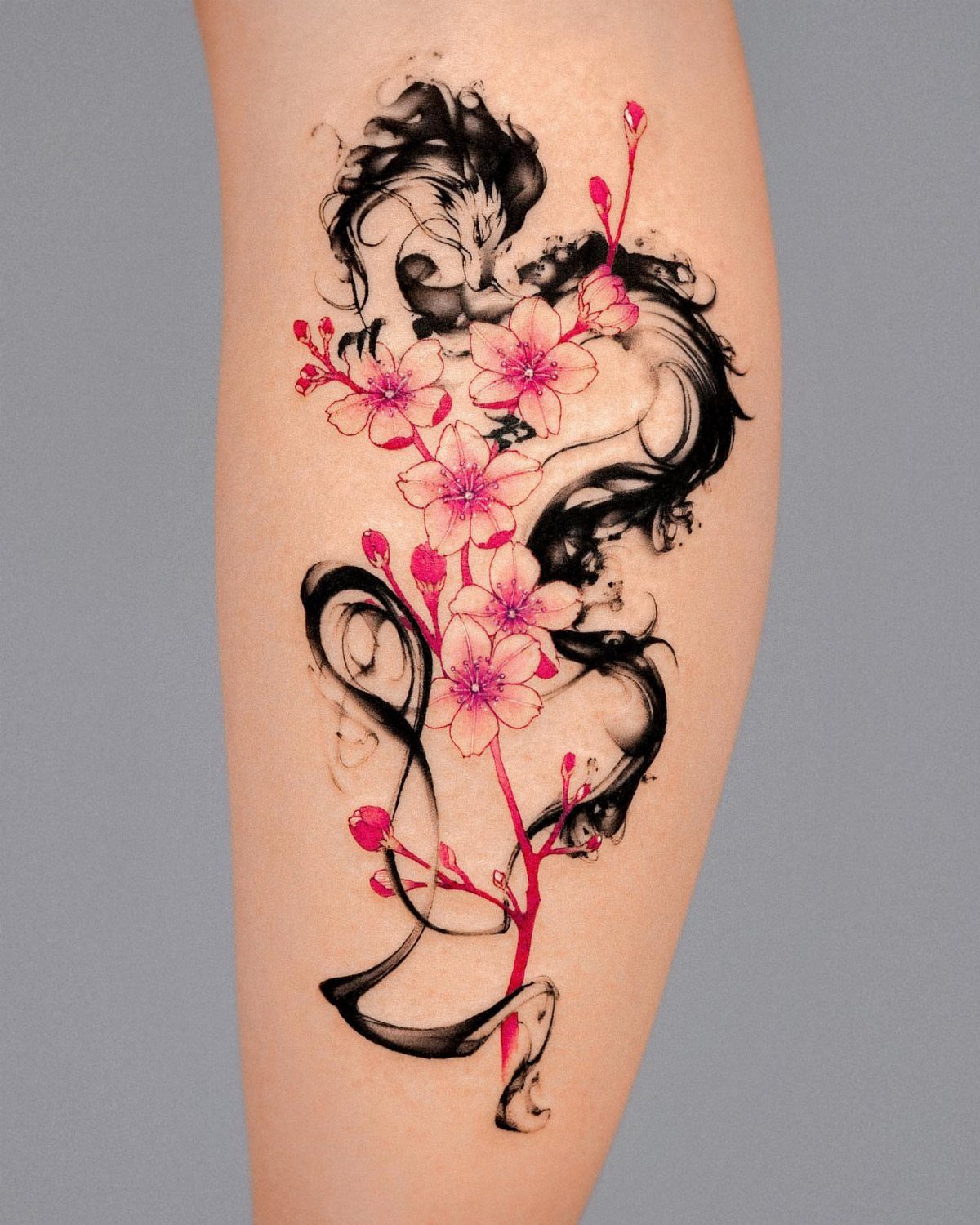
Cherry blossoms last about a week, then they’re gone: beauty doesn’t stay. In Japanese tattooing they show up constantly, usually in soft pink with black line work or paired with wind bars and waves to suggest motion.
Leg placement works when you want a larger piece that can flow with the muscle.
The pink stays readable longer than you’d think if the artist uses the right saturation, but some people skip color entirely and let the petal shapes do the work in black alone.
4. Chrysanthemum
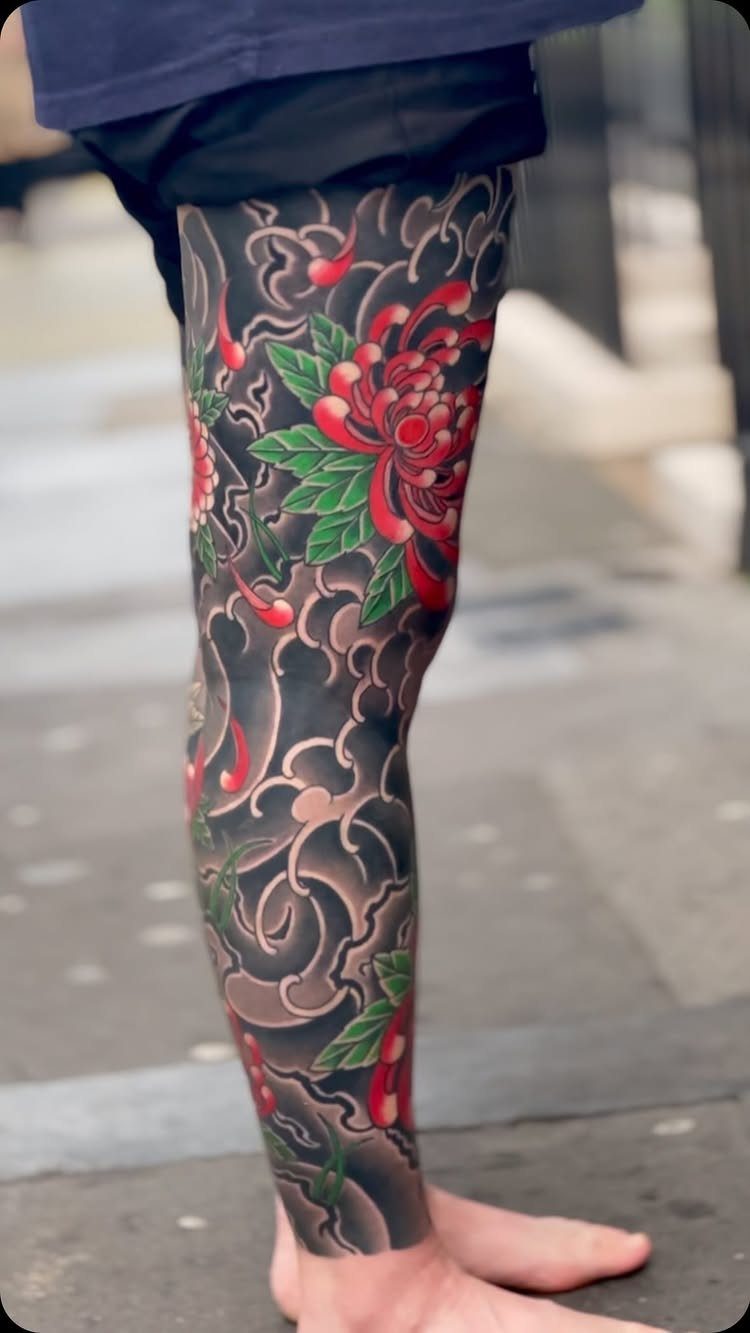
Chrysanthemums sit on the Imperial Seal of Japan, so the flower carries weight beyond just looking full and layered.
In tattooing it’s often rendered large, in red or gold, and paired with clouds or wind to fill a sleeve or thigh panel.
The petals are dense, which means the design holds detail well even as it ages.
Leg sleeves give enough space for the flower to open fully without feeling cramped, and the red stays vivid against darker background elements like clouds or water.
5. Peony
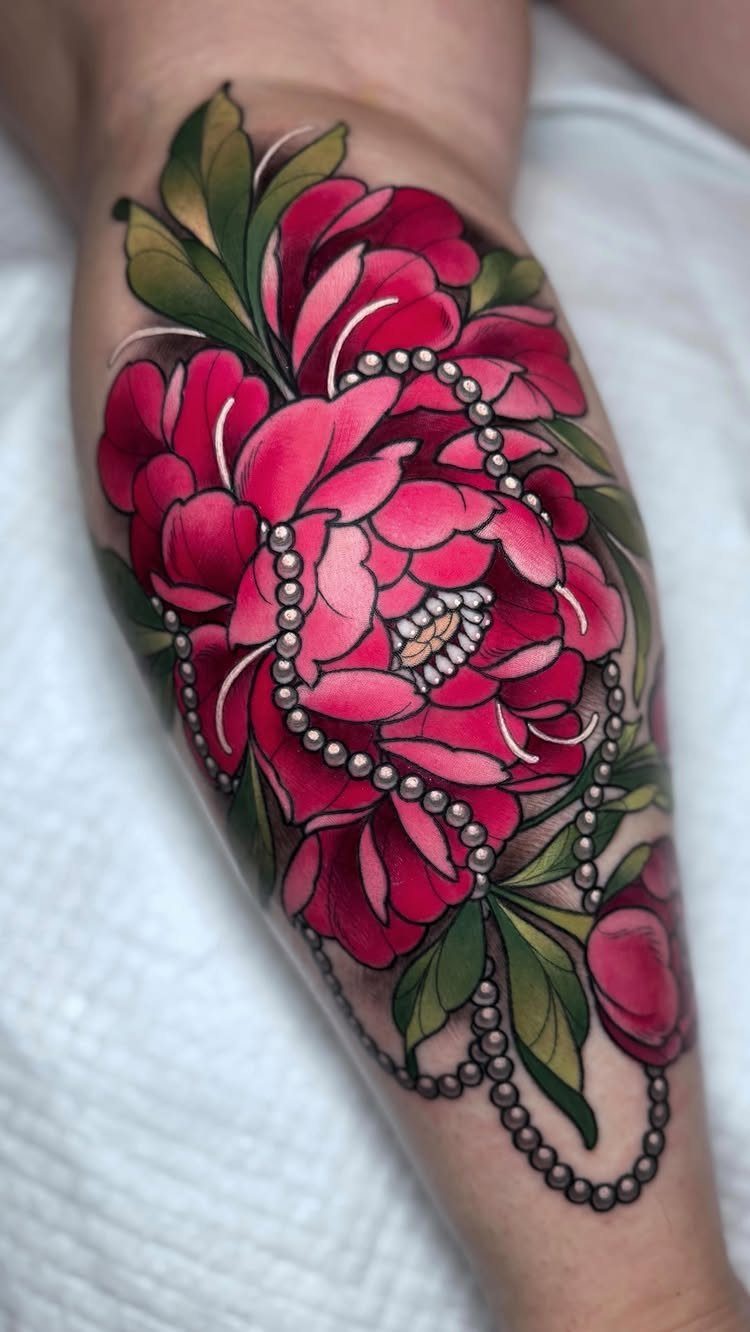
Peonies grow large and bloom heavy, and in Japanese culture they represent wealth and good fortune.
The petals are soft and layered, so they lend themselves to color work, usually pink or red, with green leaves that frame the flower without competing.
Thigh or calf placement gives room for the full bloom. Pairing it with pearls or other decorative elements can work if you want something more ornamental, but the flower reads fine on its own if you’d rather keep it simple.
6. Wisteria
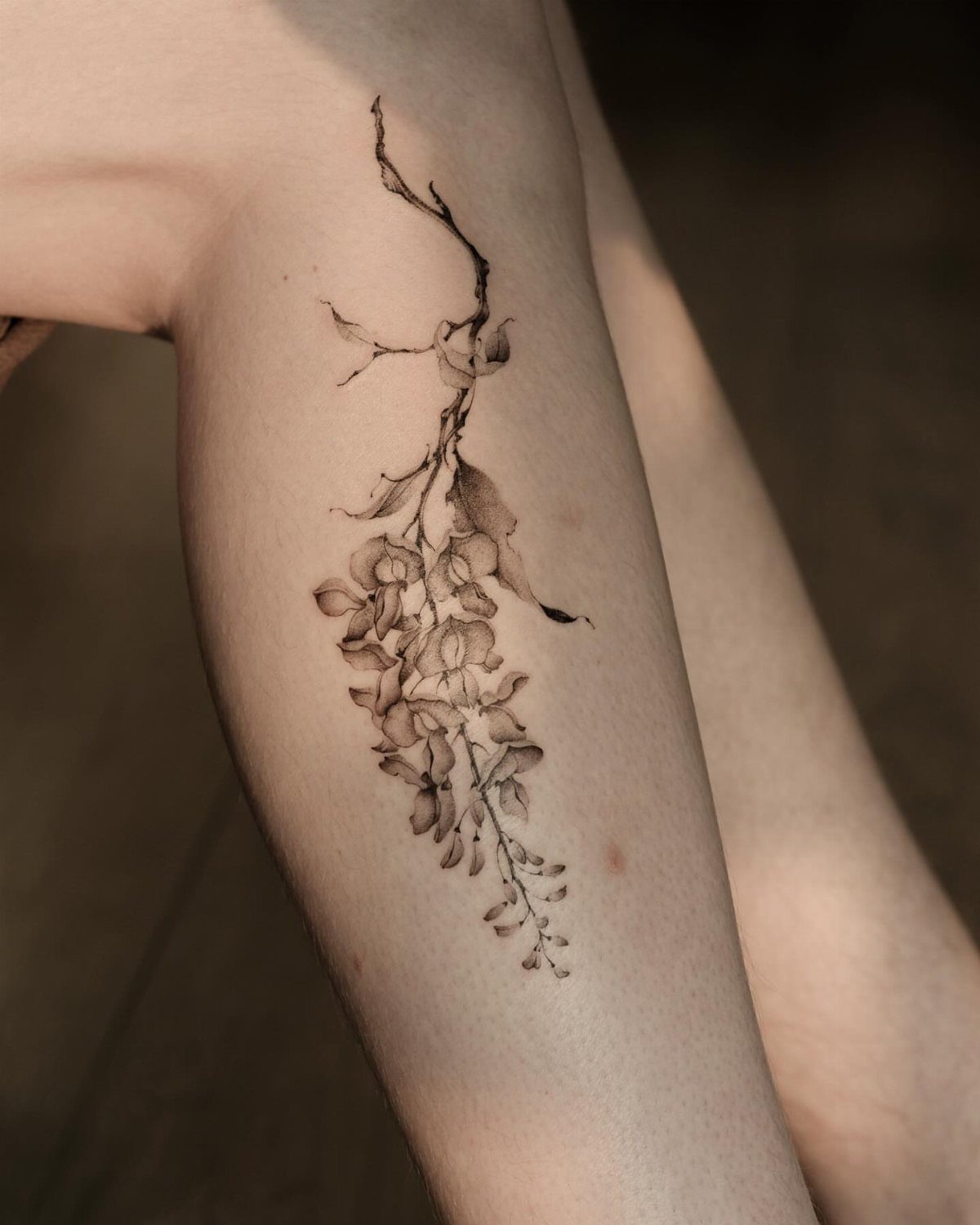
Wisteria grows in long, drooping clusters, and in Japanese art it shows up trailing from temple gates or garden trellises. Black ink alone works because the shape is so distinct: those hanging petals don’t need color to register as wisteria.
Thigh placement lets the flowers hang naturally along the curve of the leg.
If you want something softer than a chrysanthemum but still tied to Japanese tradition, this one stays quieter and reads more understated than most of the bold, saturated florals.
7. Maple Leaves
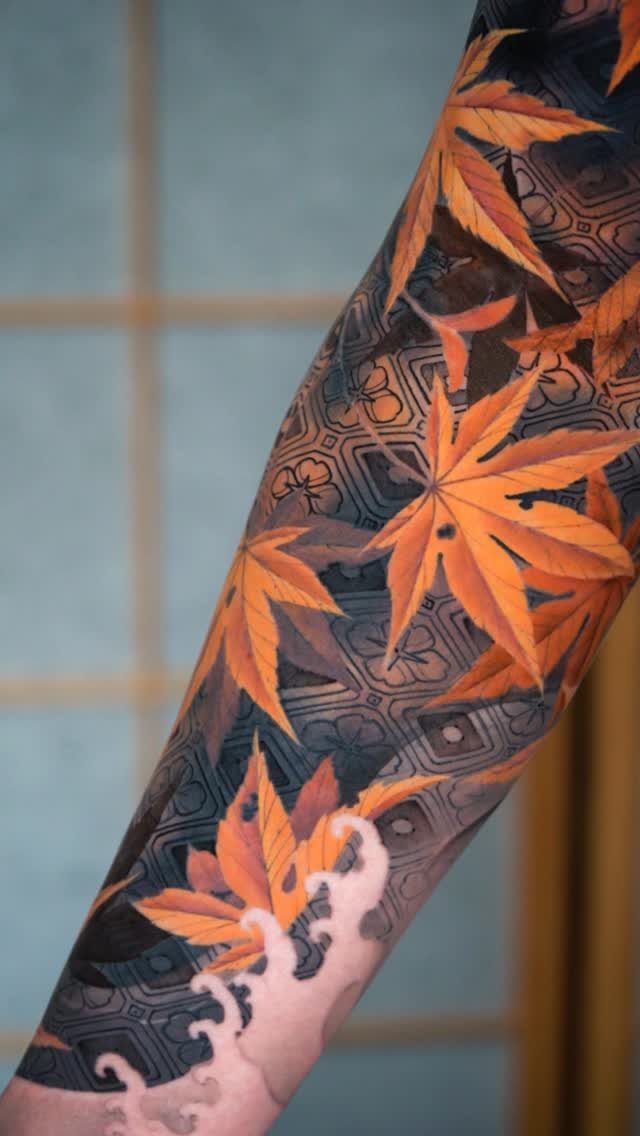
In Japanese art, maple leaves mark autumn and the passage of seasons, which ties to love in the sense that nothing stays the same.
The orange and red hues are the natural colors of the leaf before it falls, so color work here reinforces the meaning rather than decorating around it.
Forearm or upper arm placement keeps the leaves visible and gives enough space to layer a few without crowding. Pairing them with water or geometric backgrounds like wave patterns adds contrast without pulling focus from the leaves themselves.
8. Hibiscus
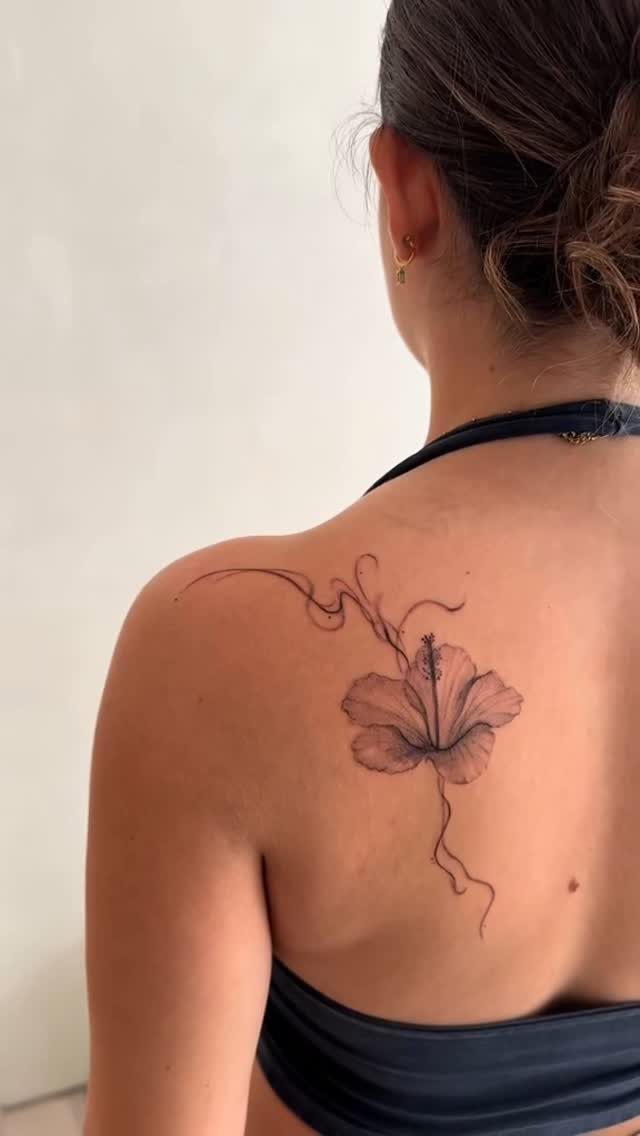
Hibiscus is softer than most Japanese florals, both in shape and meaning.
The petals are broad and open, which makes the design easy to read even in black ink alone, and the cultural tie is to gentleness rather than wealth or transformation.
Upper back or shoulder placement works because the flower sits flat rather than hanging like wisteria or blooming heavy like a peony.
If you want something tied to Japanese tradition but quieter than a chrysanthemum, this reads as delicate without feeling small.
9. Peach Blossom
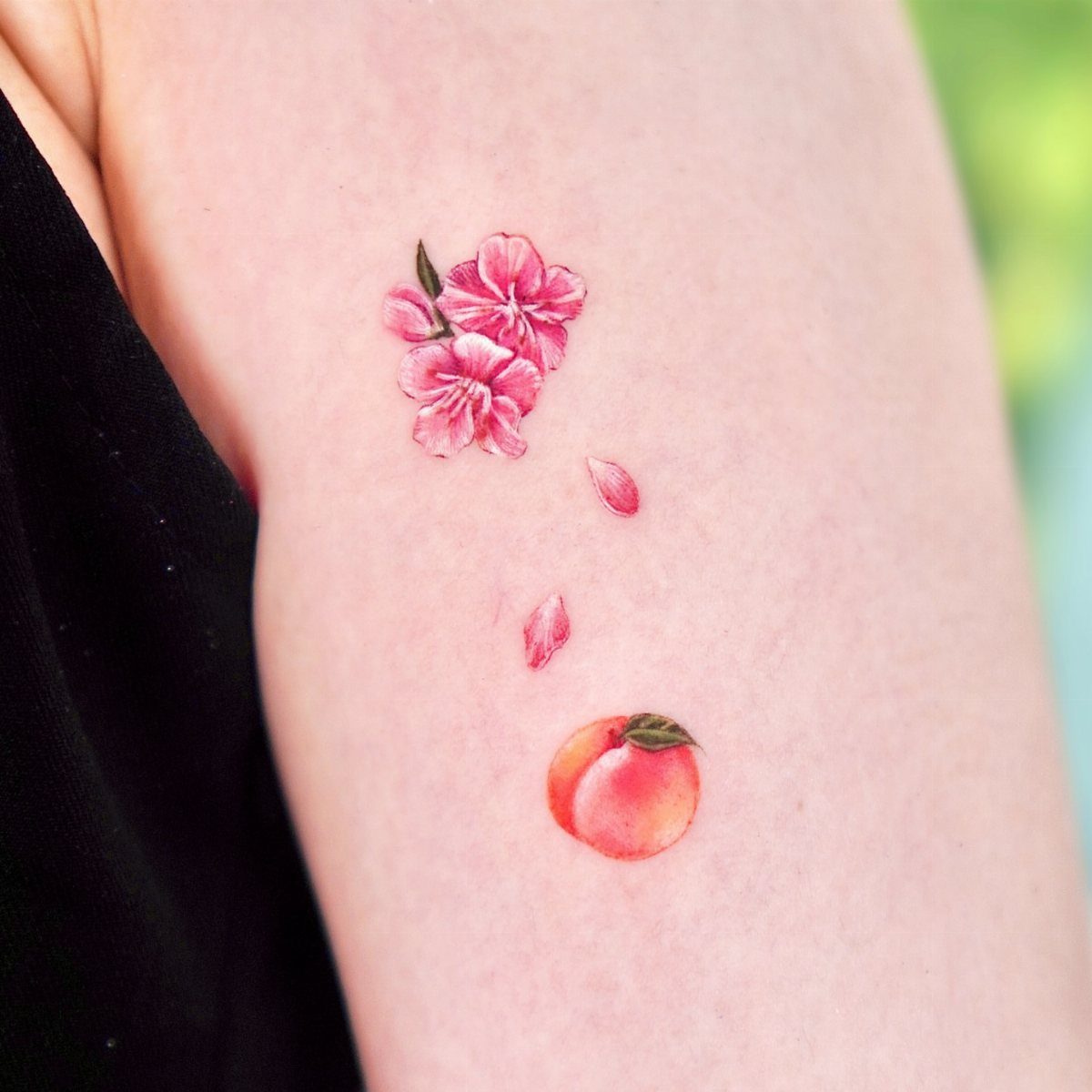
Peach blossoms appear in spring and in Japanese culture tie to long life and renewal.
The petals are softer than cherry blossoms, usually rendered in pale pink with a bit of yellow at the center, and including the fruit itself makes the tattoo more specific than just another floral.
Upper arm placement gives room for both the flower and fruit without stretching the design thin.
The pink holds up better than you’d expect if the artist doesn’t oversaturate it, and the fruit adds a grounding element that keeps the piece from floating.
10. Orchid
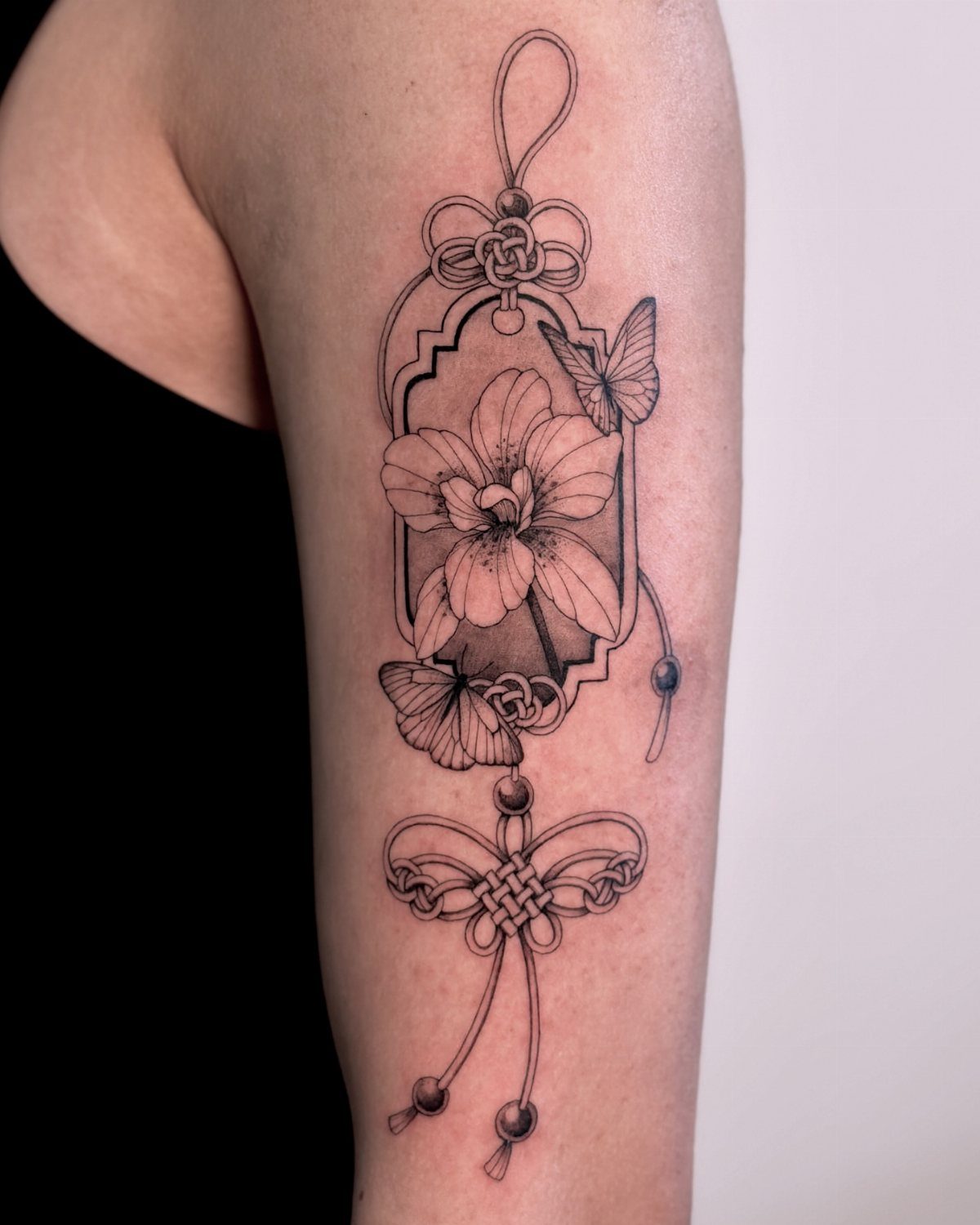
Orchids show up in Japanese art as symbols of wealth and refinement, which is why they’re often framed or paired with decorative elements like traditional knots.
The petals are narrow and structured, so the design stays readable even when small or surrounded by other details.
Leg or forearm placement works when you want to add ornamental framing without committing to a full sleeve.
The butterfly keeps the piece from feeling too formal, and the black ink alone lets the shapes do the work without needing color to carry meaning.
Cultural Significance of Flower Tattoos
In Japanese tradition, flowers carry meanings tied more often to philosophy and perseverance than to softness alone.
Flowers held a place in 18th-century Japanese books, fabric patterns, and screen designs before they became common in manga and anime as symbols of specific emotions or states.
That history gave rise to ikebana, the formal art of flower arrangement, which treats placement and form as seriously as the bloom itself.
The symbolism isn’t universal. A flower inked in Japanese style often leans masculine in its reading, focusing on endurance or transformation rather than grace or femininity.
That distinction matters when you’re choosing a design, because the meaning sits in the tradition as much as in the petals.
In Japanese folk traditions, the flower has a place of honour: Sakura: cherry, Hasu: lotus, Kiku: chrysanthemum, Ume: plum blossom, Tsubaki: camellia, Botan: peony, Fuji: wisteria, are among those most used in traditional paintings.
Symbolism of Flowers in Tattoos
Flowers in tattoos can carry meanings from good fortune to death, and the color often decides which.
A red rose signals passion, while a lotus points to enlightenment and power. The season a flower blooms in also affects how it reads: spring blossoms tie to new beginnings, autumn leaves to endings and change.
Birth and rebirth show up constantly in floral tattoos because flowers die back and return. That cycle makes them flexible enough to pair with other elements or stand alone, and the symbolism adjusts depending on what you add around them.
The meaning isn’t fixed. A flower can work as part of a larger piece or as its own statement, and the personal style you bring to it matters as much as the tradition behind it.
What you’re marking and why shapes how the design reads once it’s on skin.
Choosing a Tattoo Artist
An artist who knows Japanese tattoo traditions will get the proportions, pairings, and line weight right in ways that matter once the piece heals.
Scroll through their portfolio to see if they’ve already inked the flower or combination you have in mind, and whether their line weight and detail level match what you’re picturing.
Japanese florals follow design rules that don’t always show up in other styles: wind bars, wave patterns, and cloud backgrounds sit in specific places, and the balance between the flower and its frame affects how the piece reads.
An artist familiar with that structure can execute it without guessing.
If the portfolio shows dragons, koi, or other Japanese elements with clean composition and accurate detail, that’s a signal they can handle a floral piece the same way.
Once you have the idea, the right artist makes it consistent with the tradition rather than decorative around it.
Frequently Asked Questions
What are the flowers in Japanese tattoos?
Cherry blossoms, lotus, chrysanthemum, peony, and wisteria are the most common, along with red spider lily, maple leaves, hibiscus, peach blossoms, and orchids.
Each flower carries specific meanings tied to Japanese philosophy and tradition, from transformation and wealth to memory and renewal.
The flower you choose depends on what you want the tattoo to say and how bold or understated you want the design to read.
What is the most famous Japanese flower?
Cherry blossoms are the most famous, both in Japanese culture and in tattooing. That brief window is exactly why they symbolize fleeting beauty, the kind that can’t be held onto.
The design reads clearly in black line work alone or with soft pink, and pairing them with wind bars or waves adds motion without overcomplicating the piece.