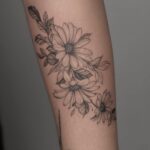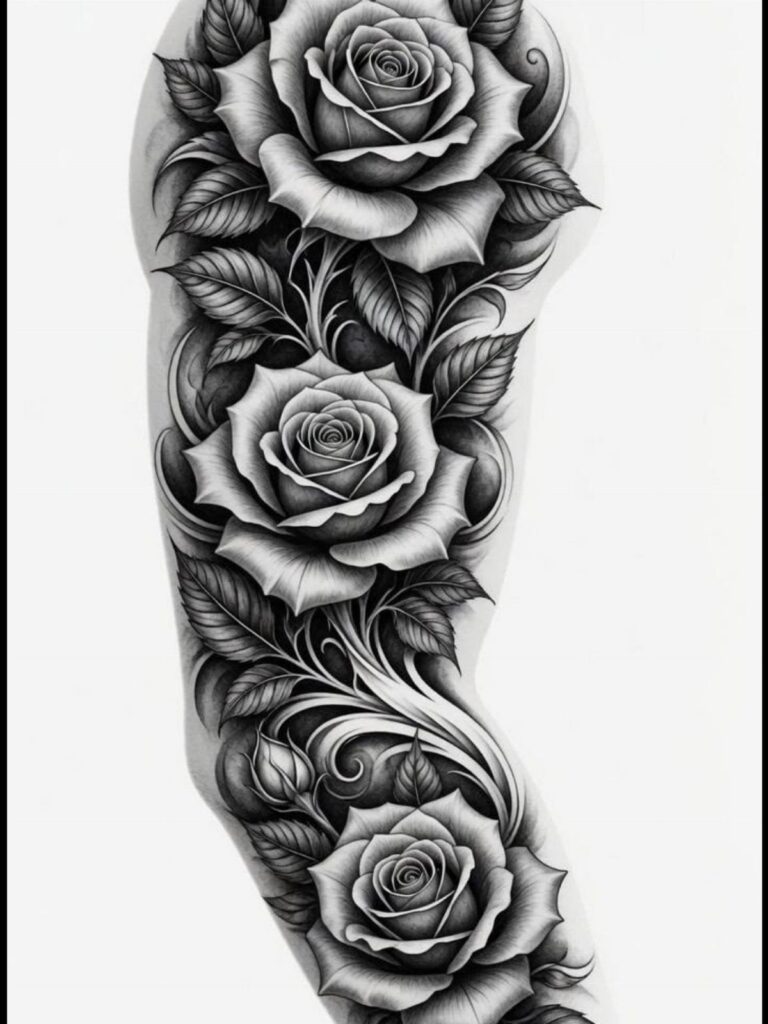
A rose sleeve can mean anything from a simple half-sleeve in black linework to full-arm color realism across multiple sessions, and the price moves with that range.
The choice comes down to how much arm you’re willing to commit and whether you want a single climbing rose bush or a composition that mixes roses with other florals and symbols.
1. Rose Bush Sleeve Tattoos
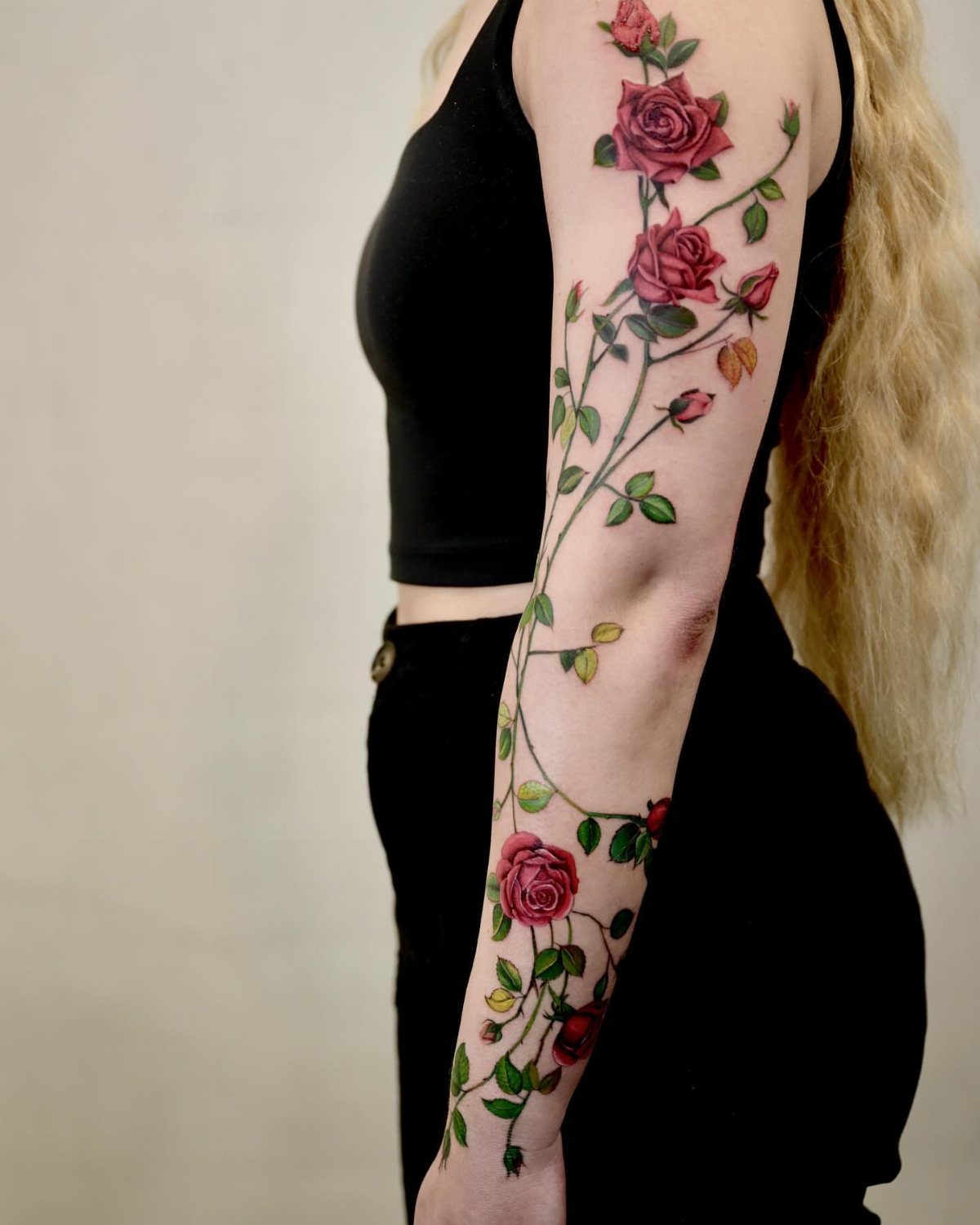
A rose bush sleeve wraps the entire arm in a sprawling plant, stems climbing from wrist to shoulder with blooms scattered across the journey.
The red flowers and green leaves give the piece a living, organic feel that reads clearly from any angle.
The color holds attention without needing other elements to fill space.
A full sleeve that stays focused on one subject lets the roses do all the work. Expect multiple sessions to build out the coverage and let the artist layer the foliage so it doesn’t look flat.
2. Multiple Flowers Rose Bush Sleeve Tattoo
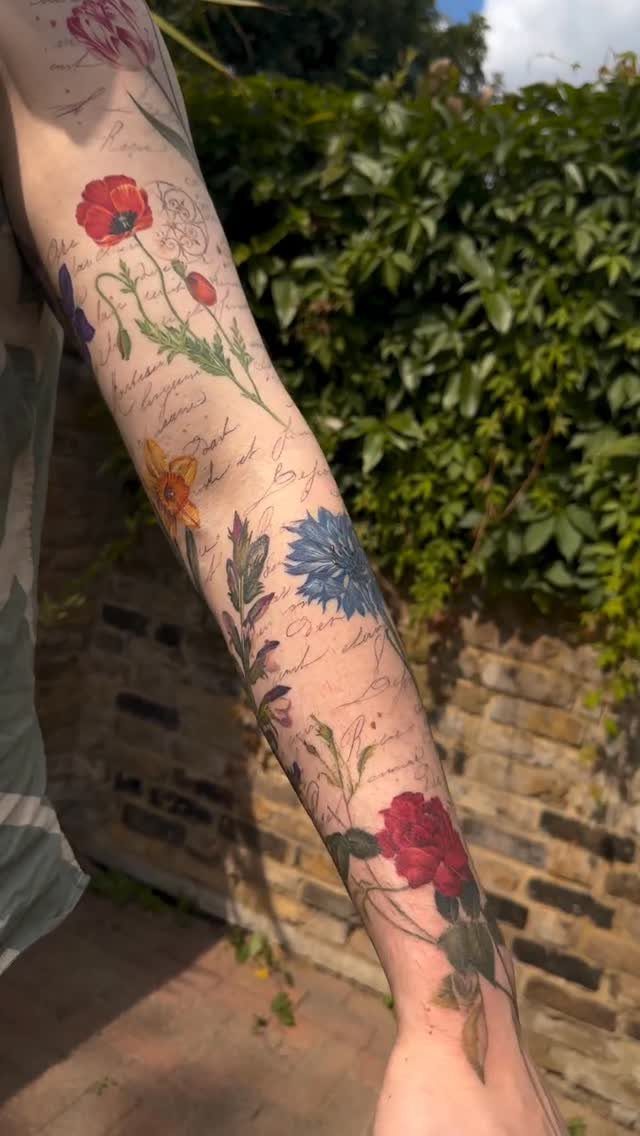
Mixing roses with poppies, daisies or wildflowers turns a sleeve into a garden rather than a single-species display. The variety keeps the eye moving, and the cursive script visible here adds a personal layer without competing with the blooms.
This approach works well if you like roses but don’t want them to be the only story.
Different flowers bloom at different scales, so the artist can fill gaps with smaller buds or trailing vines. Plan for color touchups as the saturation fades.
3. Black Rose Bush Sleeve Tattoo
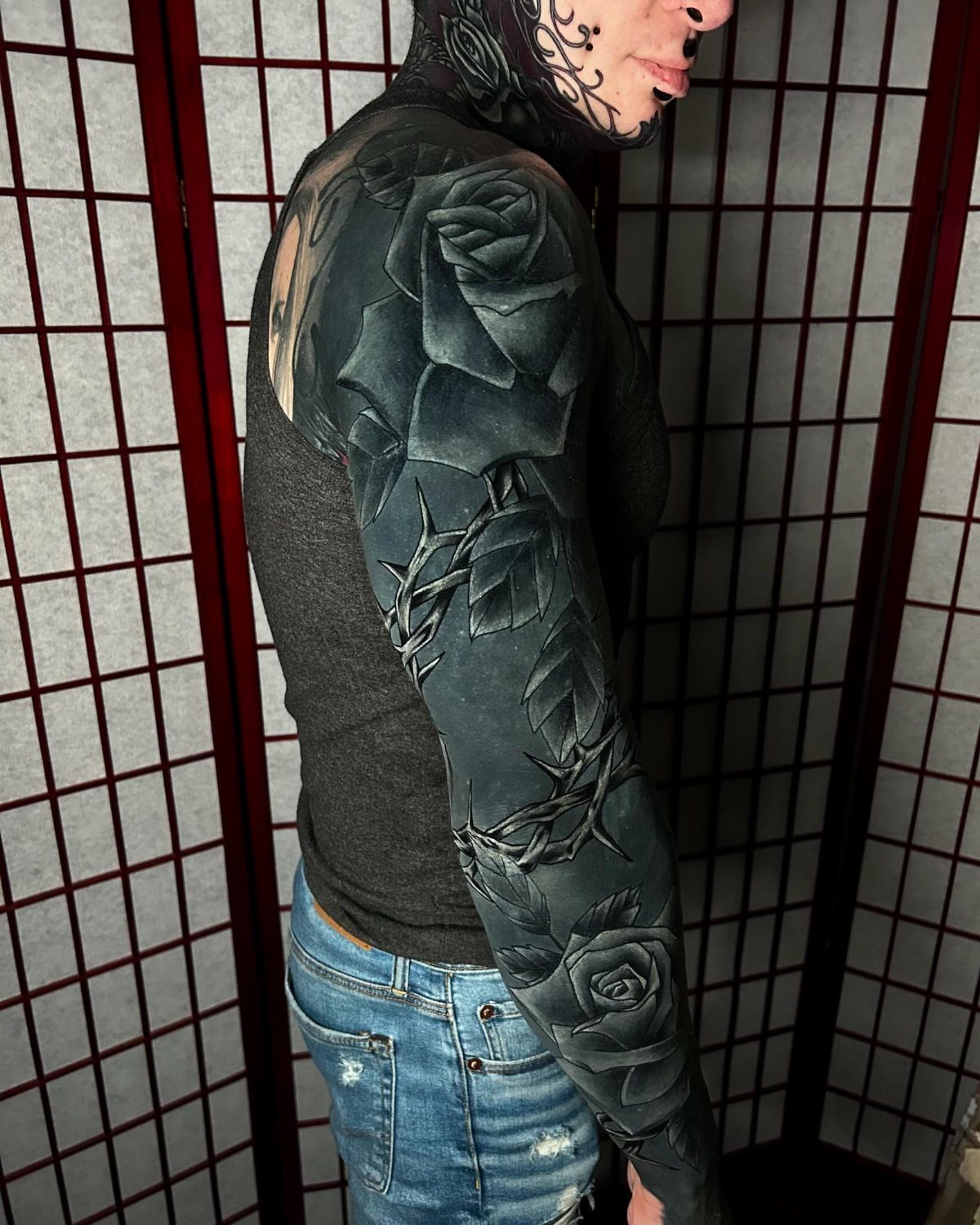
A black rose bush sleeve trades color for contrast. The thorny stems and solid black petals create a darker, more dramatic look that suits people who want the rose shape without the softness red ink brings.
Black ink holds longer than color and requires fewer touchups over time.
The thorns become a design feature here, not just filler, and they help the piece read as intentional rather than simply lacking pigment. If you prefer a sleeve that stays sharp without scheduled maintenance, black is the easier commitment.
4. Soft Rose Bush Sleeve Tattoo
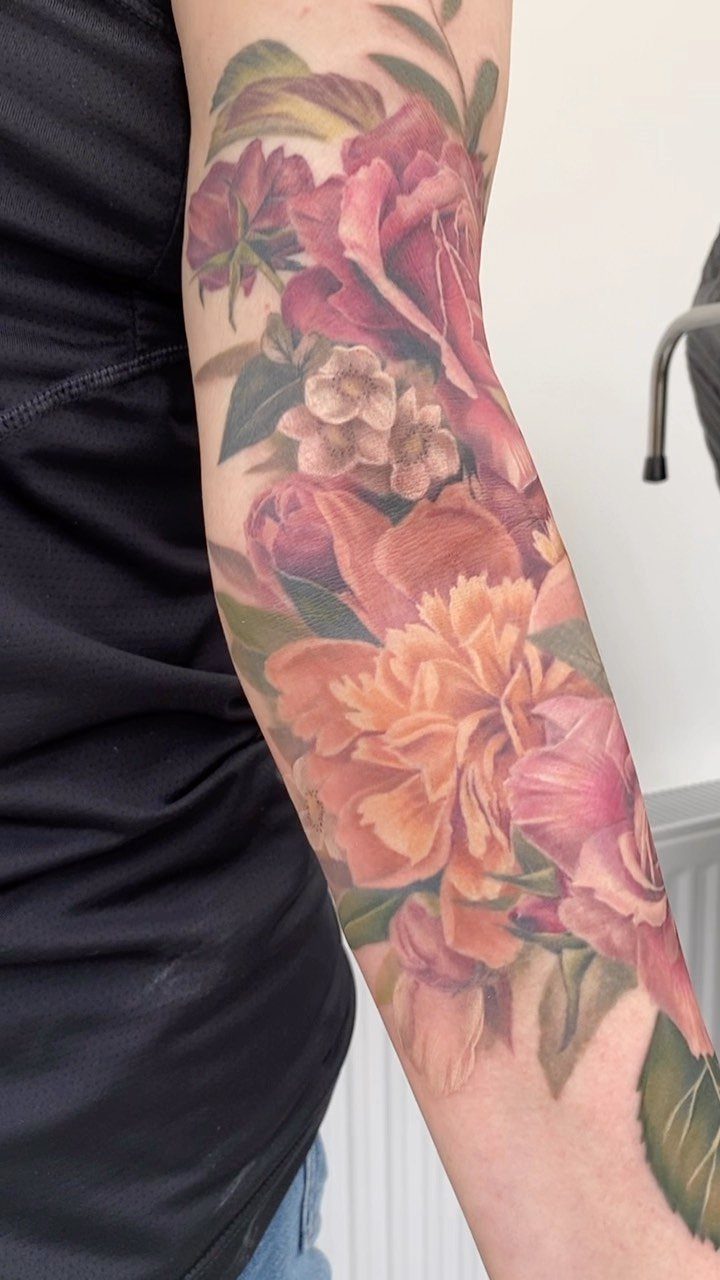
Soft shading in pink, peach and muted green gives a rose sleeve a watercolor quality that feels less like a traditional tattoo and more like a painting laid over skin.
The petals here blend into each other without heavy outlines, and the color gradients replace hard edges.
This style ages differently than bold traditional work. The soft transitions can blur slightly over time, so finding an artist experienced in color blending matters more than it would for a line-heavy piece.
If you like the look of fresh florals and don’t mind occasional color refreshes, this reads as gentle without losing presence.
5. Bold Black Rose Half-Sleeve Tattoo
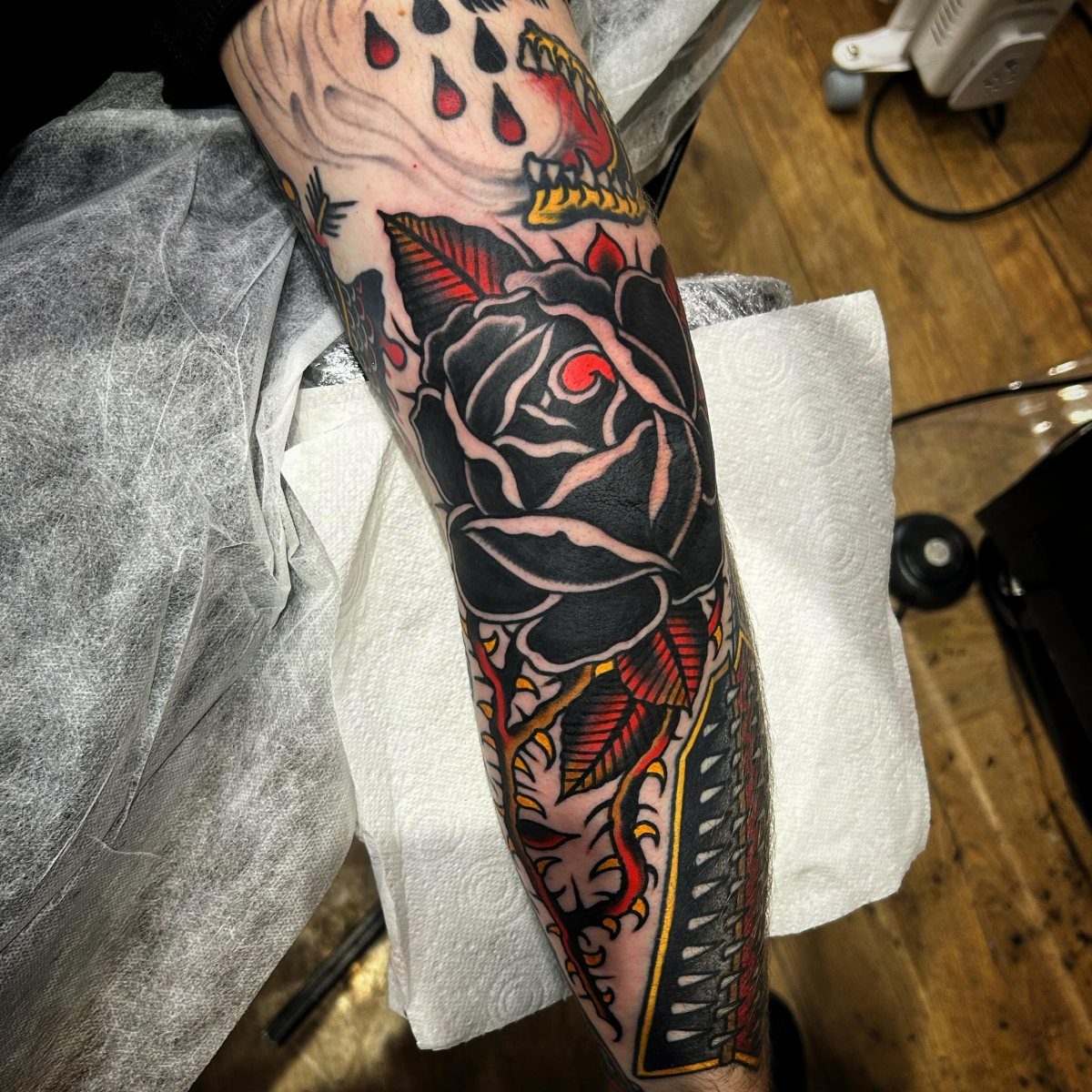
A half-sleeve stops at the elbow, giving you a bold statement piece that doesn’t require the time or cost of full coverage.
This option suits anyone who wants a rose tattoo that reads clearly in short sleeves but can still be covered for work.
The forearm placement also makes it easier to see your own ink and skip the mirror. Budget time for a piece this size, and expect the red to need a touchup sooner than the black.
6. Rose and Sunflower Half-Sleeve Tattoo
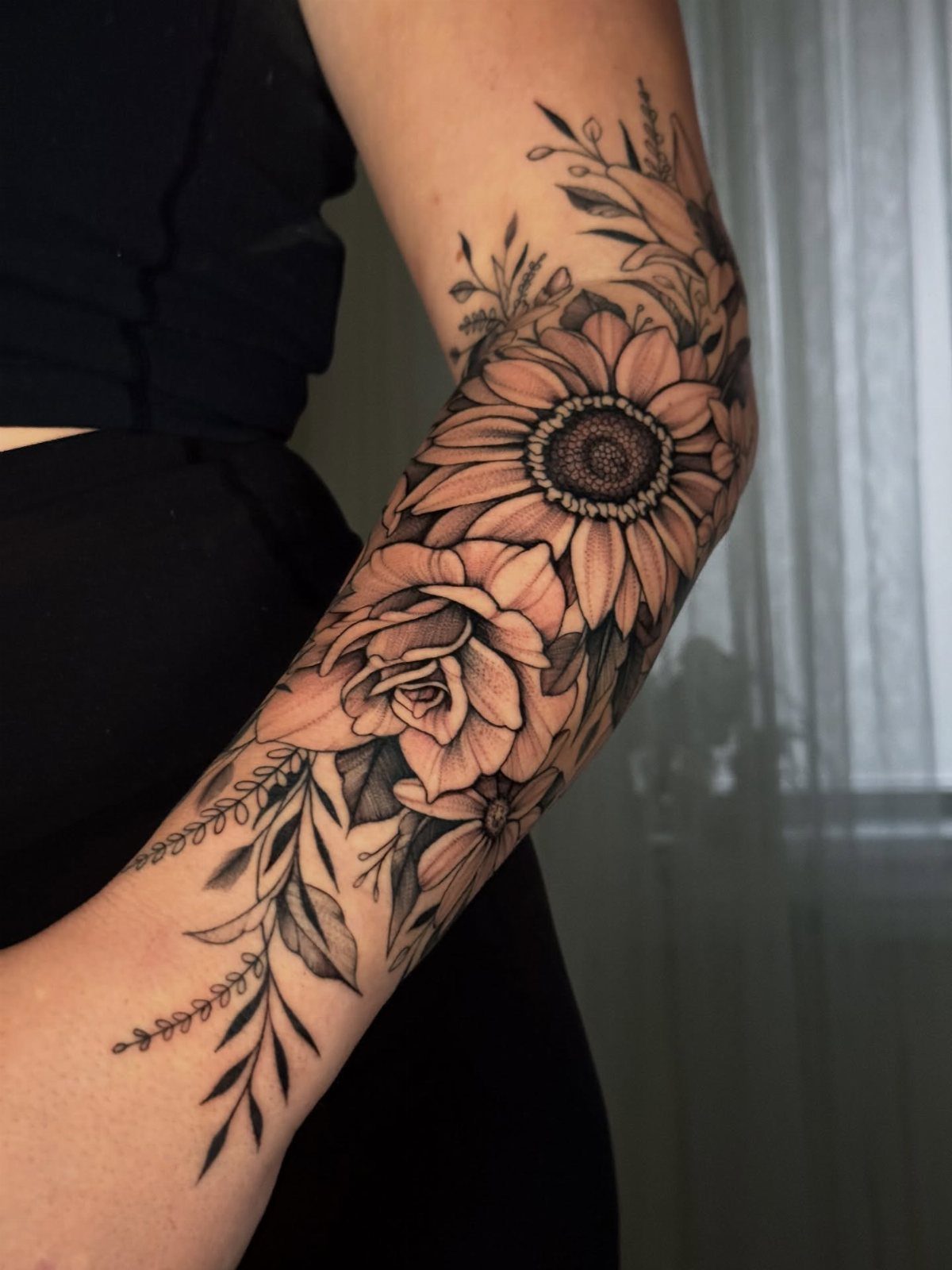
Pairing a rose with a sunflower gives you two symbols in one sleeve: the rose for love or transformation, the sunflower for optimism or resilience.
The black and grey here keeps the piece cohesive even though the flowers have different petal structures.
This combination works when meaning is layered into the design and no text is needed to explain it.
The sunflower’s size and shape balance the rose’s complexity, and the grayscale approach means the flowers share visual weight. Half-sleeves like this typically take 2 sessions to complete, with the second pass adding depth and shadow.
7. Eagle and Black Rose Half-Sleeve Tattoo
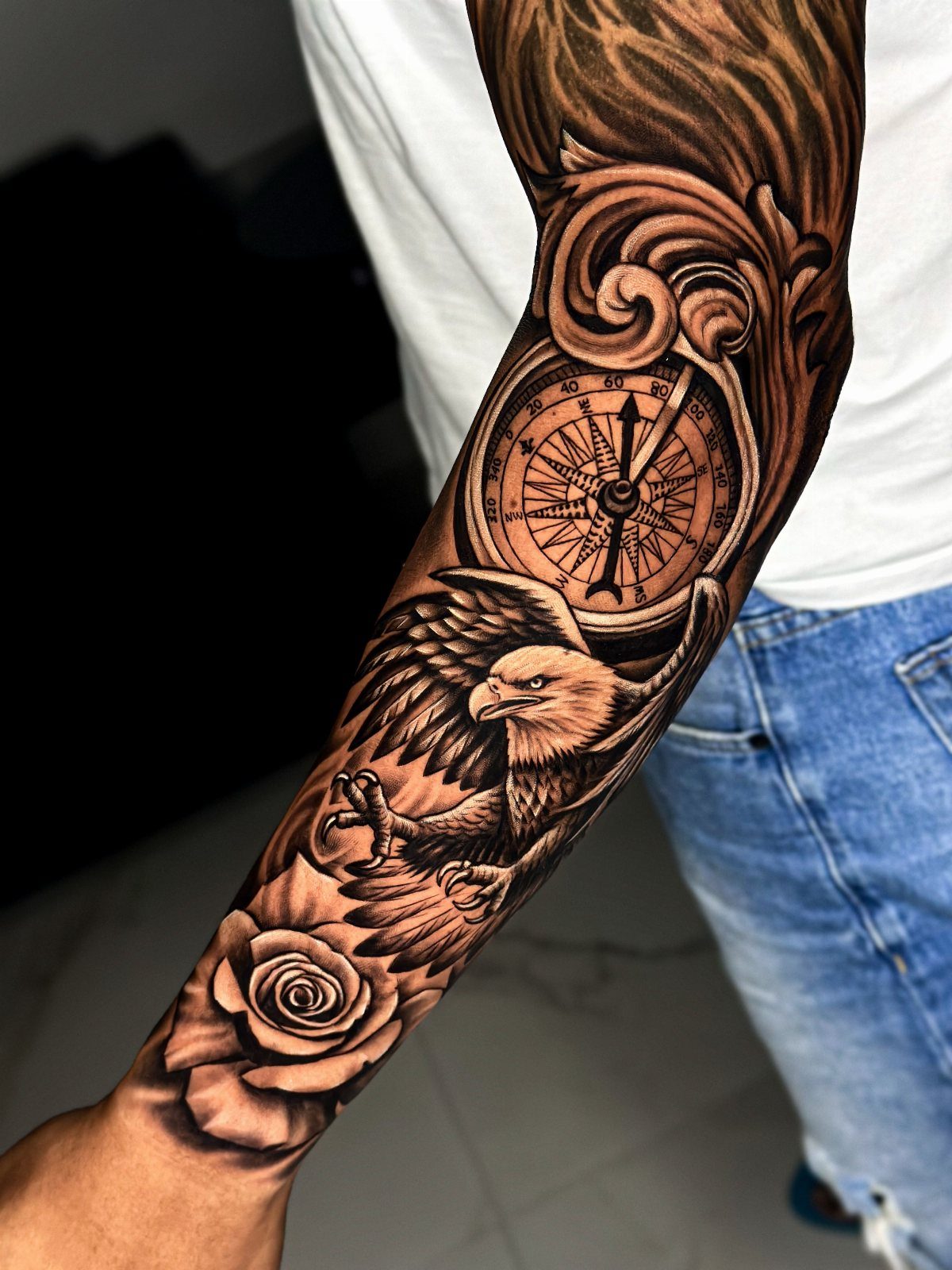
An eagle paired with a black rose splits the sleeve between flight and growth, 2 symbols that don’t often share space but work when the composition ties them together.
The compass here anchors the design and gives the eye a center point.
This combination suits someone building a sleeve around personal milestones rather than a single theme.
The black rose keeps the palette consistent with the eagle’s shading, so the piece reads as one tattoo instead of separate images placed near each other. Expect 2 to 3 sessions for a half-sleeve with this much detail.
8. Multiple Red Roses Full-Sleeve Tattoo
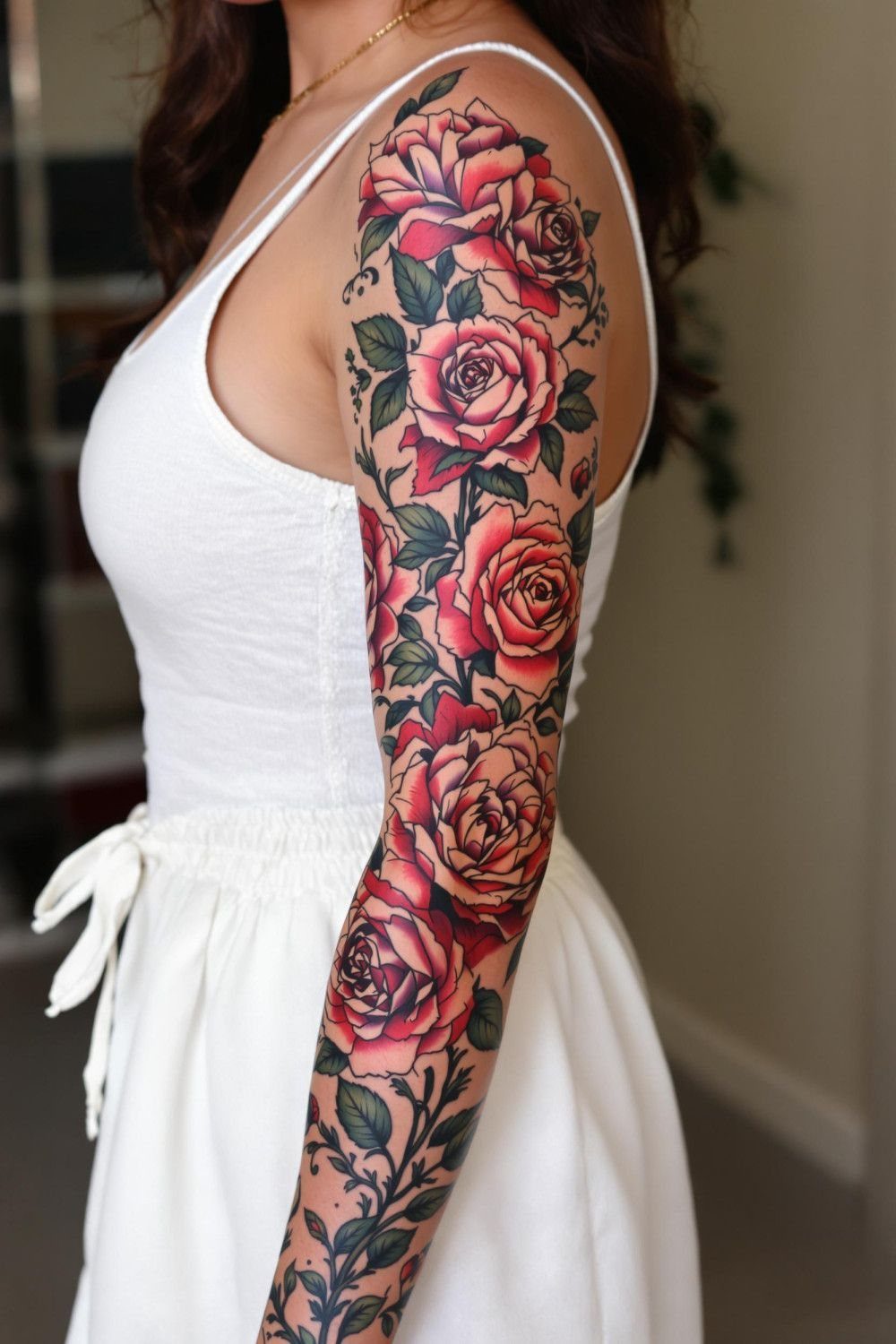
Multiple red roses stacked along the arm create a flowing, repeating pattern that fills a full sleeve without adding secondary elements.
The green leaves here break up the red and give the piece depth, so it doesn’t flatten into a single block of color.
A sleeve that commits fully to one flower holds together without needing filler motifs.
The repetition holds everything together, and the full coverage eliminates the need for filler. Plan for at least 3 sessions to complete the work, and budget for color touchups as the red fades faster than the green.
9. Realistic Black and Grey Rose Sleeve Tattoos
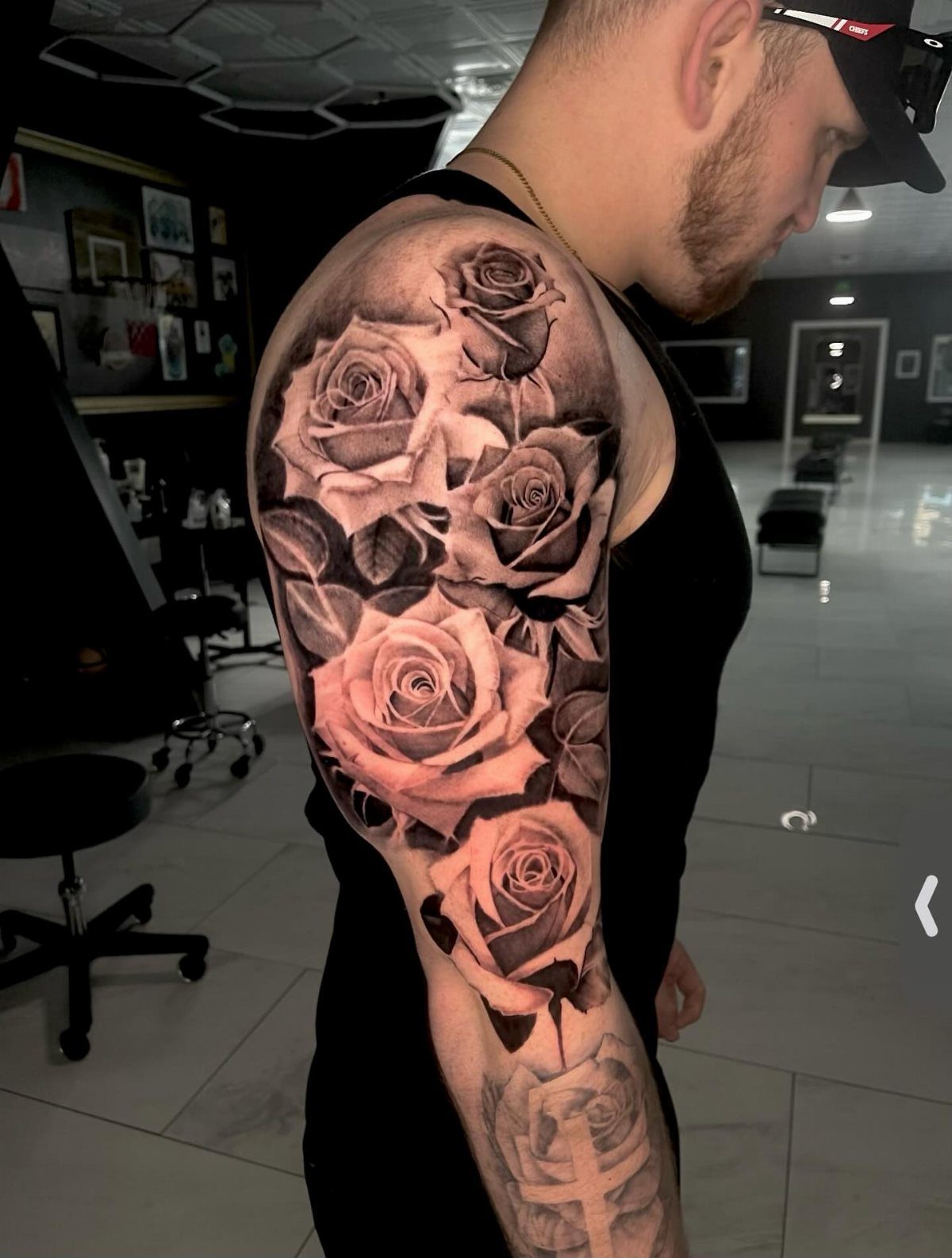
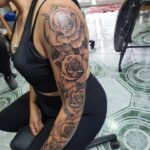
Realistic black and grey roses rely on soft shading and careful highlight placement to look three-dimensional. The petals here curl and overlap the way actual roses do, and the absence of color keeps the focus on form rather than saturation.
This style suits anyone who wants roses without the traditional tattoo look. The grayscale ages well and holds its detail longer than color, though the soft shading means finding an artist experienced in realism matters.
10. Rose Arm Sleeve Tattoo
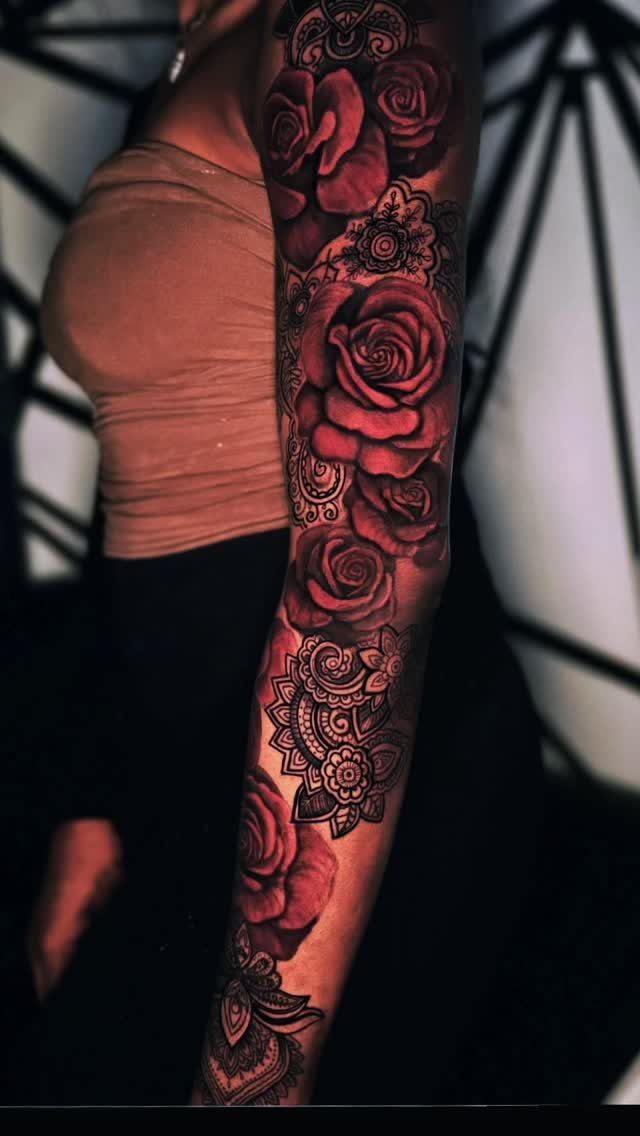
Roses paired with mandala patterns layer botanical and geometric elements in one sleeve. Red petals sit against black linework, and the mandala shapes fill the negative space roses alone would leave open.
This combination holds the design together when roses don’t naturally fill the entire arm.
The geometric patterns give structure, and the red draws attention to the organic shapes. The mandala detail needs a steady hand to keep the symmetry intact.
11. Black Rose Sleeve Tattoos
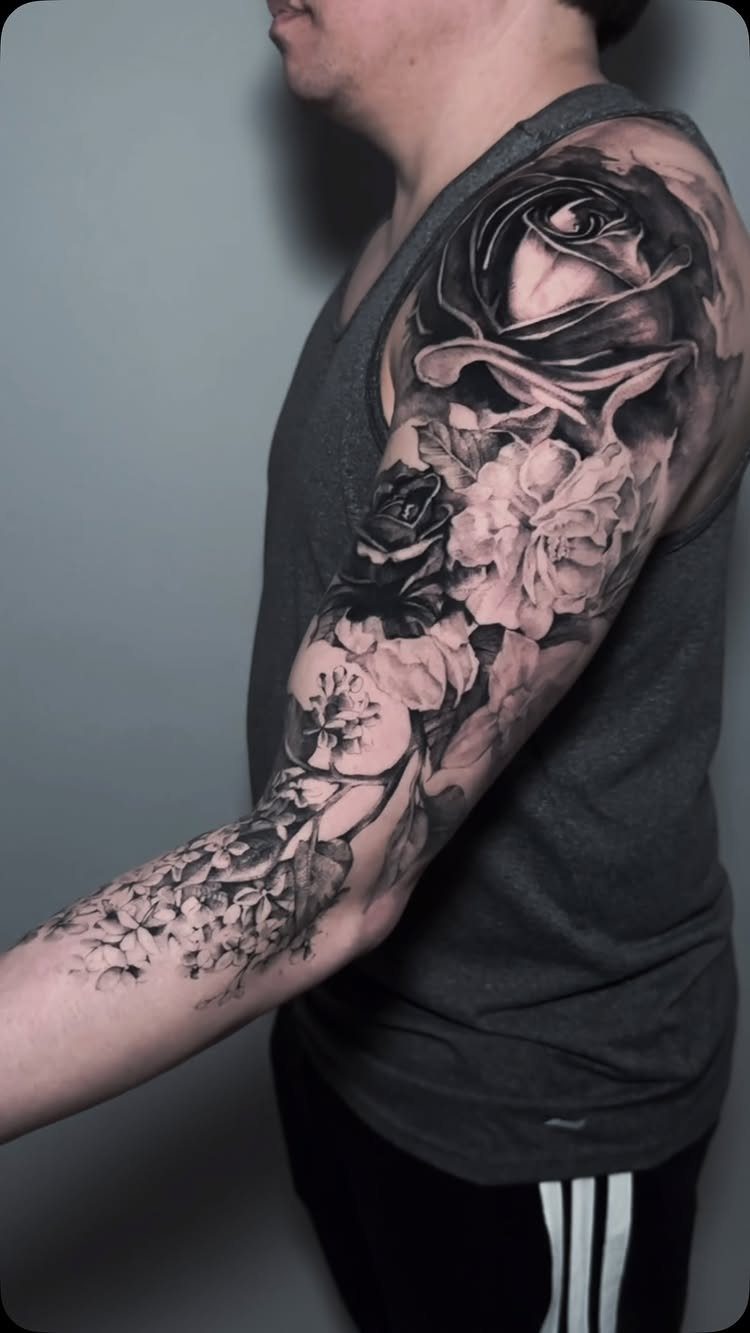
Black roses covering the full arm from shoulder to wrist create a sleeve that reads as intentionally dark rather than unfinished.
The grey shading here adds dimension without softening the overall tone, and the thorny stems become part of the visual weight.
This suits anyone who prefers a heavier, more saturated look.
Black ink requires fewer touchups than color and holds its contrast longer, so the sleeve stays sharp with less maintenance. Solid black areas need time to heal between appointments.
Symbolism of Rose Tattoos
Rose tattoos carry meanings that shift depending on who wears them.
Love and beauty are the obvious reads, but resilience shows up just as often. The thorns matter here: they’re the part that survived being handled, and that makes a rose sleeve more than decoration.
People choose roses to mark chapters they want to remember.
A relationship, a loss, a decision that changed direction. The flower itself holds enough visual weight to carry that without needing text or secondary symbols to explain it.
A sleeve gives you room to layer those meanings. One rose can sit alone at the shoulder, another at the wrist, and the space between them tells the story of what came in the middle.
The design works whether the symbolism is personal or you simply like how petals and stems wrap an arm.
Rose Sleeve Tattoo Cost
The price depends on how much arm you’re covering and who’s doing the work. A half-sleeve with simple linework sits at the lower end.
Artists with years of experience in realism or color work charge more, and the hourly rate climbs in cities where studio overhead is higher.
A sleeve also means sitting for several hours across 2 to 4 appointments, so the final cost reflects total chair time, not just the size of the design.
If budget matters, start with a half-sleeve or a single rose and add more later. The ink doesn’t have to happen all at once.
Popular Styles for Rose Tattoos
Watercolor roses skip the heavy lines and rely on soft color washes that blend like paint, though the style fades faster and needs touchups to stay bright.
Dot work builds the rose entirely from small dots, creating texture and shadow without solid fills.
Line work alone keeps the design minimal, with fine black lines tracing the petals and leaving the shading out entirely. Your preference for contrast or softness usually decides which direction fits.