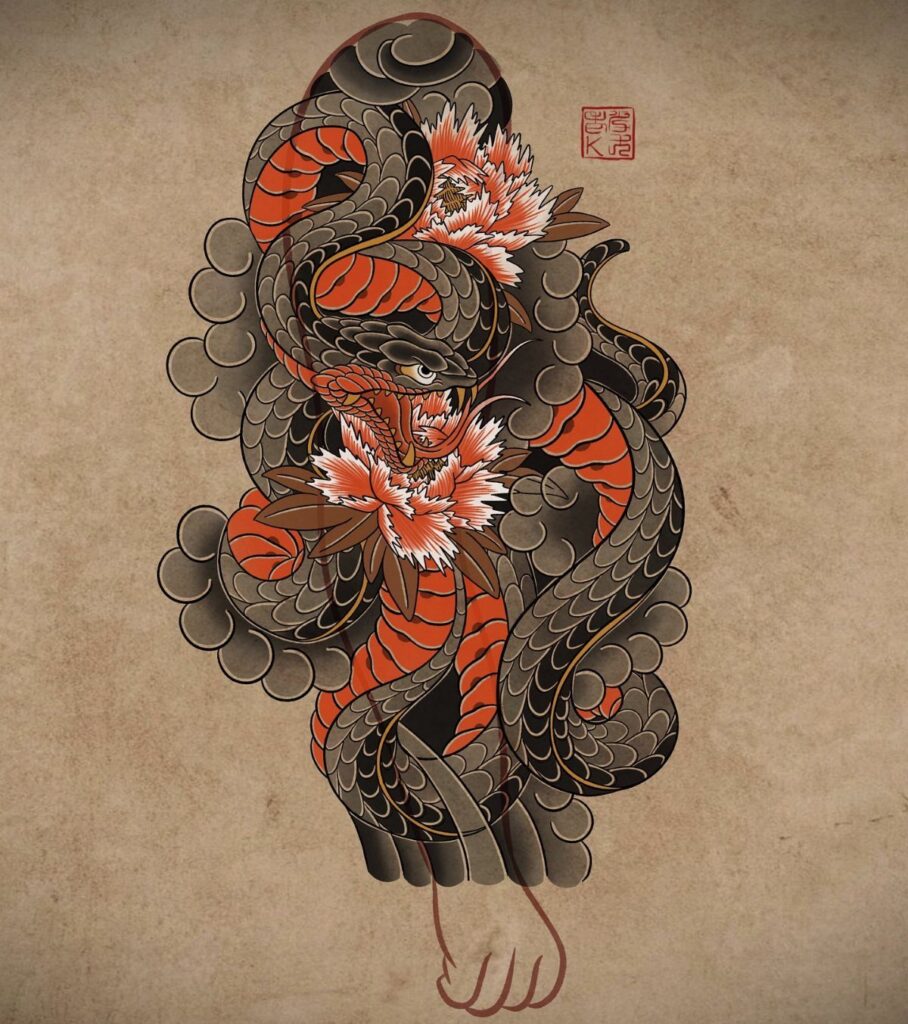
A Japanese snake fills anywhere from a 4-inch coiled shoulder piece to a full back or sleeve that takes multiple sessions, and the difference in placement, color, and surrounding elements changes how the design reads years later.
If you want something that wraps naturally with your body’s lines, a sleeve or back piece follows muscle and bone better than a flat design on the thigh or calf.
The eight-headed Yamata-no-Orochi from folklore shows up in traditional flash, where each head represents a separate threat overcome at once.
1. Japanese Snake Tattoo with Flowers
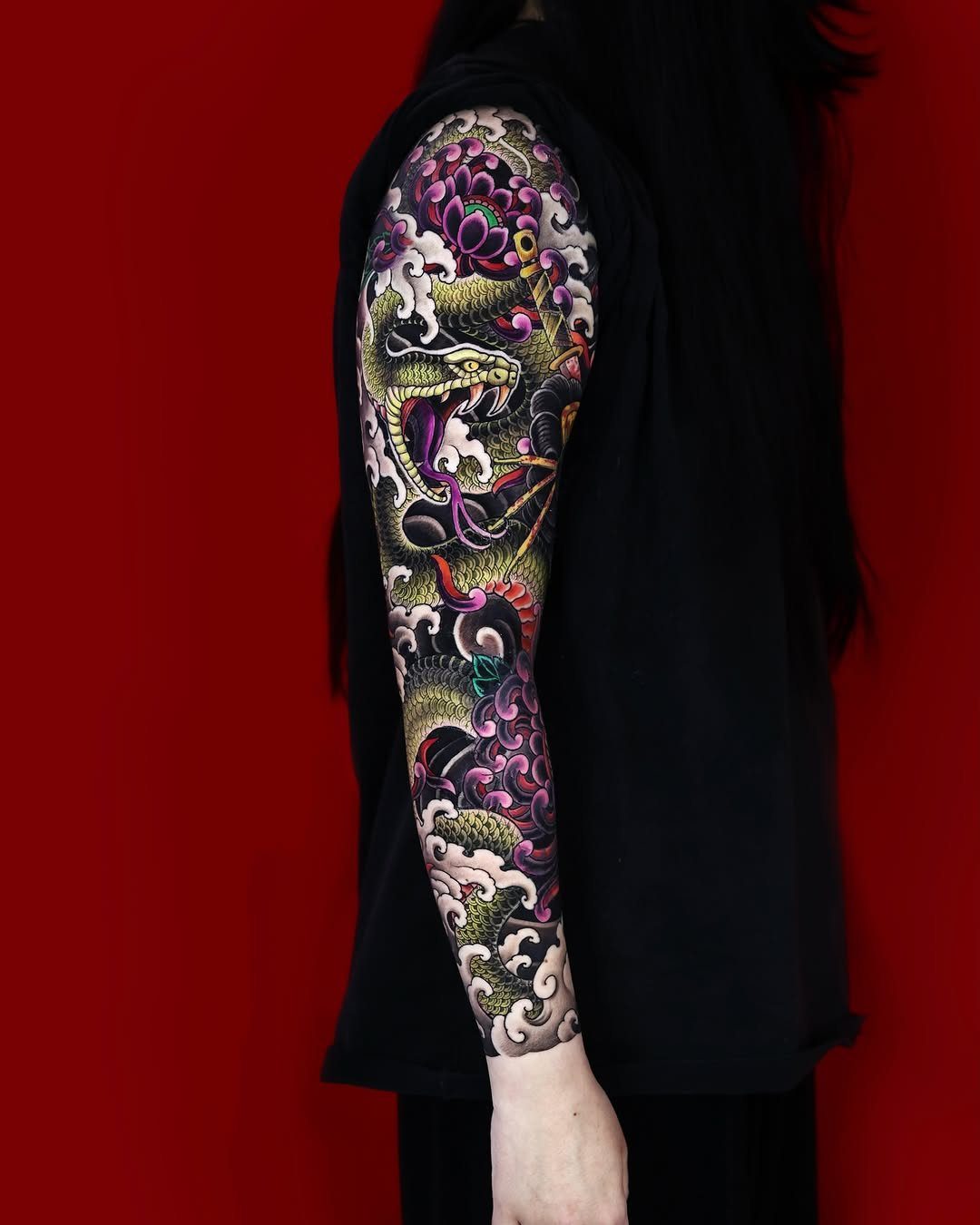
A Japanese snake tattoo paired with flowers gives you 2 symbols at once: the snake for transformation and resilience, and the flowers for beauty, impermanence, or a specific meaning tied to the bloom you choose.
Peonies bring prosperity and honor, cherry blossoms mark fleeting time, and chrysanthemums signal longevity.
The snake typically winds through or around the flowers rather than sitting behind them. That composition keeps both elements readable as the piece ages and prevents the snake from disappearing into a busy background.
The flowers add color and detail that take longer than a snake alone, but the combination fills a large space without feeling empty.
2. Japanese Snake Tattoo on Back
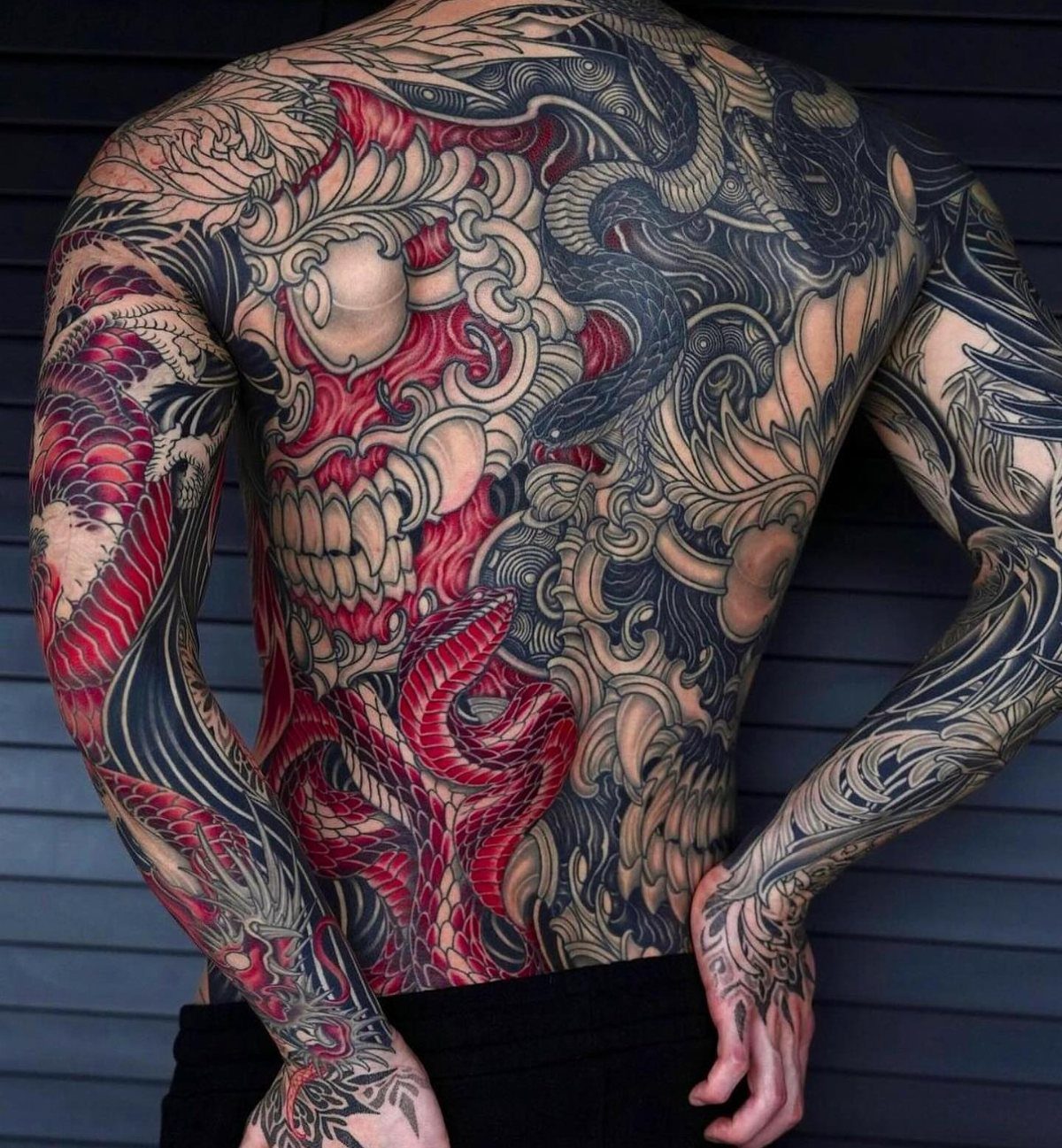
A Japanese snake on the back gives you room to work with a single large serpent or a full scene that includes waves, clouds, skulls, or other figures from Irezumi tradition.
The back is flat and wide, giving the artist room to work without interruption.
Most back pieces follow the body’s natural lines: the snake curves along the spine or coils across one shoulder blade, and any surrounding elements fill the space without crowding the main figure.
A design this large is split across multiple sessions.
Color holds well on the back because the skin stays protected under clothing most of the time.
3. Japanese Snake Tattoo Sleeves
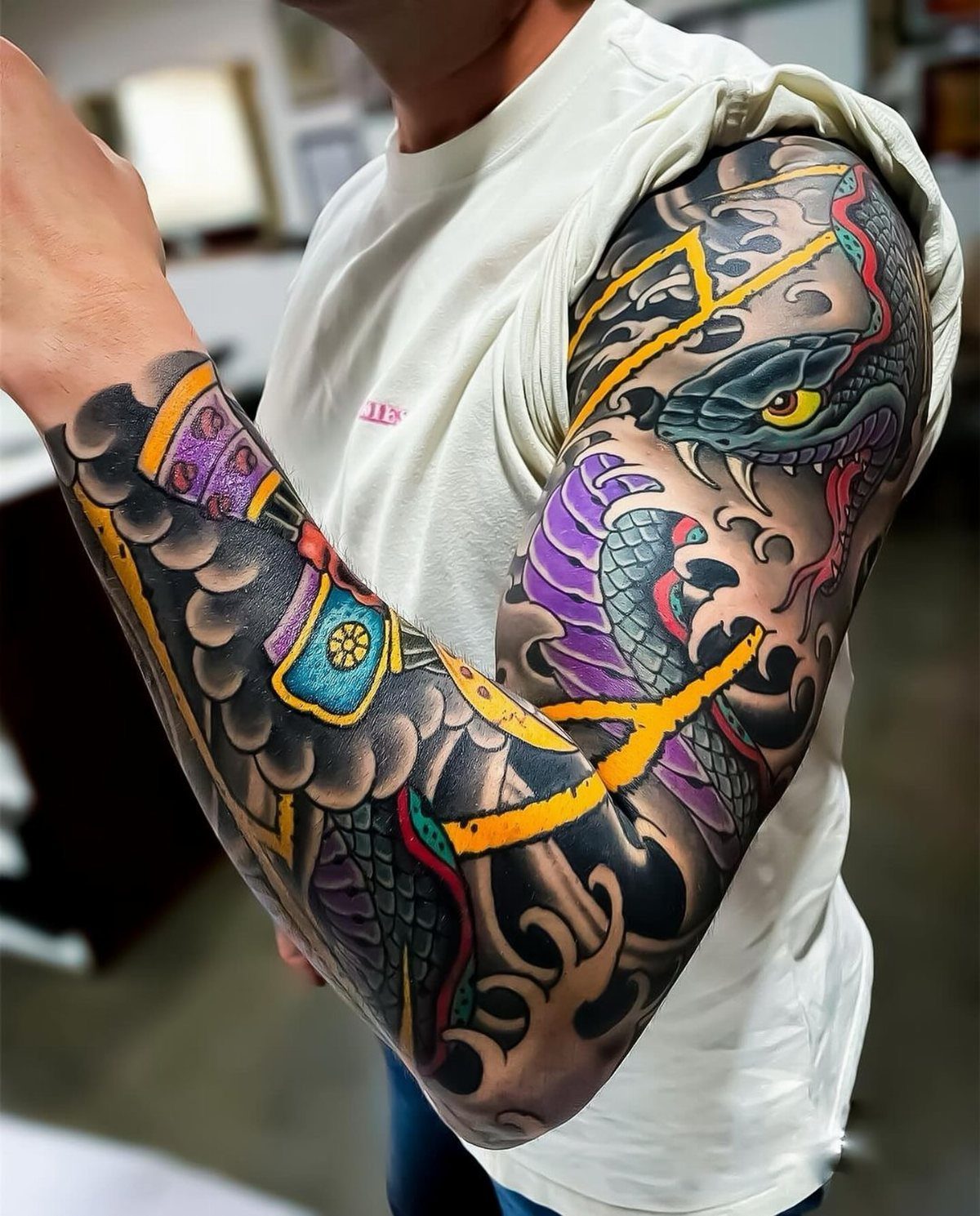
A Japanese snake sleeve wraps the full arm from shoulder to wrist, often with clouds, waves, or background patterns that tie the piece together.
The snake follows the muscle and curves with the arm, so it looks natural from every angle.
Expect several sessions to complete a piece this big. You can start with the snake and add background later, or lay down the whole composition at once for a design that flows from the beginning.
Purple, blue, and green scales are common, and the background often includes darker tones like black or deep red to make the snake stand out.
Sleeves fade less than pieces on the hands or chest because the arm sees less sun and friction.
4. Japanese Snake Tattoo on Thigh
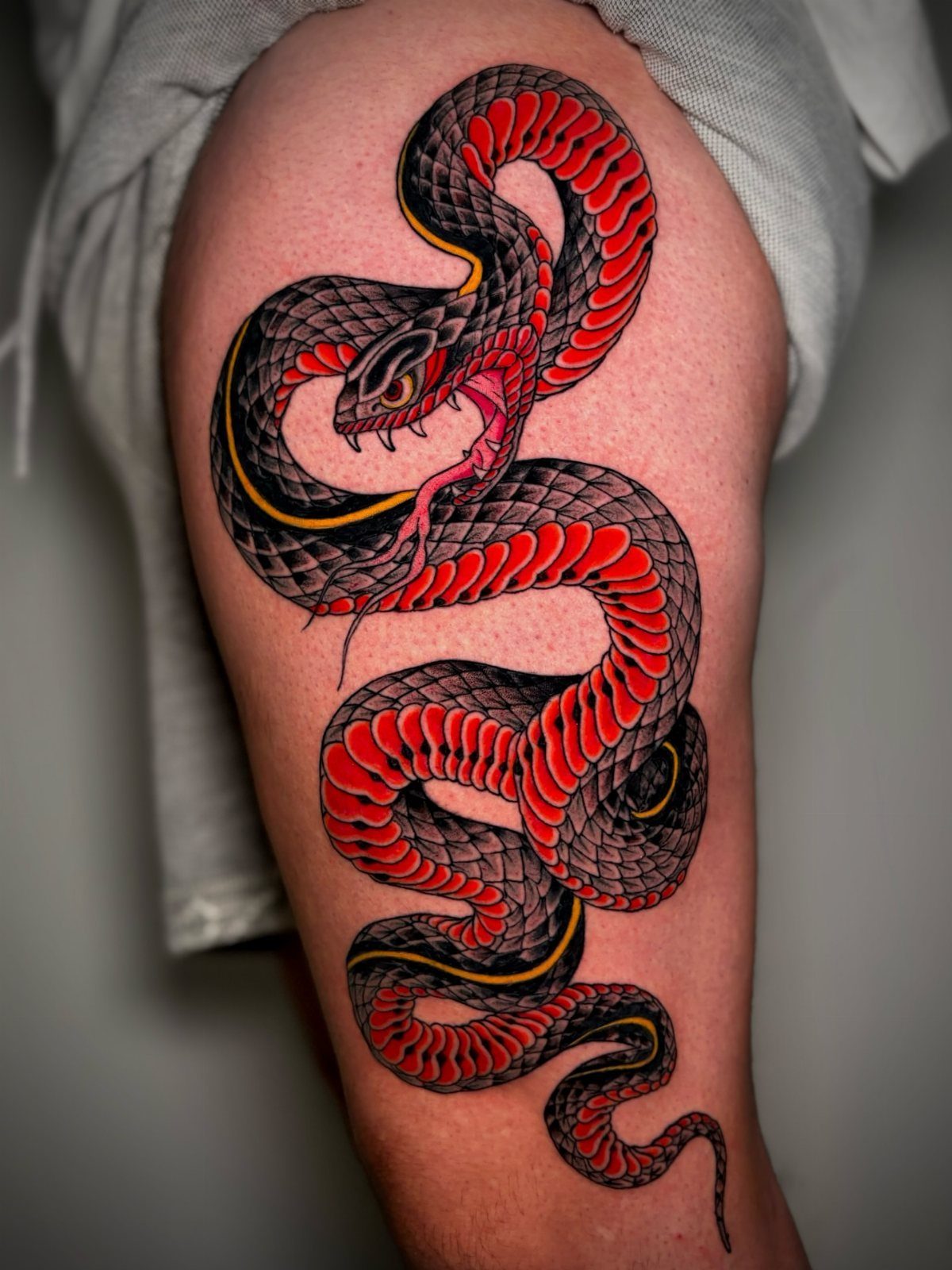
A Japanese snake on the thigh gives you a vertical canvas that suits a coiled or descending serpent.
The thigh is fleshy and relatively low on the pain scale, making it a solid choice for a large piece without sitting through the intensity of ribs or spine.
The red, black, and yellow palette here is traditional Irezumi coloring: bold, high-contrast, and built to last. Red holds especially well on the thigh because the skin is thick and sees less friction than a hand or foot.
You can extend it down toward the knee or up onto the hip for more coverage later.
5. Japanese Snake and Bamboo Tattoo
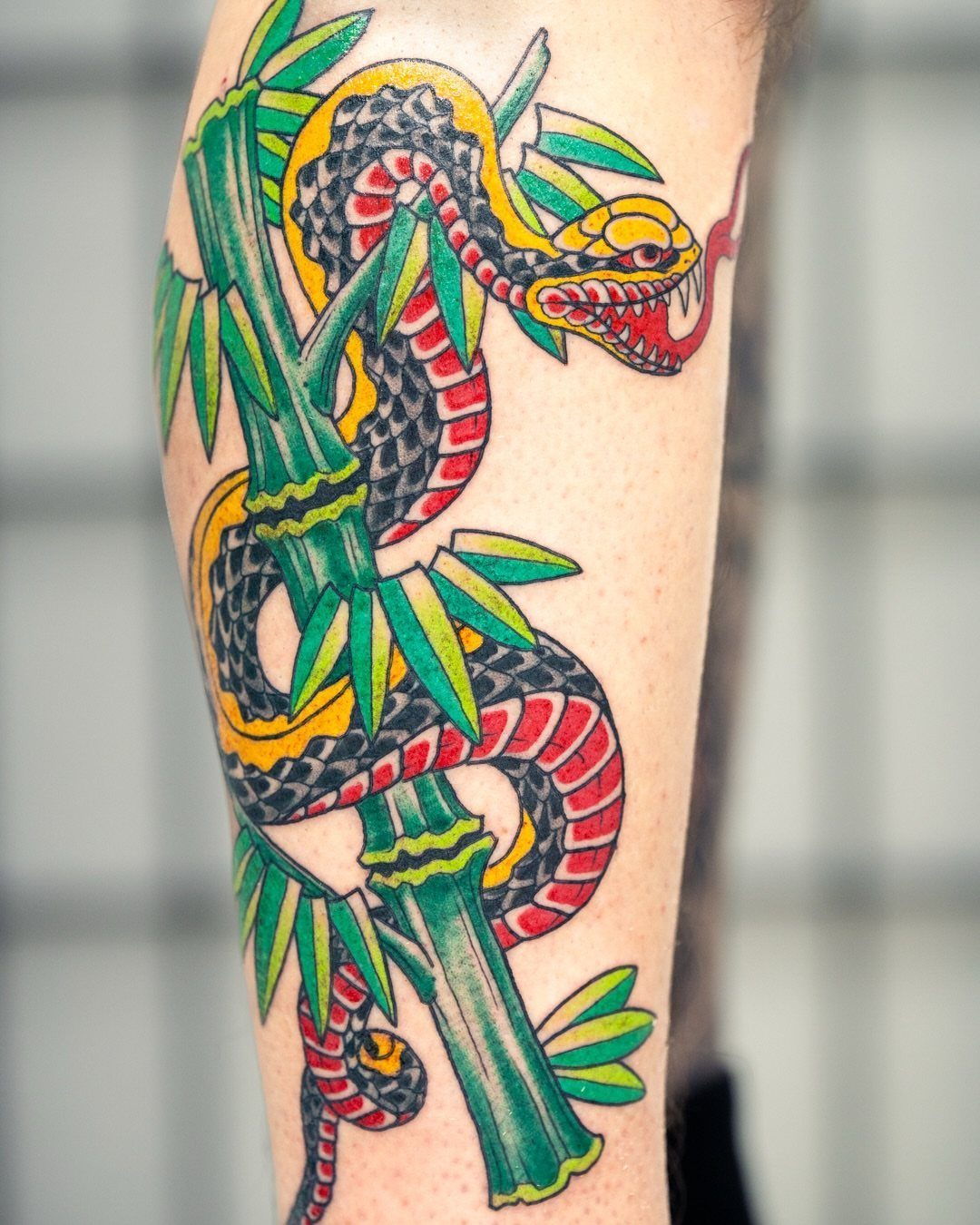
A Japanese snake coiled around bamboo pairs 2 symbols of flexibility and strength.
Bamboo bends without breaking, and the snake sheds its skin to start fresh. Together, they suit someone who wants a tattoo about adapting and enduring.
The bamboo gives the snake something to grip and climb, so the composition reads clearly as one connected piece.
Green bamboo with a red or black snake creates strong color contrast, and the vertical stalks work well on an arm or calf.
Bamboo is simple enough that it won’t muddy the snake, but it fills space without needing heavy shading or a crowded background.
6. Coiled Japanese Snake Flash Drawing
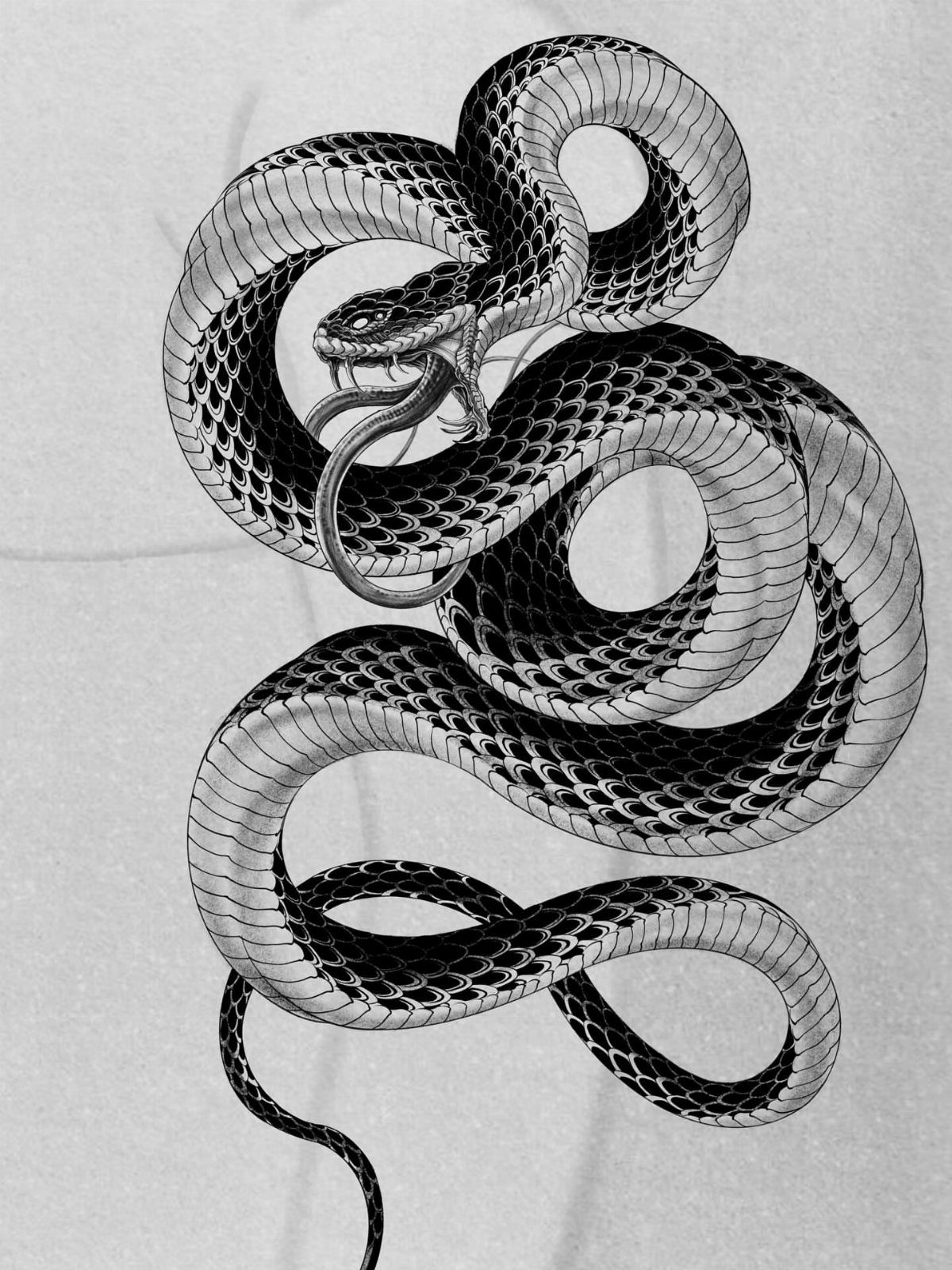
A coiled Japanese snake flash drawing is a ready-to-use design that can go on your skin as-is or be adjusted for size and placement.
Flash is drawn on paper first, so you see exactly what you’re getting before the needle touches you.
This style is black and white, with detailed scales and an open mouth that shows the snake mid-strike or mid-hiss. The coiled posture fits a round space like the shoulder, knee, or side of the calf.
Flash typically costs less than a custom piece because the artist has already done the design work. A coiled snake like this sits well on the upper arm, shoulder, or outer thigh.
7. Multi-headed Japanese Serpent Design
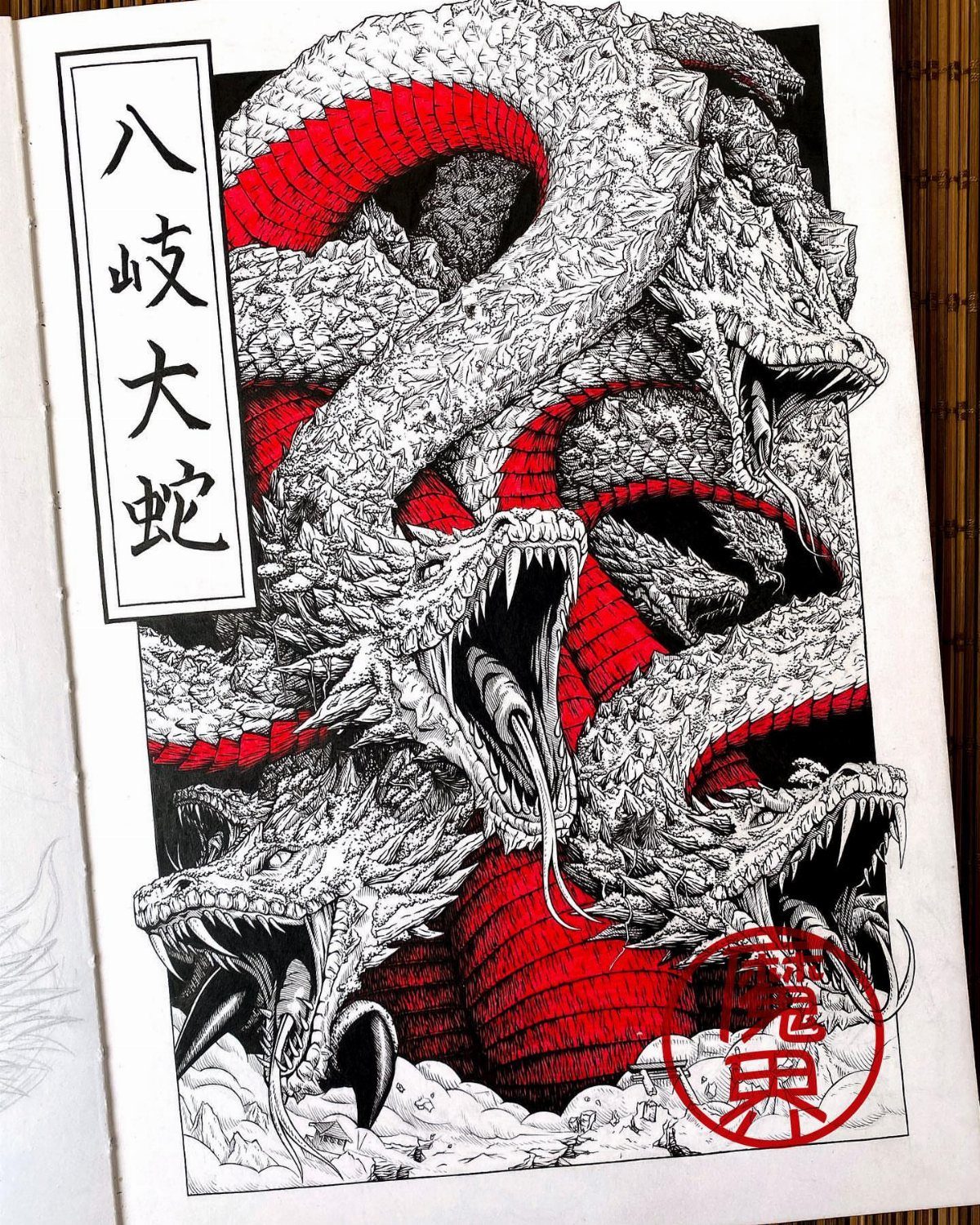
A multi-headed serpent appears in Japanese folklore as Yamata-no-Orochi, an eight-headed dragon slain by the storm god Susanoo. Each head represents a different threat or obstacle overcome at once.
This drawing style holds flat and graphic, with each head clearly separated so the viewer can count them. The red underbelly contrasts with white or black scales, and the open mouths show fangs and tongues in detail.
A design like this works as flash or as the basis for a larger back piece where each head fits into a different section of the composition.
8. Snake and Crane Tattoo Design
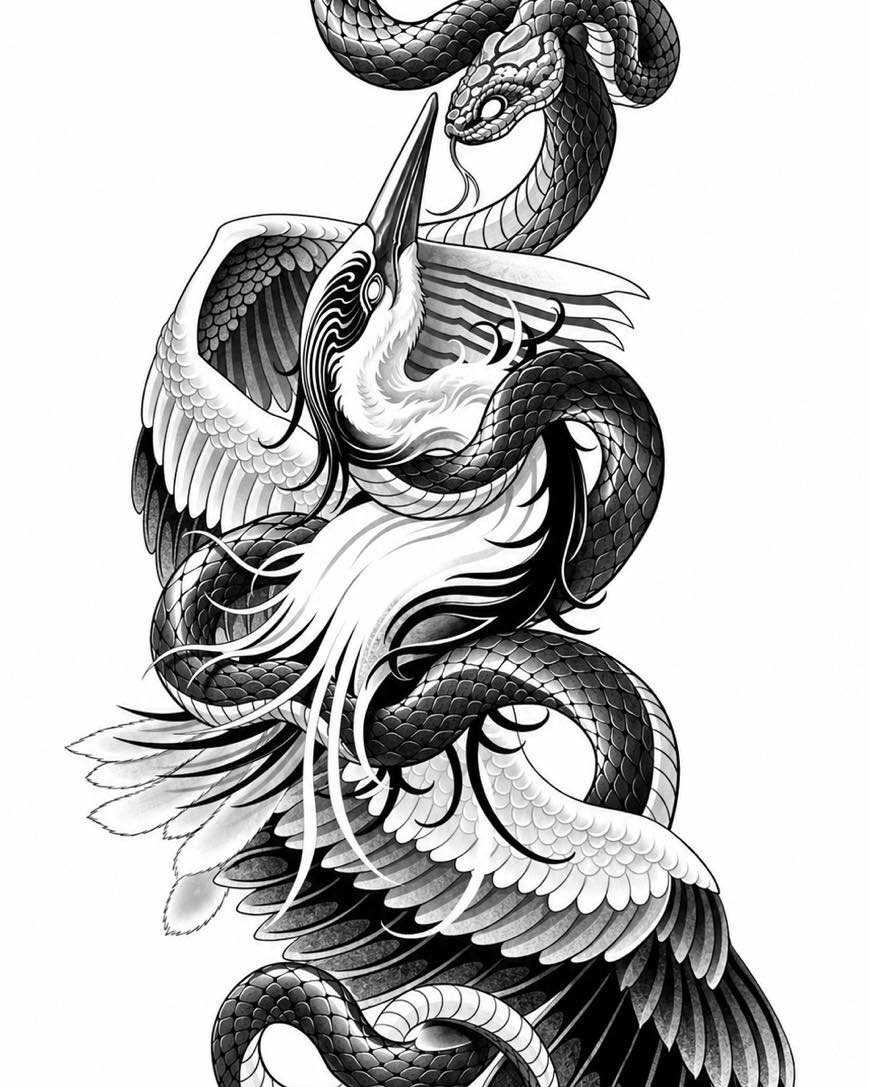
A snake and crane pairing draws from the Japanese symbol of opposing forces: the snake strikes low and coils, while the crane stands tall and moves with precision. The 2 animals balance each other in a single design.
The black-and-white ink style puts all the weight on line work and composition rather than color.
The crane’s wings and the snake’s scales both need detail to read clearly, so this design suits a large area like the back, ribs, or outer thigh.
The snake wraps around the crane without covering its wings or head, so both animals stay recognizable as the tattoo ages.
Cultural Significance
In Shinto belief, snakes appear as messengers of deities and are worshipped at specific shrines where they are thought to bring protection and drive away harm.
The snake, called hebi in Japanese, carries associations with rebirth and transformation rooted in its ability to shed its skin and emerge renewed.
Religious shrines dedicated to the snake exist across Japan, and the creature holds a place in folklore that goes beyond decoration.
The meaning centers on complete change and renewal.
Frequently Asked Questions
What does a snake tattoo mean in Japan?
In Japanese tradition, a snake carries meanings of protection, wisdom, and the power to begin again. The snake, called hebi, is considered sacred in Shinto belief and appears as a messenger of deities at shrines across Japan.
Is it okay to get a snake tattoo?
Yes, a snake tattoo is fine as long as the meaning works for you.
In Japanese culture, snakes carry positive associations with transformation, protection, and good fortune, while Western traditions sometimes view them as symbols of temptation. The meaning depends on what you attach to it personally.
Should a snake tattoo go up or down?
A Japanese snake tattoo should follow the natural lines of your body rather than strictly going up or down.
On an arm, the snake curves with the muscle, and on the back, it coils along the spine or across the shoulder blade. The design needs room to travel, so placement comes down to where the composition reads clearly.