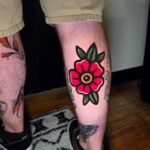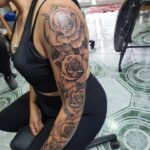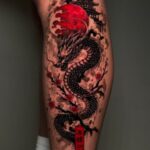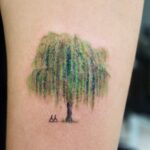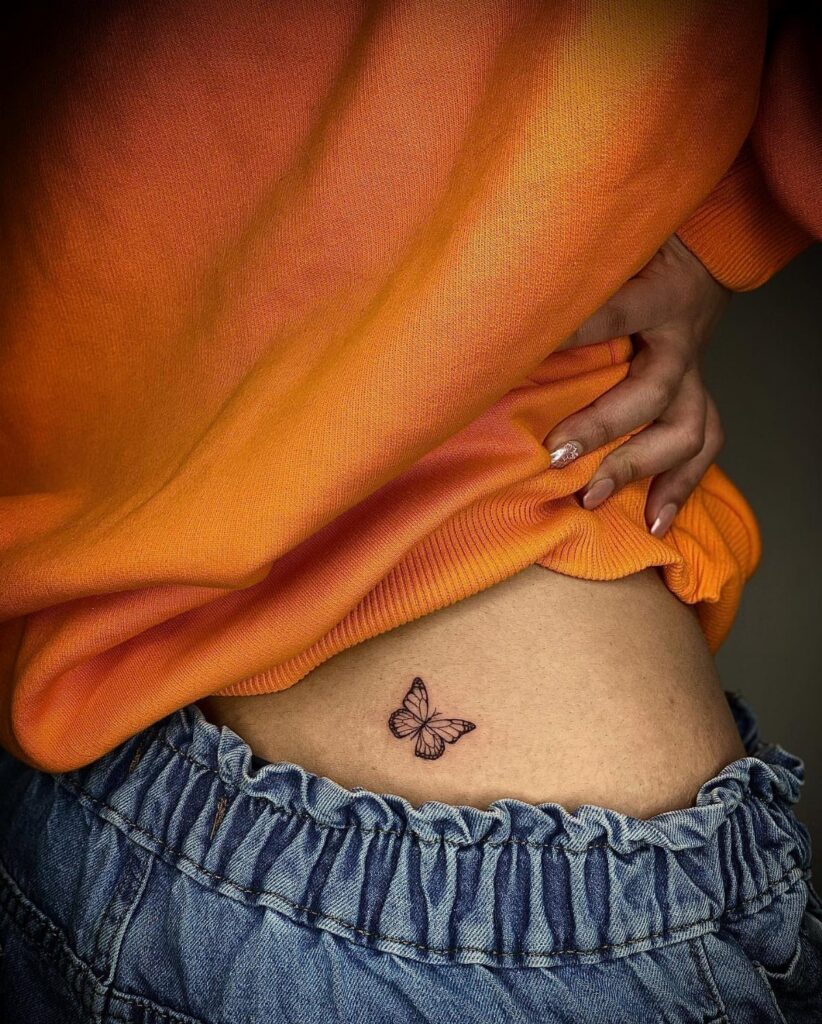
A butterfly on your back can sit centered between the shoulder blades, follow the spine, rest on one shoulder blade, or spread across the upper back, and each spot changes how the design reads and how much skin you’re covering.
The upper back over the shoulder blade sits on muscle and keeps pain moderate, while a design that runs down the spine puts the needle directly over bone and hurts more.
1. Elegant Butterfly Center Back Tattoo
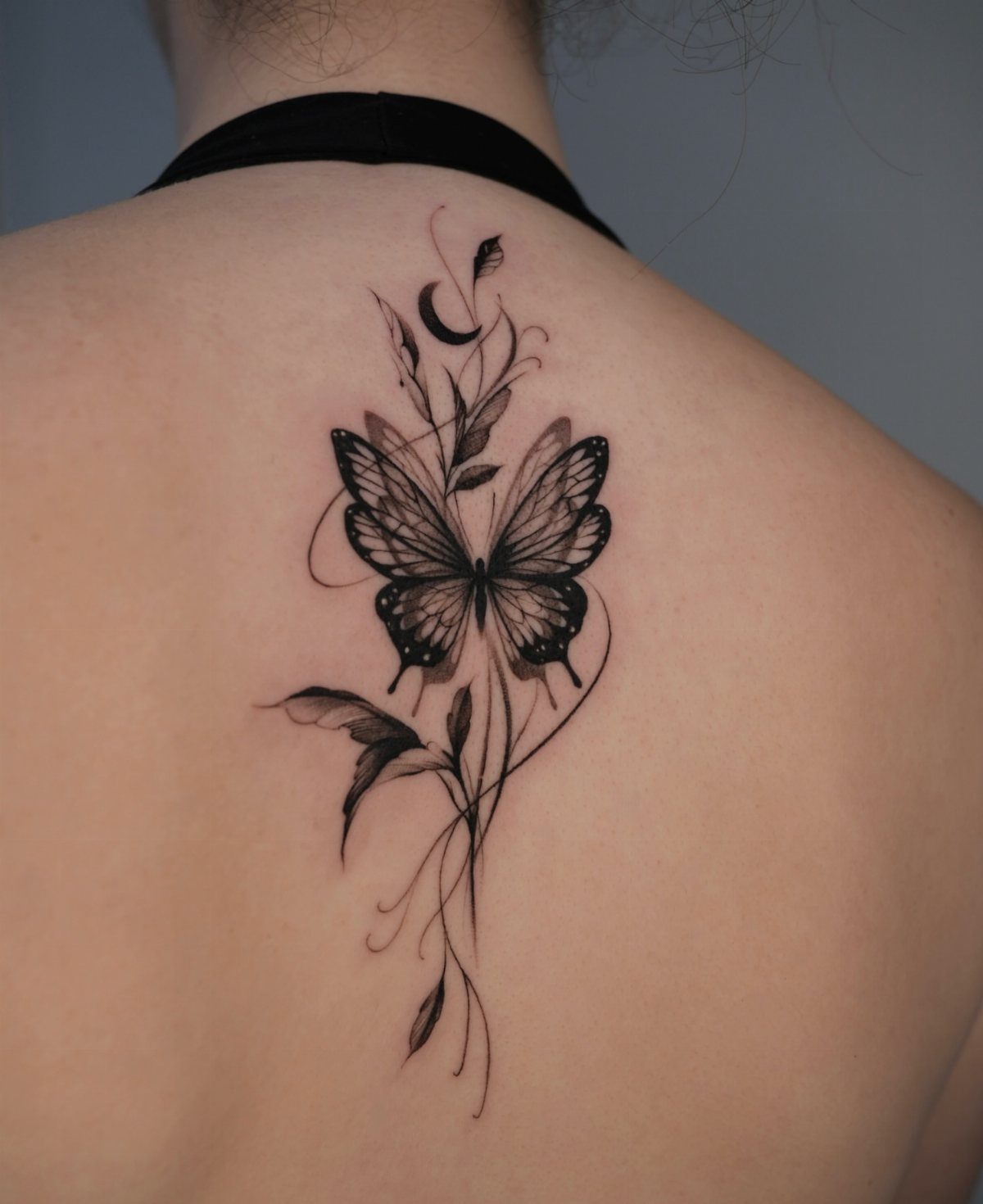
A single butterfly anchored at the center of the upper back commands attention and holds it on its own.
Pain here sits in the middle range.
You’re over muscle and some fat depending on your build, so most people handle it better than a ribcage or spine piece. Healing takes longer if you go large with shading.
If you want one butterfly that reads clearly from across a room, center back does that.
2. Minimal Butterfly Upper Back Tattoo
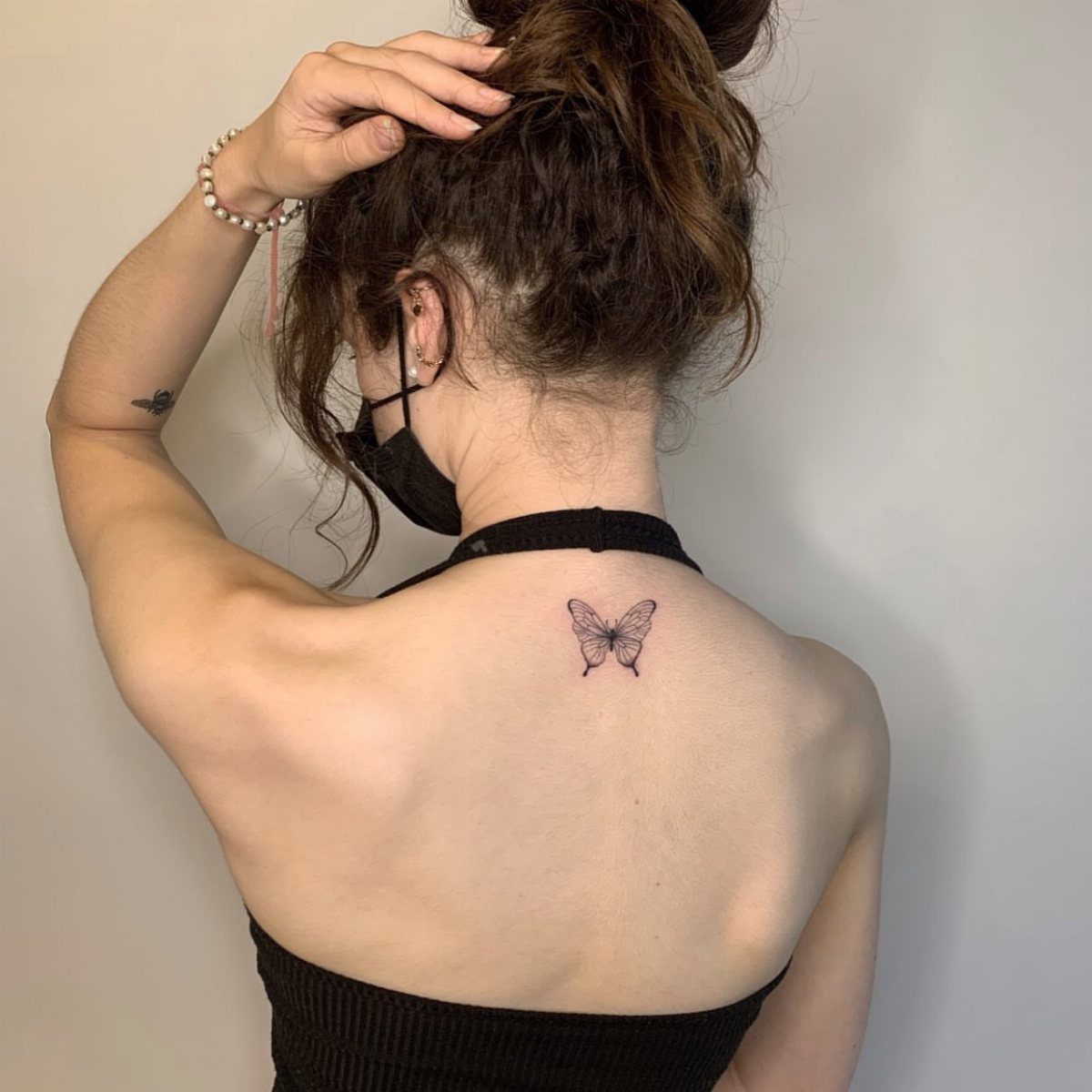
Tucked between the shoulder blades, a small butterfly stays subtle until you want to show it. The spot works if you’re testing the water with your first tattoo or if you prefer ink that doesn’t announce itself in every outfit.
The size keeps the session short, usually under an hour, and the pain level here is moderate. You’re close to bone but the area is small enough that most people finish without trouble.
I like this placement when someone wants the idea more than the spectacle. It’s there when a tank top or open back reveals it, gone the rest of the time.
3. Butterfly Back Tattoo with Soft Shading
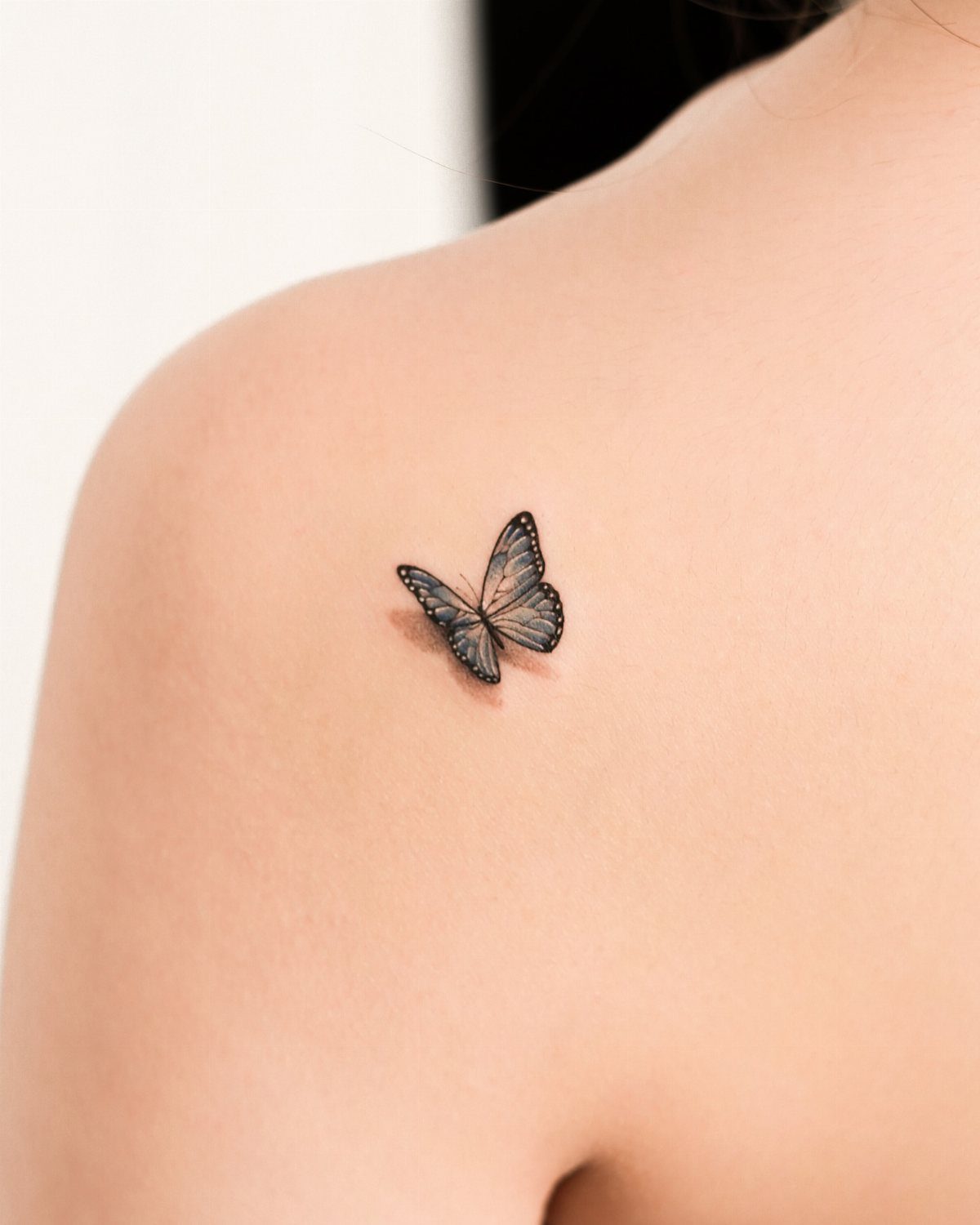
Soft grey shading lifts a butterfly off flat black and gives it dimension without the commitment of color.
The wash technique adds depth to the wings while keeping the overall look understated, which suits someone who wants realism but doesn’t want the design to feel heavy.
Pain on the upper back or shoulder is manageable.
You’re working over muscle, so the needle feels more like pressure than sharp sting. Healing is straightforward as long as you keep the area moisturized and out of direct sun for the first month.
Grey ages well if the artist doesn’t pack it too light. Ask to see healed photos of their shaded work before you book.
4. Symmetrical Butterfly Back Tattoo
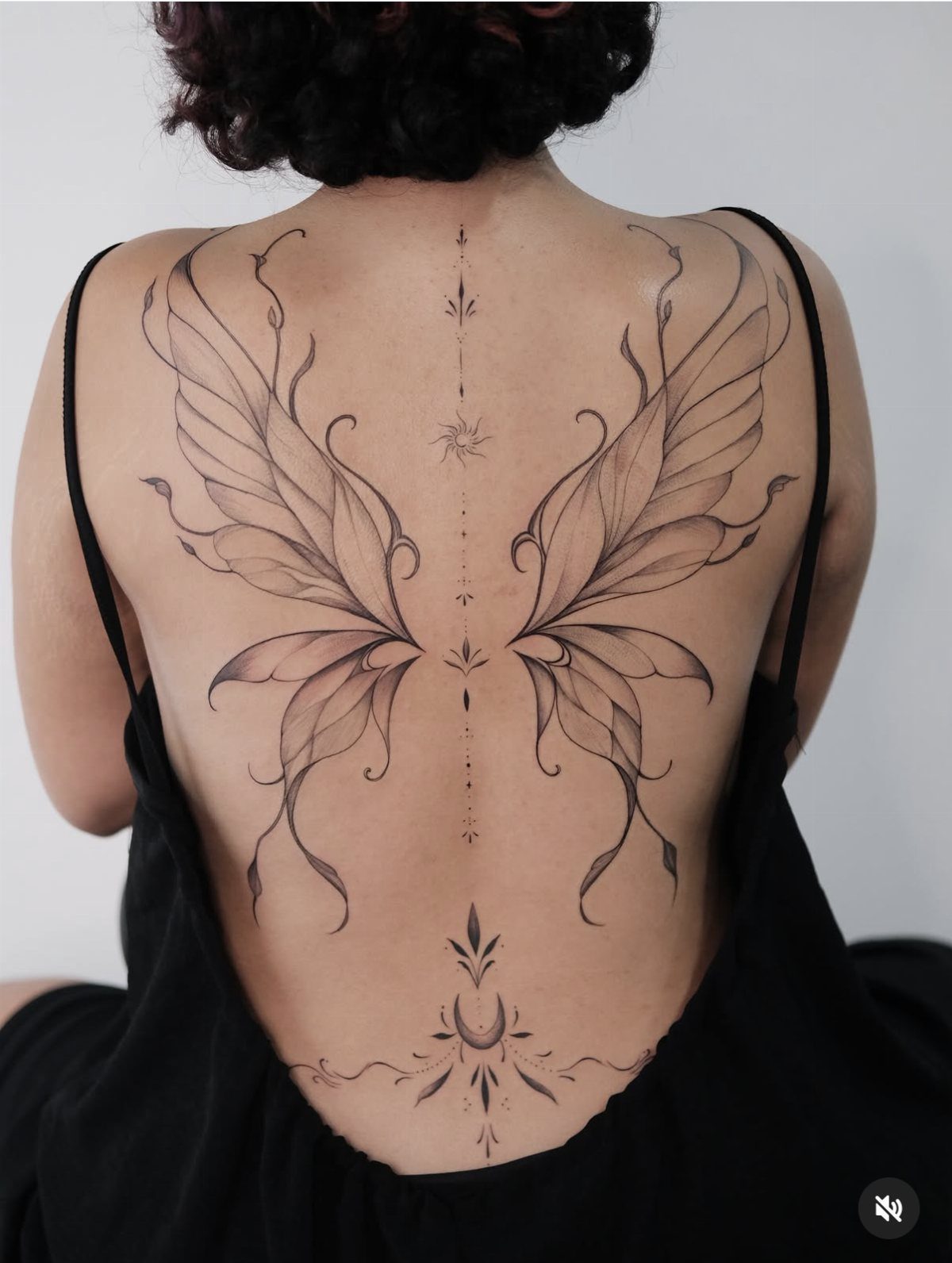
Perfect symmetry across the spine turns a butterfly into architecture.
The wings mirror each other with mathematical precision, and the body of the design follows the centerline of your back. This approach works when the tattoo should feel deliberate and balanced rather than organic.
Spine work hurts.
The needle sits directly over bone with little padding, and you’ll feel every pass. Sessions for a large symmetrical piece depend on detail, so plan accordingly.
Symmetry also locks you in. Adding more tattoos later means they’ll need to respect that central axis or risk throwing the whole composition off.
5. Outline Butterfly Back Tattoo
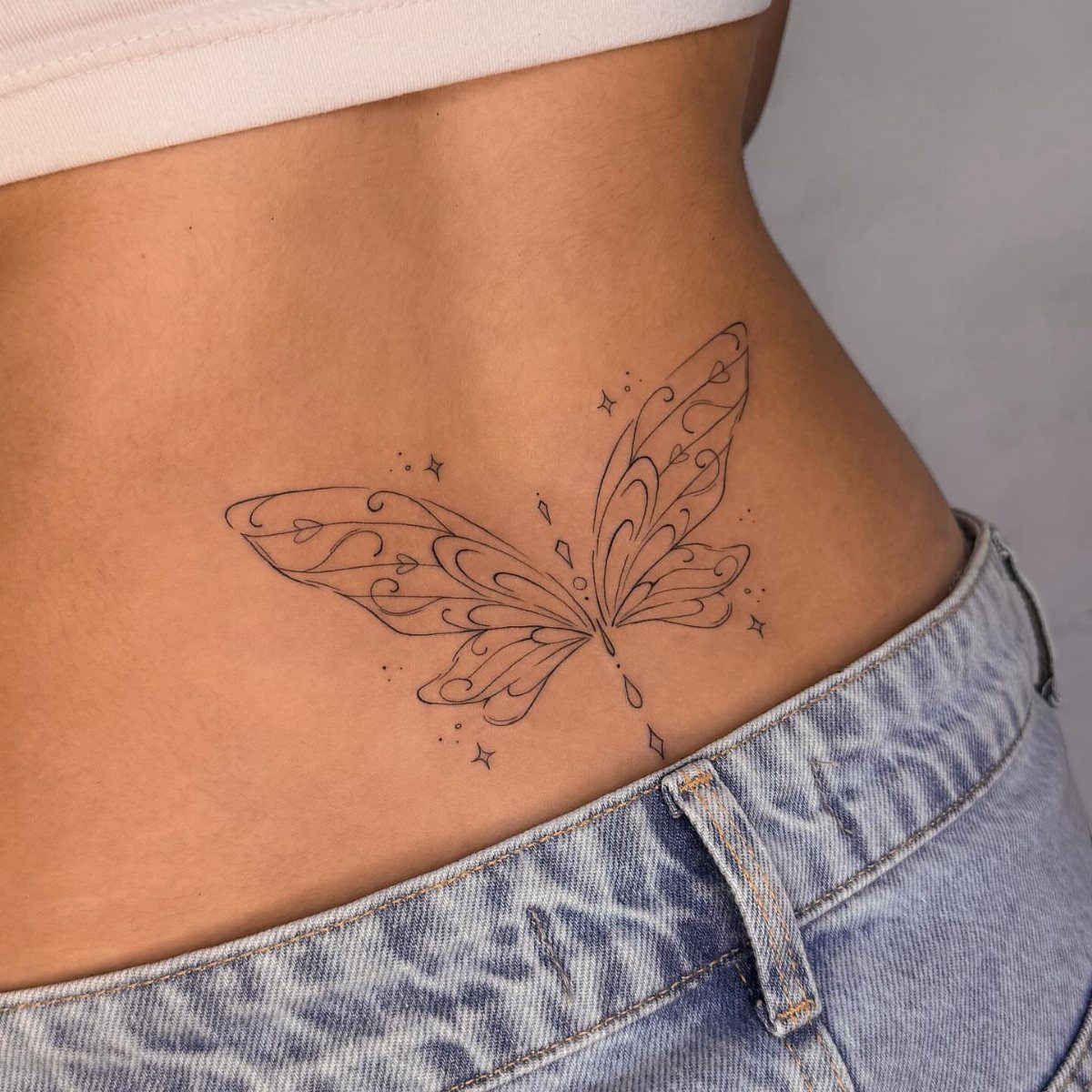
An outline alone strips the butterfly down to its structure.
No fill, no shading, just clean black line defining the wings and body. The look stays crisp and reads fast, which matters for a design that doesn’t ask for a long look to understand.
Lower back keeps the pain moderate.
The area has decent padding and fewer nerve endings than the spine or ribs. Healing is quick, and touch-ups are rare if the lines go in solid the first time.
Outlines hold up well over time as long as the lines aren’t too thin. Aim for enough line weight so the design doesn’t blur as your skin ages.
6. Butterfly Back Tattoo with Flowing Placement
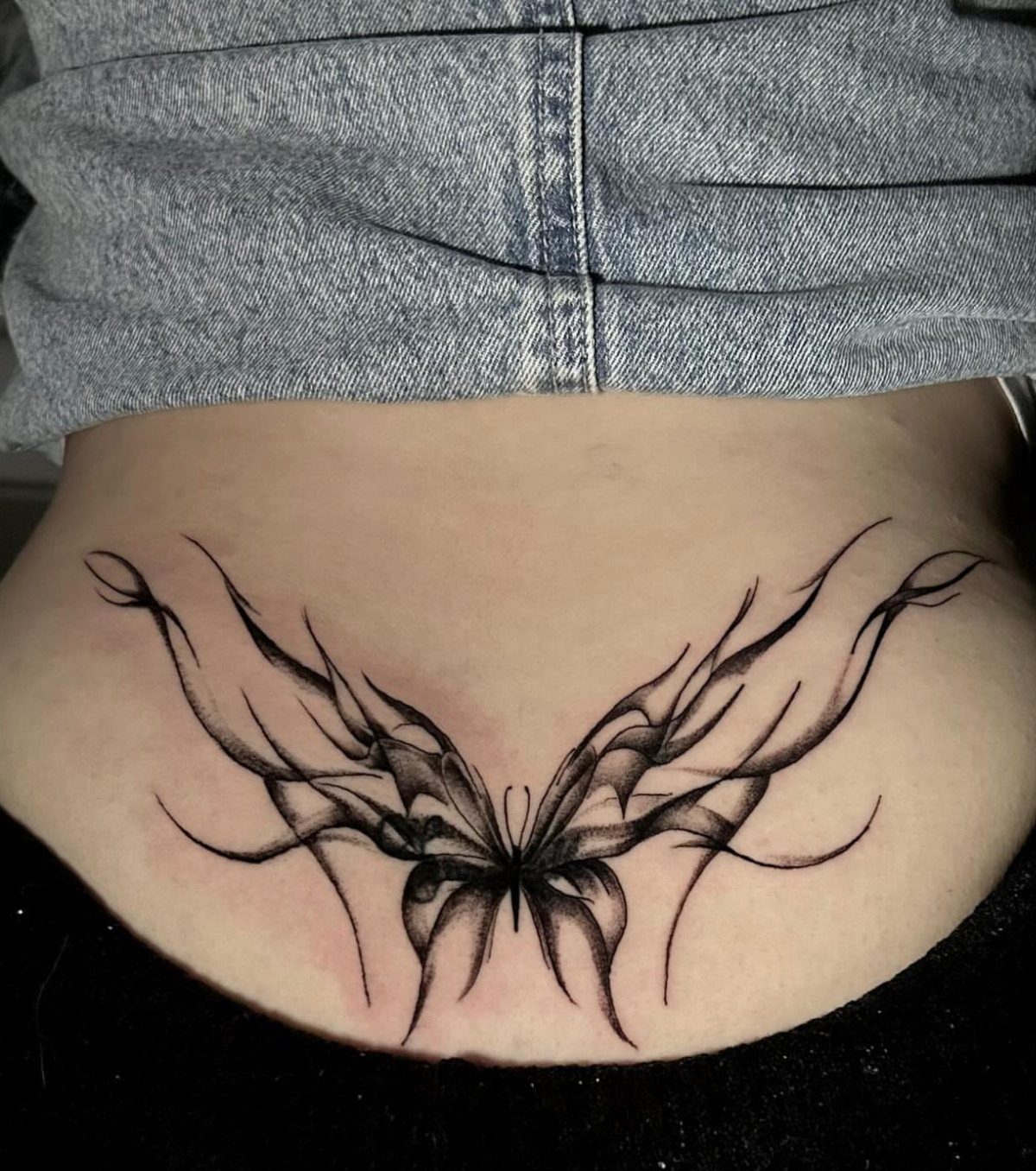
When the butterfly moves with the curve of your lower back instead of sitting rigid and centered, the design feels like it belongs to your body rather than being stamped onto it.
The wings can stretch wider on one side or tilt to match the slope from spine to hip, and that movement makes the piece feel less static.
Lower back pain is tolerable for most people. You’re working over the sacrum, which has more padding than the upper spine.
Flowing placement does mean the tattoo won’t look the same when you’re standing versus sitting or leaning. If perfect symmetry matters to you, this isn’t the move.
7. Butterfly Back Tattoo Along the Spine
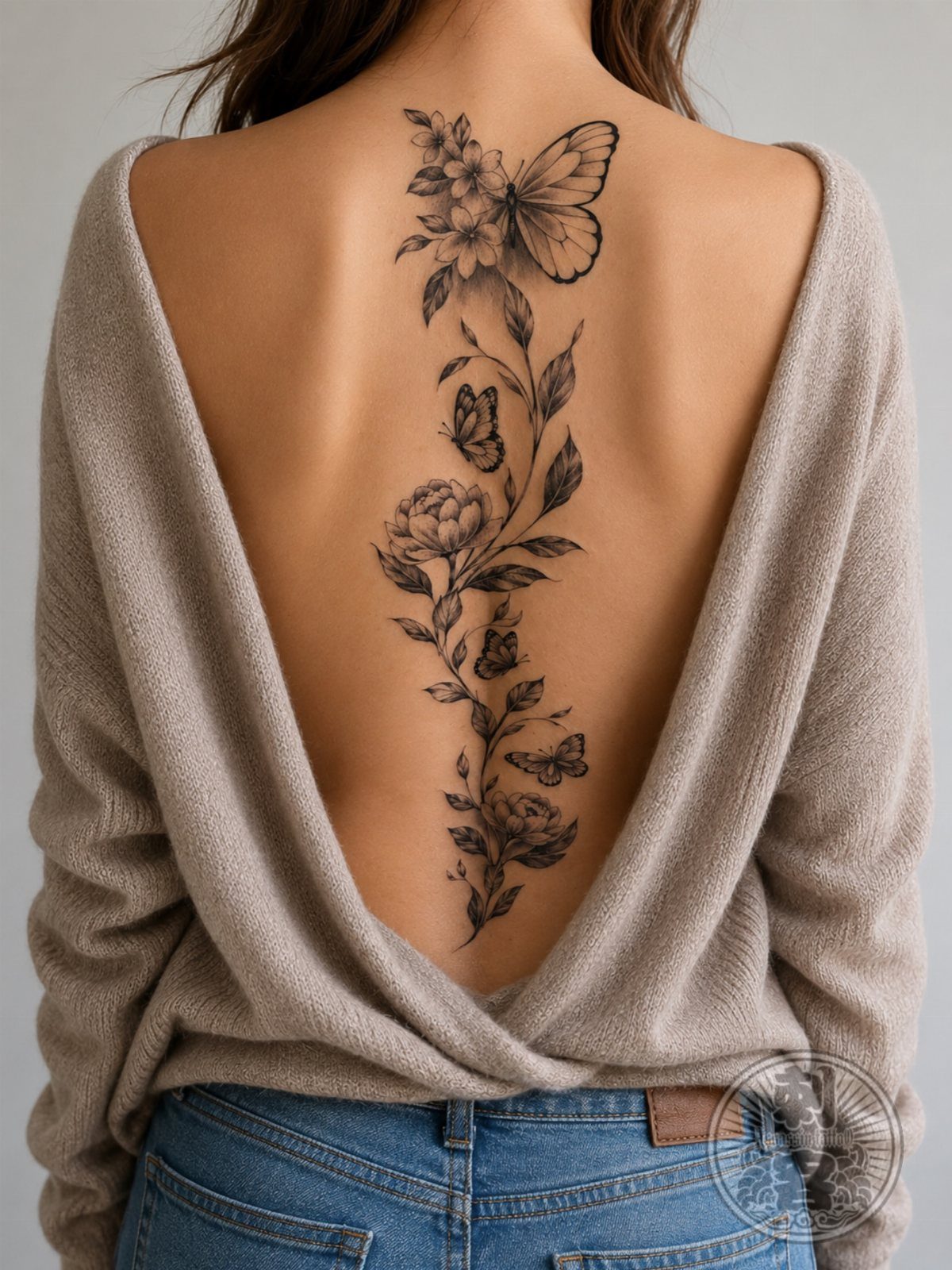
A vertical line of butterflies running down the spine turns the body’s centerline into a natural guide for the design.
The butterflies can stack close or space out with flowers between them, and the whole piece moves with you when you walk or turn.
Spine work hurts more than shoulder or lower back.
You’re over bone the entire way, and longer sessions mean more time managing that discomfort. Expect multiple sittings if the design runs from neck to sacrum.
The vertical format reads best when you’re standing straight. Bending or twisting will shift how the piece looks, so ask your artist to stencil it while you’re in a neutral position.
8. Butterfly Back Tattoo with Subtle Linework
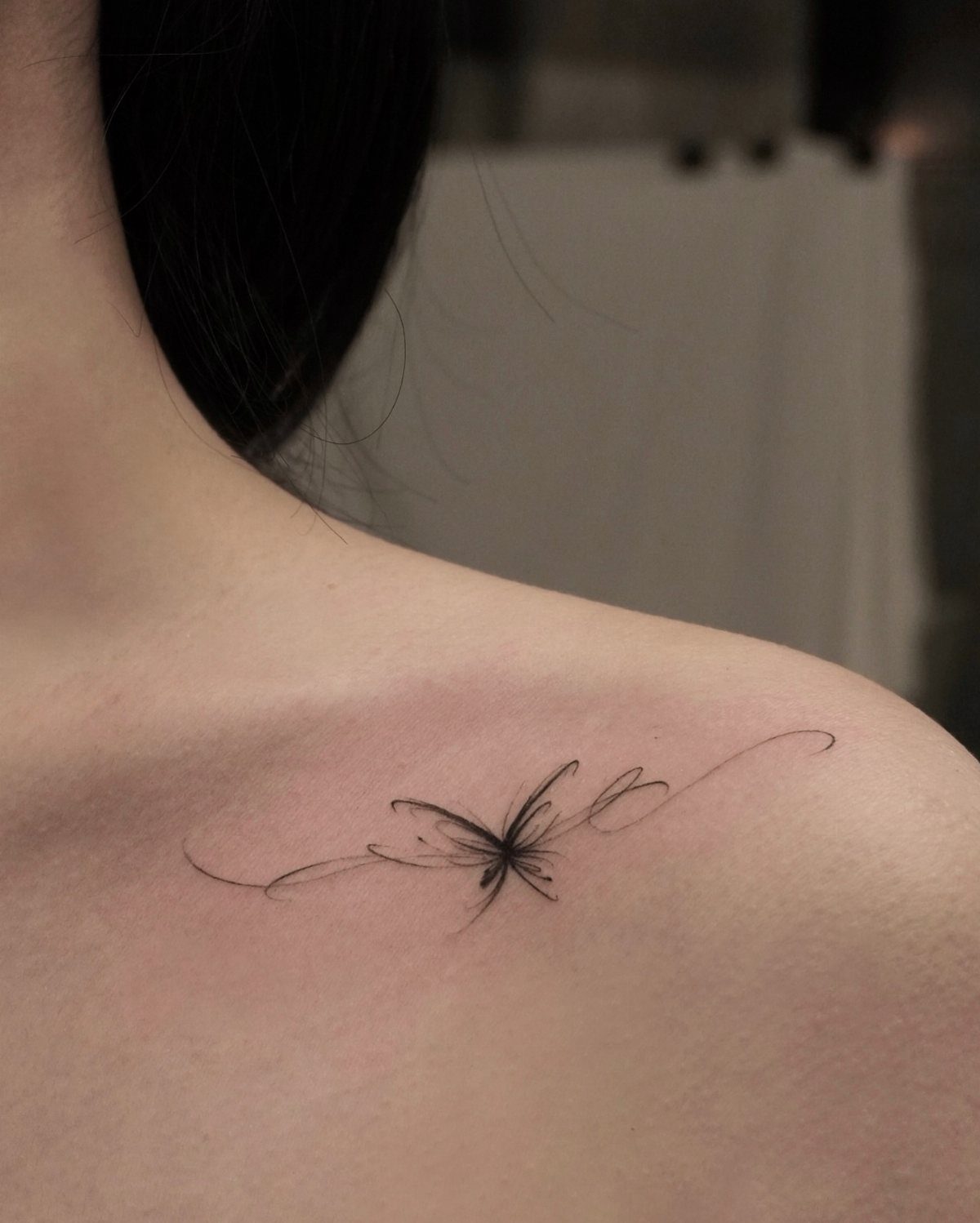
Thin lines that barely land on the skin give you a butterfly that feels present without shouting.
The linework stays delicate, sometimes broken in places, and the wings hold their shape without heavy outlines. This works when you want something that reads more like a sketch than a bold statement.
Fine lines do fade faster than heavier work. If you go this route, plan for an eventual touch-up to keep the design readable.
9. Butterfly Back Tattoo with Flowers
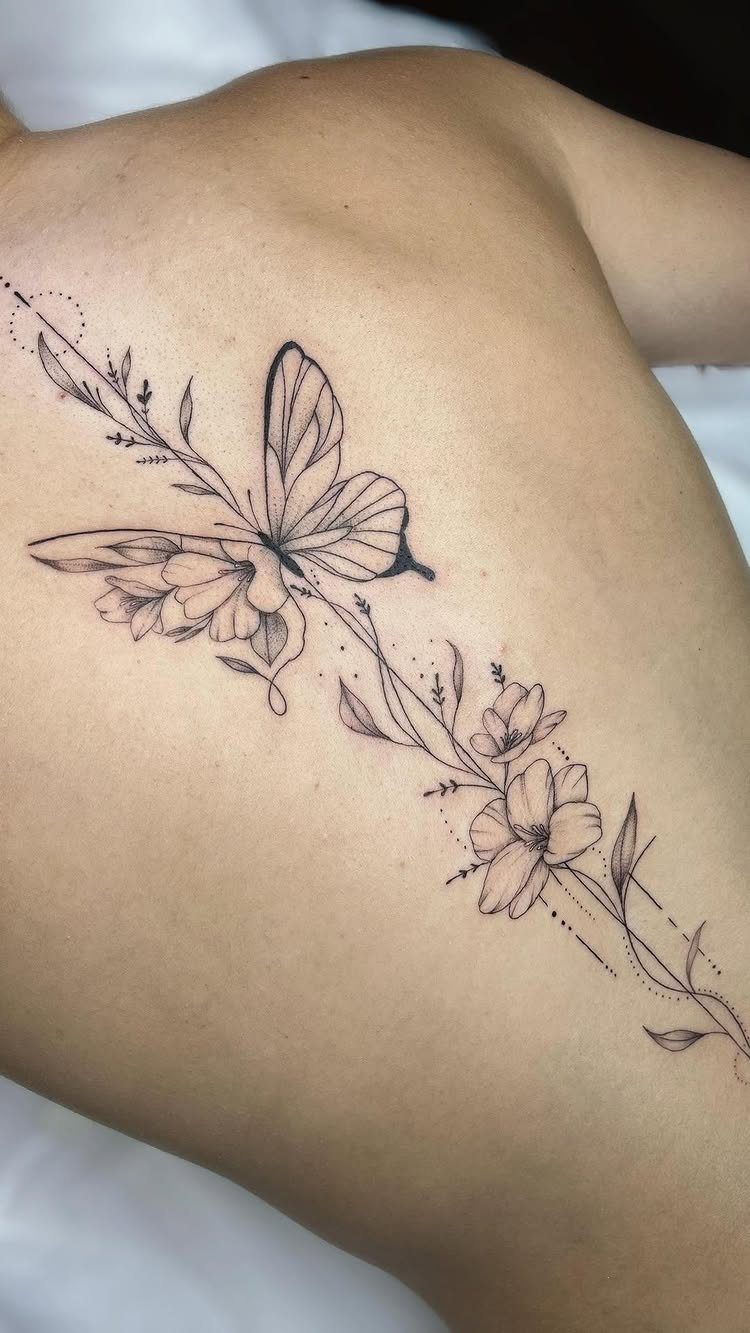
Pairing a butterfly with small flowers or vines softens the design and fills space without adding a second large element.
The florals can trail from the wings or wrap around the butterfly’s body, and the combination reads as one piece rather than two separate tattoos placed near each other.
You’re over muscle with good padding, so sessions tend to move quickly.
Flowers do add detail, which means more time under the needle and a higher price. Cost depends on the size of the butterfly and how much floral work you add.
10. Butterfly Back Tattoo with Light Dotwork
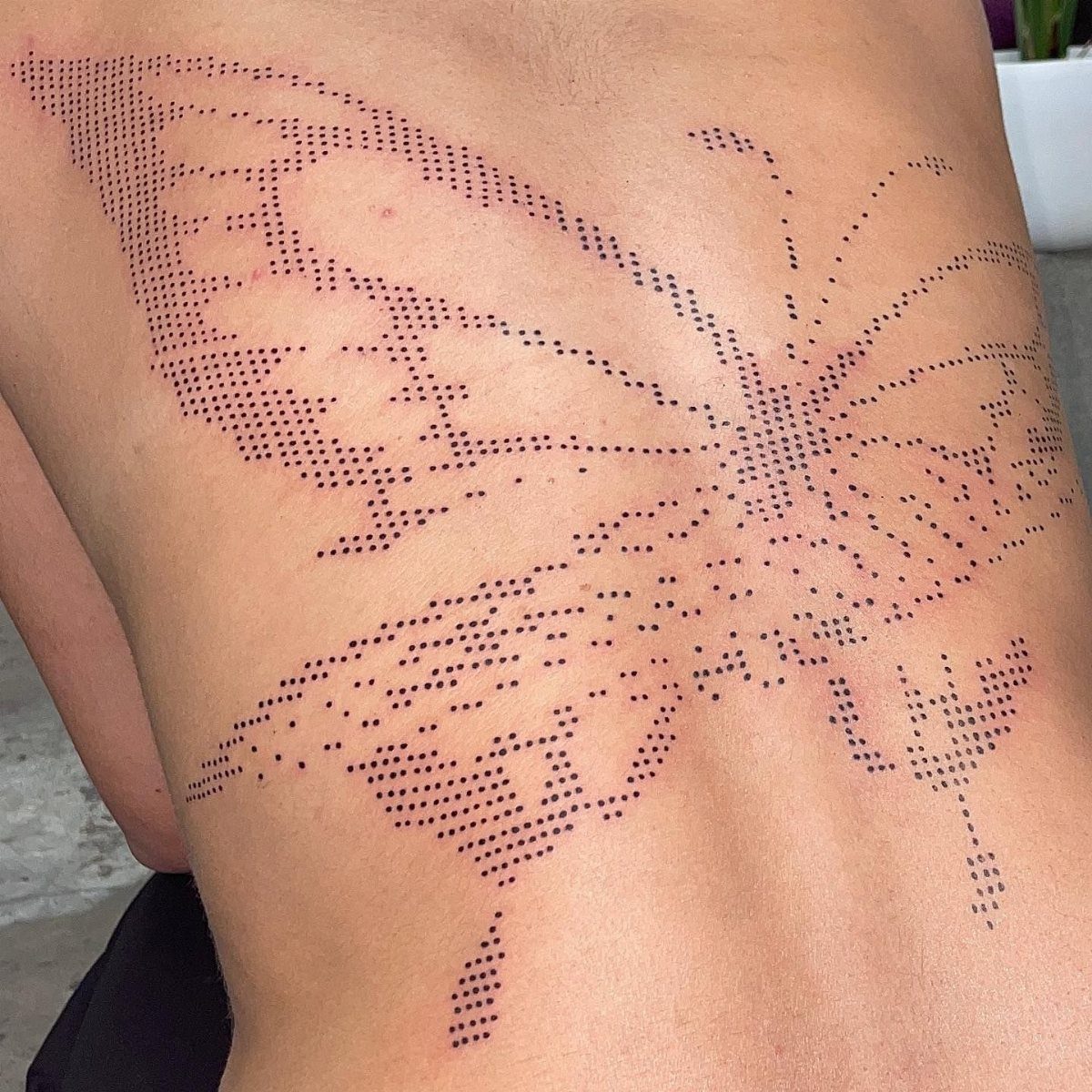
Dotwork builds the butterfly one tiny point at a time, and the texture it creates sits somewhere between solid shading and open line.
The wings get their depth from how tightly the dots cluster, and the technique works well for large pieces where you want gradation without heavy black fills.
Back placement is ideal for dotwork because the flat surface lets the artist control the spacing evenly. Pain is moderate, but dotwork takes longer than solid shading, so plan for a longer session.
The stippled texture holds up well over time if the artist doesn’t go too light with the initial application.
11. Butterfly Back Tattoo with Artistic Composition
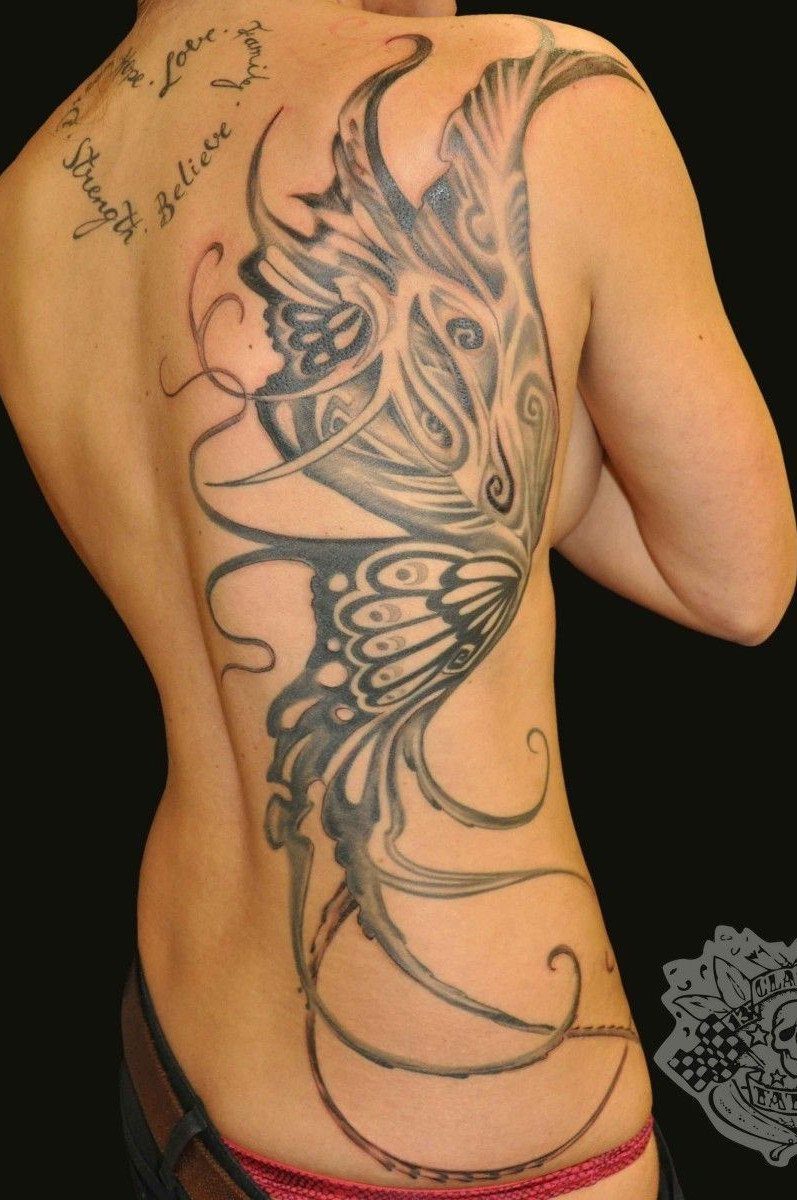
When the butterfly sprawls across your entire back with abstract lines or stylized wings that blur the realistic form, the piece stops being a simple insect and becomes a composition that uses your body as the canvas.
The design might include script, geometric shapes, or flowing lines that extend past where a real butterfly’s wings would end.
Full back pieces take multiple sessions depending on detail.
Pain varies by section: spine and ribs hurt more, shoulders and lower back less. Cost varies widely depending on the artist and the scope of the design.
This is the move when you want your back tattoo to be the tattoo, the one that defines your ink rather than sitting alongside other pieces.
Frequently Asked Questions
What does butterfly tattoo mean on the back?
A butterfly on the back represents transformation, beauty, and freedom.
The placement gives you control over when it’s visible, which suits someone who wants the symbolism without announcing it in every setting. Back placement also offers enough space to show wing detail clearly, whether you go minimal or large.
How much should a butterfly tattoo cost?
Cost depends on size, detail, and how long the session runs.
A small outline on the upper back might finish in under an hour and cost less, while a large piece with shading or dotwork across the entire back takes multiple sessions and runs higher.
Ask your artist for a quote based on the specific design and placement you want.