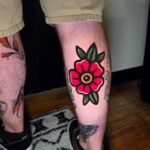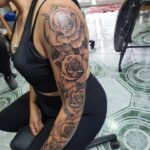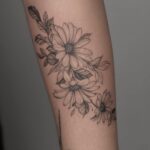
June’s 2 birth flowers give you different design directions: the rose sits bold and recognizable in almost any placement, while honeysuckle moves in a vine-like line that wraps or follows the natural shape of your forearm or wrist.
The choice comes down to whether you want a single rose, honeysuckle on its own, or a bouquet that can stretch vertically or curve around a limb.
Fine line work keeps both flowers legible over time, though realism with full shading requires enough surface area for the gray tones to build depth without crowding the petals.
1. June Birth Flower Rose Tattoo
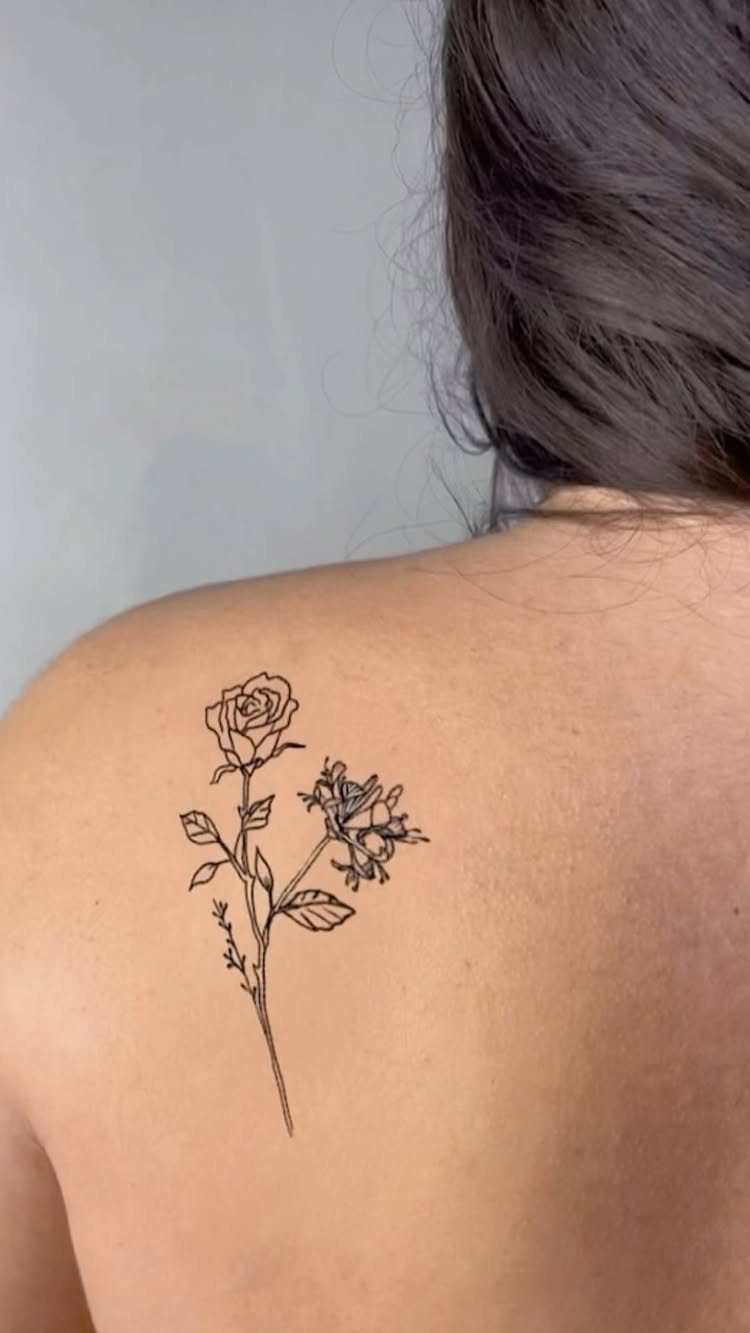
A rose sits at the center of June birth flower tattoos because it carries love, beauty, and strength in one recognizable shape.
The upper back gives you room for a single bloom with a few smaller companion flowers, and the placement lets you keep it private or show it off depending on what you wear.
Fine line work keeps the design clean and legible over time. A rose reads clearly at almost any size, though enough detail to show the petals means choosing a spot that can hold it.
Roses are an evergreen tattoo motif. Be it rose or honeysuckle, the beauty about june birth flowers is that you can customize the color.
2. June Birth Flower Honeysuckle Tattoo
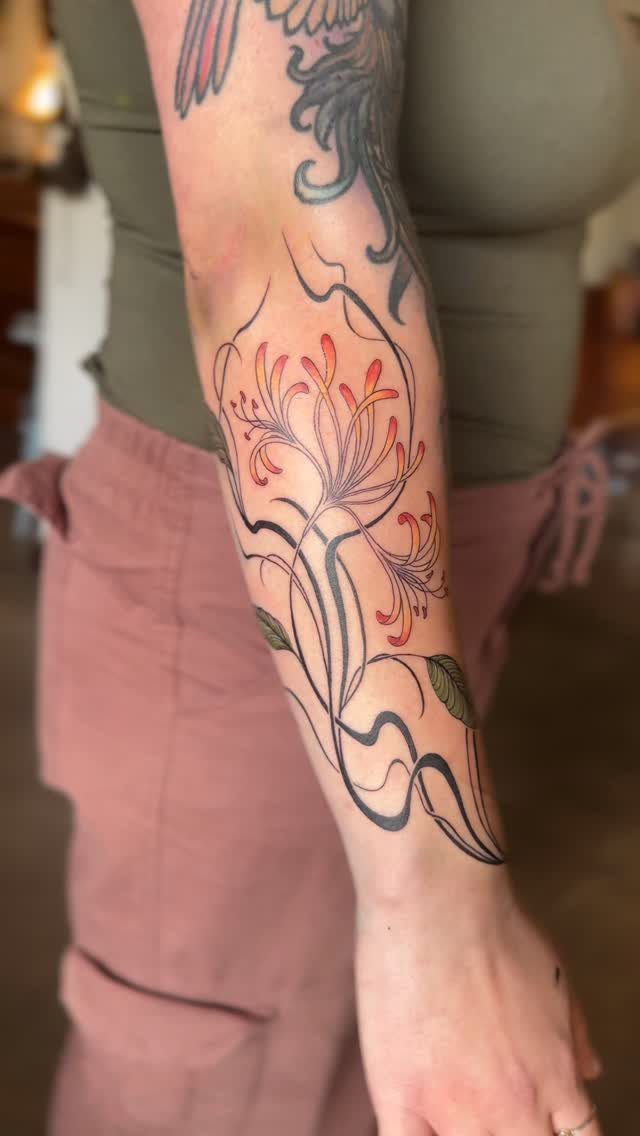
Honeysuckle is June’s second birth flower, and it brings a lighter, more delicate alternative to the rose. The vine-like structure and tubular blooms give you a design that moves with your forearm or wraps around your wrist.
Orange and yellow petals add warmth without needing full color fill. I prefer black linework with selective color on just the petals, which holds the composition together and ages better than a fully saturated piece.
A honeysuckle cluster fits most forearm placements and still shows the characteristic trumpet shape that makes the flower recognizable.
3. June Birth Flower Bouquet Tattoo
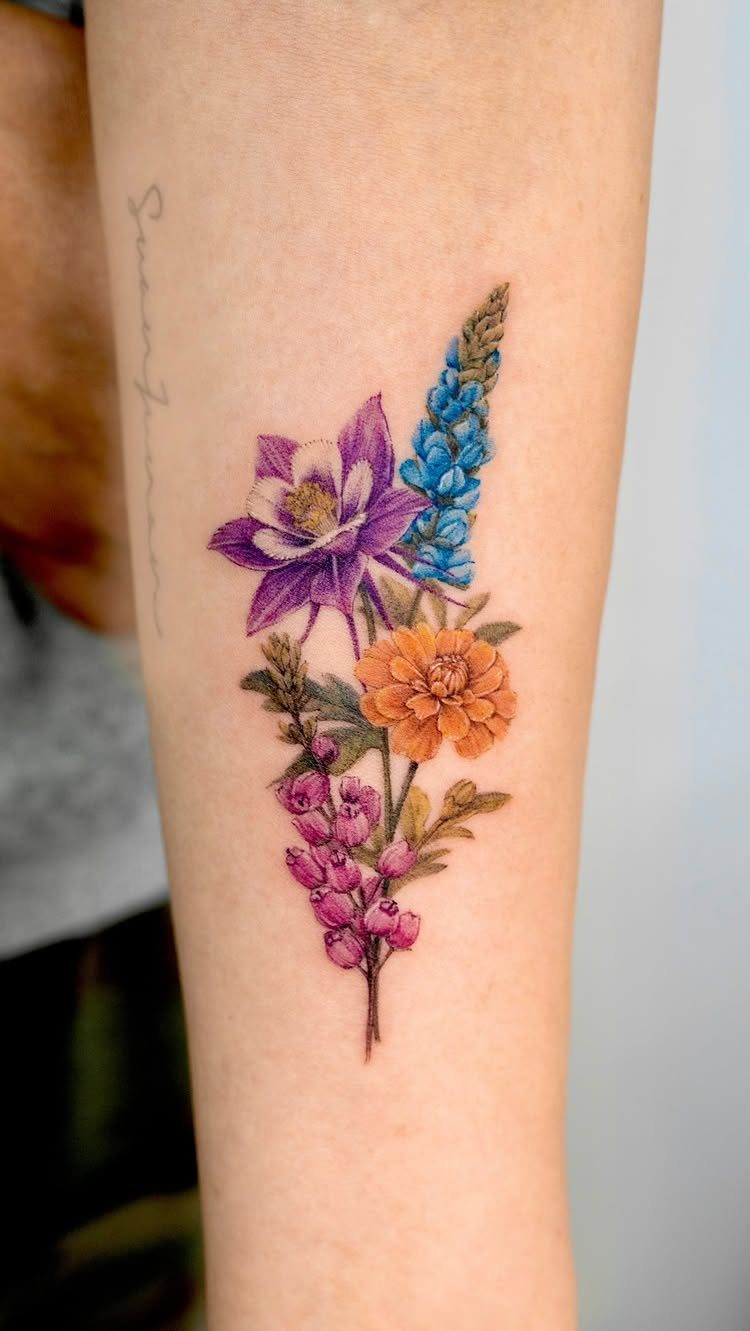
A bouquet tattoo lets you combine both June birth flowers in one design, along with any other blooms that matter to you.
The fuller composition works well on the forearm or upper arm, where you have enough width to balance multiple flower heads without crowding them.
Color brings each flower forward and keeps them distinct from one another.
Purple, blue, and orange blooms sit next to each other without blending when the linework stays crisp. Size depends on how many flowers you include and giving each bloom enough space to read clearly.
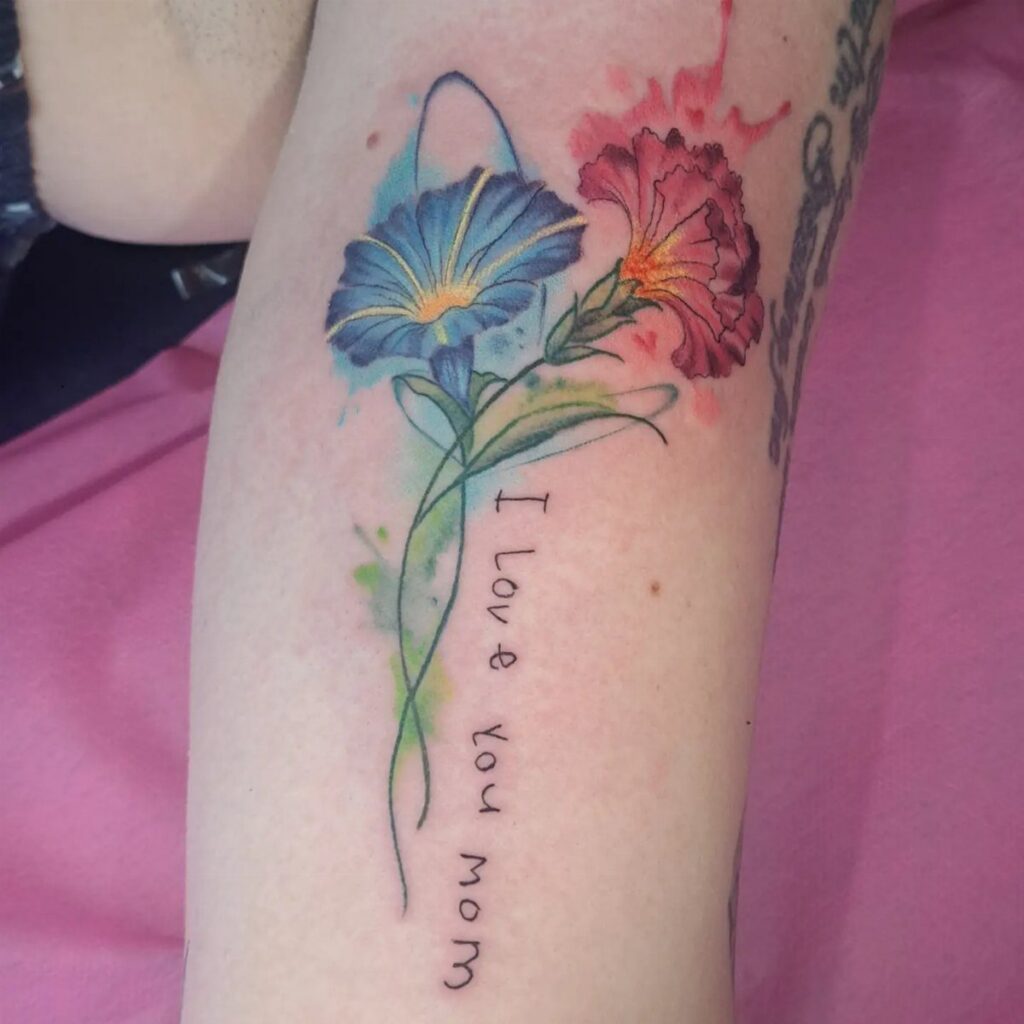
4. June Birth Flower Watercolor Tattoo
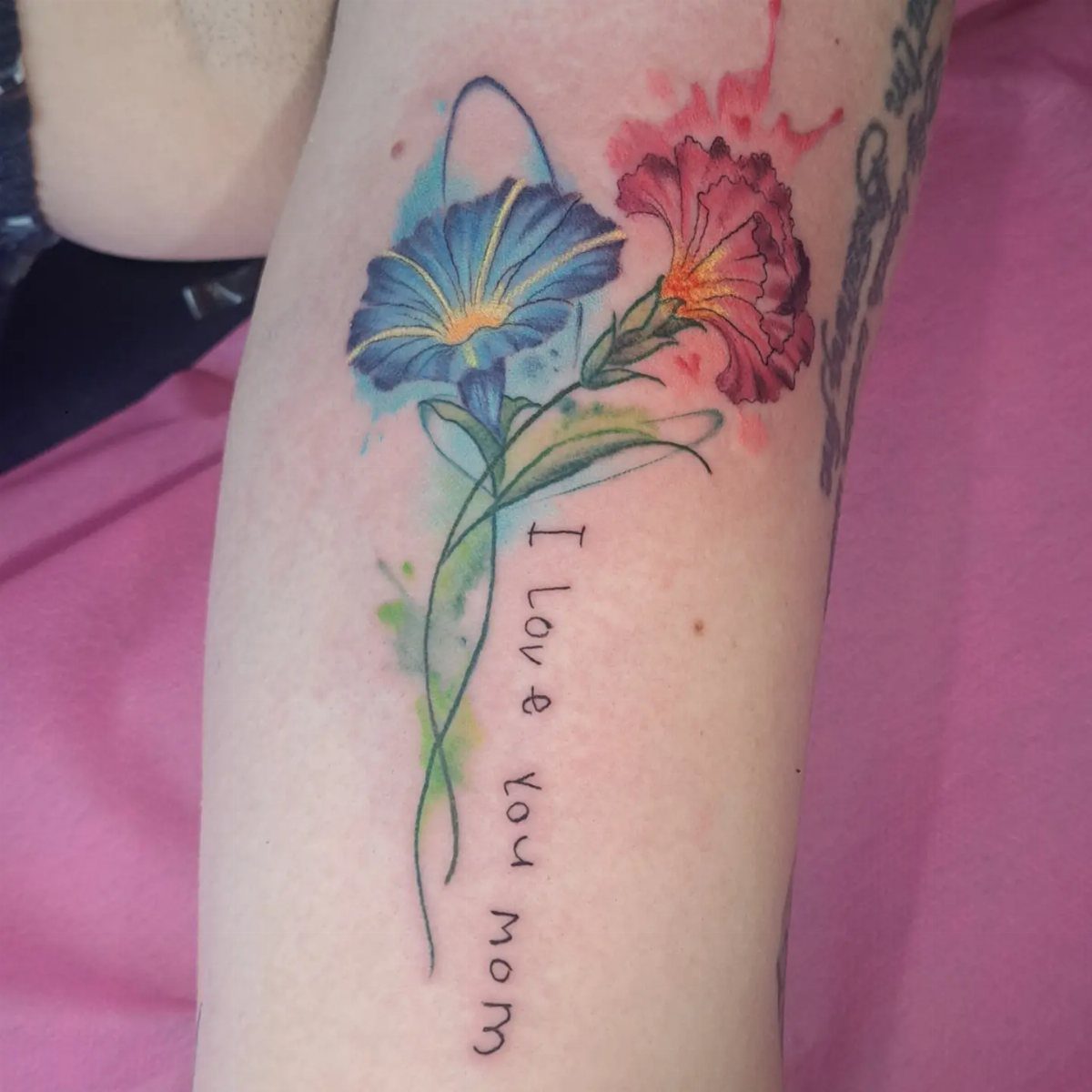
Watercolor technique softens the edges and blends colors the way paint spreads on wet paper. Blue and red petals blur into each other, and the style works especially well when you want to dedicate the tattoo to someone specific.
The downside is how it holds up. Watercolor tattoos fade faster than solid linework because the color sits without a strong outline to hold it in place.
If you choose this style, plan on a touch-up every few years to keep the colors bright. The color needs room to spread without losing the flower shape entirely.
5. Fine Line June Birth Flower Tattoo
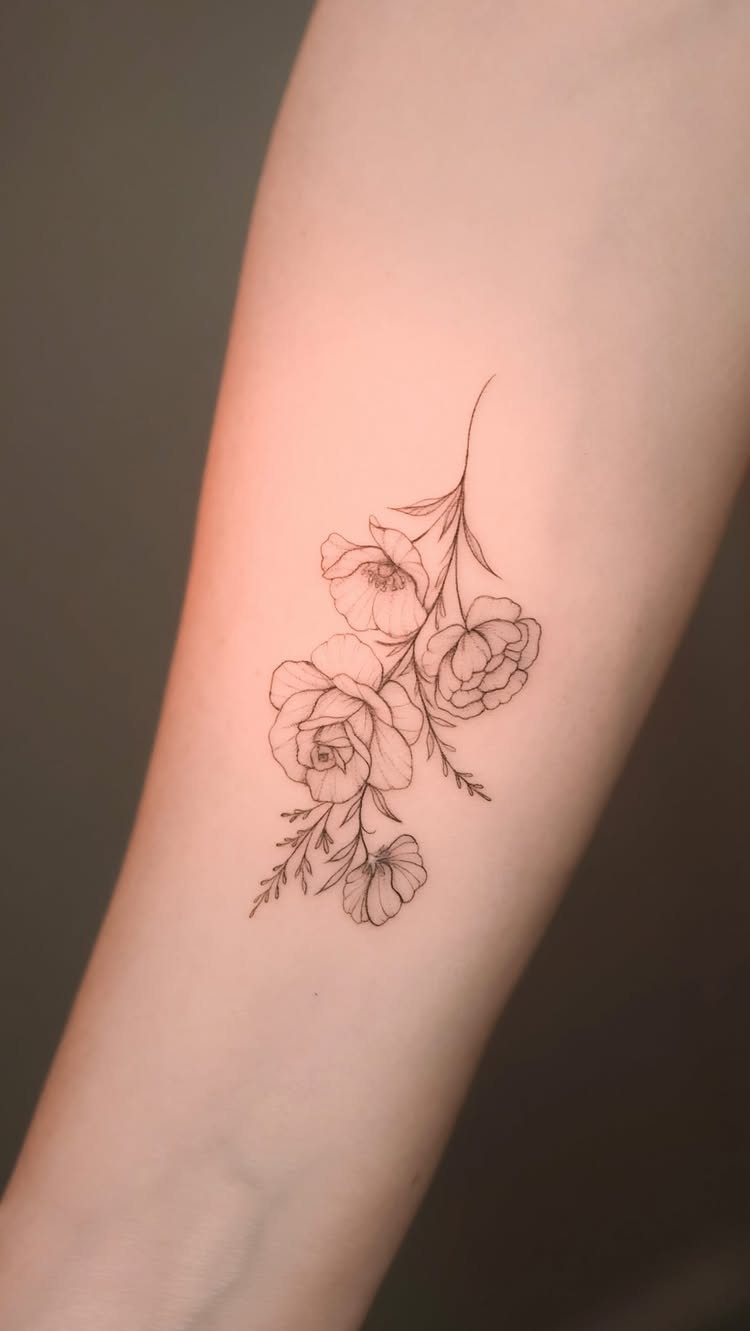
Fine line tattooing uses needles as thin as a single point to build detail with minimal weight.
A rose done in this style shows individual petals and subtle shading without the boldness of traditional work, and the result feels modern and restrained.
This approach suits smaller placements like the forearm, ankle, or behind the ear, where you want a birth flower that doesn’t dominate the space.
The downside is durability: fine lines can blur over time, especially in areas that see a lot of sun or friction. Choose a spot that stays relatively protected.
6. Honeysuckle and Bee Combined Tattoo
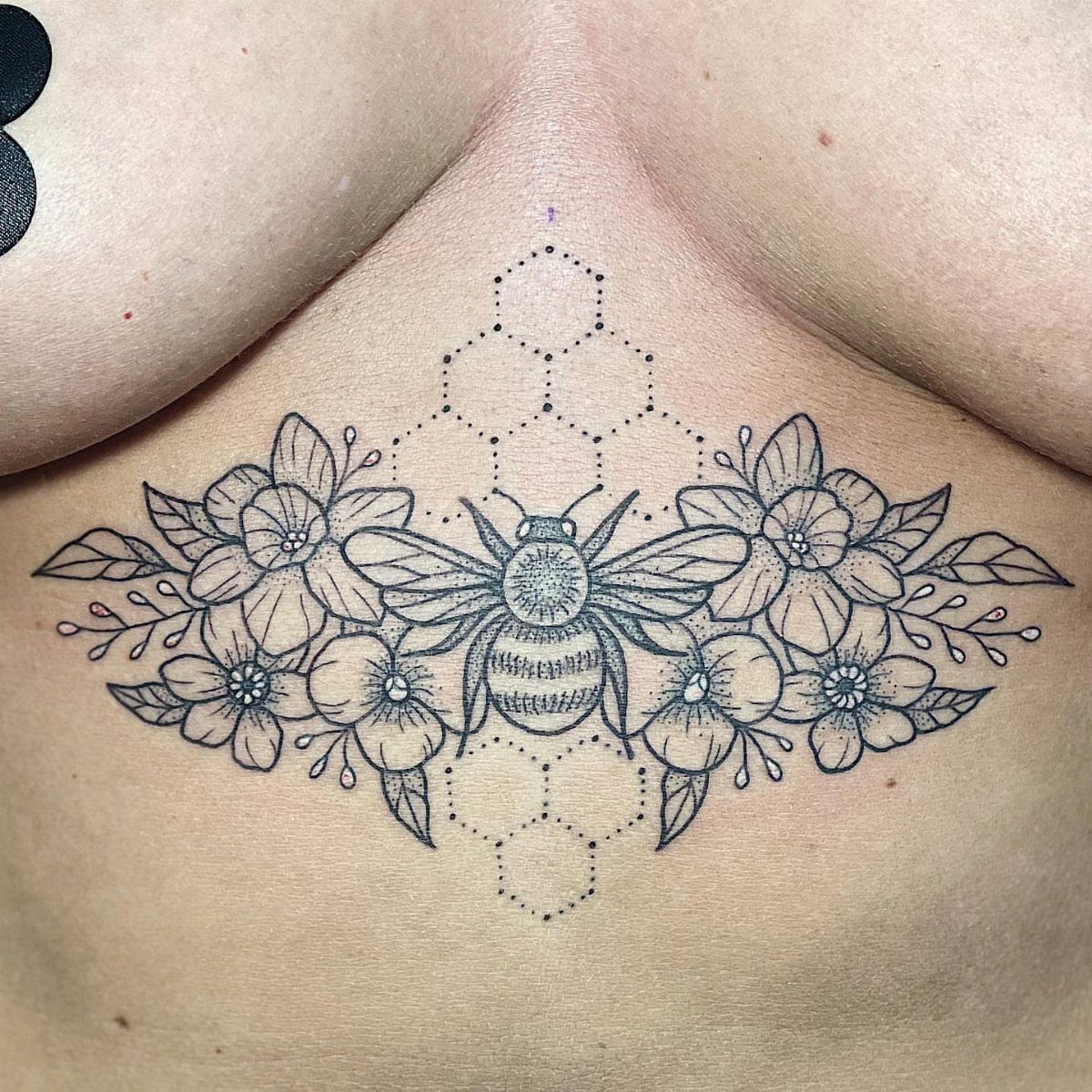
Adding a bee to honeysuckle gives the design movement and a natural pairing, since bees pollinate the flowers in real life.
The sternum placement centers the bee and lets the honeysuckle branches spread symmetrically to either side, which works well with the body’s natural lines.
Honeycomb patterns fill negative space and tie the bee into the composition without adding more floral elements.
This style suits someone who wants a nature scene that feels complete rather than decorative. Size depends on how much of the sternum you want to cover and balancing the bee and flowers so neither one feels cramped.
7. Realistic Rose June Birth Flower Tattoo
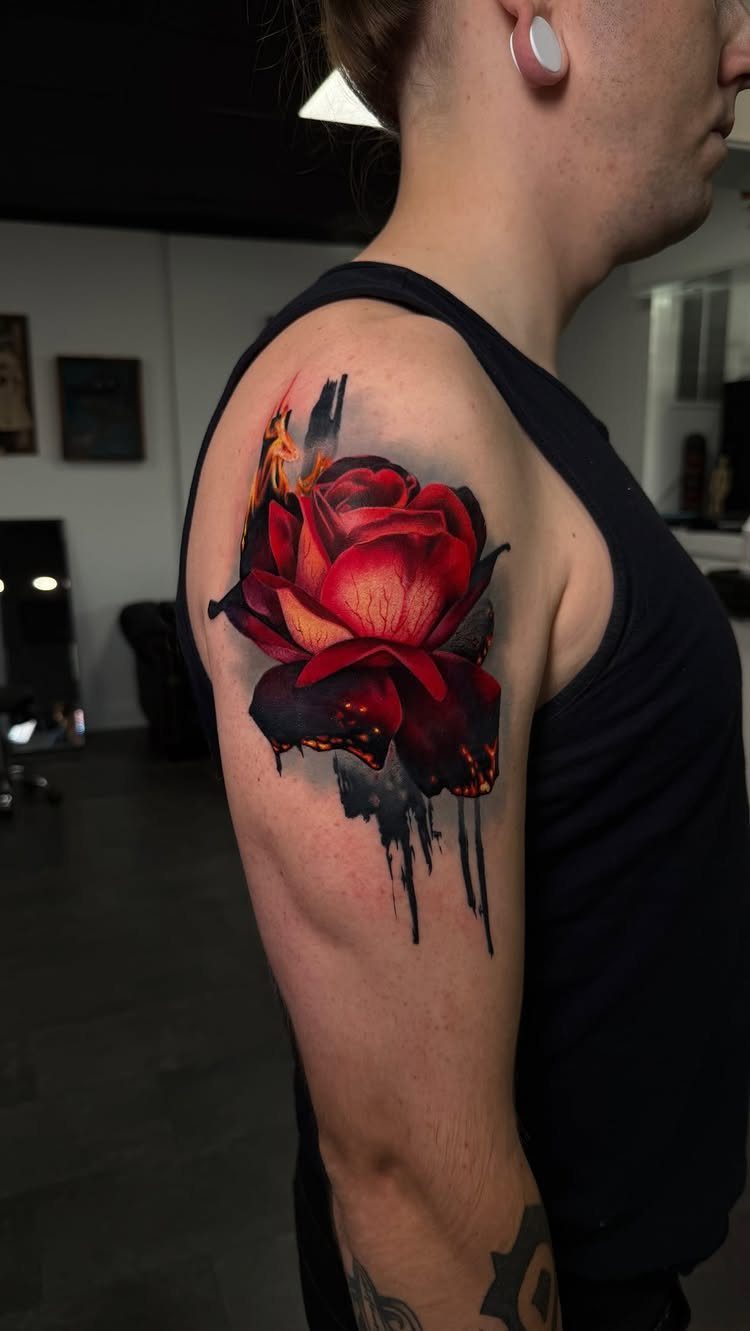
A realistic rose tattoo builds depth through shading that mimics how light falls across real petals.
The dripping ink detail gives the design an edge without adding another floral element, and the contrast keeps the rose recognizable even from a distance.
Upper arm placement gives you enough surface area for the shading to read clearly.
Realism requires more sessions than line work because the artist layers gray tones to create dimension. A birth flower that feels dramatic rather than delicate lands right here.
8. Rose and Crescent Moon Tattoo
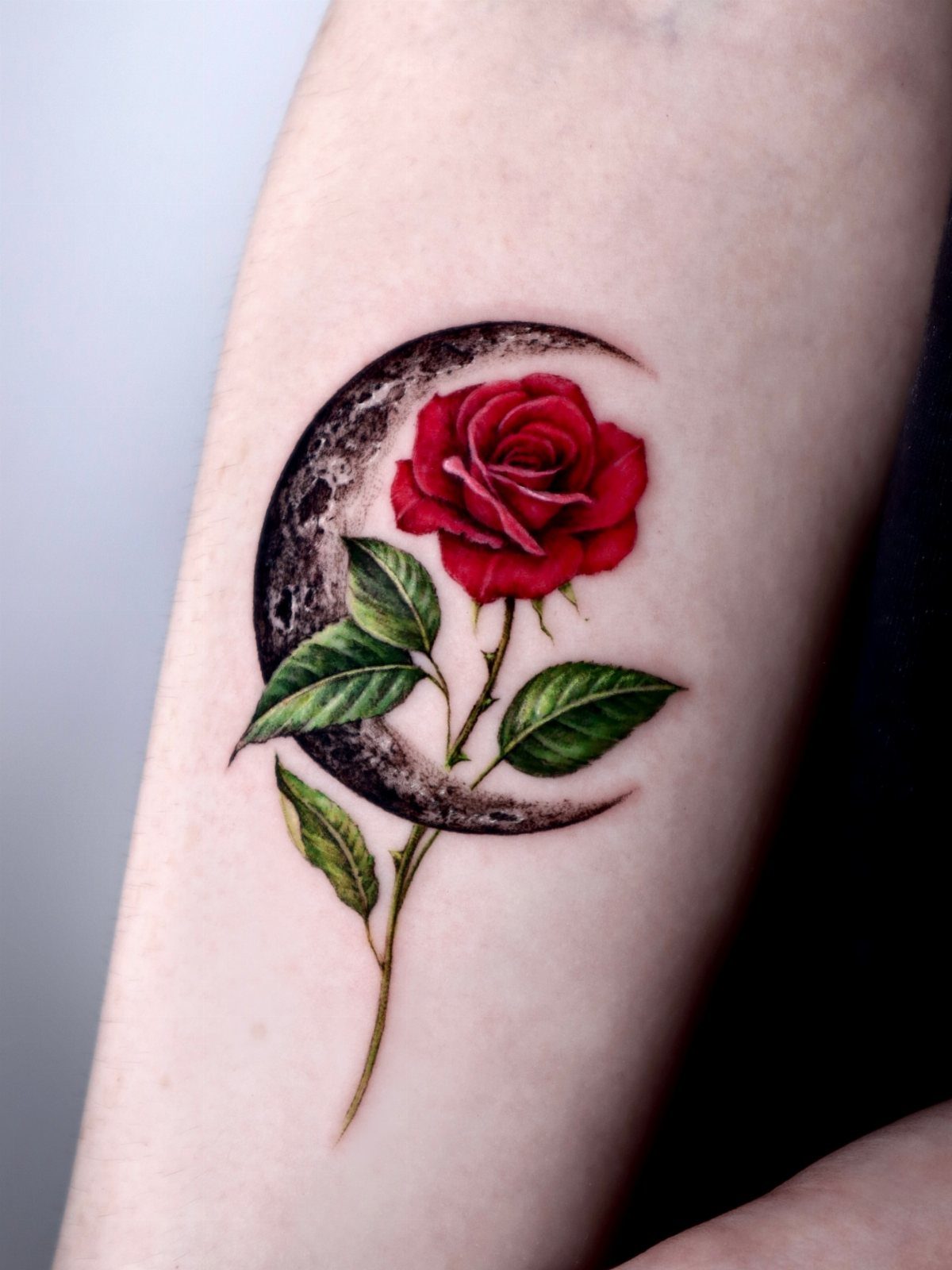
Layering a rose over a crescent moon connects the birth flower to night symbolism and keeps the composition compact. The textured moon sits behind the bloom and provides contrast that makes the red petals and green leaves pop.
Forearm placement keeps the design visible and gives you a vertical composition that follows the arm’s natural shape.
The moon adds weight to the piece without competing with the rose for attention. Color on just the flower while keeping the moon in black and gray holds the composition together better than coloring both elements.
9. Framed Rose Tattoo
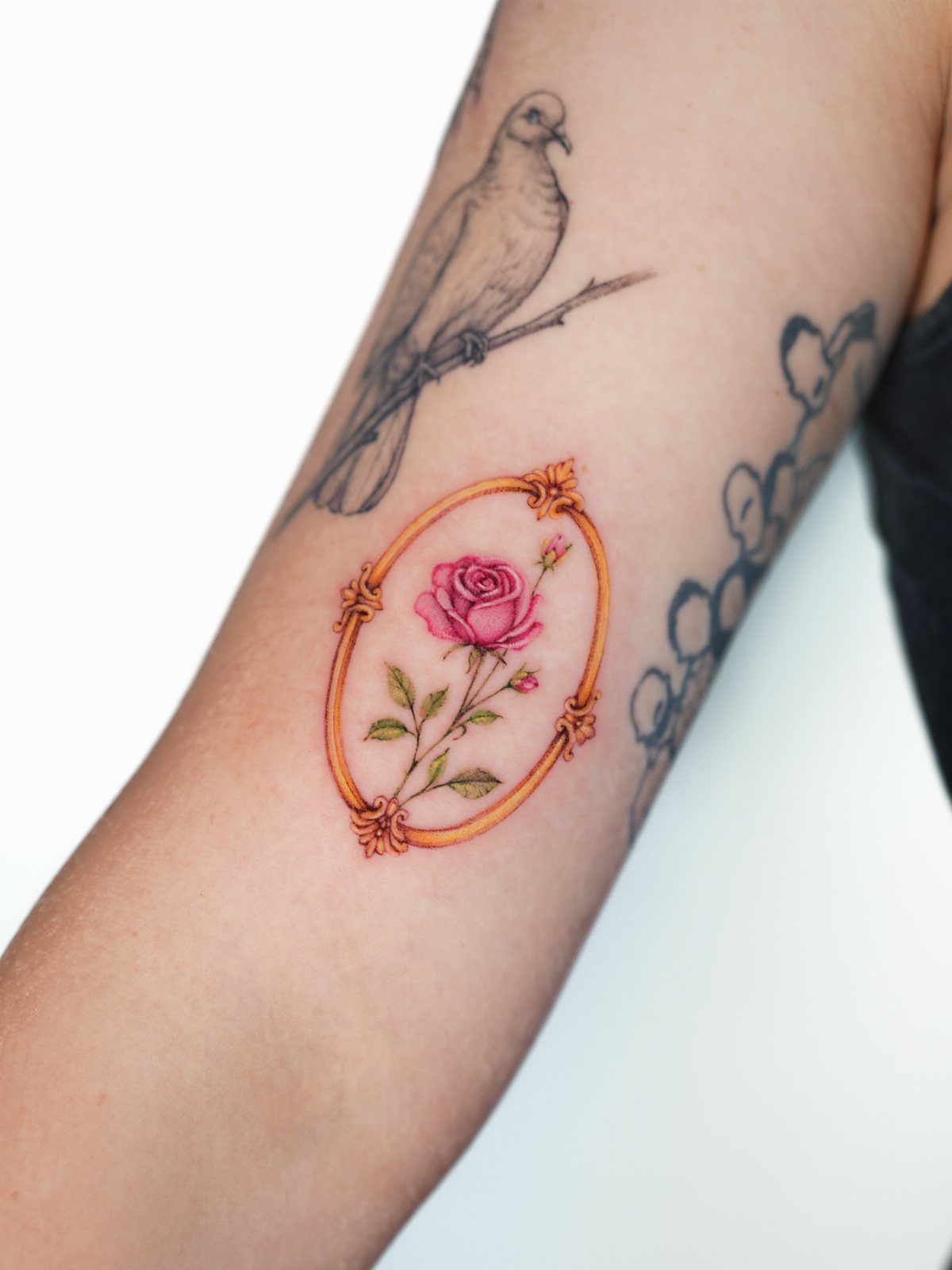
A gold oval frame turns the rose into a portrait piece and adds vintage detail without covering more skin. The ornate border gives the design structure and makes the pink petals feel intentional rather than floating.
Arm placement suits this style because the frame needs to sit flat rather than wrap around a curved surface.
The frame also lets you add other tattooed elements above or below it later without the rose feeling disconnected. If you want a birth flower that feels polished and contained, the frame does that work for you.
10. Rose and Butterfly Tattoo
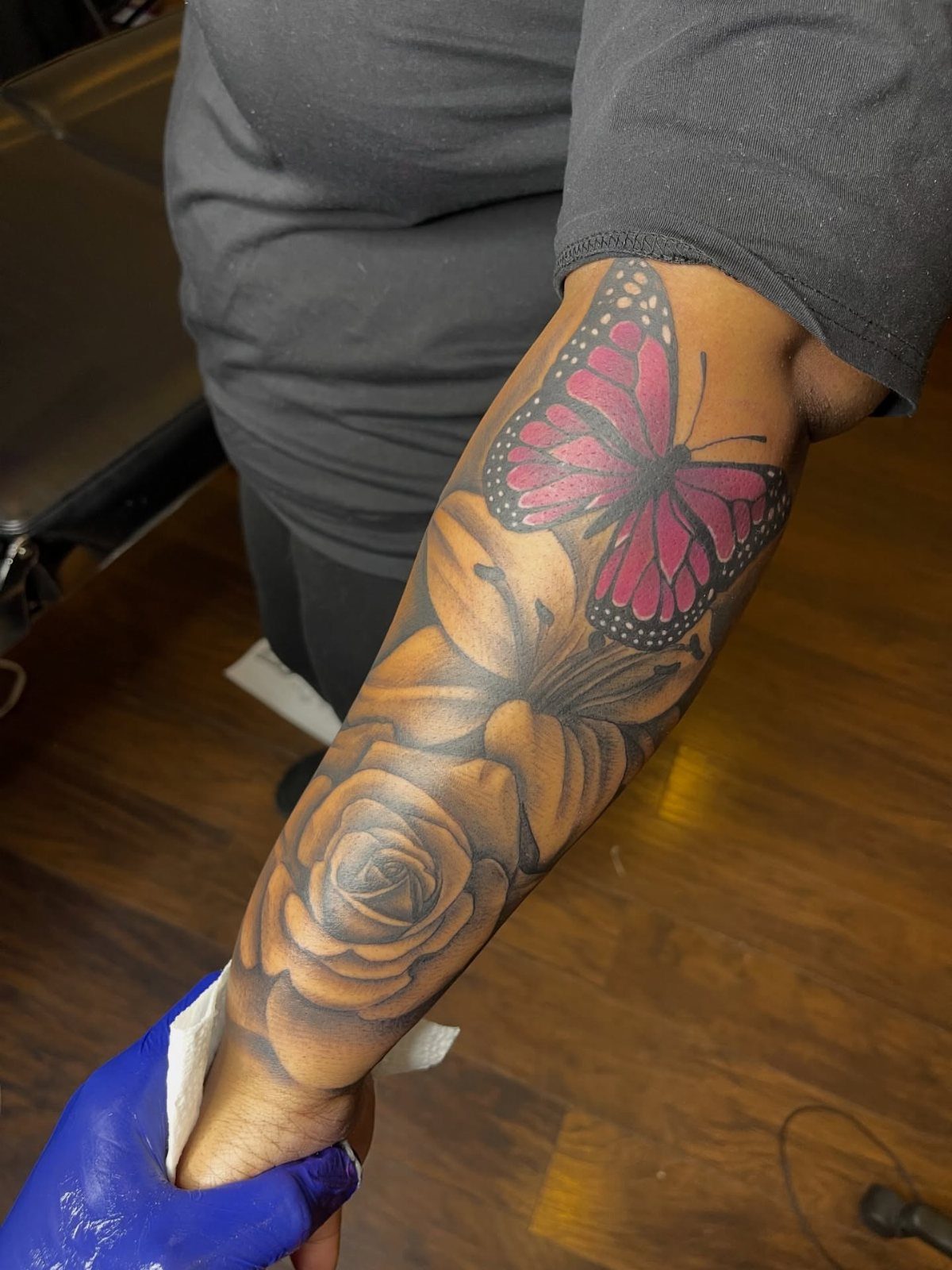
Pairing a butterfly with a rose and lily gives you three symbols in one forearm piece.
The pink butterfly adds movement, and the lily expands the meaning beyond just your birth month if you want the design to represent more than one thing.
The color on the butterfly keeps it from disappearing into the flowers, and the forearm gives you enough width to balance all 3 elements without crowding them.
This combination works well if you want a June birth flower tattoo that includes someone else’s birth flower or a second layer of symbolism.
11. Vintage Clock and Rose Tattoo
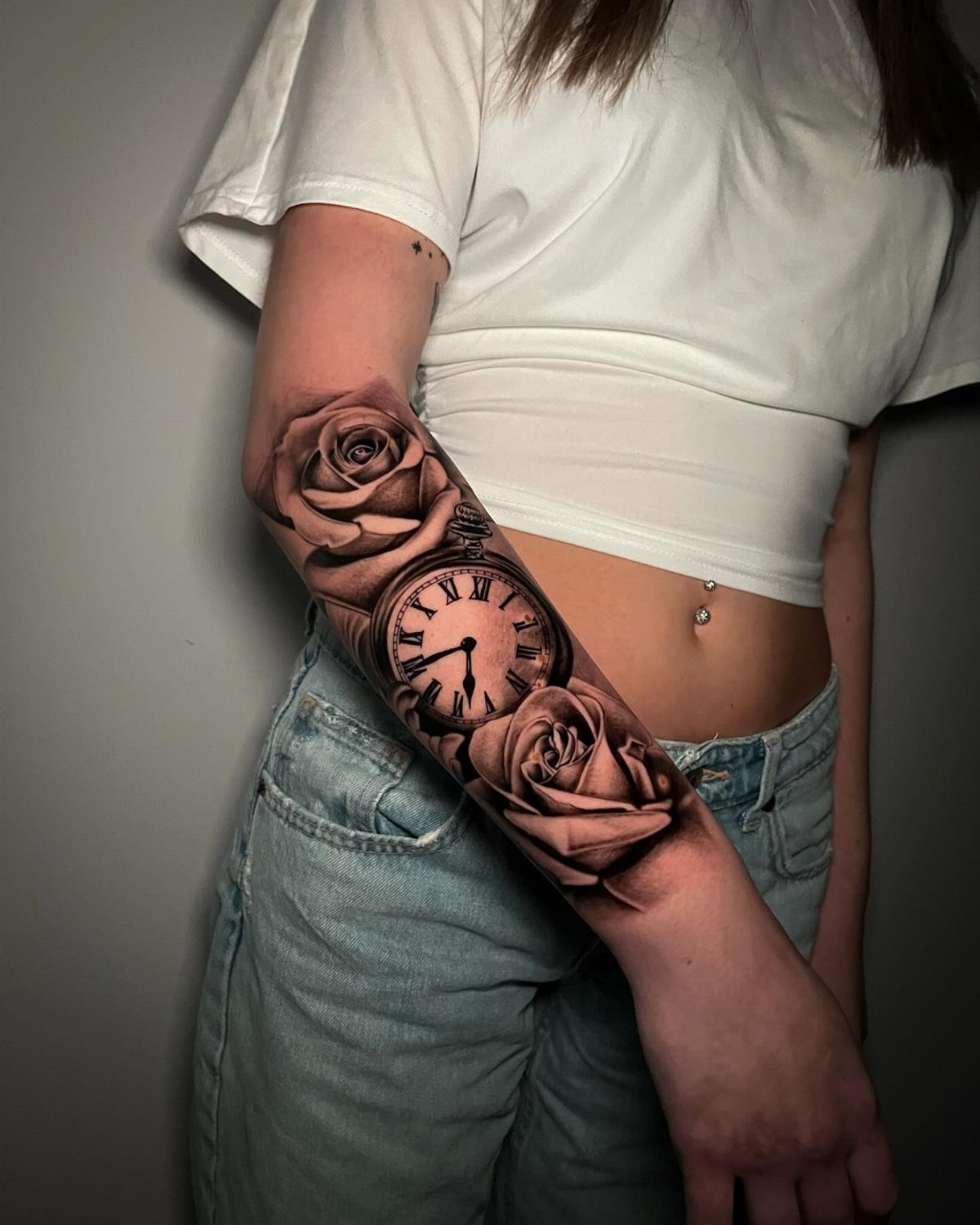
A pocket watch paired with roses adds a time element to the birth flower, which suits someone marking a specific date or life chapter.
The black and gray shading keeps the composition cohesive and lets the clock face and petals share space without clashing.
Forearm placement centers the watch and lets the roses frame it on either side.
The combination reads clearly from a distance because the round clock face contrasts with the organic shapes of the flowers. If your June birth ties to a specific moment you want to commemorate, this design holds both pieces.
12. Red Ink Hand Rose Tattoo
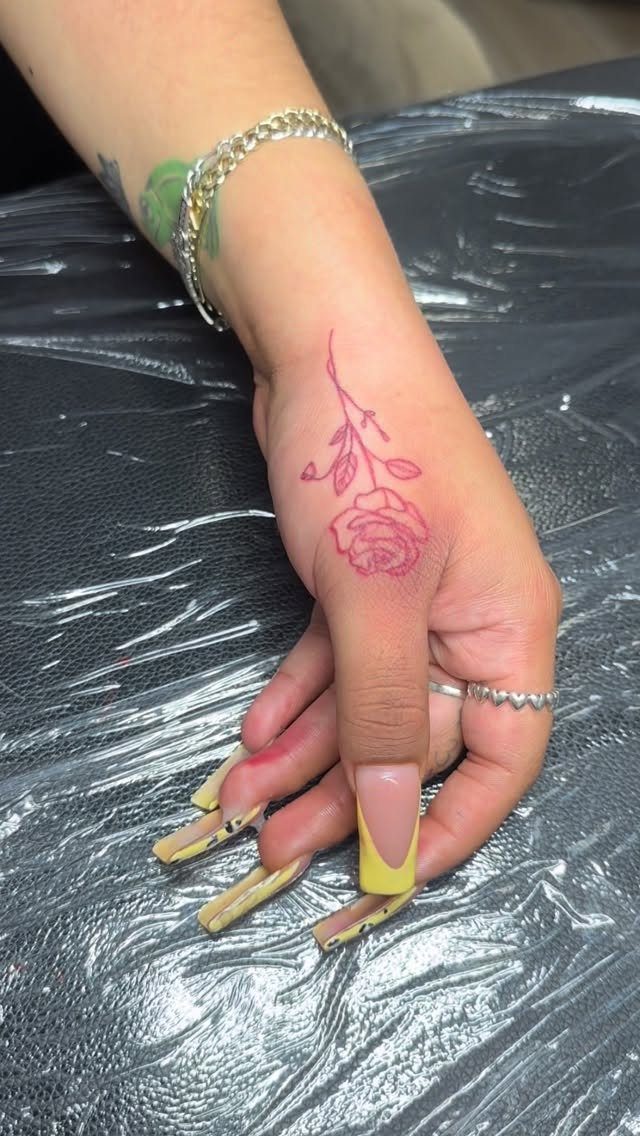
Red ink on its own gives the rose a different weight than black linework with color fill.
The hand placement makes the tattoo visible in almost every situation, and the single-color approach keeps the design from feeling too heavy on a spot with thin skin and prominent bones.
Hands fade faster than most placements because of sun exposure and friction, so plan on touch-ups every few years. The red ink ages into a softer tone over time, which some people prefer and others don’t.
If you want a birth flower that stays front and center, the hand delivers that, but it comes with more maintenance than a covered spot.
Choosing Tattoo Placement
Spots with vertical real estate (the spine, forearm, side of the calf) let honeysuckle vines or a single rose stem stretch out naturally, with leaves flowing above or below the main bloom.
The shape follows the natural line of the limb or torso without fighting it.
Arrangements with several flowers or a gathered bouquet need room to spread: the thigh, upper back, or chest all give you the width so nothing feels jammed together.
A rose paired with honeysuckle needs room for both flowers to read clearly, and a compact placement forces them too close together.
Match the tattoo’s orientation to the body part before you settle on a design. An elongated composition that works on the forearm won’t translate well to the shoulder blade without adjusting the layout.
Personalization Options
The name can sit below the bloom in script or bold lettering, or it can weave through the stems and leaves if the composition has enough negative space to hold it.
A date works the same way and gives the piece a specific anchor if you’re commemorating someone born in June or marking a moment tied to your own birthday.
The text stays readable longest when it’s sized large enough that the letters don’t blur together as the tattoo ages.
Adding a name to the rose or honeysuckle makes it unmistakably yours, and you still get the birth month symbolism from the flower without needing a second image to carry the sentiment.
Frequently Asked Questions
What is the birth flower for June?
June has 2 birth flowers: the rose and the honeysuckle. The rose symbolizes love, beauty, and strength, with each color carrying its own meaning, while honeysuckle represents happiness and devotion with its delicate, vine-like structure.
Both flowers work well as tattoos, either on their own or combined in a single design.
What is the tattoo for the birth month of June?
June claims 2 birth flowers: the rose and honeysuckle. You can choose one flower or combine both in a bouquet design.
What are some good flowers for tattoos?
Roses and honeysuckle both hold up well as tattoos because their shapes stay recognizable over time. Roses work in nearly any style and size, from small fine line pieces behind the ear to large realistic compositions on the upper arm.
Honeysuckle’s vine structure suits placements that follow the body’s natural lines, like the forearm or around the wrist.