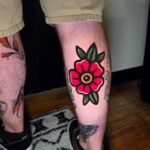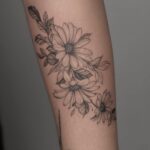
Traditional rose tattoos hold their clarity for decades because the design relies on thick black outlines, saturated red ink, and high contrast that survives years of skin movement and sun exposure.
Your placement decides how often you’ll need touch-ups: hands and necks fade faster than forearms or thighs because the skin sits thinner and takes more friction from clothing and light.
A single rose needs at least 3 inches of space to keep the petals from crowding each other once the skin changes, and pairing it with a dagger, anchor, banner, or sword shifts the meaning from pure romance to something harder or more specific.
1. Classic Red Rose Tattoo
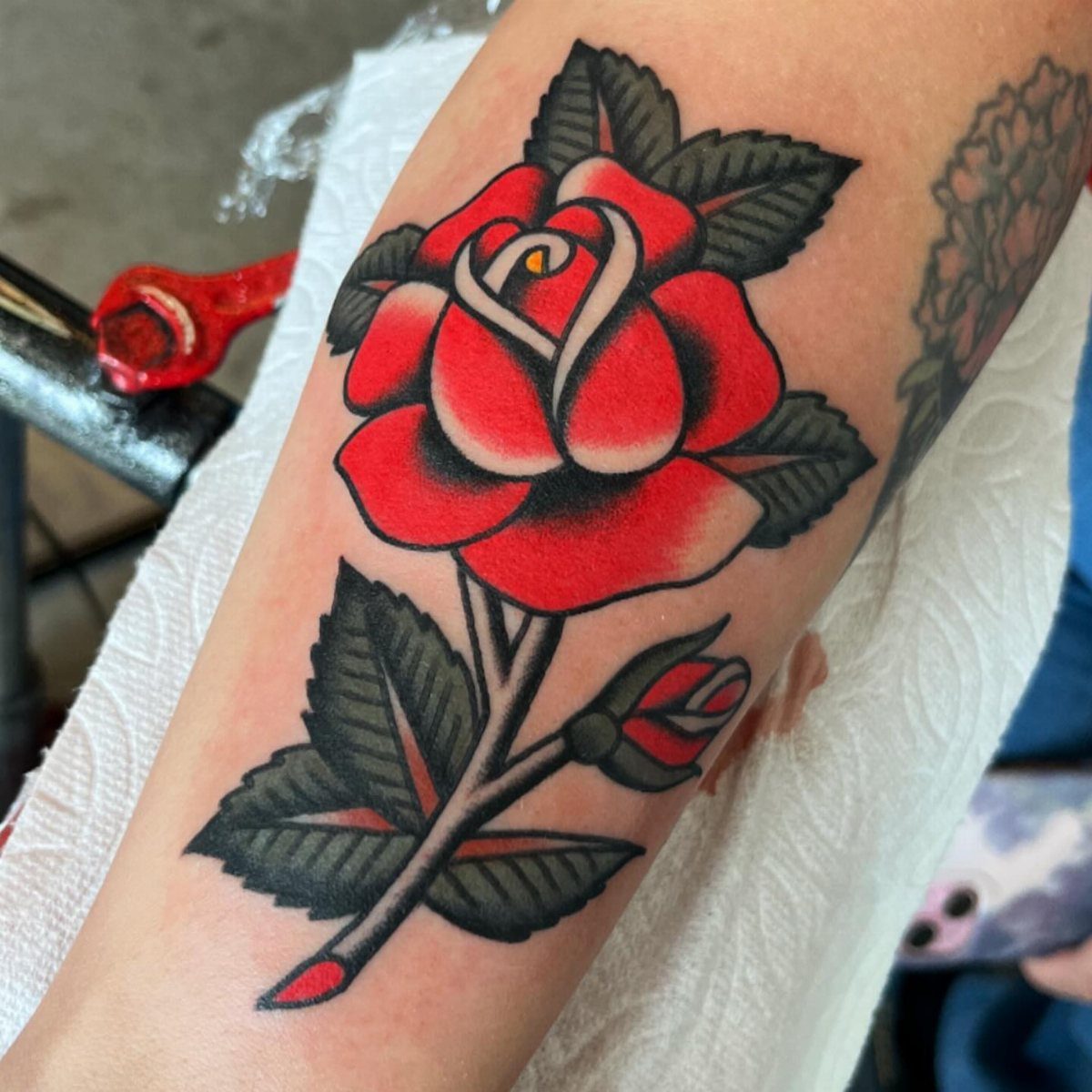
The red rose stays central in traditional tattooing for good reason: bold petals, thick black outlines, and saturated color that holds over decades.
The palette sits on just red, green for the leaves, and sometimes a yellow highlight where the light catches the bloom.
This one still reads clearly decades later.
Traditional work depends on contrast and size to last, so go bigger rather than smaller. Anything smaller and the lines crowd each other once your skin changes.
The forearm or upper arm keeps it visible and stops short of hand or neck placement.
2. Rose and Dagger Tattoo
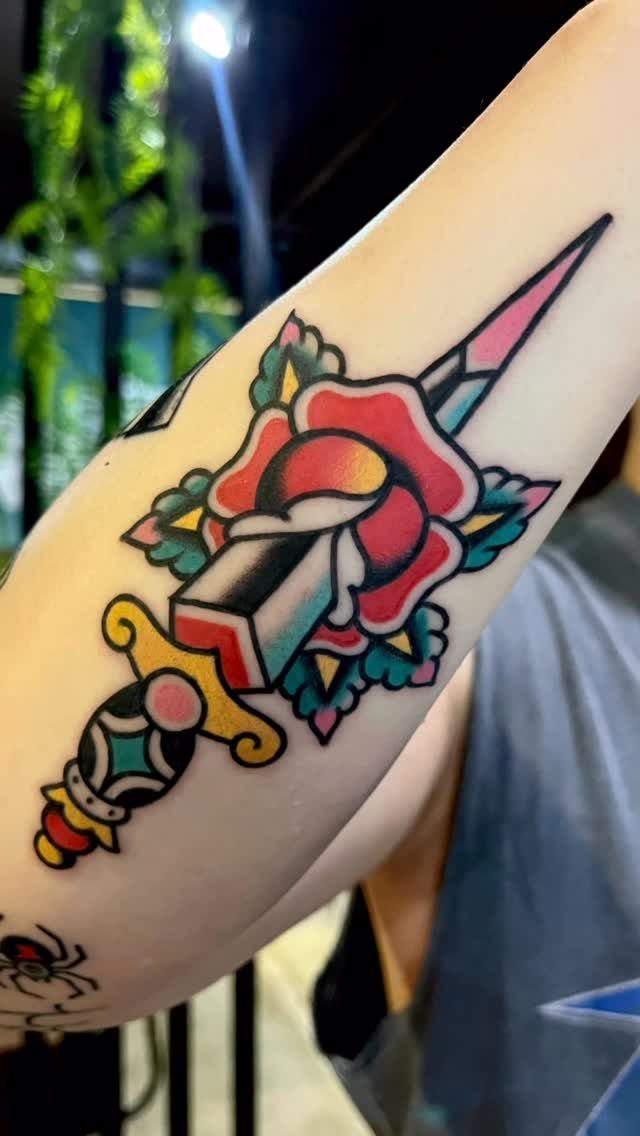
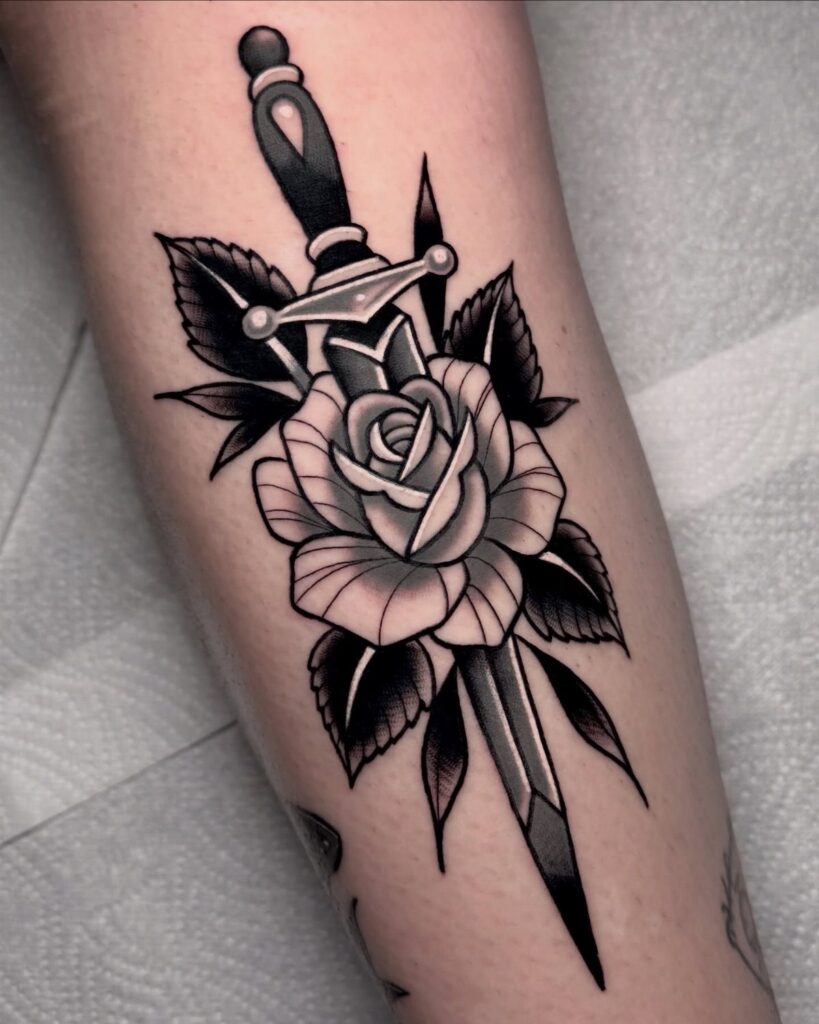
A dagger through the rose brings tension into the design: beauty interrupted, love that came with a cost, or a reminder that good things can still hurt.
The blade cuts through the bloom at an angle, and the blood-red petals spill around the steel.
Placement matters here because the vertical line of the dagger works best when it follows a limb. The outer forearm, the side of the calf, or the upper arm all let the composition sit comfortably.
Traditional shading keeps the dagger dark and the rose bright, so the 2 elements stay separate even when they overlap.
3. Rose with Banner Tattoo
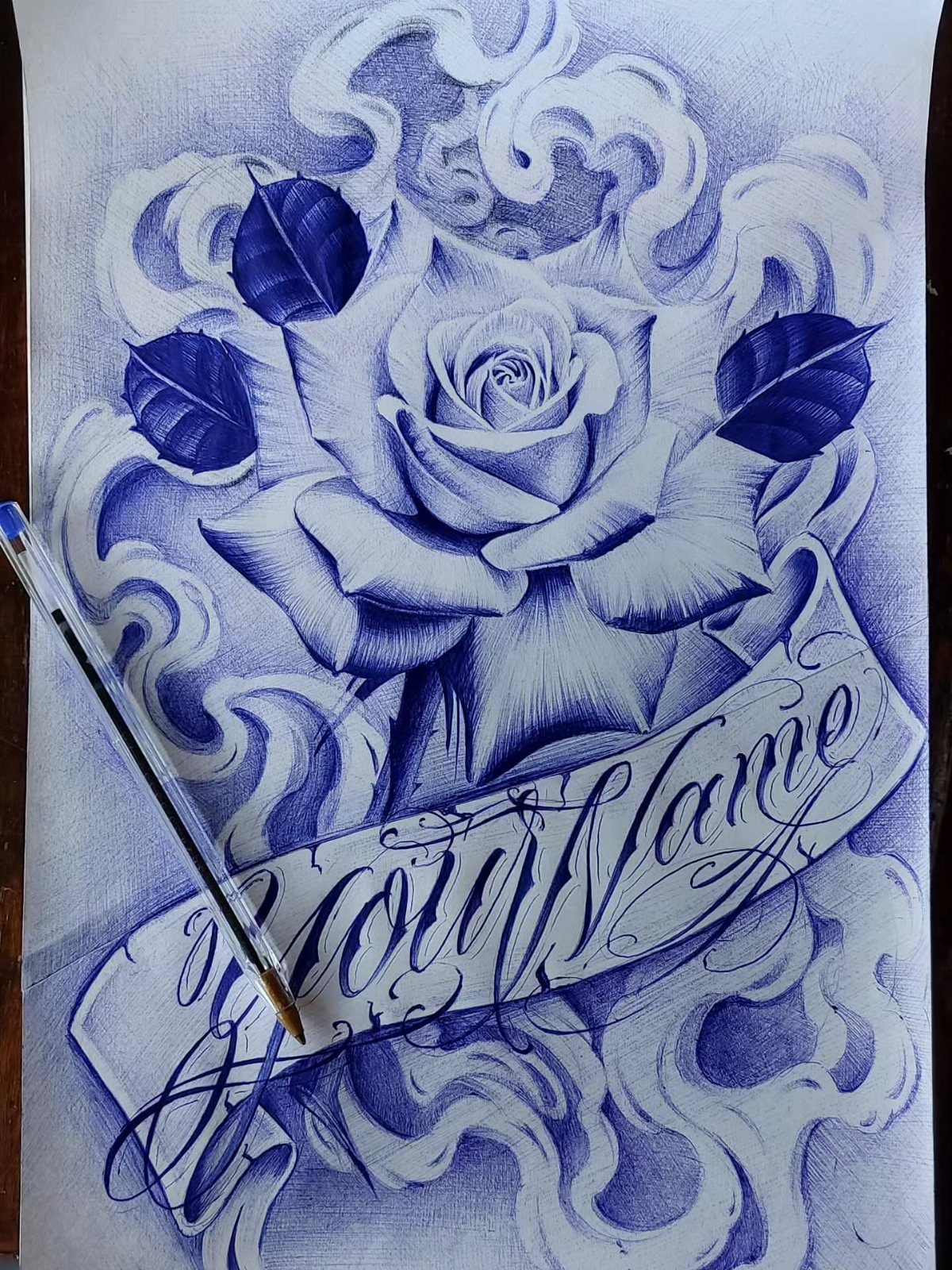
The banner gives you a place to put a name, a date, or a phrase that matters.
Wrapping it around the rose stem or draping it across the petals keeps the text readable while still letting the flower dominate the composition.
Script choice affects how long the piece lasts.
Traditional banners use bold, sans-serif lettering or a simple gothic that stays legible after years of wear. Thin cursive looks good fresh but blurs faster than blocky letters.
Keep the text short. A single name or a 2- to 4-word phrase fits the banner width without shrinking the letters into an illegible mess.
4. Black Rose Tattoo
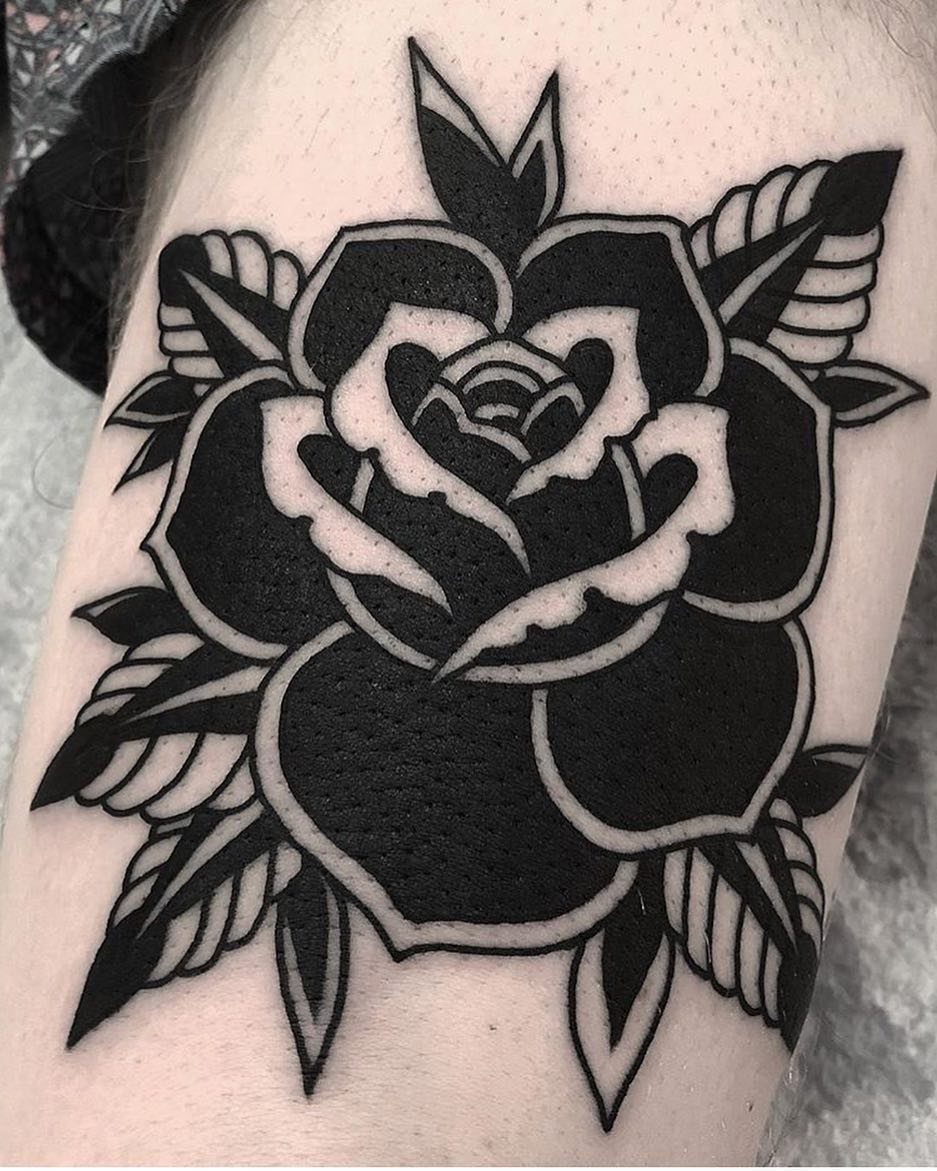
Black ink without color shifts the mood entirely. The petals use heavy shading instead of red fill, and the result reads darker, quieter, and more about what’s missing than what’s blooming.
This version suits someone who wants the rose form without the romantic weight that red carries. Loss, grief, or just a preference for monochrome work all land here.
The leg offers good canvas for a single rose because the muscle doesn’t shift as much as the ribs or the shoulder, so bold black shading stays crisp longer.
Size still matters: 3 inches or more keeps the detail from closing up over time.
5. Rose Heart Tattoo
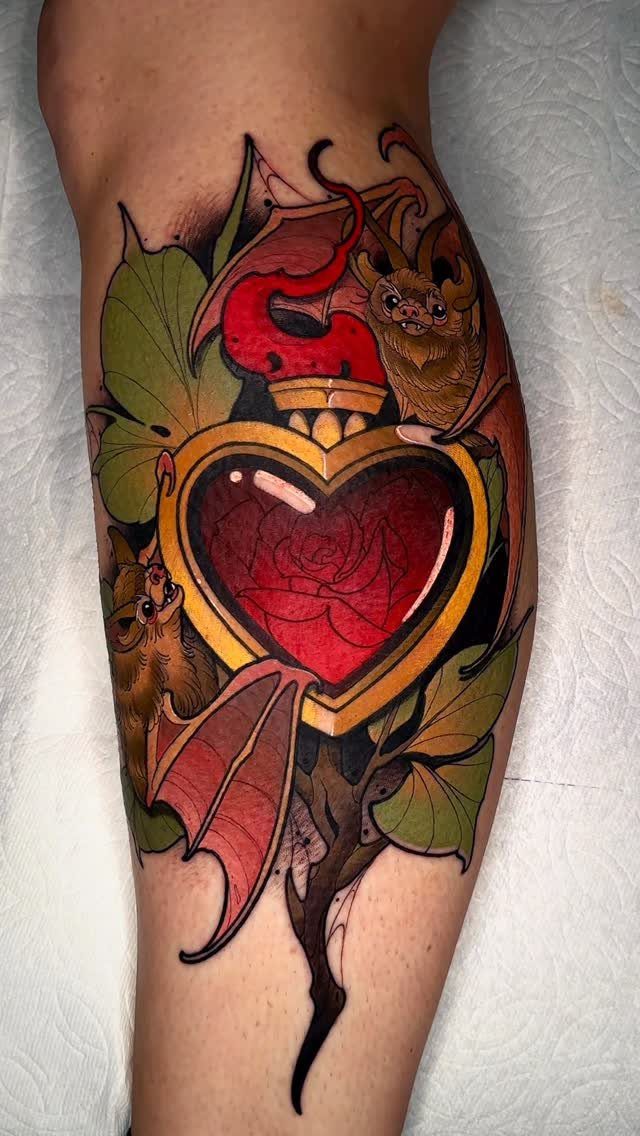
The heart frame turns the rose into a contained piece, something enclosed and protected. Adding bats or other small elements around the heart fills the negative space and leaves the rose clear.
This design works well on the lower leg because the calf gives enough width for the heart shape without distorting it when the muscle flexes.
Bats need to sit outside the heart frame so each element stays distinct. Overlapping too much turns the piece muddy.
6. Rose and Anchor Tattoo
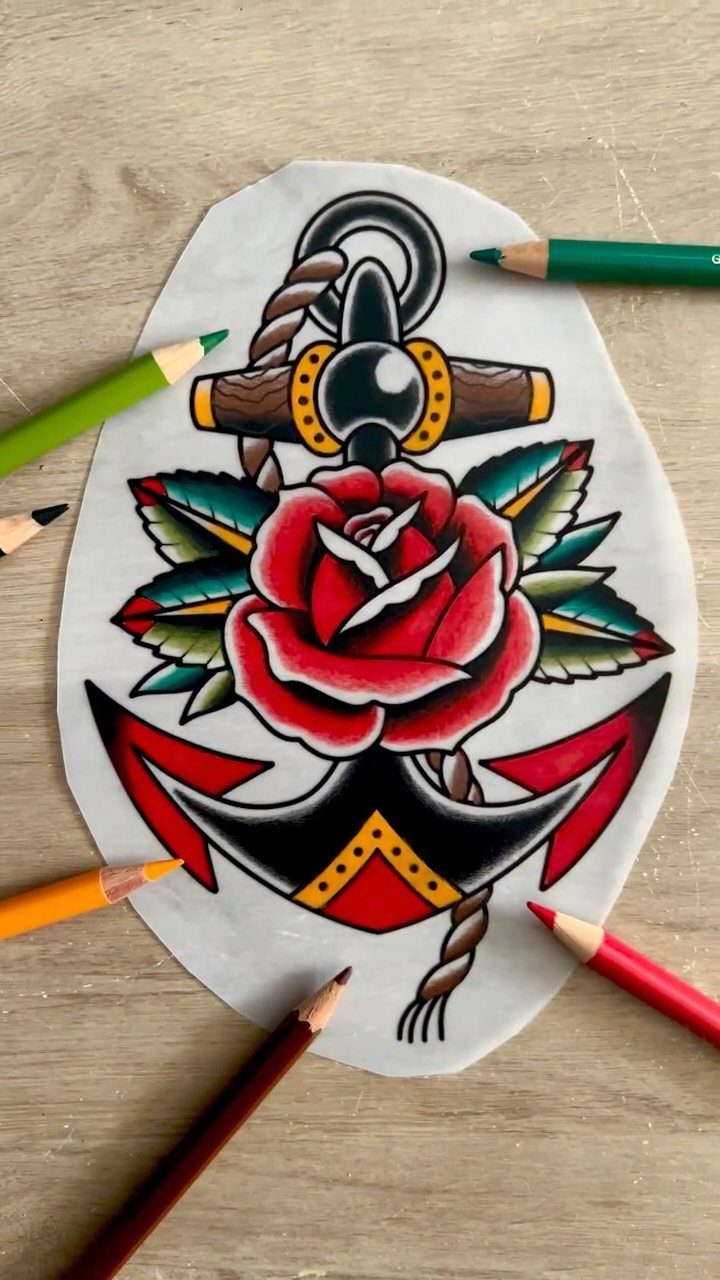
The anchor sits below and steadies the rose.
Sailors wore this combination for decades to mark home, stability, or someone worth staying for. The anchor sits vertical, the rose usually perched on top or wrapping one fluke.
This design needs vertical space to work, so the forearm, outer bicep, or side of the calf all give the composition room. Horizontal placement flattens the anchor and kills the visual weight it’s supposed to carry.
Traditional anchors use thick black outlines and minimal shading, which keeps them from competing with the rose for attention. The red petals pull the eye first, the anchor holds the bottom.
7. Traditional Rose Sleeve Tattoo
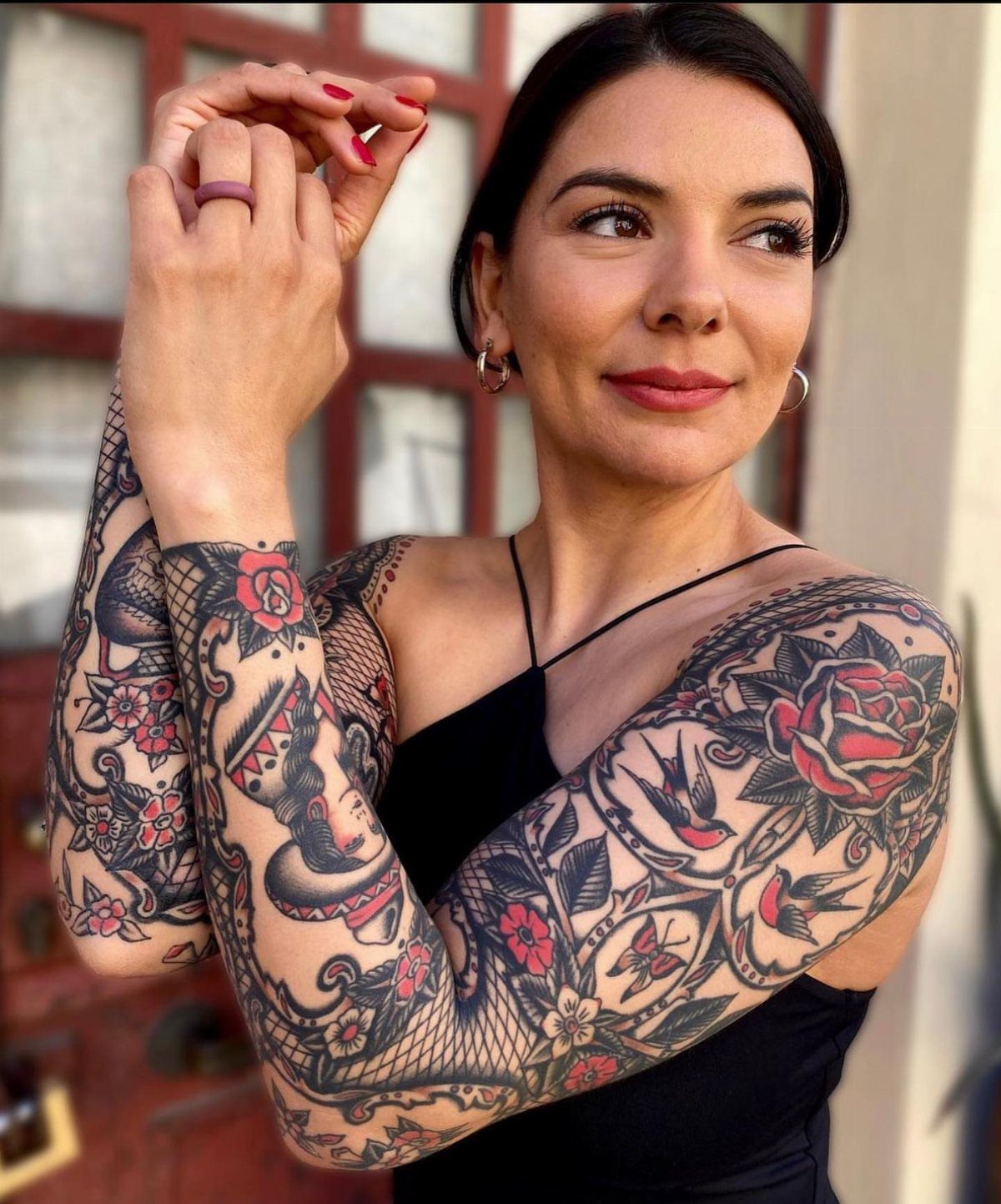
Filling a full sleeve with roses and other traditional motifs gives you room to layer multiple pieces into one cohesive design. Roses sit alongside swallows, daggers, or anchors, each element spaced so they read separately but still flow together.
Building a sleeve means coming back for several appointments, with healing time between each one before the artist adds more. Starting with the larger pieces first, like the roses, lets the artist plan where smaller filler elements go later.
Color saturation matters more over a large area.
Traditional sleeves hold up because the palette stays simple: red, green, black, yellow. Too many colors blur faster.
8. Rose and Key Tattoo
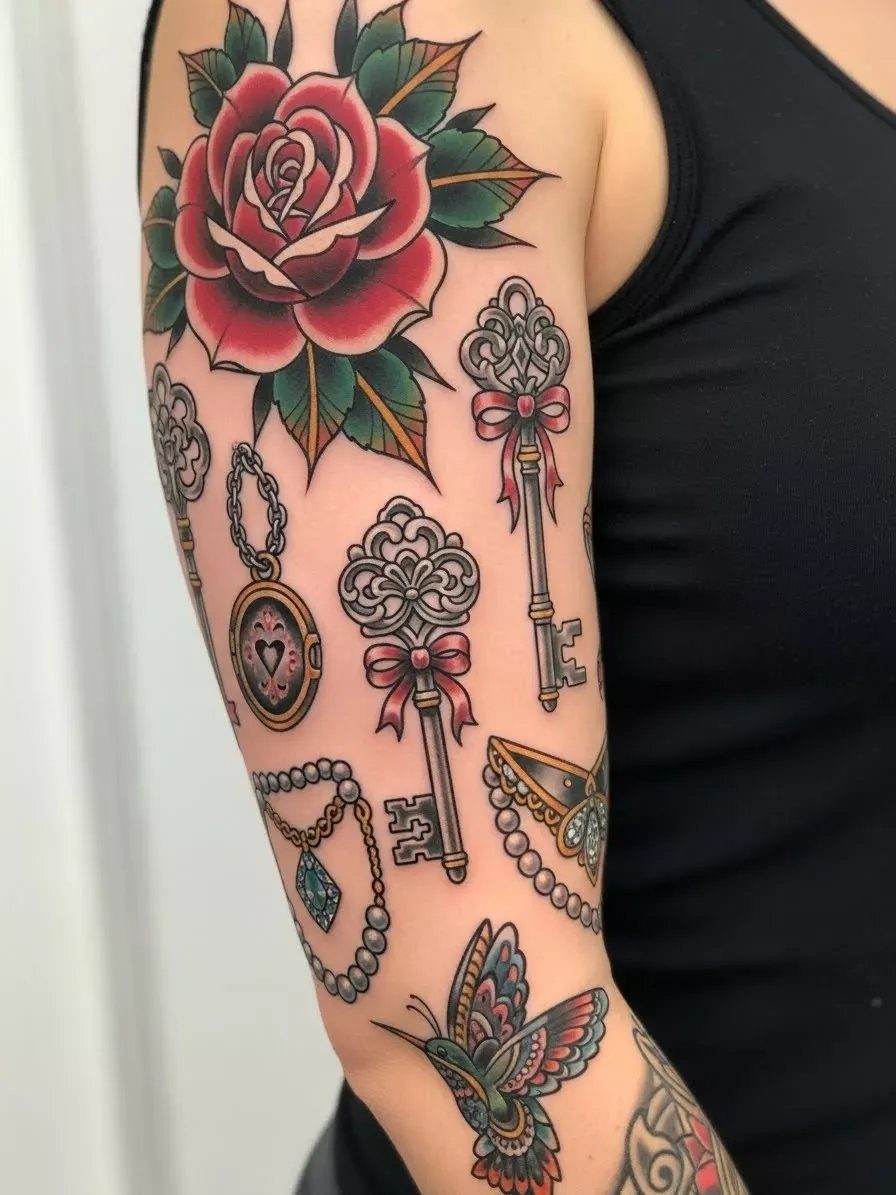
A key paired with a rose suggests something locked away or opened up.
Keys in traditional work tend to look old: skeleton keys with decorative tops rather than modern house keys. The detail in the key handle fills one side of the composition while the rose takes the other.
This combination fits a small to medium piece because both elements need enough space to stay readable. The upper arm or thigh gives room for the vertical layout most key-and-rose designs use.
9. Rose with Flames Tattoo
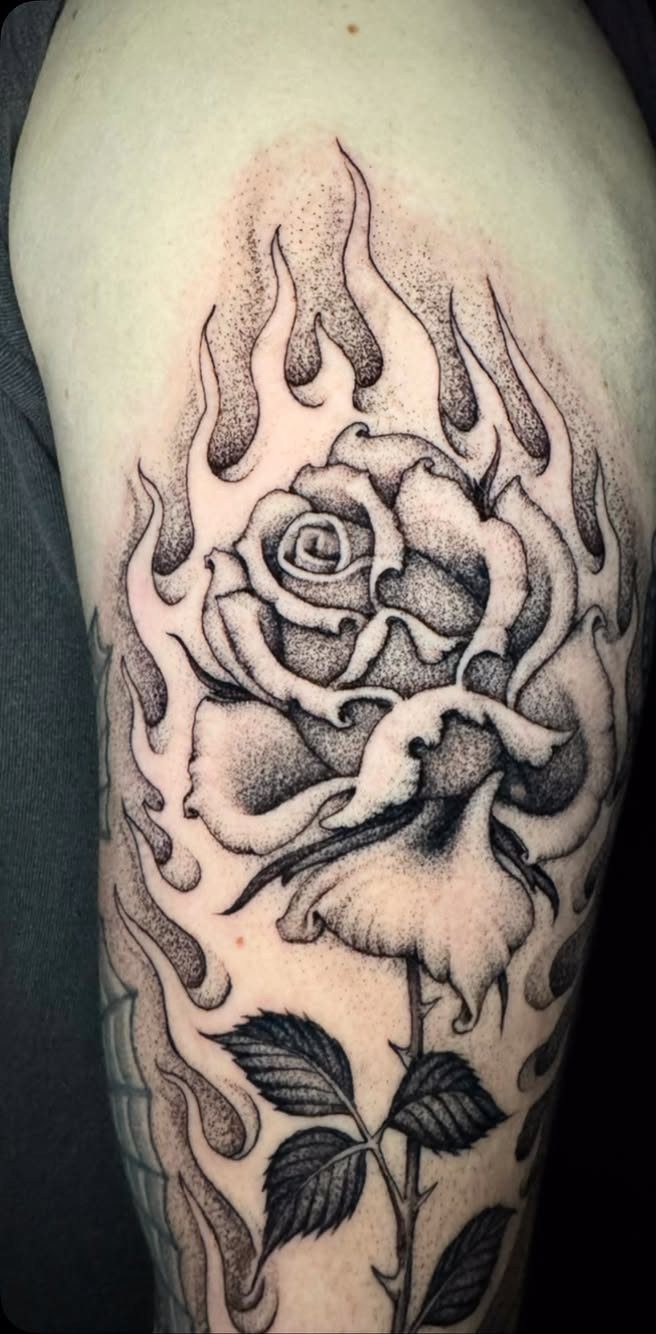
Flames around a rose shift the meaning from soft to volatile. The petals sit inside or behind the fire, and the black and grey palette keeps the piece from looking like a cartoon.
Without color, shading does all the work.
The flames need lighter tones at the tips and darker fill near the base to read as fire rather than abstract shapes. The rose sits darker than the flames so it doesn’t disappear into the background.
This design works on the upper arm or shoulder where the muscle curves give the flames a natural place to wrap.
10. Rose Bouquet Tattoo
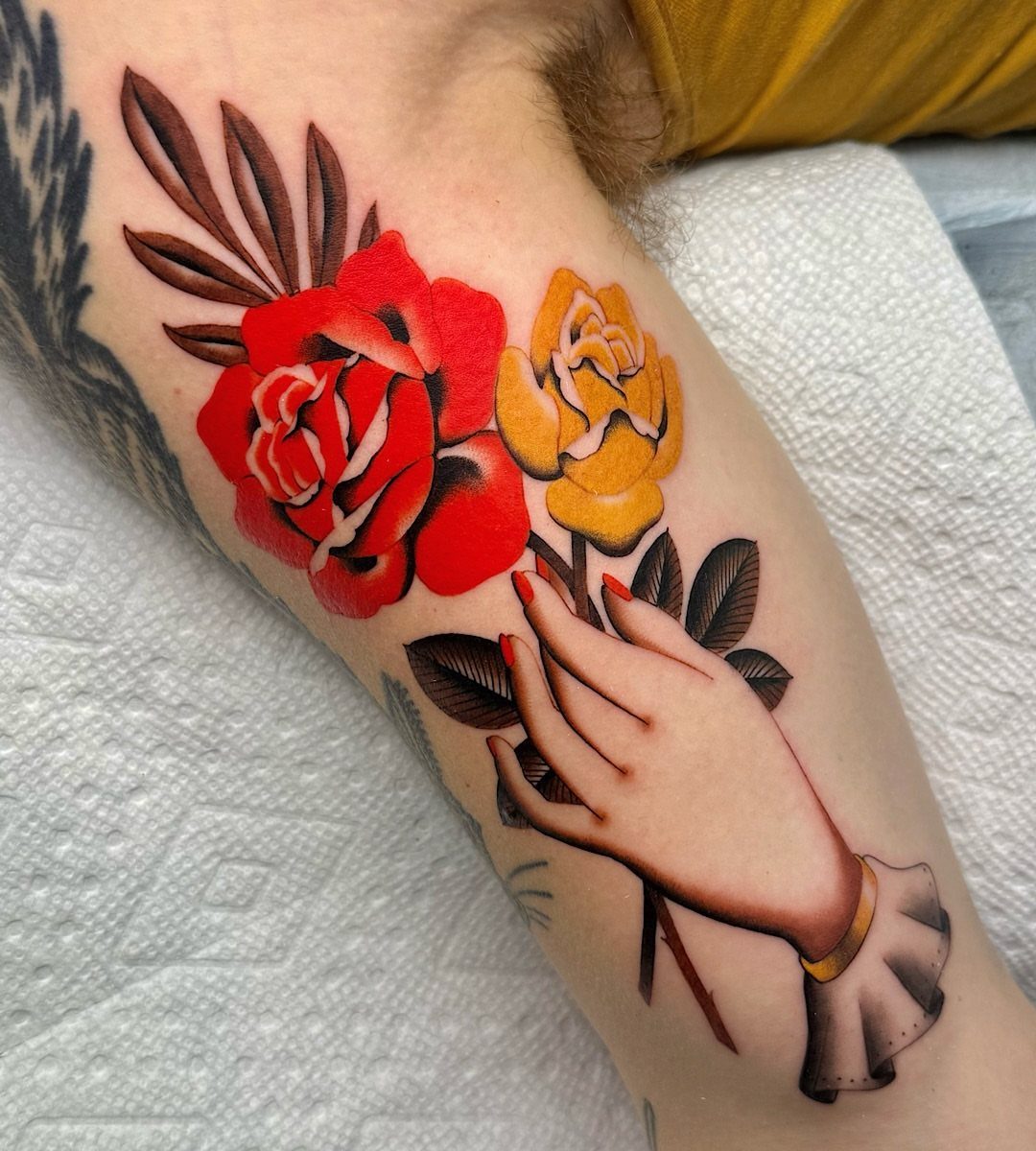
Three or more roses grouped together fill more space and let you mix colors: red, yellow, pink, or any combination that fits the traditional palette.
A hand holding the stems adds a human element and frames the bottom of the design.
Clustered roses need careful spacing.
Too close and the petals blur into each other, too far apart and the bouquet loses its shape. Each bloom should overlap slightly but still show its full outline.
This design suits the outer thigh or the upper arm because both offer enough width to fit multiple roses side by side without shrinking them into tiny, unreadable circles.
11. Rose Vine Tattoo
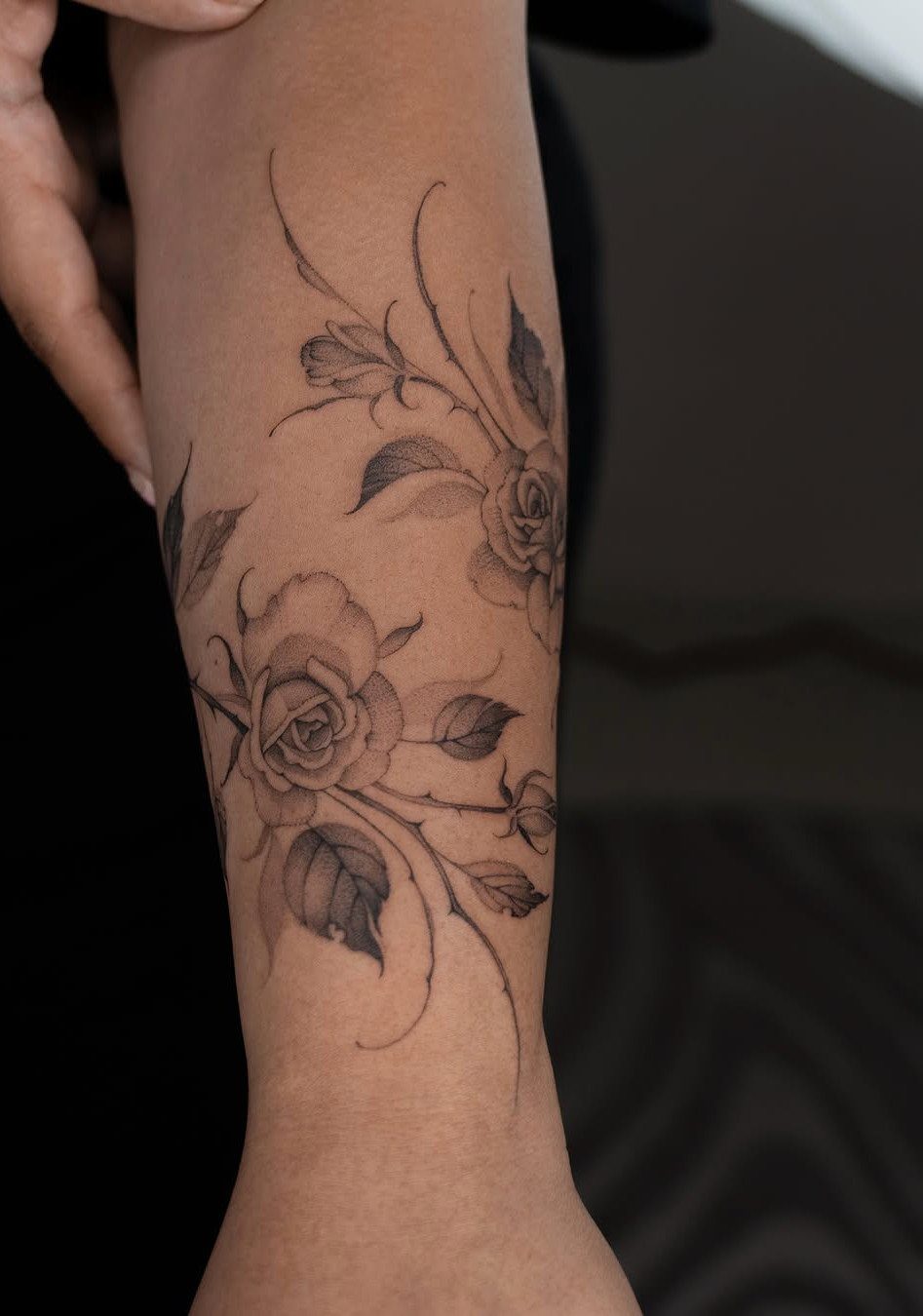
The vine connects two or more roses along a curving line, following the shape of your forearm, ribs, or leg. Thorns and leaves connect the blooms and guide the eye along the curve.
Black and grey vines read cleaner than colored ones because the shading separates the thorns from the leaves without relying on green ink. The roses themselves can stay color or go black, depending on how much contrast you want.
Placement matters because the vine should follow a natural body line. The forearm lets the design wrap slightly, and the outer calf gives a straight vertical run that suits a longer vine.
12. Traditional Rose Forearm Tattoo
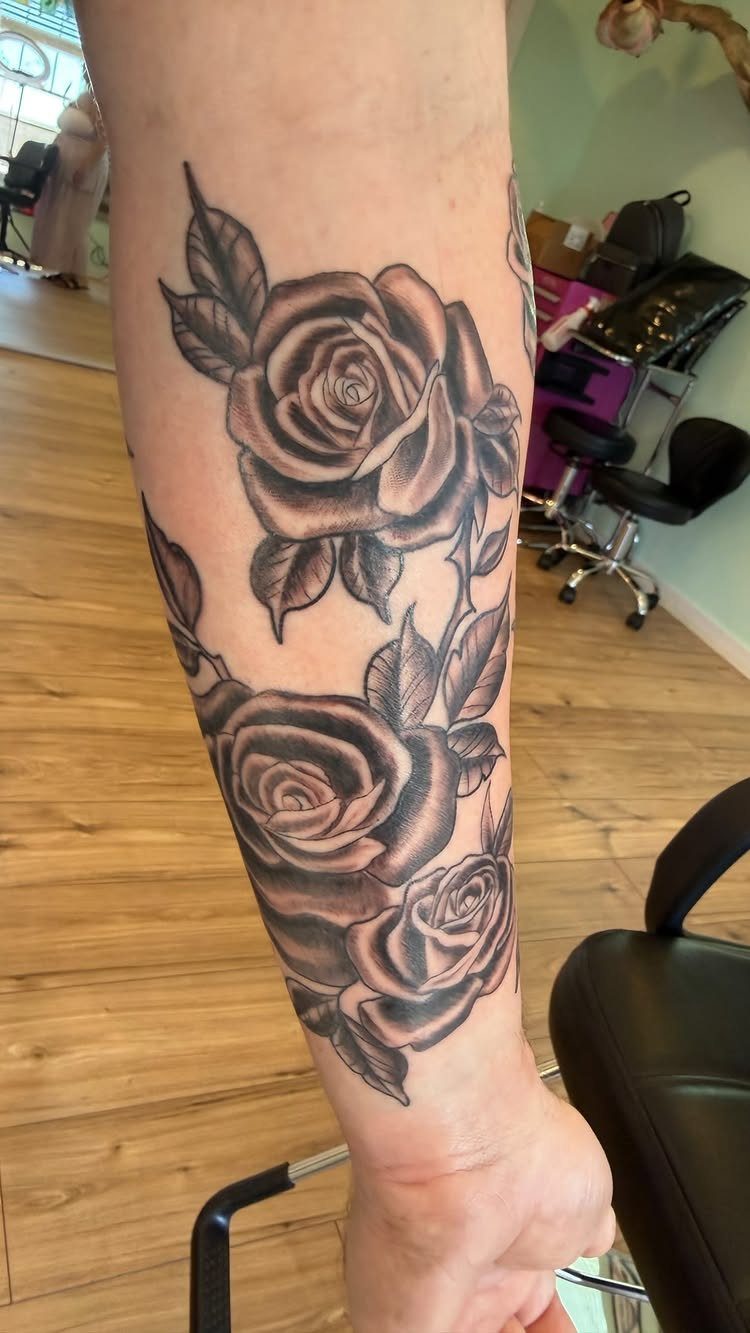
Placing a single rose on the forearm keeps it visible and gives enough flat surface for the petals to sit without distortion.
Black and grey roses on the forearm age well because there’s no color to fade unevenly. The contrast between dark shading and bare skin holds longer than red ink, which can lighten over the years.
Size matters because the petals need room to breathe. A single rose doesn’t need filler elements, so the composition stays clean.
13. Traditional Rose Hand Tattoo
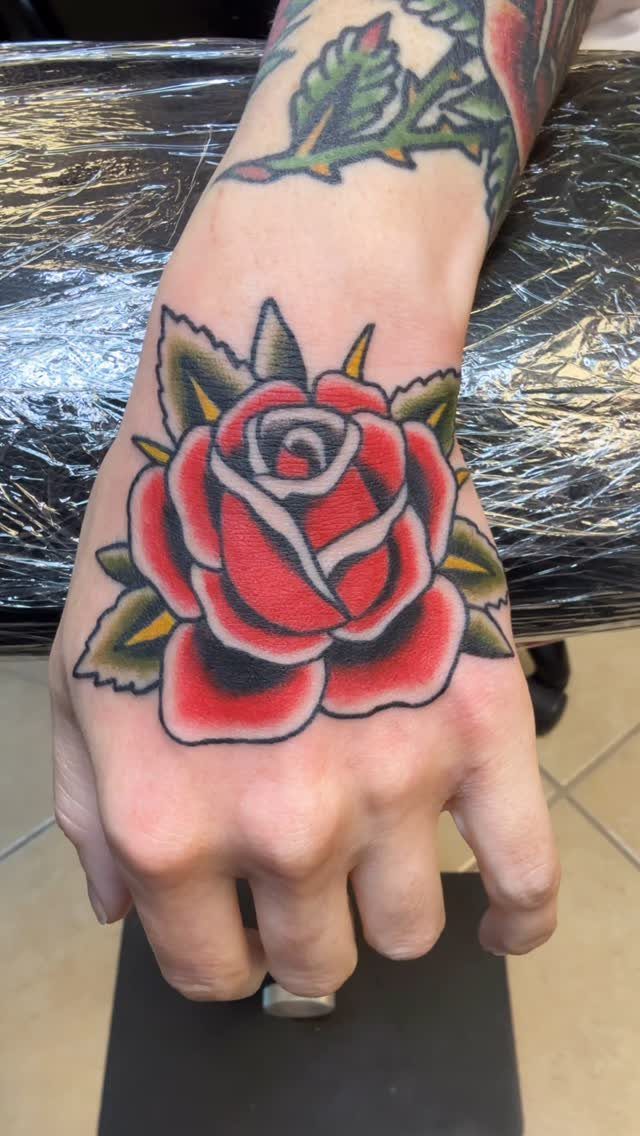
The back of the hand puts a rose where hands move constantly and where sun hits hardest. Ink fades faster here than on protected areas like the upper arm, so the red needs to be saturated from the start.
This spot also hurts more than most placements because skin sits thin over bone with little cushion underneath. Sessions run shorter because hands swell quickly.
Touch-ups come more often. Plan on returning every few years to keep the color bright and the lines sharp.
14. Traditional Rose Neck Tattoo
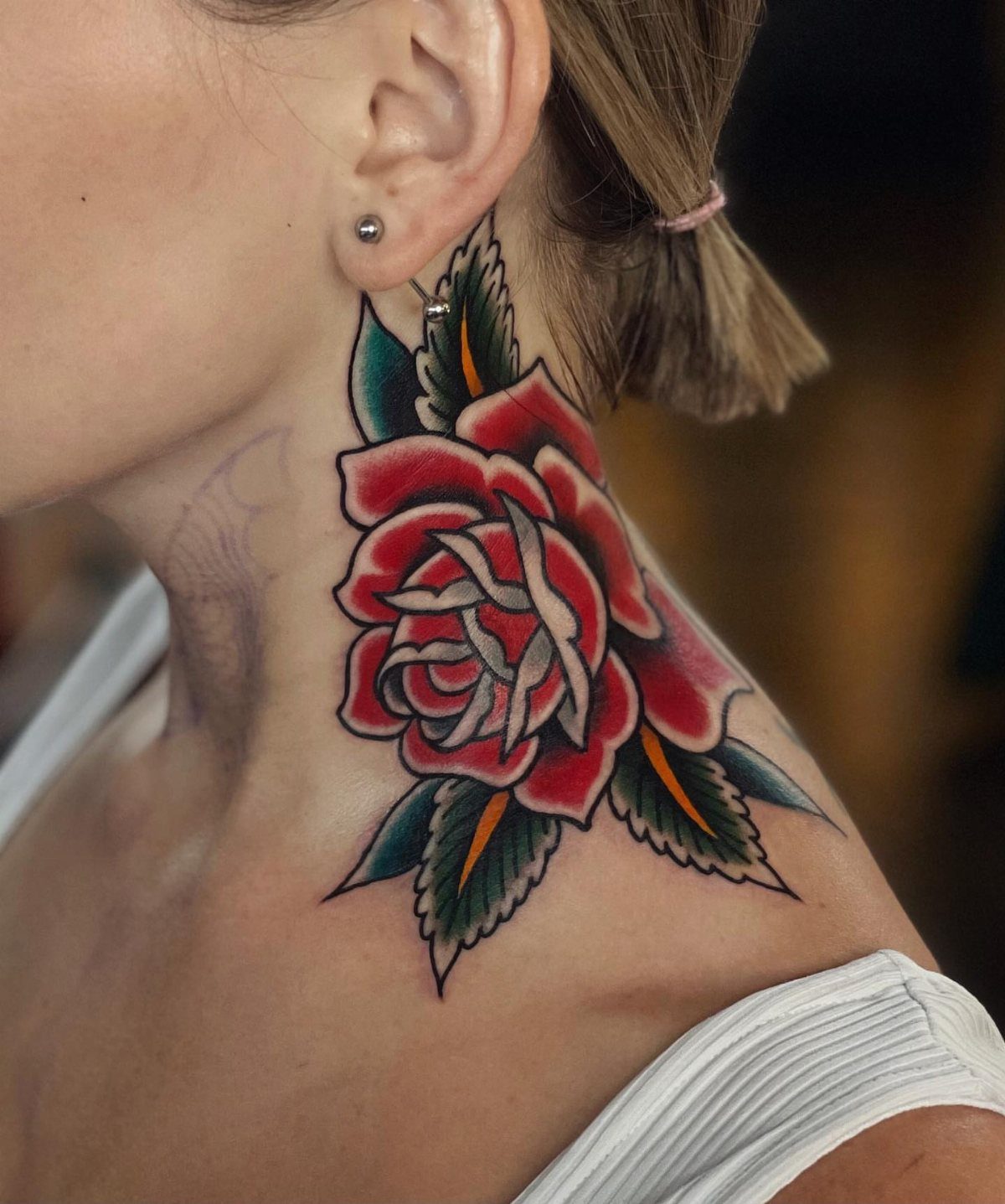
Neck placement makes the rose visible in most clothing. This matters for work environments that still restrict visible tattoos.
The side of the neck offers a flatter surface than the front, so the petals sit without heavy distortion when you turn your head. Pain runs high here because the skin stays thin and nerves sit close to the surface.
Healing takes longer because fabric rubs the area constantly. Avoid tight collars and scarves while the skin heals.
15. Rose and Sword Tattoo
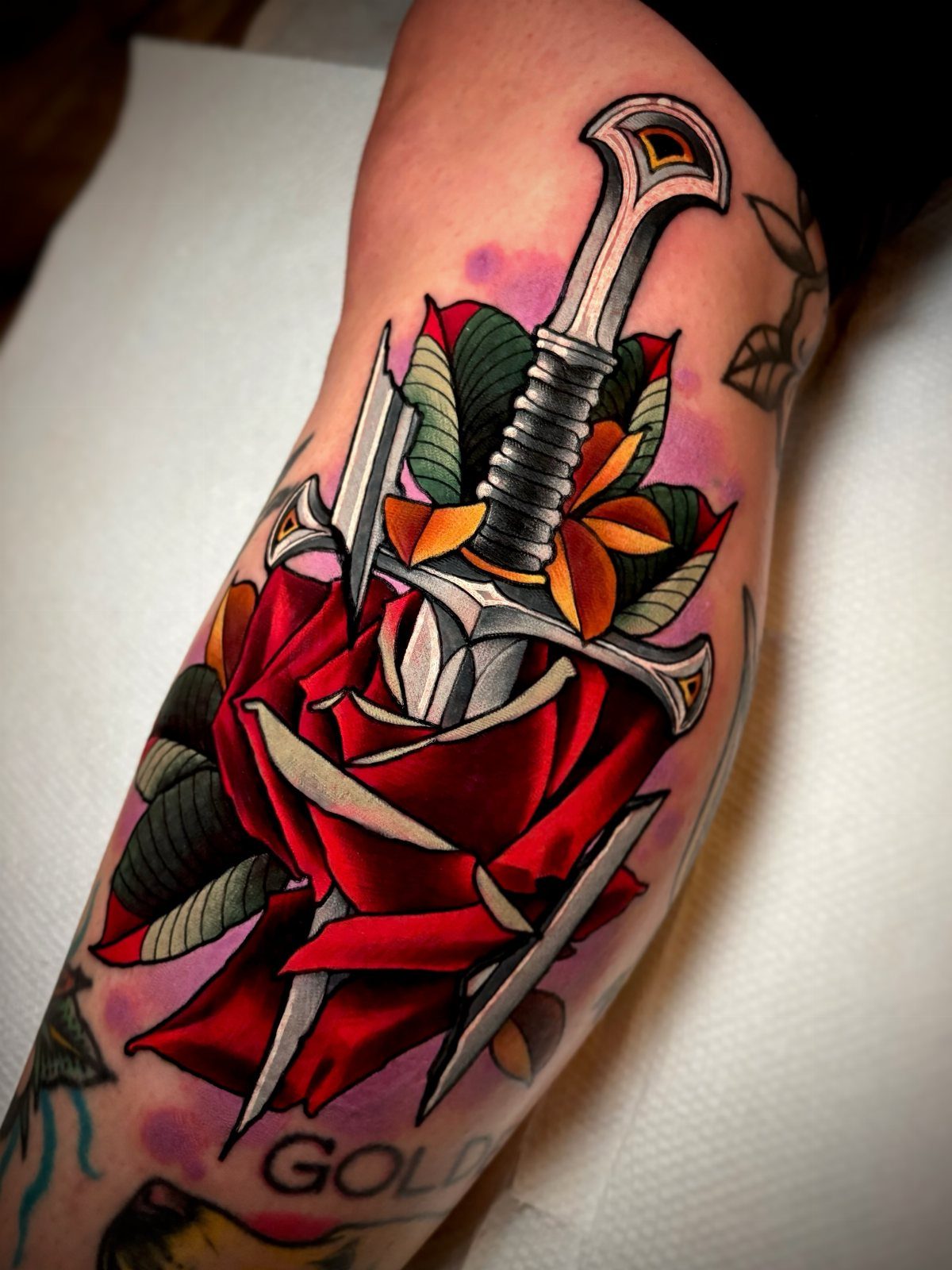
A sword through the rose balances beauty with force. The blade pierces the bloom vertically, petals opening around the steel, and the composition suggests something beautiful that had to fight to exist.
Orange flowers and additional greenery fill the space around the main rose and keep the design from feeling empty. The sword itself stays silver or grey to separate it from the red petals.
Vertical pieces like this suit the outer arm or thigh because the muscle gives the sword a straight line to follow without bending awkwardly.
Symbolism of Rose Tattoos
The rose carries weight beyond decoration.
Love and beauty sit at the center, but so does loss. A bloom that opens fully will also fade, and that timing matters to people marking a specific chapter or person.
Color shifts meaning without changing the form. Red reads as romantic love or passion.
Black turns the same petals into grief or remembrance. Yellow lands somewhere lighter, often friendship rather than romance.
Pairing the rose with another element narrows the message further. An anchor locks the rose to the idea of steadiness and holding firm.
The rose itself doesn’t require explanation. It reads clearly on its own, and the meaning you assign to it can stay private.
Placement Considerations
The forearm gives flat, stable skin that moves minimally when joints bend. The forearm placement stays visible in short sleeves and hides under long ones.
Hands fade faster than protected areas.
Design Elements
The line weight needs enough boldness to hold contrast even after years of wear.
Saturated color holds longer than pale ink.
Traditional palettes stick to red, green, yellow, and black because those primaries fade at similar rates. Adding too many intermediate tones introduces uneven aging where some colors lighten faster than others.
Yellow highlights sit where light would naturally catch the bloom, usually along the upper edge of the outermost petals.
Green fills the leaves and stem, and the shading stays simple rather than photorealistic. Heavy black shading around the base of the petals gives the rose depth without needing gradients or soft blending that won’t last.
Frequently Asked Questions
What does it mean if a girl has a rose tattoo?
A rose tattoo typically represents love, beauty, or sometimes pain and loss.
Red ties to romance and passion, black to loss or memory, yellow to platonic affection. The symbol itself doesn’t require explanation and can stay private to the person wearing it.
How long do hand tattoos last?
Hand tattoos fade faster than tattoos on protected areas because hands move constantly and get heavy sun exposure.
Hand ink fades faster than most placements, so plan on returning to the chair every couple of years. The back of the hand sits thin over bone, so sessions run shorter because the area swells quickly.
Where to place a rose tattoo?
Forearm skin is flat, holds ink well, and shows the design whenever you roll up a sleeve.
The upper arm and thigh give enough width for larger designs like bouquets or multi-element pieces. Hands and necks put the rose where it’s always visible but fade faster and hurt more during the session.