The designs range from weightless outlines to large realistic pieces that need room to spread across a shoulder or thigh, along with traditional bold ink, watercolor washes, skull hybrids, and butterflies paired with flowers or names.
The right butterfly depends on whether you want minimalist line work or a statement piece with color, a single insect or a set climbing your ribs, and whether you pair it with flowers, names, or leave it alone.
A monarch’s orange and black pattern holds its shape even at small sizes, while a tiger swallowtail’s tail streamers add vertical movement that needs 4 inches or more to stay crisp as the tattoo settles.
1. Minimalist Butterflies
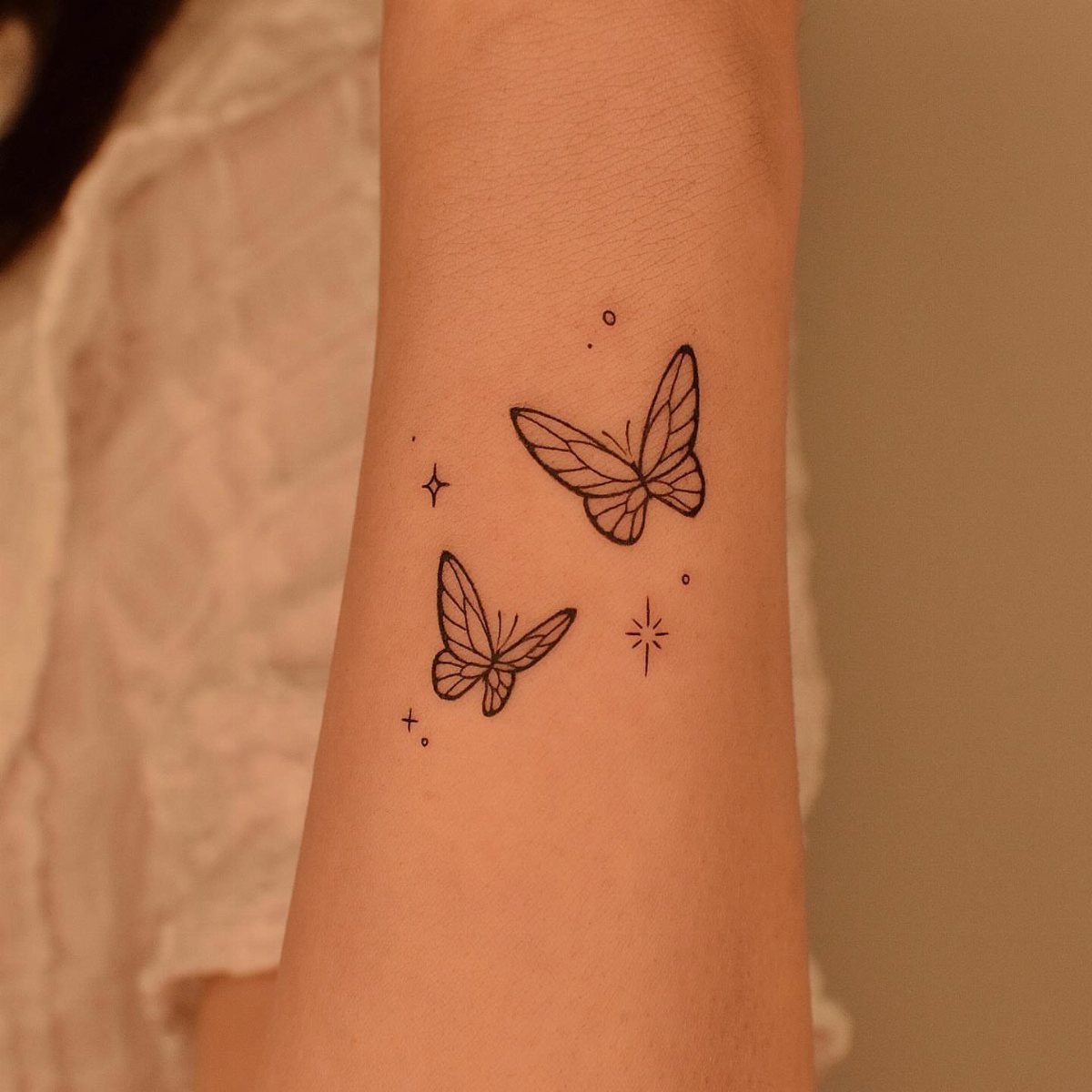
A pair of simple outlines, each reduced to its essential shape, with maybe a trail of stars or dots to balance the composition.
The line stays thin enough that the whole piece feels weightless, but the silhouette holds its shape when someone sees it across a room.
This approach works well on the wrist, forearm, or ankle, especially when you already wear other tattoos or jewelry and don’t want them competing.
The lack of shading means faster sessions and gentler healing, and the design ages cleanly because there’s no fine detail to blur over time.
2. Butterfly and Flower Tattoo
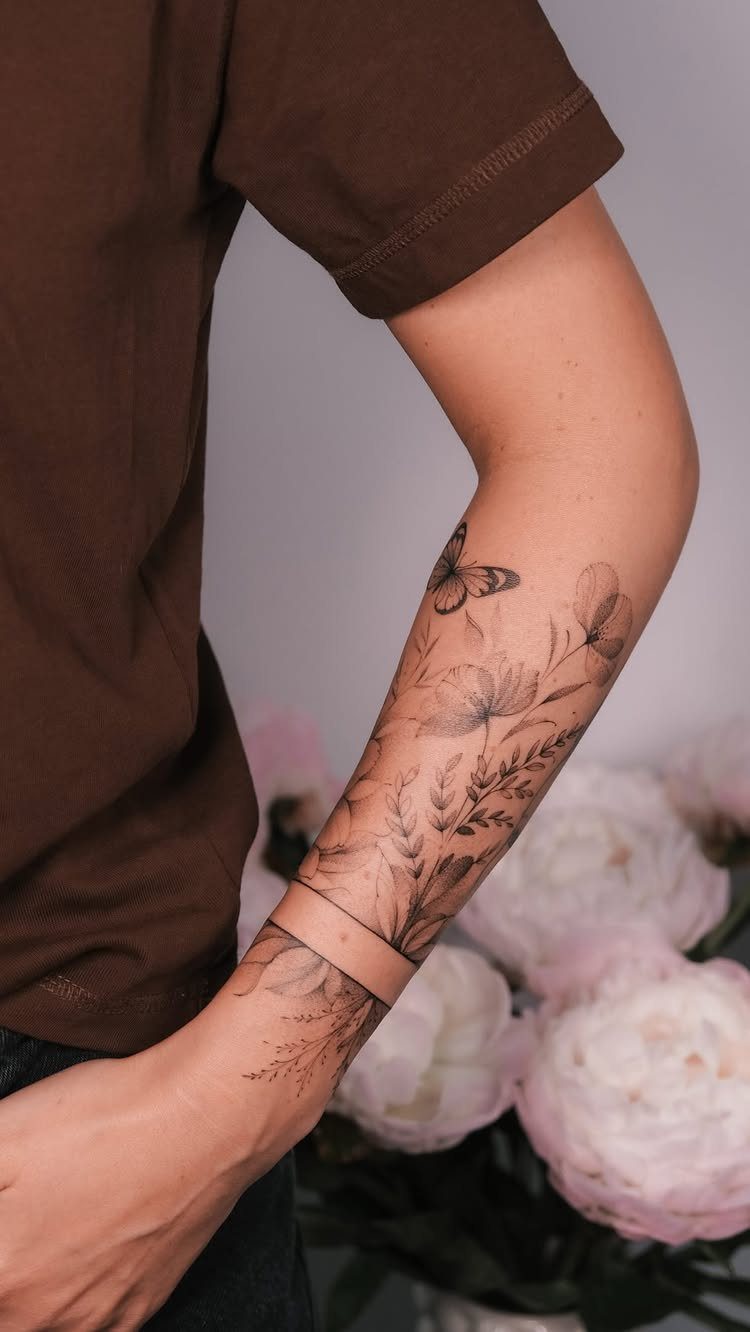
Pairing a butterfly with blooms gives you two symbols in one piece: growth and beauty, fleeting and rooted.
The flowers ground the composition while the butterfly brings movement, and you can pick species that match your own story or simply look good together.
Peonies, roses, and cherry blossoms pair well with most butterfly shapes. If you’re working with a smaller canvas like the forearm, keep the flower count to 2 or 3 so the butterfly doesn’t get lost.
Black ink makes the form the priority, and the whole piece looks like one scene instead of separate drawings stacked together.
3. Realistic Butterfly Tattoos
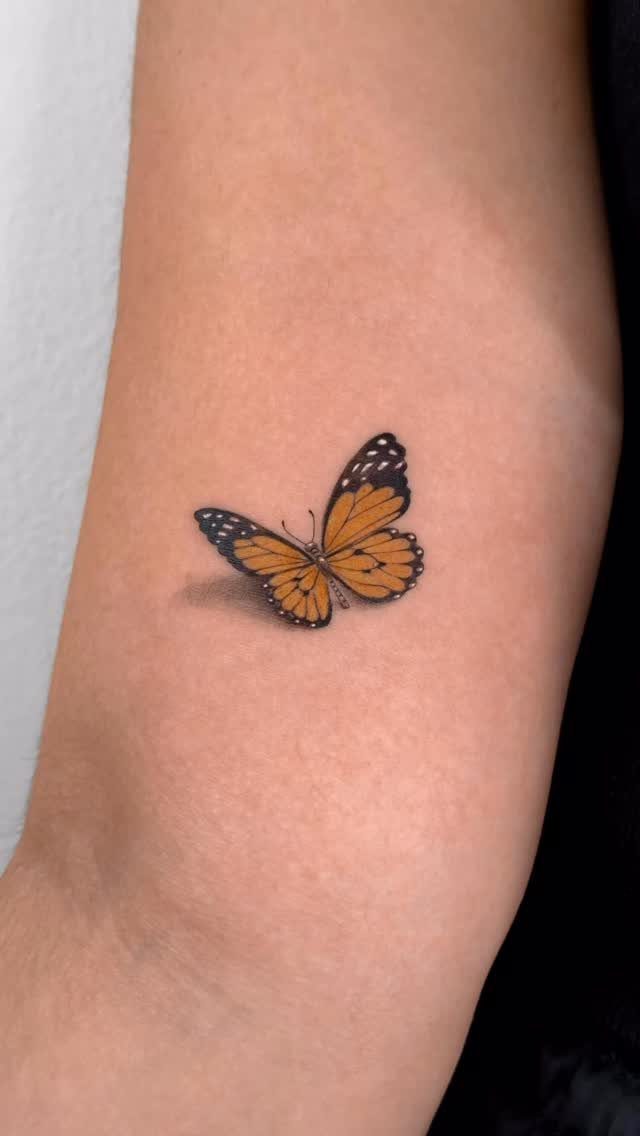
Realism captures the texture of the wings, the segmented body, and the soft shadow that makes the butterfly look like it just landed on your skin.
The shading gradient mimics natural light, and when done well, people will want to touch it to see if it’s real.
This style demands precision, so choose an artist whose portfolio shows clean gradients and crisp edges. Put it on a flatter spot like the forearm or shoulder blade so the design sits without warping.
4. Watercolor Butterfly Tattoo
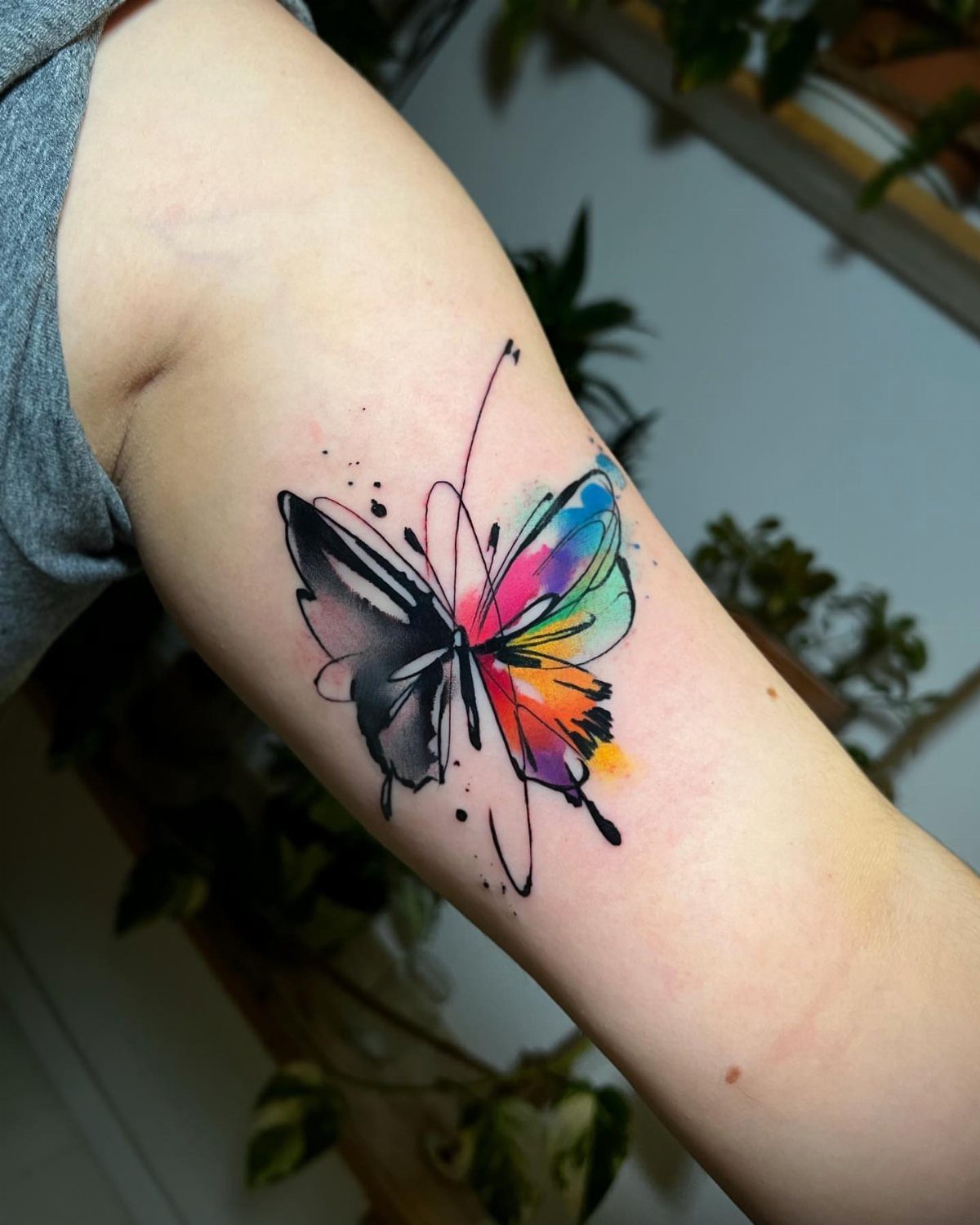
Watercolor style trades the hard outline for soft washes of color that bleed and blend like paint on wet paper. The effect feels spontaneous, almost like the butterfly is mid-flight and trailing pigment as it moves.
One wing can stay black while the other bursts into pink, blue, or purple, giving you asymmetry that still balances.
The technique works best at medium sizes, where the color gradients have room to show without looking muddy. Keep in mind that watercolor fades faster than solid linework, so touch-ups every few years help the vibrancy last.
5. Monarch Butterflies Tattoo
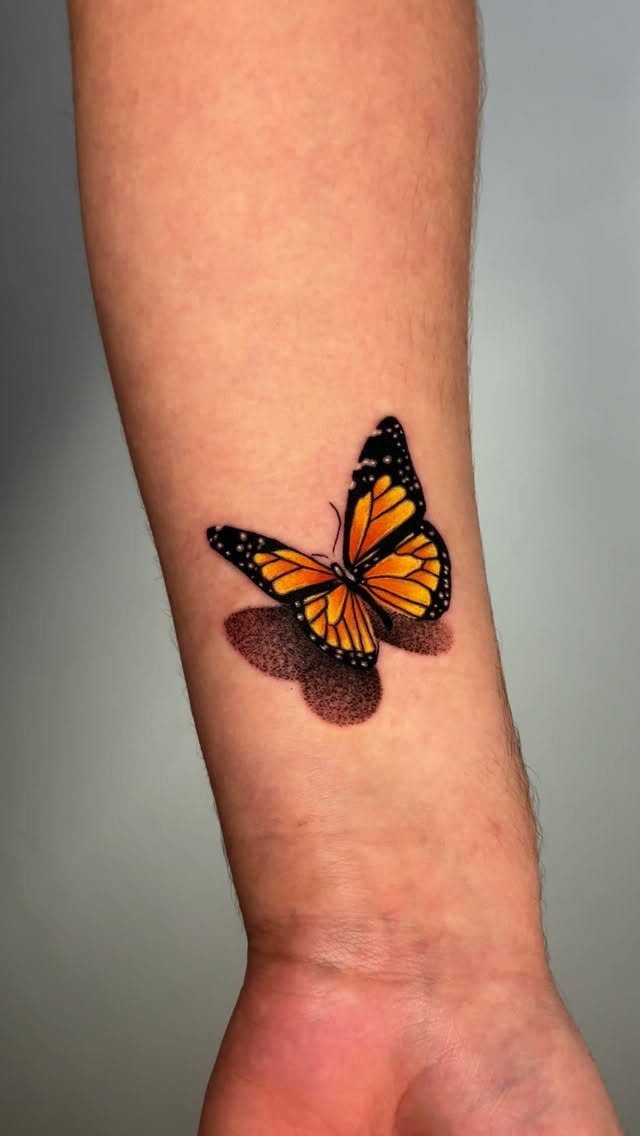
The monarch’s orange and black pattern is instantly recognizable, and the high contrast means it holds its shape even when you shrink it down.
That bold coloring also makes it one of the few butterflies that looks just as strong in color as it does in black and gray.
A drop shadow or subtle shading underneath adds dimension and makes the butterfly look like it’s resting on your skin rather than printed flat. Size can go small without losing the signature pattern.
6. Tiger Swallowtail Butterfly Tattoo
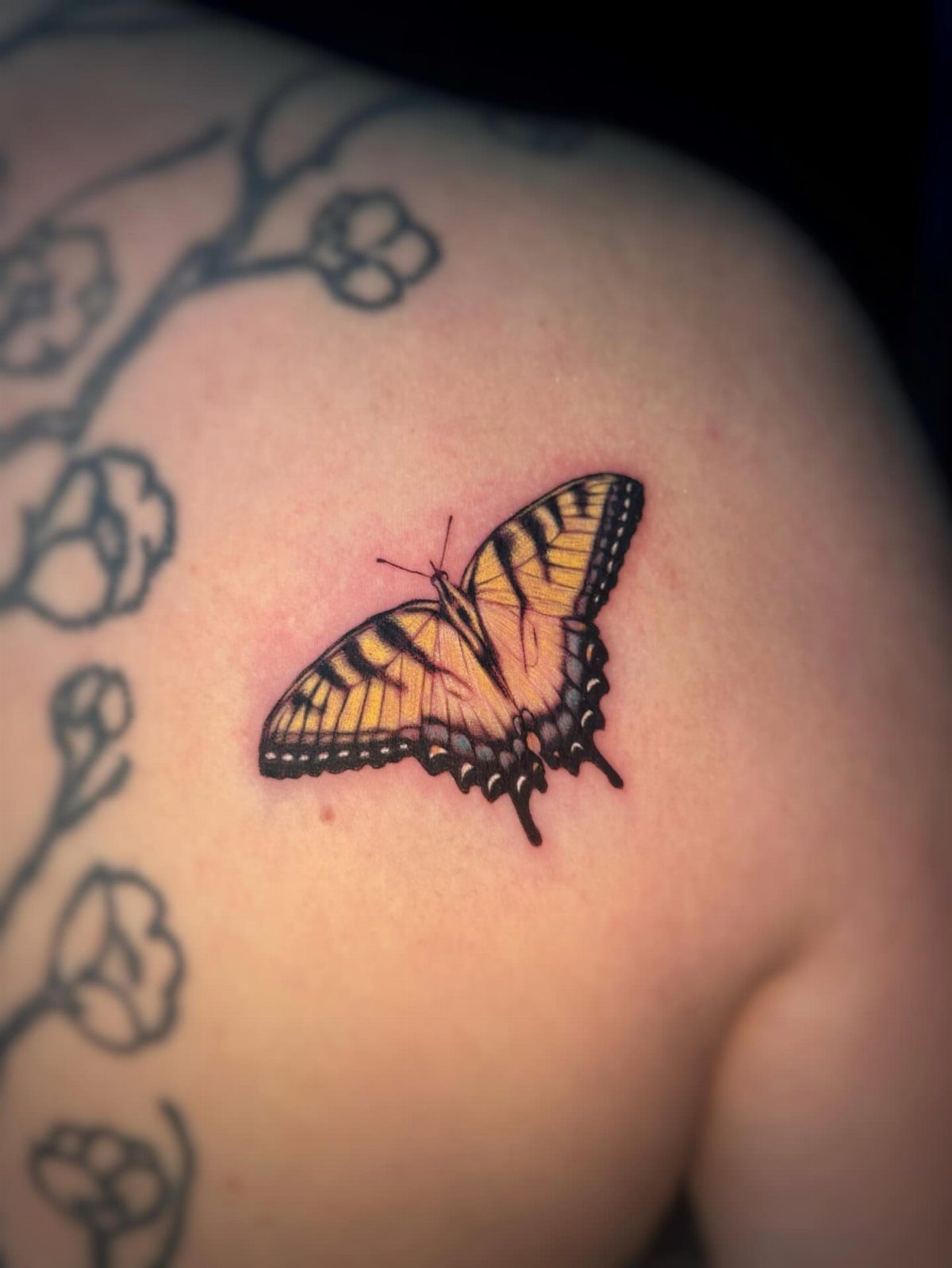
The tiger swallowtail’s yellow wings and black tiger stripes make it one of the more dramatic butterfly species to ink.
The long tail streamers at the bottom of each wing add vertical movement, so the design feels taller and more elegant than a rounded butterfly shape.
Color brings out the full effect, but black and gray with careful shading can still capture the striping and structure.
Placement on the shoulder or upper back lets the wings spread without hitting awkward curves, and sizing with enough room gives the stripe detail space to stay crisp as the tattoo ages.
7. Traditional Butterfly Tattoo
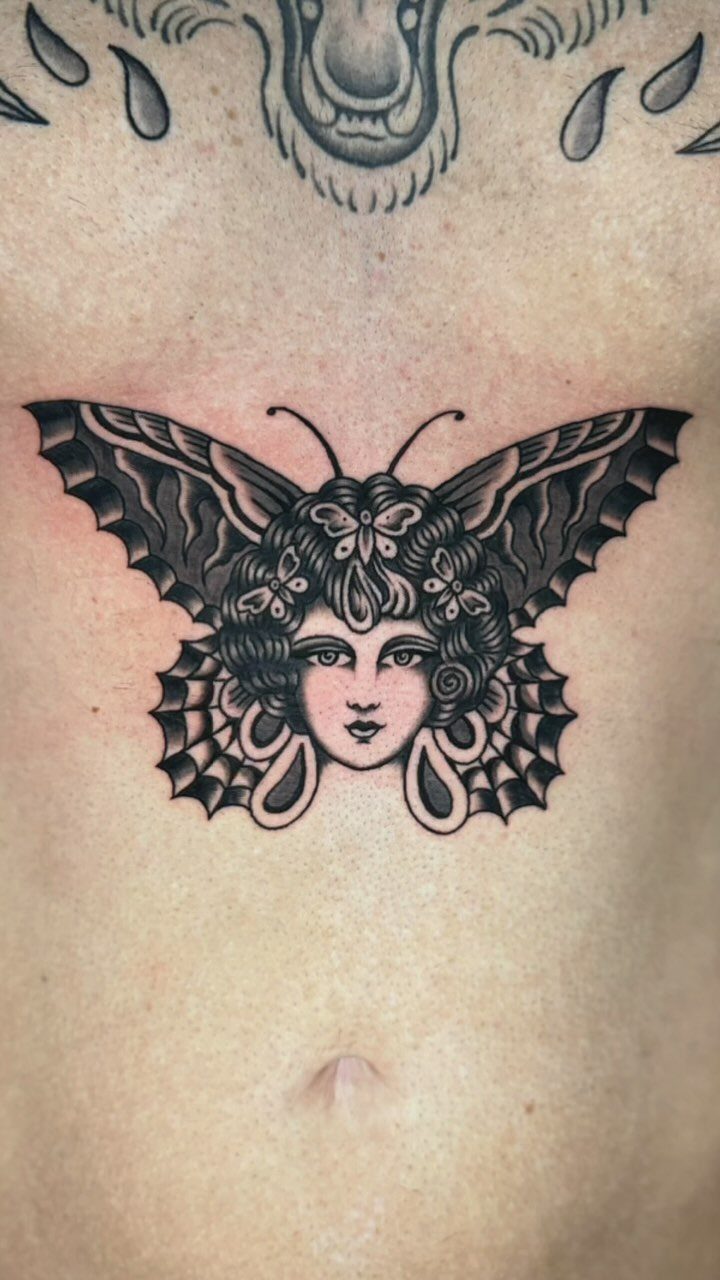
Bold black outlines, solid color fills, and a symmetrical design that holds its shape for decades.
Traditional style brings the graphic punch of old-school tattooing, where every line is thick enough to stay readable and the palette stays limited so the image doesn’t get muddy over time.
The centered portrait gives the piece a personal anchor, turning the butterfly into something more than decoration. This reads well on flat spots like the stomach, thigh, or chest, where the full wingspan can sit without wrapping around curves.
8. Black and Gray Rose with Butterfly Tattoo
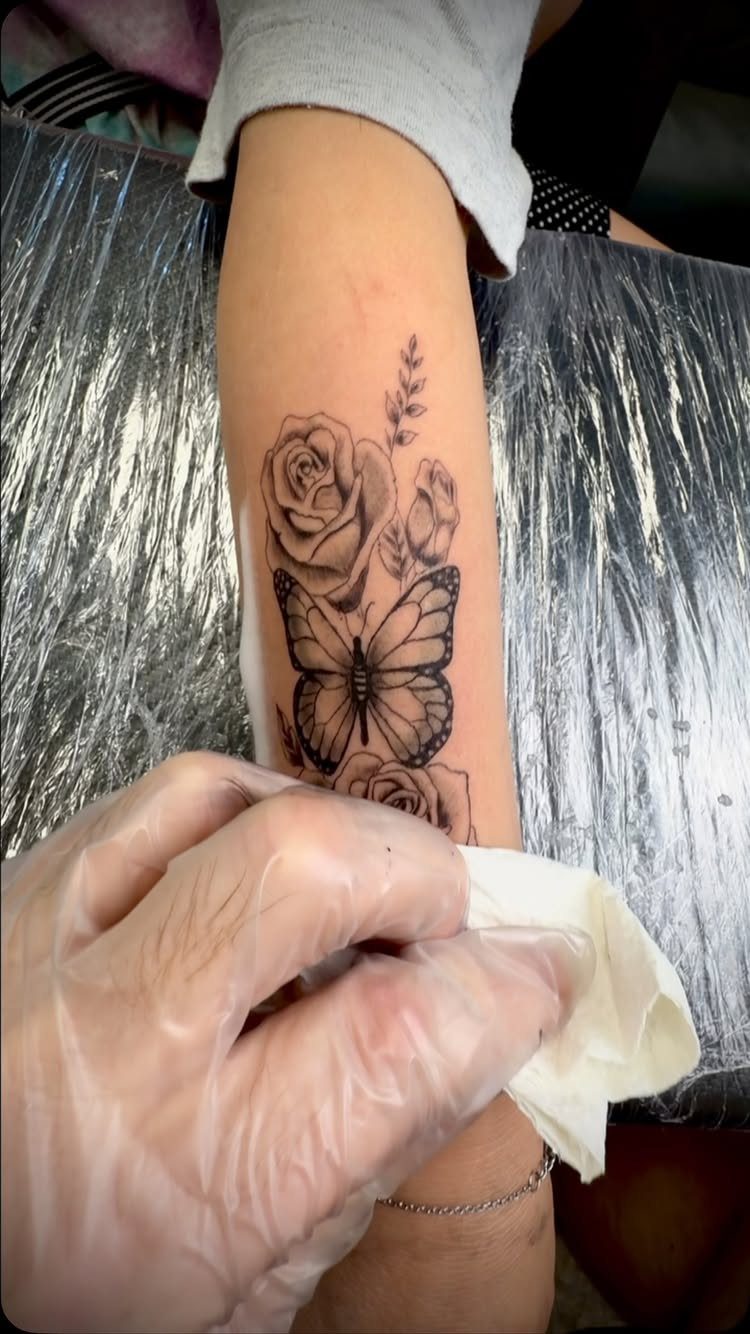
Removing color sharpens the focus on form and shadow.
The rose petals and butterfly wings share the same tonal range, so the piece feels unified instead of competing for attention, and the black and gray palette ages more predictably than color.
Placement on the forearm gives you visibility without commitment to a spot you can’t cover, and the vertical layout follows the natural line of the arm.
Shading depth is what separates the butterfly from the roses, so pick an artist who can layer grays without losing contrast.
9. Micro-realistic Butterflies
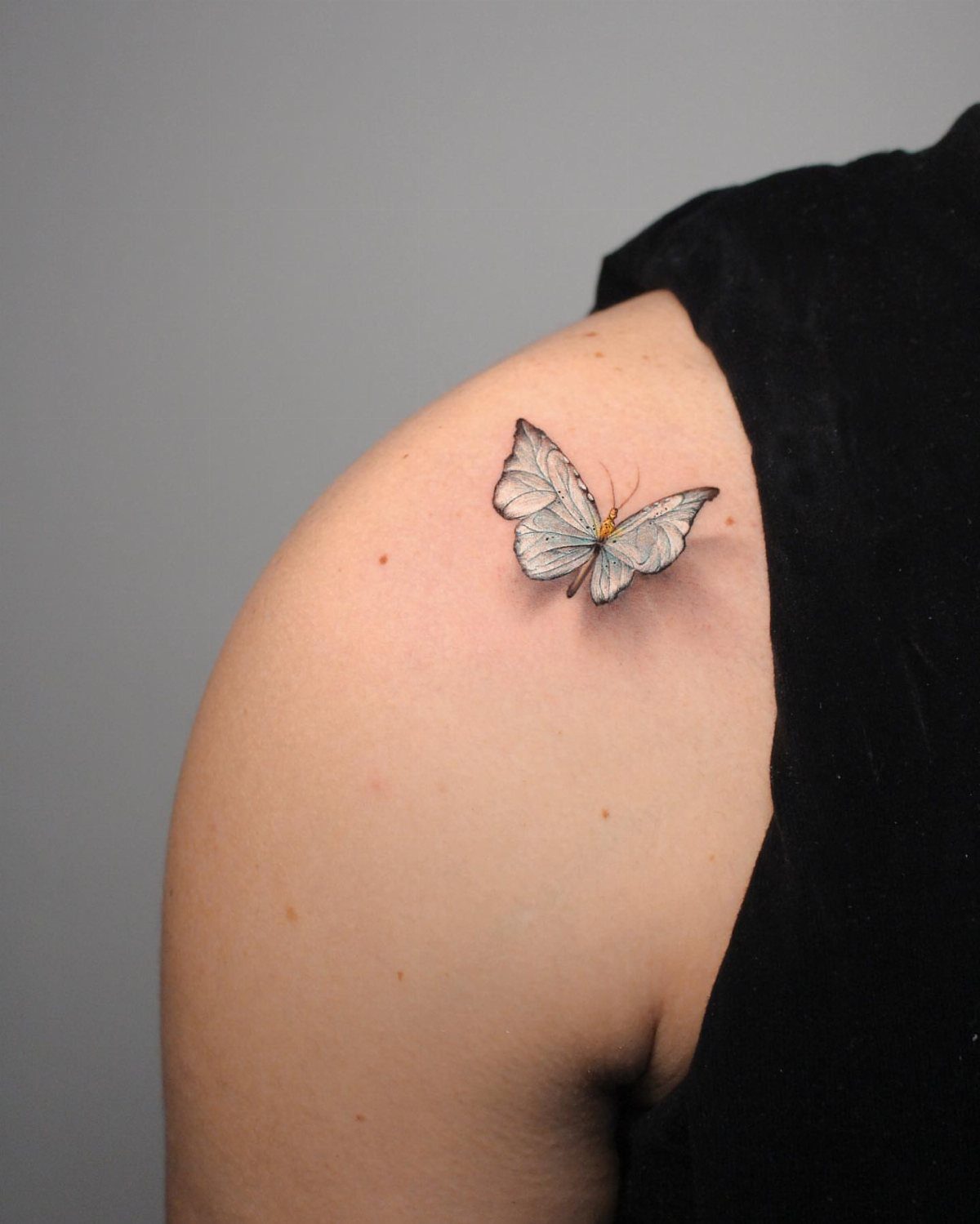
Tiny, detailed, and impossibly delicate. Micro-realistic butterflies capture wing texture and body segments at a scale most people assume won’t hold, but modern needles and steady hands make it possible.
The white highlights on the wings give dimension without adding bulk, and the small footprint means you can tuck it on the shoulder, behind the ear, or along the collarbone.
Expect slower healing and more touch-up risk than larger pieces, since the detail sits right at the edge of what skin can hold long-term.
10. Fine Line Butterflies
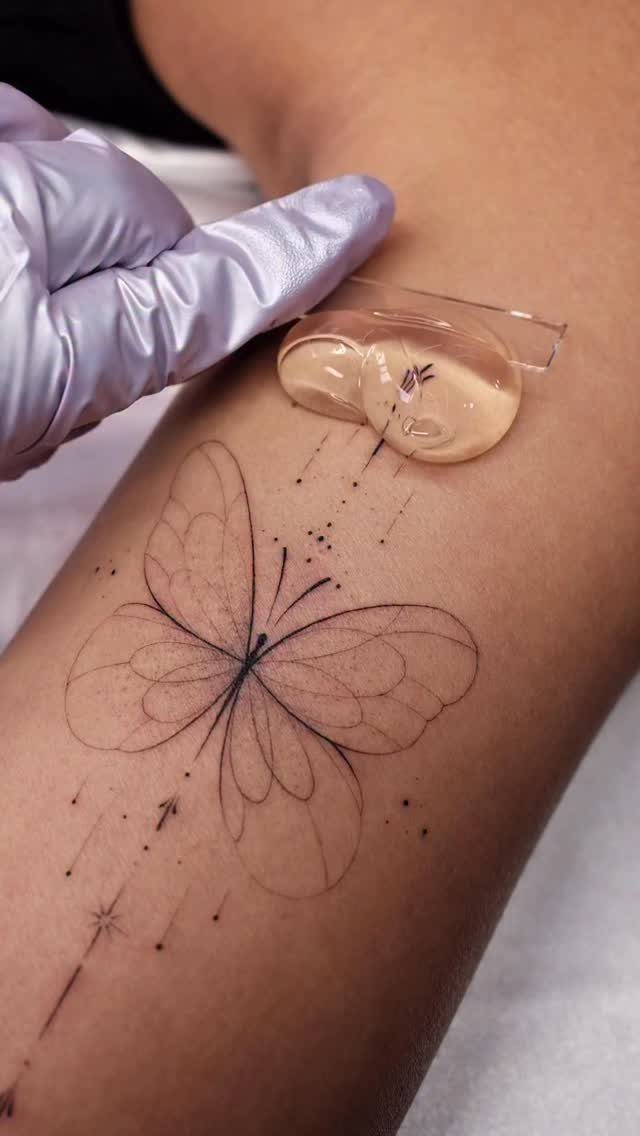
Single-weight linework with little or no fill gives you the butterfly’s shape and nothing extra.
Fine line holds the design light and airy, and because there’s minimal shading, the piece heals fast and stays sharp as long as the line thickness was right from the start.
This style flatters small placements where heavy shading would look too dense, and it layers well with other tattoos if you already have work in the same zone. The trade is simplicity: dramatic shading or color needs a different approach.
11. Set of Multiple Butterflies
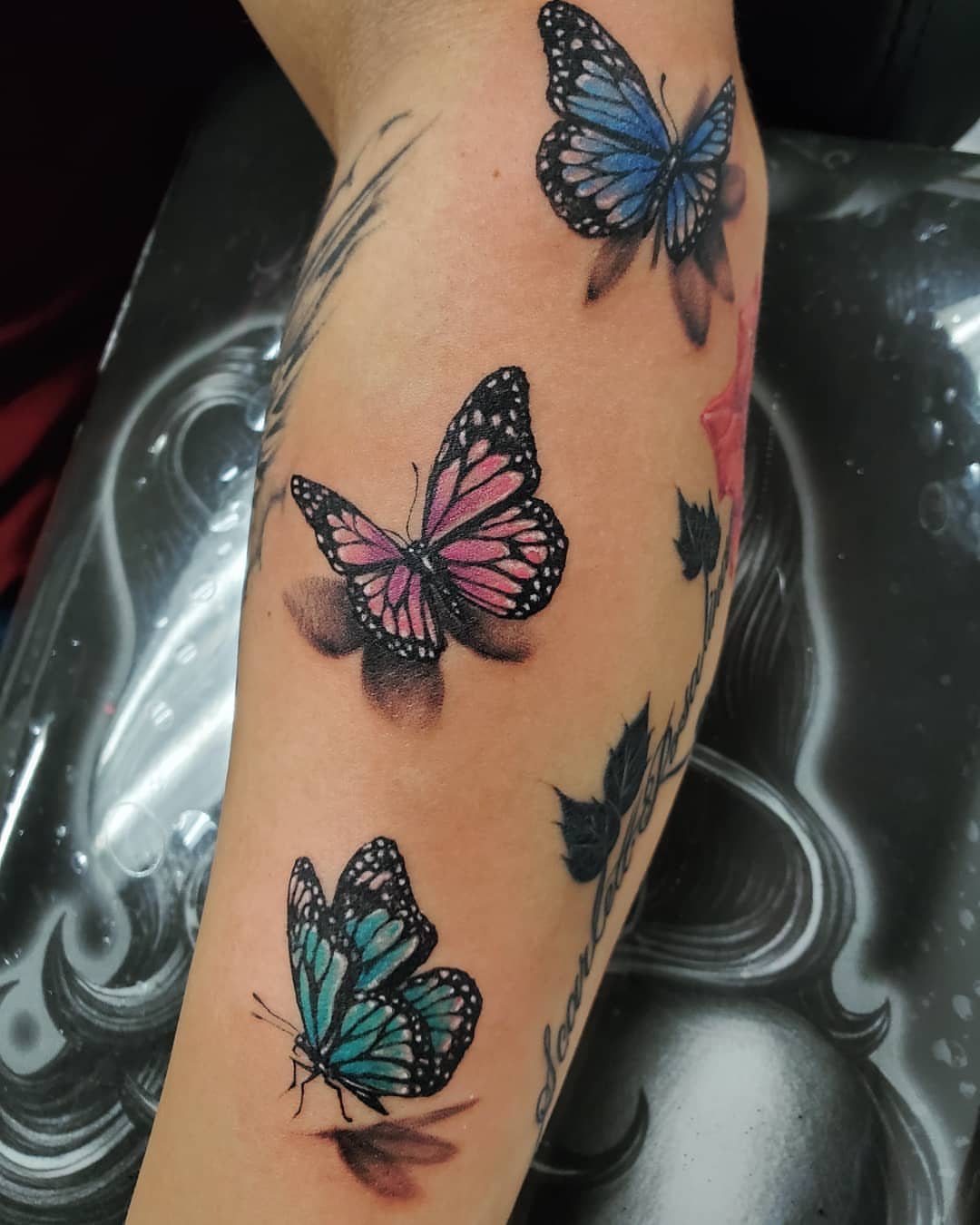
3 or more butterflies, each at a different size or angle, carry movement across the skin. Each one can represent someone specific, or the set can simply fill more space than a single butterfly would cover.
Drop shadows underneath each butterfly lift them off the surface and keep them from blending together, especially when you use color. Spacing matters: too close and they compete, too far apart and the piece loses unity.
Forearm placement gives you a natural path to follow, but the shoulder blade or ribcage work just as well for butterflies that scatter instead of march.
12. Skull Butterfly Designs
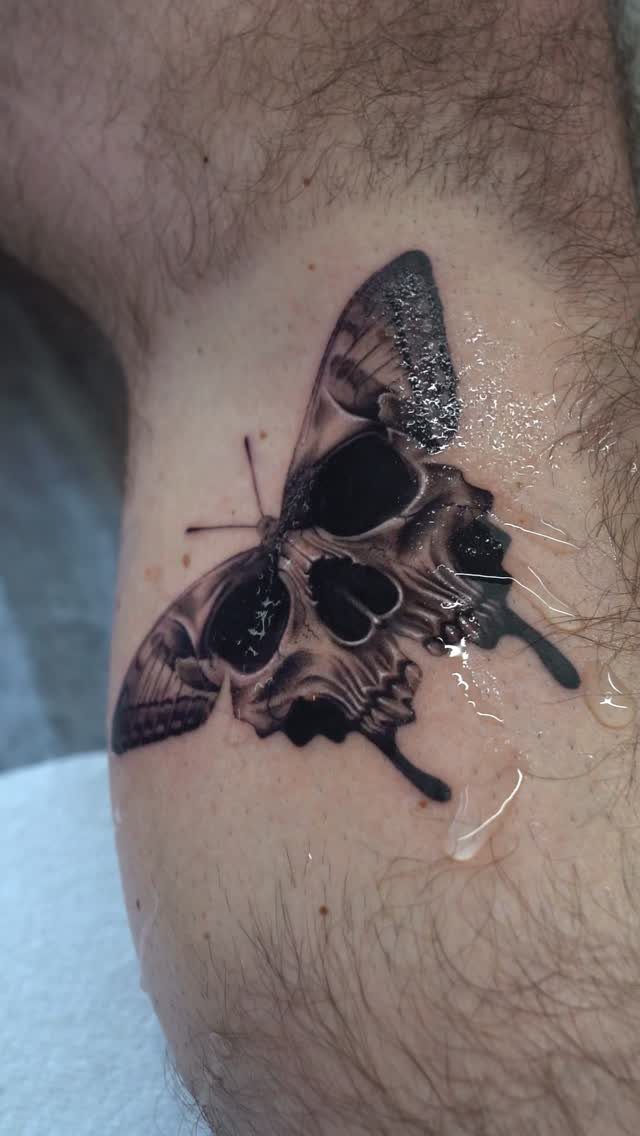
Wings framing a skull center turn fragility into a memento mori. The butterfly shape stays recognizable, but the skull shifts the meaning from transformation to mortality, and the combination reads darker than either image alone.
Black and gray suits this better than color, since the high contrast between bone-white highlights and deep shadow makes the skull pop.
Size needs to be large enough that the skull detail stays legible, so the teeth and eye sockets need room to hold over time.
13. Large Butterflies
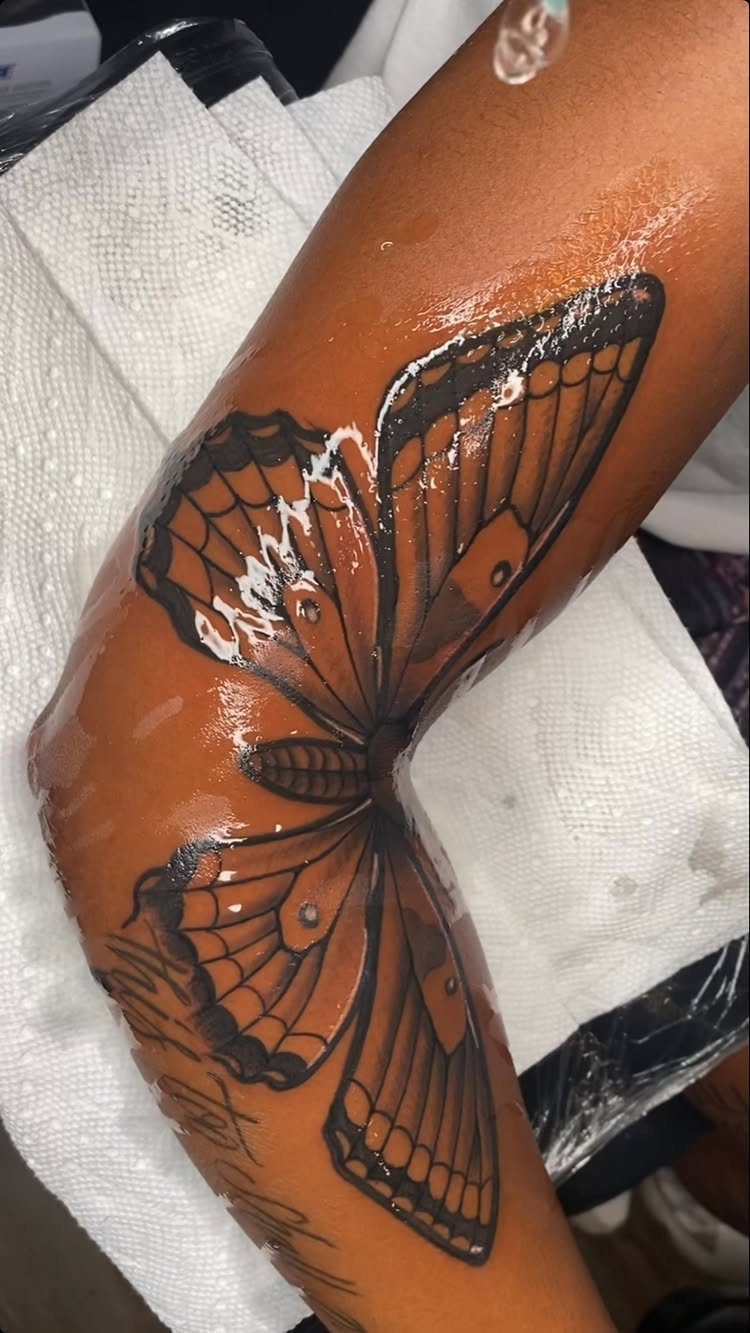
Going large gives the wings room to show texture, shading, and the full span of the species you chose.
A butterfly that stretches across the forearm, shoulder, or thigh reads from across a room and carries weight that smaller pieces can’t match.
Placement needs a flat or gently curved surface so the wings don’t distort when you move.
14. Color Vs. Black and Grey Butterflies
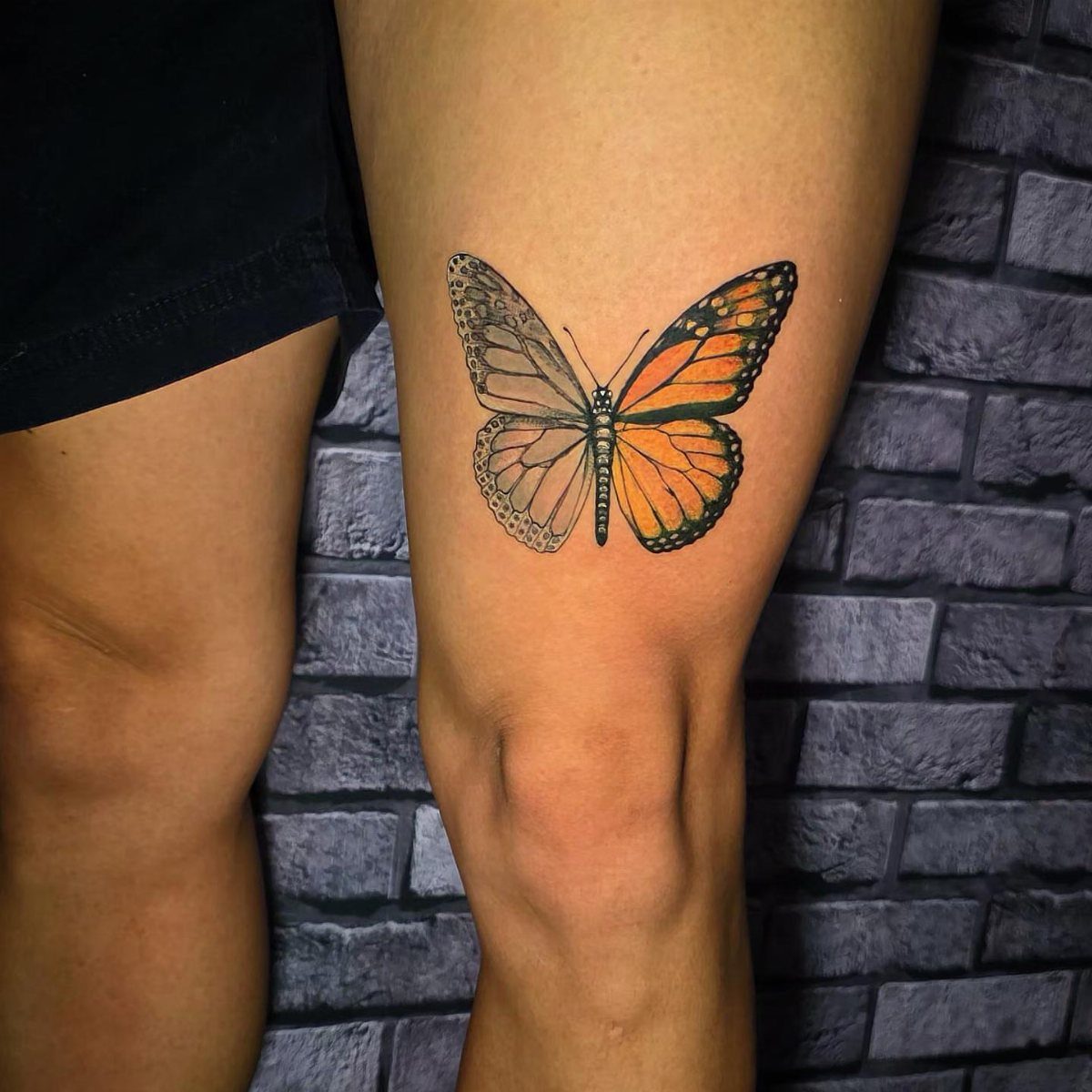
Splitting one butterfly into two finishes lets you compare the approaches side by side.
One wing in black and gray shows form and shadow, the other in orange or blue brings warmth and pop, and the contrast turns the piece into a study of what each palette does.
Black and gray ages more predictably, with less risk of fading or color shift over time.
Color demands more touch-ups but gives you vibrancy that black ink can’t replicate. If you can’t choose, this split design shows both without committing your whole body to one direction.
15. Butterfly Encased in Glass Cube
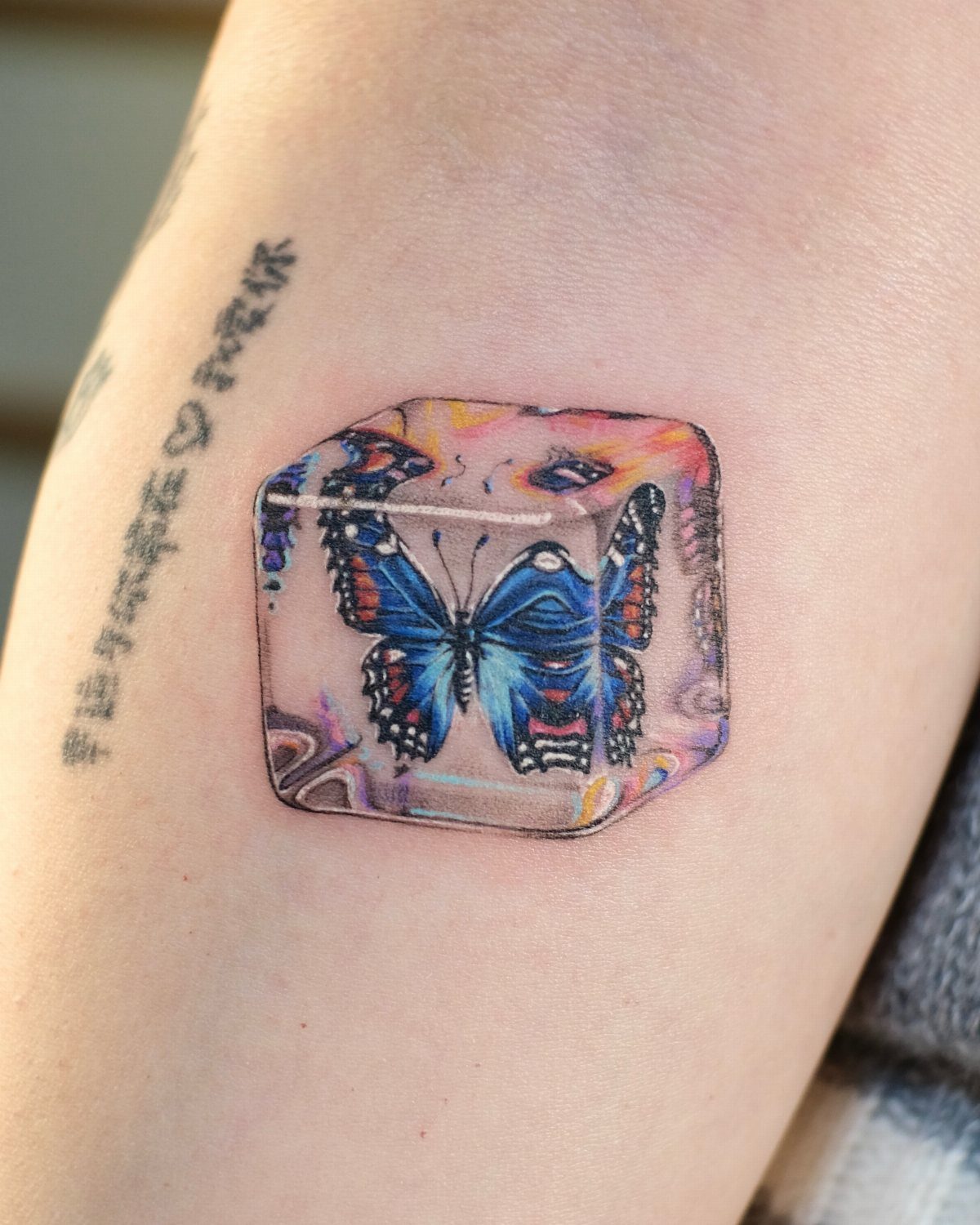
Encasing the butterfly in a glass cube adds a second layer of meaning: preservation, memory, something fragile now kept safe.
The translucent edges and internal reflections give the piece depth, so the butterfly looks suspended in three-dimensional space instead of sitting flat on your skin.
The cube outline needs clean linework to read as geometric and solid, and the shading inside mimics the way light refracts through glass.
Color on the butterfly itself, especially vivid blue, makes the piece feel more like a museum specimen than a natural insect.
16. Butterfly with Names and Lettering
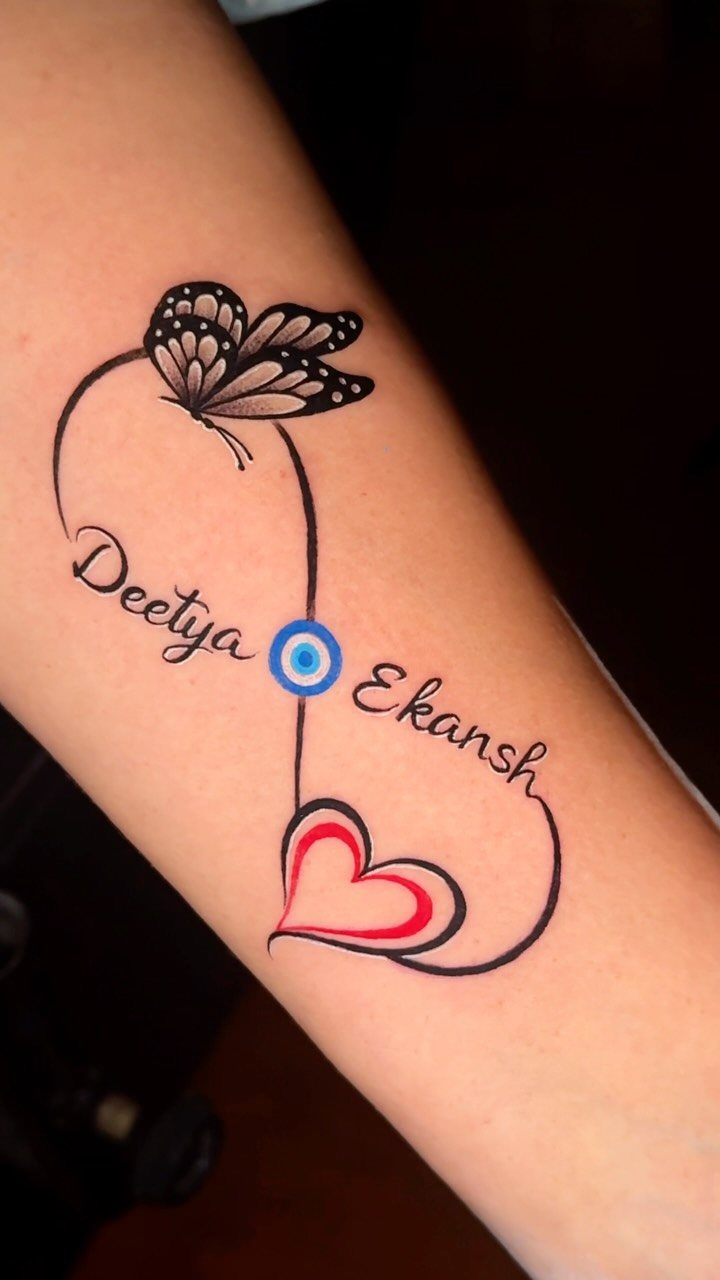
Adding names, dates, or short phrases turns the butterfly into a dedication. The wings frame the lettering, and the composition can include other symbols like hearts, infinity loops, or protective eyes to build a personal scene.
Script choice matters: cursive flows well around organic shapes, but pick a font thick enough that the letters stay legible as the tattoo settles.
Keep the text short so it doesn’t crowd the butterfly, and place the piece where you can read it yourself, like the inner forearm.
Meaning of Butterfly Tattoos
Butterflies sit at the center of transformation symbolism because the process is so visible: the caterpillar stage, the chrysalis, the winged adult.
That arc makes them a natural choice when you’ve moved through something difficult or reached a point where you’re ready to mark a new chapter.
The connection to freedom shows up in the flight itself. Wings that light, that much surface area relative to body weight, read as effortless movement, and that translates well when you want a tattoo that feels untethered rather than grounded.
Some people treat the butterfly as a memorial or a nod to someone they’ve lost, linking it to the soul or spiritual passage.
Others skip the meaning entirely and get one because the symmetry and wing detail look good on skin. Both reasons hold, and you don’t owe anyone an explanation for which one you picked.
Best Placement Ideas
Collarbone and rib placements follow the natural curve of bone, so fine line butterflies sit where the body already has movement. The design feels like part of your structure instead of something applied on top.
Flat or gently curved surfaces let the symmetry hold when you move, and the detail stays crisp as the tattoo ages.
Choosing a Tattoo Artist
Look at healed work, not fresh photos.
A butterfly with soft shading or fine detail can look perfect under studio lighting and then blur or lose contrast after a year. Ask to see healed pieces, ideally from clients with skin tone similar to yours.
Portfolio consistency matters more than one standout piece. If every butterfly the artist posts looks tight and the wings hold their shape, that’s a better signal than a single viral post surrounded by shakier linework.
Realistic and micro-realistic styles demand an artist who can layer grays without muddying the contrast or place white highlights that won’t blow out during healing.
If the portfolio skews heavily toward bold traditional work, that artist may not be the right fit for soft realism, no matter how skilled they are in their own lane.
Frequently Asked Questions
What is the best size for a butterfly tattoo?
The size you pick depends on the amount of detail the design needs and the body placement you have in mind.
Fine line or minimalist styles hold at 2–4 cm, realistic or shaded pieces need 4–6 cm so the gradients stay clear, and large butterflies that stretch across the forearm or shoulder give you room for full texture and wingspan.
Tiny micro-realistic work can go under 2 cm but carries higher touch-up risk.
Where on the body does this tattoo look best?
Collarbone and rib placements follow bone curves and suit fine line work, while flat spots like the forearm, shoulder blade, or thigh let realistic or large butterflies sit without distortion.
Wrist and ankle work well for minimalist or small designs, and the inner forearm keeps lettering or dedication pieces where you can read them yourself.