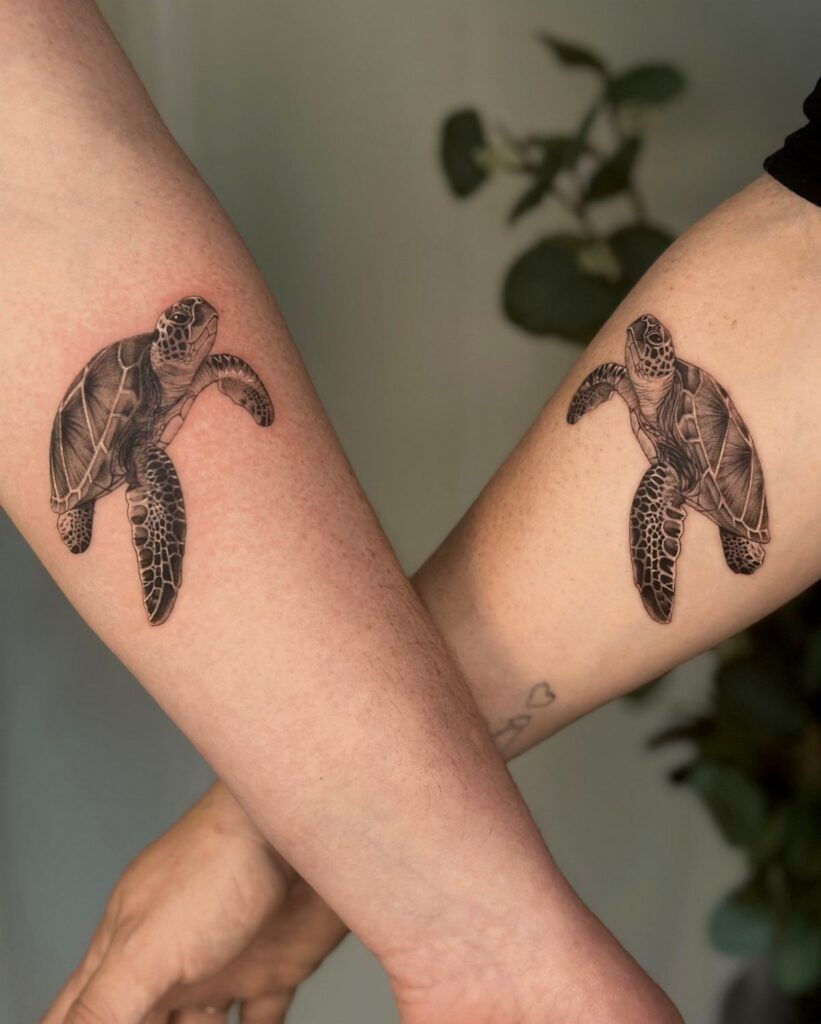
Watercolor washes that bleed past the outline take 3–5 sessions and cost more than black-only tribal patterns, which age cleanly because there are no fine details to blur.
The style you pick depends on whether you want soft watercolor that looks like it swam out of a painting, clean geometric shapes that follow your body’s contours, or bold tribal symmetry.
Hawaiian designs anchor the turtle in landscape by filling the shell with an island chain, and that stacked composition works best on the calf where everything stays visible when you stand.
1. Watercolor Sea Turtle Tattoo
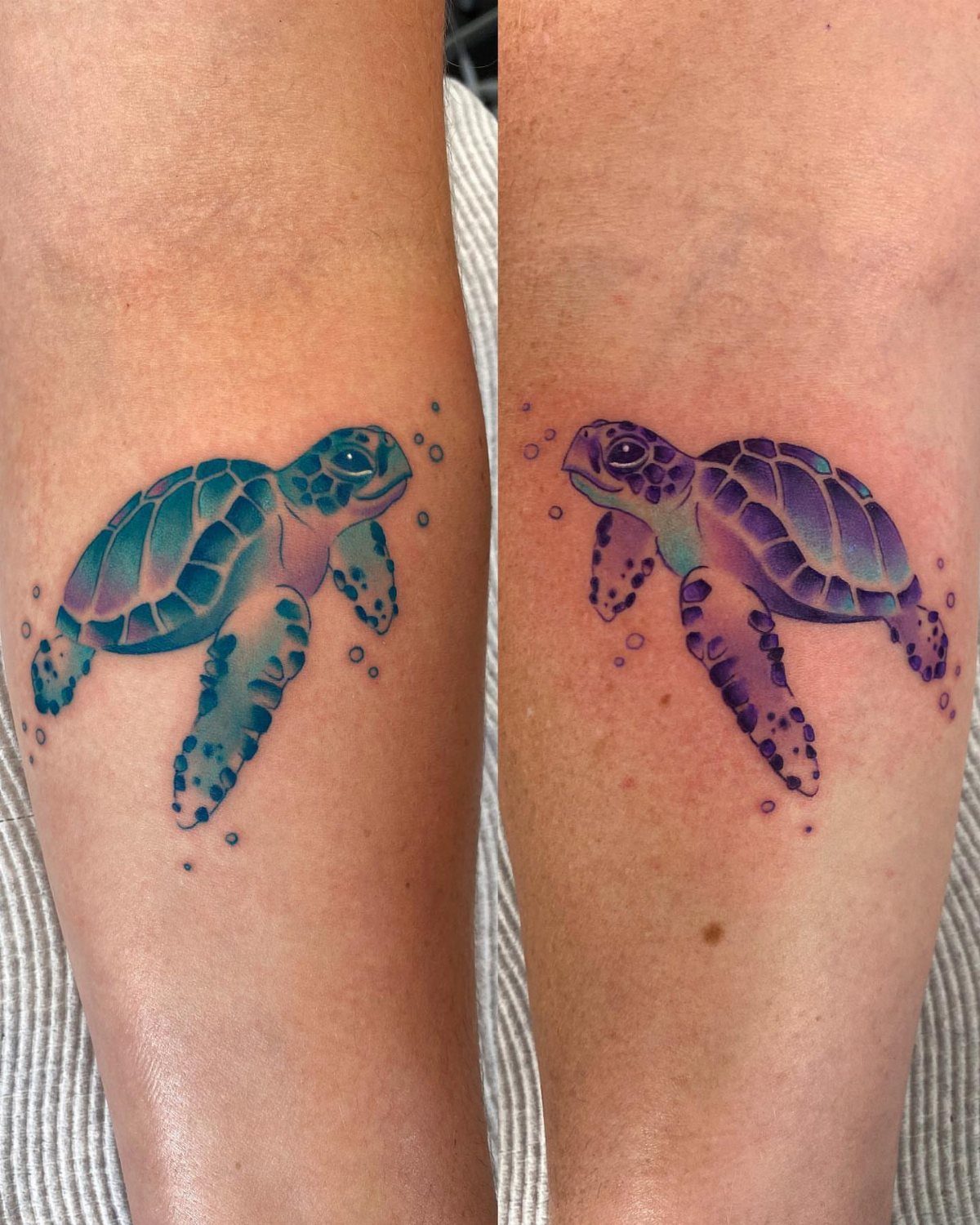
The watercolor approach gives you a sea turtle that looks like it swam straight out of a painting. Blue and purple washes bleed past the black outline, creating soft gradients that mimic how light moves through ocean water.
This style reads best when the colors stay cool: teal, cobalt, violet.
Warmer tones can work, but they lose that underwater feel. Size matters here because the color needs room to blur and fade without turning muddy.
Watercolor loses its brightness over time faster than other styles. Watercolor loses its brightness before solid black does, and sun exposure speeds that along.
2. Cute Sea Turtle Tattoo
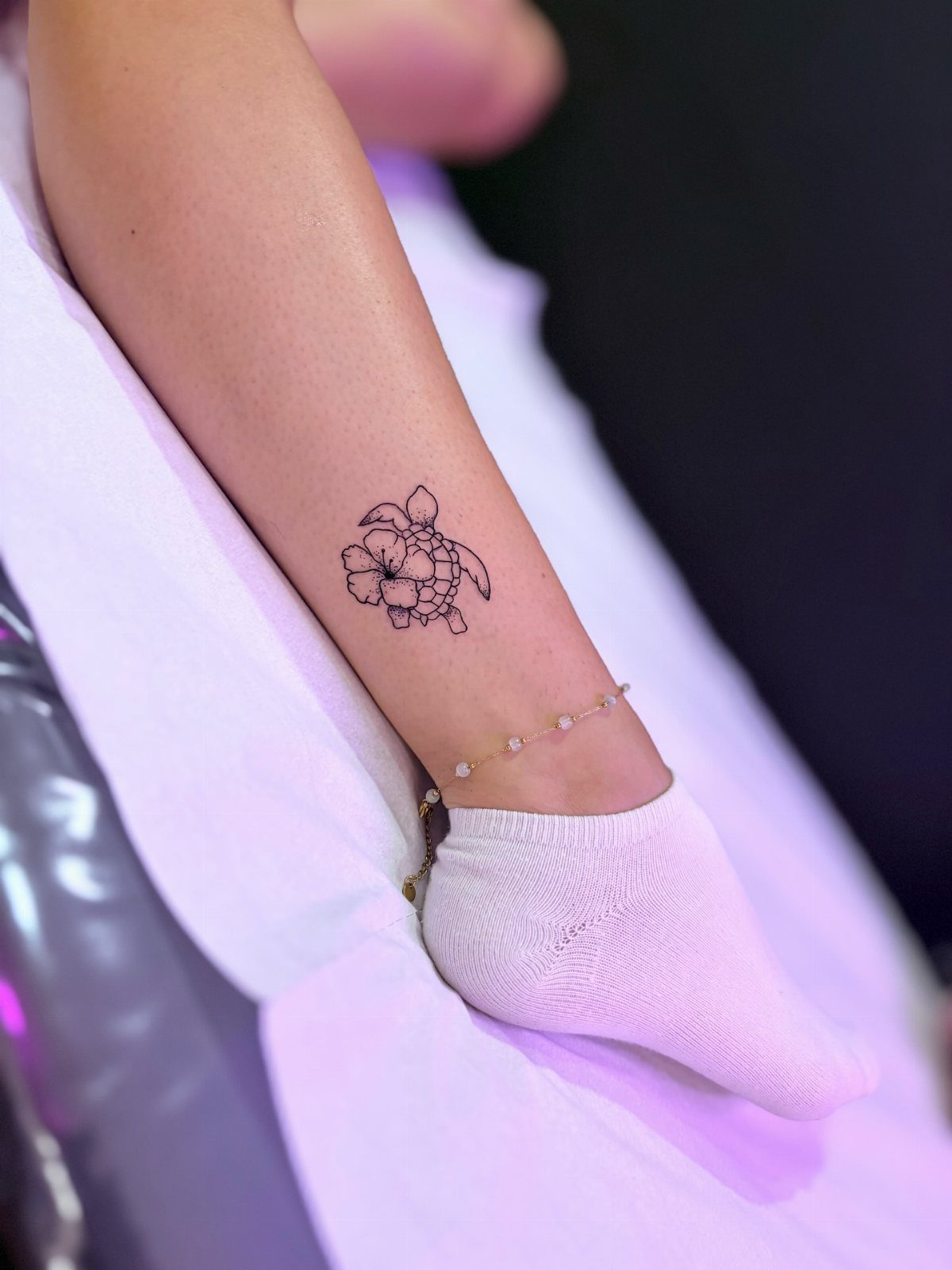
A small turtle with a flower tucked onto its shell turns the design playful without tipping into cartoon territory. The flower gives you a second layer of meaning: birth month blooms, memorial flowers, or just something that balances the composition.
Ankle placement keeps it discreet. Black ink alone means no color touch-ups down the line.
A flower that reads from across the room needs more size or a spot like the forearm. At this scale, it reads best up close.
3. Tribal Sea Turtle Tattoo
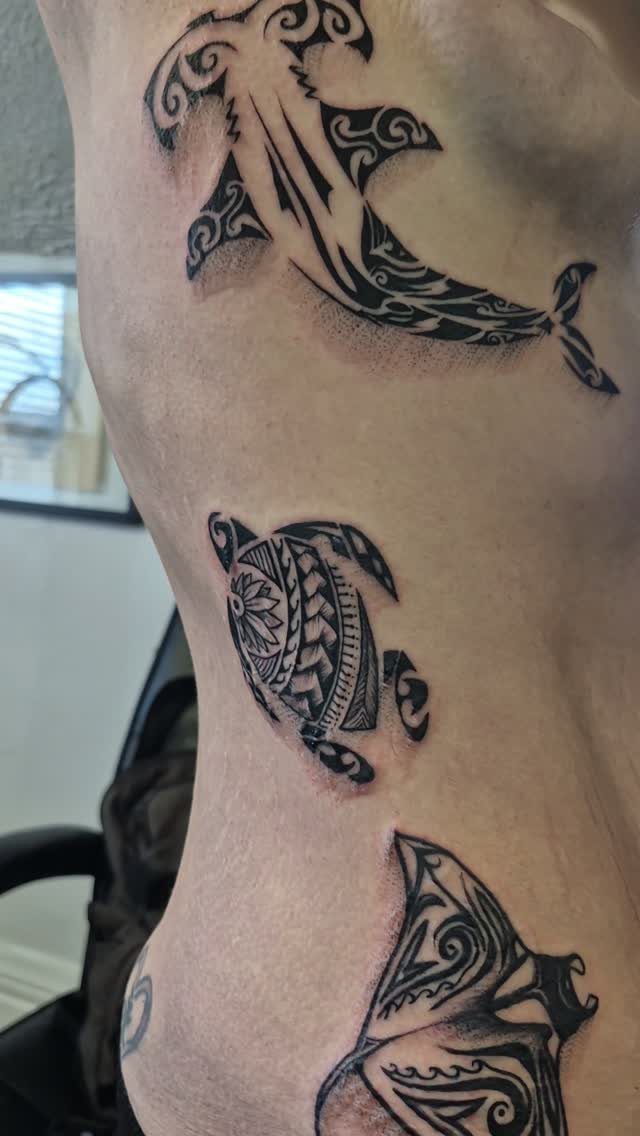
Tribal patterns turn the shell into a grid of bold black shapes: triangles, chevrons, negative space carved into symmetry. The style originates in Polynesian tattooing, where each shape carries its own meaning.
This approach demands confidence in placement. A tribal sea turtle tattoo that follows the body’s natural contours makes the piece feel intentional rather than stamped on.
Black ink, no shading, no color. The contrast is absolute.
Tribal work ages well because there are no fine details to blur, but it also shows every line that sits crooked. Find an artist who specializes in this style.
4. Realistic Sea Turtle Tattoo
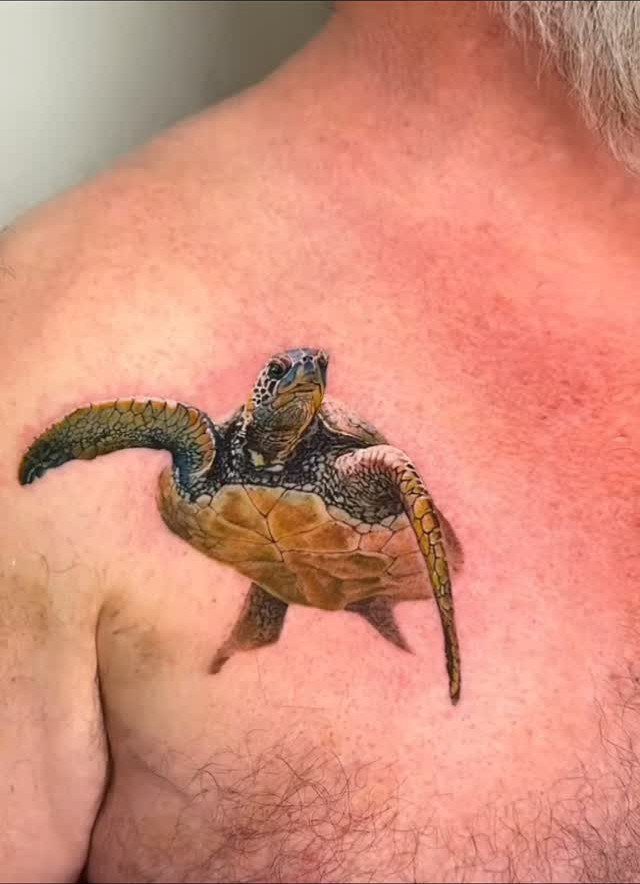
Realistic shading gives you a turtle that looks like it could crawl off your skin. The shell gets depth through layered tones: olive, amber, rust, with highlights that catch the light the way a wet carapace would.
This version takes time. Multiple sessions, full color saturation, and an artist who can render texture without overworking the skin.
Cost runs higher because of the hours involved. Budget for 3–5 sessions depending on size.
5. Fine Line Sea Turtle Tattoo
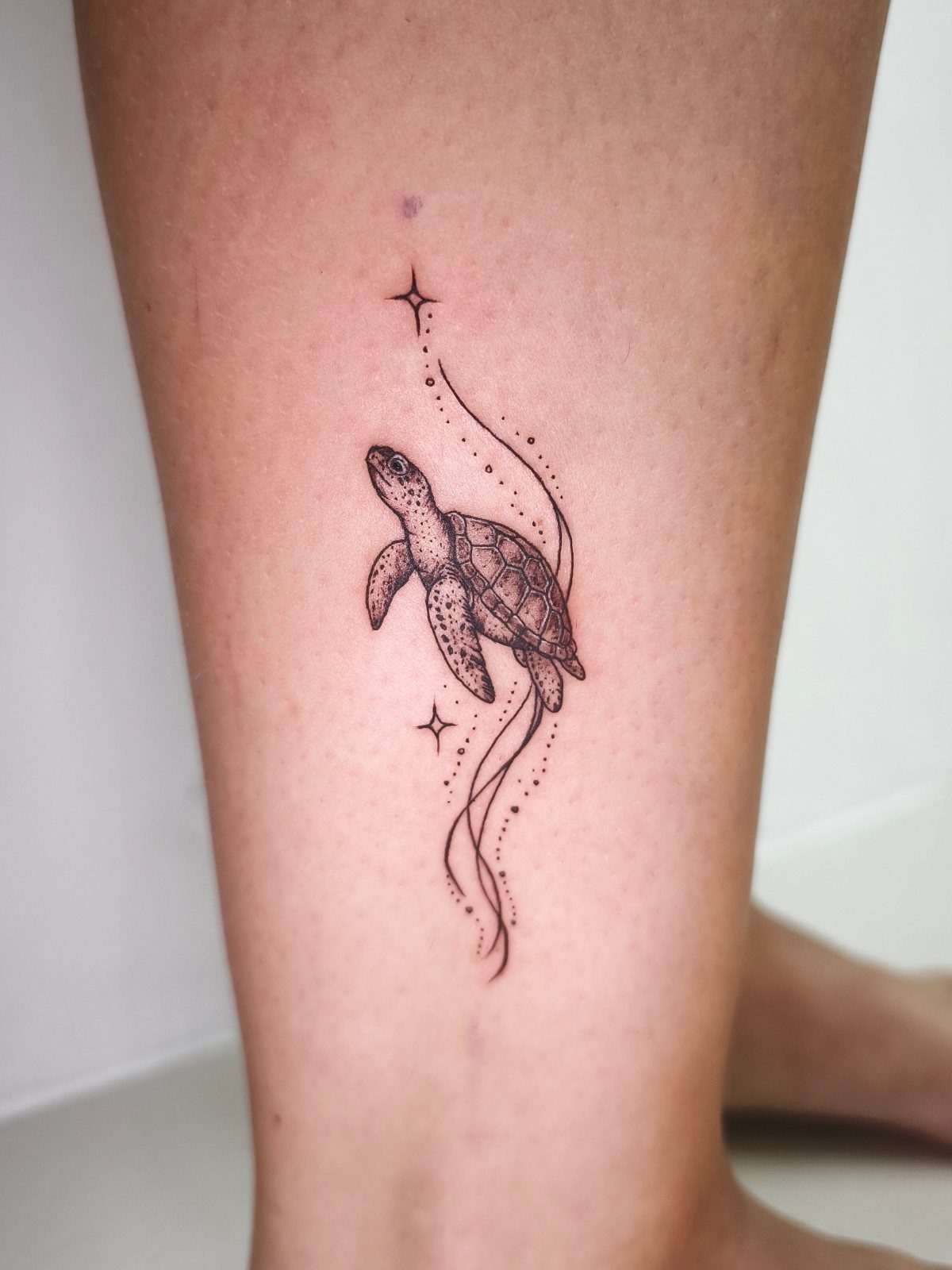
This style strips the turtle down to its skeleton: just enough ink to suggest form without filling it in. The stars and dots around the turtle add movement and leave the turtle itself clean.
This style suits people who want a turtle but don’t want it to dominate the space.
This style loses its brightness before bold traditional work does, so occasional touch-ups keep it sharp.
6. Geometric Sea Turtle Tattoo
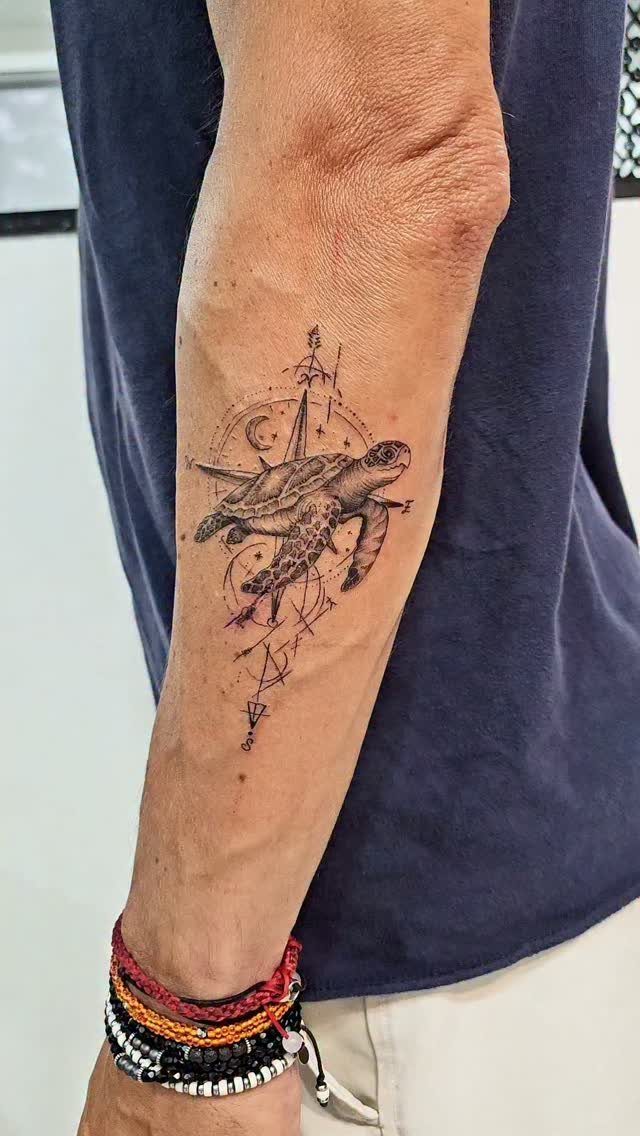
Geometric elements give the turtle a modern edge: straight lines cutting through organic curves, circles that frame the shell, compass points that anchor the design in navigation symbolism. The flowing turtle against rigid geometry creates tension that holds your eye.
Any smaller and the lines start to crowd each other.
Black ink only. Color softens the geometry, and that geometry is what makes this style work.
7. Guidance and Protection Sea Turtle Tattoo
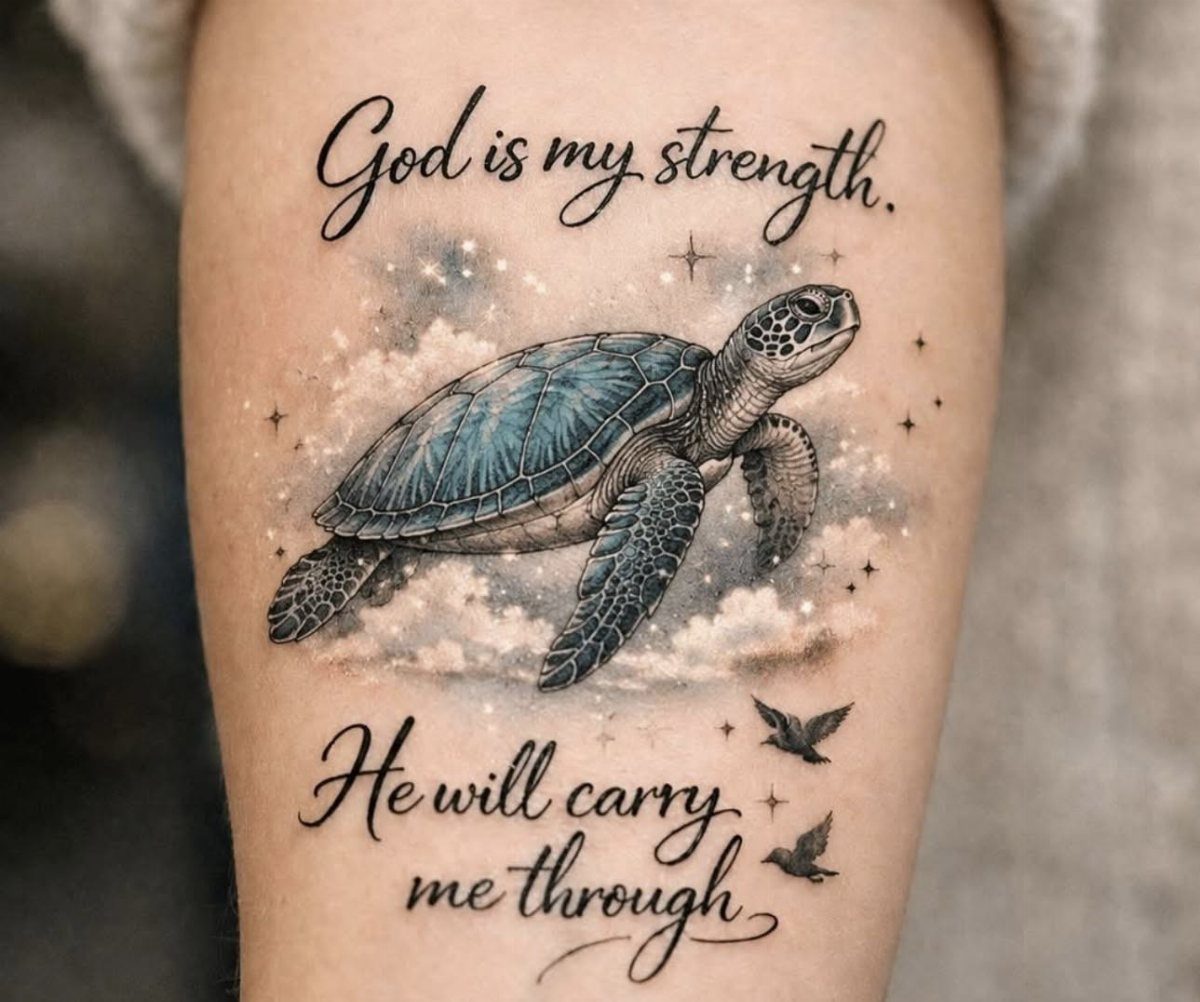
Clouds and text shift the turtle into spiritual territory. The turtle floats between sky and words that name faith directly, and the birds extend that upward movement.
This version works when the symbolism matters more than subtlety. The text makes the meaning explicit, so anyone reading it knows exactly what it represents.
Placement needs enough length to fit both the turtle and the phrase without cramping either one. The forearm or outer bicep gives you that room without forcing the words to wrap awkwardly.
8. Hawaiian Sea Turtle Tattoo
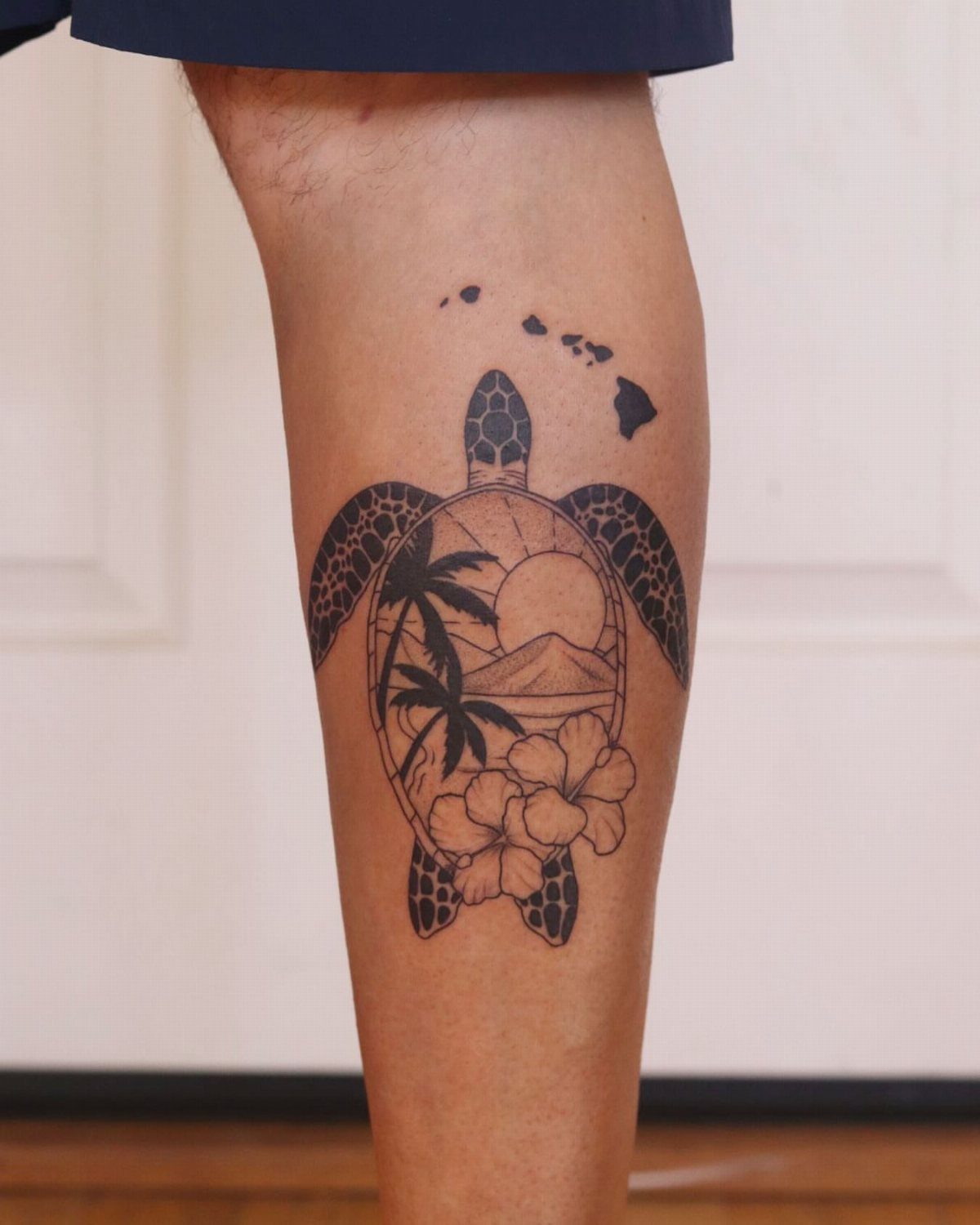
A landscape inside the turtle’s shell anchors the design in a specific place.
This version suits people who want more than the turtle alone: the scene adds layers and completes the idea in one piece.
The calf gives you vertical space for the island chain above the turtle. That stacked composition keeps everything visible when you’re standing, unlike a thigh piece that folds when you sit.
Black ink only means no fading color to maintain, and the solid fills age cleanly.
Symbolism of Sea Turtle Tattoos
Sea turtles live for decades, and that longevity is what makes them stick as a tattoo symbol.
A design that references endurance and a long life carries weight when the creature behind it actually outlasts most of what swims alongside it.
Survival adds another layer.
Sea turtles cross open ocean with predators below and shifting currents above, and they still find their way. That navigation through difficulty translates to guidance and protection when the design lands on skin.
In Hawaiian culture, the sea turtle is called honu and represents good luck and prosperity.
Polynesian communities treat the turtle as sacred, so a sea turtle tattoo can serve as a tribute to those traditions if that connection matters to you.
The symbolism is there if you want it, but a turtle also works as a design on its own without needing a backstory attached.
Color and Style Variations
Realistic sea turtle tattoos take longer and cost more because of the hours required to build that depth, but the result is a piece that reads like a photograph.
Monochromatic designs strip the turtle down to black and white, and that raw contrast often captures the form more clearly than color does.
Watercolor, tribal, and fine line styles each shift the turtle in a different direction. Watercolor gives you soft washes and gradients.
Placement Ideas for Sea Turtle Tattoos
Arms and thighs offer enough surface area for a turtle that includes detail or surrounding elements like landscape, text, or geometric framing.
The calf handles vertical compositions cleanly and keeps everything visible when you stand. Ribs and collarbone follow the body’s natural curves, and those spots suit designs that flow with bone structure rather than sitting flat.
Ankle and wrist placements keep the turtle small and discreet. At that scale, the design reads best up close, so fine line or simple outlines work better than heavy shading or color.
The neck and hip give you more freedom with size but less discretion, so those spots suit people who want the turtle visible without needing to show it deliberately.