Peony tattoos range from 2-inch ankle pieces you can heal under sandals to full sleeves that take multiple sessions, with styles that span linework, mandalas, and traditional Japanese.
The right size depends on how much detail you want visible once the ink settles: fine linework needs enough space to stay crisp as it ages, while bold traditional work uses high contrast between petals and background to keep from blurring over time.
Peonies pair well with snakes, dragons, lotus blooms, roses, butterflies, hummingbirds, stars and hearts, each combination pulling from different symbolic traditions without requiring you to explain what yours means.
1. Japanese Peony Sleeve Tattoo
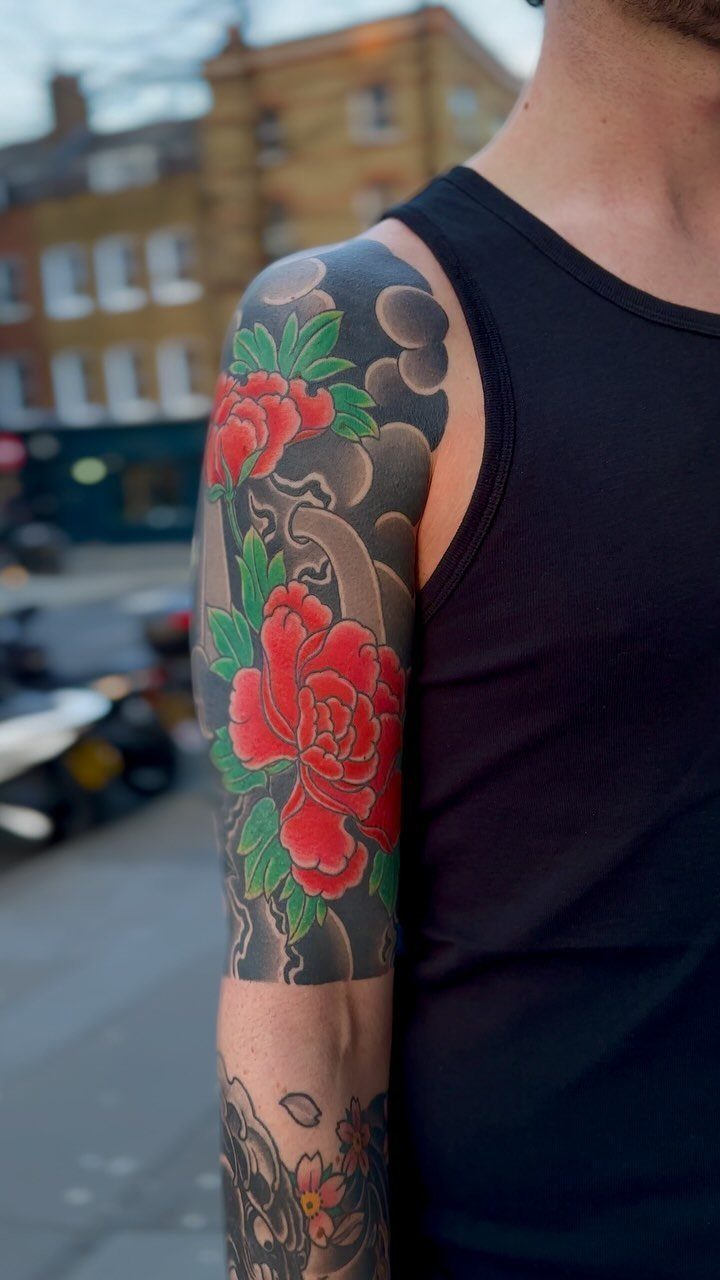
A bold red peony paired with black cloud work, inked on the upper arm. The contrast between the bright petals and dark negative space stops the piece from blurring together over time, which matters when you’re covering that much skin.
Sleeves take multiple sessions. Placement on the upper arm lets you stop at a half sleeve to test how you feel about the commitment before continuing down to the forearm.
2. Bright Red Japanese Peony Tattoo
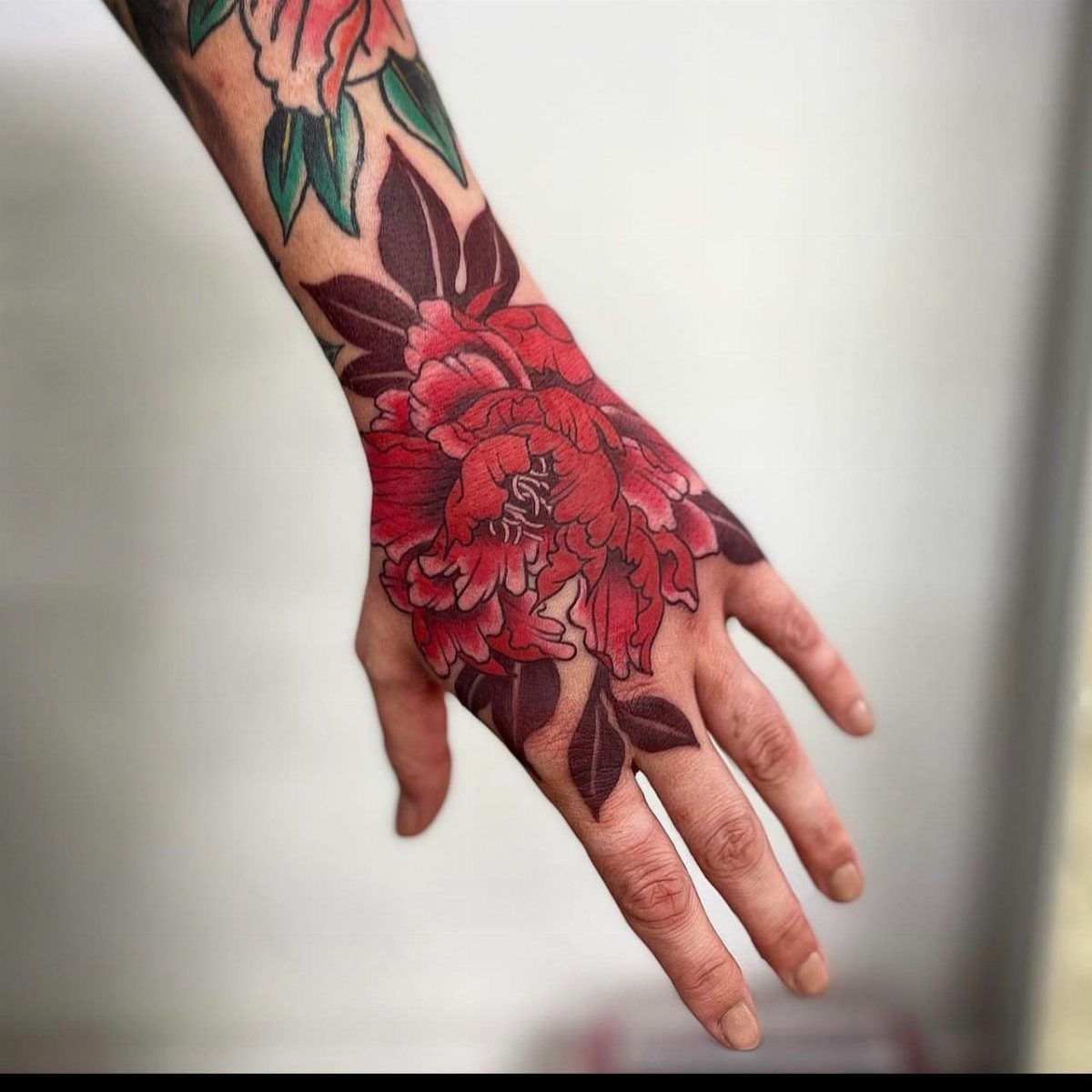
Red petals saturated enough to hold their color years out, paired with dark green leaves that frame the bloom without competing for attention.
The shading pushes into near-black at the edges, which gives the design depth and keeps it from reading flat once it settles into the skin.
Hand tattoos fade faster than most other placements because of constant sun exposure and friction.
Regular touch-ups keep the color looking sharp. If that maintenance sounds like too much, move the design up to the forearm where it will hold better.
3. Small Peony Flower Tattoo
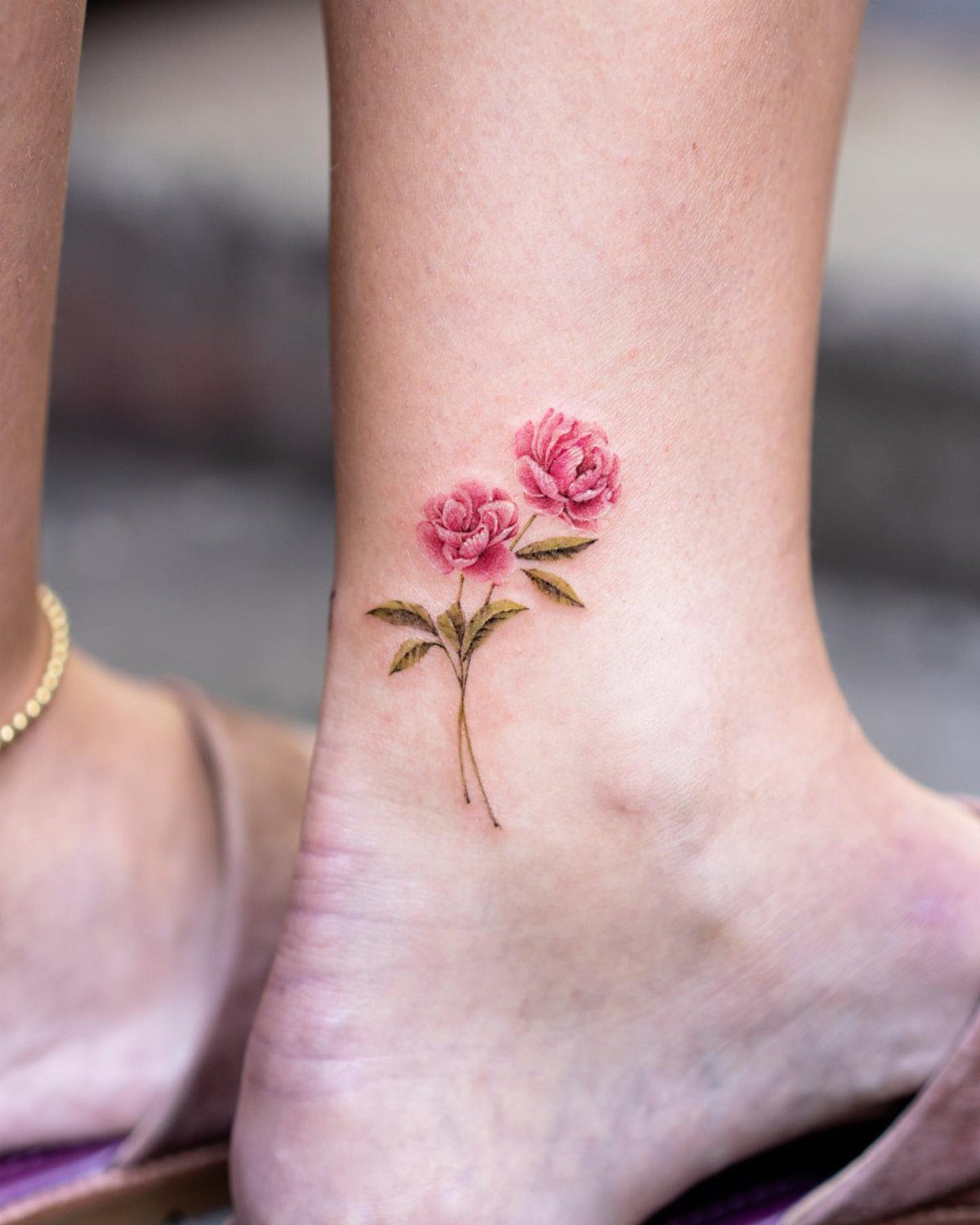
Two pink blooms stacked on the ankle, each one small enough to fit inside a 2-inch square. The color stays soft, more blush than hot pink, so the design reads delicate even with full saturation.
Ankle tattoos hurt more than average because there’s almost no fat between the skin and bone. Healing takes care: avoid tight shoes and socks that rub the area for at least 2 weeks, longer if the skin stays tender.
4. Peony Linework Tattoo
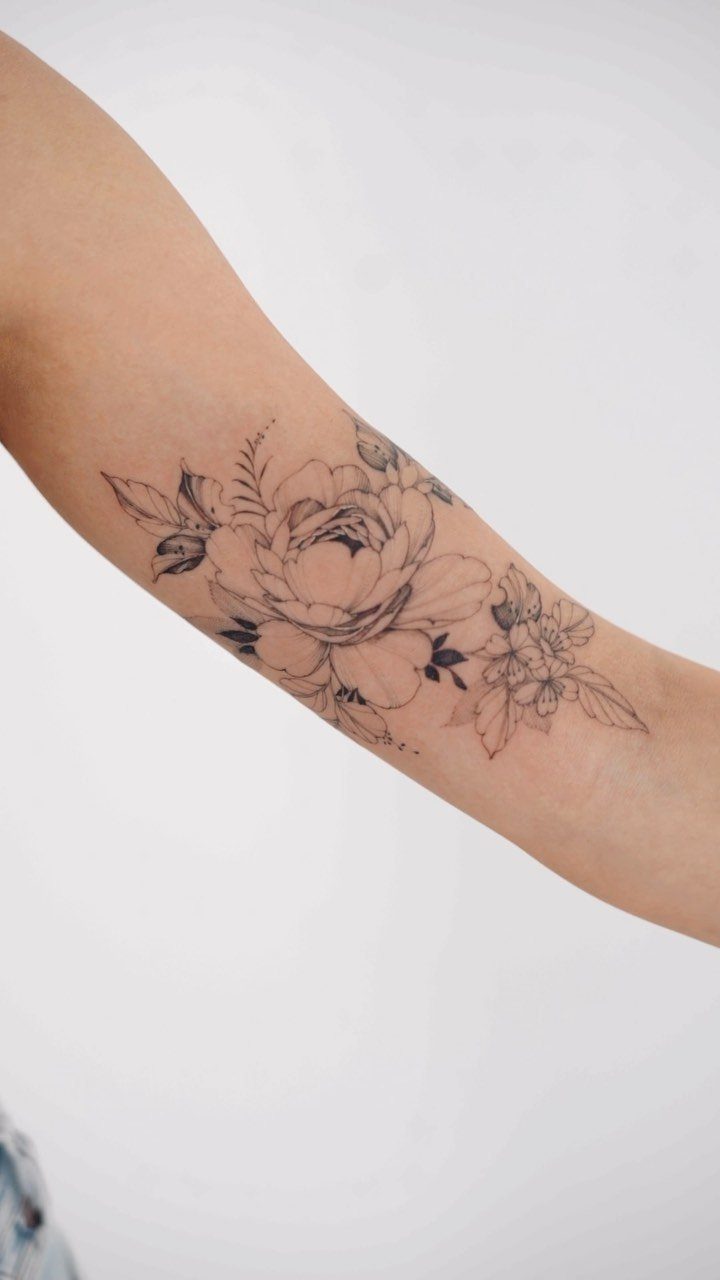
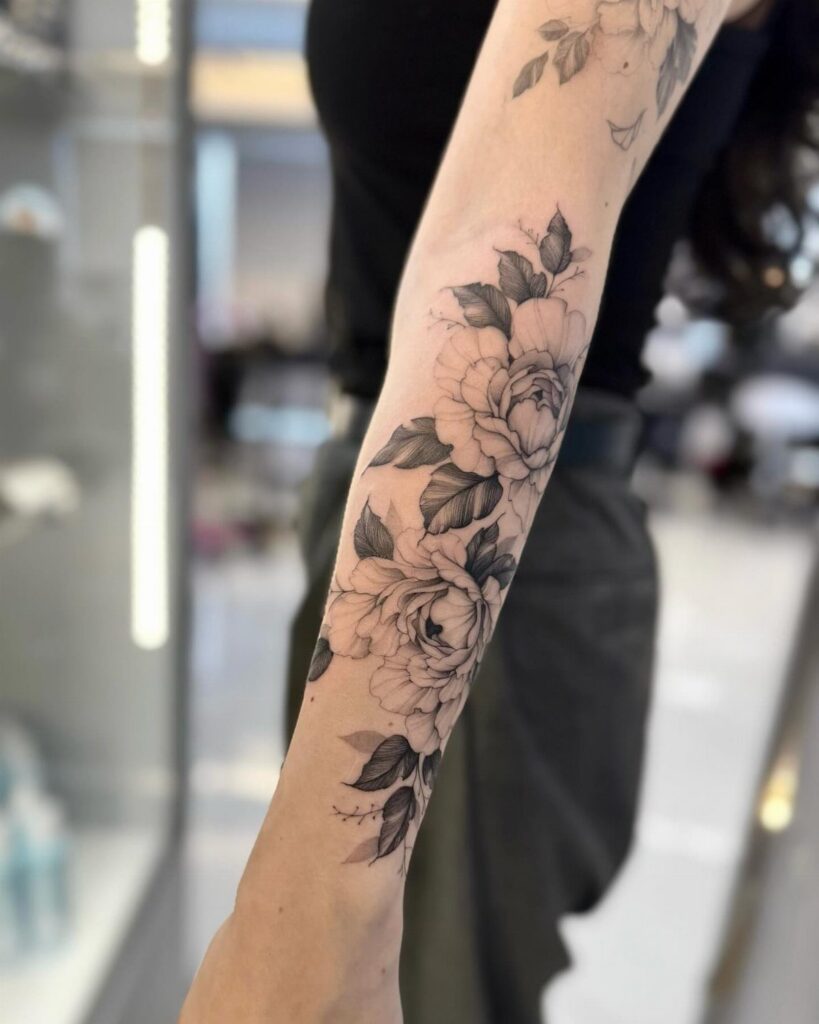
Black ink only, no shading or fill, just clean lines that follow the contours of each petal and leaf. Linework like this depends entirely on precision because there’s nothing to hide behind if a curve lands wrong.
Forearm placement gives you visibility without putting the tattoo somewhere you’ll have trouble covering for work.
5. Peony and Wildflower Bouquet Tattoo
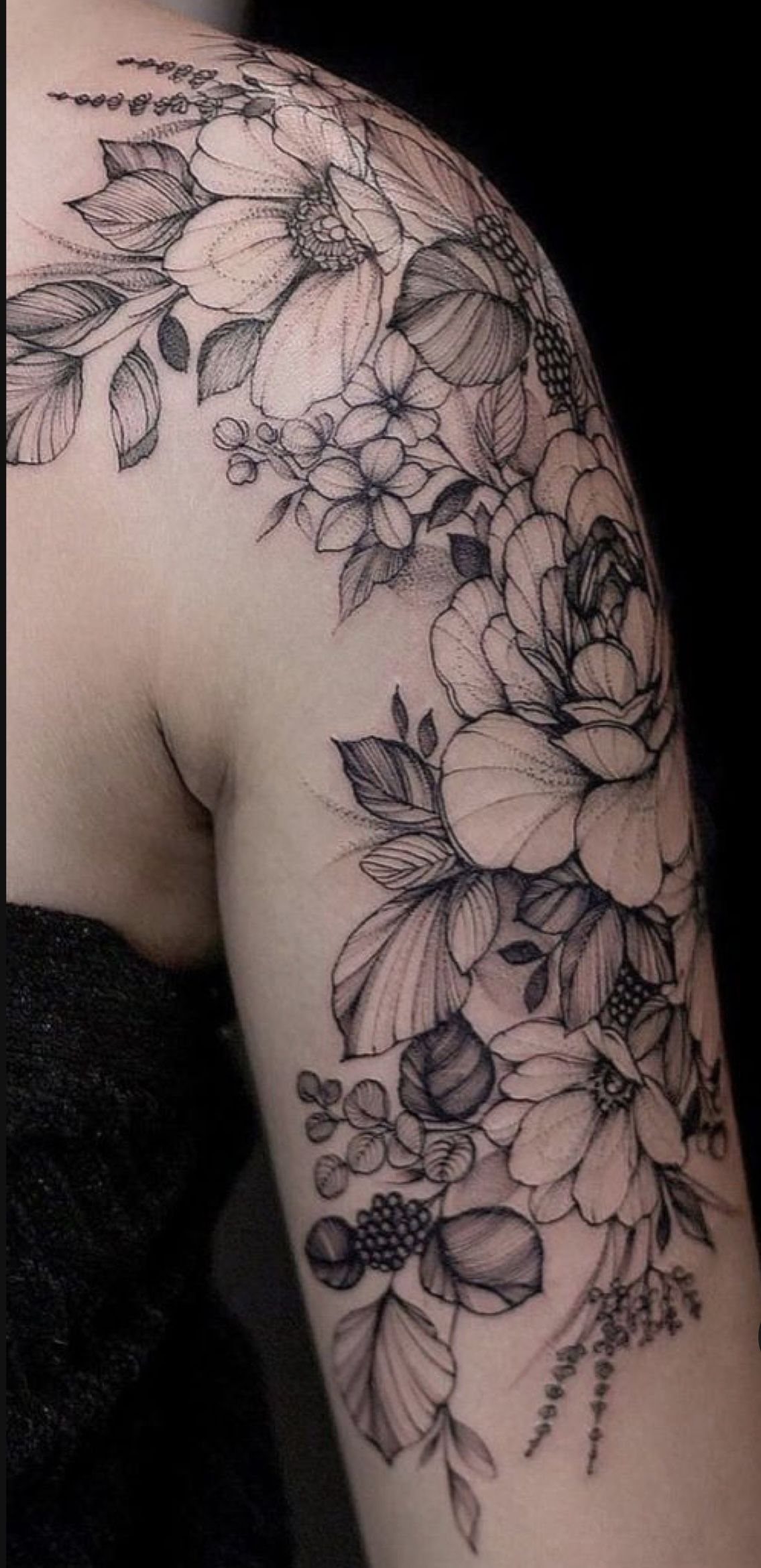
Peonies anchoring a loose arrangement of smaller wildflowers and stems, all done in black and gray. The composition wraps the upper arm and shoulder, following the muscle instead of sitting flat like a sticker.
Botanical tattoos work best when the artist has real reference photos to pull from, not just stylized drawings. Bring pictures of the specific wildflowers you want included so the proportions and petal shapes stay accurate.
Black and gray holds detail better than color in areas that get a lot of sun exposure, which makes it a practical choice for shoulder placement.
6. Peony and Mandala Tattoo
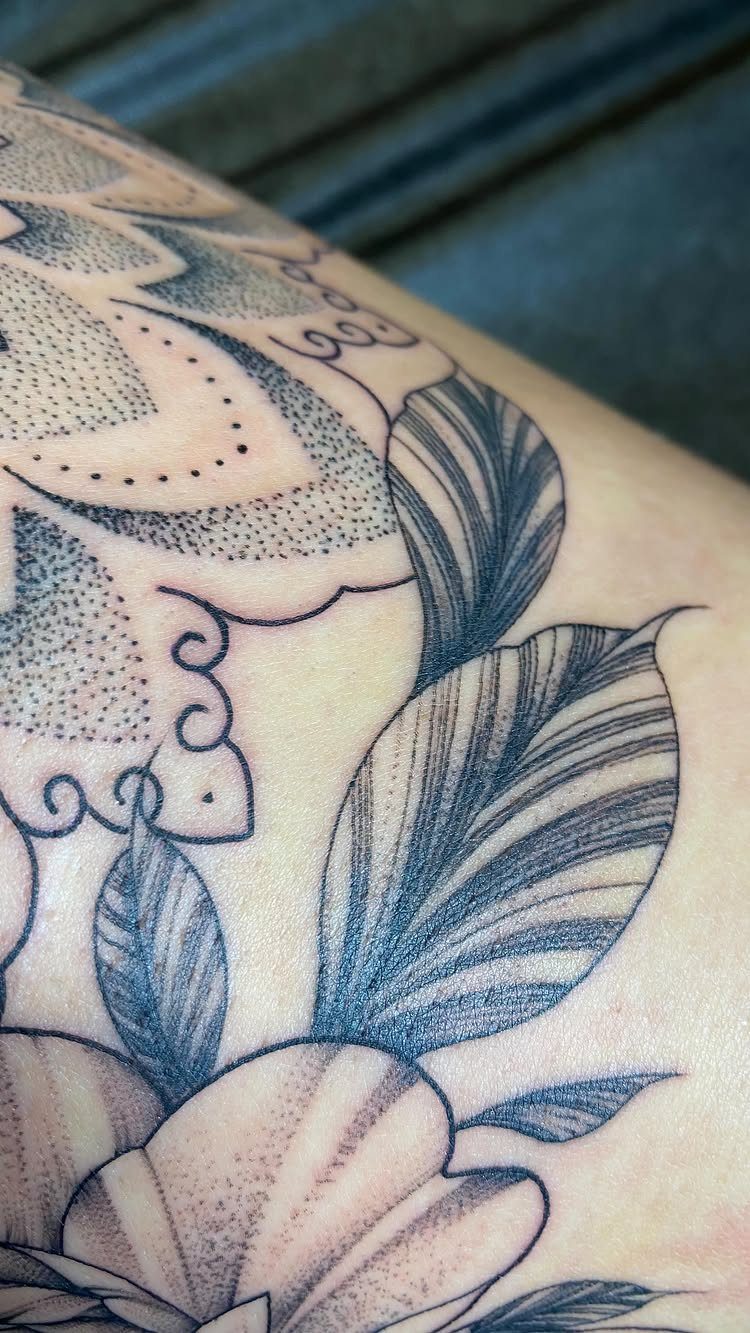
A peony bloom paired with a geometric mandala pattern, both rendered in black and gray.
The mandala sits behind the flower, giving structure to a design that could otherwise float without context. Combining organic and geometric elements like this works when the two share the same level of detail, otherwise one will overpower the other.
Placement depends on how much space the mandala needs to stay readable. Designs this intricate need enough room to keep the lines from crowding together as the tattoo ages and the ink spreads slightly under the skin.
7. Red Peony and Snake Tattoo
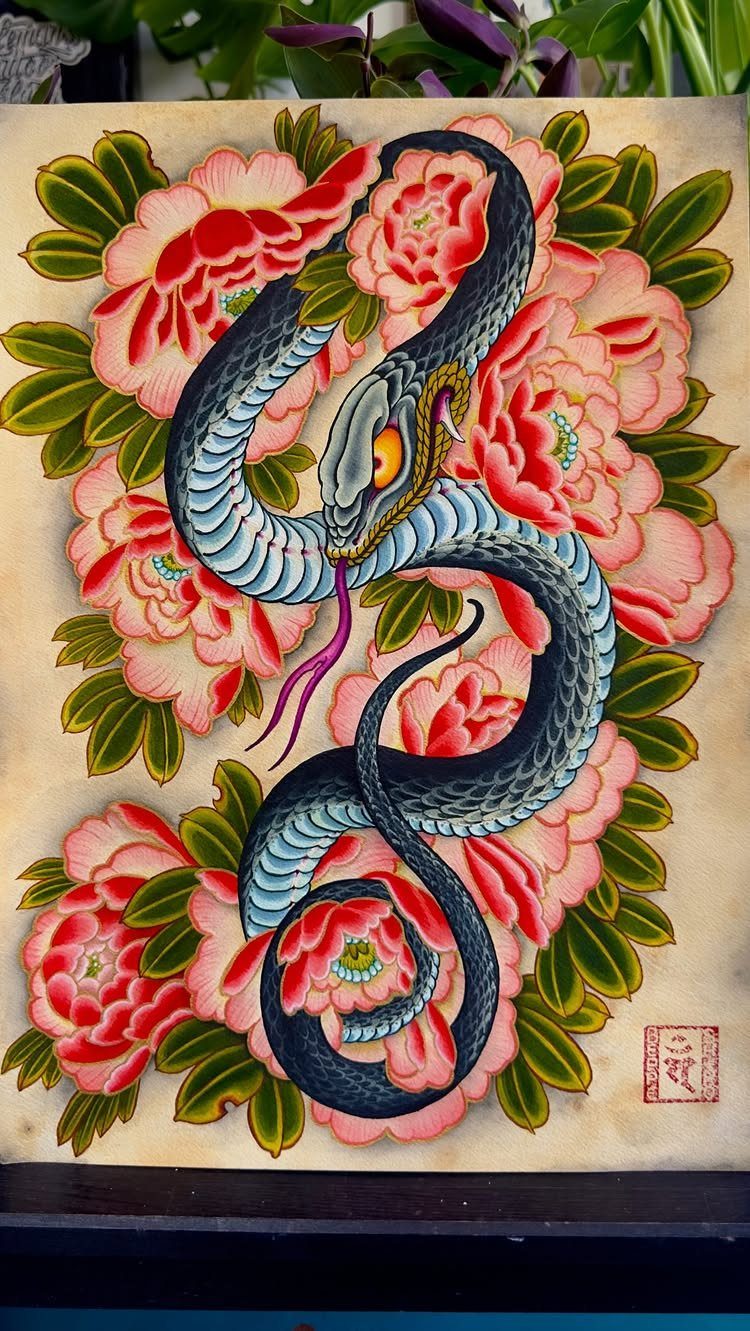
The snake weaving through peony petals represents both passion and transformation, 2 forces that don’t cancel each other out.
Gradient washes in the petals, leaves and scales create smooth transitions instead of hard edges, which stops it looking flat once healed.
Snake scales need enough space to stay readable. If the design compresses too much, the individual scales blur together and you lose the texture that makes the pairing work.
8. Black and Gray Peony Tattoo
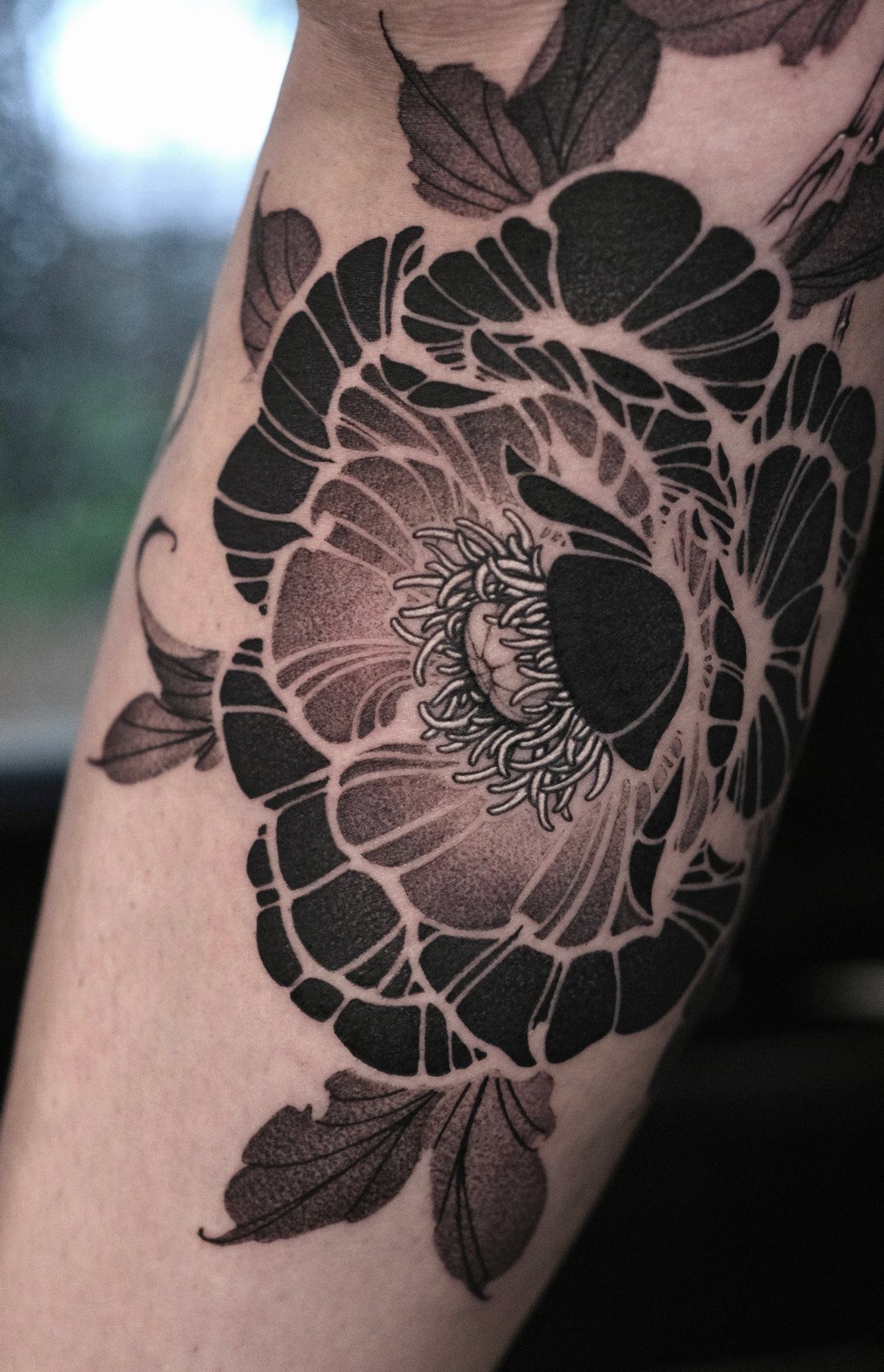
Shading alone creates all the depth here, with no color to lean on. Black and gray ages predictably because there’s no fading across multiple pigments, just one that lightens evenly over time.
Placement on the arm lets the petals spread without crowding. Simpler designs like this take fewer sessions than full-color work, usually one sitting for a piece this size.
9. Traditional Japanese Peony Tattoo
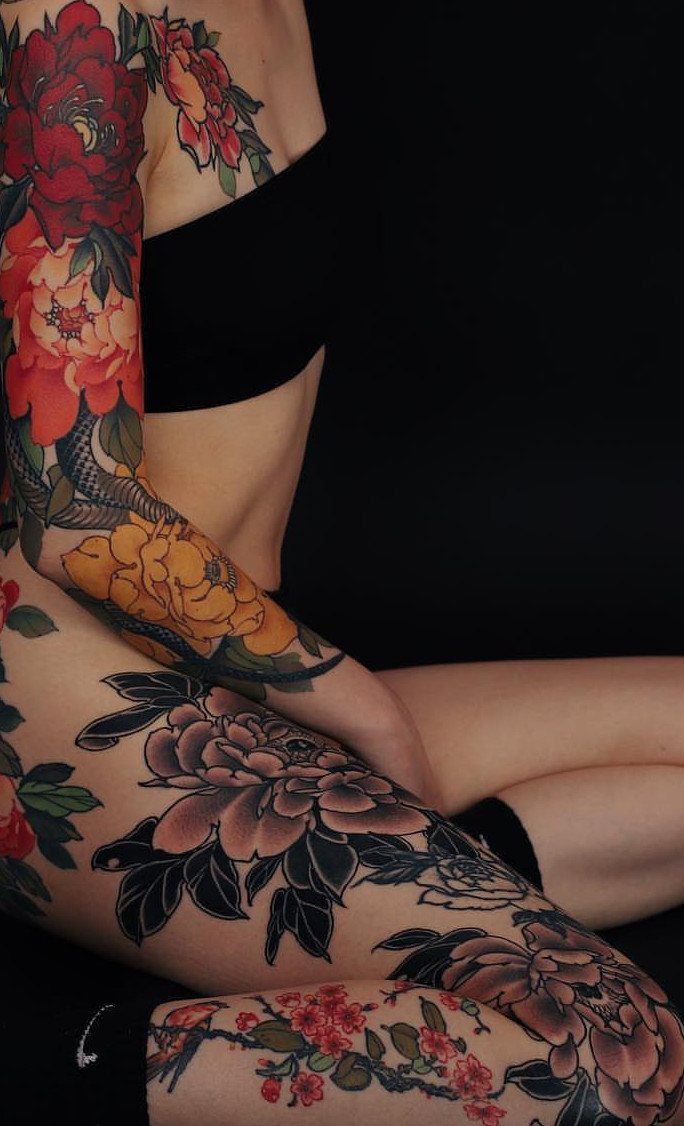
Bold outlines and saturated color fields, the kind that fill entire panels of an arm or leg. Traditional Japanese work uses high contrast between the petals and background to hold sharpness as it ages.
These pieces often connect into larger sleeves or back panels over time. If you plan to expand later, the artist can leave space for additional elements without making the current tattoo look unfinished.
10. Peony Bloom Freehand Tattoo
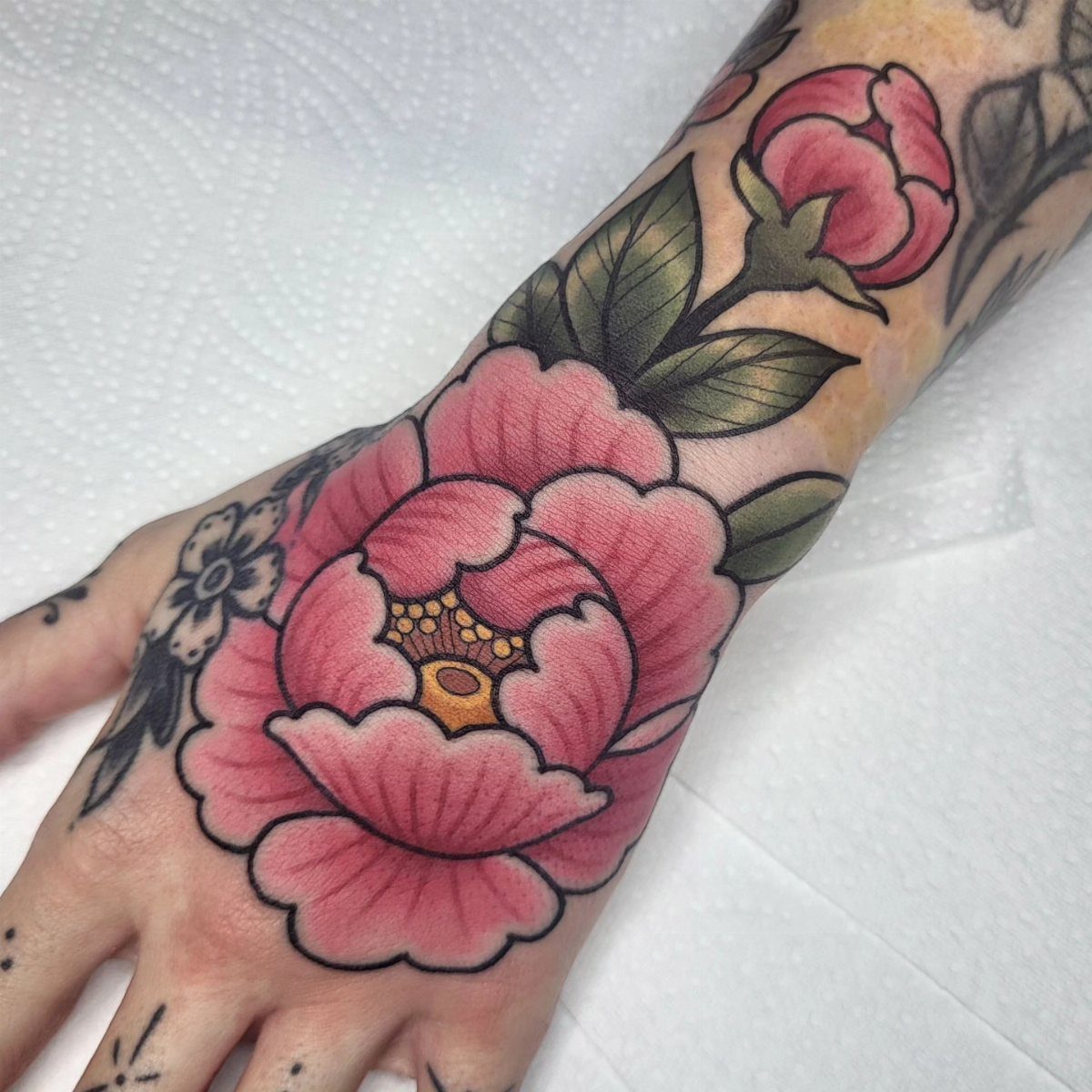
Drawn directly on the skin without a stencil, which means the design follows the contours of your body instead of fighting them.
Freehand work suits clients who trust their artist’s eye and want a piece that moves with their natural shape.
Foot placement puts the tattoo in constant contact with surfaces, soap and sun. Expect faster fading than you’d see on a less exposed area.
11. Peony Bloom and Bud Tattoo
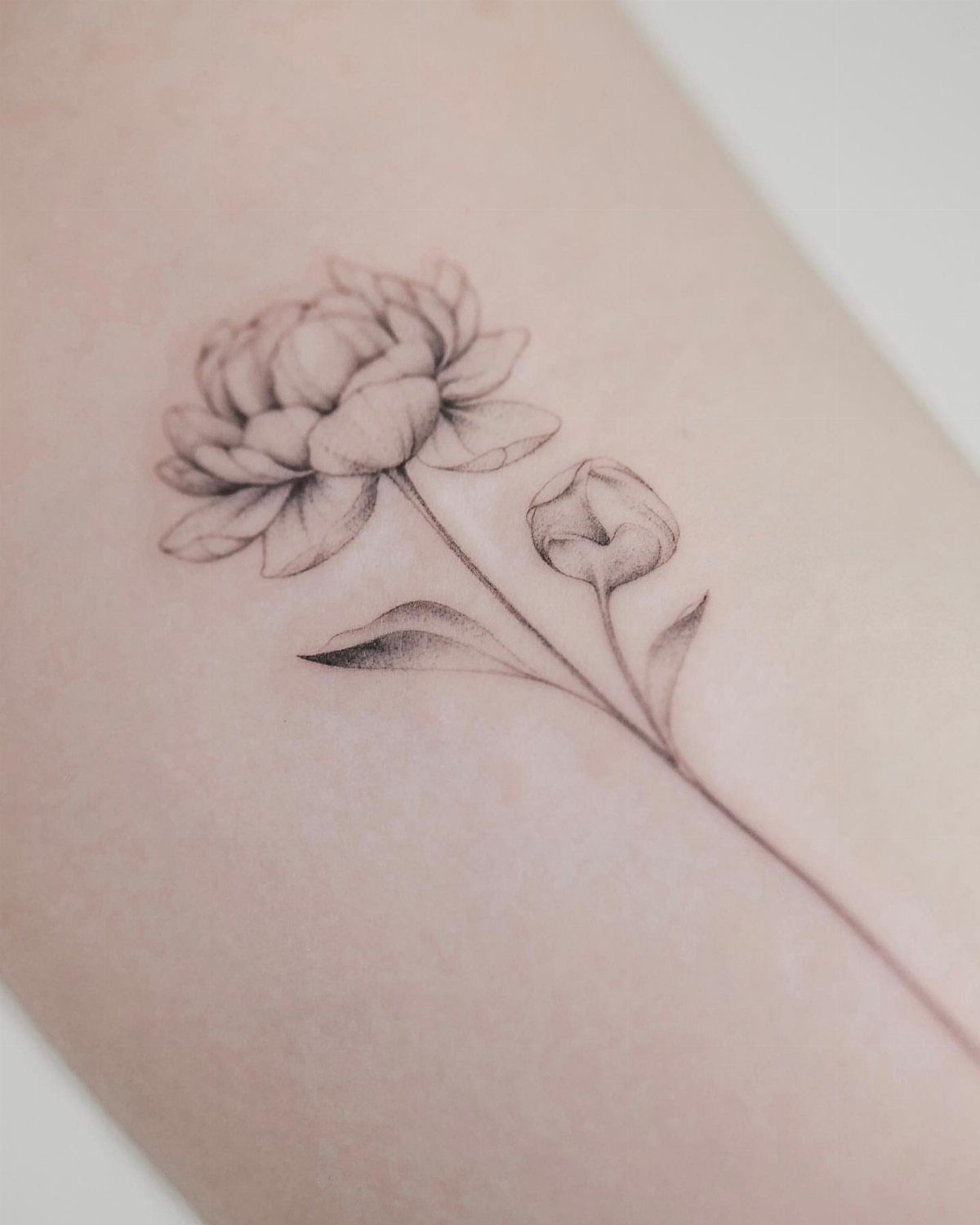
One flower fully open, one still closed, marking two stages of growth in the same piece. The contrast between the 2 gives the design a sense of progression without adding extra elements.
Black and gray keeps the focus on form rather than color. This approach works well if you’re building a larger collection and want pieces that sit comfortably next to each other without clashing.
12. Peony Floral Anklet Tattoo
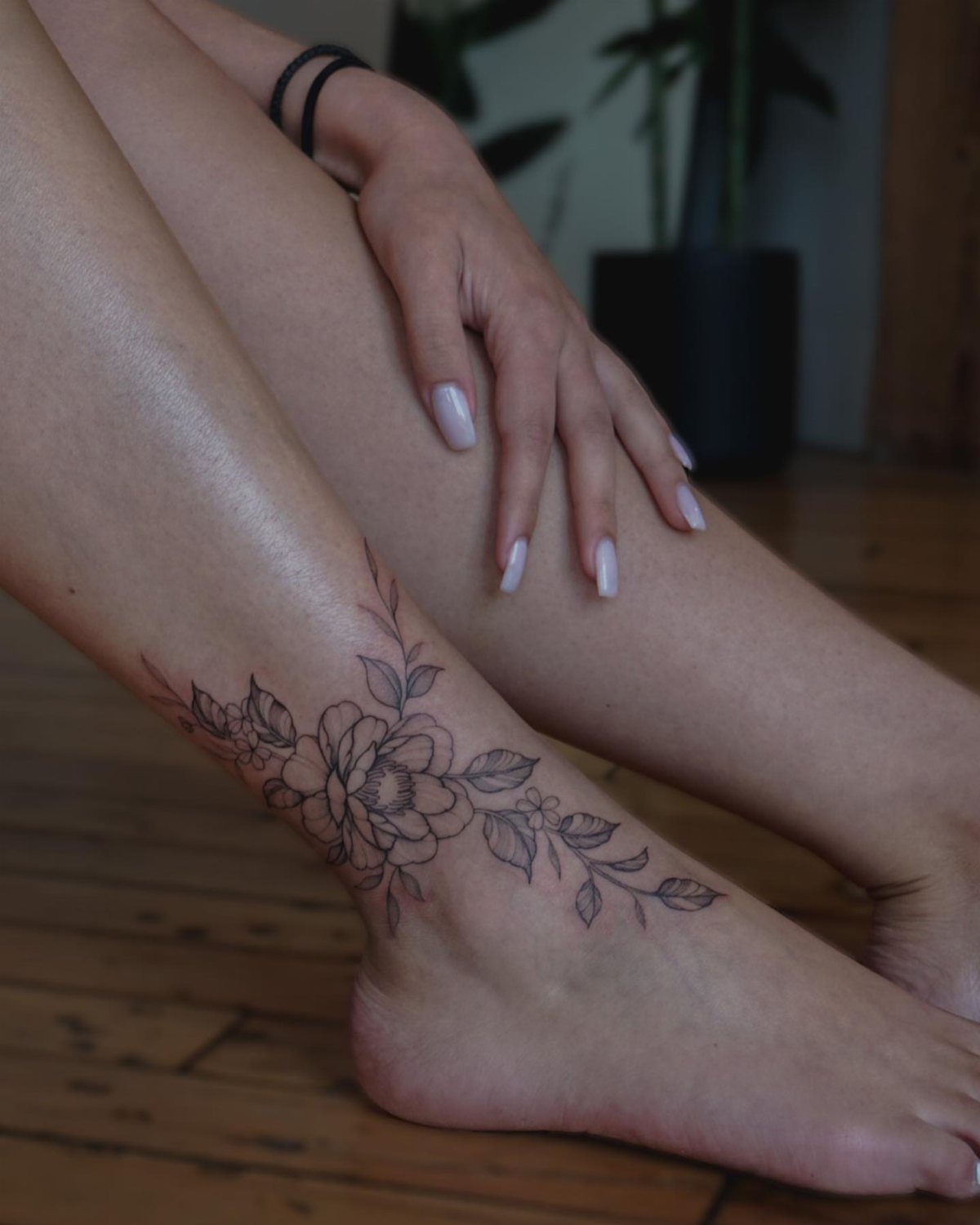
Linework wrapping the ankle like jewelry, delicate enough to read as decoration but permanent enough to skip the clasp. The placement follows the curve of the bone, which makes the design feel intentional rather than stuck on.
Ankle tattoos sit close to the foot, where shoes and socks rub constantly during healing. Plan for sandals or loose footwear while it heals, longer if your job keeps you on your feet all day.
13. Peony and Hummingbird Tattoo
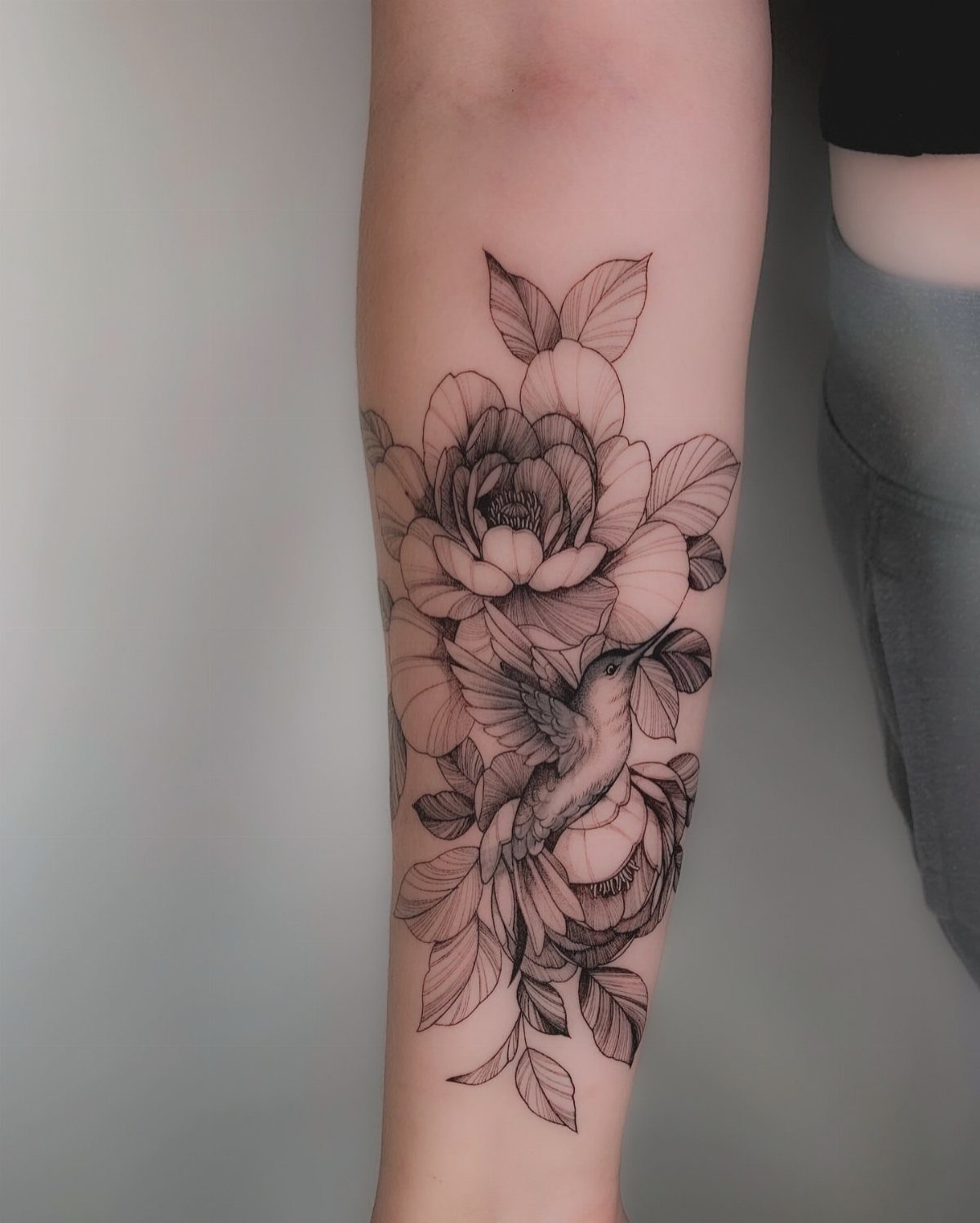
The hummingbird hovers mid-flight above the bloom, caught at the moment before contact. This pairing works because both elements stay active rather than one sitting static while the other moves.
Forearm placement gives enough length for the hummingbird’s wings to extend without cramping the composition, and it puts the piece where you’ll see it every day.
14. Peony and Butterfly Tattoo
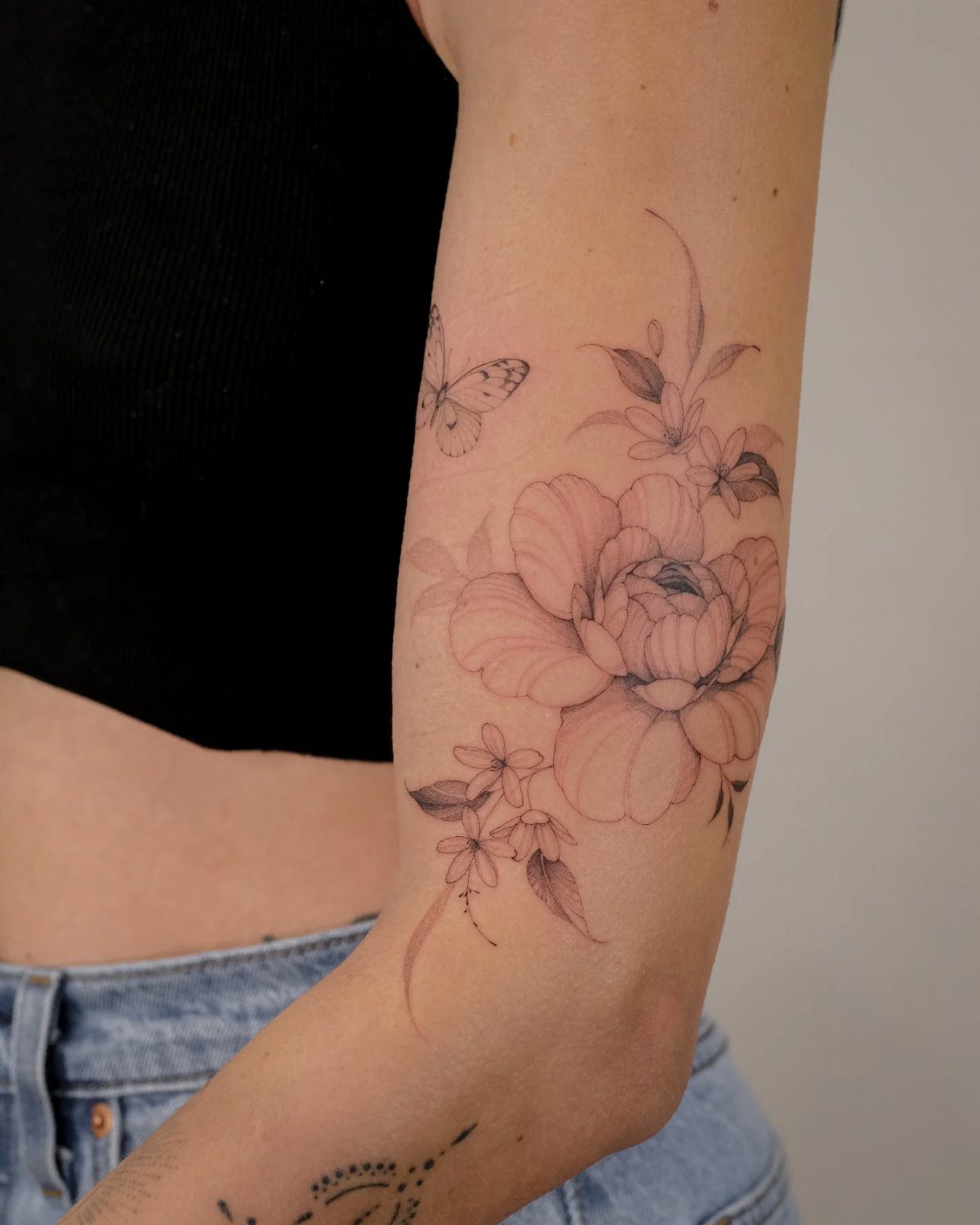
Fine linework defines both the peony and the butterfly, with soft pink wash in the petals giving just enough color to separate the 2 elements visually.
The butterfly stays small relative to the flower, which keeps it from competing for attention.
Inner forearm placement like this one heals faster than outer forearm because it gets less friction from sleeves and surfaces. The fine lines need an artist who specializes in that style, otherwise they’ll thicken unevenly as the ink settles.
15. Peony and Dragon Tattoo
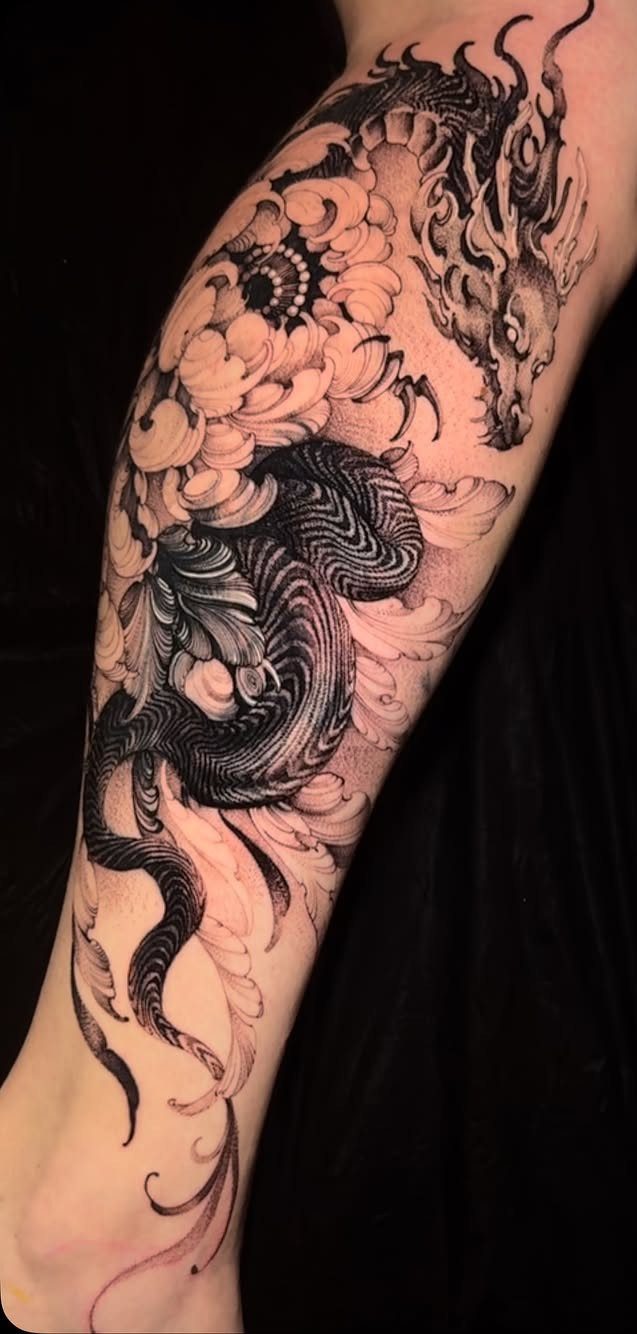
Strength meeting beauty, rendered in black and gray with enough contrast to keep both the dragon’s scales and the peony’s petals readable once healed. The dragon coils through the composition, giving the piece movement that a flower alone wouldn’t carry.
Leg placement offers more space than an arm for designs this detailed, and it stays hidden under pants when you need it to. Sessions for a piece this size depend on how much shading the artist layers in.
16. Peony and Rose Tattoo
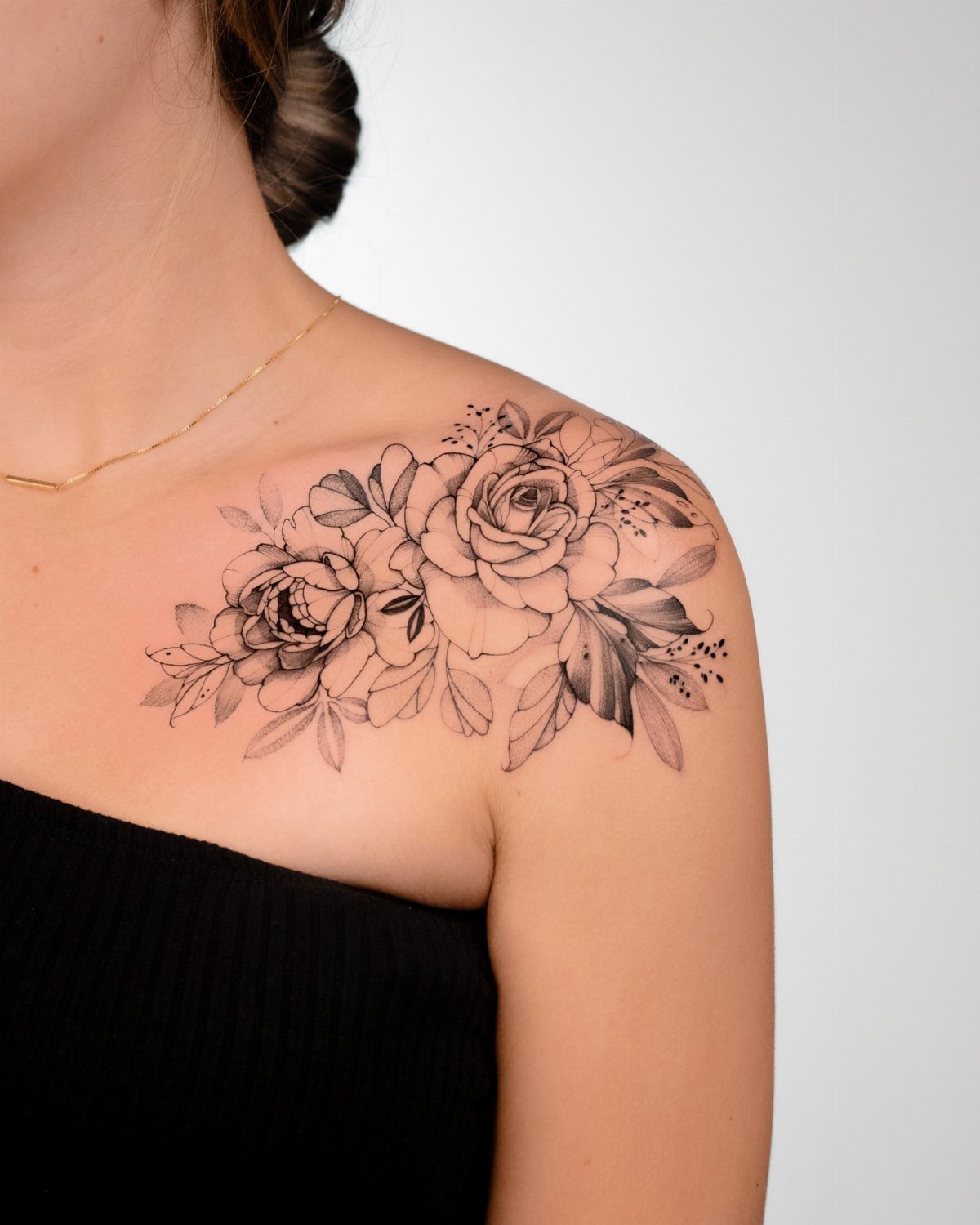
Two flowers instead of one, each distinct enough in petal shape that they don’t blur into a generic bloom.
The rose brings tighter, layered petals while the peony opens wider and softer, giving the composition textural contrast that holds interest over time.
Shoulder and collarbone placement curves with the bone, which suits flowing designs better than flat ones. Black and gray ages cleanly here because the area doesn’t get constant sun exposure the way hands or forearms do.
17. Peony and Lotus Tattoo
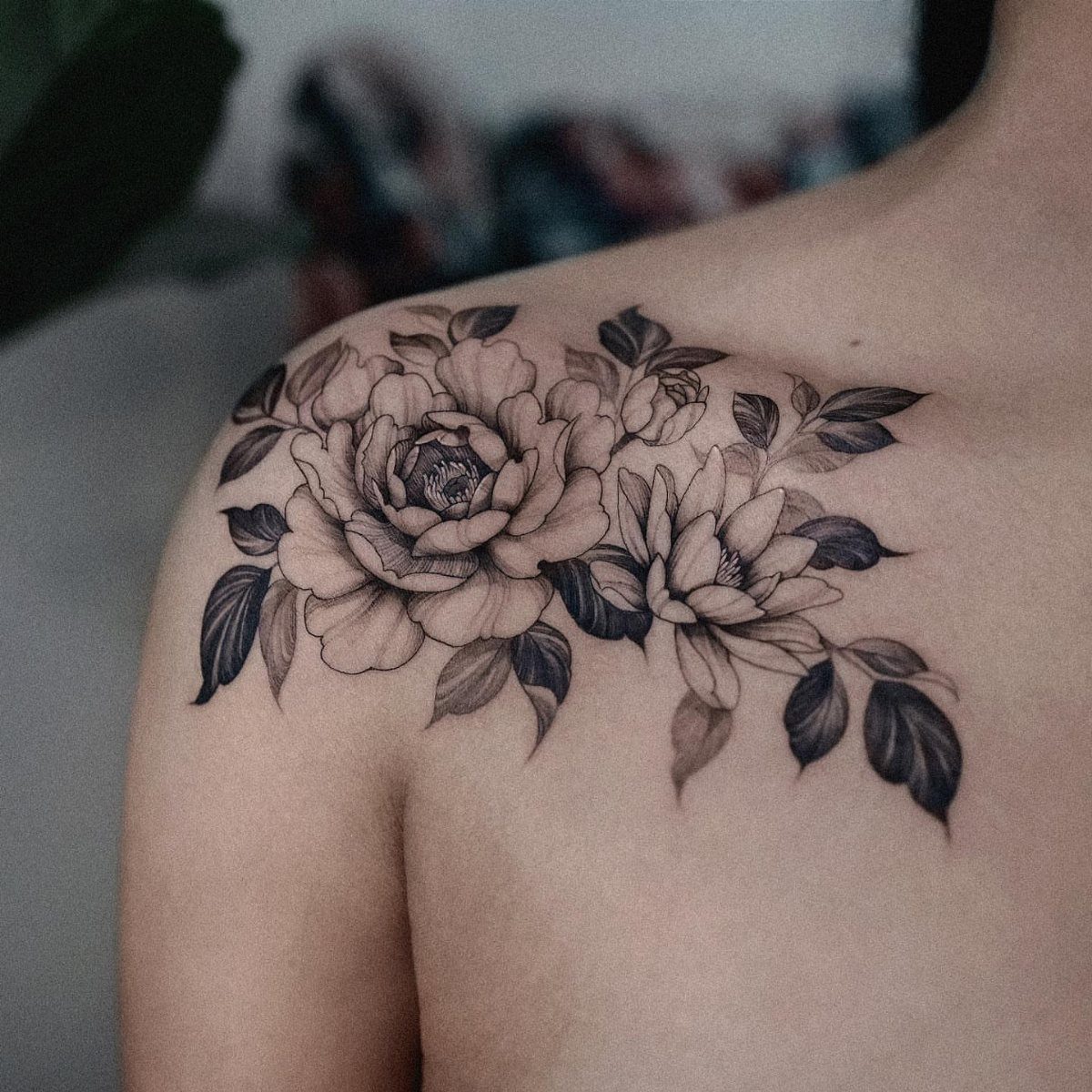
Lotus petals sit tighter and more geometric than peony petals, which gives this pairing visual tension that a single flower wouldn’t offer.
Both flowers carry weight in different tattoo traditions, so combining them lets you pull from Eastern symbolism without committing to one style alone.
Shoulder placement works for designs that need vertical space. The curve of the muscle lets the composition wrap slightly rather than sitting flat, which adds dimension once the tattoo settles into the skin.
18. Peony and Star Tattoo
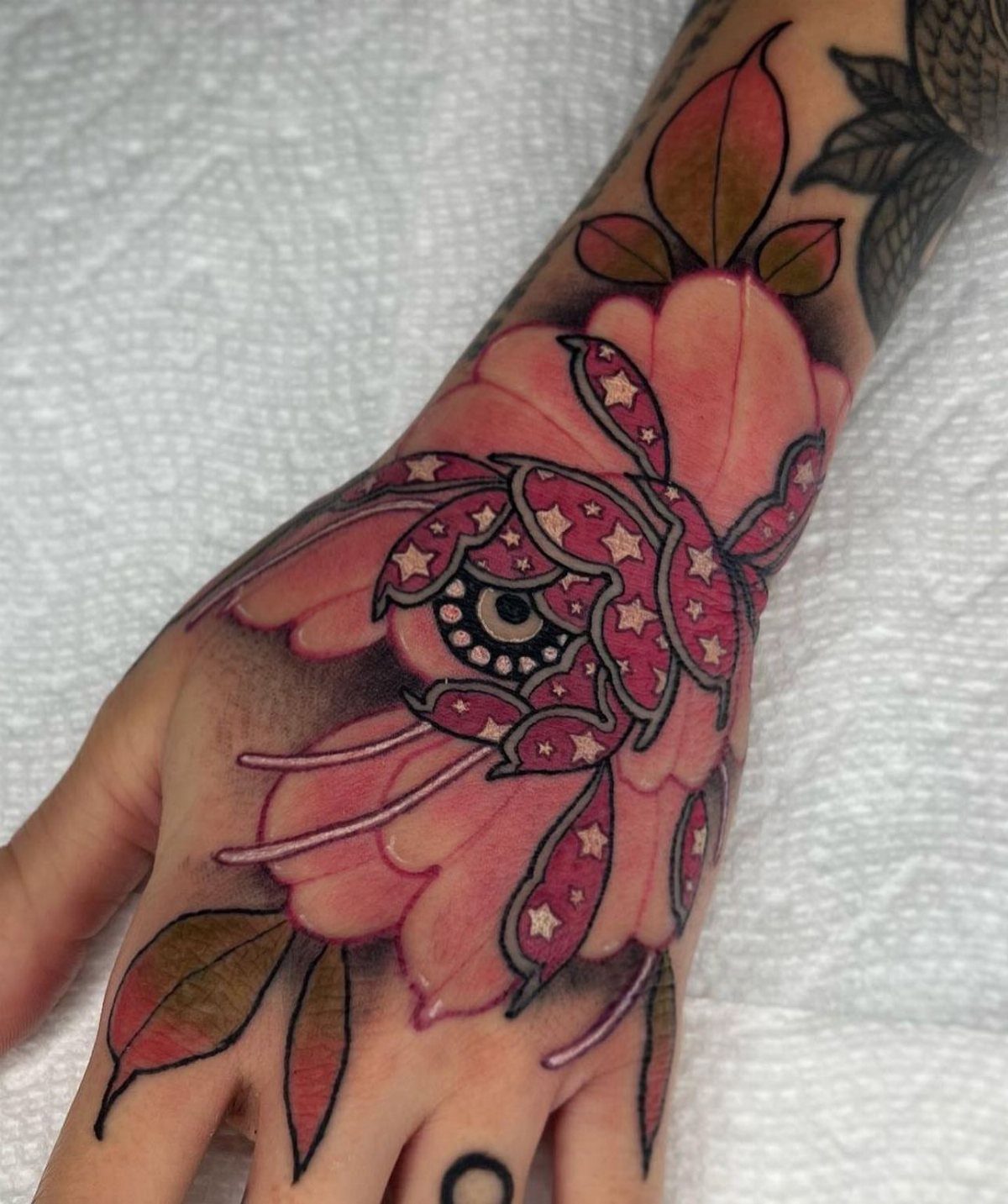
Stars scattered inside the petals add detail without crowding the design, small enough that they read as accent rather than competing imagery. The eye at the center shifts the piece away from purely botanical and into something more personal.
Touch-ups every few years keep the pink pigment from washing out.
19. Peony and Heart Tattoo
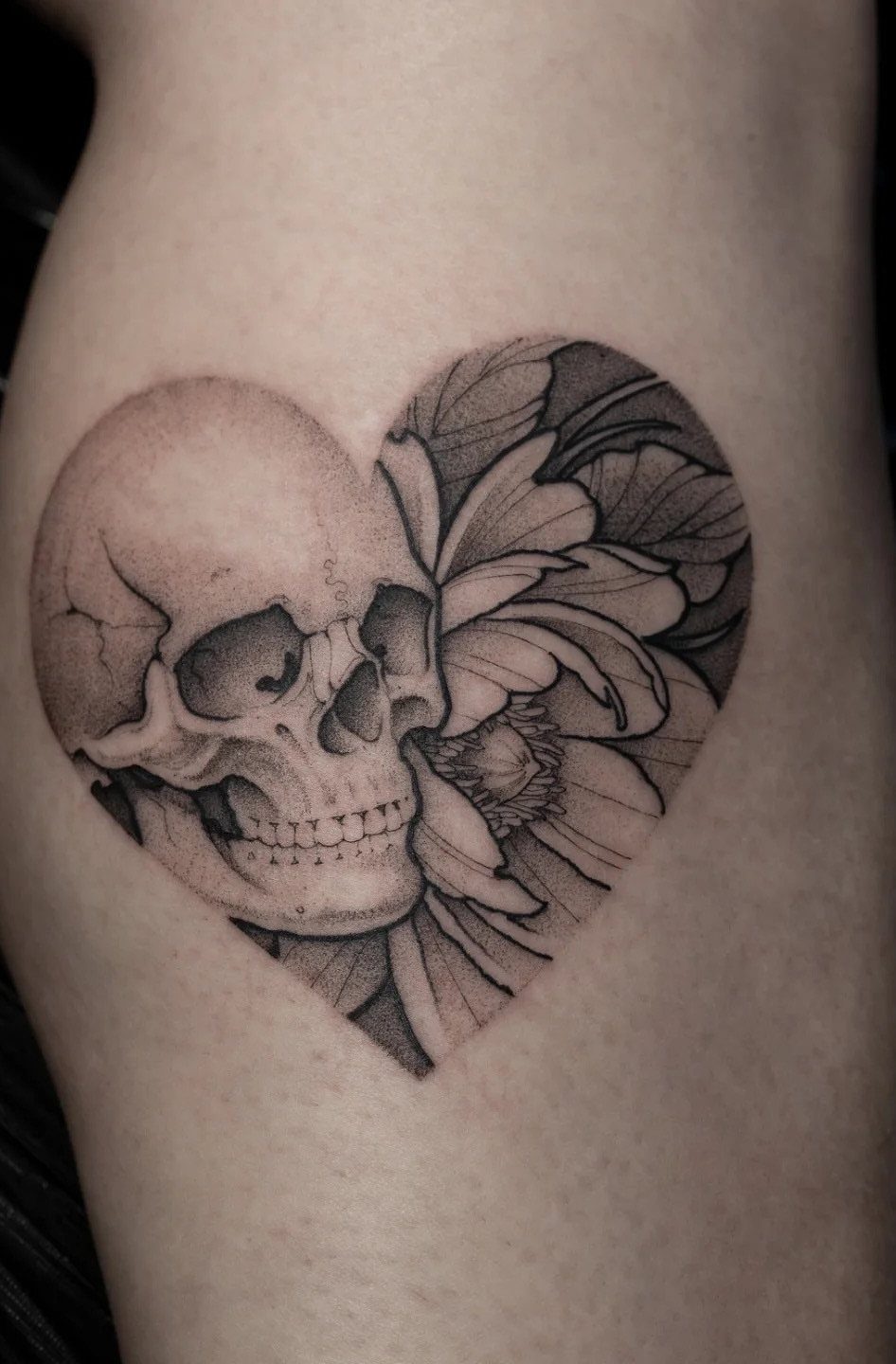
A skull merged with peony petals, all contained inside a heart outline. The combination reads darker than most floral work because the skull anchors it, but the petals soften the imagery enough that it doesn’t land as pure memento mori.
Black and gray suits this pairing better than color. Adding red or pink to the petals risks making the piece look valentine-themed instead of contemplative, and the monochrome keeps the focus on the forms themselves rather than on decoration.
Placement depends on how visible you want it. Ribs or upper thigh give you control over when it shows; forearm or shoulder put it in regular view.
Peony Tattoo Meanings
Peonies carry weight across multiple traditions, which gives you options when someone asks what yours means.
In Chinese culture, the flower ties to wealth and prosperity, the kind that comes from effort rather than luck. Japanese symbolism leans into honor and bravery, often pairing peonies with warriors in classical art.
The romantic angle shows up in both: peonies mark deep affection and commitment, not fleeting attraction. That reading works whether you’re commemorating a relationship or simply drawn to the idea of love as something worth protecting.
Resilience comes through in how the flower itself grows. Peonies take years to establish strong roots before they bloom reliably, which makes them a fitting image for slow, deliberate progress.
If you’re marking a long struggle or a hard-won change, that patience built into the plant’s biology gives the tattoo another layer without requiring explanation.
A peony flower tattoo is a symbol of wealth, honor, and romance, especially in Japanese and Chinese cultures.
Design Styles
Peony tattoos rendered in bold, graphic line work translate well to skin with that same clarity.
Modern minimalist approaches strip the design down to linework alone, no shading or fill. Thin outlines and delicate detailing work best at smaller scales, where the lines stay crisp without spreading.
The style ages predictably because there’s only one pigment to fade, and it pairs well with other tattoos without clashing.
Cultural Significance
In Japanese and Chinese art, peonies appear alongside dragons, phoenixes and warriors, which positions them as symbols of honor rather than decoration.
The flower’s association with courage comes from its use in samurai family crests, where it marked nobility and resilience under pressure.
Romantic meaning runs deeper than surface attraction.
Peonies represent lasting affection and emotional commitment, the kind tied to partnership rather than infatuation. That reading shows up in classical Chinese poetry, where the flower stands for devotion that survives difficulty.
Dragons paired with peonies create a balance between masculine strength and feminine beauty, a combination that appears frequently in traditional Japanese sleeves. The pairing works because both elements carry equal cultural weight, neither one serving as background for the other.
Frequently Asked Questions
What are pretty flowers to get tattooed?
Peonies rank among the most requested floral tattoos because of their layered petals and the way they hold detail once healed.
The bloom’s natural fullness translates well to skin, whether you go for bold traditional color or fine linework alone. They pair cleanly with other elements without losing their shape, which matters when you’re building a larger piece over time.
What does a red peony tattoo symbolize?
Red peonies tie to passion and prosperity, the kind earned through effort rather than handed over. In Japanese tradition, the color connects to honor and courage, which is why you’ll see it in warrior imagery and family crests.
The saturation also holds better than lighter shades as the tattoo ages, so the symbolism doesn’t fade along with the ink.