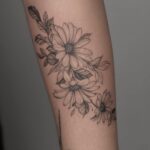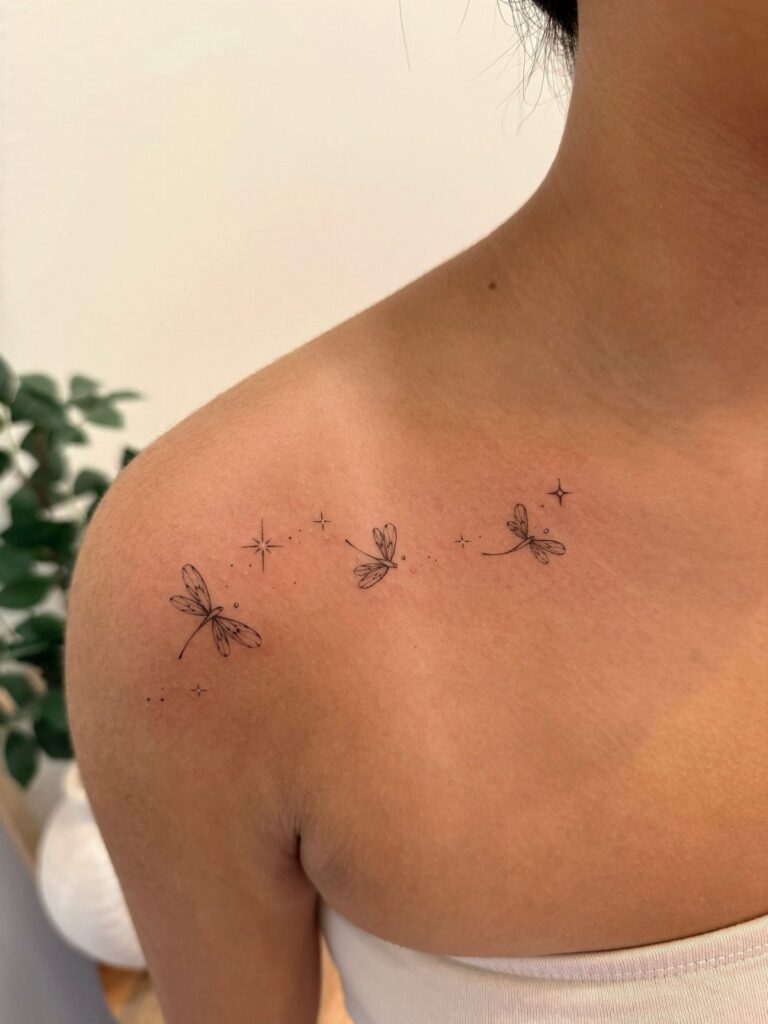
A dragonfly tattoo can run from a single thin-line insect on the wrist to a jewel-toned design with florals across the shoulder, and the placement you pick depends on how visible you want the piece and how much room the design needs to read clearly.
Wrists and ankles suit compact, outline-only versions, while shoulders and forearms give you space for dot work, watercolor washes, or multiple dragonflies grouped together.
Collarbone placements hurt more than the forearm because the skin sits closer to bone, and color fades faster than black ink, so bright blues and golds will need a touch-up to stay vivid.
1. Tiny Dragonfly Wrist Tattoo
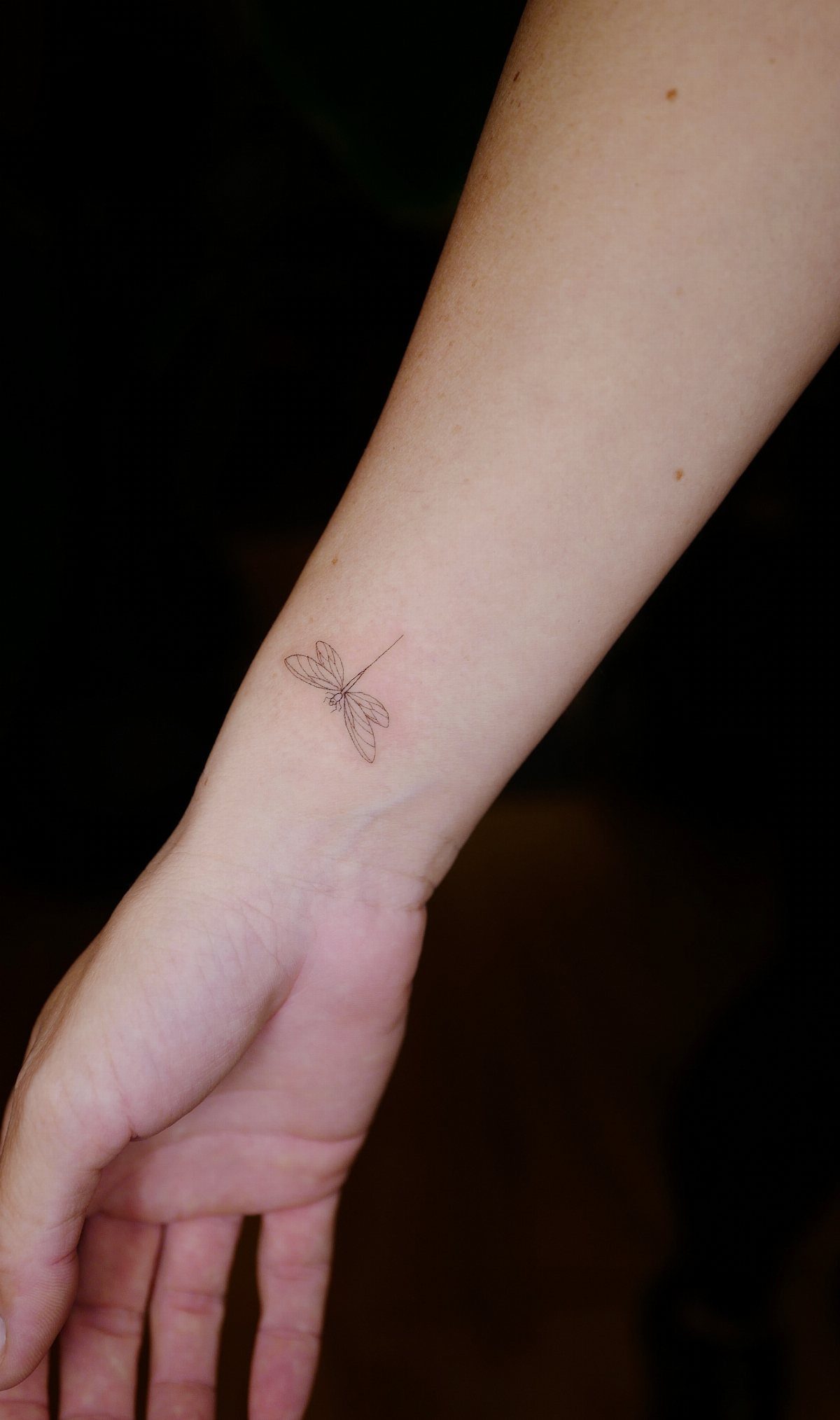
A dragonfly small enough to fit the width of the inner wrist reads at a glance without taking over the whole area.
I like this placement because the wrist stays visible most of the year, so the tattoo becomes part of how you present yourself daily, but it’s never loud.
The inner wrist is one of the more tender spots, and healing goes smoothly when you keep it clean and avoid tight watch bands pressing on fresh ink.
If this is your first tattoo, a tiny wrist piece is a solid starting point. It commits to the idea without demanding a large canvas, and you’ll learn quickly how you feel about wearing visible work.
2. Floral Dragonfly Tattoo
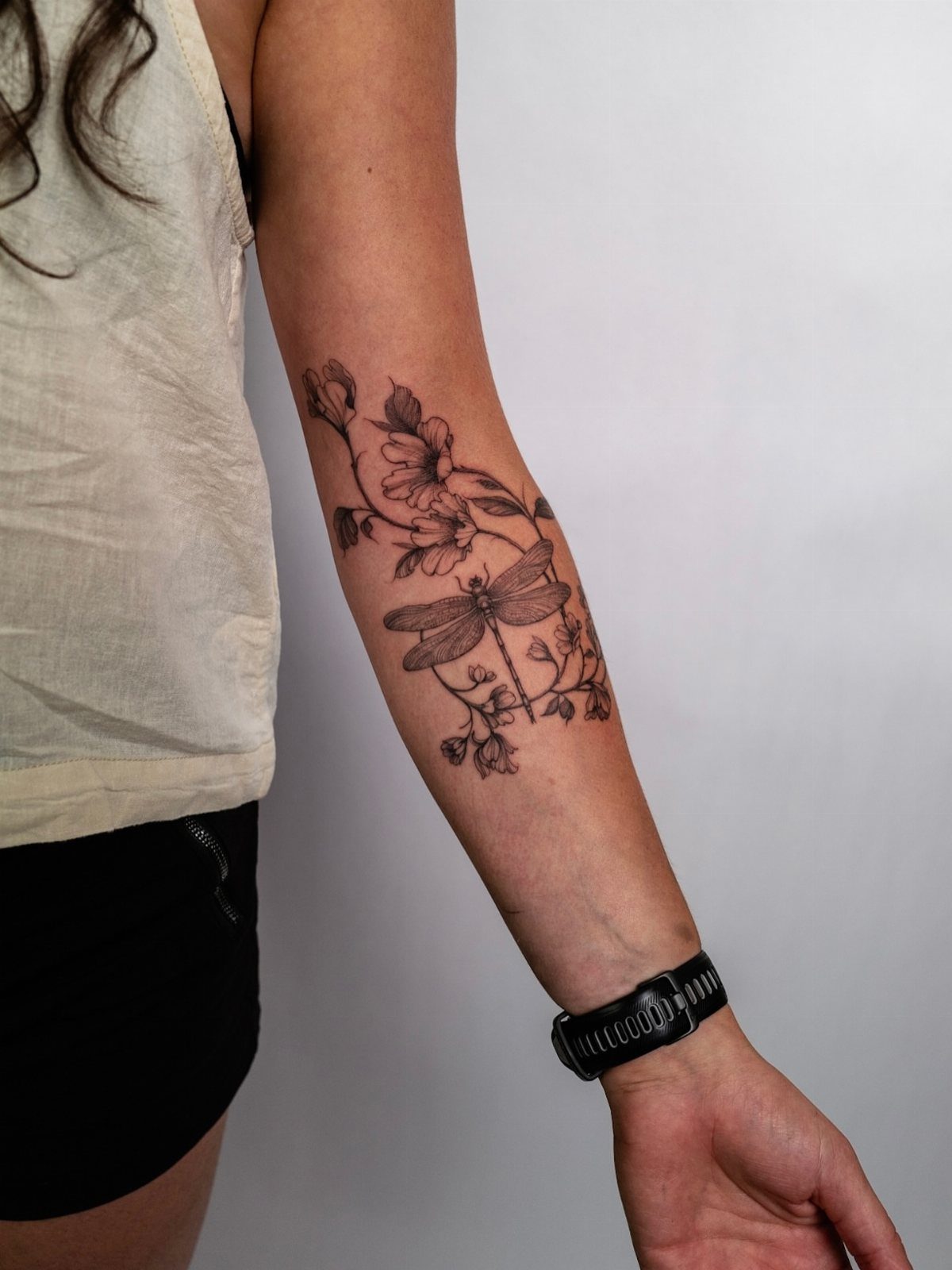
Pairing a dragonfly with flowers shifts the read from pure transformation to growth rooted in the natural world. The flowers soften the insect’s angular wings and tie the design to cycles of blooming and change rather than flight alone.
Roses, daisies, and wildflowers show up most often in these combinations. Each one carries its own weight: roses lean romantic, daisies read lighter and more carefree, wildflowers feel organic and less staged.
This works best on the forearm or upper arm, where you have enough room for both elements to share the space without crowding. Size needs room to let the florals breathe without crowding the wings.
3. Ankle Dragonfly Tattoo
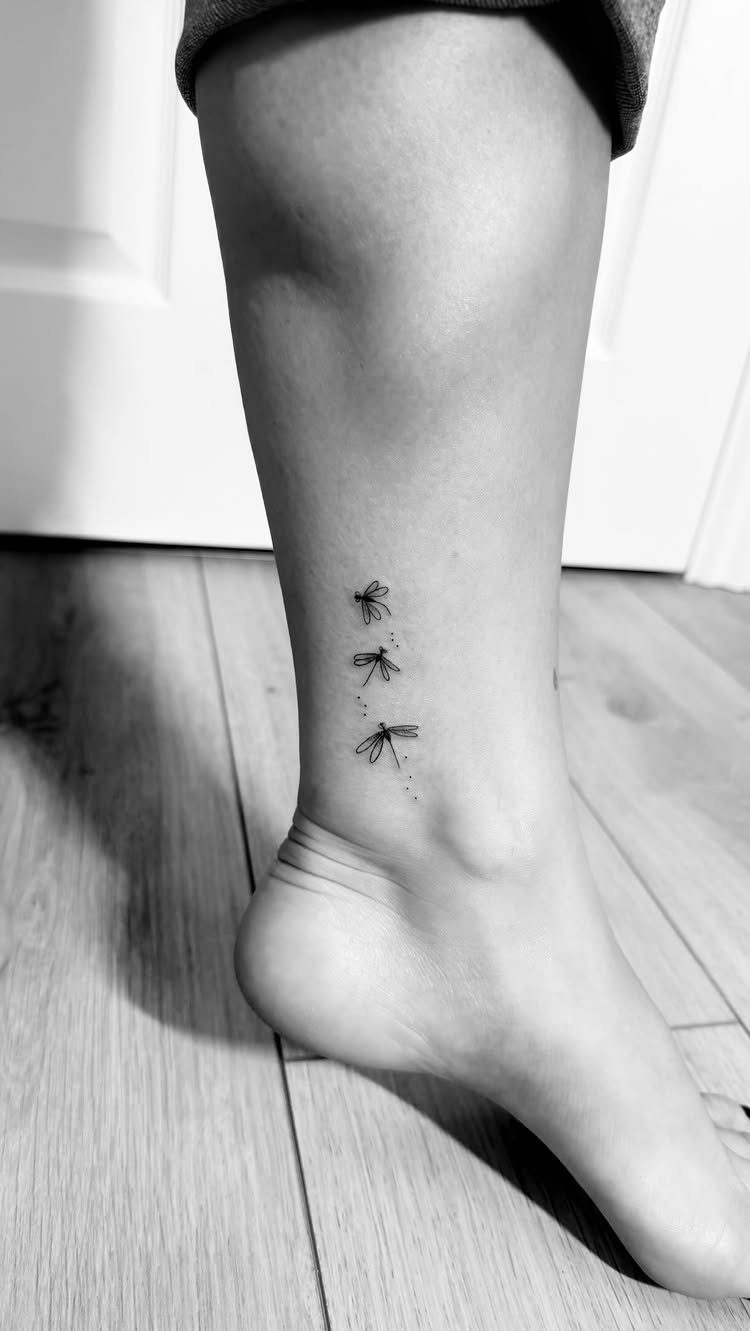
3 dragonflies stacked vertically on the inner ankle turn a single insect into a pattern. The vertical line suits the shape of the lower leg and draws the eye without widening the area.
Ankle tattoos hurt more than most people expect.
The skin sits close to bone with little padding, and the needle feels sharper there. Pain sits higher here, particularly near the ankle bone itself.
Healing goes smoothly when you skip tight socks and shoes that rub on fresh ink. The placement stays hidden in most settings but shows easily in summer or anytime you’re barefoot.
4. Dot Work Dragonfly Tattoo
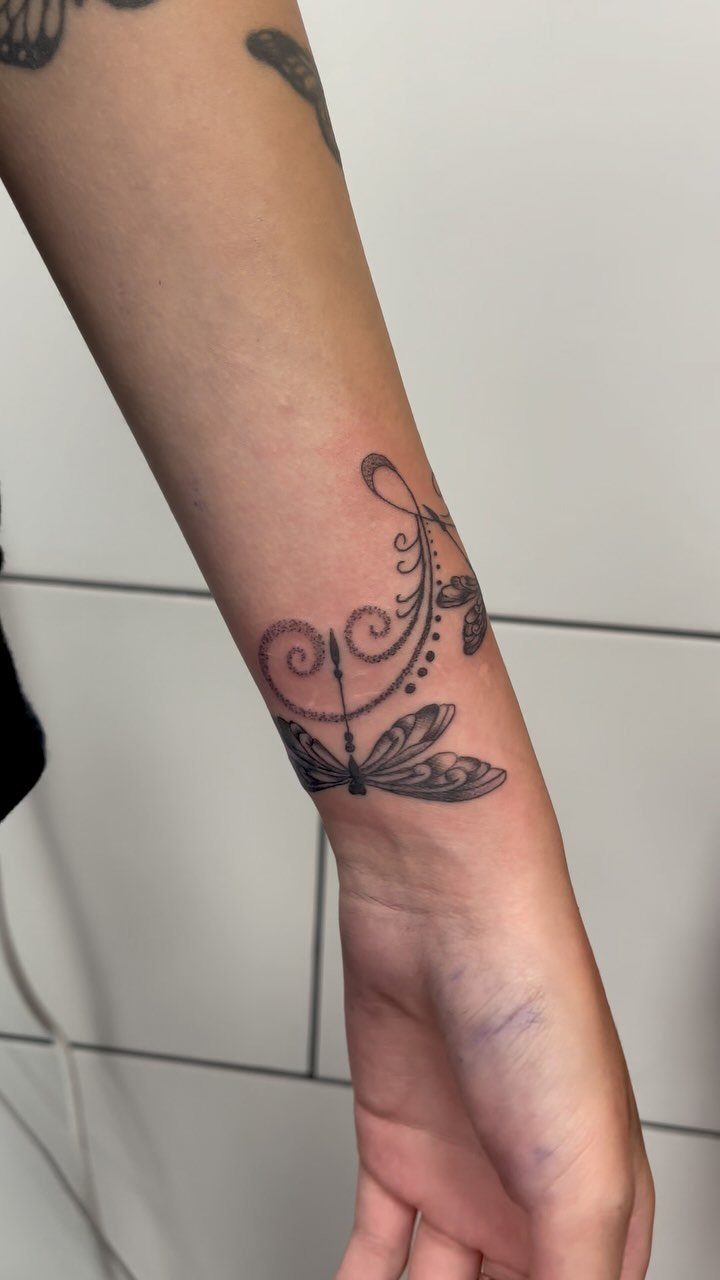
Dot work builds a dragonfly from hundreds of tiny points instead of solid lines or shading. The technique creates texture and depth without filling the wings completely, so you get detail that still feels light.
Dot work takes longer than a solid outline. What might be quick in line work can stretch longer, depending on how dense the artist packs the dots.
That extra time shows up in the final price, so expect to pay more than you would for a simple line version.
The inner wrist and forearm suit this style well. Both placements give the artist a flat, stable surface to work on, which matters when precision counts.
5. Dragonfly with Moon Tattoo
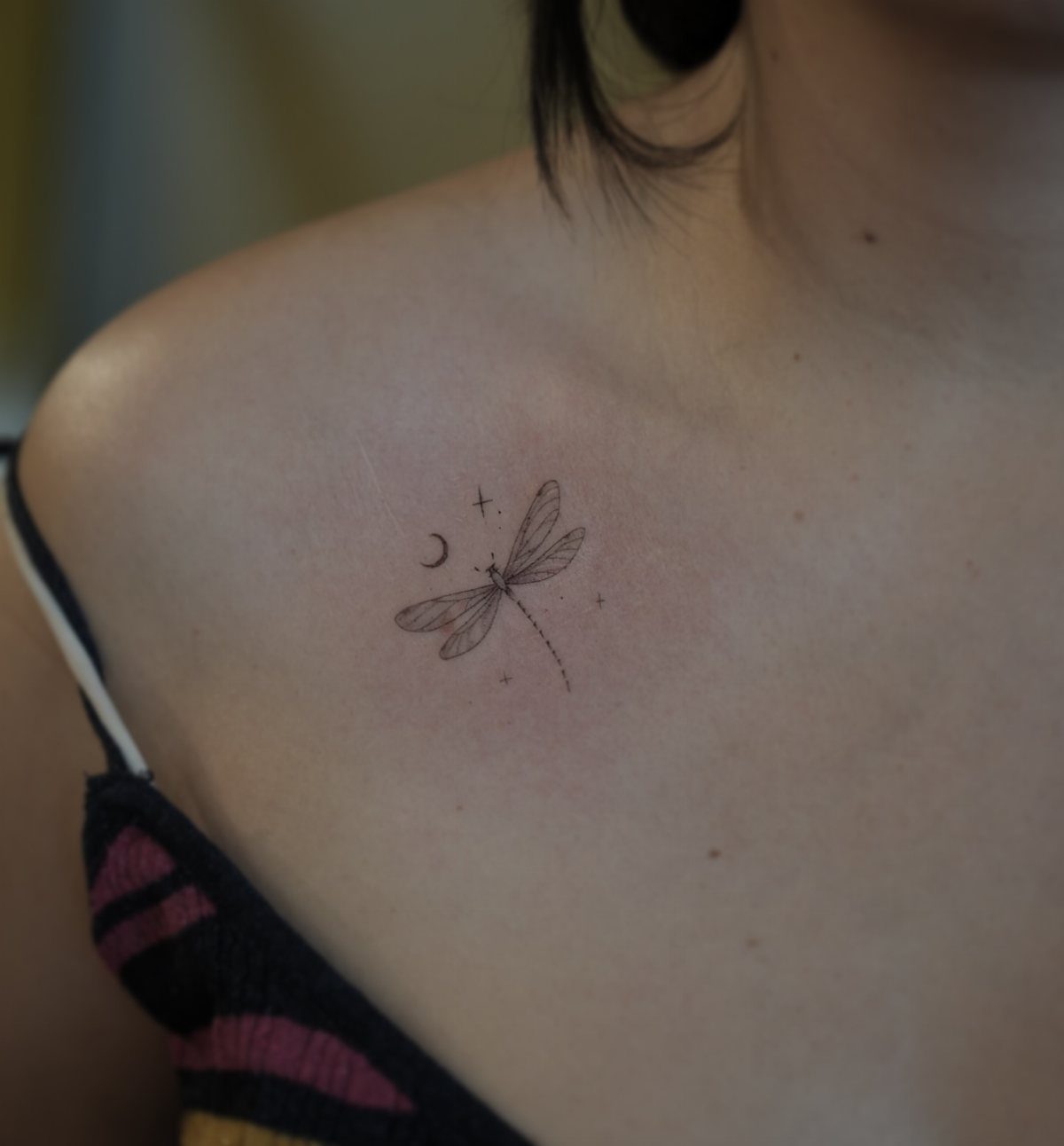
A crescent moon above or beside a dragonfly ties the insect’s daytime energy to lunar cycles and nighttime stillness. The pairing reads as balance: movement and rest, change and rhythm.
I see this combination most often on the collarbone, upper chest, or behind the shoulder. Those spots suit small, symbolic tattoos that carry personal meaning without needing to be explained.
Size stays small.
Any larger and the crescent moon starts to dominate, and the dragonfly becomes secondary. Keep the scale tight so both elements hold equal weight.
6. Abstract Dragonfly Tattoo
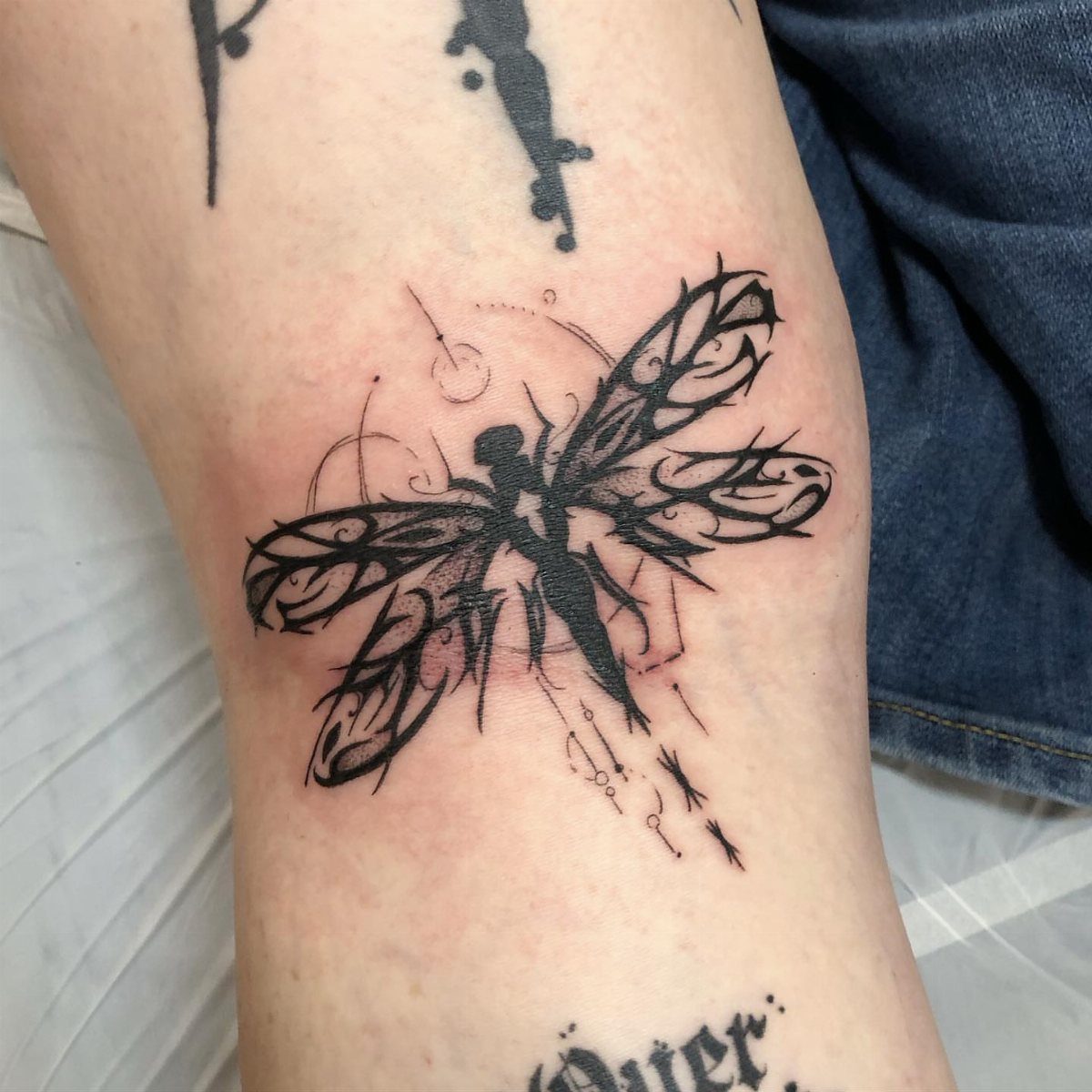
An abstract dragonfly pulls apart the insect’s structure and reassembles it with swirling lines, broken geometry, or exaggerated curves.
The wings might spiral outward, the body might fragment, and the overall shape reads more as movement than as a literal creature.
This style suits someone who wants the dragonfly’s symbolism without the realism. It’s less about what a dragonfly looks like and more about what it represents: motion, transformation, and lightness.
Abstract designs need room to move.
The thigh, calf, and forearm give the artist enough space to let the lines flow without cramping the composition. Size needs room so the abstract elements stay readable.
7. Collarbone Dragonfly Tattoo
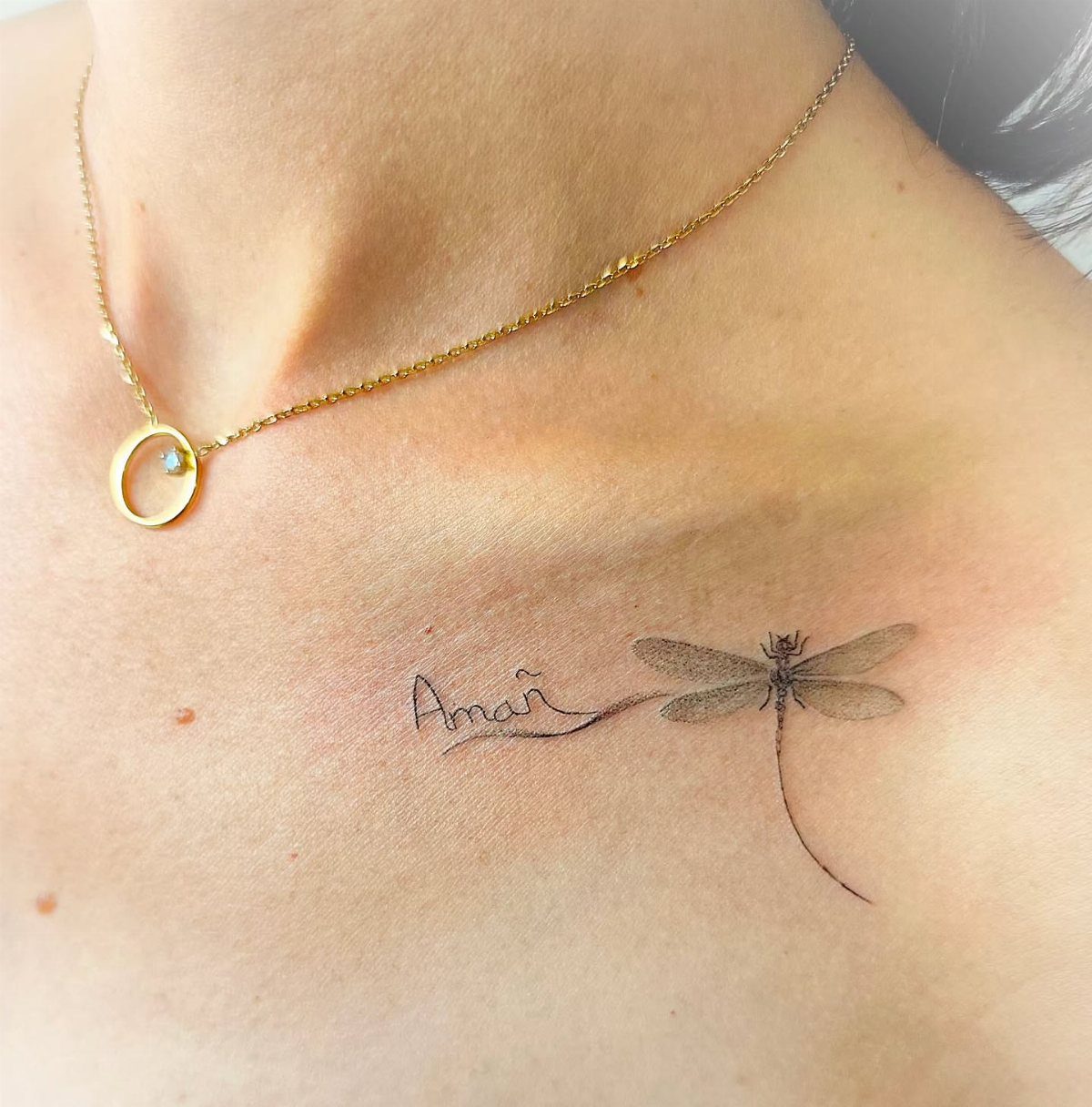
A dragonfly placed horizontally across the collarbone follows the bone’s natural line and sits where it shows in open necklines but hides easily under most shirts. The placement suits small, clean designs that don’t need much width.
Collarbone tattoos sit close to bone with thin skin, so the needle feels sharper here than on fleshier areas.
Adding text beside or below the dragonfly personalizes the piece, though it does commit more of the collarbone to the design. The insect alone reads fine, no added elements required.
8. Minimalist Dragonfly Tattoo
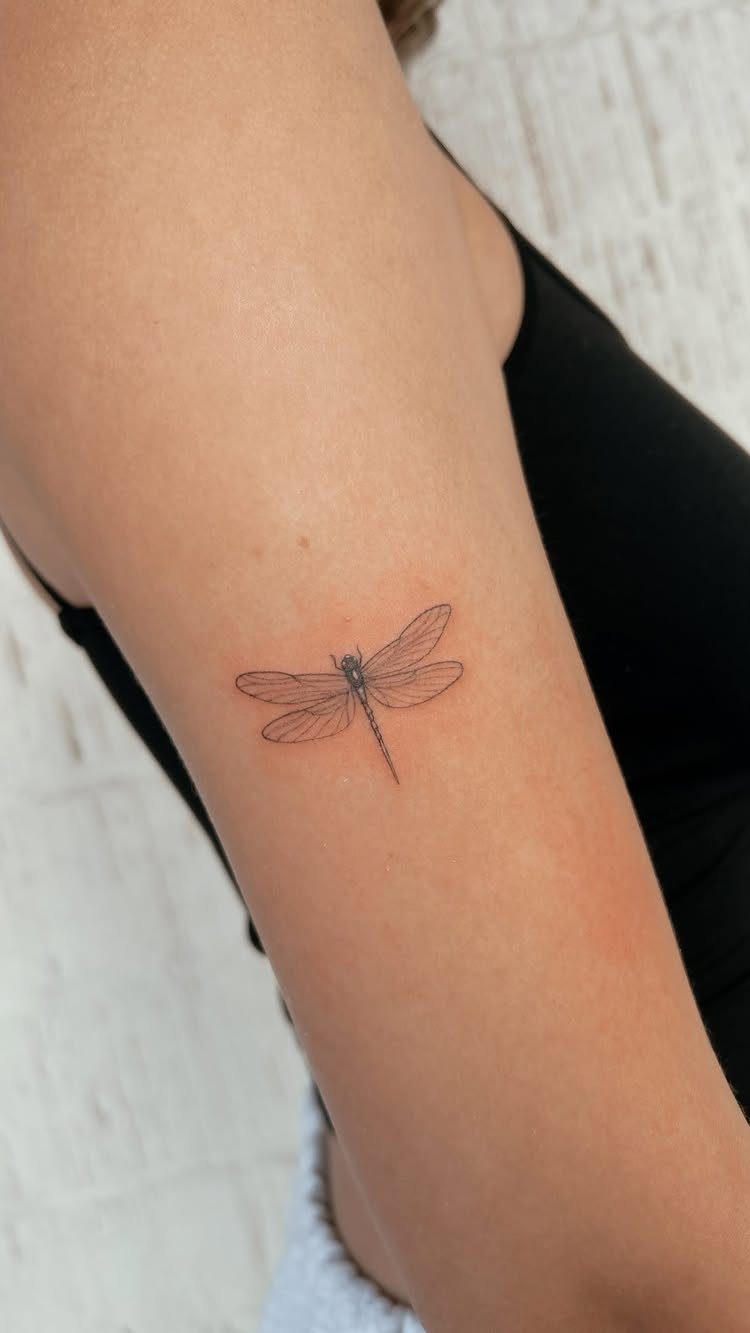
Thin, unbroken lines form the dragonfly’s wings and body without shading, filling, or decoration. The result reads clean and modern, and the simplicity suits placements where the tattoo shows often.
Minimalist work relies on line quality, so the artist’s hand matters more here than in styles where shading hides minor wobbles. A steady line ages better and stays crisp longer.
This style works on the inner arm, wrist, or forearm. All 3 placements give a flat surface for precise work, and the tattoo stays visible even when kept small.
9. Black Ink Dragonfly Outline
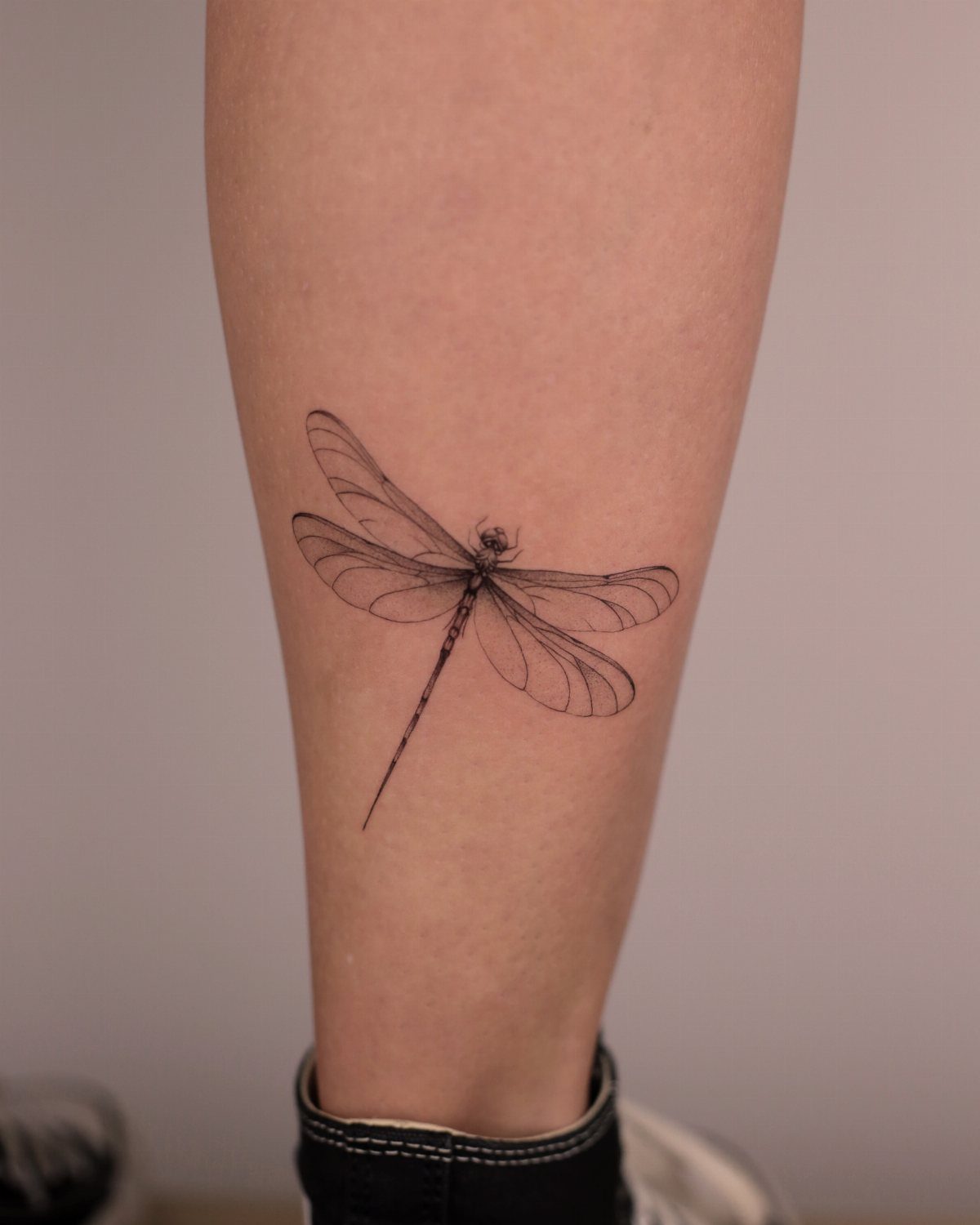
An outline version strips the dragonfly down to its bare structure: wings, body, and head drawn in black ink with no fill. The wings stay transparent, so the skin shows through and the design feels light rather than solid.
The lower leg suits this style because the placement runs vertically and the tattoo sits where it’s easy to see in shorts or when barefoot. The ankle bone raises pain slightly, but most of the work stays on flatter areas.
Outlines heal fast and need minimal touch-up work compared to heavily shaded pieces. Keep the area clean and avoid socks that rub on fresh ink.
10. Watercolor Dragonfly Tattoo
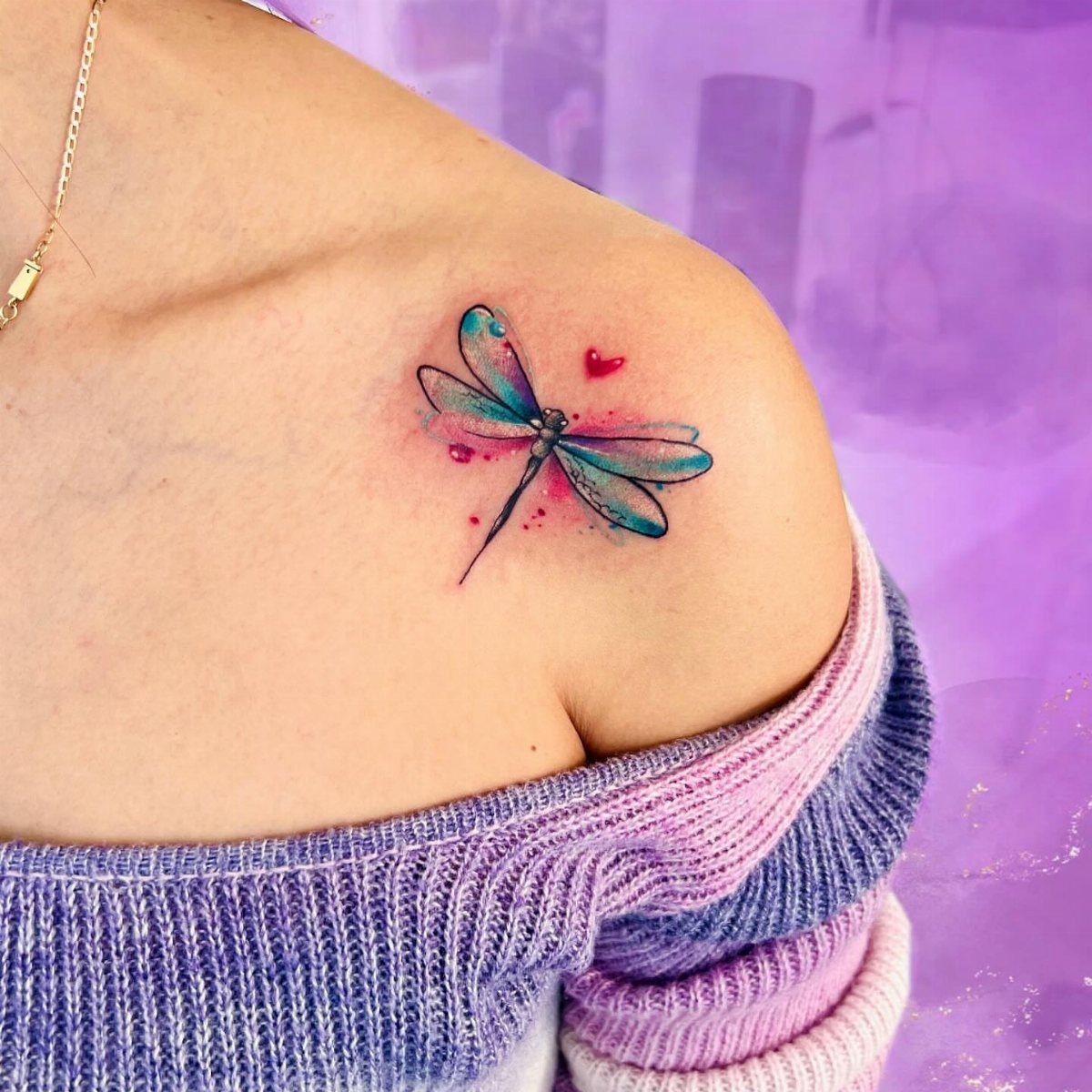
Watercolor adds soft washes of color that bleed outside the dragonfly’s outline, mimicking the look of paint on paper. Blue and pink show up most often, and the colors lighten the overall design without adding hard edges.
Color loses intensity sooner than black ink, especially in bright shades like these. Expect to book a touch-up session within a few years if you want the colors to stay vivid.
The shoulder and collarbone suit this style because both placements stay covered most of the time, which protects the color from sun exposure. Sunscreen helps, but clothing does more to slow fading.
11. Fine Line Dragonfly Tattoo
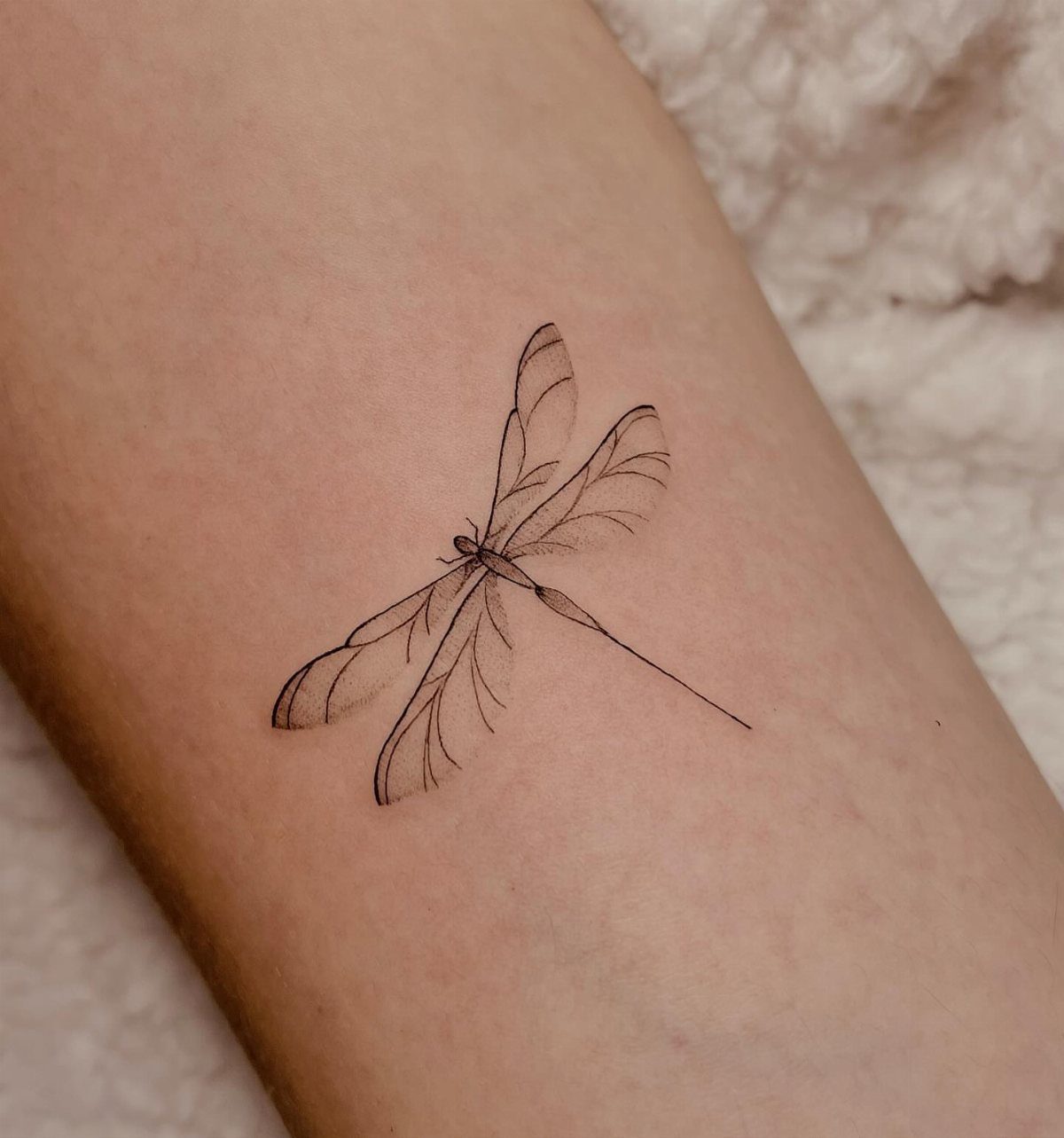
Fine line work keeps the dragonfly’s structure delicate by using single, thin strokes for the wings and body. The style reads clean and precise, and it suits someone who wants a small tattoo that doesn’t feel bold or heavy.
Fine lines fade slightly over time, particularly on areas that see friction from clothing or movement. The forearm holds fine line work well because the skin stays smooth and the area doesn’t stretch much.
This style heals quickly and sits comfortably on most first-time clients. Pain stays low to moderate, and the session wraps fast for a piece this size.
12. Multiple Small Dragonfly Tattoos
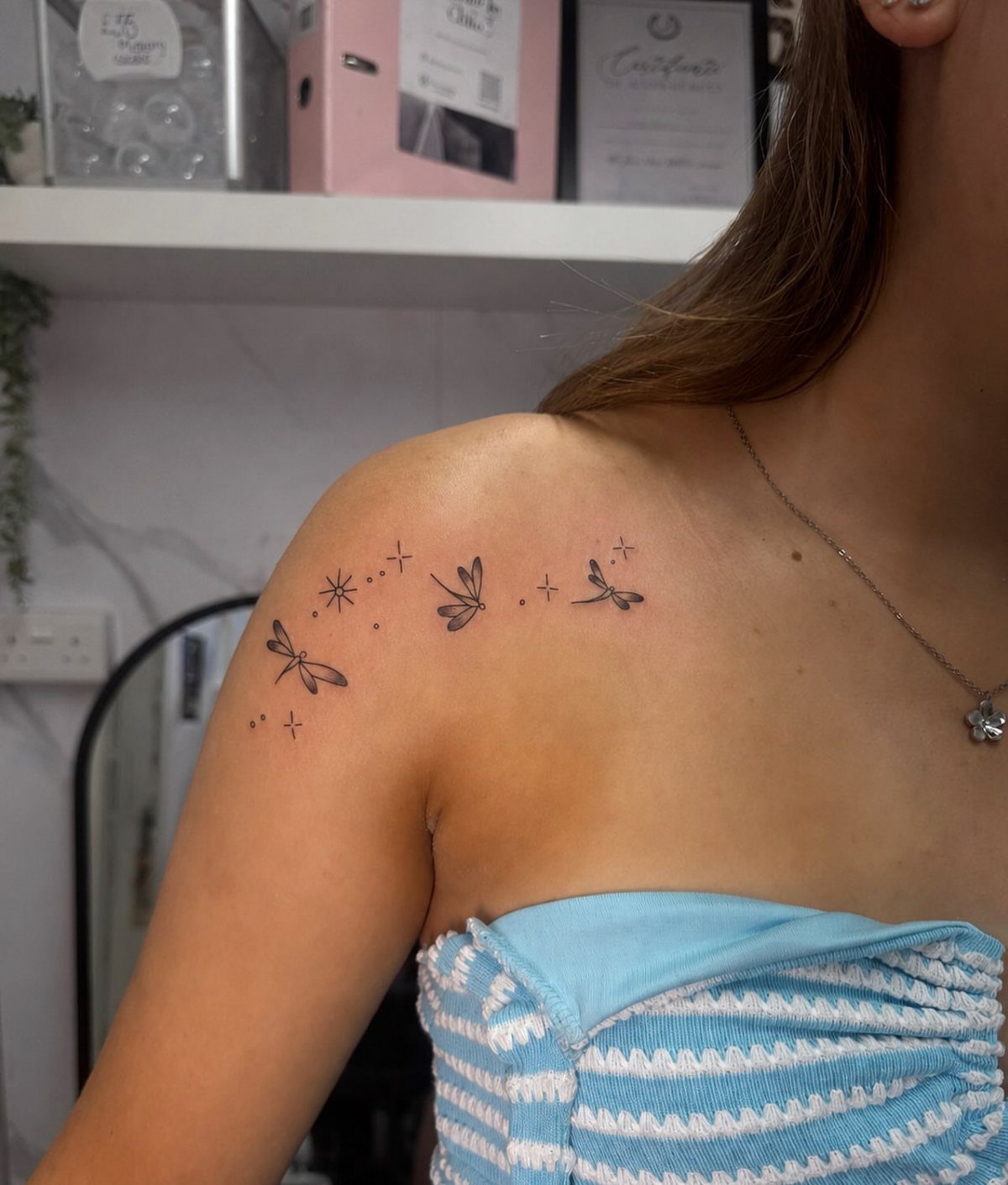
3 dragonflies grouped together on the shoulder create a small cluster instead of a single focal point. The stars scattered around them add movement without filling the space completely.
Multiple small tattoos cost more than one larger piece because each insect is a separate form, and the artist resets the needle for each one. Session time stays short, but the price reflects the extra detail work.
The shoulder offers enough room for a grouping like this without crowding, and the placement stays easy to cover or show depending on what you wear. Healing goes smoothly here with minimal rubbing from clothing.
13. Simple Dragonfly Tattoo
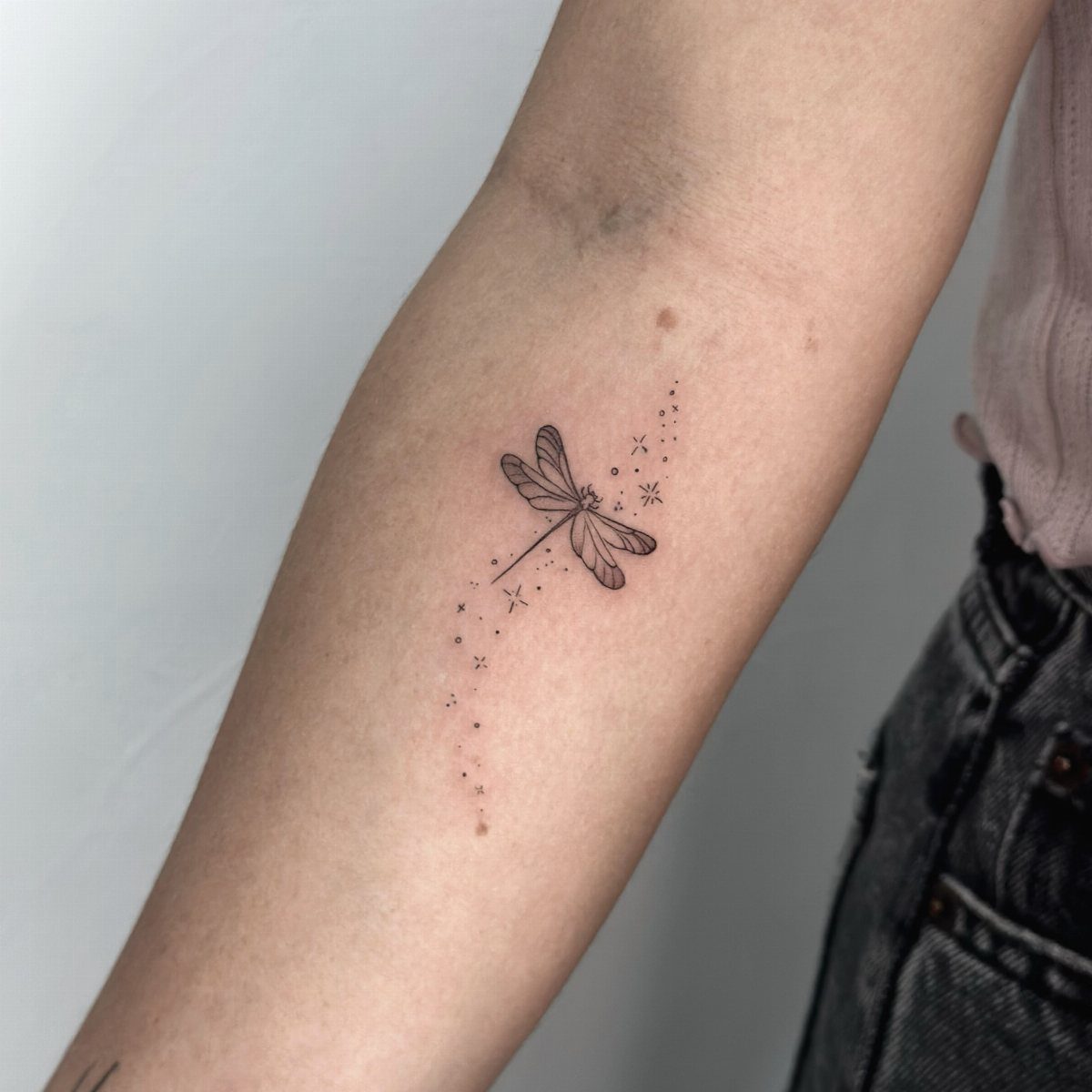
A single dragonfly rendered in clean black lines with a few scattered stars sits on the inner forearm without additional decoration. The design stays stripped down, so the insect’s structure carries the piece on its own.
This reads best when kept small. The forearm offers enough room for the wings to read clearly without forcing the design larger than it needs to be.
Simple black ink heals fast and holds its shape longer than detailed shading. Keep the area clean and moisturized while it heals.
14. Dragonfly Tattoo with Quote
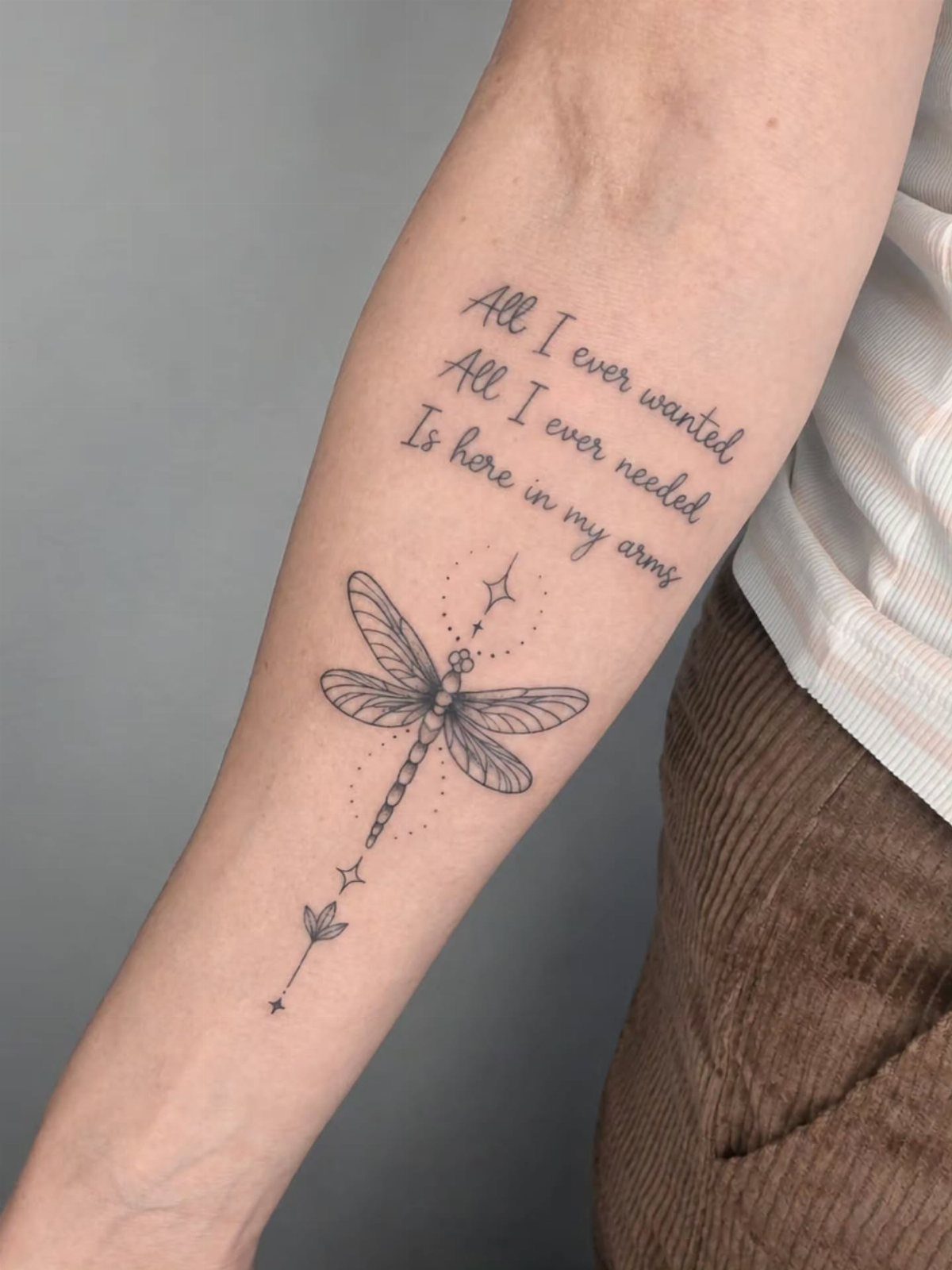
Adding text below the dragonfly turns a visual symbol into a statement that names what the insect represents for you. The words pin down meaning instead of leaving it open to interpretation.
Script takes up more vertical space than most people expect. A quote this long needs the full length of the forearm to stay readable, and crowding the text too close to the dragonfly makes both harder to parse.
If the words matter as much as the image, size them proportionally so neither element disappears. Cursive ages less cleanly than block letters, so expect some softening in the thinnest strokes after a few years.
15. Behind the Ear Dragonfly Tattoo
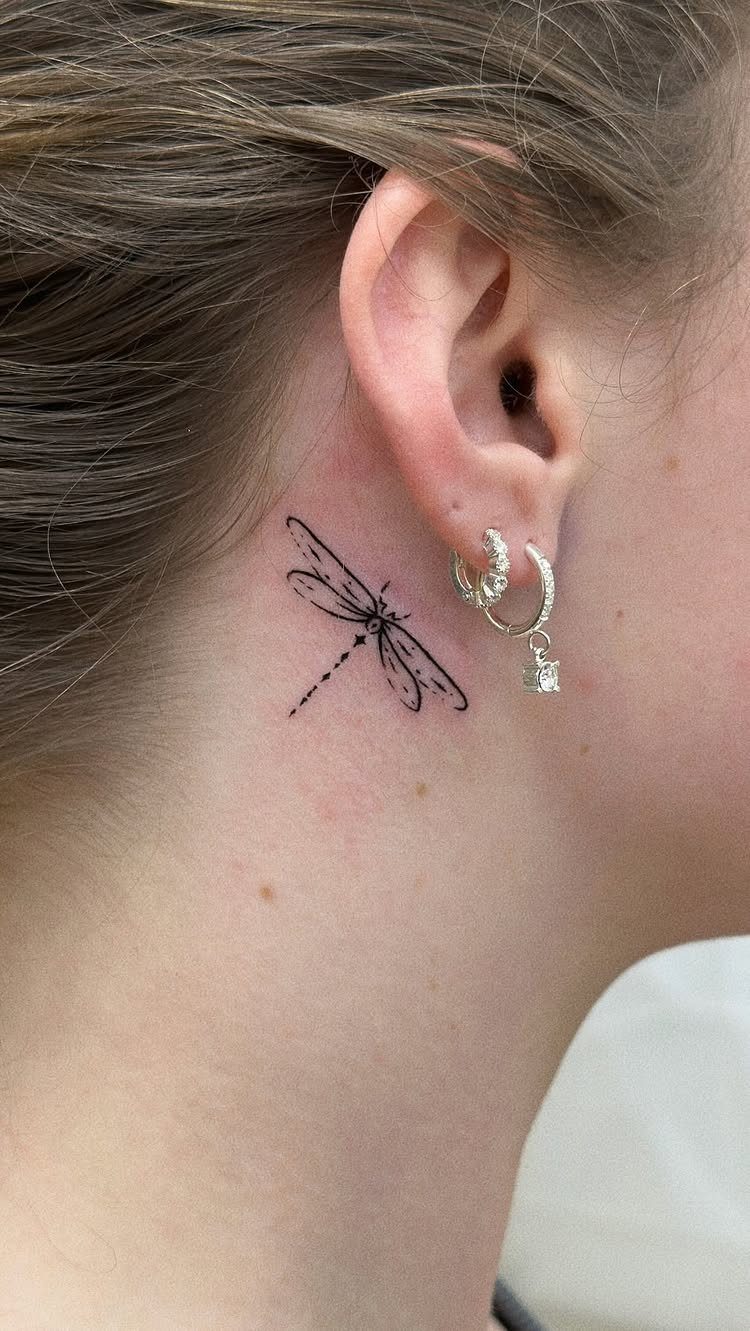
Tucking a dragonfly behind the ear keeps the tattoo almost invisible from the front but readable when your hair is up or swept back.
Sessions stay short for a piece this size, but expect higher sensitivity during the work.
Healing behind the ear goes smoothly when you keep hair products and headphones off the fresh ink for the first week.
16. Side of Neck Dragonfly Tattoo
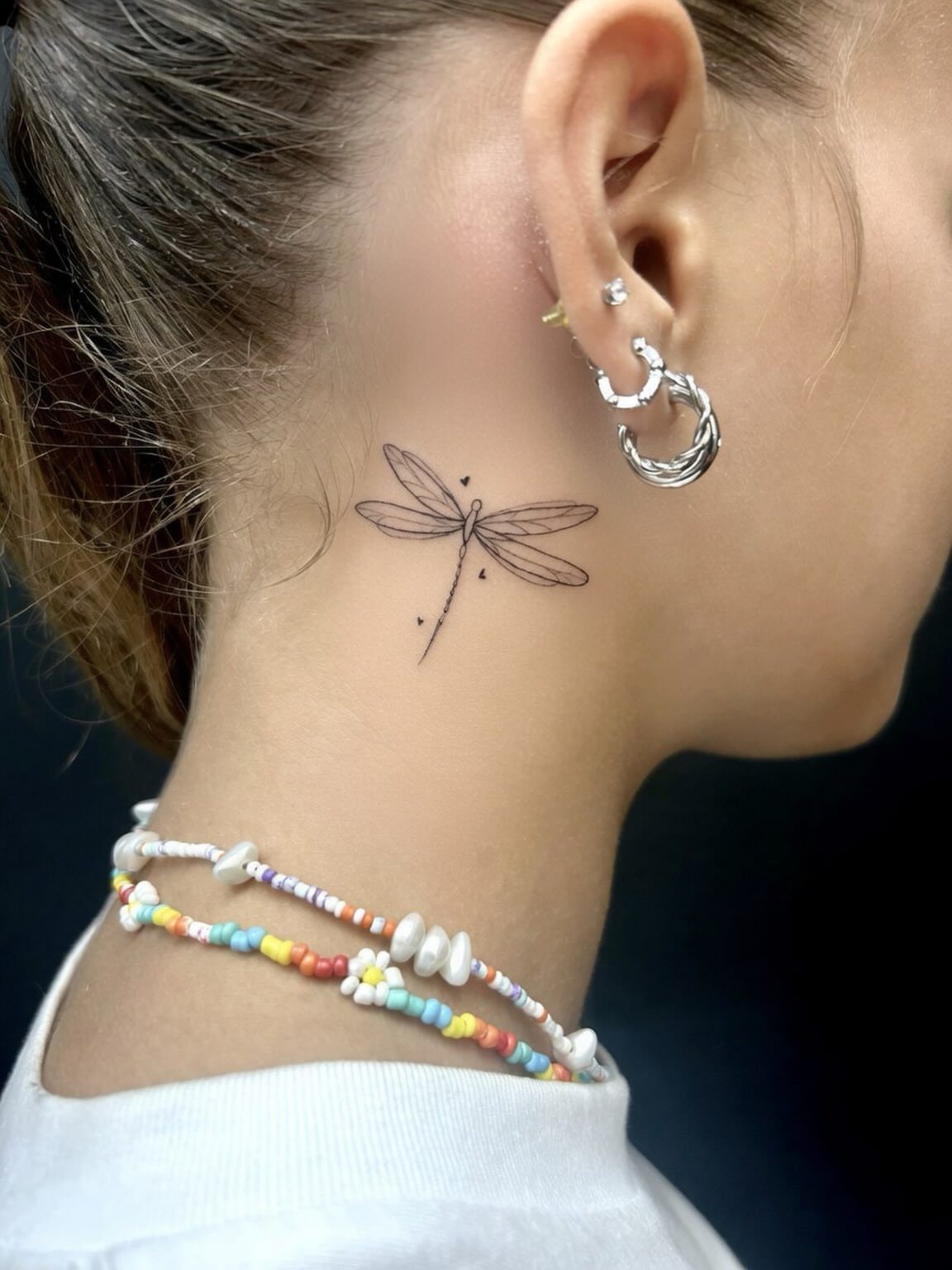
Placing a dragonfly low on the side of the neck, just under the jawline, keeps the tattoo visible in profile but less obvious from the front.
The spot reads bolder than behind-the-ear placements because it sits where people see it during conversation.
Neck tattoos show in most settings, so this suits someone comfortable with visible work. The skin here moves with your head, which can make the session feel more intense than work on stationary areas like the forearm.
Black ink on the neck fades slower than color, and the small size means touch-ups stay quick if needed. Keep sunscreen on this spot year-round to slow any fading from sun exposure.
17. Forearm Dragonfly Tattoo
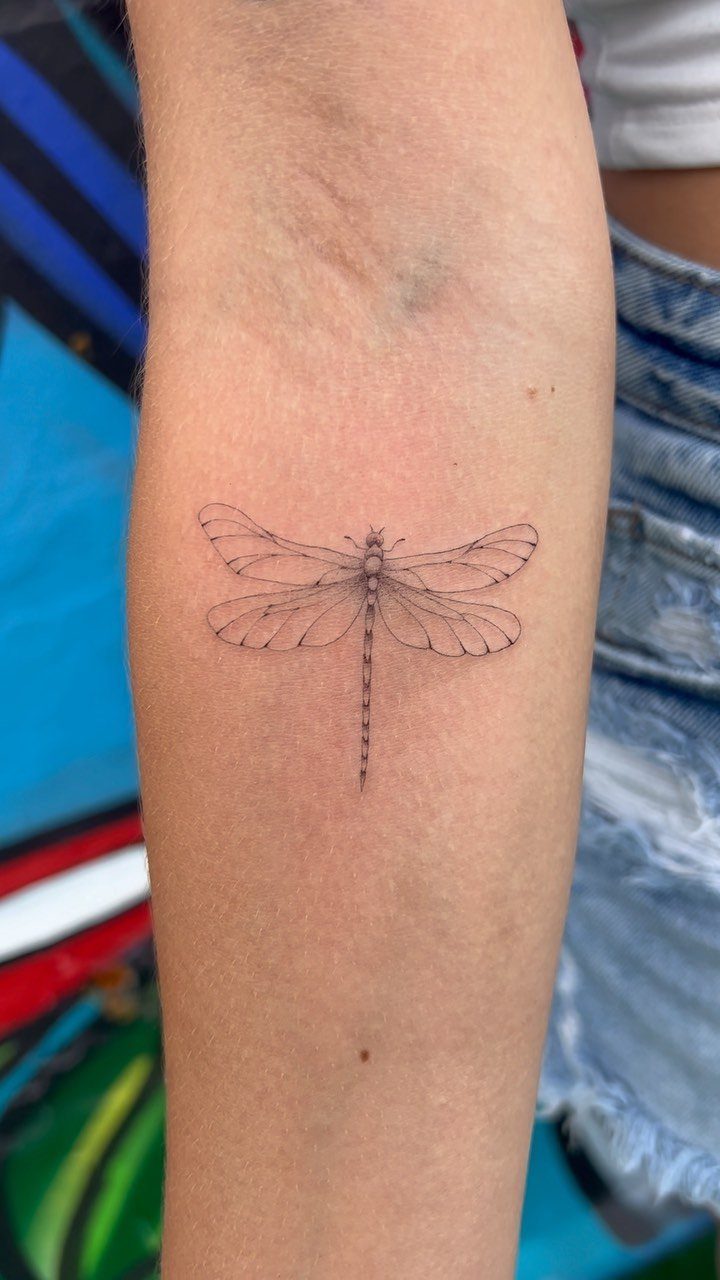
A dragonfly placed mid-forearm gives you enough room for fine line detail without needing to commit to a larger design. The wings stay proportional, and the body runs parallel to the arm’s natural line.
The forearm gives a flat canvas that holds fine line detail without distorting as the skin moves. The placement suits someone who wants the tattoo visible most of the time without needing to position their arm to show it.
A small piece here won’t take long, and the forearm sits comfortably in the lower pain range. Clothing rarely rubs against the forearm, which keeps irritation low and healing straightforward.
18. Blue and Gold Dragonfly Tattoo
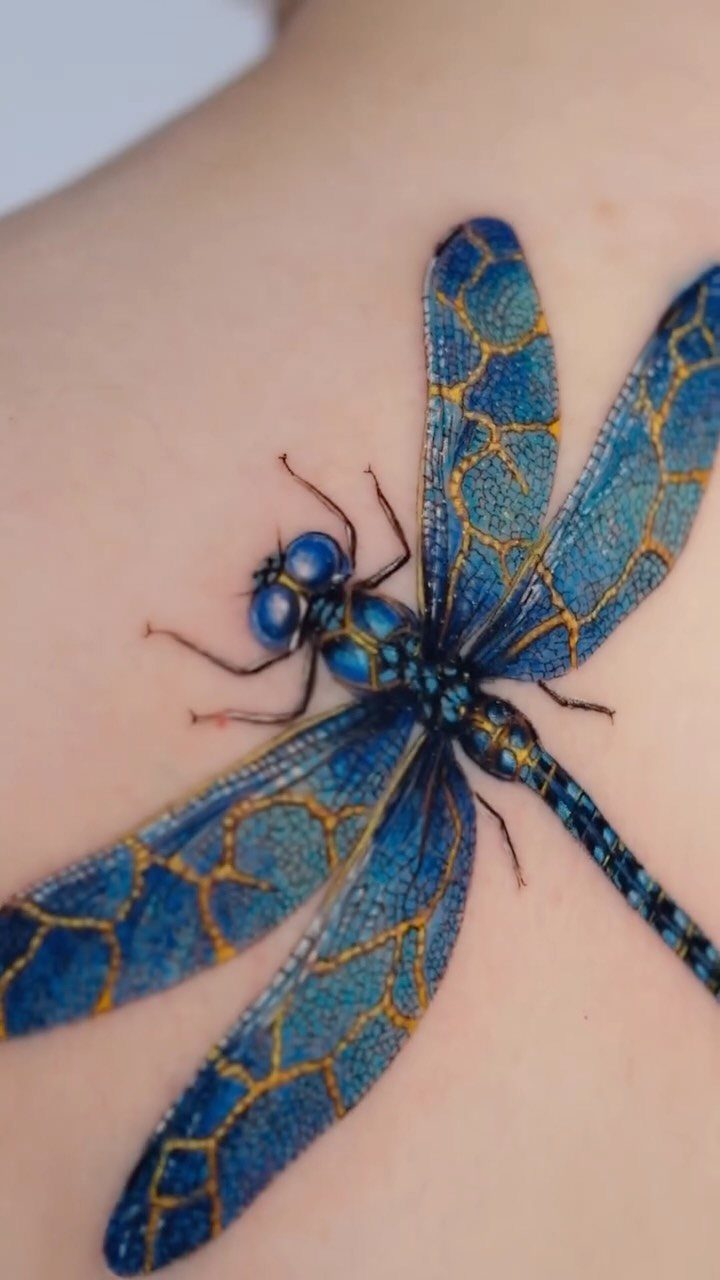
Blue and teal shading across the wings with gold accents on the veins gives the dragonfly a jewel-toned finish that reads richer than black ink alone. The color adds depth without needing heavy outlines or solid fills.
Color fades faster than black, and bright blues lose intensity sooner than darker tones. Color fades over time, so touch-ups will bring the blue back when it starts to dull, and sunscreen slows that process.
Gold ink sits less reliably than other colors and may lighten unevenly as it heals. Some artists use yellow or warm brown instead to get a similar effect with better staying power.
Meaning of Dragonfly Tattoos
Dragonflies carry weight across more cultures than most insects do. In Japanese tradition, they symbolize courage, strength, and happiness.
Native American tribes tie them to renewal after hardship, often linking the insect to water and purity. In Celtic tradition, dragonflies mark the boundary between this world and the next, tied to fairies and the unseen.
The insect’s short lifespan adds another layer: living fully in the time you have. The insect lives nearly its entire life below the surface as a nymph, then surfaces for only a few weeks in the air.
That shift from water to air, from crawling to flight, makes transformation the core of what the tattoo represents.
Good luck and prosperity show up in the symbolism too, though those readings feel secondary to change and adaptability. If you’re marking a shift in your life, a dragonfly names it clearly.
Common Placements for Dragonfly Tattoos
Wrists and ankles work for compact designs, while shoulders and backs give you space to run the wings wide.
Small pieces fit the wrist and ankle without crowding, and both spots stay easy to show or cover depending on what you wear.
The ankle offers more freedom in what you ink because the placement stays less visible than the wrist. If the design matters more to you than to anyone else, that privacy helps.
The shoulder and back give room for dragonflies paired with other elements like flowers or water, and both placements let the design follow the body’s natural lines. Larger pieces need that space to keep the wings from feeling cramped.
Styles of Dragonfly Tattoos
Realistic dragonflies lean on shading and detail to make the insect look like it landed on your skin.
Florals and water pair with dragonflies often enough to count as their own category.