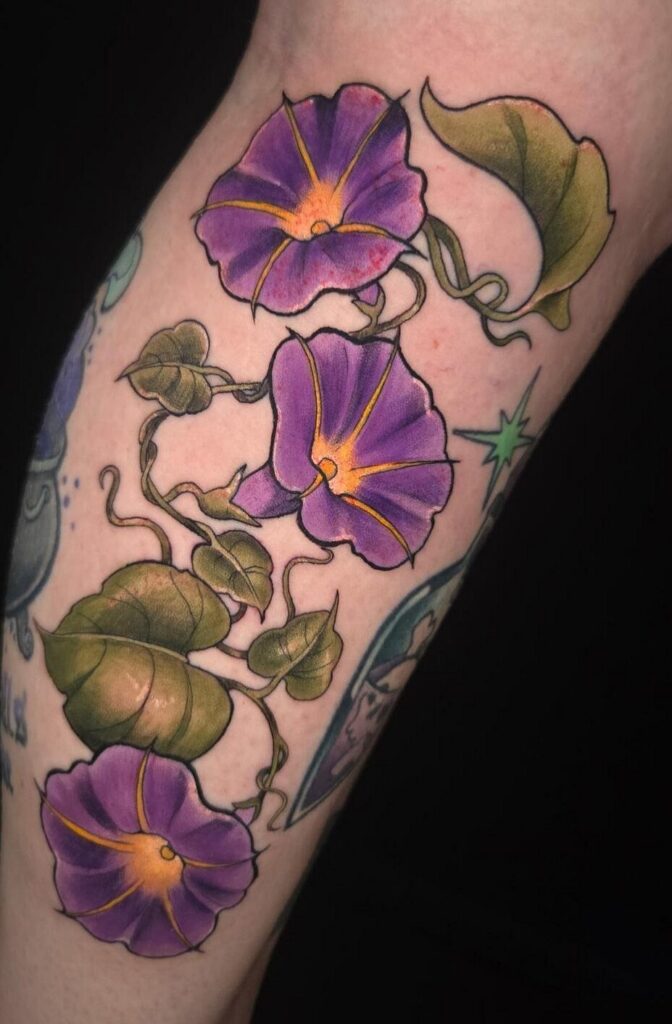
Morning glories hold their bloom for hours rather than days, so the tattoo reads best when the design accounts for how the flower actually grows: trumpet-shaped petals that flare wide, vines that climb and curve, and colors that stay recognizable years after the ink settles.
Blue and purple age more predictably because they match what most people remember from gardens, and fine-line black work keeps the contour sharp even at small scale.
1. Blue Trumpet-shaped Flowers
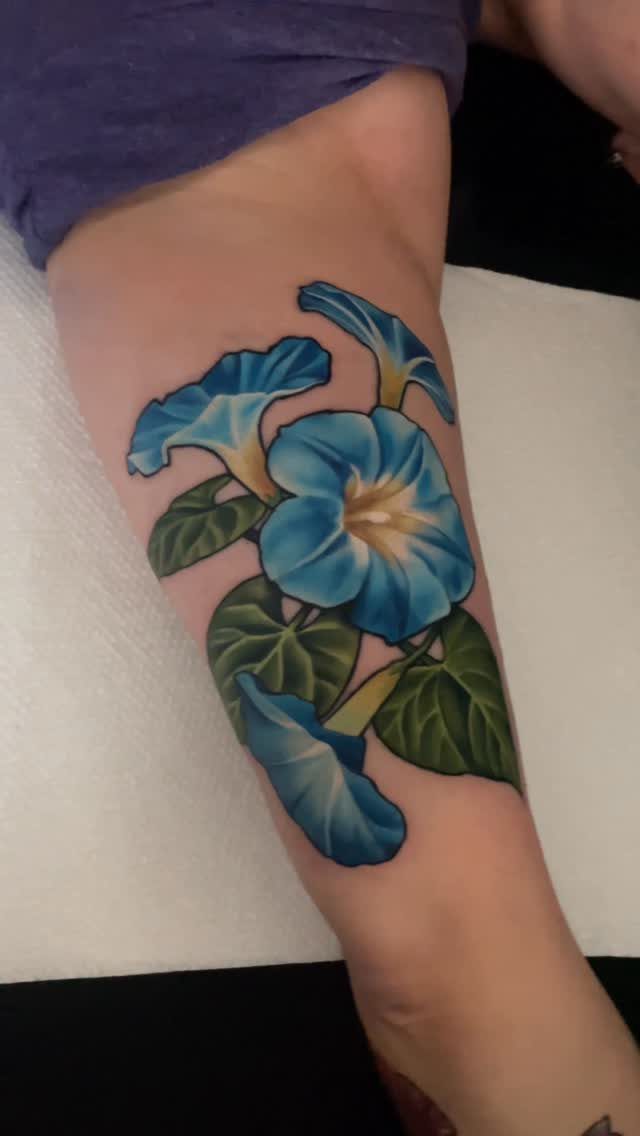
The trumpet shape is how morning glories actually grow, and blue is the shade most of us remember from gardens and fences.
When you ink this flower true to life, you get something instantly recognizable without needing extra detail to explain what it is.
Placement on the lower leg gives you space for the bloom to face forward and the vine to curve naturally along the calf or shin. Multiple flowers with leaves show the petal flare and keep the silhouette clean.
Black ink reads well here, but adding blue keeps the flower from looking generic.
2. Purple Morning Glory Flowers
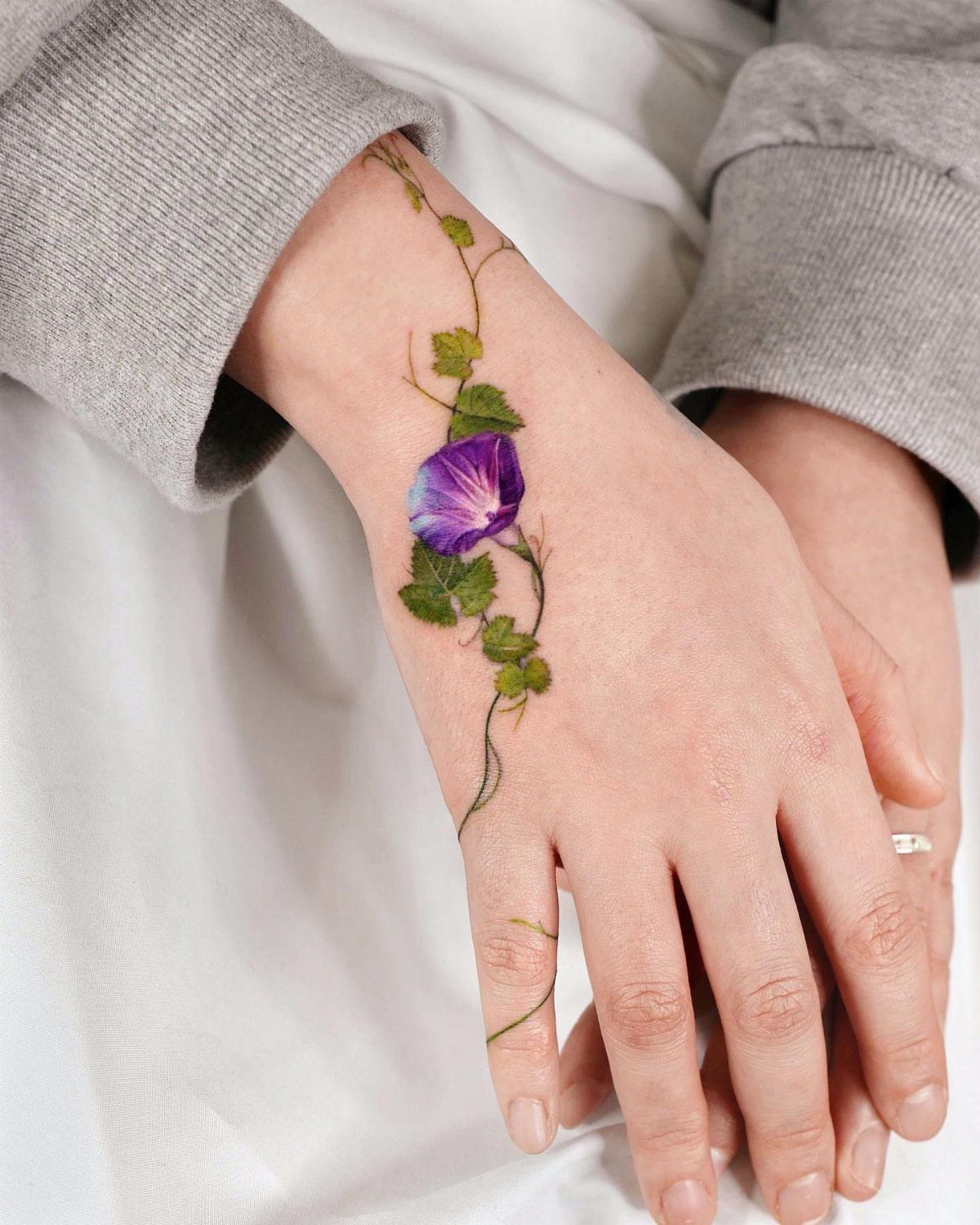
Purple morning glories carry the same structure as the blue variety, but the color shift changes the read completely. Purple sits darker on skin, so the tattoo holds contrast better over time and stays visible even when it fades slightly.
The vine winding down from wrist to hand moves with the bones beneath. I prefer this placement for morning glories because the flower opens where your hand rests and the vine trails where your eye already moves.
Compact sizing works here because anything larger fights the narrow space between wrist and knuckles.
3. Black Ink Fine-line Tattoos
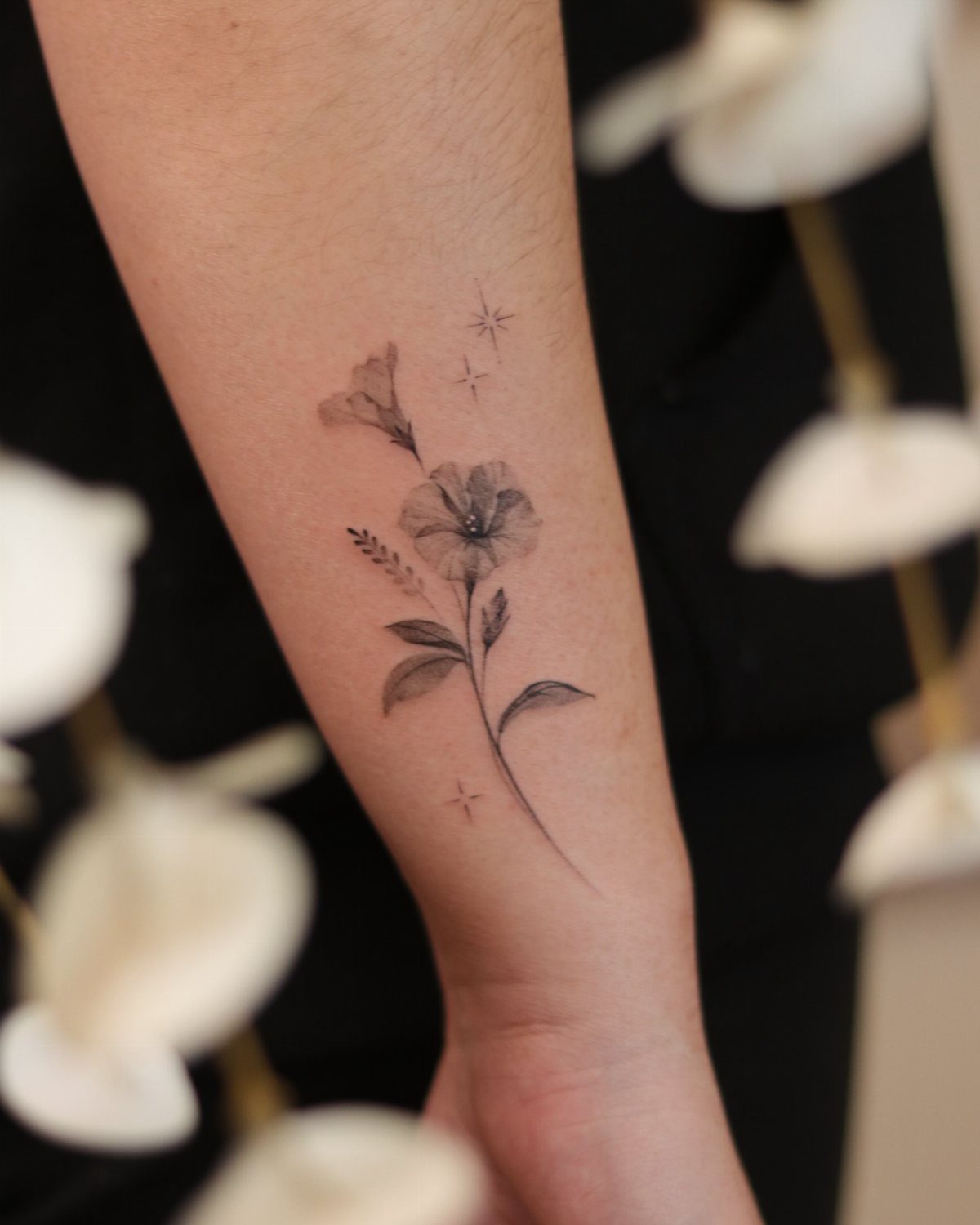
Fine-line morning glories strip the design down to contour and a few key details inside the petals.
No shading, no fill, just black ink tracing the shape of the flower and whatever else sits with it, in this case small stars.
The style reads delicate but holds up better than people expect.
Line weight matters more than you’d think: too thin and the tattoo blurs within a few years, especially on the forearm where skin moves constantly. I ask for lines wide enough that the design stays crisp past the healing stage.
The forearm puts the tattoo where you’ll see it, with room for the flower and accent details to sit comfortably.
4. Cascading Morning Glories Tattoo
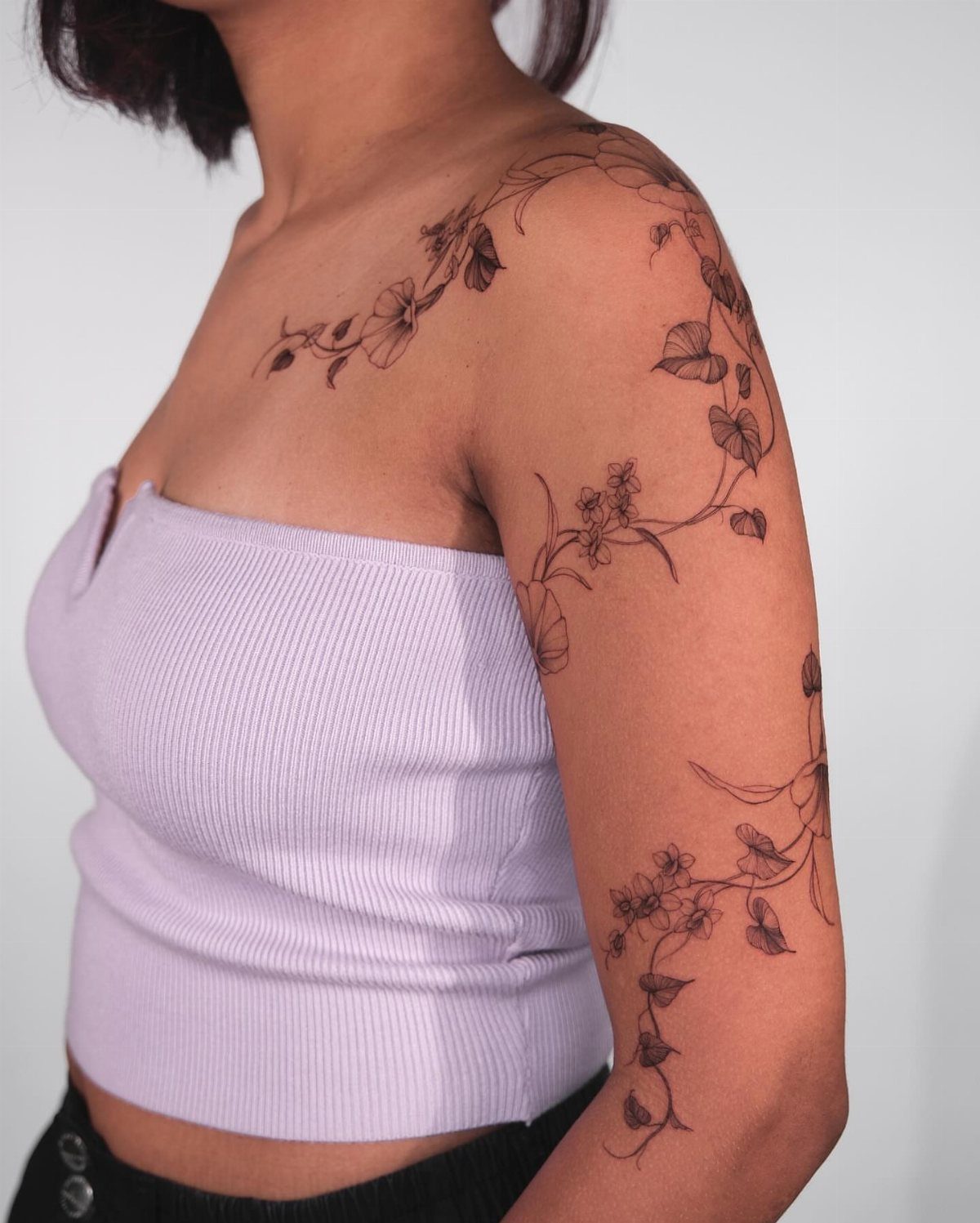
Morning glories grow upward by wrapping around whatever structure they find, so a cascading design mirrors that habit in reverse. The vine starts at the shoulder and trails down the upper arm, with flowers opening at intervals along the length.
This layout works because it moves with the taper of your arm. I’d run the design long enough to fit several blooms spaced along the vine, each one slightly smaller as it descends.
Fine-line black work keeps the composition from feeling heavy, and leaving negative space between flowers gives each bloom room to sit clearly on the muscle.
Shoulder to mid-bicep works best for this, where movement won’t distort the line.
5. Morning Glories with Daisies
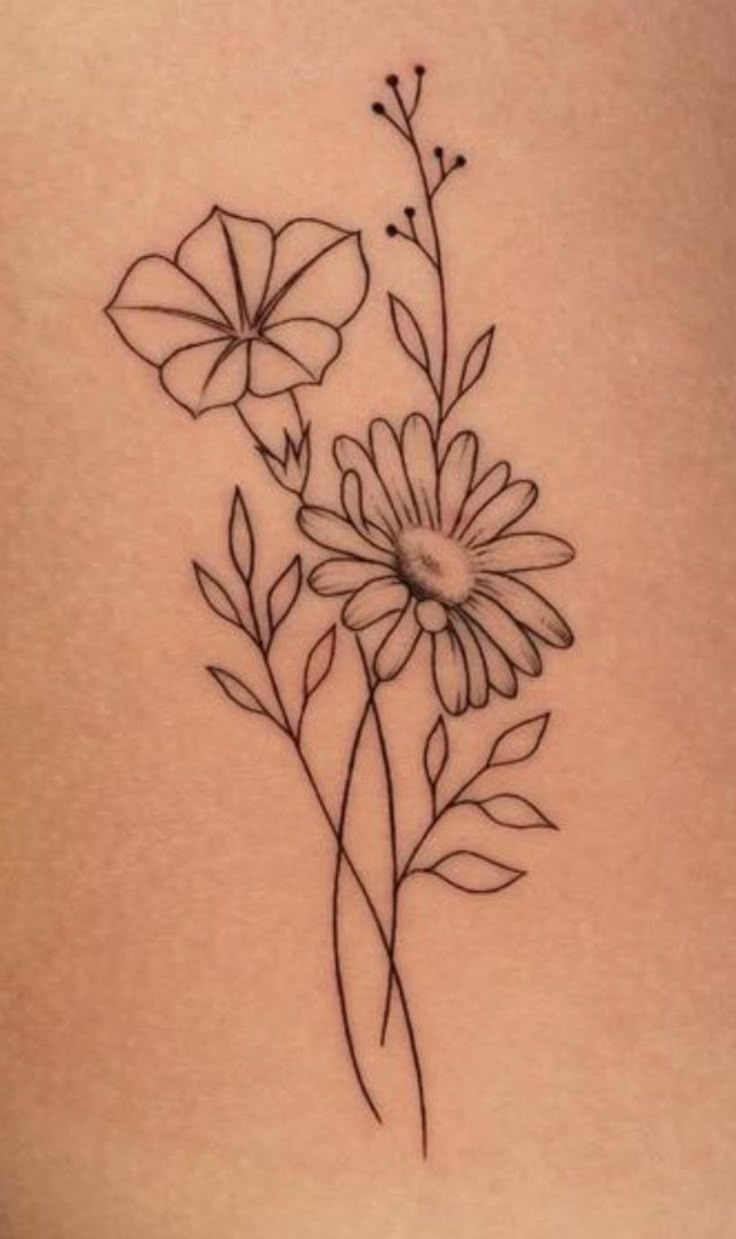
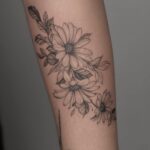
Pairing morning glories with daisies gives you 2 flowers that read well together in ink because their shapes contrast cleanly.
The morning glory opens wide with soft petal edges, the daisy sits tighter with defined rays, and the two together fill space without overlapping in form.
Fine-line black work keeps both flowers legible at small scale.
I’d give this enough room to keep the stems and berries visible, with space around each element. Placement anywhere along the forearm or outer wrist works, where the tattoo can sit flat and the details stay sharp.
Skip color here; black ink ages better and the line contrast is what makes the pairing read.
6. Watercolor Morning Glories Tattoo
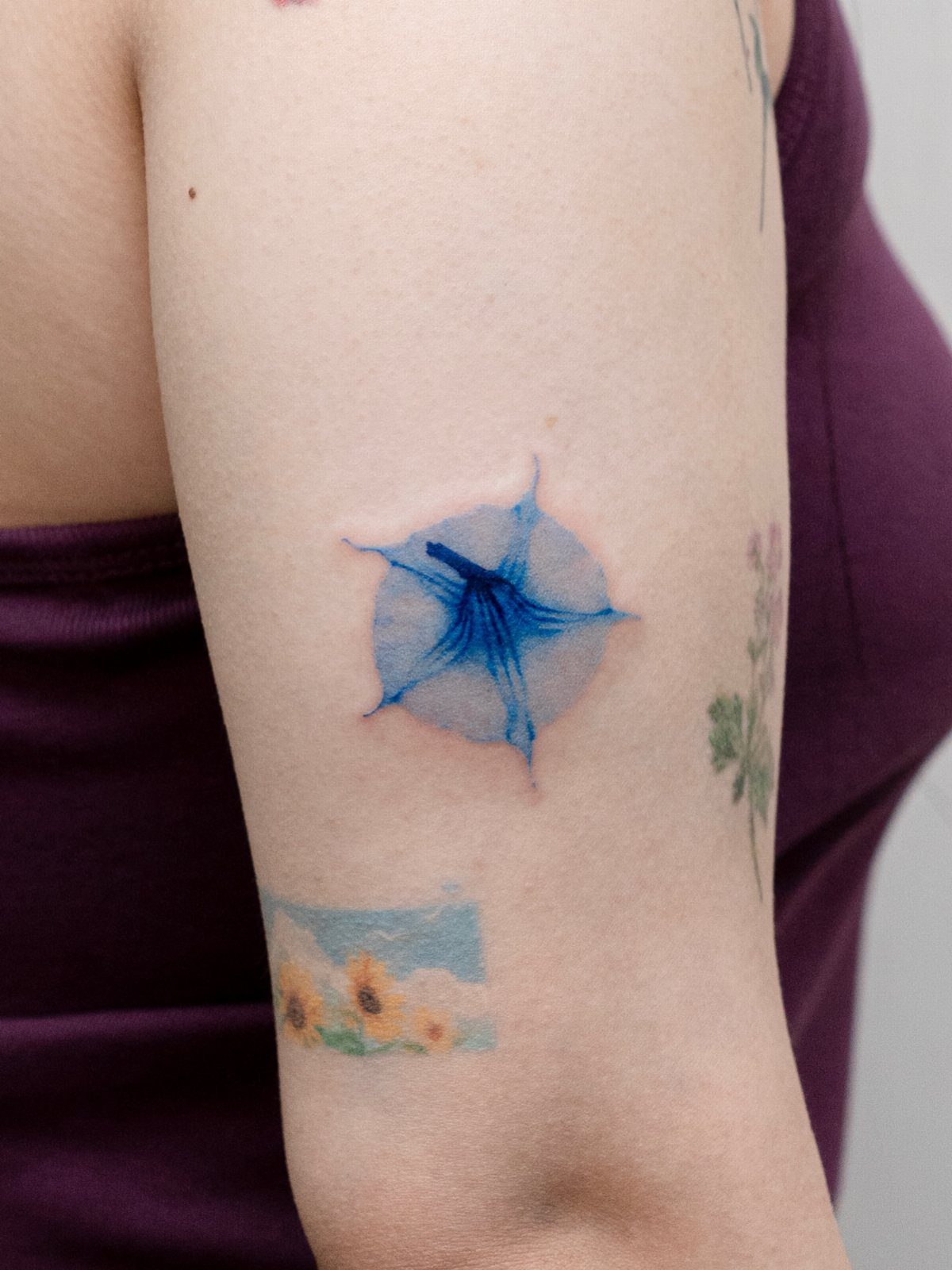
Watercolor morning glories trade the crisp edge of line work for soft washes of blue that bleed slightly past the petal outline. The effect mimics actual watercolor painting, where pigment pools and fades unevenly across the paper.
Blue works better than other colors for this style because it holds visibility on most skin tones even as the tattoo softens over time.
The upper arm sits where the design won’t rub against clothing constantly, which helps the color last. Smaller and the wash loses its shape, larger and the color starts to look unintentional rather than deliberate.
Watercolor fades faster than solid ink, so plan for a touch-up to bring the blue back.
7. Morning Glories with Celestial Elements
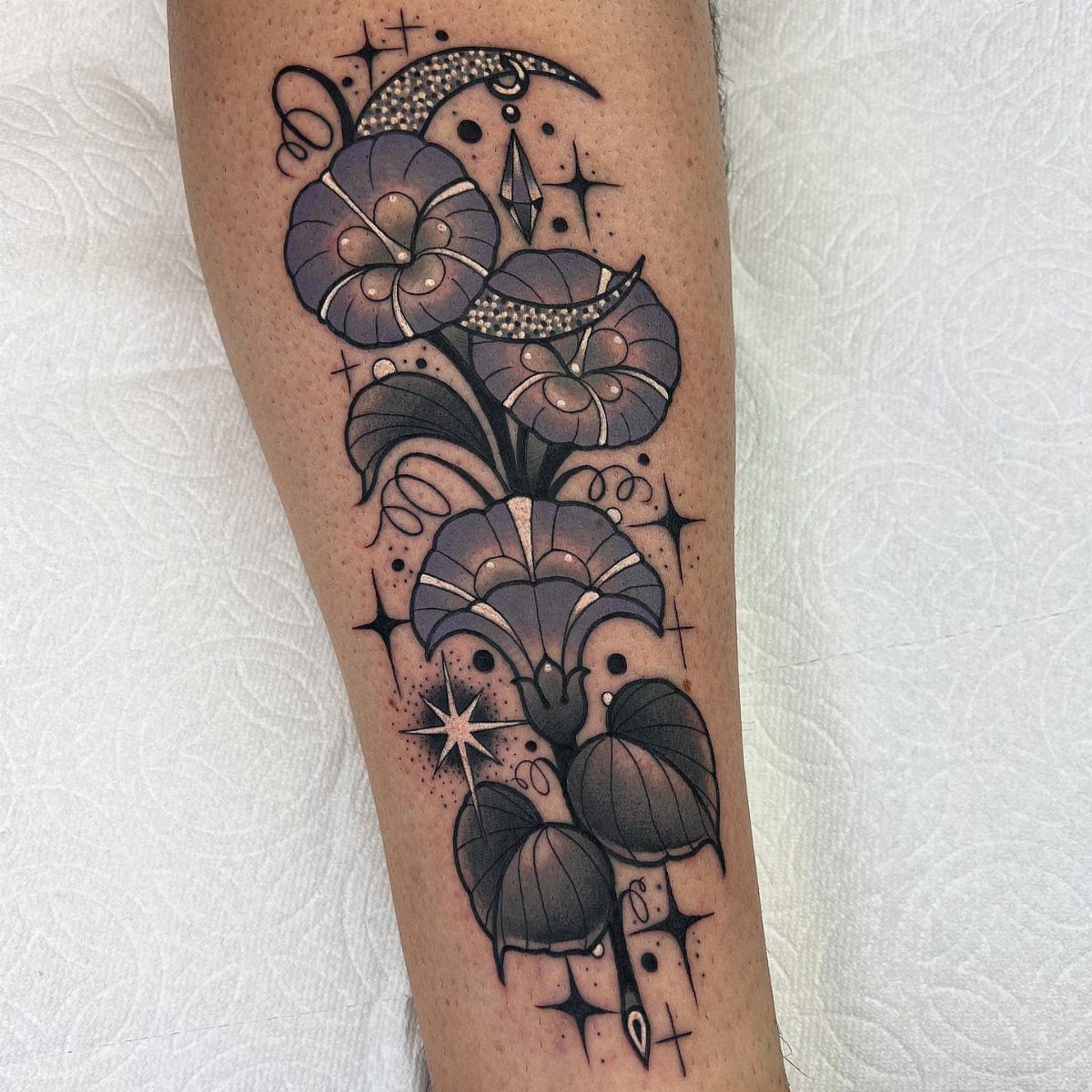
Morning glories bloom at dawn, so adding moons and stars ties the flower to the full cycle rather than just the morning opening.
The contrast works because the shapes don’t compete: the trumpet petals sit soft and organic, the crescents and stars stay geometric and small.
Purple holds better than pale blue when you add detail elements around it. Fine-line black keeps the celestial pieces from crowding the flowers, and spacing them along the vine gives each bloom its own accent rather than cluttering one area.
The forearm gives enough length to run the vine with several flowers and still fit the moons between them.
8. Morning Glory Climbing Trellis Tattoo
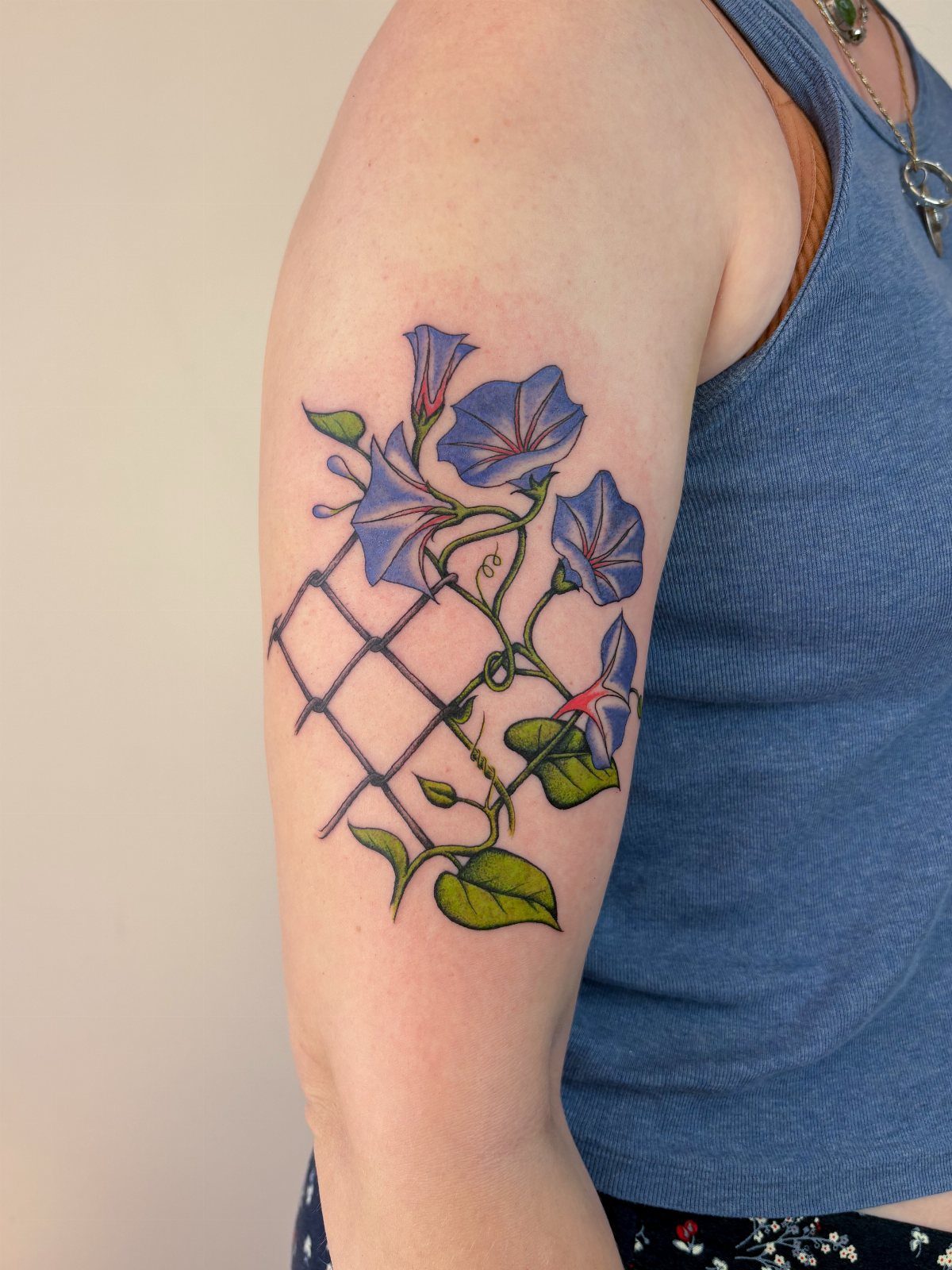
Adding a trellis gives the vine something to climb the way it would in a garden, and the geometric pattern contrasts cleanly with the organic flower shapes.
A diamond lattice in black ink grounds the design without taking over, and the green vine wrapping through it reads immediately as intentional growth rather than loose decoration.
Blue flowers against black structure keep the color from feeling random. Upper arm placement works because the curve of the muscle lets the trellis sit flat while the vine can wrap slightly around the contour.
Size this large enough that the lattice pattern stays readable as it ages.
Meaning of Morning Glory Tattoos
Morning glories open at dawn and close by afternoon, so the tattoo ties directly to short-lived moments that still matter.
That brief bloom window is why renewal shows up so often in the symbolism: the flower doesn’t last, but it comes back the next day.
Love appears in the meaning because Victorian flower language assigned it there, specifically the kind of love that feels urgent or fleeting rather than permanent.
Resilience comes from how the plant itself grows: morning glories climb aggressively, wrap around anything available, and keep going even in poor soil.
If you want a tattoo that marks a fresh start or a specific morning that changed something, this flower says it without needing explanation. If you just like how the trumpet petals look on skin, that works too.
Placement Ideas
A single bloom fits the inner wrist if you size it small, but anything larger needs the forearm to keep the detail from crowding.
Multiple blooms or a trailing vine fit the shoulder well, because the rounded muscle supports the composition without forcing it to bend sharply.
The ankle fits smaller morning glories that follow the bone, with the bloom opening where the ankle narrows and the vine trailing toward the foot.
Back placement gives you room for larger compositions with multiple elements, but you won’t see it yourself without effort.
Color Variations
Blue and purple are the colors most morning glories actually grow in, so using them keeps the tattoo recognizable without needing a label.
Pink morning glories exist but show up less often in gardens, so the color can make the flower look less familiar at first glance.
Green leaves next to any of these shades give the design a natural anchor and separate the bloom from surrounding skin.
Watercolor styles bleed blue or purple past the petal edge for a softer look, but solid color inside clean black outlines ages more predictably.
Frequently Asked Questions
How does morning glory look like?
Morning glories are trumpet-shaped flowers that flare open at the mouth, most commonly in blue or purple.
The blooms sit on thin winding vines with heart-shaped or pointed green leaves spaced along the stem. Blue varieties often show a white or pale center where the petals meet.
What flowers are commonly used as tattoos to symbolize strength?
Morning glories symbolize strength through resilience, because the plant climbs aggressively and thrives even in poor soil.
Lotuses also appear frequently in tattoos for strength, rooted in how they grow through mud to bloom on the surface. Both flowers carry layered meanings that go beyond appearance.