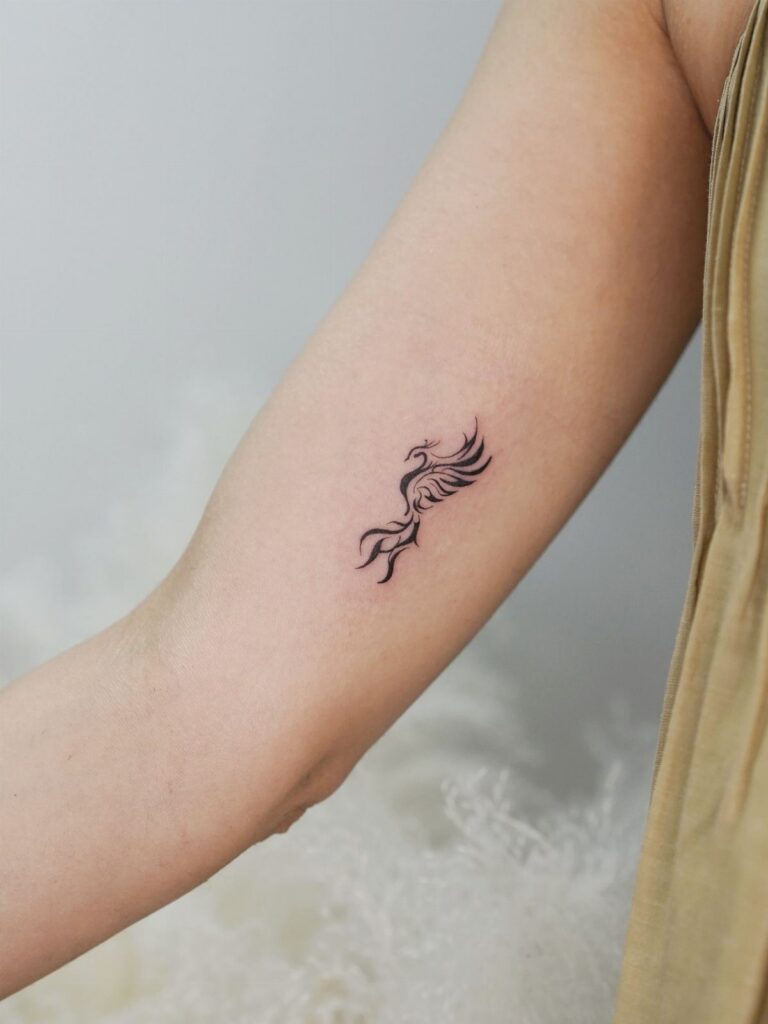
A stylized silhouette on the wrist reads clean from across the room, while a fine-line phoenix behind the ear stays private until you turn your head.
The size of the space you’re working with decides whether you go minimal or add flowers, stars, or a heart to the design.
1. Stylized Phoenix Silhouette
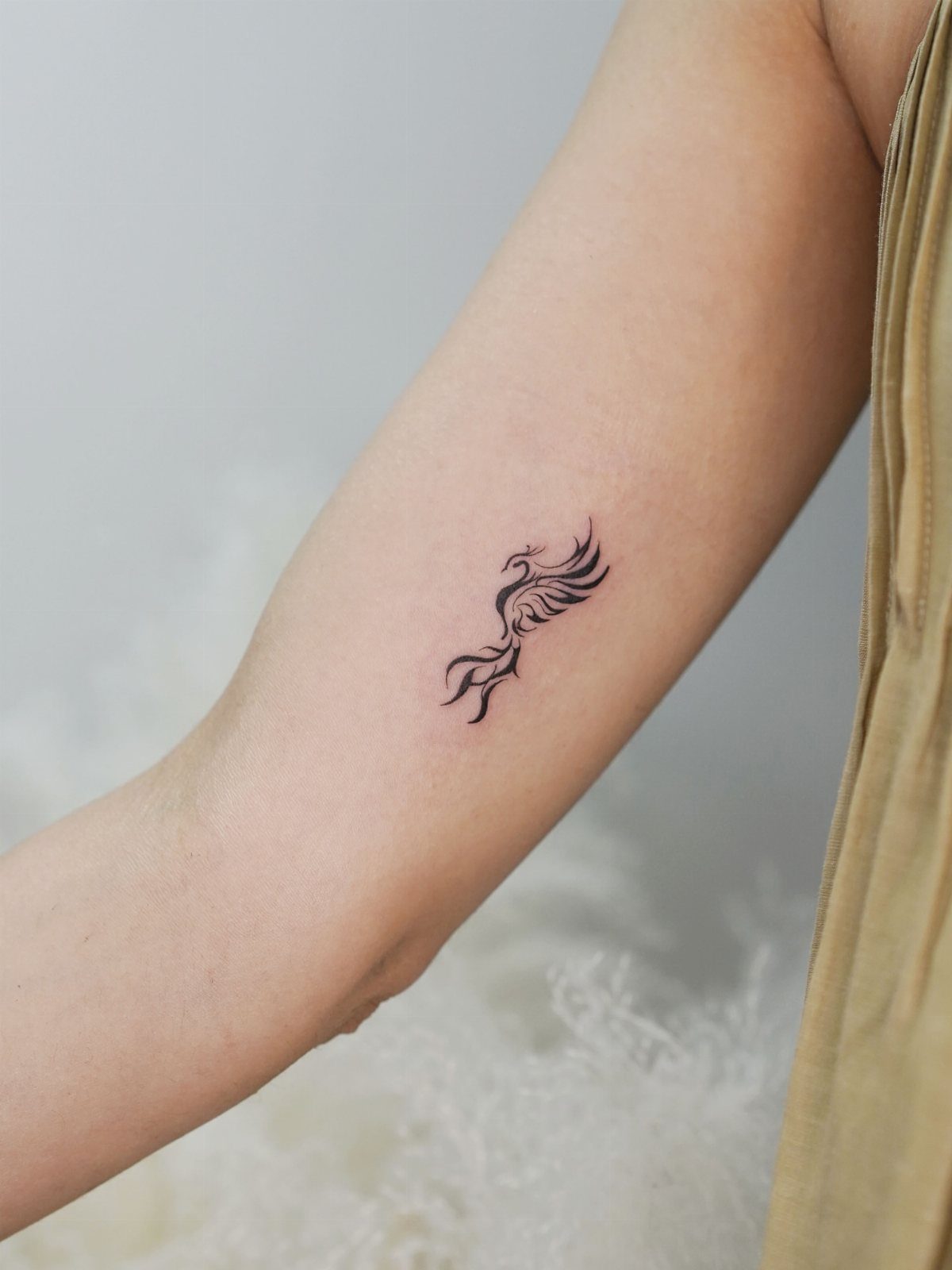
This strips the phoenix down to its outline, no shading or detail inside the shape. You get a design that reads instantly at arm’s length and stays clean as it ages.
The silhouette keeps the bird recognizable without filling the space with feathers or flames. I like this version when someone wants the symbol but prefers their tattoos light and understated.
The black holds well over time if the line weight stays consistent.
2. Fine-line Phoenix Tattoo
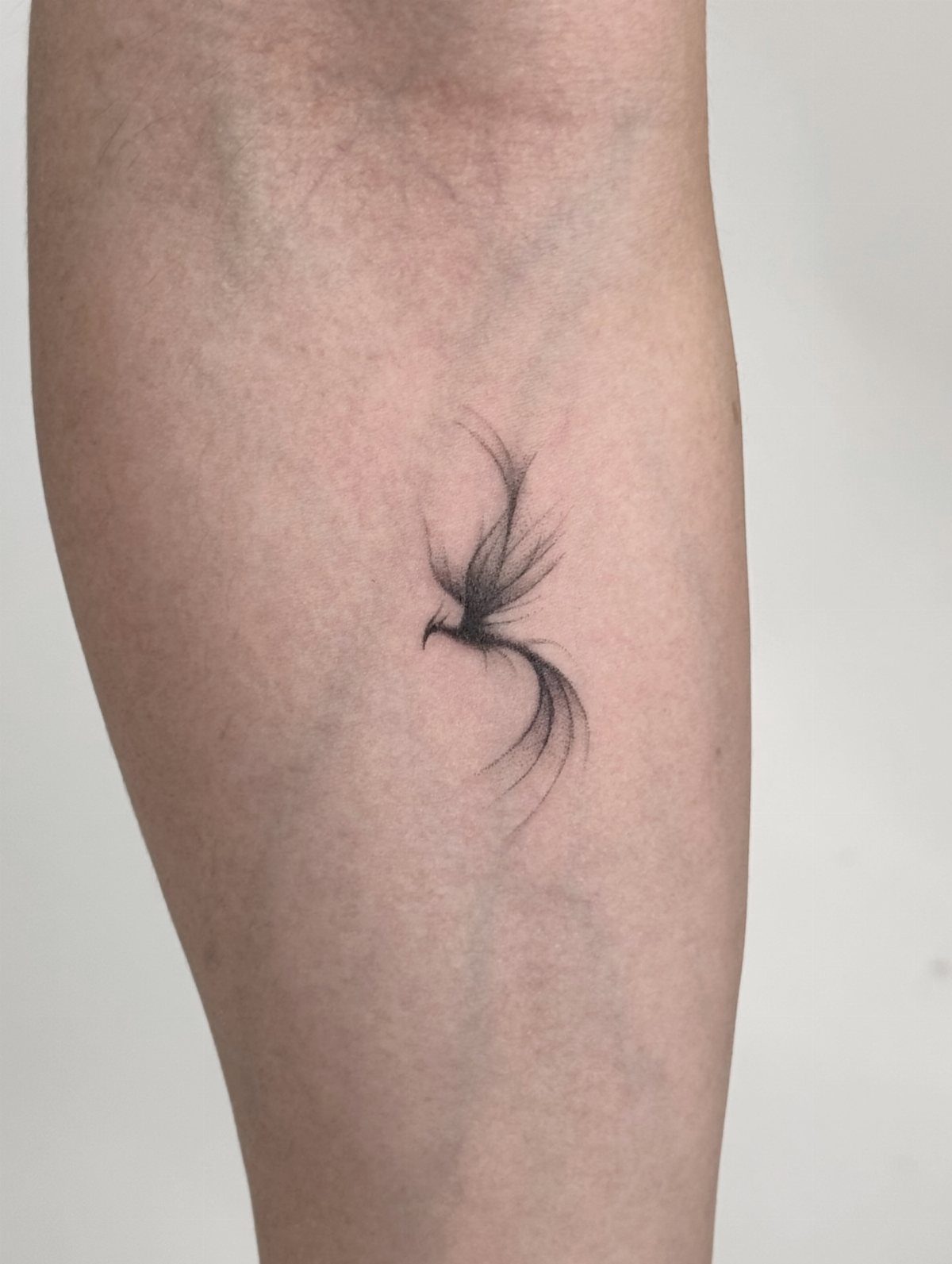
Fine-line work gives you a phoenix that feels drawn on rather than stamped. The lines stay thin and the strokes flow, so the bird looks like it’s mid-flight instead of frozen in place.
This approach works best on flatter skin where the lines won’t blur as quickly. I’d put it on the forearm, shoulder blade, or outer ankle, where the surface stays taut.
One thing to know: fine lines fade faster than bold ones, so touch-ups are a regular part of keeping them sharp. For something that lasts longer between sessions, go with slightly thicker lines or pick a different style.
3. Phoenix with Stars
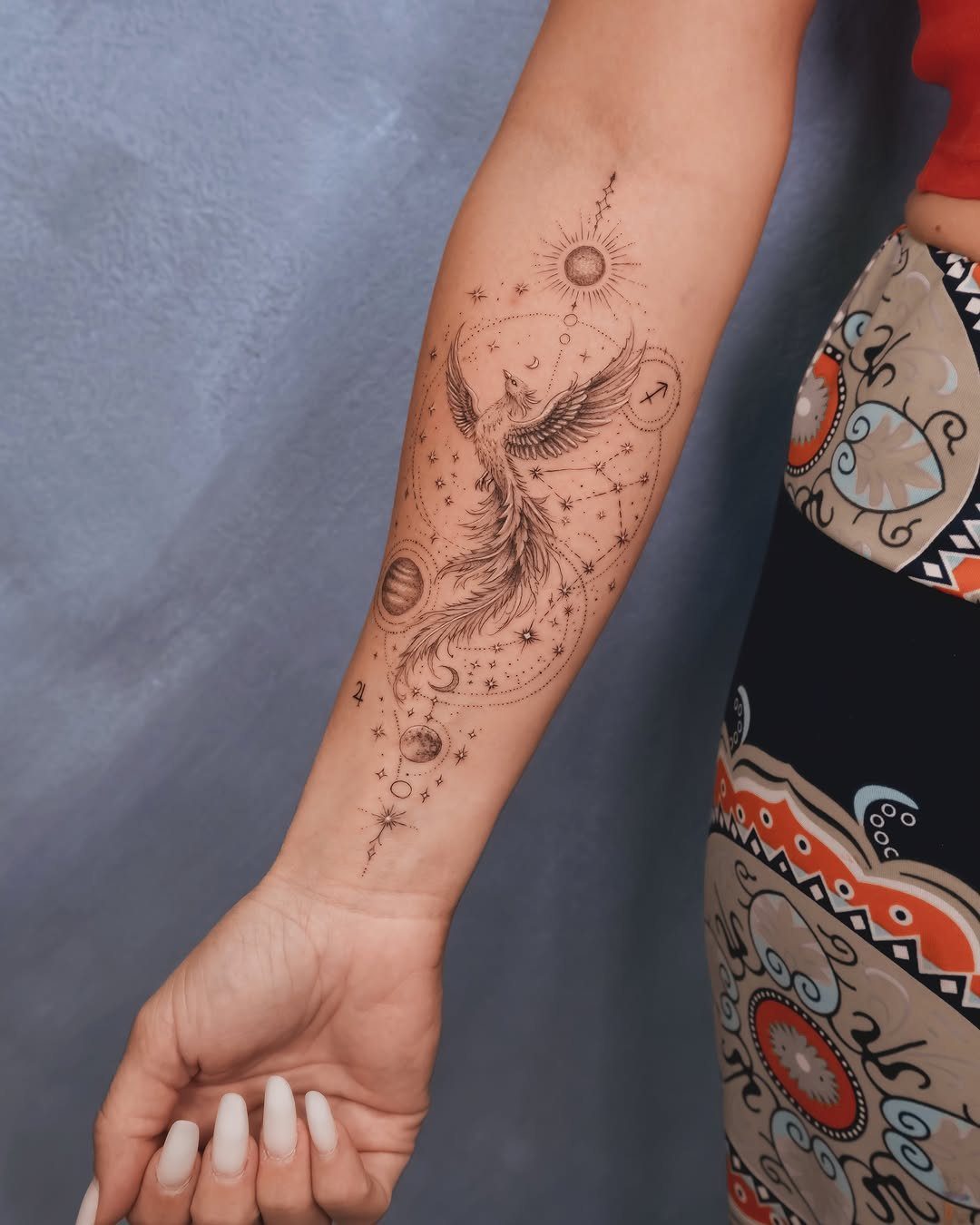
Adding stars, a sun, or a crescent moon around the phoenix ties the design to the sky and gives it a cosmic feel. The extra elements frame the bird without competing with it.
This version works when the phoenix feels part of something larger, like a night sky or a celestial scene. The stars can be simple dots or more detailed, depending on how much coverage you want.
The outer thigh gives you enough flat space to keep everything balanced.
4. Colorful Phoenix Tattoo
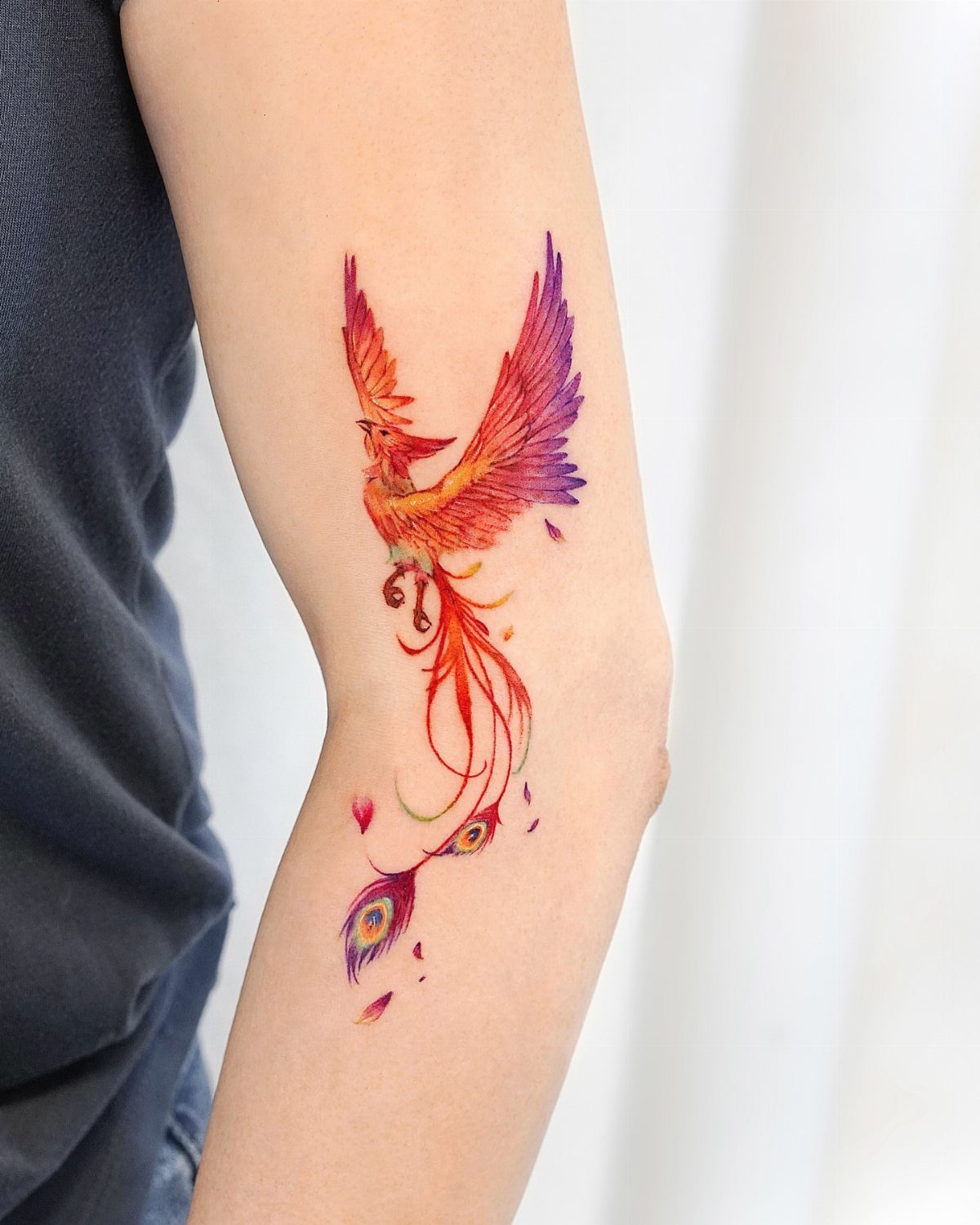
Color brings the fire to life. Reds, oranges, and purples layer together to mimic actual flames, and the gradient makes the feathers look like they’re glowing.
This version takes longer to apply and costs more than black ink alone, but the result catches the eye from across the room.
Colors fade faster, especially reds and yellows, so plan for regular touch-ups to keep them bright. Keep it out of direct sun and use sunscreen once it’s healed.
5. Phoenix Behind the Ear
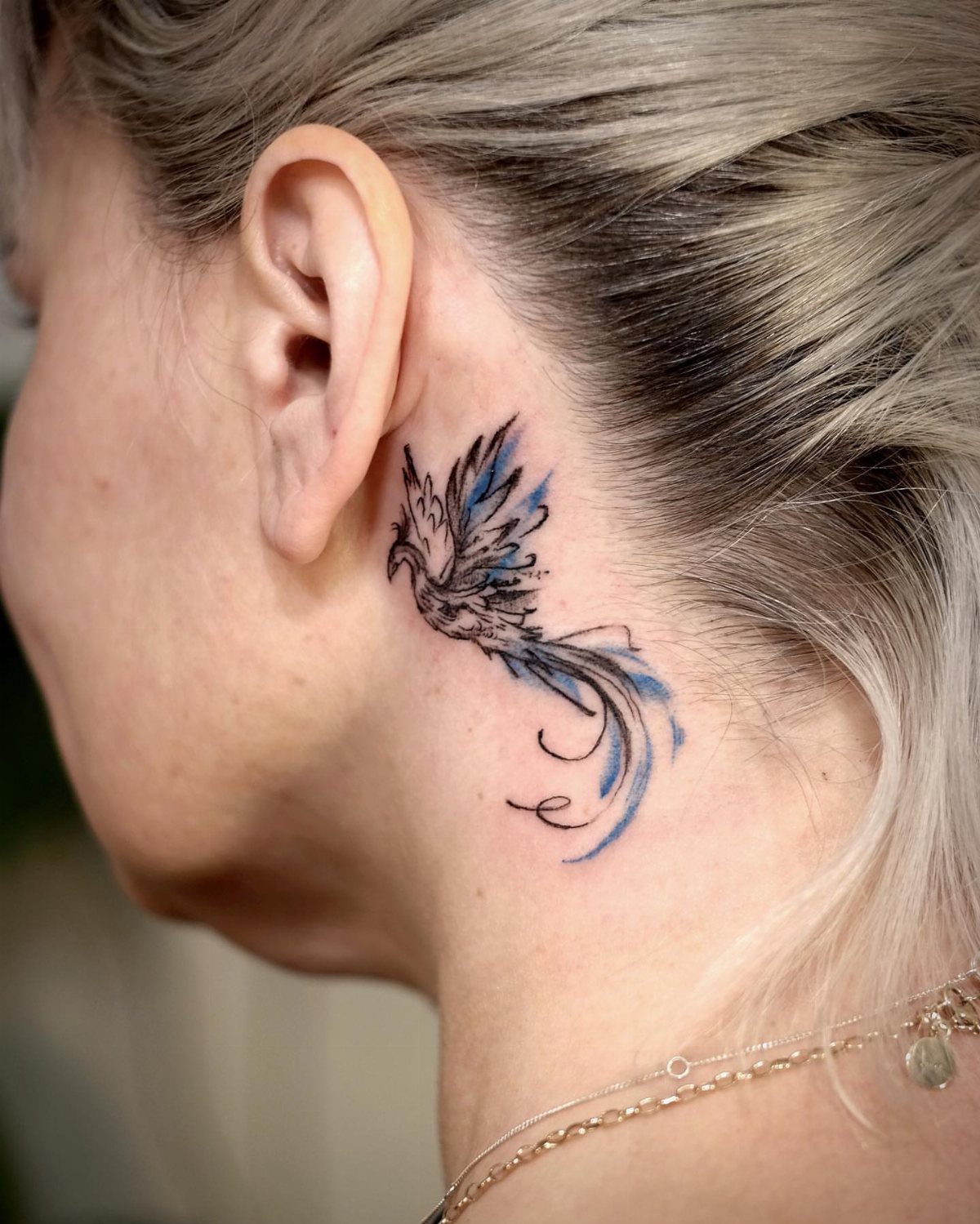
Behind-the-ear placement keeps the tattoo private until you pull your hair back. The spot is small, so the design stays under 1 inch and focuses on the phoenix’s outline or just the head and wings.
Pain-wise, this area sits close to bone and can feel sharp, but the session is quick because the size limits how much ink goes down.
Healing is straightforward as long as you avoid sleeping on that side for the first week.
A touch of color, like blue, adds dimension without requiring a full palette. Black alone works just as well for a simpler look.
6. Phoenix with Flowers
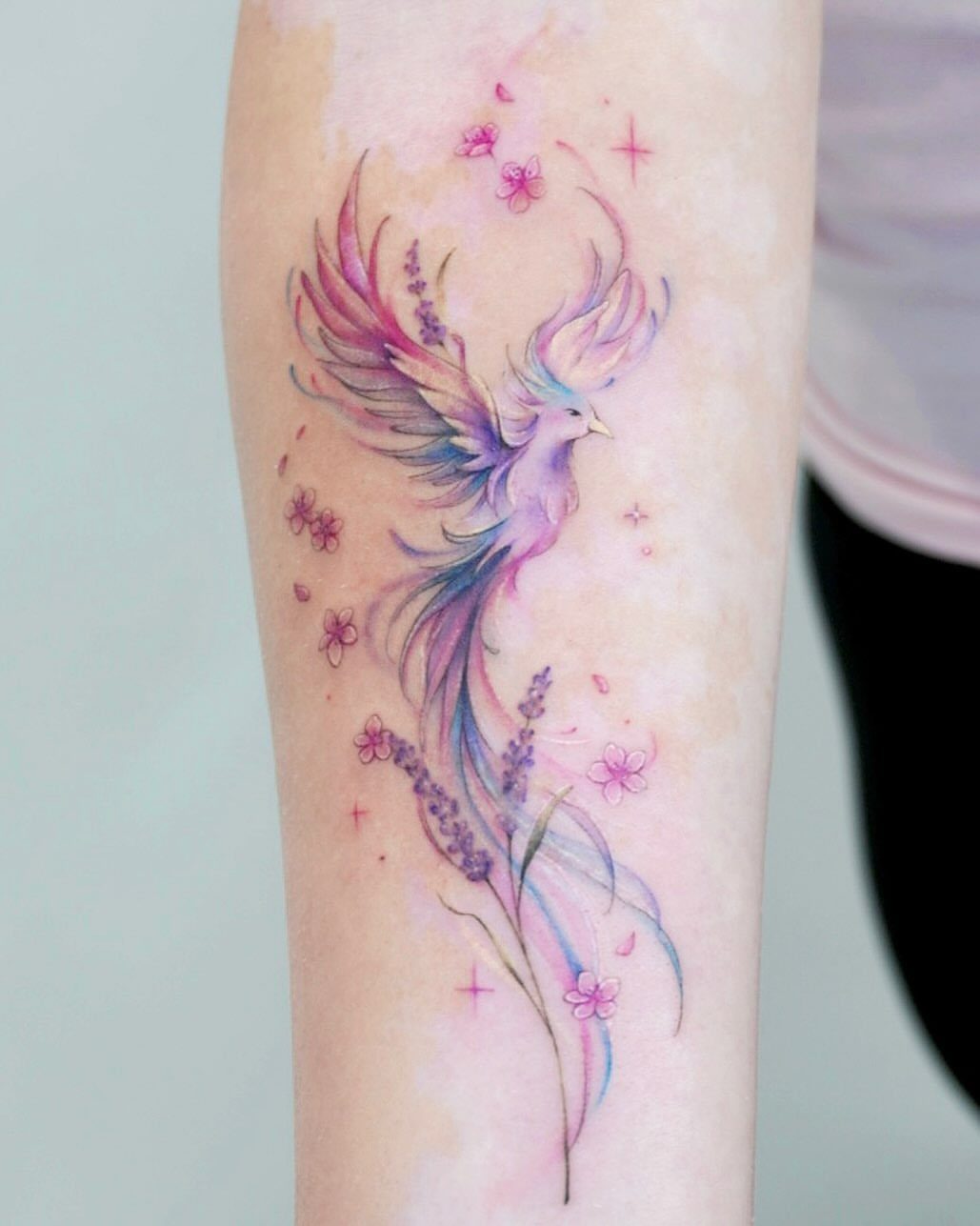
Pairing the phoenix with flowers softens the design and ties rebirth to growth. Roses, cherry blossoms, or small wildflowers wrap around the bird and add texture without taking over the composition.
The flowers give you a way to personalize the meaning further.
A lotus can emphasize transformation, while peonies lean into beauty and resilience. Pick blooms that matter to you or simply ones whose shape complements the phoenix’s wings.
This version needs more space than a solo phoenix, so plan for the upper arm, thigh, or calf. Color on the flowers makes it feel more alive, but black linework keeps it just as strong.
7. Phoenix with Heart
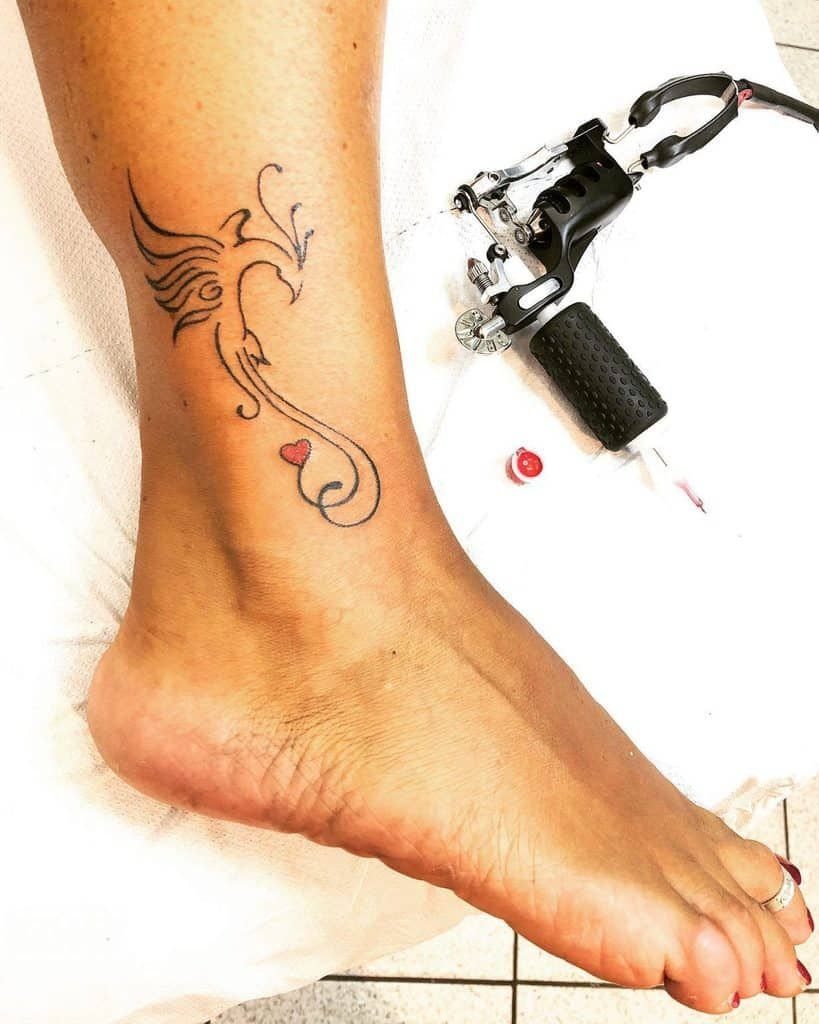
The heart adds a second layer of meaning to the phoenix, tying rebirth to love or emotional healing. It can sit inside the bird’s body, tucked into the tail feathers, or placed nearby as a separate element.
The red brings warmth to an otherwise black design without requiring a full color palette. The contrast is enough to make the heart stand out, and red holds better than lighter shades.
This version fits well on the ankle or wrist, where the small size keeps both symbols readable.
8. Abstract Phoenix Design
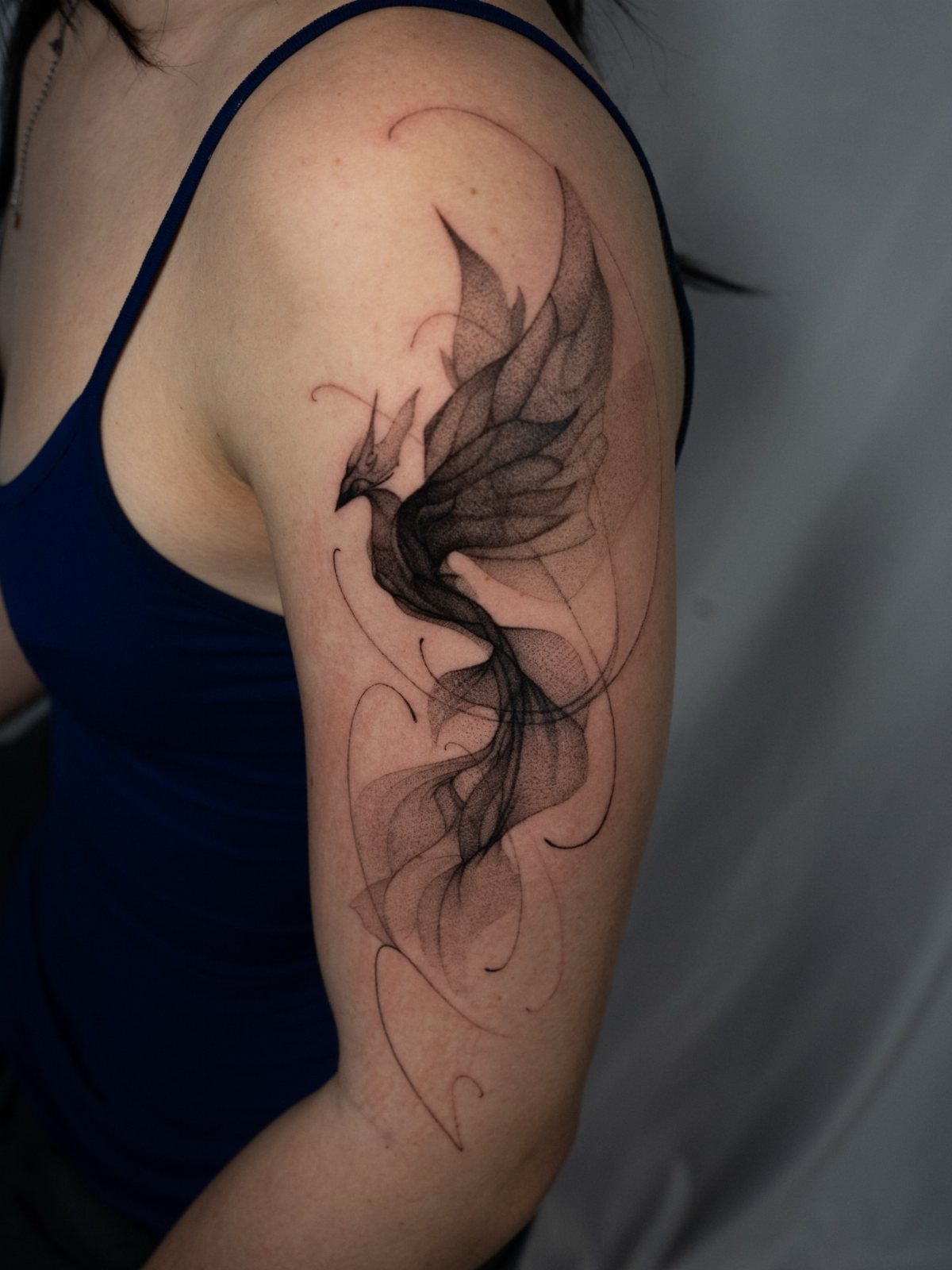
This version breaks the phoenix into shapes and lines instead of drawing every feather. The bird becomes a suggestion rather than a literal copy, which makes the piece feel looser and more artistic.
Abstract work relies on movement and balance instead of detail, so the composition matters more than accuracy. The lines flow in a way that hints at wings or flames without spelling it out.
I’d put this on the upper arm or forearm, where the curves of the muscle follow the shapes. It reads better from a distance than up close, which is part of the appeal.
Choosing Tattoo Placement
The wrist gives you a spot that stays visible with short sleeves but hides under a watch or bracelet when you need it to.
The collarbone follows the natural line of the bone and frames the phoenix horizontally.
This placement shows when you wear open necklines and stays covered otherwise. Pain sits higher here than fleshier areas, and you’ll want to avoid tight straps during healing.
Tattoo Design Styles
Bold, graphic phoenix tattoos with solid black outlines and minimal shading read clearly at a distance and age well because there’s less detail to blur over time. Black ink alone keeps the composition tight.
Watercolor mimics brushstrokes and paint splatters, layering colors without hard outlines. Watercolor phoenix tattoos need an artist experienced with soft gradients, and the colors will fade faster than solid black, so factor in touch-ups every few years.
The phoenix gets a flat, graphic look that holds up over decades.
Frequently Asked Questions
What does it mean to have a phoenix tattoo?
A phoenix tattoo stands for rebirth and rising after hardship.
The mythical bird rises from its ashes, so the design ties to personal transformation and resilience. It works for anyone marking a new chapter or celebrating a challenge they’ve pushed through.
What are considered small tattoos?
Small tattoos fit within a few inches and leave most of the skin untouched. Placement matters as much as size: a small spot like the wrist or ankle keeps the design compact naturally.
How much does a phoenix tattoo cost?
Cost depends on size, detail, and your artist’s rate, usually starting around $50 for something small and simple.
A fine-line or colorful version with more coverage will run higher, sometimes several hundred dollars. Time in the chair, ink colors, and touch-up needs all factor into the final price.